
Hair transplant tourism in Turkey—especially Istanbul—attracts international patients seeking follicular-unit procedures such as FUE, DHI-style implantation, and channels marketed as Sapphire FUE. Packages often bundle hotel nights and transfers with the procedure. This page is an informational medical-travel guide, not personal medical advice. Suitability, technique, medications, and flight timing must be decided with a licensed physician after examination.
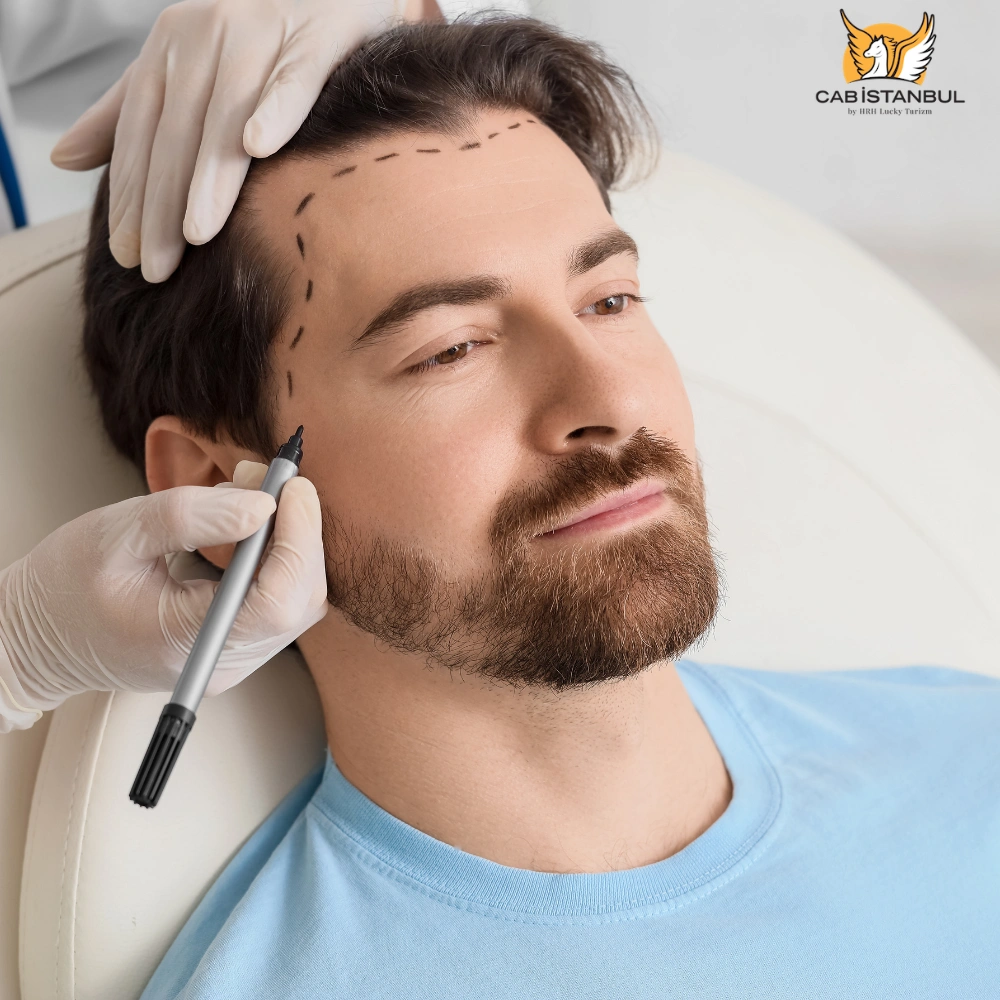
Videos are visual context only—they are not clinical evidence of outcomes or safety.
At a glance
| Topic | Planning note (check date: 9 Sep 2026) |
|---|---|
| Common harvest method | FUE (follicular unit extraction) |
| Common implantation labels | Slit/channel FUE; DHI/implanter pens; “Sapphire” channel blades |
| Observed all-inclusive package quotes | Often roughly €1,650–€5,000+ depending on technique, case, and inclusions |
| Usually not included | International flights |
| Often included in packages | Hotel nights, airport/clinic transfers, meds, first wash (confirm in writing) |
| Recovery highlight | Shock shedding often weeks 2–8; early growth often months 3–4; maturation ~12 months |
| Cab Istanbul role | Transport/logistics only—not a clinic or medical intermediary |
Medical disclaimer: Individual results and risks vary. Nothing here diagnoses hair loss, recommends a specific clinic, or guarantees density, permanence, or “scar-free / painless” outcomes.
Why patients research Turkey and Istanbul
Turkey developed a large hair-restoration medical-travel market with competitive package pricing, English-language coordinators, and high procedural volume in Istanbul. Lower labour and facility costs versus many Western fee schedules help explain price differences—not a free pass on quality. Outcomes still depend on candidacy, planning, surgical team roles, graft handling, and aftercare—not on destination marketing alone.
Who may—or may not—be a candidate
Eligibility is not “anyone over 18.” A physician typically assesses pattern and stability of hair loss, donor density and quality, scalp health, medical history and medications, smoking status, prior surgeries, and expectations. Diffuse thinning, scarring alopecia, active inflammatory scalp disease, limited donor supply, or unrealistic density goals may change the plan—or rule out surgery.
Women’s pattern hair loss and beard/eyebrow restoration follow different planning rules than classic male pattern baldness. Only a qualified clinician can decide after in-person or properly structured remote-then-local evaluation.
Techniques: FUE, DHI, Sapphire—what the words mean
| Method / term | What it usually refers to | Potential advantages | Limitations |
|---|---|---|---|
| FUE | Punch extraction of follicular units from donor scalp | No linear strip scar; flexible session design | Many tiny scars possible; donor overharvest risk if aggressive |
| FUT (strip) | Strip excision + microscopic dissection | Useful in selected cases | Linear scar; not the default story in every Istanbul package clinic |
| DHI / Choi pens | Often implantation with implanter pens; harvest may still be FUE | May suit some densification / unshaven strategies | Slower; marketing labels vary; not automatically “better” |
| Sapphire FUE | Recipient channels created with sapphire blades | Clinic-claimed precision advantages | Blade material alone does not prove superior outcomes |
| PRP | Optional blood-derived adjunct | Sometimes offered in packages | Evidence and protocols vary; does not guarantee growth |
Older copy that said “FUE is not a transplant method” or that “Sapphire is painless” oversimplifies. FUE is the harvest backbone of most modern sessions; implantation toolkits differ. Pain control uses local anesthesia (sometimes sedation)—discomfort varies; “painless” is not a fair promise.
Procedure stages (typical pathway)
- Consultation and medical history
- Scalp / donor assessment and hair-loss diagnosis
- Realistic graft planning and hairline design
- Informed consent and written plan
- Donor preparation (shaven or limited-shave protocols)
- Local anesthesia (± sedation per protocol)
- Follicular-unit extraction
- Graft sorting and holding
- Recipient-site creation and/or direct implantation
- Immediate aftercare instructions
- First wash / dressing follow clinic protocol
- Remote or in-person follow-up
Session length varies by graft count and method—commonly several hours, not a universal “2–6 hours for everyone.” Large plans may be split across days.
Recovery timeline (illustrative ranges)
| Stage | Typical window | What patients may notice |
|---|---|---|
| Early healing | ~1–2 weeks | Redness, crusting, tenderness, swelling |
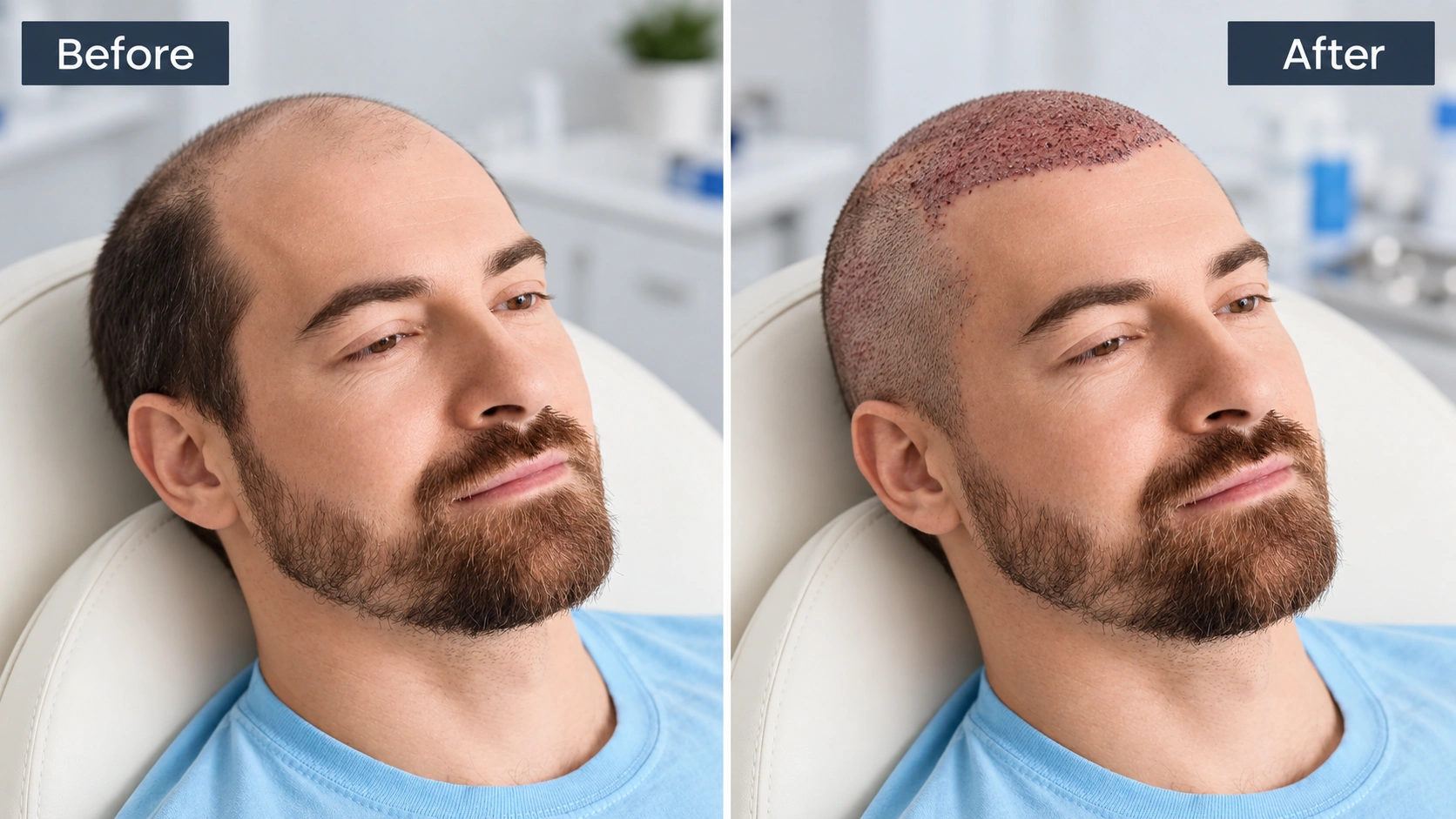
| Shock shedding | Often ~2–8 weeks | Transplanted and/or nearby native hairs shed; follicles may remain |
| Early regrowth | Often ~3–4 months | Fine new hairs appear unevenly |
| Density build | ~6–9 months | Coverage improves gradually |
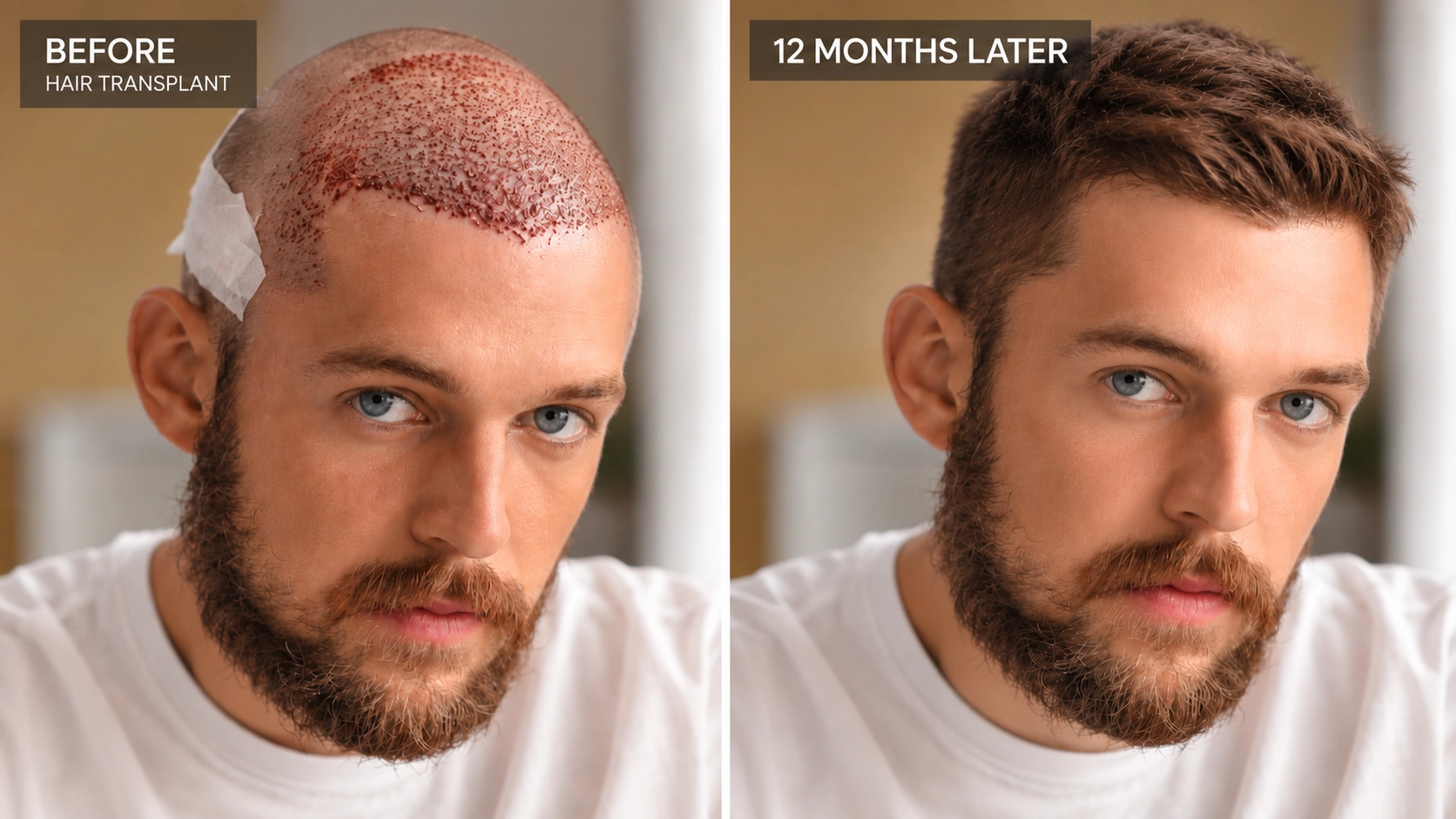
| Maturation | ~12 months (+) | Texture/caliber continue to change; crown may lag |
Claims that “all transplant signs vanish in 7–10 days” or that “hair starts growing within a week” are outdated or misleading. Follow your treating clinic’s wash and activity instructions; ask before swimming, gym work, or long-haul flights.
Risks and limitations
Possible issues include pain, swelling, redness, crusting, bleeding, infection, folliculitis, itching, temporary numbness, shock loss, visible scarring, poor growth, unnatural direction/hairline, asymmetry, donor thinning from overharvesting, need for revision, and anesthesia- or medication-related reactions. Serious complications are uncommon in properly selected cases but are not impossible.
Future hair loss: Grafts taken from genetically more stable donor zones may retain those characteristics, but remaining native hair can keep thinning. Medications or further sessions may be discussed—again, clinician-led, not guaranteed.
2026 cost context (observed package quotes)
Published all-inclusive Istanbul/Turkey package quotes checked on 9 September 2026 commonly fall around €1,650–€5,000+ for FUE/DHI-style sessions, with higher bands for some hospital-group or premium technique pathways. Exact figures depend on technique label, graft plan, who performs critical steps, hotel class, and aftercare. Confirm currency, VAT, and what happens if fewer/more grafts are placed.
| Package / method (marketing labels) | Current observed 2026 range | Typical inclusions (confirm) | Important notes |
|---|---|---|---|
| Standard FUE packages | Often from ~€1,650 toward mid €000s | Procedure, hotel nights, transfers, meds | Clinic marketing quotes—not a national tariff |
| Sapphire FUE packages | Often ~€2,000–€4,500+ (varies) | As above ± PRP | Label ≠ outcome guarantee |
| DHI packages | Often ~€2,300–€5,000+ | As above | May suit selected densification cases |
| Hospital-group pathway guides | Examples cite ~€2,600–€5,850+ FUE | Facility-dependent | Higher-tier framing; verify inclusions |
Old USD “$1,000–$5,000 for 3,000 grafts” figures are not retained as current. Extremely low online quotes can omit hotel, aftercare, or physician involvement—treat them as red flags until proven inclusive.
Why country-to-country tables mislead
Older pages compared Turkey vs UK/US/Germany with single EUR cells. Those comparisons mix package tourism pricing with surgeon professional fees, different graft accounting, taxes, anesthesia models, and follow-up. Prefer asking each provider for a written inclusion list rather than trusting a recycled international price grid.
What usually changes the price
- Graft number and donor complexity
- FUE vs DHI/implanter workflow
- Physician vs technician role mix
- Facility type and anesthesia protocol
- Hotel nights, vehicle class, translator
- Medications, PRP, follow-up length
- Revision policy and season promotions
How to verify a clinic (checklist)
Do not rely on “best clinic” rankings or Instagram volume. Brand names that appear in older marketing (for example Smile Hair, Estenove, Natural Clinic, Worbimed) should be checked like any other provider—not treated as CAB endorsements.
| What to verify | Why it matters |
|---|---|
| Legal facility name + International Health Tourism Authorization | Required pathway for many foreign-patient facilities under MoH rules—confirm on official HealthTürkiye / authorized lists |
| Physician identity and specialty | Know who plans and who operates critical steps |
| Who extracts / who opens sites / who implants | Team roles affect quality and consent clarity |
| Written graft plan and consent | Avoid vague “maximum grafts” surprises |
| Emergency / hospital backup arrangements | Medical procedures need escalation paths |
| Package inclusions and exclusions | Hotel, transfers, meds, PRP, flights, revision policy |
| Comparable before/after photos | Similar hair type, lighting, timeline disclosed |
Airport, hotel and clinic logistics
Most packages include airport pickup and clinic shuttles, but you can also book independent chauffeurs. Choose IST or SAW based on hotel/clinic location and flight options. Build Istanbul traffic buffers; keep the vehicle spacious enough for a head bandage and companion if needed. Activity and flight timing after surgery follow your clinician’s instructions—Cab Istanbul does not clear patients to fly.


For independent logistics, use Istanbul airport transfer, car with driver, or hourly / daily chauffeur booking. Cab Istanbul provides transportation only—it does not select surgeons, negotiate medical prices, or act as a health-tourism intermediary.
Hair transplant FAQs
How much is a hair transplant in Turkey in 2026?
Observed all-inclusive package quotes often sit roughly between €1,650 and €5,000+, with higher quotes for some premium pathways. Ask for a written inclusion list after photo review.
Is Turkey always cheaper than the UK or US?
Package prices are frequently lower than many Western professional-fee pathways, but inclusions differ. Compare apples-to-apples: surgeon role, facility, grafts, hotel, transfers, follow-up—not headline numbers alone.
What is FUE?
Follicular unit extraction harvests grafts with small punches. It avoids a strip scar but can leave many tiny scars and still requires careful donor management.
What is DHI?
Clinics often use “DHI” for implantation with implanter pens. Extraction is commonly still FUE-style. Ask exactly what steps their DHI package includes.
Does FUE leave scars?
It is not accurately described as scar-free. Tiny circular scars can occur; visibility depends on hair length, skin, and harvest density.
Does transplanted hair fall out?
Shock shedding of shafts is common weeks after surgery; follicles may remain and regrow later. Persistent bare patches need clinical review.
When do final results appear?
Many patients assess maturation around 12 months, with earlier changes from month 3–4 onward. Individual timelines vary.
Can women have hair transplantation?
Sometimes, depending on diagnosis and donor supply. Female pattern loss needs specialist assessment—not a copy-paste male package.
How do I verify a Turkish clinic?
Ask for the legal facility name and International Health Tourism Authorization details, confirm physician identity and who performs each surgical step, and get a written plan and inclusion list. Use official HealthTürkiye / Ministry channels where possible.
Can Cab Istanbul arrange my medical package?
No. Cab Istanbul provides airport, hotel, and clinic transportation with professional drivers. Medical decisions stay between you and licensed healthcare providers.
Travel calmly—choose medicine carefully
Istanbul can make hair-restoration travel logistically easier when packages and transfers are transparent. Use 2026 price quotes as orientation, demand written consent and role clarity, and treat marketing adjectives—“best,” “guaranteed,” “scar-free”—as noise. When you need reliable ground transport only, book chauffeur service or airport transfer separately from your medical contract.