
Where Two Thousand Years of History Meet the Sea
Perched on twin peninsulas where the Black Sea meets ancient stone, Amasra is one of Turkey's most authentic small-town escapes. A Roman monument carved into a cliff face, a Genoese castle commanding the harbour, medieval bridges still in daily use, golden beaches, and a cuisine built on fresh seafood and local tradition — all within five hours of Istanbul. This guide covers everything you need to plan a visit in 2026.
From Ancient Sesamos to Ottoman Amasra
Few towns on Turkey's coastline carry as much layered history as Amasra — a city that has changed name three times and passed through four empires without ever losing its essential character.
The town's earliest recorded name was Sesamos, mentioned by Homer. By the 4th century BC, Queen Amastris of Heraclea refounded and renamed the city Amastris, which gradually contracted into Amasra over the centuries. The Romans built roads here and left a remarkable inscription in the coastal cliffs. Byzantine engineers raised fortifications that still define the skyline. In 1263, Genoese merchants arrived and transformed Amasra into one of their most important Black Sea trading posts, reinforcing the castle walls, cutting new harbour channels, and leaving behind a legacy of arched gates and defensive towers. Then in 1461, Sultan Mehmed II — fresh from his conquest of Constantinople eight years earlier — took Amasra without resistance, incorporating it seamlessly into the Ottoman Empire.
What makes Amasra exceptional is how all of these layers remain visible today. You can walk from a Roman-era rock monument to a Genoese harbour gate to an Ottoman mosque in under twenty minutes. The town never grew large enough to obscure its own past.
Amasra's Must-See Historic Sites
Amasra's core historic circuit can be covered on foot in a single day. These are the three sites that define the town.
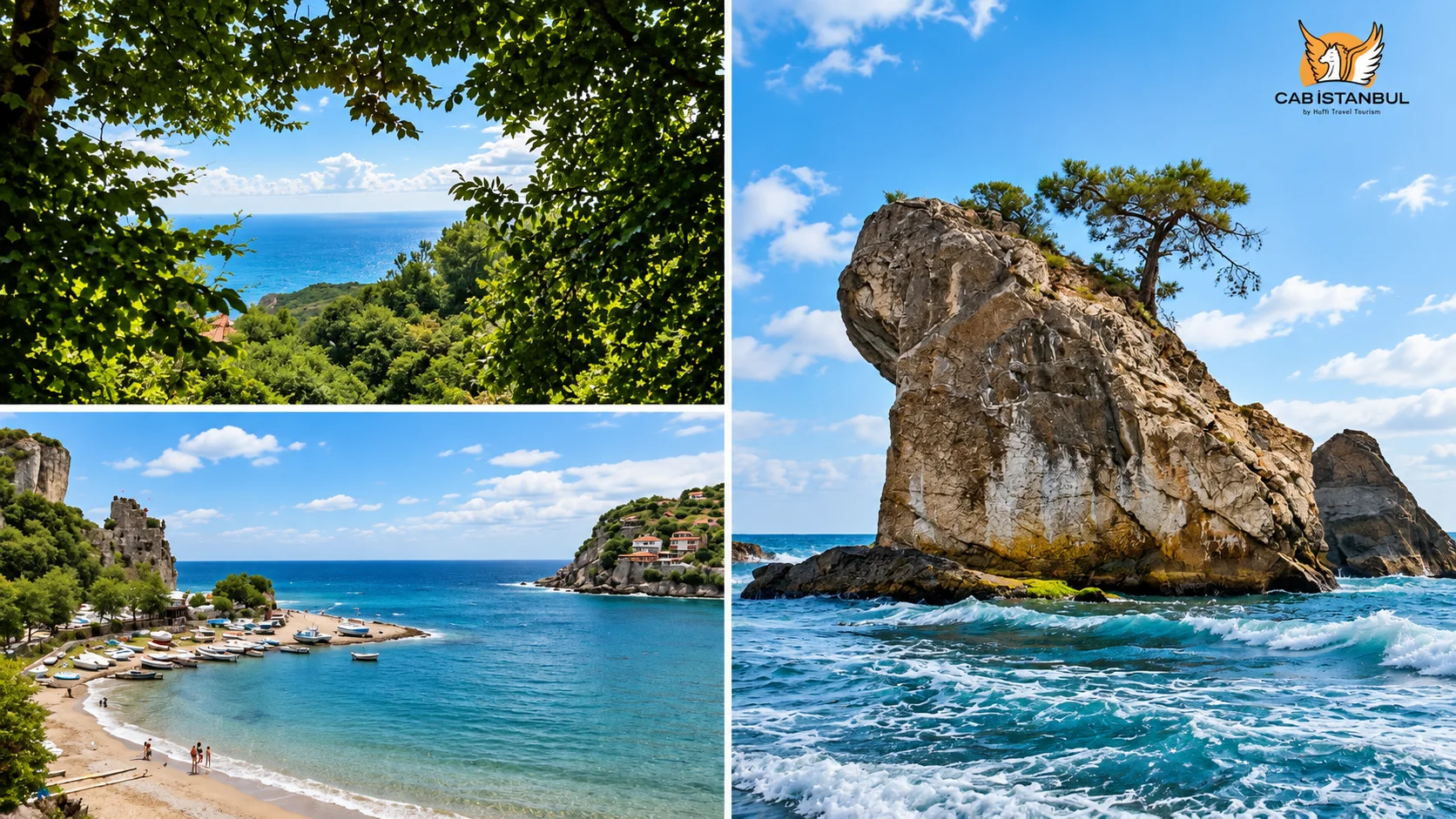
Amasra Castle
Built on the outer peninsula, the castle consists of two connected sections — Zindan Kalesi and Sormagir Kalesi — reinforced by the Genoese in the 13th–15th centuries and incorporating earlier Byzantine walls. The walk along the ramparts delivers sweeping views of both harbours and the open sea.
Kemere Bridge
This arched stone bridge connecting the inner and outer peninsulas is believed to date from the Byzantine period — possibly earlier. Restored in 2013–2014, it still carries pedestrian traffic every day, making it one of the oldest continuously used bridges in Turkey. Standing on it at dusk, with the fishing boats below and the castle lit up behind, is one of Amasra's definitive moments.
Boztepe Viewpoint
A hillside vantage point above the town that provides arguably the best panoramic view of Amasra's double-peninsula geography. Visit at sunrise or late afternoon when the light turns the stone walls amber and the sea shifts colour. The drive or walk up takes around 15 minutes from the town centre.
Kuşkayası — A Roman Inscription Carved into the Cliffs
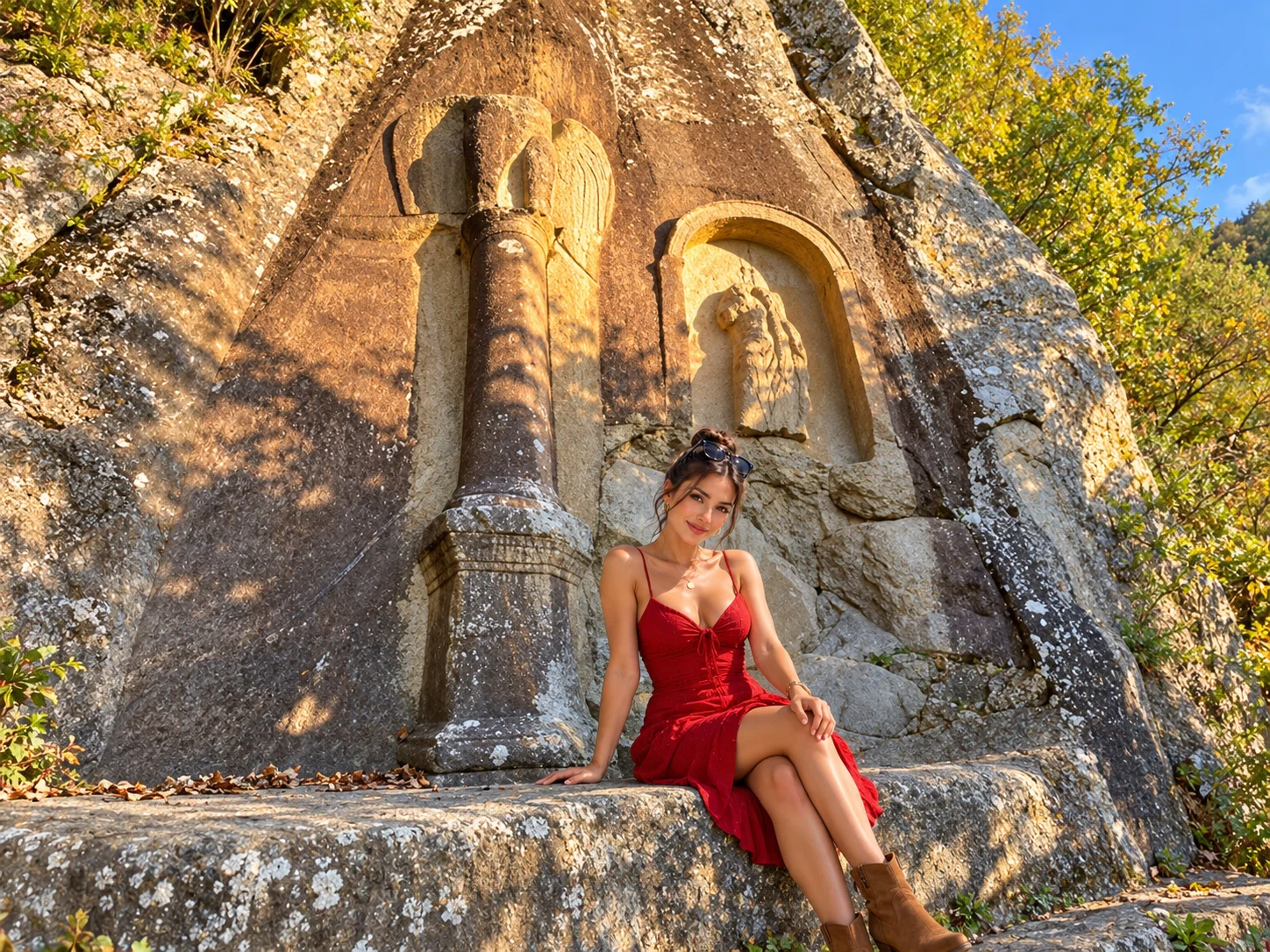
One of the most remarkable and underappreciated monuments in Turkey stands directly on the coastal road into Amasra. The Kuşkayası Monument — carved into a vertical cliff face above the sea — is a Latin rock inscription commissioned by Gaius Julius Aquila in honour of Emperor Claudius (reigned 41–54 AD). It commemorates the construction of the road along this rugged coastline, making it both a dedication and a record of Roman engineering ambition.
The monument is unique in Turkey for its setting: cut directly into the living rock beside the water, it is visible from the road and from small boats on the sea. The name "Kuşkayası" (Bird Rock) refers to the cliff itself. Most visitors drive straight past it, but it repays a 10-minute stop. There is a small parking area nearby.
Context matters here: the Romans were building roads along the southern Black Sea coast to connect their strategic ports, and Sesamos (Amasra) was one of those ports. Aquila's inscription is a proud, lasting record of that ambition.
Museums, Crafts and the Old Quarter
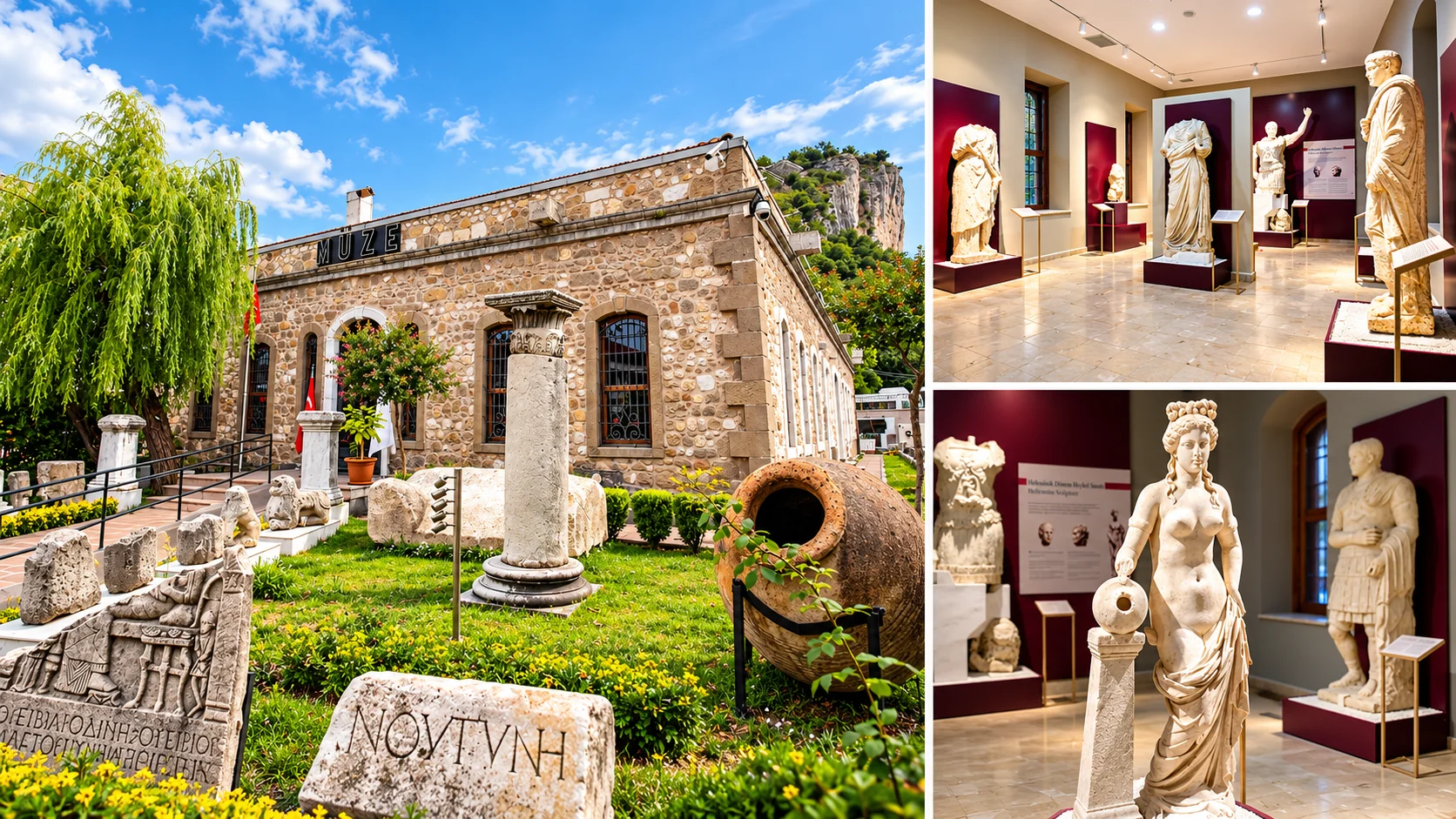
Amasra Archaeology & Ethnography Museum
Housed in a building near the castle entrance, this museum holds finds spanning the Bronze Age through to the Ottoman period — coins, ceramics, reliefs, anchors, and ethnographic objects from the local fishing and woodworking traditions. Open Tuesday–Sunday, roughly 08:30–17:00 (confirm opening hours before your visit, particularly in winter). Admission is modest. Allow 45–60 minutes.
Çekiciler Çarşısı — The Woodturners' Market
Amasra has been a centre of traditional wood-turning for centuries. The Çekiciler Çarşısı (Woodturners' Bazaar) in the old quarter is where craftspeople still shape hazelnut, walnut, and olive wood on spinning lathes, producing salt cellars, spice boxes, tea cups, spoons, and decorative objects. It is a genuinely working craft market rather than a tourist-facing stage, and one of the most authentic shopping experiences on the Black Sea coast.
The Historic Streets
Within the castle peninsula, a network of narrow cobbled streets lines the hillside, flanked by Ottoman-era stone houses, small cafés, and workshops. Wandering here without a plan is one of Amasra's greatest pleasures. Look for the Fatih Mosque (converted from a Byzantine church), the remnants of Genoese city walls, and the ornate arched gates that once controlled access to each harbour.
Amasra — Places to See and Experience
A visual overview of Amasra's most important landmarks, beaches and viewpoints — from the castle ramparts and Kemere Bridge to the beaches and evening atmosphere of the harbourfront.
Planning a private transfer from Istanbul? Cab Istanbul offers fixed-rate chauffeur-driven transfers — no negotiation, no surprises on arrival. Istanbul Chauffeur Service →
Amasra's Beaches and Swimming Spots
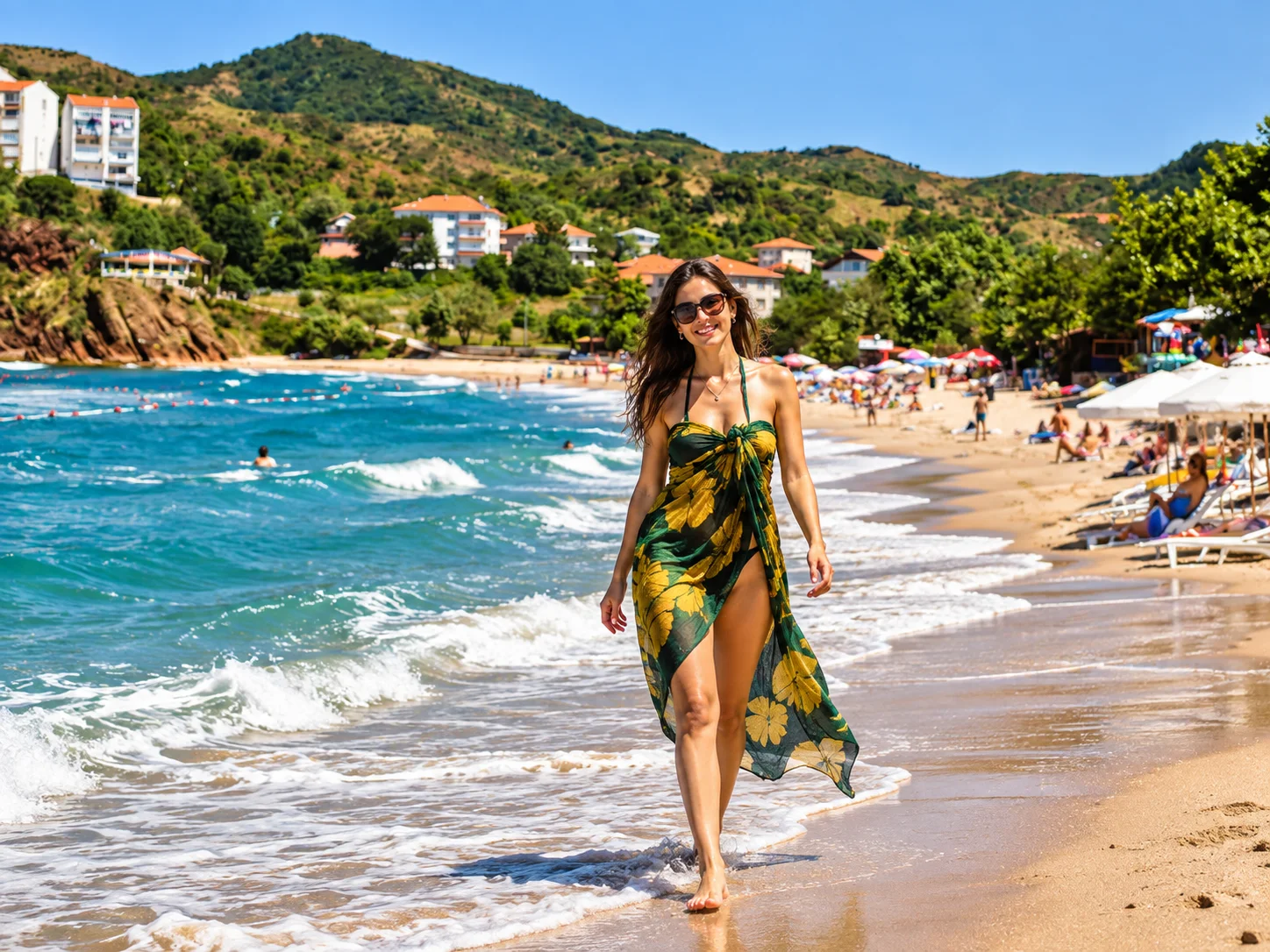
Büyük Liman (Big Harbour Beach)
The main public beach in the town centre, set in the sheltered bay of the larger harbour. Sandy, generally clean, and easily accessible on foot from the main streets. Facilities including cafés and changing areas are available in summer. The most convenient option for day visitors.
Küçük Liman (Small Harbour)
The smaller inner harbour has a compact beach area with calmer water than the open sea. The setting — surrounded by old stone houses and fishing boats — makes this one of the most photogenic spots in Amasra. Popular with locals in the evenings.
İnkumu Beach
Approximately 31 km from Amasra, İnkumu offers a longer, quieter stretch of sand backed by pine trees. The drive is straightforward and the beach is significantly less crowded than the town's own shores, even in peak summer. A good choice for a half-day excursion combined with a scenic coastal drive.
Çakraz Beach
Around 15 km from the town, Çakraz is a small village with a natural beach where the Black Sea meets a wooded hillside. The water is clean and the surroundings unspoilt. Particularly recommended for those looking to avoid the summer crowds entirely.
Beyond the Town: Nature and Landscape
Göldere Waterfall
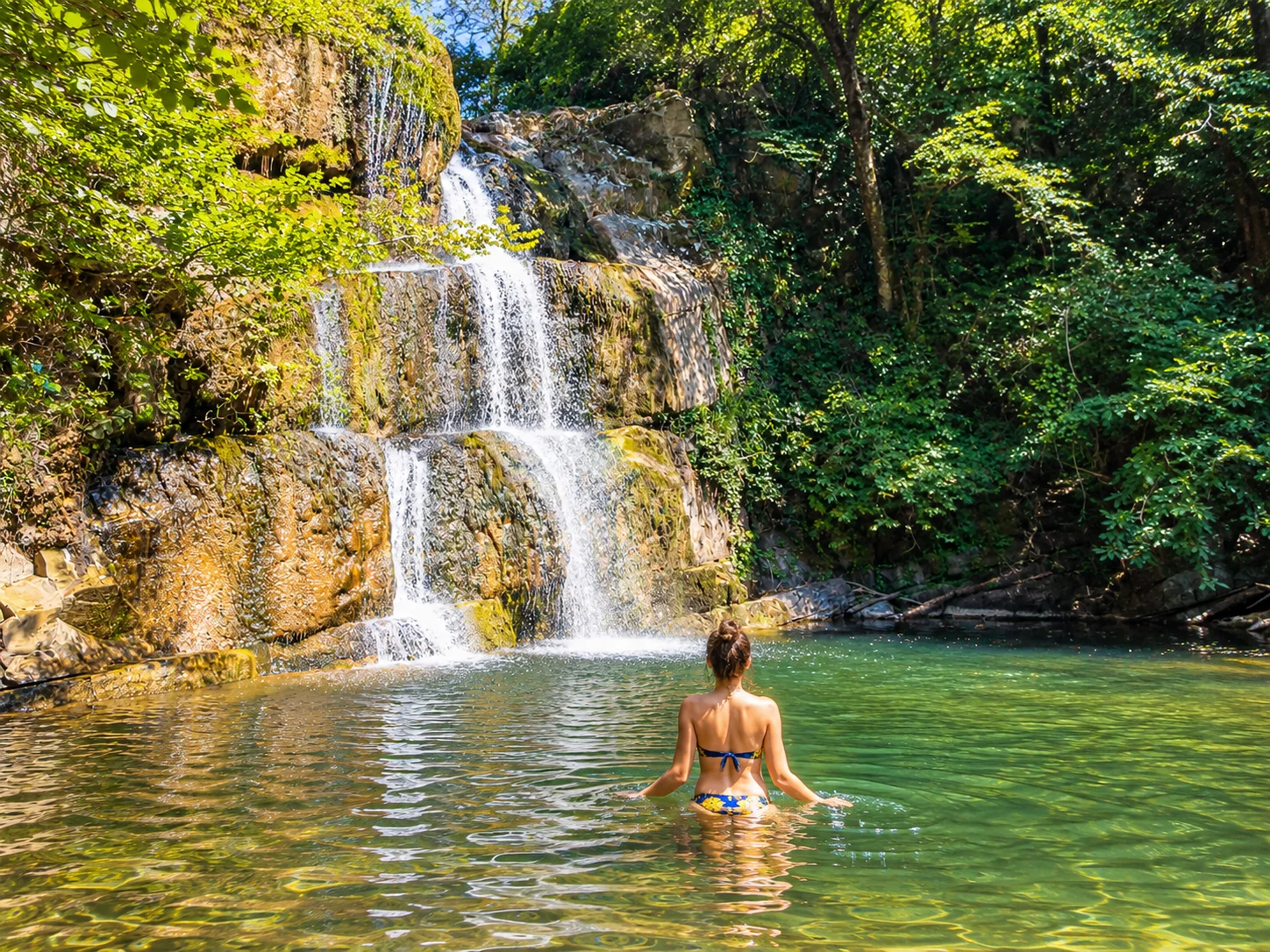
Located approximately 10–15 km from Amasra along the road towards Kurucaşile, Göldere is a forested waterfall set in a narrow valley. The drive takes around 20–25 minutes and the walk from the parking area to the falls is short. A peaceful contrast to the harbourfront crowds — particularly pleasant in spring when the water is highest.
Güzelcehisar Lava Columns
Around 17 km from Amasra's centre, near the village of Güzelcehisar in Bartın Province, a formation of naturally occurring hexagonal basalt columns rises from the hillside. These 80-million-year-old geological formations were declared a natural monument in 2017 and are among the rare examples of columnar basalt visible in Turkey. Worth combining with a stop at İnkumu Beach on the same day.
Rabbit Island (Tavşan Adası)
A small, uninhabited island visible from the Kemere Bridge and the harbourfront. Named for the rabbits and seabirds that inhabit it. The island is best appreciated from the bridge or from a boat — it cannot be reached on foot but small boat operators offer trips in summer from the harbour area.
Ağlayan Ağaç — The Weeping Tree
An old cypress tree, estimated to be 300–350 years old, located just beyond the Kemere Bridge on the edge of a tea garden. The tree's dense canopy traps moisture and releases it as water droplets in spring and autumn — creating the impression that it is "weeping." A local curiosity worth a five-minute detour.
Direkli Kaya
A rocky promontory east of the Küçük Liman harbour, incorporating a small Genoese-era stone structure. Local legend associates the site with Queen Amastris of antiquity. The setting above the sea provides good photographic compositions, particularly at sunset.
What to Eat in Amasra
Amasra's culinary identity is built around the sea. The restaurant scene is concentrated along the harbourfront and in the bazaar area, with a strong emphasis on whatever was caught that morning.
Fresh Fish and Seafood
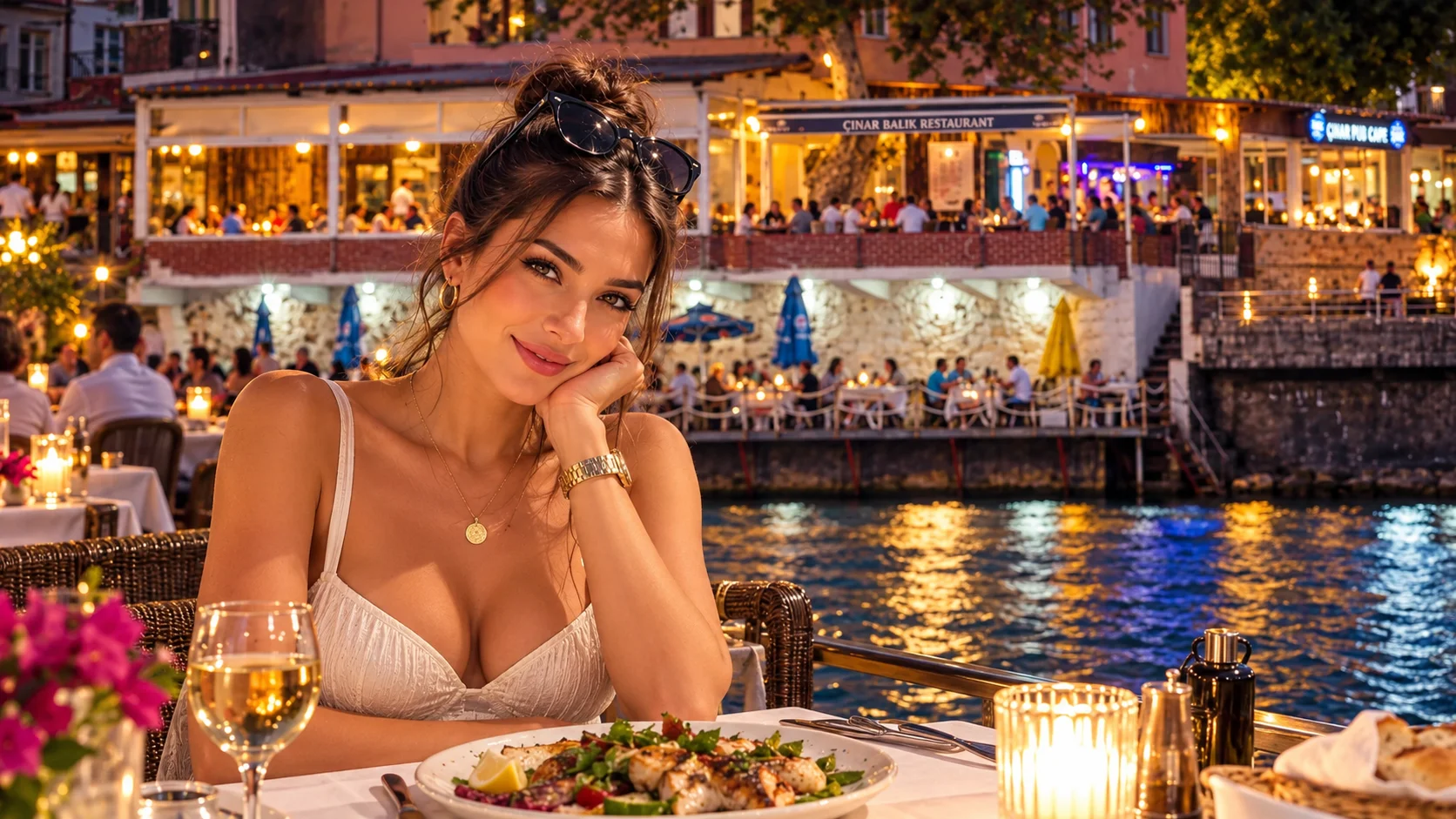
The Black Sea supports a varied catch including Black Sea anchovies (hamsi), turbot (kalkan), bluefish (lüfer), and mullet. Pan-fried anchovy with cornbread is the quintessential Amasra meal. Most harbourfront restaurants receive their fish directly from local boats; choosing where to eat based on what's chalked on the board that day is the local approach.
Amasra Salatası
The regional salad is a layered composition of lettuce, red onion, pickles, parsley, rocket, grated carrot, radishes, red cabbage, herbs, corn, dressed with olive oil, lemon juice, and pomegranate molasses. It varies by season and by kitchen, but the combination of sharp, fresh and slightly sweet flavours is distinctly local. Served as a standard accompaniment with fish dishes.
Black Sea Cornbread & Regional Specialities
Mısır ekmeği (cornbread) is a staple of the Black Sea coast. Local breakfast and snack spots serve it alongside anchovy butter, hazelnut spreads, and local honey. Kara lahana çorbası (black cabbage soup) and home-style erişte (hand-rolled noodles) appear on menus in winter months. For drinks, Turkish tea from the region's own gardens is the default — Çay always, everywhere.
Amasra has no large restaurant chains. The majority of dining options are family-run establishments that change menus by season. Weekend evenings in July and August see significant crowds — arriving before 19:00 avoids the worst queues at harbourfront restaurants.
Bartın and the Amasra Shoreline
The coastal road between Bartın and Amasra offers a series of dramatic cliff views, hidden coves, and small fishing villages. A slow drive along this route — stopping at Bakacak viewpoint, the Kuşkayası monument, and one of the smaller beaches — is one of the most rewarding things to do in the area beyond the town itself.
Bakacak is a hilltop viewpoint roughly 5–6 km from the town centre where, according to local tradition, Mehmed II observed Amasra before its surrender in 1461. The panorama over the headland and out to sea justifies the detour.
Accommodation in Amasra
Amasra is a small town and its accommodation stock reflects that scale — a mix of boutique hotels, family-run pensions, and a small number of larger hotels, mostly concentrated near the harbours. Advance booking is essential for July and August.
Boutique Hotels & Sea-View Properties
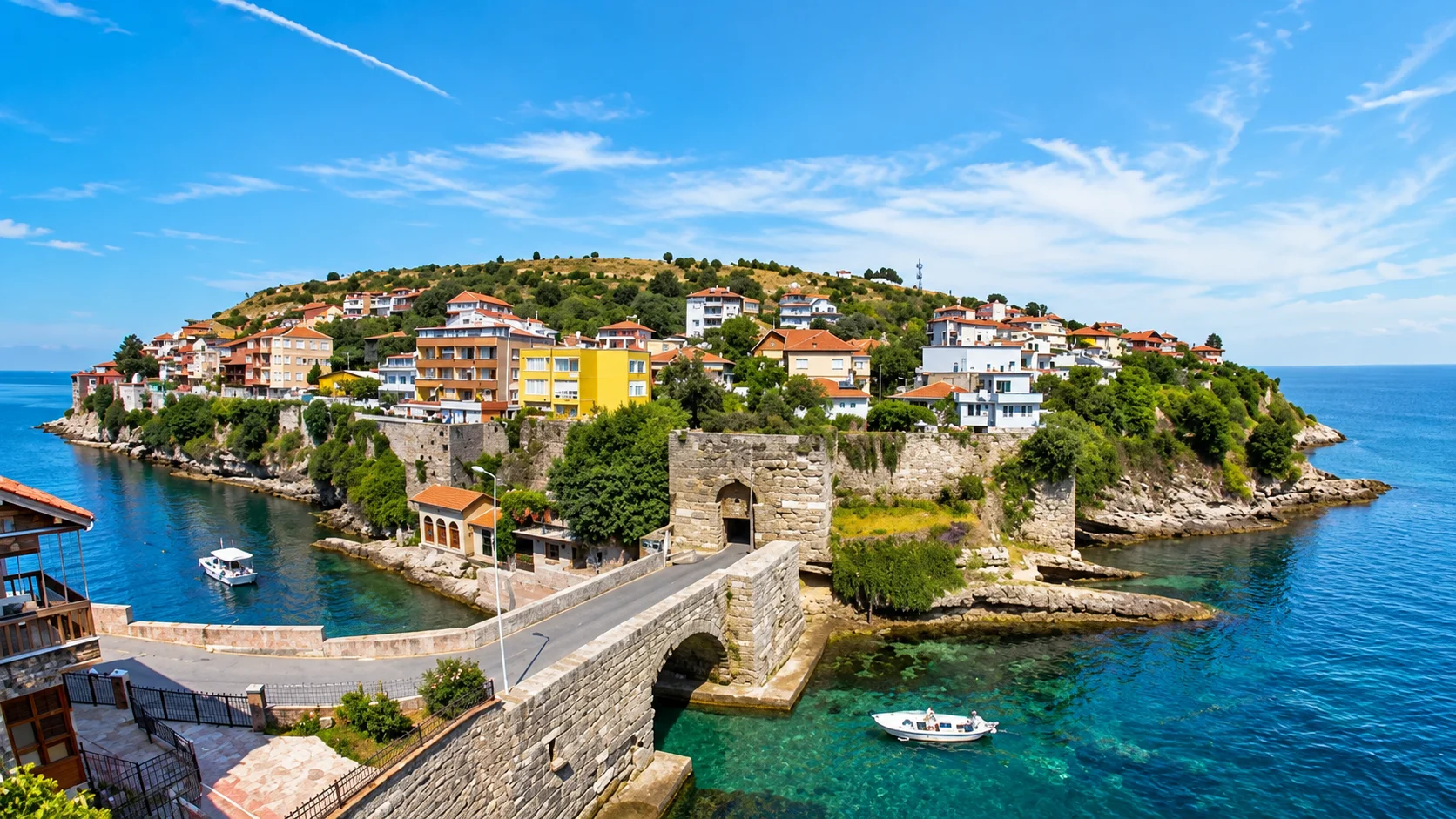
Several small hotels in the castle district offer sea views and direct access to the historic streets. These properties tend to book out earliest — reserve two to three months ahead for summer weekends. Look for hotels that specify harbour or sea views: the difference between a courtyard room and a room facing the Küçük Liman is significant.
Pensions and Family Guesthouses
Amasra's pension culture is well-established. Family-run guesthouses in the old quarter and along the approach roads offer clean, simple accommodation with breakfast, often at considerably lower rates than the hotels. Hosts typically have local knowledge that no booking platform captures — recommended routes to quiet beaches, when the fishing boats come in, which restaurant to trust on a given day.
Practical Booking Notes
Amasra fills up fast on summer weekends — visitors from Ankara (approximately 3.5 hours) make up a significant share of weekend traffic. Mid-week stays in June or September offer better availability and a more local atmosphere. Most properties offer free parking; driving your own car or arriving by private transfer is strongly recommended, as public transport connections are limited and infrequent.
From Istanbul to Amasra
Amasra lies approximately 410–450 km from Istanbul, depending on your starting point. By car, the journey typically takes 5 hours on the O-4/O-6 motorway network via Düzce and Zonguldak. There is no direct train service; the nearest railway station is in Bartın, 13 km away. Long-distance bus services run from Istanbul's main bus terminals to Bartın, with local connections onward to Amasra.
Private Transfer from Istanbul
For families, groups, or travellers with luggage, a private chauffeur-driven transfer is the most comfortable option. Cab Istanbul operates fixed-rate private transfers from Istanbul city hotels, Istanbul Airport (IST), and Sabiha Gökçen Airport (SAW) to Amasra. The vehicle is reserved exclusively for your party; the driver handles the route, tolls, and navigation.
Travelling by private car also means you control the schedule — stopping at Kuşkayası, the lava columns at Güzelcehisar, or İnkumu Beach en route rather than racing to reach Amasra before the next bus.
Best Time to Go and How Long to Stay
When to Visit
June to mid-September is the main season for swimming and beach life. Sea temperatures on the Black Sea coast peak in late July and August at around 22–24°C. The downside is crowds: July and August weekends bring significant day-tripper traffic from Ankara and Zonguldak.
Late May, June and September offer warm weather, manageable crowds, and lower accommodation rates. This is the recommended window for most travellers.
April–May sees the Black Sea coast at its greenest. Waterfalls are at their most powerful, the wildflowers are out, and the town is quiet. Sea swimming is cold but hiking and sightseeing are excellent.
October–March: Amasra has a mild, wet winter. Most pensions reduce capacity or close entirely. The castle, museum, and most restaurants remain open, and the town's essential character is more visible when it is not under tourist pressure.
How Many Days?
Amasra's historic core takes one full day to cover comfortably: castle, Kemere Bridge, Kuşkayası, the museum, the woodturners' market, a harbourfront lunch, and an evening walk along the ramparts.
Two days allows you to add a beach day (İnkumu or Çakraz), a morning at Göldere Waterfall, and a slower pace overall. This is the recommended minimum for first-time visitors.
Three days or more opens up the Güzelcehisar lava columns, Bartın town centre (13 km away), day trips towards Kastamonu or Safranbolu, and a proper exploration of the secondary beaches.
- A car or private transfer makes a significant difference — public transport within the region is sparse
- Most sites are within a short walk of each other in the historic centre
- The town fills up fast on summer weekends — arrive Friday afternoon or wait until Monday
- Parking in the historic centre is limited; use the approach road car parks
For more destinations on Turkey's Black Sea coast, see our Black Sea Coast Turkey guide and the broader Turkey travel guide.
Amasra — Frequently Asked Questions
How far is Amasra from Istanbul and how do you get there?
Amasra is approximately 410–450 km from Istanbul. By car or private transfer on the O-4/O-6 motorway via Düzce and Zonguldak, the journey takes around 5 hours. There is no direct train; buses run from Istanbul to Bartın (13 km from Amasra), with local connections onward. For comfort and flexibility, a private transfer is the most practical option.
Is Amasra worth visiting as a day trip from Istanbul?
Technically possible, but not recommended. The 5-hour drive each way leaves only 3–4 hours in Amasra itself, which is not enough time to do justice to the castle, museum, Kuşkayası, and a proper lunch. A minimum of one overnight stay — ideally two — is strongly recommended. Amasra rewards those who slow down.
What is the best time of year to visit Amasra?
Late May through June and September offer the best balance of warm weather, open sea, and manageable crowds. July and August are the warmest months for swimming but the most crowded. Spring (April–May) is beautiful for landscape and hiking. Winter is quiet and mild but most pensions reduce services or close.
Can you swim at Amasra's beaches?
Yes. Büyük Liman and Küçük Liman beaches are within the town and suitable for swimming from June through September. İnkumu (31 km) and Çakraz (15 km) offer quieter alternatives. Sea temperatures peak at around 22–24°C in late July to August.
What is the Kuşkayası Monument?
The Kuşkayası Monument is a Latin inscription carved into a coastal cliff on the road into Amasra, commissioned by Gaius Julius Aquila in honour of Emperor Claudius (41–54 AD). It commemorates the construction of a Roman road along this coastline and is one of the most unusual Roman-era monuments in Turkey. It is visible from both the road and the sea, with a small stopping area nearby.
Do I need a car to explore Amasra?
The historic town centre is entirely walkable. However, to reach İnkumu and Çakraz beaches, the Göldere Waterfall, the Güzelcehisar lava columns, and Bakacak viewpoint, a car or hired private transport is necessary. Public buses within the region are infrequent and not always reliable for day-trip timing.
What should I eat in Amasra?
Fresh fish is the centrepiece — Black Sea anchovy (hamsi) pan-fried with cornbread is the signature dish. The local Amasra salad (lettuce, pickles, rocket, herbs, pomegranate molasses dressing) is served with most fish meals. Black Sea cornbread, black cabbage soup, and hand-rolled noodles (erişte) are regional specialities. Harbourfront restaurants chalk up the day's catch on boards outside.
Is Amasra suitable for families with children?
Yes, very much so. The town is compact and safe, the beaches are calm and sheltered, and the historic sites are accessible without strenuous walking. The Büyük Liman beach is particularly family-friendly. Children tend to enjoy the Kemere Bridge, the castle walls, and the woodturners' workshops in the bazaar. Avoid peak-summer weekends if possible.
What other places can be visited near Amasra?
Bartın city centre (13 km) has a well-preserved Ottoman market district. Safranbolu (roughly 90 km south) is a UNESCO World Heritage-listed Ottoman town. Kastamonu (around 160 km) is worth a half-day for its castle and museum. Sinop (around 270 km along the coast) is the northernmost point of Turkey and a rewarding Black Sea extension.
How do I book a private transfer from Istanbul to Amasra?
Cab Istanbul provides private chauffeur-driven transfers from Istanbul city hotels, Istanbul Airport (IST), and Sabiha Gökçen (SAW) to Amasra at a fixed rate. Request a quote via our contact page, by WhatsApp at , or by emailing info@cabistanbul.com.
Ready to Travel to Amasra?
Cab Istanbul handles private transfers from Istanbul and both Istanbul airports to Amasra — door to door, fixed-rate pricing, professional chauffeurs. Leave the driving to us and focus on the journey.