
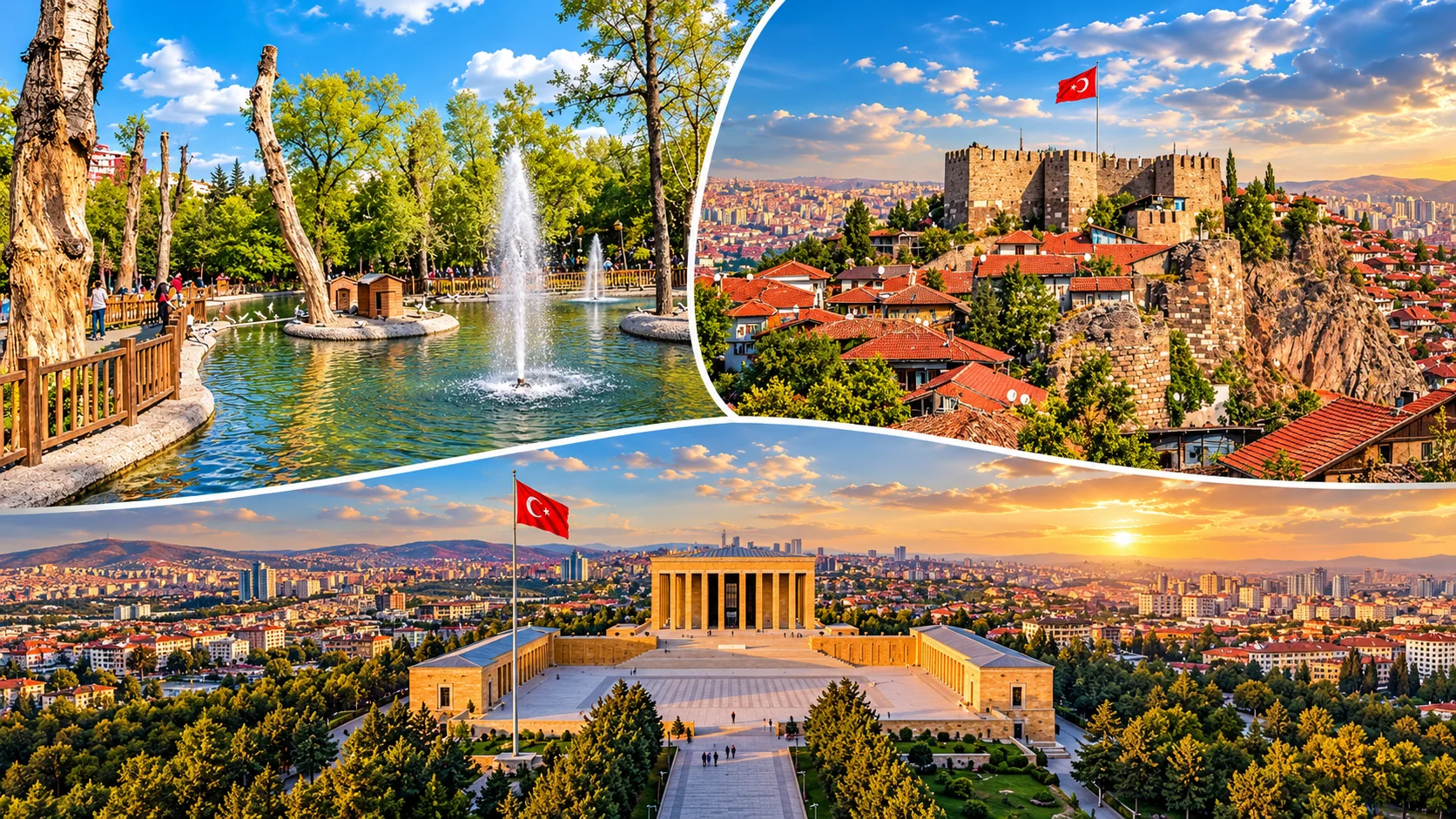
Ankara carries more republic history per square kilometre than almost any other city on earth. Three successive parliament buildings stand within walking distance of each other in Ulus. The mausoleum of Mustafa Kemal Atatürk dominates the western skyline. Roman temples, a medieval citadel and two sites added to the UNESCO World Heritage List in 2023 sit within a few kilometres of the modern ministries. This guide covers the city quarter by quarter and reaches into the provincial districts — Gordion, Beypazarı, Kızılcahamam, Nallıhan — where Ankara rewards visitors who look beyond the capital's official façade.
Why Ankara Is Different
Turkey's second-largest city is chronically underestimated by visitors who see it as a bureaucratic stopover between Istanbul and Cappadocia. That perception is wrong. Ankara is one of the few modern capitals deliberately built to embody a political idea — the secular Turkish Republic — and every district reflects that founding intention. But underneath the republic layer lies a far older city: ancient Ancyra, a Phrygian, Hellenistic, Roman and Byzantine centre whose physical traces survive in the middle of the modern metropolis.
Two UNESCO inscriptions in a single year — Gordion (September 2023) and Arslanhane Mosque as part of the "Wooden Hypostyle Mosques of Medieval Anatolia" group site (September 2023) — add new weight to a heritage portfolio that was already serious. The Museum of Anatolian Civilizations in the citadel district holds one of the world's finest collections of Neolithic, Bronze Age and Hittite artefacts under a single roof.
Quick Picks
- Best monument: Anıtkabir — Atatürk's mausoleum, one of the most visited sites in Turkey
- Best museum: Museum of Anatolian Civilizations — Neolithic to Hittite in one building, UNESCO-recognised collection
- Best republic history sequence: I. TBMM → II. TBMM → Ethnography Museum → Anıtkabir, all in a half-day route
- Best ancient site: Temple of Augustus and Rome in Ulus — with the Res Gestae inscription (Monumentum Ancyranum)
- Best neighbourhood: Hamamönü — restored Ottoman streetscape in the centre of Ulus
- Best day trip: Gordion — UNESCO World Heritage 2023, Phrygian capital, 90 km west
- Best nature escape: Soğuksu National Park (Kızılcahamam) — pine forests and thermal springs, 80 km north
- Best Ottoman village: Beypazarı — silver jewellery, large mansions, traditional cuisine, 100 km northwest
Anıtkabir — Atatürk's Mausoleum
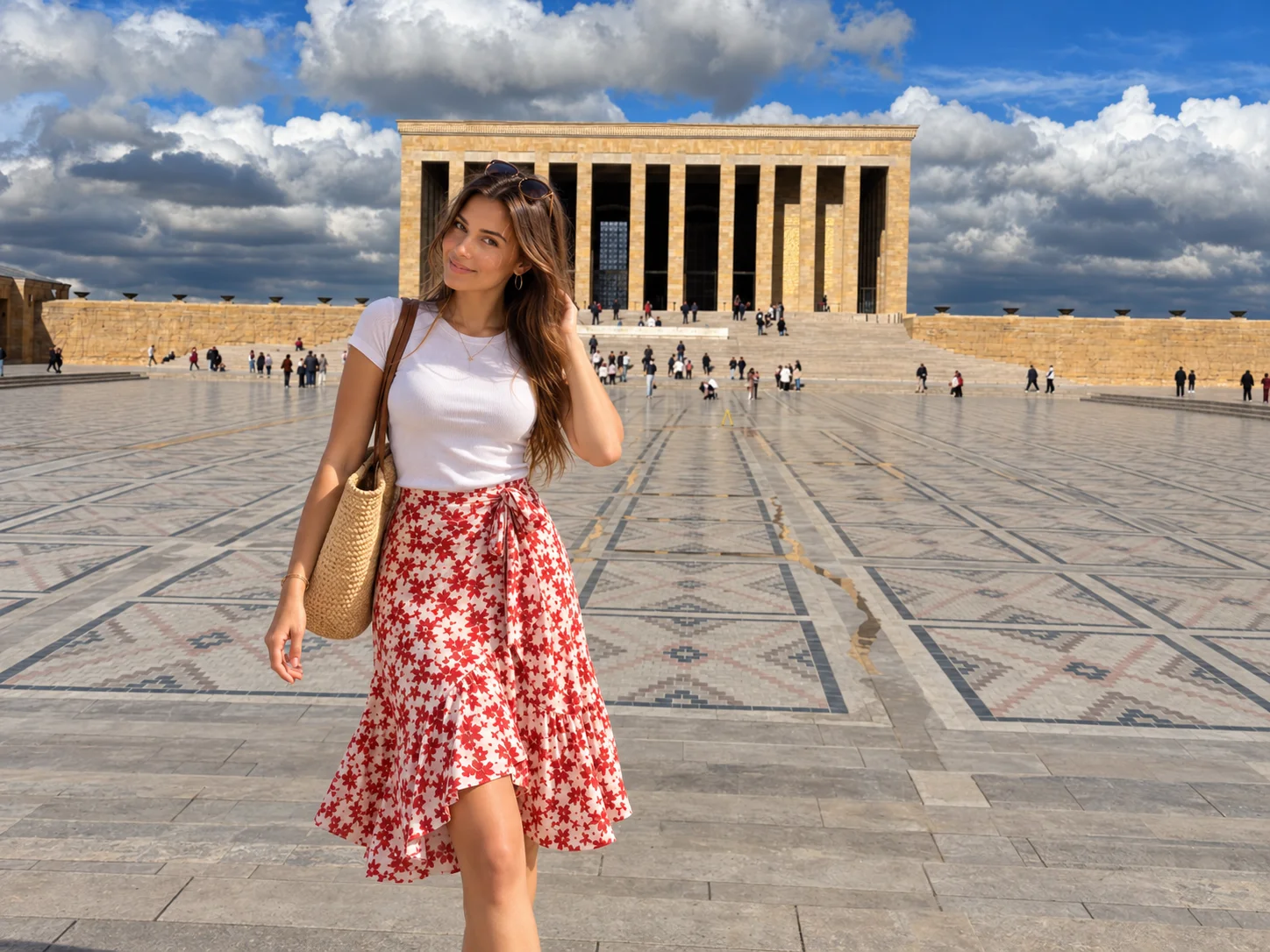
Anıtkabir stands on Rasattepe hill in Çankaya — the most visited monument in Ankara.
Anıtkabir (Atatürk's Mausoleum) stands on Rasattepe hill in the Çankaya district and is the single most visited site in Ankara. Construction began in 1944 and the mausoleum was completed in 1953. The architects were Emin Onat and Orhan Arda, who designed a structure combining Anatolian and classical references without falling into direct revival styles.
The complex centres on the Ceremonial Grounds (Tören Alanı), a vast rectangular courtyard flanked by colonnaded galleries. At the far end, the mausoleum hall rises over the sarcophagus chamber below. The complex also houses an extensive museum documenting Atatürk's life, the War of Independence and the early republic. The İnönü Museum within the same grounds commemorates İsmet İnönü, Turkey's second president, who is also interred here.
Entry is free. The mausoleum and museum are open daily; the guard changing ceremony takes place at regular intervals and draws large crowds. Visitors are expected to maintain respectful dress and conduct throughout the grounds. Allow two to three hours, longer if using the museum in depth.
The Three Parliament Buildings — A Republic History Route
No other capital city in the world has three successive national parliament buildings still standing and accessible within a single neighbourhood. All three are in or near Ulus, and visiting them in order tells the story of the Turkish Republic from its founding crisis to its constitutional present.
I. Grand National Assembly — Kurtuluş Savaşı Müzesi (War of Independence Museum)
The first building to serve as Turkey's parliament was not purpose-built for that role. Constructed in 1915 as the Ankara clubhouse of the İttihat ve Terakki Cemiyeti (Committee of Union and Progress), it was a modest two-storey structure designed by Evkaf architect Salim Bey and built under military architect Hasip Bey. When Mustafa Kemal convened the Grand National Assembly in Ankara on 23 April 1920 — a date now celebrated as National Sovereignty and Children's Day — this was the building available.
The assembly used the building as its meeting hall until 15 October 1924, when it moved to the newly completed second parliament building next door. The I. TBMM building was converted into the War of Independence Museum (Kurtuluş Savaşı Müzesi) and opened to the public on 23 April 1981. The original assembly chamber, member seats and historical documents are preserved inside. Entry is free.
II. Grand National Assembly — Cumhuriyet Müzesi (Republic Museum)
The second parliament building was purpose-built and designed by Turkish architect Vedat Tek, one of the leading figures of the First National Architectural Movement. Construction was completed in 1924. The Grand National Assembly sat here from 18 October 1924 until 27 May 1960, when the military coup suspended parliamentary activity.
The building became the Republic Museum (Cumhuriyet Müzesi) and opened on 30 October 1981. It houses exhibitions on the founding period of the republic, the 1924 constitution, and the development of Turkish democracy. The original chamber — where the republic was proclaimed on 29 October 1923 — remains intact and is the centrepiece of the museum. Vedat Tek's neoclassical-influenced design with Turkish ornamental details is worth examining closely from the exterior before entering. Entry is free.
The Current TBMM — Clemens Holzmeister's Parliament
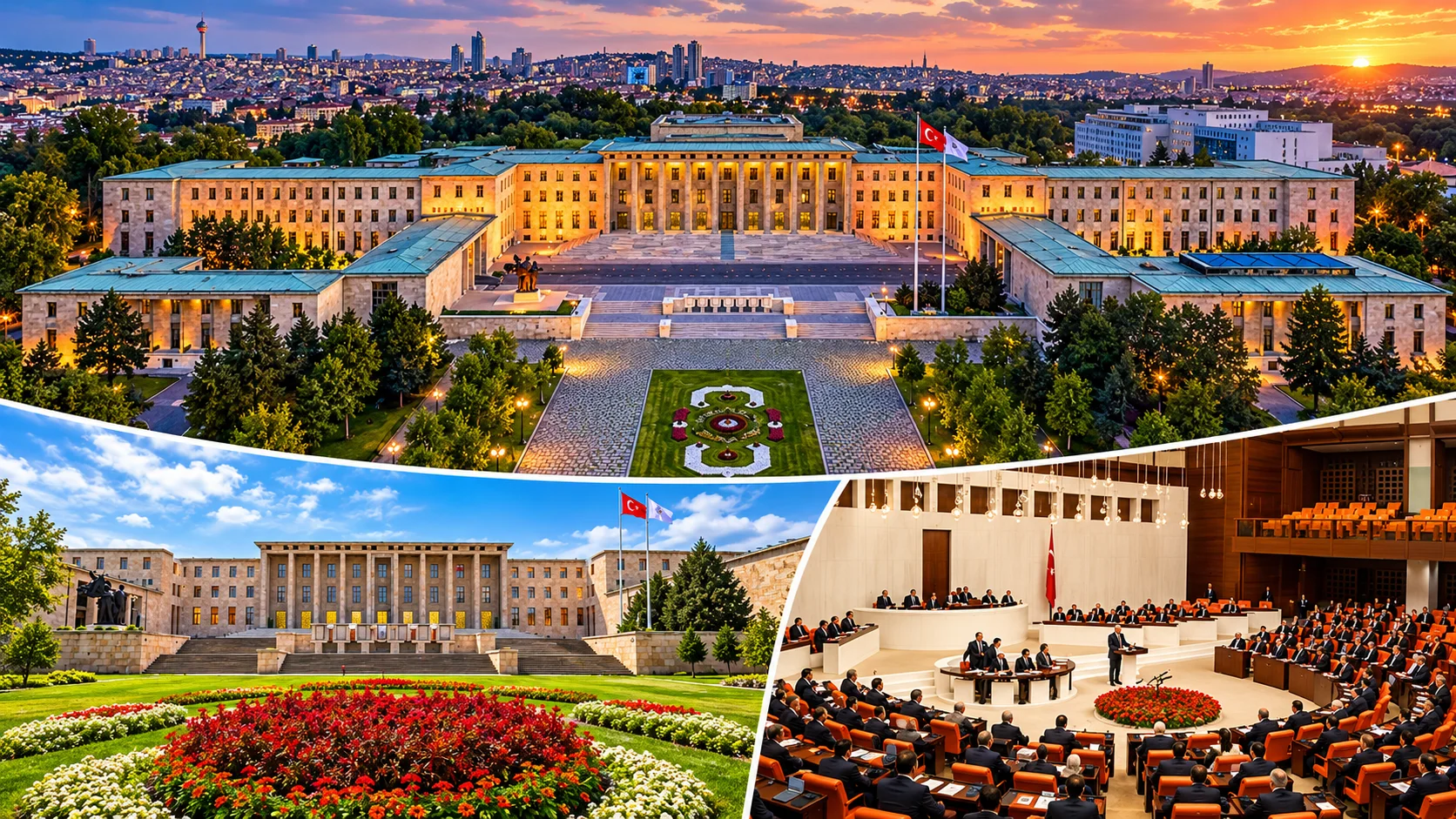
The current Grand National Assembly building is the work of Austrian architect Clemens Holzmeister, who was commissioned in the late 1930s as part of the broader effort to build a modern capital befitting the republic. The foundation ceremony was held on 26 October 1939. Holzmeister directed the project until 1948, when he returned to Austria; his assistant Ziya Payzın supervised the completion. The building was inaugurated on 6 January 1961.
The exterior is clad in beige travertine; the interiors use thirty varieties of marble sourced from across Turkey. The complex includes the General Assembly hall, committee rooms, library and administrative wings arranged around a formal garden. The building is an active legislature — access for the public is limited and requires advance arrangement. The exterior and gardens can be viewed from the surrounding avenues. The complex sits on Bakanlıklar Bulvarı in the Çankaya district.
Ulus — Ancient Ancyra
Ulus is the oldest inhabited district of modern Ankara and the place where the ancient city — known in antiquity as Ancyra — is most legible. The Phrygians founded a settlement here. The Hellenistic kingdom of Galatia made it a capital. Rome absorbed it, and the architectural traces of Roman Ancyra survive in the middle of the neighbourhood.
Temple of Augustus and Rome
The Temple of Augustus and Rome stands in the Ulus district, adjacent to the Hacı Bayram Mosque. It was built during the reign of Augustus and completed under Tiberius, in the 1st century CE. The temple is the best-preserved Roman structure in Ankara and one of the most significant in Anatolia. Its columns and cella walls still stand to substantial height.
The temple's exceptional historical importance derives not from its architecture alone but from the inscription carved on its interior walls: the Res Gestae Divi Augusti (Monumentum Ancyranum). This is the official record of the deeds and achievements of Emperor Augustus, dictated by Augustus himself before his death in 14 CE and inscribed on the temple in both Latin and Greek. The Ankara copy is the best-preserved version of this document anywhere in the world. Augustus was born in Rome; the Res Gestae was inscribed in Ankara because the city was a significant provincial centre — not because of any birth connection.
The temple and the adjacent Hacı Bayram Mosque form a remarkable juxtaposition of Roman and Ottoman religious architecture on the same site. Entry to the temple precinct is through a ticketing system; the mosque is freely accessible.
Roman Bath — Caracalla Bath
The Roman Bath (Roma Hamamı) in Ulus dates to the 3rd century CE and is associated with the reign of Caracalla, who visited Ancyra in 215 CE. The ruins include substantial sections of the frigidarium, tepidarium and caldarium walls, along with hypocaust heating infrastructure. The bath complex is one of the larger Roman bath ruins surviving in Anatolia. It lies within a fenced archaeological area in Ulus and can be viewed from the walkways around the site. Excavations have continued here since the 1930s.
Arslanhane Mosque — UNESCO World Heritage 2023
Arslanhane Mosque (Ahi Şerafettin Camii) was built in the late 13th century during the Anatolian Seljuk period. It stands on the southern slopes of the Ankara Citadel hill in Ulus. The mosque's interior is supported by wooden columns with muqarnas capitals — the defining feature of the Anatolian wooden hypostyle mosque tradition. Original Seljuk-era tile work, carved wooden pulpit (minber) and ceiling decoration survive in good condition.
In September 2023, Arslanhane Mosque was inscribed on the UNESCO World Heritage List as part of the multi-component site "Wooden Hypostyle Mosques of Medieval Anatolia," which includes five mosques across Turkey. This inscription made Arslanhane Mosque one of Turkey's 21st UNESCO World Heritage properties. The mosque is an active place of worship; visitors are welcome outside prayer times with appropriate dress.
Hacı Bayram Mosque
Hacı Bayram Mosque, built in the early 15th century by the founder of the Bayramiyye Sufi order, stands immediately beside the Temple of Augustus. The mosque was substantially renovated in the 18th century and is one of the most venerated religious sites in Ankara. The combination of the ancient Roman temple ruins and the Ottoman mosque on the same square is one of the most photographed scenes in the city. The tomb (türbe) of Hacı Bayram Veli is attached to the mosque and draws pilgrims year-round.
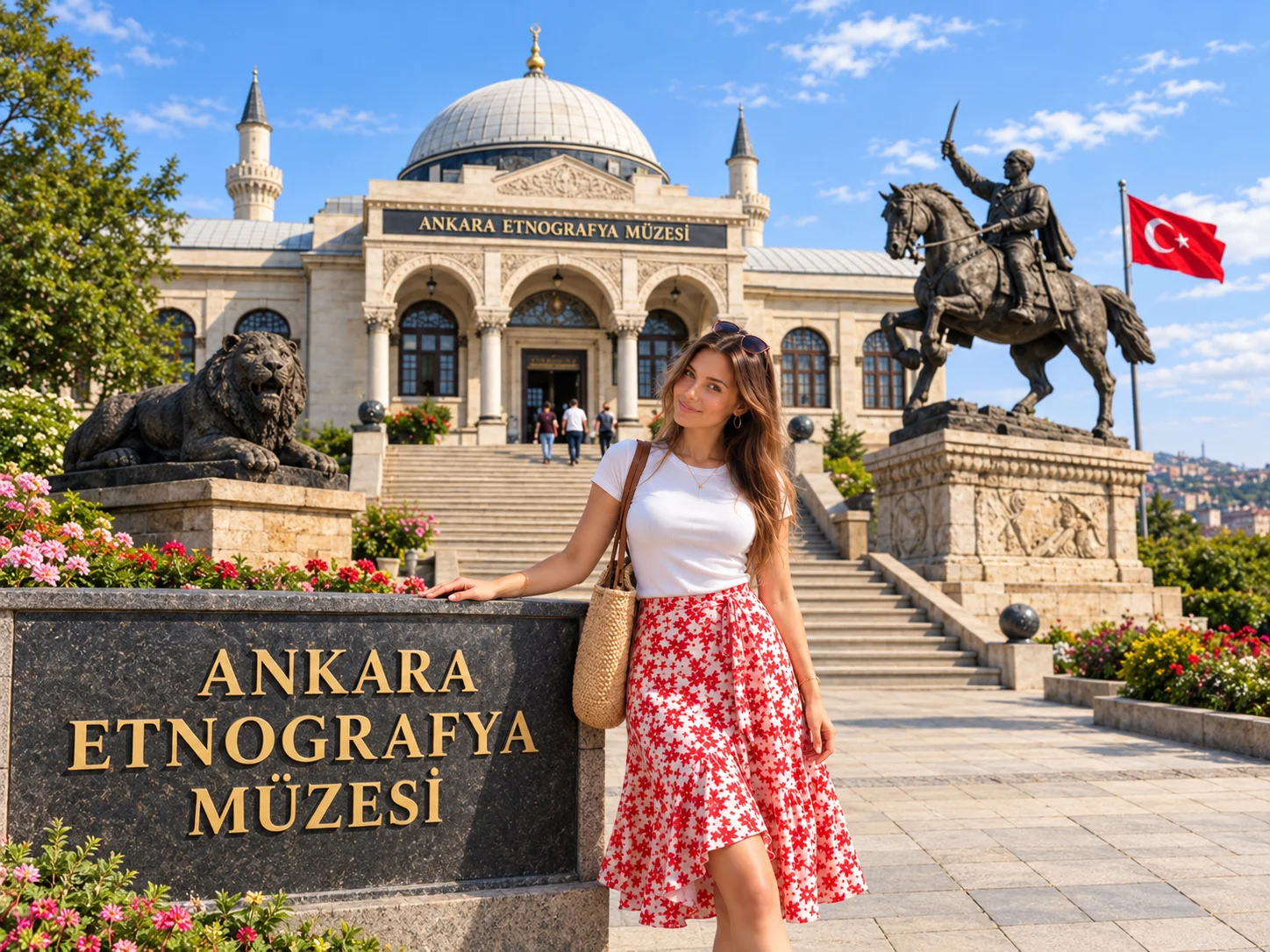
Ankara Ethnography Museum, opened in 1930, houses Seljuk, Ottoman and early republican artefacts.
Ankara Ethnography Museum
The Ankara Ethnography Museum (Etnografya Müzesi) is a short distance south of the two parliament buildings on Talat Paşa Bulvarı. The building was designed in a neoclassical style and opened in 1930, making it one of the earliest purpose-built museums of the republic. It served temporarily as the resting place of Atatürk's remains between 1938 and 1953, before the completion of Anıtkabir.
The collections cover Seljuk and Ottoman-era woodwork, metal objects, carpets, weapons, costumes and calligraphy. The tile collection includes important pieces from Anatolian Seljuk and Ottoman workshops. The museum is a strong complement to the Anatolian Civilizations Museum and to the parliament buildings nearby — visiting all four sites in a single morning is practical.
Ankara Citadel (Ankara Kalesi)
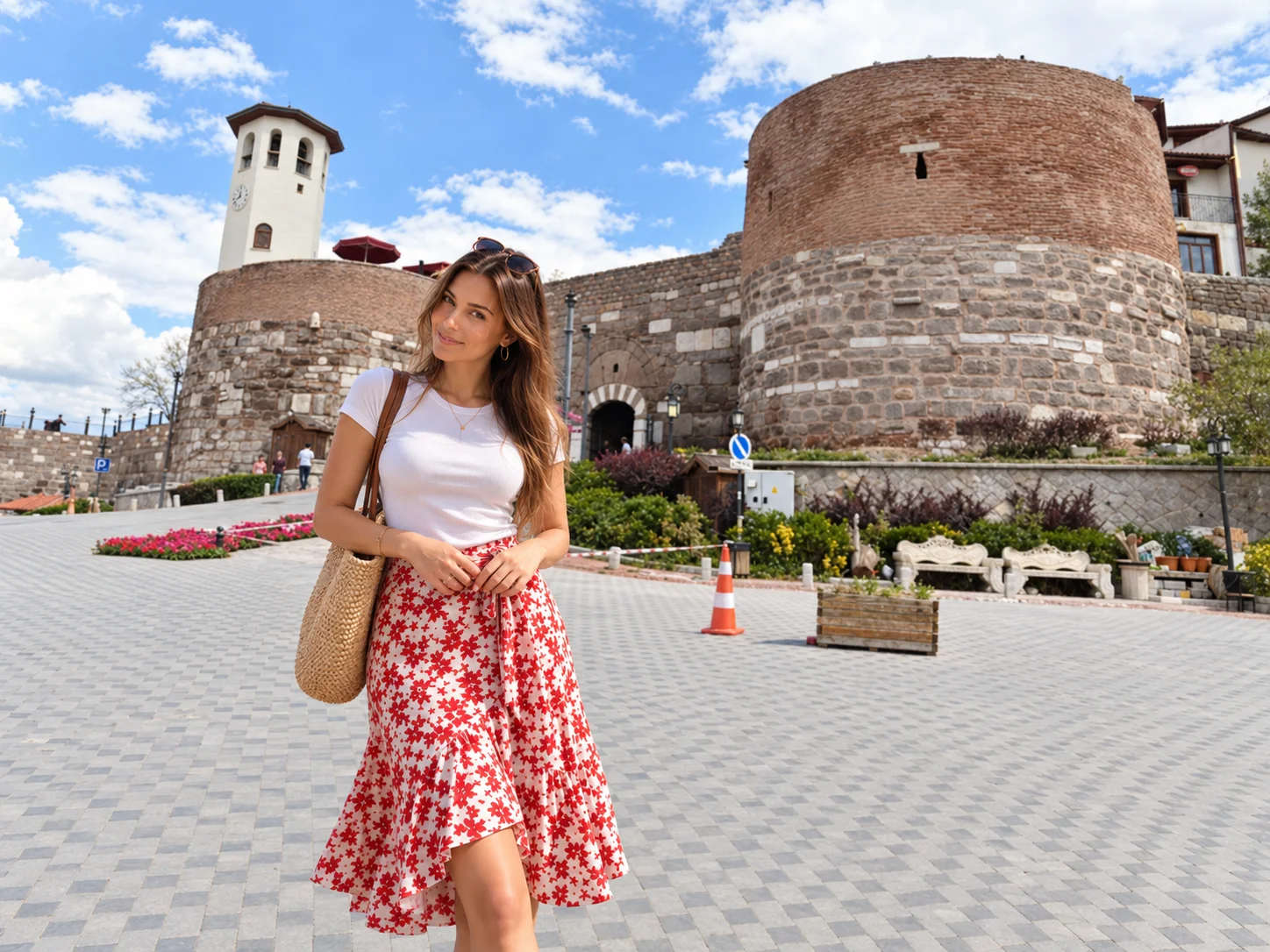
The Byzantine and Ottoman walls of Ankara Citadel enclose a neighbourhood of old houses and workshops.
The Ankara Citadel (Ankara Kalesi or Hisar) rises on a rocky hill above Ulus and is one of the most distinctive features of the city's silhouette. The main fortification walls date to the Byzantine period, built over earlier structures; Ottoman additions are also visible. The inner fortress (İç Kale) and outer fortress (Dış Kale) form concentric rings of walls with towers.
Inside the citadel walls is a residential quarter of old Ankara houses, many restored for use as restaurants, galleries, carpet shops and small hotels. The neighbourhood has an organic medieval street pattern that contrasts sharply with the grid-planned modern city below. Walking the inner walls offers wide views over the capital. The Museum of Anatolian Civilizations occupies two restored bedestens (covered market buildings) just below the citadel's main gate.
The Ankara Citadel area is freely accessible at all times. The neighbourhood is busiest on weekend afternoons and evenings when Ankarans use the restaurants and cafés in the restored houses. Several antique shops on the main street below the inner gate specialise in Ottoman brasswork and Anatolian kilims.
Museum of Anatolian Civilizations
The Museum of Anatolian Civilizations (Anadolu Medeniyetleri Müzesi) is consistently ranked among the finest archaeological museums in the world. It occupies two restored Ottoman-era covered market buildings (the Mahmut Paşa Bedesteni and the Kurşunlu Han) directly below the main gate of Ankara Citadel. The museum was awarded the Council of Europe Museum Prize in 1997.
The collection is chronologically arranged and covers human presence in Anatolia from the Palaeolithic period through the Chalcolithic, Early Bronze Age, Assyrian Trading Colonies period, Hittite Empire, Phrygian Kingdom, Urartian, Greek and Roman eras. The Hittite and Phrygian collections are internationally exceptional: cuneiform tablets, royal reliefs from Carchemish, the Ankara sphinx, gold and bronze objects from Alacahöyük, and the Gordion finds including objects from the Midas tomb mound.
Visitors planning to visit Gordion as a day trip should come to this museum first — the excavated objects are here, while the site preserves the landscape and the burial mounds. Allow a minimum of two to three hours; the building itself, with its central courtyard and original timber structure, is architecturally significant.
Hamamönü
Hamamönü is an Ottoman neighbourhood in the Altındağ district of Ulus that underwent careful restoration from 2009 onwards. The streets are lined with two-storey timber-framed houses with projecting upper storeys (cumba), most of them dating from the 19th century. The neighbourhood takes its name from a historic bathhouse (hamam) that stood at the head of the street.
Today Hamamönü functions as a cultural district: ground floors of the restored houses hold cafés, bookshops, art galleries, craft workshops and traditional lokanta restaurants. It is one of the few places in Ankara where the pre-republic Ottoman streetscape survives in coherent form and at walking pace. Weekend afternoons bring the heaviest footfall. The neighbourhood connects naturally to the citadel area above and the parliament buildings below, making it a logical stop on the Ulus walking circuit.
Modern Ankara — Çankaya, Kızılay and Beyond
Kızılay is the commercial and transport hub of modern Ankara, dominated by pedestrian shopping streets, large squares and metro interchange stations. Tunalı Hilmi Caddesi in the Kavaklıdere district is the main avenue for restaurants, bars and boutiques. Çankaya, the district that houses the presidency, major embassies and the current TBMM, extends south from Kızılay and represents the formal face of the republic capital.
Gençlik Parkı, a large urban park created in 1943, sits between Ulus and the central station area and offers an artificial lake, an amusement park and open-air tea gardens. Anıt Park (Anıtpark) near the Çankaya road gives views across the city. The Ahmet Hamdi Akseki Mosque, one of the largest modern mosques in Ankara, stands on Dumlupınar Bulvarı in Çankaya near the Diyanet İşleri Başkanlığı headquarters; it was opened on 18 April 2013 and its distinctive modern minaret profile is visible across the southern districts.
The Segmenler Park complex, the METU (Odtü) forest campus and the Bilkent University campus all offer green spaces in the otherwise dense urban fabric of the capital. Ankara is a university city — several major institutions give the central districts a consistently active student population.
Atatürk Forest Farm (AOÇ) and the New Natural Life Park
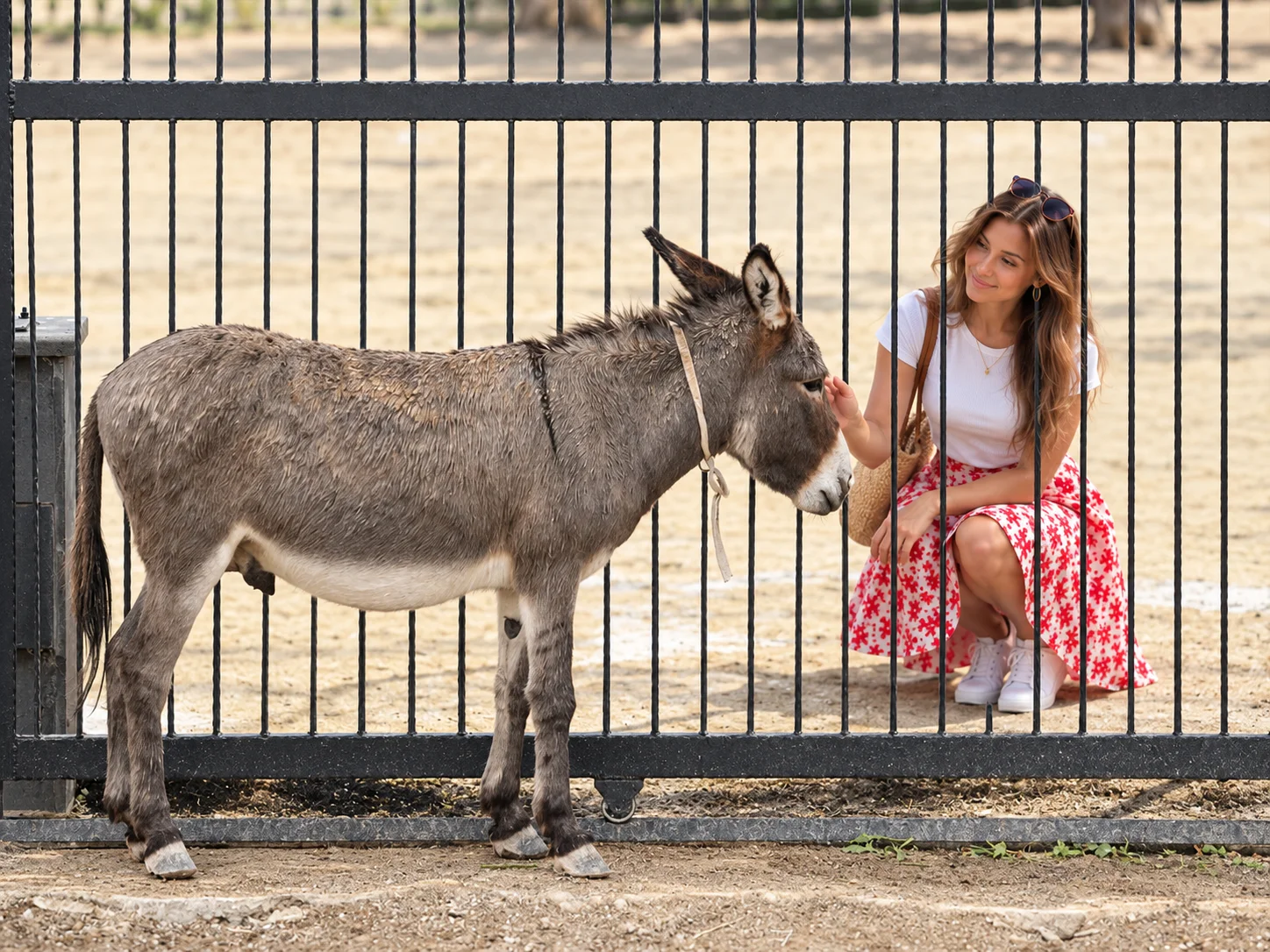
Atatürk Forest Farm (AOÇ) occupies a large area northwest of the city centre and has evolved continuously since its founding in 1925.
Atatürk Forest Farm (Atatürk Orman Çiftliği — AOÇ) was established by Mustafa Kemal Atatürk in 1925 as a model agricultural enterprise intended to demonstrate modern farming methods on the Anatolian plateau. The farm covers a large area northwest of the city centre and originally produced grain, wine, beer and dairy products. The Marmara Köşkü, a small villa used by Atatürk during his working visits to the farm, is open to visitors.
The AOÇ's traditional zoo, which operated for decades, closed in 2013. In February 2024 a Digital Zoo opened on the site, offering interactive exhibits. A far larger successor project — the Ankara Natural Life Park — opened in September 2025, covering 940,000 square metres with living animal habitats across multiple ecosystem zones. This new park is the major animal attraction in the capital going forward.
The broader AOÇ park grounds include forests, picnic areas, a beer garden (the original AOÇ beer production continues), a dairy shop and the farm museum. It is one of the most popular weekend leisure destinations for Ankara residents, particularly families.
Day Trips from Ankara
Ankara's central location on the Anatolian plateau makes it an effective hub for day trips into surrounding provinces. Four directions yield very different experiences: west to Gordion and Beypazarı, north to Kızılcahamam and Nallıhan, south to Gölbaşı and the volcanic lake district.
For multi-city Anatolian itineraries, Ankara connects naturally to Cappadocia to the southeast (about 4–5 hours by bus or car) and to Hattusa, the Hittite capital, in Çorum province to the northeast (about 3 hours). A private intercity transfer is the most practical option for reaching these sites with flexibility on stops and schedule.
Gordion — UNESCO World Heritage 2023
Gordion, ancient capital of the Phrygian kingdom and the city associated with the legend of the Gordian Knot, lies approximately 90 km west of Ankara near the modern town of Polatlı. The site was inscribed on the UNESCO World Heritage List on 18 September 2023 at the extended 45th session in Riyadh — Turkey's 20th UNESCO World Heritage site.
The archaeological zone includes the Citadel Mound (Yassıhöyük), where excavations have revealed a continuous sequence of occupation from the Early Bronze Age through the Hellenistic period, and the Tumulus Field — over 100 burial mounds of varying sizes. The largest, Büyük Tumulus (the "Midas Mound"), dates to approximately 740–718 BCE and was excavated by the University of Pennsylvania in 1957. The wooden burial chamber inside is the oldest wooden structure preserved in the world in its original position. The on-site Gordion Museum houses the artefacts recovered from the citadel and tumuli; the finest pieces are at the Museum of Anatolian Civilizations in Ankara.
Beypazarı
Beypazarı, approximately 100 km northwest of Ankara, is one of the best-preserved Ottoman towns in central Anatolia. The old quarter (Tarihi Çarşı) consists of a dense cluster of 19th-century timber-framed mansions with ornate projecting bays, restored and operating as boutique hotels, cafés and craft shops. Beypazarı is particularly known for its silver jewellery workshops — the town has maintained a silversmithing tradition for centuries and the central market street is lined with jewellers working in traditional styles.
The local cuisine is another draw: Beypazarı kurusu (a sun-dried pasta dish), güveç pottery stews and the local havuç (carrot) dishes are regional specialities. The town also grows a distinctive large carrot variety that has EU Geographic Indication status. A morning visit from Ankara allows time for the old quarter, a market walkthrough and lunch; the drive through the Ankara highlands is attractive in spring.
Kızılcahamam and Soğuksu National Park
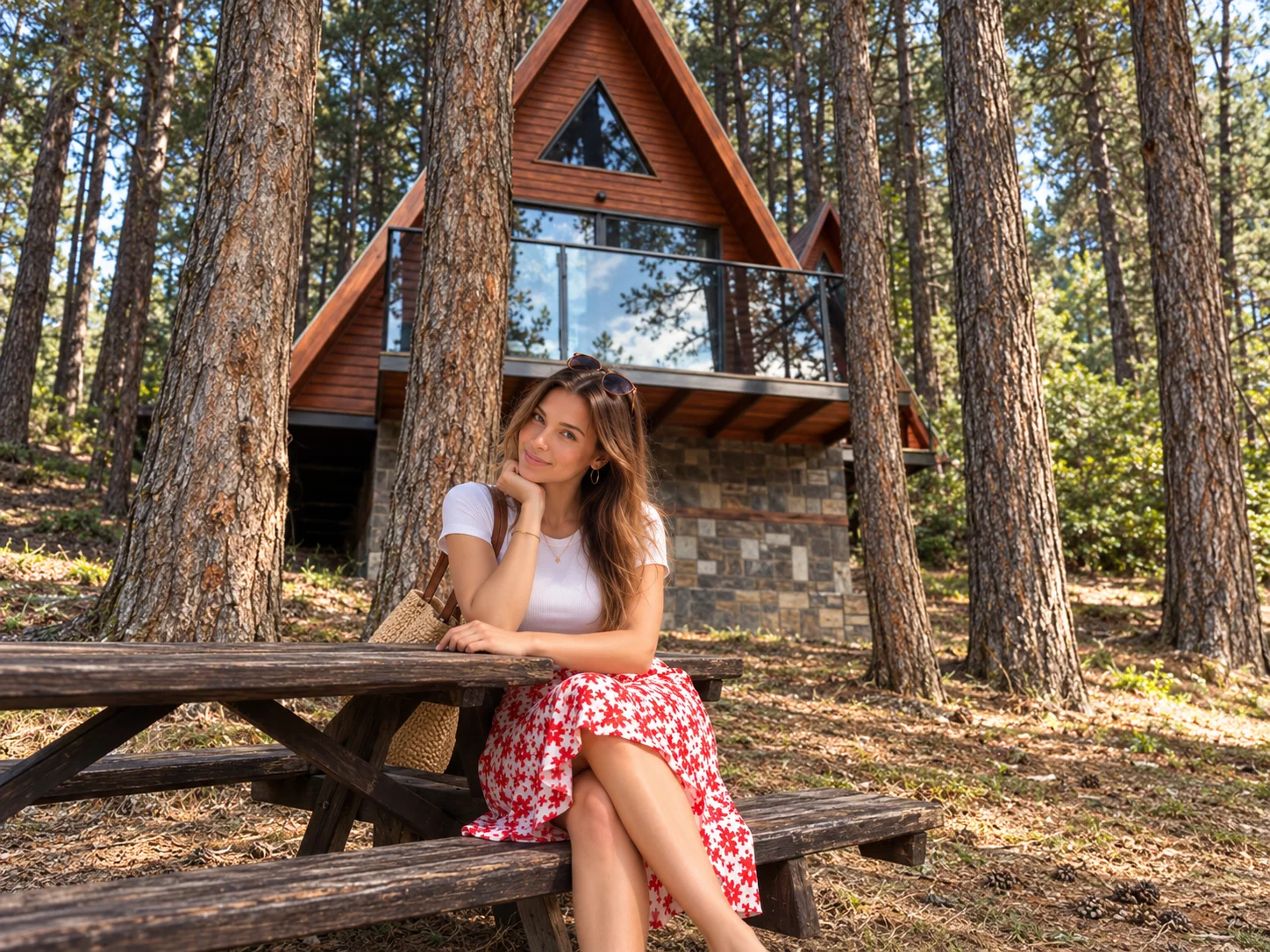
Soğuksu National Park near Kızılcahamam preserves a mountain pine forest with walking trails and cold-water springs.
Kızılcahamam, about 80 km north of Ankara, is a thermal spa town in the forested highlands of Ankara province. The town is best known for its hot springs (kaplıca) and the adjacent Soğuksu National Park. The park covers pine and fir forest on the slopes of the Elmadağ massif, with walking trails, picnic grounds and a cold freshwater spring (Soğuksu — "cold water") that gives the park its name.
The national park is particularly popular in spring when the forest floor is carpeted with wildflowers and in autumn for the foliage. A network of well-marked trails ranges from easy valley walks to half-day hill climbs. Kızılcahamam town has thermal hotel facilities, making it a viable overnight base for walkers and families. The combination of thermal bathing and forest walking makes this the most popular nature day trip from Ankara.
Nallıhan
Nallıhan, about 130 km northwest of Ankara on the road to Bilecik, is known for two distinct attractions: the Nallıhan Bird Sanctuary (Nallıhan Kuş Cenneti) and traditional Nallıhan lacework. The bird sanctuary, centred on the Sarıyar Reservoir delta, is one of the most significant wetland birding sites in north-central Anatolia, with large populations of herons, egrets, cormorants and migratory waterfowl. Spring and autumn migration periods are the best times to visit.
Nallıhan lacework (oya) is a distinctive needle-lace tradition specific to this town; examples are sold in local shops and the regional market. The town itself is small and the road through the Kirmir Canyon between Ankara and Nallıhan is considered one of the most scenic drives in the region.
Gölbaşı
Gölbaşı lies about 20 km south of central Ankara and is effectively the city's southern recreation district rather than a separate day trip destination. The Mogan and Eymir lakes are shallow natural lakes set in rolling terrain, ringed with walking and cycling paths and tea gardens. Both lakes are protected nature areas and popular with joggers, cyclists and families from the city. The Eymir Lake trail (about 6 km around the lake) is one of the most used outdoor circuits in the capital region. Gölbaşı can be reached by public transport and makes an easy half-day excursion from the city centre.
Getting to Ankara
Ankara is served by Esenboğa International Airport (ESB), about 28 km north of the city centre. Direct flights connect Ankara with major Turkish cities and a range of international destinations. The Havaş bus runs between the airport and Kızılay; taxis are available at the terminal. Private airport transfers provide the most direct option to a specific hotel or address.
High-speed rail (YHT) connects Ankara with Istanbul in approximately 4–4.5 hours; the Istanbul departure point is Pendik station in the Asian side. Trains run multiple times daily. The Ankara central station (Ankara Garı) is adjacent to the city centre and has good metro connections. Long-distance buses serve Ankara from all major Turkish cities at competitive prices; the AŞTİ bus terminal is on the metro network. A car with driver from Istanbul allows flexibility on the route and stops along the way.