
Where the Aegean and Mediterranean Share a Shoreline
Datça occupies one of the most dramatically positioned peninsulas in Turkey — a slender finger of land where the Aegean washes its northern coast and the Mediterranean its southern. The reward for that geography is extraordinary: translucent coves accessible only by boat or rough track, an ancient Greek city at the very tip of the land, a medieval stone village still breathing the memory of one of Turkey's most-loved poets, six century-old windmills on a ridge above the olive groves, and a geographically registered almond variety that grows nowhere else on Earth. This guide covers everything you need to plan a 2026 visit.
Why Datça Stays Different
Access is genuinely difficult, and that is exactly the point.
Datça sits at the end of a 70-kilometre peninsula with no major motorway and no international airport. The nearest airport — Dalaman — is roughly 155 km away by road, about three hours' drive. The geography is self-selecting: the resort clusters, theme parks and all-inclusive hotels that define many of Turkey's coastal towns have never taken root here. What you find instead is a peninsula where fishing villages still look like fishing villages, where the loudest sound on an October morning is almond harvest, and where a 2,400-year-old city sits at the peninsula's tip with the sea on three sides.
- Peninsula geography separating Aegean (north coast) from Mediterranean (south coast)
- Ancient Knidos — ruins, double harbour, spectacular sunset panorama at the tip
- Eski Datça — restored stone village, bougainvillea-draped lanes, literary heritage
- Palamutbükü, Hayıtbükü, Ovabükü and a dozen quieter coves
- Datça Nurlu Almond — geographically registered variety, harvested late August–October
- 155-km section of the Carian Trail (Karia Yolu) — Turkey's longest long-distance footpath
- Best season for hiking, wildflowers and almond blossom: February–May
Knidos: The City on Three Seas
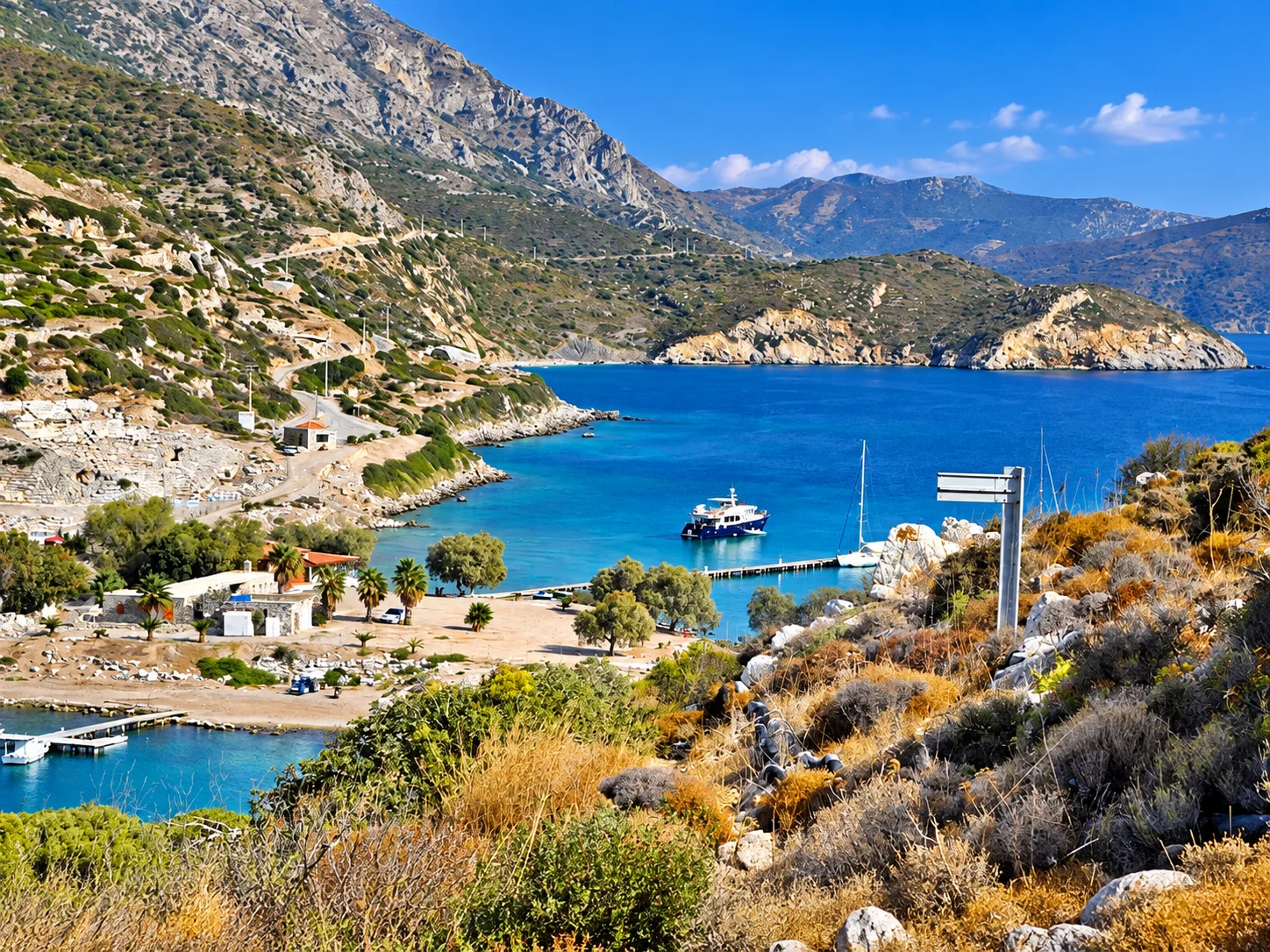
Knidos (Cnidus) stands at the very tip of the Datça Peninsula, roughly 45 km west of Datça town centre by road. The city was relocated to this sea-girt headland around 360 BC from a site further east, and its engineers took full advantage: they constructed a double harbour — one basin for merchant ships, a second for the war fleet — that made Knidos a dominant trading power across the Aegean for centuries.
The site is most famous for the Temple of Aphrodite and the chryselephantine statue attributed to the sculptor Praxiteles — considered the first full-sized nude female statue in the Greek world, later lost. Knidos was also home to the astronomer and mathematician Eudoxus of Cnidus (c. 395–337 BC), who built one of antiquity's earliest observatories here. The ruins include the ancient theatre, a Corinthian temple, double harbour walls, a circular Byzantine church and scattered column drums across the clifftop plateau.
Sunsets from the harbour are deservedly famous — the site faces west and the last light catches the water in both directions. Allow 2–3 hours to explore comfortably.
Practical: Open daily approximately 08:00–19:30 in summer (17:00 in winter). Entrance around 200 TL / 5 EUR; Müzekart accepted. Car essential — no public bus service to the site. The final stretch of road can be rough.
Eski Datça: Stone Lanes and Literary Memory
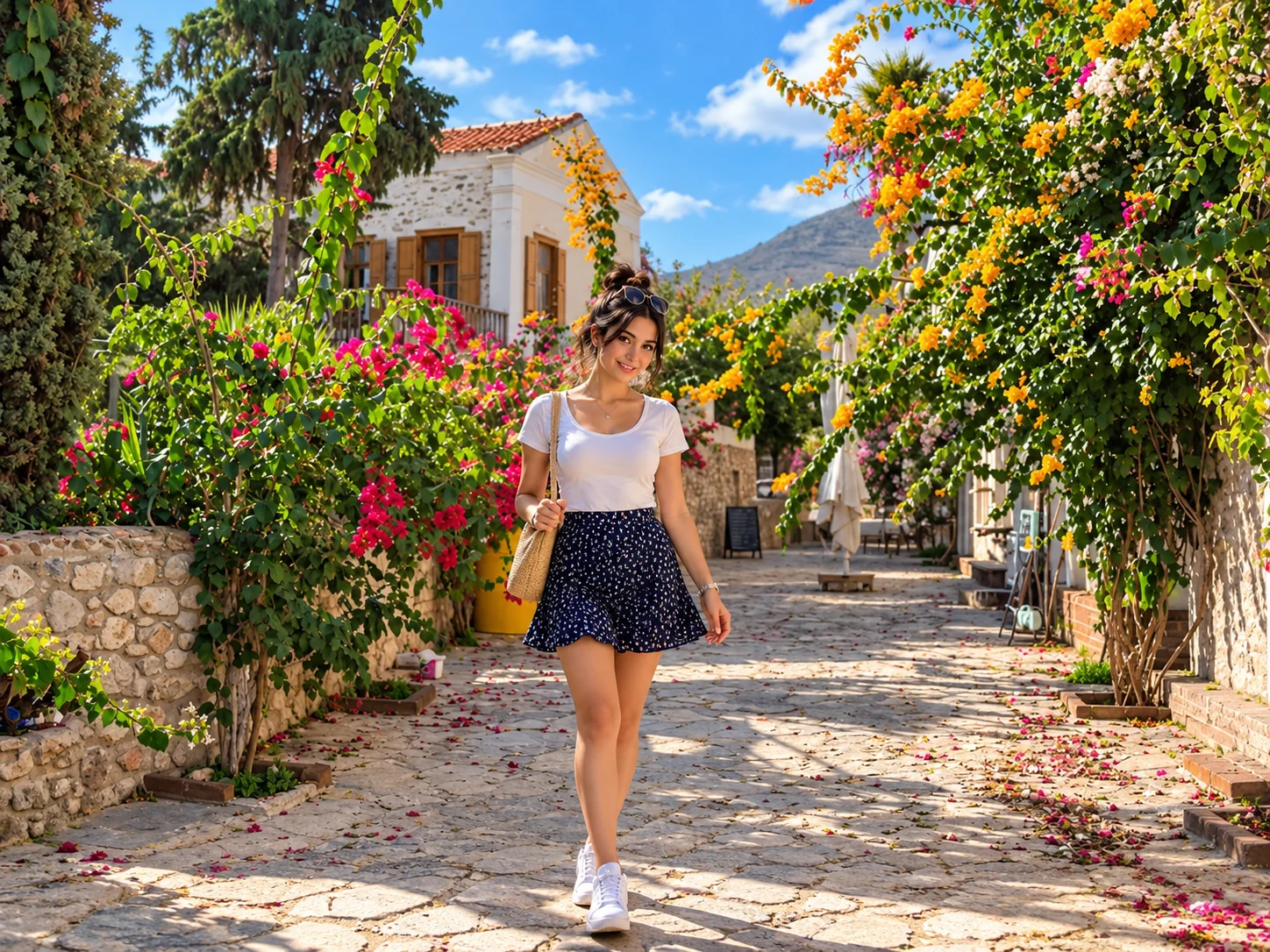
Eski Datça (Old Datça) is a medieval stone village about 3 km from the modern town centre. Its restored stone houses, whitewashed walls and cascading bougainvillea make it one of the most photogenic old quarters on the Aegean. The village hosts a small community of boutique hotels, art studios, jewellery workshops and cafés — most of them in converted stone houses that predate the modern town by centuries.
Eski Datça is closely associated with the poet Can Yücel (1926–1999), one of modern Turkey's most beloved and iconoclastic voices. Yücel spent his final years here and is buried in the village cemetery. A lane in Eski Datça known informally as Can Yücel Sokak leads to his house, marked by a plaque. Important note: the house is a private home where members of his family continue to live. It has not been converted to a museum and is not open to visitors inside. You can photograph the plaque from the street. The nearby Karya Çay Bahçesi (also known as Orhan'ın Yeri) — a tea garden long associated with Yücel's circle — is open and well worth a visit.
The village Saturday market sells local almonds, honey, olive oil, dried herbs and handmade textiles. Evenings in Eski Datça — a table outside one of the stone-wall restaurants, a carafe of local wine and the sound of the breeze through the olive trees — are among the peninsula's genuine pleasures.
A First Look at the Peninsula
From the winding coastal road to almond orchards in bloom, this short guide captures what makes Datça worth the journey.
The video covers the key landmarks — Knidos at the tip, Eski Datça in the hills, the main coves along the southern coast — and gives a good sense of driving distances and the pace of life on the peninsula. Useful for first-time visitors planning their route.
Kızlan Windmills: Six Towers Above the Aegean
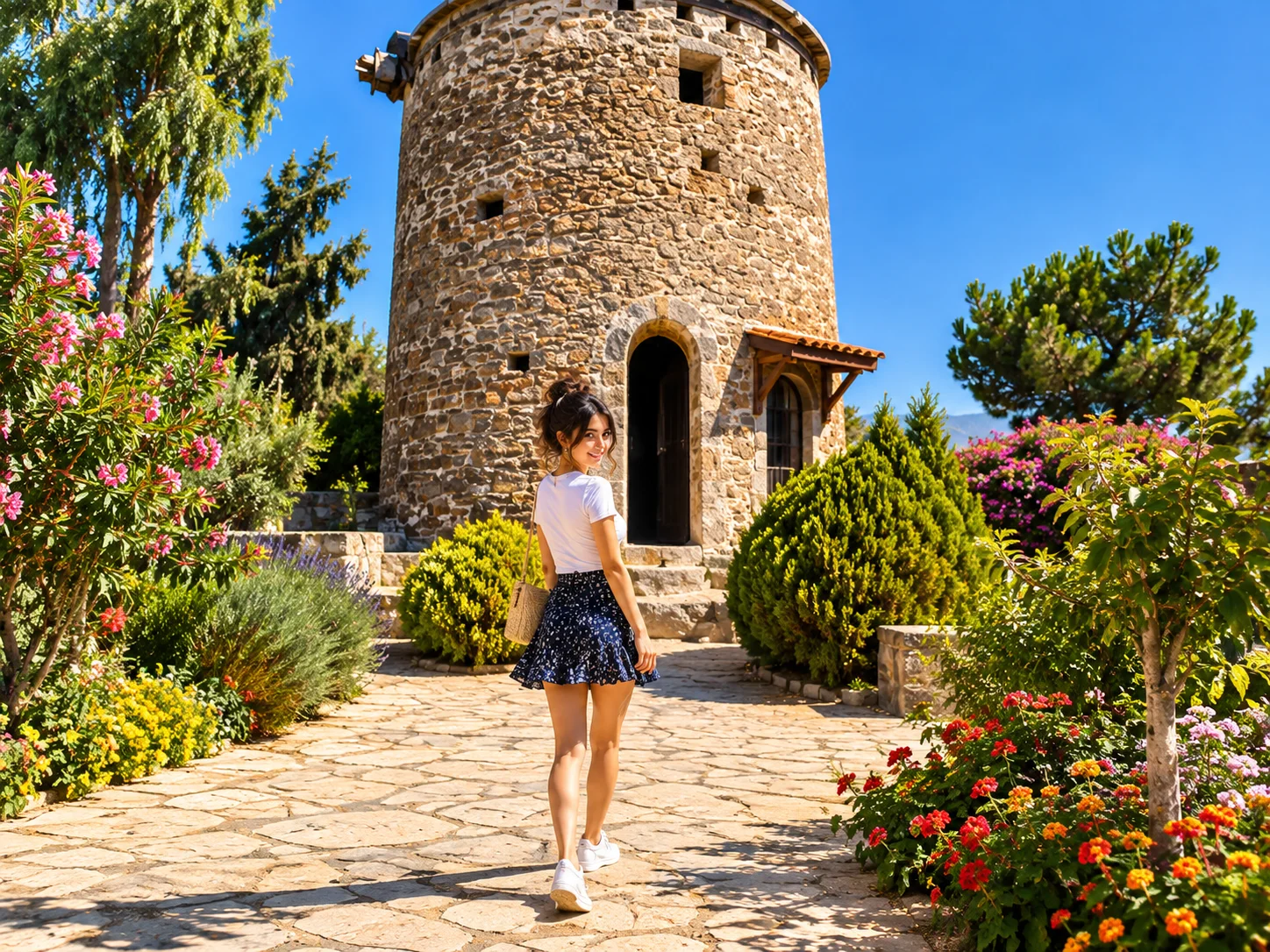
Six stone windmills climbing a hilltop ridge in the village of Kızlan — one of Datça's most recognisable landmarks.
The Kızlan windmills were built in the early twentieth century and operated as grain mills until the 1950s, when electrical milling made them redundant. Six mills survive in a line along the ridge. The first has been restored and now operates as a café-restaurant with views across the peninsula. The remaining five are in private hands at varying states of preservation.
Kızlan village is approximately 10 km from Datça town centre — a 15-minute drive up a winding village road. The ridge offers panoramic views over both the Aegean and Mediterranean coasts. Sunset here, when the light catches the stone towers, produces some of the most striking photographs on the peninsula. The village itself is a quiet agricultural community worth a brief walk.
Datça's Coves: Which Beach for Which Traveller
The peninsula has no single "main beach". It has a series of distinct coves — each with different character, depth, facilities and crowd level.
Akvaryum Koyu
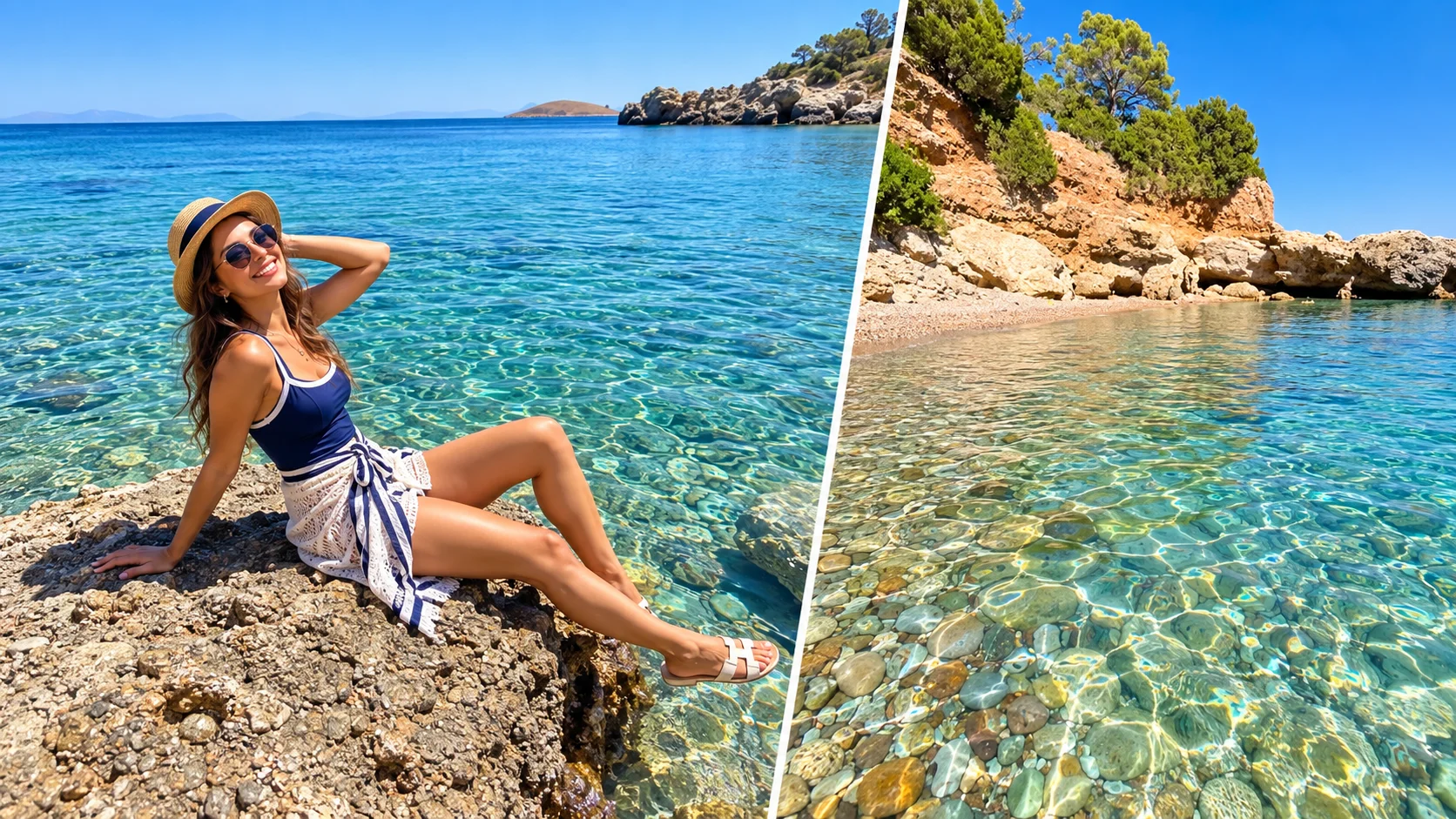
Named for the extraordinary clarity of its water, Akvaryum Koyu sits on the southern coast west of town. The sea floor is visible to considerable depth and the water shifts through turquoise and deep blue. Facilities are minimal — that is the appeal. Best reached by boat from Datça harbour; also accessible via a rough track. Ideal for snorkelling and underwater photography.
Palamutbükü
The longest beach on the peninsula — a wide curve of sand and pebble backed by olive trees, about 20 km from Datça centre. Palamutbükü has the most facilities of any Datça cove: restaurants, small hotels and water-sport options. The sea is calmest in the mornings. Good for swimming, snorkelling and fresh fish at a waterside restaurant. Most popular with families and groups in summer.
Hayıtbükü
The most protected cove on the peninsula — almost fully enclosed, with water that stays glassy-calm regardless of wind conditions. Consistently recommended for families with young children: shallow close to shore, sandy bottom, no strong currents. Small pensions and restaurants line the bay. Located near Mesudiye village, about 22 km from Datça centre. First choice for calm-water swimming.
Ovabükü, Karaincir, Kızılbük and the Quieter Bays
Ovabükü is quieter than Palamutbükü and suits those looking to avoid the crowd. It sits at the end of a scenic valley road on the southern coast. The sea deepens relatively quickly from shore — enjoyable for confident swimmers and snorkellers, but less suitable for very young children. Small restaurants and camp sites operate in season.
Karaincir is close to Datça town centre at around 7 km — an easy half-day option with a long sandy beach and calm water. Popular with locals. A private chauffeur from your hotel to the beach and back is a practical way to spend the day without worrying about parking.
Kızılbük is a smaller, less-visited cove east of Palamutbükü with a natural rocky setting and clear water. Minimal facilities. Best for those who genuinely want to be alone with the sea.
Kargı Koyu and Gebekum on the southern coast offer wider sandy strips. Gebekum in particular is noted for conditions suitable for windsurfing and kitesurfing — reliable summer wind and a long open beach.
A practical note: most coves beyond Karaincir require a car or scooter to reach. Some are served by seasonal taxi-boat from Datça harbour. Do not rely on public transport for the more remote beaches.
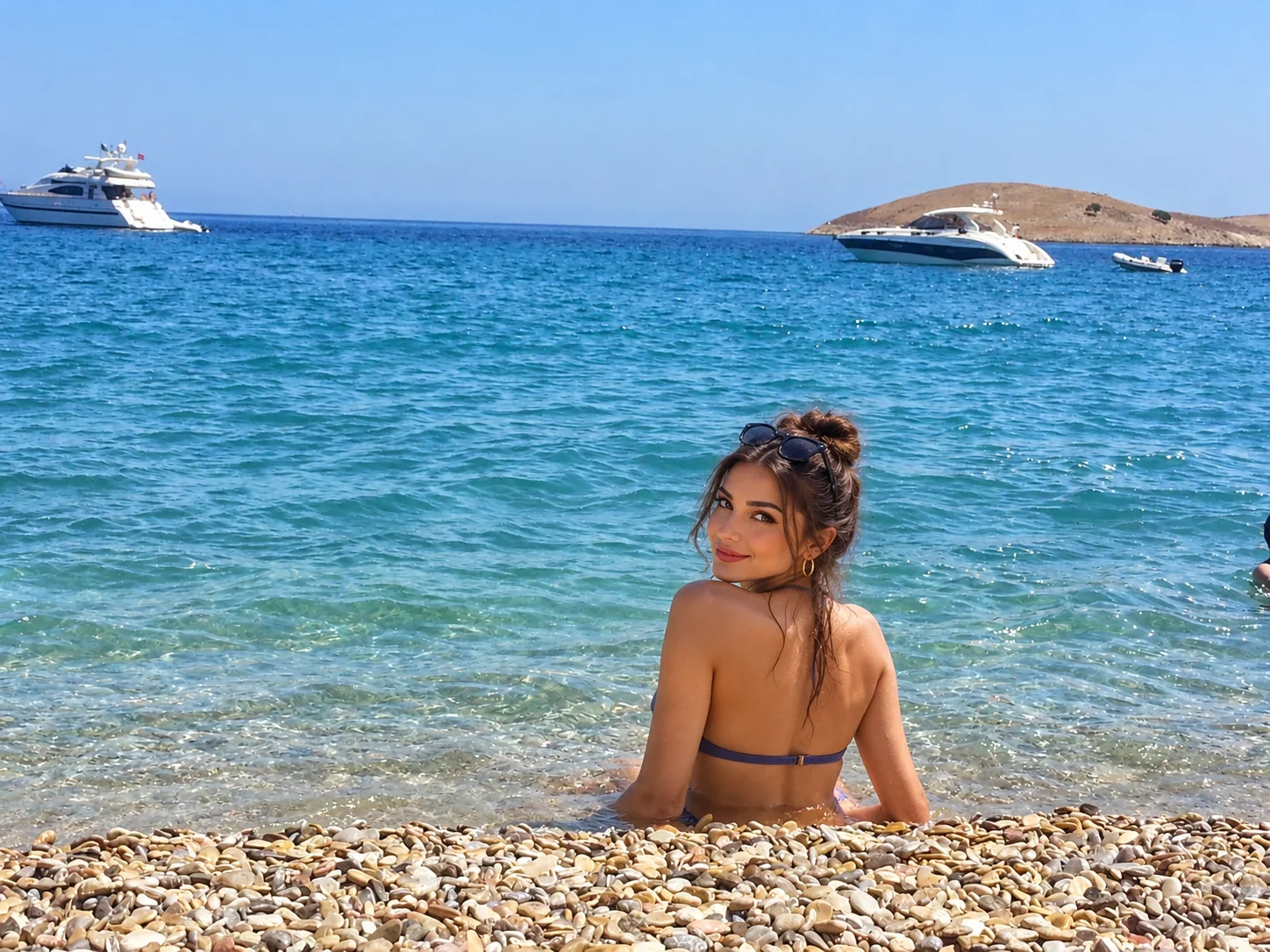
Datça Bay Life
The second video explores the cove culture of the Datça coast — boat trips, crystal water and the slower pace that makes the peninsula a destination for return visitors.
Boat tours from Datça harbour visit several coves in a single day, including spots accessible only from the sea. Half-day and full-day options are available in season. For those wanting a private vessel, gulet charters out of Datça connect the peninsula to further Aegean destinations including Marmaris and Ölüdeniz.
Datça's Table: Seafood, Olive Oil and Almond Everything
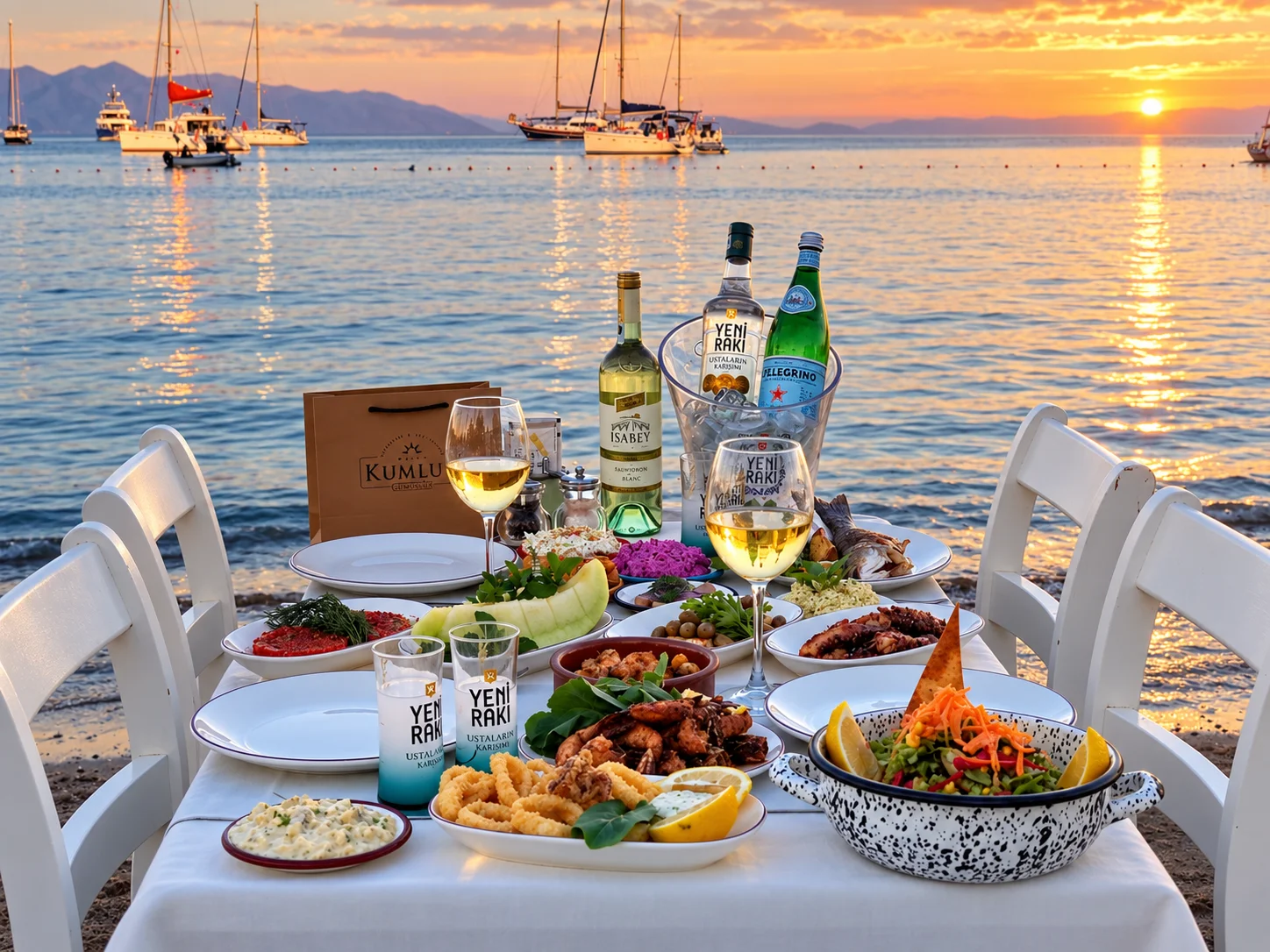
Datça's food culture is rooted in its natural larder: a peninsula with olive groves, almond orchards, coastal fishing grounds and wild hillside herbs. The result is a table that is light, seasonal and genuinely local.
Seafood is the centrepiece of most restaurant menus — fresh sea bass, sea bream, octopus, squid and prawn. The best restaurants cluster around the town centre marina and along Palamutbükü's waterfront. Grilled fish with zeytinyağlı (olive-oil-dressed) vegetables is the essential local meal.
Mezes made with locally gathered wild greens — radika (chicory), ebegümeci (mallow), purslane — distinguish Datça's starters from those of more commercially driven resorts. Ask what is in season: spring wild greens are exceptional.
The Saturday market in town centre and the pedestrian Sevgi Yolu promenade both sell local almonds, almond paste, honey, olive oil, dried herbs and handmade jewellery. These are among the finest places to shop for edible souvenirs on the Turkish Aegean.
Datça Nurlu Almond, Olive Oil and Honey
Three products from the peninsula's orchards and hives that are worth taking home.
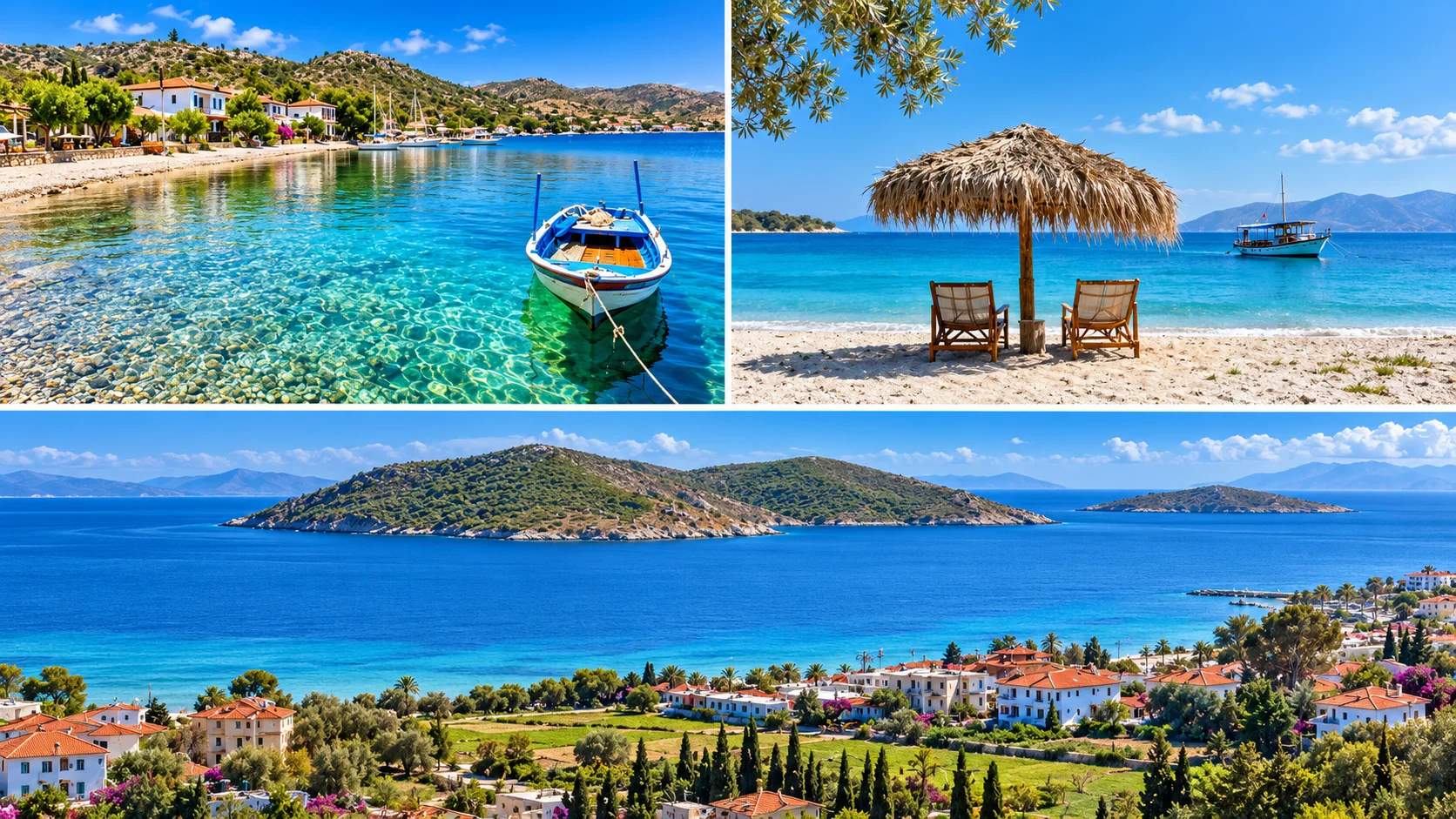
Datça Nurlu Almond
The Datça Nurlu almond (Prunus amygdalus var. nurlu) holds a Turkish geographical indication certificate — meaning it can only be produced within a defined zone of the Datça Peninsula. Smaller than standard almonds, intensely flavoured, with a thin shell. Sold raw, as almond paste, in pastries and as almond oil. Fresh almonds in their green outer shell — available during the late August–October harvest — are a distinctive seasonal delicacy.
Datça Olive Oil
The peninsula's groves — many of them centuries-old trees on the hillsides above the coves — produce a light, fruity extra-virgin olive oil. Cold-pressed oils sold at the Saturday market and in specialist shops in town represent some of the finest table oil available on the Turkish Aegean coast. The olive tree is as central to Datça's landscape as the almond, and much of the countryside between town and Eski Datça is continuous grove.
Honey and Wild Herbs
The peninsula's diverse wildflower landscape — thyme, rockrose, oregano, bay and dozens of endemic plants — produces complex, aromatic honey. Local beekeepers sell directly at the market; thyme honey in particular is worth seeking. Dried wild herbs — thyme, sage, bay leaf — gathered from uncultivated hillsides are significantly more aromatic than supermarket equivalents and make ideal lightweight souvenirs.
Choosing Your Base in Datça
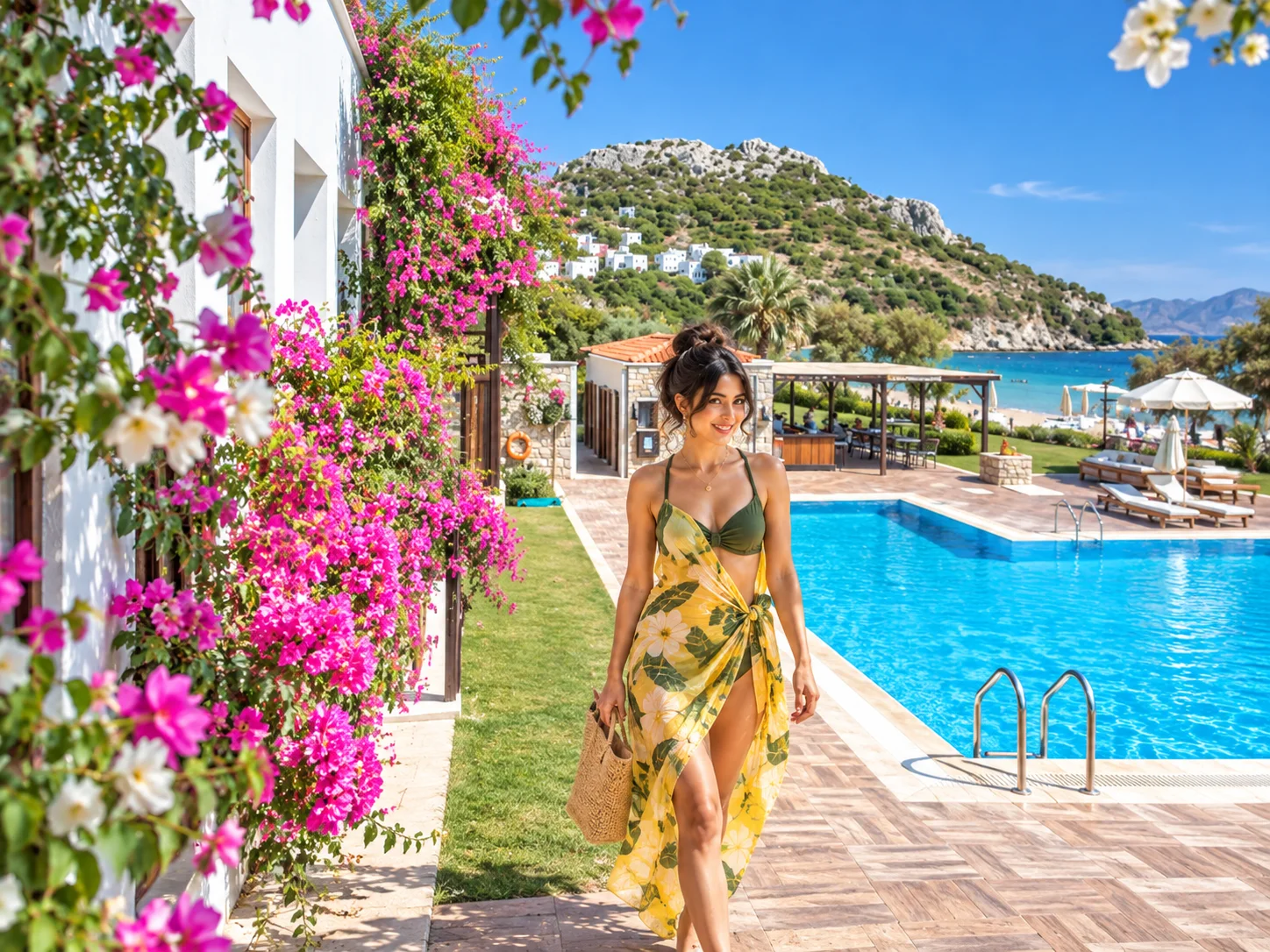
Unlike Turkey's resort towns, Datça has no large hotel cluster. Accommodation is distributed across five distinct areas — choose based on what you plan to do each day.
- Datça Town Centre: Best for flexibility — market, restaurants, marina, day trips to any cove. Mid-range hotels and apart-hotels. Suits explorers who want a car base and easy access to everything.
- Eski Datça: Boutique atmosphere, stone-wall surroundings, quieter. Walking distance to village life and the Can Yücel lane. Suits couples and cultural travellers. Limited car parking.
- Palamutbükü: Wakes up to the beach. Good range of small hotels and apart-hotels right on the water. Long sandy shoreline for morning walks. Best for a dedicated beach holiday.
- Ovabükü / Hayıtbükü: Most secluded. Small family-run pensions, camp sites, minimal nightlife. Essential to have your own car. Good for those who want genuine quiet.
- Karaincir: Closest to town (around 7 km), with a long sandy beach. Mix of small hotels and private rentals. Practical for families wanting beach access without a long daily drive.
July and August fill quickly — booking 2–3 months ahead for peak season is strongly recommended. May–June and September–October offer better availability and significantly lower rates.
Hiking, Snorkelling and the Carian Trail
The Datça Peninsula is one of Turkey's most rewarding destinations for active travellers — whether on foot, in the water or under sail.
- Carian Trail (Karia Yolu): Turkey's longest long-distance trail runs approximately 850 km in total. The Datça Peninsula section covers 155 km across 10 stages, starting near Eski Datça and running west to Knidos, then east along the wild and largely uninhabited northern shore to Akyaka. Route maps and GPX files at kariayolu.com. Best hiked in spring (March–May) or autumn (October–November).
- Snorkelling: Akvaryum Koyu, Kızılbük and the rocky headlands between Ovabükü and Hayıtbükü offer excellent conditions — crystal water, mixed rocky and sandy bottom, sea grass meadows. Equipment available to hire in Datça town and at major coves.
- Scuba diving: Several dive centres operate from Datça harbour. Sites include underwater rock formations, ancient amphora fields near Knidos and a deeper wreck site.
- Boat tours: Daily tours from Datça harbour visit 4–6 coves, including spots accessible only from the sea. Half-day and full-day options. Book at the marina or your hotel.
- Windsurfing / kitesurfing: Gebekum and open sections of the southern coast offer reliable summer wind. Rental and instruction available at Gebekum.
- Almond harvest (late August–October): Visitors staying near almond orchards may be able to join the seasonal harvest — ask locally. Almonds in the green outer shell are sold at roadside stalls during harvest weeks.
- Almond blossom (February–March): The peninsula turns white and soft pink as orchards bloom — one of the most photogenic periods of the year and the best season for trail walking in mild temperatures.
How to Reach Datça from Istanbul and Beyond
Datça's relative remoteness is a feature, not a flaw. Plan your travel in advance — particularly for the summer months.
Istanbul to Datça is approximately 775 km — typically 8.5–9 hours of driving via the Istanbul–İzmir motorway, continuing through Aydın and Muğla to Marmaris, then 70 km west along the peninsula road. A chauffeur-driven car from Istanbul makes the full journey door-to-door, removes the fatigue of solo driving and allows stops at coastal viewpoints along the way. Cab Istanbul operates intercity transfers covering this full route from the airport or from your hotel.
Dalaman (DLM) is the closest airport to Datça — approximately 155 km by road, about 3 hours' drive. In summer, direct seasonal flights from major European cities (London, Amsterdam, Frankfurt, Vienna) serve Dalaman. A private transfer from Dalaman Airport to Datça is the most straightforward connection. Shared transfer services also operate but require advance booking and are slower.
Marmaris is around 90 km from Datça by road (approximately 1.5 hours). Bodrum is around 130 km by road (approximately 2.5 hours). A seasonal ferry service has historically connected Bodrum with Datça by sea — check current operator schedules before planning around this connection, as seasonal availability varies.
Once in Datça, a personal vehicle is necessary for most of what the peninsula offers. Knidos, the Kızlan windmills, Palamutbükü, Hayıtbükü and Ovabükü are not served by regular public transport. Dolmuş minibuses cover the main Marmaris–Datça corridor only. Car hire is available in Datça town centre; book ahead in July–August when stock runs low.
Datça Travel FAQ
How many days should I spend in Datça?
Three days is a comfortable minimum: one day for Datça town, Eski Datça and Kızlan windmills; one for Knidos (allow a full morning) and a cove on the return; one for Palamutbükü or Hayıtbükü. Five days allows you to add Ovabükü, a boat tour and a section of the Carian Trail. A long weekend from Istanbul is feasible but tight — factor in the 8–9 hour drive each way.
What is the closest airport to Datça?
Dalaman Airport (DLM), approximately 155 km by road — around 3 hours' drive. Direct seasonal European charter flights land at Dalaman in summer. Bodrum–Milas Airport (BJV) is around 130 km by road and is served by more year-round flights; the route via the Marmaris junction is well-signposted.
Do I absolutely need a car in Datça?
Yes — if you want to see more than the town centre. Knidos, Kızlan, Palamutbükü, Hayıtbükü and Ovabükü have no regular public transport. Dolmuş minibuses cover only the main Marmaris–Datça corridor. Scooter hire is possible in summer. A car with driver from Istanbul or Dalaman is the most comfortable solution for those who prefer not to drive themselves.
Which cove is best for families with young children?
Hayıtbükü is the most consistent recommendation for families. The cove is almost fully enclosed so the water stays flat-calm regardless of outside wind conditions. Shallow close to shore, sandy bottom, no strong currents. Small pensions and restaurants serve the bay. Karaincir, close to town, is also a practical family choice with a long sandy beach.
Is Can Yücel's house in Eski Datça open to visitors?
No. Can Yücel's house in Eski Datça is a private home where members of his family continue to live. It has not been converted into a museum and is not accessible to visitors inside. You can read the commemorative plaque on the door from the street. The Karya Çay Bahçesi (tea garden) associated with the poet's circle is open and welcoming to visitors.
When is the best time to visit Datça?
For beaches: July–August for warm water and full facilities, though busiest. June and September offer warm sea with smaller crowds. For hiking and scenery: February–April, when almond trees blossom and trails are uncrowded. May is arguably the most balanced month — sea warm enough to swim, wildflowers in bloom, accommodation available without booking months ahead.
How far is Knidos from Datça town centre?
Approximately 45 km by road — a drive of around 45–60 minutes. The road passes through the villages of Yazıköy and Emecik and becomes rough in the final section. A car with reasonable ground clearance is recommended. No public transport serves the site. Allow 2–3 hours at the ruins plus travel time.
What food is Datça known for?
The Datça Nurlu almond — geographically registered and uniquely flavoured — is the signature product of the peninsula. Olive oil, thyme honey and seasonal wild herb mezes are equally distinctive. Seafood forms the core of most menus: sea bass, bream, octopus and squid grilled at waterside restaurants. The Saturday market is the best single place to sample and buy local products.
Can I walk the Carian Trail in Datça?
Yes — the Datça section of the Carian Trail covers 155 km across 10 stages, from Eski Datça west to Knidos and then east along the northern shore to Akyaka. Stages vary in length and difficulty. The route crosses ancient villages, clifftop ridges and almond orchards. Full information and GPX files at kariayolu.com. Best in spring or autumn; avoid exposed ridge stages in mid-summer heat.
How do I get from Istanbul to Datça?
By car (~775 km, 8.5–9 hours): take the Istanbul–İzmir motorway, continue via Aydın–Muğla to Marmaris, then 70 km along the peninsula road to Datça. A chauffeur-driven car from Istanbul removes the solo-driving fatigue on a long route. By air: fly Istanbul to Dalaman (DLM) and arrange a transfer for the remaining 155 km. Night buses serve Istanbul–Datça but the journey takes approximately 12–14 hours.
Ready to Visit Datça?
Whether arriving from Istanbul Airport, connecting through Dalaman, or planning a multi-destination Aegean road trip — Cab Istanbul provides private transfers and chauffeur-driven cars for the full journey.
Combine Datça with nearby Aegean highlights on the same trip: Marmaris, Fethiye and Ölüdeniz, or continue east to Bodrum.