
Ayvacık · Çanakkale · North Aegean Troad
Assos is a ticketed archaeological city on a steep volcanic acropolis overlooking the North Aegean and the island of Lesbos (Midilli), in Ayvacık, Çanakkale Province. Travellers often arrive expecting one place called “Assos.” In practice you move between four related but distinct settings: the Assos Archaeological Site (Assos Örenyeri), the stone village of Behramkale, the Ancient Harbor waterfront below the hill, and separate coastal bays such as Kadırga. This native English guide is built for archaeology-minded visitors and coast travellers in 2026 — Athena’s Archaic Doric temple, Aristotle’s Assos years under Hermias, verified DOSİM admission, harbor access after rockfall works, and honest beach wording. Pair it with Troy Ancient City and the wider Aegean coast attractions corridor when you plan a multi-day North Aegean route.
Cab Istanbul is an independent intercity chauffeur and transfer provider. It does not sell Assos admissions, licensed guiding or hotel packages. A driver is transport — not a licensed archaeological guide.
At a glance
Popular places around Assos
Keep the entity map clear before you book hotels or build a day plan. Assos Örenyeri is the ticketed ruin field; Behramkale is the living village beside the approach; the Ancient Harbor is the stone iskele below; Kadırga is a separate bay with resort beach segments.
| Place | Area | Best For | Practical Note |
|---|---|---|---|
| Assos Archaeological Site (Assos Örenyeri) | Acropolis hill, Behramkale / Ayvacık | Temple of Athena, walls, agora, theatre, necropolis walk | Foreign ticket €11 (DOSIM) · MüzeKart valid for eligible holders |
| Temple of Athena | Acropolis summit | Archaic Doric columns and Lesbos sea view | Inside main site ticket · andesite temple with anastylosis |
| Behramkale village | Beside / overlapping the acropolis approach | Stone streets, village cafés, Ottoman mosque heritage | Not a synonym that erases the archaeological site |
| Assos Ancient Harbor (Antik Liman / İskele) | Waterfront below the hill | Stone hotels, seafood evenings, limited pier swimming | Separate from acropolis and from Kadırga · seasonal vehicle limits |
| Kadırga Bay | Coast south / east of the Assos cluster | Resort swimming and beach-holiday stays | Pebble–gravel mix · Blue Flag is facility-specific, not whole-bay |
| Sivrice / Sokakağzı | Nearby quieter coast | Lower-key coastal nights | Not “Assos village beach” and not the acropolis |
| Adatepe & Zeus Altar area | Near Küçükkuyu (nearby North Aegean) | Village olive culture and traditional summit identification | Not inside Assos Örenyeri — day-trip add-on only |
| Kazdağları (Mount Ida) foothills | Inland / Edremit Gulf side | Mountain nature stays and cooler evenings | Combinable regionally — Assos itself is coastal Troad / Ayvacık |
| Troy Ancient City | Çanakkale corridor | UNESCO Troad archaeology companion | Realistic as 2-day with Assos; see Troy guide |
Orientation video
Village streets and hill approaches
Videos are visual context only — tickets, hours, place names and monument identities follow official and scholarly sources, not clips.
History without slogans
Assos chronology — what scholarship actually supports
Assos belongs to the coastal Troad. Broader Bronze Age place-name debates in the region (including Assuwa / Pedasus discussions) appear in scholarship, but that is not the same claim as “the classical city of Assos was founded in the Bronze Age.” Classical tradition credits Aeolian settlers from Methymna on Lesbos; treat the exact calendar year as tradition, not a forced founding date.
- Archaic flourishing: The city expands; the Temple of Athena belongs to the mid–late 6th century BC (often placed around ~540–530 BC in literature).
- Lydia and Persia: Assos sits in a landscape of shifting Anatolian and Achaemenid power.
- Hermias of Atarneus: Tyrant controlling the Atarneus–Assos sphere; host and patron of Aristotle’s circle; later executed by the Persians.
- Aristotle in Assos (~347–345 BC): After Plato’s death, Aristotle lived and taught in Assos within Hermias’s circle — a philosophical community, not a proven “world’s first philosophy school.”
- Hellenistic and Roman city: Agora complexes, theatre phases and necropolis use continue and remodel under later periods.
- Byzantine to Ottoman: Urban centrality fades; Behramkale village fabric and the Hüdavendigar (Murad I) Mosque mark the medieval–Ottoman layer visitors still meet in the streets.
- Modern archaeology: American Institute of Archaeology excavations 1881–1883 (Clarke / Bacon); Turkish campaigns from 1981 (Ümit Serdaroğlu through 2005); from 2006 under Prof. Dr. Nurettin Arslan (ÇOMÜ); UNESCO Tentative List 2017; excavation sponsorship includes İÇDAŞ.
Assos stone sarcophagi entered ancient literary memory for the local andesite — including the folklore that bodies decomposed unusually quickly in that stone, feeding etymological stories around the word sarcophagus. Present that as ancient belief and word-history, not as modern chemical proof.
Philosophy years
Aristotle, Hermias and the Assos circle
Assos matters in the biography of Aristotle because he spent roughly 347–345 BC here after leaving Athens, teaching within the circle hosted by Hermias of Atarneus. Hermias ruled a coastal sphere that included Assos and Atarneus; Aristotle’s presence belongs to that political and intellectual patronage, not to a modern university campus narrative.
Qualified wording matters. Visitors should not leave Assos believing they have stood in “the world’s first philosophy school” as a proven institutional claim. What the sources support is a philosophical circle living and teaching under Hermias’s protection for a short, documented window — after which Hermias’s fall and Persian politics reshape the story. Use Assos as a place where philosophy, tyranny and Aegean geopolitics briefly intersected, then walk the acropolis for the archaeology that survives above the rhetoric.
Signature monument
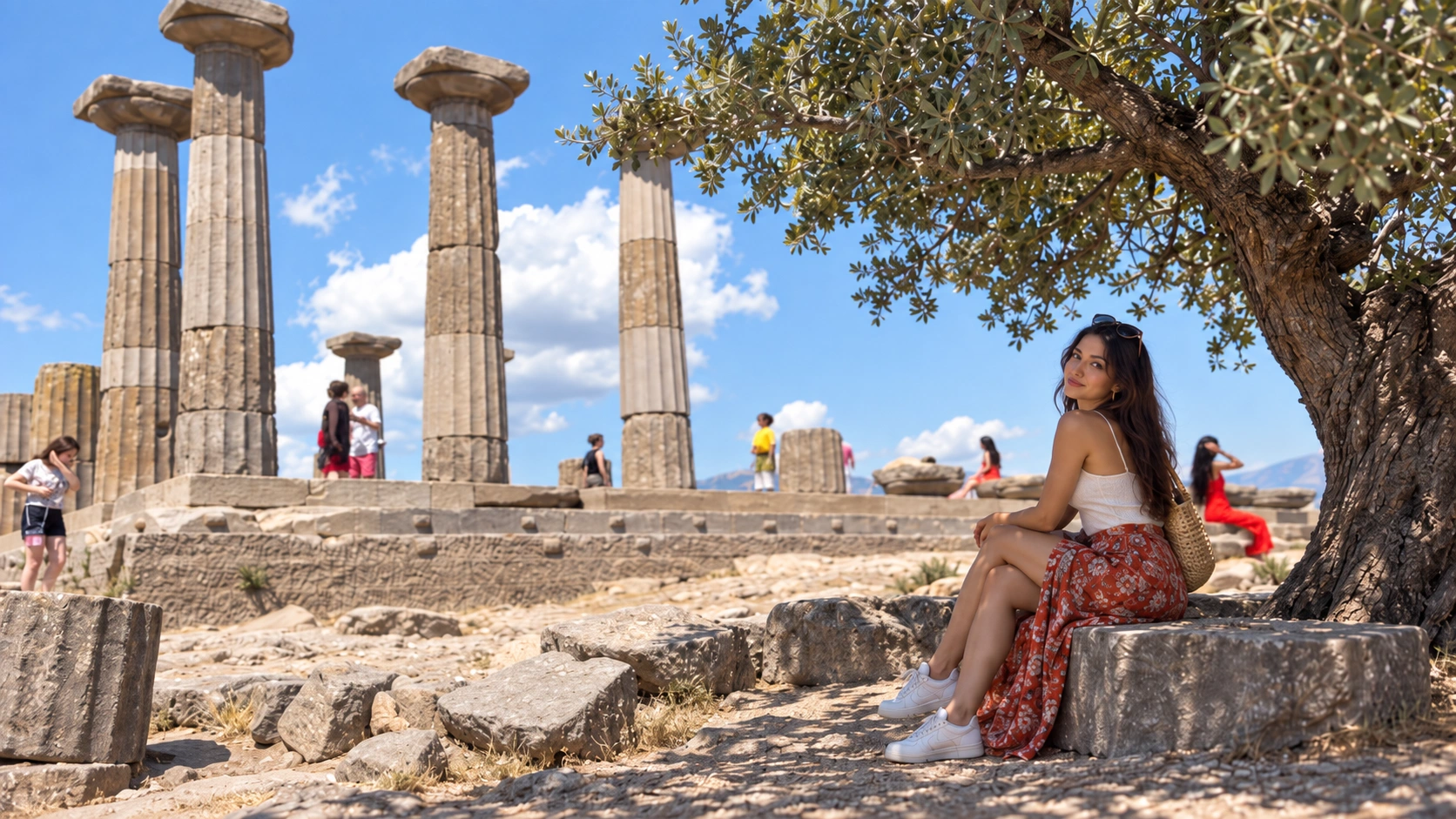
Temple of Athena on the Assos acropolis
The Temple of Athena is Assos’s visual signature: an Archaic Doric temple in local andesite on the acropolis summit, facing the open sea toward Lesbos. Surviving columns and anastylosis give visitors a readable silhouette rather than a fully rebuilt sanctuary. Architectural sculpture from the 1880s campaigns was historically divided — pieces entered the İstanbul Archaeology Museums and, through partage of that era, the Museum of Fine Arts, Boston.
Official tourism wording sometimes calls Assos the “first and only Doric temple in Anatolia.” Treat that claim as qualified: Assos is exceptional as an Archaic Doric temple of this type on the North Aegean Troad, but later Doric temples and Doric elements exist elsewhere in Asia Minor. Prefer precise architectural language over an absolute “only Doric temple ever built in Anatolia” slogan.
Walking the site
Archaeological highlights inside Assos Örenyeri
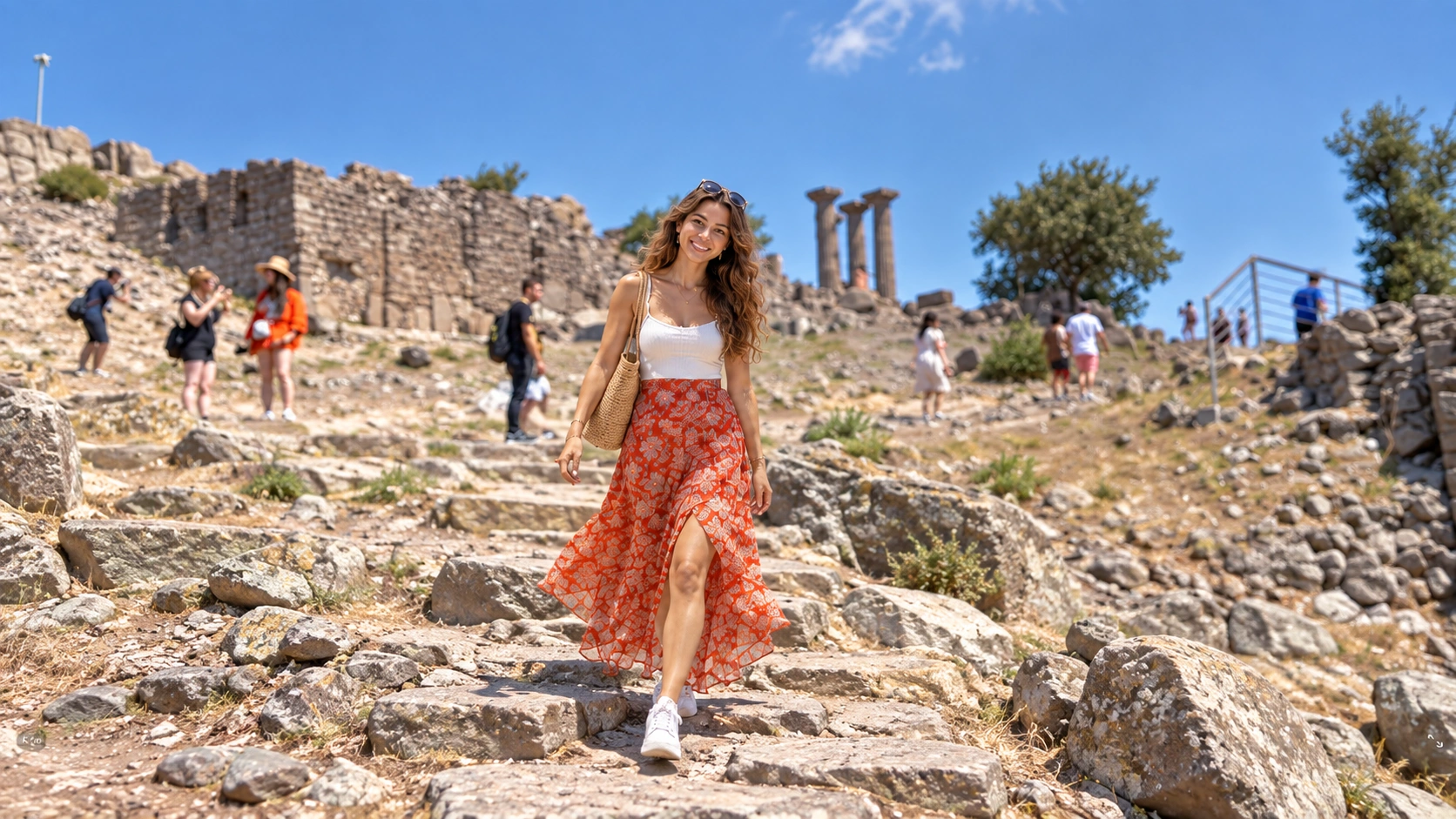
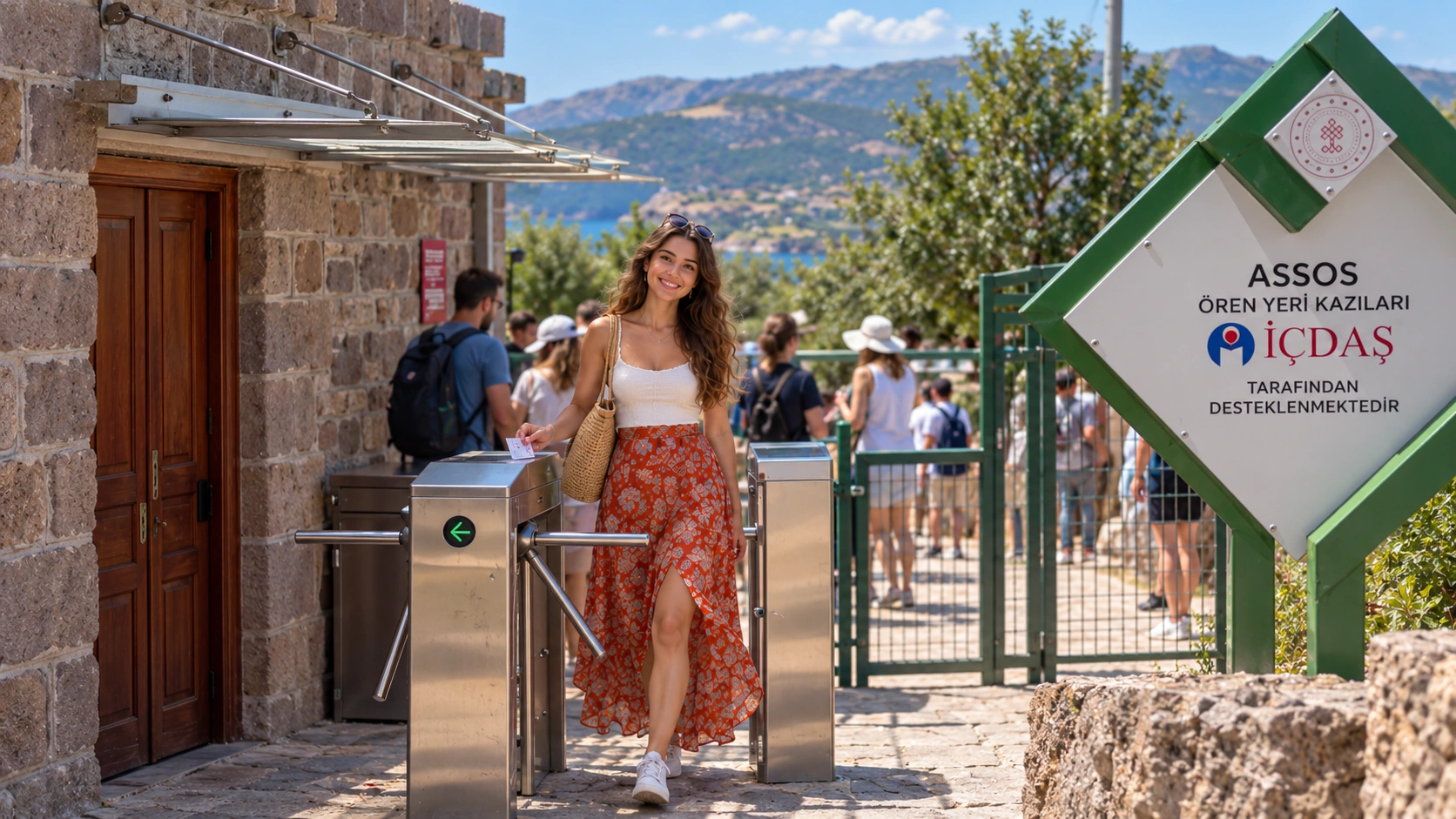
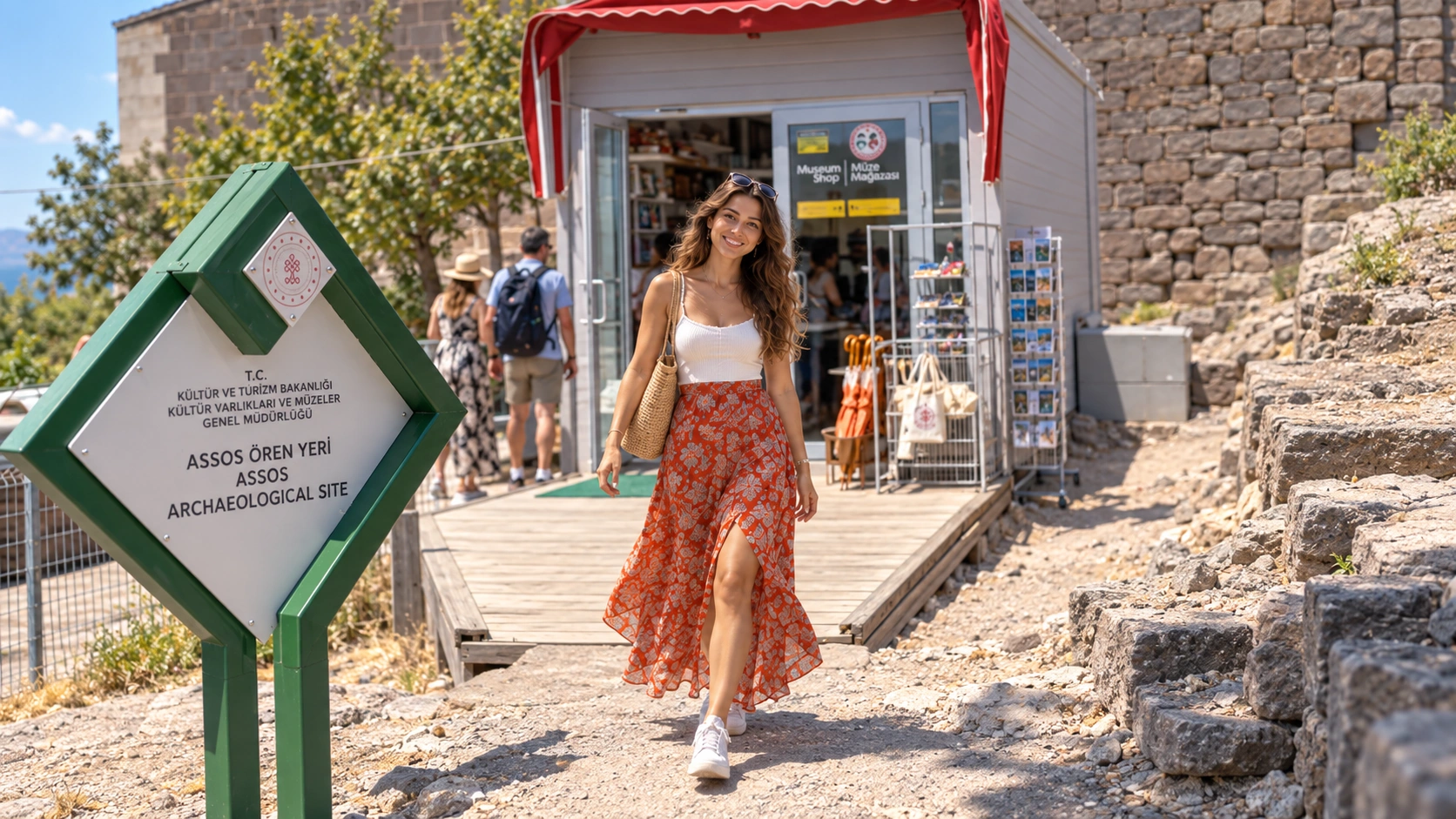
From the ticketed entrance, the walk climbs volcanic slopes through fortifications into the civic core and up to Athena. Allow time for heat, uneven paving and the view stops — this is a hill site, not a flat marble boulevard.
| Monument | Period/Function | Why It Matters | Visitor Note |
|---|---|---|---|
| Temple of Athena | Archaic Doric sanctuary (~mid–late 6th c. BC) | Acropolis landmark; sea-facing cult architecture | Doric uniqueness is qualified — exceptional Archaic type, not an absolute Anatolian monopoly |
| City walls | Archaic–later fortifications in andesite | Extensive defensive circuit on the volcanic hill | Visible stretches; avoid “impenetrable fortress” marketing |
| Agora & stoas | Civic / commercial core | Public square where Assos functioned as a polis | Read stoas as colonnaded civic architecture, not modern shopping malls |
| Bouleuterion | Council house | Political meeting place of the city | Excavated/studied in modern campaigns — follow on-site labelling |
| Gymnasium | Education / athletic complex in the city plan | Shows civic investment beyond temples alone | Often quieter than Athena; useful if you walk the full plan |
| Theatre | Hellenistic–Roman phases | Civic spectacle with Aegean outlook | Prefer the view and phases over inventing exact seat counts |
| Western necropolis | Burial landscape with sarcophagi | Road/gate relationship and Assos stone funerary culture | Sarcophagus folklore ≠ chemistry proof |
| Harbor archaeology zone (below) | Ancient maritime outlet of the polis | Links acropolis economy to the sea | Do not claim “largest port in the region” |
Living village
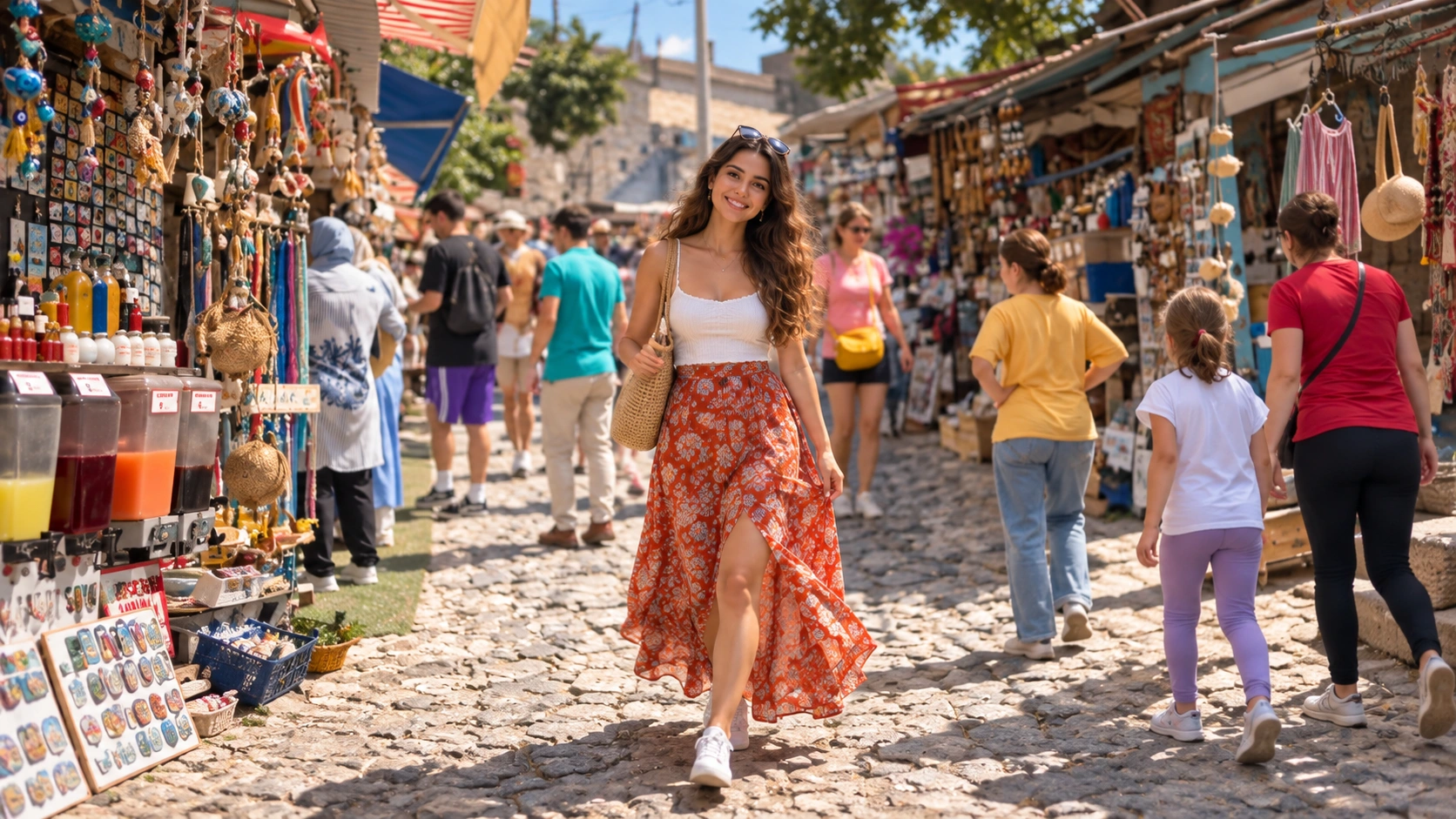
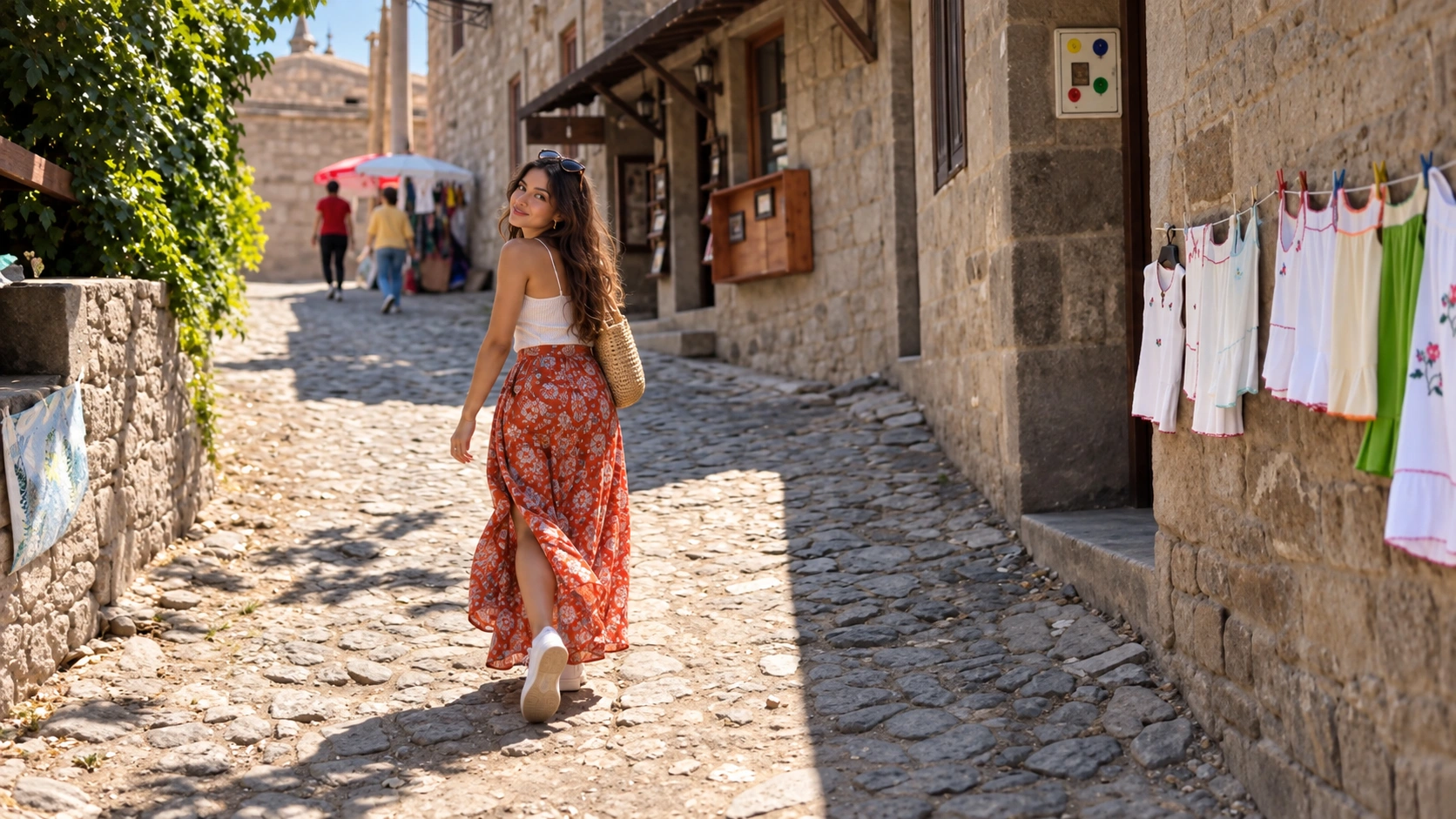
Behramkale — stone streets beside the acropolis
Behramkale is the historic stone village that shares the Assos approach. It is related to Assos Örenyeri, but it is not the same entity as the ticketed ruin field and it is not the Ancient Harbor waterfront. Visitors come for andesite houses, narrow lanes, cafés and the sense of a settlement that grew into and around the ancient hill.
Village heritage includes the Hüdavendigar (Murad I) Mosque — an early Ottoman landmark often linked in local guides with the Behramkale fabric. Treat mosque access with normal respect for active religious buildings. A historic bridge may appear in village heritage notes; keep it as village context, not as a free substitute for the archaeological ticket.
Waterfront below the hill
Assos Ancient Harbor — access, cars and swimming in 2026
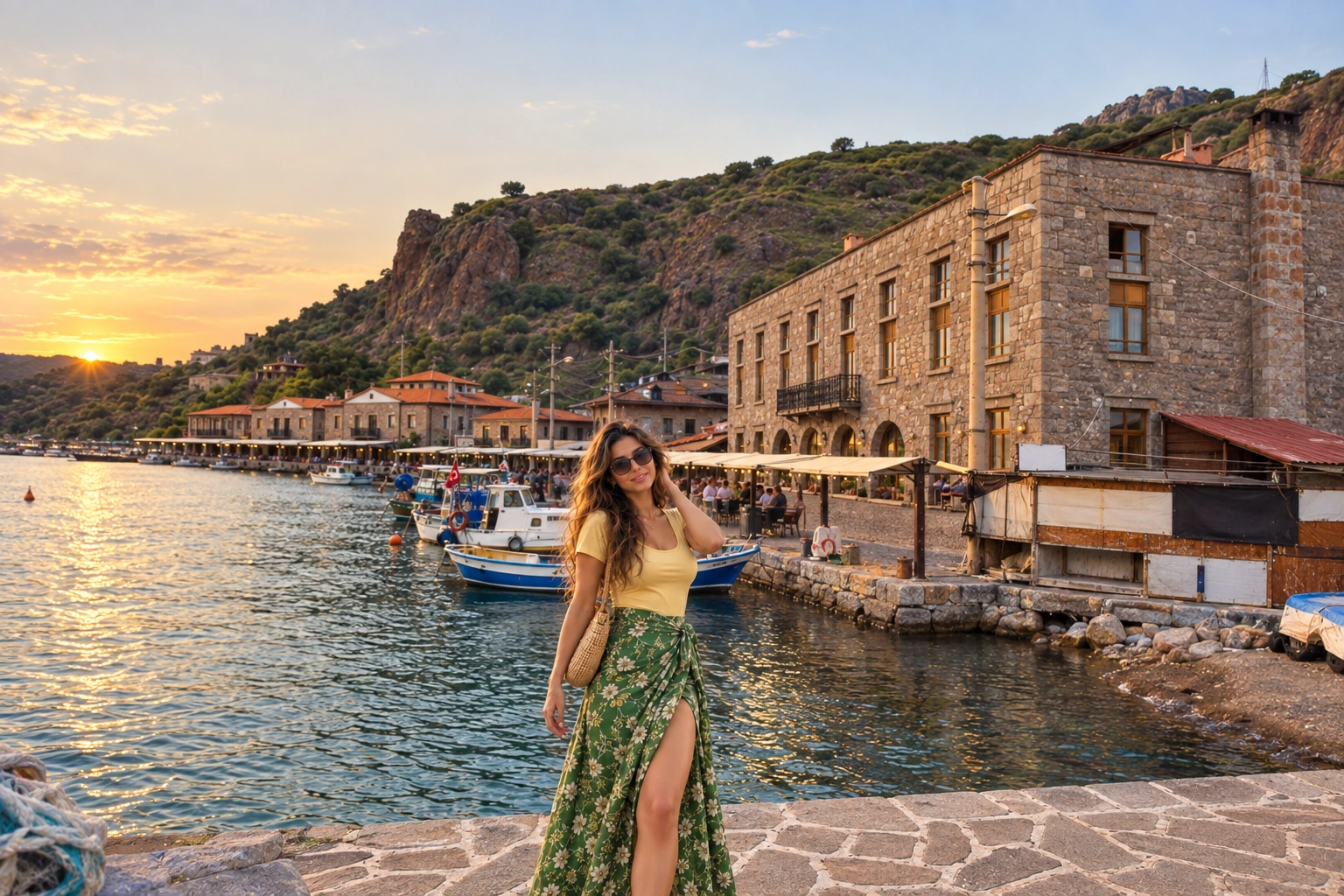
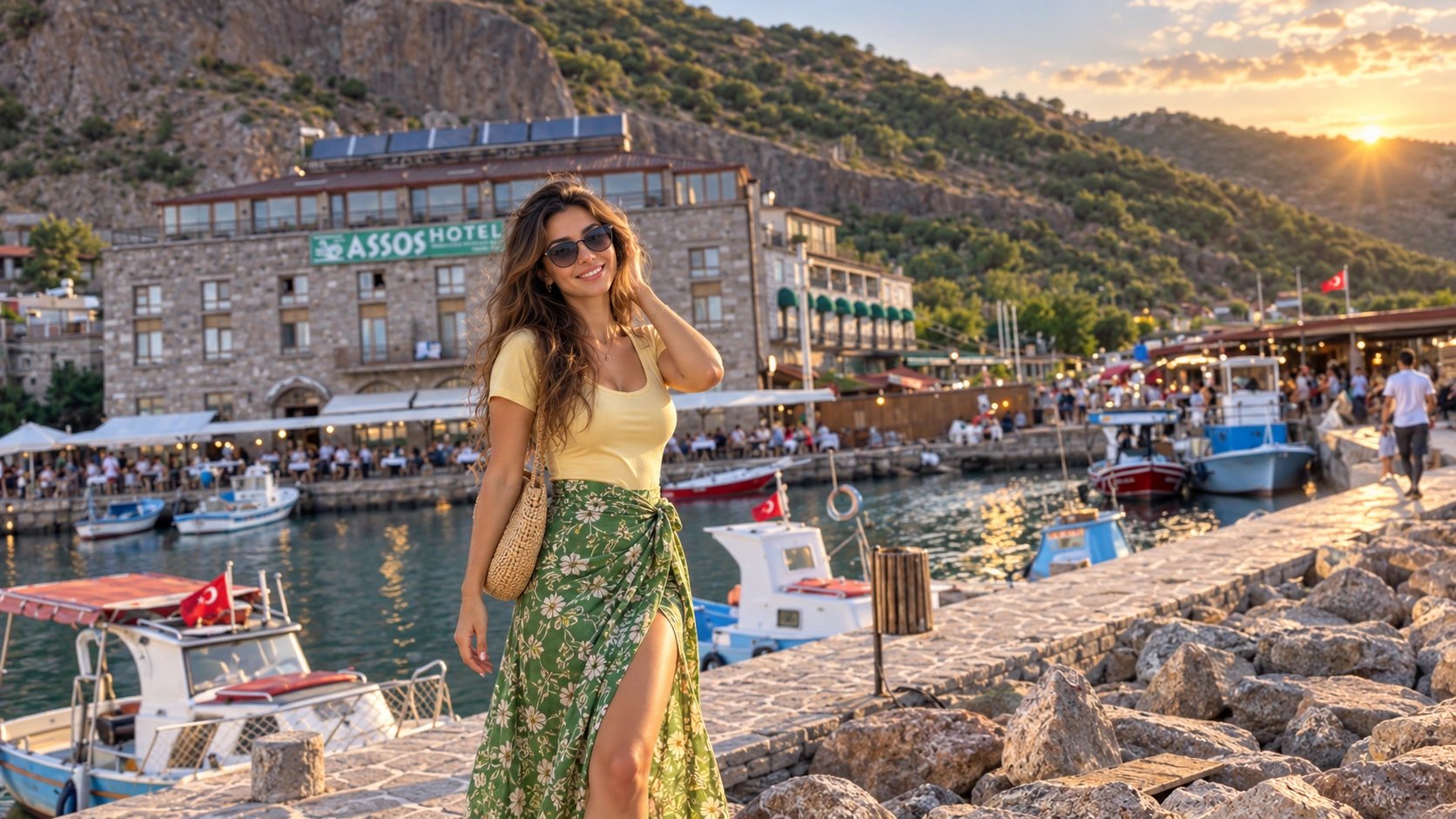
The Ancient Harbor (Antik Liman / İskele) is the stone waterfront settlement below the acropolis: boutique hotels, fish restaurants and a protected historic fabric facing the Aegean. It is not the acropolis ticket circuit and it is not Kadırga Bay.
Rockfall and slope works in 2021–2022 closed the area for a long period (on the order of ~500 days). Businesses largely reopened afterward; visitors should still confirm day-of conditions if temporary security or traffic measures appear. Vehicle entry is often restricted in peak summer, weekends and holidays — hotel guests may receive limited access on a steep narrow road. Parking below is limited; the practical pattern is to use upper-village or designated lots and walk or use local shuttle arrangements. Do not rely on a fixed “exactly 50 metres from the water” parking claim, and do not market Assos as the “largest port in the region.”
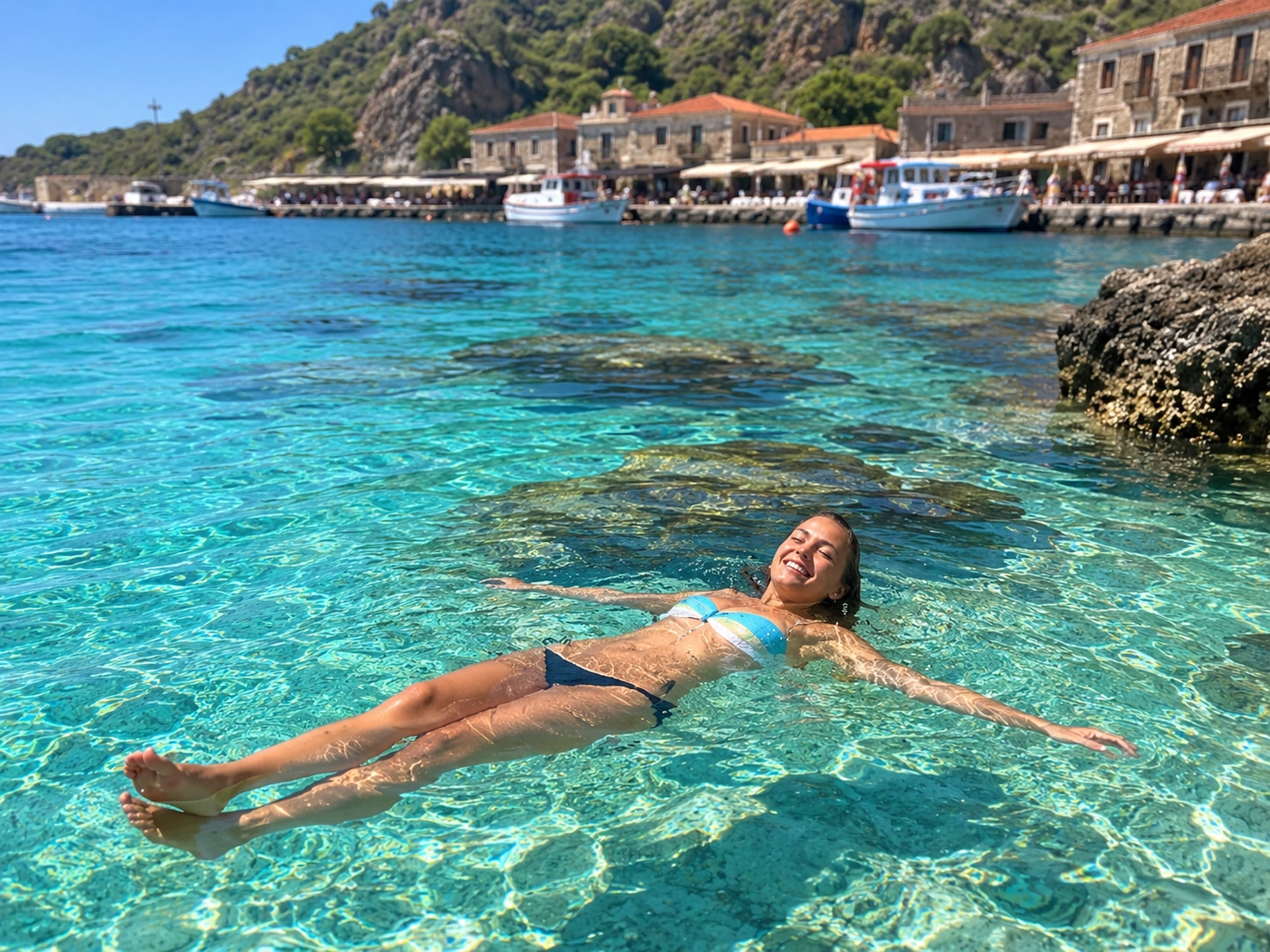
Swimming is possible from some hotel piers or arranged waterfront access — a pier/edge experience, not a guaranteed free municipal beach. The photograph below shows harbor swimming, not Kadırga.
Coast and swimming
Beaches and bays near Assos
Kadırga is the main beach-holiday bay near Assos, but it is not a classic soft-sand postcard beach: expect a pebble and gravel mix with possible sand patches and cooler North Aegean water. Blue Flag status in 2026 is reported for specific hotel facilities — Club Kavala Beach, Assos Eden Gardens, Assos Eden Beach and Assos Nazlıhan — not as a single “Kadırga Bay has Blue Flag” public-beach claim.
| Beach/Bay | Area | Character | Practical Note |
|---|---|---|---|
| Kadırga Bay | Separate coastal bay near Assos resorts | Pebble / gravel mix; clear cooler water; hotel beach segments | Blue Flag = facility beaches 2026 (Club Kavala, Eden Gardens, Eden Beach, Nazlıhan) — not whole bay |
| Ancient Harbor swimming | Assos iskele waterfront | Pier / hotel-edge swimming | Not a Blue Flag public beach entity; confirm access with your stay |
| Sivrice | Quieter nearby coast | Accommodation pockets; calmer evenings | No blanket Blue Flag claim |
| Sokakağzı | Quieter cove nearby | Low-key cove swimming | No blanket Blue Flag claim |
Nearby — not Assos
Adatepe, Zeus Altar and the Kazdağları edge
Adatepe and the traditional Zeus Altar identification near Küçükkuyu belong to the wider North Aegean day-trip map. They are not inside Assos Örenyeri and should never appear in Assos ticket or monument lists as on-site attractions. Pair them only if your itinerary already includes Küçükkuyu / Edremit Gulf logistics.
Kazdağları (Mount Ida) is the inland mountain massif south of the Edremit Gulf — excellent for cooler nature stays, but Assos itself remains coastal Troad / Ayvacık. Classical toponyms such as Gargaros belong to Mount Ida tradition; they are regional context at most, not a practical top Assos attraction.
Where to stay
Hotels and bases around Assos
Choose your base by trip purpose: archaeology and village streets, waterfront dinners, or a beach-holiday bay. No room prices and no OTA review scores appear below — features change seasonally; confirm directly with properties.
| Hotel | Area | Style/Best For | Key Current Features |
|---|---|---|---|
| Assos Kervansaray Hotel | Ancient Harbor | Stone waterfront stay; evenings by the iskele | Harbor-front Assos classic; check vehicle-access rules with the hotel |
| Assos Behram Hotel | Ancient Harbor | Adults-oriented boutique waterfront | Quiet harbor nights; confirm seasonal opening |
| Assos Eden Nazlıhan | Harbor / iskele | Harbor resort feel with beach-facility branding | Listed among 2026 Blue Flag facility beaches |
| Assos Dove Hotel Resort & Spa | Kadırga | Beach-holiday resort stay | Kadırga pebble–gravel swimming segments |
| Club Kavala Beach Hotel Assos | Kadırga | Resort beach holiday | 2026 Blue Flag facility listing |
| Assos Eden Gardens / Eden Beach | Kadırga area | Resort gardens and beach segments | 2026 Blue Flag facility listings (Gardens / Beach) |
| Assos Park Hotel | Assos area | Practical Assos-area base | Useful when you want mid-cluster logistics |
| Assos Oleas Hotel | Assos coast | Coastal boutique / small-hotel stay | Confirm transfer time to Örenyeri and harbor |
| Assos Terrace Hotel | Assos | View-oriented Assos stay | Check hill access and parking for your vehicle type |
| Limonata Otel Assos | Assos bay context | Smaller Assos-bay hospitality | Confirm seasonal service and beach access type |
| Kazdağları Reis İnn Hotel Spa | Yeşilyurt / Kazdağı | Mountain nature and spa nights | Nearby mountains — not the Assos harbor waterfront |
| Hanmahall Hotel | Koyunevi / nature setting | Quiet nature base | Not central Assos archaeology logistics |
- Behramkale: best for archaeology mornings and village streets.
- Ancient Harbor: best for stone waterfront dining and atmospheric evenings.
- Kadırga: best for beach-holiday / resort segments.
- Sivrice–Sokakağzı: quieter coast.
- Küçükkuyu / Yeşilyurt: North Aegean route base — not “central Assos.”
Food & season
What to eat — and when Assos feels best
Expect North Aegean seafood, olive-oil cooking, herb-heavy meze and village breakfasts. Lakerda is a cured / salted fish preparation — not a fish stew. Ayvacık’s olive landscape shapes the table; keep GI claims only when independently verified. Do not treat any single restaurant menu as regional canon.
The most comfortable archaeology months are usually late spring and early autumn: clear light, open sea views and less midsummer heat on the acropolis. July–August favour beach stays at Kadırga but demand earlier temple walks, water and sun protection. Winter can be quiet and windy; confirm hotel and restaurant openings. Harbor vehicle restrictions intensify on summer weekends and holidays — plan parking and walking time accordingly.
Visitor information 2026
Tickets, hours and practical details for Assos Örenyeri
Figures follow muze.gov.tr / DOSİM listings checked mid-September 2026. Always reconfirm at the gate — hours and fees can change.
| Practical Detail | Current Information |
|---|---|
| Official name | Assos Örenyeri / Assos Archaeological Site (muze.gov.tr ASS01) |
| Address context | Behramkale Köyü, Ayvacık, Çanakkale |
| Opening hours (listed) | 08:30–20:00; ticket office until 19:30 |
| Closed days | Listed open every day — confirm day-of for exceptional closures |
| Foreign ticket | €11 (DOSIM — Çanakkale Assos Örenyeri) |
| MüzeKart | Valid for eligible Turkish / KKTC citizens |
| MuseumPass | Confirm current venue inclusion on MuseumPass product pages — do not assume |
| UNESCO status | Tentative List since 2017 (not a full World Heritage inscription claim) |
| Accessibility | Steep slopes, uneven paving, stairs and heat — not blanket wheelchair-accessible |
| Recommended duration | Site alone ~1.5–3 h; + Behramkale ~half day; + harbor ~full day; + Kadırga = full day+ |
| Best visiting window | Morning for Athena light and cooler climbs; late day for harbor evenings |
Foreign fees are listed in euro on the current DOSİM schedule. MüzeKart is a paid annual card for eligible citizens — not a universal free-entry myth.
Getting there
Transport to Assos in 2026
Assos is a road destination. Istanbul to Assos is a long intercity drive — not a short airport-transfer product. The 1915 Çanakkale Bridge shortens the Marmara crossing for many Istanbul-origin itineraries.
| Route | Practical Options | Important Note |
|---|---|---|
| Istanbul → Assos | Road via 1915 Çanakkale Bridge / south Marmara–Edremit corridor; coach + Ayvacık connection; intercity chauffeur | Long day drive — Cab Istanbul is chauffeur routing, not a local Assos shuttle |
| Çanakkale → Assos | Road ~1.5–2.5 h depending on traffic | Common day-trip / overnight base corridor with Troy |
| Edremit / Küçükkuyu → Assos | Short coastal / mountain approach | Useful if combining Adatepe or Kazdağları foothills |
| Balıkesir Koca Seyit (EDO) → Assos | Road transfer after flight (~60 km order of magnitude) | Verify schedules day-of; do not invent daily Istanbul/Ankara flight claims |
| Çanakkale Airport (CKZ) → Assos | Seasonal / limited schedules + road transfer | Confirm flights for your exact dates |
| Private chauffeur (Cab Istanbul) | Intercity / multi-day North Aegean routing from the Istanbul corridor | Transport only — driver ≠ licensed guide; not an Assos ticket or hotel package |
Coast and ruins footage is orientation only — access rules, fees and swimming locations follow the text above.
Time planning
Half-day, one-day and two-day Assos itineraries
| Plan | Time range | What fits | Watch-outs |
|---|---|---|---|
| Half day | ~3–4 h on site + village | Assos Örenyeri (Athena, agora, theatre highlights) + short Behramkale walk | Skip full harbor evening; start early for heat |
| One full day | Full daylight block | Örenyeri morning → Behramkale lunch → Ancient Harbor afternoon/evening | Seasonal car limits below; park upper and walk |
| One day + beach | Full day+ | Archaeology half day then Kadırga or Sivrice swim | Kadırga ≠ Assos harbor; pebble/gravel underfoot |
| Two days (recommended with Troy) | Overnight Assos / Çanakkale corridor | Day 1 Assos cluster; Day 2 Troy (or reverse) | Same-day Troy + Assos is possible but rushed — prefer 2 days |
| Two days coast deep-dive | Overnight harbor or Kadırga | Full archaeology + village + harbor night + beach morning; optional Adatepe add-on | Zeus Altar / Adatepe are nearby, not Assos site monuments |
If you only have one archaeology focus day in the Troad, Assos rewards a slow acropolis morning more than a checklist dash. If you also need Troy’s UNESCO landscape, build the overnight — the road time between them deserves respect.
FAQ
Assos — frequently asked questions
Is Assos the same place as Behramkale?
No. Assos Örenyeri is the ticketed archaeological site on the acropolis. Behramkale is the historic stone village beside and overlapping the approach. They sit together geographically but are not interchangeable names for one entity.
What is Assos Ancient Harbor?
The stone waterfront settlement (Antik Liman / İskele) below the hill — hotels, restaurants and limited pier swimming. It is separate from both the acropolis ticket circuit and Kadırga Bay.
Did Aristotle really teach in Assos?
Yes, in a qualified sense: Aristotle lived and taught in Assos roughly 347–345 BC within the circle of Hermias of Atarneus. That is a philosophical community under patronage — not proof of “the world’s first philosophy school.”
Who was Hermias?
Hermias of Atarneus was the tyrant controlling the Atarneus–Assos sphere who hosted Aristotle’s circle and was later executed by the Persians.
Is the Temple of Athena the only Doric temple in Anatolia?
Treat that tourism wording as qualified. Assos is an exceptional Archaic Doric temple of this type, but later Doric temples and Doric elements exist elsewhere in Asia Minor.
When were Assos excavations carried out?
AIA excavations ran in 1881–1883. Modern Turkish excavations resumed from 1981; from 2006 the project has been directed by Prof. Dr. Nurettin Arslan (ÇOMÜ).
Can I drive and park at Assos Ancient Harbor?
Often with seasonal limits. Summer, weekends and holidays frequently restrict vehicle entry on the steep narrow road; hotel guests may get limited access. Parking below is limited — use upper lots or designated parking and walk. Avoid relying on an exact “50 m parking” claim.
Can you swim at Assos Ancient Harbor?
Yes in limited form from some hotel piers or arranged waterfront access. It is not a free municipal beach guarantee and it is not Kadırga Bay swimming.
Does Kadırga Bay have Blue Flag?
Blue Flag in 2026 is reported for specific facilities — Club Kavala Beach, Assos Eden Gardens, Assos Eden Beach and Assos Nazlıhan — not as a whole-bay public Blue Flag claim. The shore is pebble/gravel mix rather than classic soft sand.
Is the Zeus Altar inside Assos?
No. The traditional Zeus Altar identification near Adatepe / Küçükkuyu is a nearby North Aegean stop, not a monument inside Assos Örenyeri.
How much is Assos admission and what are the hours?
Foreign DOSİM ticket €11. Listed hours 08:30–20:00 with ticket office to 19:30. MüzeKart is valid for eligible Turkish/KKTC citizens. Reconfirm on muze.gov.tr the day you go.
Is Assos wheelchair accessible?
Not as a blanket claim. Expect steep slopes, uneven paving, stairs and summer heat. Ask on site about any assisted options for your mobility needs.
Can I combine Assos with Troy in one day?
Only as a very long day. A realistic archaeology plan is two days — see the Troy Ancient City guide and keep Assos’s hill walk unhurried.
Does Cab Istanbul offer Assos airport transfers or guided tours?
Cab Istanbul provides intercity car with driver for Istanbul–North Aegean multi-day routing. Drivers are not licensed guides, and Cab Istanbul does not sell Assos tickets or hotel packages.
Where should I stay — Behramkale, harbor or Kadırga?
Behramkale for archaeology and village streets; Ancient Harbor for waterfront dinners; Kadırga for resort beach days. Sivrice–Sokakağzı are quieter; Küçükkuyu / Yeşilyurt are regional bases, not central Assos.
What is lakerda?
A cured / salted fish preparation of the North Aegean table — not a fish stew.
Is Assos a UNESCO World Heritage Site?
Assos has been on UNESCO’s Tentative List since 2017. That is not the same as a full World Heritage inscription.
Is Gargaros a top Assos attraction?
No. Gargaros is a classical toponym linked to Mount Ida tradition — regional context at most, not a practical Assos visitor highlight.
Plan the North Aegean
Build Assos into an honest Troad and coast route
Assos rewards travellers who keep the map honest: climb Assos Örenyeri for Athena and the civic ruins, walk Behramkale as a living village, descend to the Ancient Harbor for stone waterfront evenings, and treat Kadırga as a separate pebble–gravel bay with facility-level Blue Flag beaches. Confirm the €11 DOSİM ticket and 08:30–20:00 hours on the morning you go, keep Aristotle’s Assos years and the Archaic Doric claim carefully qualified, and leave Zeus Altar / Adatepe on the nearby-day-trip list rather than inventing them inside the site. For Troad archaeology continue to Troy Ancient City; for wider swimming and coast context see Aegean coast attractions; for bridge routing from Istanbul read 1915 Çanakkale Bridge. If you are chaining Istanbul with Assos by road, use intercity chauffeur as transport only — never as a substitute for a licensed guide, and never as an Assos ticket or hotel package.