
Çanakkale Province · Hisarlık · Trip planning
Troy (Troya / Truva) is an archaeological mound at Hisarlık, beside the village of Tevfikiye in Çanakkale Province — near the Dardanelles and the Scamander (Karamenderes) plain, not “the south of Turkey” and not primarily framed as a Kazdağları foothills resort. The Archaeological Site of Troy has been on the UNESCO World Heritage List since 1998. This guide treats the open-air site and the nearby Troy Museum as one visit, separates Homeric myth from excavation evidence, and gives 2026 ticket and hour facts without hotel rates.
Cab Istanbul is an independent transfer and chauffeur provider. It does not sell museum tickets or operate Troy as a guided tour product. A chauffeur is a driver, not a licensed site guide.
Geography
Where Troy is — and what the landscape actually is
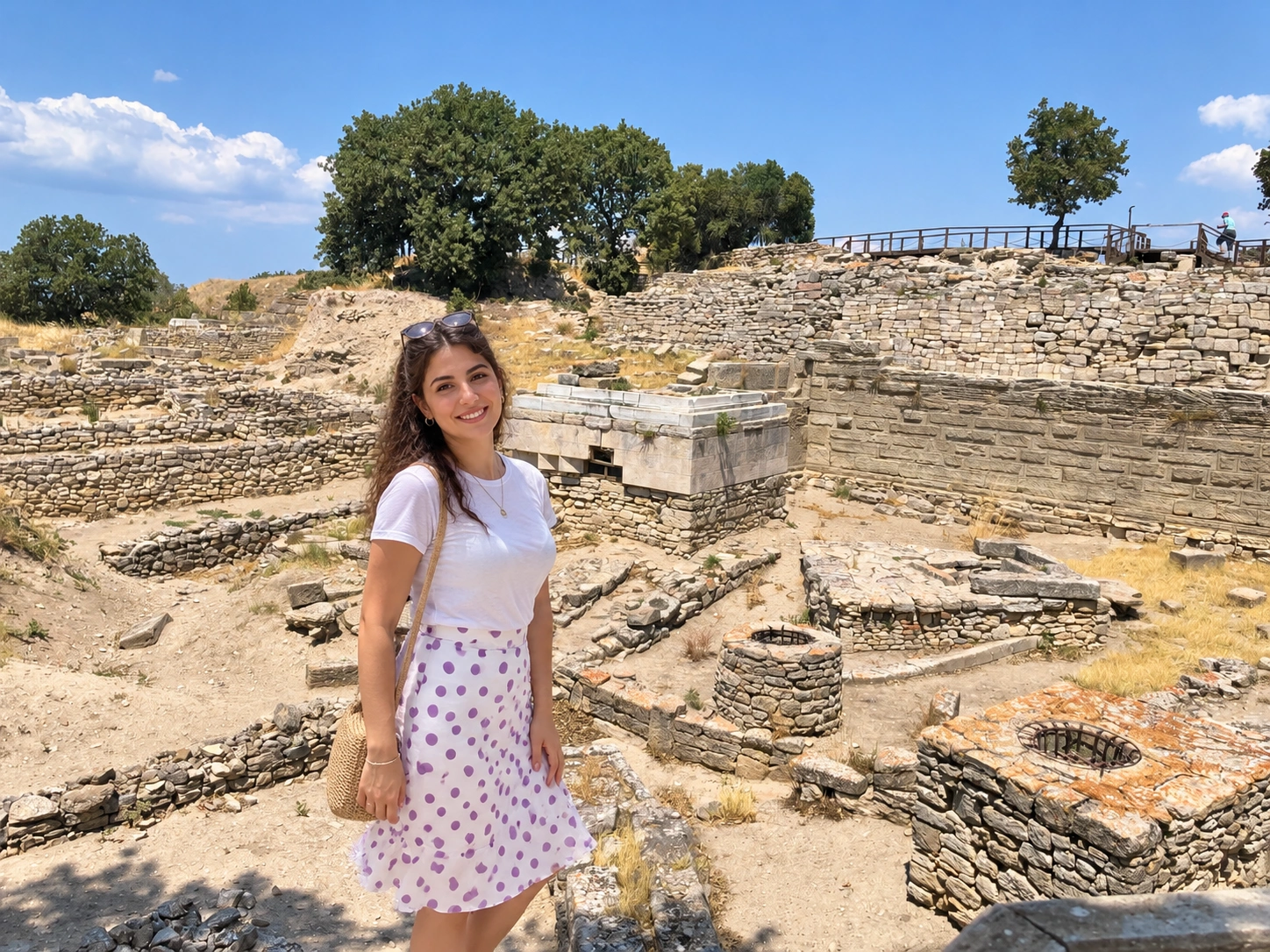
Hisarlık is a low tell (settlement mound) above the coastal plain west of the Dardanelles straits. The modern access village is Tevfikiye, on the road corridor toward Ezine from Çanakkale city (roughly 30–40 minutes by car or local bus).
- Province: Çanakkale — northwestern Anatolia, not the Aegean “resort south.”
- Ancient shoreline: Sedimentation has pushed the sea farther away than in Bronze Age times; Troy was strategically placed near the straits, not as a modern beachfront.
- Wilusa / Ilios: Hittite texts and scholarly work widely associate the region with the Troy of tradition — present this as a strong scholarly association, not absolute proof of Homeric events.
- Nearby framing: Pair Troy with 1915 Çanakkale Bridge logistics, Gallipoli / Anzac memorials, or a longer Aegean coast route — each is a separate planning block.
2026 fees
Tickets and passes — museum plus site on one ticket
| Ticket / pass | 2026 foreign visitor | Notes |
|---|---|---|
| Troy Museum + Archaeological Site (combined) | €27 | Single ticket covers both the museum and the open-air site — buy once, visit both on the same day or split across your stay per current gate rules |
| MüzeKart | Eligible TR / KKTC / Blue Card holders | Standard domestic museum pass rules apply where listed — confirm at the ticket office |
| MuseumPass Türkiye | Varies by product | Often accepted at MüzeKart-participating sites for foreign visitors — verify the current MuseumPass product before you travel |
| Assos (nearby comparison) | €11 | Separate site — see Assos guide |
| Apollon Smintheion | €3 | Small sanctuary site in the Troas corridor |
| Alexandria Troas | Free | Open archaeological area — confirm access locally |
Ignore stale blog posts quoting old lira-only “site-only” prices without the current combined €27 museum-and-site tariff. Winter opening hours often differ from summer — confirm on muze.gov.tr before you go.
Opening hours
When Troy is open — summer 2026
During the 2026 tourism season (1 May–1 October), both the museum and the archaeological site are commonly listed as 08:30–20:00, with the ticket office closing around 19:30. Outside that window, hours typically shorten — check official museum pages for winter schedules and any closure days before you drive from Istanbul or Çanakkale.
Allow roughly 1.5–3 hours for the site alone, 1.5–2.5 hours for the museum alone, or about 3.5–5.5 hours for both without rushing. Older claims of 6–8 hours for the site alone are overstated for most visitors.
Settlement layers
Nine phases on one mound — not nine separate civilisations
Archaeologists label major phases Troy I–IX with many sub-phases. The mound grew as each settlement rebuilt on earlier ruins. Homeric “Troy” is a literary idea mapped onto real layers — mainly debated candidates Troy VI (fortified Late Bronze Age city) and Troy VIIa (destruction horizon).
| Phase group | Period (approx.) | What visitors should know |
|---|---|---|
| Troy I–V | Early Bronze Age | Earliest town sequences; Schliemann’s “Priam’s Treasure” belongs to Troy II, centuries earlier than any plausible “Priam” of epic — not proof of the Iliad king |
| Troy VI | Late Bronze Age · fortified city | Strong walls, towered citadel — leading candidate for a wealthy Bronze Age Troy behind later Greek stories |
| Troy VIIa | Late Bronze Age · destruction horizon | Evidence of violent destruction and short reoccupation — often linked in scholarship to memories of war, without confirming Homer’s cast |
| Troy VIII | Early Iron Age | Smaller post-Bronze Age settlement on the mound |
| Troy IX (Ilium) | Hellenistic–Roman | Temple of Athena precinct, odeon, bouleuterion, Roman-era city fabric — much of what you walk among on the upper site |
On the ground
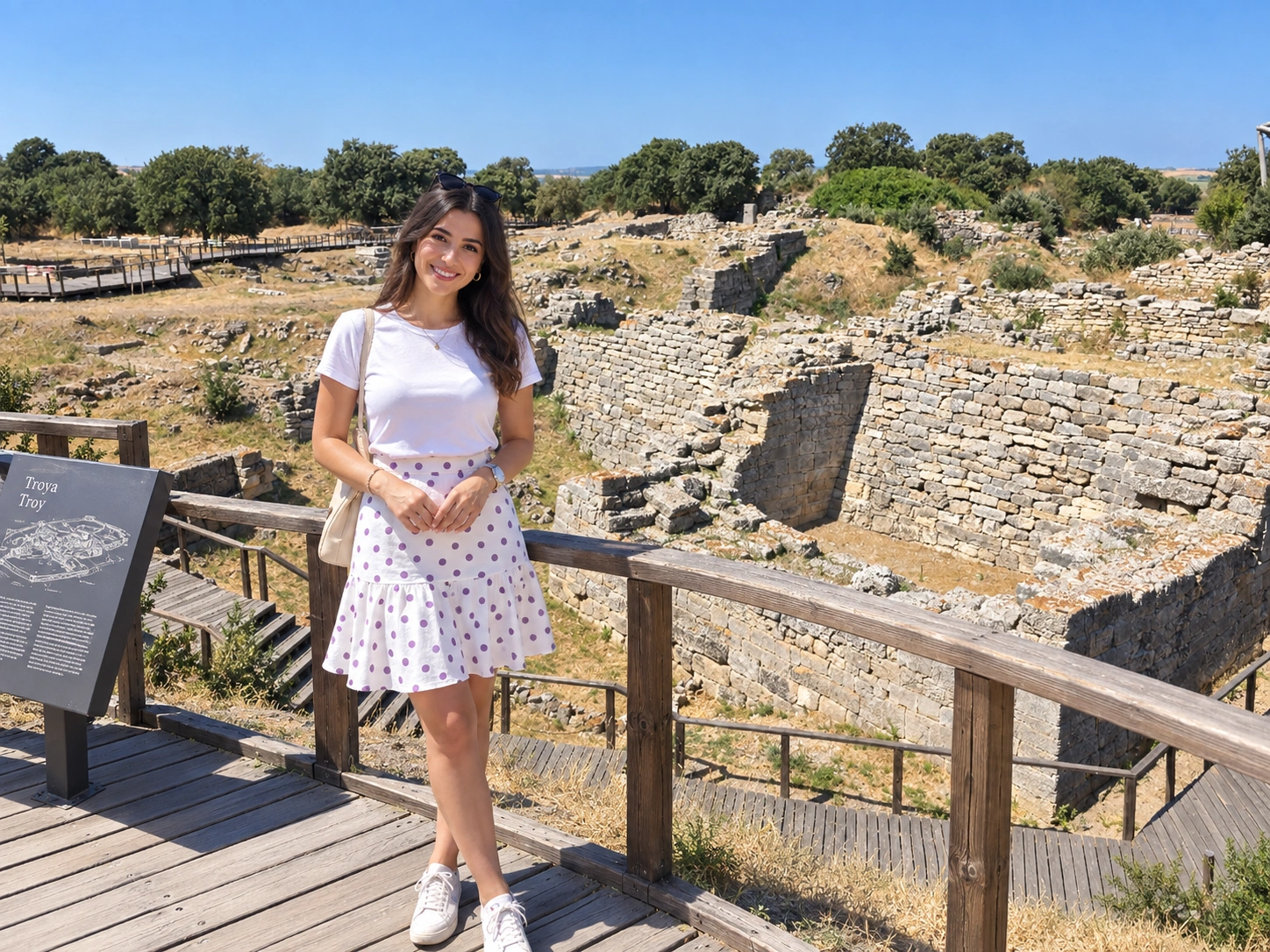
What to see at Troy — site and museum
| Feature | Location | Why it matters | Evidence note |
|---|---|---|---|
| Fortification walls & towers | Site · Troy VI area | Visual anchor for “walled citadel” expectations | Archaeological fact — link to Homeric scenes is interpretive |
| Schliemann’s trench | Site · central mound | Historic excavation scar — shows early dig methods | Educational; also a cautionary tale in stratigraphy |
| Temple of Athena (Ilium) | Site · upper terrace | Hellenistic-Roman sanctuary of Athena Ilias | Built under Lysimachus (late 4th / early 3rd century BCE), with Roman restorations — not a 300 AD foundation |
| Odeon & bouleuterion | Site · Roman Ilium | Small theatre and council house of the Roman-era city | Part of pilgrimage city honouring Troy’s literary fame |
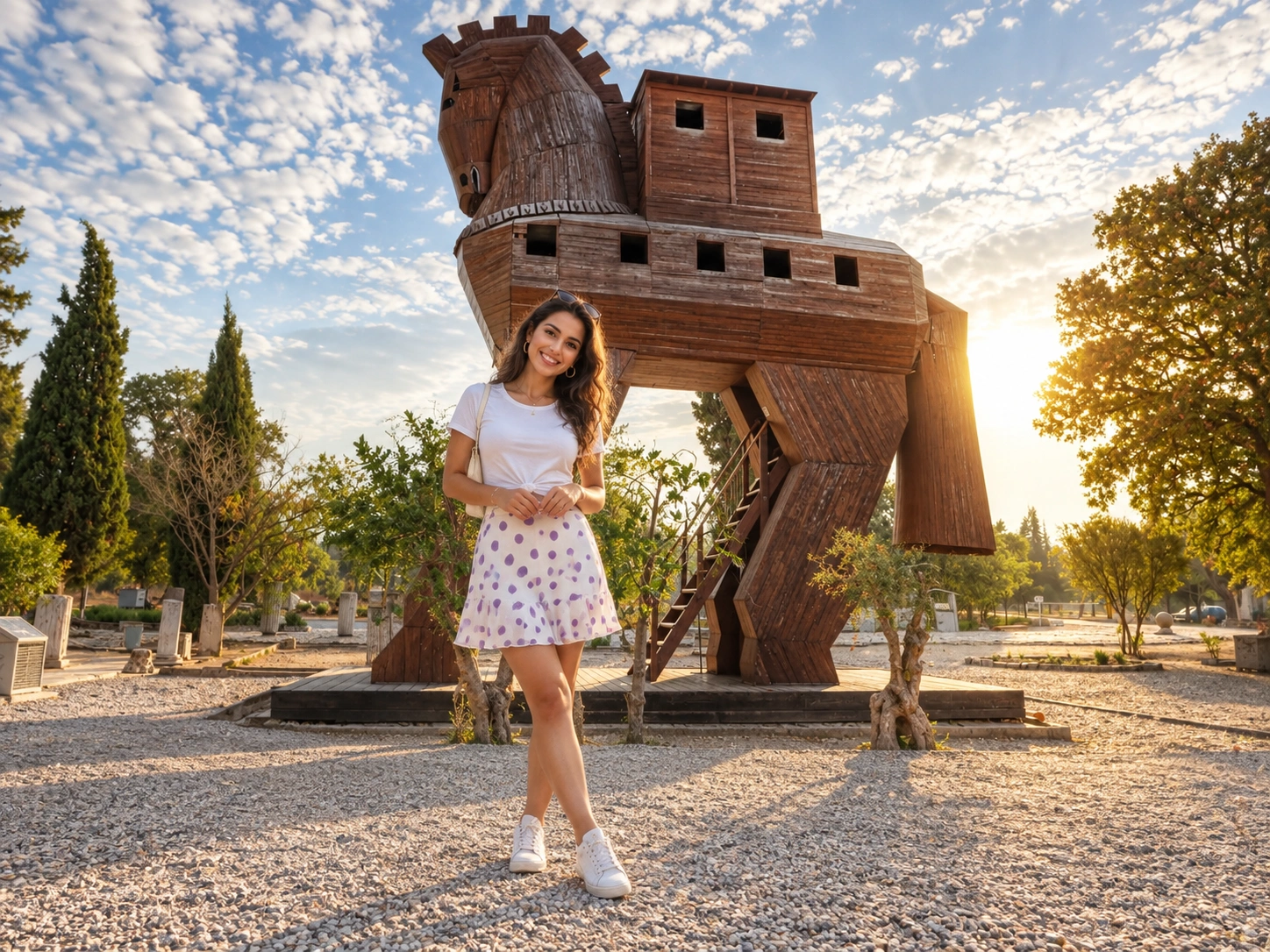
| Site Trojan Horse replica | Site · entrance area | Photo stop and myth storytelling | Modern replica — not archaeological evidence of a wooden horse |
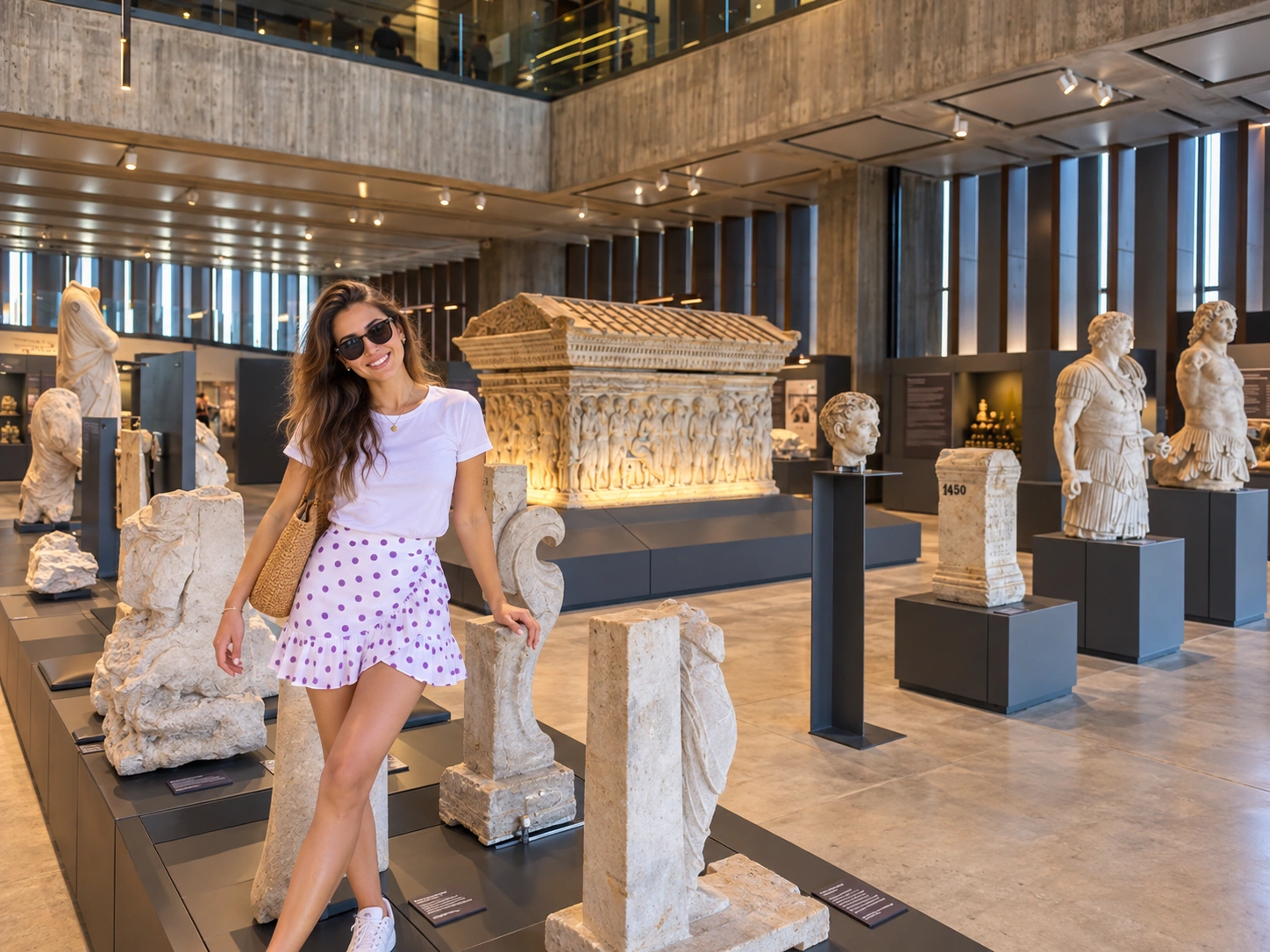
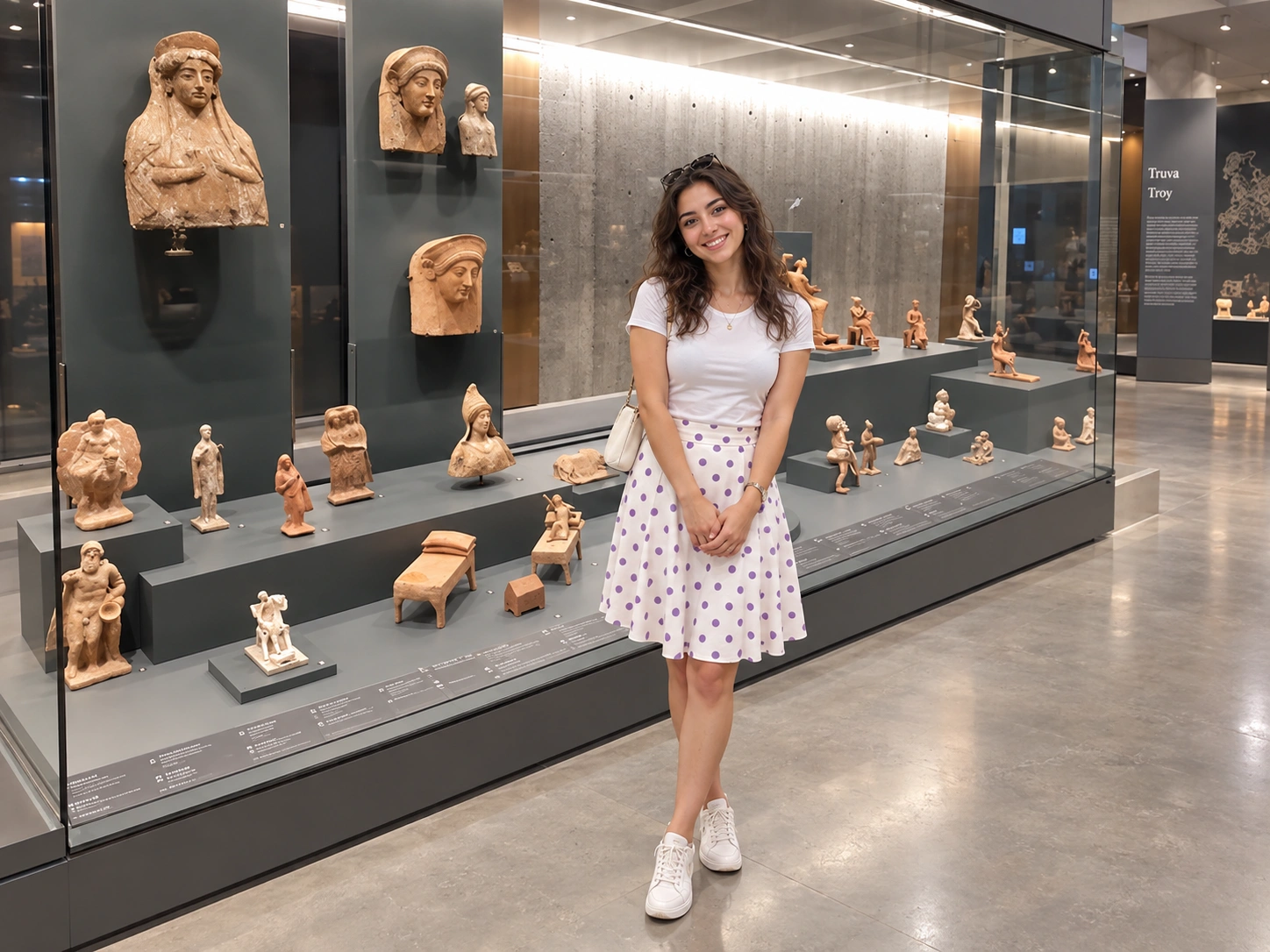
| Troy Museum galleries | Museum building | Finds, stratigraphy, Troy-wide history | Major “Priam’s Treasure” pieces are largely not displayed here — many historically in Berlin, then Moscow |
| Interactive & film rooms | Museum | Orientation for families and first-time visitors | Supplement, not substitute, for reading labels critically |
Myth vs evidence
Homer, the Trojan War and what archaeology can answer
The Iliad and Odyssey are masterpieces of early Greek epic — not field reports. A real Late Bronze Age city on Hisarlık is compatible with later Greek memory, but the named characters (Achilles, Hector, Helen, Paris) belong to literary tradition, not to proven historical persons.
| Topic | Epic / popular story | Archaeological / historical status |
|---|---|---|
| Did Troy exist? | Ilios, city of Priam | Yes — a long-lived settlement on Hisarlık is documented |
| Was there a Trojan War as Homer tells it? | Ten-year siege, named heroes | Hypothesis — conflict around Late Bronze Age Troy is discussed by scholars; the epic plot is not verified fact |
| Paris, son of Priam | Prince who judged goddesses and took Helen | Myth — Paris is tradition’s name; king is Priam, not “Primus” |
| Does the Iliad include the Wooden Horse? | Many assume the horse is in Homer | No — the Iliad covers a short late-war episode; the horse belongs to later epic cycle traditions, Odyssey allusions and authors such as Virgil |
| Was the Wooden Horse real? | Soldiers hidden inside a statue | Literary tradition — no archaeological proof of a wooden horse device |
| Priam’s Treasure | Gold of King Priam | Schliemann’s label for Troy II finds — mismatched chronology; originals largely off-site today |
| Who “discovered” Troy? | Schliemann alone | Frank Calvert championed Hisarlık first; Schliemann excavated famously from the 1870s onward |
| Xerxes at Troy | Sometimes conflated with visible temple | Herodotus records Persian offerings at the Athena Ilias sanctuary — predates the Hellenistic temple fabric you see |
Three horses
Trojan Horse — literature, site replica and movie prop
Visitors often merge three different “horses.” Keep them separate when you plan photos and expectations.
| Version | What it is | Where | How to treat it |
|---|---|---|---|
| Literary horse | Plot device in post-Iliad tradition, Odyssey references, Roman epic | Books, films, museum text panels | Story — not archaeological fact |
| Site replica horse | Modern wooden sculpture for visitors | Troy archaeological site entrance zone | Photo landmark — not an ancient artefact; access rules may vary — follow on-site signage |
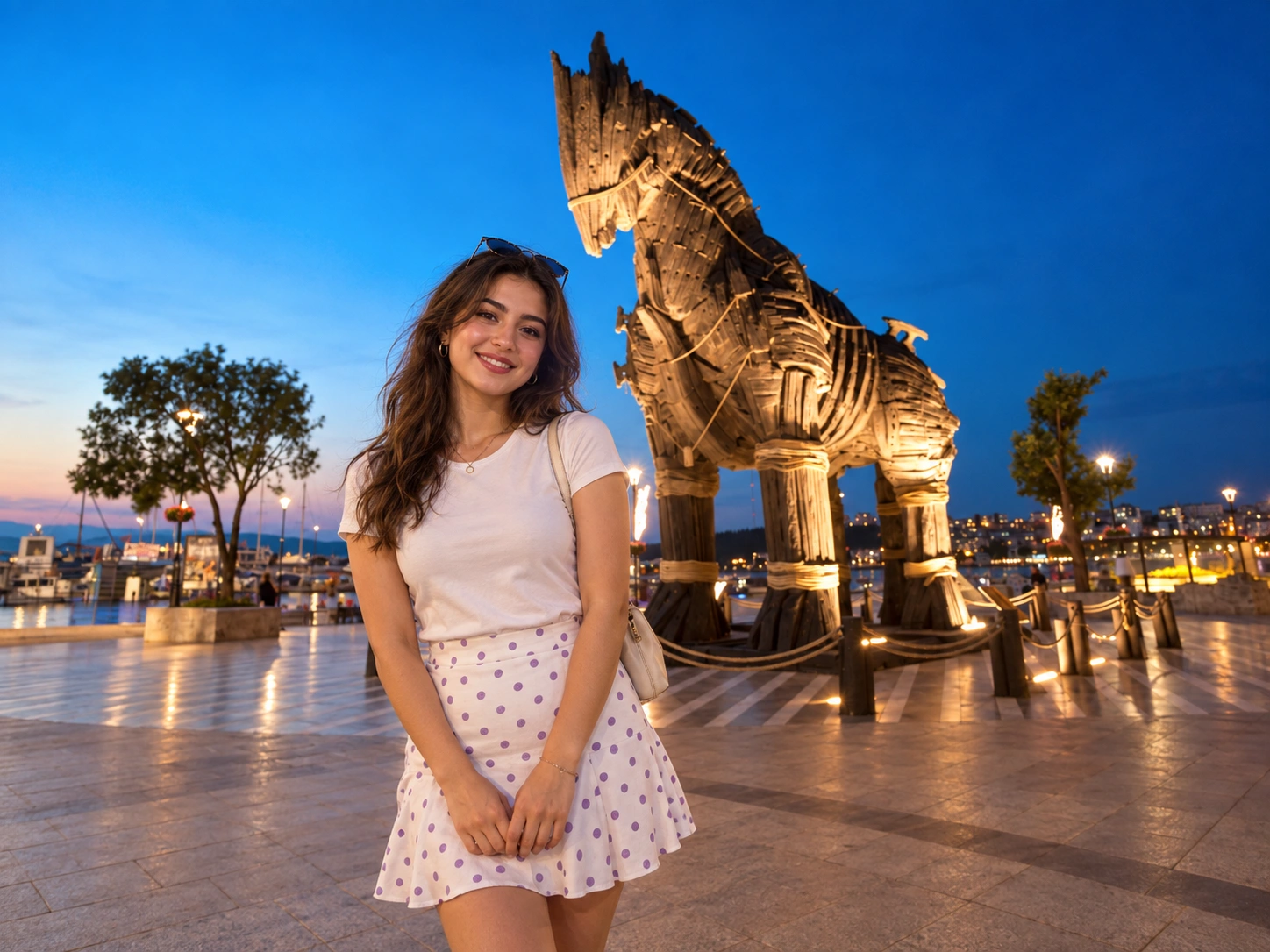
| 2004 movie horse | Film prop from Wolfgang Petersen’s Troy (2004) | Çanakkale city waterfront — separate from the archaeological site | Pop-culture monument — do not confuse with the site replica or any ancient object |
Video
Site atmosphere — supporting clips
Video is orientation only — ticket prices and hours follow official 2026 notices, not clips.
Supporting regional context — combine with your own map for Gallipoli or Assos add-ons.
Nearby
Popular places near Troy — separate day blocks
| Place | Distance / time (typical) | Why combine | 2026 fee note (foreign) |
|---|---|---|---|
| Çanakkale city & waterfront | ~30–40 min from Troy | 1915 museum zone, ferry hub, 2004 movie horse prop | City walking mostly free; museums vary |
| 1915 Çanakkale Bridge | On Istanbul–Çanakkale driving routes | Major strait crossing — reshapes travel times from Istanbul | Road tolls apply — see bridge guide |
| Gallipoli battlefields & Anzac Cove | ~1–1.5 h from Troy depending on ferry / bridge route | WWI memorials — emotionally heavy, full-day worthy | Most memorial sites free; museums may charge |
| Assos (Behramkale) | ~1.5–2 h south along coast | Temple of Athena, Aristotle tradition, harbour village | €11 |
| Alexandria Troas | Troas corridor | Roman harbour city ruins — quiet archaeology stop | Free |
| Apollon Smintheion | Near Gülpınar | Apollo sanctuary linked to Iliad plague episode in tradition | €3 |
Getting there
Transport — Istanbul, Çanakkale and chauffeur options
| Route / mode | Practical note | Booking pointer |
|---|---|---|
| Istanbul → Troy by road | Often ~4.5–6+ hours depending on traffic; 1915 bridge routes vs legacy ferry crossings change the calculation | Start early; do not assume a same-day return with Gallipoli unless hours are tight |
| Çanakkale → Troy | Local bus / minibus / taxi / rental car ~30–40 min | Tevfikiye village base for tickets and parking |
| Intercity bus to Çanakkale | Overnight or daytime coaches from major cities — then local hop to Tevfikiye | Check current operator timetables |
| Multi-day northwest Anatolia chauffeur | Useful for Troy + Gallipoli + Assos without self-driving fatigue | Intercity car with driver in Turkey |
| Istanbul-based chauffeur (separate product) | For Istanbul city or airport days — not a Troy ticket or guide package | Car with driver in Istanbul |
Cab Istanbul operates independently of Troy ticketing and museum staff. An intercity chauffeur provides a driver and vehicle — not a licensed archaeologist guide on site. Do not treat Istanbul airport transfer products as if they were a packaged Troy tour.
Itineraries
How many hours or days — sample plans
| Plan | Duration | Outline | Realistic? |
|---|---|---|---|
| Troy core half-day | ~3.5–5.5 h | Museum first for context → open-air site loop → site horse photo stop | Yes — the standard archaeology visit |
| Troy + Çanakkale city | Full day | Morning Troy → afternoon waterfront, navy museum zone, 2004 movie horse | Yes — sensible pairing |
| Troy + Gallipoli memorials | Very full day | Early Troy → cross to peninsula sites (Anzac Cove, Chunuk Bair, cemeteries) | Tight — better split across two days |
| 2-day Çanakkale history block | 2 days | Day 1 Troy + museum + city; Day 2 Gallipoli sectors with evening in Çanakkale | Recommended for first-time history travellers |
| Istanbul day-trip to Troy only | 12–14 h on road | Pre-dawn departure → Troy visit → return | Possible but punishing — overnight in Çanakkale is easier |
| Troas archaeology loop | 2–3 days | Troy + Assos + Alexandria Troas + Smintheion | Yes for ancient-history focused trips — see Aegean coast attractions |
Half-day (Troy only): Buy the combined ticket → museum galleries (1.5–2.5 h) → shuttle or walk to site → anti-clockwise ruins loop including walls, Schliemann trench, Roman odeon, Athena terrace → replica horse. Skip myth-heavy photo queues at midday if touring in summer heat.
Full day (Troy + Çanakkale): Morning Troy block as above → lunch in Tevfikiye or Çanakkale → afternoon waterfront walk and city museums → optional movie horse stop. Add Gallipoli only if you accept a rushed emotional schedule.
Two days (recommended history pass): Day 1 Troy + Çanakkale evening. Day 2 dedicated Gallipoli sectors with a licensed battlefield guide if possible — chauffeur drivers are not battlefield guides unless separately credentialed.
Itinerary video is supplementary — confirm 2026 hours on muze.gov.tr before you lock times.
FAQ
Troy ancient city — FAQ
Where is Troy in Turkey?
At the Hisarlık archaeological mound beside Tevfikiye village in Çanakkale Province, northwestern Anatolia near the Dardanelles — not “the south of Turkey.”
Is Troy a UNESCO World Heritage Site?
Yes. The Archaeological Site of Troy was inscribed in 1998.
How much is Troy entrance fee in 2026?
Foreign visitors pay €27 for a combined ticket covering both the Troy Museum and the archaeological site. MüzeKart applies for eligible citizens.
Do I need separate tickets for the museum and site?
No. Current DOSIM listing is a single combined ticket for both — confirm at the ticket office on arrival.
What are Troy opening hours in summer 2026?
From 1 May to 1 October 2026, hours are commonly 08:30–20:00 with the ticket office closing around 19:30. Winter hours differ — check muze.gov.tr.
How long do you need at Troy?
Plan ~1.5–3 hours for the site, ~1.5–2.5 hours for the museum, or ~3.5–5.5 hours for both. Six to eight hours for the site alone is excessive for most visitors.
Was the Trojan War real?
A real Bronze Age city existed here. Whether a war matching Homer’s plot happened — with named heroes — is a scholarly hypothesis, not proven history. Treat the Iliad as literature.
Was the Trojan Horse real?
No archaeological evidence supports a literal wooden horse. The story belongs to later literary tradition (Odyssey allusions, epic cycle, Virgil) — not to excavation finds.
Does the Iliad describe the Wooden Horse?
No. The Iliad covers a short episode late in the war. The horse fall is mainly later tradition outside the Iliad’s scope.
Who was Paris’s father — Priam or Primus?
In Greek epic tradition, Paris is a son of King Priam of Troy — not “Primus.”
Which Troy layer is “Homeric Troy”?
Scholars debate candidates, mainly Troy VI (fortified Late Bronze Age city) and Troy VIIa (destruction horizon). There is no simple “Homer’s layer” label on the ground.
What is Priam’s Treasure and is it in the museum?
Schliemann’s gold finds from Troy II, misnamed after Homeric King Priam. They are centuries too early for that story. Major pieces are largely not on display at Troy Museum — much of the assemblage historically went to Berlin and later Moscow.
Did Schliemann discover Troy alone?
Frank Calvert identified and promoted Hisarlık before Schliemann’s famous excavations. Schliemann brought global attention — and controversial digging methods.
When was the Temple of Athena at Troy built?
The visible Hellenistic-Roman sanctuary belongs to the Ilium phase — associated with Lysimachus in the late 4th / early 3rd century BCE, with later Roman restorations. It is not a 300 AD origin temple.
Did Xerxes build the Athena temple you see?
No. Herodotus records Xerxes making offerings at the Athena Ilias sanctuary before the Hellenistic temple fabric existed. Do not conflate Persian-era ritual with the standing ruins.
Is the horse at the archaeological site the movie horse?
No. The site has its own modern replica near the entrance. The 2004 Troy film prop is a separate wooden horse in Çanakkale city.
How far is Troy from Çanakkale?
Roughly 30–40 minutes by road or local bus to the Tevfikiye / Hisarlık access area.
Can you day-trip to Troy from Istanbul?
Road travel is often ~4.5–6+ hours each way depending on route and traffic. A same-day return is possible but tiring — overnight in Çanakkale is more comfortable.
Can Troy be combined with Gallipoli in one day?
Only as a very packed schedule. Both deserve time — two days is more respectful for Troy plus major Gallipoli sites.
Does Cab Istanbul sell Troy tour packages?
No. Cab Istanbul provides independent chauffeur and transfer services. For multi-day routes, see intercity car with driver in Turkey. Drivers are not licensed site guides unless separately arranged.
Next step
Read Troy as archaeology — enjoy the myth separately
Buy the combined €27 ticket once, start in the museum for stratigraphy context, then walk the mound with realistic time budgets. Treat the Iliad and the Wooden Horse as cultural stories — not as labels on trench walls. Pair Troy with Gallipoli, Assos or a wider Aegean coast loop only when your calendar has room. For long drives from Istanbul, consider an intercity chauffeur — and keep Istanbul chauffeur products separate from northwest Anatolia history days.