
Selçuk · İzmir Province · UNESCO World Heritage
Ephesus (Turkish: Efes) is one of the eastern Mediterranean’s most visited archaeological landscapes — a Hellenistic–Roman city near Selçuk in İzmir Province, inscribed by UNESCO in 2015 under criteria (iii)(iv)(vi). Visitors come for the Library of Celsus, the Great Theatre, Curetes Street and the separately ticketed Terrace Houses — not for a continuous “city founded in 6000 BC” slogan. This guide rebuilds the site as it stands for travellers in 2026: verified DOSİM fees, summer opening hours, corrected monument stories, and practical routing from Kuşadası, İzmir Adnan Menderes Airport (ADB) and Istanbul.
Cab Istanbul is an independent transfer and chauffeur provider. It does not sell Ephesus admissions, licensed guiding or hotel packages. A driver is transport — not a licensed archaeological guide. For wider coast context see Aegean coast attractions and İzmir attractions.
At a glance
Popular places around Ephesus and Selçuk
Treat Ephesus as a cluster: the main ticketed ruin circuit, optional Terrace Houses, the Experience Museum bundled with the main ticket, then separate Selçuk-area sites that are not inside the marble-street walk.
| Place | Area | Why visit | Practical note |
|---|---|---|---|
| Ephesus Archaeological Site | Main circuit near Selçuk | Hellenistic–Roman city core visitors actually walk | Foreign fee €40 (DOSIM) · Experience Museum included |
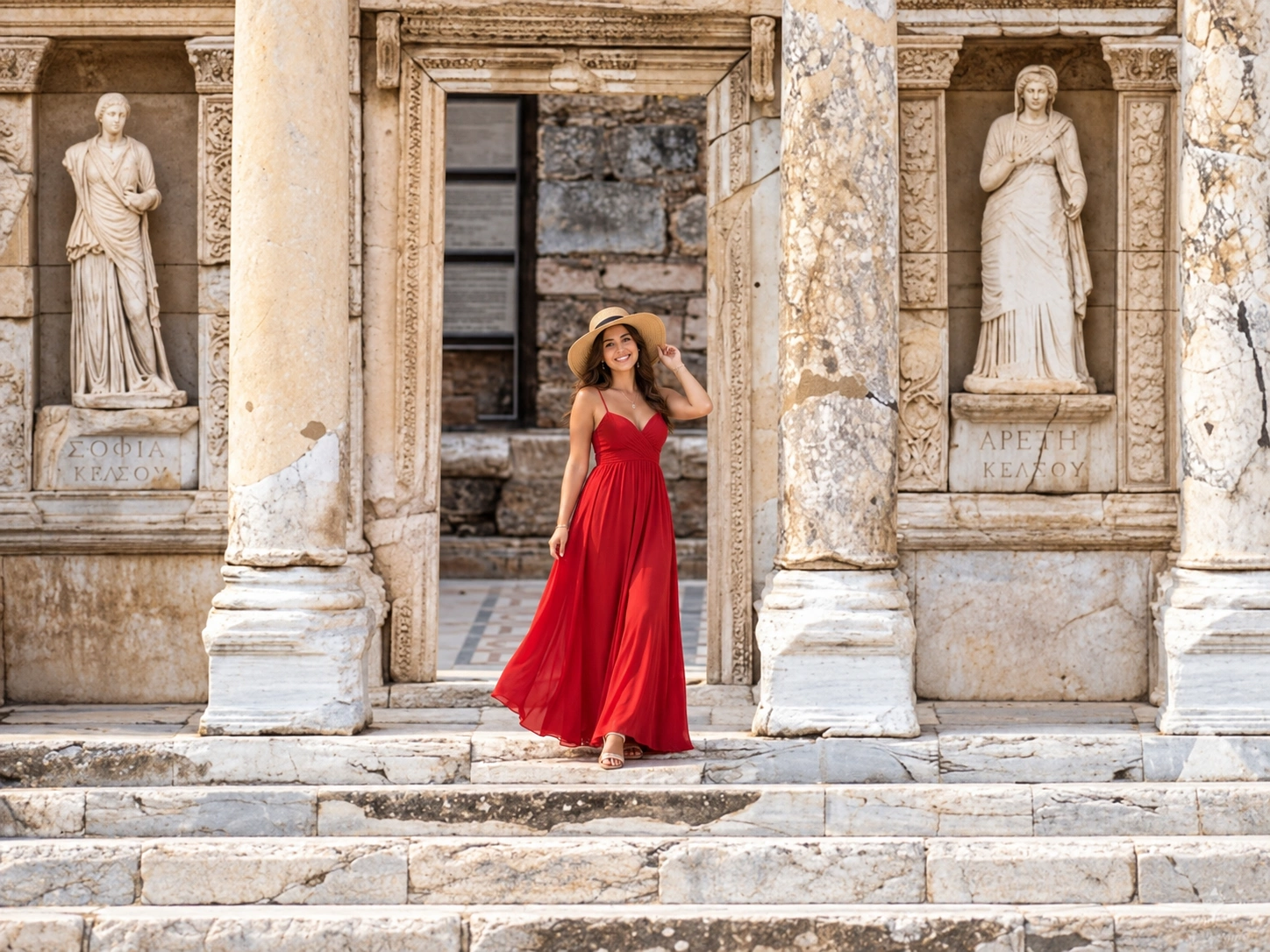
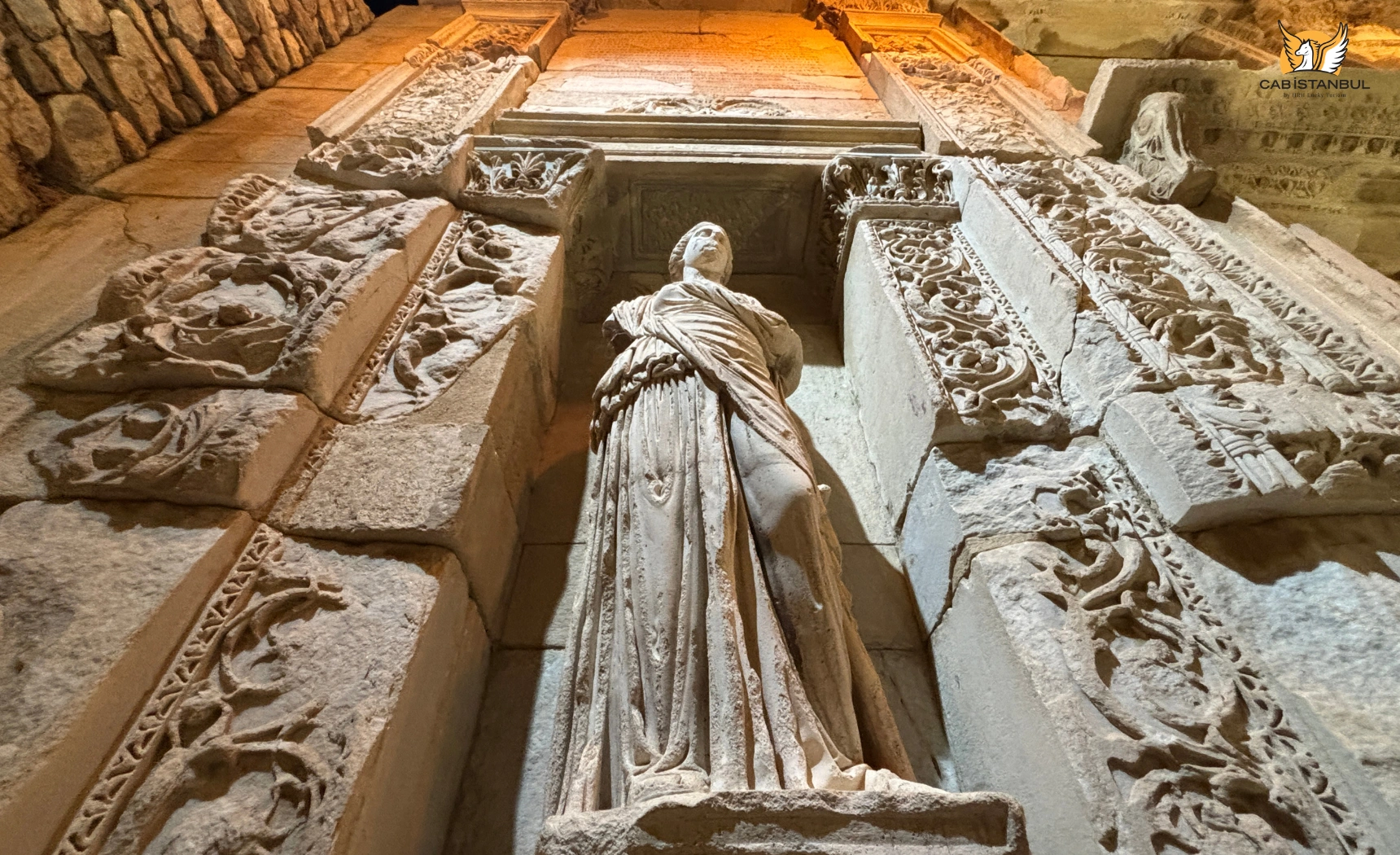
| Library of Celsus | Lower Curetes / Marble Street junction | Signature façade; library + monumental tomb of Celsus | Inside main ticket · façade statues are allegories (Sophia, Episteme, Ennoia, Arete) |
| Great Theatre | Harbour / lower city | Monumental civic theatre facing Arcadiane | Capacity often cited ~25,000 — scholarly estimate, not a proven world record |
| Terrace Houses (Yamaç Evler) | Above Curetes Street | Elite Roman houses with frescoes, mosaics, marble interiors | Separate €15 · MüzeKart not free entry |
| Curetes Street | Upper → lower city spine | Processional marble avenue with fountains, gates and façades | Uneven paving — footwear and heat matter |
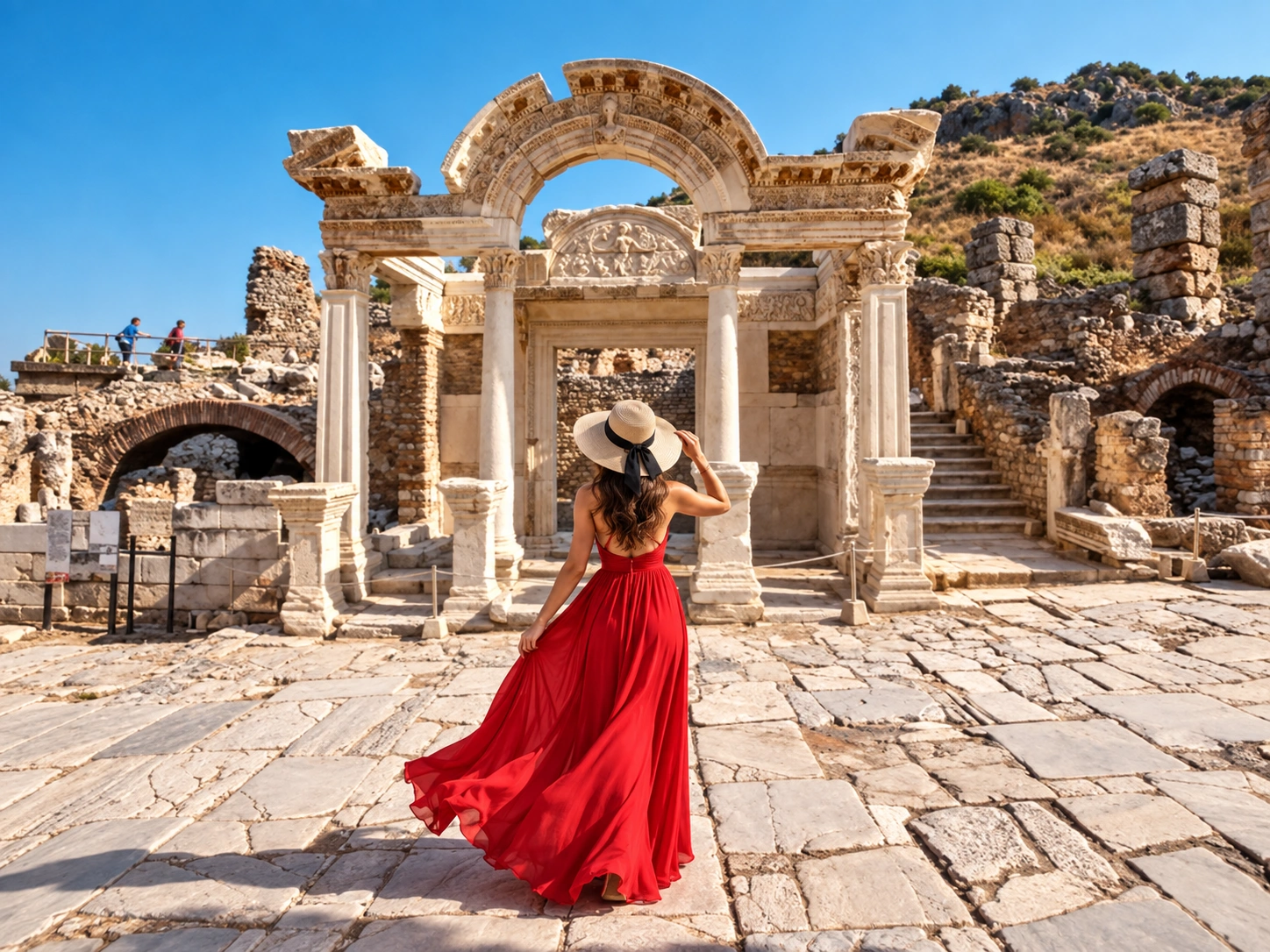
| Temple of Hadrian | Curetes Street | Compact Hadrianic façade with relief programme | Some reliefs are replicas; originals may be in museums — caption carefully on site |
| Prytaneion | Upper city / State Agora zone | Civic-religious hearth of the city (Hestia tradition) | Not a modern “city hall”; Artemis Ephesia statues found here are in Ephesus Museum |
| Odeon / Bouleuterion | Upper city | Council chamber / small theatre | Capacity often quoted ~1,400–1,500 — treat as estimate |
| Temple of Domitian (imperial cult) | Upper city approach | Imperial cult architecture; later damnatio memoriae context | Avoid “gratitude to Domitian” tour folklore |
| Scholastica Baths | Curetes Street | Roman bath complex with hypocaust technology | No verified “free baths for the poor / class equality” story |
| Church of Mary | Harbour zone / north of Arcadiane | Early Christian basilica; linked in scholarship to Council of Ephesus 431 | Not identical with the Revelation “Seven Churches” checklist |
| Ephesus Experience Museum | On / beside the archaeological site | Interpretive experience product | Included with main Ephesus ticket (muze.gov.tr) |
| Ephesus Archaeological Museum | Selçuk town | Artemis statues, domestic finds, sculpture from the site | Separate entity · €10 · not physically inside the ruins |
| Temple of Artemis | Near Selçuk (separate) | One of the Seven Wonders tradition; scant standing remains | Not inside the main Ephesus ticketed walk |
| Basilica of St John / Ayasuluk | Selçuk hill | Byzantine basilica and Ayasuluk fortress landscape | Separate DOSİM ticket (€6) |
| House of the Virgin Mary | Hills near Ephesus | Modern pilgrimage site rooted in Christian tradition | Tradition ≠ archaeological proof of Mary’s residence |
| Seven Sleepers cave area | Near Ephesus / Selçuk | Late antique / Christian legend landscape | Separate visit logistics from the main circuit |
Visitor information 2026
Current tickets, hours and practical details
Fees below follow the Ministry DOSİM foreign-visitor euro list checked mid-September 2026. Hours prefer the İzmir Provincial Directorate summer tourism season (1 May–1 October 2026). Always reconfirm on muze.gov.tr / gate boards on the day — festivals and allocations can change night access.
| Practical detail | Current information |
|---|---|
| Location | Near Selçuk, İzmir Province — day-trip distance from Kuşadası and İzmir/ADB |
| UNESCO | Property “Ephesus” (WHC 1018), inscribed 2015, criteria (iii)(iv)(vi) |
| Main entrances | Upper (Magnesian / State Agora side) and lower (harbour / theatre side). Many visitors enter upper and exit lower downhill |
| Main site foreign ticket | €40 (DOSIM) — includes Ephesus Experience Museum |
| Terrace Houses | €15 separate; MüzeKart holders pay discounted 200 TL (not free) |
| Ephesus Museum (Selçuk) | €10 separate · MüzeKart valid for eligible holders |
| Ayasuluk / St John | €6 separate DOSİM ticket |
| Summer visit hours (site) | 08:30–20:00 (İzmir KTB 1 May–1 Oct 2026). Lower gate box office to 19:00; upper to 18:00 |
| Terrace Houses hours (summer list) | 09:00–20:00 — confirm day-of |
| Ephesus Museum hours (summer list) | 08:30–20:00 — confirm day-of |
| Night museum | Wed–Sat 19:00–23:00 (typically Jun–Oct) when no special allocation; MuseumPass not valid; MüzeKart + TC holders typically +200 TL; confirm day-of |
| MüzeKart | Paid annual card for eligible Turkish/KKTC citizens — main site yes; Terrace Houses not free (200 TL discount). Not a universal “twice a year free” myth |
| MuseumPass (foreign) | MuseumPass Türkiye (€165 / 15 days from first use) and Museum Pass The Aegean (lists Terrace Houses) — confirm venue list on muze.gov.tr; night museum excluded |
| Accessibility | Marble slopes, stairs, heat and limited shade. Terrace Houses involve stair routes. Not a blanket wheelchair-friendly site |
| Recommended duration | Main site 2–4 h; + Terrace Houses ~3.5–5.5 h; Selçuk cluster easily a full day |
| Best visiting window | Early morning or late afternoon; summer cruise-bus peaks mid-day; shoulder seasons milder |
| Ticket / pass | Current 2026 price / rule | Important note |
|---|---|---|
| Ephesus Örenyeri (main site) | €40 foreign · MüzeKart valid | Experience Museum included |
| Terrace Houses (Yamaç Evler) | €15 foreign · MüzeKart discounted 200 TL | Not free with MüzeKart |
| Ephesus Archaeological Museum | €10 foreign · MüzeKart valid | Separate Selçuk venue |
| Ayasuluk / St John | €6 foreign · MüzeKart valid | Separate hill site |
| MuseumPass Türkiye | €165 / 15 days (foreign product) | One entry per included venue where accepted; night museum not covered — confirm on muze.gov.tr |
| Museum Pass The Aegean | Regional foreign pass (product-page pricing) | Optional multi-site Aegean pass — listing includes Terrace Houses; night museum not covered — confirm on muze.gov.tr |
| Temple of Artemis remains | Typically free / open landscape | Separate Selçuk-area site — not inside the €40 circuit; confirm locally |
| Night museum (seasonal) | Programme fees apply | MuseumPass not valid; eligible MüzeKart + TC holders typically +200 TL — confirm day-of |
Foreign fees are listed in euro on the current DOSİM schedule — not older USD brochure figures. MüzeKart is a paid annual card for eligible citizens, not a universal free-entry myth.
Orientation video
See the site scale before you walk
Videos are visual context only — fees, hours and monument identities follow official and scholarly sources, not clips.
History without slogans
How old is Ephesus — and what visitors actually see
The wider Selçuk / Ephesus landscape has prehistoric settlement evidence going back toward the 7th millennium BCE (including mound contexts such as Çukuriçi). That is not the same statement as “the marble city you walk today dates from 6000 BC.”
- Bronze Age Ayasuluk / Apasa: Many scholars identify Late Bronze Age Apasa with the Ayasuluk area in an Arzawa-related geography — a qualified identification, not a tourist absolute.
- Amazon foundation: Ancient literary tradition sometimes credits Amazons. Treat this as foundation myth, not archaeology.
- Archaic / Ionian Ephesus: Greek-period settlement concentrated nearer the Artemis sanctuary zone before the Hellenistic move.
- Lysimachus relocation: In the early 3rd century BCE, Lysimachus (a successor of Alexander) relocated the city toward the ruin field visitors tour today.
- Roman Asia: Under Rome, Ephesus became one of the great cities of Asia. Exact resident counts such as “200,000” remain contested estimates.
- Harbour and decline: The Kaystros / Küçük Menderes river system silted the harbour over time. Decline was multi-cause (silting, earthquakes, economic and political change, late antique shifts toward Ayasuluk) — not a single cartoon cause.
Ephesus was not “history’s first city built entirely of marble.” Ephesian Artemis interacted with Anatolian cult traditions, but Artemis and Kybele should not be collapsed into a single identity.
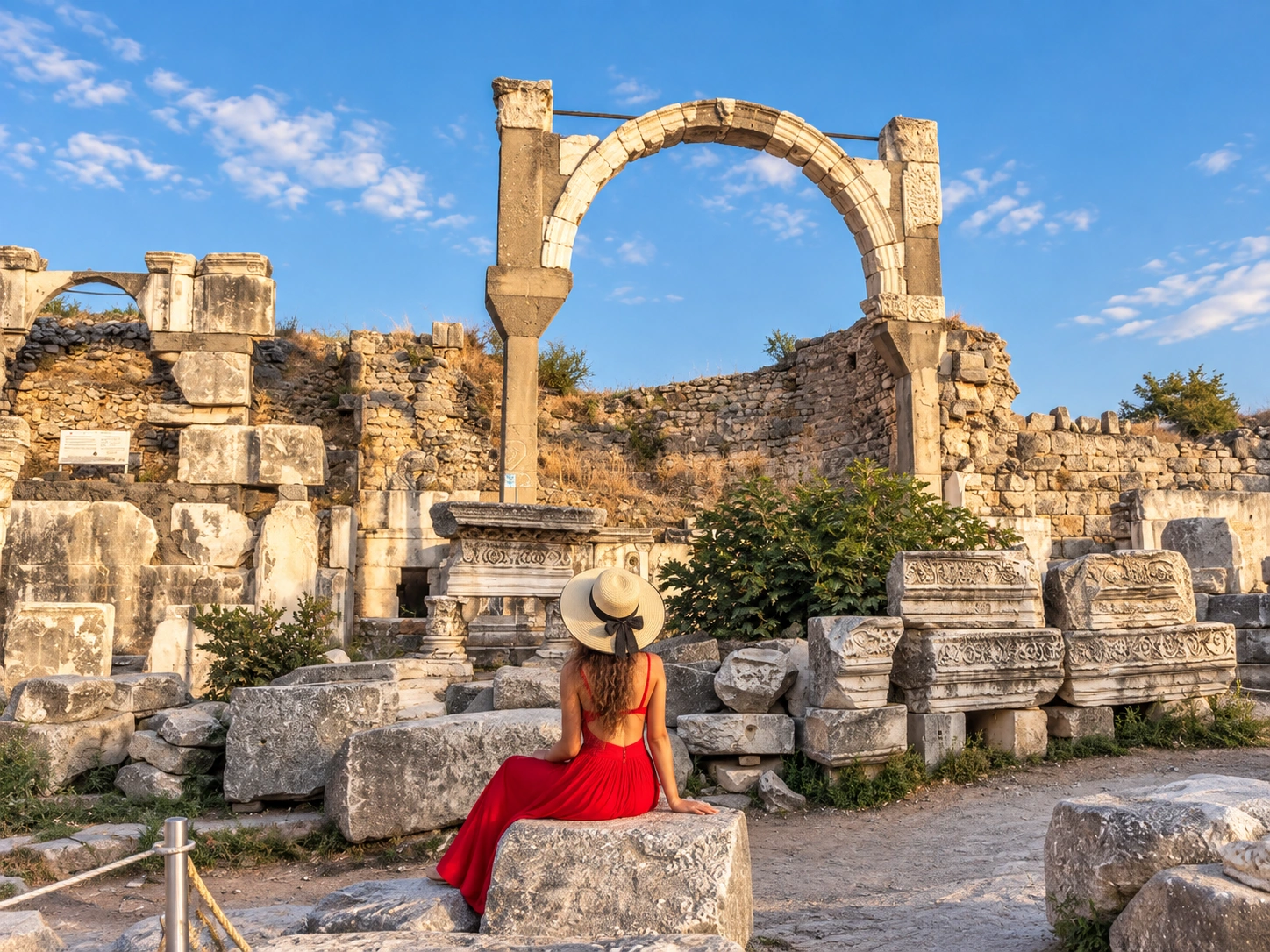
Walking the circuit
Main Ephesus monuments by route
Most independent visitors walk roughly upper city → Curetes Street → Celsus / Marble Street → Great Theatre → Arcadiane. The old “Northern / Central / Southern Ephesus” tourist table is replaced below with a route that matches how people actually move.
| Monument | Area / route | Main significance | Visitor note |
|---|---|---|---|
| State Agora & Basilica | Upper city | Civic square and administrative setting | Common upper-gate entry zone |
| Odeon / Bouleuterion | Upper city | Council / small performance space | Capacity estimate ~1,400–1,500; modern festival use is not a fixed visitor fact |
| Prytaneion | Upper city | Hearth of public cult and civic identity | Artemis statues from here are museum pieces |
| Temple of Domitian | Upper → Curetes approach | Imperial cult platform | Flavian / damnatio context — not a gratitude monument |
| Heracles Gate | Curetes Street | Street narrowing with Heracles relief reuse | Also called Gate of Hercules in many guides |
| Curetes Street | Main descending spine | Marble avenue with drainage under paving | Hadrian Temple, baths, latrina and fountains along the way |
| Temple of Hadrian | Curetes Street | Hadrianic dedication with foundation-myth reliefs | Check on-site whether you are seeing originals or replicas |
| Scholastica Baths | Curetes Street | Multi-level Roman baths | Hypocaust technology — no invented social-justice narrative |
| Latrina | Curetes / Marble Street zone | Public latrines — social hygiene infrastructure | Popular photo stop; keep context archaeological |
| Terrace Houses | Above Curetes | Elite domestic archaeology under protective shelter | Separate ticket; allow extra time and stairs |
| Library of Celsus | Lower Curetes junction | Library façade + tomb of Tiberius Julius Celsus Polemaeanus | Scroll-capacity figures vary — do not treat “14,000” as hard fact |
| Commercial Agora (Tetragonos) | Near Celsus / theatre approach | Market square of the lower city | Trade heart of Roman Ephesus |
| Great Theatre | Lower city | Civic spectacle and assembly | Estimate capacity often ~25,000; not “largest on earth” |
| Arcadiane (Harbour Street) | Theatre → harbour | Colonnaded processional avenue to the ancient harbour | Correct route is theatre–harbour, not Odeon–harbour |
| Church of Mary | Harbour / northern lower zone | Early Christian basilica; 431 council association | Distinct from House of the Virgin Mary pilgrimage site |
| Pollio Fountain / Trajan Fountain | Upper → Curetes approaches | Monumental street fountains of Roman Ephesus | Useful photo stops; do not invent separate tickets |
| Varius Baths | Upper / mid-city bath cluster | Earlier bath complex distinct from Scholastica | Keep distinct from Scholastica Baths |
| Stoa of the Alytarch | Marble Street / lower Curetes zone | Colonnaded street architecture (Alytarches office tradition) | Keep concise — obscure for most first-time visitors |
| Magnesia Gate area | Upper approach | Historic eastern approach toward the State Agora side | Not always a dramatic standing photo highlight for every visitor route |
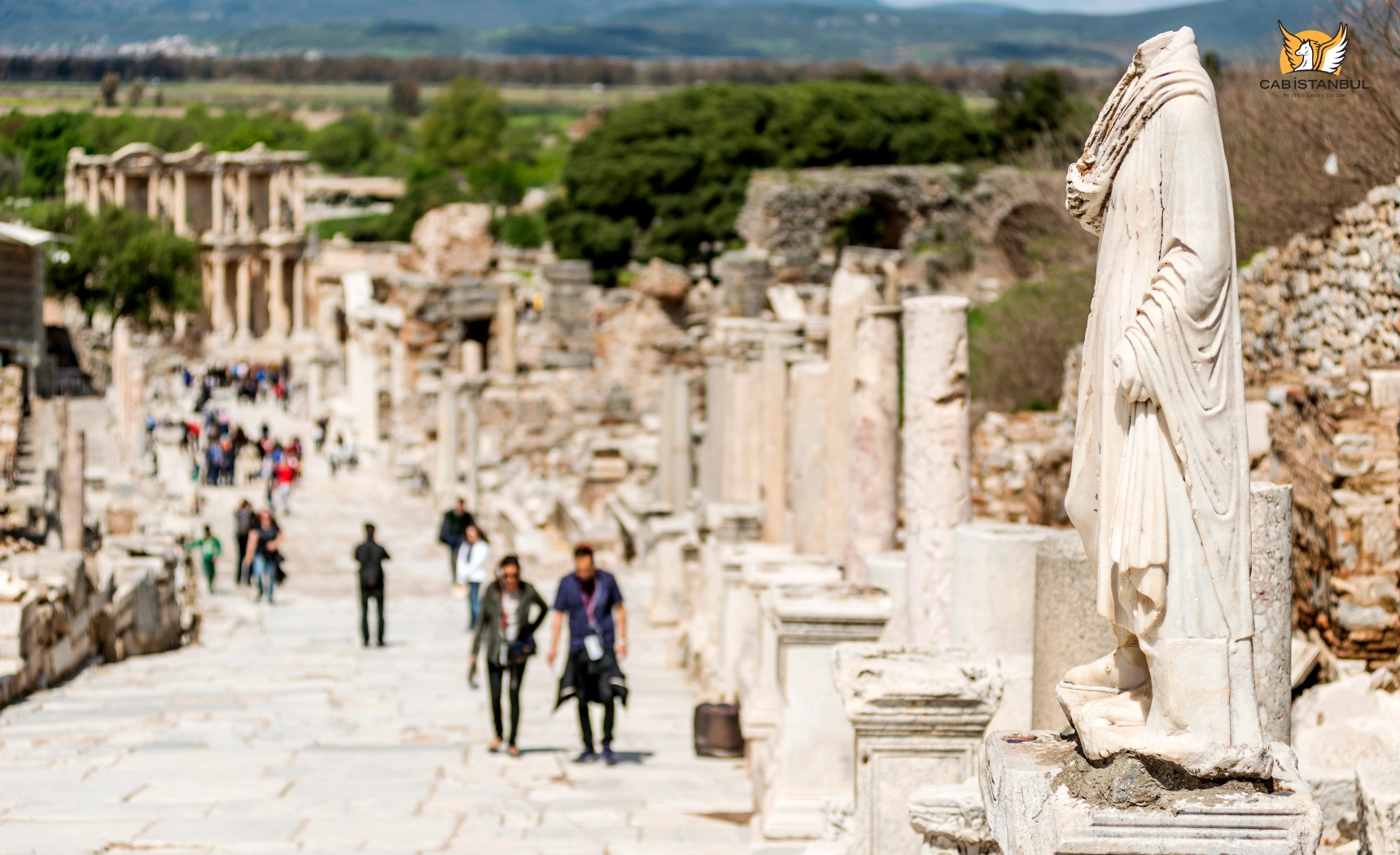
Upper city
Prytaneion, Odeon and the Domitian Temple
The Prytaneion was the city’s civic-religious hearth — closer to a sacred centre of public cult than a modern municipal office. Excavations here recovered celebrated Artemis Ephesia statues now displayed in the Ephesus Archaeological Museum in Selçuk. Tradition associates a perpetual fire of Hestia with this setting; present that carefully as cult practice, not office folklore.
The Odeon (often identified with the bouleuterion / council chamber) is a compact theatre-like building. Popular capacity figures around 1,400–1,500 are estimates. Occasional modern concerts are not a guaranteed seasonal programme — check locally if that matters to your visit.
The so-called Temple of Domitian belongs to Ephesus’s imperial cult landscape. After Domitian’s damnatio memoriae, identification and naming become historically complicated — avoid invented “gratitude for prosperity” narratives. Colossal statue fragments associated with the Flavian cult are museum pieces, not standing cult statues on site.
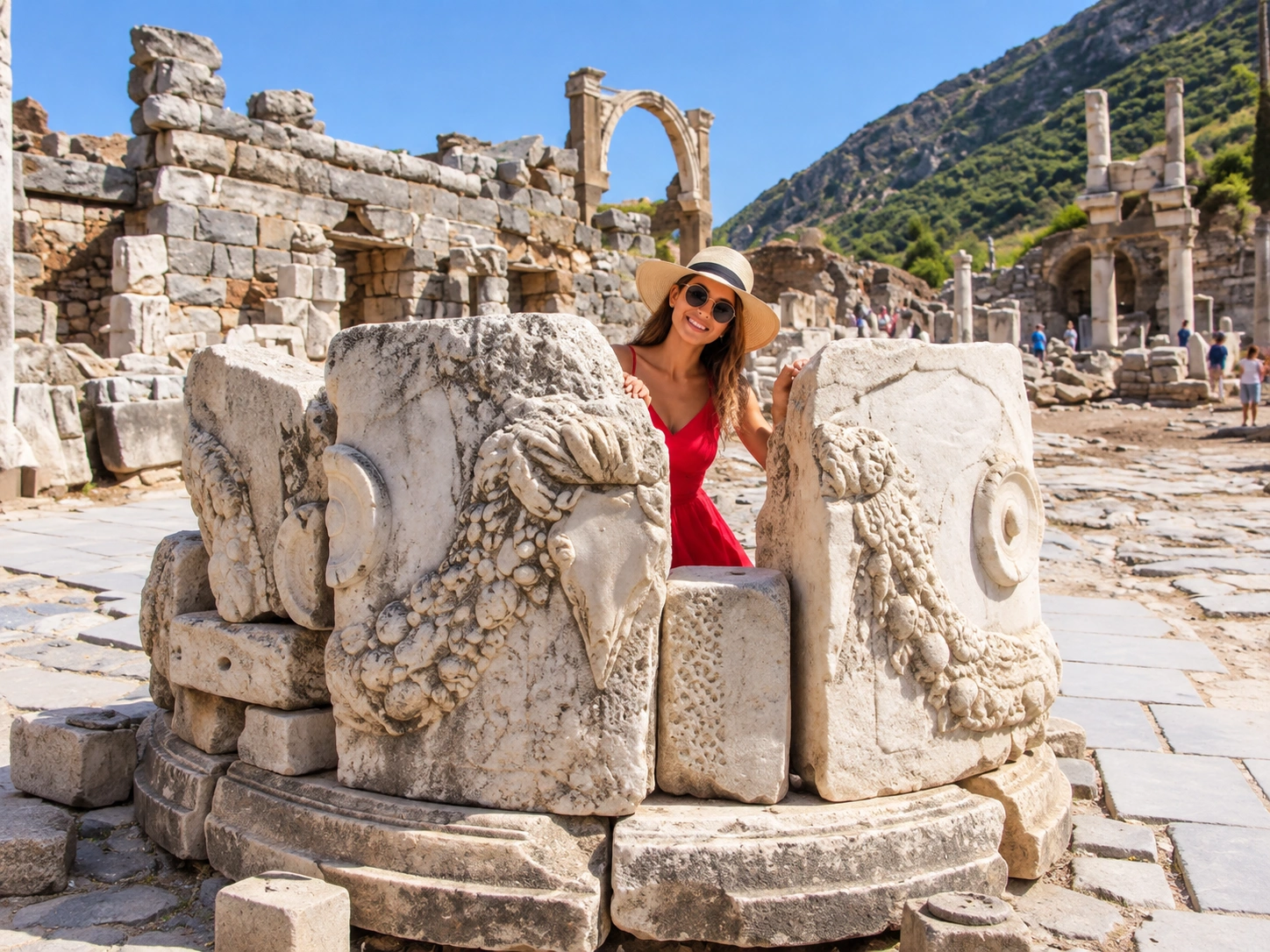
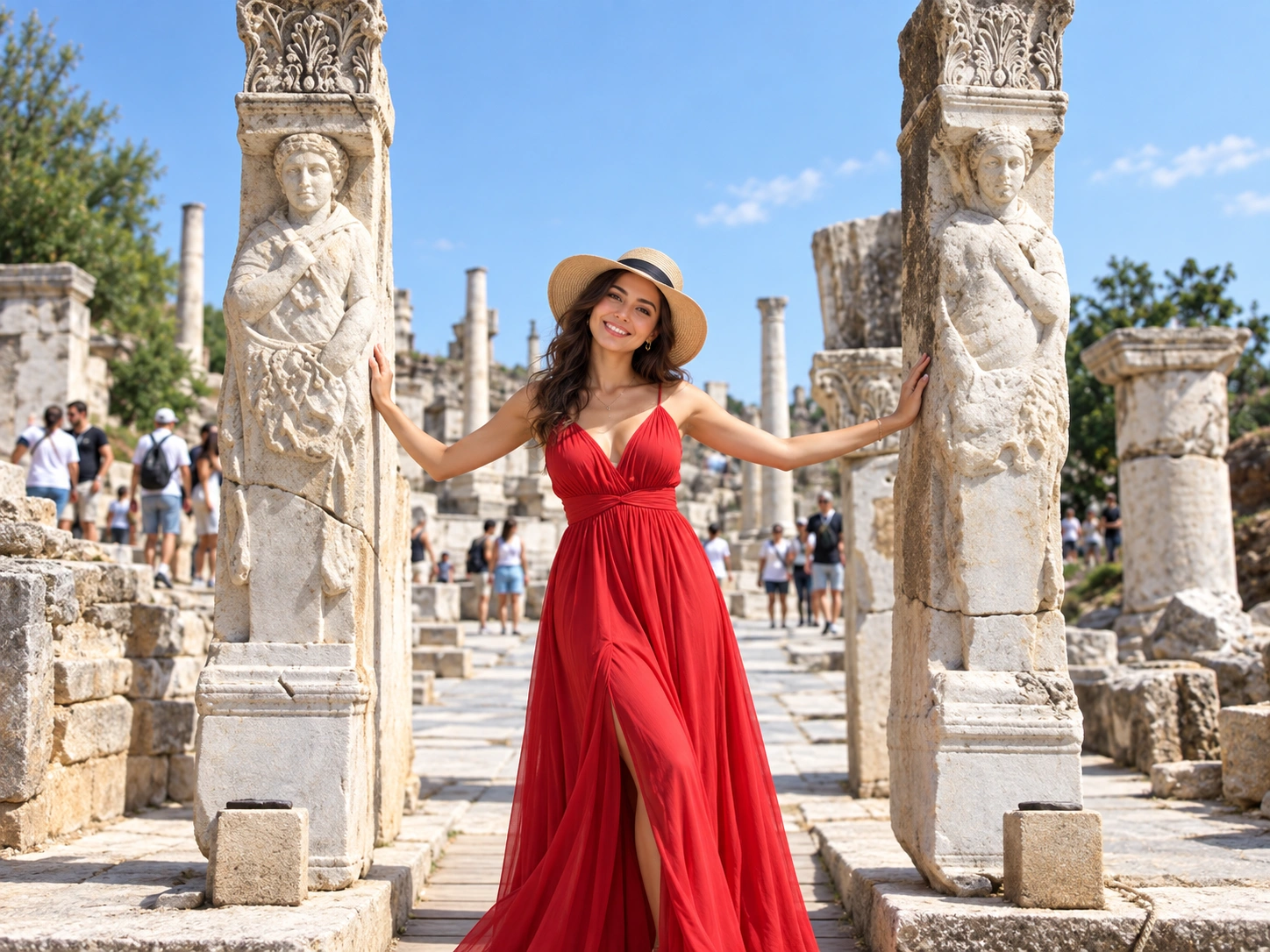
Curetes Street
Hadrian, baths, latrina and elite houses
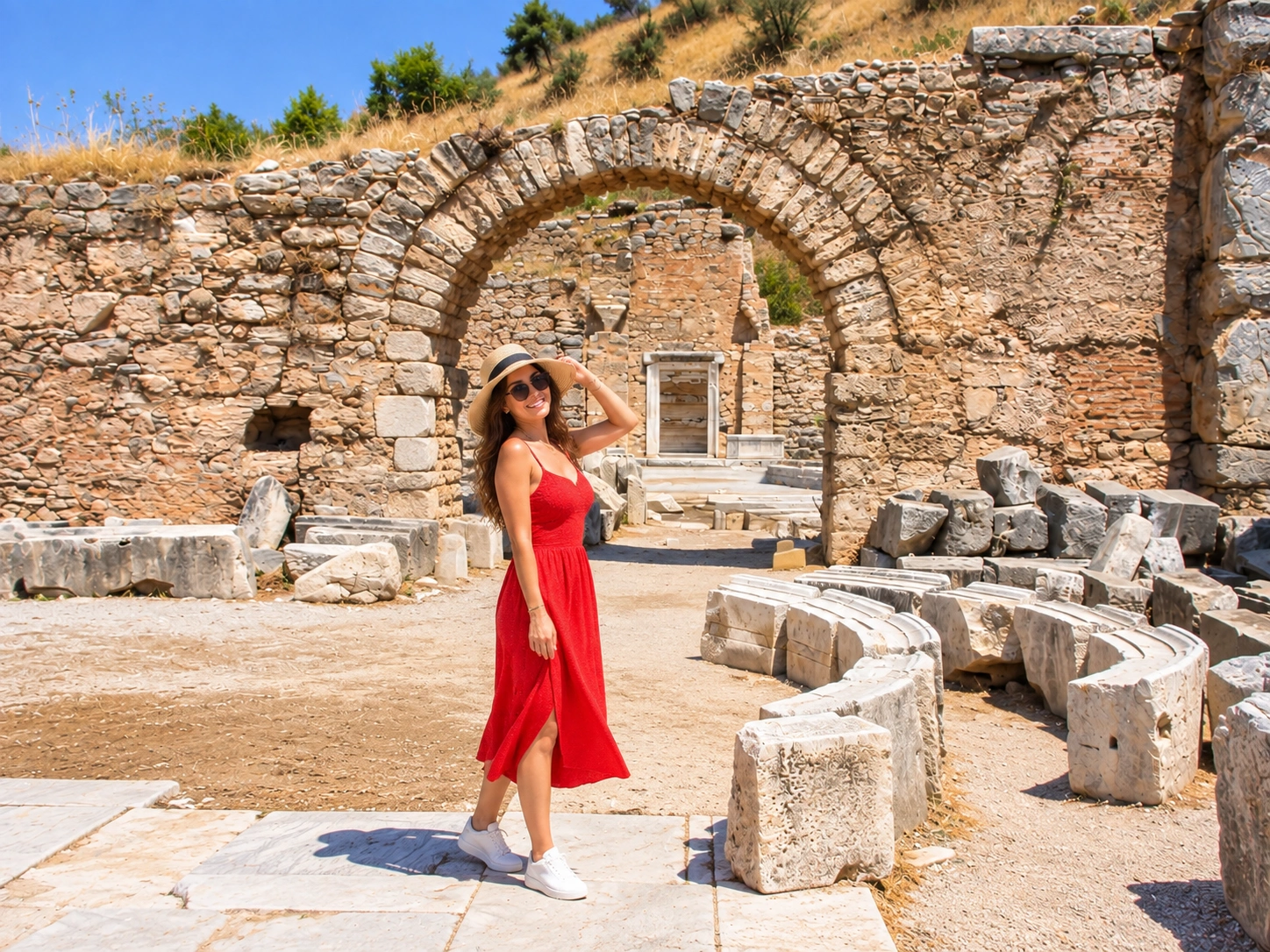
Curetes Street linked upper civic Ephesus with the Celsus Library junction. Beneath marble paving, drainage channels show sophisticated urban engineering — without marketing filler about “civilization levels.” Along the street stand the Temple of Hadrian, fountains, the Scholastica Baths and the public latrina.
The Hadrian façade carries a relief programme tied to Ephesus’s foundation myths. Some panels visitors photograph today may be replicas with originals conserved elsewhere — check museum and site labelling rather than assuming every carved block is in situ original.
Scholastica Baths are a Roman bathing complex with hypocaust heating. Older tour copy inventing free services for the poor and a fight against class segregation is unsupported ideology — remove it. The “Love House / brothel” building near the Celsus–Marble Street junction is a popular identification; treat brothel claims as debated interpretation, and treat secret tunnels to the library or baths as tourism mythology, not established fact.
Major highlight
Terrace Houses (Yamaç Evler)
The Terrace Houses are among the most important domestic archaeological ensembles open to visitors in Roman Asia. Multi-storey elite residences preserve fresco programmes, mosaic floors, marble cladding, water systems and stair circulation under a modern protective shelter. They are not a quick photo alcove — plan dedicated time and expect stairs and controlled routes.
- Ticket: separate €15 foreign fee (DOSIM 2026).
- MüzeKart: not free; discounted 200 TL for eligible MüzeKart holders.
- Access: stair-heavy; limited for visitors with mobility constraints.
- Time: often 45–90 minutes on top of the main circuit.
- Naming: Terrace Houses / Hillside Houses / Yamaç Evler = one entity cluster (Terrace Houses 1–2 in excavation terminology).
If you only upgrade one optional ticket inside the archaeological area, this is usually the highest-value upgrade for visitors who care about Roman domestic life rather than façade photography alone.
Icon of Ephesus
Library of Celsus
The Library of Celsus was built in the early 2nd century CE to honour the Roman senator Tiberius Julius Celsus Polemaeanus, with completion under his son Aquila. It functioned as both a public library and a monumental tomb — Celsus’s sarcophagus was placed within the structure (commonly described in the western crypt/chamber context).
Façade niches present personifications of virtues: Sophia (Wisdom), Episteme (Knowledge), Ennoia (Intelligence / Thought — not “Eunoia”), and Arete (Virtue). Guidebook scroll-capacity figures (including “about 12,000–14,000”) are reconstructions, not counted inventories. Heraclitus, Callinus and Soranus belong to earlier centuries and did not use this library.
Lower city
Great Theatre and Arcadiane
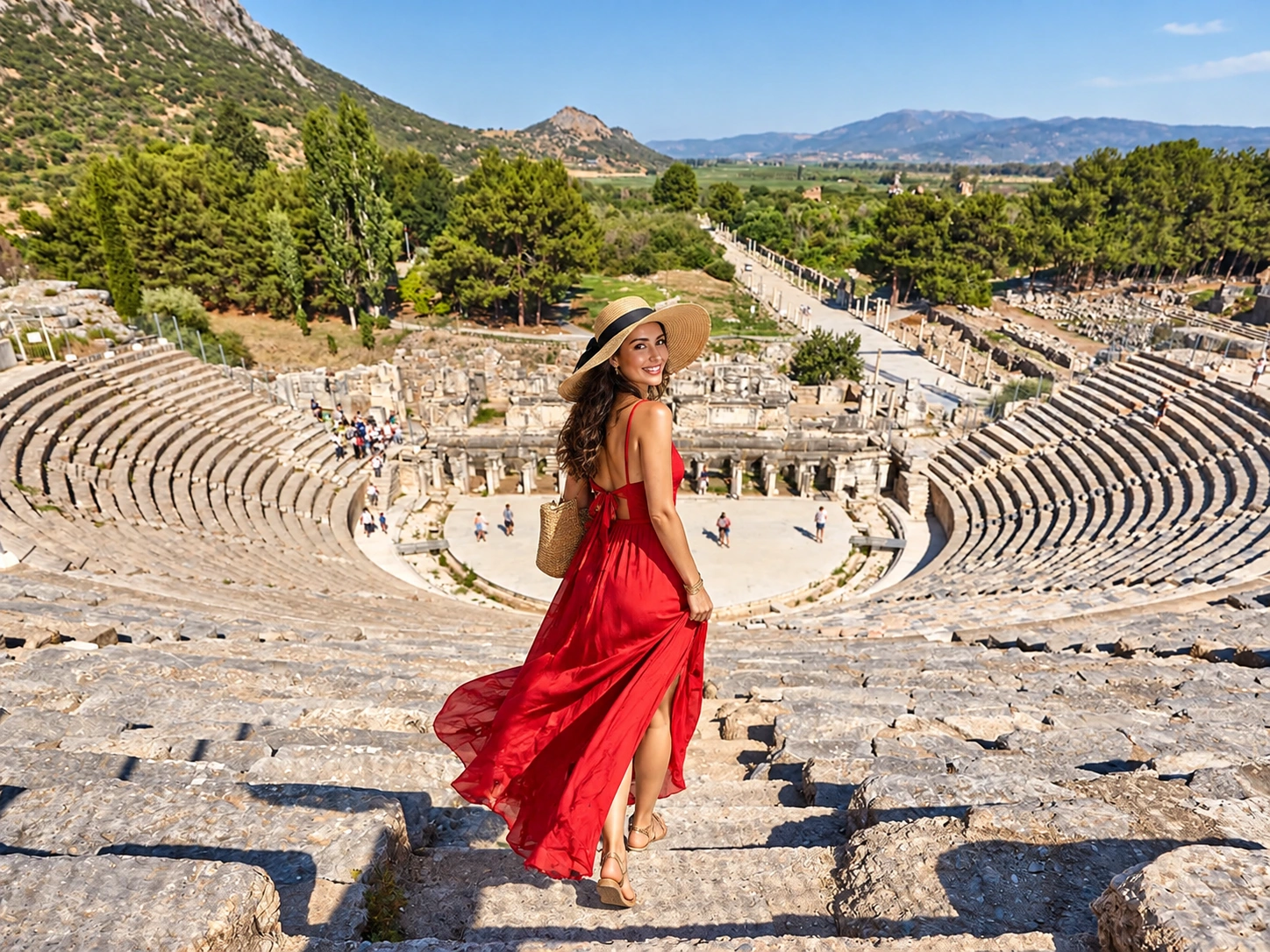
The Great Theatre grew from Hellenistic origins into a vast Roman civic theatre. Popular capacity estimates around 24,000–25,000 are widely repeated; treat them as estimates. Calling it “the largest open-air theatre in the ancient world” is unsupported marketing. The theatre hosted civic gatherings and spectacles; New Testament tradition associates Ephesus with Paul’s conflict with Artemis craftsmen (Acts) — present as religious-historical context, not a stage-prop reenactment claim.
Arcadiane (Harbour Street) is the colonnaded avenue running from the theatre toward the ancient harbour — not from the Odeon. Silting of the Kaystros eventually pushed the coastline away; the harbour end today is landscape archaeology more than a living port.
Christian heritage
Church of Mary, Seven Churches and nearby pilgrimage sites
Ephesus matters in early Christian history — but popular copy often conflates distinct things. Use the table below to keep entities separate.
| Site / concept | Historical context | Important qualification |
|---|---|---|
| Church of Mary (Double Church) | Early Christian basilica in the harbour zone; associated with the Council of Ephesus (431) | Council venue association is scholarly/traditional — not “cradle of Catholicism” |
| Seven Churches of Asia | Communities addressed in Revelation | Refers to congregations, not seven surviving church buildings on a ruin checklist |
| Basilica of St John | Byzantine basilica on Ayasuluk Hill | Separate Selçuk ticket (€6); not inside the main Ephesus walk |
| House of the Virgin Mary | Pilgrimage house in the hills | Christian tradition and modern pilgrimage — not proven archaeology of Mary’s residence |
| Seven Sleepers | Late antique Christian legend landscape | Separate visit; myth and archaeology must stay distinct |
Separate sites
Temple of Artemis, Ephesus Museum and Ayasuluk
The Temple of Artemis — celebrated in the Seven Wonders tradition — stands near Selçuk as a separate site with scant above-ground remains. Croesus-era Archaic rebuilding, the 356 BCE destruction tradition, and later reconstruction belong to Artemis sanctuary history; they are not automatic inclusions of the main Ephesus ticketed circuit.
The Ephesus Archaeological Museum in Selçuk holds Artemis Ephesia statues, sculpture and finds that make the ruin field intelligible. It is a different product from the on-site Experience Museum (included with the main ticket). Ayasuluk Hill and the Basilica of St John form another ticketed cluster (€6). İsa Bey Mosque nearby adds a Seljuk–early Ottoman layer for visitors who continue into town.
Museum video is orientation only — collections and fees follow current museum information.
Time planning
How long to spend — and sample itineraries
| Plan | Time range | What fits | Watch-outs |
|---|---|---|---|
| Cruise / half-day from Kuşadası | ~3–5 h door-to-door including transfer | Main circuit highlights (Celsus, Theatre, Curetes) | Build buffer for ship return; Terrace Houses often skipped |
| Main site focused | 2–4 h on site | Upper city → Curetes → Celsus → Theatre | Heat and cruise crowds mid-day in summer |
| Main site + Terrace Houses | 3.5–5.5 h | Best single-day archaeology depth | Stairs + separate ticket |
| Main site + Experience Museum | Add ~30–60 min | Interpretive layer included in €40 | Same hours as site |
| Full Selçuk day | Full day | Ruins + Terrace Houses + Museum and/or Artemis / St John | House of Mary usually needs its own transfer block |
Best strategy in peak months: enter early from the upper gate, walk downhill, and exit lower — or reverse late afternoon if you want cooler light at Celsus. Mid-day is when cruise coaches densify the main photo points.
Getting there
Transport to Ephesus in 2026
| Route | Typical pattern | Notes |
|---|---|---|
| İzmir ADB → Ephesus / Selçuk | ~1 hour by road | Hire car, transfer, bus/rail+taxi combinations |
| İzmir centre → Selçuk | Regional train / bus then local taxi or walk/transfer to gates | Selçuk is the logistics town |
| Kuşadası → Ephesus | ~20–30 minutes by road | Primary cruise shore-excursion corridor |
| Istanbul → Ephesus | Fly IST/SAW → ADB, then road (~1 h) | Long coach/drive possible; do not assume a simple direct high-speed train |
| Private chauffeur (Cab Istanbul) | Intercity multi-day Aegean routing from Istanbul corridor | Transport only — driver ≠ licensed guide; not an Istanbul Airport→Ephesus shuttle product |
Cruise passengers from Kuşadası can see the main highlights in a half day if transfers are tight and Terrace Houses / Mary House are optional add-ons — never treat ship return times as guaranteed by a blog itinerary. Pair Ephesus with Didyma’s Temple of Apollo only on a longer Ionian archaeology day, not as a casual same-morning add-on.
For Istanbul-origin multi-day travel, Cab Istanbul’s intercity car with driver can support Aegean routing. Car with driver in Istanbul and Istanbul Airport Transfer remain Istanbul-leg products — not Ephesus shuttles.
FAQ
Ephesus Ancient City — frequently asked questions
Where is Ephesus?
Near Selçuk in İzmir Province on Turkey’s Aegean coast — not inside Kuşadası town, though Kuşadası is the nearest major cruise/resort base.
Is Ephesus in İzmir or Kuşadası?
Administratively İzmir Province (Selçuk). Practically, many visitors base in Kuşadası (Aydın Province) and day-trip.
Is Ephesus a UNESCO World Heritage Site?
Yes. UNESCO inscribed “Ephesus” in 2015 (list 1018) under criteria (iii)(iv)(vi).
Is Ephesus really from 6000 BC?
The wider area has prehistoric settlement evidence toward the 7th millennium BCE. The marble city visitors walk is mainly Hellenistic–Roman after Lysimachus’s relocation.
Was Ephesus founded by Amazons?
Only as foundation myth — not as archaeological fact.
What was Apasa?
A Late Bronze Age place-name often identified with Ayasuluk / Ephesus area in Arzawa-related geography — a scholarly identification, not a slogan.
Who relocated Ephesus under Lysimachus?
Lysimachus, a successor of Alexander, relocated the city in the early 3rd century BCE toward today’s main ruin field.
How large was Roman Ephesus?
One of the largest cities of Roman Asia. Exact figures such as “200,000” are contested estimates — avoid fake precision.
What are the most important monuments?
Celsus Library, Curetes Street, Great Theatre, Terrace Houses, Temple of Hadrian, Prytaneion/Odeon zone, Arcadiane and Church of Mary.
What is the Library of Celsus?
A 2nd-century CE library façade and monumental tomb for Tiberius Julius Celsus Polemaeanus, completed under his son Aquila.
How many scrolls did the Celsus Library hold?
Guidebook estimates vary (sometimes ~12,000–14,000). Treat any number as a reconstruction, not a counted inventory.
What are the Celsus façade statue names?
Sophia, Episteme, Ennoia and Arete. The correct personification is Ennoia (not “Eunoia”). Sophia is a façade allegory, not a freestanding monument.
Did Heraclitus use the Library of Celsus?
No. Heraclitus lived centuries before the library was built.
What are the Terrace Houses?
Elite Roman hillside residences with frescoes, mosaics and advanced domestic infrastructure under a protective shelter.
Are Terrace Houses included in the main ticket?
No. Separate €15 foreign ticket in the 2026 DOSİM list.
Is the Experience Museum included?
Yes — muze.gov.tr states it is included with the main Ephesus ticket.
What is the difference between Ephesus Museum and Ephesus Experience Museum?
Ephesus Museum is the Selçuk archaeology museum (€10). Experience Museum is the on-site interpretive product included with the main ruins ticket.
Was the “Love House” really a brothel?
It is a popular identification; archaeological certainty is debated. Secret tunnels to the library are tourism mythology, not established fact.
How large was the Great Theatre?
Often estimated around 24,000–25,000 seats. That is an estimate — not proof it was the largest theatre in the ancient world.
What is Arcadiane?
Harbour Street — the colonnaded avenue from the Great Theatre toward the ancient harbour.
Was the Council of Ephesus held at the Church of Mary?
Scholarship and tradition associate the 431 council with the Church of Mary complex. Present the link carefully rather than as an absolute tourist slogan.
Was Ephesus one of the Seven Churches?
Yes — as one of the Seven Churches of Asia in Revelation, meaning an early Christian community, not a surviving seven-building circuit.
Is the Temple of Artemis inside Ephesus?
No. It is a separate site near Selçuk and is not part of the main marble-street ticketed walk. Remains are typically free / open landscape — confirm locally.
Is the House of the Virgin Mary part of Ephesus?
It is a nearby pilgrimage site with separate logistics. Tradition should not be sold as archaeological proof.
How much is Ephesus admission in mid-2026?
Foreign DOSİM list: main site €40, Terrace Houses €15, Ephesus Museum €10, Ayasuluk / St John €6. Recheck dosim.ktb.gov.tr before travel.
Does MüzeKart work at Ephesus?
For eligible citizens on the main site and museum, yes. Terrace Houses are not free with MüzeKart (discounted 200 TL ticket applies).
Is MüzeKart a free “twice a year” pass for everyone?
No. MüzeKart is a paid annual Ministry card for eligible Turkish / KKTC citizens. Official benefits include limited visits per covered site within the card year — not a universal freebie myth.
Does MuseumPass cover Ephesus and Terrace Houses?
MuseumPass Türkiye (€165 / 15 days) and Museum Pass The Aegean are foreign products — confirm coverage on muze.gov.tr. The Aegean pass listing includes Terrace Houses. Night museum is not covered by MuseumPass varieties.
What are current opening hours?
For 1 May–1 Oct 2026 summer tourism season, prefer 08:30–20:00 site visit hours from İzmir KTB listings, with lower gate box to 19:00 and upper to 18:00. Winter differs — confirm day-of.
Is there night-museum access?
Typically Wed–Sat 19:00–23:00 in the summer night-museum window when no special allocation blocks it. MuseumPass not valid; MüzeKart + TC holders typically pay +200 TL. Confirm the day you go.
Is Ephesus wheelchair accessible?
Not as a blanket claim. Marble slopes, stairs and heat limit access; Terrace Houses are stair-intensive. Ask on-site about any assisted routes.
Which gate should I enter from?
Many visitors enter upper and exit lower to walk downhill. Reverse can work late day for light at Celsus. Match parking/transfer drop-off to your exit plan.
How do I get there from İzmir?
About an hour from ADB by road, or regional transport to Selçuk then local transfer to the gates.
How do I get there from Kuşadası?
Typically 20–30 minutes by road — the main cruise and resort corridor. See the Kuşadası trip guide.
Can cruise passengers visit Ephesus in half a day?
Yes for main highlights if transfers are efficient and optional add-ons are limited. Always keep a buffer for ship return.
How do I travel from Istanbul?
Fastest practical pattern is fly to ADB then road transfer. Long coach/drive is possible. There is no simple direct high-speed train to Ephesus.
Does Cab Istanbul provide Ephesus airport transfers?
No Ephesus shuttle product. Istanbul Airport Transfer is an Istanbul-leg product. For Istanbul–Aegean multi-day routing see intercity car with driver — drivers are not licensed guides.
Can I combine Ephesus with Didyma the same day?
Only as a long archaeology day (or longer). Priene–Miletus–Didyma is a separate Ionian loop — see Temple of Apollo Didyma.
Plan the Aegean day
Build Ephesus into an honest Aegean route
Ephesus rewards slow marble-street walking, one optional Terrace Houses ticket, and a clear separation between ruin-circuit facts and Selçuk pilgrimage add-ons. Confirm DOSİM fees and summer or winter hours on the morning you go, keep Amazon foundations and secret-tunnel stories in the myth column, and leave time for heat, crowds and the downhill exit. For coast bases read Kuşadası, Aegean coast attractions and İzmir attractions; for a longer Ionian sanctuary day see Temple of Apollo at Didyma. If you are chaining Istanbul with the Aegean by road, use intercity chauffeur as transport only — never as a substitute for a licensed guide or as an Istanbul Airport–Ephesus shuttle claim.