
Where Hittites, Phrygians and Ottoman Generals Left Their Mark
Few cities in Turkey compress this much history into a single skyline. An ancient castle rock that has been a fortress since the Bronze Age, a Seljuk mosque praised for its carved wooden columns, rock-cut temples left by the Phrygians three thousand years ago, curative mineral springs drawing visitors from across the world, and a UNESCO-recognised gastronomy tradition built around buffalo cream, poppy products and hand-made sucuk — Afyonkarahisar is one of the most rewarding detours in central Turkey. This guide covers everything you need to plan a visit in 2026.
From Hapanuva to Afyonkarahisar: Three Thousand Years on the Same Rock
The city traces its origins to a volcanic rock outcrop that dominates the plain — a natural defensive platform that every major Anatolian power chose to fortify.
The Hittites were the first documented rulers of the site, using the rock as a garrison during the campaigns of Murshili II around 1350 BCE; they called it Hapanuva. After the Phrygians, Lydians and Persians passed through, the Romans built supply roads and garrison infrastructure in the region. Byzantine rulers extended the fortifications; Seljuk Sultan Gıyaseddin Keyhüsrev had major repairs carried out in 1235, and Ottoman engineers reinforced the walls in 1573. The city's name evolved accordingly — Karahisar ("black fortress"), then Afyonkarahisar when the surrounding plains became famous for opium poppy cultivation.
The region's most defining modern moment arrived on 26 August 1922, when Mustafa Kemal launched the Büyük Taarruz (Great Offensive) of the Turkish War of Independence from Kocatepe hill, roughly 20 km south of the city. The offensive liberated the province and changed the course of the Republic.
Afyon Castle, Ulu Camii and the Old Bazaars
The city's historic core packs a castle, a landmark mosque and centuries-old market streets into a walkable area that rewards slow exploration.
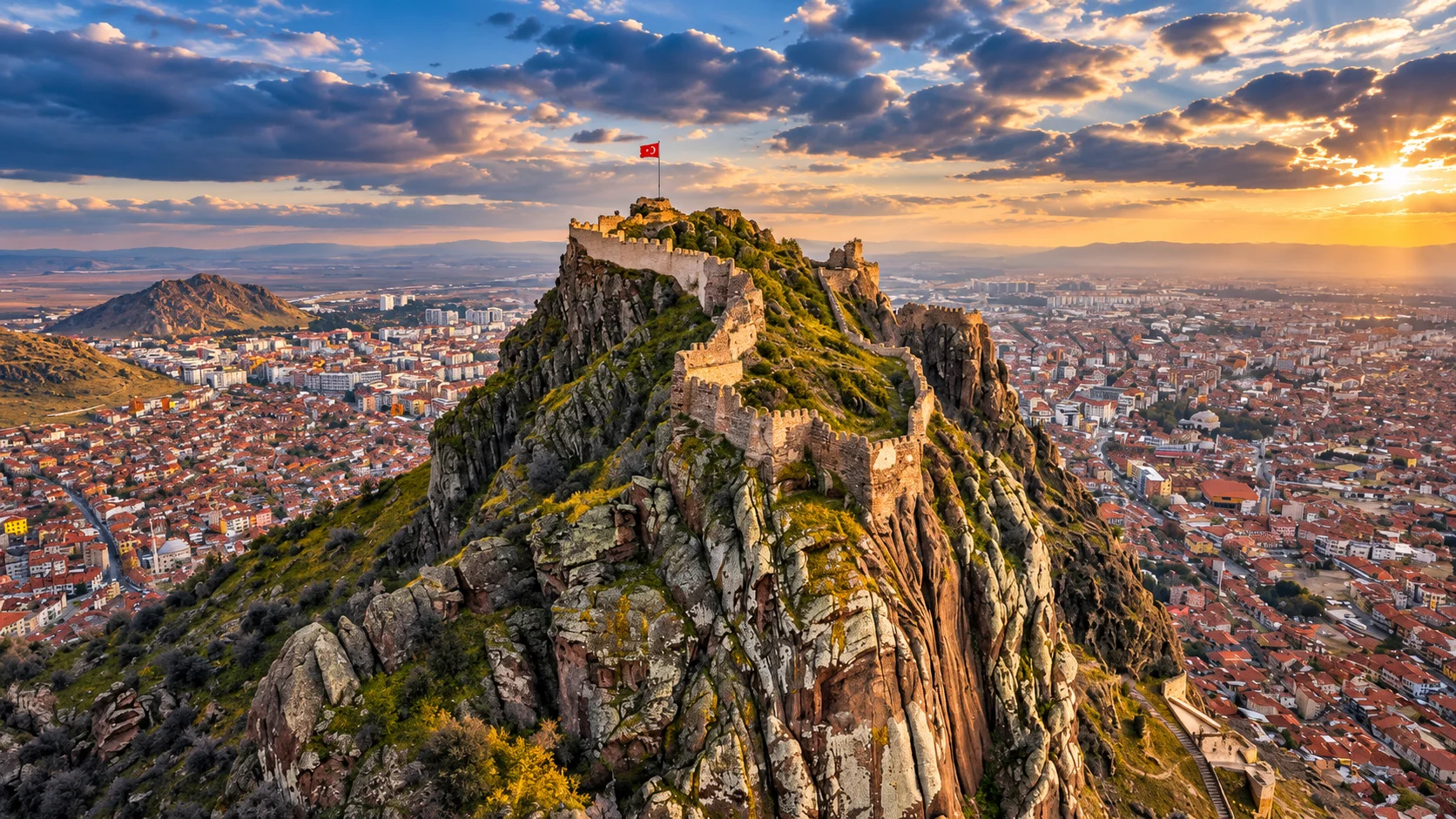
Afyon Castle
Sitting 226 metres above the city on a sheer volcanic rock, the castle has been fortified since the Hittite era and rebuilt by Byzantine, Seljuk and Ottoman rulers. More than 700 steps cut into the rock lead to the summit; the effort is repaid with a 360-degree panorama across the plain. The inner citadel and outer walls both survive. Allow 1.5–2 hours including the ascent.
Ulu Camii (Great Mosque)
Built between 1272 and 1277 under the patronage of Sahip Ata Nusrettün Hasan during the Seljuk period, Ulu Camii is one of the finest examples of Anatolian Seljuk wooden architecture. The interior is supported by 40 carved wooden columns; the dark red-and-black stone façade is immediately recognisable. Visitors are welcome outside of prayer times.
Old Bazaars and Historic Houses
Uzun Çarşı (Long Bazaar) and Taşhan are the commercial heart of the old town, lined with shops selling sucuk, lokum, pastırma and poppy-seed products. Several 19th-century Ottoman mansions survive in the streets around the bazaar. Taşhan's stone courtyard also has cafés — a pleasant stop mid-morning.
İmam Azam Mosque, the Mevlevihane and the City's Museums
Afyonkarahisar holds several institutions that connect the city to the broader sweep of Islamic and Ottoman cultural history.
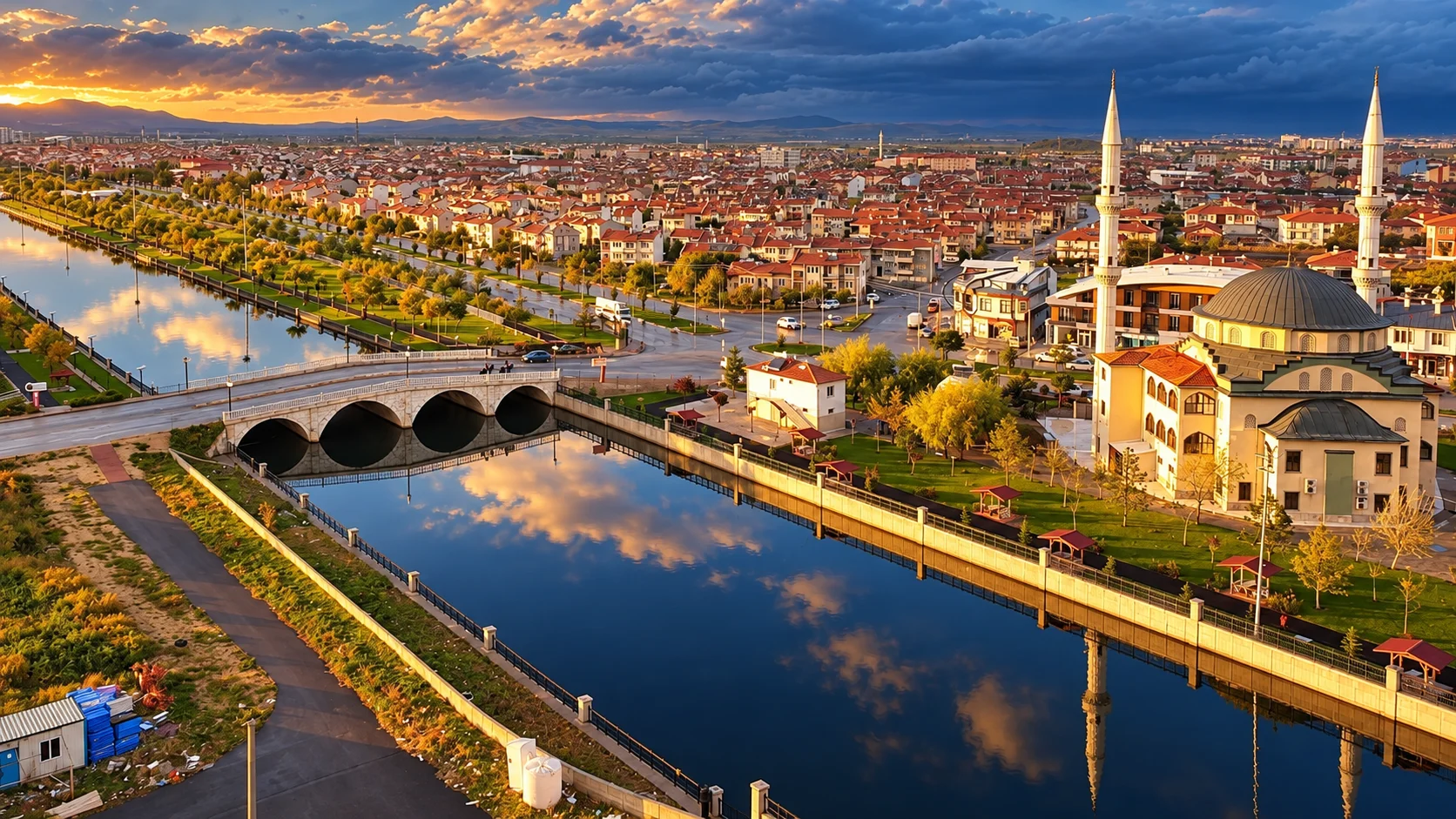
İmam Azam Mosque
One of the most recognisable Ottoman mosques in the city centre, the İmam Azam Mosque stands close to the covered bazaar. Its slender minaret and well-preserved interior make it a frequent stop on any walking route through the old town.
Sultan Divani Mevlevihanesi
One of Turkey's oldest surviving Mevlevi lodges, the Sultan Divani Mevlevihanesi was founded by a descendant of Rumi. The complex dates to the 13th century and today operates as a museum dedicated to Mevlevi philosophy, music and the sema ceremony. A quiet and atmospheric site just a short walk from the city centre.
Afyonkarahisar Archaeology Museum & Zafer Müzesi
The Archaeology Museum holds artefacts spanning Hittite, Phrygian, Roman, Byzantine and Ottoman periods excavated from around the province. Nearby, the Zafer Müzesi (Victory Museum) documents the Büyük Taarruz with photographs, documents and objects from the 1922 offensive — essential context for understanding the city's place in the Republic's founding story.
Afyonkarahisar: A Visual Introduction
From the castle rock to the Phrygian valley floor, this video takes in the major sights of Afyonkarahisar province — a useful planning reference before your trip.
The film covers the historic city centre, Frig Vadisi, Ayazini, the thermal districts and the landscape around Kocatepe. A good companion to the written guide below.
The Phrygian Valley: An Open-Air Museum Across Two Provinces
The Frig Vadisi (Phrygian Valley) stretches across Afyonkarahisar, Kütahya and Eskişehir provinces, preserving one of the most concentrated collections of Phrygian rock monuments in the world.
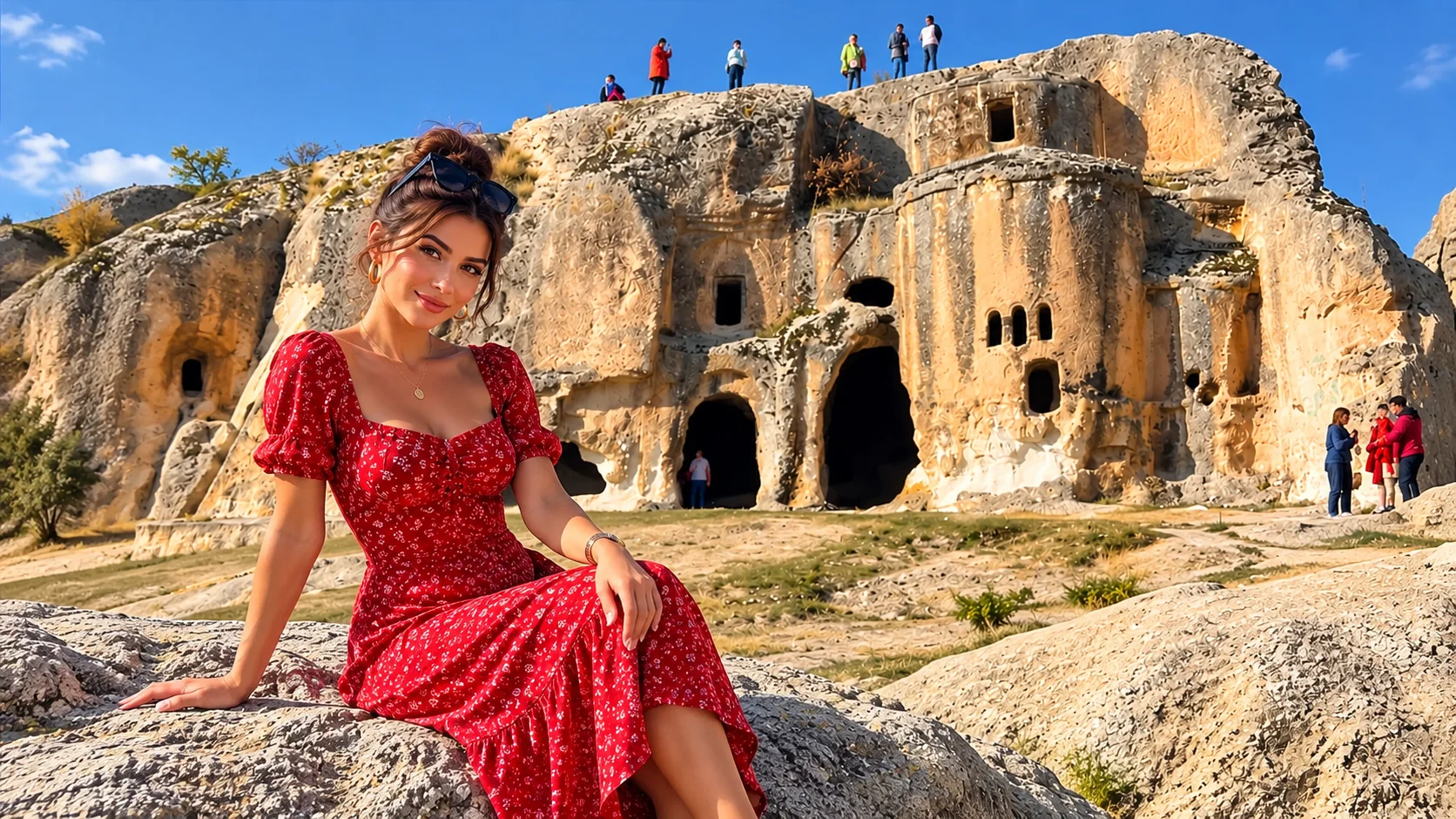
Frig Vadisi: Overview
The valley's rock formations are dotted with facades, tombs, temples and chamber settlements carved by the Phrygians between roughly the 8th and 6th centuries BCE. Within the Afyon section — centred on the Göynüş Valley and Döğer district — visitors can reach the key monuments by car, with short walking sections to the monument faces themselves.
Aslantaş and Yılantaş
Two of the most striking Phrygian monuments in the Afyon section of the valley. Aslantaş features a carved Cybele relief flanked by lions on a rock face that has stood for nearly three millennia. Yılantaş is a stepped monument with an elaborate carved façade. Both are reachable as part of a half-day loop from Döğer village.
Emre Gölü and the Döğer Basin
A small, tranquil lake set among the rock formations of the Frig Valley, Emre Gölü sits near the ruins of Emre Tekkesi. Boat tours on the lake are offered in season. The surrounding terrain — channels, cliffs and unusual geological formations — makes for rewarding photography and easy walking.
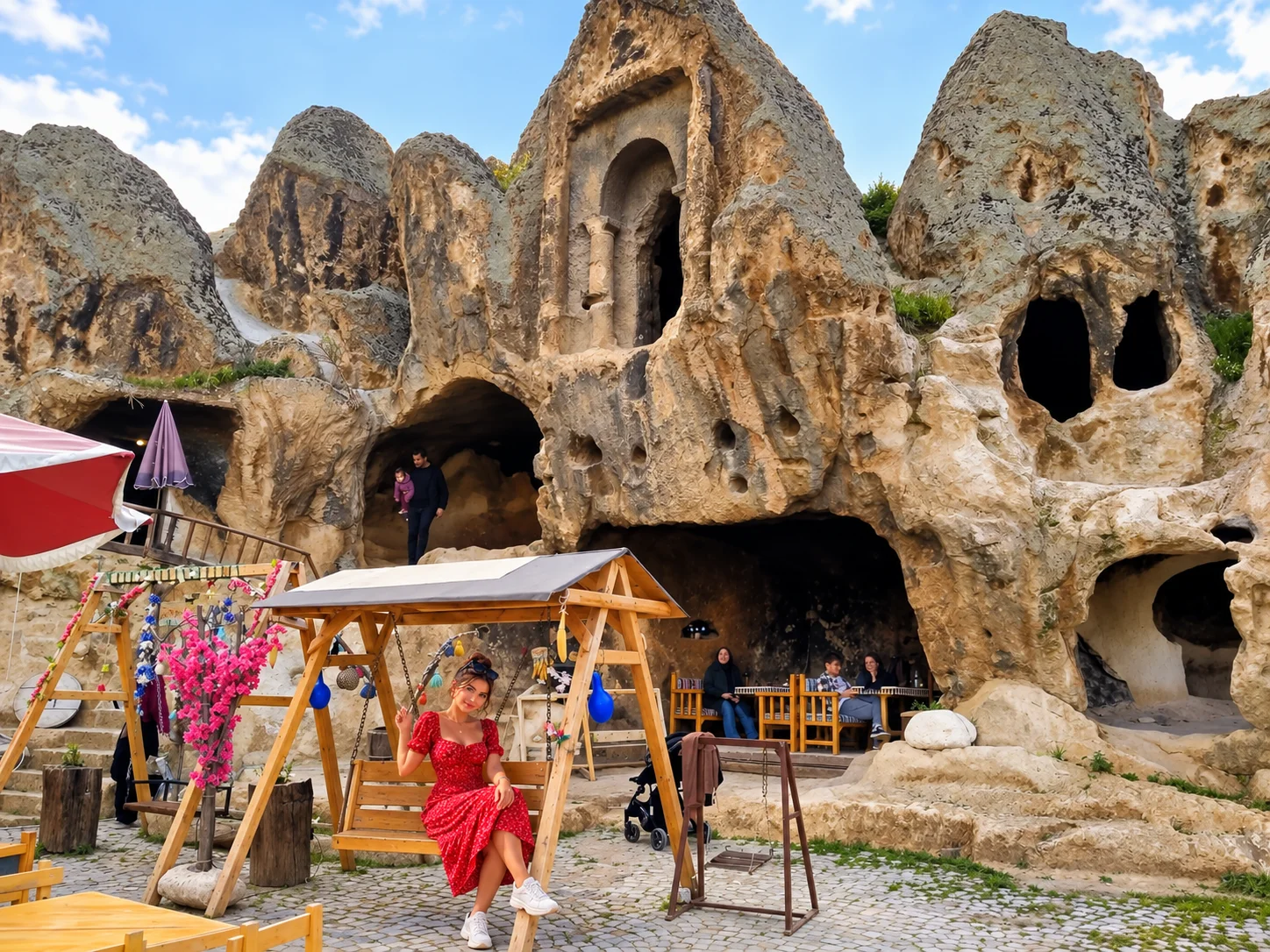
Ayazini: Churches in the Rock
Roughly 33 km from the city centre in İhsaniye district, Ayazini is one of the most atmospheric archaeological sites in western Anatolia.
The cliffside here conceals Phrygian and Roman-era settlement chambers, Byzantine rock-cut churches with surviving carved details, burial niches and underground passages. The site was continuously inhabited from the Phrygian period through the Byzantine era — the layering of cultures is visible in the carvings themselves. A half-day trip from the city, ideally combined with nearby Phrygian Valley monuments.
Emre Gölü and the İscehisar Fairy Chimneys
Beyond the carved monuments, Afyonkarahisar province holds two natural formations that surprise first-time visitors.
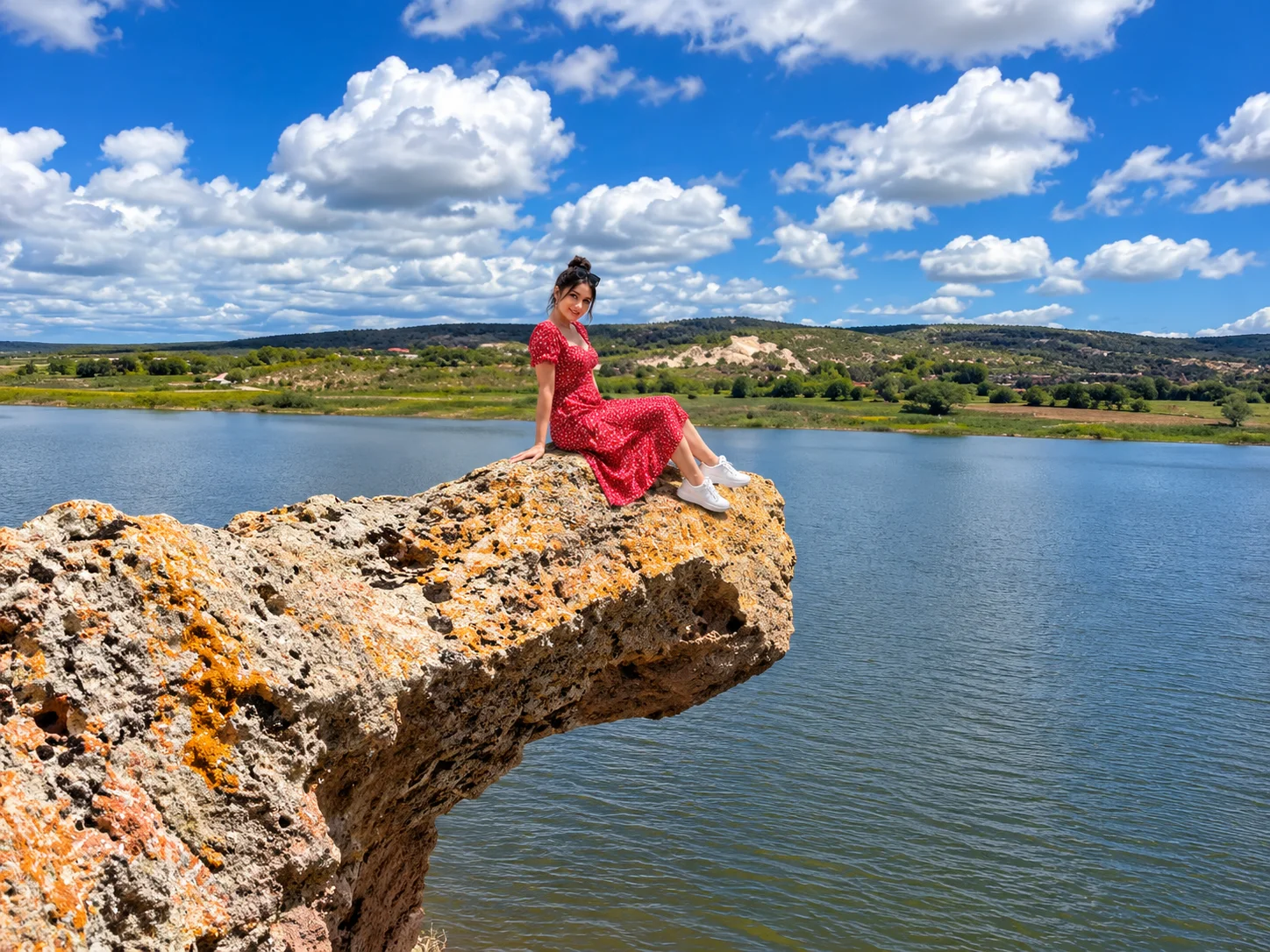
Emre Gölü is a small freshwater lake in the Döğer area of the Phrygian Valley, encircled by dramatic rock walls and accessible by a short walk. In season, local operators offer boat excursions on the lake. The views back from the water towards the cliffs are excellent for photography.
İscehisar Fairy Chimneys, concentrated near Seydiller village in İscehisar district, are volcanic rock pillars ranging from 5 to 30 metres in height. Unlike the better-known fairy chimneys of Cappadocia, these are rarely crowded, and the surrounding landscape of poppy fields and farmland gives them an unexpected rural character. İscehisar is also Turkey's leading marble-quarrying district, and the geological contrasts between the soft tuff chimneys and the hard marble outcrops nearby make for an interesting visual landscape.
Afyonkarahisar City Centre: Bazaars, Museums and Backstreets
The historic city centre — castle rock, old mosques, covered markets and the Mevlevihanesi — can be covered in a well-planned full day on foot.
This walking tour video follows the main landmarks of the central district: the castle approach, Ulu Camii, the old residential quarters, Uzun Çarşı and the museum area. Useful for understanding the layout before arrival.
Turkey's Spa Capital: Thermal Springs Around Afyonkarahisar
Afyonkarahisar is recognised as one of Turkey's leading thermal tourism destinations. The province sits above a network of geothermal springs, and the spa infrastructure has grown to serve both day visitors and guests staying for a week or more.

Ömer-Gecek and Oruçoğlu
The closest thermal area to the city centre — just 6 km away — is Ömer-Gecek, which has multiple hotels with private thermal pools and spa facilities. Oruçoğlu Thermal Resort, roughly 14 km from the centre, is one of the larger facilities in the province, with indoor and outdoor thermal pools, a traditional hammam and wellness treatments. Advance booking is recommended in winter.
Gazlıgöl
Located about 20 km from the city centre, Gazlıgöl is one of the most established thermal areas in the province, with a cluster of hotels and day-use facilities around its mineral springs. The water is rich in minerals and has a long tradition as a wellness destination. Facilities range from simple day-use hammam complexes to full-service resort hotels.
Sandıklı Hüdai
In Sandıklı district, roughly 50 km south of the city, Hüdai Kaplıcaları is considered one of Turkey's most therapeutically significant thermal resorts and has operated as a wellness destination for generations. The springs have an exceptionally high mineral content. Several hotels and sanatorium-style facilities operate around the source. A stay here is best combined with a night or two in the district.
Afyonkarahisar's Table: Sucuk, Kaymak, Poppy and Lokum
In 2019 Afyonkarahisar joined Gaziantep and Hatay as one of Turkey's UNESCO Creative Cities of Gastronomy — recognition for a food tradition rooted in buffalo farming, poppy cultivation and centuries-old craft production.
Lokum, Kaymak and Ekmek Kadayıfı
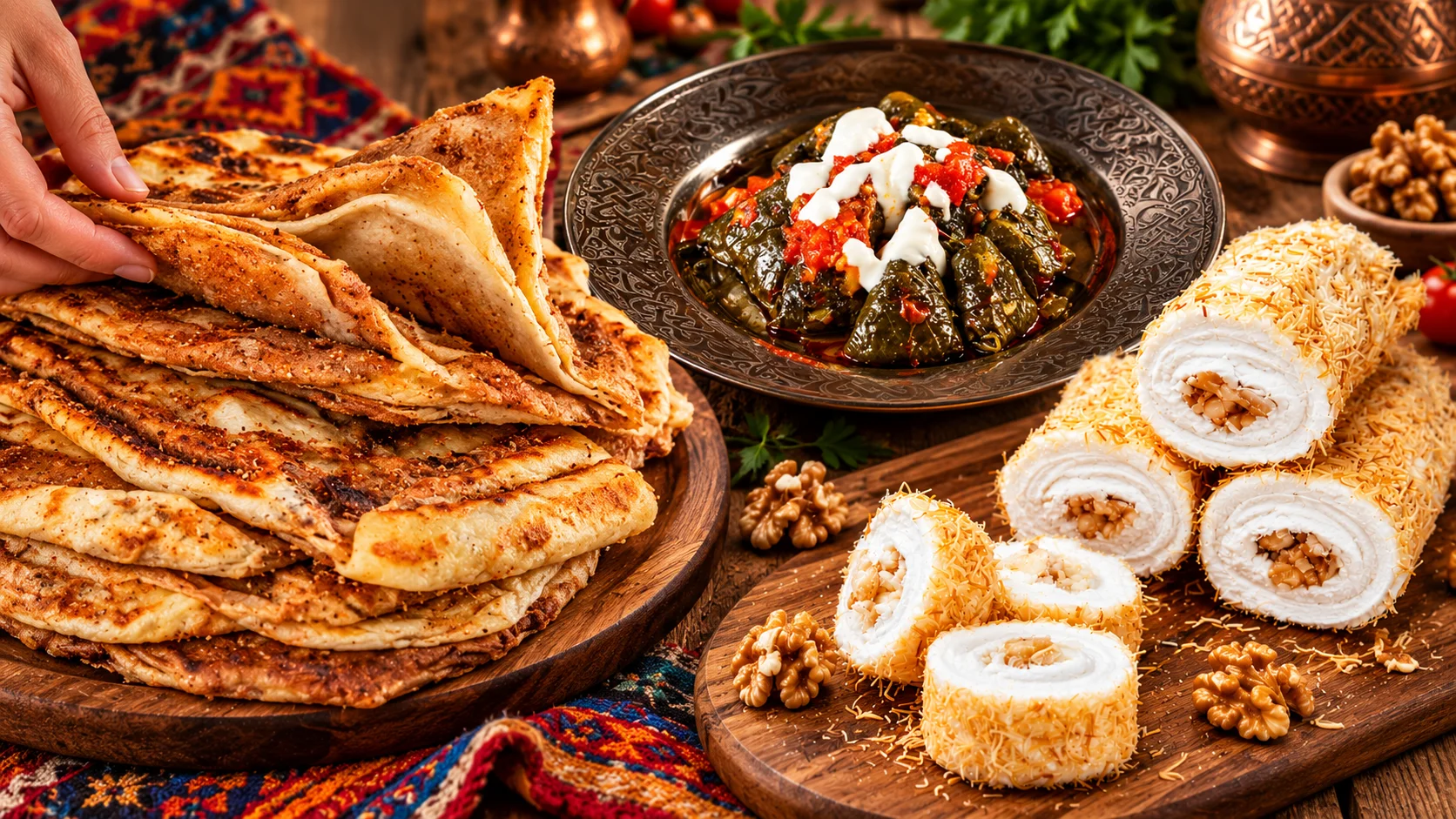
Afyon lokum is made with thick buffalo cream (kaymak) and walnuts — richer and denser than standard Turkish delight. Ekmek kadayıfı, a baked bread soaked in syrup and layered with kaymak, is perhaps the most beloved local dessert. Buffalo kaymak itself is produced from the thick cream of buffalo milk and eaten at breakfast alongside honey and local bread.
Sucuk, Pastırma and Poppy Products
Afyon sucuk is a garlic-spiced, air-dried buffalo-and-beef sausage with a distinctive flavour profile. Pastırma (cured dried meat with a spice crust) is another local speciality. The province is also Turkey's largest legal opium poppy producer; poppy seeds appear in haşhaşlı katmer (layered pastry with poppy and butter), haşhaşlı bükme and a range of other local baked goods.
İlibada Sarması and Yöresel Yemekler
İlibada sarması — wild dock leaves stuffed with rice, herbs and olive oil — is an emblematic Afyon dish, particularly popular as a spring starter. Keşkek (a slowly cooked wheat and meat dish, stirred for hours) is served at celebrations. Göce köftesi rounds out the traditional repertoire. For shopping, Uzun Çarşı and Taşhan are the best places to buy vacuum-packed sucuk, pastırma, lokum and poppy products to take home.
Kocatepe, the Great Offensive and the War of Independence Heritage
Afyonkarahisar occupies a central place in the Turkish War of Independence. The city and the surrounding hills are where the decisive phase of the conflict began.
- Kocatepe Hill (1,874 m): The hill roughly 20 km south of the city where Mustafa Kemal stood on 26 August 1922 to launch the Büyük Taarruz. A monument marks the spot; the panorama across the plain towards Afyon is striking, especially at dawn.
- Büyük Taarruz Şehitliği: The memorial cemetery near the city dedicated to the soldiers of the offensive, with symbolic graves and an 18-metre monument to Atatürk. A solemn and well-maintained site.
- Zafer Anıtı: The Victory Monument in the city centre, erected to commemorate the Dumlupınar phase of the battle — the final decisive engagement fought at the Afyon–Kütahya provincial border on 30 August 1922.
- Zafer Müzesi: The Victory Museum near the castle area collects photographs, documents and military artefacts from the 1922 campaign and provides context for the significance of the region.
- Afyonkarahisar Archaeology Museum: A short walk from the city centre, the museum covers the full sweep of the province's history from Hittite finds through Phrygian, Roman, Byzantine and Ottoman artefacts.
How to Reach Afyonkarahisar from Istanbul
Afyonkarahisar lies approximately 405–428 km from Istanbul by road — a straight run across the Anatolian plateau in five to six hours.
A chauffeur-driven car is the most comfortable option for the Istanbul–Afyonkarahisar route. Door-to-door service, no schedule pressure, and flexibility to stop at Bolvadin (Kırkgöz Köprüsü) or Kocatepe en route. Cab Istanbul operates intercity chauffeur transfers from Istanbul Airport and city hotels.
Regular long-distance coaches (otobüs) operate from Istanbul's Esenler otogar to Afyonkarahisar, with a journey time of roughly 5–6 hours. Metro Turizm and Kamil Koç serve the route. The central Afyon otogar is about 2 km from the city centre.
Zafer Airport (KZR) is located in Kütahya province, approximately 60 km from Afyonkarahisar city centre. Seasonal domestic flights operate from Istanbul, Ankara and Izmir; check availability before planning. From the airport, a taxi or pre-arranged transfer reaches the city in about 50 minutes.
A hire car or chauffeur vehicle is strongly recommended for reaching the Phrygian Valley, Ayazini, Emre Gölü, Kocatepe and the thermal districts. City-to-city dolmuş services exist but do not cover most archaeological sites. A full Phrygian Valley circuit from the city typically takes a full day.
When to Visit and How Long to Stay
Afyonkarahisar is a genuine four-season destination, but different periods favour different activities.
- Spring (April–June): The best time for the Phrygian Valley and outdoor sites. Poppy fields bloom in May, and temperatures are mild for walking. İscehisar fairy chimneys look best with green backdrop.
- Summer (July–August): Hot on the plateau but popular with domestic visitors. Thermal pools are busiest; advance booking essential for spa hotels. Evening city walks are pleasant.
- Autumn (September–October): Comfortable temperatures for both outdoor sites and city exploration. Lower visitor numbers than summer.
- Winter (November–March): Prime season for thermal tourism. The contrast of cold air and hot mineral pools is the classic Afyon winter experience. Sandıklı Hüdai and Gazlıgöl hotels fill up at weekends.
- How many days? A minimum of 2 full days covers the city centre (castle, Ulu Camii, bazaars, museums) and one thermal experience. 3 days adds the Phrygian Valley, Ayazini and Emre Gölü. 4 days allows Kocatepe, İscehisar and Sandıklı.
- Weekend trip: Entirely feasible from Istanbul — depart Friday evening or Saturday early, return Sunday evening. Focus on city centre, one thermal bath and one Phrygian Valley loop.
For a broader Central Anatolia road trip, Afyonkarahisar connects naturally with Pamukkale and Hierapolis (2 hours south) and Cappadocia (3.5–4 hours east). Afyon is also a natural stop on a Turkey road trip between Istanbul and the Aegean or the Mediterranean.
Afyonkarahisar: Frequently Asked Questions
How many days do you need in Afyonkarahisar?
Two full days are the practical minimum for the city centre (castle, Ulu Camii, bazaars, Zafer Müzesi) plus one thermal spa session. Three days adds the Phrygian Valley, Ayazini and Emre Gölü. Four days covers Kocatepe, İscehisar and Sandıklı Hüdai. A weekend trip from Istanbul (Friday evening to Sunday) is very doable.
What is Afyonkarahisar most famous for?
Afyonkarahisar has three distinct claims to fame: its thermal springs (one of Turkey's leading spa destinations), its UNESCO-recognised gastronomy (sucuk, kaymak, lokum, poppy-seed products), and its Phrygian Valley archaeological heritage. The Afyon Castle and its connection to the 1922 Büyük Taarruz are also significant.
Is Afyon Castle difficult to climb?
The castle requires climbing more than 700 stone steps cut into the volcanic rock. It is physically demanding — allow about 45–60 minutes for the ascent and take water. The steps are uneven and exposed in places. The panoramic view from the summit is exceptional and well worth the effort for those who are fit. Not recommended for young children or anyone with limited mobility.
Can I visit the Phrygian Valley and Ayazini in a single day?
Yes — a full day with a car is enough to cover Ayazini (İhsaniye, 33 km from city), Aslantaş and Yılantaş monuments in the Göynüş Valley, and Emre Gölü in Döğer. Start early and plan 30–45 minutes at each main stop. A guide is helpful for context at the rock monuments.
How far is Istanbul from Afyonkarahisar?
Approximately 405–428 km by road (via the E90/D300 route), which translates to five to six hours of driving depending on traffic. A private transfer or coach is the most practical connection. The nearest airport — Zafer Havalimanı in Kütahya, about 60 km from Afyon — has seasonal domestic flights from Istanbul, Ankara and Izmir.
When is the best time to visit for thermal baths?
Winter (November to March) is the classic thermal season in Afyonkarahisar — cold outside air and hot mineral pools make for a sharp and restorative contrast. That said, thermal facilities operate year-round. Weekends in winter are busy; mid-week stays are quieter and cheaper. The major spa areas are Ömer-Gecek (6 km), Gazlıgöl (20 km) and Sandıklı Hüdai (50 km south).
What local food and products should I buy in Afyonkarahisar?
The essential Afyon shopping list: vacuum-packed sucuk (spiced buffalo sausage), pastırma (cured dried meat), kaymak (buffalo cream, consumed fresh — it does not travel well), lokum (cream-and-walnut Turkish delight), and haşhaşlı products (poppy-seed katmer, bükme, seeds). Uzun Çarşı and Taşhan in the old bazaar quarter have the widest selection.
Is Afyonkarahisar a UNESCO Creative City of Gastronomy?
Yes. In 2019 Afyonkarahisar was added to UNESCO's Creative Cities Network as a City of Gastronomy — only the third Turkish city to receive the designation, after Gaziantep and Hatay. The recognition covers the province's buffalo dairy tradition, poppy cultivation, artisan meat products and historic confectionery craft.
Is Afyonkarahisar suitable for families with children?
Yes, with some planning. Thermal pools (family-friendly facilities at most hotel spas), the open-air Phrygian Valley sites and the castle (for older children and teenagers who can manage the steps) all work well. The Archaeology Museum and Zafer Müzesi are appropriate for older children with an interest in history. The city's bazaars and food culture are a genuine draw for families.
Do I need a car to visit Afyonkarahisar?
For the city centre only, you can manage on foot and by taxi. But to see the Phrygian Valley, Ayazini, Emre Gölü, Kocatepe, İscehisar and the thermal districts outside the city, a hire car or chauffeur vehicle is essential. Public transport does not cover these sites reliably. A car with driver from Istanbul is the simplest solution if you prefer not to drive yourself.
Travel to Afyonkarahisar in Comfort
Cab Istanbul operates private chauffeur transfers from Istanbul Airport and city hotels directly to Afyonkarahisar. Door-to-door, fixed price, professional drivers — the most relaxed way to cover the 400 km to one of Anatolia's most rewarding destinations.