
Bitlis: From Ahlat's Medieval Tombstones to the Nemrut Caldera
One of Turkey's least-explored provinces, Bitlis lies on the western shore of Lake Van where history, nature and the medieval world intersect. Thousands of sculpted Seljuk-era tombstones at Ahlat, Turkey's largest volcanic caldera at Nemrut, a cliff-top medieval castle above the Bitlis gorge, the Urartian fortress of Kef Castle at Adilcevaz and a GI-registered büryan kebab — all in a single province.
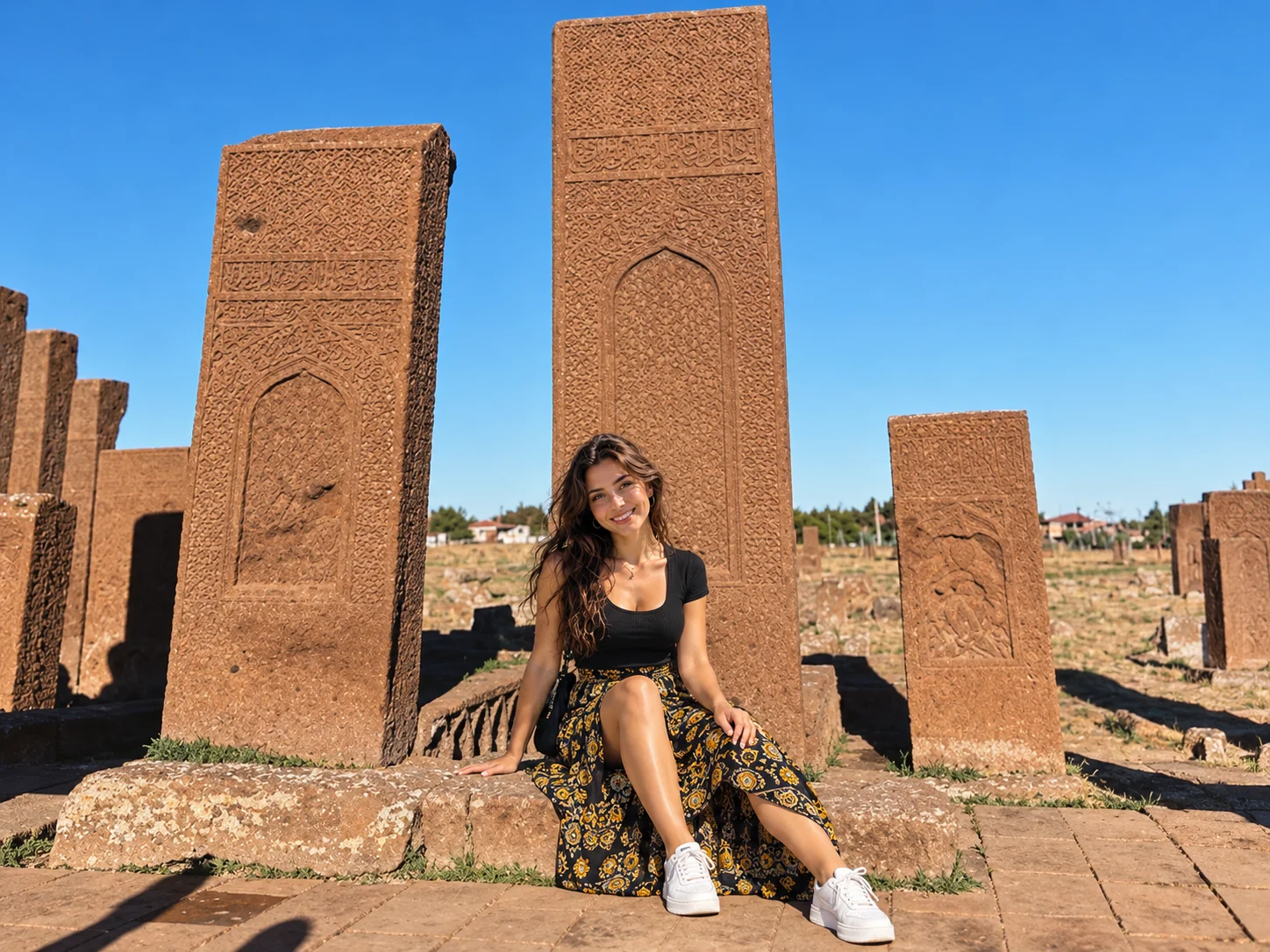
Bitlis Province: At a Glance
| Topic | Detail |
|---|---|
| Provincial centre | Bitlis city (approx. 1,545 m elevation, narrow gorge setting) |
| Districts | Merkez (centre), Tatvan, Ahlat, Adilcevaz, Güroymak, Hizan, Mutki |
| Lake Van shoreline | Tatvan, Ahlat, Adilcevaz |
| Nearest airport | Muş Sultan Alparslan Airport (~79 km) · Van Ferit Melen Airport (~183 km) |
| Airport in Bitlis | None — nearest access via Muş or Van flight + road transfer |
| Lake Van Express (train) | Ankara → Tatvan terminus (Bitlis city ~25 km, ~25–30 min minibus) |
| Tatvan → Bitlis centre | ~25 km, approximately 25–30 minutes by road |
| Key heritage | Ahlat Seljuk Cemetery (UNESCO Tentative List), Nemrut Caldera, Kef Castle (Urartian), El-Aman Han |
| GI-registered products | Bitlis Büryan Kebabı (registered 2021), Adilcevaz Walnut, Bitlis Honey |
| Best season | May–October · Nemrut caldera: June–September |
Bitlis: A Civilisation in Layers
Bitlis has been settled continuously on the western side of the Lake Van basin. Urartian fortress walls, Seljuk-era stone masonry, the legacy of the Kurdish emirate, and Ottoman rule — four distinct layers that remain legible in the landscape today.
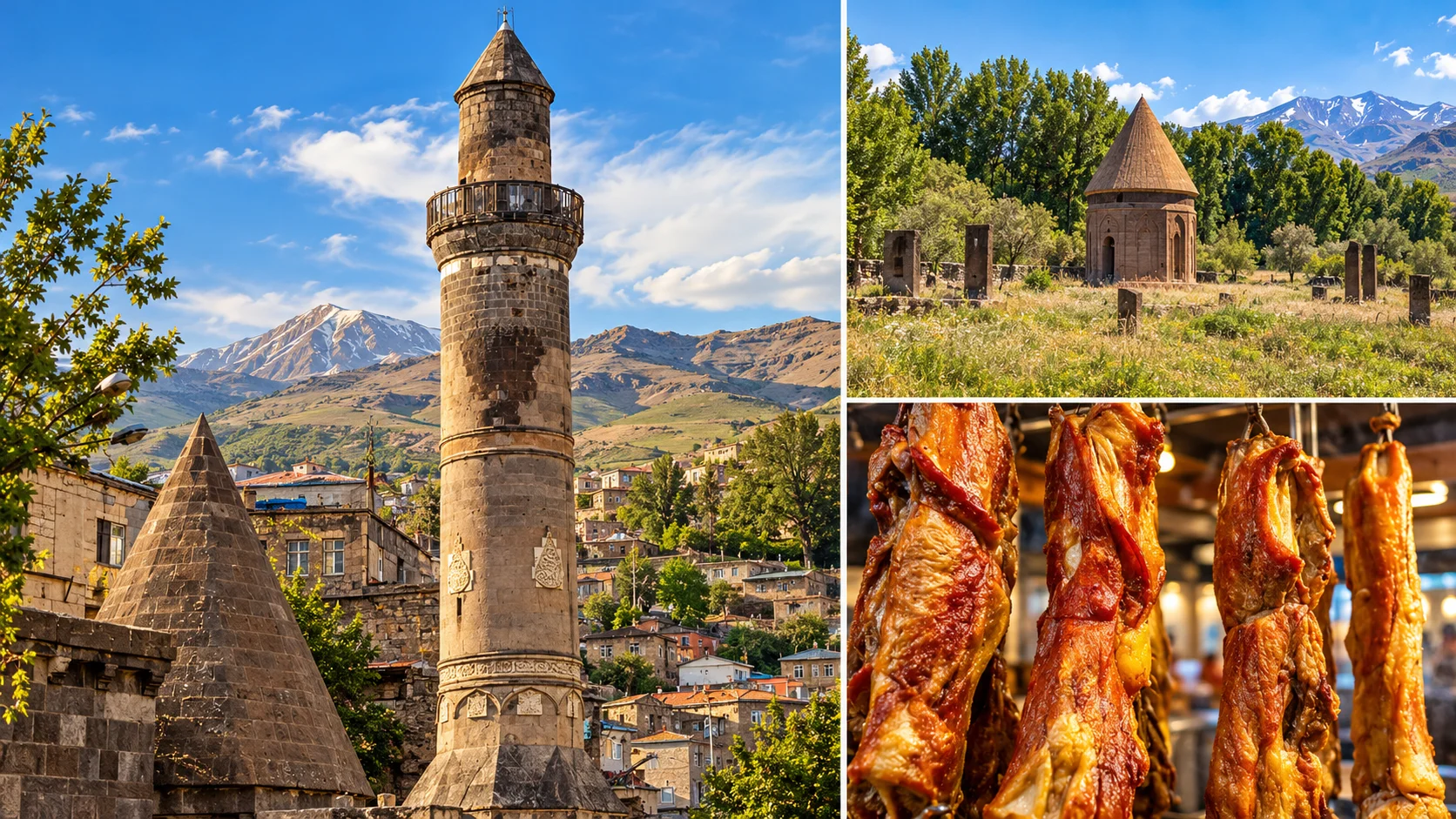
From Urartians to Ottomans: Unbroken Settlement
Urartian fortifications around Bitlis and Kef Castle at Adilcevaz show how the region was organised from the 7th century BC. After the Battle of Manzikert (1071), Turkic and Kurdish principalities took root here; the Ahlatshah dynasty transformed Ahlat into one of the Islamic world's leading cultural centres.
The Rojekî Dynasty and Bitlis Emirate (1182–1847)
The Principality of Bitlis maintained semi-autonomous status under Ottoman suzerainty from 1514. It retained effective autonomy until 1655, when direct Ottoman control increased, and was finally dissolved in 1847. This long period of local self-rule gives the region one of eastern Anatolia's most distinctive political identities.
The Dynasty That Built Ahlat
Founded by the Turkic commander Sökhmen el-Kutbî in the aftermath of Manzikert, the Ahlatshahs (Sökmenids) made Ahlat their capital. The city reached its peak under Sökmen II (1128–1185). The majority of Ahlat's celebrated "Seljuk-era" tombstones actually belong to this Ahlatshah period — independent but Seljuk-affiliated.
Bitlis Castle and the Historic City Centre
Bitlis Castle stands on a rocky outcrop above the Bitlis Stream gorge and is the city's defining landmark. Surrounding it, the historic centre preserves a medieval urban fabric of mosques, a Seljuk medrese, and traditional stone houses.
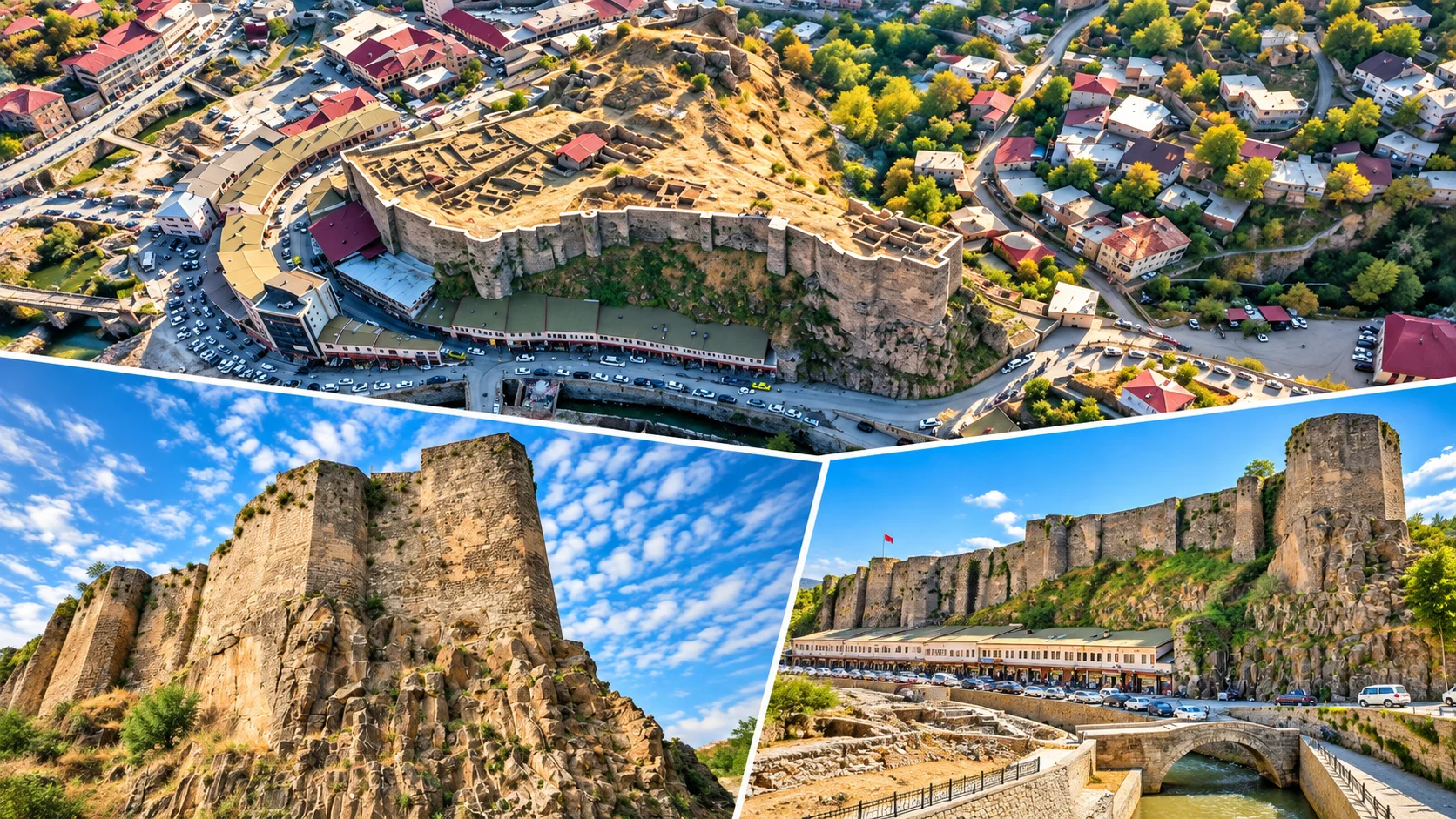
Bitlis Castle: Legend and Archaeology
Excavations at the castle since 2004 have uncovered cisterns, water-pipe systems, tandır (clay oven) remains and ceramics from multiple periods. The founding legend attributing the castle to a general named "Bedlis" sent by Alexander the Great around 312 BC derives from 17th-century sources (Şerefname, Evliya Çelebi) and is a traditional foundation narrative rather than an established historical fact. The present fabric reflects Byzantine, Islamic and Ottoman building phases.
İhlasiye Medrese (1216)
Built in 1216 during the Seljuk period, this medrese was one of Bitlis's principal centres of learning. It was repaired in 1589 by Şerefhan V and has undergone restorations in 1979, 1993 and 2016. In the same courtyard stands the Üç Bacılar Türbesi (Tomb of the Three Sisters), attributed to daughters of Şerefhan II of the ruling Şerefhanoğulları dynasty.
Bitlis Ulu Mosque (12th century)
Its foundation inscription records construction in AH 545 (approximately 1150–1153) commissioned by the local ruler Ebü'l-Muzaffer Muhammed. The minaret was added in 1492. The mosque was repaired after a 1441 fire, underwent a major renovation in 1650, and received a significant restoration in 1985 by the Directorate General of Foundations.
Sharaf Khan Bidlisî and the Sharafnama
Born in 1543, Sharaf Khan Bidlisî was the emir of Bitlis and a historian. The Sharafnama, which he completed in 1597, is written in Persian and constitutes the oldest known systematic history of the Kurdish dynasties. Covering the Marwanids, Hasanwayhids, Ayyubids and dozens of ruling houses, it remains the primary source for the region's medieval history.
- Sharaf Khan was 54 when he completed the Sharafnama; he had handed the emirate to his son to focus on historical writing
- The Principality of Bitlis accepted Ottoman suzerainty in 1514 while maintaining practical autonomy until 1655
- The emirate was formally dissolved in 1847 when the Ottomans imposed direct administration
- Sharaf Khan's tomb in Bitlis city centre is accessible to visitors
Bitlis Stone Architecture and the "Five Minarets"
Bitlis has a distinctive urban identity shaped by its densely built stone fabric squeezed into a narrow valley. The locally quarried cut stone appears throughout the city's mosques, medreses, mausolea and traditional houses.
"Bitlis'te Beş Minare" (Five Minarets of Bitlis) is one of Turkey's most celebrated folk songs. Its lyrics describe a son reporting to his father the destruction wrought by the Russian occupation of 1916 — only five minarets left standing. These five minarets belong to the city's historic mosques and were the subject of a 2022 academic structural-engineering study. The song endures as one of the most recognisable pieces of Turkish folk music.
The El-Aman Han caravanserai (1579) on the Rahva Plain between Bitlis and Tatvan was built by the Ottoman governor of Van Province, Köse Hüsrev Mehmet Paşa. With 160 rooms, a mosque, courtyard and pool, it is claimed to be the largest caravanserai in Anatolia by total footprint area.
Ahlat: Capital of Seljuk Stonework
Situated on the northern shore of Lake Van, Ahlat is home to 8,169 decorated medieval tombstones — one of the Islamic world's largest open-air stone-art repositories. Listed on the UNESCO World Heritage Tentative List, the site is among Turkey's most underrated historical destinations.
Ahlat Seljuk Plain Cemetery
The officially designated Ahlat Seljuk Plain Cemetery (Ahlat Selçuklu Meydan Mezarlığı) covers approximately 210,000 m² (21 hectares). It spans the 12th to 16th centuries — the Ahlatshah, Ayyubid, Ilkhanid, Karakoyunlu, Akkoyunlu and early Ottoman periods. It contains approximately 8,169 grave markers (tombstones/steles), 435 bearing artist signatures, and 178 underground tomb chambers.
Important note on terminology: The widely repeated figure "8,000+ kümbetler" is incorrect. A kümbet is a domed monumental mausoleum tower; there are only a handful in Ahlat (Ulu Kümbet, Emir Bayındır Kümbeti etc.). The thousands are mezar taşları — upright carved grave markers, not tower tombs.
The property was submitted to the UNESCO World Heritage Tentative List on 25 February 2000 under the name "The Tombstones of Ahlat, the Urartian and Ottoman Citadel" (List ID 1401). Tentative List status means nomination is pending; inscription on the World Heritage List has not yet been granted.
- Ulu Kümbet (late 13th century, ~9 m wide, ~20 m tall; also called the "Master and Apprentice Kümbet")
- Emir Bayındır Kümbeti (1481, commissioned for the Akkoyunlu Emir Bayındır bin Rüstem; architect: Baba Can of Ahlat)
- Hasan Padişah Kümbeti · Erzen Hatun Kümbeti · Twin Kümbets
- Ahlat Museum: opened 2018; Summer 08:00–19:00, Winter 08:00–17:00, closed Mondays
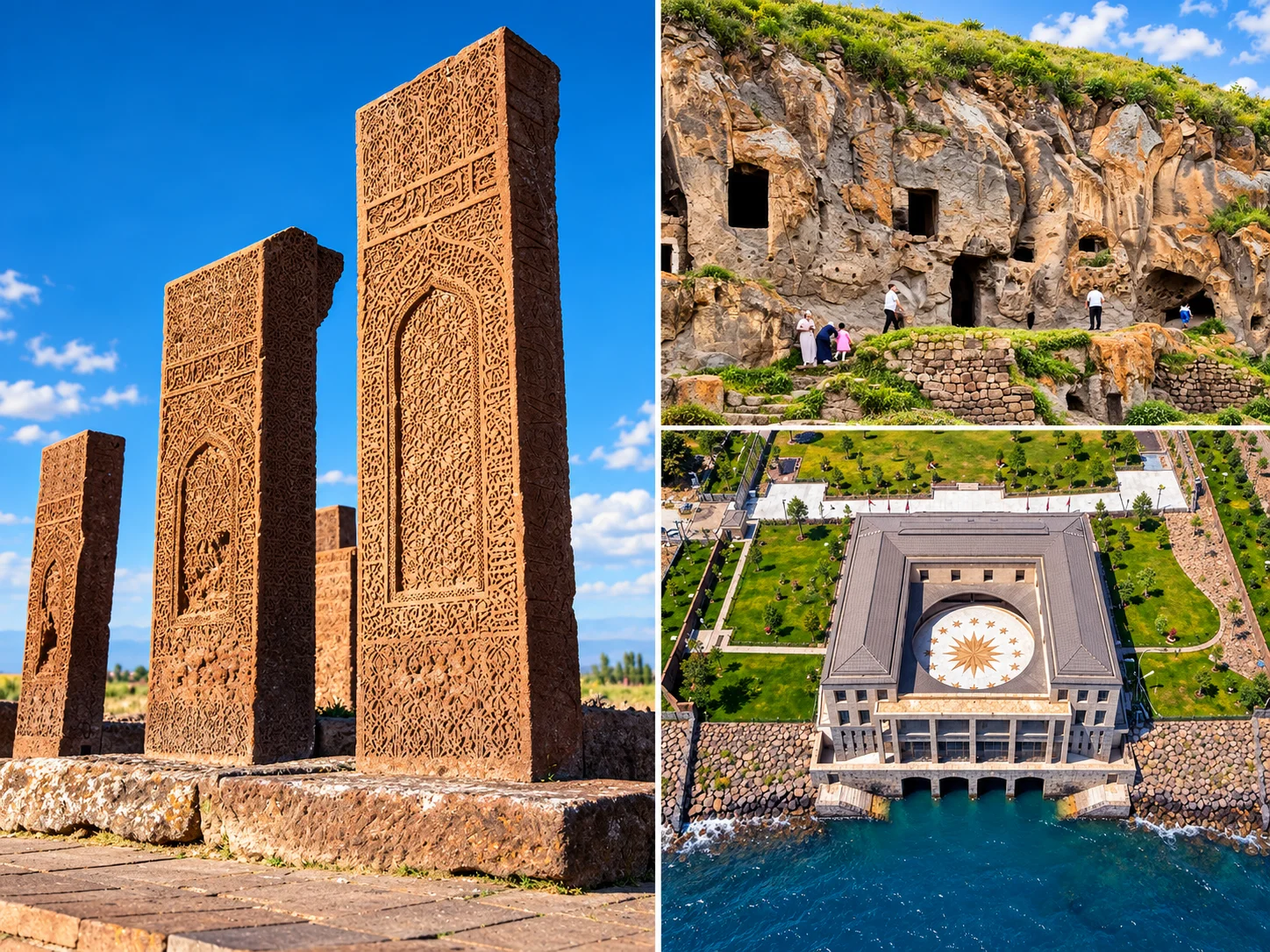
Tatvan and the Nemrut Caldera
Nemrut Caldera: Terminology and the Facts
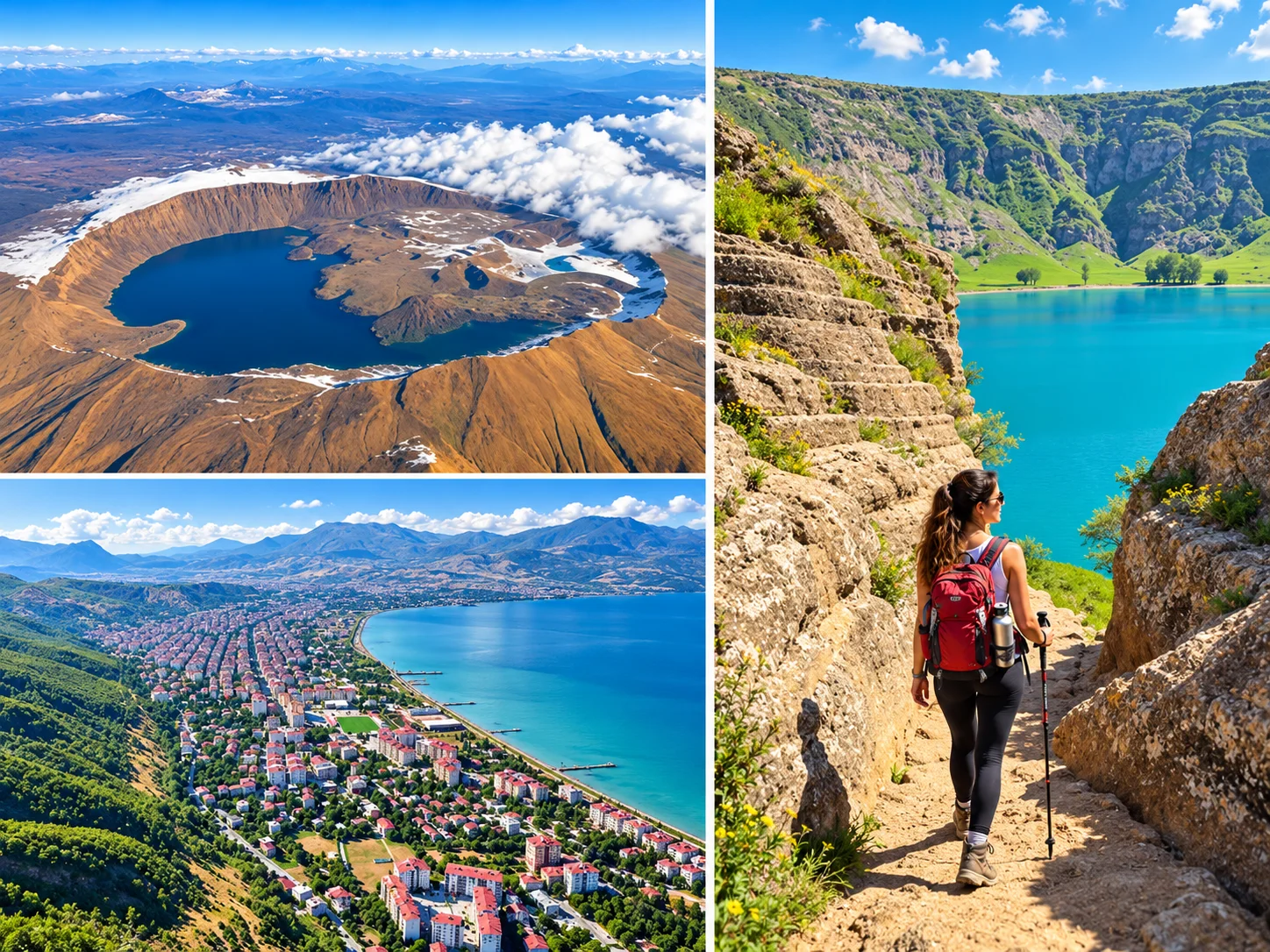
The volcano immediately north of Tatvan is geologically a caldera — a large collapse depression formed by volcanic subsidence, not a simple eruptive crater. Popular sources and tourism materials often use the term "crater" (krater), but the scientifically precise term is caldera. This is Turkey's largest caldera, Europe's fourth largest, and ranks 16th in the world.
The caldera contains two permanent lakes: the large cold Nemrut Lake (maximum depth 176 m, surface elevation 2,247 m) and the geothermally fed Ilıgöl (a small warm lake reaching ~60°C in summer). Three additional smaller seasonal lakes dry up in summer. Active fumaroles are present near the northern rim. Last volcanic activity: 1650.
Not to be confused with Nemrut Dağı in Adıyaman — the UNESCO World Heritage archaeological site with the giant stone heads. The two are entirely unrelated geographically and historically.
Getting to Nemrut Caldera (2026)
Access begins from Tatvan. The first ~8.9 km of road is paved; a further ~6 km of unpaved track with 15 hairpin bends leads to the caldera rim — 4WD vehicle required for this section. No regular public transport. The road is closed from approximately 31 October for winter; the main visiting season is June–September. Private hire or a guided tour from Tatvan is strongly recommended.
Adilcevaz: Kef Castle, Süphan and Lake Aygır
Set beneath Mount Süphan on Lake Van's northern shore, Adilcevaz offers the Urartian fortress of Kef Castle, the volcanic maar of Lake Aygır and a walnut variety with its own geographical indication.
Kef Castle: Fortress of Rusa II
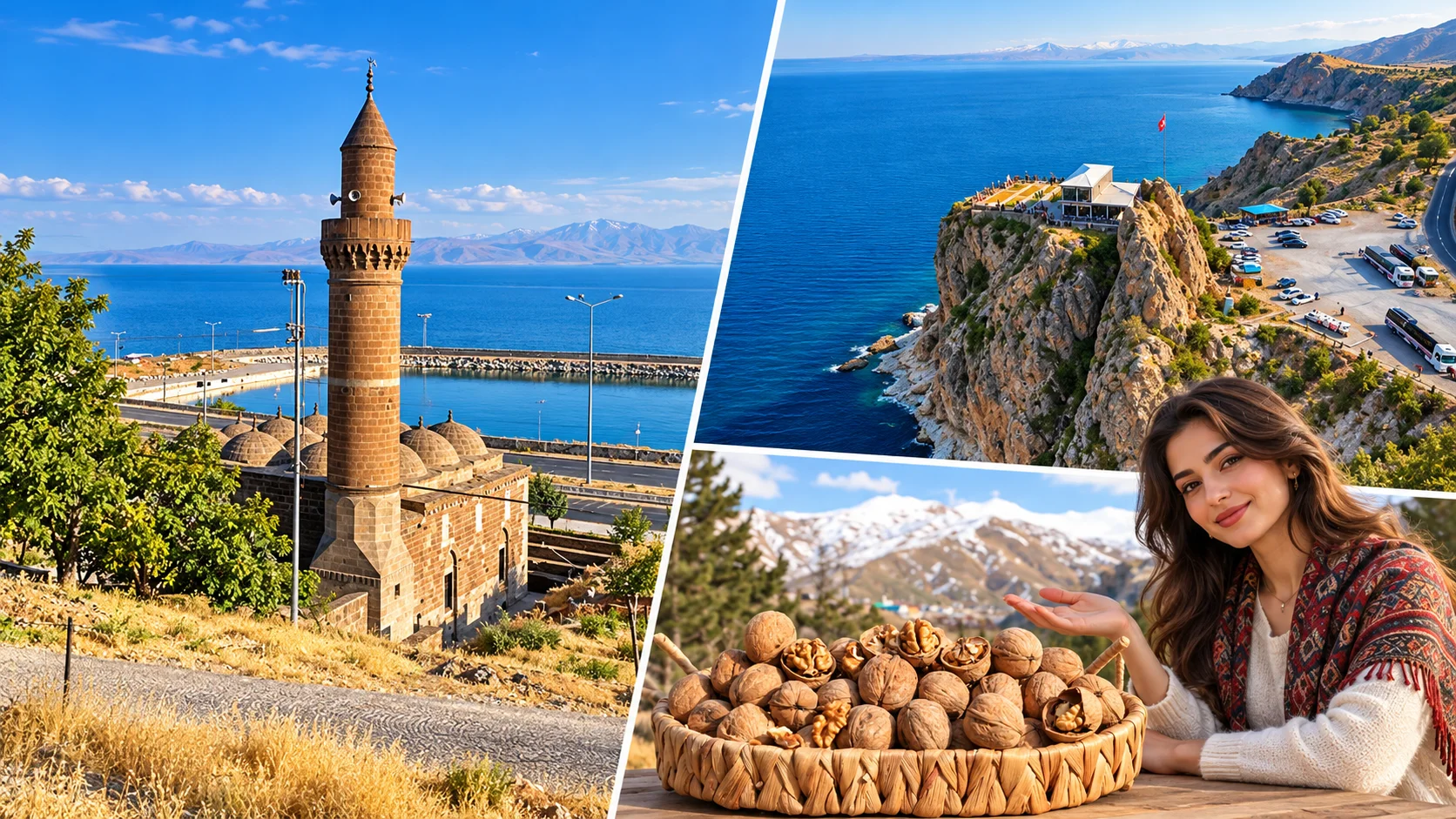
Kef Castle sits at approximately 2,300 m elevation above Adilcevaz and was built by Urartian King Rusa II (r. 685–645 BC). Known in Urartian as "Haldiei URU KUR Ziuquni", the site yielded 49 massive "elephant foot" column bases (~2,700 years old) in excavations completed in 2022, along with a cuneiform inscription of Rusa II. It ranks among the most significant Urartian heritage sites on the Lake Van basin.
Mount Süphan (4,058 m)
Turkey's second highest volcano, Süphan (4,058 m) rises north of Lake Van within Adilcevaz district. Reaching the summit is a serious mountaineering undertaking requiring appropriate equipment, high-altitude experience and good weather conditions. Summer guided ascents are available; Lake Aygır typically serves as the base camp.
Lake Aygır and Adilcevaz Walnut
Lake Aygır, ~6–8 km from Adilcevaz centre, is a volcanic maar lake (1,942 m elevation, 65 m depth) with picnic areas, swimming in summer and ice fishing in winter. The Adilcevaz Walnut holds a registered geographical indication from TURKPATENT — thin-shelled, high-yield and frost-resistant — with an annual production of approximately 7,900 tonnes exported to Iraq, Germany, France and Gulf markets.
Discover Bitlis: Caldera, Castle and Tombstones
From the sculptured tombstones of Ahlat to the Nemrut caldera, from the stone fabric of Bitlis Castle to the lakeshore at Adilcevaz — this video covers Bitlis province in full.
Bitlis Cuisine: Registered Specialities and Traditional Recipes
Bitlis cuisine is rooted in long slow-cooking, dried dairy, and natural fermentation. Its GI-registered products and century-old recipes represent a meaningful slice of eastern Anatolian food heritage.
Bitlis Büryan Kebabı
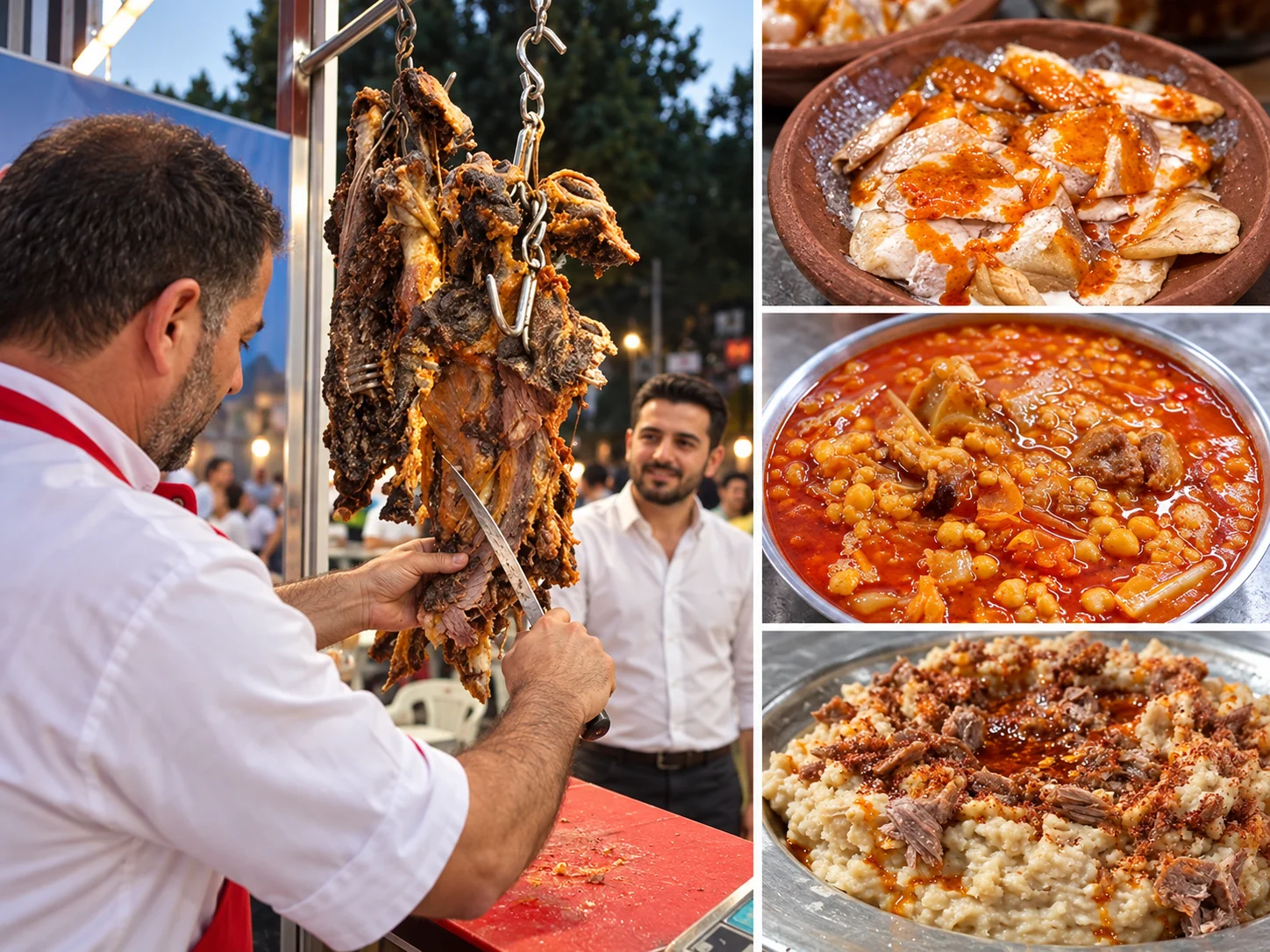
While Siirt's büryan uses milk-fed lamb, Bitlis büryan uses goat — specifically "hevur," a castrated male kid under one year old. The animal is slow-cooked by steam in a deep earthen pit (yer tandırı) for several hours. Bitlis Büryan Kebabı received geographical indication registration from TURKPATENT on 26 January 2021.
Keledoş
The Bitlis version of this Upper Murat-Van regional dish is defined by three specific wild herbs — elegez, akpancar and heliz — combined with boned meat, green lentils and kurut (dried fermented yogurt). The distinctive character comes from the kurut sourness, not from fresh yogurt or bulgur wheat as simplified accounts suggest.
Çorti Aşı
A winter dish built around naturally fermented cabbage (çorti — fermented with water, salt and chickpeas, vinegar-free). The fermented cabbage is slow-cooked with fatty boned meat, cracked wheat (dövme) and chickpeas to produce a sour, hearty stew. A fine example of traditional lactic fermentation in Anatolian cooking.
Halise
Bitlis's name for the dish broadly known in Turkish as keşkek. Whole wheat berries and bone-in meat are slow-cooked in large cauldrons for an entire night, then beaten with wooden mallets to a smooth, silky porridge. Finished with butter and red pepper oil, it is prepared for weddings and special gatherings. Keşkek holds UNESCO Intangible Cultural Heritage recognition.
Hizan, Güroymak and Mutki
Bitlis's mountain districts offer medieval monastery heritage, geothermal springs, highland landscapes and GI-registered local produce — increasingly recognised destinations for those willing to venture beyond the main circuit.
Bitlis Tobacco: A Historical Legacy
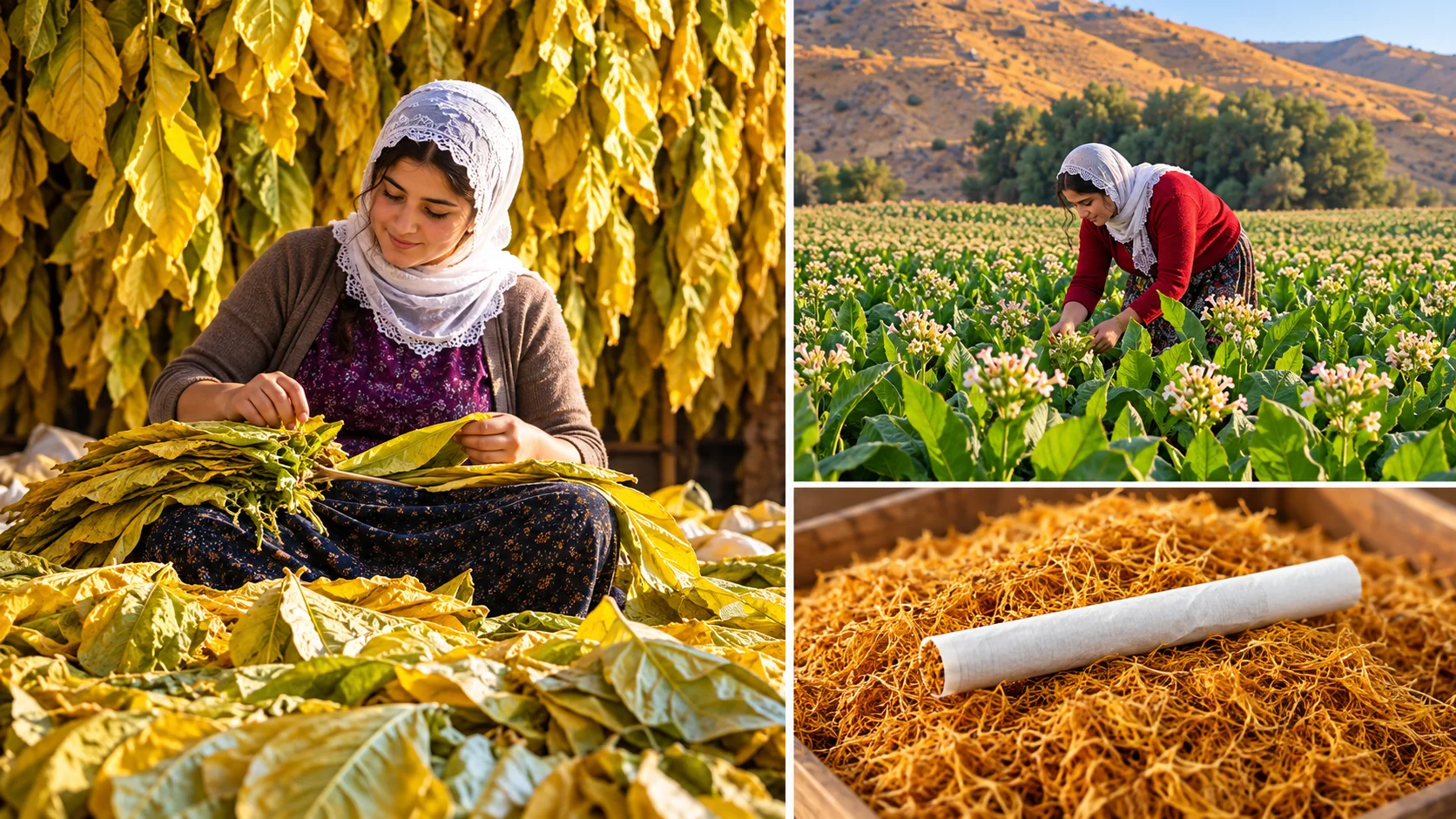
Bitlis and its Hizan district have been associated with tobacco cultivation since the Ottoman period. Although production has declined substantially, tobacco farming remains part of the region's economic and cultural memory — a piece of agricultural history that shaped the landscape and trade networks of the province.
Hizan: Medieval Monastery Culture
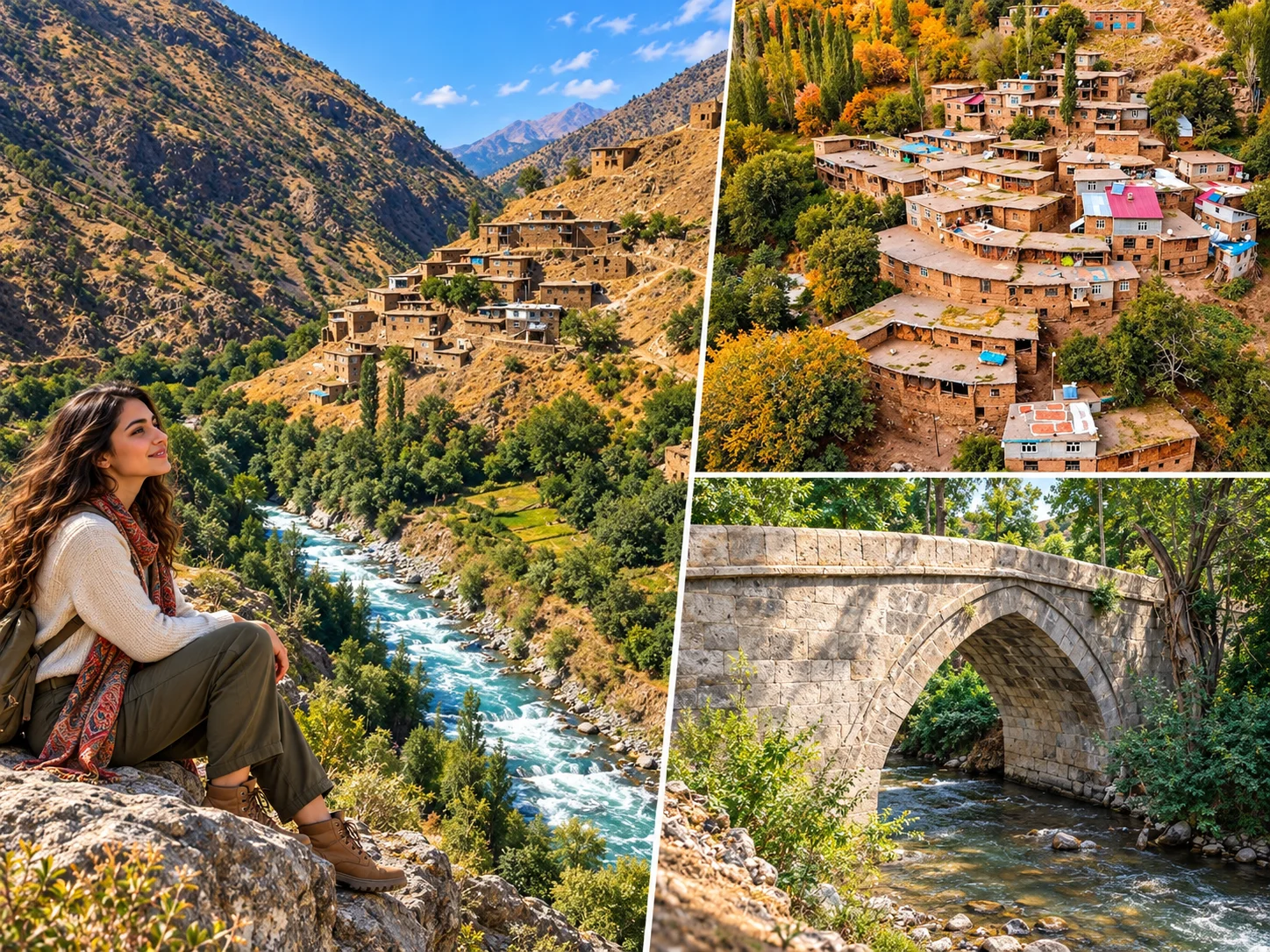
The Historic Hizan Mosque is officially listed as one of the oldest buildings in Bitlis Province. Hizan district (historically Khizan) was an important centre of Armenian manuscript culture: the ruins of Aparank Monastery (9th century) and the legacy of master illuminator Mesrop of Khizan (c. 1560–1652), born in this region, are among its cultural highlights.
Budaklı Springs, Bitlis Honey and Mutki Nature
Güroymak's Budaklı geothermal spring (linked to the Nemrut volcanic system, ~40°C in summer) lies ~7 km from the district centre. Mutki offers İkizler Village waterfall, Yuvalıdam plateau, the historic Meydan Bridge and Geyikpınar Castle ruins. Bitlis Honey holds a TURKPATENT geographical indication covering Hizan and Mutki wild-hive production.
Hizan: Monastery Culture and Mountain Landscape
Hizan (historically Khizan) was a significant centre of Armenian monastic and intellectual life in the medieval period. The ruins of Aparank Monastery (founded 9th century) and the broader regional manuscript tradition are well-documented. The area gave rise to Mesrop of Khizan, a renowned 16th-century Armenian manuscript illuminator who worked at the Safavid court in Isfahan.
The Historic Hizan Mosque is registered on Turkey's official cultural heritage inventory as one of the province's oldest standing monuments. The district's highland plateau landscapes and traditional village architecture reward slow exploration. Mountain roads are subject to seasonal closures; winter conditions should be monitored carefully.
When to Visit Bitlis
| Season | Conditions | Recommendation |
|---|---|---|
| Spring (Apr–May) | Snowmelt, green valleys; Nemrut road may still be closed | Good for Bitlis centre, Ahlat and Adilcevaz; too early for Nemrut |
| Summer (Jun–Sep) | Nemrut caldera fully accessible; lake swimming; warm and dry | Best all-round season; ideal for all routes including Nemrut |
| Autumn (Oct) | Cooler, vivid mountain scenery; Nemrut closes ~31 October | Final window for Ahlat, Adilcevaz and Bitlis historic centre |
| Winter (Nov–Mar) | Heavy snow; many mountain roads closed; access difficult | Only Bitlis centre and Tatvan are reliably accessible; check conditions |
Accommodation in Bitlis: Options by Area
Bitlis's accommodation infrastructure is modest by comparison with major tourism cities, but the different districts offer options suited to different itineraries. Choosing where to base yourself depends on your route priorities.
Tatvan
The largest town on Lake Van's western shore, Tatvan is the Lake Van Express train terminus and the main gateway to Nemrut caldera. It offers a number of hotels and guesthouses and makes a practical base for day trips to Ahlat, Adilcevaz and Nemrut.
Bitlis City Centre
Staying in Bitlis city places you within walking distance of the castle area, İhlasiye Medrese, Ulu Mosque and the bazaar quarter — worthwhile for those focused on the historic urban fabric. Several accommodation options exist in the centre.
Ahlat
Visitors wanting to explore the Seljuk Cemetery at dawn before the crowds can stay in Ahlat itself. Combined with a visit to Ahlat Museum, this makes an efficient base for the heritage circuit.
Adilcevaz
Accommodation options near Adilcevaz serve those focusing on Kef Castle, Lake Aygır and the Süphan mountaineering base camp. Verify availability in advance as options are limited.
How to Get to Bitlis
No Airport in Bitlis
Bitlis province has no active commercial airport. The nearest options are:
- Muş Airport (MSR) — approximately 79–80 km from Bitlis city, about 1 hour 5 minutes by car; the closest
- Van Ferit Melen Airport (VAN) — approximately 183 km
- Batman Airport (BAL) — approximately 134 km, in a different direction
Flights from Istanbul or Ankara land at Muş or Van; onward transfer to Bitlis is then by hire car or private chauffeur. For a comfortable long-distance connection, consider an intercity car with driver service.
Lake Van Express (Train)
TCDD's Lake Van Express operates the Ankara–Tatvan route twice weekly in each direction. The total distance is approximately 1,267 km with a journey time of around 26 hours. The train does not stop in Bitlis city — the terminus is Tatvan, from which Bitlis centre is reached by minibus (~25 km, ~25–30 minutes).
Lake Van Ferry: Freight, Not Passenger
The Tatvan–Van ferry is a TCDD-operated freight/rail ferry primarily transporting railway wagons and heavy goods. It does not function as a regular civilian passenger service; the Trans-Asia Express passenger link via the ferry was suspended in July 2015.
Road and Local Transport
Minibus connections run between Tatvan, Ahlat and Adilcevaz. For Nemrut caldera, Güroymak springs and the more remote Hizan sites, a private vehicle (4WD for Nemrut) or guided trip is essential. Mountain roads close in winter.
Bitlis Itineraries: 2, 3 and 4 Days
| Day | Route | Highlights |
|---|---|---|
| Day 1 | Bitlis Centre + El-Aman Han | Bitlis Castle exterior · İhlasiye Medrese · Ulu Mosque · Five Minarets walk · El-Aman Han caravanserai (Rahva Plain) |
| Day 2 | Ahlat + Adilcevaz | Ahlat Seljuk Plain Cemetery · Ulu Kümbet · Emir Bayındır Kümbeti · Ahlat Museum · Adilcevaz Lake Van shoreline · Kef Castle exterior |
| Day 3 | Tatvan + Nemrut (summer season) | Tatvan lakefront · Nemrut caldera (4WD required) · Nemrut Lake · Ilıgöl warm lake · Fumarole area |
| Day 4 | Güroymak / Hizan / Mutki | Budaklı geothermal spring (Güroymak) · Lake Aygır (Adilcevaz/Süphan) · Mutki İkizler waterfall · Meydan Bridge |
The Nemrut caldera road is closed approximately from 31 October through June; plan itineraries accordingly. Mount Süphan summit is a multi-day mountaineering undertaking — it is not a day trip.
Travel to Bitlis in Comfort
Airport meet-and-greet at Muş or Van, Tatvan–Bitlis onward transfer, or a full Bitlis itinerary by private chauffeur. Experienced drivers on mountain roads, flexible scheduling, door-to-door service.
Bitlis Province: District Reference Guide
| District | Key Sites | Best For | Suggested Time | Transport Note |
|---|---|---|---|---|
| Bitlis Centre | Bitlis Castle, İhlasiye Medrese, Ulu Mosque, Five Minarets, El-Aman Han | Architecture, history, city walk | 1 full day | ~25 km from Tatvan |
| Tatvan | Lake Van shoreline, Nemrut gateway, Lake Van Express terminus | Nature, transport hub | 1 day (with Nemrut) | Train terminus |
| Ahlat | Seljuk Plain Cemetery, Ulu Kümbet, Emir Bayındır Kümbeti, Ahlat Museum | UNESCO heritage, stone art | Half–full day | ~45 km from Tatvan |
| Adilcevaz | Kef Castle, Lake Aygır, Mount Süphan, walnut orchards | Urartian heritage, nature, climbing | 1 full day | ~20 km from Ahlat |
| Güroymak | Budaklı geothermal spring | Nature, thermal | Half day | ~42 km from Bitlis centre |
| Hizan | Historic Hizan Mosque, Aparank Monastery ruins, highland plateaus | History, culture, landscape | Half–full day | Mountain roads, seasonal |
| Mutki | İkizler Waterfall, Meydan Bridge, Geyikpınar Castle ruins, wild-hive honey | Nature, local produce | Half–full day | Remote mountain district |
Travelling to Bitlis from Istanbul
Most Bitlis trips begin in Istanbul or Ankara. The standard route is a domestic flight from Istanbul Airport to Muş or Van, followed by a road transfer to Bitlis. For a seamless start to your journey, our Istanbul Airport transfer service can collect you from the terminal and take you to your onward connection.
For the onward leg — from Muş or Van airport to Bitlis and between the province's districts — an intercity car with driver provides comfortable and reliable transport on mountain roads.
Bitlis Travel: FAQ
Does Bitlis have its own airport?
No. There is no active commercial airport in Bitlis province. The closest option is Muş Sultan Alparslan Airport, approximately 79–80 km from Bitlis city (about 1 hour 5 minutes by car). Van Ferit Melen Airport is ~183 km and Batman Airport ~134 km away.
Does the Lake Van Express train reach Bitlis city?
No — the train terminates at Tatvan. The Lake Van Express (Ankara–Tatvan, twice weekly in each direction) does not stop in Bitlis city. From Tatvan, Bitlis centre is ~25 km by minibus, roughly 25–30 minutes.
When is the best time to visit Bitlis?
May–October is generally suitable. The Nemrut caldera is only fully accessible June–September and requires a 4WD vehicle. In winter, heavy snowfall and closed mountain roads make many districts difficult to reach.
What is Ahlat's UNESCO status? Is it a World Heritage Site?
Not yet. Ahlat is on Turkey's UNESCO World Heritage Tentative List — submitted on 25 February 2000 as "The Tombstones of Ahlat, the Urartian and Ottoman Citadel" (List ID 1401). Tentative List status means the site is a candidate for future nomination; it has not been inscribed on the World Heritage List.
Are there really thousands of kümbets at Ahlat?
No. A kümbet is a domed monumental tower mausoleum; Ahlat has only a handful of these (Ulu Kümbet, Emir Bayındır Kümbeti, etc.). The thousands are mezar taşları — upright sculpted tombstones/grave markers. The cemetery contains approximately 8,169 grave markers, 435 with artist signatures, and 178 underground tomb chambers.
Is the Ahlat cemetery purely Seljuk-era?
The label "Seljuk cemetery" is conventional rather than strictly accurate. The tombstones span the 12th to 16th centuries, representing multiple ruling periods: the Ahlatshahs (Sökmenids), Ayyubids, Ilkhanids, Karakoyunlu, Akkoyunlu and early Ottoman. Strictly speaking, the Seljuks never directly ruled Ahlat — the Ahlatshahs were Seljuk-affiliated but autonomous.
Is the Nemrut near Bitlis the same as the Nemrut in Adıyaman?
No — entirely different places. The Nemrut in Bitlis is a volcanic caldera near Tatvan, a geological landmark. The Nemrut Dağı in Adıyaman is a UNESCO World Heritage Site known for its giant stone statues of gods. They share a name but have no geographical or historical connection.
How do I get to Nemrut caldera?
The access road starts from Tatvan. The first ~8.9 km is paved; then approximately 6 km of unpaved track with 15 hairpin bends leads to the caldera rim — a 4WD vehicle is required for this section. No regular public transport; hire a private vehicle or join a guided tour from Tatvan. The caldera is closed from approximately 31 October through to June; the main season is June–September.
How many lakes are inside the Nemrut caldera?
Two permanent lakes: the large cold Nemrut Lake (maximum depth 176 m, 2,247 m elevation) and the small geothermal Ilıgöl (warm lake, up to ~60°C in summer). Three smaller seasonal lakes dry up in summer.
What is the difference between Bitlis büryan and Siirt büryan?
Both are cooked by slow steam in a deep earthen pit. The key difference is the meat: Siirt büryan uses milk-fed lamb; Bitlis büryan uses "hevur" — a castrated male kid (young goat) under one year old. Bitlis Büryan Kebabı received its own geographical indication registration from TURKPATENT on 26 January 2021.
What is the founding legend of Bitlis Castle?
The legend holds that a general named "Bedlis" or "Badlis," sent by Alexander the Great around 312 BC, founded the fortress. This origin story appears in 17th-century sources (the Sharafnama of Sharaf Khan Bidlisî and the travel account of Evliya Çelebi) and is a traditional founding narrative — not confirmed by independent archaeological or documentary evidence. Excavations since 2004 have produced only medieval-era finds.
Where is El-Aman Han and why is it significant?
El-Aman Han (also called Rahva Caravanserai) stands on the Rahva Plain between Bitlis and Tatvan. Built in 1579 by the Ottoman governor of Van Province, Köse Hüsrev Mehmet Paşa, its 160 rooms, mosque, courtyard and pool make it one of the candidates for the largest caravanserai in Anatolia by total area. Both names — El-Aman Han and Rahva Kervansarayı — refer to the same structure.
Is Ahlat Museum open?
Ahlat Museum opened in 2018. Summer hours (1 April – 1 October): 08:00–19:00; winter hours: 08:00–17:00; closed Mondays. It was reported temporarily closed for landscaping works in mid-2025; verify current status before visiting in 2026.
What is Kef Castle?
Kef Castle is a Urartian fortress in Adilcevaz district, at approximately 2,300 m elevation on the slopes of Mount Süphan. Built by Urartian King Rusa II (r. 685–645 BC), it is known from a recovered cuneiform inscription. Excavations in 2022 uncovered 49 monumental "elephant foot" column bases (~2,700 years old), making it one of the most significant Urartian sites on Lake Van.
Is there a passenger ferry between Tatvan and Van?
The Tatvan–Van Lake Ferry is a TCDD-operated freight and rail-wagon ferry, not a regular passenger service. It primarily transports railway cars and heavy goods. The Trans-Asia Express passenger connection via the ferry was suspended in July 2015.
How do I climb Mount Süphan?
Süphan (4,058 m) requires proper mountaineering equipment, high-altitude fitness and experience, and an appropriate weather window. Lake Aygır (~6–8 km from Adilcevaz) serves as the standard base camp. Summer guided ascents are available through local operators. This is not a day hike — plan as a multi-day mountaineering expedition.
What is the Sharafnama?
The Sharafnama (1597) is the oldest known systematic history of the Kurdish dynasties, written in Persian by Sharaf Khan Bidlisî, the emir of Bitlis. It covers the Marwanids, Hasanwayhids, Ayyubids and dozens of ruling houses, and remains the primary source for the medieval political history of the region.
When was İhlasiye Medrese built?
The medrese was built in 1216 during the Seljuk period. It was repaired in 1589 by Şerefhan V and has undergone restorations in 1979, 1993 and 2016. The Tomb of the Three Sisters (Üç Bacılar Türbesi), attributed to daughters of Şerefhan II, stands in the same courtyard. Verify current visiting hours before arrival.
Why is the Adilcevaz walnut special?
The Adilcevaz Walnut holds a registered geographical indication from TURKPATENT. It is prized for its thin shell, high kernel yield and a late-leafing trait that protects against late spring frosts. Annual production is approximately 7,900 tonnes; it is exported to Iraq, Germany, France and Gulf markets.
How many days do you need for Bitlis?
Two full days cover Bitlis city centre and Ahlat. Three days adds Nemrut caldera (summer only) and Adilcevaz. Four or more days allows for the outlying districts — Hizan, Güroymak and Mutki. Distances and mountain road conditions mean it is far better to allow generous time per district than to rush.
Where is Budaklı thermal spring?
Budaklı geothermal spring (also known as Çukur Kaplıcası) is in Budaklı village, Güroymak district, approximately 7 km from Güroymak centre and ~42 km from Bitlis city. The spring reaches ~40°C in summer, fed by the same volcanic system as Nemrut. It is a natural, rustic hot spring accessible by paved road — no large spa facility.