
Aegean Turkey
Izmir is easy to underestimate. It is Turkey’s third-largest city, a working Aegean port with Levantine and Ottoman layers under a modern waterfront—and it sits within reach of some of the country’s strongest day trips. The mistake most visitors make is treating “Izmir” as one place. In practice you are choosing among three different scales.
First is central Izmir: Konak Square, the Clock Tower, Kemeraltı’s market lanes, the Agora of Smyrna, Asansör and the Kordon. That is a full, satisfying city day on foot and by tram. Second is İzmir Province: Ephesus at Selçuk, the Çeşme–Alaçatı peninsula, quieter coasts at Foça or Urla, and—if archaeology is your priority—Bergama’s Pergamon. Third is the wider Aegean, including Kuşadası in Aydın Province, which often appears in the same brochure but is not an Izmir attraction.
If you only have one day, stay in the city. If you have two, decide early whether Ephesus or the peninsula matters more. If you have three, you can do all three layers without turning the trip into a checklist of every coastal town within 120 km.
What Izmir feels like
Ancient Smyrna grew on this gulf long before the modern street grid. Hellenistic and Roman civic life left the Agora and the hill fortress of Kadifekale; Ottoman and Levantine centuries left hans, churches and a mercantile bazaar; the Republic rebuilt a coastal metropolis after the 1922 fire. You do not need that full chronology to enjoy the city, but it explains the texture: marble ruins a few blocks from spice stalls, a 1901 clock tower beside ferry quays, and evenings that belong to the waterfront rather than to a single “old town square.”
Compared with Istanbul, Izmir is less monument-dense and more local in rhythm. Compared with coastal resort towns, it is denser, more urban and better as a base for culture plus day trips than as a beach holiday in itself. The swimming is west on the peninsula—not along the Kordon.
Konak Square and the Clock Tower
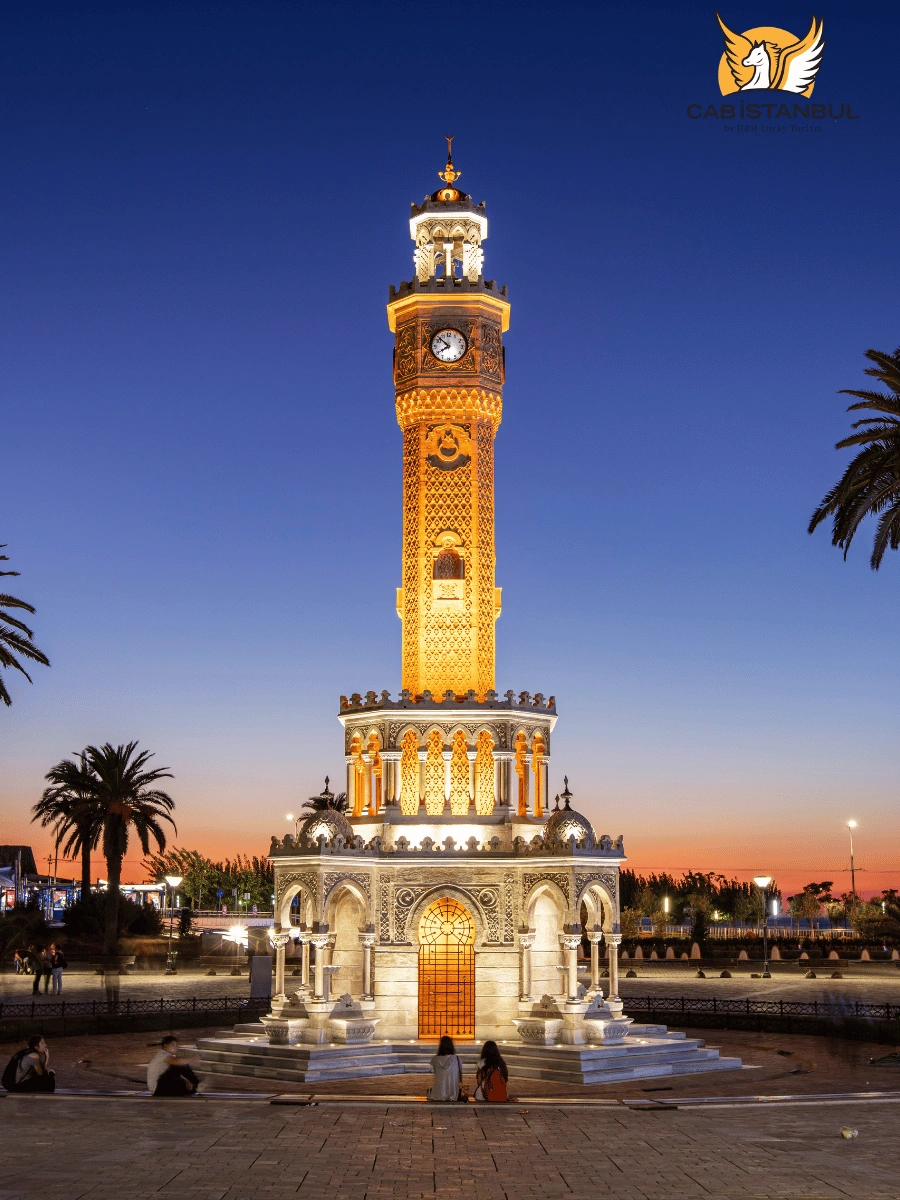
Start at Konak Square. It is the city’s practical centre: trams, buses and pedestrian routes meet around the İzmir Clock Tower, completed in 1901 for Sultan Abdülhamid II’s twenty-fifth accession anniversary and designed by Levantine French architect Raymond Charles Péré. The clock mechanism is often described as a gift of German Emperor Wilhelm II; treat that as reported tradition rather than a claim you need to prove on site.
Ten to twenty minutes here is enough—photograph the tower, note Yalı Mosque at the edge of the square, then decide your direction. Inland takes you into Kemeraltı and toward the Agora. Along the water you reach Konak Pier’s dining strip and, farther on, the Kordon. Konak Pier is a pleasant industrial-era waterfront building reused for shops and restaurants; skip romantic origin stories if they are not essential to your visit.
If you are short on time, Konak plus Kemeraltı plus the Agora already give you the historic core. Everything else in the city is enhancement, not obligation.
Kemeraltı — how the bazaar actually works
Kemeraltı is not a single covered hall. It is a district of lanes, courtyards and hans that has traded since the Ottoman period and still functions as a real market, not only a souvenir strip. Expect spice sacks, textiles, hardware, jewellery, tea gardens and sudden quiet courtyards a few metres off the main flow.
Two anchors help first-time visitors. Kızlarağası Han, an eighteenth-century caravanserai, opens onto an arched stone courtyard where people sit for coffee between shops—an easy place to reset if the alleys feel crowded. Nearby, Hisar Mosque sits in the same fabric, a reminder that the bazaar was always a religious and commercial neighbourhood, not a themed “experience zone.”
Walk it in the morning or late afternoon. Midday heat and tour groups make the lanes slower. Unlike Istanbul’s Grand Bazaar, Kemeraltı feels more open to the street network and more mixed with everyday shopping. You can skim it in forty-five minutes or linger for two hours if you eat as you go—kumru sandwiches, boyoz and tea are part of the visit, not a separate programme.
From the bazaar’s edges you are close to the Agora. That adjacency is one of Izmir’s quiet advantages: Roman civic ruins and Ottoman market life sit in the same district rather than on opposite ends of the city.
Agora of Smyrna — archaeology inside the modern city
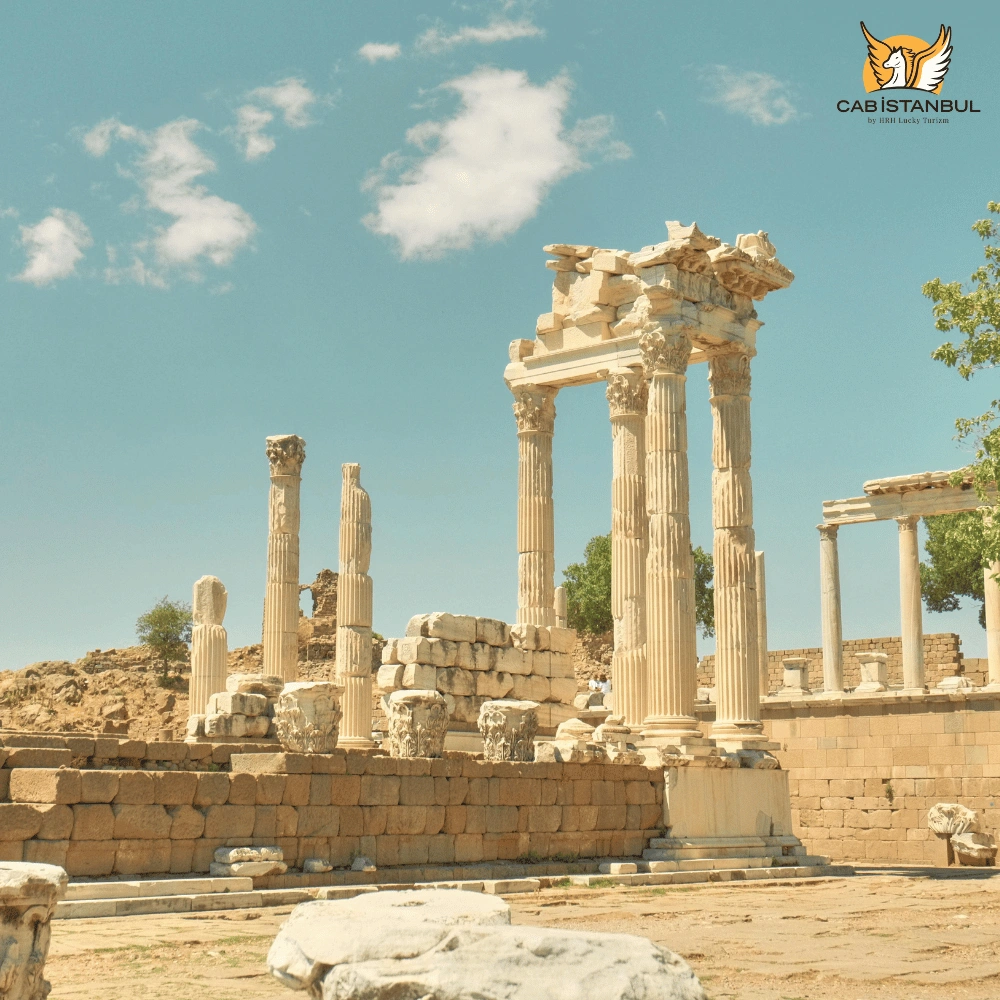
Most visitors who want “ancient ruins near Izmir” are thinking of Ephesus. The Agora of Smyrna (Agora Açık Hava Müzesi) answers a different question: what of the Roman city survives under today’s Konak? The site in Namazgâh preserves basilica remains, colonnades, water channels and the Faustina Gate tradition linked to the rebuild after the earthquake of AD 178, when imperial support under Marcus Aurelius is part of the historical narrative.
What you notice on the ground is scale and layering—stone vaults, reconstructed walkways, graffiti studied by archaeologists—rather than a single iconic façade like Celsus Library. Surfaces are uneven; wear solid shoes. Prioritise the Agora if you care about urban archaeology and have limited patience for another long transfer. Skip or shorten it if Ephesus already fills your ruins quota and you would rather spend the afternoon on the Kordon.
Allow roughly forty-five to ninety minutes. Summer provincial listings often show opening from mid-morning into early evening, with the ticket office closing earlier; admission for foreign adults is commonly published in a euro band, and Müzekart applies for eligible Turkish citizens. Hours and prices change—confirm on official museum channels before you go.
If you want artefacts after the open-air site, the city’s archaeology collections (venues and hours shift with museum reorganisation) complement the ruins without replacing a Selçuk visit.
Asansör, Karataş and Kadifekale
By late afternoon, leave the bazaar for elevation. The historic Asansör, built in 1907 by Jewish philanthropist Nesim Levi to connect two levels of hilly Karataş, still does that job. The ride is generally free under municipal operation; check posted hours if you arrive late. From the terrace the gulf opens in a clean horizontal line—ferries, Alsancak’s edge, the waterfront you will walk later.
Approach via Dario Moreno Street, a short café-lined climb that makes the stop feel like a neighbourhood visit rather than a ride-only attraction. The café at the top is optional; the view is the point.
Kadifekale, on Pagos Hill, offers a wider fortress panorama and walls tied to Hellenistic tradition (Lysimachus appears in foundation stories). It is worth a short visit if you want height and photographs; it is not a substitute for the Agora or Ephesus, and it is easy to overrate in lists. Go while there is still light, then descend toward the Kordon for the evening.
Kordon and Alsancak — the city’s social waterfront
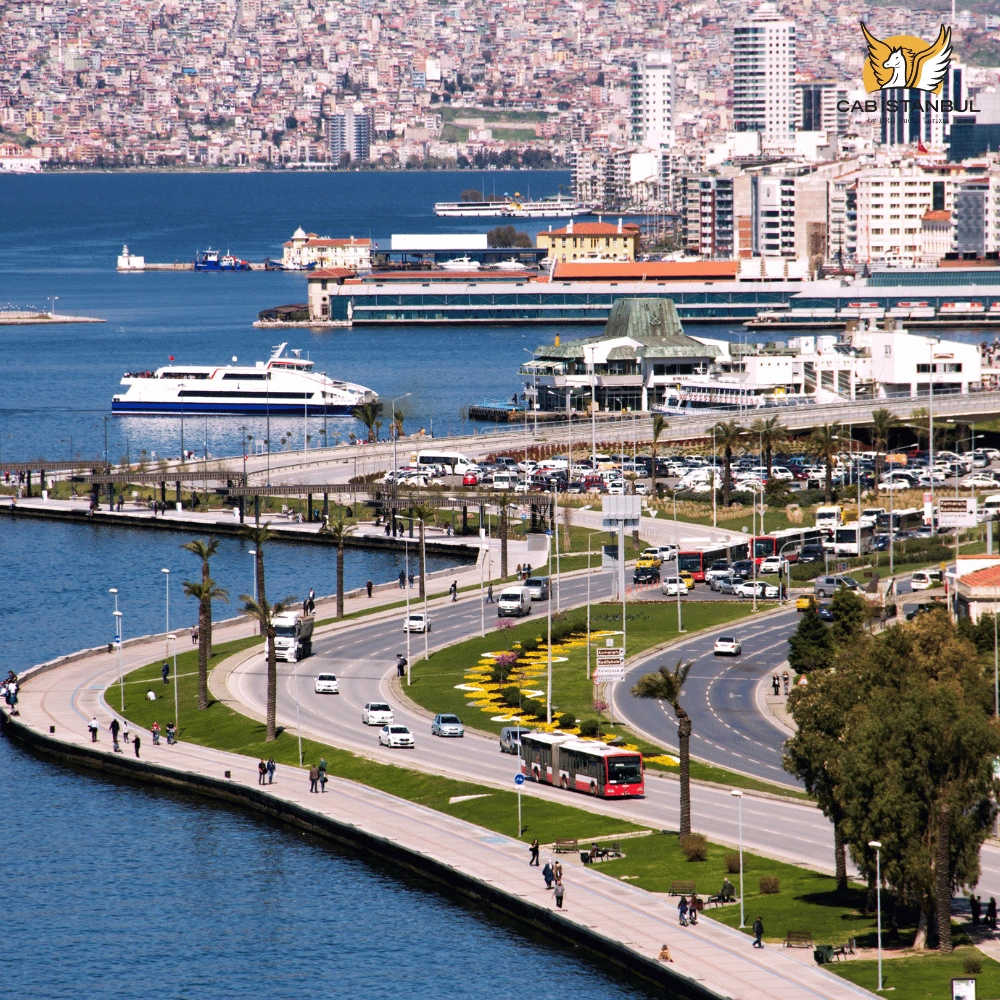
The Kordon is the emotional counterweight to Konak’s monuments. Along Alsancak, a long grassy promenade faces the gulf: joggers, families, street musicians, ferry traffic and café terraces. Locals treat it as public living room. Visitors who only collect landmarks miss why people like living here.
It is not a beach. The water is for looking at and crossing by ferry, not for swimming clubs. Come for sunset, then eat in Alsancak’s side streets. That combination—history in Konak by day, waterfront social life by night—is the strongest one-day city rhythm Izmir offers.
Kültürpark, inland from Alsancak, is a large green fairground estate with seasonal events. Useful if you need shade and space with children; skippable if your day is already full.
Izmir on the plate
Food is one of the clearest ways Izmir differs from inland Anatolia and from Istanbul’s heavier classic repertoire. Breakfast culture leans on boyoz (flaky pastry) and gevrek (the local sesame ring, cousin to simit), often with tea. Street and café lunches favour kumru—a toasted sandwich built around cheese, tomato and sausage—especially around the bazaar and waterfront.
Dinner pulls toward Aegean olive-oil dishes, wild herbs and seafood when you are near the gulf or the peninsula. You do not need a ranked restaurant list to eat well: follow busy local places in Kemeraltı and Alsancak, and save wine-country tasting for an Urla day if you have the time. The point is rhythm—light pastry mornings, market walking, seaside evenings—not collecting famous names.
Ephesus — why it deserves its own day
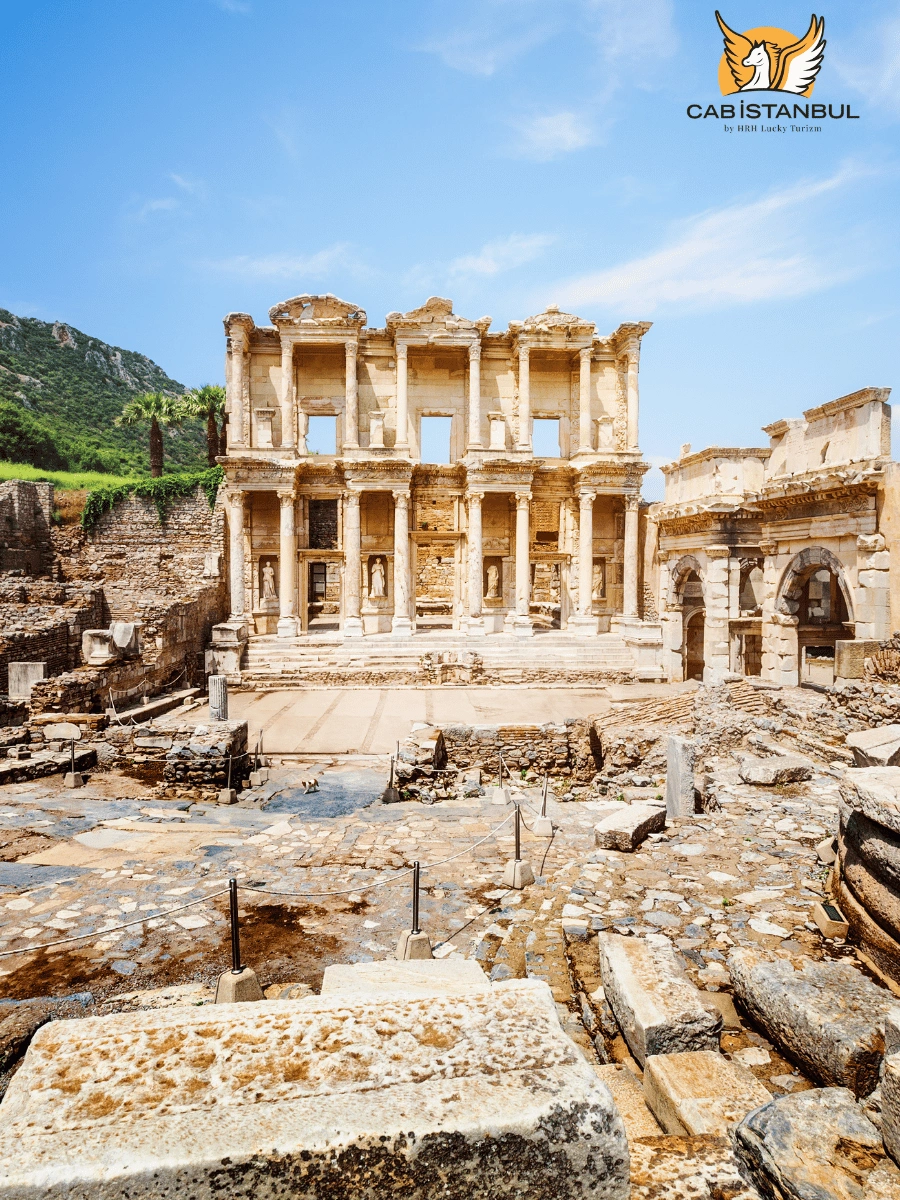
Ephesus sits in Selçuk, in İzmir Province—not in Izmir city centre. The drive or transfer is typically on the order of an hour to an hour and a half each way, depending on traffic. That distance is why combining a deep Konak morning with a full Ephesus afternoon often fails: you arrive hot, late and only half-see the site.
What distinguishes Ephesus from the Agora of Smyrna is scale and completeness. You walk Curetes Street past temples and fountains toward the Library of Celsus, then continue to the Great Theatre carved into the hillside. Terrace Houses, when open on your ticket type, add domestic detail—mosaics and wall painting—that the streetscape alone cannot give. The ground is uneven and exposed; summer heat is serious. Entering near opening time is the single best decision you can make.
Sacred sites around Selçuk—the Basilica of St John, the Ephesus Museum in town, and further afield the House of the Virgin Mary—are optional add-ons. Choose one or two; do not try to collect every label on the same ticket stub. For monument-by-monument detail, use our dedicated Ephesus Ancient City guide rather than treating this Izmir page as a second full site manual.
A short look at Ephesus’s main axis helps you decide whether Day 2 belongs to archaeology or to the Çeşme peninsula.
Şirince after Ephesus
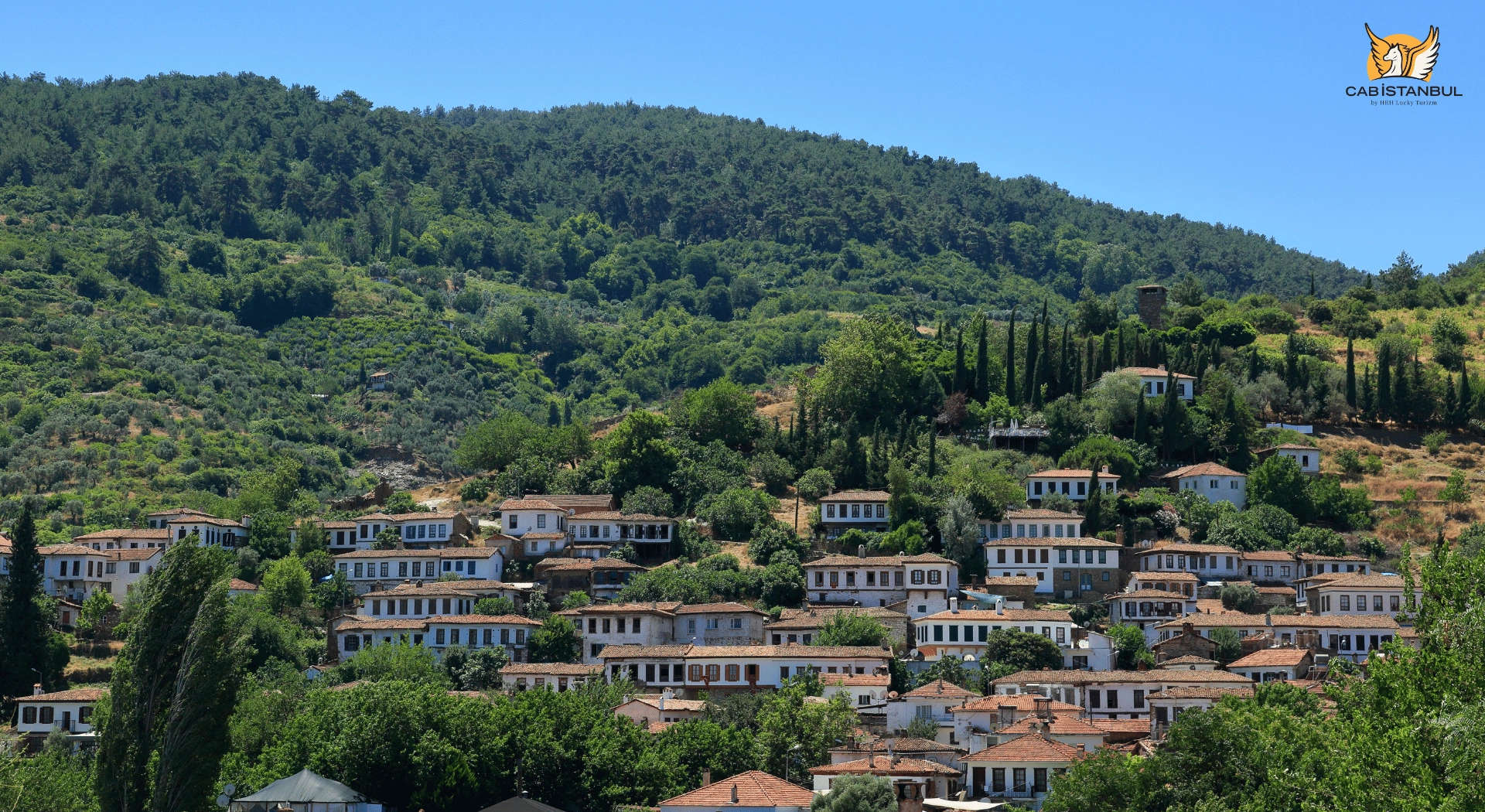
Şirince is a hillside village above Selçuk: stone houses, narrow lanes, small producers of fruit wines and olive products. People add it after Ephesus because it replaces marble and sun with shade and a slower walk. It is skippable if you are exhausted, if coaches have filled the lanes, or if you would rather return to Izmir for the Kordon. It is not a substitute for the ruins—and it is not worth a special journey from the city without Ephesus.
Çeşme and Alaçatı — same peninsula, different bases
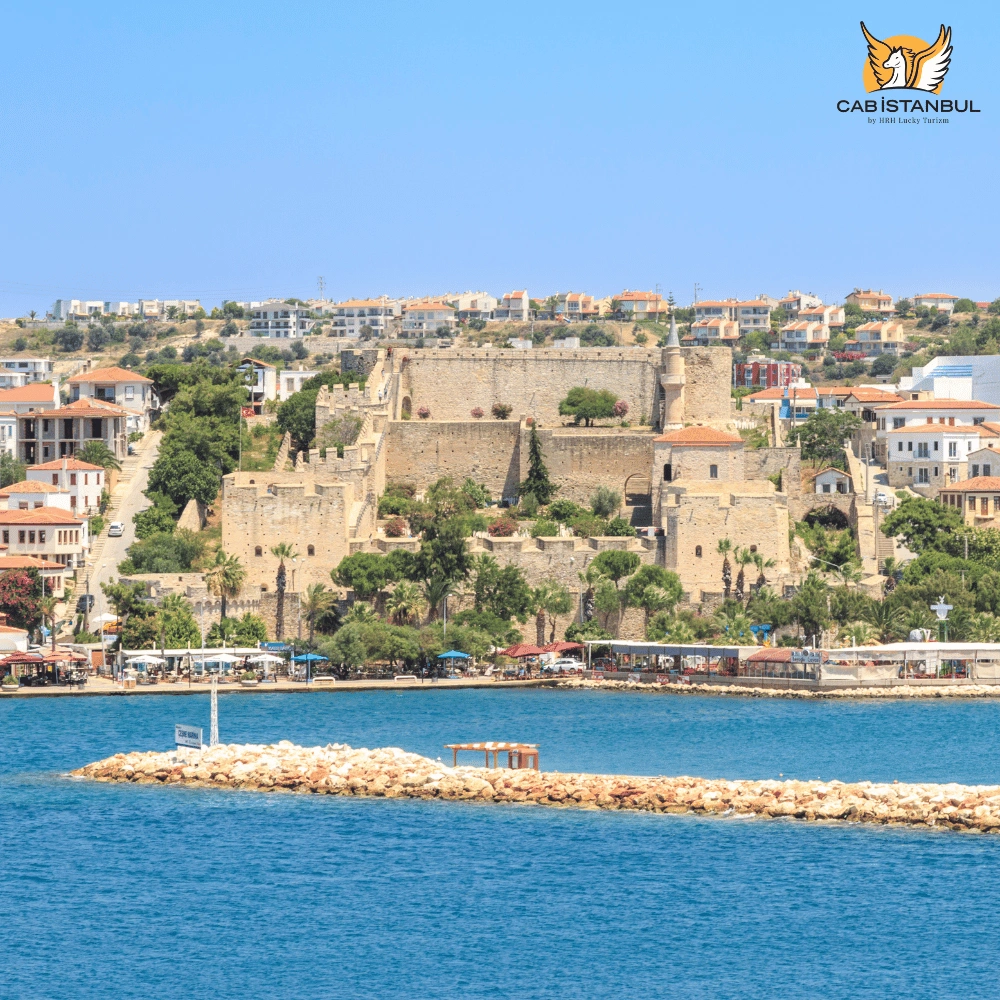
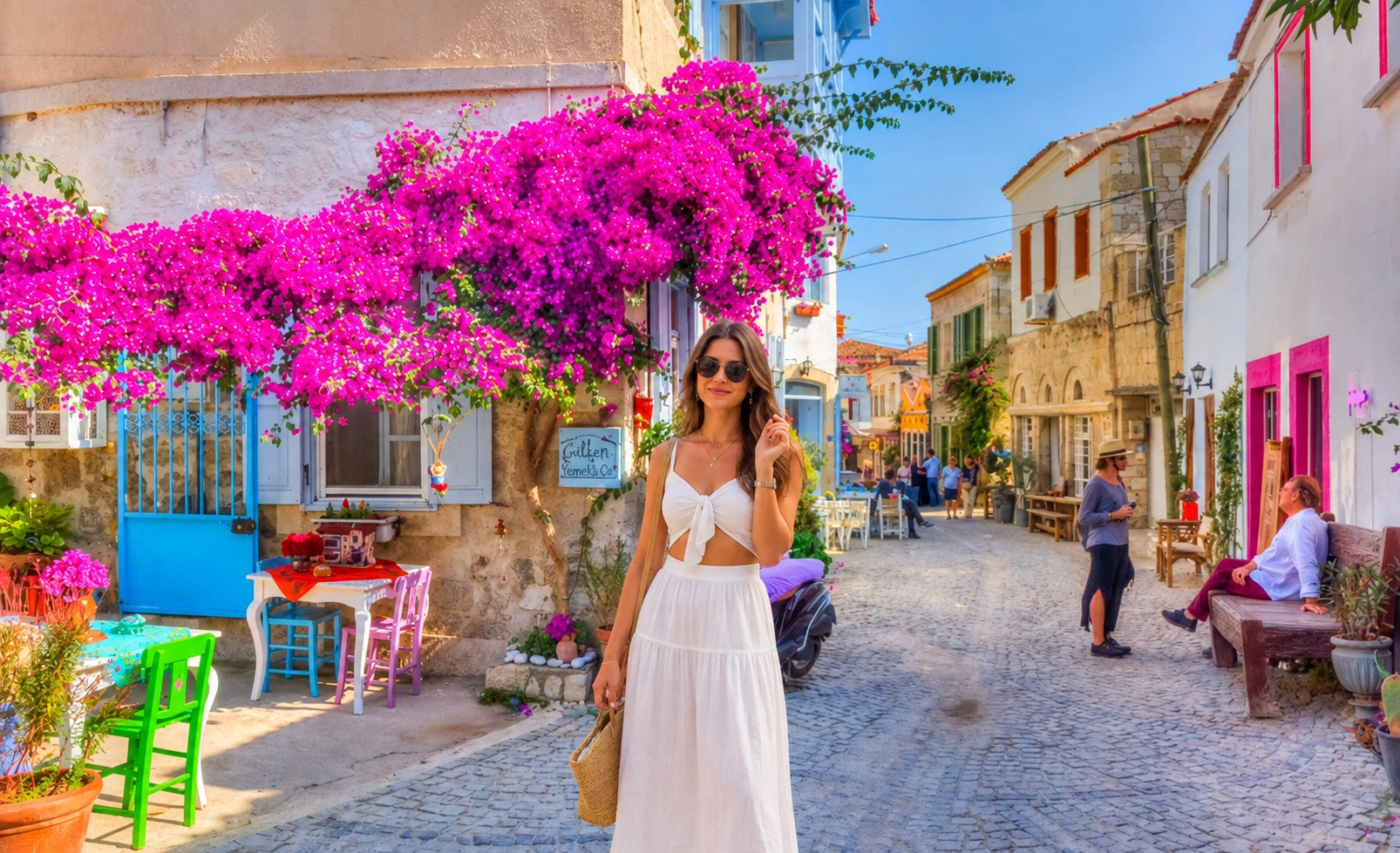
West of the city, the Çeşme Peninsula is where swimming actually happens. Do not treat Çeşme and Alaçatı as interchangeable names.
Çeşme is the port town: a sixteenth-century Ottoman castle, a marina, town beaches and a practical base for moving around the peninsula. It suits travellers who want a harbour front, a short historical stop and straightforward access to bays such as Ilıca.
Alaçatı, inland from the windward coast, is a restored stone settlement of pedestrian streets, cafés and boutique stays. Its reputation for windsurfing comes from consistent Aegean winds along the nearby shore (Çark / Port Alaçatı area). High season is busy; shoulder months feel more humane. Stay here if atmosphere and evening streets matter as much as the swim.
Choosing an overnight base:
- Alsancak / Konak — city sights, ferries, early start to Ephesus.
- Çeşme — castle, marina, family beaches, simpler logistics.
- Alaçatı — stone-town evenings, wind-sports coast, busier summers.
A day trip from Izmir is realistic; an overnight is better if beach time is the point of the journey.
Where to swim — by use case, not a top-ten list
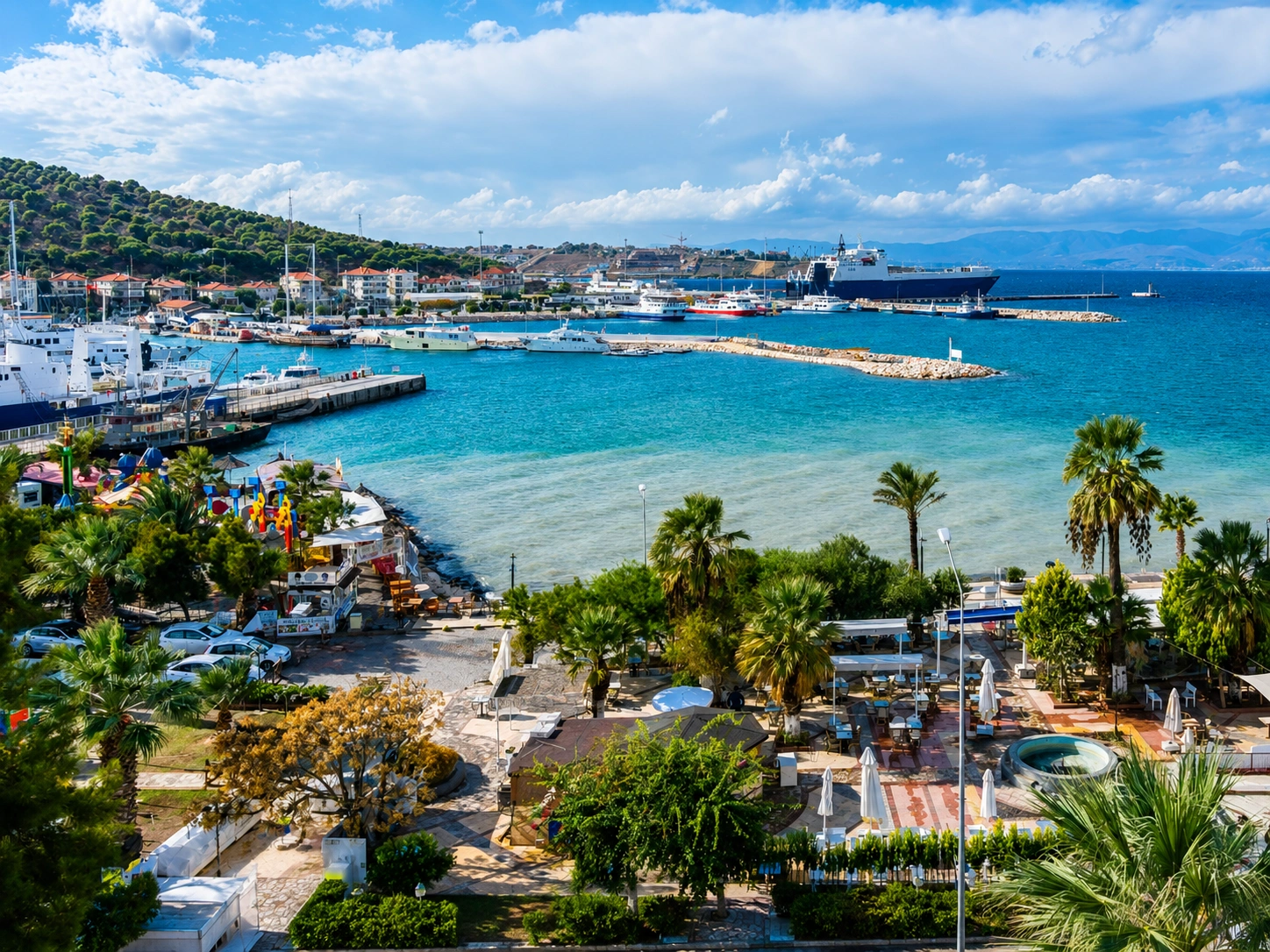
Easy, shallow swimming: Ilıca’s long bay is popular with families; the water is gentle and the setting is built for a simple beach day. Wind and water sports: the Alaçatı coast. Combine with Ephesus: Pamucak’s wide shore near Selçuk works if you want sand after the ruins without driving all the way to Çeşme. Quieter harbour coasts: Foça to the northwest, or pockets around Urla, if you prefer fishing towns to beach-club rows.
Altınkum, Delikli Koy and other Çeşme coves reward people already on the peninsula. Dikili and similar northern stretches are farther—fine for a dedicated coastal drive, poor as “Izmir city beaches.” Always separate promenade time (Kordon) from swim time (peninsula or outlying bays).
Bergama, Foça and Urla — when they earn a day
Pergamon above Bergama is a serious archaeology day: acropolis terraces, a steep theatre, and the Asklepion below. It sits well over a hundred kilometres from central Izmir and does not squeeze honestly beside Ephesus on the same day. Choose it when Hellenistic sites matter more to you than another beach transfer.
Foça offers an old harbour, stone streets and a slower coastal mood—useful as a quieter alternative to Çeşme if you want atmosphere without peak-season boutique density. Urla leans toward wine, olive oil and Aegean cooking more than monuments; include it when food and vineyards are the goal, not when you still have Ephesus unread on the itinerary.
Kuşadası belongs to Aydın Province. Cruise passengers often pair it with Ephesus; that does not make it part of Izmir. If your route continues south, see our Kuşadası notes separately, and keep wider coast context in the Aegean coast attractions guide.
Getting around without wishful timing
In the city, you rarely need a car. Walk Konak–Kemeraltı–Agora; use tram and metro for longer hops; ride bay ferries when they match your line of sight along the gulf. İZBAN links the airport corridor into the urban rail network—practical on arrival and departure days.
To Ephesus, buses toward Selçuk, organised day tours and private transfers all work. The constraint is time on site, not the existence of transport. To Çeşme and Alaçatı, frequent buses from the otogar are enough for a simple day; a car helps if you beach-hop or stay after dark.
Multi-stop province days—Ephesus plus Şirince, or castle plus several bays—are where a driver becomes useful. If your wider Turkey trip already runs through Istanbul and the Aegean as one arc, an intercity car with driver can simplify those transfers; for a city-only Izmir break, public transport is the cleaner default.
How many days — itineraries that explain the trade-offs
One day — central Izmir
Morning: Clock Tower → Kemeraltı (including a han courtyard stop) → Agora. Late afternoon: Asansör. Evening: Kordon and Alsancak dinner. This is the day that teaches you the city. Do not graft Ephesus onto it.
Two days — choose your second focus
Archaeology focus: Day 1 as above; Day 2 Ephesus with an optional Şirince coda. Beach focus: Day 1 city; Day 2 Çeşme Castle and Ilıca or Alaçatı streets and coast. Trying to “sample” both Ephesus and Çeşme in one remaining day usually delivers two half-visits.
Three days — the balanced Arc
Day 1 city, Day 2 Ephesus, Day 3 peninsula. Swap Day 2 and Day 3 if weather or energy favours swimming first. Add Bergama only if you extend beyond three days or replace the peninsula.
Alternative lenses
City + food: deepen Kemeraltı and Alsancak, add an Urla half-day. Archaeology heavy: Ephesus + Bergama across two days, with only a short city evening. Coast heavy: one city day, then two nights on the peninsula.
Best time to visit
April–June and September–October favour walking Konak and Ephesus without punishing heat. July–August are for the peninsula; if you visit Ephesus then, enter at opening and carry water. Winter is mild by northern European standards, with quieter streets and potentially shorter museum hours—confirm before you go.
Where to base yourself
Stay in Alsancak or Konak for first visits: walkable waterfront, easy transit, sensible Ephesus early starts. Stay in Çeşme if you want harbour and beach logistics. Stay in Alaçatı if stone streets and evening atmosphere matter as much as swimming. Area choice beats any revolving list of hotel names and star ratings.
Video overview
If you are still weighing city time against Ephesus or the peninsula, a short overview can clarify pacing before you book transfers.
Use this as orientation only—then build your days around one clear priority each.
Frequently asked questions
What is actually worth seeing in Izmir?
In the city: Konak and the Clock Tower, Kemeraltı, the Agora of Smyrna, Asansör and a Kordon evening. Outside: Ephesus if you care about archaeology; Çeşme–Alaçatı if you care about swimming and coastal towns. Everything else is optional enrichment.
How many days do you need?
One day for the city core. Two days if you add either Ephesus or the peninsula. Three days for city + Ephesus + Çeşme–Alaçatı without rushing.
Is Ephesus in Izmir?
Ephesus is in Selçuk district of İzmir Province, not in the city centre. Plan a separate day.
Is Çeşme worth using one of my days?
Yes if swimming or a coastal town evening matters to you. If your trip is archaeology-first and short, give the day to Ephesus instead and keep Çeşme for a longer stay.
Where is the best history?
For urban archaeology, the Agora of Smyrna. For monumental Roman streets and façades, Ephesus. For Ottoman–Levantine city fabric, Kemeraltı and Konak.
Where can I actually swim?
On the Çeşme Peninsula (Ilıca, Alaçatı coast and nearby coves), or quieter options such as Foça and Pamucak. The Kordon is a promenade, not a beach.
Do I need a car?
Not for central Izmir. Helpful for beach-hopping on the peninsula or combining several provincial stops in one day. Ephesus works by bus, tour or transfer.
What should I skip if I only have one day?
Skip Ephesus, Çeşme, Bergama and long beach lists. Do Konak, Kemeraltı, Agora, Asansör and the Kordon.
Is Izmir worth visiting?
Yes if you want a lived-in Aegean city with excellent day-trip reach. It is less of a “greatest hits” open-air museum than Istanbul’s historic peninsula, and stronger as a base than as a resort.
Where should first-time visitors stay?
Alsancak or Konak for the city; Çeşme or Alaçatı if the peninsula is the main reason you came.