
Tucked into a forested river valley on Turkey's Mediterranean coast, Olympos Ancient City offers something rare: you walk among ruins, pass beneath a Roman arch and — within minutes — find yourself standing on an untouched beach. One of the six most powerful cities of the ancient Lycian League, Olympos carries 2,300 years of history through phases of Hellenistic prosperity, piracy, Roman splendour, Byzantine faith and eventual abandonment.
Olympos: An Ancient City Where a River Meets the Sea
Olympos Ancient City spreads across both banks of a river that flows directly to the Mediterranean — an unusual layout that sets it apart from most archaeological sites. Located within the Beydağları Coastal National Park in Antalya's Kumluca district, the site preserves Hellenistic, Roman and Byzantine layers in a single continuous walk through dense pine forest and riverine undergrowth.
Unlike heavily restored sites, Olympos has retained much of its raw, overgrown character. Ruins emerge between roots and foliage, the river runs beside worn paths, and the boundary between ancient city and living nature is deliberately blurred. This quality gives Olympos a sense of discovery that few archaeological sites can match.
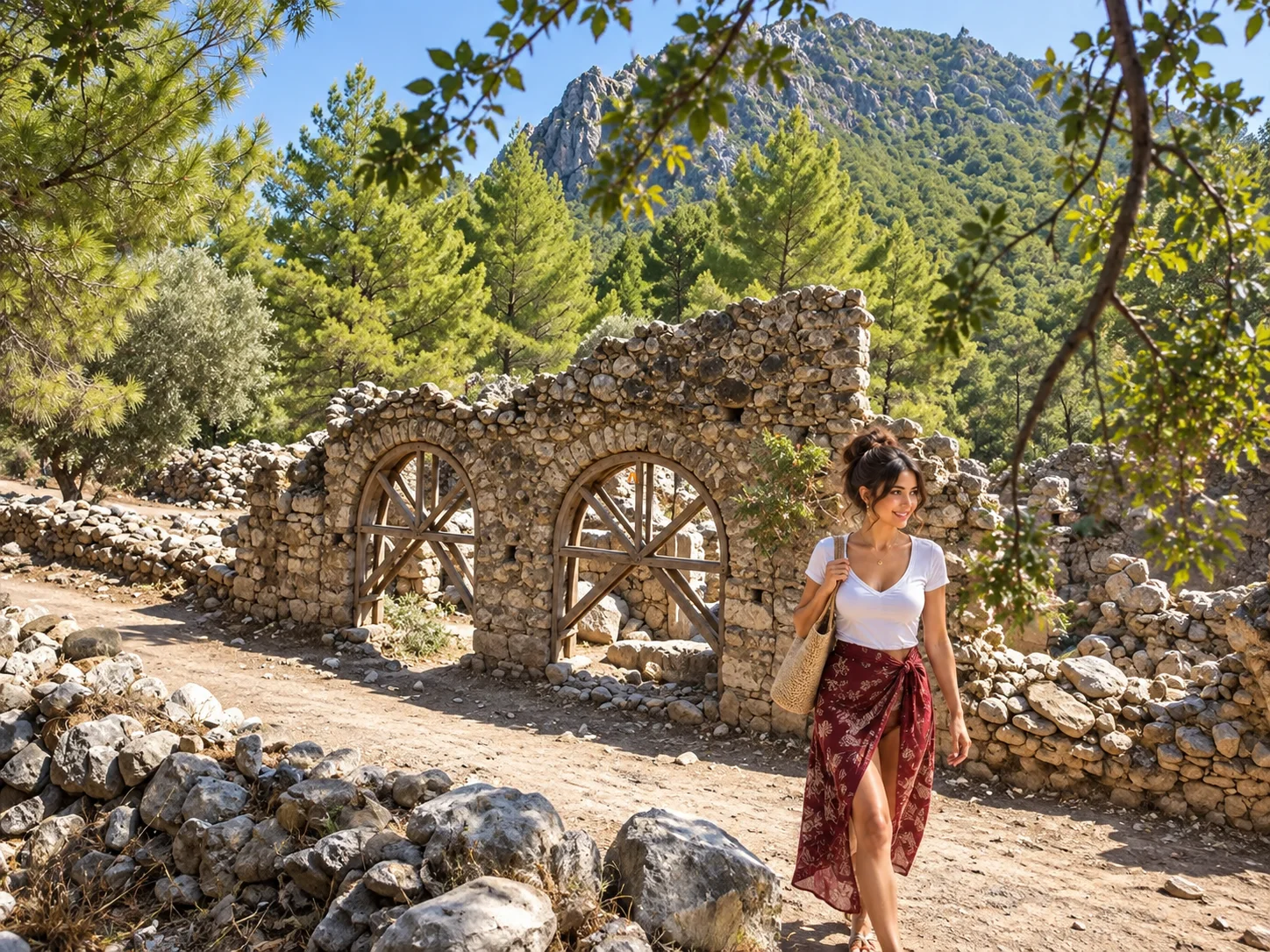
Principal Highlights Inside the Ancient City
Tomb of Lykiarch Arkhepolis
The most imposing funerary monument in the necropolis belongs to Marcus Aurelius Arkhepolis, who served as Lykiarch — president of the Lycian League — during the Roman period. The structure is one of the most significant examples of monumental Roman tomb architecture in the region.
The Necropolis
Sarcophagi, rock-cut tombs and chamber tombs line the approaches to the ancient city. The variety of burial types across Lycian and Roman periods makes this an informative walk in its own right, illustrating shifting funerary traditions over several centuries.
Byzantine Church and Frescoes
The Byzantine Church, preserving visible fresco fragments on its interior walls, is among the best-preserved structures on site. It confirms Olympos's role as a significant religious centre in late antiquity and stands as a rare example of Byzantine decorative art in an open-air setting.
Theatre and Baths
The Roman-era theatre retains traces of its stage and seating arrangement. The bath complex nearby reveals the outline of a once-functional public building. Both structures sit on the western bank of the river, partly concealed by forest growth.
Temples and Sacred Precincts
Foundation outlines of temples and sacred areas are scattered across the site. Olympos served both commercial and religious functions in antiquity; the remains of multiple cult spaces reflect this dual character.
The Krypte and the River-to-Sea Corridor
One of Olympos's most distinctive architectural features is the Krypte — a Roman-era vaulted archway that once formed part of the main passage connecting the city to the sea. Built from massive stone blocks, the arch still stands and has become one of the most photographed structures on site. In morning light or by lantern at dusk, its scale and craftsmanship are immediately striking.
The river-to-sea layout of Olympos is genuinely unusual: from the ticket gate, visitors follow the riverbank through ruins, pass the Krypte and emerge directly onto the beach. This continuous transition from ancient city to living coastline — without leaving the site — is something very few archaeological parks offer anywhere in the world.
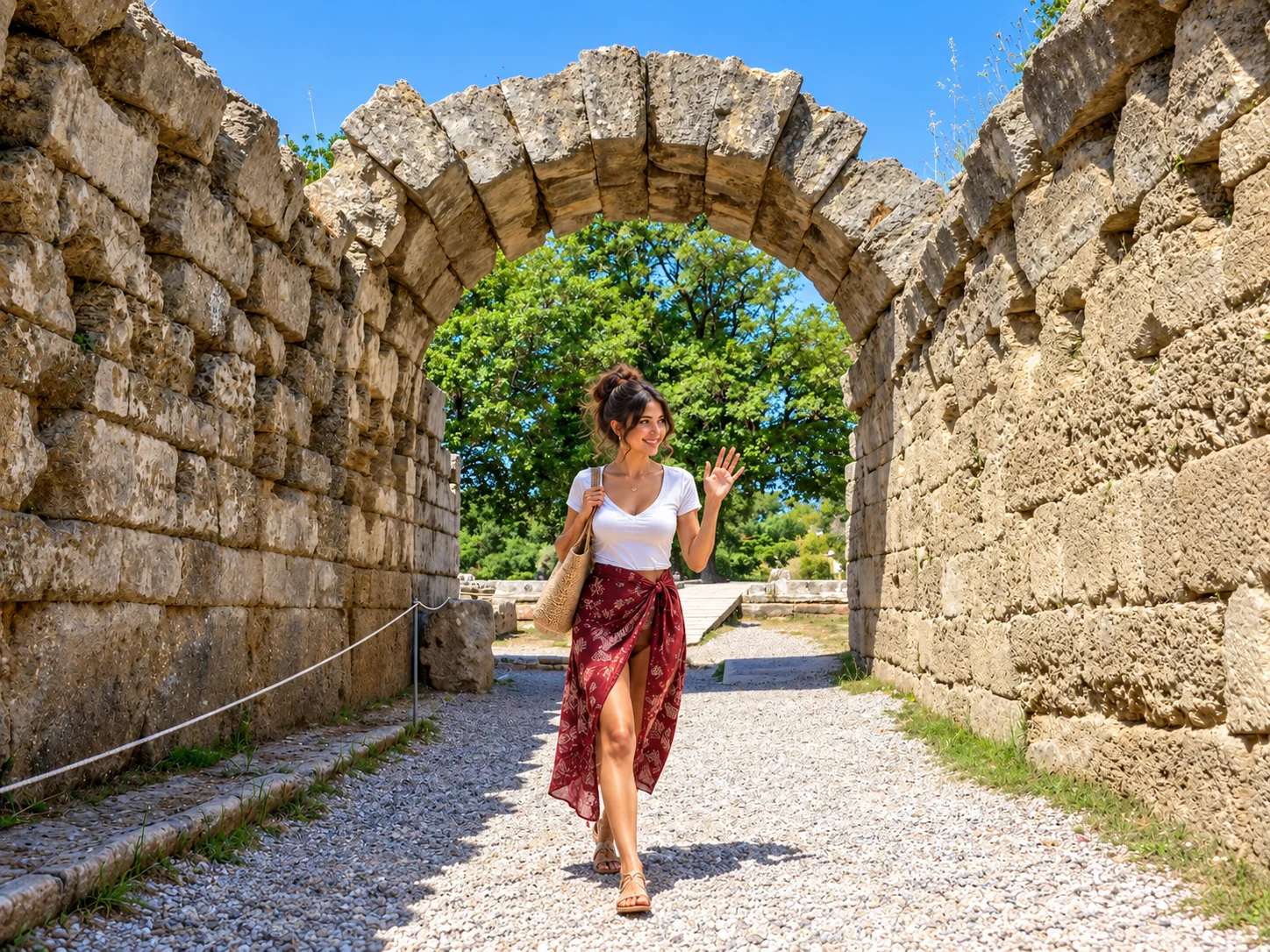
Olympos Ancient City: See It Before You Go
Get a preview of the ruins, the river valley and the walk to the beach:
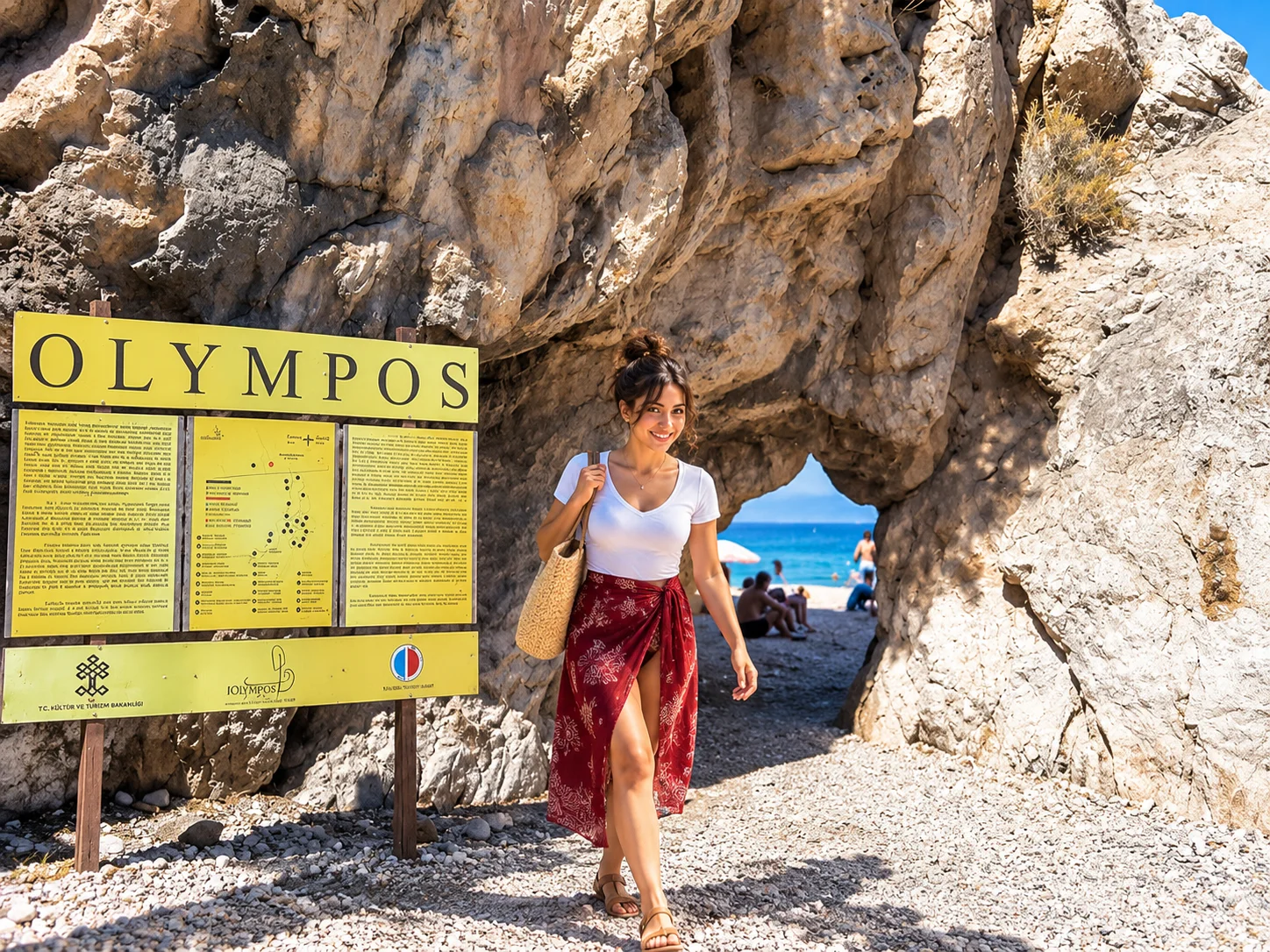
Çıralı Beach and the Loggerhead Sea Turtles
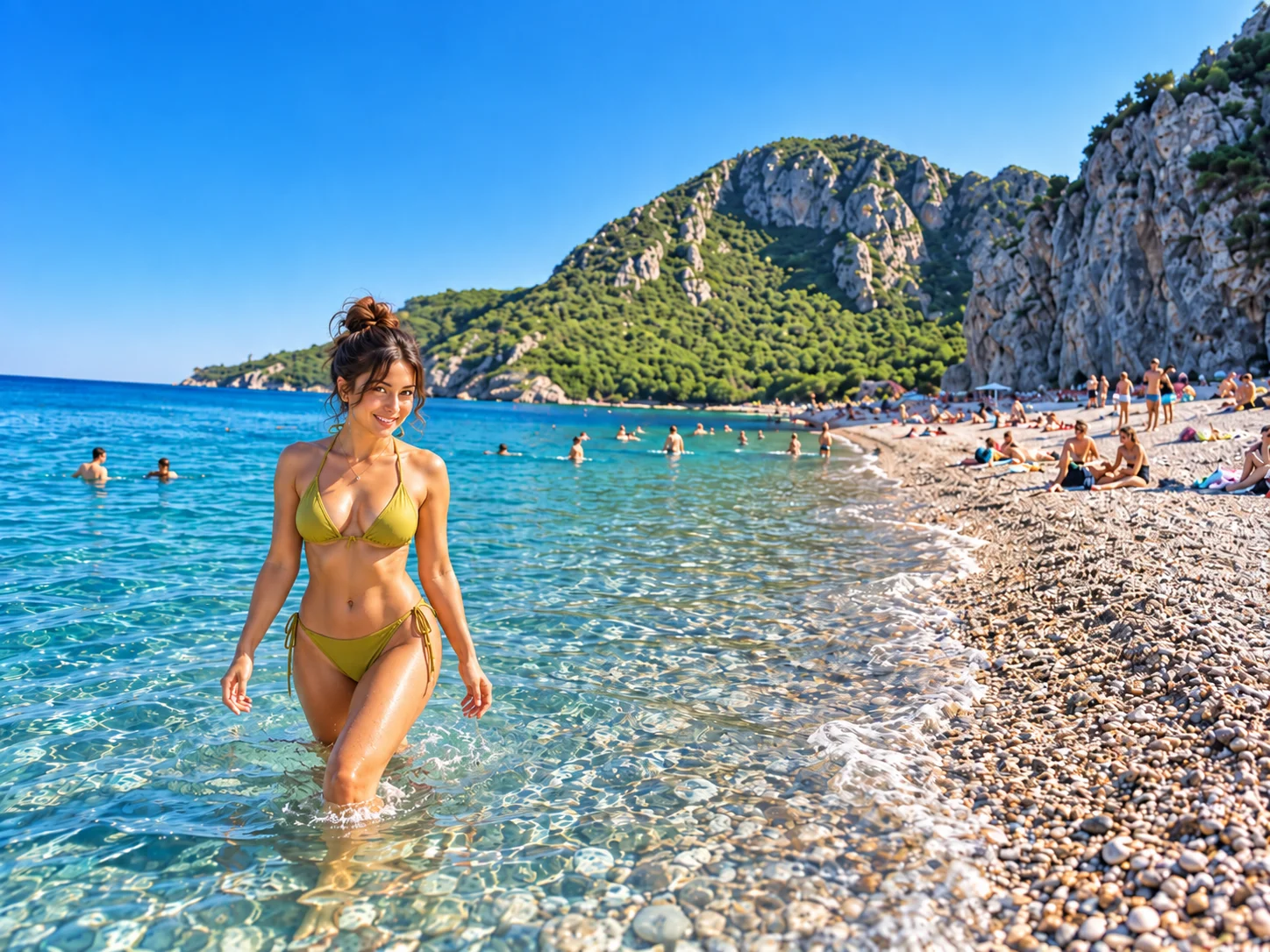
Beyond the ancient city's river mouth, the coastline opens onto Çıralı Beach — approximately 3.5 km of fine gravel and sand stretching northward to the Chimaera access point. The beach lies within Beydağları Coastal National Park, keeping development strictly controlled and the landscape intact.
Çıralı is one of the most important nesting sites for Caretta caretta (loggerhead sea turtles) on the Mediterranean. Between June and August, nesting zones are marked and protected; approaching them is prohibited. Hatchlings emerge after dark and make their way to the sea — a remarkable natural spectacle visible under guided observation. Keeping lights low and following local conservation rules protects both the experience and the turtles.
Your Olympos entry ticket covers the walk through the ruins to the beach. Çıralı village, reachable by road or along the beach on foot, offers cafés, restaurants and accommodation.
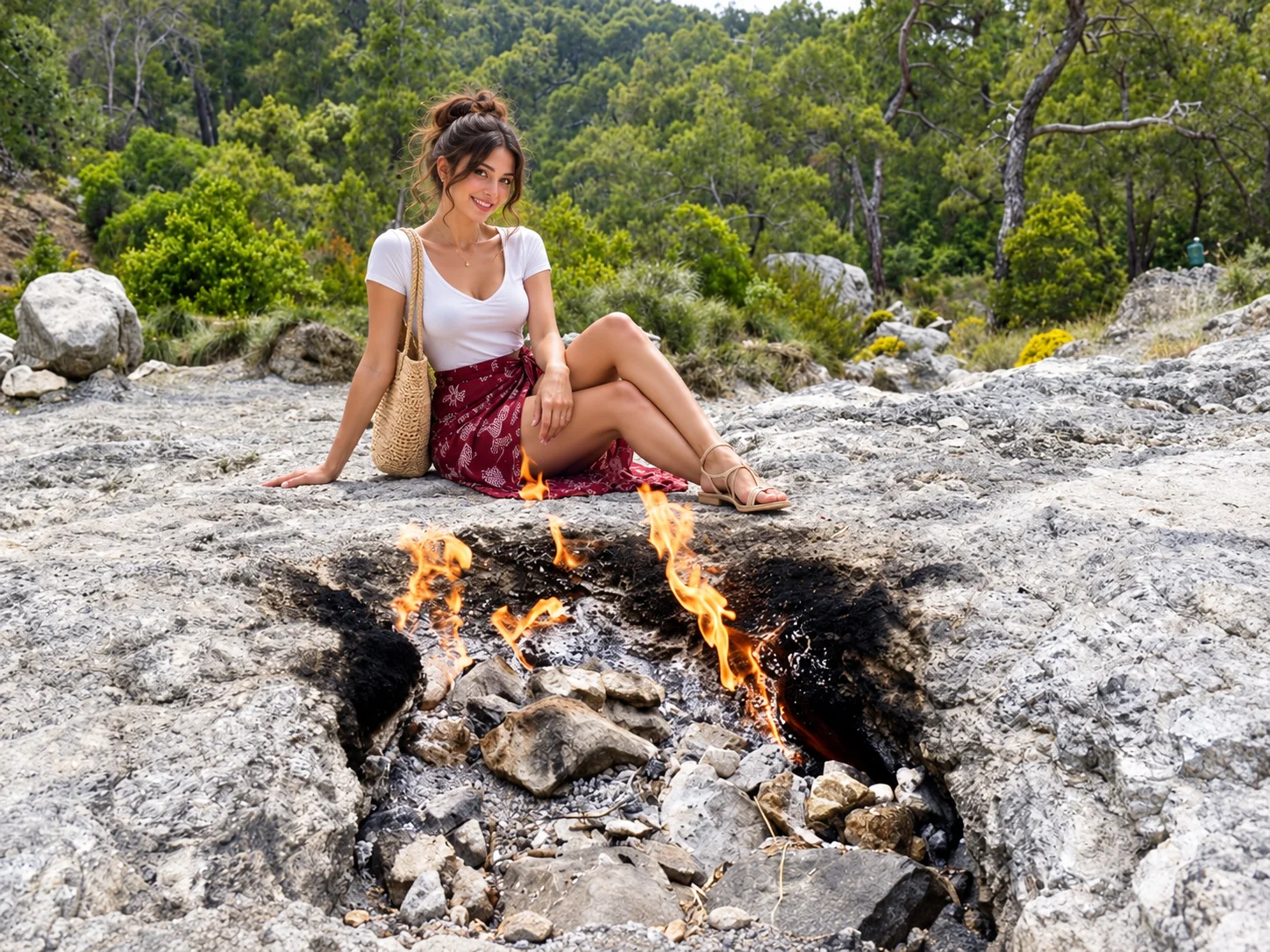
Yanartaş / Chimaera: Flames That Have Never Gone Out
About 3 km north of Olympos, a rocky hillside in the Beydağları foothills reveals one of the most extraordinary natural phenomena in Turkey: flames that have burned continuously for thousands of years. Methane gas seeping through fissures in the rock ignites spontaneously on contact with air. By day the flames appear faint; after dark, dozens of small fires glow against the pine forest in a scene that genuinely defies easy explanation.
The ancient Greeks interpreted these fires as the breath of the Chimera — the fire-breathing monster with a lion's head, goat's body and serpent's tail, slain by the hero Bellerophon riding Pegasus. Homer's Iliad refers to the creature; the eternal fires here gave the legend its geographic anchor. The word "chimaera" has since entered English to mean an impossible dream — though these flames are very real.
The hike up to Yanartaş takes approximately 20–25 minutes on a clear path. Evening visits offer the most dramatic experience. Entry is priced separately from the ancient city; check the current fee at the entrance.
Nearby Attractions Worth Combining
The Olympos area sits within one of the most rewarding stretches of Turkey's Mediterranean coast. Several sites within easy reach make the region worth more than a single day.
Adrasan
A sheltered bay roughly 15–20 minutes south of Olympos by road, Adrasan is quieter than most coastal spots in the area. Small guesthouses, camp sites and a long beach make it a good base for those wanting to combine Olympos with a relaxed overnight stay.
Suluada
A small island visible from Adrasan, reachable only by boat. Consistently listed among the clearest water on the Turkish coast; local day-trip boats run from Adrasan harbour.
Phaselis Ancient City
Approximately 30 km north of Olympos, Phaselis occupies a peninsula with three natural harbours. Its Roman-era main street runs toward the sea and the site includes a beach inside the ruins — another example of the archaeological-coastal combination that defines this stretch of coastline.
Mount Tahtalı Cable Car
The mountain that gave ancient Olympos its name rises to 2,365 m. A cable car from the coastal plain reaches the summit; on clear days the view extends from the Antalya coast to the island of Rhodes.
Practical Visitor Information
Staying in Çıralı: Small-Scale, Nature-Led Accommodation
Çıralı is the natural base for Olympos visitors. Because the village falls within a national park, large hotel development is not permitted; instead the area offers family-run guesthouses, wooden bungalows and eco-lodges that reflect the region's low-impact character. This is by design, and it is a large part of what makes Çıralı worth the journey.
Camping is available, with a number of sites set among pine trees — particularly well-suited to visitors who want to walk to Olympos before other tourists arrive. Accommodation capacity is limited; advance booking is essential from June through September. Adrasan offers a quieter, slightly less visited alternative for those with their own transport.
Olympos by Video: A Second Look at the Area
Frequently Asked Questions — Olympos Ancient City
Where is Olympos Ancient City?
Olympos Ancient City is located in the Kumluca district of Antalya Province, Turkey, within the boundaries of Beydağları Coastal National Park. It is approximately 85 km from Antalya city centre and about 95 km from Antalya Airport.
How do I get from Antalya Airport to Olympos?
The most practical option is by private car or hire car; the drive is approximately 95 km and takes about 1.5 hours via the D400 coastal highway. By public transport, you would take a bus from the airport to Antalya's main bus terminal, then a long-distance bus to Kumluca, and from there a seasonal minibus to Olympos/Çıralı. This involves multiple changes and can take three hours or more; for travellers with luggage or arriving as a group, private transport is significantly more convenient.
What is the entry fee for Olympos in 2026?
The entry fee in 2026 is ₺550. Holders of the Turkish Museum Pass (Müzekart) enter free of charge. This ticket covers the entire ancient city and the walk through to the beach. The Chimaera/Yanartaş site is separately ticketed. Fees can change; always confirm current rates at the entrance or through official channels before your visit.
How long should I spend at Olympos?
Allow 1.5 – 2.5 hours for the ruins alone. If you plan to walk through to the beach and spend time there, 3 – 4 hours is more realistic. Combining Olympos with Yanartaş/Chimaera (particularly the evening visit recommended for the best visual experience) makes for a full day.
Is Olympos Beach the same as Çıralı Beach?
They are adjacent but distinct. Olympos Beach refers to the short coastal strip reached by walking through the ancient city and along the river — accessible with your site entry ticket. Çıralı Beach is the broader 3.5 km stretch of coastline immediately to the north, extending up to the Chimaera access point. Çıralı Beach is free, public access and reachable by road as well.
Can I visit the Chimaera on the same day as Olympos?
Yes, and many visitors do exactly this. The Chimaera site (Yanartaş) is approximately 3 km north of the Olympos entrance, reachable by car in a few minutes or on foot along Çıralı Beach. The hike to the flames takes 20–25 minutes. If you want the dramatic night view, plan to arrive at Yanartaş around sunset. Entry is separately priced.
Is the Museum Pass (Müzekart) valid at Olympos?
Yes, the Turkish Museum Pass (Müzekart) is valid at Olympos Ancient City, allowing free entry. Yanartaş may be managed separately; check at the entrance for current pass eligibility there.
Is Olympos suitable for children?
Yes. The forested valley, river and beach combination tends to engage children well. The terrain is uneven and stony, so sturdy footwear and supervision are important. In summer, bring plenty of water and sun protection. The beach section is the highlight for many younger visitors. The Chimaera evening walk is suitable for older children with a torch; the rocky path is manageable but not appropriate for small children without a carrier.
What is the best time of year to visit Olympos?
The best seasons are April to June and September to October. Temperatures sit between 20–28°C, crowds are lighter and both the archaeological site and the beach can be enjoyed comfortably. July and August are hot (often above 40°C) and busier; early morning visits are recommended during this period. Winter is quiet, the site is open and the ruins are atmospheric, though beach conditions are not suitable for swimming.
What else is worth seeing near Olympos?
The immediate area offers several worthwhile stops: Adrasan bay (15–20 min south), Suluada island (by boat from Adrasan), Phaselis Ancient City (~30 km north), and the Tahtalı cable car (~35 km). Further afield, Antalya's Kaleiçi old quarter, Perge and the Aspendos theatre are all within day-trip range.
Starting Your Turkish Riviera Journey from Istanbul?
If your trip to Olympos begins with a flight into Istanbul, Cab Istanbul's private airport transfer service ensures a seamless start — from Istanbul Airport directly to your hotel or onward connection, with a professional driver and no waiting in transfer queues.