
Şirince: Hill Village Streets, Churches and Fruit Wines
Above Selçuk, Şirince is a compact Aegean settlement of cobbled lanes, whitewashed former Greek houses and busy wine shops—best planned as a half-day or overnight add-on to Ephesus, not as an İzmir city neighbourhood and not as a “doomsday sanctuary.”
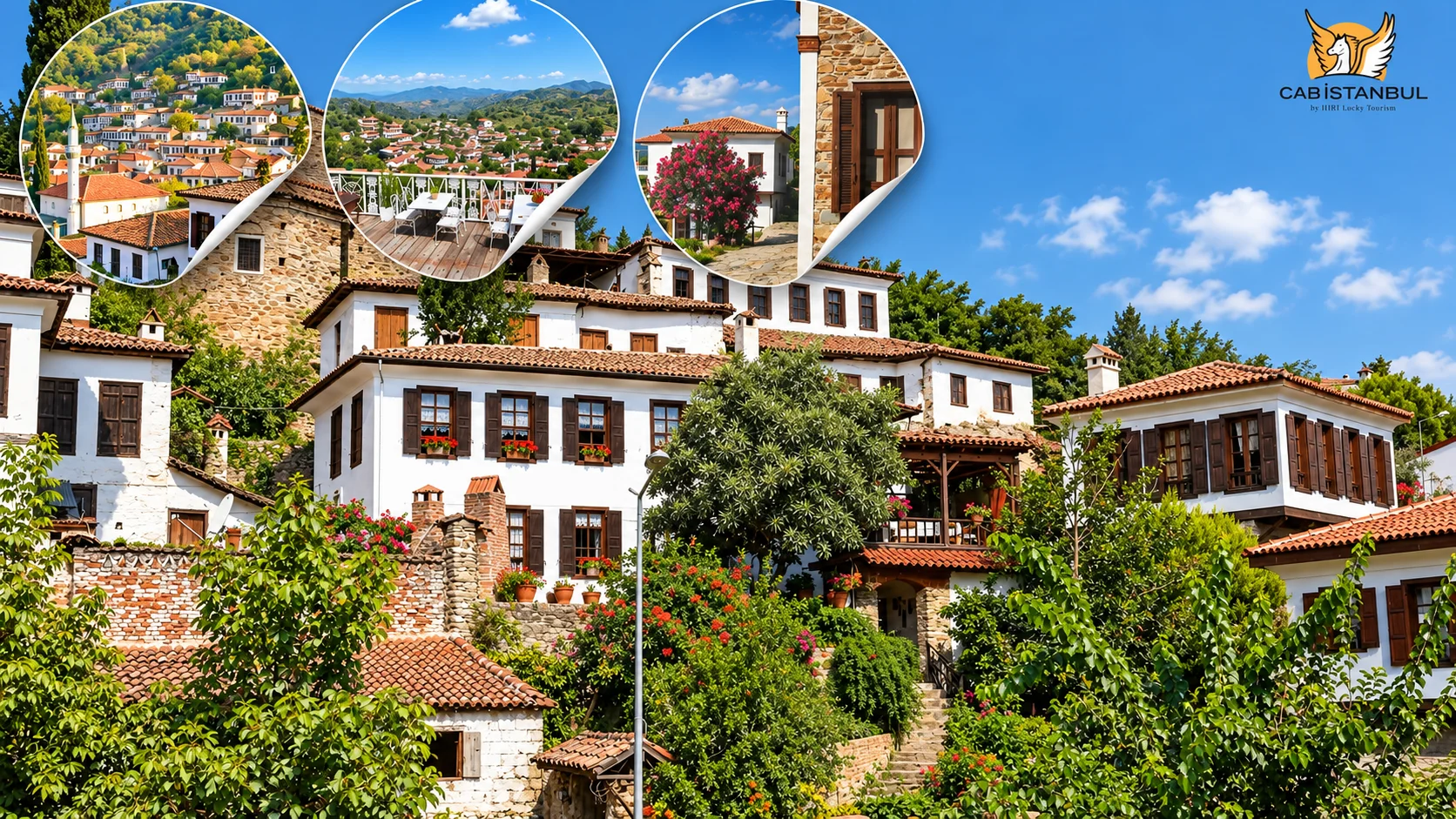
Şirince: Quick Facts
| Item | Detail |
|---|---|
| Location | Selçuk district, İzmir Province — rural hillside settlement (~8 km from Selçuk), not a neighbourhood of İzmir city |
| Official status (2026) | Listed as Şirince Mahallesi (kırsal mahalle / rural neighbourhood) after the 2014 metropolitan reform; travellers still say “village” |
| Elevation / scale | Roughly 330–360 m; registered population in the mid-hundreds |
| Signature sights | Village streets · St John the Baptist Church · Aziz Dimitrios Church · fruit-wine shops · Hodri Meydan Tower terrace |
| Nearby cluster | Ephesus, Selçuk museums/basilica belt, House of the Virgin Mary approaches, Kuşadası coast |
| Nearest airport | İzmir Adnan Menderes (ADB) — then road/rail to Selçuk and the Şirince climb |
| Best visit length | Half day for streets + churches + tasting; 1 night if you want dawn/evening calm |
| Caution topics | 2012 media myth · Nesin Math Village is not a casual theme park · hills and cobbles limit accessibility |
| Related guides | Ephesus · Turkey overview |
Şirince on Film
A short visual pass over the village and its İzmir hinterland. Use it for atmosphere only—minibus hours, church access, tasting desks and Nesin visitor rules should be rechecked on your travel date.
Start from Selçuk, Not İzmir City Centre
Şirince sits on the hills east of Selçuk. Most practical trips land at ADB or arrive via Kuşadası/İzmir road corridors, then treat Selçuk as the logistics hinge before the final 8 km of winding olive-country road. The village core is walkable but steep; leave cars at edge parking.
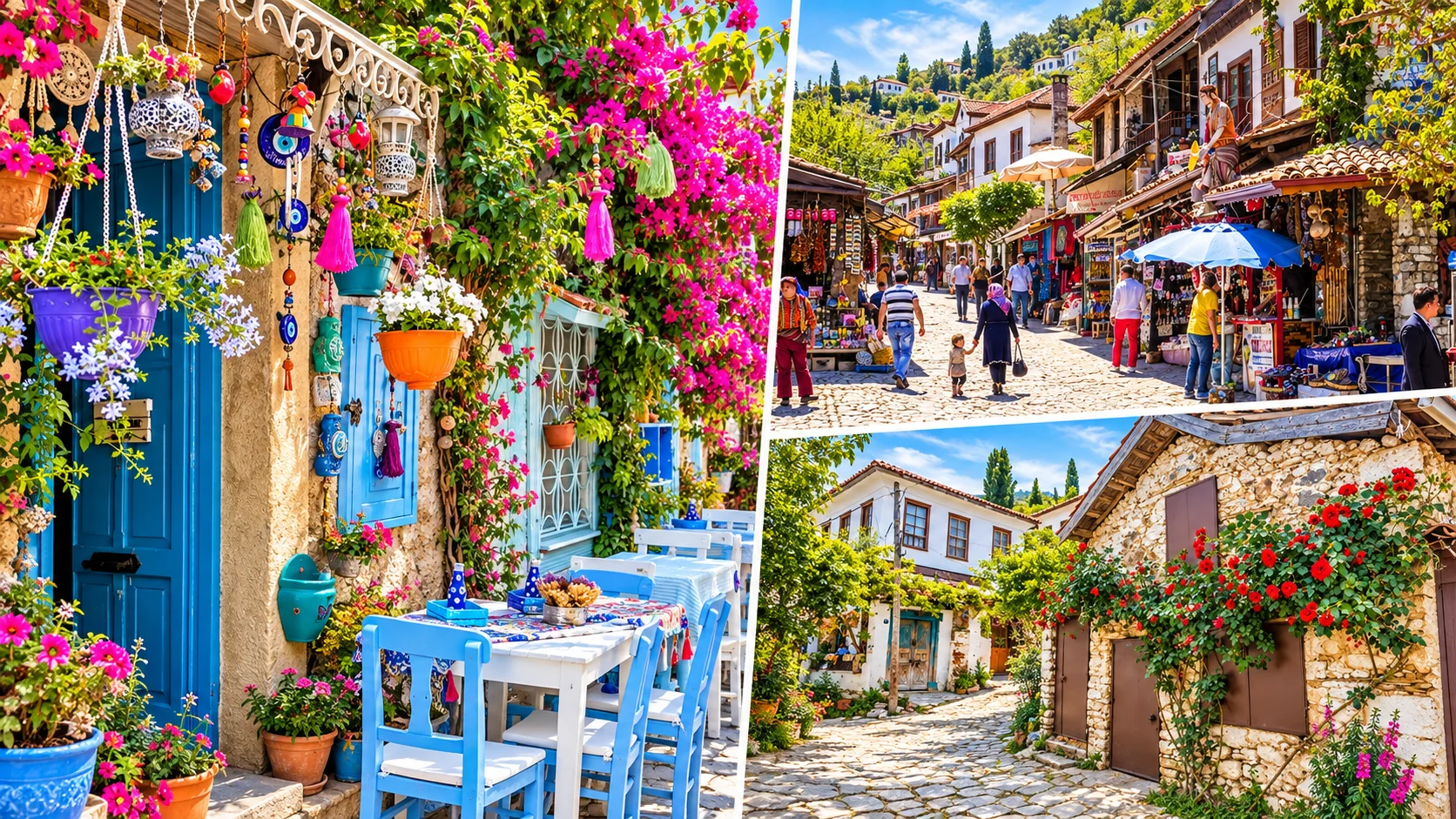
Streets first, shops second
Arrive early if you want quiet lanes and church exteriors before tour buses fill the main axis. Midday is market-and-wine energy; evenings empty out for overnight guests.
ADB → Selçuk → minibus
From Adnan Menderes, reach Selçuk by İZBAN/rail connections or road, then take the Şirince minibus (about 15–20 minutes in normal traffic). Cab Istanbul provides independent private chauffeur transfers—no hotel or winery partnership claims.
Expect hills and cobbles
Upper churches, Hodri Meydan and many pensions involve slopes and uneven stone. Build buffer time and do not promise step-free sightseeing across the whole village.
Şirince Sights Worth the Climb
The village is small. Depth comes from reading the architecture and history carefully—not from inventing a dozen “must” temples. Pair streets, the two main churches, a viewpoint and one honest wine stop.
St John the Baptist (Ayios Ioannes Prodromos)
Also called Vaftizci Yahya Kilisesi. Heritage summaries cite an 1805 building phase and an 1832 repair inscription. The upper terrace setting is one of Şirince’s best architectural pauses. Commercial wish-pool and cellar tasting desks nearby are visitor businesses—separate them from the monument itself when you plan time.
Aziz Dimitrios / Aya Dimitri Church
A 19th-century basilica on the entrance hill, also known locally as Ayasosti. After the 1923 population exchange it saw brief mosque use, then long neglect. Restoration brought it back as a visitable cultural space. Surviving apostle fresco panels are partial—Andreas and Markos are the names most often cited as better preserved. Do not sell “perfect Twelve Apostles frescoes” as a guarantee.
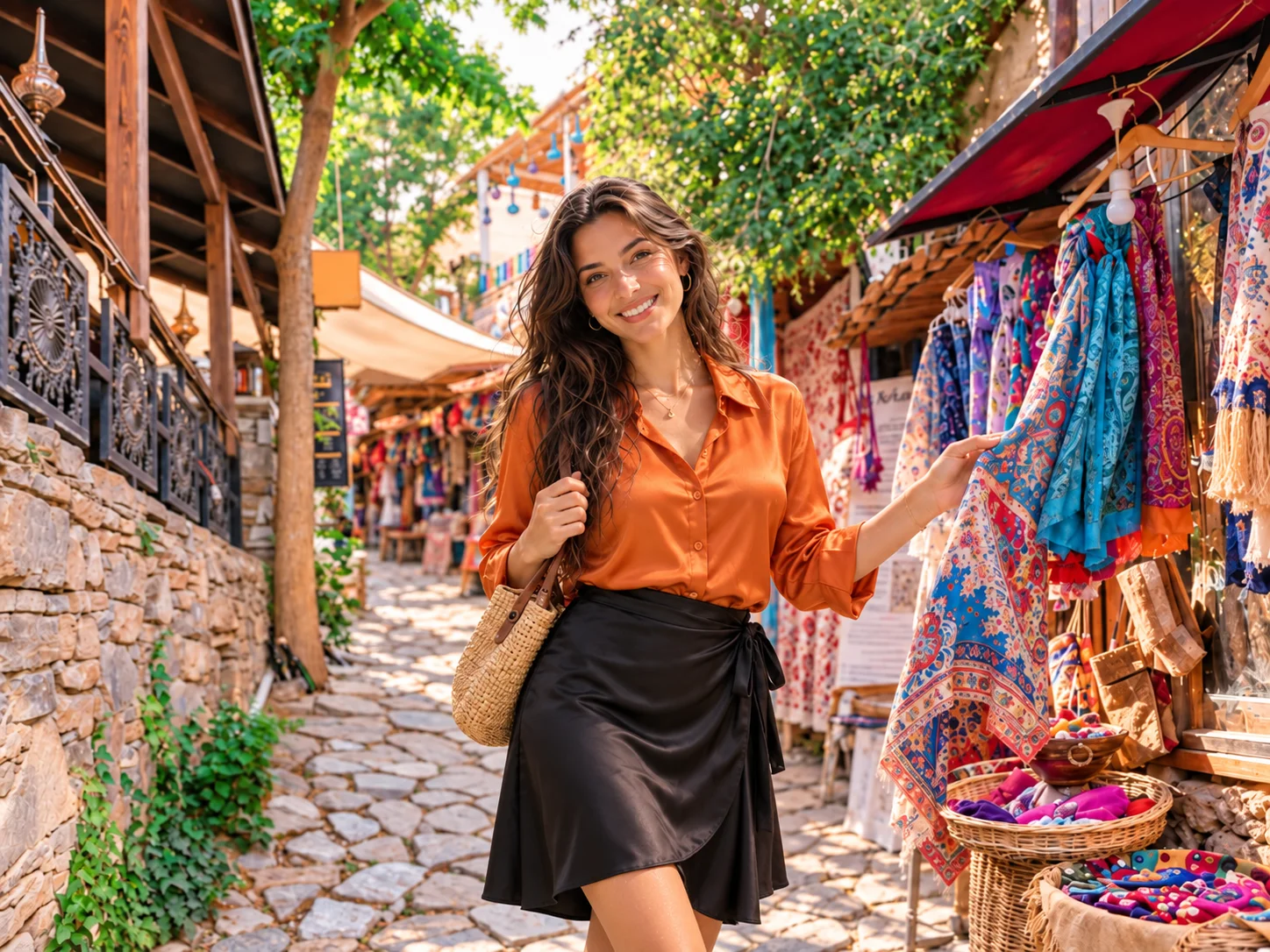
Streets, soaps and shopping lanes
The Rum-house streetscape is the real exhibit: stacked white façades, timber details and lanes that rarely block one another’s view. Olive-oil soaps, textiles and snack stalls line the tourist spine. Treat prices as bazaar reality—compare and buy what you will actually use.
- Photograph back lanes early; the central axis packs out by late morning in high season.
- Specialty jewelry or film-prop souvenir shops come and go—verify the door is open rather than hunting a single brand name.
- Elderflower (mürver) syrup and sand-brewed Turkish coffee are popular visitor stops, not ancient “heritage rites.”
Hodri Meydan Tower
A roughly 12-metre stone tower completed in 2010 on the Nişanyan Evleri / İlyastepe side—built as a pointed response to a demolition dispute, not as an Ottoman civic monument. The terrace is widely reported as free for visitors and delivers the classic tiled-roof panorama. It is private-property context: behave as a guest, not as if it were a state museum.
- Expect a steep walk; sunset light is popular and crowded.
- Do not invent “highest natural summit of Şirince” folklore—use it as a viewpoint stop.
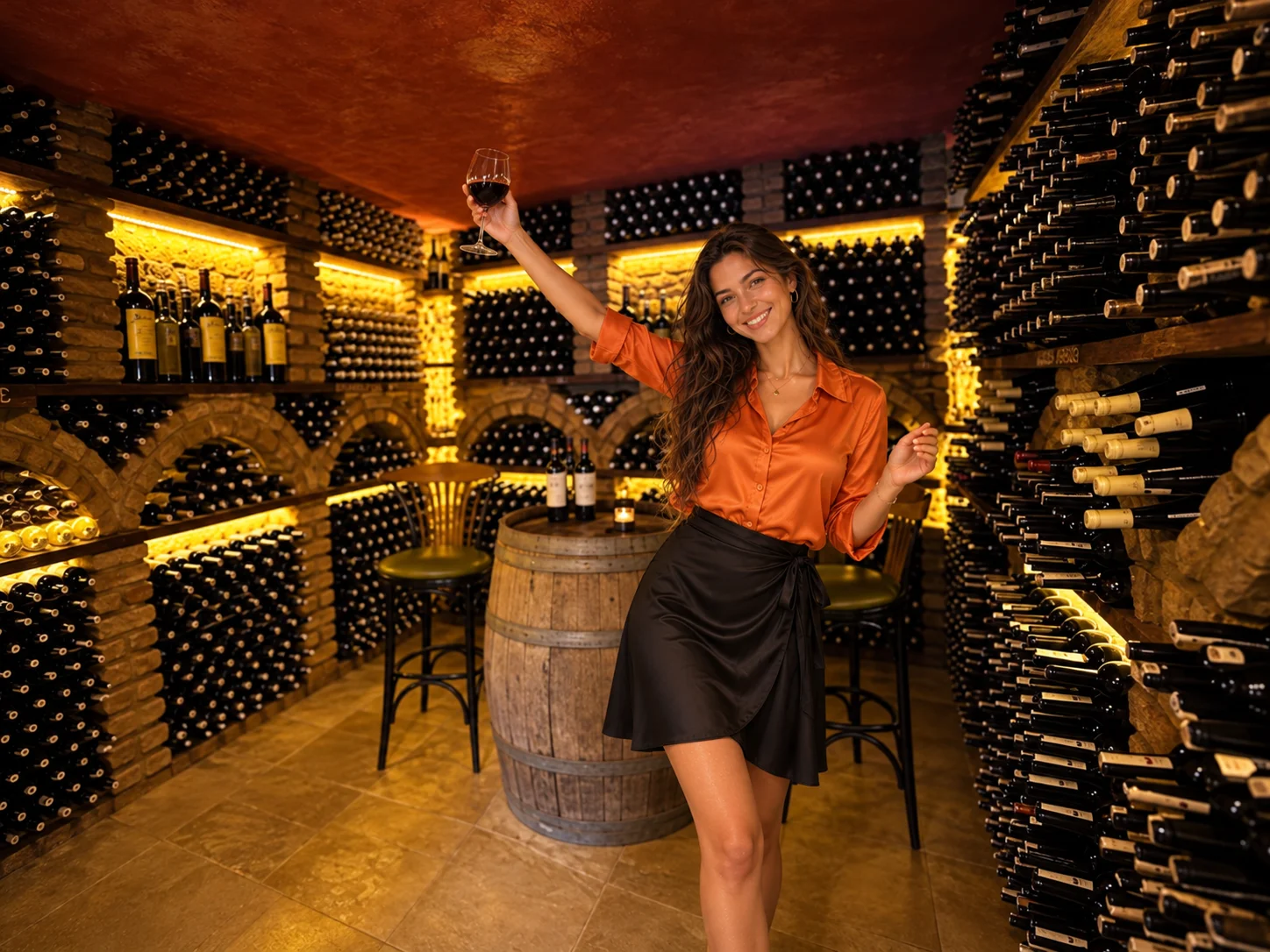
Fruit wines without the hype
Şirince is famous in Turkish domestic tourism for fruit / flavoured wines (strawberry, peach, apple, mulberry and similar). That is not the same as calling it a world-famous classic wine appellation. Tastings are usually commercial—do not assume free samples for everyone. If you care about dry grape wines, ask specifically; many shops push fruit styles first.
Tiyatro Medresesi / STOA
Beside the Nesin campus, the former Theatre Madrasa continues as an event-led performing-arts / body-research site (STOA programmes list 2026 workshops). Treat it as a calendar destination—not a drop-in museum. Check current listings before walking out for a “show that might not exist today.”
Kirkince, Çirkince, Exchange—and a Name That Sounds “Cute”
Older names include Kirkince / Kırkınca and Çirkince. Folk etymology plays on Turkish çirkin (“ugly”) versus the later Republican renaming to Şirince (“rather cute”), often linked to İzmir governor Kazım Dirik. Treat the joke-name story as folklore layered on real settlement history—not as a primary medieval chronicle.
- Before 1923 the settlement was a substantial Greek Orthodox (Rum) community with export fig agriculture and the two churches visitors see today.
- Under the 1923 Lausanne population exchange, Rum residents left; Muslim mübadil families from Greek Macedonia/Thrace areas were resettled—architecture stayed, demography changed.
- House forms show Aegean Rum vernacular; some writers also note South Albanian parallels—keep that as architectural discussion, not a single-origin myth.
- Literary echoes: Dido Sotiriou’s Anatolian memory writing and Sabahattin Ali’s “Çirkince” story deepen a visit without replacing on-the-ground history.
Şirince is not “Ephesus on a hill” in archaeological terms. Ancient Ephesus and the modern village are neighbours in a travel day, not the same site.
2012: Maya Calendar Hype, Not a Survival Fact
In December 2012, internet and television stories framed Şirince—alongside places such as Bugarach in France—as a spot that would “survive” a misread Maya-calendar apocalypse. Crowds and cameras arrived; 21 December passed like any other clear winter day. That episode explains a tourism spike. It does not prove mystical shielding, “positive energy,” or earthquake immunity.
- Present 2012 as media folklore and visitor history—not as spiritual geography.
- Regional seismicity belongs to Aegean/Anatolian geology; no travel page should promise a quake-proof village.
- If locals still joke about “doomsday tourism,” laugh with them—then go see the churches.
Nesin Math Village: Education Campus, Not a Theme Park
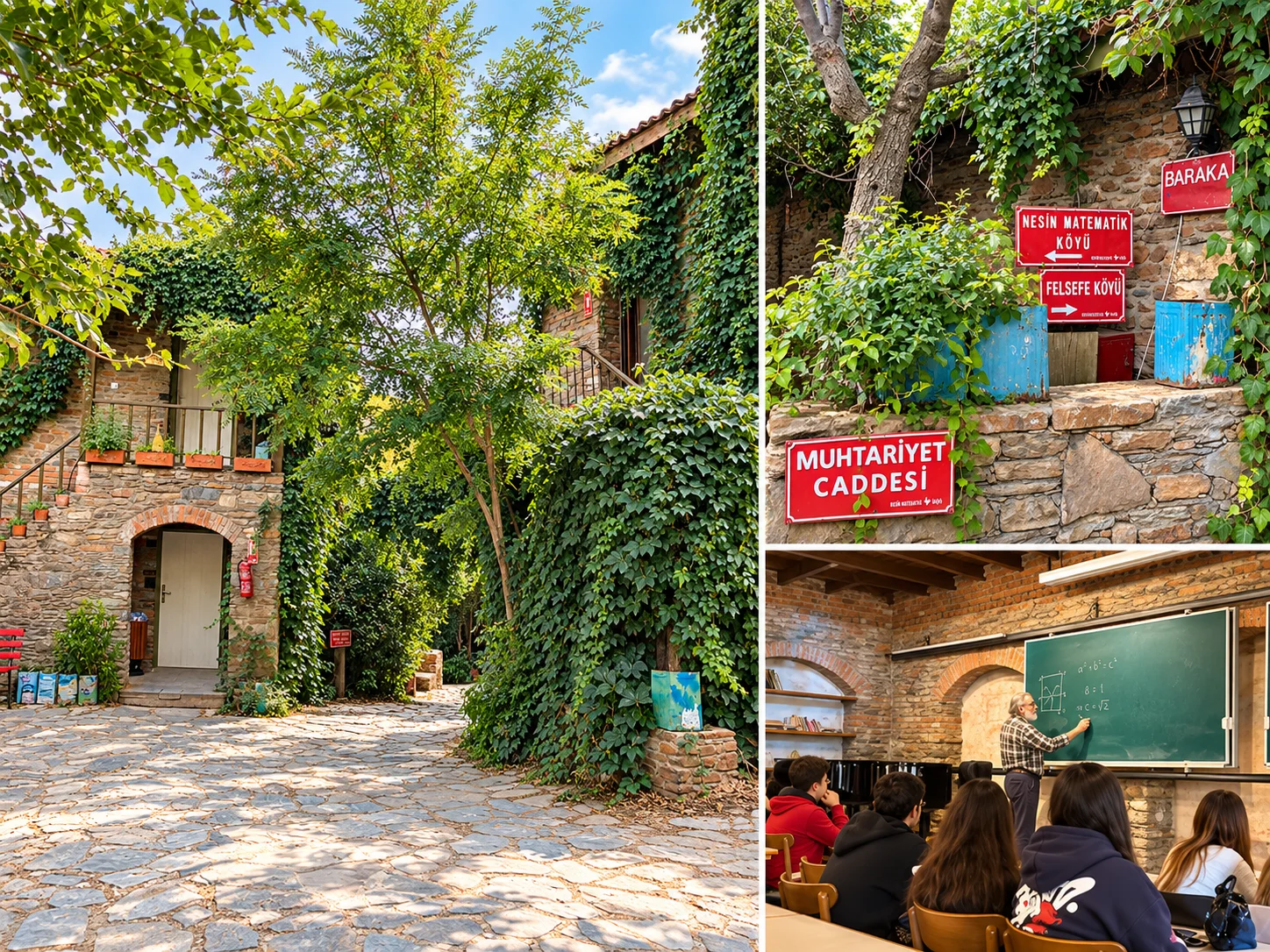
About 1 km from Şirince on the Kayser Dağı / Kayserkaya side sits Nesin Matematik Köyü—now part of the wider Nesin Köyleri (mathematics, philosophy, arts). It was founded in 2007 by mathematician Ali Nesin, with construction collaboration from Sevan Nişanyan, under the non-profit Nesin Foundation. Do not market it casually as “Aziz Nesin Math Village for tourists,” even though the foundation carries Aziz Nesin’s legacy.
- Official visitor guidance welcomes small groups daily 09:00–18:00; large groups should arrange timing in advance.
- Stay quiet near lecture spaces; open grounds are generally walkable—do not enter closed/private rooms.
- Programmes, camps and overnight stays run by registration and contact—not as a normal hotel booking funnel.
- Parking is limited; when possible park in Şirince and walk the signed path (~800 m–1 km).
If you are not joining a programme, treat a short respectful walk as a privilege—not content for loud reels inside study areas.
What to Eat in Şirince (Aegean First)
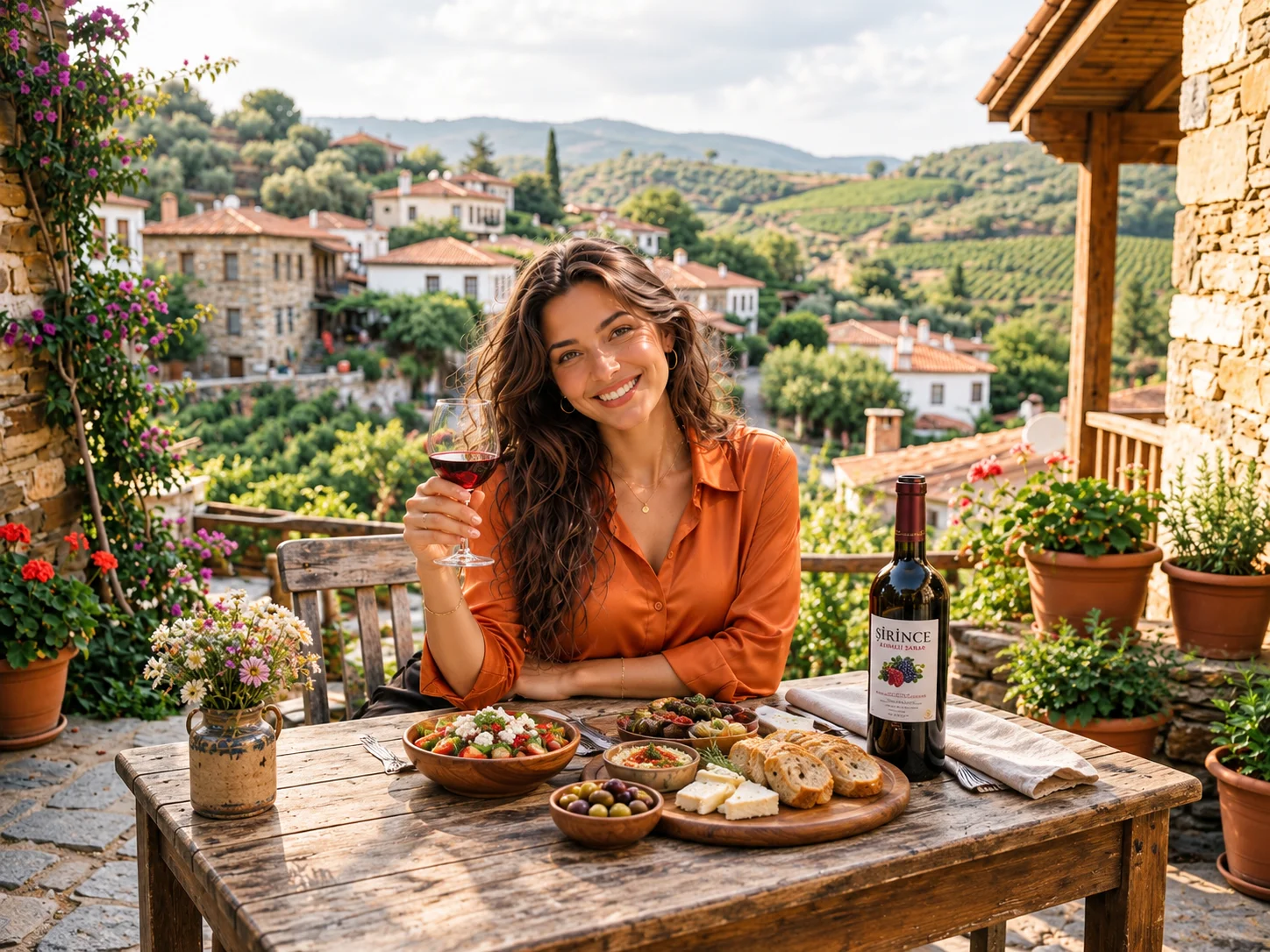
The honest food story is Aegean village cooking—olive-oil dishes, herbs, home breads, guveç plates—plus tourist-era favorites that shops do well. Mantı appears on menus (notably at dumpling houses) but should not be sold as the village’s ancient signature dish.
- Zeytinyağlılar — artichoke, stuffed zucchini blossoms, börülce and other olive-oil cold plates when in season.
- Village breakfasts — cheeses, jams, eggs, gözleme; best before day-trip crowds.
- Guveç / home stews — white beans, vegetable-meat pots, çökelekli pepper plates in simpler lokantas.
- Mantı & börek — available and popular; order because you want dumplings, not because a myth demands it.
- Fruit wines — pair lightly with meze; spit discreetly if a pour is candy-sweet for your palate.
- Mürver syrup & kumda kahve — fun visitor rituals; keep them in the “nice stop” column.
| Place (verify on day) | Why travellers mention it | 2026 note |
|---|---|---|
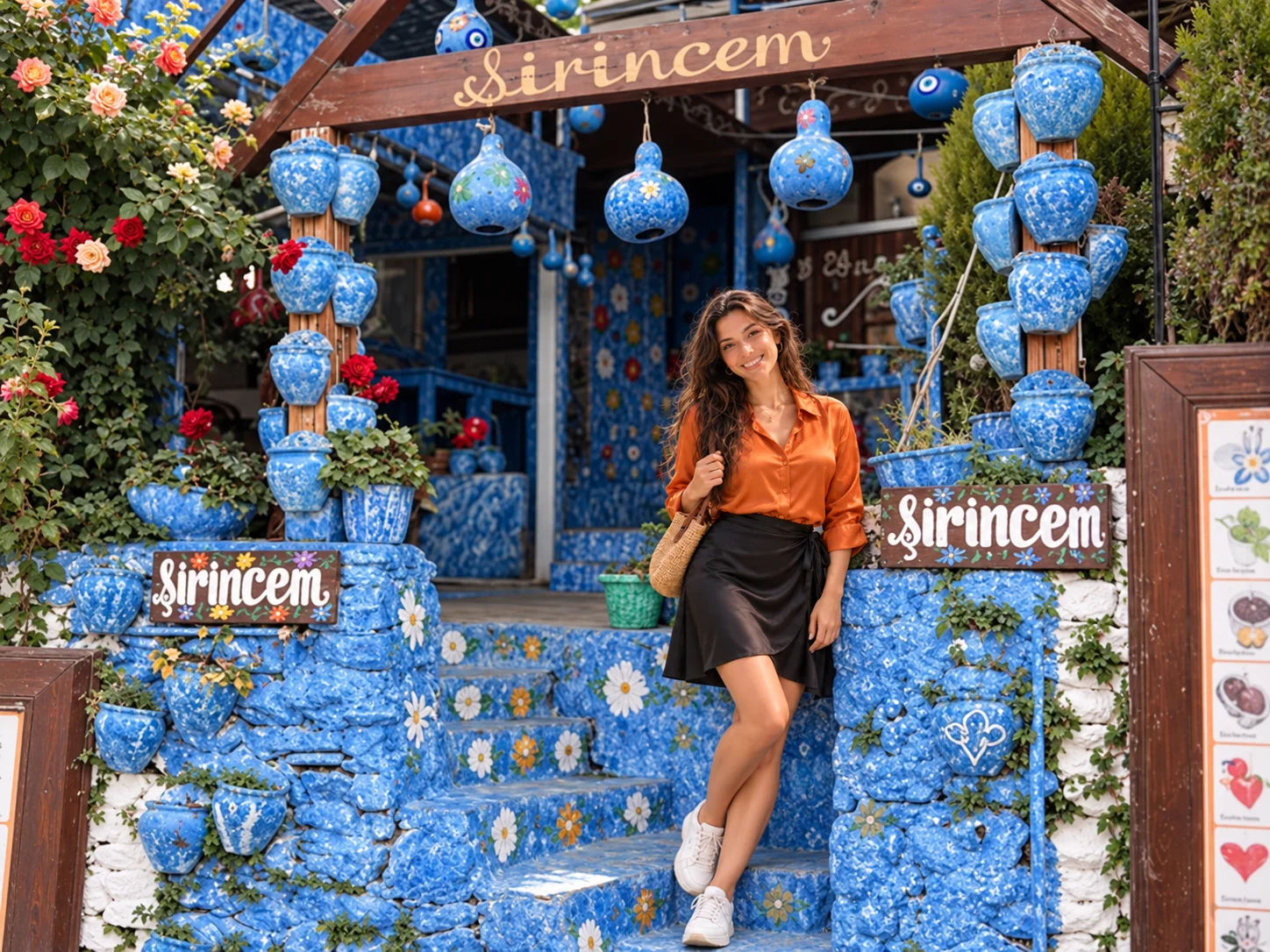
| Sirincem Restaurant | Courtyard home cooking, breakfast, grilled plates | Still a common listing with pension cluster |
| Artemis Restaurant & Wine House | Large terrace, fruit-wine list, central location | Operator site lists long daily hours—reconfirm seasonally |
| Sedir Mantı ve Börek Evi | Mantı, börek, quieter patio off the main crush | Active on major review surfaces |
| Hera Wines | Dedicated tasting stop for local pours | Keep as wine desk; hours vary |
| Üzüm Cafe | Garden cafe, cakes, lighter plates | Guides still list it—check opening that day |
| Other home kitchens (Ocakbaşı-style, Hanımeli-style) | Guveç and simple village plates | Names rotate—read the day’s menu board |
Cab Istanbul does not partner these kitchens. Hours and menus change with season and tourism load.
Where to Sleep in Şirince
Overnighting transforms Şirince: streets empty, church terraces quiet down, and breakfast beats the day-trip rush. Most stays are boutique stone houses or pensions—not large resorts.
| Property (examples) | Fit |
|---|---|
| Kırkınca / Kirkinca | Village-centre historic houses; walkable to shops |
| Nişanyan Hotel | Hillside estate feel; pool/garden quiet away from main axis |
| Güllü Konakları | Small boutique mansion stay on the village edge |
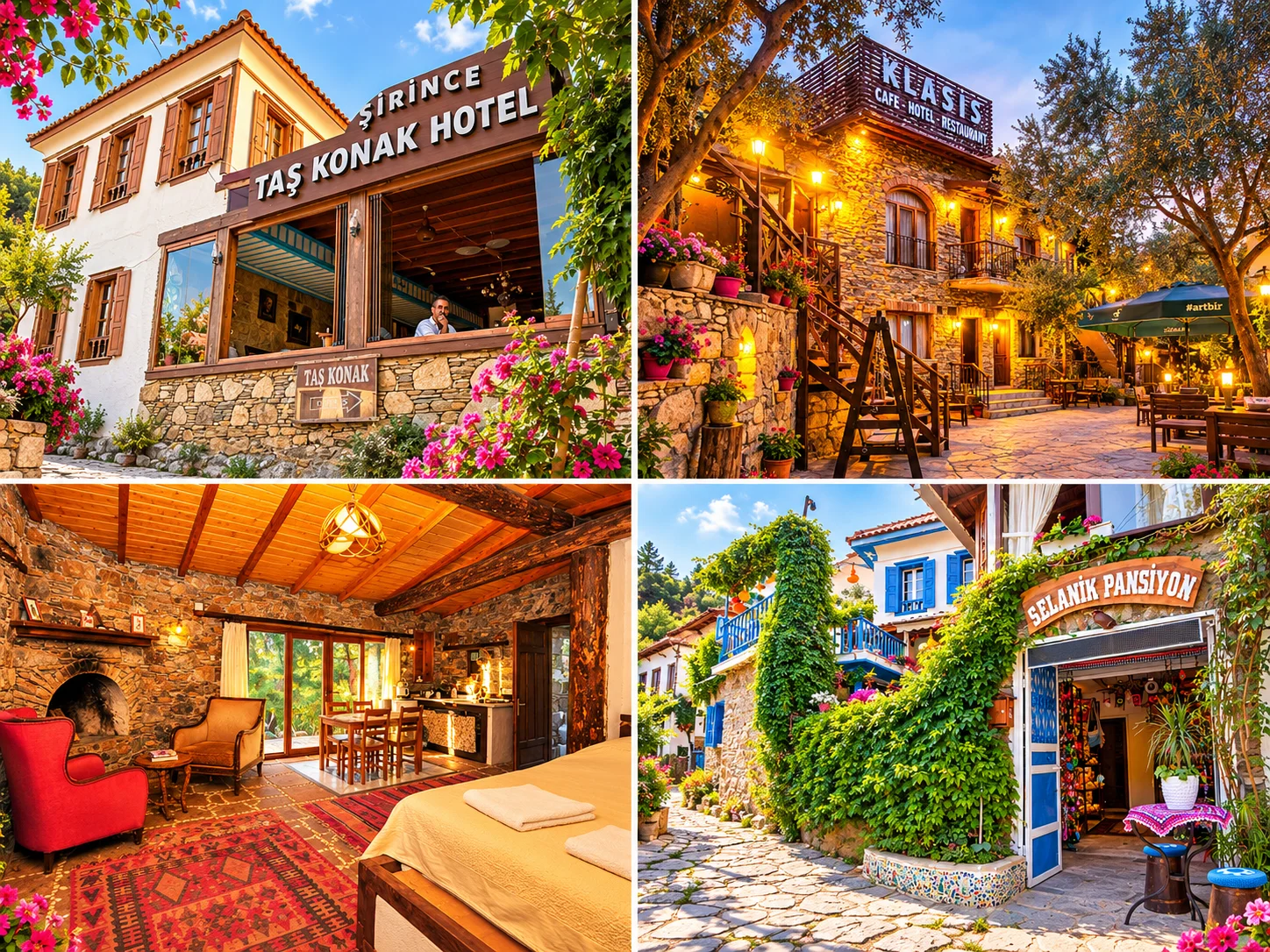
| Şirince Taş Konak · Sirincem · Selanik Pansiyon | Stone-house / pension options at varied budgets |
| Selçuk hotels | Better if Ephesus is the main mission and Şirince is a half-day only |
Availability and rates move quickly in summer and on Turkish holiday weekends. No prices published here; Cab Istanbul does not operate these properties.
Selçuk & Ephesus Add-Ons (Concise)
| Place | From Şirince | Why pair it |
|---|---|---|
| Selçuk town | ~8 km | Minibus hub, İsa Bey Mosque, St John’s Basilica area, museums, practical services |
| Ephesus | ~10–12 km band via Selçuk | UNESCO archaeological city—separate ticketed site; do not rush it into a 90-minute Şirince dash |
| House of the Virgin Mary | Selçuk hill approaches | Pilgrimage/viewpoint stop for some itineraries |
| Kuşadası | ~30 km | Cruise-port hotels and coast time after village/ruins days |
| İzmir | ~80–90 km | City base or ADB gateway—not required overnight for a Şirince focus |
This page stays Şirince-first. For the ruins deep-dive, open the Ephesus ancient city guide; for national routing see the Turkey travel guide.
Şirince Itineraries: Half Day, Full Day, 1 Night, 2 Days
| Length | Route | Highlights |
|---|---|---|
| Half day | Selçuk → Şirince → Selçuk | Village lanes · one church deep-dive · soap/wine shopping · viewpoint if knees allow · late lunch |
| Full day | Şirince-heavy day from Selçuk/Kuşadası | Both main churches · Hodri Meydan terrace · tasting with restraint · optional quiet walk toward Nesin grounds (rules first) · sunset back lanes |
| 1 night | Sleep in Şirince | Afternoon arrival after Ephesus or morning ruins then village evening · dawn streets · breakfast · checkout toward ADB/coast |
| 2 days | Şirince + Selçuk cluster | Day 1 Ephesus + Selçuk monuments · Night Şirince · Day 2 slow village + wine + optional STOA/Nesin only if programmes/visitor windows fit |
Do not cram Ephesus + full Şirince shopping + Math Village programmes into one breathless morning. Private chauffeur routing helps when ADB arrivals, ruin tickets and the Şirince climb sit on different clocks.
Private Chauffeur for Selçuk–Şirince Days
Cab Istanbul is an independent private-chauffeur operator. Use us for ADB pickup, Selçuk hotel links and Şirince day routing—not as a hotel, winery, Nesin campus or guide-bureau partner.
Şirince Travel FAQ
Where is Şirince?
In Selçuk district, İzmir Province, about 8 km from Selçuk town—not a neighbourhood inside İzmir city.
Is Şirince still officially a village?
Administratively it is listed as Şirince Mahallesi (rural neighbourhood) after the 2014 metropolitan reform. Tourism language still says “village,” which is fine in conversation.
How do I get from the airport?
Fly into İzmir Adnan Menderes (ADB), continue to Selçuk by rail/road, then take the Şirince minibus or a private transfer for the final hill road.
How long do I need?
Half a day covers streets, one or two churches and shopping. A full day or one night is better if you want viewpoints, calm photos and an unrushed meal.
What are the main churches called?
St John the Baptist / Ayios Ioannes Prodromos (Vaftizci Yahya) on the upper west terrace, and Aziz Dimitrios / Aya Dimitri (also Ayasosti) near the entrance hill.
Are the Twelve Apostles frescoes all intact?
No. Treat apostle panels as partly preserved; Andreas and Markos are the figures most often cited as clearer survivors after restoration.
What is Hodri Meydan Tower?
A ~12 m stone viewpoint tower built in 2010 in the Nişanyan Evleri context after a demolition dispute—not an ancient fortress. The terrace is popular for village panoramas.
Can I visit Nesin Math Village as a tourist?
Small groups may visit open areas roughly 09:00–18:00 under official quiet-visitor rules. It is an education campus, not a theme park; large groups and overnight stays need prior arrangement.
Who founded Nesin Math Village?
Ali Nesin founded it in 2007 with construction collaboration from Sevan Nişanyan, under the Nesin Foundation. Prefer the official name Nesin Matematik Köyü / Nesin Köyleri.
Is lodging at Nesin like a hotel?
No. Overnighting is tied to programmes/contact availability—not a standard OTA hotel product.
Did Şirince survive the 2012 apocalypse for mystical reasons?
No. 2012 was a media myth tied to Maya-calendar misinterpretation (with parallels such as Bugarach in France). Visit for architecture and landscape, not “energy shields.”
Is Şirince safe from earthquakes?
No travel page should claim that. The Aegean is seismically active; 2012 folklore is not engineering advice.
Are Şirince wines world-famous grape wines?
Şirince is best known for popular fruit / flavoured wines in domestic tourism. Enjoy them if you like—without inflating them into a global fine-wine capital.
Is wine tasting free?
Often not. Ask the price and pour style before you commit; shops vary.
What food is actually typical?
Think Aegean olive-oil cooking, village breakfasts and home stews. Mantı and mürver syrup are enjoyable stops, not mandatory “ancient signatures.”
Where should I stay?
Sleep in Şirince for atmosphere (Kırkınca, Nişanyan, Güllü Konakları and other stone pensions). Sleep in Selçuk if Ephesus timing dominates.
Is Tiyatro Medresesi open every day?
Treat it as an event campus (STOA / workshop calendar). Confirm a public event before you walk out specifically for a performance.
Can I combine Şirince with Ephesus in one day?
Yes, as a full day: ruins earlier, Şirince later (or reverse in summer heat). Do not expect a deep Math Village programme on the same sprint.
Is the village wheelchair-friendly?
Largely no. Cobbles, slopes and stepped lanes limit access; plan accordingly.
When is the best time to visit?
Spring and autumn balance weather and crowds. Summer works with early starts; winter is quieter but wetter and shorter on daylight.
Why was the village called Çirkince?
Çirkince/Kirkince are older names; folk stories contrast “ugly” vs later “Şirince.” Use the etymology as folklore alongside the exchange-era history.
What happened in 1923?
The Lausanne population exchange removed the Rum community and resettled mübadil Muslim families; the built fabric of houses and churches largely remained.
Does Cab Istanbul partner with Şirince hotels or wineries?
No. Cab Istanbul offers independent private chauffeur and intercity transfer services only.
Where can I park?
Use edge-of-village paid/organized parking when directed. The historic lanes are for walking, not circulating cars.
Is Demetrius of Ephesus jewelry a required stop?
No. Souvenir and jewelry shops change; browse what is actually open rather than chasing one legacy brand claim.
What else should I read on Cab Istanbul?
Pair this page with the Ephesus ancient city guide and the national Turkey travel guide.