
A Southeast Road Trip That Begins on the Mediterranean
This itinerary is rebuilt from a real Istanbul departure toward the southeast. Adana and Mersin are Mediterranean cities. Şanlıurfa, Diyarbakır, Mardin, Midyat and Kilis are Southeast. Eastern Anatolia — Van, Ağrı, Erzurum — is another journey. The useful spine is long driving, summer heat, and tight holiday beds, planned city by city.
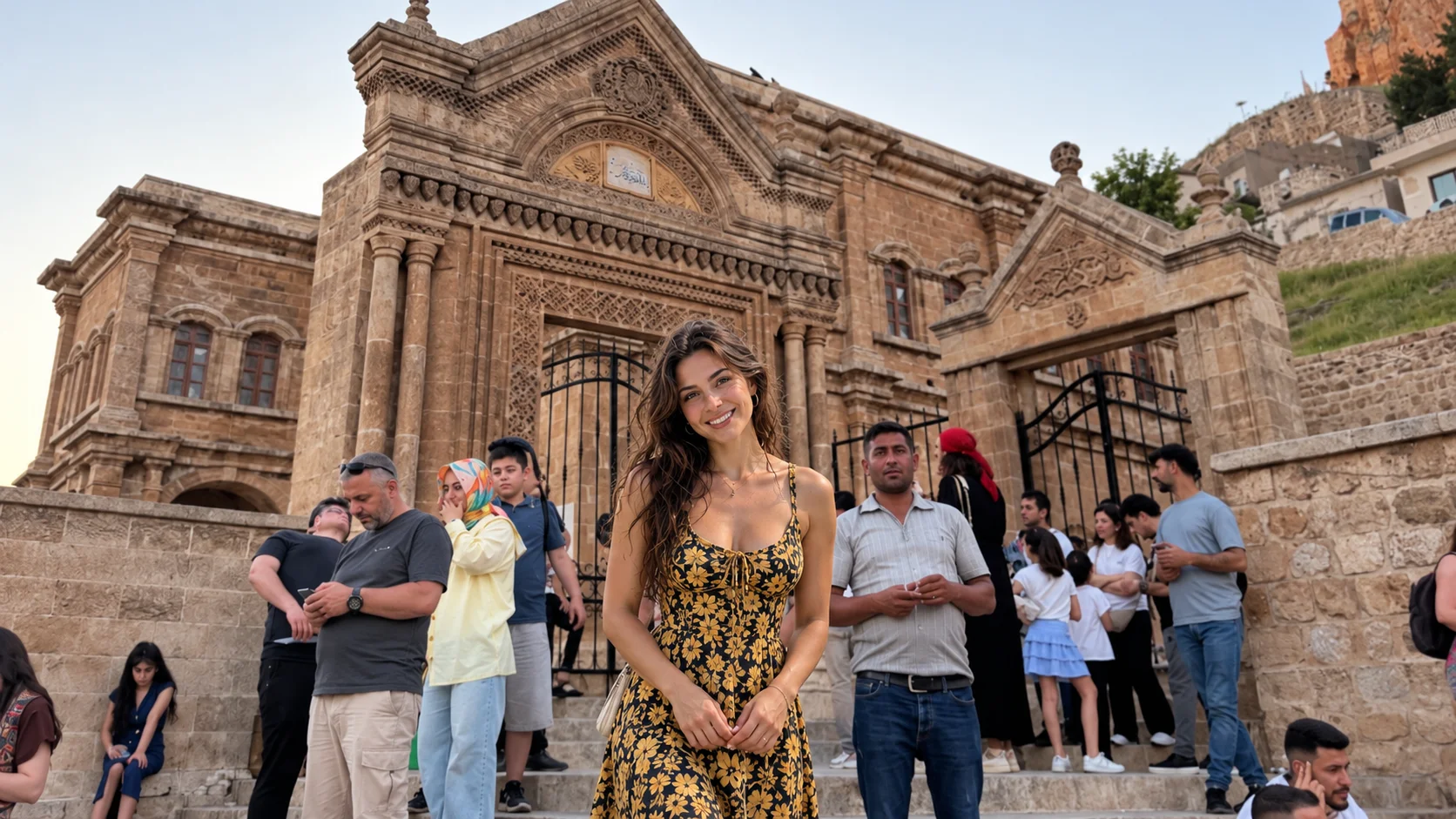
Route Facts Before the First Kilometre
| Item | Detail |
|---|---|
| Geography | Adana, Mersin: Mediterranean. Şanlıurfa, Diyarbakır, Mardin, Kilis: Southeast. The title “Eastern Anatolia” does not fit this spine |
| Logical order | Istanbul → Adana → Mersin → Şanlıurfa → Diyarbakır → Mardin (Deyrulzafaran, Dara) → Midyat (Mor Gabriel) → optional Beyazsu spur → Viranşehir on the way west → Kilis → split the return to Istanbul |
| Why Viranşehir moves | It sits on the Şanlıurfa–Mardin road, south of the direct Şanlıurfa–Diyarbakır leg. Stopping there before Diyarbakır is a dogleg. Westbound, after Mardin, it is an honest short stop |
| Left off the spine | Gaziantep city, Nemrut, Halfeti, Hasankeyf. The motorway may cross Gaziantep province; that is a corridor, not a city day |
| Heat and holidays | Şanlıurfa summer afternoons are harsh. Open archaeological sites at opening time; use Balıklıgöl and Mardin lanes in the evening. Bayram traffic and Mardin/Urfa beds tighten — book before leaving Istanbul |
| Driving windows | Private-car ranges below assume a dry day outside peak bayram queues. Recheck navigation on the morning you leave |
| Wider Türkiye | Turkey travel guide |
Which Region Is This Stop In?
Use the province and the region together. A southeast filename does not pull Adana into Eastern Anatolia.
| Place | Province | Region on this trip | How to use it |
|---|---|---|---|
| Adana centre, Taşköprü, Seyhan | Adana | Mediterranean | First city after Istanbul |
| Mersin marina and centre | Mersin | Mediterranean | Half day to one night |
| Soli-Pompeiopolis | Mersin (Mezitli) | Mediterranean | Near the city, still a separate stop |
| Kızkalesi, Kanlıdivane, Cennet–Cehennem | Mersin (Erdemli / Silifke) | Mediterranean coast | West of the centre; a coast day, not a marina add-on |
| Şanlıurfa old city, Balıklıgöl | Şanlıurfa | Southeast | Base for evenings and the museum |
| Göbeklitepe | Şanlıurfa | Southeast | Morning trip, about 18–25 km northeast |
| Karahantepe | Şanlıurfa (Tek Tek Mountains) | Southeast | About 55 km out; only if open that day |
| Viranşehir, Çemdinkale | Şanlıurfa | Southeast | Transit stop, not a destination night |
| Diyarbakır Suriçi, Hevsel | Diyarbakır | Southeast | One full day inside the walls and gardens |
| Old Mardin, Deyrulzafaran, Dara | Mardin (Artuklu for the monastery and Dara) | Southeast | Needs at least one night, two if Dara is included |
| Midyat, Mor Gabriel | Mardin | Southeast | Separate from Deyrulzafaran |
| Beyazsu, Nusaybin | Mardin | Southeast, toward the border | Spur from the Midyat road; easy to skip |
| Kilis centre, Oylum Höyük | Kilis | Southeast border province | Westbound add-on, not a Mardin suburb |
| Gaziantep, Nemrut | Gaziantep / Adıyaman | Elsewhere | Not programmed on this spine |
Stop, Must-See, Time, Reason, Next Leg
Distances are typical private-car windows, not a promise. Bayram Fridays and summer holiday Saturdays stretch the Istanbul–Adana and Adana–Şanlıurfa legs first.
| Stop | Must-see | Ideal time | Why stop | Next leg |
|---|---|---|---|---|
| Istanbul → Adana | Arrival only | 9.5–12 h; longer at bayram (~930–980 km) | The Mediterranean gateway. Do not sightsee Istanbul and drive the same morning | Sleep Adana |
| Adana | Taşköprü, Seyhan, Büyük Saat, Ulu Cami, Sabancı Merkez Camii | Half to full day | Roman bridge, river, Ramazanoğlu mosque, clock-tower bazaar | Mersin, 65–75 km, 1–1.25 h |
| Mersin | Marina, Atatürk Park, museum; coast castles only if you trade the centre | Half day in town, or a full coast day | Mediterranean pause before the inland heat | Şanlıurfa via Adana and the Osmaniye corridor, 6.5–8.5 h |
| Şanlıurfa | Göbeklitepe at opening; Balıklıgöl after the heat drops | Two nights if both the site and the old city matter | Pre-Pottery Neolithic enclosures plus the pilgrimage pools | Diyarbakır, 175–190 km, 2–2.75 h |
| Diyarbakır | Walls, Hevsel, Ulu Cami, Ten-Eyed Bridge | One full day | World Heritage fortress and gardens — use the full name | Mardin, 90–100 km, 1.25–1.75 h |
| Mardin | Old stone lanes, Deyrulzafaran, Dara if a second block exists | One night minimum; two if Dara is included | Limestone city and a working Syriac Orthodox monastery | Midyat, 60–70 km, 1–1.25 h |
| Midyat | Old quarter, silver bazaar, Mor Gabriel | One day | Tur Abdin stone town. Mor Gabriel is not Deyrulzafaran | Optional Nusaybin spur ~1 h, then west |
| Viranşehir | Çemdinkale only | 30–60 min | Modest remains on a logical westbound road | Toward Kilis, often 3–4.5 h via the Şanlıurfa side |
| Kilis | Centre mosques and mansions; Oylum only if open | Half day, overnight if you would otherwise drive after dark | Border-province stop with an active mound, not a theme park | Istanbul is 12–14 h — split the return |
Adana: The Seyhan Crossing, Not a Southeast Suburb
Adana is the first real stop because the Istanbul drive ends here, on the Çukurova plain. Give the river and the historic commercial core a calm morning, then decide whether Mersin is an afternoon or a separate night.
- Taşköprü: A Roman bridge over the Seyhan. Kulturportalı records a Hadrian tradition and also Pompeius/Augustus opinions, and places the build in the 4th century, when imperial roads mattered. Later repairs are tied to Harun al-Rashid, al-Ma'mun, Ahmed III, Kel Hasan Pasha and Governor Ziya Pasha. Today it is about 300 m long, with 14 arches and five flood openings. After the mid-2000s restoration it is for people on foot and bicycles; cars use the other Seyhan bridges. Local slogans call it one of the oldest bridges still walked — treat the superlative as a civic phrase. Street trading sometimes crowds the deck.
- Seyhan banks and Merkez Park: The river is the orientation line for the mosque, the bridge and the newer park. Walk it in the evening after the drive, when the stone has cooled.
- Sabancı Merkez Camii: Opened in 1998, designed by Necip Dinç, with six minarets and room for about 28,000 people. It is a contemporary congregational mosque in an Ottoman manner, not a historic Ottoman foundation. It stands on the west bank and reads across the river.
- Büyük Saat and Kazancılar Çarşısı: The clock tower was completed in 1882 under Governor Abidin Pasha and rises a little over 30 m. It anchors the old commercial streets, including the coppersmiths’ bazaar. Skip rankings that call it the tallest tower in the country.
- Ulu Cami: The Ramazanoğlu congregational mosque, early 16th century, is the historic prayer hall to pair with the 1998 mosque — different centuries, different purposes.
- Tepebağ: The older house quarter above the river. Use it for street texture, not as a museum district with guaranteed interiors.
Time: a focused half-day covers bridge, clock, Ulu Cami and one food stop. A full day adds Tepebağ and the archaeology museum. Tip: cross Taşköprü on foot in the morning before vendors and heat build, and read prices on the menu for Adana kebab, şalgam, bici bici and halka tatlı.
Mersin: Waterfront Hours, Coast Days Kept Separate
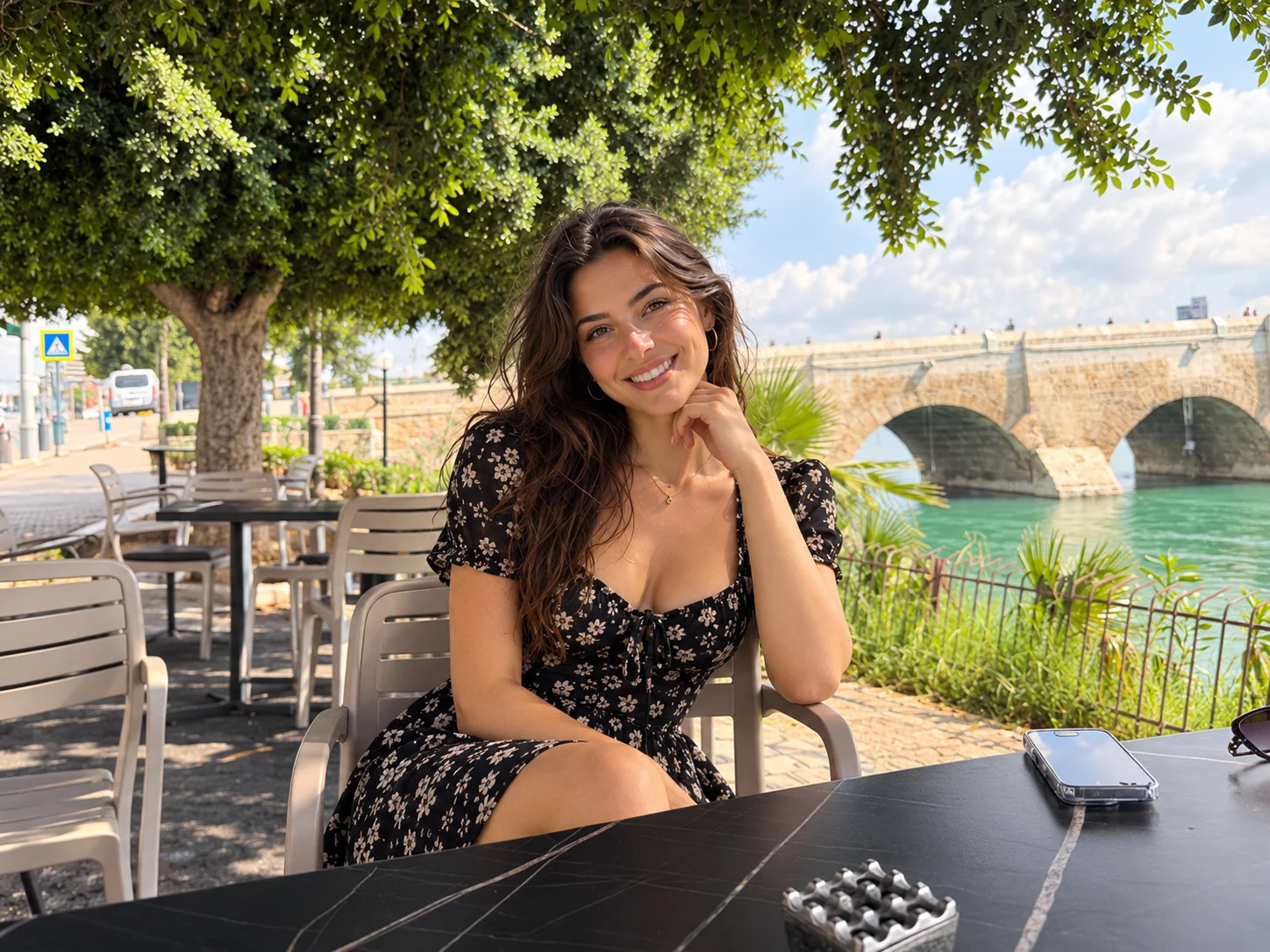
Mersin is an hour from Adana and still on the Mediterranean. The centre rewards a waterfront walk. The famous castles and sinkholes sit well west and consume the day you thought you had saved for Şanlıurfa.
- Marina and the waterfront: The working pleasure harbour and promenade are the evening picture of the city. Use them after Adana’s heat, not as a substitute for the inland cities.
- Atatürk Park: The long shore park beside the marina. It is a stroll and a breeze, with café terraces, not an archaeological site.
- Mersin Archaeology Museum: The city museum if you want objects before the long drive east. Check the door that morning; do not assume it shares hours with the marina.
- Soli-Pompeiopolis: In Mezitli, on the order of 15 km west. Columns of the Roman harbour city can fit a short extension of a centre day. It is not inside the marina.
- Kızkalesi and Kanlıdivane: Erdemli coast, roughly 50–60 km and the best part of an hour west. Sea castle and a cult sinkhole. Choose them instead of a hurried centre, or give them their own day.
- Cennet and Cehennem: The Heaven and Hell chasms near Silifke are farther again, often 70–80 km from Mersin. Pair them with Kızkalesi only on a dedicated coast day.
Time: a few hours cover marina, park and, if open, the museum. A full day is the coast trio, not “the marina plus Kızkalesi.” Tip: eat Mersin tantuni — mahreç indication no. 211 — near the centre, and look for cezerye and kerebiç as local sweets without treating every shop sign as a registered product.
Şanlıurfa: Göbeklitepe in the Morning, Balıklıgöl After the Heat
The southeast leg starts when you leave the Çukurova motorway for Şanlıurfa, a drive of about 6.5–8.5 hours from Mersin via Adana. The road can pass through Gaziantep province. This plan does not add a Gaziantep city stop. In July and August, put the exposed sites first and the sacred pools last.
Göbeklitepe
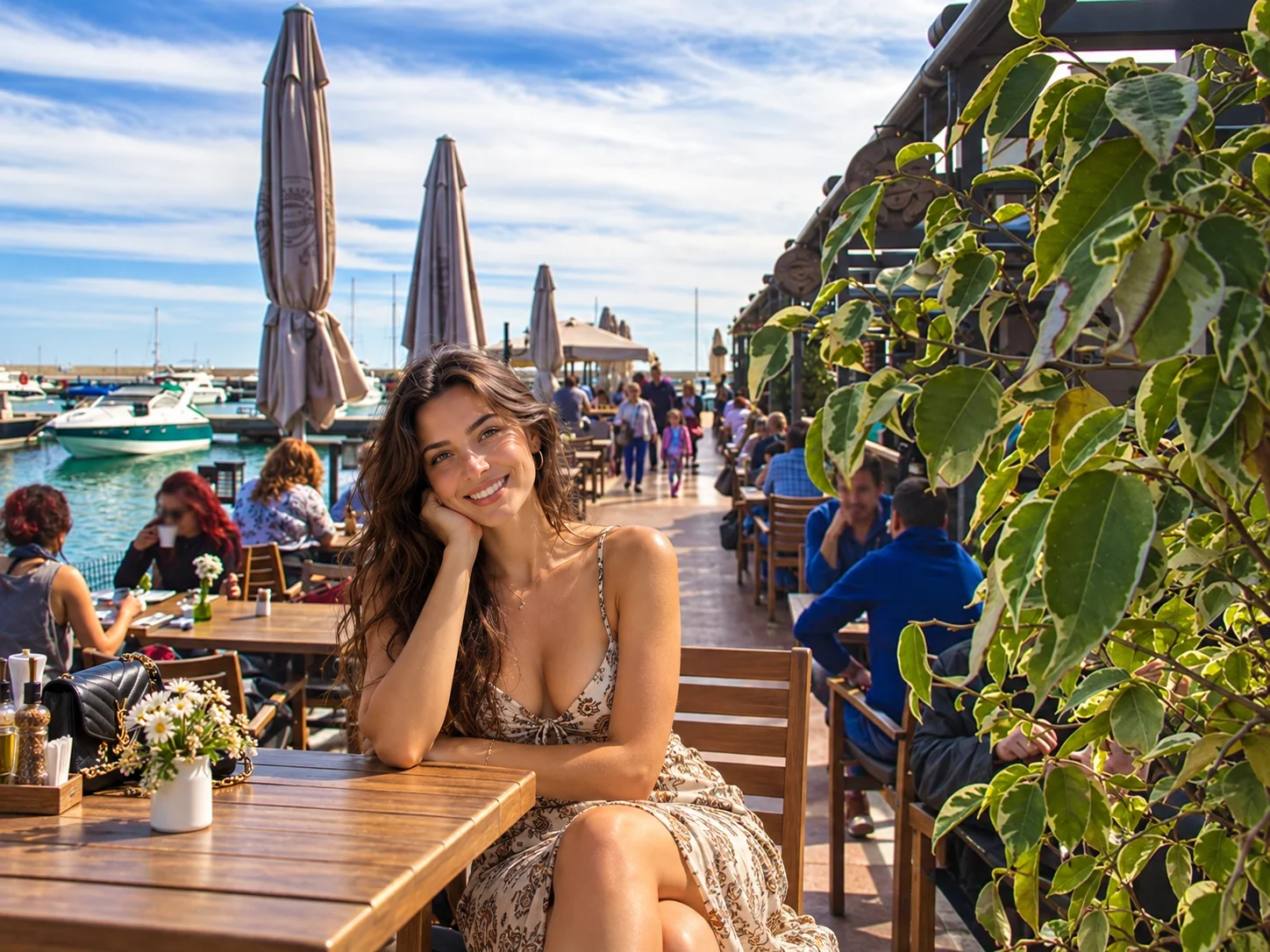
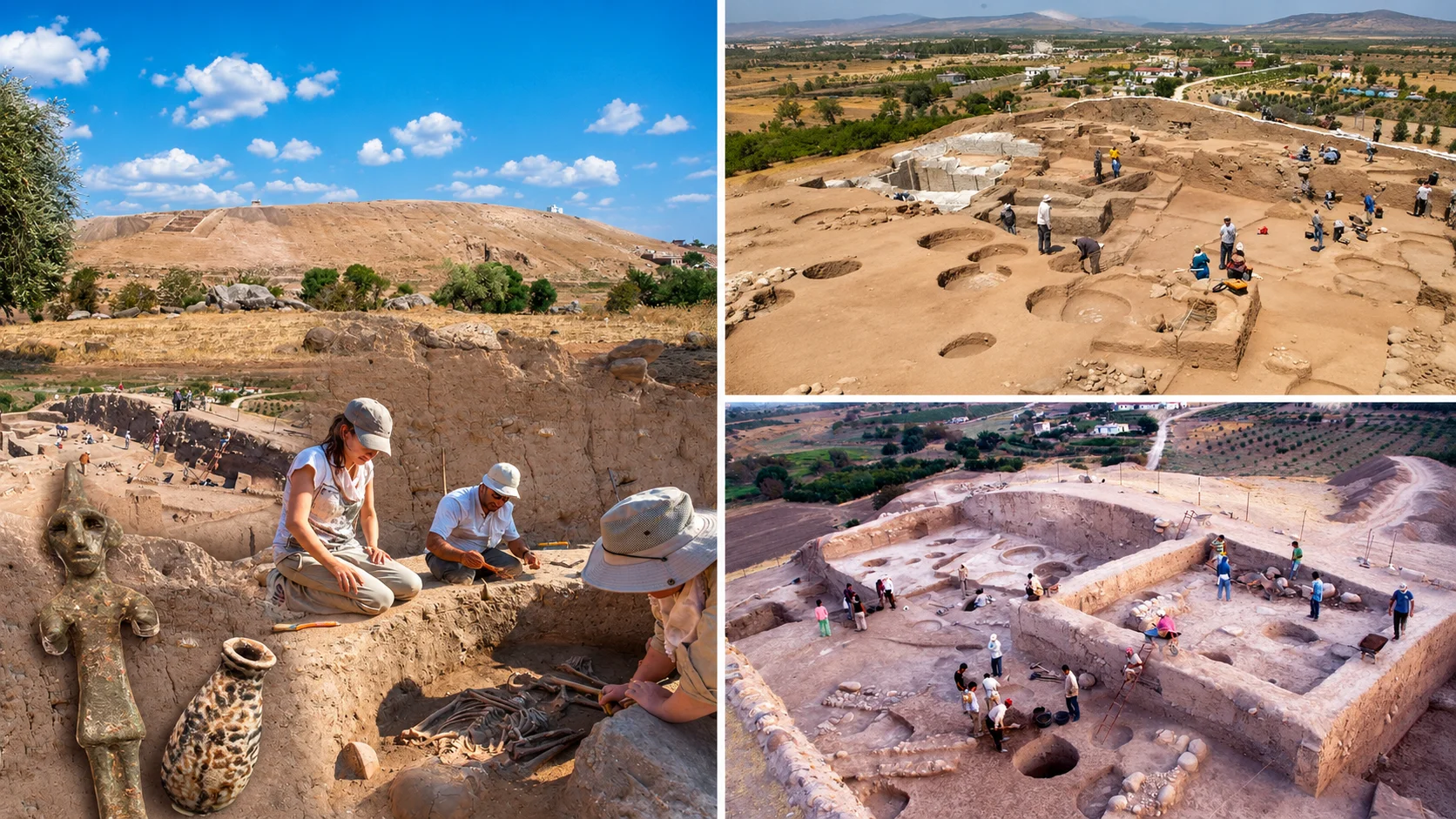
Göbeklitepe is a World Heritage property (dossier 1572, inscribed 2018, criteria i, ii and iv). The enclosures belong to the Pre-Pottery Neolithic, with monumental T-shaped limestone pillars carved from the local plateau. UNESCO’s statement ties them to communities living through the shift from hunting and gathering toward early farming, and to building techniques that spread at other early Neolithic sites. Researchers discuss the buildings as communal ritual places; the exact use is still interpreted, not settled by a slogan. Do not call it “the world’s oldest temple,” and do not use an unqualified “12,000-year worship site.” A long research line runs from 1960s surveys through Klaus Schmidt’s excavations from the mid-1990s. Many pillars were deliberately buried in antiquity — that is part of the current reading of the layers, which cover a long building sequence.
The visitor centre sits before the monuments. A shuttle is part of the usual entry pattern; walking the path of about a kilometre is the alternative. Stay on the wooden route under the canopy. You do not climb into the enclosures. Published hours often run 08:30–19:00 in the summer season and close earlier in winter, with the ticket desk shutting before the gate, and a later opening on the first day of a religious holiday. Recheck muze.gov.tr for your date. MüzeKart rules and any euro tariff change; this guide does not print a price. The Şanlıurfa Archaeology Museum is a separate ticket.
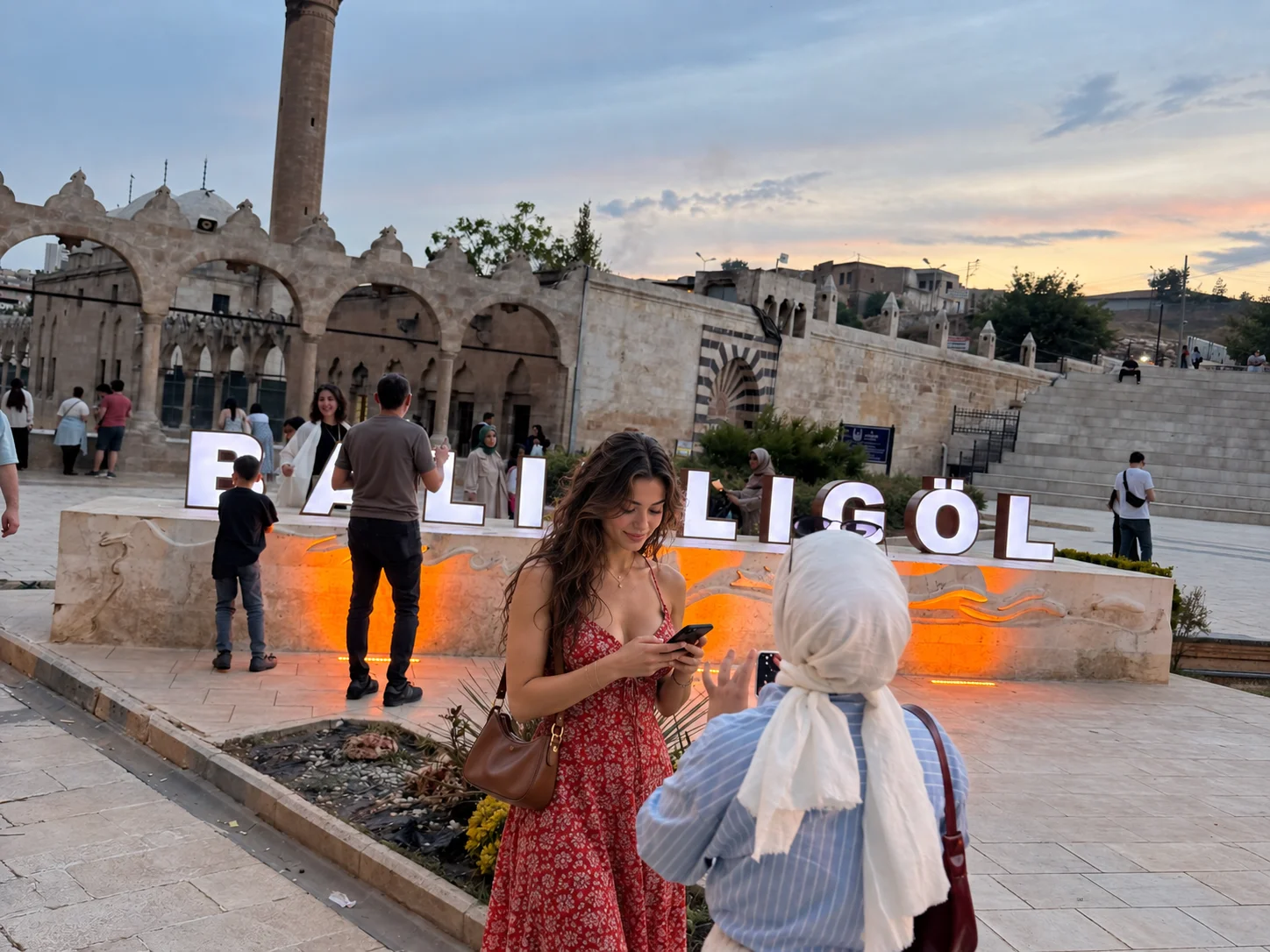
Old city after the site
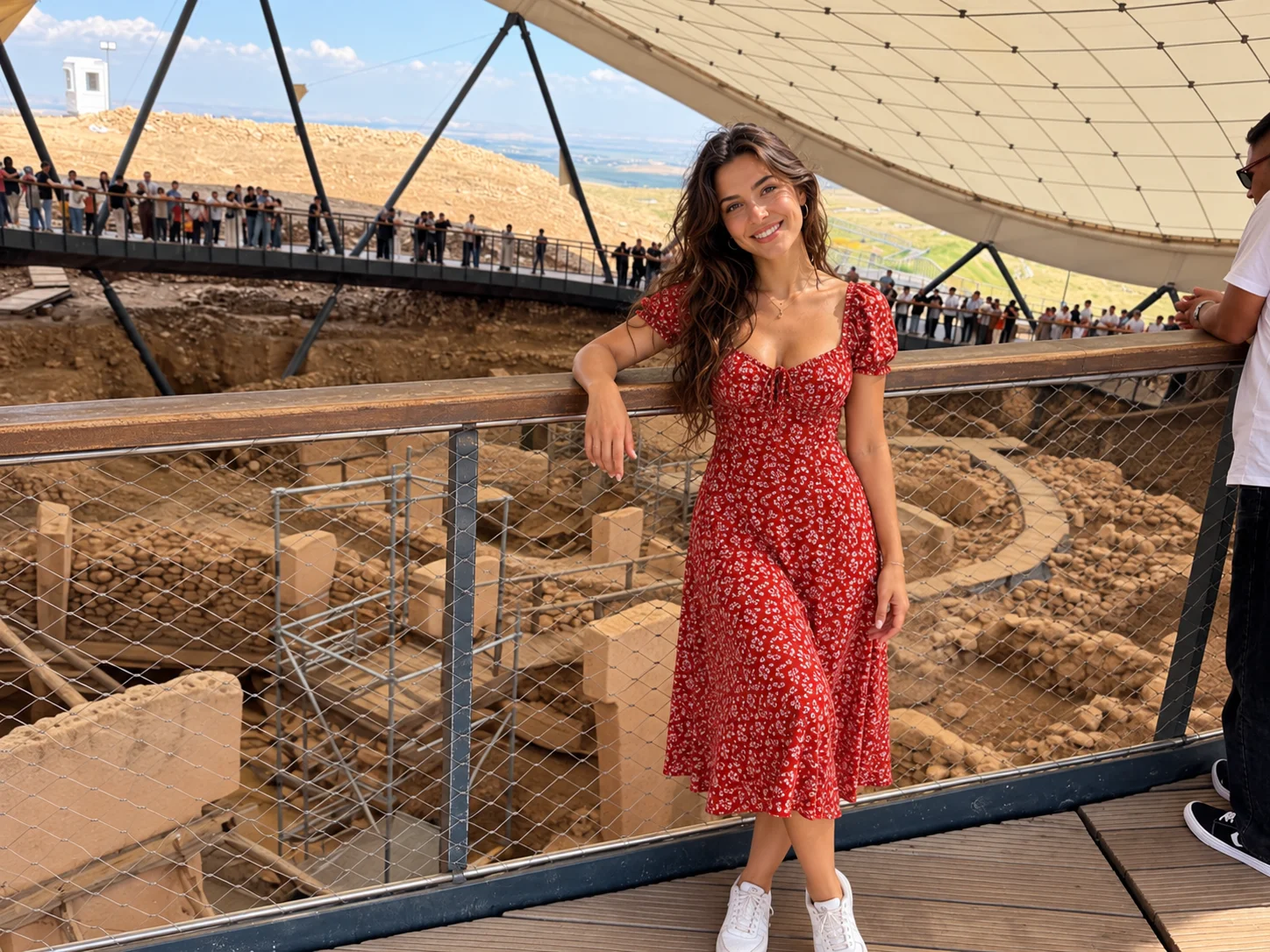
- Balıklıgöl, Halil-ür Rahman and Aynzeliha: The paired pools and mosques of the old pilgrimage quarter. Sacred carp are the local tradition attached to Abraham. Walk it when the stone cools. Dress modestly around worshippers.
- Rizvaniye Mosque: The 18th-century mosque on the pool edge. It is part of the same evening circuit, not a separate day.
- Urfa Castle: The citadel above the pools. Climb only if the stair is open and the heat is tolerable; the view explains the city better than a midday summit.
- Gümrük Hanı and the bazaar: The customs han and the covered commercial streets for coffee, cloth and isot. They suit the hour before dinner.
- Archaeology Museum and Haleplibahçe mosaics: The museum at Haleplibahçe holds Göbeklitepe material and the mosaic collection, including floors from the Haleplibahçe villas. Give it indoor time in the hot middle of the day if you have already done the mound.
- Karahantepe: A different Taş Tepeler site about 55 km from the centre, inside Tek Tek Mountains National Park, not a second gate at Göbeklitepe. The museum portal has listed it with daytime hours, while excavation seasons have kept access uneven. Go only after that morning’s notice on muze.gov.tr, and only by trading away bazaar time.
Time: two nights. Morning one is Göbeklitepe; the hot middle is the museum; the evening is Balıklıgöl. Tip: carry water for the plateau, and keep a scarf or light layer for mosque courtyards even in August.
Viranşehir: A Short, Honest Stop on the Westbound Road
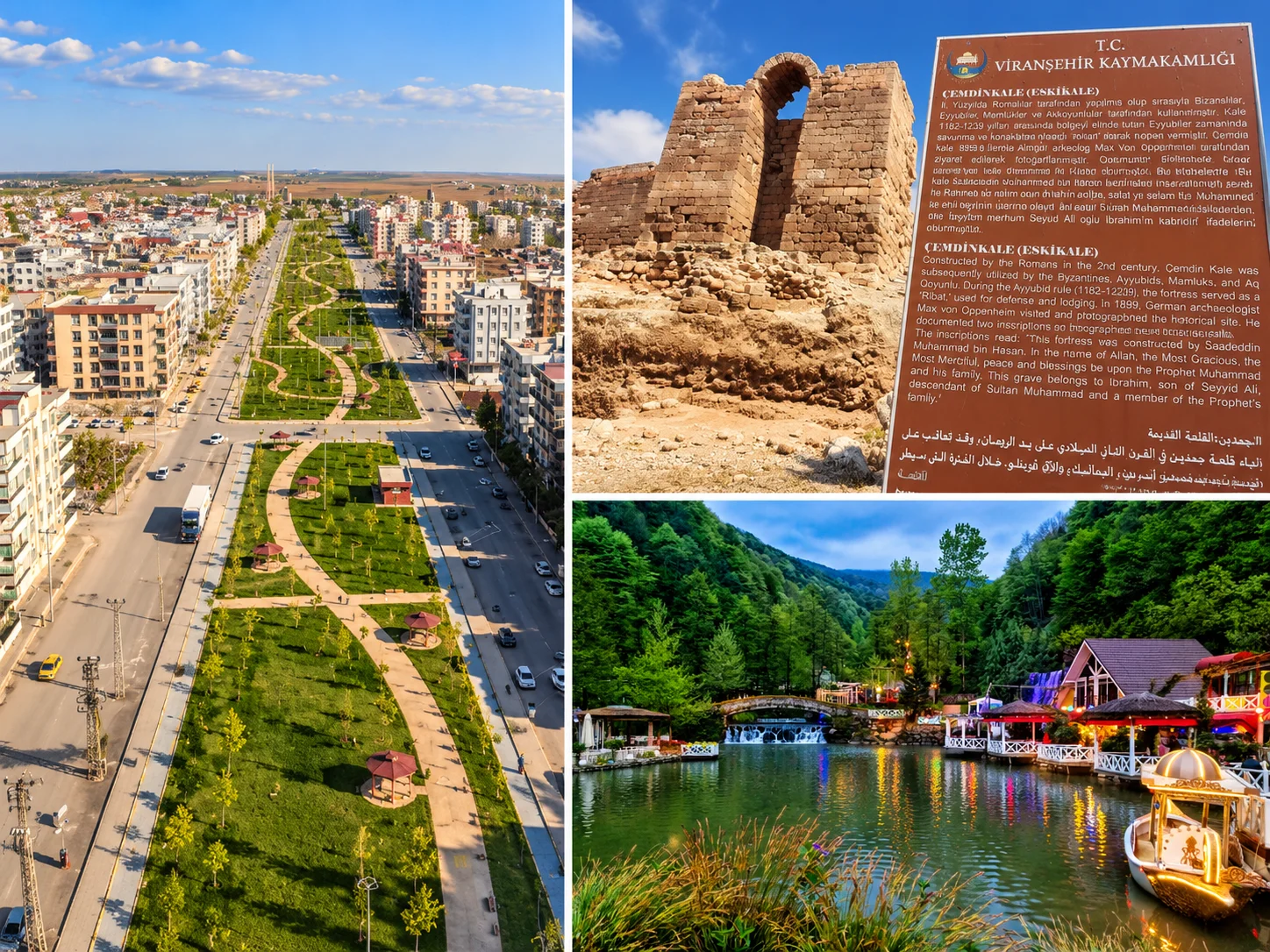
Viranşehir is a district of Şanlıurfa on the road toward Mardin, not a second Şanlıurfa and not a reason to redraw Diyarbakır. Inserting it between Şanlıurfa and Diyarbakır pulls you south and then north again. After Mardin, on the way toward Kilis or back toward Şanlıurfa, a half hour is enough.
- Çemdinkale (Eski Kale): The supplied frame includes a district-governorate board for this ruined fortification. The board dates a Roman phase to the 2nd century and notes later Byzantine, Ayyubid, Mamluk and Aq Qoyunlu use, a ribat role, and a visit by Max von Oppenheim in 1899. What you can walk is modest wall fabric and an arch. Believe the masonry in front of you, not a rebuilt citadel.
- Eyyüp Nebi tradition: Local pilgrimage memory links a visitation place with the prophet Job. Treat that as living religious geography, not as an excavated proof. Ask whether the site is open to visitors that day.
- The modern boulevard: The same image file also shows a planted median in the new town and a lit waterfront panel. Those frames are town atmosphere. They are not three extra monuments.
Time: 30–60 minutes. Tip: do not overnight here unless every Mardin and Şanlıurfa bed on your dates is actually full. The stop does not grow into a second old city.
Diyarbakır: Fortress and Hevsel Gardens, Named in Full
The property inscribed in 2015 is Diyarbakır Fortress and Hevsel Gardens Cultural Landscape (dossier 1488, criterion iv). UNESCO describes about 5.8 km of walls with towers, gates and 63 inscriptions, the İçkale and Amida mound, the Hevsel Gardens between the rock and the Tigris, the Anzele spring and the Ten-Eyed Bridge. The walls show Roman fabric plus many later repairs. Saying “Diyarbakır is a UNESCO city” is looser than the listing.
- Suriçi: The walled core. Stay inside the walls if you want dawn light on the basalt. The newer Yenişehir and Kayapınar districts are easier for a large car and a flat night. This guide does not rank hotels.
- Ulu Cami: Tradition places a congregational mosque here in 639, reusing a church. The building you enter has been rebuilt after fires and earthquakes many times. Call it one of Anatolia’s oldest mosque sites, and say the standing fabric is layered.
- İçkale: The inner castle and mound, inside the World Heritage boundary. It is the high point of the fortress story, subject to whatever courtyard is open.
- Keçi Burcu: The great bastion near Mardin Gate, with a view toward Hevsel. Through 2026, local reporting still described scaffolding, a restoration dispute and uncertain public access. Walk the open wall sections. Do not promise the tower terrace on a fixed hour.
- On Gözlü Köprü: The Ten-Eyed Bridge over the Tigris is named in the World Heritage text. See it from the bank or the deck if traffic and works allow; UNESCO has also asked Türkiye to watch the bridge’s setting.
- Hasan Paşa Hanı: A 16th-century commercial courtyard, now cafés. It is a pause in the bazaar, not a ticketed museum.
- Dört Ayaklı Minare: The four-legged minaret of the Sheikh Mutahhar Mosque. A short, specific stop in Suriçi.
- Churches: Surp Giragos and the Syriac Meryem Ana are the names to ask for. Access has changed with restoration since the mid-2010s. If a door is shut, leave it shut.
Time: one full day from a Suriçi or new-centre night. Tip: Hevsel is gardens and river, best in the morning light from an open wall, not a picnic lawn you invent. Food to ask for: liver, kaburga dolması, meftune, burma kadayıf — order what the kitchen is actually cooking.
Mardin: Limestone Lanes, Then the Monastery and Dara
Old Mardin steps down a rocky hill in honey-coloured limestone. Most of what you walk is medieval and Ottoman masonry, repaired and lived in. It is not true that every house is thousands of years old. Mardin Cultural Landscape has been on UNESCO’s Tentative List since 25 February 2000 (dossier 1406, criteria ii, iii, iv). Tentative means a state party may nominate later. It does not mean World Heritage. A nomination round in the early 2000s was not inscribed. Do not write “UNESCO city.”
- Zinciriye and Kasımiye medreses: The two madrasas that structure a first walk, with views over the Mesopotamian plain. Kasımiye’s water channel is part of the building, not a separate nature site.
- Ulu Cami, Şehidiye and Latifiye: The congregational mosque and the minarets that punctuate the slope. You can see the skyline without entering every prayer hall.
- Forty Martyrs (Kırklar): The Syriac church in the old city. Confirm the visiting hour; liturgy comes before tourism.
- Bazaar and viewpoints: Telkari-style silver appears here too, with a larger filigree reputation in Midyat. Terraces at the end of lanes are the sunset, once the stone has given up the day’s heat.
- Where to sleep: The old city is the walk you came for, on steep lanes. Yenişehir, on the plain, is where parking and a flatter night are simpler. Book either before a summer or bayram weekend.
Time: one full day for the old city alone. Tip: start at the top of the slope and walk down. Eat sembusek, ikbebet (kibbeh), kaburga and, in season, alluciye — regional dishes, not automatic geographical indications.
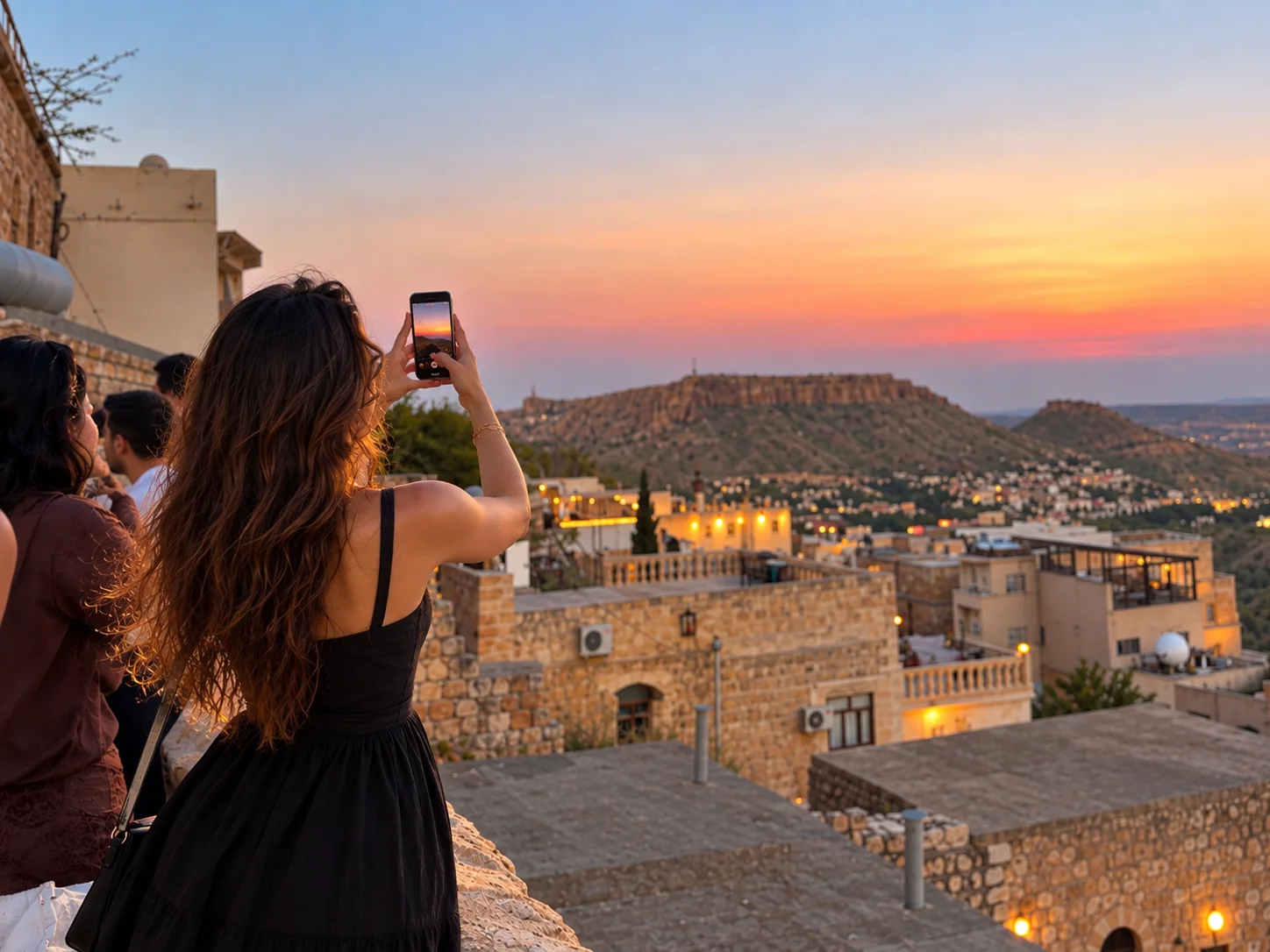
Deyrulzafaran, east of the city
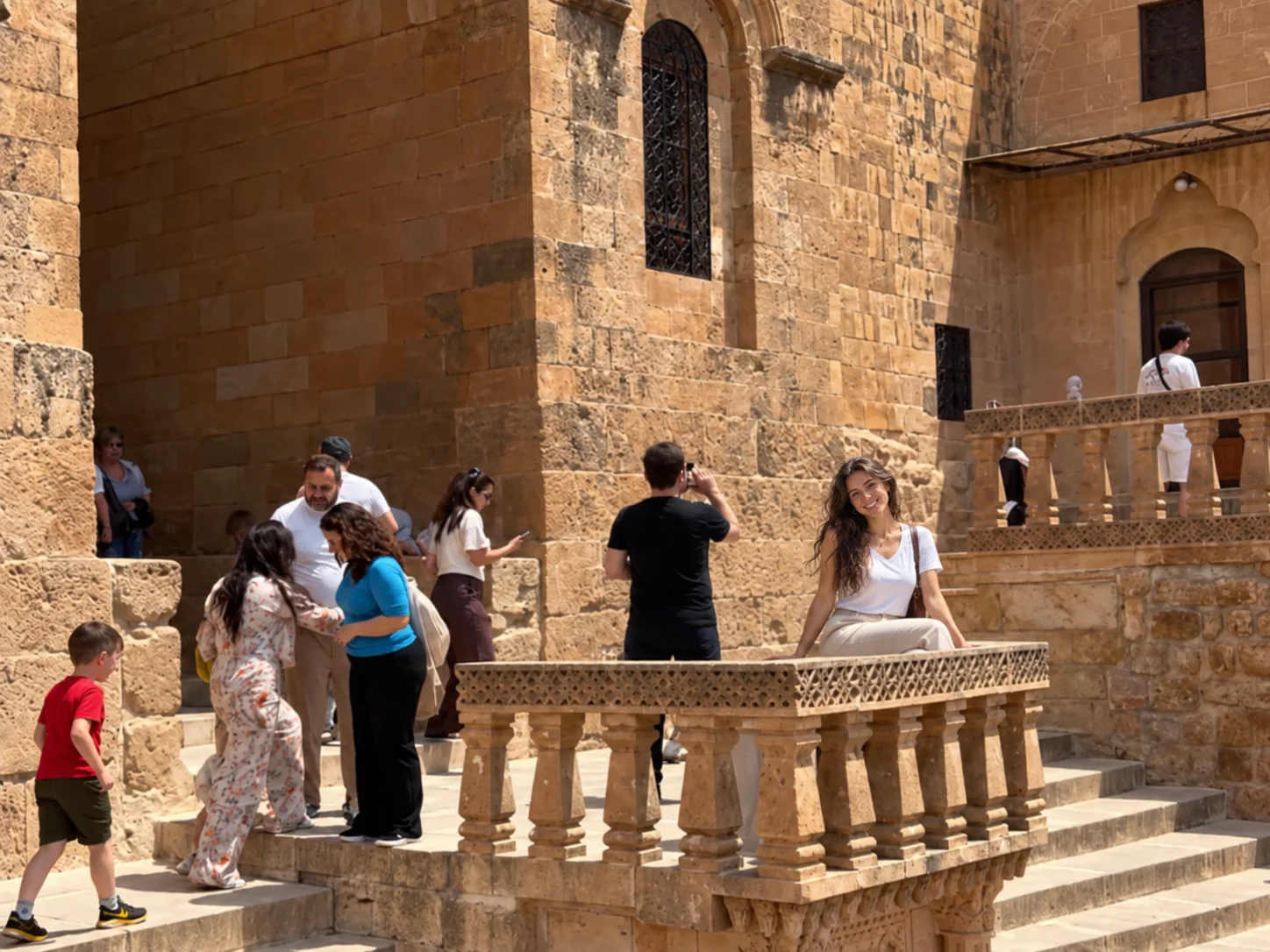
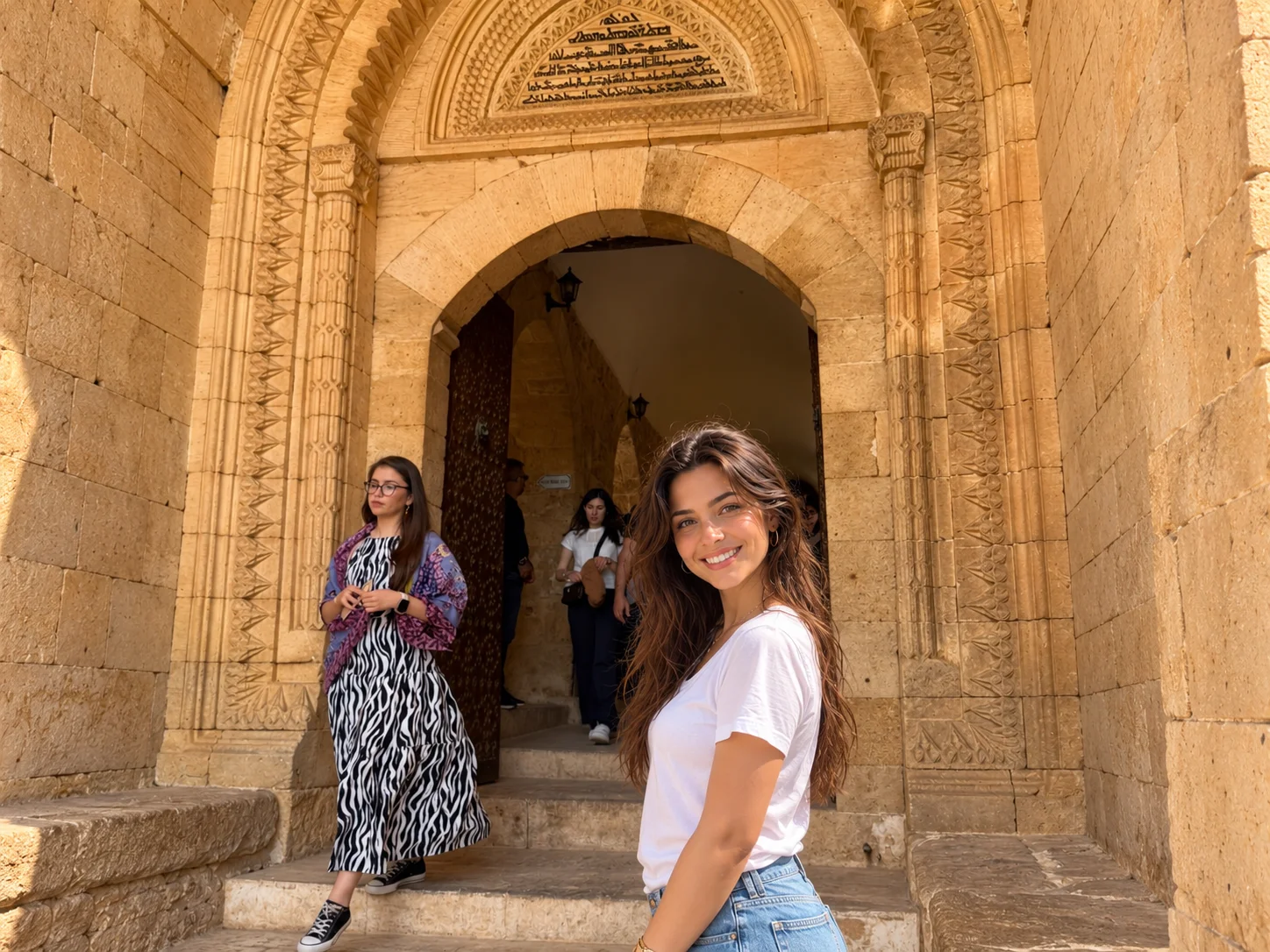
Deyrulzafaran (the Saffron Monastery) is a working Syriac Orthodox monastery about 5–8 km east of Mardin, a 15–25 minute drive. The UNESCO Tur Abdin tentative text dates the church and burial chamber to the 6th century and records the monastery as the seat of the Syriac Orthodox patriarch from 1293 to 1932. It remains a place of worship. Shoulders and knees covered, quiet in the sanctuaries, and no drone are the standing expectations; some rooms close during services. A lower chamber is often sold as a “sun temple.” Keep that as a visitor nickname unless a guide on duty presents evidence. The monastery also appears inside Tentative dossier 6534 (15 April 2021), the serial file Late Antique and Medieval Churches and Monasteries of Midyat and Surrounding Area (Tur ʿAbdin), together with Mor Gabriel — as two components, not one building. The 1406 Mardin text mentions it as well. None of that is an inscription.
Dara, in Artuklu
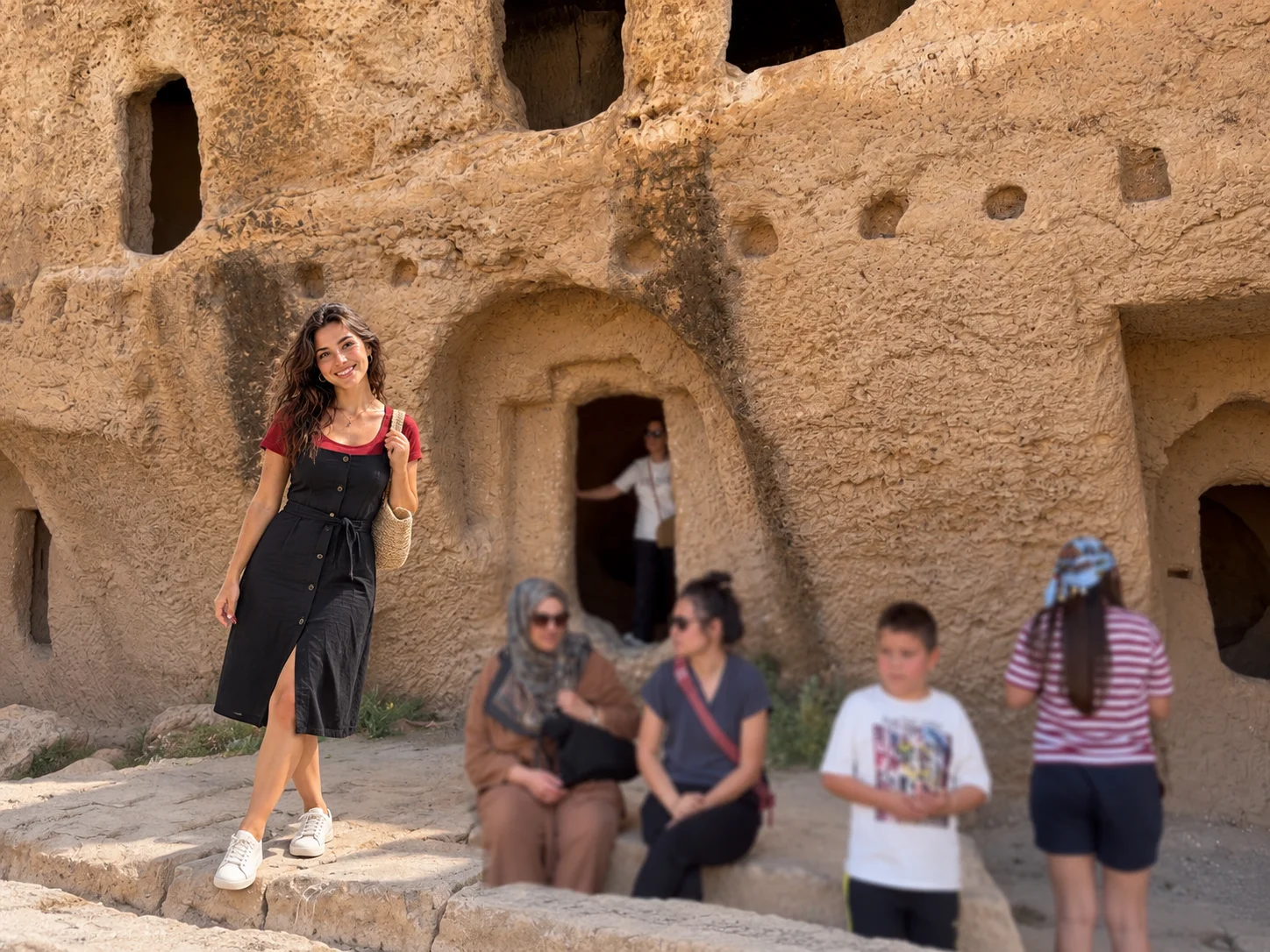
Dara (later Anastasiopolis) is in Mardin’s Artuklu district, about 30 km southeast of the city, 35–50 minutes. Anastasius founded it in the early 6th century as a Roman frontier city against Sasanian Persia; Justinian strengthened it. You come for cisterns, a rock-cut necropolis, wall lines and the scale of a late antique garrison town. It is not “Mardin’s Ephesus.” That comparison is a slogan. Dara is not on the World Heritage List and was not on Türkiye’s Tentative List in the 2026 UNESCO inventory checked for this guide. Excavation leaders have spoken about hoping to nominate it; hope is not a listing.
Time: a morning from Mardin, before midday heat in the quarries. Tip: hat, water, and shoes that accept dust. Combine it with a Mardin night, not with a Midyat departure the same hour.
Midyat and Mor Gabriel, Which Is Not Deyrulzafaran
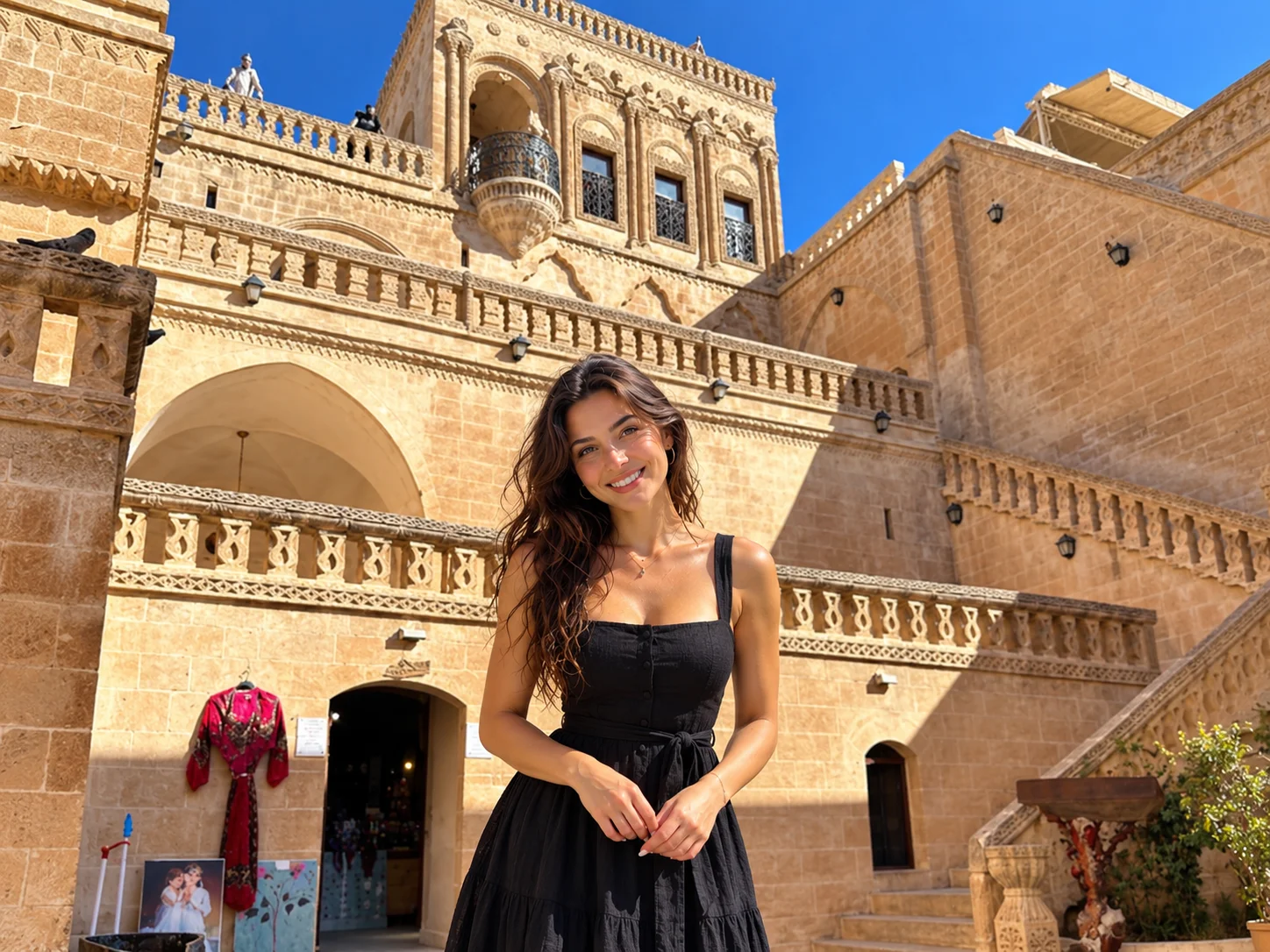
Midyat is about an hour east of Mardin, still in Mardin province, in the limestone country known as Tur Abdin. The old quarter (often called Estel) is a tighter, quieter stone town than Mardin’s citadel slope. The newer centre is where cars move more easily. Sleep in the old quarter only if the house is actually licensed for guests; there is no single official guesthouse this guide will send you to.
- Old streets and viewpoints: Carved façades, courtyards and a slower bazaar. Half a day on foot is the right dose.
- Telkari: Midyat’s silver filigree. Ask for the hallmark. A low price without a fineness stamp is a reason to leave the piece.
- Mor Gabriel (Deyrulumur): About 18–25 km from Midyat, 30–45 minutes, traditionally linked to a foundation in 397, with the main church largely 6th century. The Tur Abdin tentative file notes opus sectile, wall mosaics and a Greek inscription, and calls the church the largest of its transverse type in the region. It is an active Syriac Orthodox monastery with its own visiting rules and dress code. It is not Deyrulzafaran, which stays beside Mardin. Both are components of Tentative List 6534 (2021). Neither is World Heritage.
Time: one day for the town plus the monastery, if you leave Mardin in the morning. Tip: confirm Mor Gabriel’s visitor window before you drive out; services override casual entry.
Beyazsu and Nusaybin, only if they are already your road
Beyazsu is a spring-fed stream and picnic stretch on the Midyat–Nusaybin road, not a square in Mardin. Nusaybin (ancient Nisibis) is a border city. The Mor Yakup church is the historic name associated with the school of Nisibis; whether the gate is open changes, and the surrounding streets are a working border town. If you go, stay on ordinary public roads, do not approach restricted strips, and do not treat a closed church as a problem to solve. When the day is already full with Mor Gabriel, skip this spur. It adds about an hour each way and little that the monasteries have not already explained.
Kilis on the Way West, With Oylum Höyük Kept Honest
Kilis is its own province south of Gaziantep, near the Syrian border. It is not a neighbourhood of Mardin, and it is not Mediterranean Adana. Reaching it after Midyat means a long westbound afternoon, often via the Şanlıurfa side and a corridor that again touches Gaziantep province without requiring a Gaziantep visit. Overnight in Kilis if that drive would end in the dark. Otherwise see the centre and leave.
- Oylum Höyük: About 7 km east-southeast of Kilis, beside Oylum village on the Gaziantep road. Kulturportalı describes one of the larger mounds in the southeast: two summits, roughly 22 m and 37 m, a base on the order of 460 by 320–370 m, and occupation from the Late Chalcolithic through the Bronze Age, with Hittite-related finds and later layers. Excavations have run since the late 1980s; olive pits from a palace context are part of the published story. Finds are shown at the Kilis Museum. In February 2026 the governorate reported landscaping that opened the mound and the nearby Aidesim mosaic basilica to visitors, while digging continues. An active excavation is not a finished open-air museum. Recheck the gate the day you go; do not climb open trenches.
- Canbolat Paşa Mosque and the Tekke Mosque: The Ottoman centre pair for a short walking loop among stone houses.
- Mansions: A handful of restored konaks show the border-town stone architecture. Enter only the ones that are publicly open.
- Ravanda Castle: North of the city, on a rough approach. Include it only when the road is open and you have daylight to spare. It is not required for an honest Kilis stop.
Time: a half day for centre plus mound, if the mound is open. Tip: eat Kilis tava, registered on 2 February 2022, with pide and ayran. The return to Istanbul from here is a 12–14 hour proposition — sleep once more on the way, often back in Adana, rather than turning a mound visit into a night drive.
City, What to Try, Why It Matters
Geographical indications below are the ones checked on TÜRKPATENT records for this guide. Other dishes are regional kitchen, not a badge.
| City | What to try | Why it matters |
|---|---|---|
| Adana | Adana kebabı; Adana şalgamı; bici bici; halka tatlı | Kebab is mahreç 65 (2004). Şalgam is mahreç 489 (2020) and has also been announced as an EU geographical indication. Bici bici — starch jelly, ice, grape molasses — and ring-shaped halka tatlı are local sweets; read the menu, because café prices move |
| Mersin | Mersin tantunisi; cezerye; kerebiç | Tantuni is mahreç 211, built on fatty veal rib and cottonseed oil, served with lemon or bitter orange. Cezerye and kerebiç are the sweets to ask for by their local names |
| Şanlıurfa | Urfa kebap; ciğer; Şanlıurfa çiğ köfte; isot; şıllık; lebeni | Çiğ köfte is mahreç 109 (2009). İsot is the local handling of Şanlıurfa pepper, menşe 33 (Şanlıurfa Biberi, 2002). Urfa kebap is the milder minced sibling of Adana, not the same plate. Liver, şıllık dessert and lebeni soup fill out a real meal |
| Diyarbakır | Ciğer; kaburga dolması; meftune; burma kadayıf | Liver and stuffed rib are the city’s table. Meftune is a vegetable-and-meat pot; burma kadayıf is the pastry. None of these four is printed here as a registration number |
| Mardin | Sembusek; ikbebet; kaburga; alluciye | Stuffed fried pastry, kibbeh, rib and a plum stew when fruit is in. Shared Mesopotamian kitchen with Midyat — eat them in the old city at lunch, not as a GI checklist |
| Kilis | Kilis tava | Registered 2 February 2022 through the Kilis chamber. Served with pide and ayran. Skip unverified “local only” dishes you cannot trace |
Seven, Nine and Eleven Days, With the Driving Left Visible
Consecutive long drives are the constraint: Istanbul–Adana, then Mersin–Şanlıurfa, then eventually Kilis–Istanbul. Heat punishes a schedule that leaves Göbeklitepe, Dara or Oylum for mid-afternoon. Holiday weekends fill old Mardin and the Balıklıgöl streets first.
| Plan | Shape | Honest omission |
|---|---|---|
| 7 days | Day 1 drive to Adana and sleep. Day 2 Adana morning, Mersin waterfront, sleep Mersin or Adana. Day 3 long drive to Şanlıurfa, Balıklıgöl only. Day 4 Göbeklitepe and the museum. Day 5 Diyarbakır walls and Hevsel. Day 6 Mardin old city and Deyrulzafaran. Day 7 is a return driving day with a rest stop, not more sightseeing | Dara, Midyat, Mor Gabriel, Viranşehir, Kilis, Kızkalesi, Karahantepe. A same-night Istanbul arrival after a Mardin morning is too long to recommend |
| 9 days | The 7-day spine, plus a second Şanlıurfa night so the museum and the pools are not crushed, a Dara morning, and one Midyat day with Mor Gabriel. The last day is still the drive home | Kilis and Nusaybin. Viranşehir only if you are already on the Mardin–Şanlıurfa road before 09:00 and accept a 30-minute castle stop before a long day in the car |
| 11 days | Two Mardin nights so Dara and Deyrulzafaran have separate mornings; Midyat and Mor Gabriel; Beyazsu only as a one-hour spur if Mor Gabriel finished early; then a westbound day with Çemdinkale and Kilis centre. Sleep in Kilis or back toward Adana. The final day is driving to Istanbul with a meal stop, and Oylum only if it was already open on the Kilis afternoon | A Kilis excavation morning plus Istanbul the same night. Gaziantep sightseeing. Nemrut. A second coast day at Cennet–Cehennem unless you drop Midyat |
Where the night sits, by city type: Adana near the Seyhan walk if you have energy left; Mersin on the waterfront only when you are not returning to Adana that night; Şanlıurfa in the historic quarter for the evening pools, or farther out if a dawn Göbeklitepe departure and parking matter more; Diyarbakır in Suriçi for the walls or in the new centre for the car; Mardin in the old stone or in Yenişehir on the plain; Midyat in the old quarter when the house is licensed; Kilis only when the westbound day would otherwise finish after dark.
World Heritage, Tentative List, or Neither
| Place | 2026 status | Reference | Say this | Leave this out |
|---|---|---|---|---|
| Göbeklitepe | World Heritage | 1572 · 2018 · (i)(ii)(iv) | Pre-Pottery Neolithic monumental enclosures with T-shaped pillars | “World’s oldest temple”; an unqualified 12,000-year worship claim |
| Diyarbakır Fortress and Hevsel Gardens Cultural Landscape | World Heritage | 1488 · 2015 · (iv) | The full property name, walls plus gardens, Tigris and Ten-Eyed Bridge | “UNESCO city” for the whole municipality; Keçi Burcu as guaranteed open |
| Mardin Cultural Landscape | Tentative List only | 1406 · submitted 25 February 2000 · (ii)(iii)(iv) | Tentative, not inscribed | “UNESCO World Heritage city” |
| Deyrulzafaran and Mor Gabriel | Separate components of one Tentative serial file | 6534 · 15 April 2021 · Tur Abdin churches and monasteries | Two active Syriac Orthodox monasteries, hours apart by road | Calling either World Heritage, or treating them as one monastery |
| Dara | Neither | Not on the List or the Tentative List checked for this guide | Early 6th-century Roman frontier city in Artuklu | Any UNESCO label; “Ephesus of the southeast” |
A Driver Moves the Car. A Guide Is a Separate Booking
Cab Istanbul is an independent chauffeur service. On a route with an Istanbul departure, a 10-hour Adana leg and a hot Şanlıurfa morning, a private driver keeps the luggage and the timing in one car. The driver is not a licensed guide, does not sell museum tickets, and is not a partner of UNESCO, any museum, or any municipality. Tickets, monastery permissions and hotel choices stay yours. Ask for a quote if you want the intercity car; bring your own site plan.
Southeast Road Trip Questions
Is this route Eastern Anatolia?
No. Eastern Anatolia is the high east — Van, Ağrı, Erzurum and their neighbours. This drive uses the Mediterranean for Adana and Mersin, then the Southeast for Şanlıurfa, Diyarbakır, Mardin, Midyat and Kilis.
Which stops are Mediterranean?
Adana and Mersin, including Soli-Pompeiopolis, Kızkalesi, Kanlıdivane and the Heaven and Hell chasms. They are not a preface you can rename as southeast.
Does the plan include Gaziantep or Mount Nemrut?
It does not. The motorway between Adana and Şanlıurfa, and again toward Kilis, can cross Gaziantep province. That is a corridor. Nemrut is an Adıyaman day and is off this spine.
How long is Istanbul to Adana?
Often 9.5–12 hours and about 930–980 km outside peak holiday queues. Bayram weekends run longer. Start early and keep the first evening free of a packed sightseeing list.
When does holiday traffic matter most?
On the Istanbul exit, the Taurus approaches into Adana, and the long Adana–Şanlıurfa day. Religious holidays and summer Saturdays are the dates to pad, and the dates when Mardin and Şanlıurfa rooms disappear first.
Can seven days include Midyat and Kilis?
Not honestly. Seven days covers Adana, a Mersin waterfront, Şanlıurfa, Diyarbakır and Mardin with Deyrulzafaran, then a driving day home. Midyat and Kilis need the nine- and eleven-day shapes.
What does a nine-day plan add?
A second night in Şanlıurfa, a morning at Dara, and a Midyat day that includes Mor Gabriel. Kilis and Nusaybin still wait.
Can day eleven be Kilis sightseeing and Istanbul the same night?
That pairing is too long. Kilis to Istanbul is often 12–14 hours before you add a mound visit. See Kilis the previous afternoon, sleep, and drive on the last day.
Where should I sleep in Diyarbakır?
Inside Suriçi if the walls at dawn are the point. In Yenişehir or Kayapınar if you want easier parking. This guide does not name or rank hotels.
Old Mardin or Yenişehir?
Old Mardin is the limestone walk. Yenişehir, on the plain, is the practical night for a car. In summer and at bayram, book either before you leave Istanbul.
Can I drive across Taşköprü?
No. Since the mid-2000s restoration it has been a pedestrian and bicycle bridge. Use another Seyhan crossing for the car, and walk the Roman arches.
Is Taşköprü the oldest bridge still in use?
Local and some official pages use that kind of superlative. The defensible statement is a 4th-century Roman bridge, later repaired, still walked. Leave the world ranking aside.
How much time does central Mersin need?
A few hours for the marina, Atatürk Park and, if it is open, the archaeology museum. A full day means you have chosen the western coast instead.
Are Kızkalesi and Cennet–Cehennem in the centre?
No. Kızkalesi and Kanlıdivane are about an hour west toward Erdemli. The chasms are farther, toward Silifke. Soli-Pompeiopolis is the ruin that actually sits near the city.
How should I describe Göbeklitepe?
As Pre-Pottery Neolithic monumental enclosures with carved T-shaped pillars, inscribed in 2018 under criteria (i), (ii) and (iv). Function is debated. Skip “oldest temple in the world.”
Is there a visitor centre and a shuttle?
Yes. Tickets and the visitor building come before the monuments. A shuttle is the usual ride; the walk is about a kilometre. Stay on the wooden path.
What is the ticket price?
This page does not print one. Ministry tariffs and MüzeKart coverage change. Read muze.gov.tr, and buy the archaeology museum separately.
Is Karahantepe part of the Göbeklitepe ticket?
No. It is about 55 km from the city in Tek Tek Mountains National Park. Treat it as its own half-day, and only after you confirm that morning’s access.
Why is Balıklıgöl an evening walk?
Şanlıurfa summer heat makes the open archaeological sites a morning task. The pools, Rizvaniye, the castle stair and the bazaar are pleasanter once the stone cools.
Is Viranşehir worth a night?
Almost never on this route. Çemdinkale is a 30–60 minute stop on the westbound road. The district is not a second Mardin.
What is Diyarbakır’s exact UNESCO name?
Diyarbakır Fortress and Hevsel Gardens Cultural Landscape, inscribed in 2015, dossier 1488, criterion (iv).
Can I go up Keçi Burcu in 2026?
Do not count on it. Reporting in 2026 still described scaffolding and a restoration dispute. Use open wall sections and Hevsel viewpoints, and ask locally that morning.
Is the Ulu Cami the oldest mosque in Anatolia, intact?
The site is among the oldest, with a traditional foundation date of 639. The standing building is the product of many rebuilds. Say both.
Is Mardin a UNESCO World Heritage city?
No. Mardin Cultural Landscape is Tentative List 1406, submitted in 2000. That is not an inscription.
Are Deyrulzafaran and Mor Gabriel the same place?
No. Deyrulzafaran is a few kilometres east of Mardin and was the patriarchal seat from 1293 to 1932. Mor Gabriel is outside Midyat. Both sit inside Tentative dossier 6534 as separate components.
Is there a proven sun temple under Deyrulzafaran?
The popular label is ahead of the evidence. What the tentative file states is a monastery with a 6th-century church and burial chamber, still used for worship.
Is Dara on a UNESCO list?
Not on the World Heritage List, and not on the Tentative List checked for this guide. Visit it as Anastasius and Justinian’s frontier city in Artuklu.
Should I continue to Nusaybin?
Only as a short, optional spur from the Midyat road. Beyazsu is a picnic stream on that road. Mor Yakup may or may not be open. Do not approach restricted border areas.
Is Oylum Höyük a normal ticketed site?
No. It is a long-running excavation that local authorities described as opened to visitors after 2026 landscaping, beside the Aidesim mosaic basilica. Confirm the gate, and do not enter active trenches.
Which foods on this route have a geographical indication?
Adana kebabı (mahreç 65), Adana şalgamı (mahreç 489), Mersin tantunisi (mahreç 211), Şanlıurfa çiğ köfte (mahreç 109), Şanlıurfa biberi / isot (menşe 33), and Kilis tava (registered 2 February 2022). Ask the kitchen; the badge belongs to products that follow the file.
Is the chauffeur a tour guide?
No. Cab Istanbul provides an intercity car with driver. Guiding, tickets and hotel contracts are separate. There is no UNESCO or museum partnership.
What should be booked before leaving Istanbul in summer?
Nights in Şanlıurfa’s historic quarter and in Mardin, especially across a bayram. Göbeklitepe and monastery hours can be checked the day before; beds cannot be invented on arrival.
Why was Viranşehir taken off the outbound Diyarbakır leg?
Because it lies south of the direct Şanlıurfa–Diyarbakır road. Visiting it then backtracking north wastes a hot afternoon. West of Mardin it sits on a road you are already using.