Medical travel briefing
People search for rhinoplasty in Istanbul because they want three answers at once: what the surgery actually does, what recovery feels like, and whether travelling to Turkey for a nose job is a sensible plan. This page is a decision briefing, not a clinic brochure. Cab Istanbul provides airport and city transport. It is not a hospital, not a surgeon, and not a medical-tourism agency selling operations.
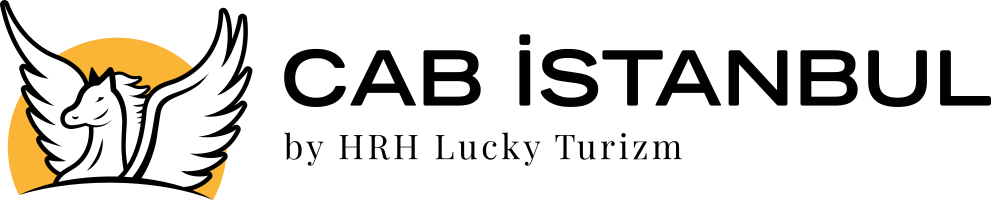
Rhinoplasty reshapes the bone, cartilage and soft tissue of the nose. Some patients seek facial balance. Others need better airflow after trauma, a congenital difference or a prior surgery. Many want both. Academic centres such as Cleveland Clinic and Mayo Clinic describe the same core idea: the plan must fit your anatomy, your airway and your goals — not a stock “Instagram nose.”
Nothing here is personal medical advice. Indications, technique, grafting and stop-rules belong to a licensed surgical team that has examined you, reviewed your photographs and imaging, and will remain responsible if healing does not go as hoped after you fly home.
Definitions that matter
Cosmetic rhinoplasty, functional work and septorhinoplasty are not the same job
Search results collapse several operations into one package price. Separate them before you compare clinics.
- Bridge height, hump or dip, tip shape, nostril width, overall proportion to the face
- Usually elective and self-pay for international patients
- Simulation photos are discussion tools, not contracts for an identical result
- Airway assessment for blockage, deviation, valve collapse or post-traumatic deformity
- Septoplasty straightens the septum; combined aesthetic + septal work is often called septorhinoplasty
- Breathing improvement is a clinical goal, not a guaranteed marketing outcome
Primary rhinoplasty is a first operation. Revision (secondary) rhinoplasty revises a prior nose surgery and is often more complex because scar tissue and missing cartilage change what is safely possible. Ask which of these you are being quoted for — a primary aesthetic quote is not a revision quote.
Surgical approaches
Open versus closed rhinoplasty — trade-offs, not slogans
Both approaches rearrange the same framework of bone and cartilage. The difference is access.
| Approach | Access | What to ask |
|---|---|---|
| Open | Incisions inside the nose plus a small cut across the columella so the skin can be lifted for direct view | Why is visibility needed for my tip, grafts or asymmetry? Where will the scar sit and how is it usually cared for? |
| Closed (endonasal) | Incisions hidden inside the nostrils; no columellar skin cut | Can my planned changes be done safely with limited visibility? What happens if mid-operation findings need more exposure? |
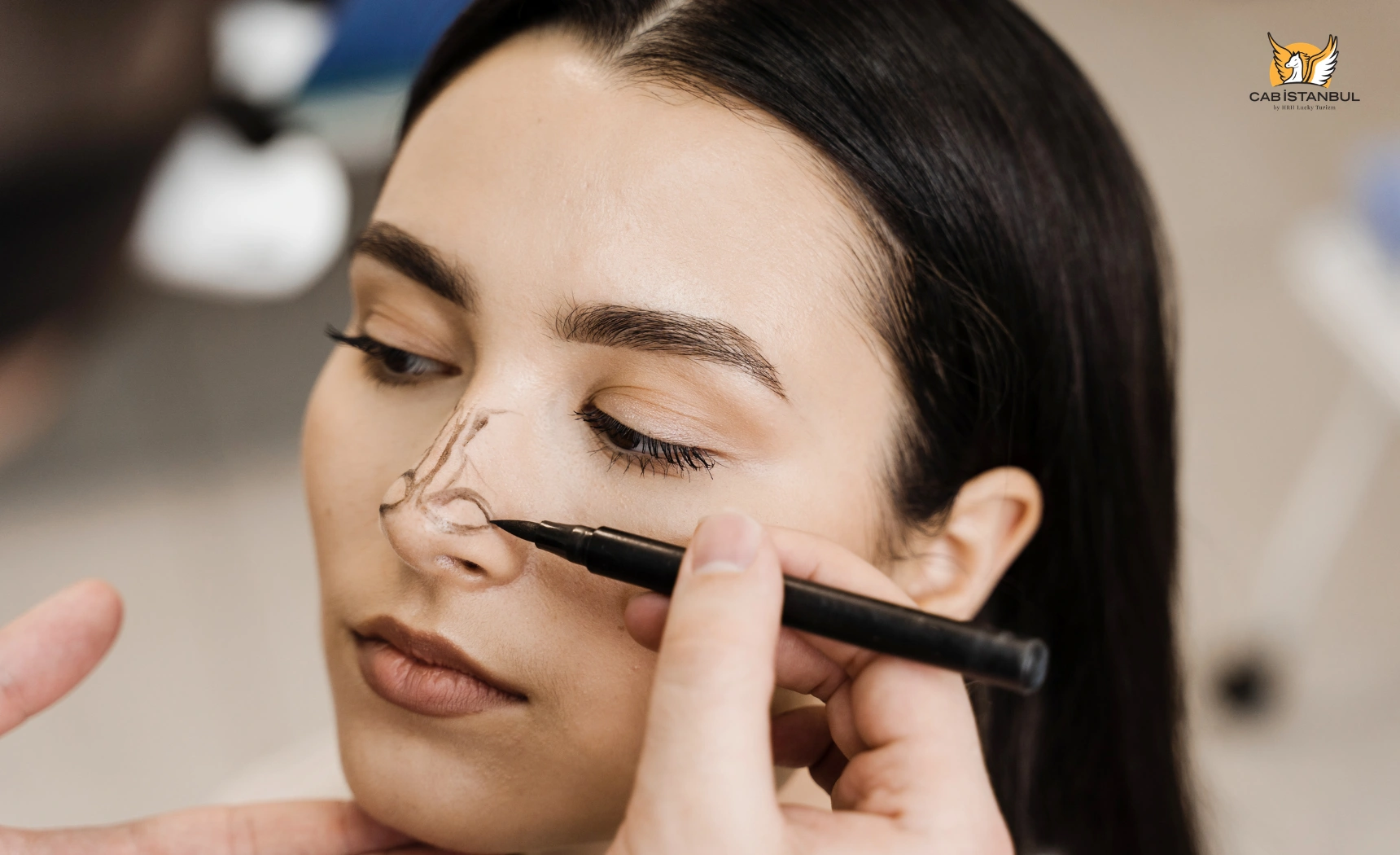
UCSF facial plastic teaching notes that open approaches often give better visibility for larger reshaping and structural support, while closed approaches avoid an external columellar scar and may suit more limited changes — with less direct view. Cleveland Clinic similarly frames open work for major reshaping and closed work for selected smaller modifications. Neither technique erases risk, and “no scar” is not an honest absolute for every open case.
Supplementary media only. Patient or marketing videos do not replace a consultation, exam or written surgical plan.
Before theatre
Consultation: what a serious assessment should include
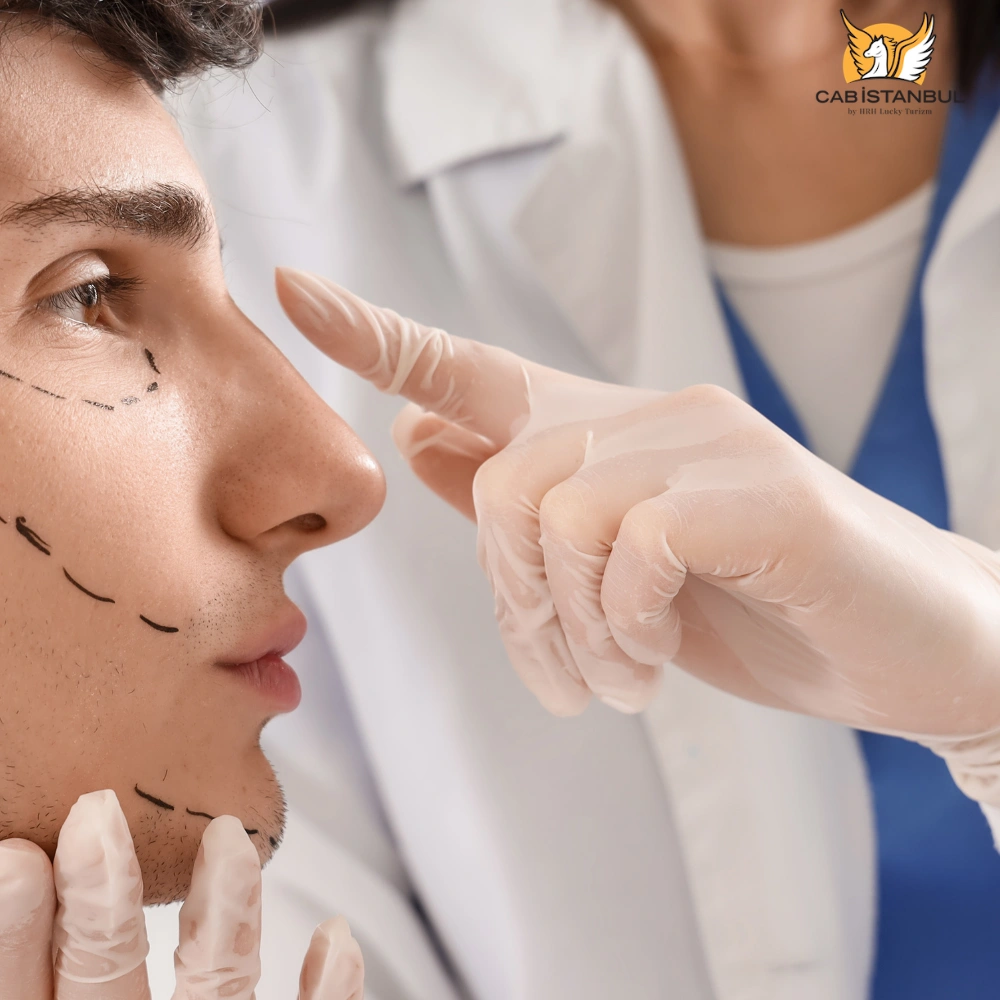
Mayo Clinic’s preparation notes are a useful checklist even when you are travelling: medical history, medicines and bleeding risk, photographs from multiple angles, discussion of what surgery can and cannot do, and an airway exam — not only a mirror conversation about tip shape.
- Growth complete and general health suitable for elective anaesthesia
- Smoking or vaping status — nicotine impairs healing
- Skin thickness, cartilage strength and facial proportions reviewed in person or via a structured remote-then-in-person pathway
- Breathing complaints documented, not dismissed because the request is “cosmetic”
- Realistic goals: millimetre changes can look large; perfect symmetry is not a normal human baseline
If a coordinator pushes you to pay a deposit before any surgeon has reviewed your case, slow down. For other elective procedures people research in Istanbul, keep the same distance — see Cab Istanbul’s notes on aesthetic surgery clinics and hair transplantation in Istanbul. Different operations, same need to verify the operator.
Operation day
What happens during surgery — without fixed-hour promises
Anaesthesia
General anaesthesia or local anaesthesia with sedation, depending on case complexity and facility protocol. Ask who administers it and where the theatre is accredited.
Access and reshaping
Through open or closed incisions, the surgeon reduces, augments or repositions bone and cartilage. Grafts may come from septum, ear or — in larger rebuilds — rib. Implants are a separate discussion with their own trade-offs.
Closure and support
Skin is redraped and sutured. External splints and sometimes internal supports are placed. Packing habits vary; many modern protocols use softer supports rather than classic dense packing — confirm your surgeon’s routine in writing.
Same-day or overnight stay
Cleveland Clinic and Mayo Clinic describe rhinoplasty as commonly outpatient, with overnight observation when nausea, bleeding risk or other medical issues require it. Do not treat a brochure’s “6–8 hours then hotel” line as a universal medical rule.
Published ranges often put surgical time roughly between one and three hours. Grafting, revision work and combined septal correction can take longer. Duration is not a quality score.
Healing
Recovery in phases — not a guaranteed calendar
ASPS notes that early swelling settles over weeks while the nasal contour can keep refining for up to a year. Cleveland Clinic describes substantial swelling for several weeks, much of the visible swelling reduced by around three months for many patients, and possible subtle change through the first year. Your surgeon’s protocol overrides any blog timeline.
Early days
Head elevation, drip-pad care if used, prescribed medicines only, cool compresses to cheeks/eyes as directed — not ice pressed onto the nose. Mild bleeding or old-blood drainage can occur. Avoid blowing the nose; sneeze with the mouth open if advised.
First one to two weeks
External splint removal is often discussed around one week, but timing is surgeon-specific. Many people plan desk work or school return in this window if bruising and energy allow — not a rule for physical jobs.
Weeks two to six
Bruising often fades faster than tip swelling. Protect the nose from impact. Ask before glasses rest on the bridge, contact sports, swimming or heavy lifting. Sun protection matters for scar and pigment care.
Months to one year
Residual tip oedema and morning fluctuation are common. Final judgement of shape — and of whether a revision conversation is even appropriate — usually waits until tissues have settled, often about a year unless there is an urgent complication.

Safety
Risks you should hear before you book flights
Mayo Clinic lists general surgical risks — bleeding, infection, anaesthesia reactions — and rhinoplasty-specific problems such as breathing difficulty, lasting numbness, asymmetry, discoloration or swelling that persists, scarring, septal perforation, change in smell and the need for further surgery. Cleveland Clinic also notes unsatisfactory appearance and wound-healing problems among possible outcomes. About 15% of patients may later need a touch-up for small changes in some academic summaries; that is a possibility rate, not your personal forecast.
- Ask what happens if bleeding or infection occurs while you are still in Istanbul
- Ask who manages urgent problems after you return to your home country
- Ask how revision policy and fees are written — not only promised in chat
Revision rhinoplasty after an unsatisfactory primary result is a separate operation with scar tissue and often graft requirements. Timing usually waits for soft-tissue settling unless airway emergency or major deformity forces earlier care.
Secondary topic
Non-surgical “liquid” rhinoplasty is not a safer mini nose job
Filler can temporarily camouflage selected dips or tip positions. It does not reliably correct a large bony hump, rebuild weak structure or replace proper airway surgery. Vascular complications from facial fillers can be serious, including rare vision-threatening events. Treat filler rhinoplasty as a limited cosmetic option with its own consent discussion — not as a cheap substitute for surgery marketed in the same package email.
Money
Rhinoplasty cost in Turkey — drivers, not a fake floor price
OpenSEO and commercial SERPs show intense price intent (“rhinoplasty in turkey cost”, package deals, USD/GBP conversions). Clinic and aggregator pages advertise starting figures that change by season and by what is quietly excluded. An older Cab Istanbul FAQ line that “prices start from around 2000 USD” is not a verified market floor and is not reused here as fact.
Price usually moves with:
- Primary versus revision complexity
- Need for septal work, osteotomies or structural grafts (septum, ear, rib)
- Surgeon and anaesthesia fees, hospital or clinic facility fees, overnight stay
- Whether hotel nights, transfers, medicines and follow-up visits are inside the quote
- What happens financially if a revision is medically indicated later
Ask for an itemized written quotation in a language you understand. Compare inclusions, not Instagram highlights. A low headline price that omits hospital, anaesthesia or revision policy is not a bargain — it is an incomplete number.
Package videos are commercial media. Verify every line item with the operating surgeon’s office, not with a channel title.
Choosing a provider
How to choose a rhinoplasty surgeon in Istanbul without a “top 10” list
SERPs for “best rhinoplasty Turkey” are dominated by self-promotion and ranking widgets. This article does not name or rank surgeons. Use questions instead.
- Is the operating surgeon appropriately trained in plastic surgery and/or ENT / facial plastic practice for your case type?
- In which accredited hospital or surgical centre will you be operated, and who provides anaesthesia?
- Will both appearance and breathing be assessed, with a written plan for each?
- How many primary and revision rhinoplasties does this surgeon perform in a typical year — asked directly, not guessed from ads?
- How many nights should an international patient remain in Istanbul for early follow-up?
- Who handles complications after you fly home, and what is the written revision policy?
- Are before/after images consented, representative and shown with similar lighting and angles?
Pressure to decide in a chat app, passport scans before medical review, or promises of zero risk are warning signs. Read tourism fraud in Istanbul before you share documents. If you are also comparing other long-recovery electives such as limb lengthening surgery in Istanbul, apply the same scepticism to timelines and package claims.
Travel logistics
Getting to the clinic — transport, not treatment
Early recovery is a poor match for crowded taxis, metro stairs and “we’ll see how you feel at the airport.” Many patients want a pre-booked car that can take a companion and allow time at Istanbul Airport (IST). If your case uses Sabiha Gökçen, plan that campus separately. Orientation notes in Istanbul Airport to the city centre and airport transportation are for orientation only; your surgeon’s activity limits override public-transport advice.
Hotel choice for the first nights should favour lift access and proximity to follow-up, not only a skyline view — Cab Istanbul’s Istanbul hotel orientation is a visitor guide, not a medical residence list.
Watch for orientation only. Clinical instructions come from your operating team.
Cab Istanbul can provide a private transfer or a car with driver when mobility or timing is limited. That is transport, not aftercare. For IST arrivals see Istanbul Airport transfer; for SAW, Sabiha Gökçen airport transfer. Door-to-door clinic days often fit a car with driver in Istanbul or a larger vehicle via van rental with driver better than a taxi queue. Chauffeur-led days are described under driver services. You can also start from the car-with-driver reservation or the airport transfer routes page.
FAQ
Rhinoplasty in Istanbul — frequent questions
Is rhinoplasty painful?
Under anaesthesia you should not feel the operation. Afterwards, many patients describe mild to moderate discomfort rather than severe pain, managed with surgeon-directed medicines. Individual pain scores vary.
Will there be bruising and swelling?
Often yes around the nose and eyelids early on. Bruising usually improves faster than tip swelling. Visible swelling can take weeks to settle substantially and subtle change can continue for many months.
Open or closed — which leaves scars?
Closed approaches keep incisions inside the nostrils. Open approaches add a small columellar incision that can leave a fine external scar. Scar quality varies; “invisible” is not a guarantee.
How long is hospital stay?
Many rhinoplasties are same-day discharges; some patients stay overnight. Your medical history and the facility protocol decide, not a marketing timetable.
When can I wear glasses again?
Bridge pressure is the issue. Surgeons often restrict resting frames on the nose for weeks; some allow taped or cheek-supported options earlier. Follow your surgeon — old fixed “2 weeks / 3 months” rules are not universal.
When is swimming or sun exposure safer?
Ask after splint removal and wound checks. Chlorinated pools, diving and unprotected sun on fresh scars carry separate risks. High-SPF protection on the nose is commonly advised in early months.
Can rhinoplasty fix breathing problems?
When structural obstruction is part of the plan — for example septal deviation addressed during septorhinoplasty — improved airflow is a clinical goal. It is not automatic with every cosmetic reshaping.
Why might the tip look different months later?
Early swelling can mask the true tip position. Soft-tissue support and scar contracture evolve over months. Premature judgement of “tip drop” or “asymmetry” is common before final settling.
Does Cab Istanbul perform or recommend rhinoplasty?
No. Cab Istanbul provides private transfers and chauffeur services. It does not operate, recommend surgeons, or sell medical packages.