
Tucked against the Asian shore of the Bosphorus, Anadolu Hisarı is the smallest and oldest of Istanbul's Ottoman fortresses — and arguably the most consequential. Built in 1393 by Sultan Bayezid I to choke off Byzantine supply lines, this compact stone keep controlled the narrowest crossing of the strait for sixty years before Mehmed II built Rumeli Hisarı directly opposite and sealed Constantinople's fate. Today, fully restored and reopened as an official IBB Kültür Sanat museum since April 2023, it invites visitors to walk the same battlements that witnessed one of history's greatest sieges.
What Is Anadolu Hisarı?
Anadolu Hisarı — Anatolian Fortress in Turkish — stands at the narrowest point of the Bosphorus strait on Istanbul's Asian shore. The keep measures roughly 100 by 120 metres at its outer walls, making it a fraction of the size of Rumeli Hisarı across the water. What it lacks in scale it makes up for in age: at around 630 years old, it is the oldest surviving Ottoman structure in Istanbul.
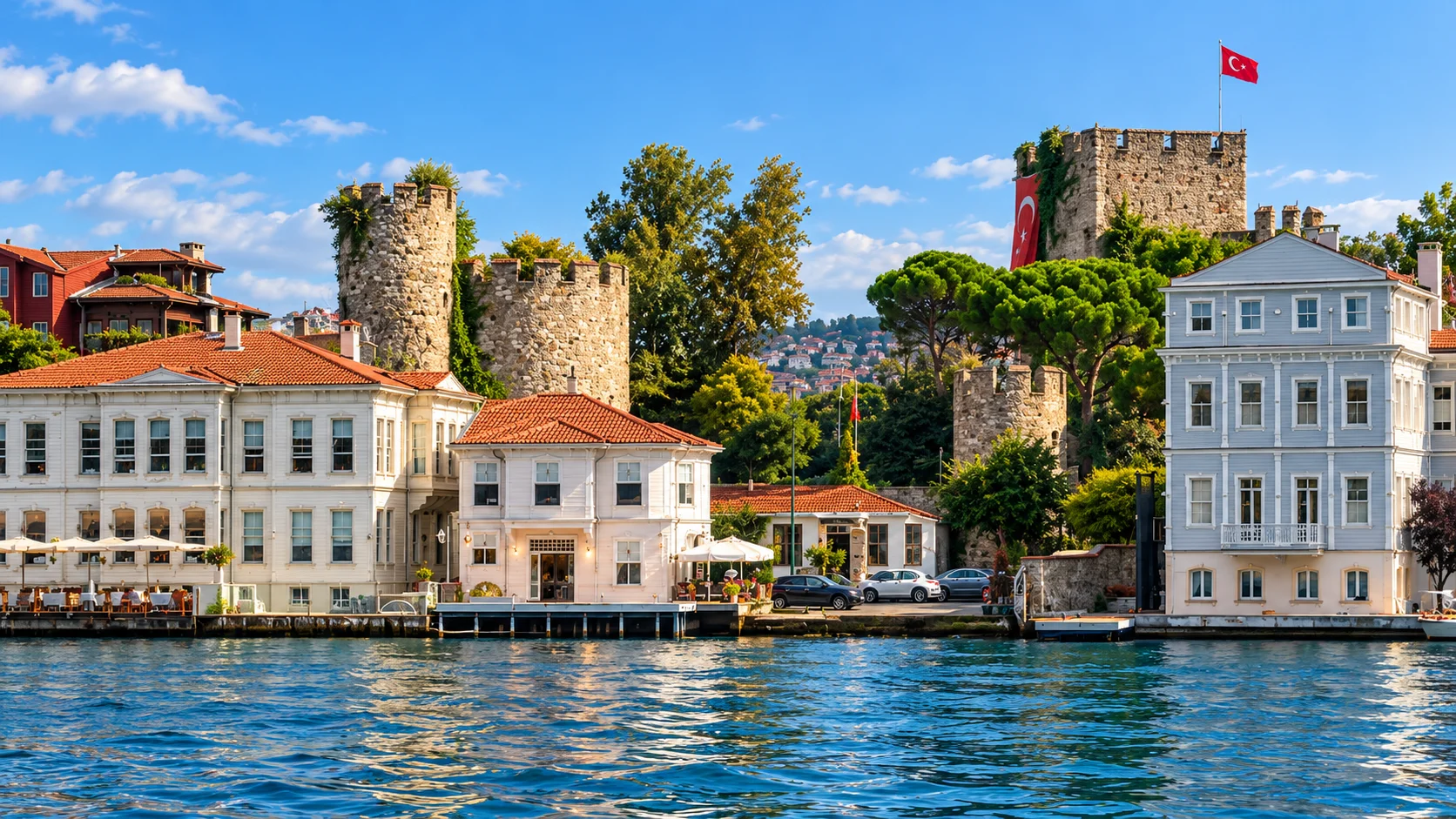
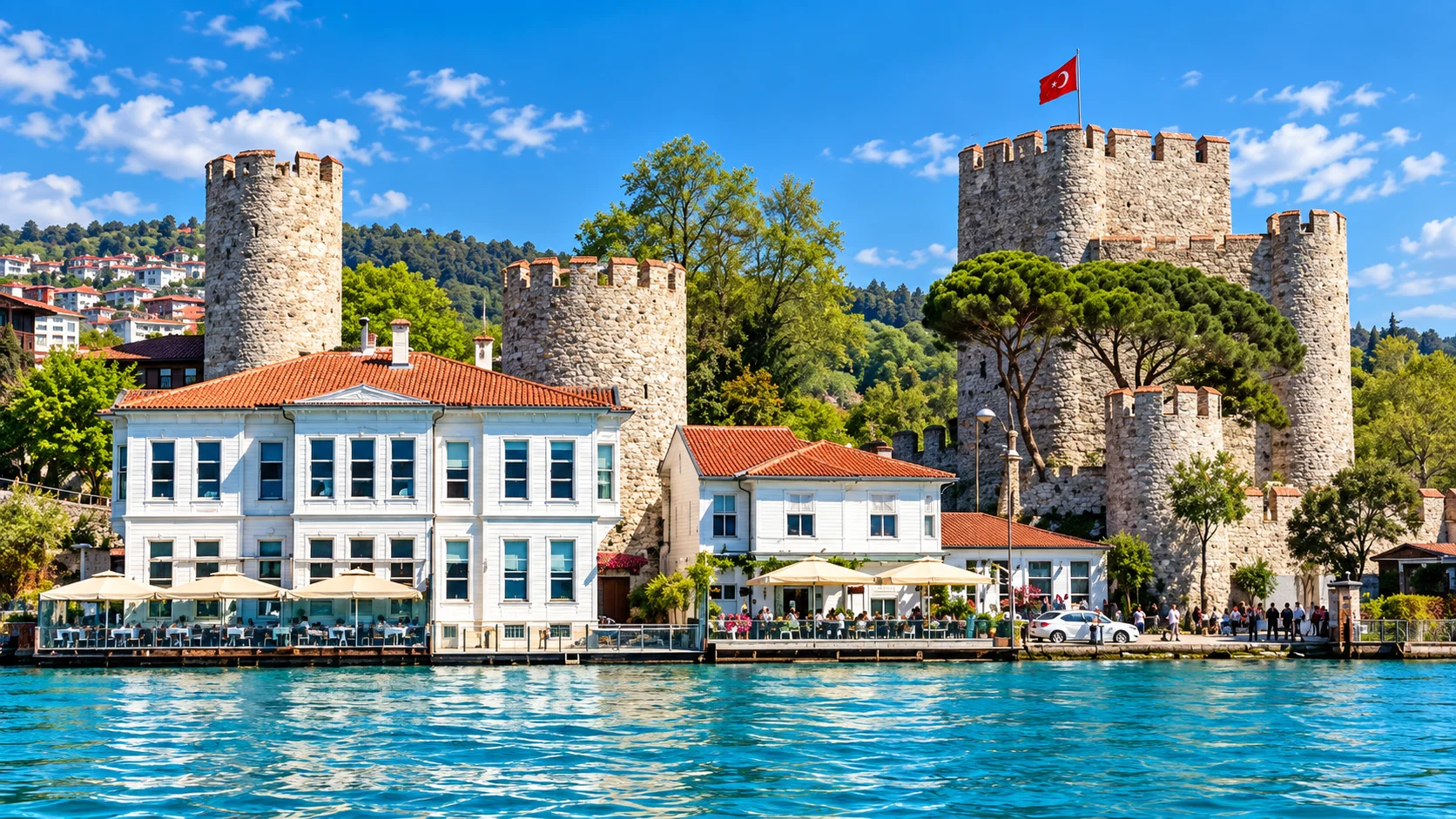
The fortress sits in the Anadoluhisarı neighbourhood of Beykoz district, at the mouth of the Göksu Stream. Its stone walls rise directly from the waterfront, the main tower visible from ferries crossing between the European and Asian shores. The surrounding neighbourhood — a cluster of wooden Ottoman houses, fish restaurants, and tea gardens along the water — makes the fortress far more than a museum visit; it is the entry point to one of the Bosphorus's most atmospheric villages.
Why Sultan Bayezid I Built the Fortress
In 1393, the Ottoman Sultan Bayezid I — known as Yıldırım, "the Thunderbolt" — had already encircled Byzantine Constantinople and was tightening his blockade. His main strategic problem: Genoese merchants and Byzantine allies were still able to ship supplies through the Bosphorus from the Black Sea. To stop them, he ordered a fortress built at the strait's narrowest crossing point.
Construction was reportedly completed in just a few months. The fortress served its purpose: ships attempting to pass without Ottoman permission were turned back at cannon-point, and Constantinople's lifeline slowly closed. Bayezid demanded the city's surrender — but his plans were disrupted in 1402 when Timur (Tamerlane) crushed the Ottoman army at the Battle of Ankara, and Bayezid himself was captured and died in captivity. After years of dynastic struggle, the Ottoman siege resumed under Murad II, who expanded the fortress in the 1420s.
The Keep, Towers, and Walls
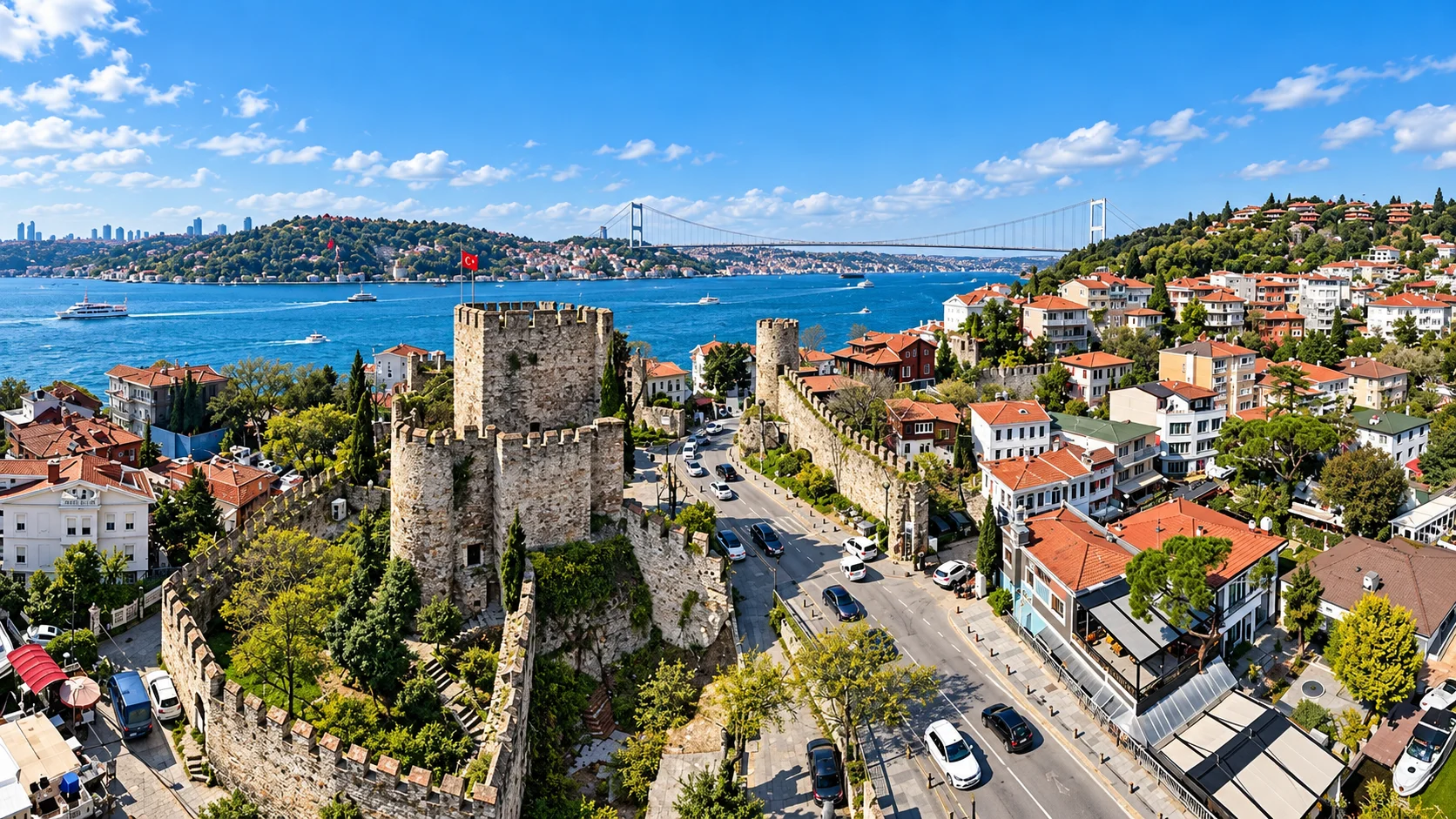
The fortress consists of a tall central keep — sometimes called the Bayezid Tower — flanked by an irregular outer enclosure with two secondary towers. The keep is the oldest element; the outer walls were added or reinforced over successive decades. The entire complex covers roughly 9,600 square metres, modest by fortress standards but perfectly scaled for the task of mounting cannon on the Bosphorus narrows.
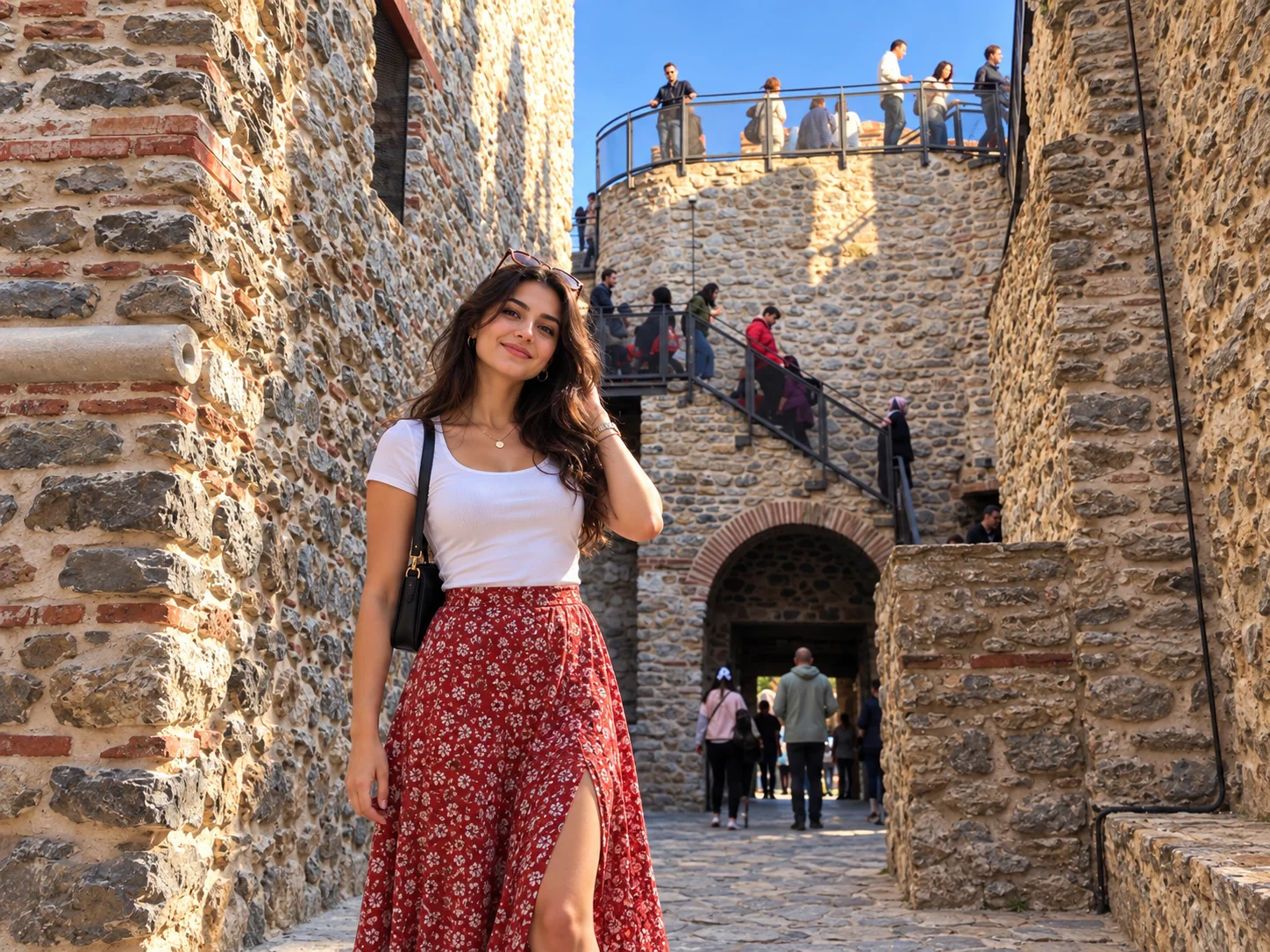
Inside the restored courtyard, the uneven stone surfaces and narrow stairways give an unmediated sense of the military architecture. The tower offers a climb to the top platform, where the panoramic view across the Bosphorus to Rumeli Hisarı on the European side is one of Istanbul's most dramatic vantage points — and one of its least crowded.
The Museum Today
Since its restoration and reopening in April 2023 under IBB Kültür Sanat management, Anadolu Hisarı functions as a fully operational museum. Ticket booths are staffed during opening hours; the courtyard, main tower, and exhibition rooms are accessible to visitors. Signage and interpretive panels explain the fortress's role in Byzantine-Ottoman history.
The ticket prices reflect Türkiye's tiered cultural attraction model: a full-price domestic ticket, a discounted student rate, and a higher rate for foreign visitors. Prices and hours can change, so we recommend verifying current information with the official IBB Kültür Sanat channel before your visit.
Göksu Stream and the Sweet Waters of Asia
The fortress stands at the mouth of Göksu Deresi — the "Sky-Blue Stream" — one of the two streams the Ottomans called the Küçüksu (Sweet Waters of Asia). For centuries this shaded riverside meadow was the imperial family's favourite Asian-shore picnic ground. Ladies of the Topkapı harem would arrive by caïque to stroll along the banks; the 19th-century Küçüksu Pavilion, a short walk south, was built by Sultan Abdülmecid precisely to grace this pastoral setting.
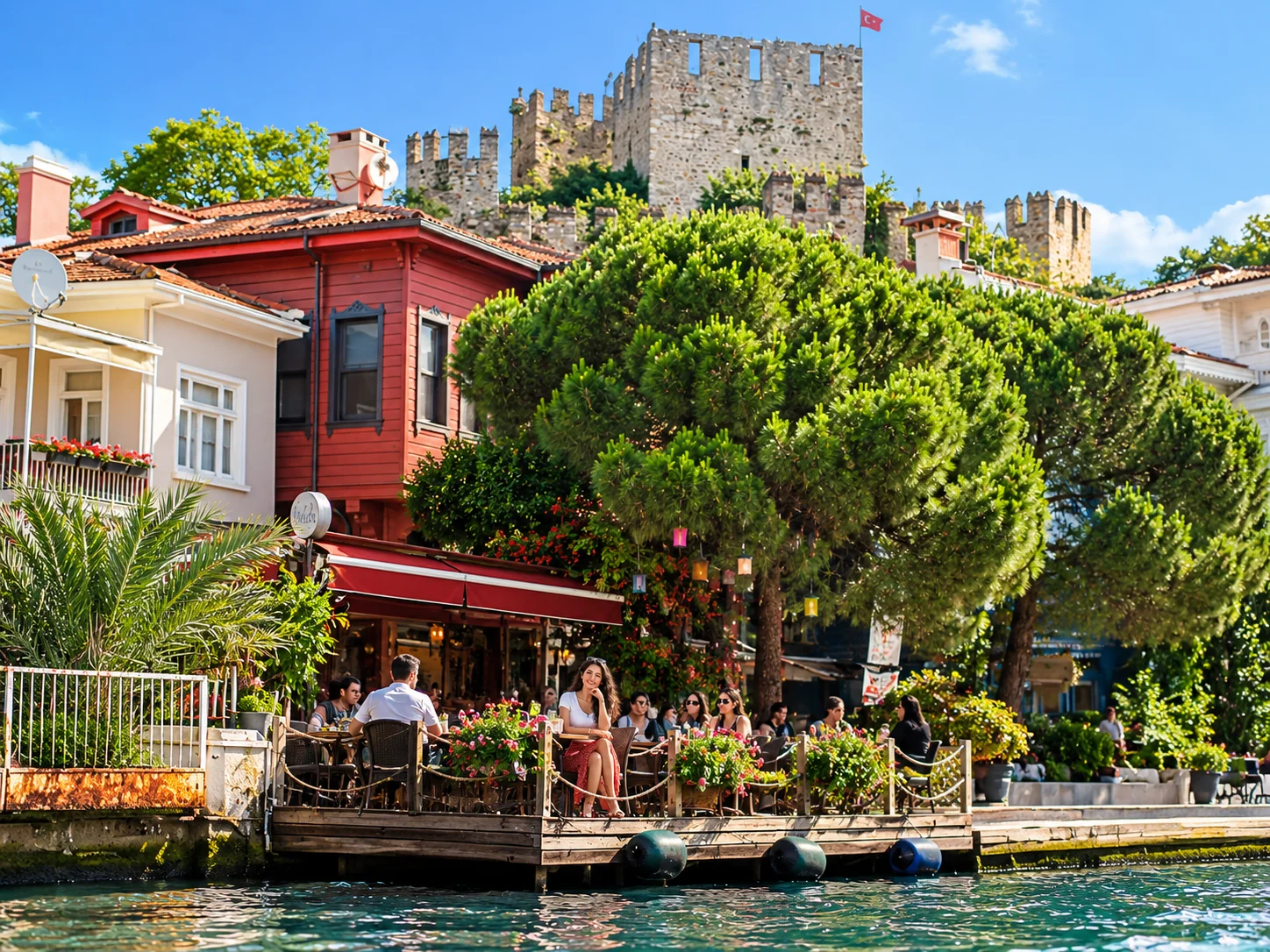
Today the stream mouth is still the neighbourhood's social centre. Wooden fishing boats bob alongside the stone quay. The scent of grilled fish drifts from waterfront restaurants. On weekends, families from across Istanbul arrive by ferry to sit in the tea gardens below the fortress walls — often without realising they are sitting beside one of the oldest Ottoman structures in the city.
Where to Eat and Sit
The Anadoluhisarı waterfront has several well-regarded fish restaurants and tea gardens. The atmosphere is relaxed and local, with few tourists in the mix. Most places serve fried hamsi (anchovy), grilled levrek (sea bass), and classic Turkish meze. After the museum, lunch on the quay with a Bosphorus view is the natural ending to the visit.
The neighbourhood also has a handful of small cafes in the back streets behind the fortress, popular with local residents. Prices are noticeably lower here than in Beşiktaş or Üsküdar — a welcome contrast after a morning sightseeing.
The Bosphorus View and a Boat on the Water
At no other point along the strait do the two fortresses face each other at such close range as at Anadolu Hisarı and Rumeli Hisarı. The crossing here is roughly 660 metres — the narrowest stretch of the Bosphorus. Standing on the tower, you look directly across at the far more massive Rumeli Fortress, its three huge towers mirrored in the water. The visual geometry of the two fortresses — one compact and ancient, one monumental and symmetrical — encapsulates the entire Ottoman conquest in a single glance.
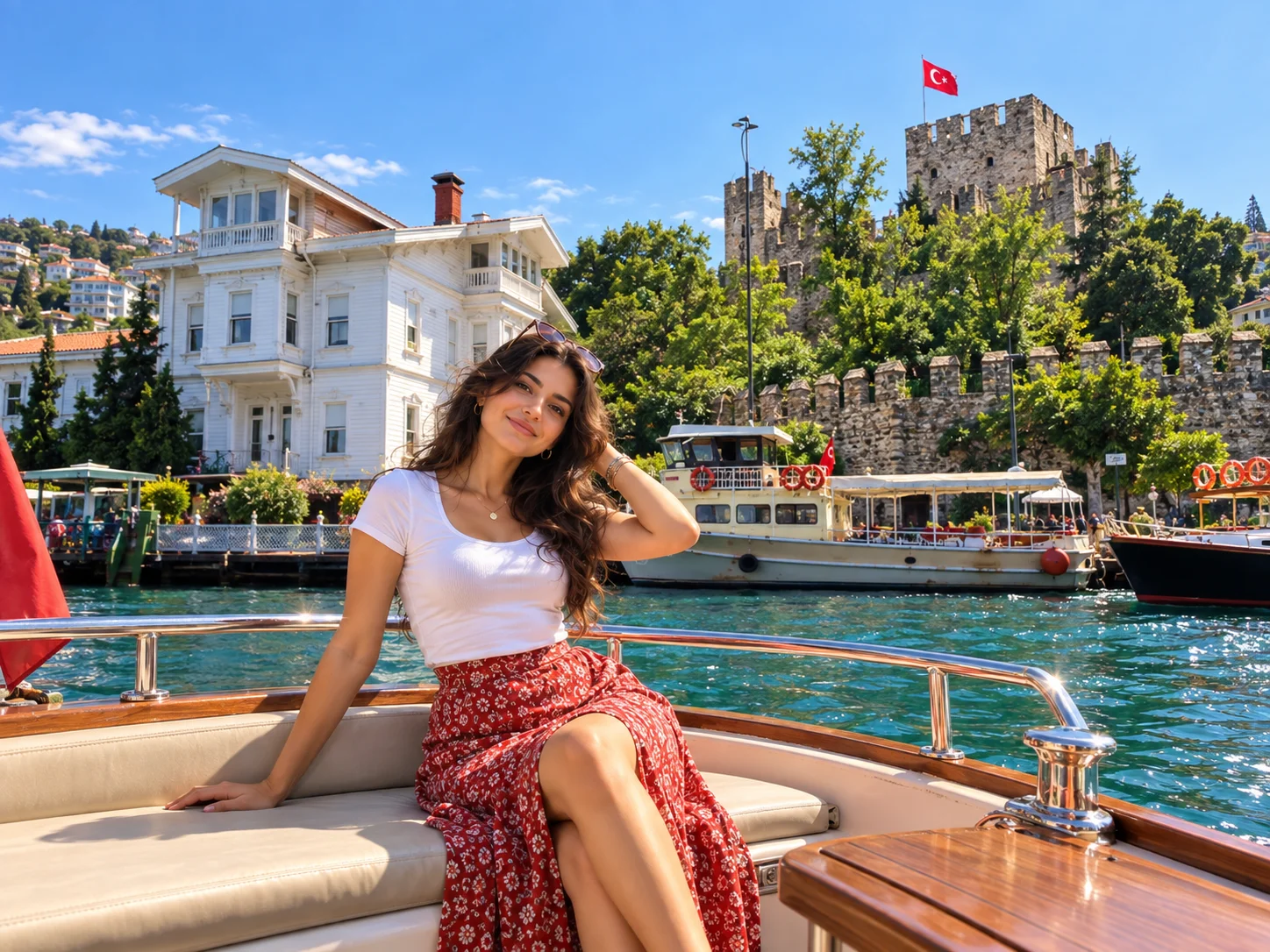
For a fuller picture, take a private Bosphorus cruise that passes the fortress from the water. The approach from the south reveals the full silhouette of the keep against the wooded Asian hills; seen from the north, the two fortresses appear simultaneously, framing a channel that once decided the fate of an empire.
Seeing the Fortress from the Water
A Bosphorus boat trip past Anadolu Hisarı shows the fortress as its builders intended it to be seen: from the water, controlling the narrows. The low stone walls set directly on the shoreline look almost modest until you realise that cannon mounted here could cover the entire width of the strait. Private tours can slow or stop at this stretch; scheduled public ferries pass it continuously throughout the day.
For visitors who want to combine the fortress with a full Bosphorus experience, a car with driver service makes it easy to move between the Asian-shore villages at your own pace — Anadoluhisarı, Küçüksu, Çengelköy — without navigating bus connections on the waterfront road.
What to Visit Near Anadolu Hisarı
Rumeli Hisarı — Directly across the Bosphorus on the European side stands the larger and more famous Rumeli Fortress, built by Mehmed II in 1452 to complement Anadolu Hisarı. A ferry crossing and 15 minutes on foot takes you from one fortress to the other; visiting both in a single day is entirely feasible from the Asian side via the Beykoz–Sarıyer ferry line.
Küçüksu Palace — A 20-minute walk south along the Bosphorus shore brings you to the 19th-century Küçüksu Pavilion, an ornate baroque summer palace commissioned by Sultan Abdülmecid in 1857. Its intimate scale and extravagant interior decoration make a striking contrast to the military austerity of the fortress.
Çengelköy — A further short bus or boat ride south, Çengelköy is one of the prettiest of the Asian-shore Bosphorus villages, with preserved Ottoman yalı mansions and a long waterfront promenade. It rewards an afternoon stroll and a fish lunch on the quay.
How to Reach Anadolu Hisarı
By ferry (recommended): The most atmospheric approach. Take any ferry from Eminönü, Beşiktaş, or Üsküdar on the Anadolu Kavağı line; the boat calls at Anadoluhisarı İskelesi (ferry stop), landing you a 2-minute walk from the fortress gate. The journey from Üsküdar takes about 30 minutes; from Eminönü around 50 minutes. Check current timetables from İDO or the Şehir Hatları app before travelling.
By bus: IETT buses 121A and 15E serve the Anadoluhisarı waterfront from Üsküdar. The journey takes 35–45 minutes depending on traffic on the coastal road.
By private car or driver: The coastal road (Boğaziçi Yolu) from Üsküdar runs continuously along the Asian shore. Parking is limited near the fortress; a car with driver drops you at the gate and can wait nearby or return at an agreed time, giving you flexibility to extend your stay in the village.
Best Time to Visit and Photography Tips
Spring (April–May) and early autumn (September–October) offer the most pleasant weather for the fortress visit and the waterfront walk. The summer months (July–August) are hot and sometimes hazy; the fortress has little shade in the courtyard. Weekday mornings are the least crowded; weekend afternoons see the most visitors in the tea gardens below the walls.
For photography, the golden-hour window in the late afternoon is particularly rewarding: the low sun catches the stone of the keep from the south, and the view across to Rumeli Hisarı is at its most dramatic in the evening light. The ferry approach from the south in morning light also gives excellent shots of the fortress rising from the water. The tower platform is the best vantage point for long-lens shots of the European shore.
Practical Guide
Is Anadolu Hisarı open to visitors?
Yes. Anadolu Hisarı reopened as a fully operational museum on April 29, 2023, managed by IBB Kültür Sanat (Istanbul Metropolitan Municipality Cultural Arts). The courtyard, main tower, and exhibition areas are all accessible to ticketed visitors. The fortress was closed to the public for many years before this restoration; the new permanent opening is a significant change from what older travel sources describe.
How much are Anadolu Hisarı admission tickets?
As of the most recent available information, full-price tickets are approximately 160 TL for domestic visitors, with a reduced rate of around 65 TL for students. Foreign visitors pay a higher rate of approximately 570 TL. Given Türkiye's inflation environment, prices may have changed; verify the current rates with IBB Kültür Sanat directly before your visit. A Museum Card (Müzekart) may or may not be accepted — confirm this when purchasing.
How do I get to Anadolu Hisarı from central Istanbul?
The most enjoyable route is by ferry: take a scheduled boat on the Anadolu Kavağı line from Eminönü or Üsküdar and alight at Anadoluhisarı İskelesi (ferry pier), about a 2-minute walk from the fortress entrance. From Üsküdar the ferry takes around 30 minutes; from Eminönü around 50 minutes. Alternatively, IETT buses 121A and 15E run from Üsküdar along the Asian coastal road (35–45 minutes). Private transfer by car with driver is a comfortable option if you are combining the fortress with other Asian-side stops.
Can I visit Anadolu Hisarı and Rumeli Hisarı on the same day?
Yes, it is feasible. The two fortresses face each other across the Bosphorus narrows; a ferry crossing connects the two shores. From Anadoluhisarı, take a ferry south to Üsküdar or Beşiktaş, then cross to the European side and ride a bus or ferry north to Rumeli Hisarı. A private car with driver can manage both crossings and the transfers between the sites in a single smooth day trip, eliminating the logistics of bus and ferry timetables.
How much time do I need at Anadolu Hisarı?
The museum itself requires 1 to 1.5 hours to visit comfortably: time in the courtyard, the climb to the tower top, and a look at the exhibition panels. Add another 30–45 minutes to walk along the waterfront and sit in one of the tea gardens or restaurants near the fortress. For a leisurely half-day combining the fortress with the neighbourhood, the ferry crossing, and lunch on the quay, allow 3–4 hours from when you board the ferry in Üsküdar.
Explore Both Fortresses — Without the Ferry Schedules
Combine Anadolu Hisarı on the Asian shore with Rumeli Hisarı across the Bosphorus, add a Küçüksu stop, and end with a private cruise past both fortresses — all in a single, unhurried day. Our professional drivers handle the routing while you focus on the views.