
Why Visit Bursa? Ottoman Heritage, Mountain Air and Fresh Flavours
Bursa occupies a singular place in Turkish history. Conquered by the Ottomans in 1326 under Orhan Gazi, it served as the empire's first capital for nearly four decades — a role that left it with an extraordinary concentration of early Ottoman mosques, tombs, hans and bazaars. Unlike Istanbul's more heavily touristed skyline, Bursa's historic core still feels genuinely lived-in: the same bazaar lanes that once traded Silk Road caravans now sell handwoven silk scarves and roasted chestnuts to local shoppers.
Beyond the historic centre, Bursa spreads across the lower slopes of Uludağ (2,543 m), Turkey's most prominent ski mountain, and reaches out to the Marmara coast at Mudanya and Tirilye, the Uluabat wetland at Gölyazı, and the ancient city of İznik (Nicaea) to the northeast. A long weekend covers the city well; a day trip from Istanbul focuses on the Ottoman core and one or two surrounding highlights.
In 2014, UNESCO inscribed Bursa and Cumalıkızık: the Birth of the Ottoman Empire as a World Heritage Site, recognising not only the historic mosques and hans of the city centre but also the remarkably intact 14th-century village of Cumalıkızık about 10 km to the east.
Historic Bursa City Centre: The Ottoman Core
The historic centre concentrates around two main axes: the Hanlar Bölgesi (bazaar district) near Heykel, and the Yeşil area on the eastern hillside. Most major sites are reachable on foot from each other, though the terrain is hilly.
Ulu Camii — The Grand Mosque
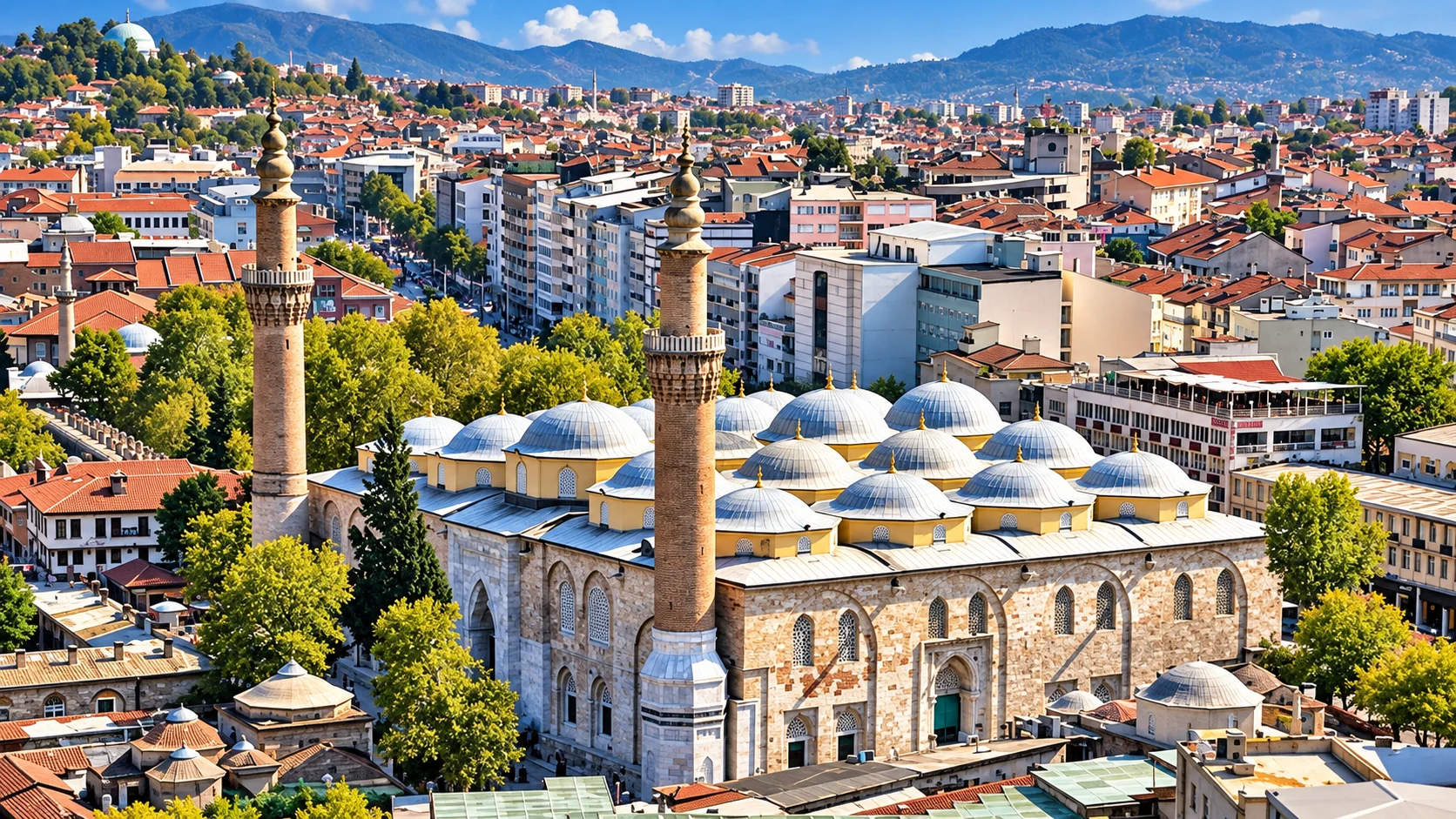
Ulu Camii is the defining landmark of Bursa, built between 1396 and 1399 by Sultan Yıldırım Bayezid I after his victory at the Battle of Nicopolis. Its twenty shallow domes — the most of any Ottoman mosque — and two slender minarets create an immediately recognisable silhouette. Inside, a large ablution fountain sits under an open oculus, and the walls carry some of the finest early Ottoman calligraphy panels in existence. Entry is free; visitors should dress modestly and remove shoes at the entrance.
Koza Han — The Silk Caravanserai
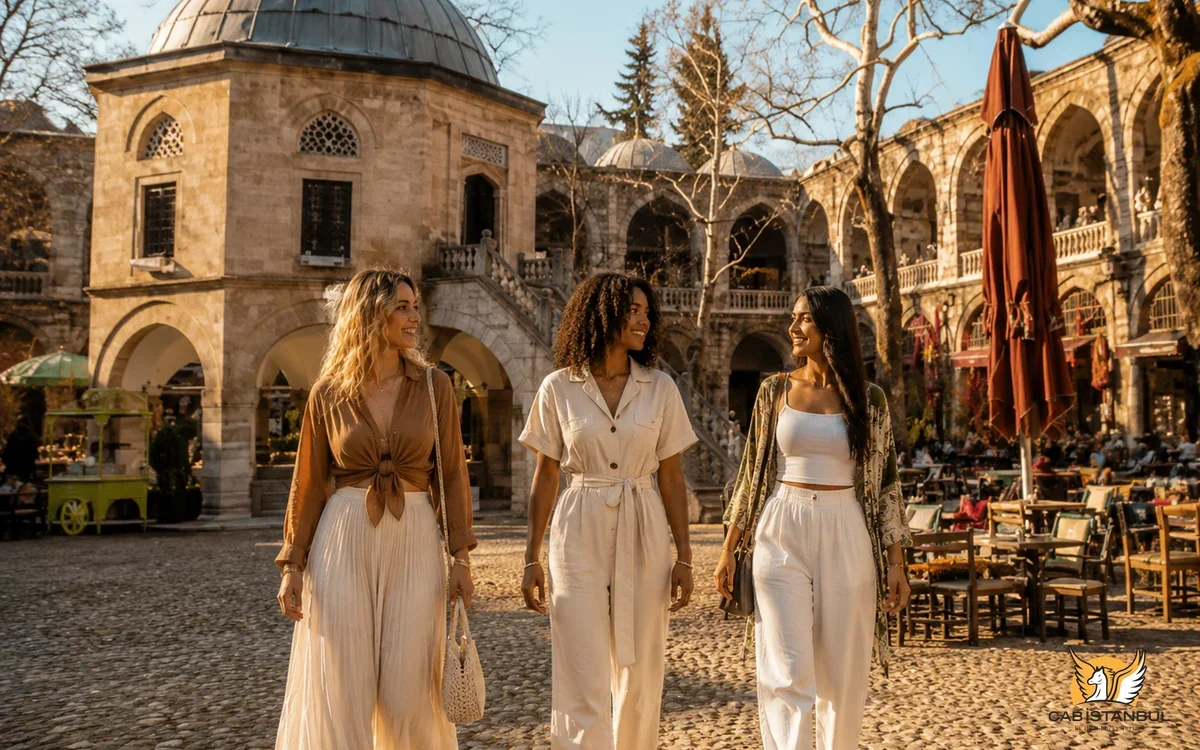
Built in 1491 by Sultan Bayezid II, Koza Han was the commercial heart of Bursa's silk trade, where merchants weighed, inspected and sold cocoons brought overland from China and Persia. The two-storey han around a shaded courtyard is still in daily use: ground-floor shops sell silk scarves, fabrics and jewellery, and the small café in the centre offers the perfect spot for a break between sights. During the annual Koza Festival (June–July), cocoon sellers still set up stalls in the courtyard — a tradition kept alive for centuries.
Kapalıçarşı and Arasta Çarşısı
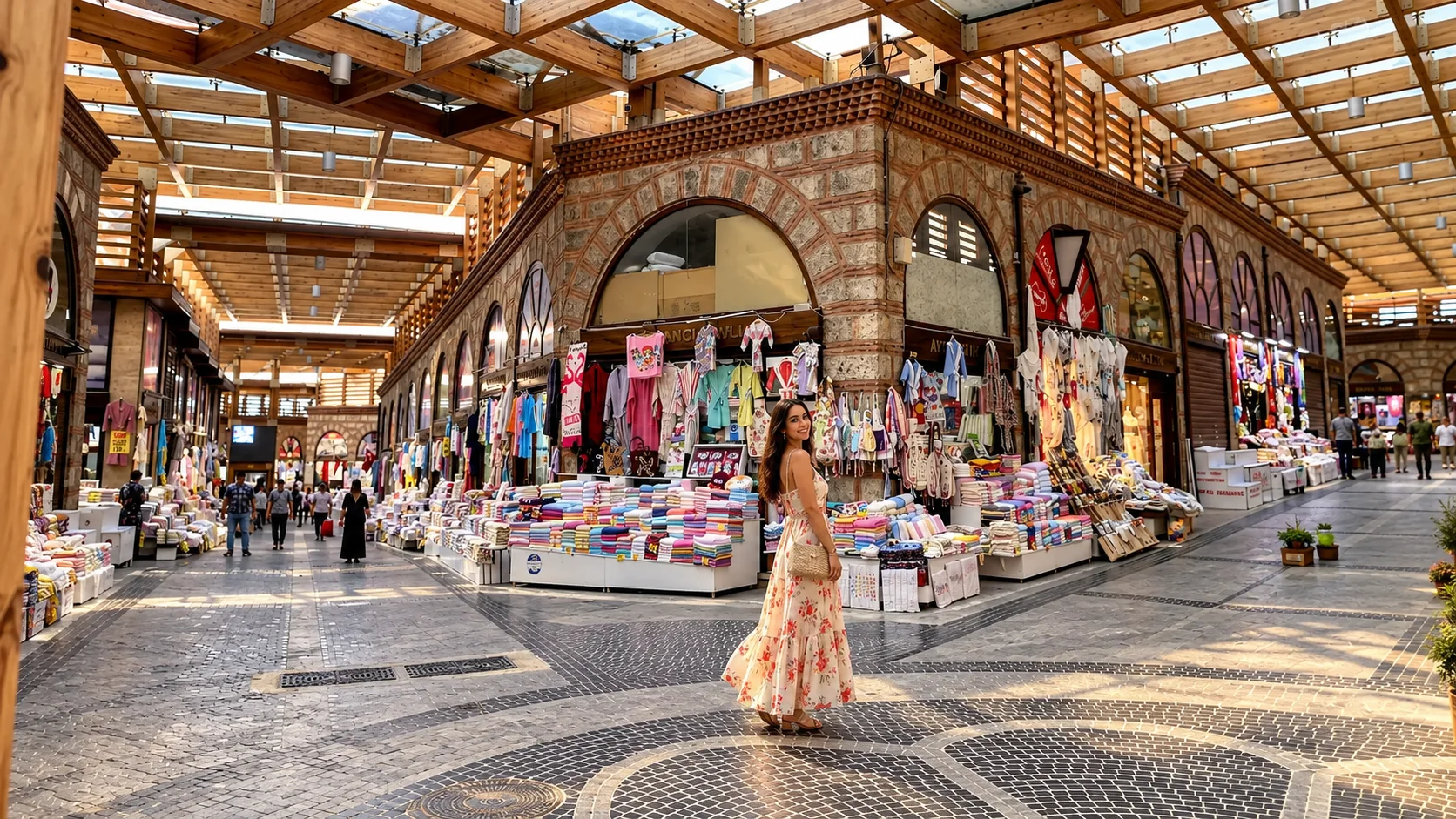
Bursa's covered bazaar dates to the early Ottoman period and remains one of Turkey's most atmospheric trading centres outside Istanbul. Adjacent to Koza Han, the Arasta Çarşısı was traditionally where apprentice craftsmen worked. Today both sell textiles, spices, silver jewellery and locally made silk products. Prices here tend to be more honest than in tourist-focused markets — locals shop here daily.
Orhan Gazi Mosque and Complex
Orhan Gazi's mosque (1339–1340) is one of the earliest Ottoman mosques surviving today — a T-shaped plan with a central fountain hall that influenced later Bursa-style mosque design. The adjacent han and imaret (soup kitchen) formed part of a larger külliye, fragments of which are still visible in the bazaar area.
Tophane and the Ottoman Tombs
The Tophane district, a short walk uphill from Heykel, holds the türbes (mausoleums) of Osman Gazi — founder of the Ottoman dynasty — and his son Orhan Gazi. The originals were destroyed in the 1855 earthquake and the current structures date to the 19th century, but the site carries great historical weight. Next to them stands the Tophane Saat Kulesi (Clock Tower), built in 1905 by Sultan Abdülhamid II in neo-classical style; from here you get one of the best panoramic views over the Bursa plain. Entry to the tombs is free.
Yeşil Camii and Yeşil Türbe
On the eastern hillside, about 1.5 km from Ulu Camii, the Yeşil Camii (Green Mosque, 1419–1421) was built for Sultan Mehmed I (Çelebi Sultan Mehmed). Its name comes from the remarkable green and turquoise Iznik tiles that cover the interior — among the earliest surviving examples of this craft. The mosque follows the inverted-T plan, with side rooms that served as royal accommodation. Directly across the street, the Yeşil Türbe (Green Tomb) is the octagonal mausoleum of Mehmed I, sheathed in those same turquoise tiles on the exterior. Both are free to enter and are open throughout the day.
Muradiye Complex
The Muradiye Külliyesi (1424–1426), commissioned by Sultan Murad II in the Çekirge district west of centre, is the most refined of Bursa's complexes. The central mosque is relatively modest, but the külliye's twelve royal tombs — built for Ottoman princes and sultans between the 15th and 17th centuries — contain exceptional tilework, painted wooden ceilings and stone carving. The walled garden is peaceful and unhurried; local visitors come to sit among the roses. Entry is free.
Irgandı Köprüsü — The Covered Bridge
Built in 1442 over the Gökdere stream, Irgandı Bridge is one of only a handful of covered commercial bridges still in use anywhere in the world. Small craft workshops and art studios occupy the arched spaces along its length. It is a short walk downhill from the central bazaar.
Cumalıkızık: UNESCO-Listed Ottoman Village
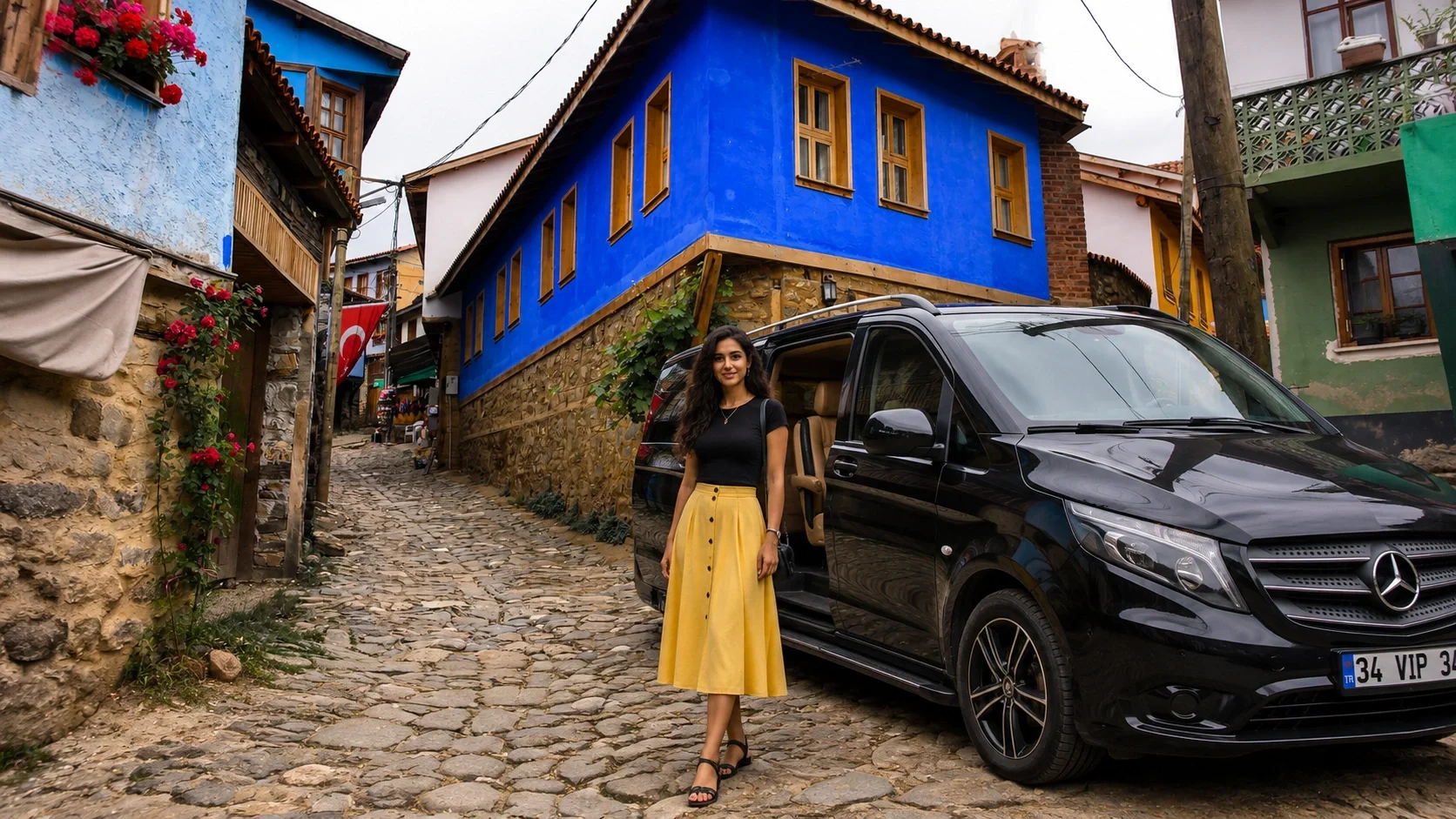
Of all Bursa's attractions, Cumalıkızık is perhaps the most immediately transporting. Founded in the early 14th century to house craftsmen and farmers serving the Ottoman court, the village preserves an almost complete example of early Ottoman timber-frame domestic architecture: two-storey stone-and-wood houses with overhanging upper floors (cumba), narrow cobblestone lanes just wide enough for a cart, and small courtyards enclosed by rough stone walls.
In 2014, Cumalıkızık was inscribed as part of Bursa and Cumalıkızık: the Birth of the Ottoman Empire on the UNESCO World Heritage List, alongside the historic mosques, hans and royal tombs in Bursa city centre.
The village is busiest on weekends, when several houses run traditional village breakfasts — gözleme, local cheeses, honey, olives and homemade jams — served on covered terraces. A morning visit on a weekday is quieter. There is limited parking at the village entrance; arriving early avoids the weekend crowds. From Bursa city centre, the village is about 10 km east via the Yıldırım district.
The surrounding orchards and terraced fields are worth a short walk on arrival. The village square has a small café and a few craft shops selling hand-embroidered textiles and wood carvings.
Uludağ: Skiing, Hiking and Cable Car Year-Round
Uludağ (2,543 m) looms above Bursa to the south, designated a national park in 1961. The mountain offers different experiences depending on the season: winter brings skiing across a large resort area with several hotels and multiple ski runs; summer and autumn offer hiking trails, forest picnics and cooler temperatures when the city is hot below.
Bursa Teleferik — Cable Car
The Bursa Teleferik connects the city to the mountain in a journey of several stages, rising from Teferrüç to the resort area on the upper slopes. The cable car is operational in 2026 (500 TL round trip, 250 TL student price; prices as of 2026, subject to annual change). It opens from 06:00 on weekdays and operates daily. Weather-related temporary closures do occur — check the official Bursa Teleferik website before visiting in unstable weather.
Ski Season
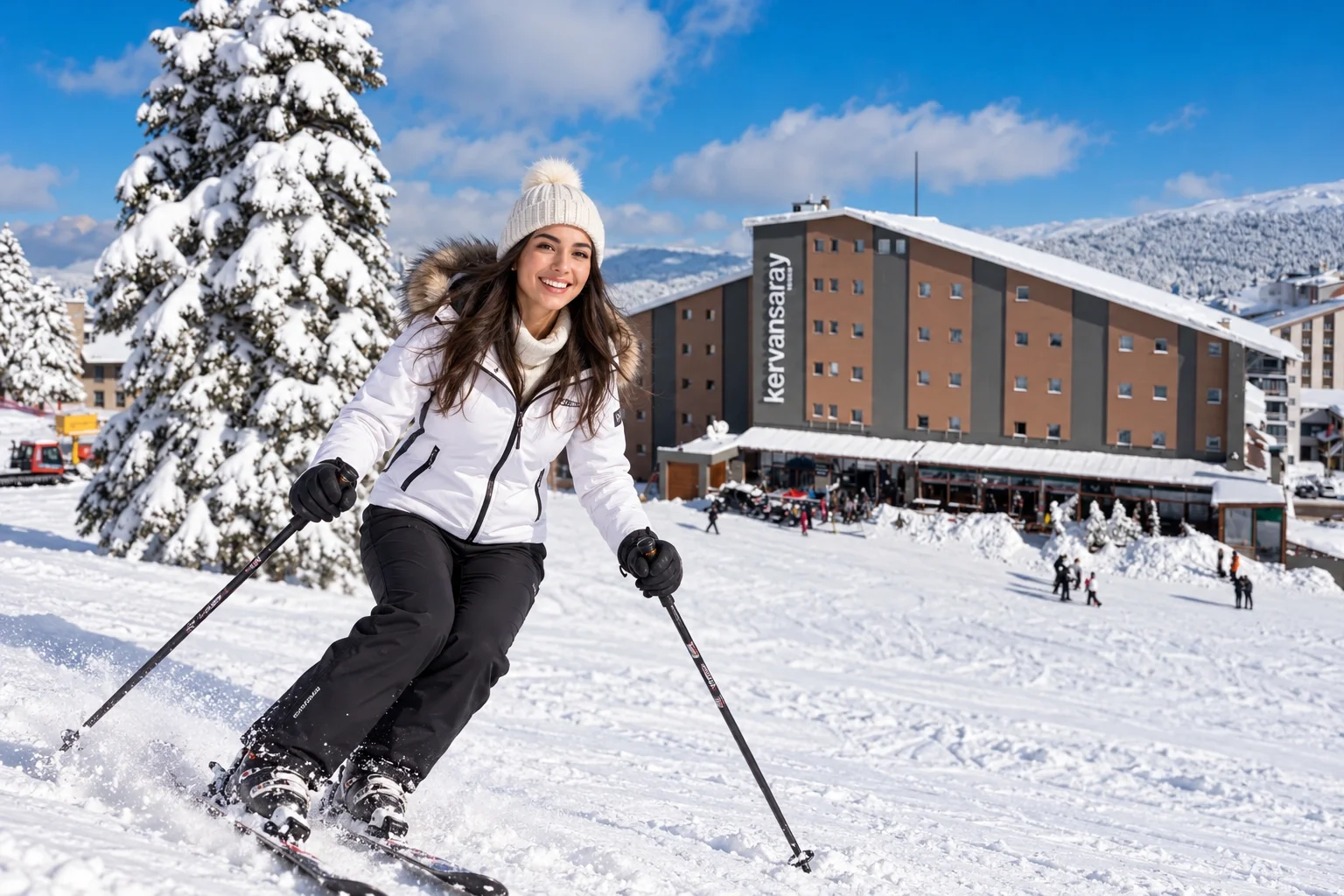
Uludağ's ski season is typically mid-December through early March, though snow conditions vary by year. The resort has lifts, rental equipment and accommodation from budget guesthouses to large resort hotels including Kervansaray Hotel. For guaranteed ski conditions, check snow reports closer to travel dates.
Summer on Uludağ
In summer, the national park's forests provide a cool escape from the city heat. Marked hiking and nature trails cross through beech and fir forest; picnic areas are popular with families on weekends. The drive up via Sarıalan is itself scenic, passing through dense woodland.
İnkaya Çınarı: The Ancient Plane Tree
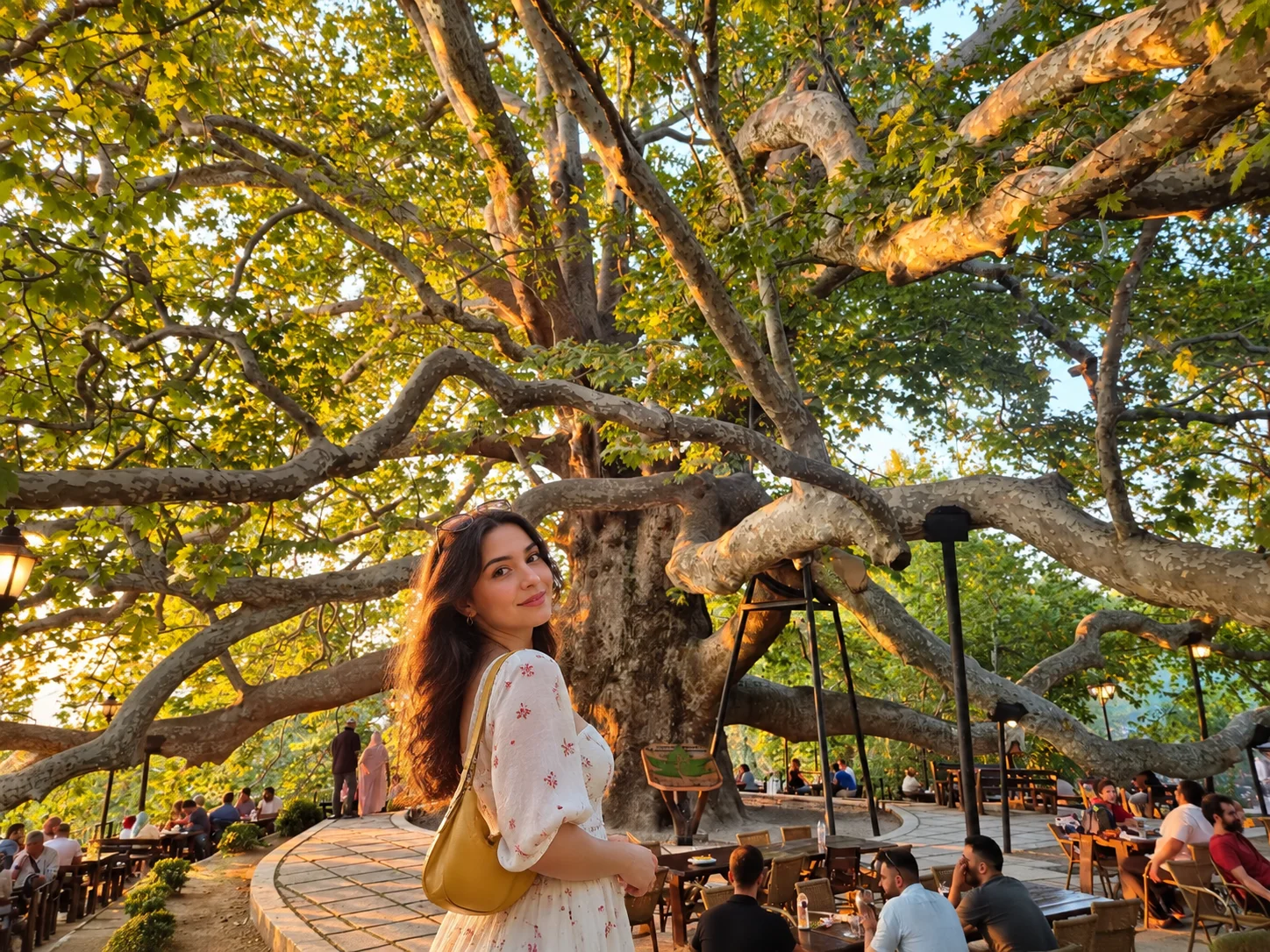
On the road from Bursa towards Uludağ, about 7 km south of the city centre, stands the İnkaya Çınarı — one of Turkey's most impressive monumental trees. The oriental plane (Platanus orientalis) is estimated to be around 600 years old, with a trunk circumference of approximately 10 metres and spreading branches that create a canopy-like shade. A small tea garden operates beside the tree in warmer months, making it a pleasant roadside stop on the way to or from Uludağ.
Gölyazı and Uluabat Lake
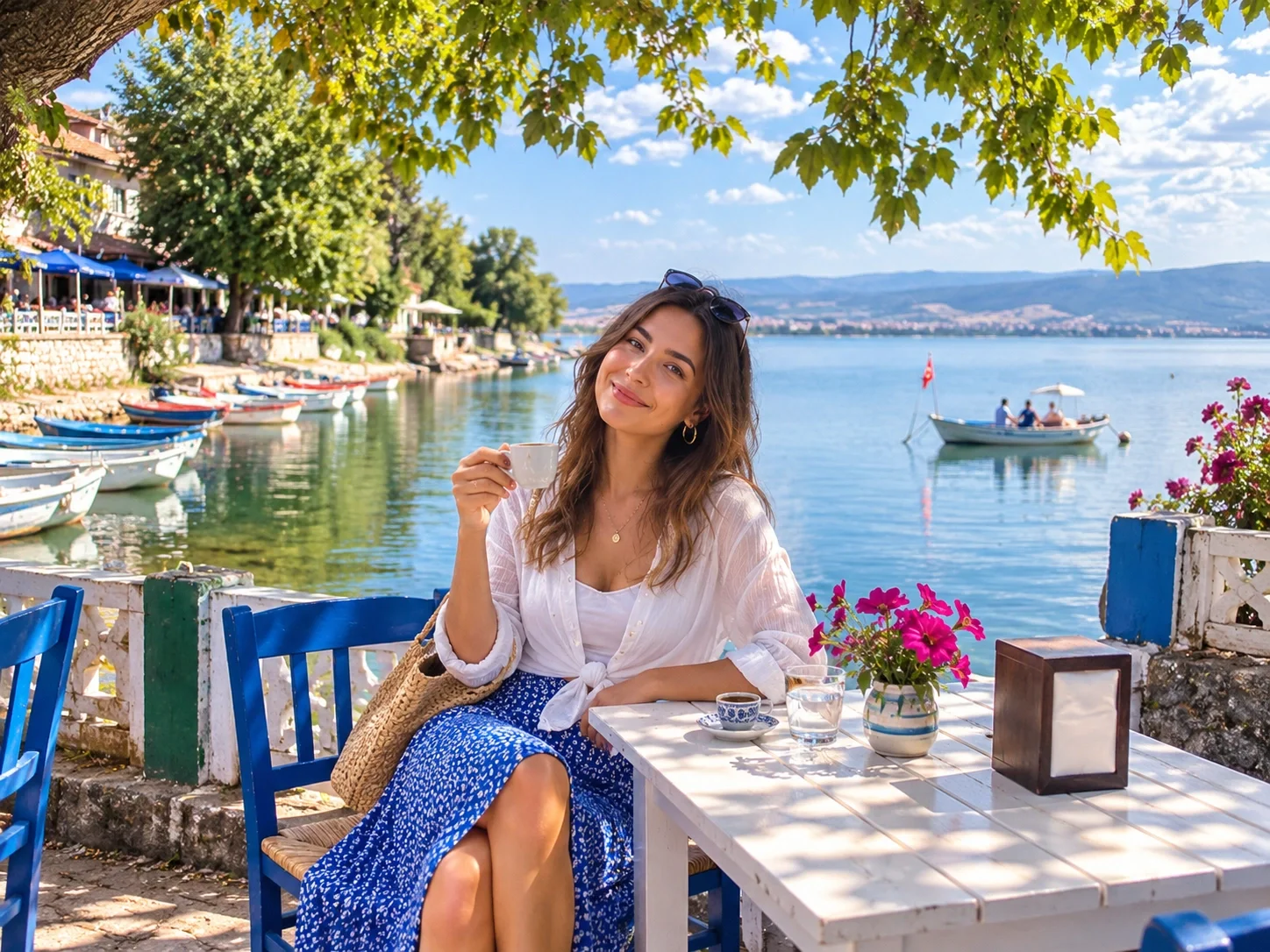
About 30 km west of Bursa, Uluabat Gölü (Apollonias in antiquity) is a shallow freshwater lake designated as a Ramsar Wetland of International Importance for its significance to migratory birds. The Gölyazı peninsula juts into the lake, connected to the shore by a narrow causeway. Its narrow lanes of stone houses, small mosques and a Byzantine-era fortress ruin create a quiet, picturesque atmosphere very different from the city.
A handful of locally run restaurants serve grilled fish and meze on the waterfront. Rowing boat rentals allow exploration of the flooded ruins and small reed islands in the lake. The atmosphere is most atmospheric at sunset. Gölyazı is primarily a peaceful day escape rather than a packed tourist site, which is part of its appeal.
Saitabat Waterfall
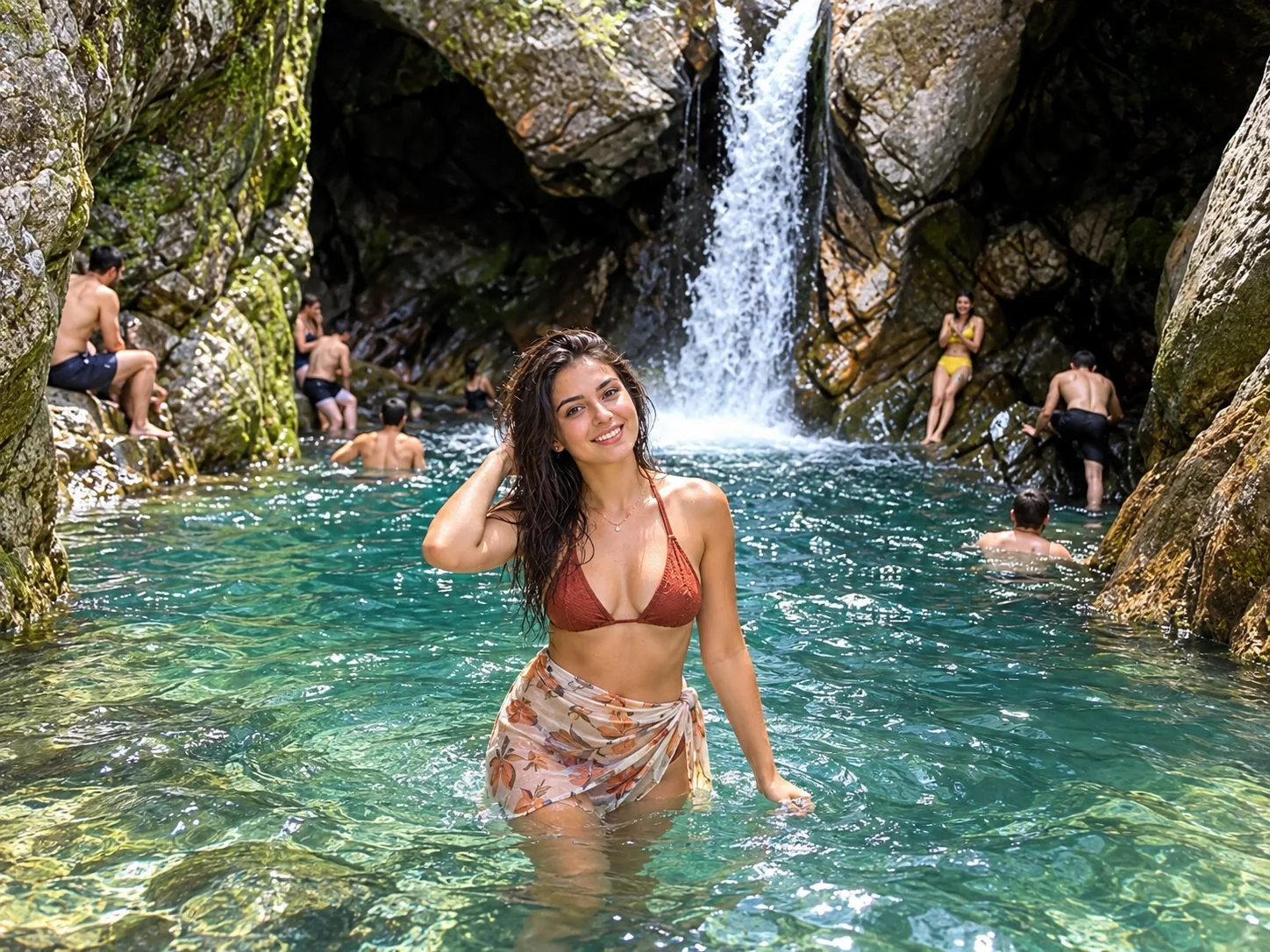
The Saitabat Şelalesi lies in the Kestel district, roughly 25 km east of Bursa. Fed by snowmelt and springs from the Uludağ foothills, the falls are most powerful in spring and early summer. The surrounding forest is accessible on foot from the main parking area, and a group of restaurants nearby serves grilled trout and countryside food. The area is popular with families for weekend picnics.
The similar Suuçtu Şelalesi in Mustafakemalpaşa district is further afield (about 80 km) but impressive for its height and the cave setting at the base — worth the drive if you have a full day.
Tirilye and Mudanya: Marmara Coastline
Tirilye (Zeytinbağı)
About 55 km northwest of Bursa on the Marmara coast, Tirilye (officially Zeytinbağı) is a small town with a strong Greek heritage: pre-1923 stone houses line the seafront and lanes behind it, several Byzantine-era churches survive in various states of preservation, and the olive groves that gave the place its modern name stretch up the hillside. The weekly market, small fish restaurants and the relaxed pace of life make it a satisfying half-day destination, particularly combined with Mudanya a few kilometres to the east.
Mudanya
Mudanya is the main ferry port for Bursa (BUDO services to Istanbul depart from here) and a pleasant town in its own right. The Mudanya Armistice House — where the 1922 armistice ending the Greco-Turkish War was signed — is preserved as a museum. The seafront promenade has cafés and fish restaurants; the old Ottoman houses in the historic district behind are worth exploring on foot.
İznik: Ancient Nicaea and the Tile Tradition
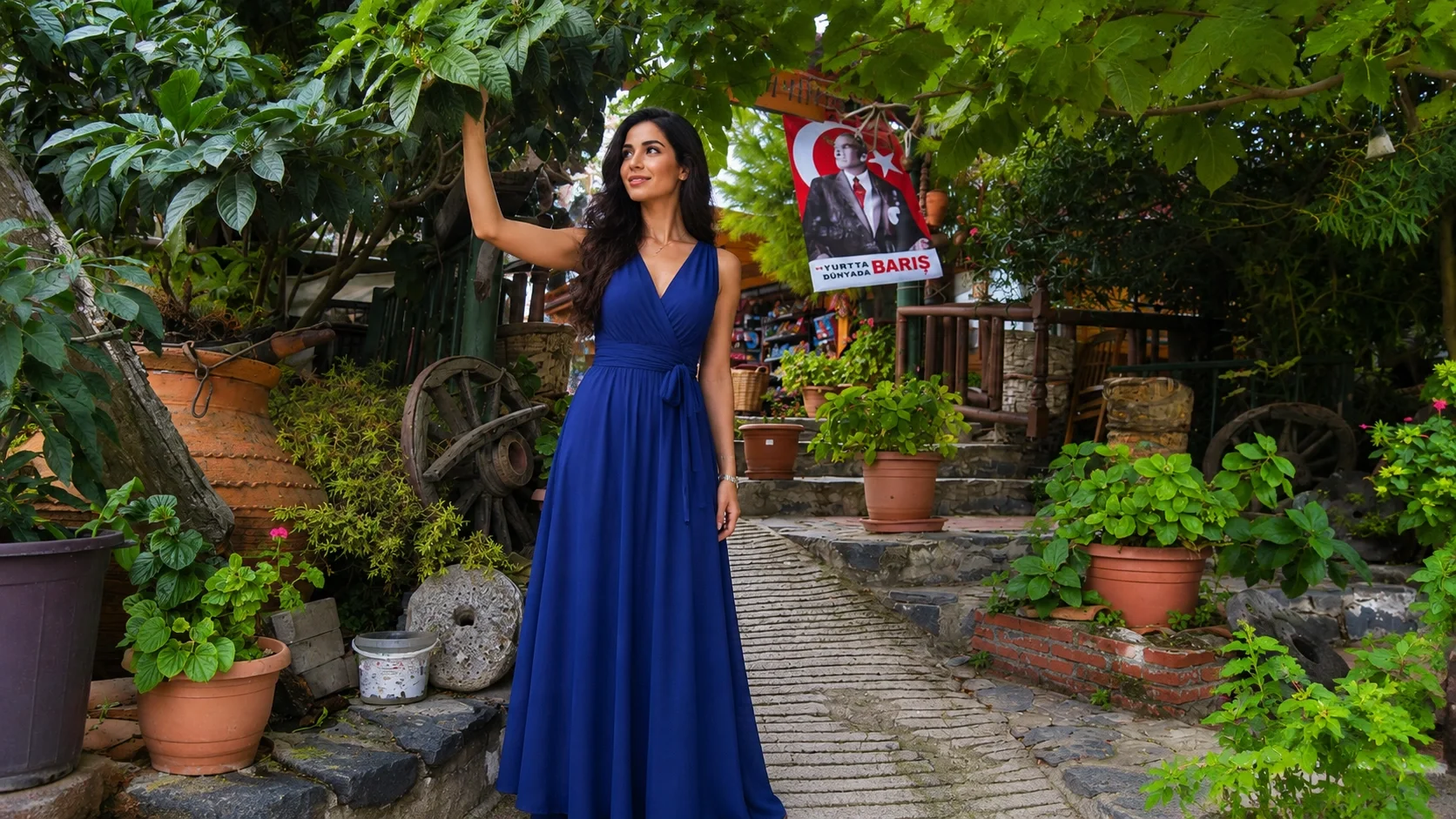
About 80 km northeast of Bursa, the town of İznik is built on the ruins of ancient Nicaea, founded in the 4th century BC and later one of the most important cities of the Byzantine Empire. In 325 AD, the First Council of Nicaea — the first ecumenical council of the Christian church — was convened here, establishing the Nicene Creed. The city walls, much of which survive to significant height, were built in the Roman and Byzantine periods; the Lefke Gate (eastern) and Istanbul Gate (northern) are especially well preserved.
Under the Ottomans, İznik became the birthplace of the distinctive blue-and-white (and later polychrome) İznik tiles that adorn mosques and palaces across Istanbul and beyond. Several active tile workshops in the town today continue this tradition, producing hand-painted ceramics in classical designs — worthwhile to visit and purchase from.
Key sites in İznik include the Orhan Mosque (formerly the Hagia Sophia of Nicaea), the İznik Museum with Roman and Byzantine artefacts, the ruins of the Nilüfer Hatun Imarethanesi, and the shoreline of İznik Lake — Turkey's fifth-largest lake and a gentle spot for a lakeside walk or meal. Recent years have seen the remains of an early Byzantine basilica submerged beneath the lake's surface become a notable attraction; the ruins are visible on clear days from a boat.
What to Eat in Bursa: The Essential Food Guide
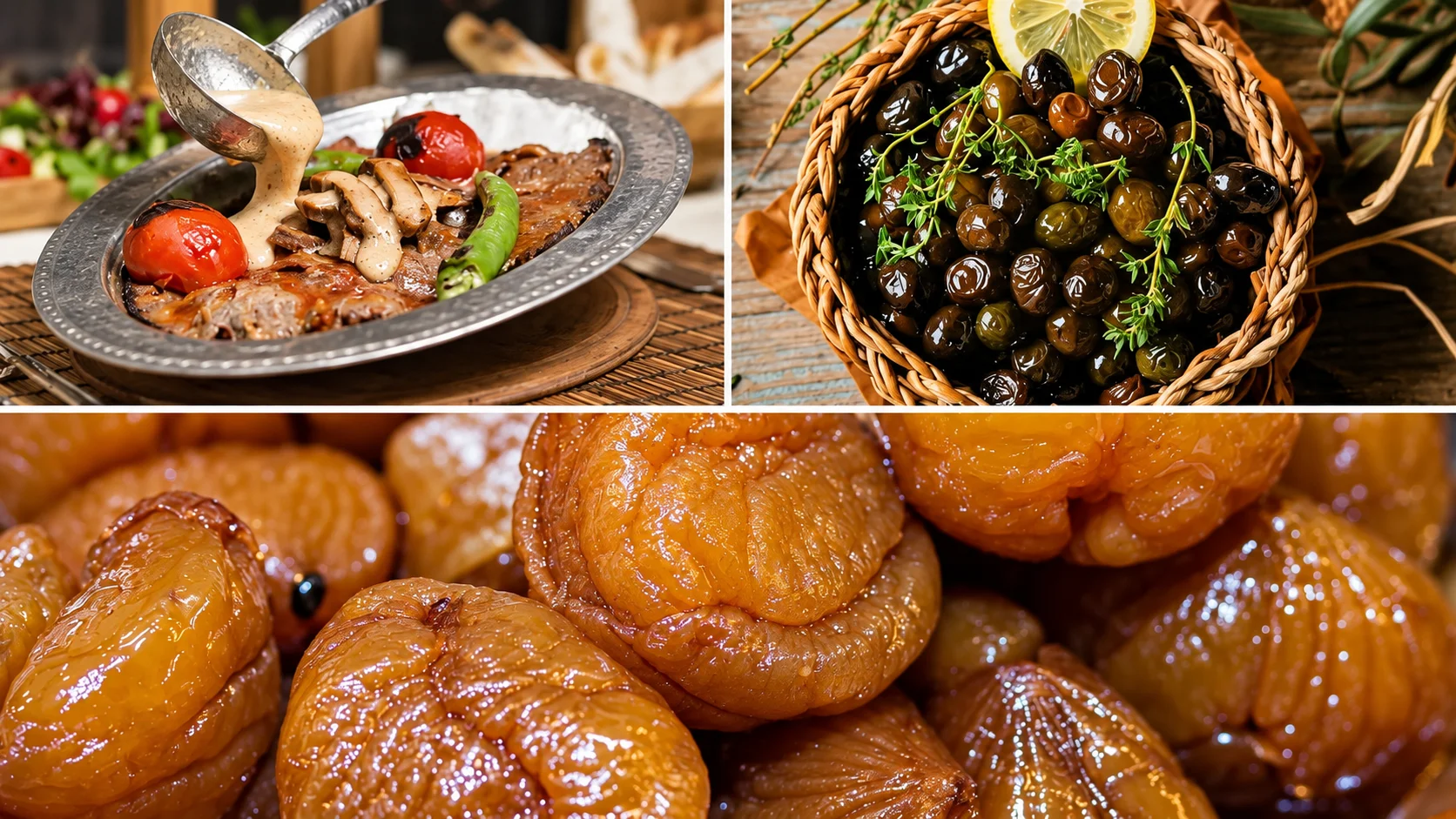
Bursa's culinary identity is rooted in Ottoman court cooking and the produce of the Marmara and Uludağ foothills. Several dishes originated here and are now found across Turkey — but eaten in their city of origin they carry an extra authenticity.
İskender Kebap
The defining dish of Bursa. İskender kebap was created in 1867 by İskender Efendi — döner meat sliced thin and served over torn pide bread, lavished with hot butter and tomato sauce, with yoghurt on the side. The dish is named after its inventor, whose descendants still operate the original restaurant under the trademark Kebapçı İskender. The combination of textures and temperatures is unlike anything else in Turkish cuisine.
Pideli Köfte
A close cousin of the İskender — hand-formed beef köfte served over pide bread with the same buttery tomato sauce and yoghurt. More approachable than İskender for those finding the döner meat too rich; equally loved by locals.
Cantık
A uniquely Bursa flatbread — thick, elongated pide filled with minced meat, baked in a wood-fired oven and served hot. A common breakfast and mid-morning snack, best eaten fresh from the bakery.
Kestane Şekeri (Chestnut Candy)
Bursa's chestnut forests produce some of Turkey's finest chestnuts; kestane şekeri is the candied result — whole chestnuts preserved in thick sugar syrup until glossy and tender. Sold boxed in every patisserie and souvenir shop, they make an excellent gift.
İnegöl Köftesi
From the İnegöl district east of Bursa, these compressed beef-and-lamb köfte are slightly elongated, prepared without garlic (a point of pride), and grilled over charcoal. The dish spread across Turkey but is truest to itself at source.
Gemlik Zeytini
Gemlik olives — small, high-oil, sweet-tasting — are grown along the southern Marmara coast and are regarded as among Turkey's best. Available at Bursa's markets and directly from producers in Gemlik town.
Where to Eat in Bursa: Notable Restaurants
Bursa's restaurant scene balances historic institutions with contemporary addresses. The following are well-established in 2026; always check current opening hours and reservation requirements before visiting.
- Kebapçı İskender (Mavi Dükkan) — The original since 1867, operated by İskender Efendi's descendants. The place for the authentic İskender kebap. Osmangazi – Tayakadın Mah.
- Uludağ Kebapçısı Cemal & Cemil Usta — Operating since 1964, widely regarded as the other great address for İskender and pideli köfte. Osmangazi – Uluyol Cad.
- Zennup 1844 — Chef Ömür Akkor's celebrated restaurant bringing Anatolian and Ottoman cuisine into a contemporary setting. The name "1844" refers to the year of the first Turkish-language cookbook. Nilüfer district.
- İskender Efendi Konağı — İskender kebap served in a historic Ottoman mansion atmosphere with meats sourced from the restaurant's own farm. Osmangazi – Kayhan Mah.
- Hayat Lokantası — An esnaf lokantası (workers' canteen) serving since 1947. Home-cooked dishes including Ottoman tirid, stuffed vine leaves and milk helva. Cash only, closes by early afternoon. Osmangazi – Tuzpazarı.
- Pidecioğlu — The canonical address for cantık and tırnaklı pide, in production since the 1860s. Osmangazi – Kayhan Mah.
- Teo's Cunda Bursa — Aegean fish and meze, with ahtapot and fresh catch, in a village setting outside Mudanya. Mudanya – Çağrışan Köyü.
- Kayhan Köftecisi — Pideli köfte and İnegöl köfte at honest prices. Nilüfer – Eker Meydanı.
Shopping in Bursa: Silk, Tiles and Local Crafts
Bursa has been a trading city since the Silk Road era, and its bazaar tradition remains alive. The best shopping for quality local products clusters around Koza Han and the covered bazaar.
- Bursa silk — The city has been synonymous with silk since Ottoman times. Koza Han sells handwoven silk scarves, ties, robes and fabric. Look for the doğal ipek (natural silk) label.
- İznik tiles and ceramics — Authentic hand-painted İznik tiles from workshops in İznik town; reproductions in Bursa's bazaar. The price difference between the two reflects the difference in quality.
- Kestane şekeri — Boxed candied chestnuts make ideal gifts. Confectioners around the bazaar sell reliable quality.
- Gemlik olives and olive oil — Available at Bursa's municipal market and directly from Gemlik producers along the coastal road.
- Modern shopping — Zafer Plaza (city centre), Korupark and Anatolium serve those seeking international brands alongside local shops.
Bursa Museums
Bursa's museum offering is solid for a city of its historical depth.
- Panorama 1326 Bursa Fetih Müzesi — 360-degree panoramic representation of the 1326 Ottoman conquest of Bursa. Osmangazi – Dikkaldırım Mah.
- Bursa Arkeoloji Müzesi — Artefacts from the Neolithic through the Ottoman period, covering Bursa's deep pre-Ottoman history. Reşat Oyal Kültür Parkı.
- Bursa Kent Müzesi — Urban history museum tracing the city's social, commercial and cultural development. Heykel, Osmangazi.
- Türk İslam Eserleri Müzesi — Housed in the Yeşil Medrese (15th century), with Qur'an manuscripts, Ottoman textiles and metalwork. Yıldırım district.
- Atatürk Evi Müzesi — The historic villa used by Atatürk during his Bursa visits, preserved with period furniture and documents. Çekirge.
- Tofaş Anadolu Arabaları Müzesi — Collection of traditional Anatolian horse-drawn carriages and transport vehicles. Osmangazi.
A 1-Day Bursa Itinerary
A single day is enough for a solid introduction to the historic centre and one nearby highlight.
- Morning (09:00–12:00) — Start at Ulu Camii (allow 30 min), then walk through the Kapalıçarşı to Koza Han (45 min for browsing). Continue uphill to Tophane for the clock tower view and Ottoman tombs (20 min).
- Late morning (12:00–14:00) — İskender kebap lunch at Kebapçı İskender or Uludağ Kebapçısı (arrive before 12:30 to avoid queues).
- Afternoon (14:00–16:30) — Drive or take a dolmuş east to the Yeşil area: Yeşil Camii and Yeşil Türbe (30 min), then continue to Cumalıkızık village (10 km, 30 min drive). Explore the village lanes and have tea or gözleme at one of the village houses.
- Late afternoon — Return to Bursa for kestane şekeri shopping in the bazaar before heading back to Istanbul.
Allow about 4–4.5 hours total travel time between Istanbul and Bursa (including ferry or road crossing).
A 2-Day Bursa Itinerary
Day 1 — Historic Core: Ulu Camii → Koza Han/Kapalıçarşı → Orhan Gazi Mosque → Irgandı Köprüsü → Tophane → Muradiye Complex. Afternoon: Yeşil Camii + Türbe → Cumalıkızık. Evening: dinner in Nilüfer district.
Day 2 — Nature and Surroundings: Morning cable car to Uludağ (hiking in summer, skiing in winter) or drive to İnkaya Çınarı. Afternoon: choose between Gölyazı for lakeside lunch and boat tour, Mudanya/Tirilye for a coastal walk, or İznik for the city walls and tile workshops. Return to Istanbul in the evening.
Bursa by Season: When to Go
- Spring (March–May) — The most pleasant time to visit the historic centre and nature areas. Waterfalls are full, the countryside is green, and the Koza Han is quiet. Uludağ's ski season may extend into March.
- Summer (June–August) — Hot in the city (often 35°C+); Uludağ offers cool respite. Gölyazı, Tirilye and Mudanya are popular on weekends. Cumalıkızık mornings are pleasant before the midday heat.
- Autumn (September–November) — Excellent weather for sightseeing, with chestnut harvest season in October. Silk Festival in June; the city returns to a local rhythm after summer.
- Winter (December–February) — Cold in the city and snowy on Uludağ. The ski resort is at full swing; the historic centre is uncrowded and atmospheric in cold weather.
The historic mosques and museums are worth visiting year-round. Uludağ skiing depends on snow conditions and should be verified before travel.
Bursa with Children
Bursa is well suited to family visits. The cable car ride to Uludağ is a reliable highlight for children. Cumalıkızık's village lanes are engaging for older children interested in history. The Bursa Arkeoloji Müzesi and Panorama 1326 museum hold children's attention well. Gölyazı and Saitabat waterfall offer outdoor activity in a relaxed setting. The Tofaş Arabaları Müzesi (antique carriage museum) also tends to fascinate younger visitors.
Interesting Facts About Bursa
- Bursa was the first capital of the Ottoman Empire, from its conquest in 1326 until around 1363 when Edirne became the seat of government.
- The city is home to the oldest known surviving Ottoman mosque still in regular use — the Orhan Gazi Mosque, built in the early 14th century.
- İznik, within Bursa province, was the site of the First Council of Nicaea in 325 AD, which defined core Christian doctrine and was attended by over 300 bishops.
- Uludağ (Mysian Olympus in antiquity) was believed in Byzantine times to be a sacred mountain; several monasteries operated on its slopes.
- The silk trade through Bursa was so significant that the city had its own standardised silk weights and measures used across the empire — the Koza Han's scales were a reference standard.
- Cumalıkızık has been continuously inhabited since the early 14th century; most of its original house stock survives intact — a rarity in Turkey.
- Bursa's chestnut forests once supplied the Ottoman palace kitchens; kestane şekeri became a fixture of the imperial table.
- İznik tiles became so sought-after in the 16th century that the Ottoman state controlled their production — individual tiles from the Blue Mosque in Istanbul are estimated to be worth tens of thousands of euros today.
Getting from Istanbul to Bursa: Transport Guide 2026
Istanbul and Bursa are about 150 km apart as the crow flies, but several crossing options exist, each with different travel times.
By Private Car or Chauffeur (Osmangazi Bridge)
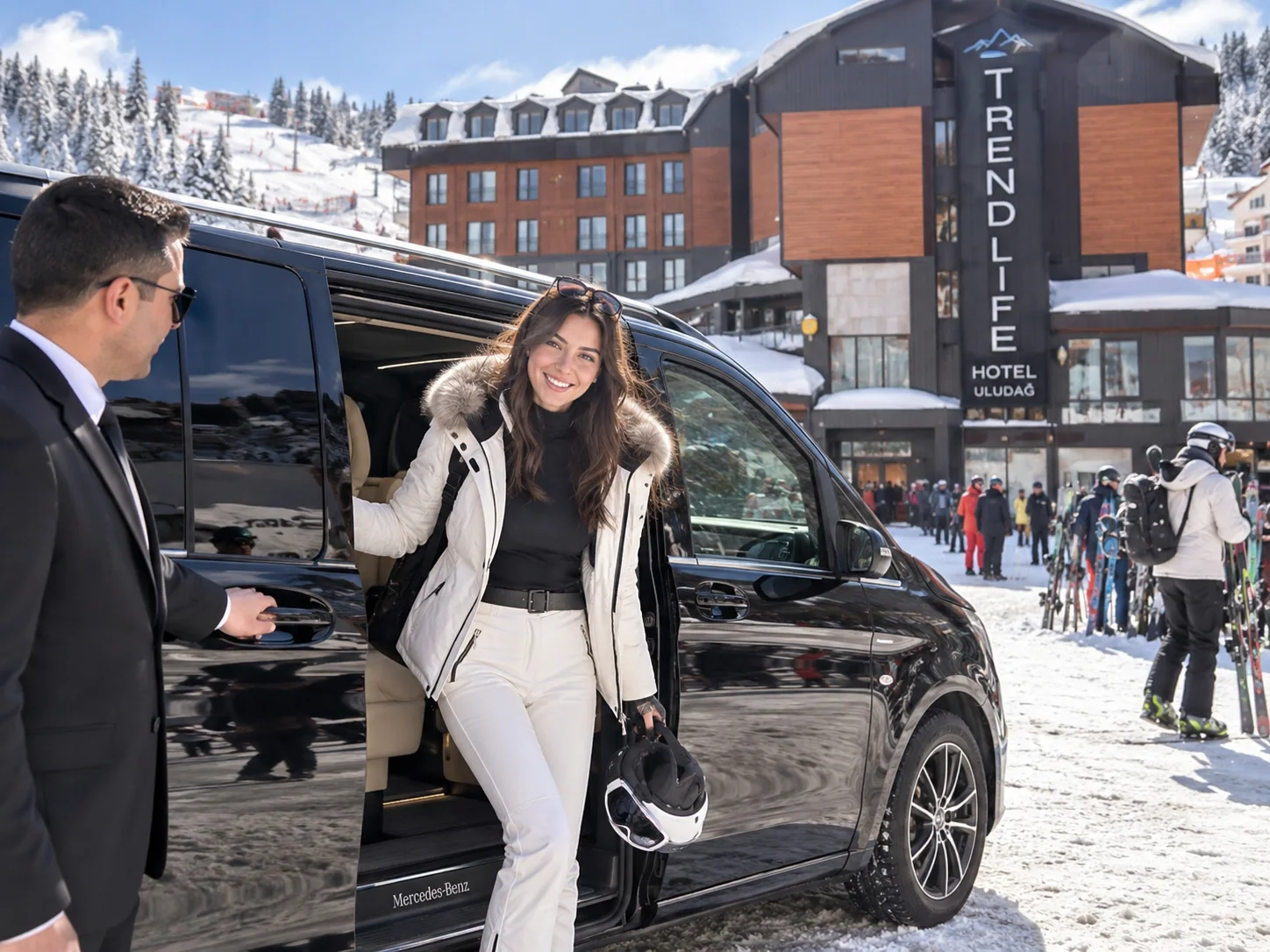
The fastest and most comfortable option. The Osmangazi Bridge crosses the Gulf of İzmit, shortening the driving distance significantly. From central Istanbul to Bursa city centre takes approximately 2–2.5 hours under normal traffic conditions. The bridge toll applies; road tolls are paid electronically. A private chauffeur service from Istanbul to Bursa provides door-to-door transfer without the need to navigate public transport connections.
By Ferry (BUDO and IDO)
Two ferry operators serve the Istanbul–Bursa sea route in 2026:
- BUDO (Mudanya–Kabataş): Fast sea bus from Mudanya (Bursa's coastal port) to Kabataş pier on the European side of Istanbul. Journey time approximately 1.5 hours. From January 2026, the Istanbul terminal is Kabataş (previously Sirkeci/Eminönü). Ticket: approximately 625 TL one way. Operates daily.
- IDO (Güzelyalı–Yenikapı): Fast ferry from Güzelyalı terminal (near Bursa) to Yenikapı on the European side. Journey time approximately 1 hour 35 minutes. Check current schedules at the IDO website.
Note that Mudanya is about 30 km from central Bursa; local bus or taxi connection is needed at the Bursa end. The ferry option adds scenic value but requires more total travel time than the Osmangazi Bridge route.
By Bus
Intercity coaches depart from Istanbul's main bus terminals (Esenler Otogarı, Alibeyköy, Dudullu) to Bursa Otogarı regularly throughout the day. Journey time is typically 3–4 hours depending on traffic. Operators include Kamil Koç, Nilüfer and Metro Turizm. The bus is the budget-friendly option; the Osmangazi Bridge route speeds the journey, though road traffic can add time.
From Istanbul Airport (IST) or Sabiha Gökçen (SAW)
There is no direct public transport connection from either Istanbul airport to Bursa. From Istanbul Airport (IST), the fastest option to Bursa is a private transfer via the Osmangazi Bridge, approximately 2.5–3 hours door-to-door depending on traffic. From Sabiha Gökçen (SAW) on the Asian side, the drive to Bursa is approximately 2–2.5 hours via the TEM motorway and Osmangazi Bridge.
For a guided Bursa day trip from Istanbul with a private driver, all transport logistics — airport pickup, Bursa sightseeing, return to Istanbul — are handled in one service.
Frequently Asked Questions About Bursa
What are the most important things to see in Bursa?
Ulu Camii (Grand Mosque), Koza Han, Tophane tombs, Yeşil Camii and Yeşil Türbe, and Muradiye Complex in the city centre. Cumalıkızık village (UNESCO) is essential for Ottoman heritage. Uludağ for mountain activities; Gölyazı for a lakeside half-day; İznik for ancient history and tiles.
Is Bursa worth a day trip from Istanbul?
Yes — a day trip from Istanbul covers the historic centre (Ulu Camii, Koza Han, Yeşil area) and Cumalıkızık comfortably. Allow about 4–4.5 hours total round-trip travel time by private car. Two days allows a deeper visit including Uludağ or the Marmara coast.
Is Cumalıkızık a UNESCO World Heritage Site?
Yes. In 2014, UNESCO inscribed Bursa and Cumalıkızık: the Birth of the Ottoman Empire as a World Heritage Site. The designation covers both the historic monuments in Bursa city centre and the village of Cumalıkızık, which preserves early Ottoman domestic architecture in extraordinary completeness.
Is the Bursa cable car (teleferik) operating in 2026?
Yes, the Bursa Teleferik is operational in 2026. Round-trip fare is 500 TL (250 TL student). It operates from 06:00 on weekdays and runs daily, with weather-dependent temporary closures. Check the official Bursa Teleferik website on the day of your visit.
How do I get from Istanbul to Bursa by ferry?
Two ferry options in 2026: BUDO operates from Mudanya to Kabataş (Istanbul), approximately 1.5 hours, 625 TL; IDO operates from Güzelyalı to Yenikapı, approximately 1h35min. Note that Mudanya is 30 km from Bursa city centre — a local bus or taxi is needed at the Bursa end. The Osmangazi Bridge route by car is faster overall.
Where to eat İskender kebap in Bursa?
Kebapçı İskender (Mavi Dükkan) is the original restaurant, operating since 1867 and run by descendants of İskender Efendi, the dish's creator. Uludağ Kebapçısı Cemal & Cemil Usta (since 1964) is the other highly regarded address. Arrive before 12:30 at either restaurant to avoid long queues at lunchtime.
What is the best season to visit Bursa?
Spring (April–May) is ideal for the historic centre and nature sites. Autumn (September–October) is also excellent, with the chestnut harvest season adding to the food experience. Winter is best for skiing on Uludağ. Summer is hot in the city but pleasant at altitude on Uludağ.
How far is Cumalıkızık from Bursa city centre?
Approximately 10 km east via the Yıldırım district. By car, the drive takes about 20–25 minutes. Dolmuş (shared taxi) services also run from the city centre.
What souvenirs should I buy in Bursa?
Handwoven silk scarves or fabric from Koza Han, kestane şekeri (candied chestnuts) from bazaar confectioners, Gemlik olives and cold-pressed olive oil, and hand-painted İznik tiles from workshops in İznik town (more authentic than the copies sold in the bazaar).
How long does it take to drive from Istanbul to Bursa?
Via the Osmangazi Bridge (the fastest route), approximately 2–2.5 hours from central Istanbul under normal traffic conditions. From Istanbul Airport (IST), allow approximately 2.5–3 hours. From Sabiha Gökçen (SAW), approximately 2–2.5 hours. Traffic on Istanbul's ring roads can add significant time during peak hours.