
Eskişehir sits at a crossroads that most visitors miss. Two hours from Istanbul by high-speed train, it holds one of Turkey's liveliest historic quarters, a cluster of serious museums and — in its wider province — UNESCO World Heritage architecture, an ancient Phrygian capital and canyons that see a fraction of the traffic they deserve. This guide covers the city and all nine districts of Eskişehir province, organised by region so you can plan a single-day sprint or a week-long exploration.
Why Eskişehir Is Different
Unlike most Turkish cities that traffic in a single headline attraction, Eskişehir multiplies. The city centre offers Odunpazarı's Ottoman streetscape alongside the contemporary architecture of the Odunpazarı Modern Museum (OMM). The Porsuk River runs through it, lined with cafés and a gondola tradition that locals treat with affectionate irony. Drive 90 km southeast and you reach the Phrygian Valley: 2,600-year-old rock-cut façades standing in open scrubland beside Roman cisterns and Byzantine chapels. Farther southeast: Sivrihisar's Ulu Camii, a 13th-century wooden mosque inscribed on the UNESCO World Heritage List in 2023. Eskişehir is not one thing; it is many, stacked surprisingly close together.
Quick Picks
- Best single half-day: Odunpazarı quarter on foot — cobblestones, restored Ottoman houses, meerschaum workshops
- Best museum: Odunpazarı Modern Museum (OMM) — contemporary art in a striking stacked-timber building
- Best ancient site: Midas Monument (Yazılıkaya) in the Phrygian Valley — 17 m tall, circa 600 BC
- Best UNESCO site: Sivrihisar Ulu Camii — 67 carved wooden columns, inscribed 2023
- Best nature day: Avlakkaya Canyon (Mihalgazi) — slot canyon, footbridges, minimal crowds
- Best local buy: Meerschaum (lületaşı) — Eskişehir is the world's primary source
Odunpazarı Historic District
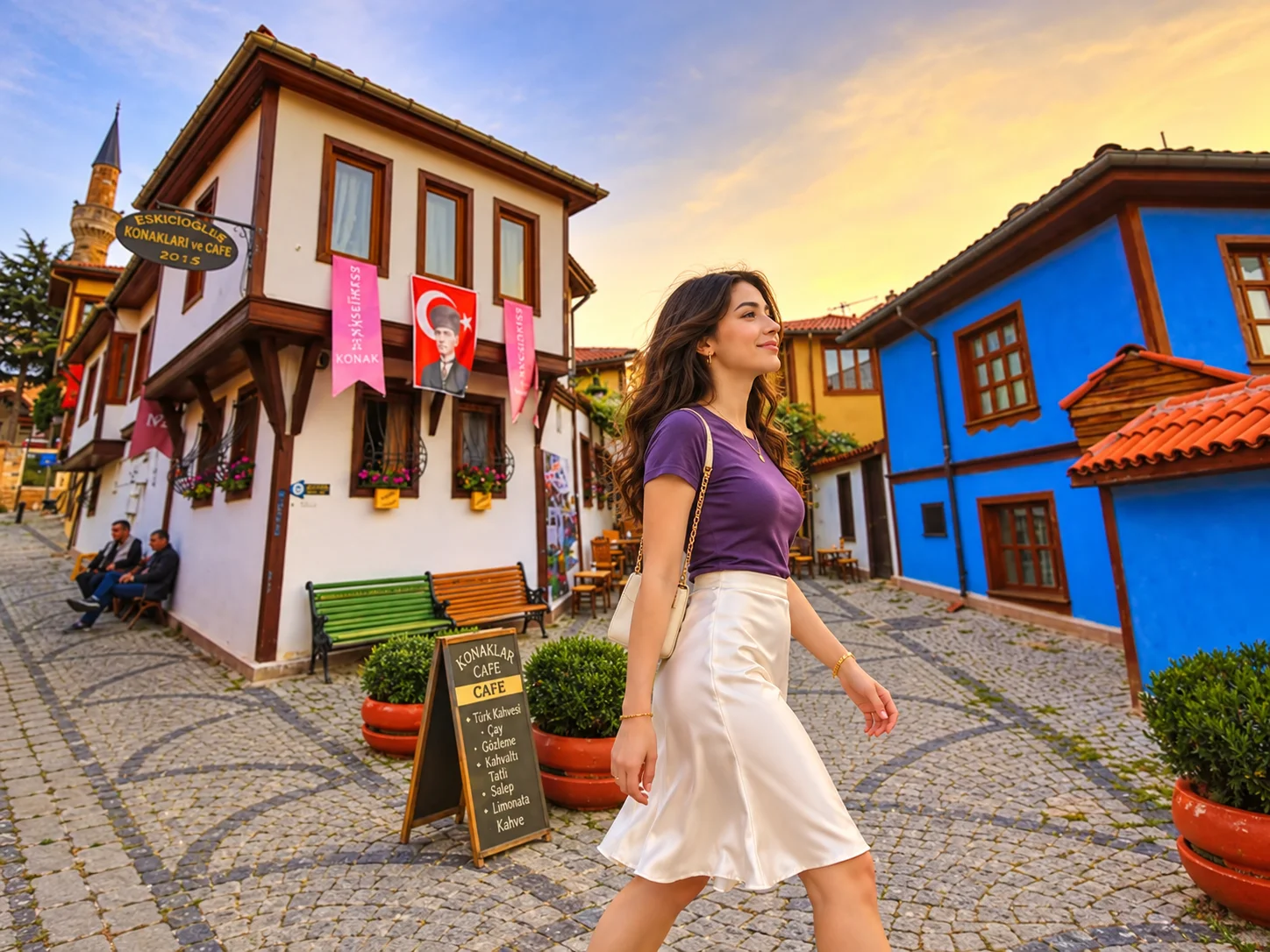
Odunpazarı's restored Ottoman houses — on Turkey's Tentative UNESCO list since 2012.
Odunpazarı — literally "the timber market" — is the historic core of Eskişehir: a maze of steeply sloping streets lined with restored Ottoman timber-frame houses painted in ochre, terracotta, sage and cream. The neighbourhood has been on Turkey's Tentative UNESCO World Heritage List since 2012; full inscription has not yet been awarded, but the preservation effort has transformed it into one of Anatolia's most photographed streetscapes.
The main walking area runs from Kurşunlu Camii through the craft quarter near Atlıhan. Most houses date from the 18th and 19th centuries; many have been converted into boutique hotels, meerschaum workshops, ceramics studios and cafés. Allow 2–3 hours to walk without rushing. Odunpazarı is tram-accessible from the Köprübaşı stops; the cobbled climb into the old quarter from the tram takes about ten minutes on foot.
Kurşunlu Complex
At the foot of the old quarter stands the Kurşunlu Complex (Kurşunlu Külliyesi), built between 1517 and 1525 under the patronage of Grand Vizier Çoban Mustafa Pasha. The complex includes a mosque with a distinctive lead-covered dome (from which its name derives), a medrese, a han, a hamam and a library. The architect is believed to be Acem Ali — the chief imperial architect of the period, a predecessor of Mimar Sinan rather than a student. The complex is open to visitors and the mosque is still in active use.
Odunpazarı Modern Museum (OMM)
Opened in 2019, the Odunpazarı Modern Museum — universally called OMM — immediately became one of Turkey's most architecturally significant art spaces. The building by Japanese studio Kengo Kuma + Associates is composed of stacked timber modules that echo the overlapping rooflines of the Ottoman houses around it. Inside, the collection focuses on 20th and 21st-century Turkish and international art, with rotating exhibitions typically running 3–6 months. The permanent collection alone is worth an hour; check the OMM website for current shows.
Meerschaum and Atlıhan Crafts
Eskişehir is the world's primary source of meerschaum (lületaşı), a soft white mineral historically prized for carving into pipes, figurines and jewellery. The Atlıhan Çarşısı, a covered craft market near the historic centre, is the best place to watch carvers at work and buy directly from producers. Quality varies considerably: hand-carved pieces take days to complete and are priced accordingly; machine-finished souvenirs are much cheaper. Genuine meerschaum is light, porous and warm to the touch — always ask about provenance.
Museums of Eskişehir City
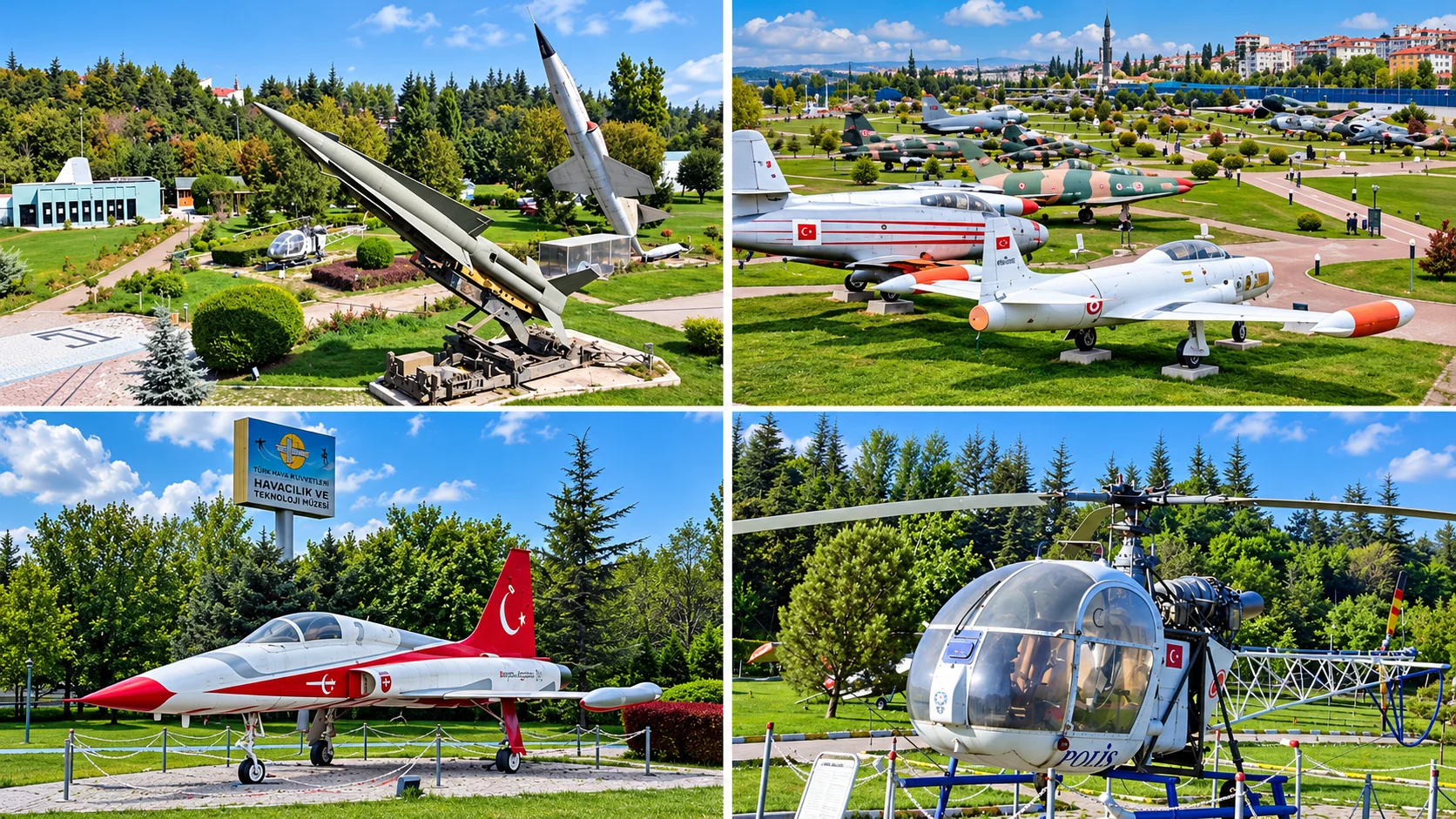
Eskişehir has built an unusually dense museum culture for a city its size:
- Eskişehir Aviation Museum (Havacılık Müzesi): A large outdoor and indoor collection of military jets, helicopters and propeller aircraft. Located near the military airbase complex on the city's edge. Low or free entry.
- Wax Museum (Balmumu Müzesi): Turkish and international figures in wax — popular with families and school groups.
- Glass Arts Museum (Cam Sanatları Müzesi): One of Turkey's most comprehensive glass art collections, traditional and contemporary. The building itself is worth a look.
- Eti Archaeology Museum (Eti Arkeoloji Müzesi): Regional finds from the Chalcolithic through Byzantine periods; strong Phrygian section and coin collection. Central location.
- TÜRASAŞ Devrim Automobiles Museum: Turkey's 1961 Devrim prototype and related rail and industrial history, housed in the workshops of TÜRASAŞ (the national rail vehicle manufacturer). Open Tue–Fri 10:00–17:00, weekends 09:00–17:00, closed Monday. Group visits by appointment.
- Atatürk House Museum: A preserved historic residence associated with Atatürk's visits to the city, with period furnishings and photographs.
Porsuk River and the Adalar
The Porsuk River runs through the heart of Eskişehir's modern centre, flanked by a landscaped waterfront walkway. The Adalar — a string of small islands created by widening the river channel — host cafés, gondola rides, pedalos and connecting footpaths across several small parks. The riverside is most animated on summer evenings; in winter it retains a pleasant, unhurried quality. The gondola is Eskişehir's most-photographed icon and mostly a children's attraction; the walkway is pleasant for 30–45 minutes regardless of season.
Hamamyolu and City Centre Walks
Hamamyolu Caddesi is Eskişehir's main shopping and café street, stretching largely pedestrianised from the historic centre towards the university quarter, lined with independent cafés and historic buildings that survived 20th-century reconstruction. The city's tram network (ESTRAM) makes it easy to move between Hamamyolu, Odunpazarı and the Adalar without a car.
Sazova Science, Art and Culture Park
Sazova is Eskişehir's flagship urban park — a 353-hectare green space on the city's western edge combining open lawns, a botanic garden, a fairground, a science museum, a castle replica, an observation tower and a large lake for boats and pedalos. It is the city's main recreation ground, most lively at weekends. Entry to the park is free; individual attractions charge modest fees. Accessible by tram.
Han District and the Phrygian Valley
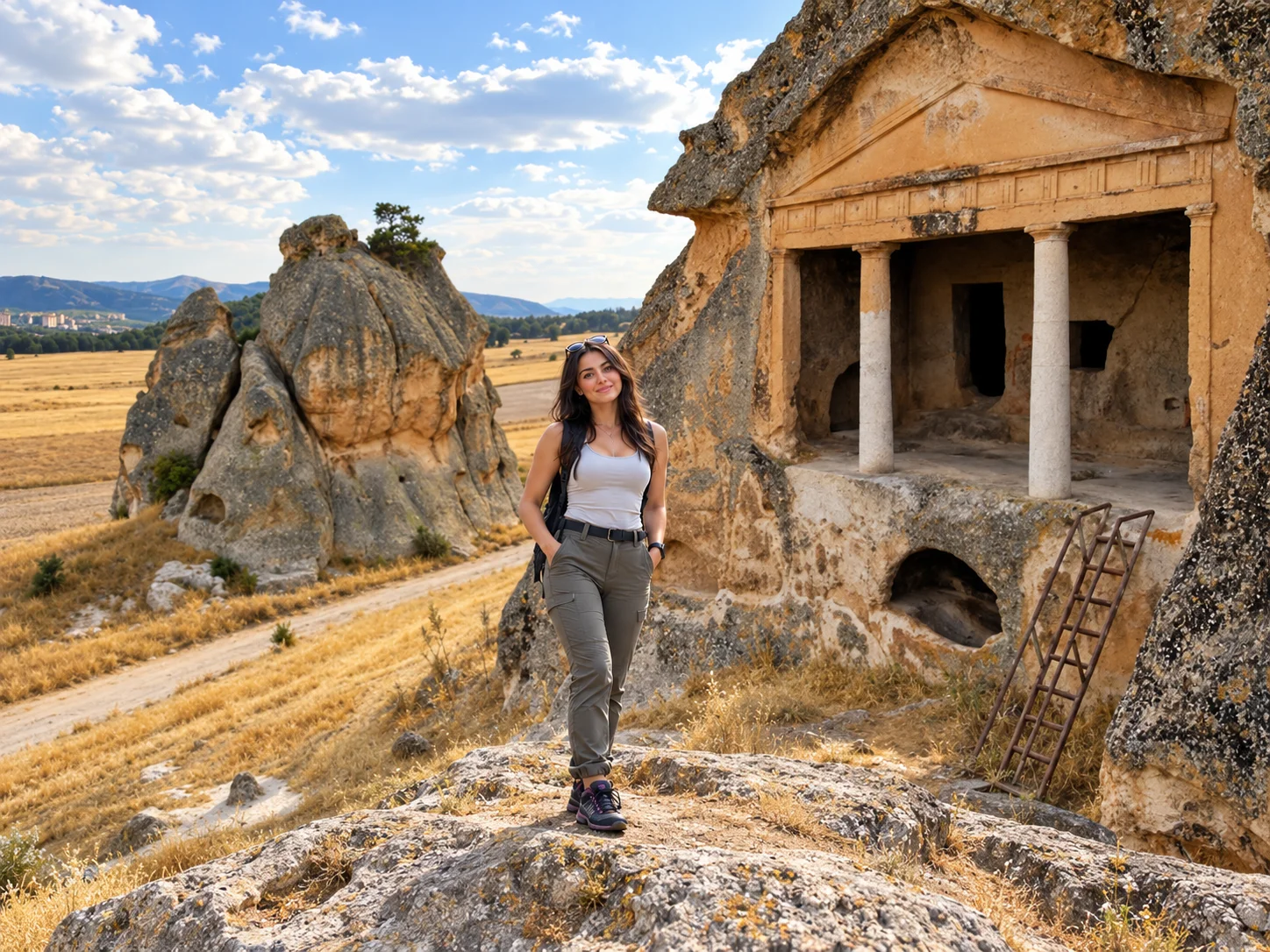
Gerdekkaya — a Hellenistic-period rock façade (3rd–1st century BC), Çukurca village, Seyitgazi district.
The Han district, 82 km southeast of Eskişehir city, is the gateway to the Eskişehir section of the Phrygian Valley (Frig Vadisi). The valley stretches across three provinces — Eskişehir, Afyonkarahisar and Kütahya — and contains one of Anatolia's densest concentrations of Phrygian rock monuments: carved façades, cisterns, tumuli, rock-cut tombs and early Byzantine chapels. Most are freely accessible across open terrain. You can also explore the Kütahya and Afyonkarahisar sections of the valley from our Turkey travel guide.
Key sites accessible from Han district:
- Gerdekkaya: A Hellenistic-period rock-cut temple façade measuring approximately 4.85 × 6.75 × 8.30 m, near Çukurca village in Seyitgazi district. Dating from the 3rd to 1st century BC with later Roman and Byzantine use. Freely accessible.
- Döğer Valley sites: A concentration of Phrygian rock carvings, inscriptions and carved niches near the village of Döğer, accessed via unpaved tracks.
- Yazılıkaya village: The settlement containing the Midas Monument — see the next section.
Midas Monument
The Midas Monument is the most important Phrygian archaeological site in Turkey. Located at Yazılıkaya village in Han district, it is a rock façade cut from a natural cliff face, 17 metres tall and 16.5 metres wide, carved around 600 BC. The surface is decorated with geometric meander patterns, a stepped throne and a dedicatory inscription in the Phrygian alphabet — one of the longest surviving Phrygian texts. Despite its popular name, this is not the tomb of King Midas: it is a Phrygian religious monument, most probably a cult façade associated with the goddess Kybele or a related deity. No burial chamber exists behind the carved surface.
The site is freely accessible with a small visitor area and basic information panels. Roads are paved for the final approach; a short walk from the car park reaches the cliff. Combine with a drive through the wider Phrygian Valley for a half-day excursion from Eskişehir.
Han Underground Structures
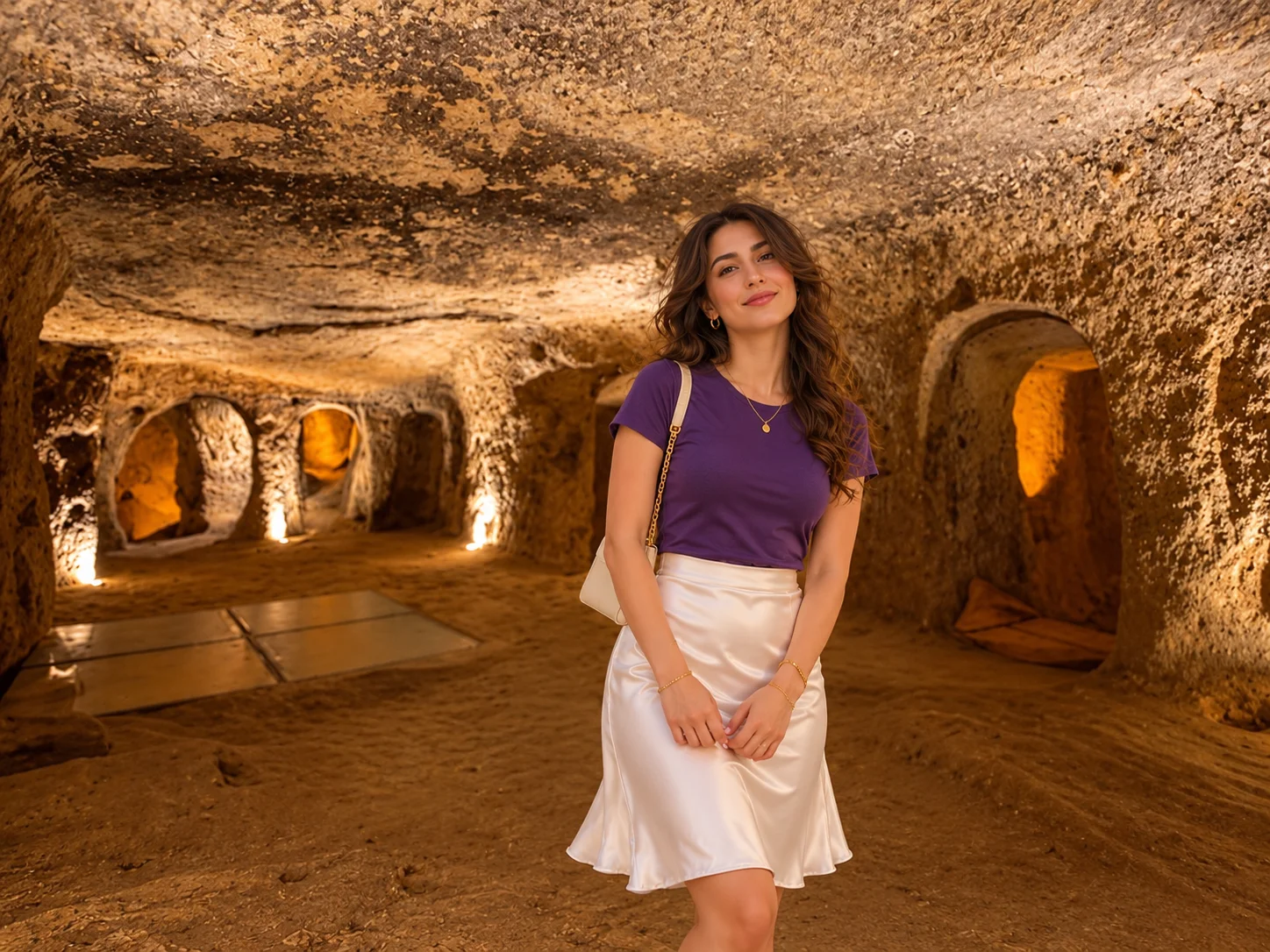
Han's rock-cut underground structures — Roman-through-Byzantine-period galleries, grain chambers and burial niches.
In the hills around Han district, over 100 rock-cut underground structures have been documented: galleries, grain storage chambers, cisterns and burial niches dating from the Roman through Byzantine periods. These are distinct from the large underground cities of Cappadocia — there is no multi-storey tunnel labyrinth here — but the concentration and variety of the carvings rewards visitors with a specialist interest. Entry is free; the site is a second-degree archaeological zone. A vehicle and basic footwear are required.
Seyitgazi
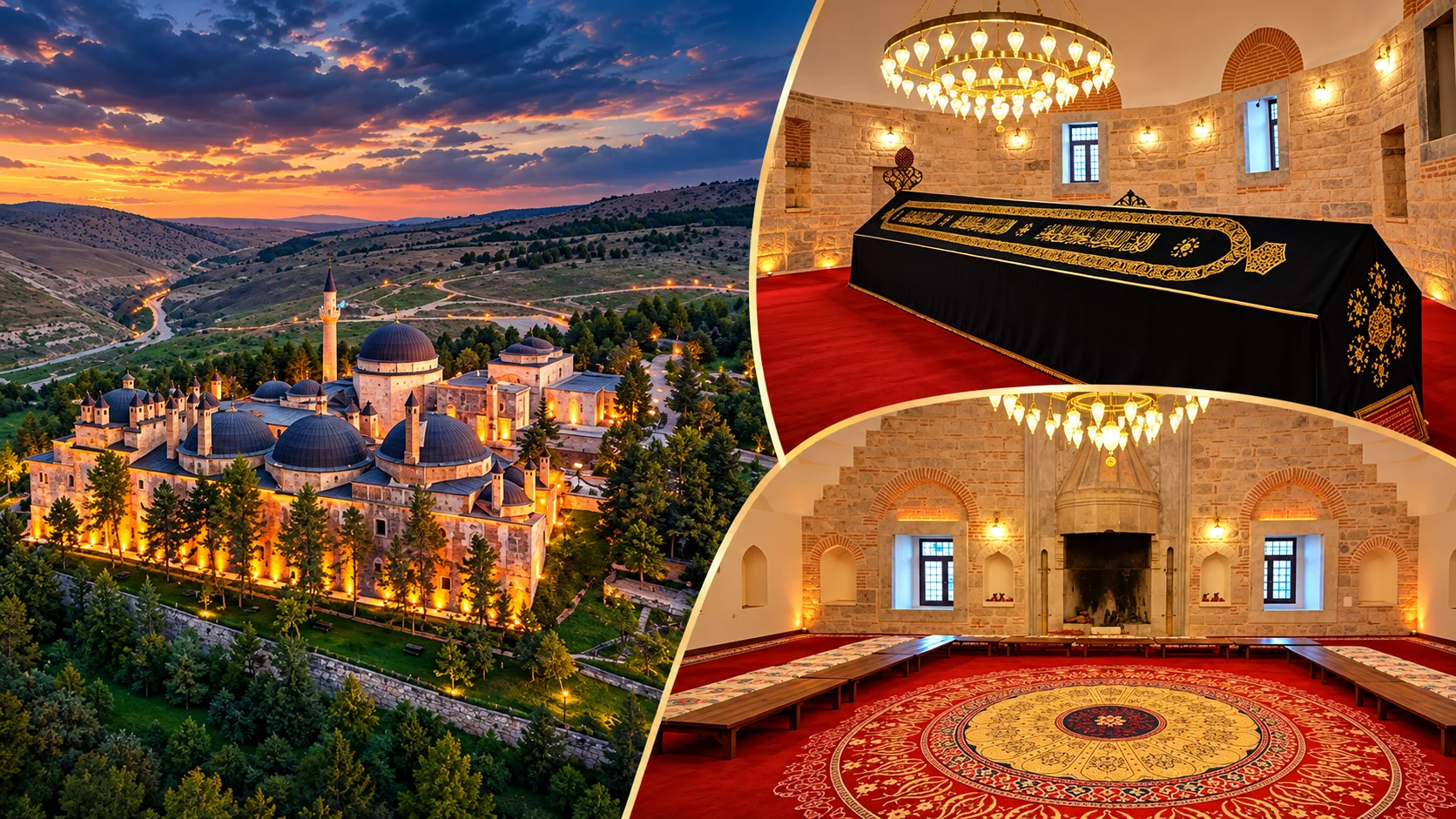
Seyitgazi, 45 km southeast of Eskişehir city, is dominated by the Battal Gazi Külliyesi — a hilltop complex of Seljuk and Ottoman structures built around the supposed tomb of Battal Gazi (Seyyid Battal Gazi), an 8th-century military figure who became a legendary hero in Anatolian Islamic tradition. The complex includes a türbe (mausoleum), mosque, medrese and zaviye (dervish lodge), with sections dating from the 12th century and later Ottoman restorations. It remains an active pilgrimage site. Seyitgazi is easily visited as a half-day from Eskişehir, and Gerdekkaya in the same district can be combined in the same drive.
Sivrihisar
Sivrihisar, 75 km east of Eskişehir city, is a historic market town set beneath a volcanic rock outcrop. Its old quarter retains a significant concentration of Ottoman wooden houses, and the town is strongly associated with Nasreddin Hoca — the 13th-century folk-philosopher whose satirical stories have been retold across Anatolia, the Balkans and Central Asia for seven centuries. The Friday market draws producers from surrounding villages and is one of central Anatolia's most authentic traditional markets.
Sivrihisar Ulu Camii — UNESCO World Heritage Site 2023
Sivrihisar's Ulu Camii is among the finest surviving examples of the Anatolian wooden hypostyle mosque. Built in 1275 during the Seljuk period, it features a prayer hall supported by 67 elaborately carved wooden columns — one of the highest column counts of any surviving medieval wooden mosque in Anatolia. The carved capitals, muqarnas-style details and mihrab exhibit craftsmanship representative of 13th-century Seljuk woodworking at its peak. The mosque holds approximately 2,500 worshippers.
In September 2023, Sivrihisar Ulu Camii was inscribed on the UNESCO World Heritage List as part of the serial site Wooden Hypostyle Mosques of Medieval Anatolia, alongside Eşrefoğlu Mosque in Beyşehir (Konya), Kasabaköy Mosque in Kastamonu, Arslanhane Mosque in Ankara and the Ulu Camii in Afyonkarahisar. The inscription — awarded at the 45th World Heritage Committee session in Riyadh — recognises the outstanding universal value of the Anatolian tradition of using local timber to create mosque interiors of exceptional spatial quality. The mosque is open to visitors outside prayer times; dress modestly and remove footwear at the entrance.
Pessinus Ancient City
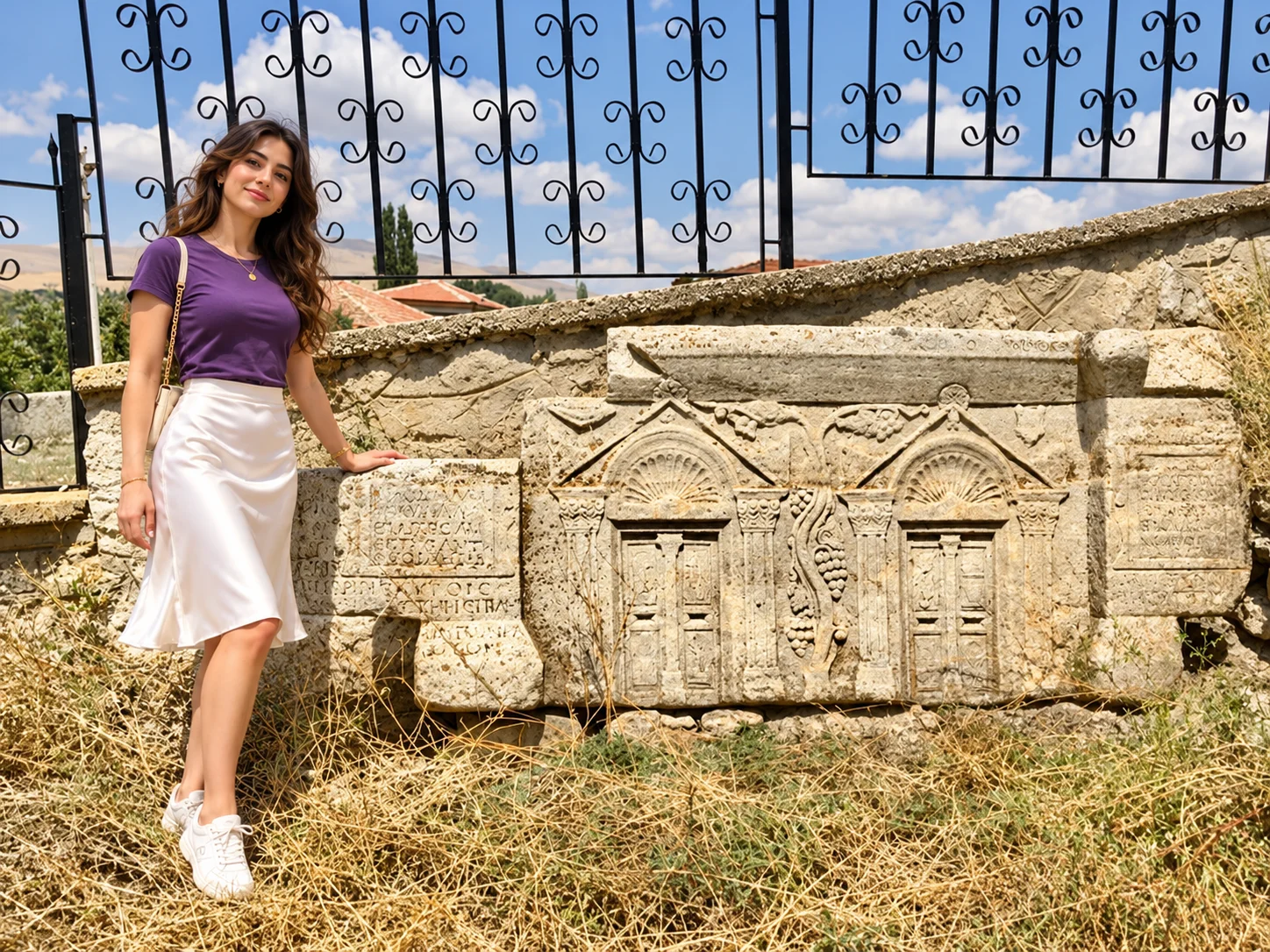
Pessinus at Ballıhisar — one of antiquity's most important cult centres of the goddess Kybele, under active excavation.
Pessinus, located near Ballıhisar village approximately 13 km south of Sivrihisar, was the most important cult centre of the Phrygian goddess Kybele (Cybele) in the ancient world. A major religious and commercial centre from at least the 6th century BC through the Roman Imperial period, it gained international significance in 205 BC when a sacred black stone from Pessinus — identified as the goddess herself — was brought to Rome at the direction of the Sibylline Books, an influential moment in the transmission of Anatolian religion to the Mediterranean world.
Excavations have been conducted by the Ghent University team since the 1960s with interruptions; fieldwork resumed in 2024. Visible remains include a paved sacred way, temple foundations, portico columns and Roman-period civic structures. Entry is free, open daily; information panels are in Turkish. Combine with Sivrihisar Ulu Camii for a full-day southeast circuit from Eskişehir.
Nasreddin Hoca
Nasreddin Hoca (c. 1208–1284) is among the most celebrated figures in Turkish and Central Asian folk humour — a satirical philosopher whose short, paradoxical stories have been retold across Anatolia, the Balkans, the Middle East and Central Asia for seven centuries. Sivrihisar claims him as its native son and celebrates him with a statue, a cultural centre and an annual festival typically held in July. His stories almost always involve him riding a donkey backwards, outwitting a judge or exposing social absurdity through deliberately "wrong" logic. The festival draws visitors from across Turkey and the Turkish diaspora.
Çifteler and Sakaryabaşı Springs
Çifteler district, southeast of the city, contains Sakaryabaşı — the source of the Sakarya River, one of Turkey's longest. The spring complex is a popular picnic and recreation site set in woodland with a modest waterfall and the spring pool. An easy half-day drive from Eskişehir, it combines naturally with the Phrygian Valley route. No significant admission fee; a public recreation park.
Mihalıççık: Gürleyik Waterfall and Çatacık Forest
Mihalıççık district, northeast of the city, contains two of Eskişehir province's most accessible nature destinations. Gürleyik Şelalesi is a 15-metre waterfall on the Gürleyik stream, reachable via a short forest walk and at its most impressive in spring. Çatacık Ormanı is a protected oak-and-hornbeam forest popular with mountain bikers and trail runners, hosting an annual race. Both are within 80–90 km of the city centre.
İnönü
İnönü district, northwest of the city, is named after the two Battles of İnönü (1921) fought during the Turkish War of Independence. An open-air museum and memorial at the battlefield commemorates the engagements with improved interpretive signage. The town itself is modest; the battlefield is the primary visitor draw, worthwhile for those following the War of Independence trail across western Anatolia.
Mihalgazi and Avlakkaya Canyon
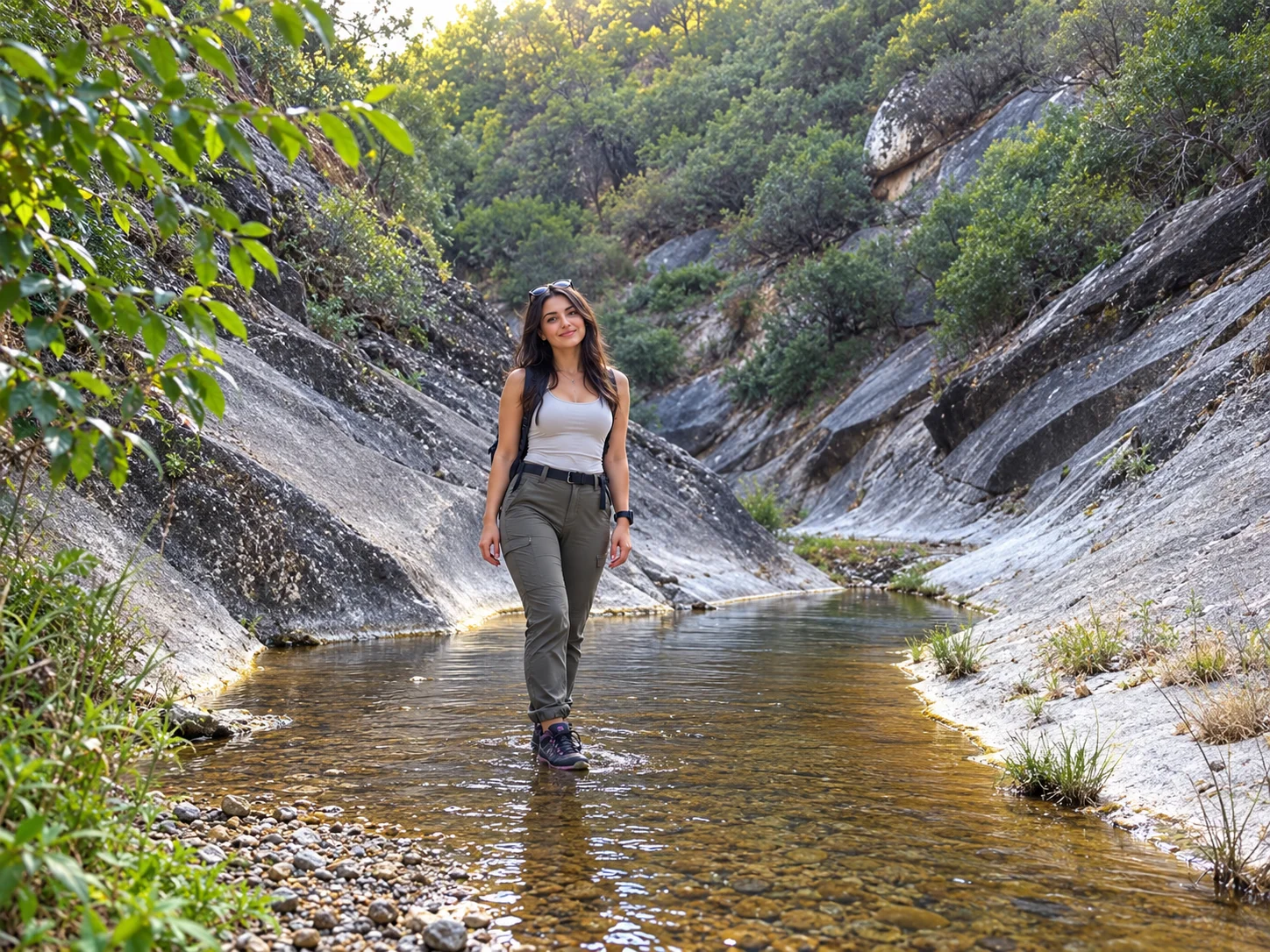
Avlakkaya Canyon — Mihalgazi's narrow slot canyon is one of Eskişehir province's most underrated nature sites.
Avlakkaya Canyon (Avlakkaya Kanyonu) in Mihalgazi district, approximately 45 km northwest of the city near Hekimdağ village, is Eskişehir's most striking geological attraction — a narrow slot canyon cut through volcanic rock with walls rising several metres on either side. The canyon trail with wooden footbridges takes 1.5–2.5 hours round-trip and is suitable for most fitness levels outside high-flood conditions. Cycling routes also pass through the area. Entry is free. The Mihalgazi district also borders the Sakarya River and contains several villages preserving traditional wooden architecture unchanged by tourism.
Eskişehir Cuisine

Eskişehir's food culture reflects its history as a settlement city for Crimean Tatar, Balkan and Caucasian refugees in the late Ottoman period. The most distinctive dish is çibörek — a thin, crispy half-moon fried pastry filled with seasoned minced meat, brought by Crimean Tatar settlers. You will find çibörek across central Anatolia, but Eskişehir is regarded as its natural home. It is served at dedicated çibörekçi shops, usually as a snack or light lunch.
Other local staples include balaban trout from the cold Phrygian hill streams; tarhana soup made from sun-dried fermented wheat and yoghurt; höşmerim, a sweet sheep's-milk cheese dessert common across the region; and various pastries from the Tatar and Balkan bakery tradition. The city's café culture, sustained by a combined student population of over 100,000 across Anadolu and Osmangazi universities, is particularly strong along Hamamyolu Caddesi and the Adalar waterfront.
What to Buy in Eskişehir
- Meerschaum (lületaşı): Pipes, figurines, jewellery. Buy from Atlıhan Çarşısı workshops — not street stalls — to ensure authenticity and quality.
- Çibörek and lokum: Ready-made or dry-packed for travel, from dedicated shops near the old quarter.
- Ceramics and glasswork: OMM's museum shop stocks contemporary design pieces; local ceramics studios in Odunpazarı offer hand-painted work.
- Tatar embroidery and textile crafts: Available at the Atlıhan covered market and selected craft shops in the old quarter.
Suggested Itineraries
1 Day — City Essentials
Morning: Odunpazarı quarter on foot (2 hrs) → Kurşunlu Complex → Atlıhan meerschaum market. Afternoon: OMM (1.5 hrs) → Porsuk riverside walk → Adalar. Evening: Çibörek dinner on Hamamyolu or in the old quarter.
2 Days — City + Phrygian Valley
Day 1: City essentials as above. Day 2: Drive southeast to Han → Gerdekkaya (Seyitgazi district) → Midas Monument at Yazılıkaya → Han underground structures. Return via Seyitgazi (Battal Gazi Külliyesi). Dinner in Eskişehir.
3 Days — City + Valley + Sivrihisar
Days 1–2 as above. Day 3: Drive east to Sivrihisar → UNESCO Ulu Camii → old quarter → Pessinus Ancient City (Ballıhisar). Return to Eskişehir or continue exploring central Anatolia.
Extended — Full Province Circuit
Add: Çifteler/Sakaryabaşı springs (Day 4), Avlakkaya Canyon/Mihalgazi (Day 5), Mihalıççık/Gürleyik Waterfall (Day 6). A private intercity car with driver makes the cross-province logistics manageable without timetable constraints and is ideal for covering the Phrygian Valley's spread-out archaeological sites in a single day.
Best Time to Visit
Spring (April–May) is the most pleasant for outdoor sites: the Phrygian Valley is green, Gürleyik Waterfall runs at full strength and Avlakkaya Canyon is at its most photogenic. Temperatures are mild (12–22°C). Summer (June–August) brings heat inland (30–38°C) but offers long daylight hours — good for early-morning archaeology visits. City museums and Odunpazarı are comfortable year-round. Autumn (September–October) is excellent: cooler temperatures, harvest atmosphere at Sivrihisar's Friday market, less visitor pressure. Winter (November–March) is cold (often below freezing at night) and can bring snow to the Phrygian Valley; city museums and Sivrihisar Ulu Camii remain accessible but outdoor archaeology requires flexible planning. The Nasreddin Hoca Festival runs in Sivrihisar in July; Eskişehir International Film Festival in late October or November.
Getting There
By high-speed train (YHT): The most practical approach from Istanbul. TCDD YHT services from Istanbul Pendik (with Marmaray connections) take approximately 1 h 40 min–2 h; from Ankara around 1 h 20 min. Services are frequent; book via tcdd.gov.tr. The Eskişehir YHT station is central and tram-accessible.
By road: Eskişehir is on the E90 motorway between Istanbul (235 km, approximately 2.5 hrs) and Ankara (235 km, approximately 2.5 hrs). Intercity bus services run frequently from both cities.
By air: Hasan Polatkan Airport (AOE), 22 km from the city centre, had very limited scheduled commercial service as of 2026. It is not a reliable option for regular travel. Verify current routes before making plans around it — the high-speed train is faster and more predictable from Istanbul or Ankara.
Getting Around
City: ESTRAM tram network covers Hamamyolu, the Adalar, Sazova Park and the main bus terminal. Day passes available at tram kiosks.
Province: Public bus services reach the district towns (Sivrihisar, Seyitgazi, Han) but frequencies are low and timings rarely suit archaeological site visits. A rental car gives you the baseline flexibility the province requires. For the Phrygian Valley circuit — where several sites are spread across unpaved tracks — a private car with driver covering the full route in a single day is the most efficient approach.