
Kütahya occupies the hinge between the Aegean hinterland and the central Anatolian plateau — a position that gave it successive layers of civilisation and left a remarkably varied travel landscape. The province holds one of Asia Minor's best-preserved Roman cities at Aizanoi, a tile-making tradition protected under UNESCO, Phrygian rock carvings scattered across the valley it shares with Afyonkarahisar and Eskişehir, early Ottoman forest landscapes at Domaniç, and the site of the battle that ended the Turkish War of Independence at Dumlupınar. This guide organises the province by region so you can plan efficiently.
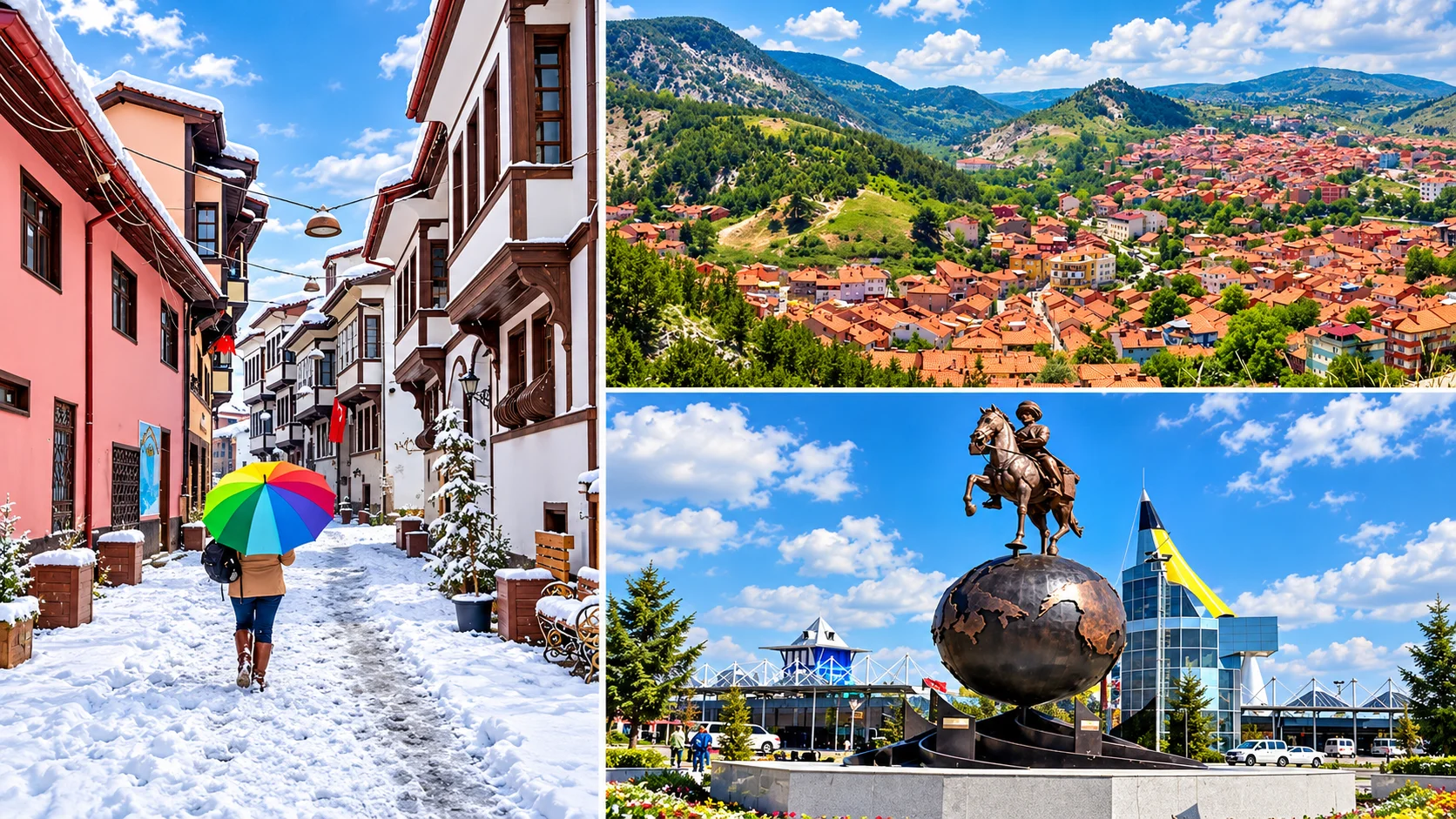
Why Kütahya Is Different
Most travellers who pass through Kütahya do so on the Istanbul–İzmir motorway without stopping. That is a significant oversight. The city's UNESCO Creative Cities designation (Crafts and Folk Art, 2022) recognises a ceramic tradition active since at least the 15th century. The Roman site at Aizanoi — with its complete Zeus Temple, combined theatre-stadium, and the largest known fragment of Diocletian's Price Edict — is archaeologically among the most important in Turkey and receives a fraction of the attention given to Ephesus. The province also spans sections of the Phrygian Valley, contains the forests and early Ottoman landscape of Domaniç, and preserves the memorial sites of the decisive final battle of Turkey's War of Independence.
Quick Guide: What Brings You to Kütahya?
- Roman archaeology: Aizanoi (Çavdarhisar) — minimum half day, ideally full day
- Historic city centre: Kütahya Castle, Ulu Camii, Archaeology Museum, Germiyan Street — full day
- Tile and ceramic culture: Tile Museum, Çiniciler Çarşısı, working ateliers — half day to full day
- Phrygian landscape: Frig Vadisi section in Kütahya — half day to full day trekking
- Ottoman origins and forest: Domaniç — half day from city
- National history: Dumlupınar — half day, standalone or en route south
- Winter sports and thermal: Murat Dağı (Gediz) — overnight or weekend
- Thermal spa stay: Yoncalı, Simav/Eynal or Emet — overnight
Kütahya City Centre
Kütahya city (population approximately 220,000) is the compact, walkable core of a historically layered provincial capital. The centre is dominated by the ridge of the castle hill, the city's Ottoman-era commercial district, and several significant cultural institutions within walking distance of each other. A full city-centre day is realistic and satisfying.
Kütahya Castle
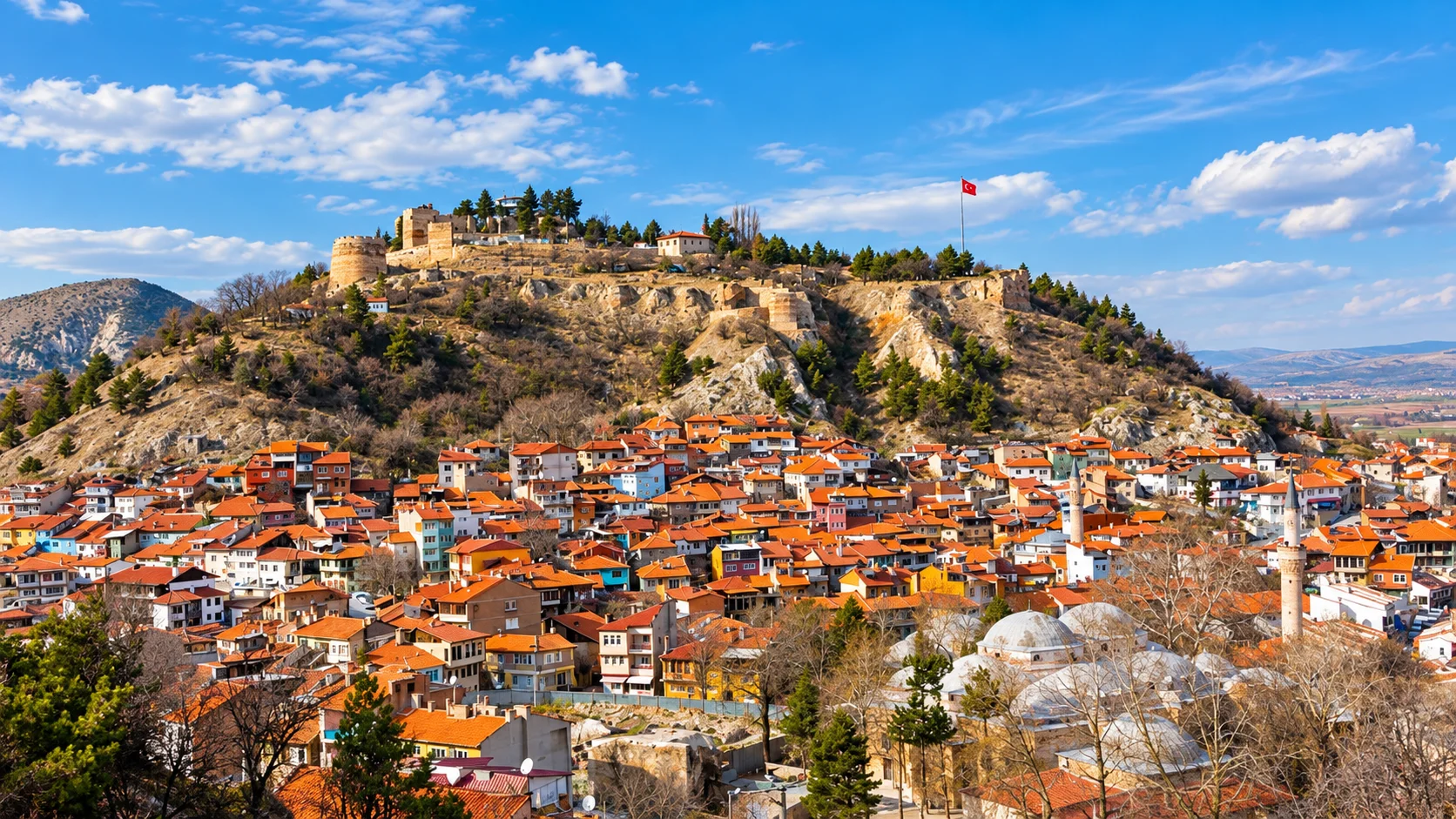
Kütahya Castle occupies Hisar Tepesi (Fortress Hill), the prominent ridge above the city centre. The fortress has construction layers from Byzantine, Seljuk, Germiyan and Ottoman periods — it is not the product of a single campaign but a fortification that was expanded and repaired across many centuries as the city changed hands. The inner and outer fortress sections are both accessible, and the viewing terrace above the city is one of the best vantage points over the urban landscape and surrounding plain. The castle is in ongoing restoration; access to specific interior sections varies and should be checked locally before the visit.
Ulu Camii
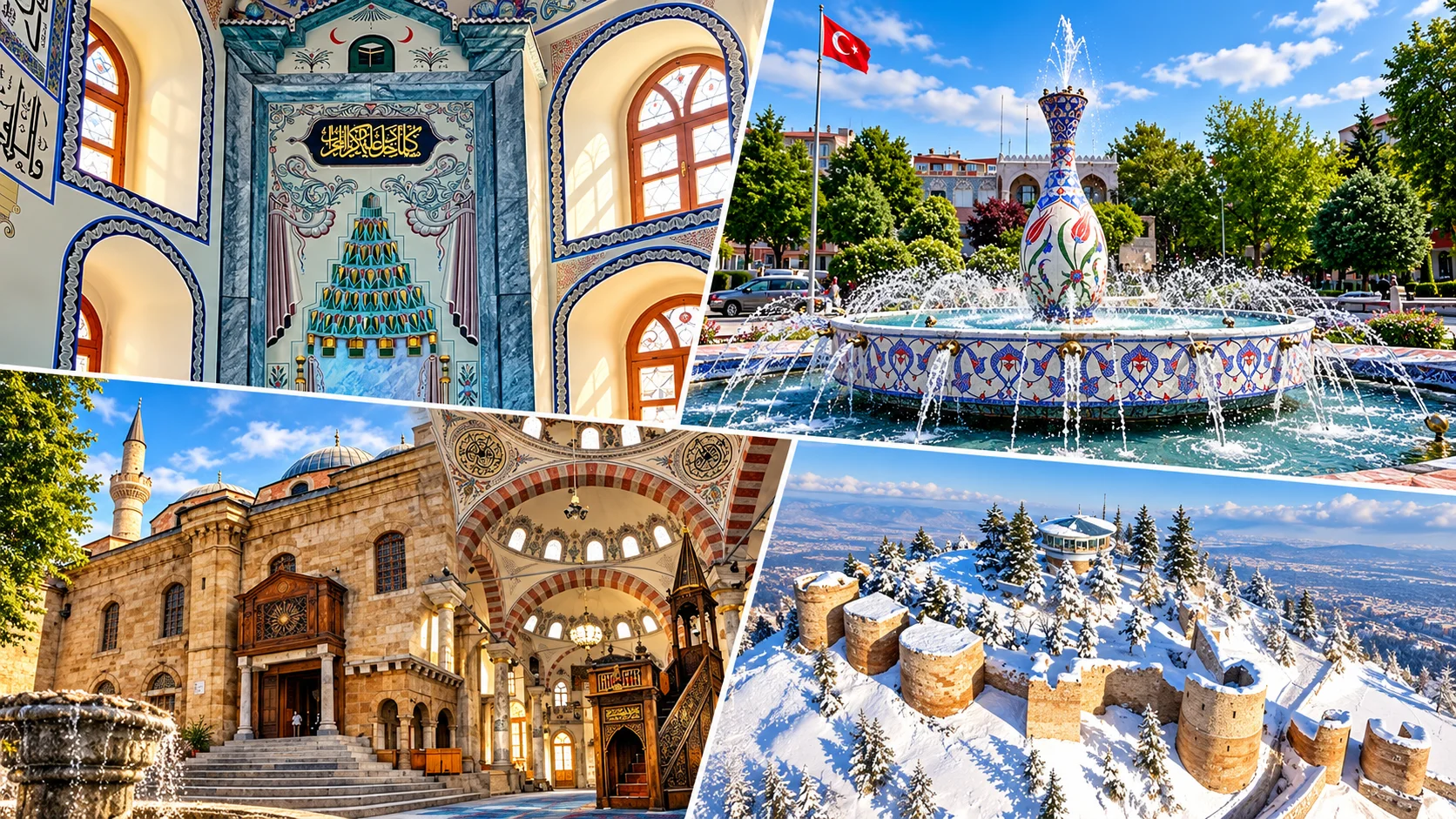
Kütahya Ulu Camii is the largest mosque in the city centre, built during the late Germiyan/early Ottoman period and associated with Yıldırım Bayezid. The prayer hall is notable for its antique columns with Corinthian-style capitals — clearly reused from earlier structures. The origin of these columns has been discussed in relation to the ancient sites of the region. The mosque was later restored, but its core fabric preserves the architectural language of the period when Kütahya was the capital of the Germiyan Principality. Visitors should observe standard mosque etiquette (remove shoes, dress modestly; women cover their hair).
Kütahya Archaeology Museum
The Kütahya Archaeology Museum is housed in the Vacidiye Medresesi, a 14th-century theological college in the city centre. The medrese building itself — with its courtyard and vaulted cells — is a significant monument of the Germiyan period. The collection covers finds from the province's archaeological sites, including material from Aizanoi; the Amazons Sarcophagus, a carved Roman-period piece, is among the notable exhibits. Check current opening hours before visiting, as restoration programmes occasionally affect access.
Kütahya Tile Museum and the Ceramic Tradition
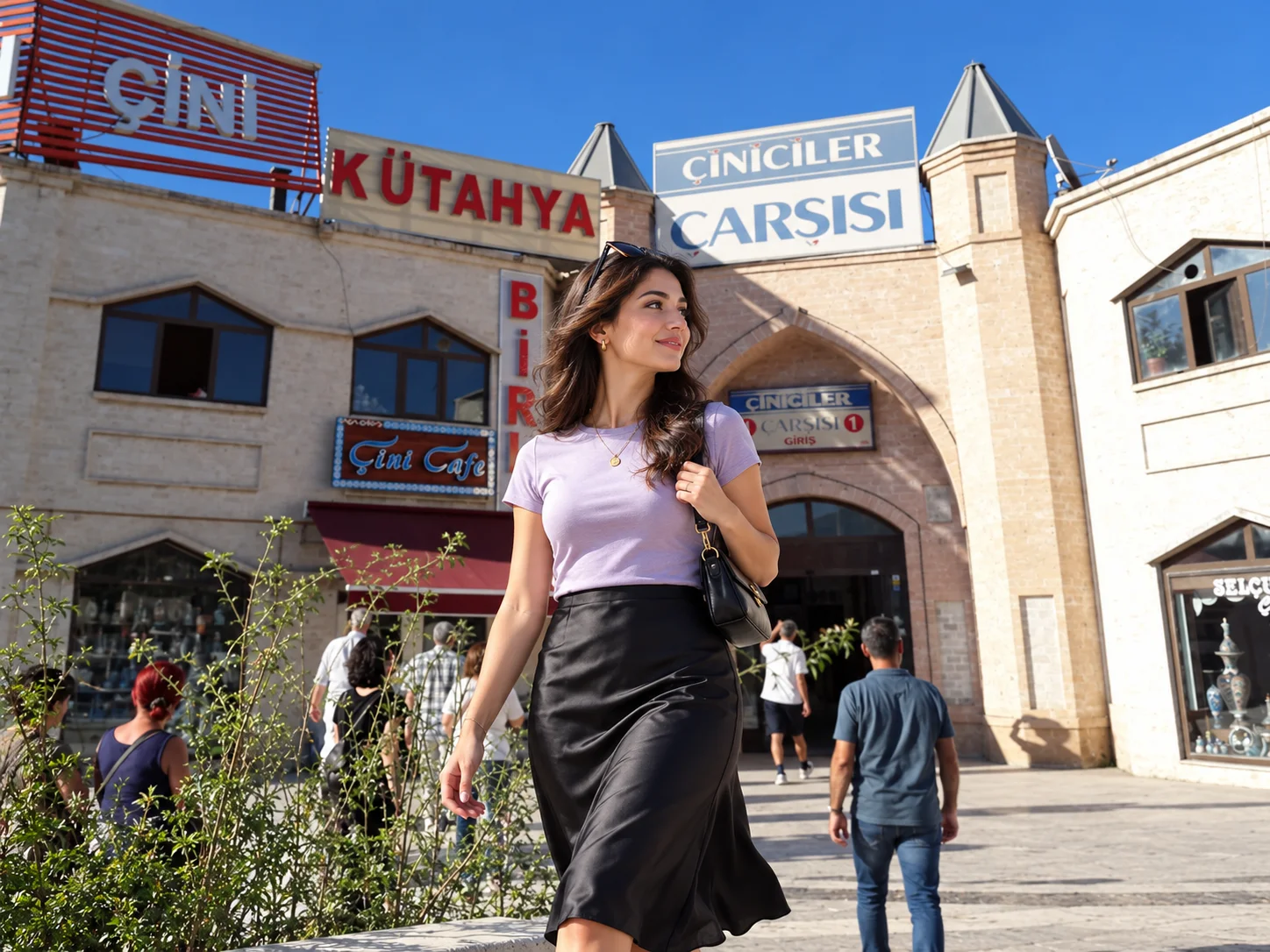
Kütahya Çiniciler Çarşısı — the tile bazaar where ateliers and workshops line the covered market.
The Kütahya Tile Museum (Çini Müzesi) is installed in the İmaret Camii, a 15th-century mosque and charitable complex in the city centre. The collection spans Kütahya ceramic production from the Ottoman period to the present — a tradition that, unlike İznik (which declined after the 17th century), remained active through the 19th and 20th centuries and continues today. Kütahya tiles are distinguished by their characteristic colour palette — cobalt blue, turquoise, green, yellow and red — and the decorative vocabulary of floral, geometric and figurative motifs that developed alongside İznik but maintained distinct local characteristics.
Kütahya was designated a UNESCO Creative City of Crafts and Folk Art in 2022 — the designation recognises a living urban tradition, not just historical production. This is distinct from UNESCO World Heritage status: the Creative Cities Network recognises contemporary creative practice and economic ecology around a craft form.
Çiniciler Çarşısı: The Tile Bazaar
The Çiniciler Çarşısı (Tile Bazaar) is the commercial and workshop hub of Kütahya's ceramic tradition, a covered market district where tile-makers, painters and retailers operate alongside each other. Workshop visits allow visitors to see hand-painting in progress — Kütahya tile painting is a skilled process done with brushes on unfired clay, with each colour requiring separate firing stages. When purchasing, look for hand-painted pieces (el boyaması) over transfer-printed industrial ceramics — authentic workshop production carries a craftsperson's mark and is visually distinguishable from mass-produced decorative ware. Plates, wall tiles, coffee cup sets, decorative panels and architectural elements are all produced here.
Germiyan Street and the Historic Mansions
Germiyan Sokağı preserves a stretch of late Ottoman civilian architecture — two-storey stone and timber-framed mansions with projecting upper floors (cumba) characteristic of the Anatolian provincial house type. Several houses have been restored; the street is now partly a heritage walking area with small shops and cafes in restored ground floors. It gives the best sense in the city of the domestic architecture of the Germiyan period and late Ottoman Kütahya.
Çinili Camii
The Çinili Camii (Tiled Mosque), built in 1973 and associated with the designer Ahmet Yakupoğlu, is a modern building whose interior and exterior are clad extensively with Kütahya tiles — the most concentrated example of contemporary tile work as architectural decoration in the city. The effect is striking and demonstrates the continued vitality of the craft tradition in the 20th century. Mosque etiquette applies.
Lajos Kossuth Museum
One of Kütahya's most unexpected attractions is the Lajos Kossuth Museum, housed in the building where the Hungarian statesman and revolutionary leader Lajos Kossuth lived in exile from August 1850 to September 1851. After the failure of the 1848–49 Hungarian Revolution, Kossuth fled to the Ottoman Empire, which refused to extradite him to Austria or Russia. He spent approximately a year in Kütahya before leaving for England and ultimately the United States. The museum preserves period furnishings, documents and objects related to his stay, and the Kossuth connection is an interesting thread in Turkish-Hungarian historical relations.
The Germiyan Legacy
For most of the 14th century and the first decades of the 15th, Kütahya was the capital of the Germiyan Principality (Germiyan Beyliği) — one of the Anatolian beyliks (principalities) that emerged from the fragmentation of Seljuk authority. The Germiyan period was culturally rich: it produced significant architectural monuments, fostered early Ottoman-Turkish literary tradition, and eventually integrated into the Ottoman state partly by dowry transfer (according to tradition, the beylik passed to the Ottomans through the marriage of Yıldırım Bayezid to a Germiyan princess). The Germiyan identity shaped the city's architecture, its craftwork tradition and much of its urban DNA.
Çavdarhisar and Aizanoi Ancient City
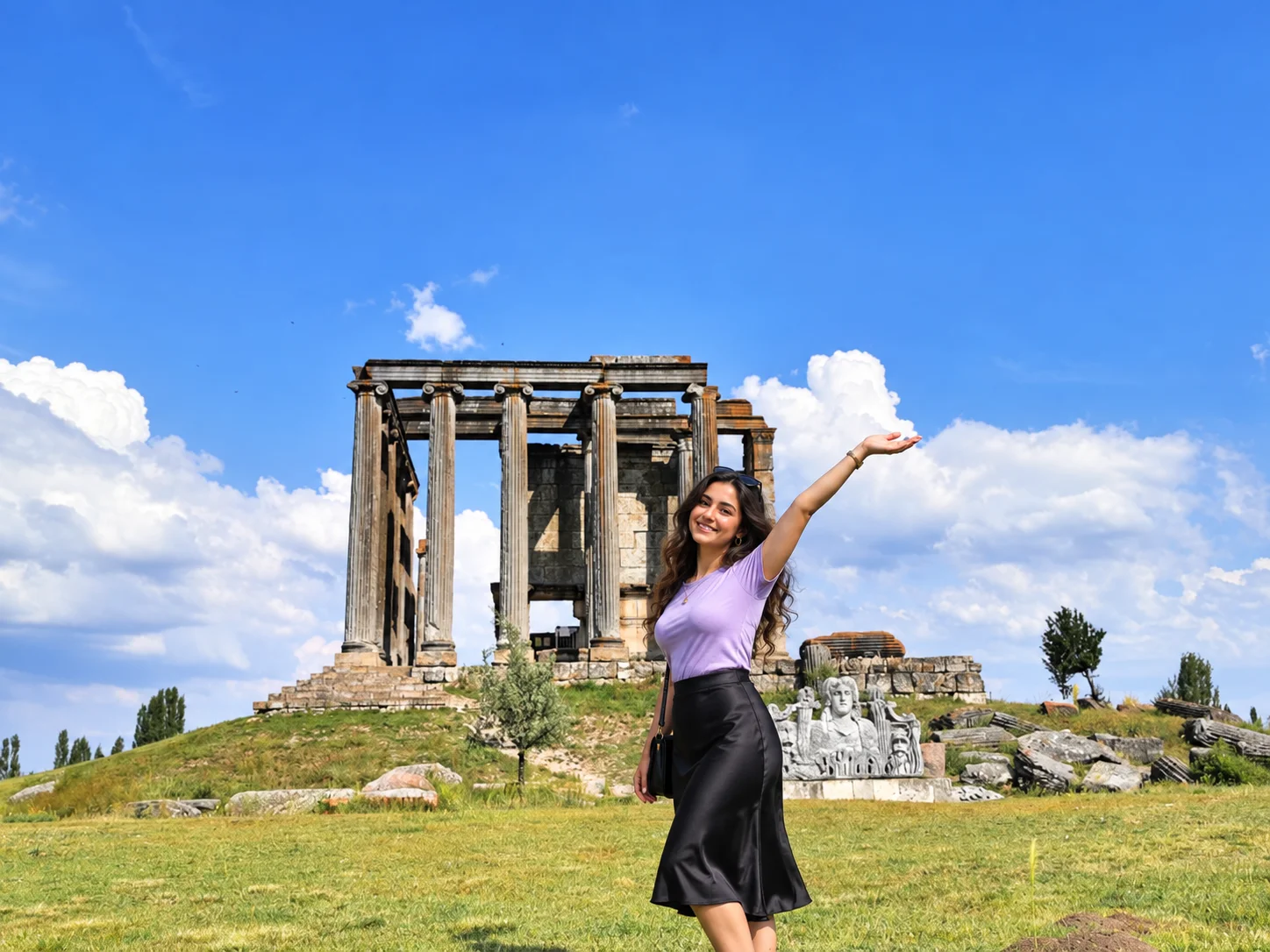
Aizanoi Ancient City: the Temple of Zeus, one of the best-preserved Roman temples in Anatolia.
Aizanoi (modern Çavdarhisar, approximately 57 km south of Kütahya city) is the province's most significant archaeological site and one of the most important Roman cities in Asia Minor. Its setting — a flat valley floor where ancient structures stand in an open agricultural landscape rather than within a tourist enclosure — makes it a striking experience compared to the more manicured major sites.
The Temple of Zeus is the centrepiece: a Ionic-Corinthian order temple dating to the 2nd century AD, with the outer colonnade substantially intact. It is among the best-preserved Roman temples in Anatolia, the more so because its underground chamber (used in the pre-Roman period as a sanctuary of Cybele) is also accessible. The temple stands in a field without fences, creating an immediacy rare in formal archaeological parks.
The macellum (market building) at Aizanoi is historically significant beyond its architecture: its walls carry one of the largest and best-preserved inscriptions of Diocletian's Price Edict (Edictum de Pretiis, issued AD 301) — the Roman emperor's attempt to fix maximum prices across the empire. The edict is a fundamental document of late Roman economic history, and Aizanoi preserves more of it than almost any other site. Some tourist descriptions refer to this building as the "world's first stock exchange" — that claim has no academic support. The macellum was a market building; its historical significance lies in the edict inscriptions.
The combined theatre and stadium at Aizanoi is architecturally unusual: the theatre cavea is built into one end of the stadium's elongated oval, with the theatre's stage building acting as one of the stadium's terminal walls. This integration of two distinct building types into a single structure is rare in the Roman world. The bathhouse complexes, the two bridges over the Penakalas stream (among the oldest in Anatolia), and the necropolis round out a site that can occupy a half day to a full day depending on depth of interest.
Aizanoi is on Turkey's UNESCO Tentative List; it has not been inscribed on the World Heritage List as of 2026. Ongoing excavations by Turkish university teams regularly yield new finds.
The Phrygian Valley
The Phrygian Valley (Frig Vadisi) is a landscape of volcanic rock formations, cliff faces and valleys carved with rock-cut monuments, façades, tombs and sanctuaries from the Phrygian civilisation (roughly 900–300 BC). The valley spans three provinces — Kütahya, Afyonkarahisar and Eskişehir — and the most famous individual monuments (Yazılıkaya/Midas City, Arslankaya) lie primarily in the Afyonkarahisar and Eskişehir sections. The Kütahya section of the valley includes rock-cut monuments and Phrygian route sections accessible from the Sabuncupınar area, and forms part of the longer Frig Yolu (Phrygian Way) — a long-distance trekking route established along the valley.
Visitors planning to see multiple Phrygian monuments across the valley should budget a day from Kütahya and consider the geography across all three provinces; a single Kütahya-based day trip will not cover the full valley. For a deeper Aegean and central Anatolian journey, our Turkey travel guide covers the broader regional context.
Domaniç: Ottoman Origins and Forest Landscape
Domaniç, a highland district about 90 km northwest of Kütahya city, is associated with early Ottoman migration traditions. The surrounding forests — Domaniç Ormanları — are dense oak, pine and beech landscapes used for hiking, picnicking and forest camping. The district has traditional connections to the early phases of Ottoman state formation: Osman I and the early Ottoman tribal confederation used these highlands as seasonal grazing grounds in the late 13th and early 14th centuries, and the local historical tradition preserves memory of this period in place names and memorial sites.
Mızık Çamı (the Mızık Pine) is a memorial site associated with a legendary ancient pine tree under which, according to tradition, early Ottoman leaders held councils. The original tree was lost over time; a memorial marker now stands at the site. The surrounding forest walk is the attraction here rather than the marker itself. The village of Çarşamba in the district has a türbe (tomb) associated with Hayme Ana, traditionally regarded as the mother of Osman I; the historical authentication of such sites is uncertain, but they have cultural significance and are visited by those interested in Ottoman foundation traditions.
Domaniç is geographically close to Söğüt in Bilecik province — the traditional birthplace of Osman I — and the two districts are often visited together on a route exploring early Ottoman history. For the Söğüt experience specifically, see our broader coverage of the region.
Gediz and Murat Dağı: Winter Sports and Thermal Springs
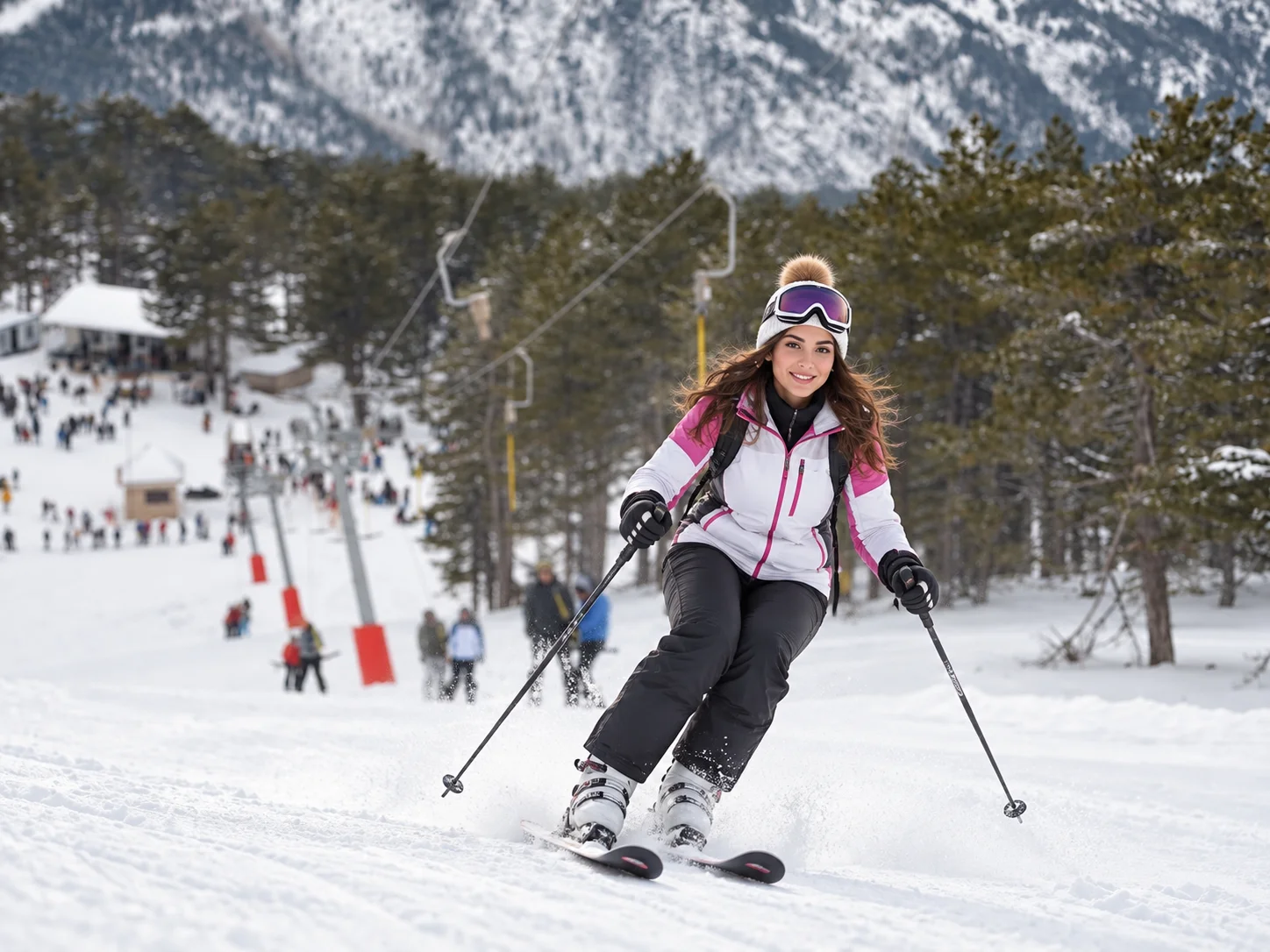
Murat Dağı: ski slopes in winter and thermal spring facilities in the same mountain setting.
Murat Dağı, the mountain above Gediz district (approximately 100 km west of Kütahya city), is one of the more unusual combinations in Turkish tourism: a ski resort and thermal spring facilities operating on the same mountain. The Murat Dağı Termal Ski Resort operates winter ski pistes with lifts and beginner-to-intermediate terrain; the same area has thermal spring facilities where visitors can soak after a skiing day. In summer the mountain is used for hiking and highland camping, with the Sarıçiçek Yaylası (a highland plateau) as a cooler summer retreat.
For ski resort comparison across Turkey, our guide to Turkey's ski resorts puts Murat Dağı in national context. Road access to Gediz is from Kütahya city (approximately 1.5 hours) or from the İzmir direction.
Simav and Eynal Thermal Springs
Simav, a district in western Kütahya province, has one of Turkey's more significant thermal spring concentrations. The Eynal Kaplıcaları near Simav centre and the Çitgöl Kaplıcaları are the main facilities — both are sodium bicarbonate-type springs used in thermal bath and pool facilities. Simav also has a small castle and the preserved streets of its historic settlement. The thermal resources here attract visitors primarily for bathing and relaxation; the town is a functional thermal destination rather than a resort, which gives it a more authentic character than purpose-built spa complexes.
Dumlupınar: The Decisive Battlefield
Dumlupınar, a small district in southern Kütahya province, is one of the most historically significant sites in modern Turkey. On 30 August 1922, the Battle of Dumlupınar — the culminating engagement of the Great Offensive (Büyük Taarruz) — effectively ended the Turkish-Greek War and decided the outcome of the Turkish War of Independence. Atatürk's forces broke the final Greek defensive line here, completing the military campaign that would lead to the armistice and ultimately to the Turkish Republic.
The site is preserved as the Başkomutan Historical National Park (Commander-in-Chief Historical National Park), with memorials, the 30 August Dumlupınar Monument and visitor facilities explaining the campaign. The site has profound significance in Turkish national consciousness — the date, 30 August, is celebrated as Victory Day (Zafer Bayramı), a national public holiday.
Emet and Other Thermal Areas
Emet district, in the western part of the province, has thermal spring resources of its own, including the Dereli Kaplıcaları. The district is also known for its boron reserves — Kütahya province contains significant industrial boron deposits, though this is primarily an economic rather than a tourism fact. The Emet area is relatively undeveloped for tourism and offers a quieter thermal experience than the more established Yoncalı or Simav facilities.
Yoncalı Thermal: City-Proximate Spa
Yoncalı Kaplıcaları, approximately 15 km from Kütahya city centre, is the most accessible thermal destination for city-based visitors. Several thermal hotels and spa facilities operate here; the springs are sodium bicarbonate type, used for bathing and pool soaking. Yoncalı is the practical choice for a thermal afternoon or overnight from the city without needing to travel to Simav or Gediz.
Tavşanlı
Tavşanlı, a mid-size district to the north, is the province's second largest settlement. It has a local archaeology museum, a historical Ottoman district with traditional houses, and its own market character. For travellers with extended time in the province, Tavşanlı can add a day between Kütahya and Domaniç on a northern loop.
Kütahya Cuisine
Kütahya's food tradition reflects its position as an inland plateau city with strong village culinary roots.
- Sini mantısı: the regional style of Turkish dumpling — small pasta squares filled with minced meat, baked in a tray (sini) and served with yoghurt and a paprika-butter sauce. Distinct from boiled mantı by its tray-baked preparation.
- Cimcik aşı: hand-pinched pasta pieces boiled and dressed with garlicky yoghurt and browned butter — a close relative of mantı but made by pinching rather than filling, with a slightly different texture.
- Sıkıcık çorbası: a thick soup based on fermented tarhana (dried yoghurt-grain mix) with generous yoghurt and dried mint — a winter staple of Kütahya households.
- Dolamber böreği: thin pastry sheets with a minced meat or cheese filling, rolled and baked in a tray, served with yoghurt — a baked börek variant specific to the region.
- Tosunum: thin pastry with tahin (tahini) spread, rolled and baked — a semi-sweet pastry occupying the boundary between savoury börek and sweet pastry, characteristic of Kütahya bakeries.
- Haşhaşlı ürünler: poppy (haşhaş) is grown in the region (legally, for the licensed pharmaceutical industry) and used in village breads and pastries — poppy-seeded bread is found at local bakeries.
- Tutmaç aşı: a thick soup of green lentils, homemade noodles (erişte) and yoghurt — an old Anatolian recipe still actively made in Kütahya households.
What to Buy in Kütahya
Kütahya's most distinctive purchase is its handmade ceramic work — plates, tiles, coffee cup sets, decorative panels and architectural elements. The key distinction is between workshop-made hand-painted pieces (el boyaması, typically marked with a craftsperson's signature or workshop seal) and mass-produced transfer-printed ware sold primarily as tourist souvenirs. Both are available; the quality and value difference is significant. Poppy products (seeds, oils) and local haşhaşlı breads are available at food markets. Local honey from highland villages (particularly Domaniç area) is also worth seeking.
1-Day Itinerary: Kütahya City
Morning: walk up to the castle (20–30 minutes from centre), explore the fortress and viewpoint. Descend to the Archaeology Museum in Vacidiye Medresesi. Ulu Camii, then Germiyan Sokağı for a coffee stop in a restored house. Afternoon: Tile Museum (İmaret Camii), then browse Çiniciler Çarşısı workshops. Kossuth Museum if time permits. Evening: dinner at a traditional lokanta, trying sini mantısı or cimcik aşı.
2-Day Itinerary: City + Aizanoi
Day 1: Kütahya City
As above — castle, Archaeology Museum, Ulu Camii, Tile Museum, Çiniciler Çarşısı, Germiyan Street.
Day 2: Aizanoi
Drive to Çavdarhisar (57 km, approximately 1 hour). Full morning and early afternoon at Aizanoi: Zeus Temple, macellum with Diocletian Price Edict inscriptions, theatre-stadium, baths and bridges. Return via Yoncalı for a thermal soak late afternoon.
3–4 Day Routes
Archaeology and Culture Route
Day 1: Kütahya city. Day 2: Aizanoi. Day 3: Phrygian Valley section from Kütahya side, continuing toward the Afyonkarahisar province for the Yazılıkaya/Midas monuments if time allows.
History and Forest Route
Day 1: Kütahya city. Day 2: Domaniç (Mızık Çamı, forests) — connect to Söğüt in Bilecik province if covering early Ottoman sites. Day 3: Dumlupınar (Başkomutan National Park, memorial sites).
Nature and Thermal Route
Day 1: Kütahya city + Yoncalı evening. Day 2: Murat Dağı (ski in winter, hiking in summer). Day 3: Simav/Eynal Kaplıcaları.
Best Time to Visit
April–June is the best overall window: Aizanoi's open landscape is at its greenest, wildflowers are active in the Phrygian Valley, Domaniç forests are lush and temperatures across the city are mild. July–August is the hottest period — the plateau climate brings dry heat; Murat Dağı highlands and mountain yaylas are the most comfortable. September–October is good for the city and archaeology — Aizanoi in autumn light is particularly atmospheric, and the harvest season brings local food products to market. November–March is Murat Dağı ski season; thermal facilities operate year-round; city sights are uncrowded.
Getting to Kütahya
By air: Zafer Airport (KCO), located in Altıntaş district between Kütahya, Afyonkarahisar and Uşak, provides limited domestic service. Flight schedules and operators change frequently; check the current timetable directly before planning around air travel to Kütahya.
By road: Istanbul to Kütahya is approximately 330 km via the TEM/O-3 motorway and D200 (approximately 4 hours). Ankara to Kütahya is approximately 270 km (approximately 3 hours). Bursa to Kütahya is approximately 160 km (approximately 2 hours). Afyonkarahisar and Eskişehir are each approximately 100–120 km away and natural route partners.
Getting around the province: A car is essential for Aizanoi (57 km from city), Domaniç (90 km), Dumlupınar (110 km) and Murat Dağı (100 km). Kütahya city centre is walkable once you arrive. For a relaxed multi-day circuit across the province, a private car with driver for intercity travel is the most practical option — the distances between sites require road flexibility that public transport does not provide. For Istanbul-based trips to Kütahya, our car with driver service in Istanbul covers the full journey.