
Eastern Black Sea — Turkey
Ordu: Mountains, Coast and Culture on the Eastern Black Sea
Ordu province stretches across roughly a hundred kilometres of eastern Black Sea shoreline and pushes inland to peaks above 2,000 metres. Within a single day it is possible to eat breakfast by the harbour, ride a cable car to a forested plateau, visit an ancient hilltop fortress, walk beside a highland lake, and return to the coast for fresh anchovies at sunset. The eastern Black Sea region is one of Turkey's most varied natural landscapes, and Ordu's eight districts concentrate that variety into a compact area that rewards a stay of at least three nights.
City Centre
Altınordu — The Provincial Capital and Its Ancient Fortress
The central district of Altınordu wraps around a broad arc of Black Sea coast. The seafront promenade stretches for several kilometres, lined with tea gardens and the popular Kuzucular Park and beach — the city's main public sand, busy with families and swimmers in summer. The waterfront fills every evening with the unhurried café life that defines Black Sea towns: tea, sunflower seeds and long conversations.
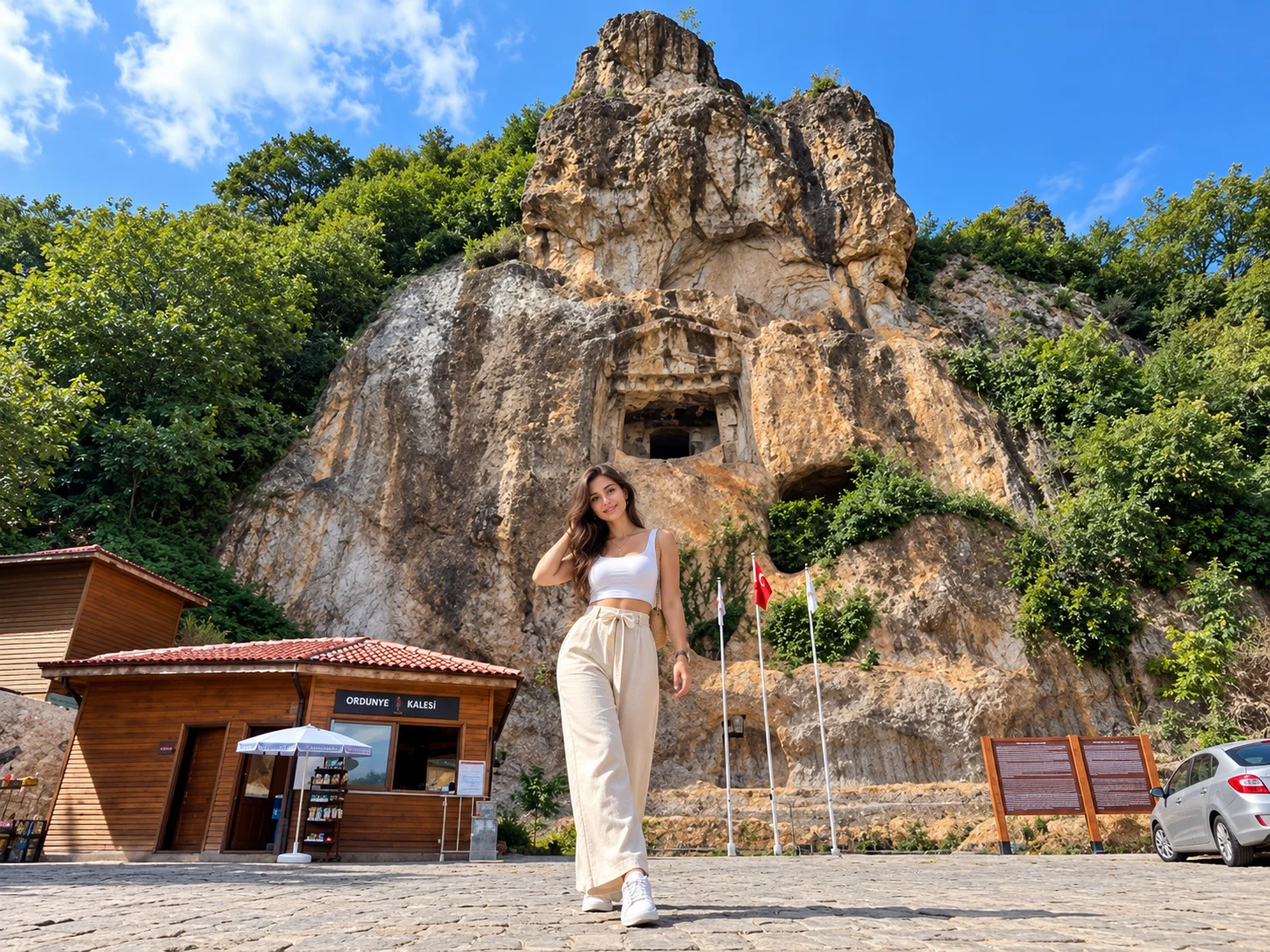
On the eastern edge of the centre, Kurul Kalesi rises on a steep crag above the city. Excavations led by Gazi University uncovered an extraordinary find here in 2016: a 2,100-year-old marble Kybele statue still sitting undisturbed inside its original naiskos niche — a rectangular cult chamber carved near the fortress gate. Standing 110 centimetres tall and weighing 200 kilograms, it is the first statue ever found in-situ (in its original cult position) anywhere in Turkey, dating to the 2nd century BCE. The Pontic and Byzantine acropolis itself remains open to visitors; the Kybele figure is held for conservation study.
The Ordu City Museum in the town centre displays finds from the ongoing Kurul Kalesi excavations alongside the province's Ottoman heritage and the hazelnut trade that has defined the local economy for generations. Ordu sits at the heart of one of the world's most significant hazelnut-producing regions — the terraced groves covering every inland hillside are both the landscape's defining feature and a source of considerable regional wealth.
Plateau & Cable Car
Boztepe — The Forested Plateau Above the Harbour
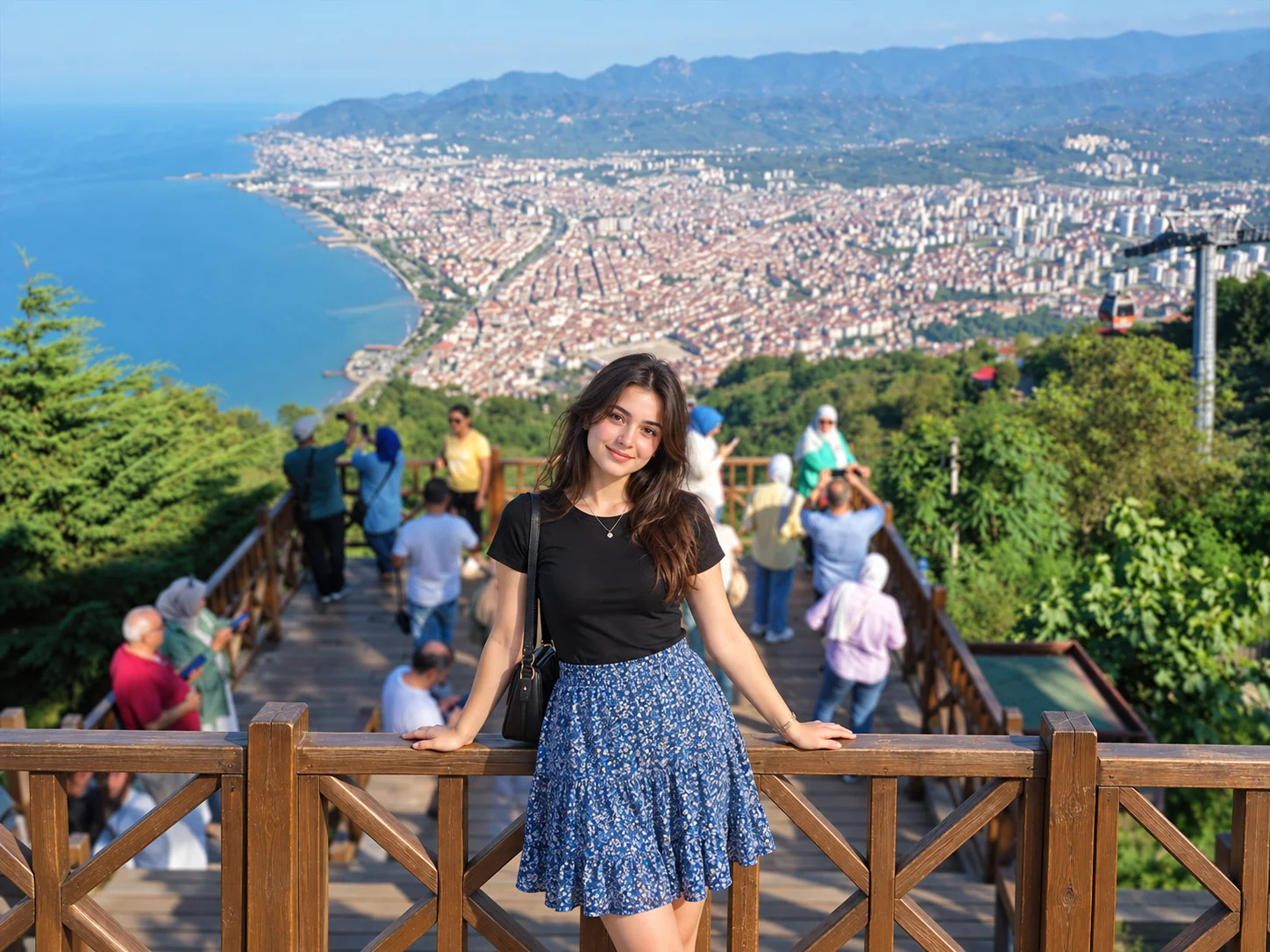
Rising 532 metres almost directly above the city, Boztepe is the feature that gives Ordu its most distinctive silhouette. From the summit tea gardens and viewing platforms you look straight out over the rooftops to the Black Sea, with the harbour breakwater and the city's beach visible far below. On clear days the coastal arc extends east towards Giresun.
A cable car (teleferik) operated by Ordu Metropolitan Municipality connects the lower city station to the summit in around ten minutes — a 2,350-metre line. The teleferik runs daily with extended evening hours; ticket prices and timetables are revised periodically by the municipality, so verify current rates at the lower station or on the municipality website before visiting. The cable car fills quickly on summer weekends; arriving early or visiting on a weekday avoids the queue.
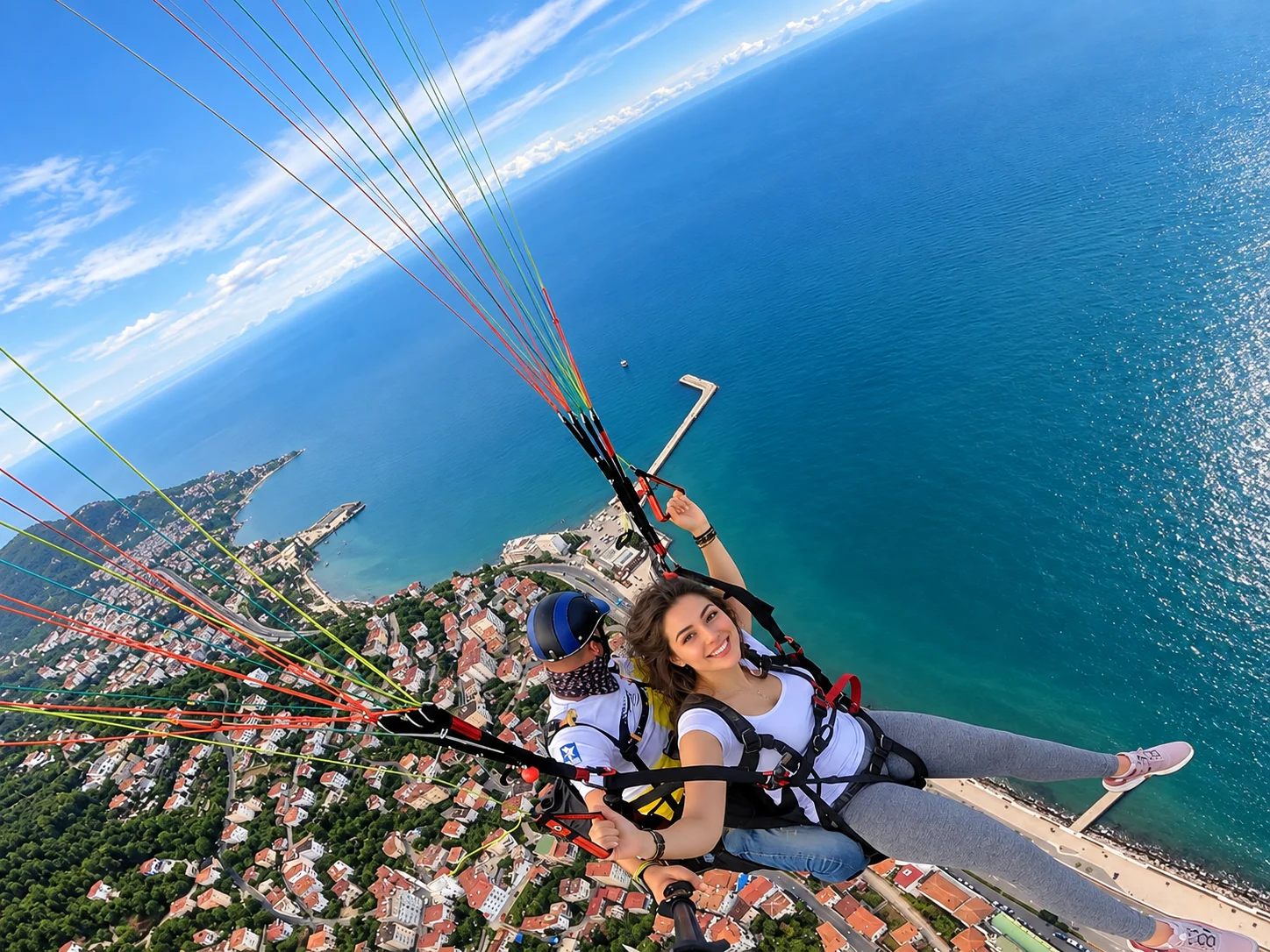
At the top, several tea gardens spread across the slope with tiered wooden terrace seating. The plateau is also an approved launch zone for tandem paragliding — licensed operators offer flights from the ridge that follow the coastline back down to the city beach. The image of coloured canopies drifting above the dark sea and hazelnut-covered hills has become emblematic of Ordu's tourism identity. A forest walking trail circles the plateau and descends through hazelnut groves on the landward side for those who prefer to make the return journey on foot.
Film
Ordu — A Visual Introduction to the Province
From the cable car to the castle to the coast, this short film follows the key highlights that make Ordu one of the most rewarding provinces on the eastern Black Sea for visitors seeking both nature and history.
Coastal District
Perşembe District — Yason Cape, the Greek Church and Hoynat Island
The coastal road running east from Ordu city to the Perşembe district threads through fishing villages and small harbours before arriving at one of the Black Sea coast's most dramatic headlands. The 45-kilometre drive is a pleasant half-day excursion in itself.
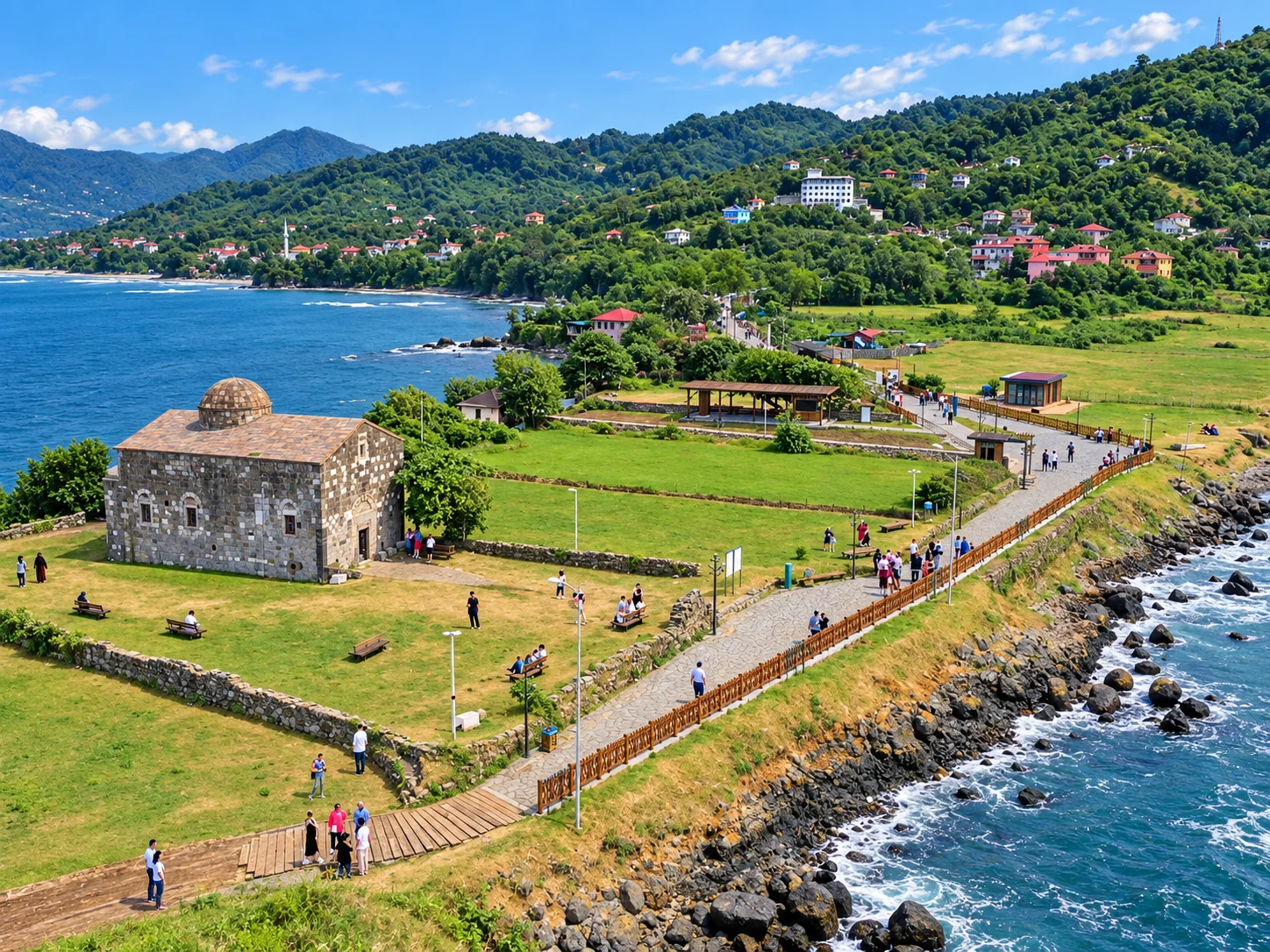
Yason Burnu (Iasonion Promontory) is a rocky headland that juts boldly into the open sea, named in connection with the ancient legend of Jason and the Argonauts sailing this coast. On the summit stands the Church of Hagios Nikolaos — known as Yason Kilisesi — built in 1868 by the Greek Orthodox community of the region (construction records from 1868; some archival sources give 1869 for final consecration). The building was restored in 2004 and is accessible to visitors. Its position — plain stone walls above surf-lashed cliffs — is extraordinary. A functioning lighthouse stands at the cape end.
A short distance along the coast, Hoynat Island is a small rocky outcrop — approximately 700 square metres — of outsized ecological importance. It is the only nesting site in Turkey for the crested cormorant (tepeli karabatak), and has been designated a Grade II archaeological site due to the ruins of a historic castle and cistern on the rock. Turkey's Nature Association (Doğa Derneği) has listed it as an Important Bird Area. Entry to the island is prohibited to protect the nesting colony; it can be observed clearly from shore-side viewing platforms, ideally with binoculars.
Western District
Fatsa — Waterfalls, Riverside Ruins and the Sea Airport
Fatsa, the westernmost of Ordu's coastal districts, has the character of a working agricultural and fishing town. The surrounding forested valleys hold several natural features worth a half-day excursion.
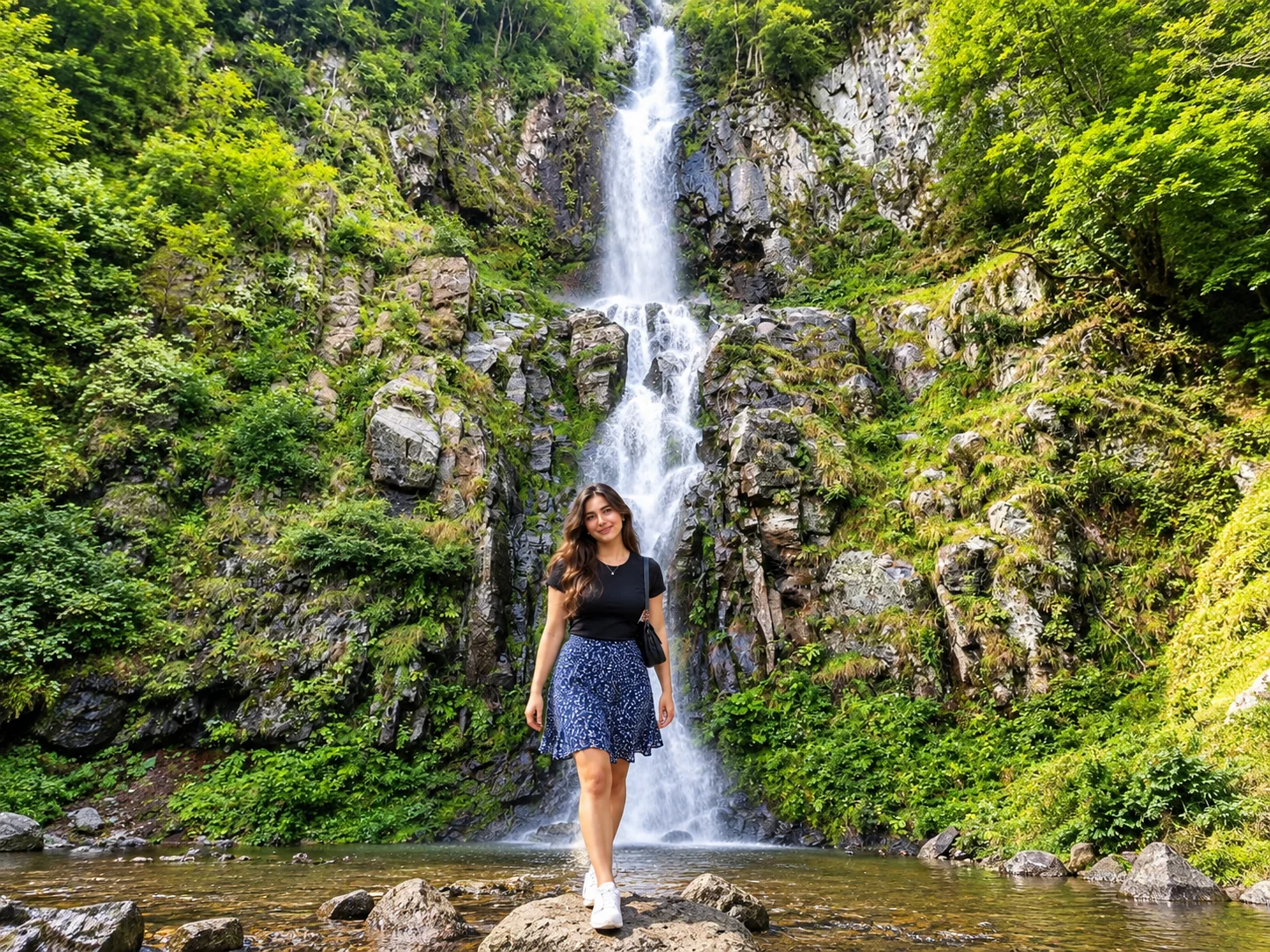
The Uzundere waterfall falls through a narrow forested gorge accessible via a valley road and a short walk. The setting — moss-covered rock, cool air and the sound of the falls — is a reliable escape from the coast on a hot day. In the Bolaman sub-district, the Bolaman Castle ruins occupy a hilltop above the Bolaman River; the walls are partially intact and the elevated position has long views across the valley.
Between Fatsa and the adjacent Gülyalı district stands one of Turkey's most unusual pieces of infrastructure: Ordu-Giresun Airport (OGU), opened in 2015 on a stone-fill platform built directly on the surface of the sea. It is the third sea-fill airport in the world (after Nagasaki and Hong Kong), the first in Europe and Turkey, constructed using approximately 36 million tonnes of stone. Passengers flying in from the west watch the runway appear to materialise from open water — a memorable arrival into Ordu.
Historic Coastal Town
Ünye — Ancient Fortress and the Western Shore
Ünye sits 75 kilometres west of Ordu city and has the feel of a town that has been important for a very long time. Ünye Castle, crowning a rocky hill above the town, is approximately 2,500 years old in its foundations; current fortification walls overlay much earlier Pontic-era construction. The hilltop position gives sweeping views over the coast and inland valleys. A new wagon-descent access system to the castle is being developed, described as a world-first project — verify current access and opening status locally before planning a visit.
Down near the shore, the Cumhuriyet Köşkü is an early Republican-era villa (1924) set in waterfront gardens. It served as a reception building during state visits in the Republic's early decades and is now open as a small period museum. The architecture is modest but the setting — between the sea and a forested slope — is pleasant. The surrounding park makes a good picnic spot.
Çamlık beach, at the western edge of town, is a sheltered and popular stretch with locals and visitors throughout the summer. Ünye's town centre has a lively weekly market and good local restaurants; the town's fırın kebabı (oven-baked lamb) has a regional reputation. Ünye serves as a practical western base for day trips further along the coast towards Samsun.
Film
Ünye Castle — Clifftop History Above the Black Sea
A short documentary record of Ünye Castle — its 2,500-year history, the panoramic position above the coast and the fortifications that have watched over this stretch of the Black Sea since antiquity.
Highland Interior
Gölköy District — Ulugöl Nature Park
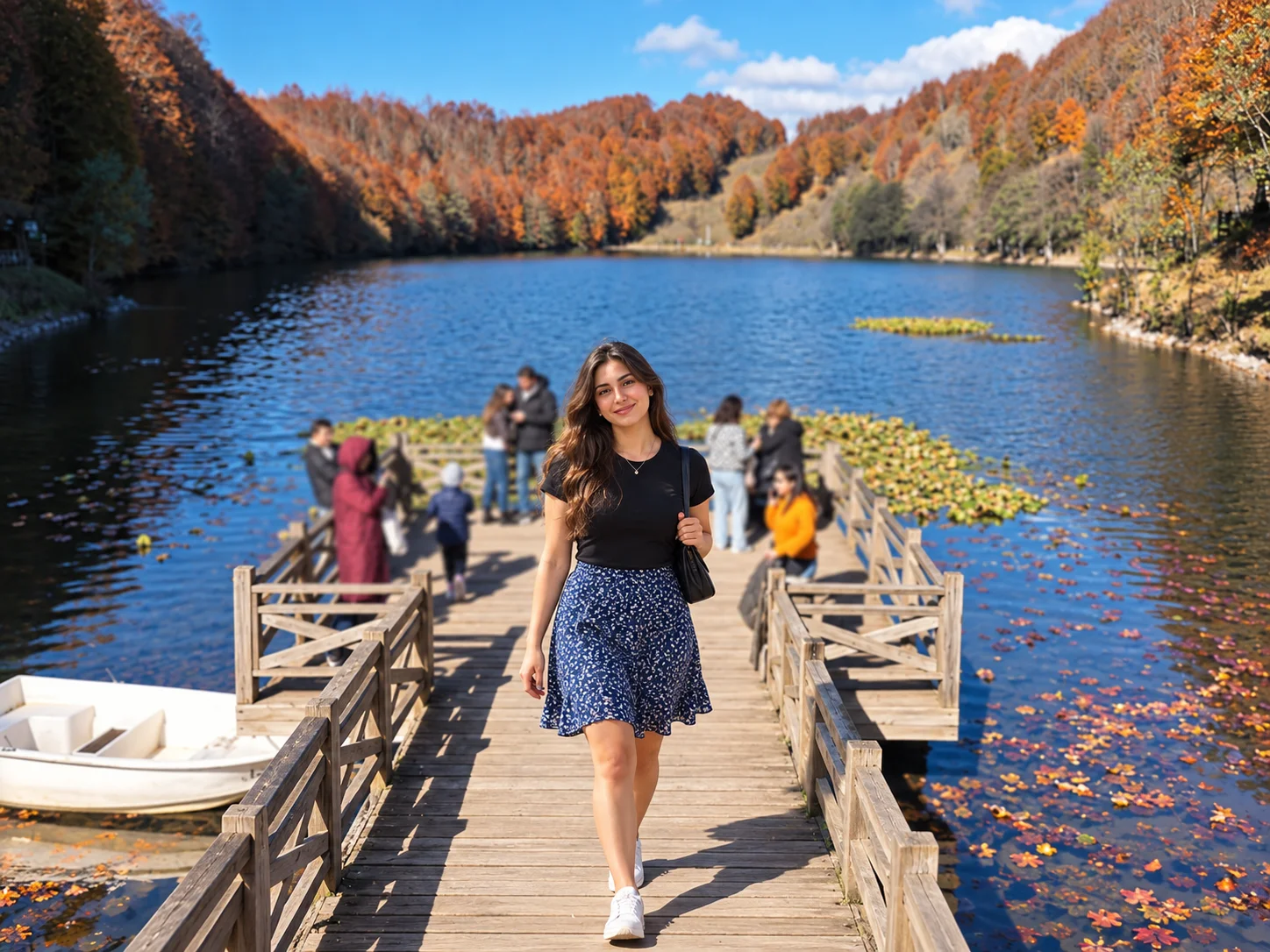
Inland from Ordu city, Gölköy district climbs into the Black Sea mountains to reach Ulugöl, the province's largest lake at 1,200 metres elevation. Ulugöl is a landslide-dammed lake: an ancient slope collapse blocked the valley floor, water accumulated behind the natural dam, and a lake approximately 15 metres deep formed in the depression over time. It is not of volcanic origin. The lake was designated a Tabiat Parkı (Nature Park) in 2009.
The setting is calm and unhurried: the water's surface reflects the surrounding beech forest; walking trails ring the lake and climb into the mountains above. Bungalow accommodation is available within the park boundary, making it possible to spend several days without driving back to the coast each night. Spring brings wildflowers to the lake margins; autumn turns the forest gold — both seasons are arguably better than the peak summer period for an unhurried visit.
The drive from Ordu city to Ulugöl takes approximately 1.5–2 hours via Gölköy town; the road is paved throughout but the final approach climbs steeply through dense forest. Gölköy town has petrol, basic supplies and local restaurants serving fresh highland produce.
Mountain Resort
Kabadüz District — Çambaşı Ski and Mountain Resort
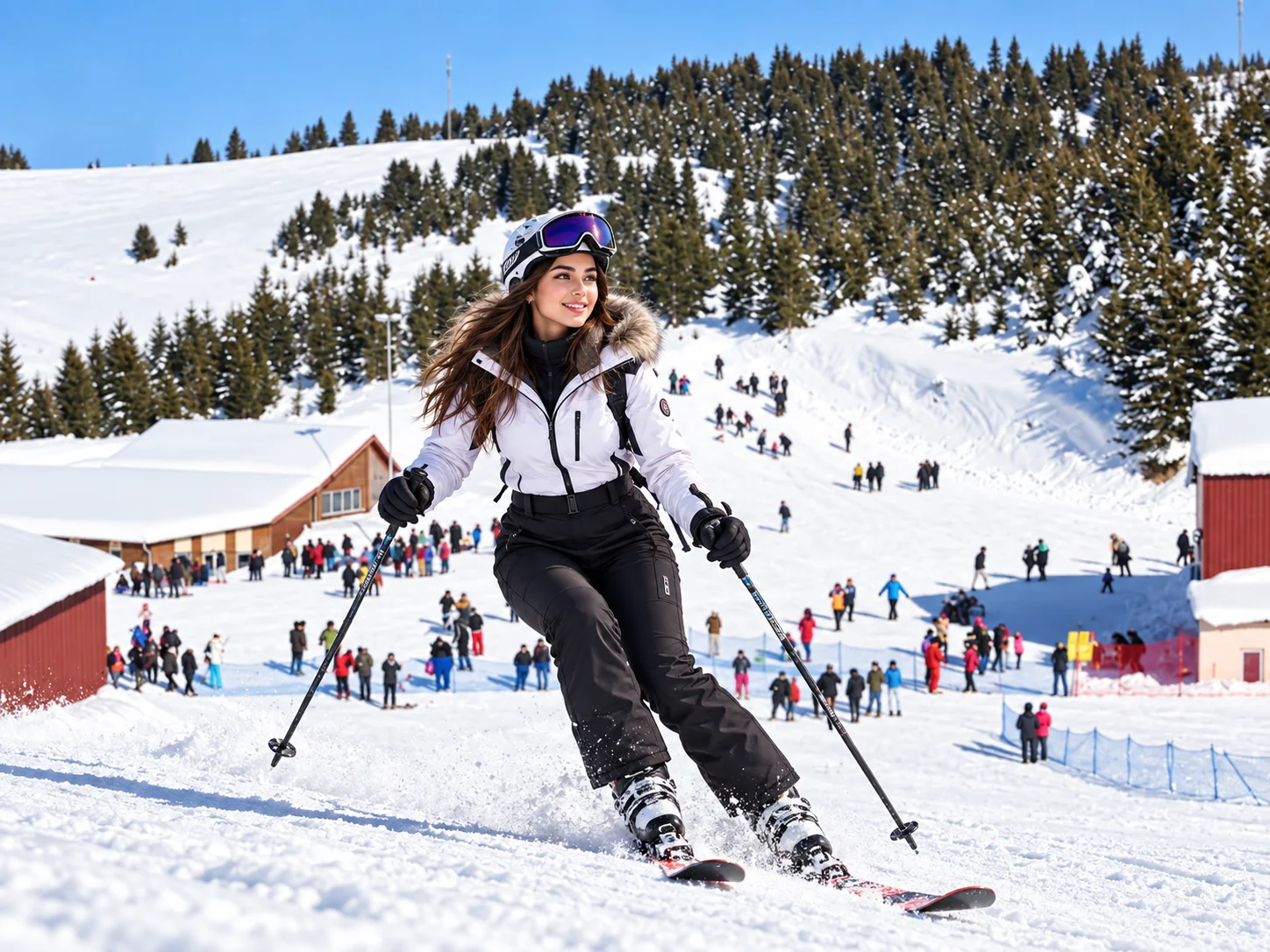
Forty-three kilometres from the city centre, Çambaşı rises into Kabadüz district at elevations between 1,400 and 2,200 metres. It is Ordu's main alpine destination and one of the better-equipped ski resorts on the eastern Black Sea range.
The resort has eleven slopes classified green, blue and red, covering approximately 17 kilometres of pisted terrain in total, served by two chairlifts (telesiyej). The ski season typically runs from December through March, depending on snowfall; actual opening and closing dates vary year to year. On-mountain bungalow accommodation managed by Ordu Metropolitan Municipality allows for multi-day ski stays without descending to the coast each evening.
Outside ski season, Çambaşı is a highland trekking and mountain-cycling destination. The road up from Kabadüz climbs through continuous beech and pine forest with intermittent views back to the Black Sea — the ascent is a reward in itself. For an overview of ski options across Turkey, see the Turkey ski resorts guide.
Interior Highlands
Aybastı and Perşembe Plateau
Melet River Valley
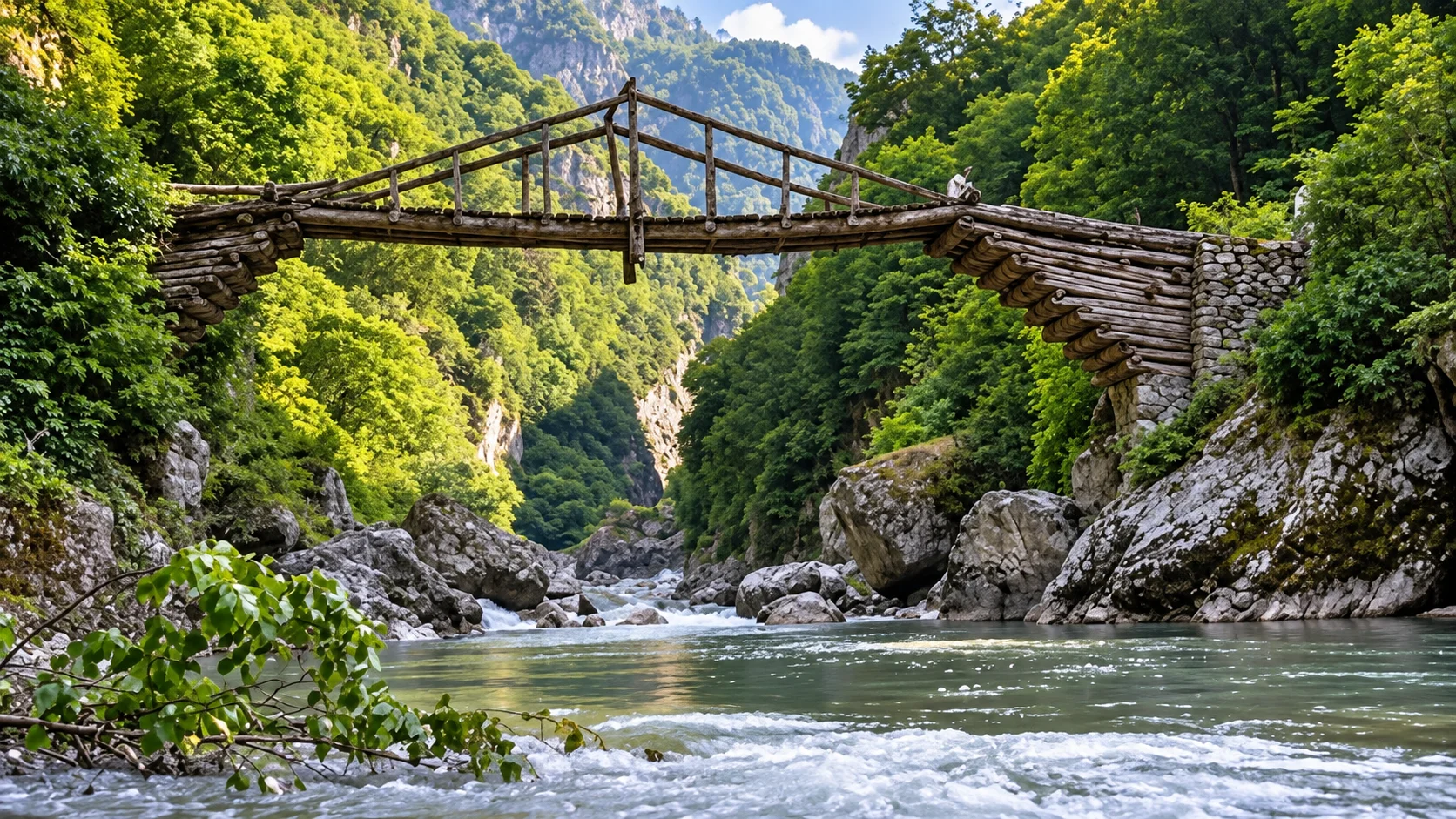
The Melet River flows from the interior highlands to the Black Sea east of Ordu city, carving a forested valley popular for riverside picnics, canyon walking and fishing. The valley road between Aybastı and the coast is scenic year-round; autumn colour is particularly striking from October onwards.
Perşembe Plateau
The upland known as Perşembe Yaylası (distinct from the coastal district of the same name) sits at elevation in the province's interior. It is notable for the river meander formations visible from above — broad, slow loops traced across flat grassland above the treeline. Summer highland camps, pastoral landscape and quiet walking are the main draws; the plateau is best reached by car from Gölköy or Aybastı.
Aybastı Town
Aybastı is a market town in the upper Melet valley that acts as a practical staging post for routes between the coast and the interior highlands. It has local restaurants, basic accommodation and a weekly market drawing producers from surrounding villages. The town sits on the eastern road approach to Çambaşı ski resort.
Coast
Black Sea Beaches
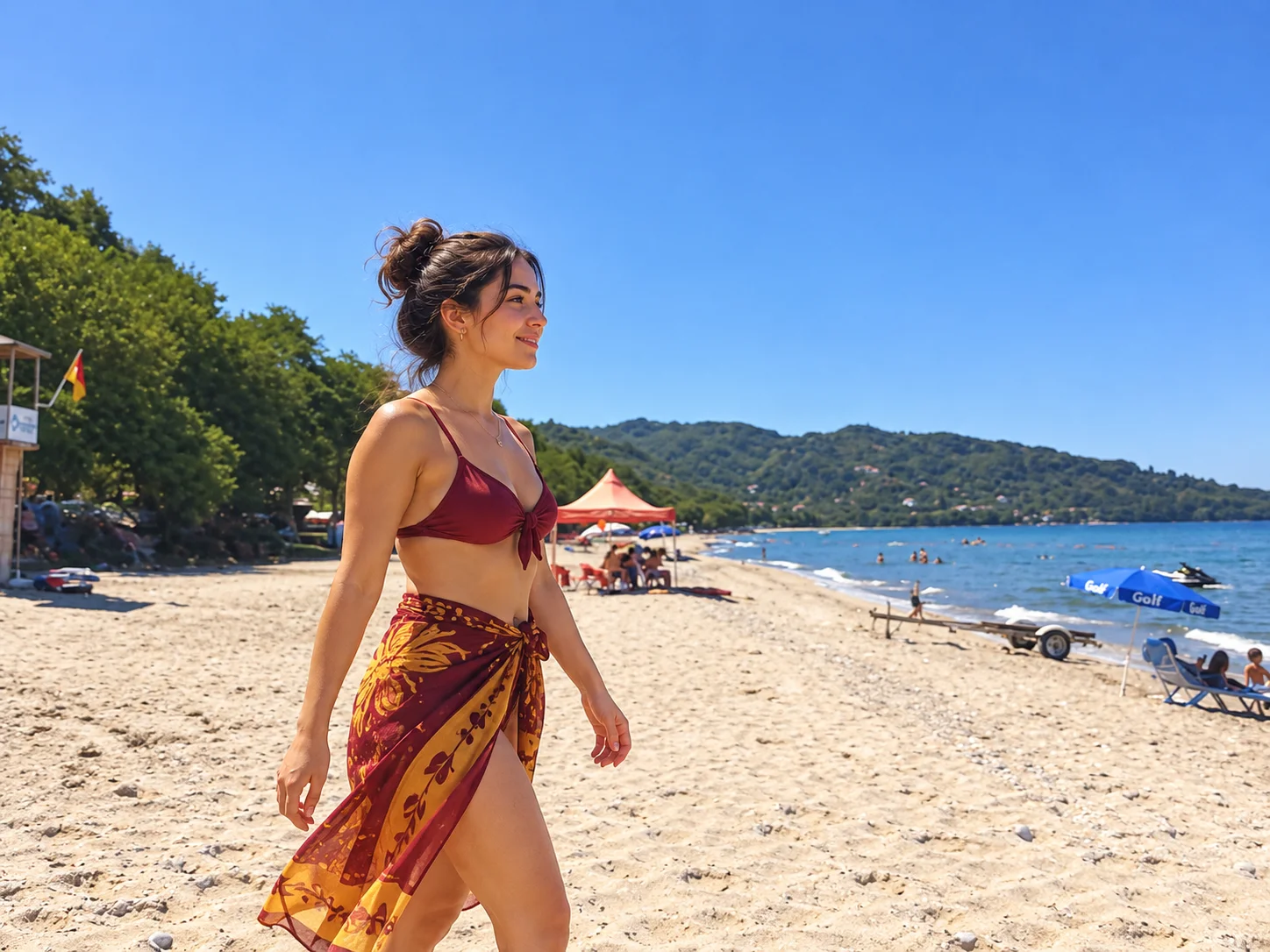
The Black Sea coast around Ordu has a distinct character: dark sand and pebble beaches backed by forested hills, cooler water than the Aegean or Mediterranean, and a less crowded atmosphere outside July and August. The sea temperature reaches comfortable swimming levels from late June and peaks in August; outside this window the water is invigorating rather than warm.
Çaka beach is the city's most accessible public beach, close to the centre with café facilities, changing areas and parking. It becomes busy on summer weekends. Further along the coast, Efirli and Yoroz offer more space and a calmer atmosphere; Yoroz has a forested coastal zone with beach, camping and picnic infrastructure.
Blue Flag beach certification is reviewed annually; verify the current status for specific beaches locally before visiting. For a relaxed walk, the promenade beside Kuzucular Park offers the easiest beachside stroll from the city centre without needing a car.
Gastronomy
Black Sea Cuisine — Ordu's Table
Ordu's kitchen is built around corn, anchovies and hazelnuts — three crops that define the province's agriculture and landscape. The food is direct, intensely flavoured and deeply regional.

Kuymak — The Signature Dish
Kuymak is a slow-cooked corn flour and butter preparation that stretches like fresh cheese when lifted from the pan. It is the dish most closely associated with the eastern Black Sea provinces and appears on virtually every restaurant menu in Ordu. Eat it immediately on arrival — it does not improve with sitting. Most households have their own balance of corn flour and butter passed down through generations.
Anchovy Season Dishes
The Black Sea hamsi (anchovy) season runs through autumn and winter. Hamsi pilav — anchovy-lined rice baked in a covered pot — and hamsikoli — corn bread made with anchovy — are the two preparations visitors discover first. Both are intensely flavoured and best eaten the day they are made. During peak season, anchovy appears in soups, pastries and at adventurous local tables in forms that might surprise a first-time visitor.
Hazelnut and Plateau Produce
Ordu is one of the world's most significant hazelnut producers; the nut appears in breakfast spreads, pastries and local confectionery throughout the year. Fasulye (white bean stew with butter), galdirik (a dried bean and corn preparation from the highland villages) and freshly baked corn bread form the backbone of the local daily diet. Locally grown Black Sea tea is the drink of choice at every hour of the day.
Practical Information
How to Get to Ordu
Domestic routes connect from Istanbul, Ankara and Izmir. The airport sits 15 kilometres from Ordu city centre along the coastal road and is the fastest arrival option. Book in advance in July–August when summer demand peaks.
From Istanbul, the D-010 coastal route via Samsun covers approximately 850 kilometres; allow 9–10 hours of driving. The route passes through Trabzon and the eastern Black Sea coast — many visitors plan a multi-day stop itinerary across several provinces rather than a single-destination drive.
For a direct overland journey without bus connections or the fatigue of a long solo drive, an intercity car with driver provides door-to-door comfort with flexibility to stop at coastal viewpoints, waterfalls or fishing villages along the route. Well-suited to families, business travellers and those arriving with luggage.
Cab Istanbul
Private Transfer from Istanbul to Ordu
Cab Istanbul provides private intercity car services from Istanbul to Ordu and along the Black Sea coast — professional drivers, comfortable vehicles and door-to-door delivery. For touring within Ordu province, a car with driver keeps the day's itinerary entirely on your schedule.
Frequently Asked Questions — Visiting Ordu
Is Ordu worth visiting for international tourists?
Yes — Ordu is a well-rounded destination that combines accessible natural attractions (highlands, lake, coast) with genuine cultural interest (Kurul Castle's Kybele statue, Yason Cape church, Black Sea cuisine). It is less touristically developed than Istanbul or the Aegean, which means fewer crowds and more authentic local interactions. The eastern Black Sea region is strongly recommended for visitors who want to move beyond the major tourist circuits and experience a different side of Turkey.
How do I get to Ordu from Istanbul?
The fastest option is to fly to Ordu-Giresun Airport (OGU) — domestic flights from Istanbul take approximately 1.5 hours. Driving the D-010 coastal highway covers around 850 kilometres and takes 9–10 hours. For a direct and comfortable overland journey without connections, a private intercity car with driver allows you to travel door-to-door and stop at points of interest along the Black Sea coast en route.
When is the best time to visit Ordu?
For beaches and general summer tourism: late June through September. For Çambaşı skiing: December through March (snow-dependent). For highland hiking and Ulugöl Nature Park: May–June and September–October offer the best conditions — mild temperatures, fewer visitors and the dramatic autumn colour of the beech forests. The Black Sea climate is humid year-round; be prepared for rain at any season.
What is Boztepe and how do I reach the top?
Boztepe is a forested plateau at 532 metres rising directly above Ordu city, known for its panoramic views of the Black Sea and harbour. The quickest way up is by cable car (teleferik) operated by Ordu Metropolitan Municipality — the 2,350-metre line takes around ten minutes. Ticket prices and operating hours are set by the municipality and are revised periodically; check at the lower station or on the municipality website before your visit. A road to the top also exists for drivers, and a forest walking trail allows an ascent on foot.
How was Ulugöl formed and is it really a lake?
Ulugöl is a landslide-dammed lake — an ancient slope collapse blocked the valley floor and the depression filled with water over time. It is not volcanic in origin. The lake sits at 1,200 metres elevation in Gölköy district, reaches approximately 15 metres in depth and is Ordu's largest lake. Designated a Tabiat Parkı (Nature Park) in 2009, it has bungalow accommodation within the park boundary, walking trails through the surrounding beech forest and a calm, unhurried atmosphere well-suited to a night or two away from the coast.
Why is the Kybele statue at Kurul Castle so significant?
The marble Kybele statue discovered at Kurul Kalesi in 2016 is the first statue ever found in-situ — in its original cult position inside its original niche — anywhere in Turkey. Standing 110 centimetres tall and weighing approximately 200 kilograms, it dates to the 2nd century BCE (about 2,100 years old) and was excavated by Gazi University's archaeology team. The discovery confirmed Kurul Kalesi as not only a military fortress but a functioning religious site with a Pontic-era cult space. The statue is currently held for conservation study; the fortress itself is open to visitors.
Can I ski at Çambaşı and when does the season run?
Yes — Çambaşı ski resort in Kabadüz district has eleven slopes (green, blue and red) covering approximately 17 kilometres of pisted terrain, served by two chairlifts. It is 43 kilometres from Ordu city. The ski season typically runs December through March, varying with annual snowfall. On-mountain bungalow accommodation is available through Ordu Metropolitan Municipality. For other Turkish ski destinations, see our Turkey ski resort guide.
What is Hoynat Island and can visitors land on it?
Hoynat Island is a small rocky outcrop (approximately 700 m²) off the coast of Perşembe district. It is the only nesting site in Turkey for the crested cormorant (tepeli karabatak) and has been designated an Important Bird Area by Turkey's Nature Association (Doğa Derneği). The island also carries Grade II archaeological status due to the ruins of a historic castle and cistern. Entry to the island is prohibited to protect nesting birds; it can be clearly observed from shore-side viewing platforms, preferably with binoculars.
What is the Yason Cape Church and is it open to visitors?
The Church of Hagios Nikolaos — known as Yason Kilisesi — is a Greek Orthodox church built in 1868 on the Yason Burnu (Iasonion Promontory) headland in Perşembe district. The promontory is named in connection with the ancient legend of Jason and the Argonauts sailing this coast. The church was restored in 2004 and is generally accessible to visitors. Its position — plain stone on a rocky cape above the open sea — makes it one of the most dramatically sited churches on the entire Black Sea coast. A lighthouse stands at the end of the cape.
What are the must-try foods when visiting Ordu?
Kuymak (slow-cooked corn flour and butter, stretchy and rich) is the dish most identified with the province and should not be missed. During the autumn and winter anchovy season, hamsi pilav (anchovy-lined baked rice) and hamsikoli (corn bread with anchovy) are essential. Fasulye (white bean stew with butter) and galdirik (highland dried bean and corn preparation) are reliable daily dishes at local restaurants. Fresh hazelnuts in season and locally grown Black Sea tea complete the picture.