
Üsküdar: Where Ottoman Caravans Met the Bosphorus
Directly across the Bosphorus from Sultanahmet, Üsküdar is Istanbul's principal Asian-side district — a lived waterfront city with a depth that most visitors only discover when they leave the European shore. From Ottoman külliye complexes and imperial palaces to Bosphorus village neighbourhoods, community gardens and hilltop panoramas, Üsküdar offers more variety per square kilometre than almost anywhere else in the city. This guide covers every major area in the district: the historic centre and its mosques, Salacak, Kız Kulesi, Kuzguncuk, Beylerbeyi, Çengelköy, Kandilli, Nakkaştepe, the Çamlıca hills and the southern quarters of Selimiye and Harem.
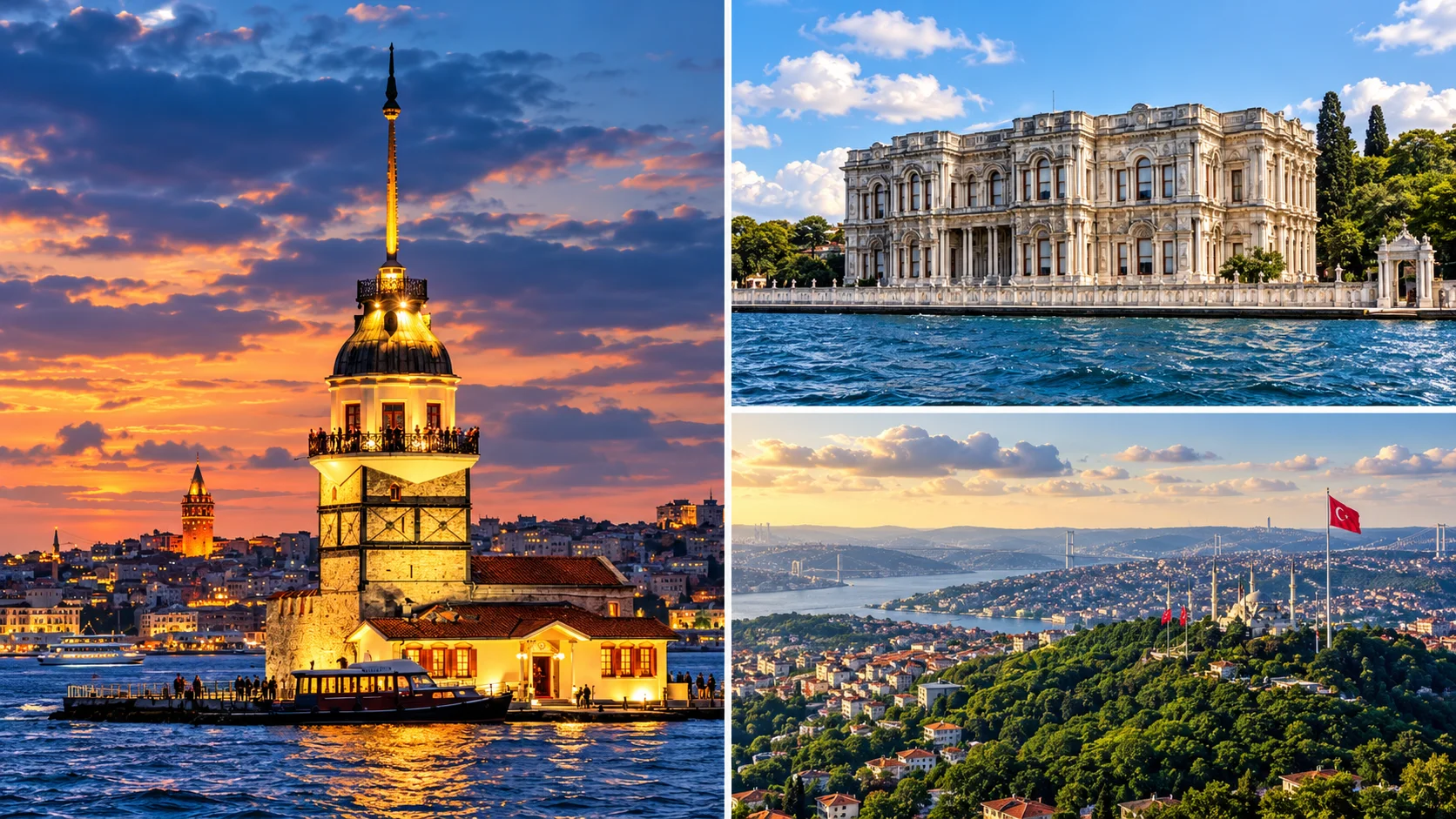
An Authentic Istanbul District
Üsküdar is not a tourist enclave — it is a dense, fully functioning neighbourhood of Istanbul that happens to contain waterfront mosques, an imperial palace, a Bosphorus islet fortress and some of the city's best-preserved 19th-century village streets. Where Sultanahmet is curated for visitors and Beyoğlu is performatively cosmopolitan, Üsküdar is simply itself: Ottoman layers beneath a living city. That authenticity is precisely what makes it worth the ferry crossing.
Key Neighbourhoods
Üsküdar district spans a wide arc of the Asian Bosphorus shore, encompassing distinct sub-neighbourhoods: Üsküdar Center (the historic square and market), Salacak (the waterfront promenade facing Kız Kulesi), Kuzguncuk (preserved Bosphorus village), Beylerbeyi (palace and yalıs), Çengelköy (village with plane trees), Kandilli (observatory shores), Nakkaştepe (Bosphorus-view park above Kuzguncuk), Altunizade / Validebağ (transport hub and grove), and the Çamlıca hills above them all. The southern quarters of Harem and Selimiye close the district at the Marmara end.
Getting Here
From Istanbul Airport (IST): approximately 30–40 minutes by private transfer; by public transport via Havaist and Marmaray allow 60–75 minutes. From Sabiha Gökçen Airport (SAW): approximately 40–50 minutes by private transfer; by Metro M4 and Marmaray allow 55–70 minutes. From the European side: Şehir Hatları ferries run from Eminönü, Karaköy and Kabataş (15–20 minutes). The Marmaray commuter rail stops at Üsküdar station, connecting directly to Sirkeci and points west. Once in the district, buses, taxis and rideshare cover the Bosphorus villages south to Beylerbeyi and Çengelköy.
What Do You Want to See in Üsküdar?
Üsküdar is large and its attractions spread across several distinct areas. Use these quick categories to orient your visit before reading the full sections below.
Iconic Istanbul: Kız Kulesi
The Maiden's Tower — on its Bosphorus islet 200 metres offshore — is the single most recognised image of Üsküdar. Museum, café-restaurant, boat trip from Salacak or Galataport. Open daily. See the full section below.
Ottoman Waterfront: Üsküdar Square
Three of Mimar Sinan's buildings plus one of Istanbul's finest Baroque fountains within a short walk of the ferry pier: Mihrimah Sultan Mosque, Şemsi Paşa Mosque, III. Ahmed Fountain and the Yeni Valide complex nearby.
Bosphorus Village: Kuzguncuk
Istanbul's most intact Bosphorus village — 19th-century wooden houses, İcadiye Caddesi's cafes and shops, an interfaith streetscape (mosque, synagogue, Armenian and Greek Orthodox church within metres of each other) and the community garden.
Palace Day: Beylerbeyi
Beylerbeyi Palace (1861–1865) was Sultan Abdülaziz's Bosphorus summer residence and later the final home of Sultan Abdülhamid II. Balyan-designed interiors, sea-level bathing pavilion, formal gardens. Closed Mondays.
Village Walk: Çengelköy & Çınaraltı
South of Beylerbeyi, Çengelköy retains a traditional village square shaded by plane trees, Ottoman wooden houses, a waterfront accessible by ferry, and the landmark façade of the former Kuleli Military High School visible from the Bosphorus.
Green Escape: Groves & Parks
Three major green spaces: Fethi Paşa Korusu (free, 07:00–23:00, Bosphorus-view urban forest above Kuzguncuk), Nakkaştepe Millet Bahçesi (free, 06:00–22:00, 152-dönüm park with panoramic terraces) and Validebağ Korusu near Altunizade.
Panoramic Views: Çamlıca
Büyük Çamlıca Hill offers the most sweeping views of both shores, the Princes' Islands and the Golden Horn. Nearby Küçük Çamlıca is home to the Çamlıca Tower (369 m structure, 587 m above sea level) — Turkey's tallest tower, with observation floors and a restaurant.
Deep History: Selimiye & Atik Valide
Selimiye Barracks (Florence Nightingale's Crimean War hospital, by appointment only), Selimiye Mosque (Ottoman Baroque), Atik Valide külliye (Mimar Sinan's largest Üsküdar complex) and the tile-decorated Çinili Cami (Kösem Sultan, 1640).
Chrysopolis to Üsküdar: Istanbul's Ancient Asian Gateway
The waterfront at Üsküdar was inhabited long before Constantinople became Constantinople. The ancient Greeks called this settlement Chrysopolis — the City of Gold — a trading post and transit point on the Asian shore of the Bosphorus, directly across from the more powerful Byzantion on the European side. Under Byzantine rule it became known as Scutari, a name that persisted in European usage well into the 19th century — it was as Scutari that Florence Nightingale knew the city during the Crimean War. The Ottoman conquest brought the name Üsküdar, derived from the Persian word for messenger or courier — a fitting etymology for what the district was about to become.
In the Ottoman period, Üsküdar was the empire's principal Asian gateway — the point at which Istanbul ended and Anatolia began. Every pilgrim caravan (the annual Surre procession to Mecca) and every trade caravan to Anatolia, Persia and beyond departed from Üsküdar's staging grounds. Sultans crossed here to lead campaigns east. The district accumulated mosques, hans, caravanserais and külliye complexes to service this traffic — many of them commissioned by the most powerful women of the Ottoman court, making Üsküdar's waterfront an exceptional record of imperial female patronage in Ottoman architecture.
Üsküdar Square: Minarets, Fountains and the Ferry Pier
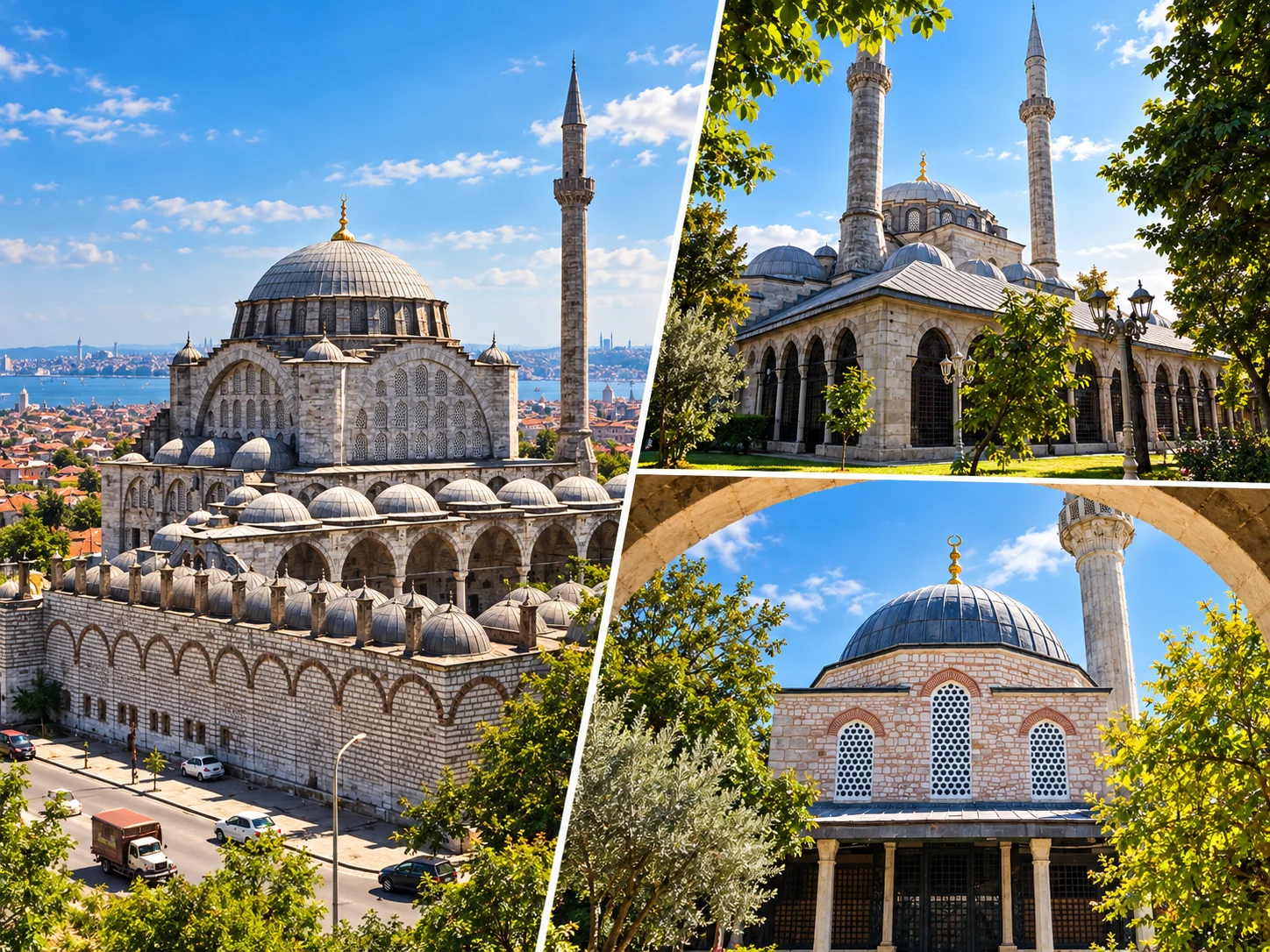
The area around Üsküdar's ferry pier and the old square is one of the densest concentrations of Ottoman architectural heritage in the city — four significant structures within a few minutes' walk of each other, all accessible from the ferry landing.
Mihrimah Sultan Mosque (İskele Camii)
Built 1540–1548 by Mimar Sinan for Mihrimah Sultan, the favourite daughter of Suleiman the Magnificent, Mihrimah Sultan Mosque (also called İskele Camii — the Pier Mosque) is one of Sinan's early masterworks. The mosque is distinguished by its elevated position on a platform, its triple-domed portico, two slender minarets and a distinctive hexagonal marble şadırvan (ablution fountain) in the courtyard facing the sea. There are no mosaics or frescoes inside: the mosque is celebrated for its spatial mastery, proportions and management of light — the mark of classical Ottoman architecture at its most assured.
III. Ahmed Fountain (1728)
Erected by Sultan Ahmed III next to the ferry pier, this is among the finest examples of Ottoman Baroque-style street fountains in Istanbul. Its five ornate facets are decorated with carved floral reliefs and calligraphic inscriptions in gold. The fountain was designed to serve travellers arriving and departing at the pier — a public act of dynastic generosity in monumental form.
Şemsi Paşa Mosque (Kuşkonmaz Camii)
Built in 1580 by Mimar Sinan for Grand Vizier Şemsi Ahmed Paşa, this compact külliye sits directly on the Bosphorus waterfront — one of the most unusual siting decisions in Ottoman architecture, with the sea lapping metres from the medrese wall. The mosque, medrese and library together form a complete if small complex. Local tradition holds that birds never land on the mosque — giving it the nickname Kuşkonmaz (birds don't perch). This is folk tradition, not structural fact, but the name has stuck for four centuries.
Yeni Valide Mosque
Built 1708–1711 by Gülnuş Emetullah Valide Sultan, mother of Sultan Ahmed III, and designed by Kayserili Mehmet Ağa, the Yeni Valide complex sits slightly back from the waterfront. The mosque is architecturally conservative but its türbe (mausoleum) is exceptional: instead of the standard stone dome, the tomb is screened by an ornate bronze lattice — an extremely rare solution in Ottoman funerary architecture that makes the Yeni Valide türbe worth seeking out specifically.
Üsküdar Market Quarter: Fish, Produce and Neighbourhood Commerce
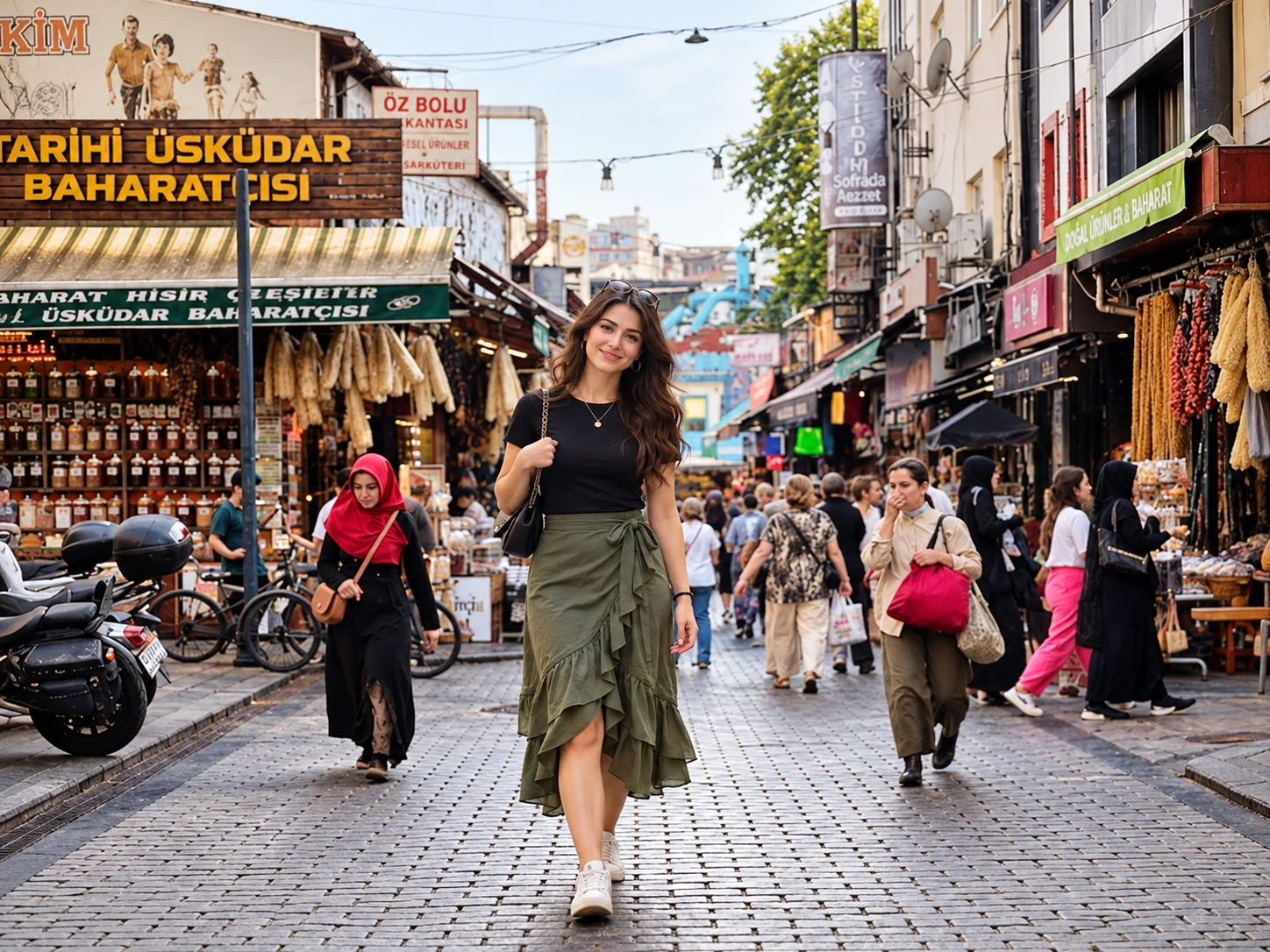
The historic market streets around Hakimiyeti Milliye Caddesi and Selmanağa form the commercial heart of the district. A fish market, fresh produce stalls, pastry shops, olive sellers, tea houses and bookshops fill the covered passages and open-air streets behind the ferry pier. This is authentic neighbourhood commerce — not tourist-curated but genuinely lived-in: the butcher next to the spice seller next to the hardware stall. The Üsküdar Çarşı area connects the ferry pier with the residential backstreets and is best explored on foot in the morning before noon, when the market is fully active and the day's catch is fresh at the fishmongers.
The Asian side of Istanbul has a different tempo from the European tourist districts, and the Üsküdar market quarter embodies that difference most clearly: it moves to the rhythms of the neighbourhood, not the visitor schedule.
Salacak: The Waterfront Walk to the Maiden's Tower
Salacak is the shoreline promenade south of Üsküdar's main pier, facing Kız Kulesi from approximately 200 metres across the water. The walk along the water's edge offers the most famous view of the tower set against the European shore — and the view is as good from here as it is from the tower itself. Sunset from Salacak, with the Bosphorus lit gold behind the tower and the Sultanahmet skyline visible in the distance on the European side, is one of Istanbul's classic visual experiences. The walkway is flat, open and unencumbered; evenings in summer draw local families and photographers.
The neighbourhood behind the waterfront is calm and residential, connecting southward toward the Harem terminal area. Boats to Kız Kulesi depart from Salacak pier throughout the day; boats also depart from Galataport on the European side for those approaching from that direction.
Kız Kulesi — The Maiden's Tower
The small islet approximately 200 metres offshore from Salacak has been in use since Byzantine times: Byzantine sources record a watchtower here and a chain stretched across the Bosphorus to control and tax shipping. The structure has been rebuilt multiple times; the current stone tower is an 18th-century Ottoman construction that underwent extensive restoration in the 2000s and again before its 2023 reopening. The name Kız Kulesi — Maiden's Tower — derives from a widespread local legend in which a princess is kept on the tower by her father to protect her from a prophecy of death by snakebite, only for a snake to arrive hidden in a basket of fruit. The legend is exactly that: folklore, not history. The name Leander's Tower, used in European sources, attaches a different myth (the Greek story of Hero and Leander) to the same structure.
In 2026 the tower operates as a museum and café-restaurant. Open daily 09:00–18:00 (ticket desk closes 17:00). Boats run from Salacak pier and Galataport on the European side daily 09:00–19:00. Entry for foreign visitors: 27 EUR plus boat ticket (110 TL). Müzekart accepted. Boat service can be suspended in high winds or rough Bosphorus conditions — check on the morning of your visit. For full practical details, see our full guide to the Maiden's Tower.
Sultantepe & the Aziz Mahmud Hüdayi Complex
Sultantepe rises behind Üsküdar's commercial centre — a historic residential hill with some of the neighbourhood's oldest surviving Ottoman structures set among steep streets of wooden houses. The principal draw for visitors interested in Ottoman religious and social history is the Aziz Mahmud Hüdayi Complex (külliye), one of the most historically significant Sufi foundations in Istanbul.
Aziz Mahmud Hüdayi (1541–1628) founded the Celvetiye Sufi order and was among the most prominent religious and spiritual figures of the Ottoman 17th century — so revered that he personally greeted Sultan Ahmed I at his accession, and was consulted by multiple sultans over his long life. The külliye (1594) includes a mosque, his türbe (tomb), a tekke (dervish lodge), and a medrese. The türbe remains an active ziyaret site — a place of visitation for those seeking spiritual connection — and is open to respectful visitors. The complex as a whole is one of the undervisited gems of Üsküdar, particularly for those with an interest in Ottoman Sufi culture.
Kuzguncuk: Istanbul's Most Intact Bosphorus Village
Kuzguncuk sits on the Bosphorus shore between Üsküdar centre and Beylerbeyi, and is widely considered the best-preserved Bosphorus village neighbourhood remaining in Istanbul. The main street, İcadiye Caddesi, is lined with 19th-century wooden houses painted in pastel colours, small shops, independent cafes and a handful of restaurants. The neighbourhood moves at a different pace from the rest of the city — less pressured than Balat, less tourist-dense than Ortaköy, and more genuinely residential than either.
Within one short stretch of Kuzguncuk stand four places of worship representing four faith communities: the Üryanizade Mosque, the Bet Yaakov Synagogue, the Surp Krikor Lusavoriç Armenian Church and the Ayios Panteleimon Greek Orthodox Church. This proximity reflects the neighbourhood's diverse 19th-century demographics, when Jewish, Armenian, Greek and Muslim families lived side by side. The synagogue and churches have limited or no regular tourist access — they are active places of worship — but their significance is architectural and historical, and the streetscape is best appreciated on foot from İcadiye Caddesi.
Kuzguncuk Bostanı — also known as İlya'nın Bostanı — is a community garden managed by Üsküdar Municipality on the southern edge of the neighbourhood. The garden is divided into 100 parcels: 50 are allocated to local residents by annual lottery, the remainder to schools and community organisations. For visitors it functions as a social green space with an amphitheatre, picnic areas, children's play and walking paths. Entry is free and open to the public — a genuinely pleasant spot to spend an hour in the shade of vegetable plots and fruit trees beside the Bosphorus.
Fethi Paşa Grove: Urban Forest with Bosphorus Views
Fethi Paşa Korusu (Fethipaşa Grove) is a protected urban forest on the hillside directly above Kuzguncuk, with panoramic views over the Bosphorus strait and the Rumeli (European) shore. It is among the most pleasant green spaces on Istanbul's Asian side — free to enter, open 07:00–23:00, and operated by Istanbul Metropolitan Municipality (IBB).
The grove has well-maintained walking and running trails through mature woodland, children's play areas, picnic areas (no barbecue facilities) and IBB social facilities including a café-restaurant with terrace views of the Bosphorus. The combination of forest canopy and sea views makes it a genuinely rewarding urban walk, and it connects naturally with a Kuzguncuk waterfront stroll before the climb up into the trees. Allow at least 1.5–2 hours to walk the main circuits comfortably.
Beylerbeyi: Ottoman Summer Palace on the Asian Shore
Beylerbeyi is a Bosphorus waterfront neighbourhood south of Kuzguncuk, defined by its imperial palace, yalıs (Bosphorus waterfront mansions) and quiet village piers. The waterfront road between Kuzguncuk and Beylerbeyi is one of the few stretches of the Bosphorus shore that can be walked on foot — a narrow promenade where the traffic noise is outcompeted by the sound of water.
Beylerbeyi Palace
Built 1861–1865 as Sultan Abdülaziz's summer residence and official state guest palace, Beylerbeyi Palace was designed by Armenian-Ottoman architects Sarkis and Agop Balyan — the same family responsible for Dolmabahçe and several other imperial waterfront structures. The palace has two main floors of reception rooms and private apartments decorated in an eclectic Ottoman-European style, a sea-level bathing section known as the Mermer Köşk, and extensive formal gardens with two kiosks (Malta and Sarı). The most celebrated early guest was Empress Eugénie of France, who stayed here in 1869 during the opening of the Suez Canal ceremonies. The palace's most historically poignant association is with Sultan Abdülhamid II, who was held under house arrest in its apartments from 1912 to 1918 and died there. Open Tuesday–Sunday 09:00–17:00. Closed Mondays. Entry: 200 TL domestic / 800 TL foreigners. Müzekart accepted. For a full visitor guide including room-by-room highlights, see our Beylerbeyi Palace visitor guide.
Çengelköy: Bosphorus Village with a Cucumber Legacy
Çengelköy is a well-preserved Bosphorus village between Beylerbeyi and Kandilli. The historic centre has Ottoman wooden houses, a traditional square shaded by ancient plane trees (the Çınaraltı — literally "under the plane trees"), a small mosque and a waterfront accessible by ferry from the European side. The neighbourhood has a quiet, unhurried quality that makes it a good contrast to the busier parts of Üsküdar — better for walking and sitting than for ticking off sights.
For centuries Çengelköy was associated with its cucumbers — a long, thin, thin-skinned variety grown in the fertile waterfront gardens and sold across Istanbul as a prized product. The Çengelköy salatalığı (cucumber) became so associated with the neighbourhood that it entered the city's food vocabulary. Large-scale cultivation has declined sharply with urbanisation, but the local identity survives in neighbourhood memory and occasional references at the market.
The prominent historic complex at the southern edge of Çengelköy is the former Kuleli Military High School (1860) — its landmark Ottoman-neoclassical waterfront complex is one of the most photographed buildings on the Bosphorus. The building was restructured and repurposed after 2016 and is not open to regular visitors; its architectural significance is best appreciated from the water or the opposite shore.
Kandilli: Observatory Shores and Palace Heritage
Kandilli is one of the quieter Bosphorus villages on the Üsküdar shore, situated between Çengelköy and the Beykoz district boundary at the northern edge of the municipality. The waterfront has yalıs and a village pier, accessible by ferry and by road. The pace here is notably slow — Kandilli is a residential Bosphorus village in the most literal sense, with little commercial infrastructure aimed at visitors.
Kandilli Observatory is part of Boğaziçi University's Kandilli Observatory and Earthquake Research Institute — Turkey's primary seismological and meteorological research centre, and the institution that monitors and reports on all significant seismic activity in the country. The original observatory dates to 1868. It is a working research institution with no regular public visiting programme; the buildings are not open to walk-in tourists. The significance of Kandilli Observatory is scientific, not touristic.
Kandilli is associated with an Adile Sultan Kasrı that became part of Boğaziçi University's campus. This is a point of confusion worth clarifying: the Adile Sultan Kasrı in Kandilli (now a Boğaziçi University facility) is a wholly different structure from the Adile Sultan Kasrı in Validebağ (south of Üsküdar centre), which now houses the Hababam Sınıfı Museum. The two share a patron's name but are separate buildings in different locations.
Nakkaştepe Millet Bahçesi: Bosphorus-View Urban Park
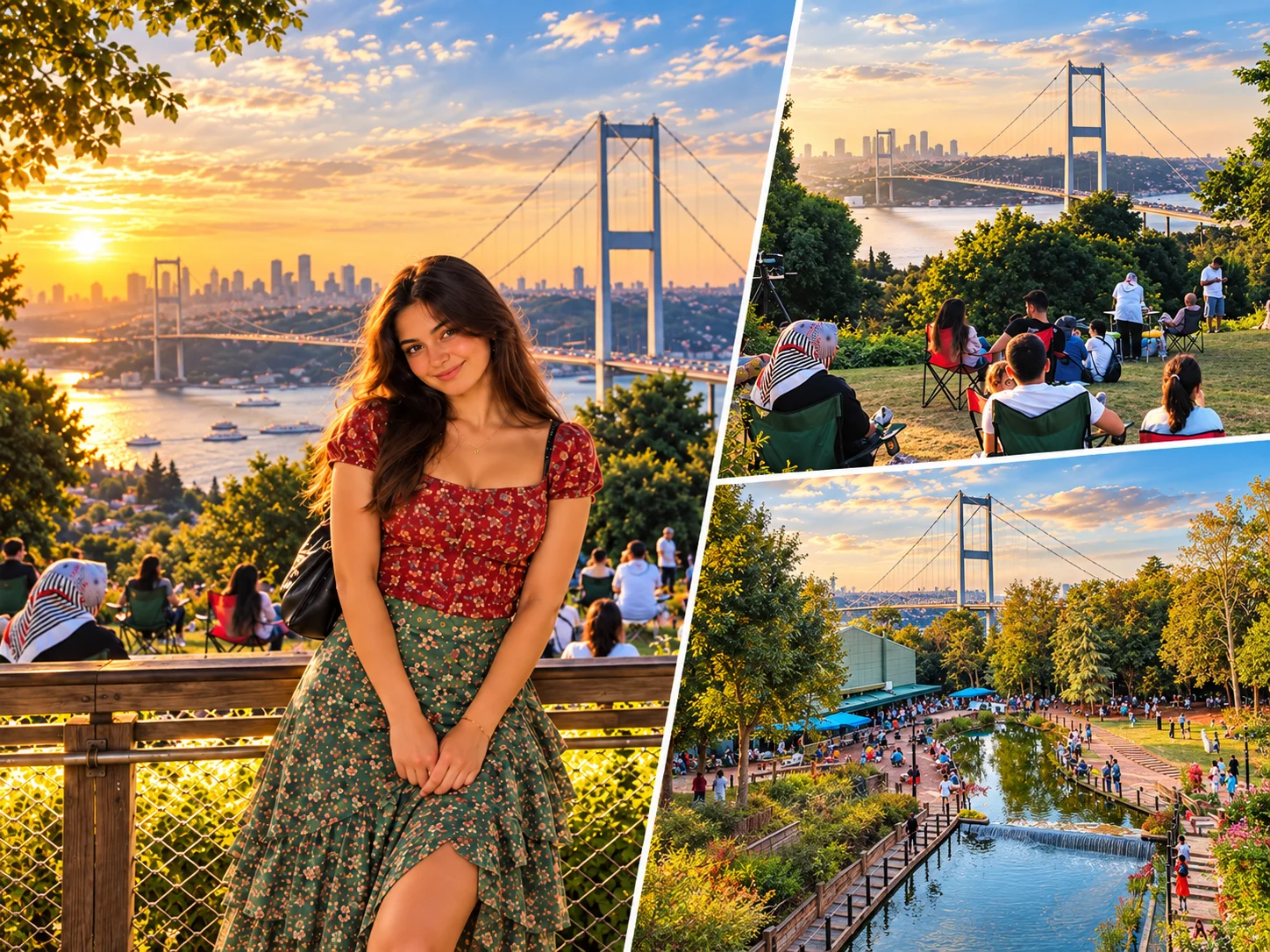
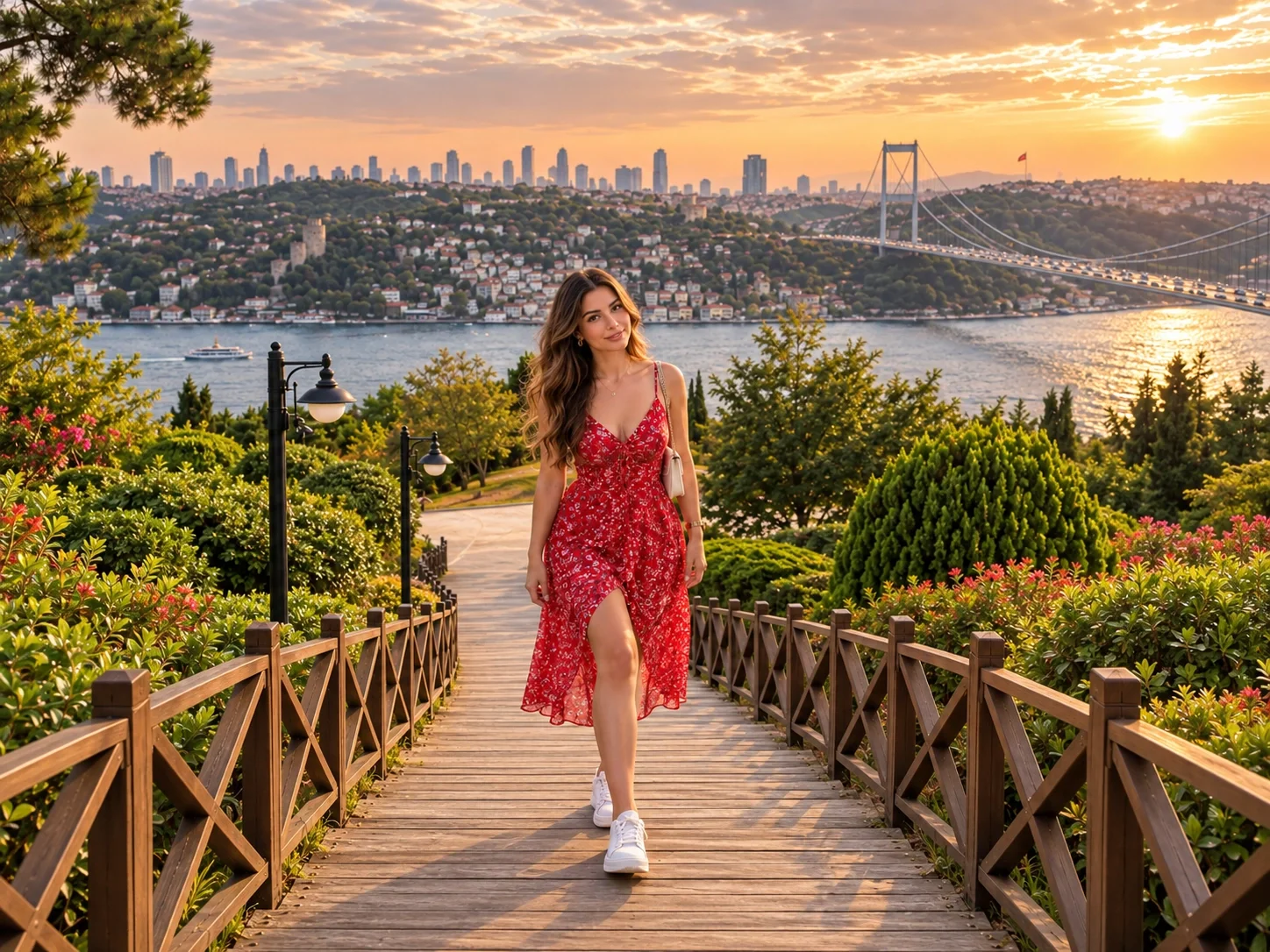
Nakkaştepe Millet Bahçesi is a 152-dönüm (approximately 15 hectares) urban park on the hillside above Kuzguncuk, managed by Istanbul Metropolitan Municipality. Free to enter and open daily 06:00–22:00. The park sits at a height that gives its observation terraces unobstructed panoramic views across the Bosphorus to the European shore — one of the best free viewpoints on the Asian side of the city.
The park has multiple terrace viewpoints, walking and running trails through landscaped and forested sections, picnic areas, sports facilities, children's play areas, an adventure course and paid parking. The combination of greenery and views makes it a natural companion to the nearby Fethi Paşa Grove for a full green day in Üsküdar — the two parks are roughly adjacent on the hillside above Kuzguncuk and can be combined in a single outing.
Note on Abdülmecid Efendi Köşkü: A historic pavilion within the Nakkaştepe area hosts temporary exhibitions but is not permanently open as a regular museum. Check current programming before planning a specific visit to the köşk itself.
Altunizade, Validebağ Grove & the Hababam Sınıfı Museum
Altunizade is a busy commercial and transport hub in the inner Üsküdar district. The Metrobüs line stops at Altunizade station, making it a key interchange between Asian-side destinations, and the area has modern shopping infrastructure (including the Akasya shopping centre) alongside older neighbourhood fabric. For visitors, Altunizade functions primarily as a gateway to the green spaces south of the Üsküdar centre rather than a destination in itself.
Validebağ Korusu (Validebağ Grove) is a protected urban forest in the Altunizade area — one of the few substantial green lungs remaining in this densely built part of the city. The grove provides woodland walks through mature trees and a relief from the surrounding urban density. It is an important local amenity, particularly for Üsküdar residents.
Within the Validebağ grove stands the Adile Sultan Kasrı — a 19th-century kasır (royal pavilion) that now houses the Hababam Sınıfı Museum. The museum is dedicated to the beloved Turkish comedy film series Hababam Sınıfı (Chaos Class), with recreated school classrooms, film memorabilia, props and set pieces. Open daily 09:00–17:00. Admission prices should be verified on-site, as they are updated periodically. Important note for accuracy: this Adile Sultan Kasrı in Validebağ is a separate building from the Adile Sultan-related structures in Kandilli — the name refers to the same historical patron (Adile Sultan, daughter of Mahmud II) but the two structures are distinct buildings in different locations.
Büyük Çamlıca: Istanbul's Great Viewpoint Hill
Büyük Çamlıca Hill is one of Istanbul's most iconic view terraces, offering panoramic sightlines in virtually every direction — across the Bosphorus to both shores, south to the Princes' Islands and the Marmara, north toward the Black Sea approaches, and west to the Golden Horn. It is not Istanbul's highest topographical point (Aydos Hill, further east, is higher) but it is the most symbolically important and most visited high point in the city. The combination of accessibility, facilities and views has made it a weekend destination for Istanbulites for centuries.
The hill has public parks, walking paths, Ottoman-era kiosks, tea gardens and social facilities spread across its summit. For guided options and more detail on walking routes, see our Çamlıca Hill tours and visitor guide.
Büyük Çamlıca Mosque
Opened in 2019, Büyük Çamlıca Mosque is one of Turkey's largest mosques — designed to be visible on the Istanbul skyline from the European shore. The complex has six minarets and capacity for tens of thousands of worshippers simultaneously. Open to non-Muslim visitors outside prayer times; dress modestly and remove shoes at the entrance.
Küçük Çamlıca Hill & Çamlıca Tower
Küçük Çamlıca (Little Çamlıca) is a separate, smaller hill close to Büyük Çamlıca. On its crest stands the Çamlıca Tower — Turkey's tallest structure at 369 metres (the tower itself), with the hilltop site sitting 587 metres above sea level. These are two different measurements; the tower is not 587 metres tall. The tower has observation floors, a restaurant, café and media broadcast facilities. Open daily 10:00–22:00. Entry: 225 TL domestic / 600 TL foreigners. For full visitor details including booking, see our Çamlıca Tower visitor guide.
Atik Valide Complex & Çinili Mosque
Atik Valide Külliyesi
Built in 1583 by Nurbanu Sultan — the Venetian-born wife of Sultan Selim II and mother of Murad III — the Atik Valide Complex is one of Mimar Sinan's largest and most complete külliye projects in Istanbul. The complex in its original form included a mosque, medrese (college), darüşşifa (hospital/medical school), imaret (soup kitchen), hamam, and tabhane (travellers' lodge). Multiple buildings survive, and several are now used by Marmara University, giving the complex an unusual double life as both a living historical site and an active academic campus. The mosque itself is open and worth visiting for its scale and refined classical Ottoman interiors.
Çinili Cami
Built in 1640 by Kösem Sultan — the powerful regent mother of sultans Ibrahim and Mehmed IV — Çinili Cami (the Tiled Mosque) takes its name from its interior decoration. The walls are lined with distinctive blue-green Iznik tilework applied in a quantity and density unusual for a mosque of its size. The exterior is modest and easily missed; the interior is the revelation. A small külliye including a hamam completes the complex. Çinili Cami is one of Üsküdar's most undervisited architectural treasures — a short walk from the main square but rarely mentioned in standard tourist itineraries.
Harem & Selimiye: The Southern Quarter
Harem
The Harem waterfront area marks the southern end of Üsküdar, where the Bosphorus meets the Sea of Marmara. Historically it was one of Istanbul's most important transit points — the Harem bus terminal connected Anatolia-bound coaches with the Asian side for decades before the Marmaray and new bridge routes reduced its centrality. The area is undergoing significant urban transformation as the bus terminal functions have been reorganised, but the waterfront retains its Marmara views and ferry connections.
Selimiye Mosque
Built in stages between approximately 1780 and 1804 for Sultan Selim III, the Selimiye Mosque in Üsküdar is an example of Ottoman Baroque architecture — a style distinct from the classical Ottoman tradition of Mihrimah Sultan or Şemsi Paşa. The exterior features ornate, European-influenced decorative elements applied to an Ottoman structural framework. The mosque is active and open for prayer; non-Muslim visitors are welcome outside prayer times.
Selimiye Barracks & Florence Nightingale
The Selimiye Barracks were built in the early 19th century under Sultan Mahmud II as a major military installation on the Asian shore. During the Crimean War (1853–1856), the barracks were converted into a British military hospital where Florence Nightingale worked alongside Mary Seacole and a team of nurses, treating thousands of wounded soldiers and pioneering the statistical and hygiene-based approaches to medical care that form the foundation of modern nursing. The Florence Nightingale Museum is housed in the northwest tower of the barracks and holds original artefacts including her famous lamp. The Selimiye Barracks remain an active military installation; visits to the museum require prior appointment through the Turkish Land Forces Command. This is not a walk-in tourist attraction — arrange your visit in advance through official channels.
Üsküdar's Ottoman Mosques: A Heritage Overview
Üsküdar contains one of the highest concentrations of Ottoman mosque architecture in Istanbul — spanning five centuries from Suleiman the Magnificent to the Turkish Republic. The table below provides a quick reference for the main structures covered in this guide.
| Mosque | Built | Patron / Architect | Location |
|---|---|---|---|
| Mihrimah Sultan (İskele) | 1540–1548 | Mihrimah Sultan / Mimar Sinan | Üsküdar Square |
| Şemsi Paşa (Kuşkonmaz) | 1580 | Şemsi Ahmed Paşa / Mimar Sinan | Waterfront, Üsküdar |
| Atik Valide | 1583 | Nurbanu Sultan / Mimar Sinan | Üsküdar inner |
| Aziz Mahmud Hüdayi | 1594 | Aziz Mahmud Hüdayi | Sultantepe |
| Çinili | 1640 | Kösem Sultan | Üsküdar inner |
| Yeni Valide | 1708–1711 | Gülnuş Emetullah Valide Sultan / Kayserili Mehmet Ağa | Üsküdar Square |
| Selimiye | c.1780–1804 | Sultan Selim III | Selimiye |
| Büyük Çamlıca | 2019 | Turkish state | Çamlıca |
Food and Local Life in Üsküdar
Üsküdar has one of Istanbul's most authentic food cultures — not a restaurant-district showcase but a neighbourhood eating culture with a few genuinely historic institutions alongside everyday fish markets, bakeries, pastane counters and tea houses that have served the same streets for generations.
The district is known for its fish — Bosphorus fish restaurants on the waterfront and at the pier serve the daily catch in straightforward settings where the fish is the point, not the decor. The market streets offer fresh börek from the fırın (bakery), simit from morning carts, fresh white cheese, pickles, dried fruit and seasonal produce. Çengelköy is historically associated with its long-variety cucumber, a flavour the neighbourhood still claims as its own.
Rather than listing specific cafes and restaurants — which change frequently and in unpredictable ways — the most reliable approach to Üsküdar's food culture is to walk: İcadiye Caddesi in Kuzguncuk for independent cafes and neighbourhood character; the waterfront between Salacak and Beylerbeyi for fish restaurants; and the market streets near the ferry pier for bakeries and produce. Let the neighbourhood reveal its food culture on its own terms.
How to Plan Your Üsküdar Visit
Whether you have half a day or two full days, Üsküdar rewards different approaches. These suggested routes help you make the most of your time depending on your focus and pace.
Half Day — The Classic
Ferry to Üsküdar pier. Walk Mihrimah Sultan Mosque, III. Ahmed Fountain and Şemsi Paşa Mosque (all within 10 minutes of the pier). Continue south along the waterfront to Salacak and the Kız Kulesi viewpoint — or take the boat to the tower if time and conditions allow. Return through the market streets for börek and tea before the ferry back. Best done in the morning.
Full Day — Bosphorus Villages
Ferry to Üsküdar, morning at the historic centre and market. Midday walk or bus to Kuzguncuk: İcadiye Caddesi, Kuzguncuk Bostanı, and the option to climb to Fethi Paşa Grove for views. Afternoon to Beylerbeyi Palace (check it is not a Monday). Return by bus or taxi. Allow the whole day and do not rush the villages.
Two Days — Complete Üsküdar
Day 1: Historic centre, Salacak, Kız Kulesi, Kuzguncuk (Bostanı + Fethi Paşa), Beylerbeyi Palace. Day 2: Morning in Çengelköy, ferry to Kandilli, Nakkaştepe Millet Bahçesi, Büyük Çamlıca, Çamlıca Tower, and Validebağ with the Hababam Sınıfı Museum before returning via Altunizade Metrobüs. A car with driver makes Day 2 significantly more efficient.
Architecture & Faith
A thematic route through Üsküdar's Ottoman religious architecture: Mihrimah Sultan Mosque → Yeni Valide Mosque → Aziz Mahmud Hüdayi Complex (Sultantepe) → Atik Valide Külliye → Çinili Cami. Add Şemsi Paşa at the end or beginning for the waterfront context. This route covers five centuries of mosque patronage in a single afternoon.
Green & Views
Üsküdar's best parks and panoramas: Fethi Paşa Grove (Kuzguncuk, free, 07:00–23:00) → Nakkaştepe Millet Bahçesi (Bosphorus-view terraces, free, 06:00–22:00) → Büyük Çamlıca Hill (tea and views) → Çamlıca Tower (observation floors, 225/600 TL). Best done on a clear day; start early at Fethi Paşa before the heat builds.
Ottoman Heritage
From the southern end of Üsküdar northward: Selimiye Mosque (Ottoman Baroque) → exterior of Selimiye Barracks (Florence Nightingale) → Beylerbeyi Palace (book ahead, closed Mondays) → Kuzguncuk interfaith streetscape → waterfront back to the pier. For detailed guidance on the palace visit, see our Beylerbeyi Palace visitor guide.
Getting to and Around Üsküdar
Üsküdar is well connected from all directions — by ferry from the European shore, by Marmaray commuter rail, and by road from both Istanbul airports. The table below covers the main options.
| Route | Method | Approx. Time | Notes |
|---|---|---|---|
| European side → Üsküdar | Ferry (Şehir Hatları) | 15–20 min | From Eminönü, Karaköy or Kabataş |
| IST Airport → Üsküdar | Private transfer | ~30–40 min | Best for luggage / direct door-to-door |
| IST Airport → Üsküdar | Havaist / bus + Marmaray | ~60–75 min | Multiple connections, luggage-dependent |
| SAW Airport → Üsküdar | Private transfer | ~40–50 min | Via coastal or bridge route |
| SAW Airport → Üsküdar | Metro M4 + Marmaray | ~55–70 min | Metro to Ayrılıkçeşme, Marmaray west |
| Üsküdar → Beylerbeyi / Çengelköy | Bus (multiple lines) | 20–30 min | Or short taxi / rideshare |
| Üsküdar → Çamlıca | Bus + walk / taxi | 20–30 min | Multiple bus options; taxi most direct |
A private airport transfer from Istanbul Airport (IST) or from Sabiha Gökçen (SAW) delivers you directly to your Üsküdar hotel or any specific address in the district — no connections, no luggage on buses. For exploring multiple Bosphorus villages in a single day, a car with driver in Istanbul gives full scheduling flexibility without the difficulty of parking on narrow waterfront roads.
Private Transfers & Chauffeur Service to Üsküdar
Arrive directly at Üsküdar from Istanbul Airport (IST) or Sabiha Gökçen (SAW) with a fixed-price private transfer — no meter, no shared shuttle. For a day exploring Kuzguncuk, Beylerbeyi Palace and Çamlıca, a car with driver keeps your schedule flexible.
FAQ: Visiting Üsküdar
What are the must-see places in Üsküdar?
Kız Kulesi (Maiden's Tower), Üsküdar Square with Mihrimah Sultan Mosque and III. Ahmed Fountain, Kuzguncuk Bosphorus village, Beylerbeyi Palace, Fethi Paşa Grove, Nakkaştepe Millet Bahçesi and Çamlıca Hill. For Ottoman architecture specifically, Atik Valide Complex and Çinili Mosque are worth adding. The Üsküdar market streets near the ferry pier are worth an early-morning visit for local atmosphere.
How many days does Üsküdar take?
Half a day covers the historic centre and Salacak. A full day adds Kuzguncuk and Beylerbeyi Palace. Two days lets you include Çengelköy, Kandilli, Nakkaştepe and Çamlıca. Visitors with a strong interest in Ottoman history and architecture can easily fill three days without rushing. The district is large and the Bosphorus villages are spread out — a car with driver is useful for a multi-area day.
Is the Maiden's Tower (Kız Kulesi) open in 2026?
Yes. Open daily 09:00–18:00 (ticket desk closes 17:00). Boats depart from Salacak pier and Galataport on the European side from 09:00–19:00. Entry for foreign visitors: 27 EUR plus boat ticket (110 TL). Müzekart accepted. Boat service may be suspended in high winds or rough Bosphorus conditions — check conditions on the morning of your visit before travelling to Salacak.
Is Beylerbeyi Palace open and how much is the ticket?
Open Tuesday–Sunday 09:00–17:00. Closed Mondays — do not visit on a Monday without checking for special openings. Entry: 200 TL domestic / 800 TL foreigners. Müzekart accepted. Photography rules apply inside; selfie sticks and tripods are not permitted. For a detailed room-by-room visitor guide, see our Beylerbeyi Palace page.
What is the height of Çamlıca Tower?
The tower structure itself is 369 metres tall, making it Turkey's tallest structure. The hilltop (Küçük Çamlıca) on which it stands is 587 metres above sea level. These are two separate measurements — the tower is not 587 metres; that figure refers to the elevation of the hill. Open daily 10:00–22:00. Entry: 225 TL domestic / 600 TL foreigners.
Can you visit the Kandilli Observatory?
Kandilli Observatory is part of Boğaziçi University's Kandilli Observatory and Earthquake Research Institute — a working seismological and meteorological research institution that monitors all significant seismic activity in Turkey. There is no regular public visiting programme. The observatory is not a walk-in tourist attraction.
Is Nakkaştepe Millet Bahçesi free?
Yes, entry is free. Open daily 06:00–22:00. The park has panoramic Bosphorus-view observation terraces, walking and running trails, picnic areas, children's play and sports facilities. Parking on-site is charged. Located on the hillside above Kuzguncuk; it combines well with a walk in the nearby Fethi Paşa Grove.
Is Fethi Paşa Grove free?
Yes, Fethi Paşa Korusu is free to enter and open 07:00–23:00. Located above Kuzguncuk on the Bosphorus hillside, it offers woodland walking trails, children's play areas, picnic areas and a café-restaurant with Bosphorus views. Operated by Istanbul Metropolitan Municipality.
Can you walk from Kuzguncuk to Beylerbeyi?
Yes, the Bosphorus waterfront road connects the two districts on foot, passing yalıs and small piers along the shore. The route is a genuine waterfront walk though it runs alongside a road with traffic. The distance takes approximately 25–35 minutes at a moderate pace. The walk is more pleasant in the morning or evening when traffic is lighter.
How do I get to Üsküdar from Istanbul Airport (IST)?
The fastest option is a private airport transfer, approximately 30–40 minutes depending on traffic and route. By public transport: Havaist or Havabus to Taksim or Eminönü, then ferry to Üsküdar (total 60–80 minutes). Marmaray connection is also possible via the Halkalı–Üsküdar rail line, roughly 55–70 minutes. With luggage, a private transfer is significantly more comfortable and often comparable in cost to the multi-connection public transport route.
Is the Florence Nightingale Museum at Selimiye Barracks open to tourists?
The Selimiye Barracks is an active military installation. The Florence Nightingale Museum occupies the northwest tower of the barracks and holds original artefacts including her lamp. Visits require prior appointment through the Turkish Land Forces Command — it is not a walk-in museum. Check official channels (the Turkish Land Forces website or through your hotel concierge) before planning a specific visit. The exterior of the barracks can be seen from the road.
What is Kuzguncuk Bostanı?
Kuzguncuk Bostanı (also known as İlya'nın Bostanı) is a community garden run by Üsküdar Municipality in the Kuzguncuk neighbourhood. The garden is divided into 100 parcels: 50 allocated to local residents by annual lottery, the remainder to schools and community organisations. For visitors it offers free public access as a social green space with an amphitheatre, picnic areas, children's play and walking paths among vegetable plots and fruit trees beside the Bosphorus.