
Van Travel Guide 2026
Van, Eastern Anatolia:
The Complete Visitor Guide
Van sits at 1,650 metres in the far east of Turkey, on the shores of the country's largest lake. Few destinations in Anatolia pack this much into one province: 3,000 years of Urartian history, medieval Armenian island churches, a unique soda-lake ecosystem, the world-famous Van cat, and a breakfast culture that draws visitors from across Turkey.
Eastern Anatolia's Pearl
Van at a Glance
Van province occupies a dramatic position in Turkey's far east, bordered by Iran to the southeast. The city itself stands at roughly 1,650–1,720 m above sea level, overlooking Lake Van — Turkey's largest and one of the world's largest soda lakes.
The provincial capital was built over the ancient Urartian city of Tushpa, founded in the 9th century BC. The province's main districts include Van city (İpekyolu and Tuşba), Edremit, Gevaş, Gürpınar, Muradiye, Başkale, Özalp, Saray and Erciş.
One common source of confusion: Tatvan, Ahlat and Adilcevaz lie on the western and northern shores of Lake Van but belong to Bitlis province, not Van. Plan them separately.
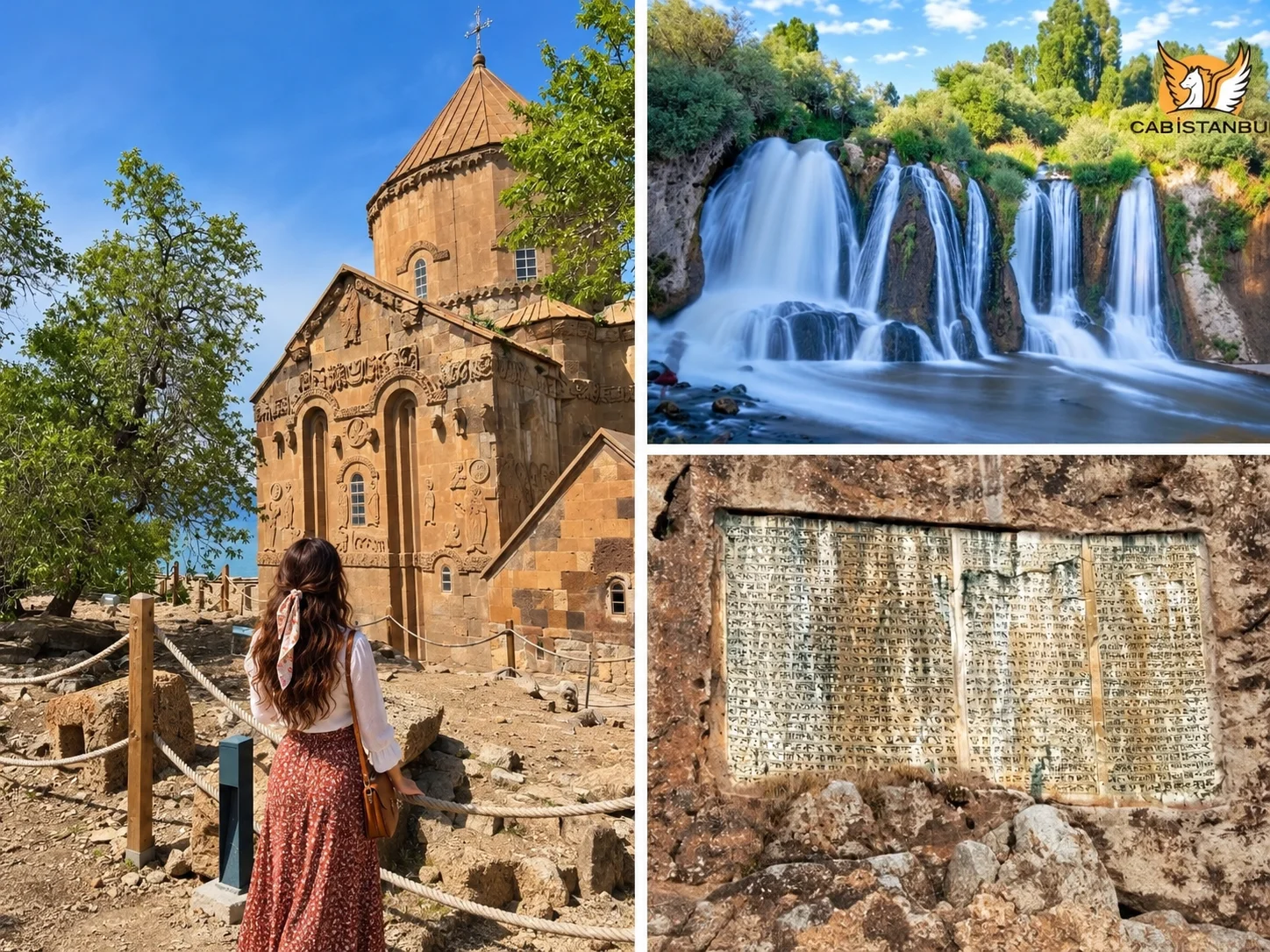
Quick Facts
Van Province — Key Data
| Detail | Value |
|---|---|
| City altitude | ~1,650 m |
| Lake Van surface area | ~3,713 km² |
| Lake Van maximum depth | ~451 m |
| Lake Van pH (soda lake) | 9.7–9.8 |
| Van Ferit Melen Airport code | VAN |
| Flight from Istanbul IST | ~1 hr 50 min |
| Flight from Istanbul SAW | ~2 hr |
| Van city — Akdamar / Gevaş pier | ~40 km, ~40 min |
| Van city — Çavuştepe | ~25 km, ~30 min |
| Van city — Hoşap Castle (Gürpınar) | ~97 km, ~1 hr 30 min |
| Van city — Muradiye Waterfall | ~80 km, ~1 hr 15 min |
| Van city — Erçek Lake | ~20 km, ~25 min |
| Van city — Ayanis Castle (Tuşba) | ~37 km, ~40 min |
| Van city — Başkale (district centre) | ~186 km, ~2 hr 30 min |
| Tatvan (Bitlis province, west shore) | ~155 km by road |
| Tourist season | May–September |
9th Century BC · Urartian
Van Castle and Tushpa: Heart of Urartu
Van Castle stands on a massive rock outcrop — some 80 metres high — immediately west of the modern city. The site preserves the ancient Urartian capital Tushpa, founded in the 9th century BC by King Sarduri I.
Inside the citadel: Urartian cuneiform inscriptions, rock-cut royal tombs, and walls from multiple building phases. The Sarduri Tower bears a six-line Assyrian cuneiform inscription of Sarduri I (c. 832–820 BC), one of the most important written records of the period. Archaeological excavations continue on the mound.
- Sarduri Tower — 9th-century BC Assyrian cuneiform inscription
- Rock-cut tombs of Argishti and Sarduri II
- Urartian curtain walls and towers
- Panoramic views over Lake Van and the city
Free admission; open sunrise to sunset.
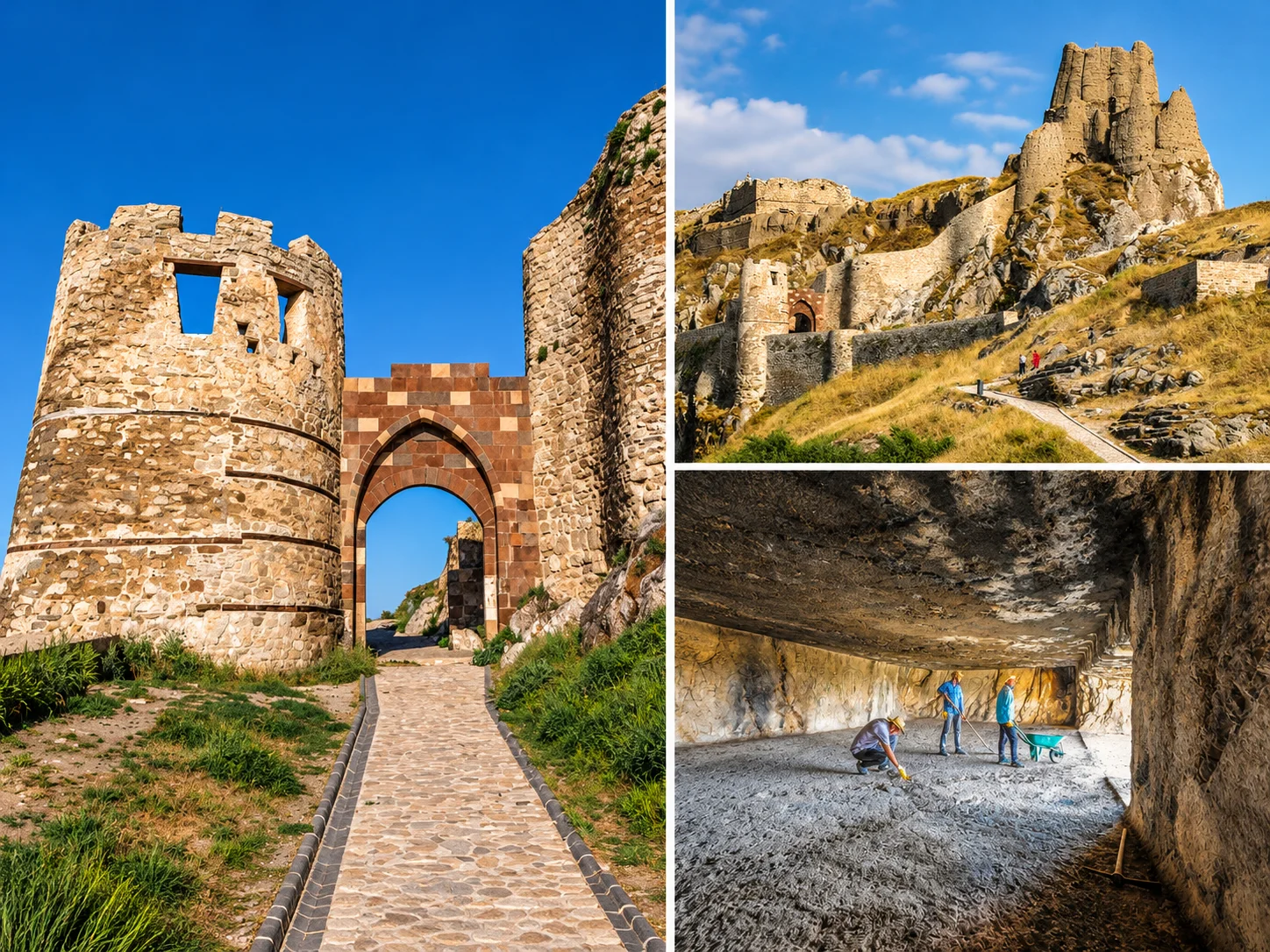
Beneath the Castle
Old Van: A Lost Ottoman City
Along the southern slope of Van Castle lie the ruins of the old city — once a major Ottoman commercial centre. The site was largely destroyed between 1915 and 1918 and never resettled, leaving it under archaeological protection.
Visitors can walk freely among the remains: old fountains, mosque foundations, and stretches of former streetscapes. The area is ~7 km from the modern city centre and is best combined with a visit to Van Castle itself.
Urartian Collection
Van Museum — Under Renovation in 2026
Van Museum holds the region's most comprehensive archaeological collection: Urartian seals, ceramics, jewellery and weapons, alongside medieval Islamic and Ottoman-era objects.
Important (2026): Van Museum has been closed since 13 January 2026 for extensive renovation. No reopening date has been announced. Verify current status via the Turkish Ministry of Culture before visiting.
When open: İpekyolu district, Van city centre. Müzekart accepted. Photography permitted; flash prohibited.
7th Century BC · Urartian
Ayanis Castle: Rusa II's Final Fortress
Situated in Tuşba district about 37 km from Van city, Ayanis Castle was built by Urartian king Rusa II in the 7th century BC and represents one of the last great architectural projects of the Urartian civilisation. Its Haldi temple ruins are among the best-preserved sacred spaces of the period.
The site is open to visitors. Excavations led by Istanbul University are usually active during the summer (July–September), when visitors can observe active fieldwork. Cuneiform inscriptions and a remarkable stone naos are visible in situ.
- Haldi temple sanctuary and bronze finds
- Cuneiform inscriptions in situ
- Elevated position overlooking the northern shore of Lake Van
- Active excavation site — July to September
Southeast Van · Gürpınar
Çavuştepe and Hoşap Castle: Two Eras on One Road
Drive southeast from Van on the D-975 and you encounter two castles separated by almost 2,500 years: the Urartian palace complex at Çavuştepe and the 17th-century Kurdish stronghold of Hoşap.
Çavuştepe (Sardurihinili)
About 25 km from Van, Çavuştepe was built by Urartian king Sarduri II between c. 764 and 735 BC. Formally called Sardurihinili, the site comprises two zones (upper and lower citadels) with surviving column bases from the Haldi and Irpuini temples, royal reliefs, and cuneiform inscriptions.
Hoşap Castle (Mahmudiye)
A further ~37 km southeast in Gürpınar district's Güzelsu village, Hoşap is not Urartian. It was built in 1643 by Sarı Süleyman Bey of the Kurdish Mahmudi dynasty. The castle perches on a rocky promontory above the Hoşap Stream; its intact towers and internal mosque ruins make it one of the finest surviving examples of Kurdish castle architecture in the region.
Both sites are open during daylight hours. The standard day trip: Van → Çavuştepe → Hoşap, returning to Van by evening.
Sacred Island of Lake Van
Akdamar Island: A 10th-Century Church in the Middle of the Lake
Akdamar Island in the southwestern arm of Lake Van is Van's most iconic destination. The island's Church of the Holy Cross (Surp Haç) is a masterpiece of 10th-century Armenian architecture — and one of the best-preserved medieval churches in the Middle East.
Boats depart from Gevaş pier, about 40 km (~40 minutes) southwest of Van city. The crossing takes roughly 20–25 minutes. There is no fixed timetable; boats leave when there are enough passengers (around 15–20). The season runs May through October; early morning departures avoid midday crowds.
- Gevaş pier: ~40 km from Van city centre
- Crossing time: ~20–25 minutes
- Minimum ~15–20 passengers per boat
- Operating hours: approx. 08:00–18:30 (in season)
- Müzekart accepted
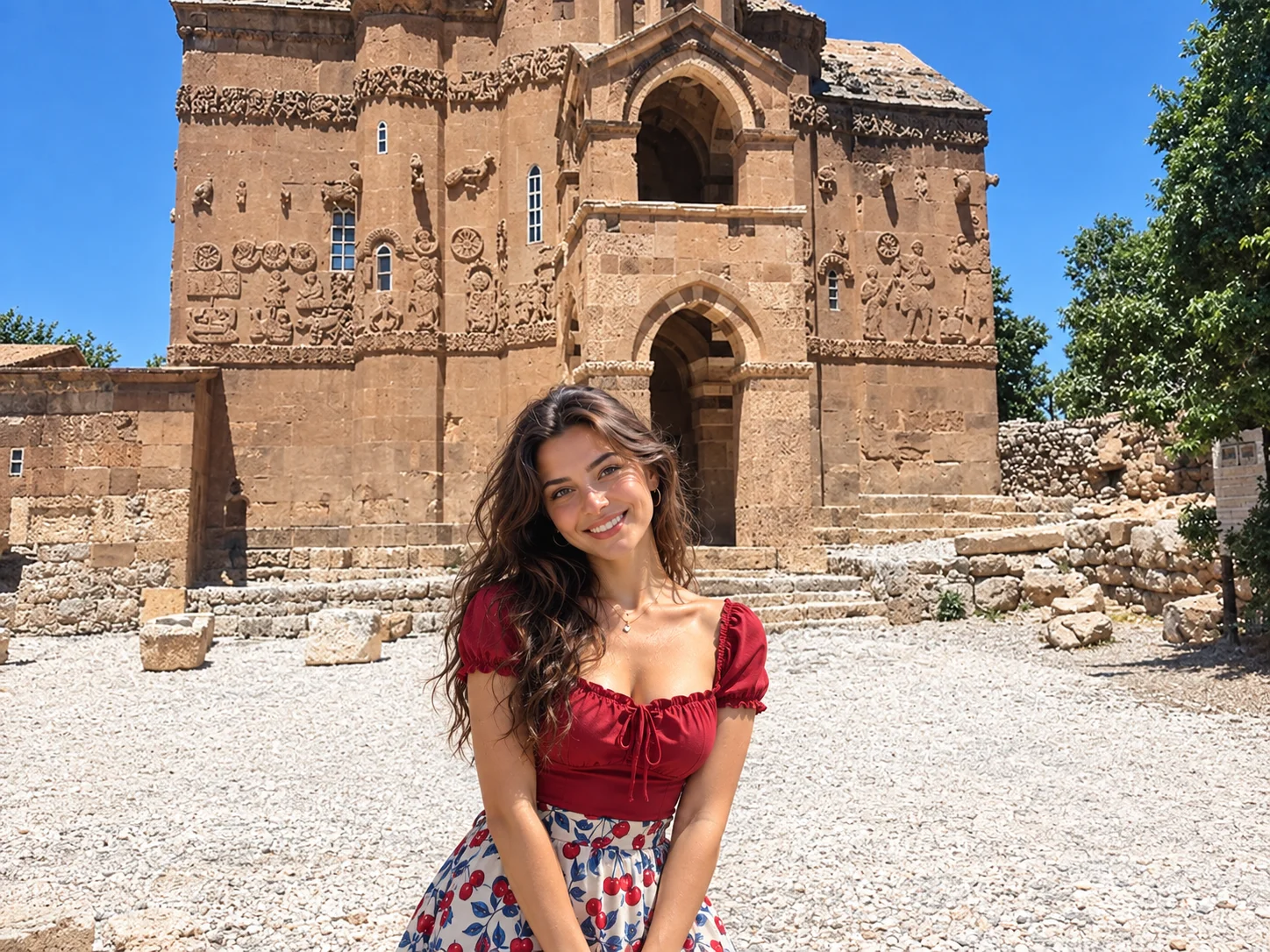
915–921 CE · Kingdom of Vaspurakan
Church of the Holy Cross: Stone Poetry of Vaspurakan
The Church of the Holy Cross (Surp Haç) was built between 915 and 921 CE by King Gagik I of the Armenian Kingdom of Vaspurakan. The architect was Manuel. It stands as one of the finest achievements of early medieval Armenian architecture.
The exterior is lavishly carved with high-relief biblical scenes: Adam and Eve, David and Goliath, Samson, Jonah and the whale. Traces of original interior frescoes survive. The church was restored in 2005–2007, and since 2010 has hosted an annual Khachverats (Holy Cross) ceremony — the first official Armenian religious service held here since 1915.
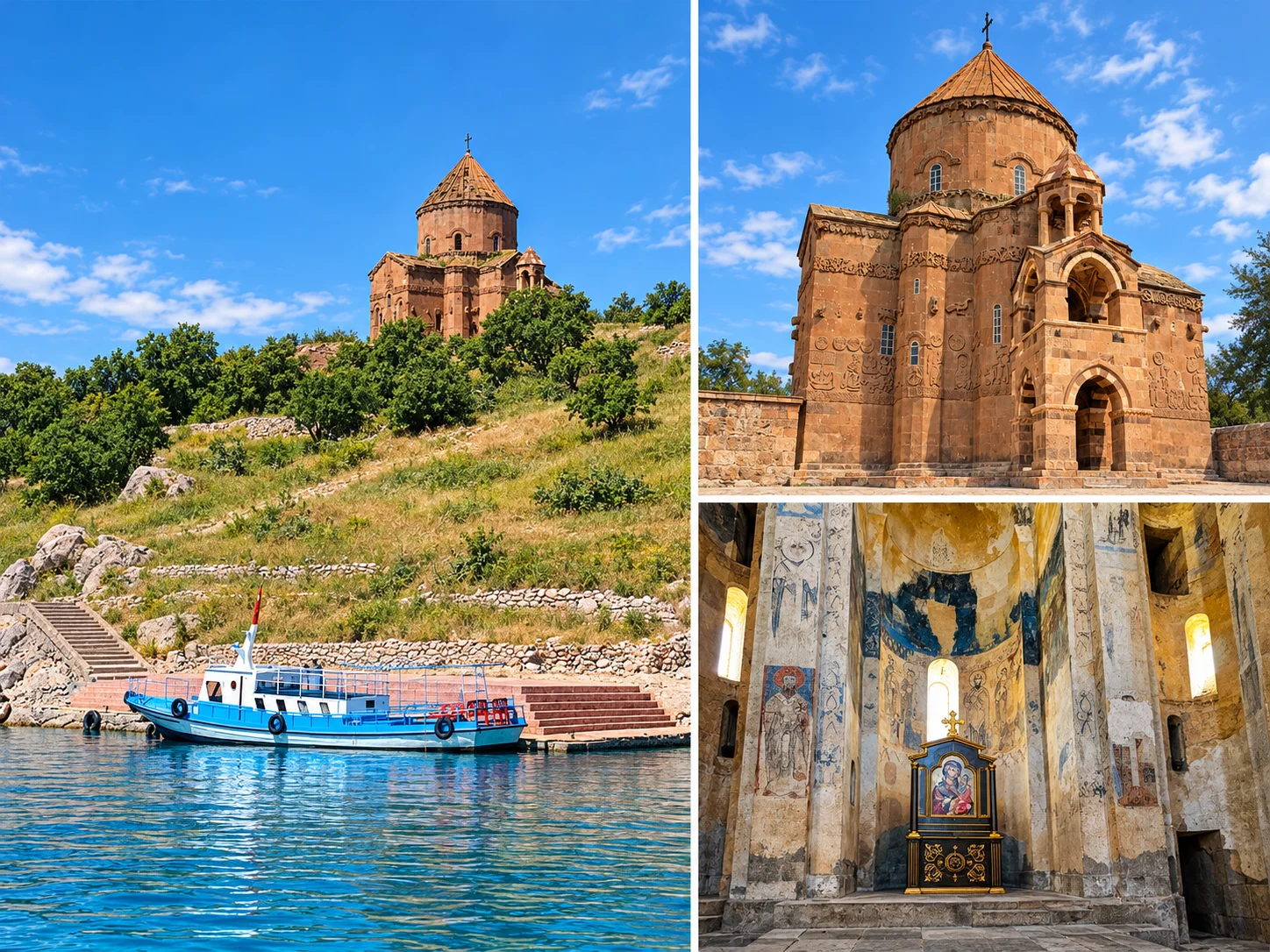
Christian Heritage of Van
Island and Lakeshore Churches
Lake Van and its surroundings contain dozens of churches and monastery ruins from the Vaspurakan period (9th–11th centuries). Three of the most accessible are described below.
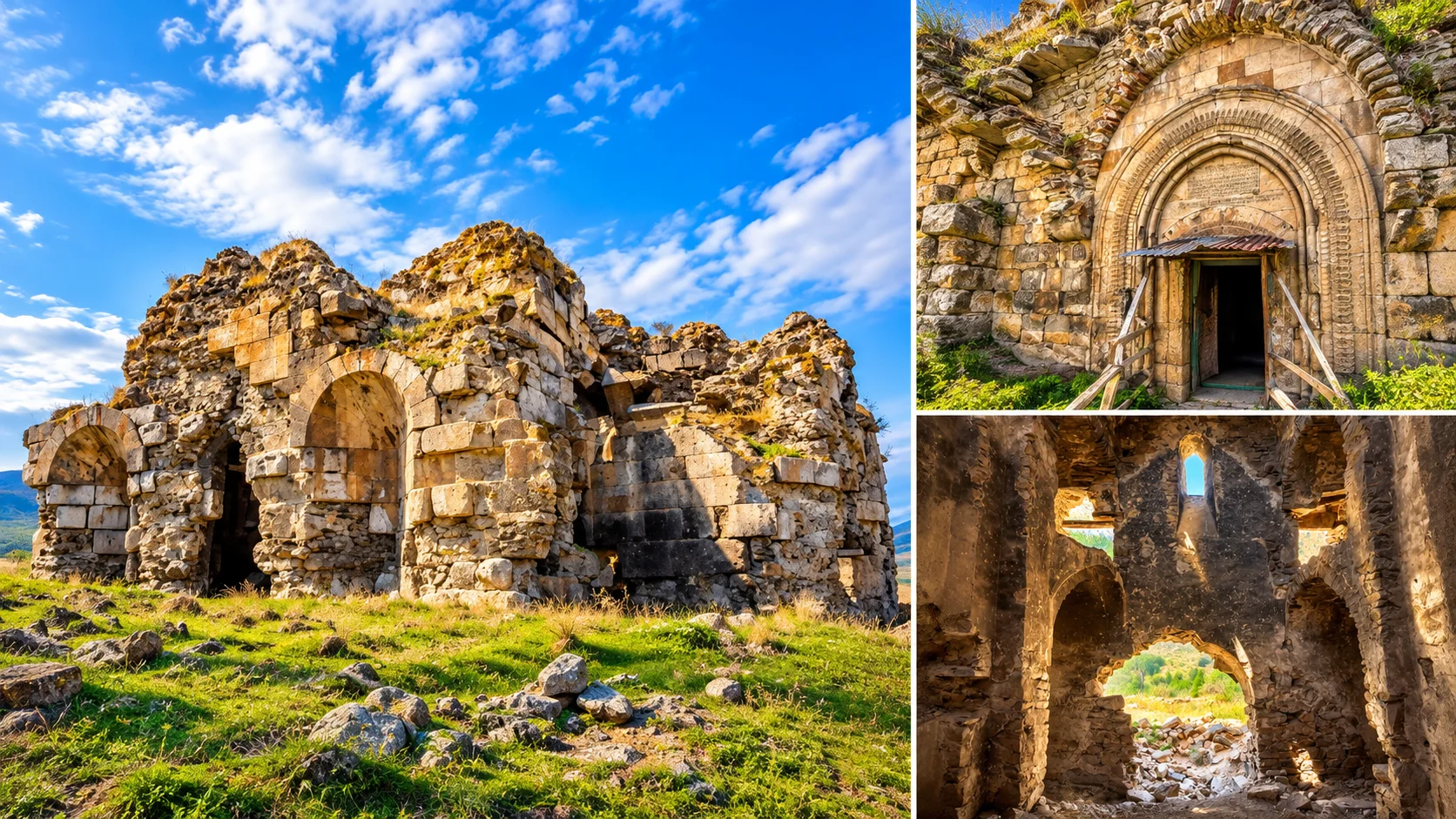
Varagavank (Seven Churches)
Located in Yukarı Bakraçlı village, ~9 km southeast of Van city in İpekyolu district (not Saray), Varagavank was one of medieval Armenia's most important monasteries. Remaining wall sections and khachkar cross-stones are visible among the ruins.
Çarpanak Island
About 10 km northwest of Akdamar, Çarpanak Island holds a 13th-century monastery complex. Access requires a private boat hired from Gevaş. Most structures are in poor condition but the island setting rewards the effort for dedicated visitors.
Kadem Pasha Hatun Tomb
Dating from 1458 and the Karakoyunlu period, the Kadem Pasha Hatun Kümbeti in Erciş is a rare example of Turkic-Islamic mausoleum architecture in the region. It can be visited en route on the Van–Doğubayazıt road.
Lake Van Shore
Edremit and the Lakeside
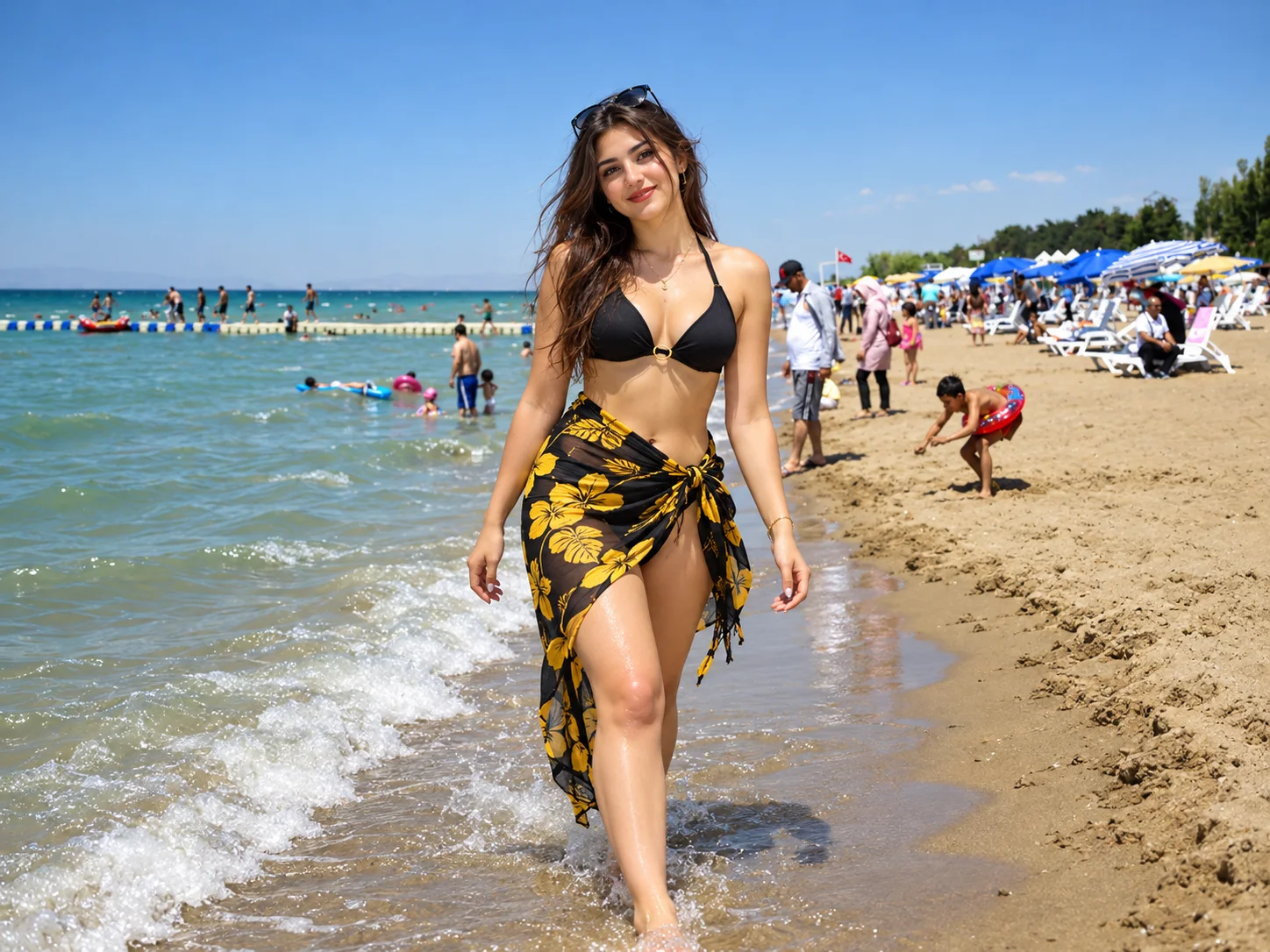
Edremit district, about 15 km south of Van city on the eastern shore of Lake Van, is the city's summer playground: lakeside cafés, small beaches, and vineyard guesthouses with unbroken views across the water.
Lake Van is a soda lake with high sodium carbonate content (pH ~9.7). Swimming is permitted, but the alkaline water can feel soapy and may irritate sensitive skin. Despite this, Edremit beach is busy throughout July and August. The Gevaş pier for Akdamar boats is ~20 km further south — easy to combine with an Edremit stop.
Natural Heritage · Geology
Lake Van: The World's Largest Soda Lake
At roughly 3,713 km², Lake Van is the largest lake in Turkey and one of the largest soda (alkaline) lakes on Earth. Its maximum depth reaches ~451 m, and only one fish species can survive its chemistry: the endemic pearl mullet (Alburnus tarichi).
The lake's most remarkable scientific feature is its microbialite formations — the largest in the world. These carbonate structures, built by microbial communities, reach up to ~40 metres below the surface. They represent living relatives of some of the earliest life forms on Earth, and are studied by astrobiologists as analogues for potential extraterrestrial environments.
Lake Van is also a significant bird habitat: pelicans, flamingos, cormorants and various duck species use its islands and reed margins year-round.
Video: Lake Van's unique soda lake ecosystem and underwater microbialite formations.
Iconic Breed
The Van Cat: Two-Coloured Eyes of the Lake
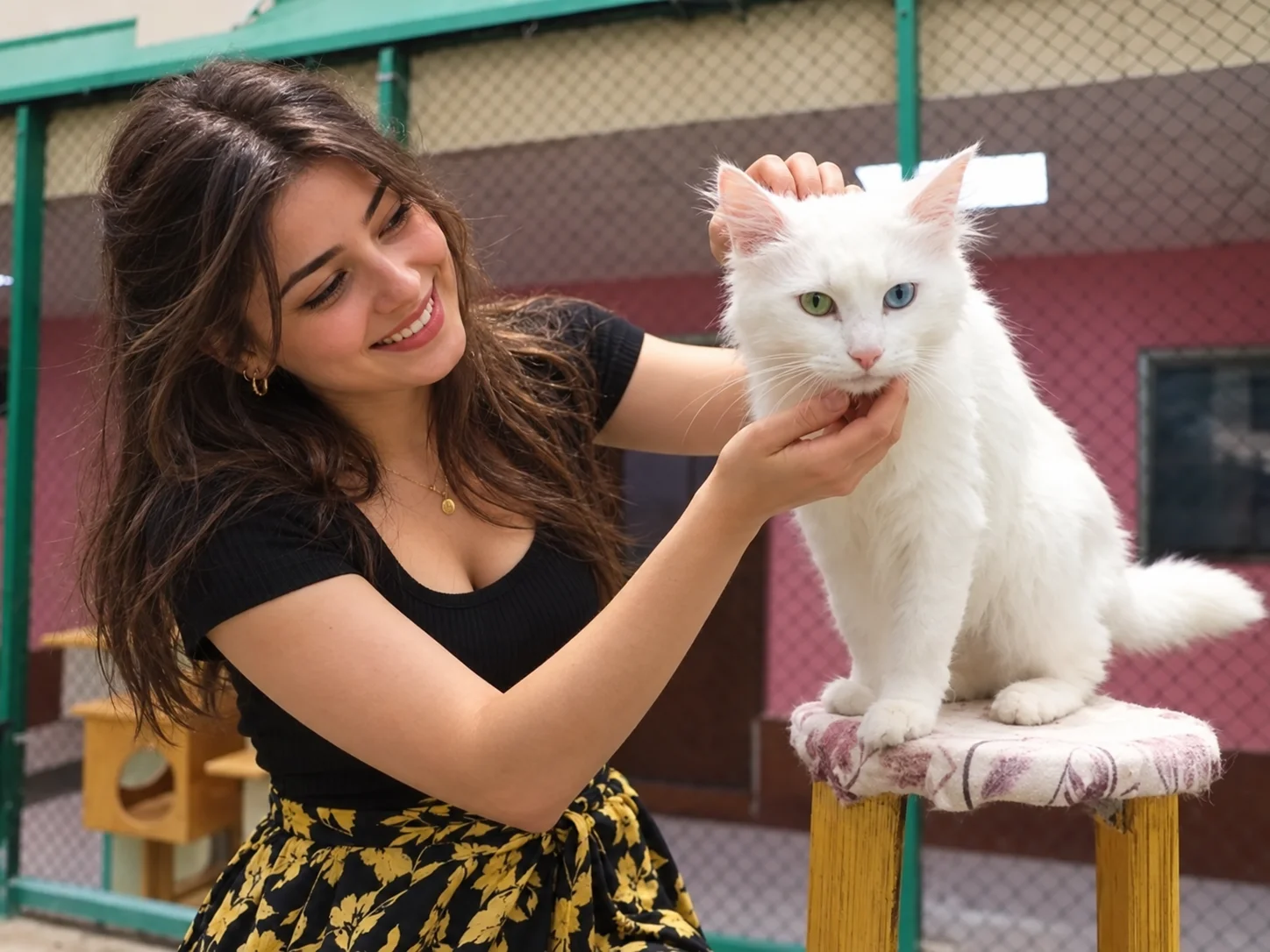
The Van cat is one of very few cat breeds in the world known for natural heterochromia — one eye blue, the other amber or green. Almost entirely white, this breed is considered native to Van and its surrounding region.
Wild populations have become critically rare. To protect the breed, Van's Yüzüncü Yıl University (YYÜ) runs the Van Cat Research and Application Centre at its Zeve Campus in Tuşba district.
- Location: YYÜ Zeve Campus, Tuşba, Van
- Opening hours: 09:00–12:00 and 13:00–18:30 (daily)
- Free admission
- Active breeding and research programme
The Van cat is also noted for being an unusually willing swimmer — not uncommon to spot them near the lake shore.
Northwest Van · Muradiye
Muradiye Waterfall and the Pearl Mullet Migration
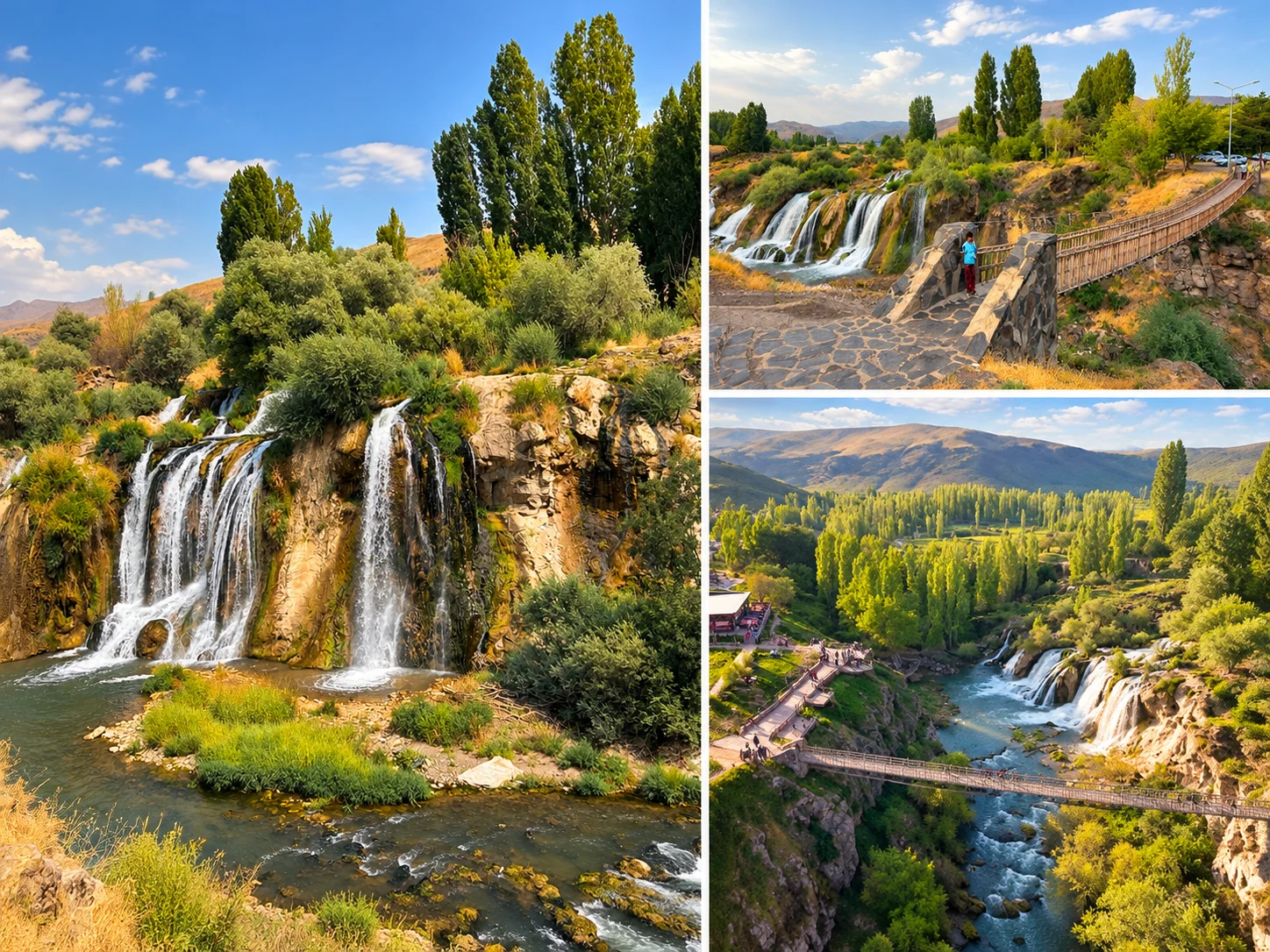
The Muradiye Waterfall lies about 80 km northwest of Van city in Muradiye district, where the Bendimahi Stream drops roughly 18–20 metres before entering Lake Van. Spring snowmelt makes April and May the most dramatic months to visit.
A picnic area surrounds the falls, and the drive along the D-975 highway is scenic throughout. Allow roughly 1 hour 15 minutes each way from Van city.
Pearl Mullet Migration
The pearl mullet (Alburnus tarichi) is endemic to Lake Van — the only fish species that can survive its alkaline waters. Every year from 15 April to 15 July, the fish migrate upstream along the Bendimahi and other streams to spawn. At Muradiye Waterfall during this window, you can watch them leaping against the current — a spectacle that has sustained traditional fishing communities for centuries.
Southeast Van · Başkale
Başkale Travertines and Vanadokya
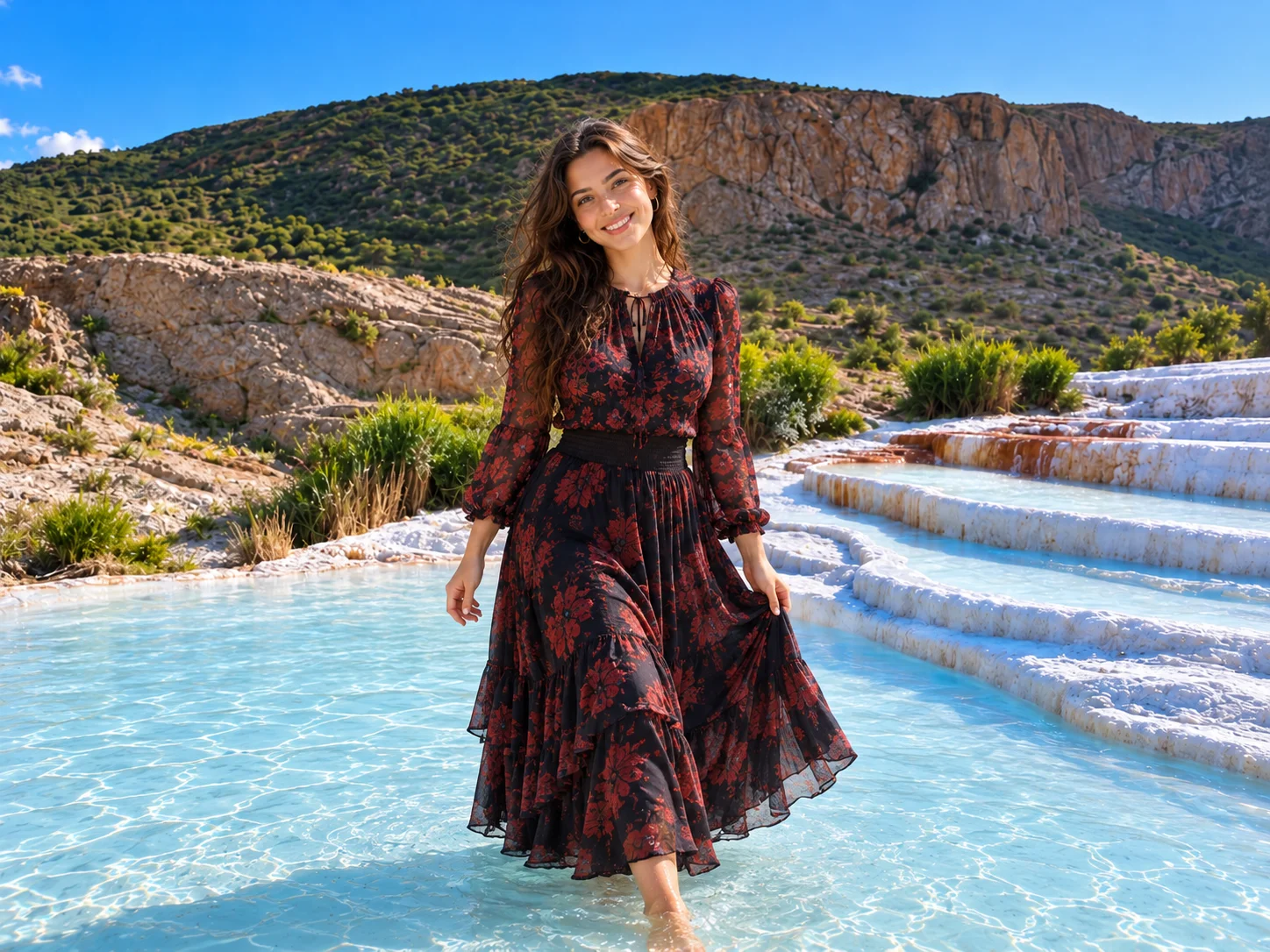
In Dereiçi (Sawkan) village, roughly 45 km from Başkale district centre, calcium-rich thermal springs have built up tiered travertine pools over millennia. The cream-white stepped terraces bear a striking resemblance to Pamukkale on a more intimate scale.
Başkale itself is ~186 km (~2.5 hours) from Van city, followed by a further ~45 km to the travertines. The road has been improved in recent years but 4×4 is still advisable. Allow a full separate day for this southeastern route.
Vanadokya: Near Zernek Castle in Gürpınar district, volcanic tuff formations have eroded into fairy-chimney shapes reminiscent of Cappadocia — giving rise to the nickname "Vanadokya." The site is ~90 km from Van and can be added to a Hoşap Castle day.
Off the Beaten Track
Remote Corners: Bahçesaray, Çatak and Gürpınar
Van's southwest and south remain among the least-visited corners of eastern Anatolia — deep valleys, traditional stone villages and high mountain terrain that rewards patient exploration. Some areas require 4×4 vehicles or on-foot access.
Bahçesaray
Built inside a steep valley, Bahçesaray is about 120 km from Van city on a challenging road. The district holds historical church ruins, traditional stone architecture and the pristine Metina highlands.
Çatak
Southwest of Van along the Botan valley, Çatak is known for its mountain scenery and deep ravines. Expect ~2.5–3 hours from Van city centre.
Gürpınar and Zernek Castle
On the Hoşap road, Gürpınar district holds Zernek Castle, dating to the 17th century and associated with a Kurdish emirate of the Ottoman period. The castle sits near the Vanadokya tuff formations and fits naturally into a Hoşap day programme.
Travel Planning
When to Visit Van
| Period | Weather | Highlights | Drawbacks |
|---|---|---|---|
| April–May | 10–18°C | Muradiye Waterfall at peak flow, wildflowers, pearl mullet migration (from 15 Apr) | Cold mornings; some high roads still closed |
| June–July | 20–28°C | Akdamar boats running, lakeside activities, pearl mullet migration (until 15 Jul) | Increasing tourist numbers; hot afternoons |
| August | 24–30°C | Warmest month; Edremit beach, lake events | Peak crowds; Muradiye high season has passed |
| September–October | 12–22°C | Quieter, autumn colours, harvest | Rapid cooling from late October |
| November–March | -10–5°C | Winter sports (limited infrastructure) | Most facilities closed; roads risky; boats don't run |
At Van's high altitude, even June can bring sudden cold spells — always pack a warm layer regardless of the season.
Gastronomy
Van Cuisine: The Legendary Breakfast and Beyond
Van is home to what many Turks consider the country's finest breakfast culture. The Van breakfast spread — "Van kahvaltısı" — is an experience in itself: a table full of regional cheeses, honeycombs, herb-cured produce and fresh breads that simply cannot be replicated elsewhere.
Key Flavours
- Herb cheese (otlu peynir): white cheese cured with wild herbs, especially sirmo — Van's signature product
- Moulded cheese (küflü peynir): naturally mould-ripened in clay pots; sharp and complex
- Murtuga: a traditional sweet made from flour, butter and eggs — uniquely Van
- Pearl mullet: fresh during the migration season (15 Apr–15 Jul); otherwise dried or salted
- Keledoş: herb-and-cheese pastry rooted in the Kurdish culinary tradition
- Honeycomb: Van plateau flower honeys, especially from the Muradiye area
Where to Eat
Cumhuriyet Caddesi and Şükrü Aslan Bulvarı in the city centre are lined with breakfast salons. Sütçü Fikri is among the most storied names; smaller family-run spots are equally authentic. Reservations are essential at weekends and holidays.
Accommodation
Where to Stay in Van
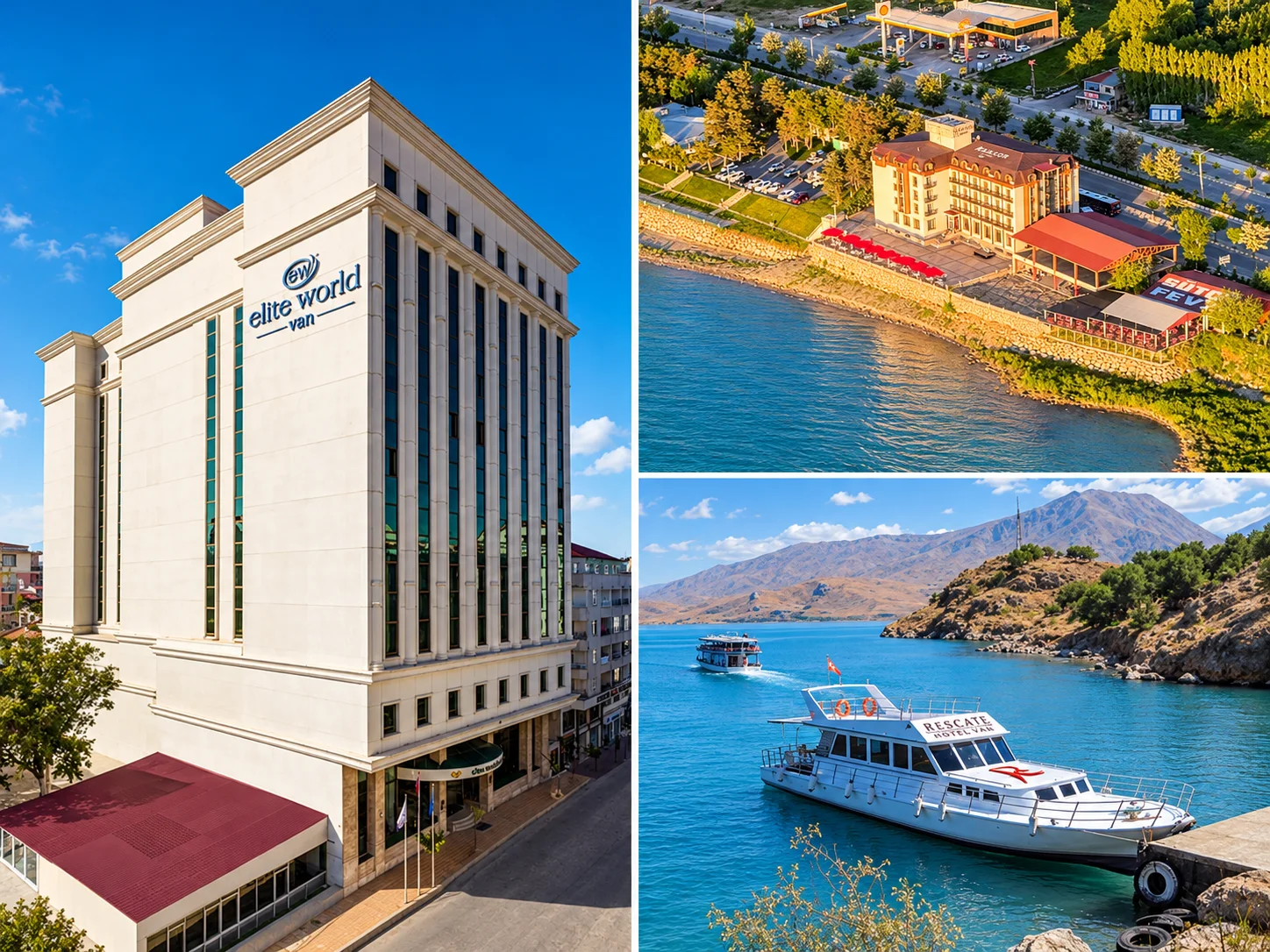
Van city centre offers a range of options that has grown significantly in 2026 with two new five-star chain hotels joining the market.
Upper End (5-Star)
- DoubleTree by Hilton Van: opened 2026, city centre, spa, outdoor pool
- Elite World Van Hotel: 5-star, opened 2026, Lake Van-view rooms available
Mid-Range (3–4-Star)
- Büyük Urartu Hotel — central location, business-friendly
- Merit Asur Hotel — city centre
- Boutique guesthouses in the Edremit area with lake views
Budget
Numerous family-run guesthouses in the city centre offer good value. For proximity to Akdamar boats, staying in the Edremit–Gevaş area is a practical alternative.
Getting There
How to Reach Van: Flights, Rail and Road
By Air — Van Ferit Melen Airport (VAN)
Flying is by far the most practical option. Direct services operate from Istanbul (IST and SAW), Ankara and İzmir. Istanbul–Van takes roughly 1 hour 50 minutes. The airport is ~7 km from the city centre; taxis, shuttle buses and car hire are available at arrivals. We offer Istanbul airport transfer services for outbound connections.
Lake Van Express and Eastern Express
The Lake Van Express (Van Gölü Ekspresi) runs from Elazığ to Tatvan — a town in Bitlis province on the western shore of Lake Van. It does not reach Van city. From Tatvan, you continue to Van by ferry or road (~155 km). The Eastern Express (Doğu Ekspresi) runs Ankara to Kars and does not serve Van.
By Road
- Erzurum → Van: ~380 km, ~4–4.5 hrs
- Diyarbakır → Van: ~350 km, ~4 hrs
- Doğubayazıt → Van: ~170 km, ~2 hrs
- Hakkari → Van: ~210 km, ~3 hrs
For a comfortable door-to-door journey from Istanbul or other cities, our intercity car with driver service covers long-distance transfers across Turkey.
Itineraries
1, 2 and 3-Day Itineraries for Van
| Day | Morning | Afternoon | Evening |
|---|---|---|---|
| Day 1 Van City |
Van Castle (Sarduri Tower, rock tombs) + Old Van walk | Van Museum (2026: closed ⚠) or Ayanis Castle (~37 km, Tuşba) | Van breakfast dinner spread at a city-centre salon |
| Day 2 Akdamar + South |
Edremit lakeside → Gevaş pier → Akdamar boat (aim for 10:00 departure) | Church of the Holy Cross → Çavuştepe (~25 km) → Hoşap Castle (~97 km) | Return to Gürpınar or Van city; evening meal |
| Day 3 North + Nature |
Muradiye Waterfall (~80 km; Apr–May: pearl mullet leaping) | Erçek Lake birdwatching (İpekyolu/Tuşba boundary, ~20 km from Van) | YYÜ Van Cat Centre (09:00–18:30, free) → Van city for dinner |
Başkale travertines and Vanadokya require a separate day trip southeast — a 4+ hour drive from Van city; allow a full day for this extension.
District Guide
Van Province — Attractions by District
| District / Area | Key Attractions | Distance from Van | Notes |
|---|---|---|---|
| İpekyolu / Tuşba | Van Castle, Old Van, Van Museum (2026: closed), Erçek Lake (~20 km), Varagavank (~9 km), Ayanis Castle (~37 km) | 0–40 km | Base for all routes |
| Edremit | Lake Van beach, lakeside cafés | ~15 km | On the way to Akdamar |
| Gevaş | Akdamar boat pier, Church of the Holy Cross | ~40 km | Early start; boat passenger minimum |
| Gürpınar | Çavuştepe (~25 km), Hoşap Castle (~97 km), Zernek Castle, Vanadokya | 20–100 km | Classic Çavuştepe–Hoşap day trip |
| Muradiye | Muradiye Waterfall, pearl mullet migration | ~80 km | Spring–early summer best |
| Erciş | Kadem Pasha Hatun Tomb (1458), north shore | ~95 km | En route on Muradiye drive |
| Başkale | Travertines at Dereiçi (~45 km beyond Başkale) | ~186 km | Separate SE day; 4×4 advisable |
| Bahçesaray | Deep valley, church ruins, Metina highlands | ~120 km | Adventurous travellers; narrow roads |
| ⚠ Tatvan / Ahlat / Adilcevaz | Seljuk tombstones (Ahlat), Nemrut Crater (Tatvan) | ~155–180 km | Bitlis province — plan separately |
Mythology and Legend
The Legends of Van
Lake Van and its shores carry a rich tradition of myth — from Urartian divine kingship to the most famous love story in Armenian literature.
The Legend of Akdamar
The island's name comes from a medieval Armenian legend: a young man swam nightly across the lake to visit Tamar, a girl on the island who held up a lamp to guide him. One stormy night the wind extinguished her light; the swimmer lost his way and drowned. His last cry — "Ah, Tamar!" — gave the island its name. The story was immortalised by Armenian writer Hovhannes Tumanyan and remains one of the most retold tales in the region.
Haldi's Weapon
In Urartian religious inscriptions at Ayanis and Van Castle, the supreme god Haldi grants his sword or spear to the king before battle. After victory, the king returns armour and weapons to Haldi's temple as tribute — a cycle of divine patronage and royal obligation that runs through almost every Urartian military inscription.
The Van Cat and Noah's Ark
Local tradition holds that the Van cat jumped from Noah's Ark onto the slopes of Mount Ararat, then made its way down to the Van plain. The story is used to explain the breed's remarkable affinity for water — Van cats are among the few domestic cats that will voluntarily swim.
Plan Your Van Trip
Comfortable Transfers to and from Van
Whether you need a private transfer from Van Ferit Melen Airport to your hotel, or an intercity journey from Istanbul, our professional chauffeur service covers you.
Frequently Asked Questions: Van Travel
How long is the flight from Istanbul to Van?
Direct flights from Istanbul Atatürk (IST) or Sabiha Gökçen (SAW) to Van Ferit Melen Airport (VAN) take approximately 1 hour 50 minutes to 2 hours. From Ankara it is ~1.5 hours, from İzmir ~2.5 hours. Van's airport is ~7 km from the city centre.
What is the best time of year to visit Van?
June and July offer the warmest weather, reliable Akdamar boat services and the full range of lakeside activities. April–May is ideal for Muradiye Waterfall at its most powerful and for the pearl mullet migration (from 15 April). September is quieter and still pleasant. Avoid November–March unless you specifically want winter conditions.
Is Van Museum open in 2026?
No. Van Museum has been closed since 13 January 2026 for major renovation. No reopening date has been announced. Check with the Turkish Ministry of Culture before planning a visit around the museum.
How do I get to Akdamar Island?
Drive ~40 km southwest from Van city on the D-300 to Gevaş pier. From there, boats cross to Akdamar Island in ~20–25 minutes. There is no fixed schedule; boats leave when around 15–20 passengers have gathered. The season runs May through October.
Where can I see Van cats?
The most reliable place is the Van Cat Research and Application Centre at YYÜ Zeve Campus in Tuşba district. It is open 09:00–12:00 and 13:00–18:30 daily, with free admission. The centre runs an active breeding and research programme for this endangered breed.
Can you swim in Lake Van?
Swimming is not prohibited, but Lake Van is a soda lake (pH ~9.7) with high sodium carbonate content. The alkaline water can feel soapy and may irritate skin or eyes. Edremit beach is used by locals throughout July and August. Test the water with your hands before swimming if you have sensitive skin.
Is Hoşap Castle Urartian?
No. Hoşap Castle was built in 1643 by Sarı Süleyman Bey of the Kurdish Mahmudi dynasty — not the Urartians. It is a 17th-century fortress. For Urartian remains, visit Van Castle, Ayanis Castle and Çavuştepe.
When and where does the pearl mullet migration happen?
The endemic pearl mullet (Alburnus tarichi) migrates from Lake Van into the Bendimahi Stream and other rivers each year between 15 April and 15 July to spawn. At Muradiye Waterfall during this period you can watch the fish leaping against the current — one of the region's most unusual natural spectacles.
How do I visit Muradiye Waterfall?
Take the D-975 highway northwest from Van city for approximately 80 km (~1 hour 15 minutes). The waterfall is on the Bendimahi Stream where it enters Lake Van, in Muradiye district. Driving yourself gives the most flexibility. April and May offer the highest water flow.
Where are the Başkale travertines?
The travertines are at Dereiçi (Sawkan) village, ~45 km from Başkale district centre. Başkale itself is ~186 km (~2.5 hours) from Van city. The road is improved but a 4×4 is still recommended. Dedicate a full separate day to this southeastern route.
Where exactly is Varagavank Monastery?
Varagavank (Seven Churches) is in Yukarı Bakraçlı village, İpekyolu district, ~9 km southeast of Van city centre. It is in İpekyolu — not Saray district. The site preserves wall sections and khachkar cross-stones from one of medieval Armenia's most important monasteries.
How many days do you need in Van?
Two days cover Van city and Akdamar Island. Three days add the Çavuştepe–Hoşap day trip. Four to five days allow you to reach Muradiye Waterfall, Başkale travertines and the more remote districts. Most visitors find four days the practical minimum for a satisfying visit.
Is Ayanis Castle open to visitors?
Yes. Ayanis Castle in Tuşba district (~37 km from Van) is open to visitors. Active excavations usually run July–September, when you can observe archaeologists at work. You will need your own transport or a taxi to reach the site.
What are the best hotels in Van?
In 2026 the top options are DoubleTree by Hilton Van and Elite World Van Hotel (both opened in 2026). For mid-range, Büyük Urartu Hotel and Merit Asur Hotel are well-established. Edremit and the Gevaş area offer boutique guesthouses with Lake Van views for those prioritising the Akdamar route.
When was the Church of the Holy Cross built?
The Church of the Holy Cross (Surp Haç) on Akdamar Island was built between 915 and 921 CE by King Gagik I of the Armenian Kingdom of Vaspurakan, designed by architect Manuel. It was restored in 2005–2007 and has hosted the annual Khachverats ceremony since 2010.
What is the Van breakfast and where can I try it?
The Van breakfast (Van kahvaltısı) is considered one of the richest morning spreads in Turkey: herb-cured otlu peynir cheese, naturally moulded küflü peynir, honey-clotted cream, regional jams and honeycomb. Cumhuriyet Caddesi in the city centre is lined with breakfast salons; Sütçü Fikri is among the most famous. Book ahead at weekends.
Is Tatvan part of Van province?
No. Tatvan is in Bitlis province on the western shore of Lake Van. The Lake Van Express train also terminates at Tatvan — not Van city. From Tatvan, you continue to Van by ferry or road (~155 km). Ahlat and Adilcevaz are also in Bitlis, not Van.
Are flamingos found at Erçek Lake?
Yes. Erçek Lake lies on the İpekyolu–Tuşba boundary, ~20 km from Van city, and is home to flamingos alongside pelicans and other waterbirds. İpekyolu district organises an annual Flamingo Festival (Flamingo Festivali) to celebrate the lake's birdlife.
How do I visit Çavuştepe?
Çavuştepe (Sardurihinili) is ~25 km southeast of Van city in Gürpınar district, reached via the D-975 highway. The standard day trip combines it with Hoşap Castle: Van → Çavuştepe (~25 km) → Hoşap (~97 km), returning to Van in the evening.
What are the microbialites in Lake Van?
Microbialites are carbonate rock structures built by microbial communities. Lake Van hosts the world's largest known microbialite formations, reaching ~40 metres below the surface. These structures are the living descendants of some of the earliest life forms on Earth and attract scientific attention from astrobiologists studying potential life on other planets.
Can you visit Old Van city?
Yes. The Old Van site on the southern slope of Van Castle is freely accessible. The city was largely destroyed between 1915 and 1918 and never rebuilt, leaving ruined fountains, mosque foundations and traces of street layouts. Combine it with Van Castle in the same morning visit.
How do I get to Bahçesaray from Van?
Bahçesaray is approximately 120 km from Van city by road (~2–2.5 hours). Part of the route is narrow and winding; a 4×4 is recommended. The district rewards the effort with a deep valley setting, historical church ruins and the pristine Metina highlands — best suited to adventurous travellers with a full day to spare.