
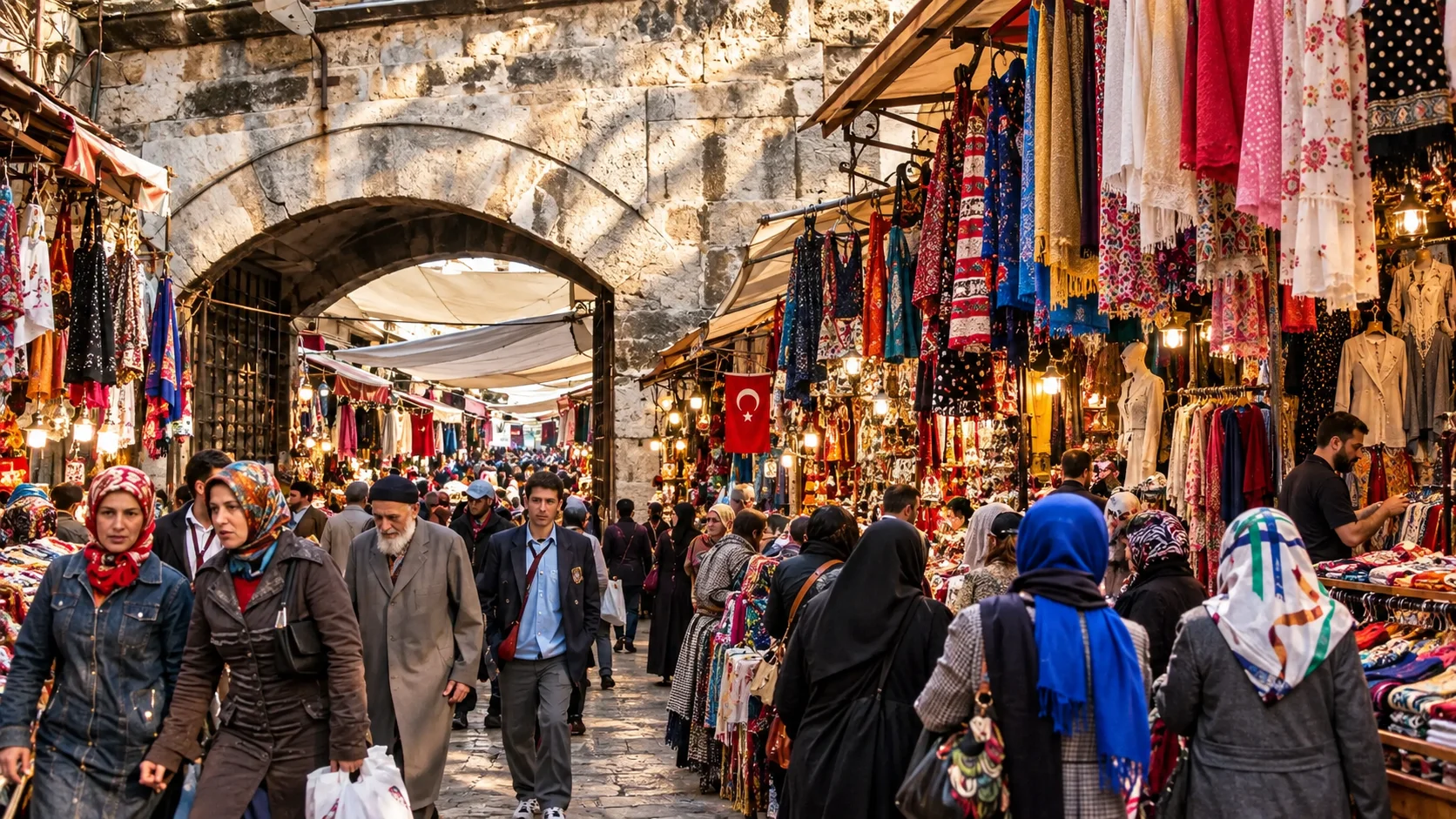
Fatih Wednesday Market — Fatih Çarşamba Pazarı in Turkish — is one of Istanbul's most historically rooted and widely attended weekly neighbourhood markets. Every Wednesday, the streets of the Çarşamba neighbourhood in Fatih fill with stalls selling clothing, fresh produce, flowers, household goods, fabrics, accessories and much more. Unlike the tourist-facing bazaars of the Old City, this is a living, working neighbourhood market that serves Istanbul's residents first — and rewards visitors with a genuinely local experience. If you are in Istanbul on a Wednesday and anywhere near the European side's historic core, Fatih Wednesday Market is well worth the trip.
What and Where: Fatih Wednesday Market
The market is held in the Çarşamba neighbourhood of Fatih district, in the historic heart of Istanbul's European side. It spreads across the streets and alleyways around the Fatih Mosque area — visitors often describe navigating it as moving through a maze, because the stalls fan out along dozens of interconnecting streets in every direction. There is no single entrance or exit; the market simply begins where the stalls begin.
The closest address reference is the area around İtfaiye Caddesi and Yesarizade Caddesi in the Çarşamba/Zeyrek neighbourhood of Fatih. The market is a traditional open-air street market — not a covered hall — so it occupies public road and pavement space on market day. This also means the surrounding streets become much busier and more congested than usual every Wednesday morning.
History and the Çarşamba Neighbourhood
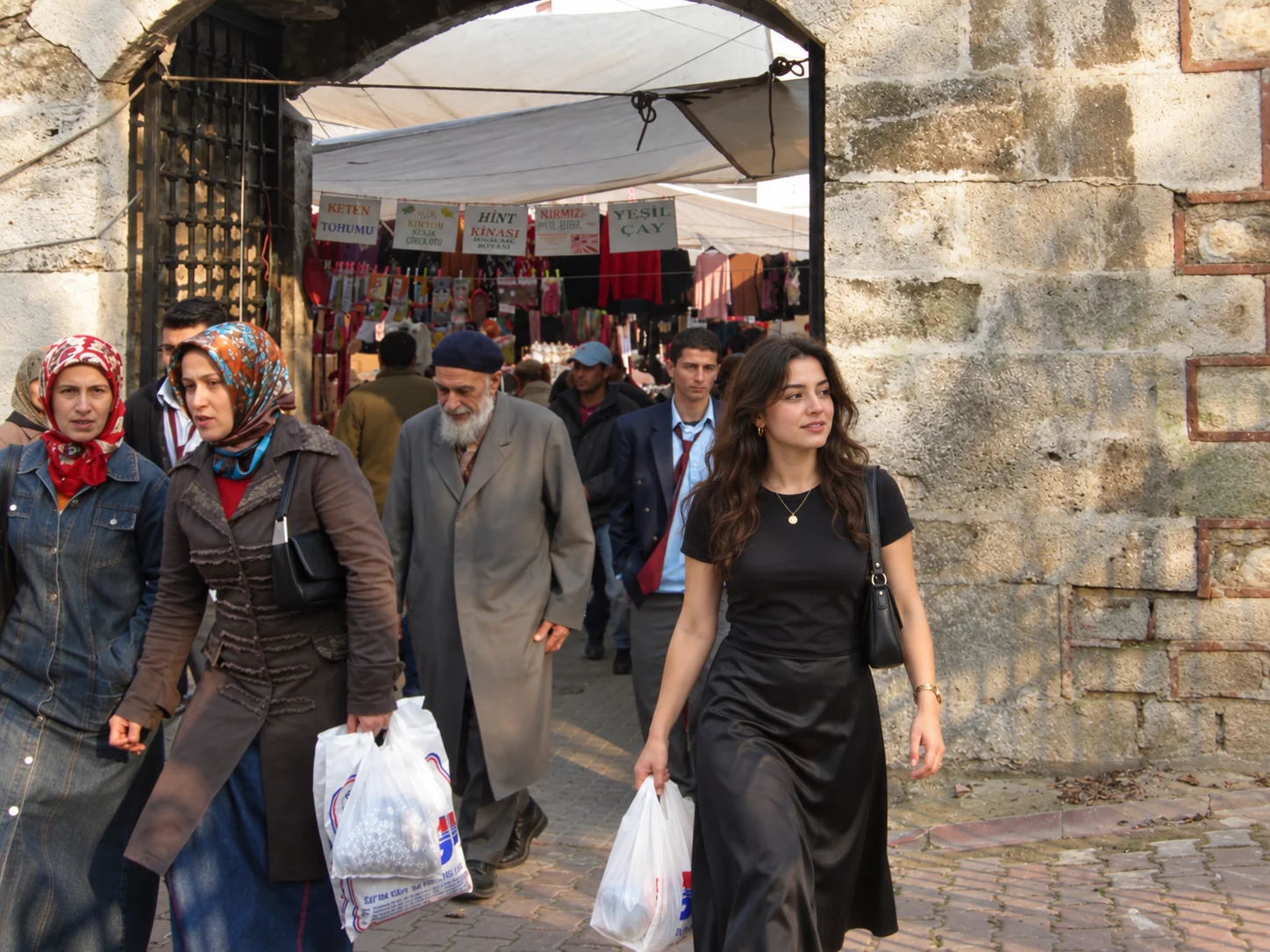
The Wednesday market has deep roots in the Fatih district. Local tradition holds that the market has been active here for several centuries — the Fatih municipality describes a history stretching back approximately 300 years, though the precise origin is not documented in official historical records. What is certain is that the area around Fatih Mosque has been a centre of commerce and daily life since the mosque's construction in the 1460s, and a weekly market tradition fits naturally into that history.
There is also an interesting question about the neighbourhood's name. The Çarşamba neighbourhood (Çarşamba meaning Wednesday in Turkish) may have acquired its name from the weekly Wednesday market itself — or, according to a separate tradition recorded by the Ottoman traveller Evliya Çelebi, from settlers who were brought to this part of the city from the Black Sea town of Çarşamba after the conquest of Constantinople in 1453. Both explanations have historical credibility, and scholars have not settled on a definitive answer.
What the history makes clear is that Fatih Wednesday Market is embedded in a neighbourhood with deep Istanbul roots — not a recent commercial development but a continuation of a long weekly trading tradition in one of the city's most historic districts.
What Is Sold at Fatih Wednesday Market
The range of products at Fatih Wednesday Market is one of its defining characteristics. Unlike specialised markets that focus on a single category, this is a general weekly market covering almost every category of everyday goods. The stalls are loosely organised by type — clothing tends to cluster in certain streets, produce in others — but the boundaries are fluid and the market rewards exploration.
Clothing, Pyjamas and Textiles
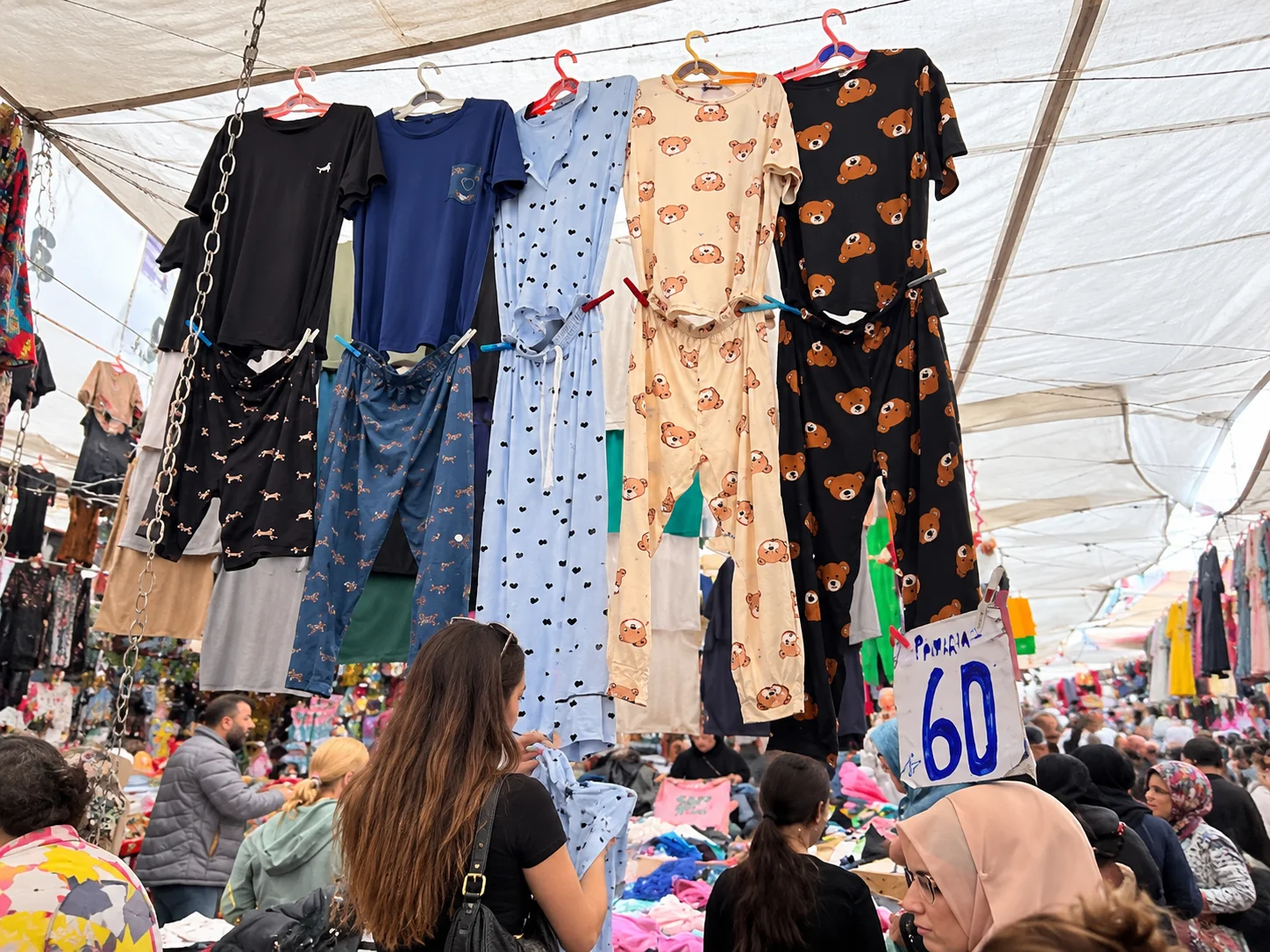
Clothing is one of the market's major categories. The stalls carry everyday wear — t-shirts, tracksuits, casual trousers and tops — alongside sleepwear and pyjamas, underwear and children's clothing. Fatih Wednesday Market has a particular reputation for pyjamas and home-comfort clothing at practical prices, which draws shoppers from across Istanbul specifically for this category. Seasonal outerwear, winter warmth pieces and summer basics all rotate with the time of year.
Fabrics and textile materials also appear throughout the market, making it a practical destination for those looking for sewing and craft supplies. Curtains, bedding and home textiles are available alongside raw fabrics by the metre.
A note on branded goods: some stalls carry items displaying logos or styling associated with known brands. As with all Istanbul street markets, this does not indicate verified authenticity. The market's value is its practical pricing and variety — not brand authentication. Enjoy it accordingly.
Accessories, Hair Items and Small Goods
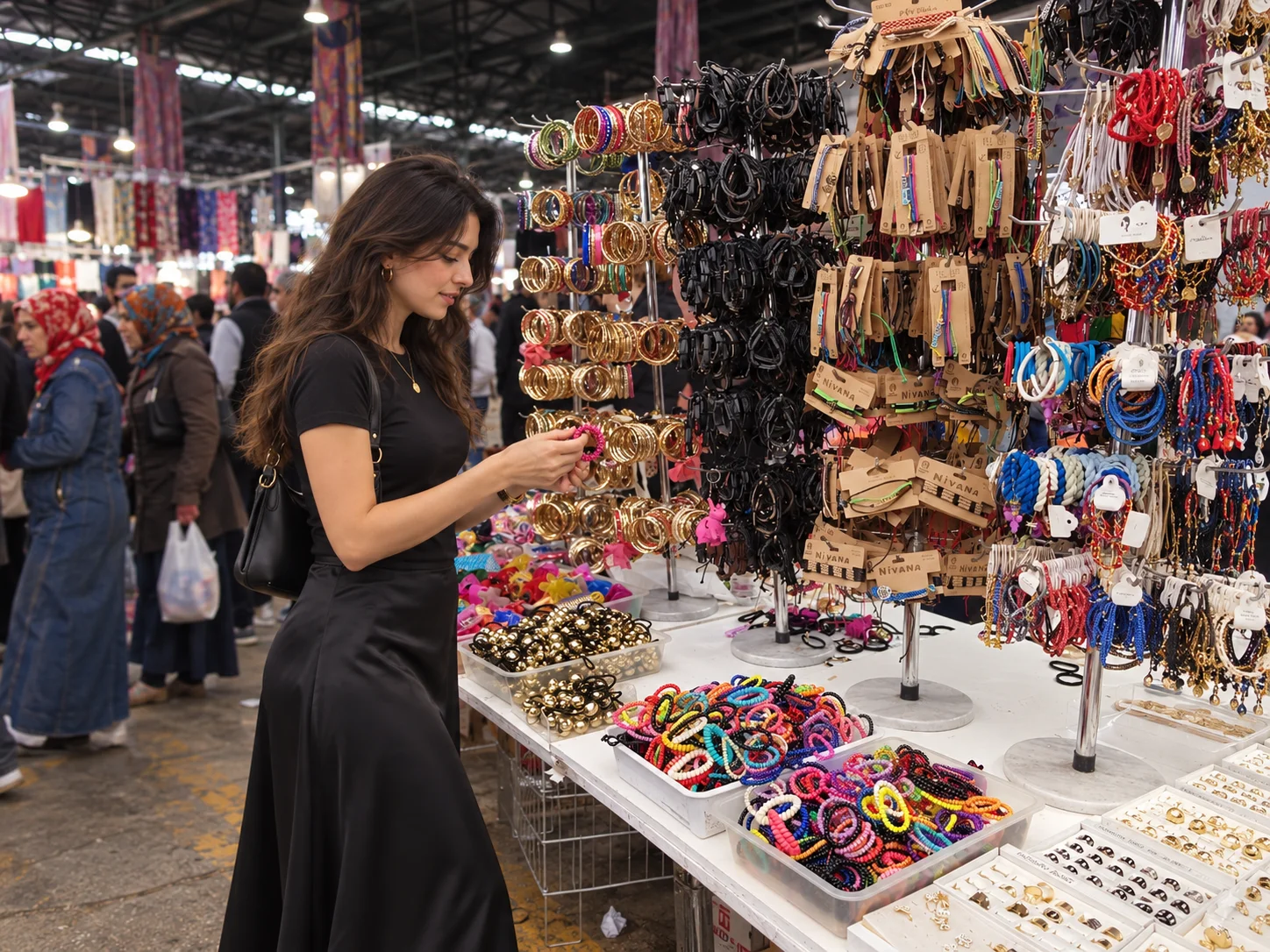
Beyond clothing, the market carries a wide range of small accessories. Hair clips and bands (toka), hair ties, scarves, belts, basic jewellery and similar everyday items occupy many stalls. Shoes and sandals for men, women and children are also well represented, with a range of styles across price points. Bags — shoulder bags, everyday totes and backpacks — fill further stalls.
Cosmetics, sunglasses, perfumes and personal care items appear throughout the market. The same authenticity caution applies here as with clothing — packaging and ingredient labels should be checked before purchasing, particularly for skin-applied products. Turkish pharmacy-style personal care items tend to be reliable; luxury brand claims at market prices should be treated with scepticism.
Porcelain, glass, cookware and kitchen utensils are another active category, making the market useful not just for clothing but for everyday household shopping.
Fresh Produce, Flowers and Food Stalls
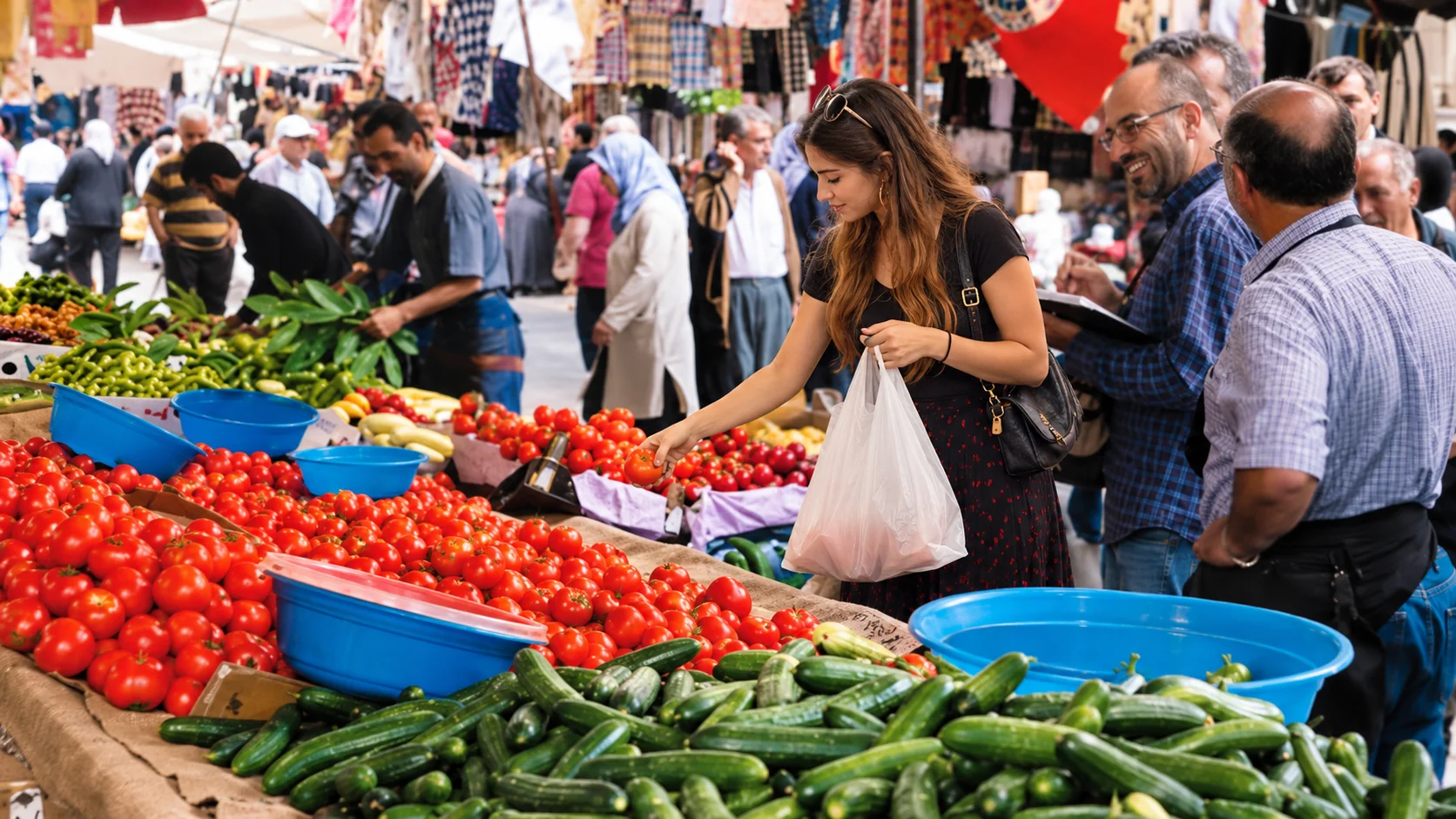
Fresh produce is a significant component of Fatih Wednesday Market. Seasonal vegetables and fruit, fresh herbs, olives and pickles, cheese, eggs, dried goods, nuts and spices all have a strong presence in the food sections. The range varies by season, with the market reflecting the current produce cycle rather than a fixed menu of items.
Fresh flowers are another category distinctive to Fatih Wednesday Market — flower stalls are genuinely present and add colour to the streets, not merely decorative additions but working vendors with real selection.
The food section draws local shoppers doing their weekly grocery run as much as it draws visitors. The atmosphere in the produce area is practical and busy — this is neighbourhood shopping at its most functional.
Prices, Bargaining and Payment
Fatih Wednesday Market is generally considered good value by Istanbul standards, and noticeably more affordable than tourist-facing retail venues. Prices are set by individual vendors and there is no published price list, so comparison between stalls is the most effective approach.
Bargaining is possible at some non-food stalls — particularly for clothing, accessories and household goods — though it is not universal and food stalls typically price items at fixed rates. A polite enquiry on a multiple-item purchase is the most appropriate approach. In the later afternoon, some vendors begin reducing prices on remaining stock, though this is at each seller's discretion and not reliable as a strategy.
Cash remains the practical standard at the market. While some stalls may accept card payments, many do not, and having Turkish lira available avoids any inconvenience. There are ATMs in the surrounding area of Fatih if you need to withdraw on the day.
Shopping Tips for Fatih Wednesday Market
Best Time to Arrive
Early morning — arriving between 08:00 and 09:30 — gives the best selection and the most comfortable browsing conditions before the peak crowd builds. The market typically starts winding down in the mid-to-late afternoon; most stalls are operational from early morning through to around 17:00–18:00, though individual vendor hours vary.
What to Wear
Comfortable flat shoes are essential. The market covers a large area of streets and alleyways, and involves extended walking on uneven pavement surfaces. The market is entirely outdoors, so dress for the weather. On warm days the stall-lined streets can feel very warm; in cooler weather, layers are useful.
Crowd and Safety
The market gets very crowded, especially during peak morning hours. Keep bags closed and valuables secure — the same basic urban awareness appropriate to any crowded public market applies here. Narrow alleyways with stalls on both sides reduce movement, so patience is needed in the busiest sections.
How Long to Allow
A quick focused visit to a specific product area (clothing, or just produce) takes 1–1.5 hours. A proper exploration of the full market takes 2–4 hours. Some visitors find themselves spending longer without covering everything — the market is genuinely large and rewards browsing.
Families
The market is manageable with older children but challenging with pushchairs on the busier mornings — narrow passages and crowd pressure make movement difficult. The outdoor setting means there are no particular facilities; snack vendors and tea stalls within the market provide refreshment.
Interesting Facts About Fatih Wednesday Market
- The neighbourhood may be named after the market: One historical tradition holds that the Çarşamba neighbourhood got its name from the weekly Wednesday market — "Çarşamba" meaning Wednesday in Turkish. A competing tradition, recorded by the Ottoman traveller Evliya Çelebi, attributes the name to settlers brought from the Black Sea town of Çarşamba after 1453. The ambiguity itself is historically interesting.
- The market occupies dozens of streets: Unlike markets held in a single square or plaza, Fatih Wednesday Market spreads across an entire neighbourhood network of streets and alleyways. Visitors describe the experience as maze-like; some report spending hours without reaching the edges.
- Pyjamas and sleepwear have their own section: Fatih Wednesday Market is particularly well known among Istanbul residents for its pyjama and sleepwear stalls — a practical everyday category that draws dedicated shoppers from across the city specifically for this product.
- It is next to one of Istanbul's great imperial mosques: The market sits adjacent to Fatih Mosque, the imperial mosque complex built by Mehmed the Conqueror between 1463 and 1470. The market and the mosque have co-existed in this neighbourhood for centuries.
- Fresh flowers are genuinely sold here: Unlike many urban weekly markets where "flowers" is a historical footnote, Fatih Wednesday Market includes active flower stalls with real selection — an increasingly rare feature in city street markets.
- The area has been a centre of trade since the Ottoman conquest: The Fatih district was developed as an imperial centre in the decades following 1453. The tradition of weekly commercial activity in this neighbourhood has continuity with that period, even if the current market form evolved over subsequent centuries.
- It draws visitors from across Istanbul and beyond: Despite being firmly a neighbourhood market, Fatih Wednesday Market's scale and variety attract shoppers from Istanbul's Asian Side and from other cities in Turkey — a measure of its reputation and the depth of its product range.
Fatih Wednesday Market vs the Grand Bazaar
These are two completely different types of market and should not be conflated. The Grand Bazaar (Kapalıçarşı) is a permanent, year-round historic covered bazaar in the Old City, focused on jewellery, leather goods, ceramics, carpets and tourist souvenirs — with thousands of fixed shops in a UNESCO-recognised architectural complex. It is a tourism destination as much as a shopping venue.
Fatih Wednesday Market is a weekly open-air neighbourhood street market, open on Wednesdays only, focused on everyday clothing, fresh food and practical household goods for local residents. It has no tourism infrastructure and little English signage — which is precisely what makes it feel authentic to many visitors.
For visitors in Istanbul who want both experiences, the two are not far apart in terms of transport; but they should be approached with entirely different expectations and on different days.
Fatih Mosque and the Sultan's Tomb
The market is held immediately around the Fatih Mosque complex. Fatih Mosque (Fatih Camii) was the first imperial mosque built in Istanbul after the Ottoman conquest of 1453, commissioned by Sultan Mehmed II ("the Conqueror" — Fatih) and completed around 1470. The original mosque was destroyed by an earthquake in 1766 and rebuilt in the 18th century; the current structure dates from that reconstruction.
Within the mosque complex is the mausoleum (türbe) of Sultan Mehmed the Conqueror — an important site of religious and historical significance for visitors to Fatih. The tomb is typically open to visitors during the mosque's visiting hours, though checking current hours before a visit is advisable.
Combining a visit to the market with time at the mosque and tomb adds a meaningful historical dimension to the trip and can be done easily in a single morning. The historic Istanbul guide covers the wider historic peninsula context.
After the Market: Exploring Historic Fatih
The Fatih district rewards time beyond the market. The neighbourhood is one of Istanbul's most traditionally Ottoman-character areas — less touristified than Sultanahmet, with working mosques, local bakeries and tea gardens. Some options for extending a morning visit:
Zeyrek — the neighbourhood immediately south of Çarşamba, contains the remarkable Zeyrek Mosque (Pantokrator Monastery), a Byzantine church complex from the 12th century converted to a mosque after the conquest. The area has steep cobbled streets and views over the Golden Horn.
Valens Aqueduct (Bozdoğan Kemeri) — the towering 4th-century Roman aqueduct that still bridges two of Istanbul's seven hills, located a short walk south of the market area. An iconic piece of the city's landscape.
Fener and Balat — if you have more time and are willing to walk (~20–30 minutes from the market, or take the T5 tram from Fener), these historic waterfront neighbourhoods on the Golden Horn offer Byzantine churches, colourful houses, and neighbourhood café culture. Our Balat guide covers the area in full.
How to Get to Fatih Wednesday Market
Metro — M1A/M1B at Emniyet-Fatih
The Emniyet-Fatih metro station on the M1A and M1B lines is the most widely used transit option for reaching the Çarşamba neighbourhood. The station is on Adnan Menderes Boulevard in Fatih; from the station, the market area is approximately 10–15 minutes on foot heading north through the neighbourhood streets. The M1 line connects from Yenikapı (Marmaray transfer), Aksaray and points west on the European Side. Note: the M1 lines serve Emniyet-Fatih, not M2 (which runs further north via Taksim).
Tram — T5 to Fener
The T5 tram line (Eminönü–Alibeyköy) runs along the Golden Horn shore and stops at Fener, which is the closest tram stop to the Çarşamba neighbourhood. From Fener, the market area is approximately 15–20 minutes on foot, climbing up from the waterfront. This route is practical coming from Eminönü or the Golden Horn area.
From Sultanahmet (T1 Tram)
From Sultanahmet, take the T1 tram westward to Aksaray or Yusufpaşa station. From there, several bus lines serve the Fatih Camii/Çarşamba area, or it is walkable (approximately 20 minutes from Aksaray). Bus 90B is historically cited for the Draman/Fatih direction; verify current İETT schedules for the specific route on the day.
From Taksim
From Taksim, bus services run toward Fatih, with stops in the Vefa/Draman area providing access to the market. Bus 87 (Taksim–Edirnekapı direction) is one route that passes through the area. From Taksim, a taxi is also a reasonable option for a direct arrival.
From Eminönü
From Eminönü, several bus routes run into Fatih; the T5 tram to Fener is another option. The bus to the Haşim İşçan junction (Bozdoğan Kemeri/Unkapanı area) followed by a short walk is a commonly used route from the Eminönü direction.
By Private Car or Taxi
Driving to the market on a Wednesday is possible but challenging. The surrounding streets experience heavy congestion during market hours, and on-street parking becomes very limited as the market stalls occupy road space. Arriving by public transport is considerably more practical. If using a private vehicle, navigate to the outer edges of the market and expect congestion.
From Istanbul Airport (IST)
Istanbul Airport is on the European Side but at considerable distance from Fatih. The most comfortable option is a private airport transfer directly to your hotel in the Fatih/Sultanahmet area, from which the market is easily reached on foot or by public transport on a Wednesday morning.
Sample Day Plans
2–3 Hours: Market Focused
Arrive at the market by 08:30–09:00. Focus on the sections most relevant to your interests — clothing or produce or accessories — and allow yourself to get pleasantly lost in the side streets. Finish by 11:00–11:30 and continue with your Istanbul day from Fatih.
Half Day: Market + Historic Fatih
Market from 08:30, finish by 11:00. Walk to Fatih Mosque and the Conqueror's tomb — 10–15 minutes from the market. Continue to the Valens Aqueduct (10 minutes further south). Lunch in the Fatih neighbourhood. Return to your hotel or Sultanahmet by early afternoon. A complete half-day with both market culture and Ottoman history.
Full Day: Market + Fatih + Fener/Balat
Market in the morning, Fatih Mosque area at midday, then head northwest toward the Golden Horn for the afternoon. The T5 tram at Fener connects back toward Eminönü at the end of the day. For a multi-stop day across Fatih's historic neighbourhoods, a car with driver removes the navigation effort and allows you to cover the market, the mosque, and the Golden Horn waterfront without logistics stress.
Frequently Asked Questions — Fatih Wednesday Market
Where is Fatih Wednesday Market?
The market is held in the Çarşamba neighbourhood of Fatih district, spreading across multiple streets around the Fatih Mosque area. Reference streets include İtfaiye Caddesi and Yesarizade Caddesi in Çarşamba/Zeyrek, Fatih, Istanbul.
Which day is Fatih Wednesday Market open?
The market operates on Wednesdays only. It does not open on any other day of the week.
What time does the market open and close?
Vendors generally begin setting up from approximately 07:00, with the market fully operational by morning. Most stalls close by around 18:00, though individual vendor times vary. Arriving before 10:00 gives the best experience.
What is sold at Fatih Wednesday Market?
The market sells a wide range of everyday goods: clothing (including pyjamas, casual wear and children's clothes), shoes, bags, scarves, hair accessories, cosmetics, fabrics and textiles, fresh vegetables and fruit, flowers, cheese, olives, spices, porcelain, cookware and household items. It is a general weekly neighbourhood market covering most everyday shopping categories.
Is Fatih Wednesday Market known for pyjamas?
Yes — Fatih Wednesday Market has a specific reputation among Istanbul residents for pyjamas and sleepwear at practical prices. Dedicated pyjama and home-comfort clothing stalls draw shoppers from across the city for this category.
Can I bargain at the market?
Bargaining is possible at some non-food stalls, particularly for clothing and accessories. Food stalls typically have fixed prices. A polite enquiry about a price reduction on multiple items is the appropriate approach. Not every vendor will negotiate.
Do I need cash at Fatih Wednesday Market?
Cash is strongly recommended. Many vendors do not accept card payments. Having Turkish lira available avoids inconvenience. ATMs are accessible in the wider Fatih area if you need to withdraw.
How do I get to Fatih Wednesday Market by metro?
Take the M1A or M1B metro line to Emniyet-Fatih station. From there the market area is approximately 10–15 minutes on foot heading north through Fatih. The M2 line does not serve this area — Emniyet-Fatih is on M1 only.
How do I get there from Sultanahmet?
From Sultanahmet, take the T1 tram westward to Aksaray or Yusufpaşa, then walk approximately 20 minutes northward toward Fatih Mosque and the Çarşamba neighbourhood, or connect to a local bus. A taxi from Sultanahmet is a straightforward alternative.
Is Fatih Wednesday Market the same as the Grand Bazaar?
No. The Grand Bazaar is a permanent, covered historic bazaar focused on jewellery, ceramics, leather and tourist goods. Fatih Wednesday Market is an open-air neighbourhood street market operating one day a week, focused on everyday clothing, fresh food and household goods for local residents. They are different in character, location and purpose.
Is Fatih Wednesday Market near Fatih Mosque?
Yes. The market is held in the streets immediately around and adjacent to the Fatih Mosque complex. Visiting both is easily combined in a single morning trip.
Is the market suitable for families with children?
The market is manageable with older children but challenging with pushchairs during peak hours due to crowded, narrow alleyways. The outdoor setting means there are limited dedicated facilities. Younger children may find the crowd and narrow passages difficult — a brief visit with a focused route works better than an extended browse.