
Hasankeyf sits on the Tigris in Batman Province as a town that was rebuilt twice: first as a cliff citadel between Mesopotamia and Anatolia, then as a new settlement and cultural park after the Ilısu Dam reservoir covered most of the old streets. This guide treats both realities honestly — what was flooded, what was moved, and what is still worth doing on a day in southeastern Türkiye.
What is Hasankeyf after the Ilısu Dam?
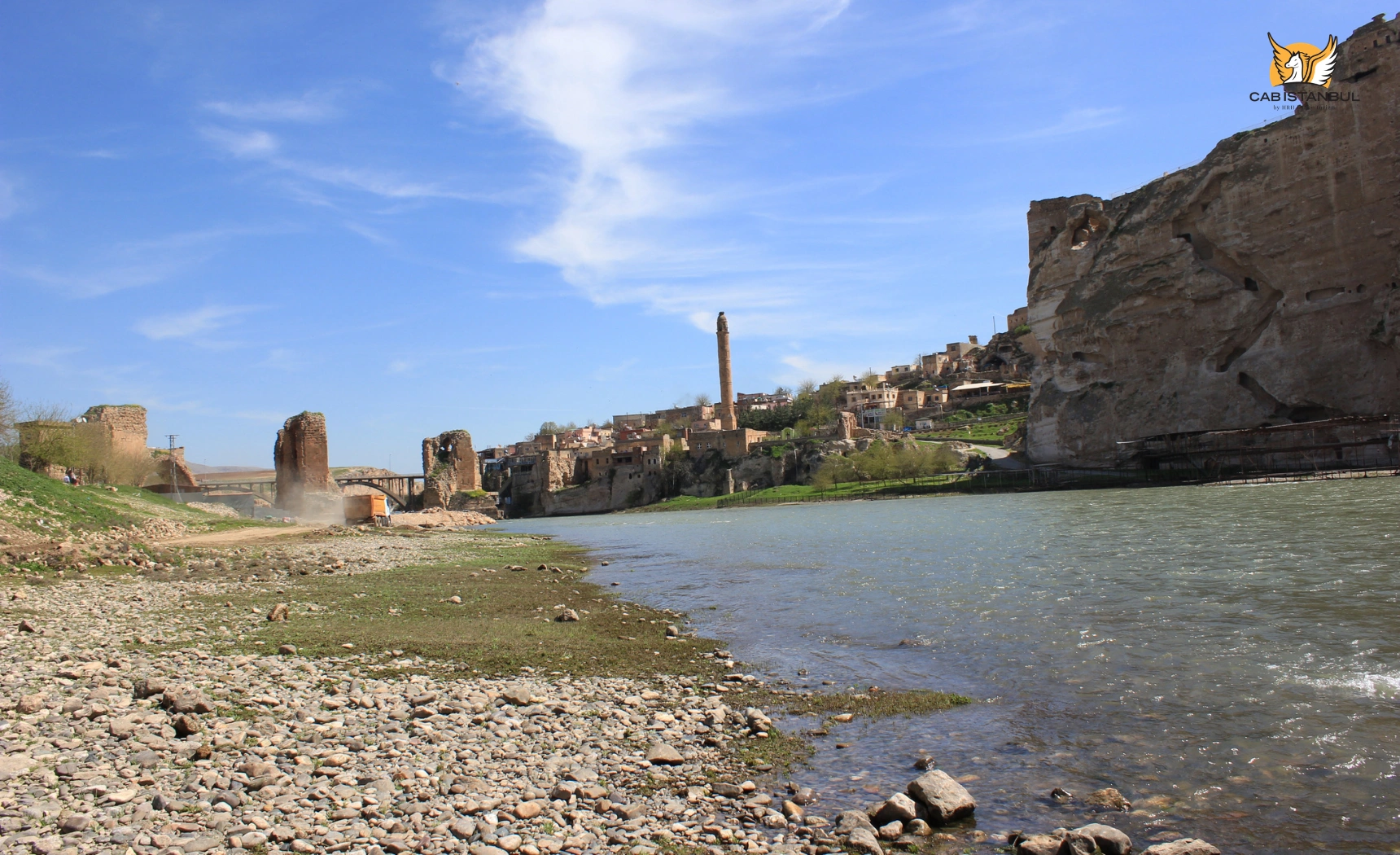
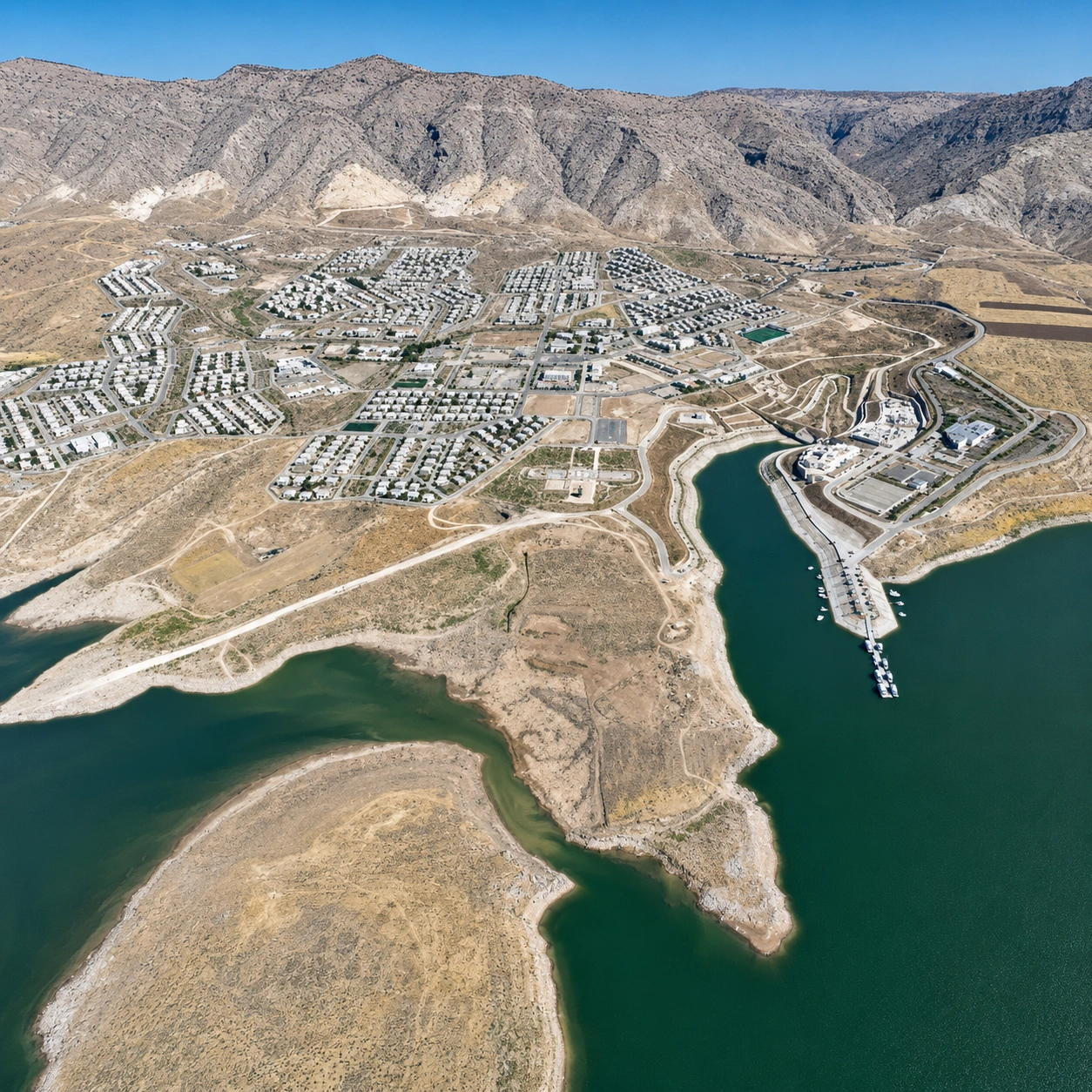
Hasankeyf is not a frozen open-air museum of the old Tigris town. When the Ilısu reservoir filled around 2019–2020, most of the lower settlement — cave houses, bazaar streets, and much of the medieval riverfront — went underwater. What visitors meet now is a split landscape: New Hasankeyf and the Cultural Park on higher ground, and the citadel cliffs still rising above the water, usually approached by boat.
That split is the key to planning. Allocate time for the relocated monuments (Zeynel Bey Tomb, Artuqid bath, Er-Rızk Mosque and related pieces), then a boat circuit for castle walls, canyon light, and the ghost outline of the old bridge setting. Many travellers fold Hasankeyf into a southeast loop that also includes Mardin’s old city or, further west, Göbekli Tepe — useful pairings if you are already flying into the region from Istanbul.
Who shaped Hasankeyf?
Official excavation summaries place the earliest documented occupation at Hasankeyf Höyük in the Pre-Pottery Neolithic — among Anatolia’s earliest known settlement layers, now beneath the lake. The cliff town later known by the Syriac name Cepha (“rock”) became a frontier fortress. In 363 CE, Byzantine emperor Constantius II ordered a major fortification here. Islamic rule from 639 CE shifted the city’s religious and commercial character; the Artuqids then made Hasankeyf a capital and engineering centre in the 12th–13th centuries.
Neolithic occupation documented in rescue excavations; the mound now lies under the Ilısu reservoir.
Constantius II strengthens the rock citadel on the Roman–Persian frontier; the site also hosted a Syriac bishopric.
Hasankeyf becomes a regional seat: palace, great mosque, hammam, and the famous Tigris bridge belong to this era’s urban programme.
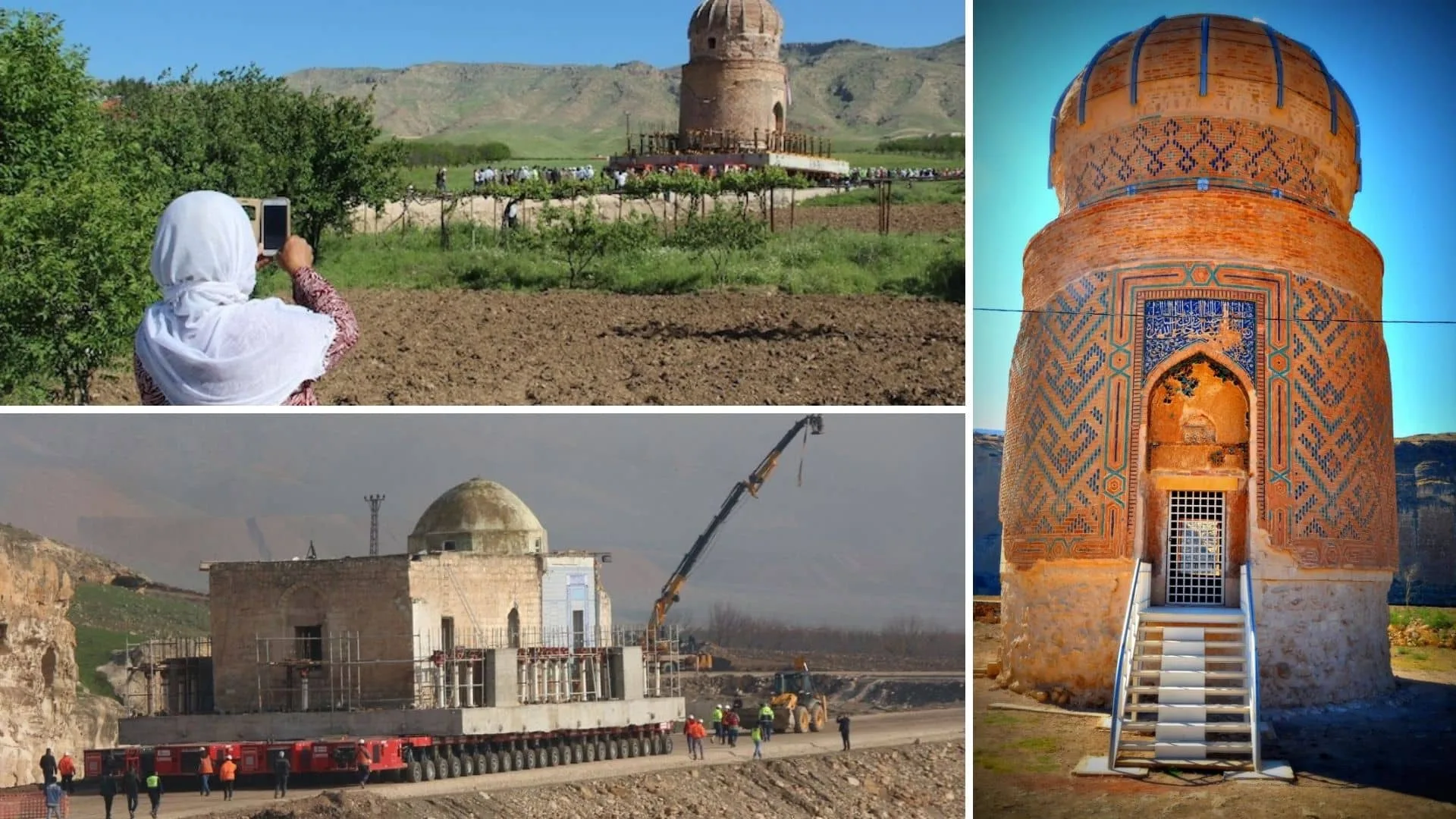
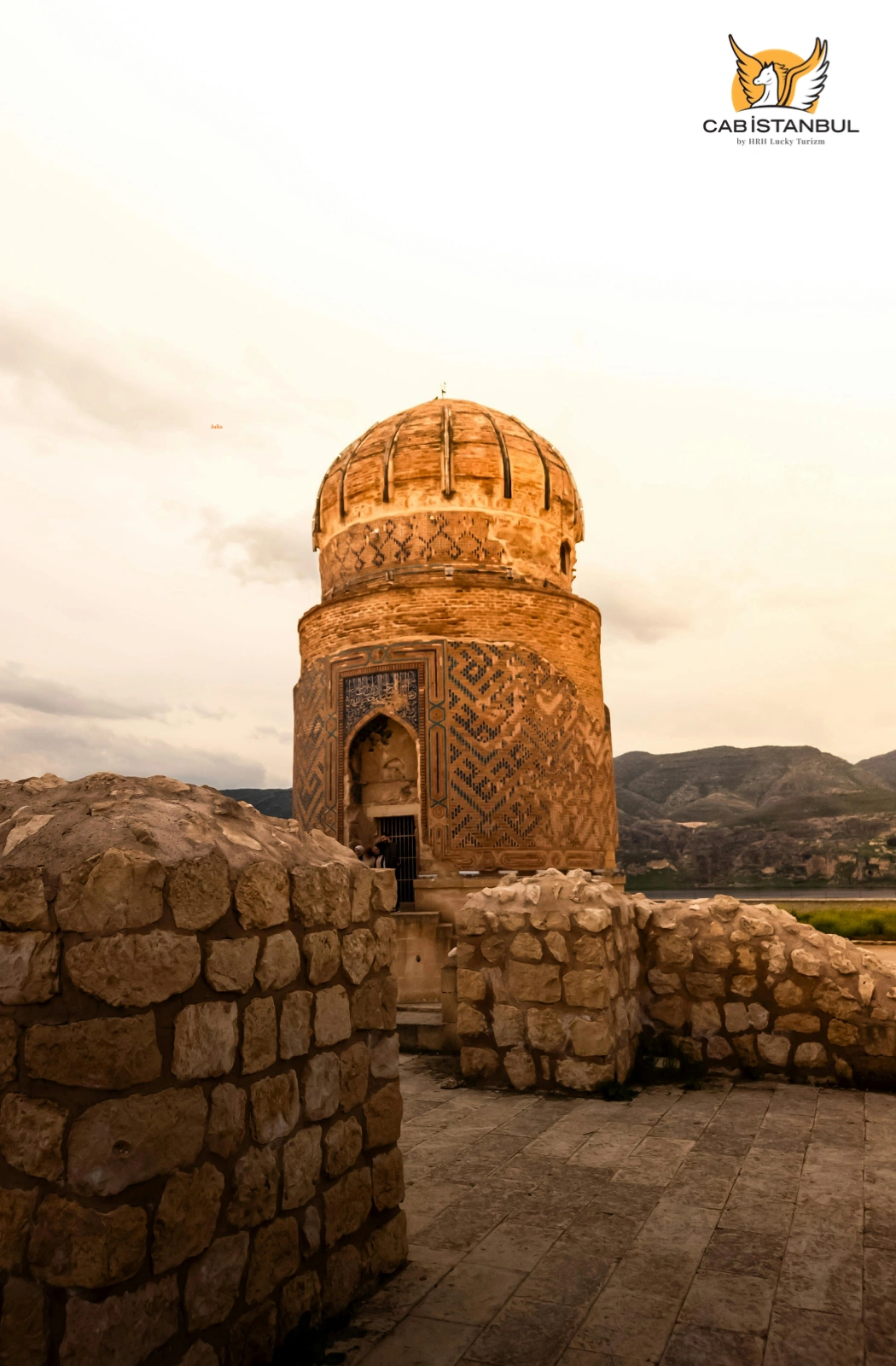
Akkoyunlu cylindrical mausoleum with Timurid-style glazed brick — later moved intact to the Cultural Park in 2017.
Ilısu Dam waters cover most of the historic lower town; selected monuments and museum collections continue the visit on higher ground.
Walk the Cultural Park first
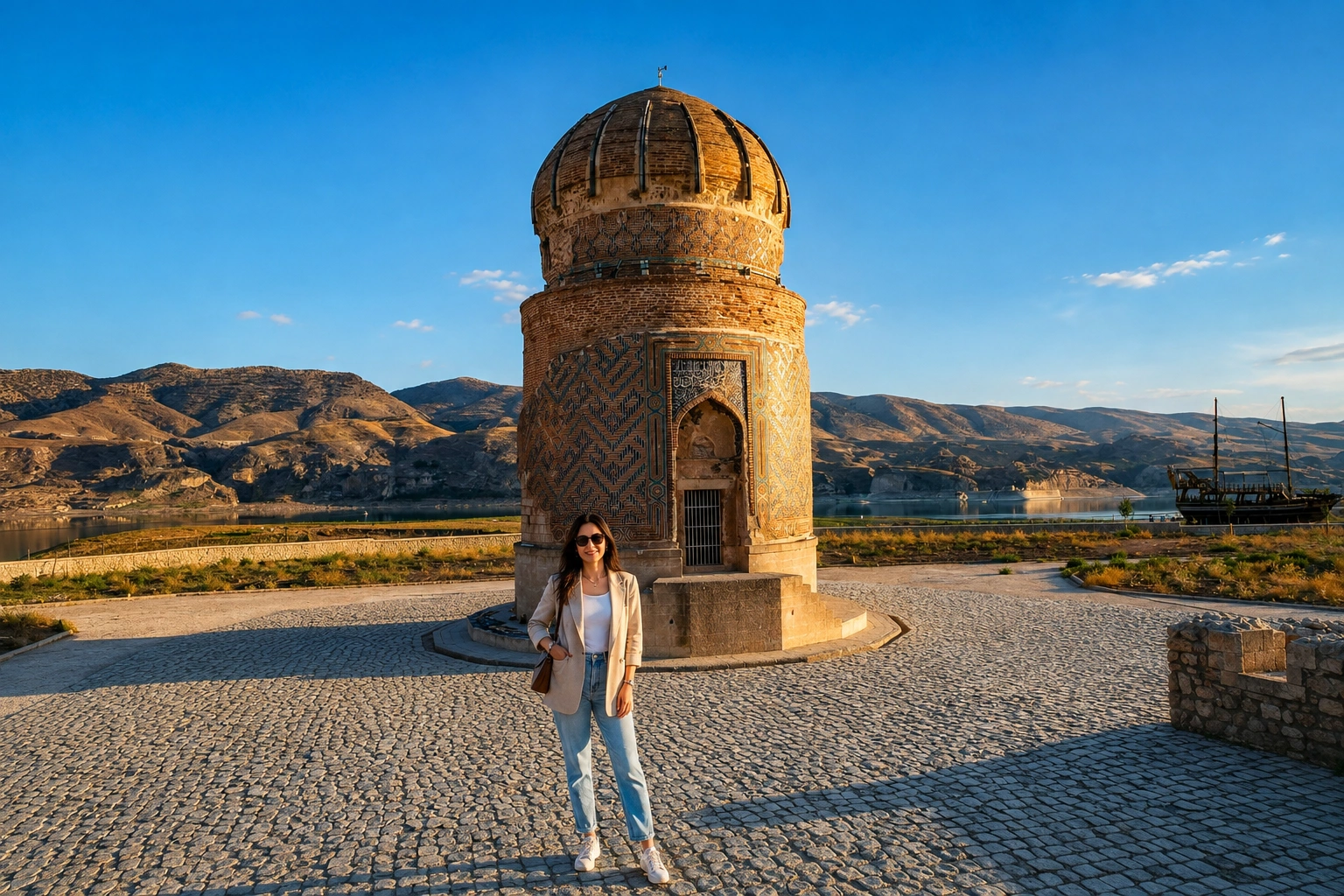
The New Hasankeyf Cultural Park is where salvage architecture is concentrated. Come here for close viewing, shade, and context panels rather than treating it as a theme-park replica of the drowned streets.
Zeynel Bey Tomb is the landmark: a 15th-century cylindrical mausoleum built for the Akkoyunlu prince, son of Uzun Hasan. In May 2017 it was moved about two kilometres on self-propelled modular transporters — a rare whole-building relocation in Türkiye. Turquoise and dark-blue glazed brick still reads as Central Asian Timurid influence more than local Seljuk stonework.
Nearby, look for the Artuqid hammam and elements of the Er-Rızk Mosque (early-15th-century Ayyubid foundation). Imam Abdullah’s complex was also among the first sacred sites lifted out of the flood zone. Do not expect every historic building listed in older guidebooks to stand complete; some survive as minarets, portals, or reconstructed fragments.
See Hasankeyf Castle from the water
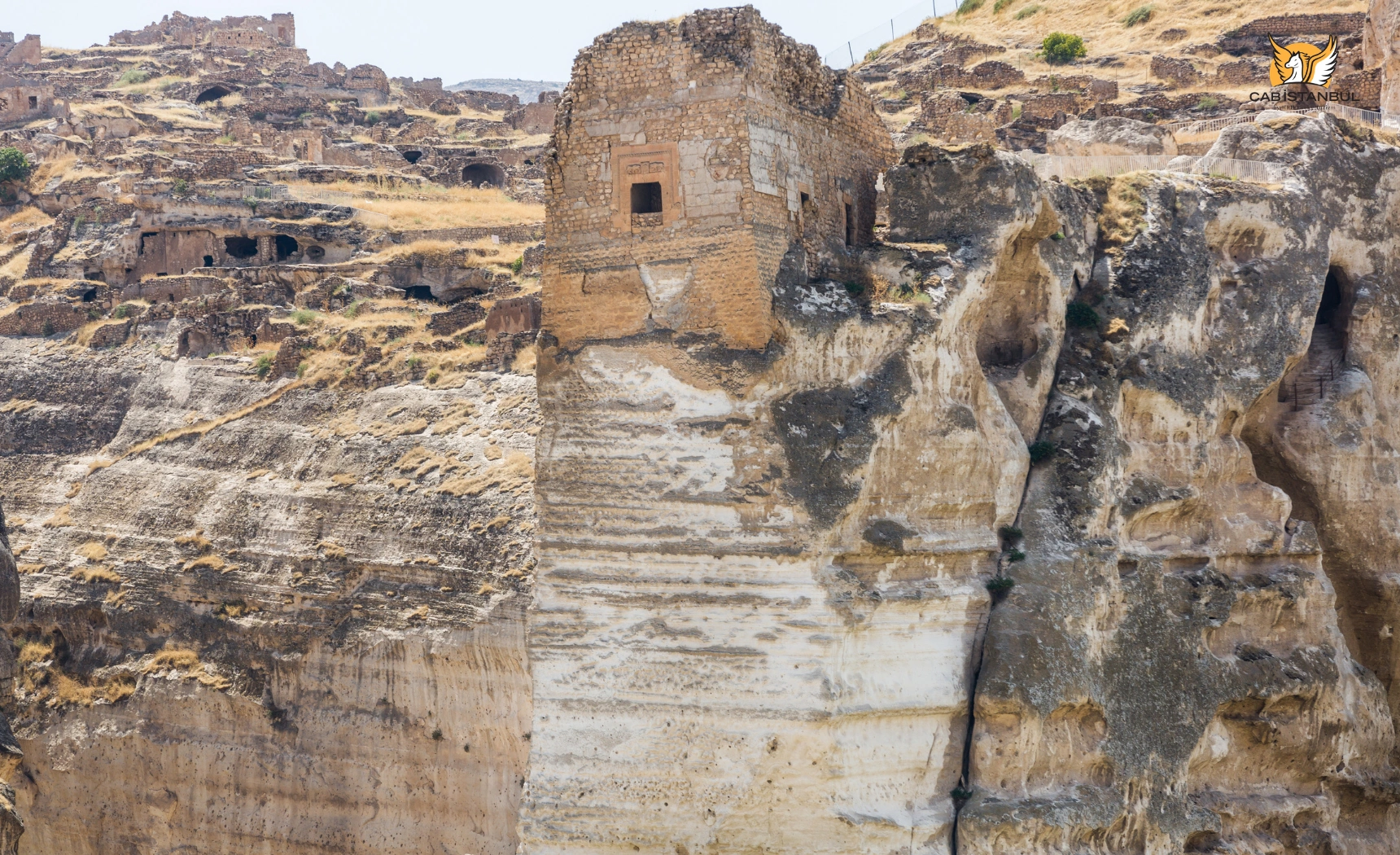
The fortress mass on the limestone cliff is why the settlement was called a city of rock. Byzantine, Artuqid and later builders stacked palaces, the Ulu Mosque of the upper town, and service buildings on the plateau. After the dam, access is typically by boat from the new waterfront, not a casual stroll through the old lower mahalle.
Infrastructure and ören yeri works have continued into 2026; opening of specific inner-castle routes can change. Treat the boat approach as the reliable core of the visit, and confirm on the day whether inner courts or palace remnants are open to walkers.
Take a Hasankeyf boat tour
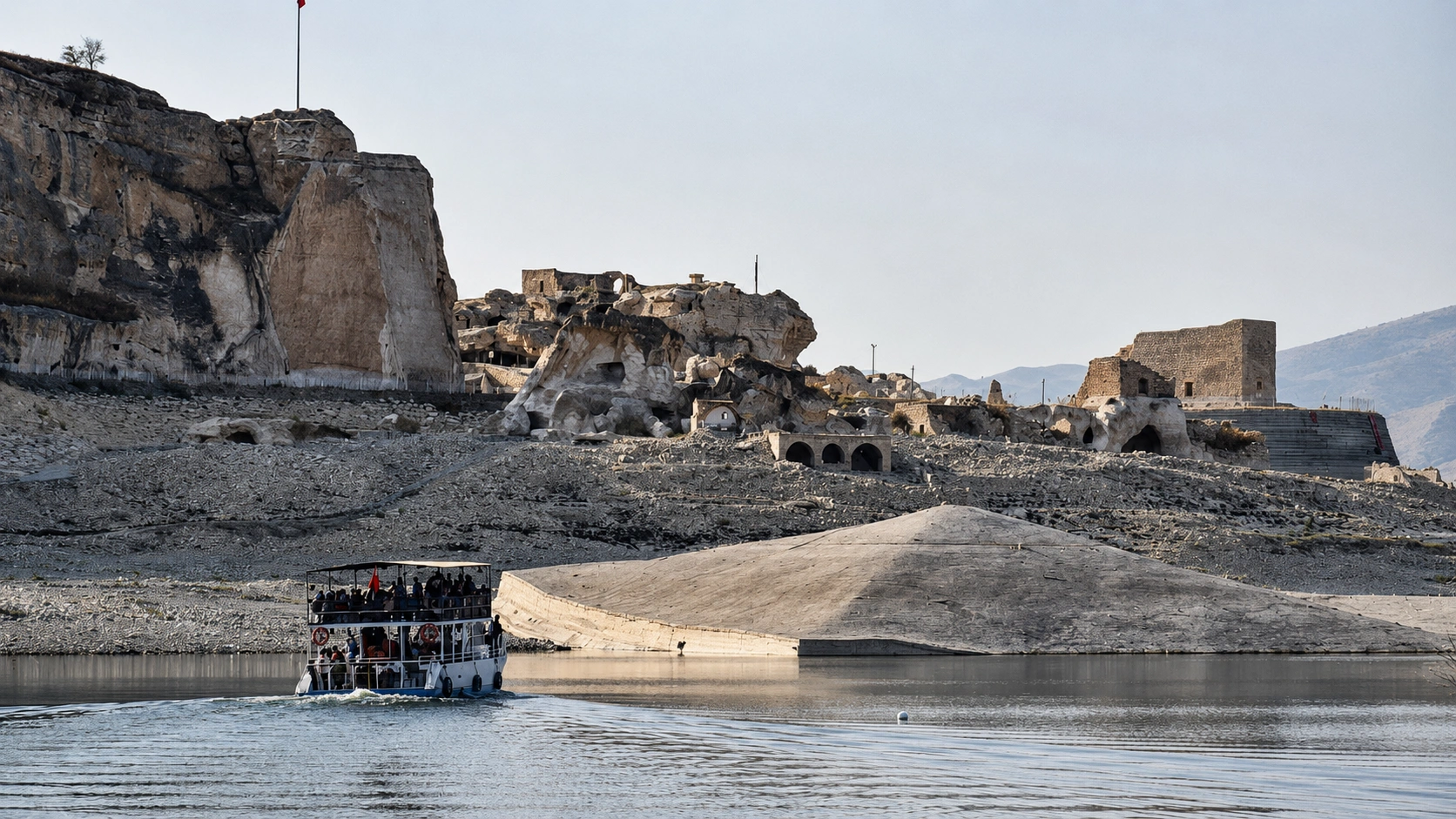
Local operators run short circuits on the reservoir. Typical highlights: castle cliffs, canyon walls, and the setting of the medieval bridge piers. Prices, duration and whether you disembark at the citadel vary by operator and season — agree the route before boarding rather than relying on a blog figure.
This is also the honest way to understand the flood. You are not touring a complete cave city; you are reading a skyline that lost its lower storey.
Mosque, bath, shrine and the lost bridge
The Artuqid (Old) Bridge once carried east–west traffic across a famously wide central span. Today you meet it as a story, a few remaining visual cues from the water, and relocated stone where conservation teams could save it — not as a walkable medieval highway.
Ulu Mosque of the upper city and other Ayyubid religious buildings illustrate Hasankeyf as a learned river capital, not only a fortress. The 12th-century polymath Badi' al-Zaman al-Jazari served the Artuqid court here; his treatise on mechanical devices is why engineering histories still name Hasankeyf. That intellectual layer survives in books and museum interpretation more than in a single “Al-Jazari house” you can enter.
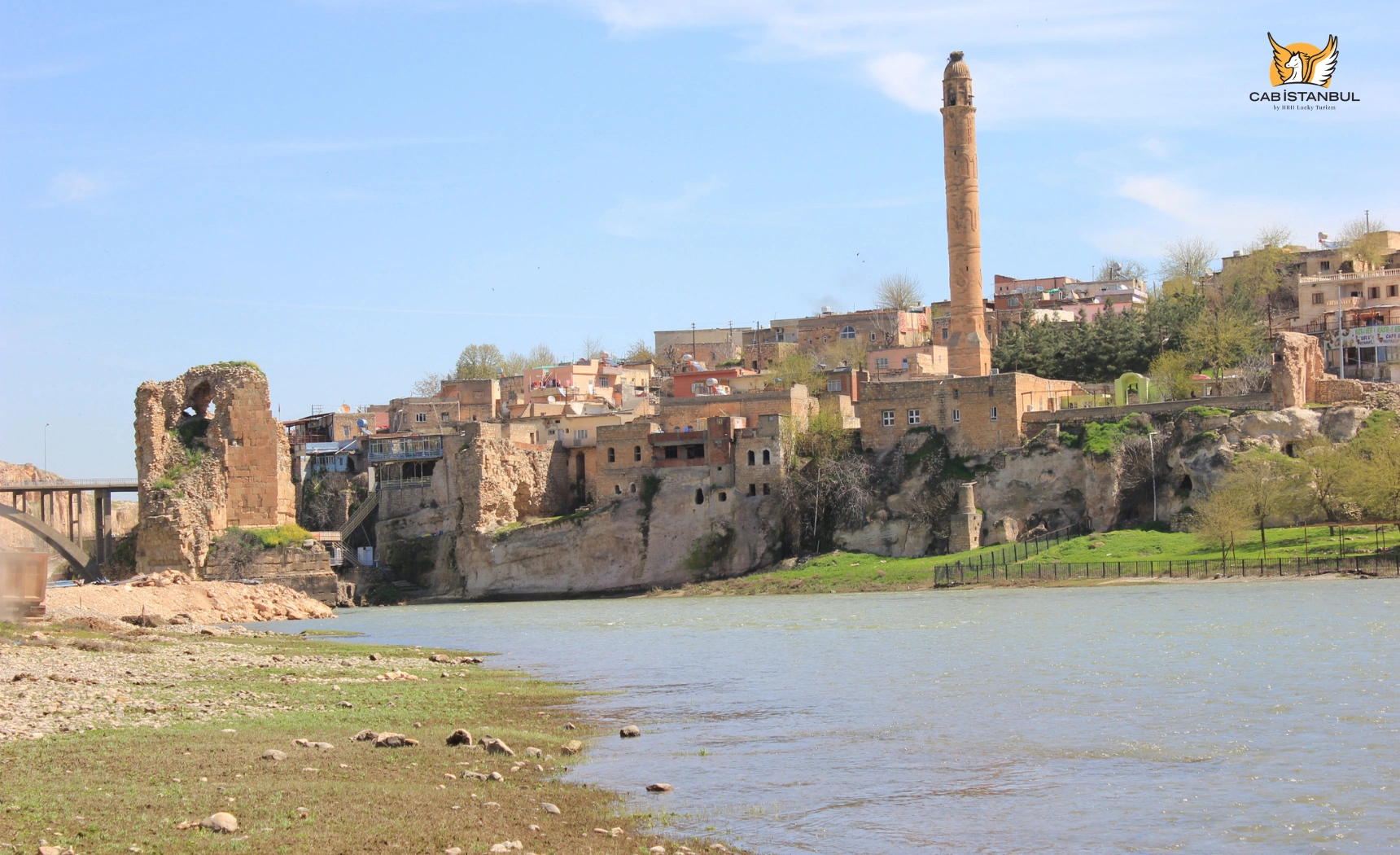
Er-Rızk Mosque
Built in the early 15th century under Ayyubid patronage, Er-Rızk is one of the structures visitors now encounter in the relocated ensemble rather than at the original river-edge plot. Use it to clock the city’s last medieval flourish before Akkoyunlu and Ottoman district life.
Why the tomb looks “un-Anatolian”
The circular plan and glazed brick are closer to Timurid Central Asia than to a typical Anatolian stone kümbet. That is the point: Akkoyunlu Hasankeyf was looking east as well as along the Tigris. It is the single best visual argument that this was never a provincial backwater.
The “city of caves” — what you can still grasp
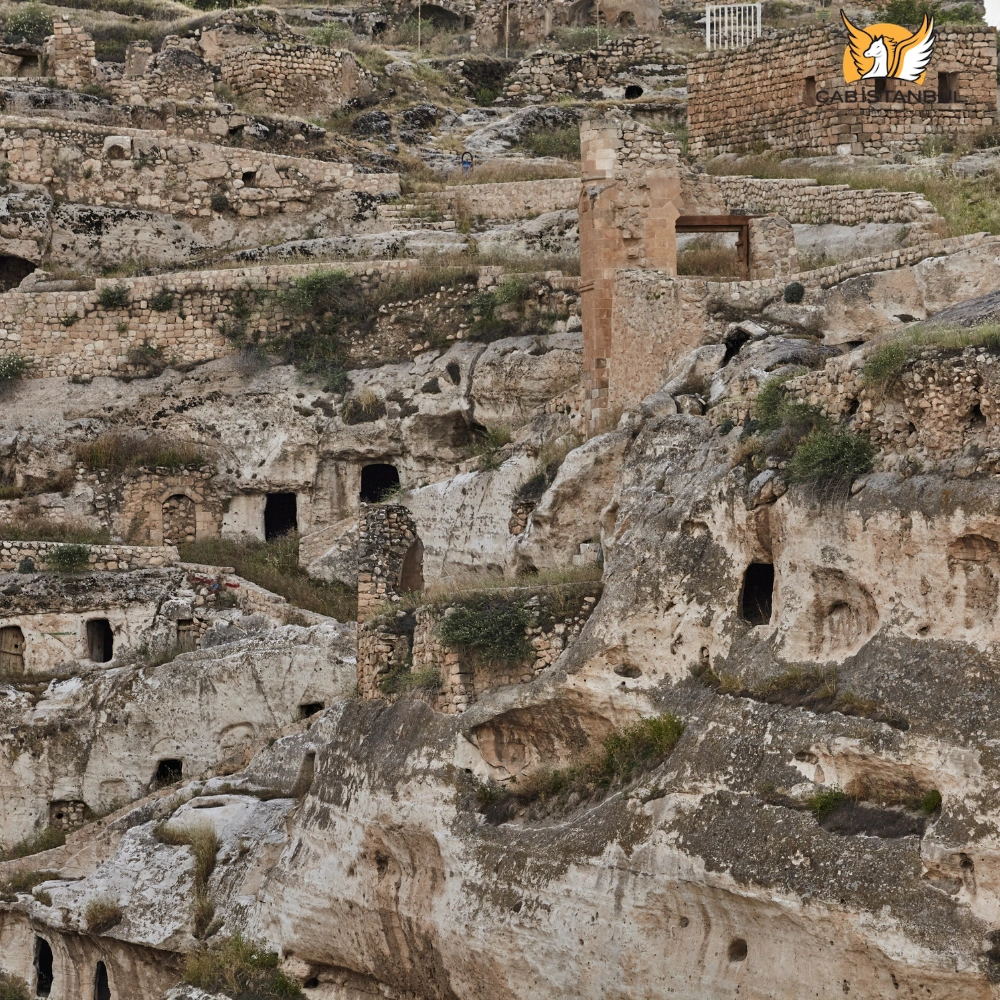
Thousands of rock-cut rooms in the limestone made Hasankeyf famous as a cave settlement. Romans, Byzantines and later residents reused them as houses, stores and shrines. Most of the inhabited cave belt of the lower town is gone. What remains is the idea — and whatever cliff openings you can still see from a boat or from permitted citadel paths. Do not plan a “cave-city walk” based on pre-2019 photo essays.
Yeni Hasankeyf and the museum
Residents were rehoused in a new town above the water. The Hasankeyf Museum displays finds from rescue excavations across the dam zone — Paleolithic through Ottoman — including material from Batman, Mardin, Siirt, Şırnak and Diyarbakır projects. Exhibition rotations happen; skip invented “must-see object” lists and go for chronology and the cave-life reconstructions if they are on display.
Entry fees are set centrally and change. Confirm current museum and site tickets on muze.gov.tr or at the desk. Do not trust stale lira amounts copied from older blogs.
Time on the waterfront
After the park and boat, leave a little unstructured time: tea, a short walk, photographs of the castle mass from the new shore. Hasankeyf is a half-day to a full day depending on boat queues and museum hours — not a rushed 45-minute photo stop if you care about the history.
When to go
Spring and autumn are the most comfortable for boats and walking. Summer is hot on open stone; winter can be quiet but windy on the water. Official site and museum hours are seasonal and have been affected by restoration and Arkeopark works — including a 2026 phase of reopening reported after on-site ministry visits. Verify opening status the week you travel.
How long do you need?
A focused visit: Cultural Park + museum + one boat circuit can fit in 3–5 hours. Add extra time if citadel walking is open, or if you are pairing Hasankeyf with Batman city or Mardin the same day.
What to bring
Sun protection, water, and shoes with grip for boats and stone. Cash can still help with small boat operators even when cards work at the museum.
Batman, Mardin and the Istanbul connection
Most independent travellers reach Hasankeyf by road from Batman (roughly 35–40 minutes). Dolmuş and intercity buses serve the district; a taxi or rental car is simpler if you want a timed boat. Diyarbakır and Mardin / Midyat work as bases for a two- or three-stop southeast day.
From Istanbul, fly to Batman (or Diyarbakır) rather than attempting Hasankeyf as a same-day overland trip. City-leg logistics still matter: our Istanbul Airport to city centre notes, plus a booked Istanbul airport transfer or Sabiha Gökçen transfer, keep the overnight before the domestic flight sane. If you have a spare day in the old city first, Hagia Sophia, the Basilica Cistern and Topkapı Palace sit on the same peninsula circuit as the Blue Mosque.
For a chauffeur-led multi-day eastbound itinerary, see car with driver in Istanbul, intercity car with driver, or a private Istanbul tour on the urban days. The booking hub is airport transfers and chauffeur services.
Is Hasankeyf still worth visiting after the dam?
Yes, if you want the relocated monuments, the museum, and the boat-and-citadel landscape. It is not the same as a pre-2019 walk through a living cave town. Go for the salvage architecture and the reservoir geography, not for an intact medieval streetscape.
What are the best things to do in Hasankeyf?
Walk the Cultural Park (Zeynel Bey Tomb, hammam, Er-Rızk remains), visit Hasankeyf Museum, take a reservoir boat toward the castle and canyon, and photograph the citadel from the new shore. That sequence matches how the site actually works now.
Can I still see the old caves and the Artuqid bridge?
Most inhabited caves of the lower town are underwater. The great bridge is not a complete walkable monument; you mainly see setting, remnants, and conservation pieces. Boat tours are the realistic way to grasp both.
How do I get to Hasankeyf from Batman or Istanbul?
From Batman, road transfer takes well under an hour. From Istanbul, fly to Batman or Diyarbakır, then continue by car or bus. Same-day overland from Istanbul is not realistic. Use our airport-to-centre guide and the transfer hub for the Istanbul night before you fly east.
Who was Al-Jazari, and is there a monument to him?
Al-Jazari was a 12th-century engineer at the Artuqid court, famous for automata and water-raising machines. Hasankeyf’s claim is historical, not a single guaranteed house museum. Look for interpretation in the museum rather than a standalone Al-Jazari pavilion.
Are there entrance fees?
Museum and archaeological-site tickets are official and change. Confirm on muze.gov.tr or at the ticket office. Boat tours are usually paid separately to local operators. This page does not list prices because they go stale quickly.