
Antalya Province · Kemer · Tekirova
Phaselis Ancient City is a ticketed archaeological site on a pine-backed peninsula near Tekirova in Kemer—not a free public beach club and not Antalya city centre. Three natural harbors, a monumental main street, a small Hellenistic theatre with Roman additions, Roman baths, agoras and a highly visible aqueduct sit beside swimming coves that you reach after site entry. This 2026 English guide keeps Lycia/Pamphylia nuance honest, corrects stale opening hours, and treats fees as official patterns you still confirm on the day.
Cab Istanbul provides intercity car with driver transport only. Drivers are not licensed archaeological guides and tickets are not included. Pair Phaselis with other places to visit in Antalya or the wider list of ancient cities near Antalya when daylight allows.
At a glance
Popular places around Phaselis
| Place / area | Best for | Location context | Practical note |
|---|---|---|---|
| Phaselis Örenyeri | Ruins + harbors + swim | Tekirova / Kemer | Ticket or MüzeKart first |
| North Harbor | Quieter cove / aqueduct approach | North side of peninsula | Often deeper / rockier |
| Main street | Core archaeology walk | Links South ↔ Central harbors | Uneven paving |
| Theatre | Photos / short climb | Above square toward acropolis | Stairs; limited mobility |
| Aqueduct | Signature skyline arches | Toward North Harbor | Roman water system |
| South Harbor beach | Most popular swim cove | Near Hadrian gate approach | Inside site rules |
| Tekirova | Nearest modern base | South of Kemer | Short transfer to gate |
| Kemer | Resort logistics | ~15–16 km north | Common day-trip start |
| Olympos / Çıralı | Second ancient + beach day | Further SW coastal belt | Do not overpack one day |
Geography & identity
Where Phaselis is — and why Lycia ≠ Pamphylia matters
Official mapping places Phaselis in Tekirova Mahallesi, Kemer / Antalya, between the Beydağları massif and the Mediterranean, inside the wider Olympos–Beydağları coastal national-park landscape. Ancient writers and modern catalogues sometimes label Phaselis as Lycian, sometimes as Pamphylian. The accurate reading is a border-zone port on the west side of the Pamphylia Gulf and the eastern edge of Lycia—not an invented “half Lycian, half Pamphylian” administrative badge. Modern archaeology usually discusses it with eastern Lycia’s maritime network while acknowledging the border ambiguity.
History
Foundation, Alexander, Rome and decline
Official Turkish museum texts present Phaselis as a Rhodian colonial foundation in the 7th century BC, with muze.gov.tr citing about 690 BC. Treat the year as an approximate tradition, not a surveyed foundation certificate.
Persian/Achaemenid pressure appears in the Classical centuries; local 4th-century dynamics also include figures such as Mausolus and Lycian Pericles of Limyra in official culture narratives—so do not compress everything into a single “4th-century Persian only” line.
Alexander the Great: Phaselis welcomed him during the Asian campaign. Literary tradition says the city offered a golden crown; museum copy notes a stay of about a month. Campaign dating is often given as 334 BC or 333 BC depending on source—state the dual dating rather than inventing a false certainty. Do not claim Alexander built major fortifications or a lasting infrastructure programme here; that old embellishment is unsupported for this guide.
Phaselis later joined the Lycian League (officially ~167 BC in TR culture portals), suffered pirate pressure with neighbouring Olympos, and entered a Roman rebuilding boom that official narratives date from 43 BC for roughly three prosperous centuries. Emperor Hadrian visited in AD 129 (official). The single-arched monumental gate at the South Harbor approach commemorates that visit; epigraphic work on the gate often points to a dedication around AD 130–131. This is not the Hadrian’s Gate in Antalya’s Kaleiçi.
Byzantine Phaselis appears as a bishopric; a small basilica occupies one agora. The city’s name is associated with the Council of Chalcedon (Kadıköy) in 451 in official narratives—phrase this as episcopal participation context, not “the city joined a council.” Later decline narratives cite 7th-century Arab raids, an 8th-century revival, a 1158 Seljuk siege, earthquakes, and a silting/failing harbor before abandonment in the early 13th century. Those medieval details follow official culture-portal tradition and remain qualified visitor history—not courtroom-proof event archaeology.
Archaeology on site
Three harbors, main street and monuments
Phaselis is famous for three natural harbors—verified across museum, culture-portal and academic harbor studies:
- North Harbor (Kuzey Limanı): more open water; aqueduct and necropolis slopes nearby.
- Central / Battle Harbor (Merkezi / Savaş Limanı): sheltered basin beside the urban core.
- South Harbor (Güney Limanı): today’s most visited swimming cove; Hadrian gate approach.
A paved main street (often cited ~20–25 m wide in official descriptions) links the South and Central harbor zones, with shops, porticoes, agoras and baths along the axis. The theatre is a compact Hellenistic cavea with Roman stage-building additions; in Late Byzantine times part of the stage wall was reused in fortification. Official texts count three agoras (including Domitian and Hadrian agoras and the agora facing the theatre with a later basilica). Great and Small Baths survive; the small bath still shows heating-system detail. The aqueduct is the skyline landmark bringing water from a northern spring toward the city. Necropolis areas include slopes behind the North Harbor and other burial zones—do not freeze the cemetery map to one sentence. The forested acropolis is traditionally linked to Athena; the temple itself is not a confidently identified visitor monument.
| Monument / area | Period / function | Why it matters | Visitor note |
|---|---|---|---|
| Harbor system | Archaic–Late Antique ports | Defines Phaselis as a trade city | Three named harbors |
| Main street | Roman urban axis | Connects harbors and civic buildings | Uneven stones |
| Hadrian gate | Imperial visit monument | South Harbor ceremonial entrance | ≠ Antalya Hadrian’s Gate |
| Theatre | Hellenistic + Roman stage | Compact cavea above the square | Stairs |
| Agoras | Civic / commercial | Three named market complexes | Basilica in one |
| Baths | Roman bathing | Great + Small Bath remains | Near main street |
| Aqueduct | Roman water supply | Most monumental skyline feature | Photo stop |
| Necropolis | Burial landscapes | Multiple slopes / zones | Respect barriers |
| Hellenistic temple zone | Active research area | Recent excavation focus | Access may vary |
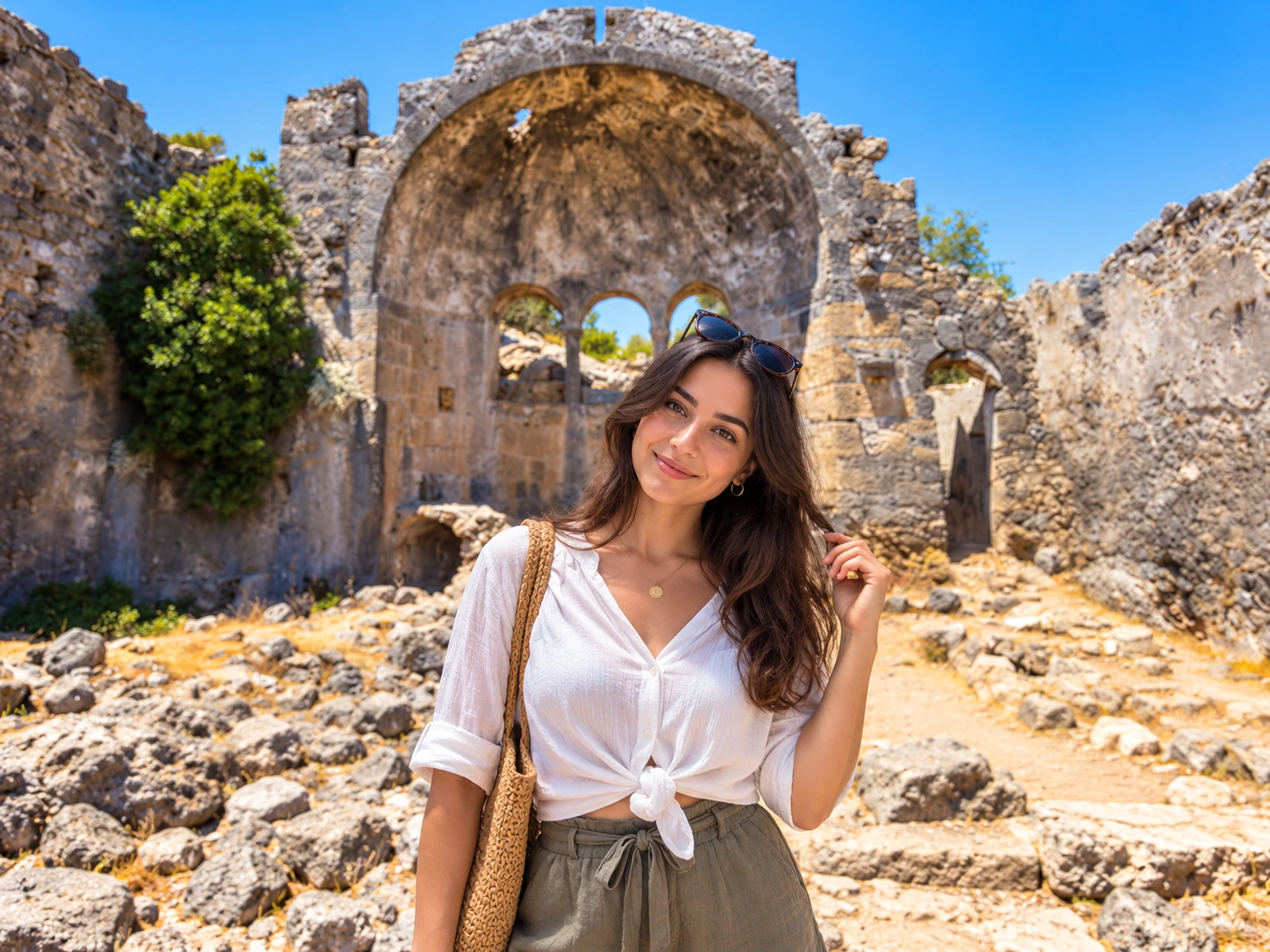
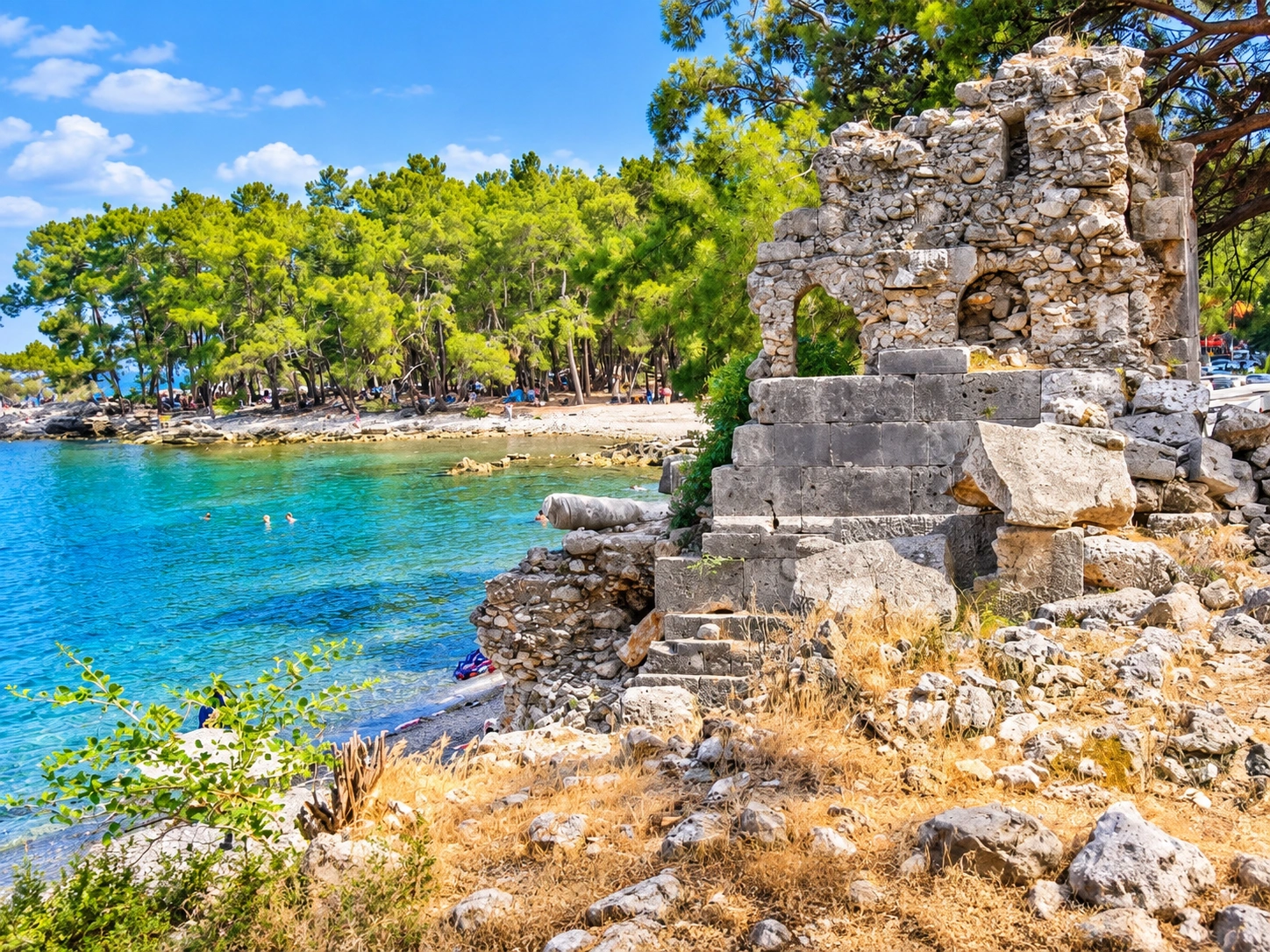
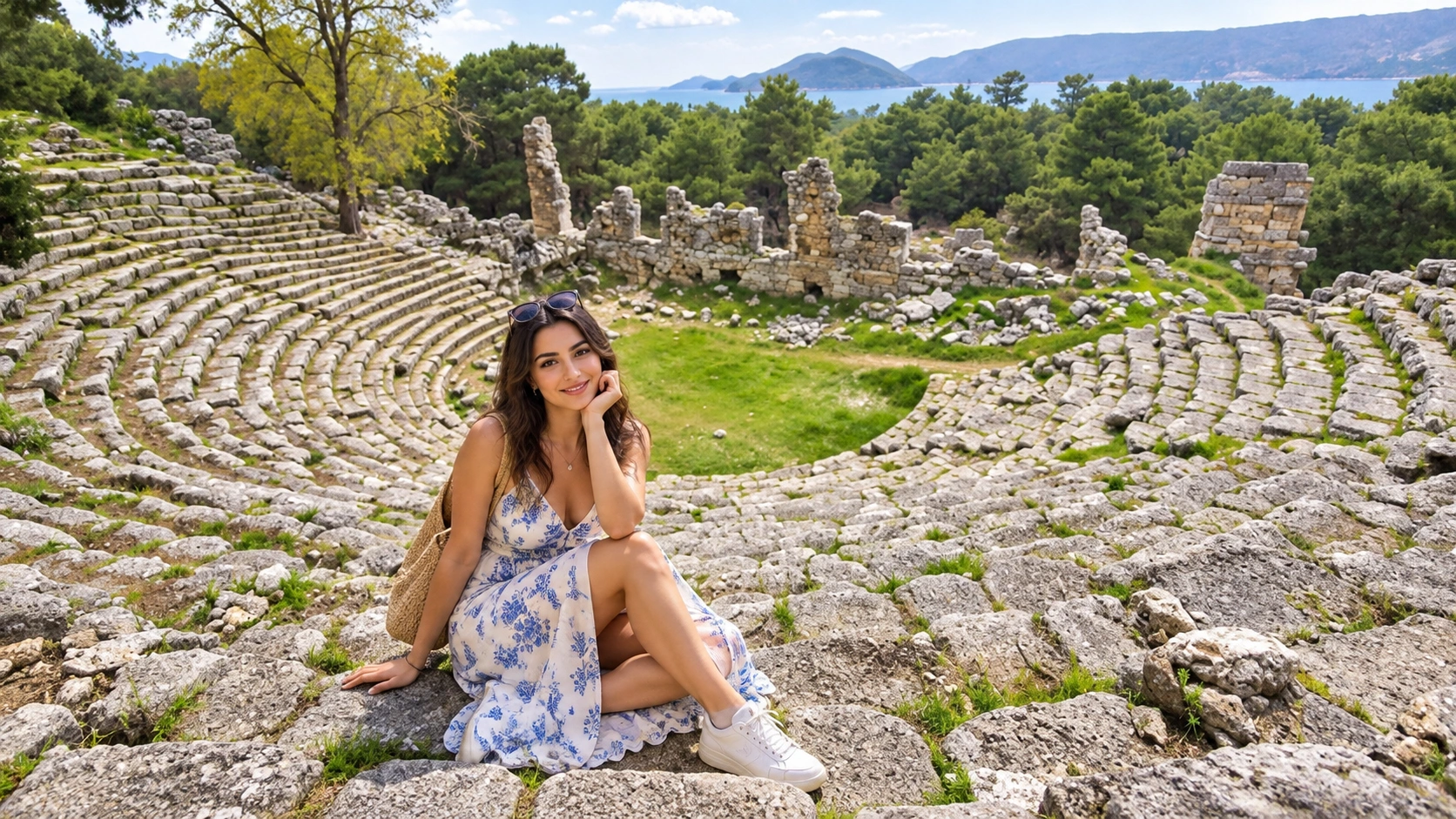
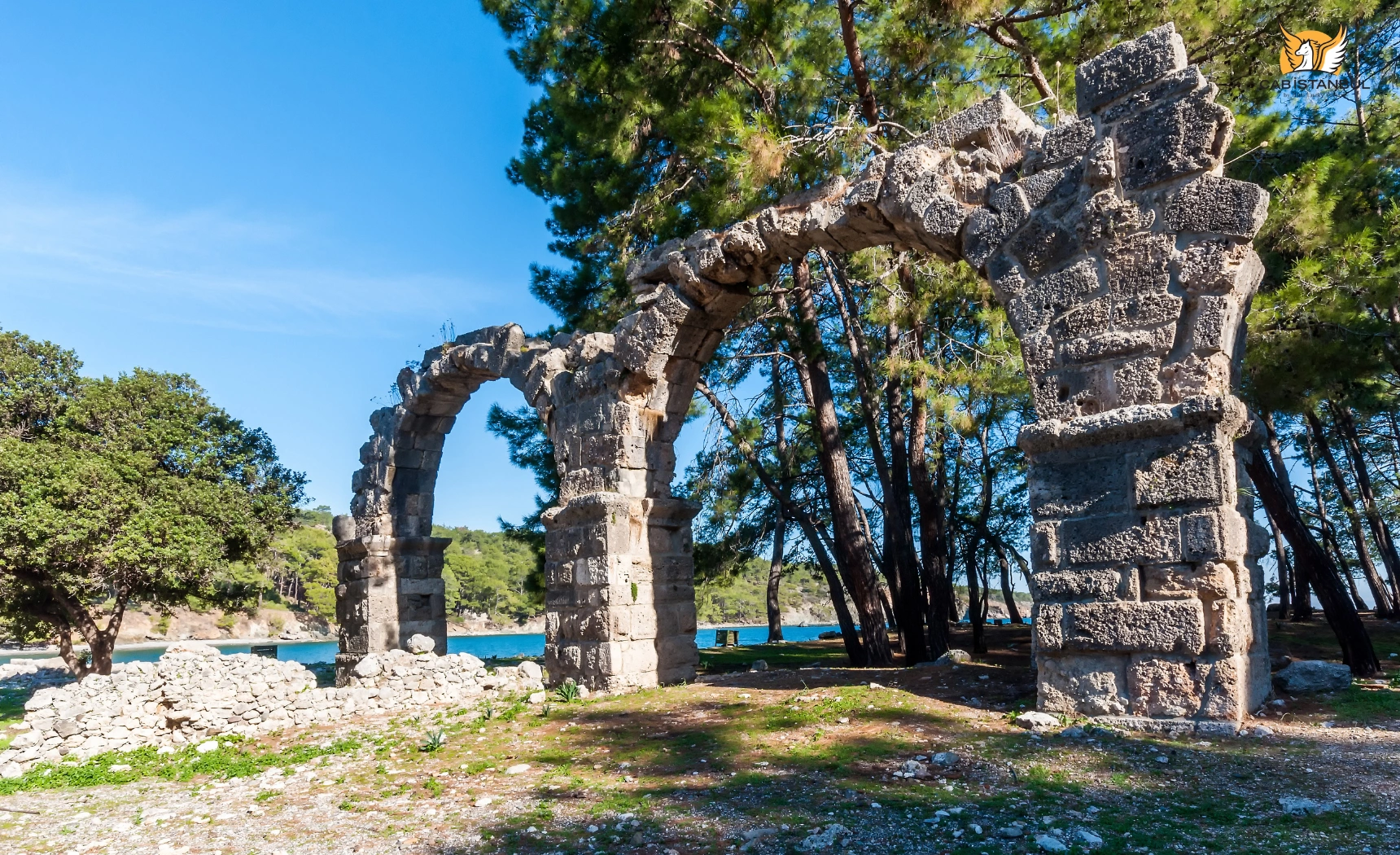
Video is atmosphere only. It does not confirm today’s ticket price, hours or swimming rules.
Research update
Excavation and conservation
Phaselis is an active research landscape. Recent Ministry-permitted seasons (including 2022–2023 reports in the Phaselis journal) document work on the Hellenistic temple, Hadrian Gate conservation, aqueduct stretches, Central Harbor quays, Main Street shops and necropolis anthropology. Visitors may see scaffolding, fenced trenches or closed pockets. That does not mean excavation runs every day of the year.
Sea access
Beaches and swimming inside an archaeological site
Phaselis is örenyeri first. Harbor coves are part of the protected site experience, not an unrestricted resort beach. There is normally no separate beach ticket—you enter with the archaeological ticket or a valid MüzeKart, then walk to the coves. Treat camping, open fires and barbecue as inappropriate in this protected setting. Follow posted barriers around ruins and underwater remains.
| Beach / harbor area | Character | Swimming | Practical note |
|---|---|---|---|
| South Harbor | Most popular cove; pebble/sand mix | YES if rules allow | Nearest to Hadrian approach |
| Central Harbor | Sheltered basin | RESTRICTED / check | Near urban core |
| North Harbor | Often deeper / rockier | CAUTION / check | Quieter; aqueduct nearby |
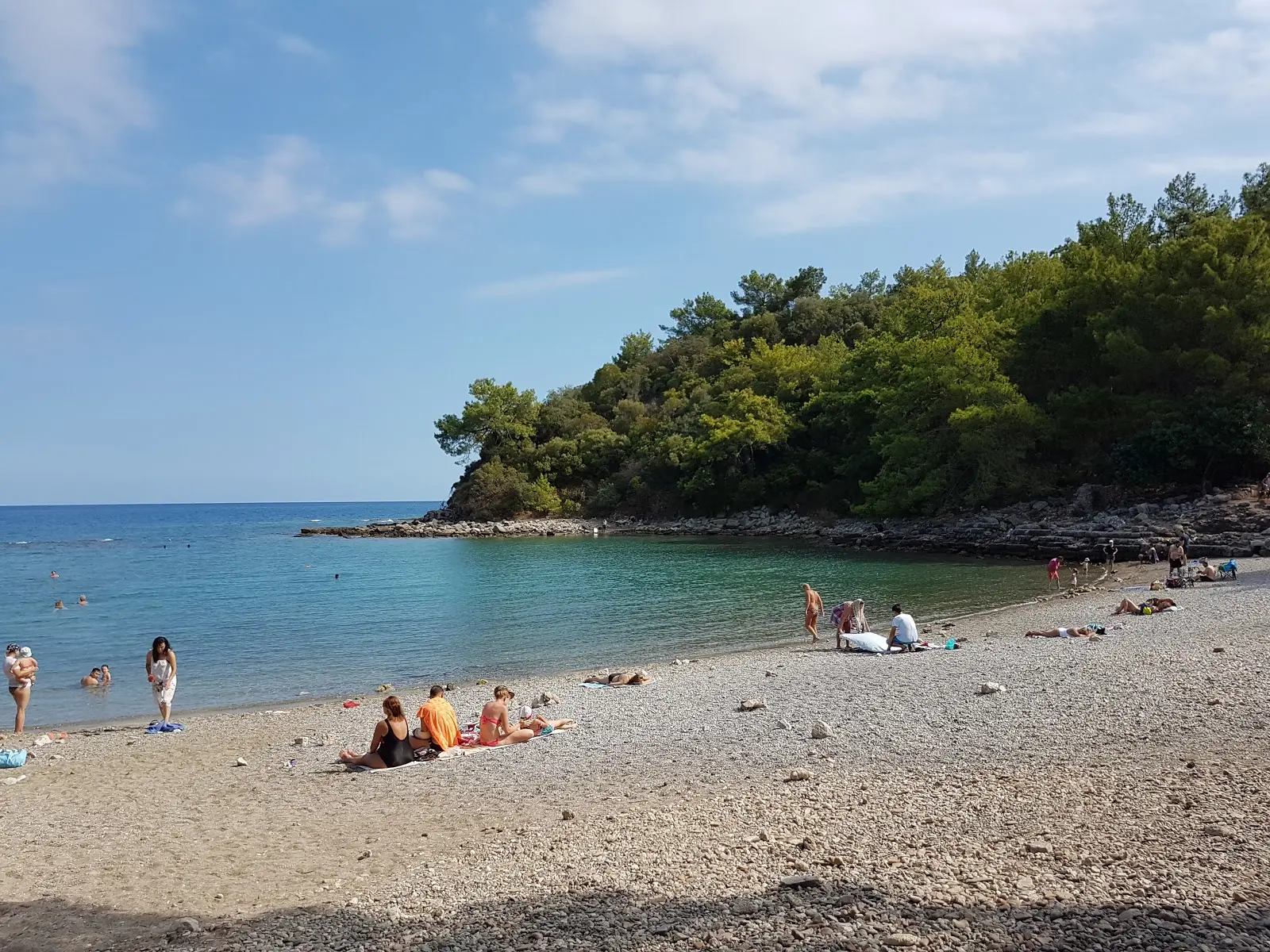
Beach clips show atmosphere only—verify swim permissions and sea conditions on the day.
Practical 2026
Tickets, hours, accessibility and timing
| Practical detail | Current information |
|---|---|
| Location | Tekirova Mahallesi, Kemer / Antalya |
| Open days | Daily (muze.gov.tr) |
| Listed hours | 08:00–20:00; ticket desk 19:30 (muze.gov.tr, checked Sep 2026) |
| 2026 season note | Ministry tourism-season table lists Phaselis among sites with 21:00 closing—confirm same day |
| Foreign ticket | €10 (DOSIM official table) |
| Turkish citizens | MüzeKart valid (muze.gov.tr / DOSIM) |
| Museum Pass | Confirm product validity same day—do not assume |
| Parking | Entrance-area parking typical; confirm fee/rules on site |
| Accessibility | Uneven paving, theatre stairs; not fully wheelchair-easy |
| Swimming | Harbor coves after entry; check posted rules |
| Visit duration | Ruins ~1.5–2.5 h; ruins + swim half day; leisure full day |
| Best season | Spring/autumn for ruins walks; summer for swim + heat/crowds |
Bring water, sun protection and shoes that handle both pebbles and ancient paving. Pine shade helps but does not cover every path.
Getting there
Transport and realistic itineraries
| Route | Practical options | Important note |
|---|---|---|
| Antalya center → Phaselis | Car / taxi / chauffeur; public via Kemer–Tekirova corridor | ~1–1.5 h typical; route-dependent |
| Antalya Airport → Phaselis | Car / taxi / chauffeur | No invented shuttle product |
| Kemer → Phaselis | Short drive / local minibuses | ~15–20 min class |
| Tekirova → Phaselis | Short local transfer / walk+taxi patterns | Closest settlement |
| Boat day trips | Coastal cruises may stop by name | Landing, ticket and stay rules vary |
Official culture notes mention Antalya–Kemer–Tekirova bus patterns. This guide does not invent route numbers. The Lycian Way corridor includes a Tekirova–Phaselis map sheet—near/related trail access, not a claim that the marked path walks every ruin street.
| Itinerary | Stops | Best for | Important note |
|---|---|---|---|
| Half day | Aqueduct → main street → theatre/agoras → South Harbor swim | First visit | Realistic without rush |
| Full day | Deeper ruins + leisure swim + Tekirova evening | Ruin + beach balance | Heat pacing in summer |
| Regional | Phaselis morning + Olympos/Çıralı afternoon | Two-site coast day | Only with daylight margin |
FAQ
Phaselis Ancient City frequently asked questions
In Tekirova, Kemer district, Antalya Province—on a pine peninsula between the Beydağları and the Mediterranean.
Ancient and modern labels vary. The accurate visitor explanation is a border-zone eastern Lycia / Pamphylia Gulf port—not a forced “half and half” status.
Tradition credits Rhodian colonists in the 7th century BC (often ~690 BC in official museum copy). Treat the year as approximate.
Yes—welcomed during his campaign (334/333 BC dating appears across sources). Golden-crown hospitality is traditional; major Alexander building claims are not used here.
Three natural harbors: North, Central (Battle) and South—still the visitor geography today.
No. Phaselis has its own South Harbor monumental gate for Hadrian’s visit; Antalya Kaleiçi has a separate Hadrian’s Gate.
A small Hellenistic theatre with Roman stage additions; later Byzantine fortification reuse is visible in the stage-wall fabric.
Yes in harbor coves when the site is open and rules allow—after paying/entering the örenyeri. It is not a free public beach resort.
DOSIM lists €10 for foreign visitors; MüzeKart is valid for Turkish citizens. Confirm the day’s tariff at the gate.
muze.gov.tr lists 08:00–20:00 with desk closing 19:30. A 2026 tourism-season table also notes 21:00 for Phaselis—verify before you go.
About 1.5–2.5 hours for ruins; half a day with swimming; a full leisure day if you slow down.
Roughly 55–65 km from Antalya centre and about 15–16 km from Kemer, depending on start point and traffic.
Not as a fully accessible site. Expect uneven paving and stairs at the theatre; some flatter harbor paths help but do not make the whole site wheelchair-easy.
The official Lycian Way map includes a Tekirova–Phaselis sheet—near/related corridor access, not a claim that the trail walks every ruin street.
Yes as a regional coast day if you keep timing realistic—do not force Phaselis + Olympos + Yanartaş into one rushed loop.
Yes as seasonal research projects. You may see conservation work; it is not a daily public dig show.
Day cruises often market Phaselis; landing rights, ticket rules and time ashore vary—do not assume unrestricted private access.
Cab Istanbul offers intercity chauffeur transport only—no local tour package, guide or tickets included.
Phaselis rewards visitors who treat it as an archaeological harbor city first: walk the main street, separate Hadrian’s monument from Antalya’s city gate, swim only where rules allow, and leave enough daylight for the pines and the sea without turning a protected örenyeri into a beach-club daydream.