
Emirgan Grove — Emirgan Korusu in Turkish — is Istanbul's largest and most beloved woodland park, spreading across 47 hectares of hillside on the European shore of the Bosphorus in the Sarıyer district. Open every day from early morning until late evening, entry is completely free. The grove is admired year-round for its centuries-old plane trees, ornamental ponds and three exquisitely restored 19th-century Ottoman pavilions, and reaches its peak glory each April when up to one million tulip bulbs burst into bloom for Istanbul's annual Tulip Festival.
Setting and Scale: A Hillside Garden on the Bosphorus
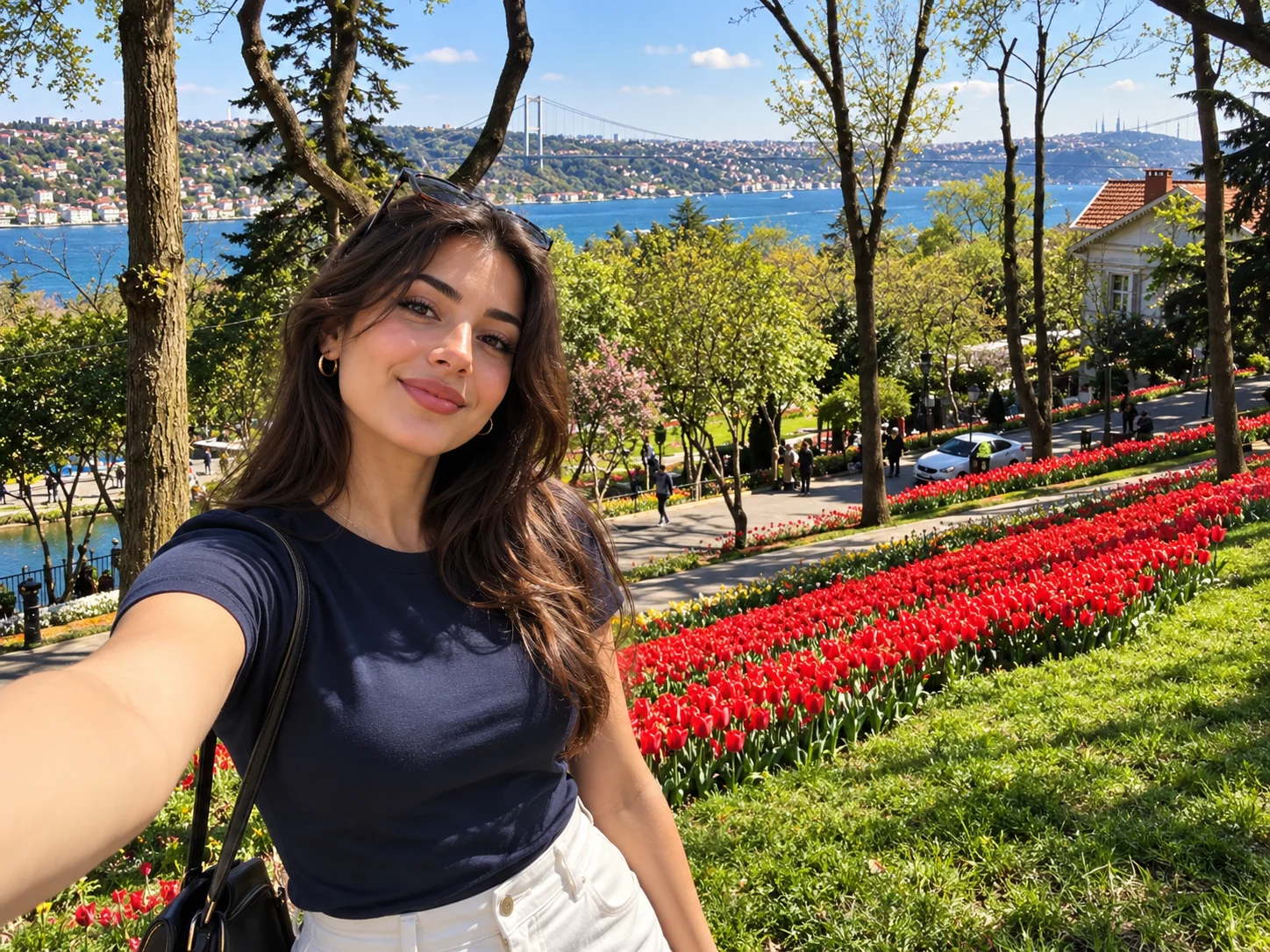
The park sits on a gentle wooded slope rising from the Bosphorus Coast Road, approximately 12 km north of the historic peninsula and 3 km north of Ortaköy. The grounds sweep from the shoreline road up through formal garden terraces and open meadows into dense mature woodland. From several elevated viewpoints — especially around Sarı Köşk at the park's highest point — visitors enjoy unobstructed panoramas across the Bosphorus toward the Asian shore, a sight particularly spectacular at sunrise or on crisp winter mornings.
The park's 47 hectares make it comparable in scale to London's St James's Park. Within the grounds visitors find formal tulip beds, shaded walking paths, a children's playground, three café-restaurants and broad lawns for picnicking. Facilities include public toilets at each pavilion, drinking-water fountains along the main paths and İSPARK-managed paid parking at the lower entrance.
History of Emirgan Grove: From Royal Gift to Public Park
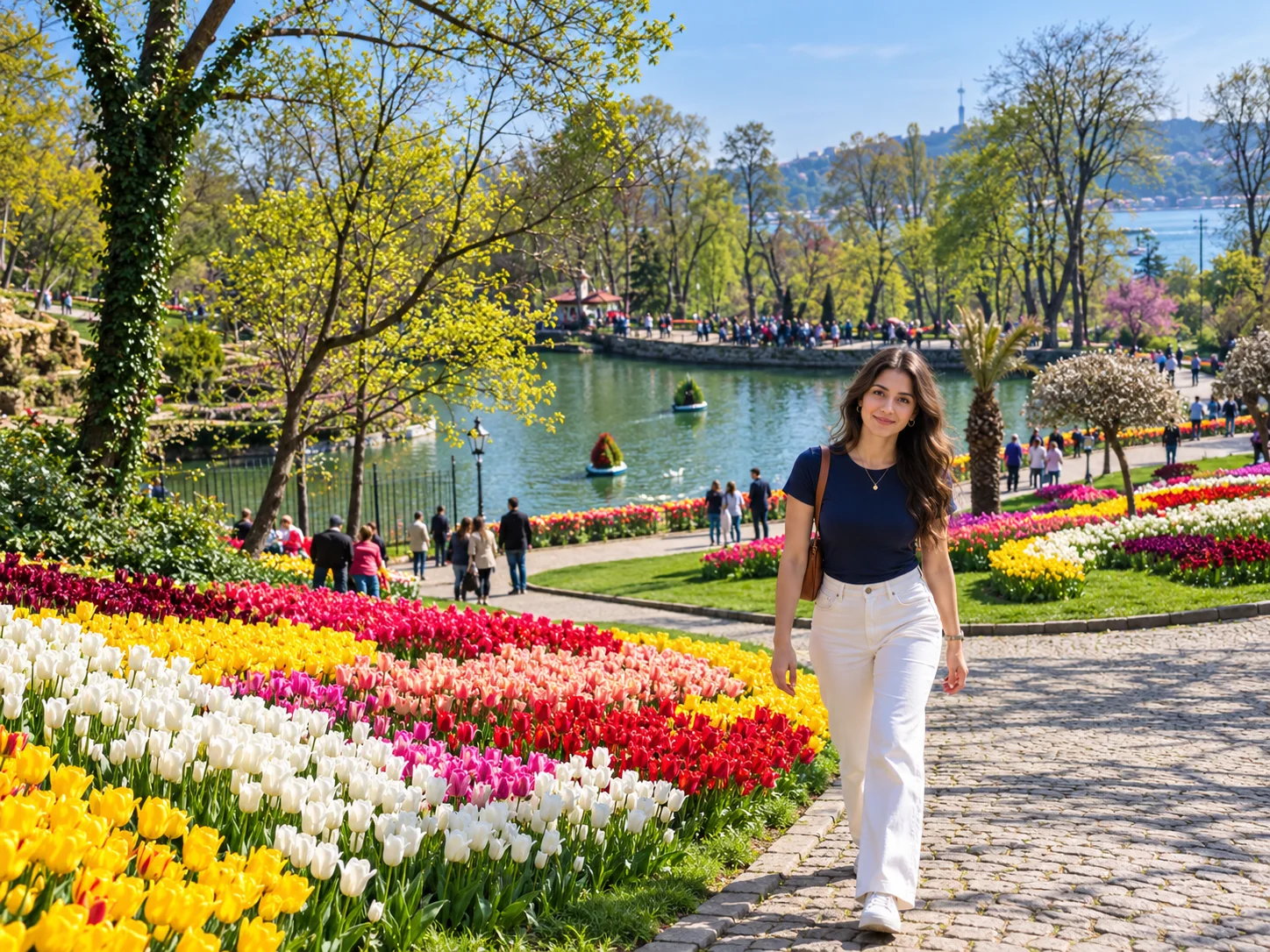
The name Emirgan derives from Emirgüneoğlu Yusuf Pasha, a Safavid Persian prince who received this Bosphorus hillside as a personal gift from Ottoman Sultan Murad IV in the 17th century, following a period of diplomatic residence in Istanbul. For two centuries the grove remained an aristocratic estate passed between Ottoman nobles and foreign dignitaries.
The estate's defining transformation came in the 19th century when the land came into the possession of Khedive Ismail Pasha of Egypt, the Ottoman-appointed viceroy of Egypt, who commissioned three ornate wooden pavilions — Sarı Köşk, Pembe Köşk and Beyaz Köşk — in the 1870s and 1880s as summer residences and entertaining spaces. He surrounded them with formal gardens, ornamental ponds and terraced promenades.
After the fall of the Ottoman Empire the estate was nationalised and eventually transferred to Istanbul Municipality (İBB), which opened it to the public as a free city park. Today Beltur, the municipality's hospitality company, operates the three pavilions as restaurants and event venues. The park's ancient plane trees — some protected specimens with trunk circumferences exceeding five metres — are a living archive of this four-century history.
Istanbul Tulip Festival — Emirgan's Annual April Spectacle
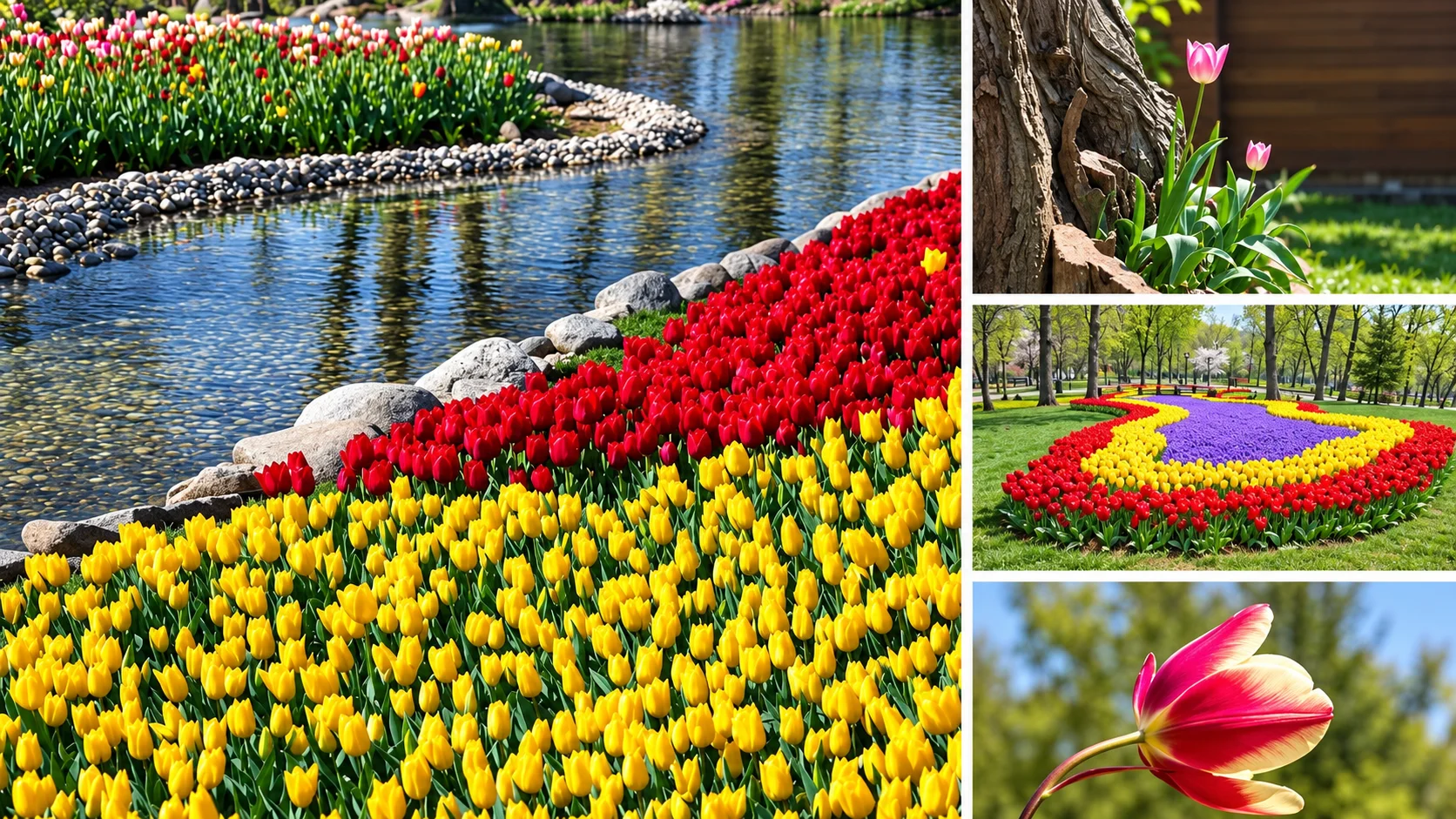
Every April Istanbul celebrates the İstanbul Lale Festivali (Istanbul Tulip Festival), a city-wide event that places tens of millions of tulip bulbs in parks, squares and roadsides across the metropolis. Emirgan Korusu is the festival's undisputed centrepiece: between 500,000 and one million tulips in dozens of varieties — from deep burgundy Rembrandt tulips to pure white singles, candy-striped Triumphs and extravagant parrot tulips — are planted in geometric beds across the park's main terraces and central meadows.
The tulip carries deep symbolism in Ottoman and Turkish culture; it was the emblem of the Lale Devri (Tulip Era) under Sultan Ahmed III in the early 18th century — a period of prosperity and artistic flourishing — and the stylised tulip motif remains ubiquitous in Turkish ceramics, architecture and textile arts to this day.
Peak bloom typically falls in the second or third week of April, though the exact timing shifts by a week or more depending on winter temperatures. The park is extremely crowded at weekends during the festival; arriving before 09:00 or visiting on a weekday gives the best combination of light for photography, space and calm. Admission remains free throughout the entire festival period.
The Three Pavilions of Emirgan Grove
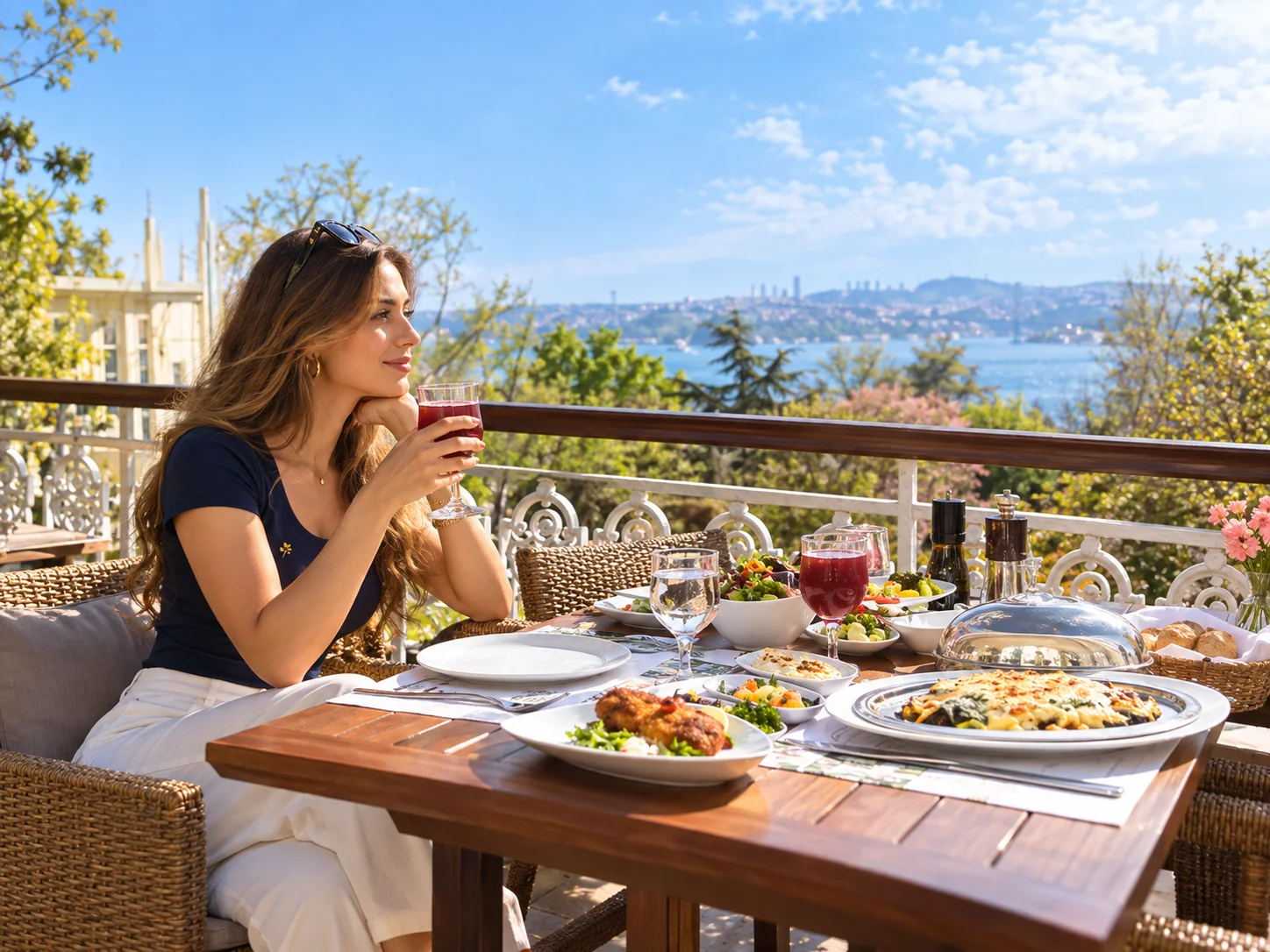
Three ornate 19th-century pavilions commissioned by Khedive Ismail Pasha define the architectural character of Emirgan Grove. Each has been meticulously restored and is operated by Beltur as a dining or events venue:
- Sarı Köşk (Yellow Pavilion) — the grandest of the three, positioned at the park's highest point with a sweeping terrace overlooking the Bosphorus. Serves full Turkish breakfast every morning and à la carte lunch and dinner. The Sunday morning breakfast at Sarı Köşk is an established Istanbul institution; reservations are strongly advised at weekends.
- Pembe Köşk (Pink Pavilion) — a charming mid-park pavilion set among the densest tulip plantings. Used primarily for private events, weddings and corporate functions, though its surrounding gardens are freely accessible to all visitors year-round. The rose-tinted exterior is among the most photographed subjects in the park.
- Beyaz Köşk (White Pavilion) — the smallest and most relaxed of the three, near the lower park entrance. Operates as a café and light-meals restaurant — the ideal first stop for coffee and pastries before exploring the grounds.
Ornamental Ponds, Squirrels and Wildlife
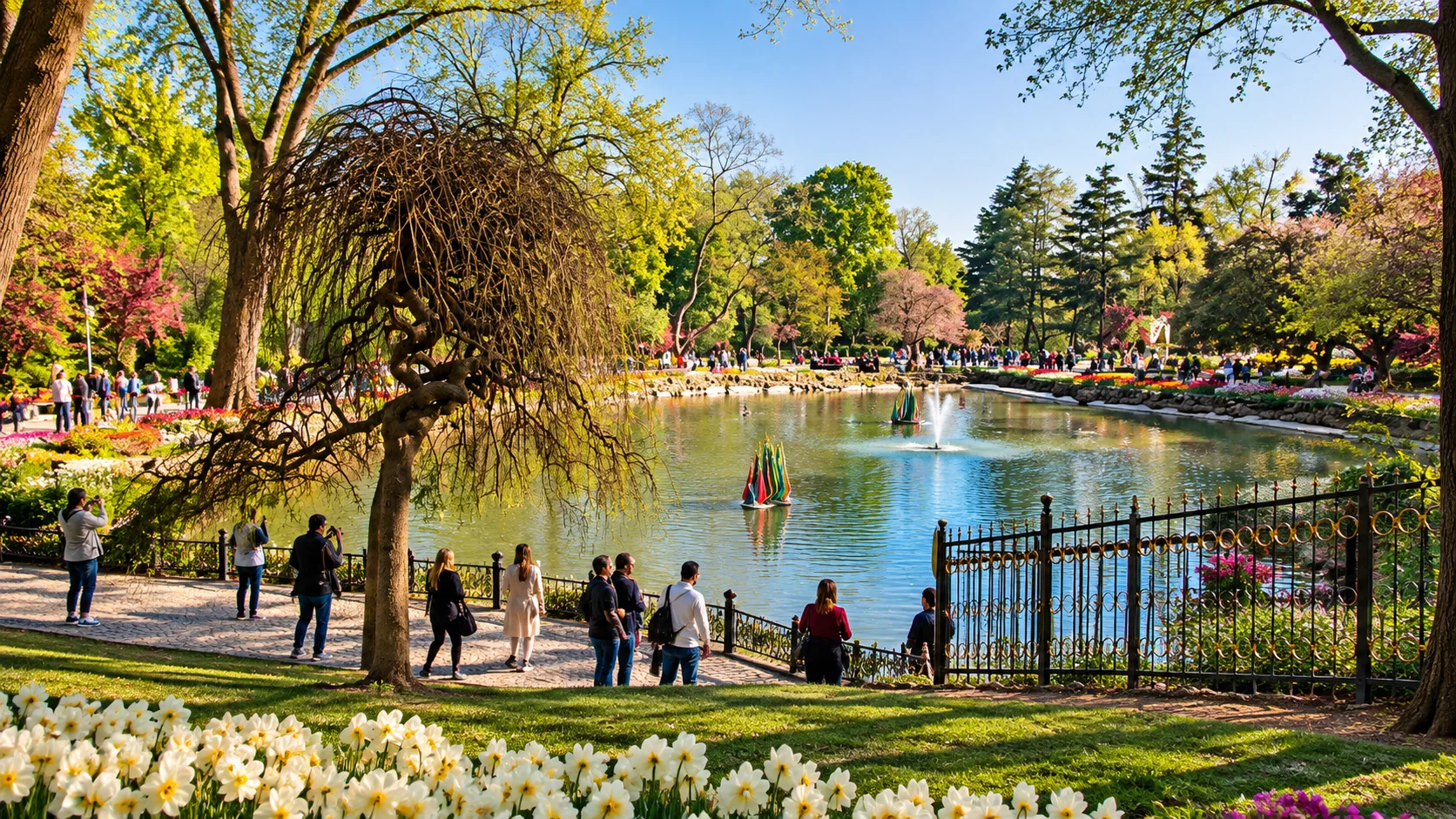
Several ornamental ponds scattered through the lower and middle sections of the park provide a tranquil counterpoint to the colourful flower beds. Stocked with ornamental carp and edged by weeping willows and seasonal flowering shrubs, the ponds attract mallard ducks, moorhens and — during the autumn and spring migration seasons — a variety of wading birds. The ponds are fenced at the edges, making them safe for young children.
Emirgan is famous throughout Istanbul for its resident squirrel population. The grey and red squirrels that inhabit the old plane trees have grown accustomed to visitors and frequently descend to investigate those carrying food — a reliable delight for children. Feeding is common but the park administration asks visitors to avoid offering unsuitable scraps.
Birdwatching is rewarding in all seasons. The grove's position on the European Bosphorus slope places it directly on a major raptor migration corridor; honey buzzards, lesser spotted eagles and black kites can be observed soaring on thermals above the upper woodland in August and September, sometimes in flocks of thousands.
Picnics, Walking Trails and Family Activities
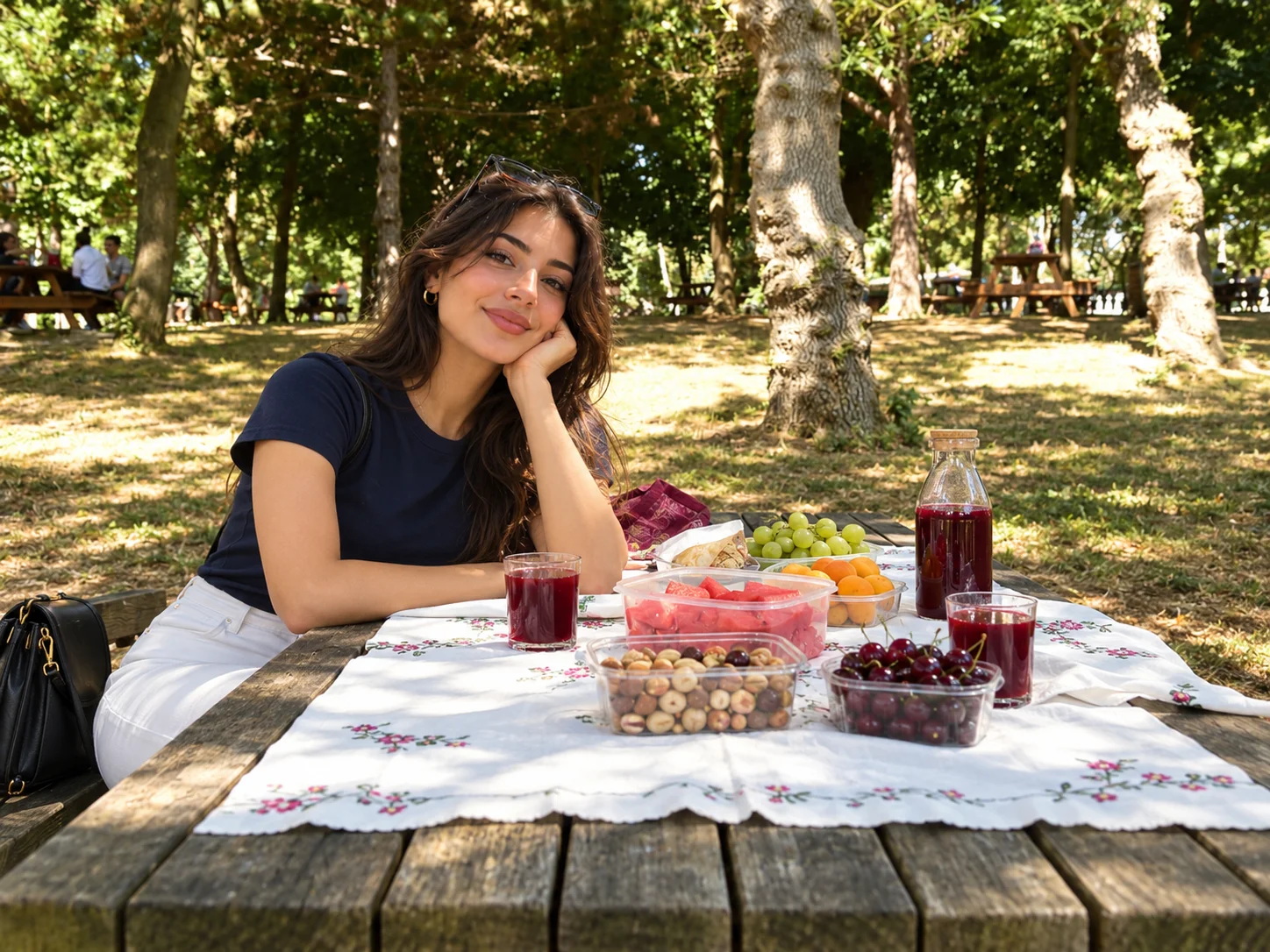
Emirgan Korusu is one of the most relaxed parks in Istanbul for picnicking: spreading a blanket on the central meadow or the shaded upper terraces is actively welcomed and widely practised by locals, especially at weekends and on public holidays. Bring food, cold drinks and a rug. One firm rule applies: open fire and barbecue (mangal) are strictly prohibited anywhere in the park — this is consistently and visibly enforced.
The main walking circuit — lower gardens, ponds, Pembe Köşk, Beyaz Köşk, up to Sarı Köşk and back via the forest trail — takes around 60–90 minutes at an unhurried pace. Wear shoes with grip on gravel paths, which can be slippery after rain. A children's playground with swings and climbing frames sits near the lower entrance gate. Pushchairs are manageable on the paved paths, though the upper woodland trails are uneven.
Dogs on leads are welcome. Cycling on paths is discouraged. Toilet facilities are located near each of the three pavilions, and drinking-water fountains are placed at regular intervals along the main paths.
Getting to Emirgan Grove by Public Transport
The simplest public-transport route is by bus from Beşiktaş. Lines 40, 42 and 42T depart from Beşiktaş İskelesi (ferry pier) and run northward along the Bosphorus shore road, stopping at the Emirgan park entrance (stop name: Emirgan). Journey time from Beşiktaş is approximately 20–25 minutes. From Taksim Square, take the M12 metro to Beşiktaş (3 stops), then board the 40/42 bus.
A limited ferry service (Şehir Hatları) calls at Emirgan pier on selected weekday commuter sailings. Check the current Şehir Hatları or İDO timetable before planning a leisure visit by ferry — the route does not run frequently enough for reliable leisure use.
Emirgan Grove is not directly served by the Istanbul Metro. The nearest metro station is Ayazağa (M2 line, İTÜ-Ayazağa), which is several kilometres west — a bus or taxi connection is still needed from there, making the direct bus from Beşiktaş the easier option in almost all cases.
By private transfer: a car with driver from Cab Istanbul collects you from any hotel, Airbnb or ferry terminal and drops you at the park entrance. Particularly convenient with children, picnic gear or elderly family members. Combine a morning in Emirgan with an afternoon Bosphorus dinner cruise for a complete Bosphorus day.
Visitor Essentials
| Detail | Information |
|---|---|
| Entry | Free — no ticket required |
| Opening hours | Daily approx. 07:00–22:00 |
| Location | Emirgan Mahallesi, Sarıyer, Istanbul (European side) |
| Bus lines | 40, 42, 42T — stop: Emirgan (from Beşiktaş) |
| Parking | İSPARK on-site (paid) |
| Pavilion dining | Sarı Köşk (restaurant), Beyaz Köşk (café), Pembe Köşk (events) |
| BBQ / mangal | Strictly not permitted |
| Picnics | Permitted on all grass areas |
| Tulip Festival | Typically 2nd–3rd week of April (free entry) |
| Sakıp Sabancı Museum | ~1.5 km south along Bosphorus shore road |
| Rumeli Hisarı | ~2.5 km north along shore road |