
Bursa: The Ottoman Empire's First Capital
Few Turkish cities carry as much historical weight as Bursa. Long before Istanbul became the imperial seat, Bursa served as the cradle of the Ottoman state — the city where sultans were buried, where the külliye system of mosque complexes was perfected, and where Ottoman architecture first found its monumental voice. Today, that legacy survives in more than a dozen UNESCO-listed components spread across hills, valleys and a medieval bazaar quarter that still trades silk.
The city's history begins well before the Ottomans. Bursa was founded around 185 BC as Prusa ad Olympum by Bithynian King Prusias I, reportedly on the advice of the Carthaginian general Hannibal, who had taken refuge at the Bithynian court. The name shortened over centuries — Prusa became Bursa — as Romans, Byzantines and finally Ottomans each left their mark on the hilltop citadel and surrounding plains.
Orhan Gazi, son of the dynasty's founder Osman Gazi, took Bursa on 6 April 1326 after a ten-year siege. The city functioned as the de facto seat of the expanding Ottoman state for roughly four decades, before Adrianople (Edirne) and later Constantinople succeeded it. During those decades Orhan and his successors built the first Ottoman külliye complexes — multi-building religious and civic foundations that would define Islamic urban architecture across the next five centuries. In 2014, UNESCO inscribed six of these complexes plus Cumalıkızık village under the title "Bursa and Cumalıkızık: the Birth of the Ottoman Empire."
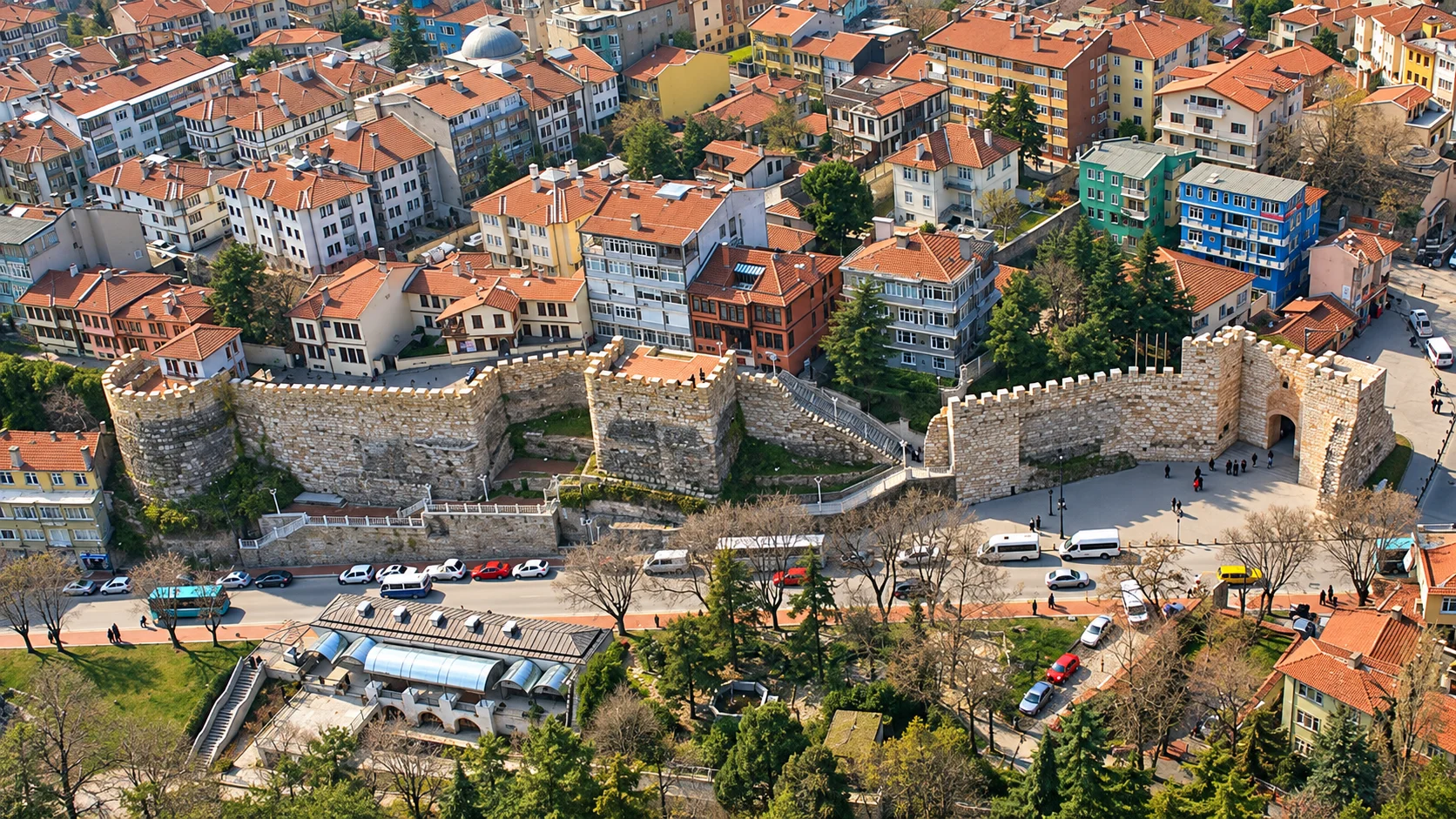
Bursa Citadel (Bursa Kalesi) and the Hisar District
The great walled citadel rising above central Bursa predates every Ottoman monument in the city. Its origins trace to Prusias I's foundation around 185 BC, built on a naturally defensible plateau above the Gökdere valley. The Romans incorporated it into their provincial infrastructure; the Byzantines strengthened it repeatedly, and the walls visible today largely date from extensive repairs carried out in the 3rd century AD following Gothic raids along the Anatolian frontier.
The circuit of walls runs approximately 2 kilometres and was once pierced by five gates, though only fragments of the gateways survive. Inside, the Hisar (inner citadel) district retains a cluster of Ottoman-era timber houses, narrow lanes and two of Bursa's most significant tombs — those of Osman and Orhan Gazi. Orhan Gazi himself reinforced the walls after the 1326 conquest and built the first Ottoman religious structures within the citadel precinct. The views from the citadel walls across the city toward Uludağ are among the finest in northwestern Turkey.
The UNESCO inscription includes Bursa Kalesi as part of the broader "Birth of the Ottoman Empire" property. Walking the rampart paths takes about 30–45 minutes; combine it with a visit to Tophane Park immediately below for a natural half-day circuit.
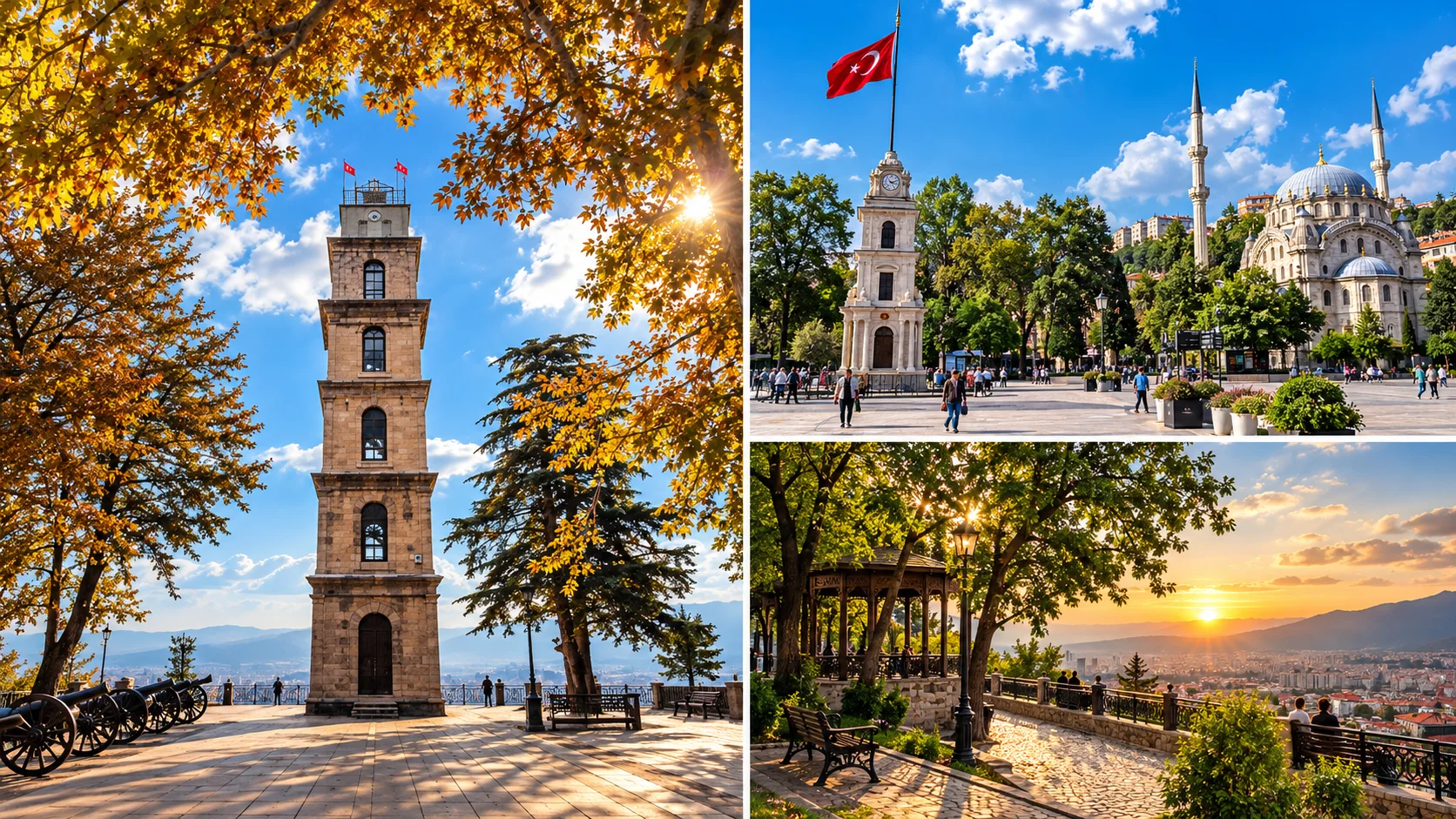
Tophane Park and the Clock Tower (Saat Kulesi)
Just below the citadel walls, Tophane Park occupies the site of an Ottoman cannon foundry — tophane means "cannon house" — that supplied artillery to the imperial armies from the 15th century onward. Today the park is a pleasant shaded terrace with tea gardens, city panoramas and one of Bursa's most photographed landmarks: the Clock Tower (Saat Kulesi).
The Clock Tower was built between 1904 and 1905, commissioned to celebrate Sultan Abdülhamid II's 29th year on the throne. This is a detail often misreported: older sources sometimes attributed it to a French architect in the early 19th century — both claims are incorrect. The tower is a late Ottoman structure in the eclectic style typical of Abdülhamid's reign, combining stone masonry with decorative ironwork. The clock mechanism, imported from Europe, still functions.
Tophane is a natural starting point for any walking tour of central Bursa. The park connects directly to the Osman and Orhan Gazi tomb enclosure, and the descent from the citadel terrace toward the Ulu Camii and Hanlar Bölgesi takes around 15 minutes on foot through old stone lanes.
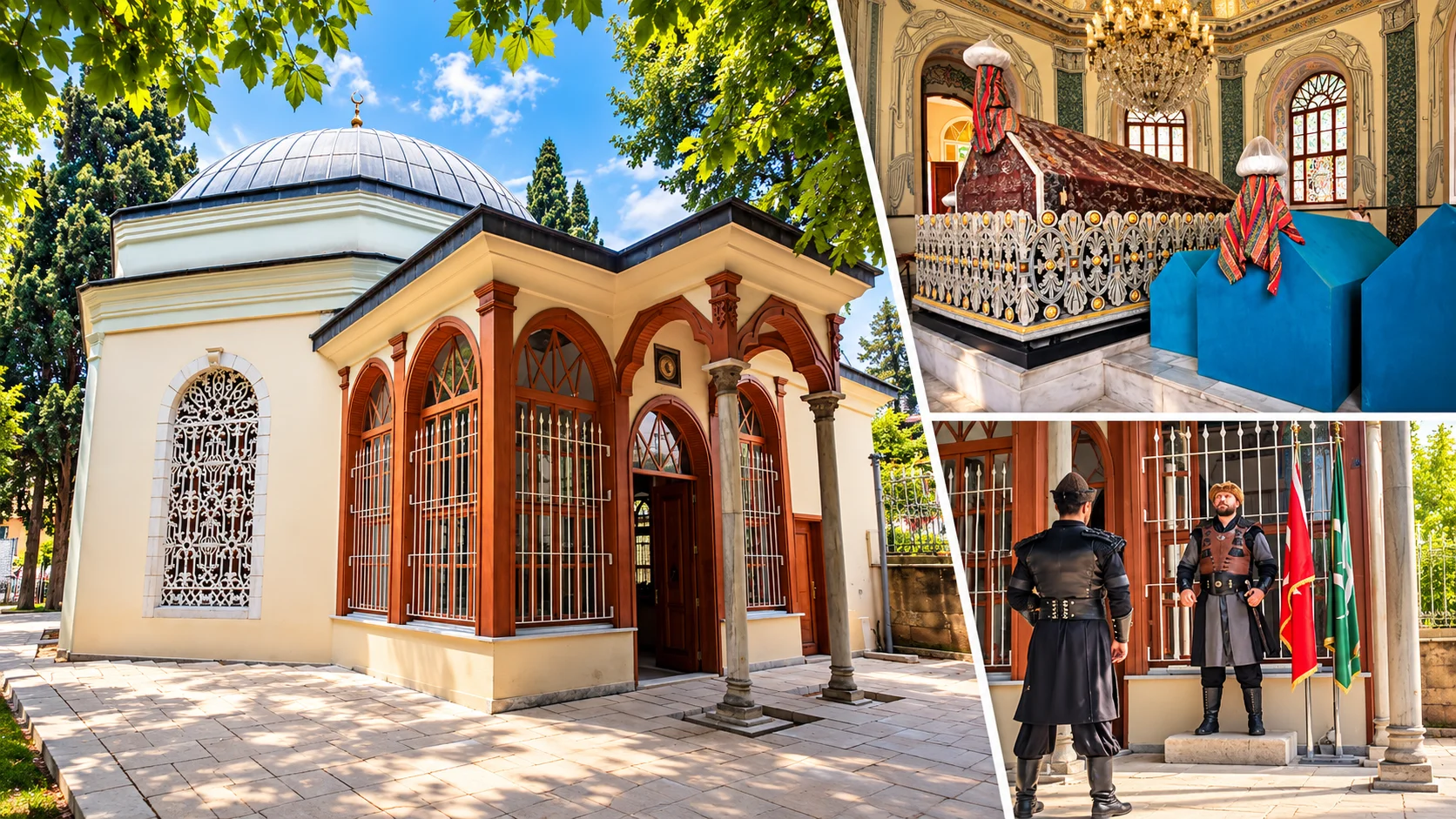
Osman Gazi and Orhan Gazi Mausoleums
Both of the Ottoman dynasty's founding figures — Osman Gazi and his son Orhan Gazi — are buried in Tophane, within the same walled tomb garden. This is a point of frequent confusion: some older guidebooks place Orhan Gazi's tomb in the Altıparmak neighbourhood, which is incorrect. Both tombs are side by side in the Tophane district, part of the UNESCO inscription.
Osman Gazi died in 1326 near Söğüt, just as Bursa fell to his forces — he never entered the city he had spent years besieging. His son Orhan Gazi had him transferred to Bursa and interred in a Byzantine baptistery that he converted into a mausoleum. Orhan himself was later buried alongside his father. The original structures were destroyed in the great earthquake of 1855, and Sultan Abdülaziz commissioned new marble mausoleums in 1863, which are the structures visitors see today.
Entry to both tombs is free, and the garden around them is open throughout the day. The site is considered sacred and draws both pilgrims and visitors; modest dress is appropriate. The enclosure offers elevated views over the city and is a quiet, contemplative place away from the bazaar crowds below.
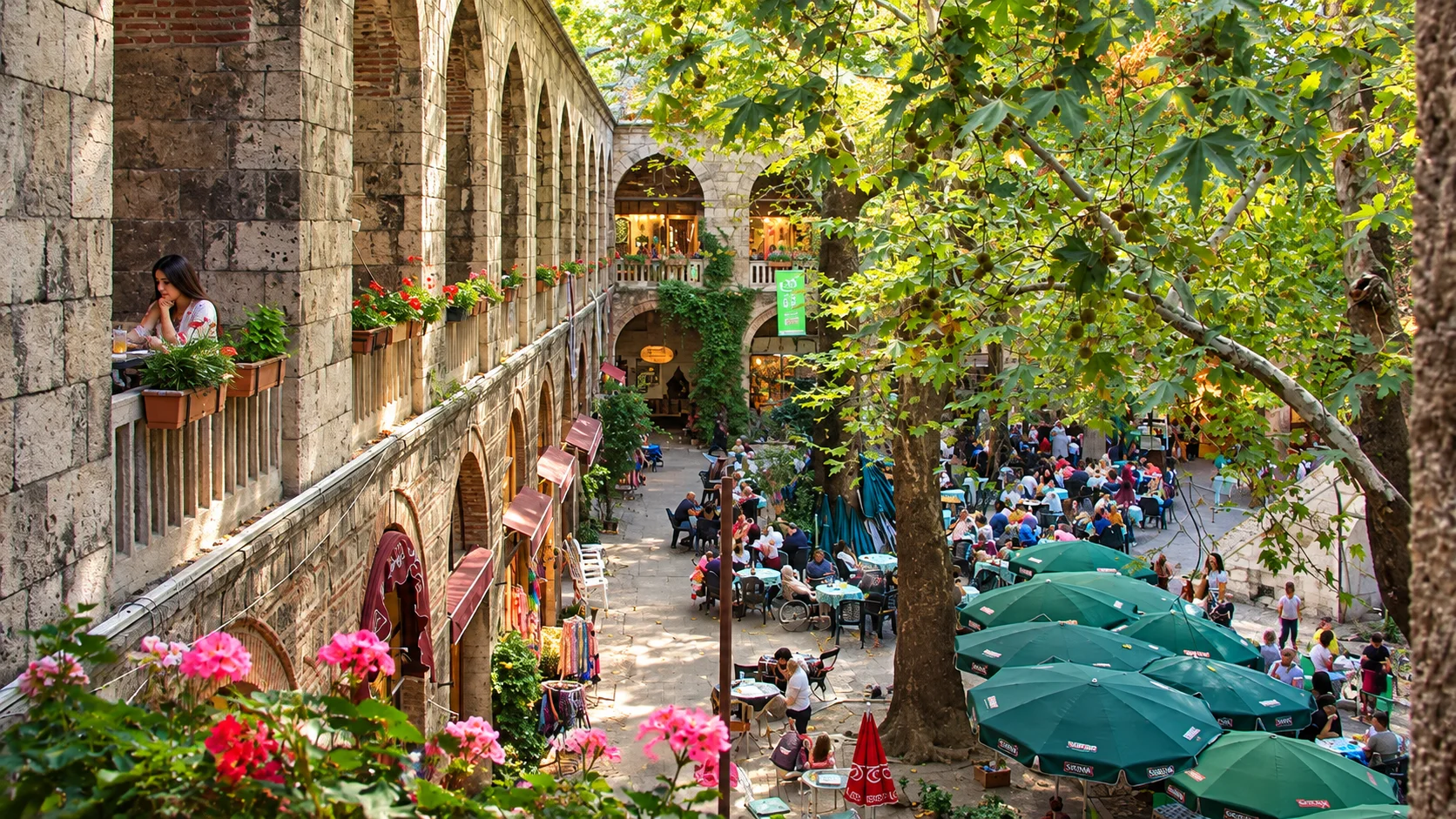
Hanlar Bölgesi: The Ottoman Commercial Quarter
The cluster of hans (caravanserais), mosques and bazaars stretching north and northwest of the Ulu Camii forms one of the best-preserved medieval Islamic commercial quarters in the world. Known collectively as the Hanlar Bölgesi, this district was established by Orhan Gazi in the 14th century and expanded by successive sultans, each adding a new han or mosque to fund pious foundations through rental income. The UNESCO inscription covers this area as the Orhan Gazi Külliyesi and Hanlar complex.
The Great Mosque (Ulu Camii) anchors the quarter. Built 1396–1399 by Sultan Yıldırım Bayezid I following his victory at the Battle of Nicopolis, it is one of the largest mosques of the early Ottoman period, featuring 20 domes and a two-tiered fountain (şadırvan) inside the prayer hall — an unusual arrangement. The mosque's 192 calligraphic panels are a celebrated collection of Ottoman Islamic art. For a deeper look at Bursa's mosques, see our Bursa mosques guide.
Beyond the Ulu Camii, the district contains Orhan Gazi Camii (one of the earliest surviving Ottoman mosques), Fidan Han, Emir Han, İpek Han, Pirinç Han and Geyve Han — a succession of courtyard caravanserais that once hosted merchants from across the medieval trade world. Walking through their stone arcades on a weekday morning, when traders are arranging goods and the call to prayer echoes between walls, gives a vivid sense of the district's seven centuries of continuous commercial life.
Koza Han and Bursa's Silk History
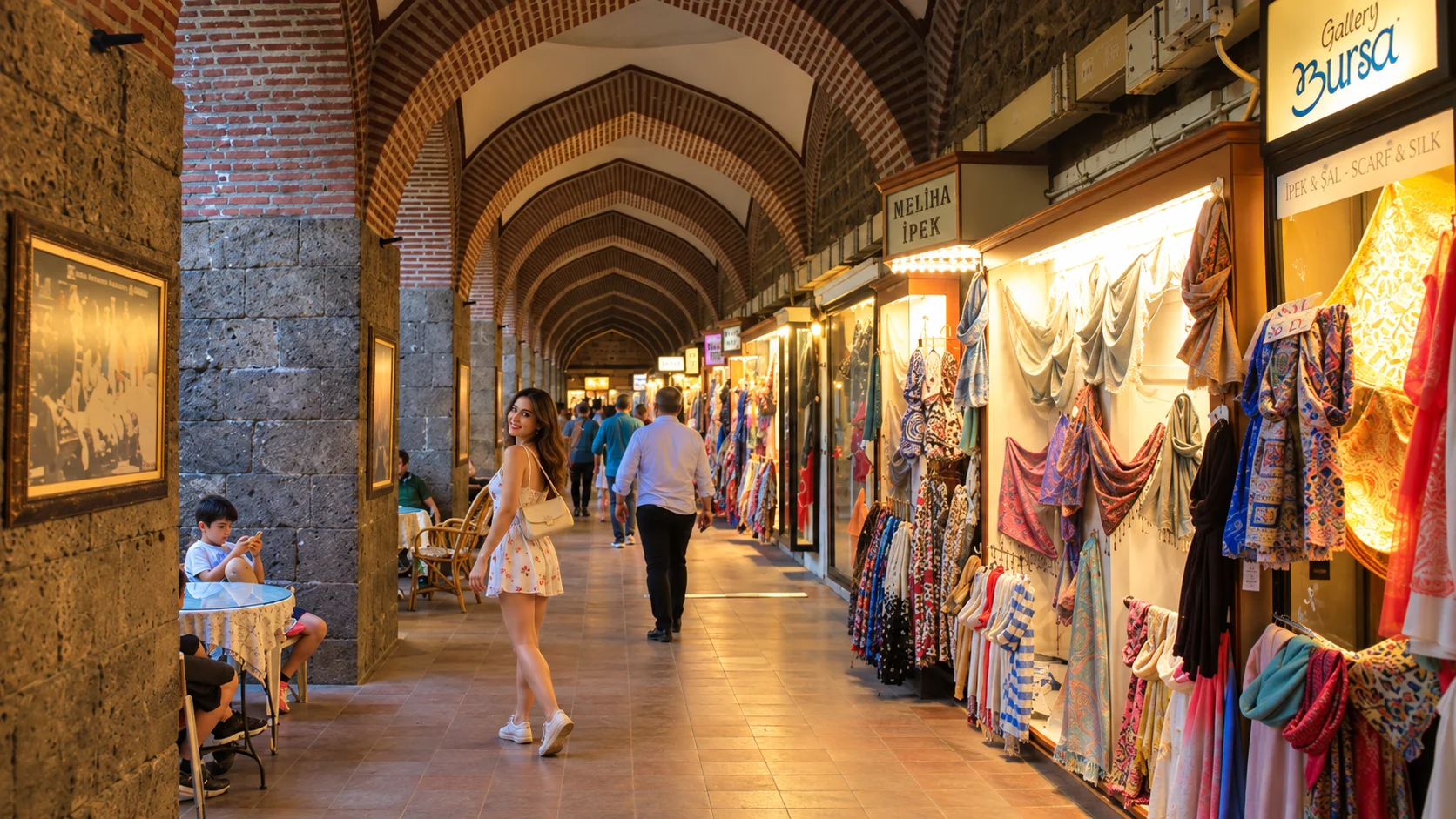
Among all the hans in Bursa's commercial quarter, Koza Han stands apart — architecturally, historically and commercially. Construction began in 1490 and the han opened in 1491, built by order of Sultan Bayezid II. The architect was Abdul Ula Bin Pulad Shah, and the revenues generated by the han were specifically designated to fund Bayezid II's imaret (charitable kitchen complex) in Istanbul. The name tells the story: koza means silkworm cocoon, and from its opening until well into the 20th century, Koza Han was the principal marketplace for trading raw silk cocoons produced in the Bursa hinterland.
The building is a two-storey structure arranged around a large open courtyard with a small Ottoman mescit (prayer room) at its centre. The ground floor rooms served as storage vaults; the upper floor rooms were used as merchants' lodgings. The courtyard's fountain and its central mescit make it one of the most harmonious commercial spaces in Ottoman architecture. Today the upper arcade is lined with shops selling silk scarves, textiles, gold and silver jewellery, and Turkish delight — the trade in finished silk goods continues where the raw cocoon trade left off.
The broader Hanlar district includes several other hans worth exploring: Fidan Han immediately to the north, the larger Emir Han, İpek Han (silk han), Pirinç Han and Geyve Han. Each has a distinct character and history, but together they constitute a remarkably complete example of medieval Ottoman commercial urbanism. Plan at least 45–60 minutes for the district as a whole.
Bursa Covered Bazaar (Kapalı Çarşı)
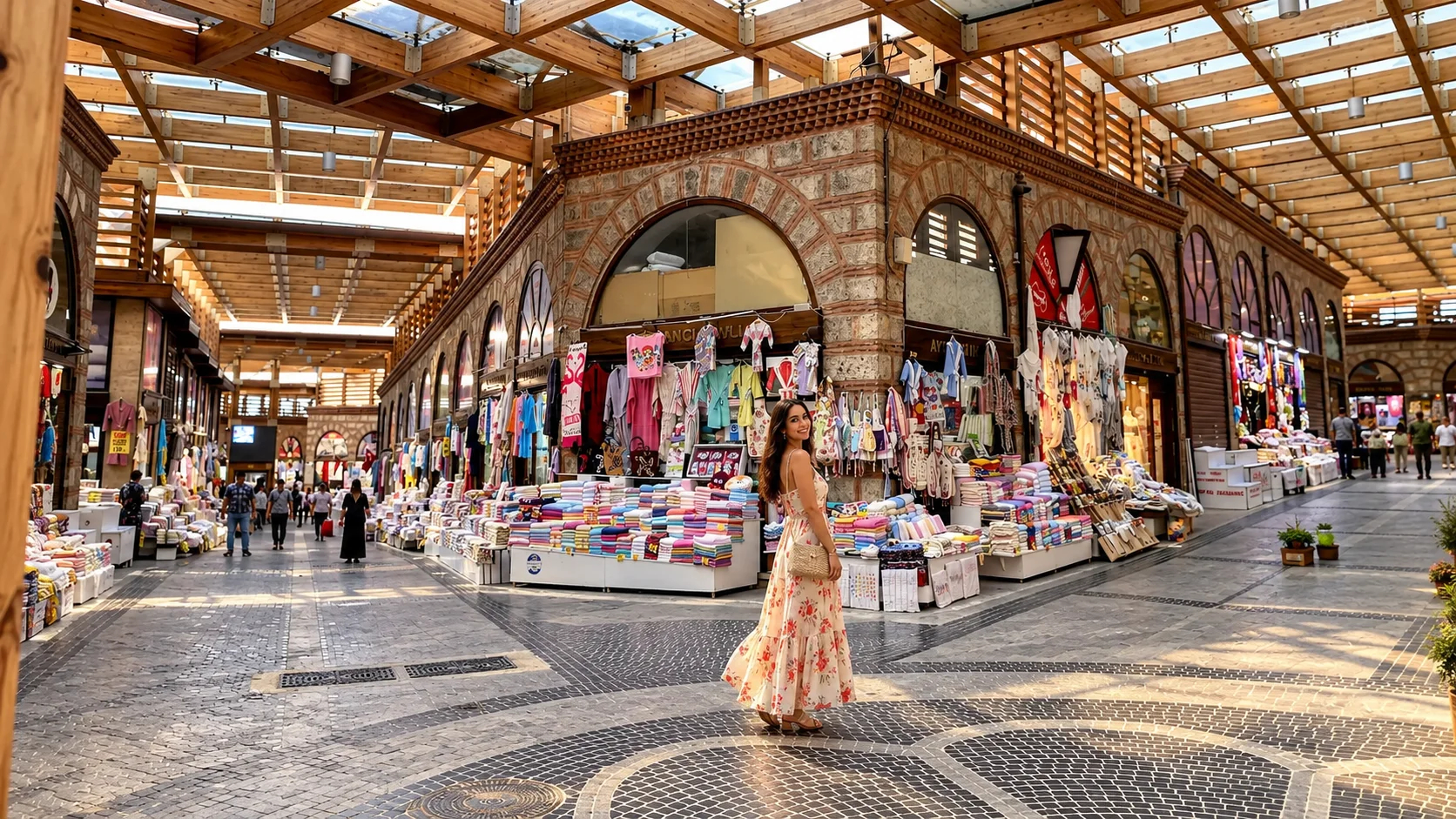
Bursa's Kapalı Çarşı is not Istanbul's Grand Bazaar — it is older, smaller and in many ways more authentically connected to a single trade: silk. The covered bazaar evolved around the Bedesten, the central lockable warehouse built to secure the most valuable goods in the market. The Bedesten at its core dates to the early Ottoman period, and the surrounding bazaar expanded organically over subsequent centuries as Bursa's textile and silk trade grew.
Inside, the vaulted lanes trade in textiles, silk fabrics, gold and silver jewellery, spices and dried goods. The atmosphere is noticeably different from Istanbul's tourist-oriented bazaars: a significant proportion of the customers are local residents shopping for household goods, fabric and goldwork for weddings. The bazaar has survived fires and reconstruction through its history, though the current structure preserves the medieval street plan and the Bedesten's original footprint.
The Kapalı Çarşı connects directly to Koza Han via a short covered passage, and the two together form the commercial heart of historic Bursa. Most shops open around 9am and close around 6–7pm; the bazaar is closed on Sundays.
Irgandı Bridge (Irgandı Köprüsü)
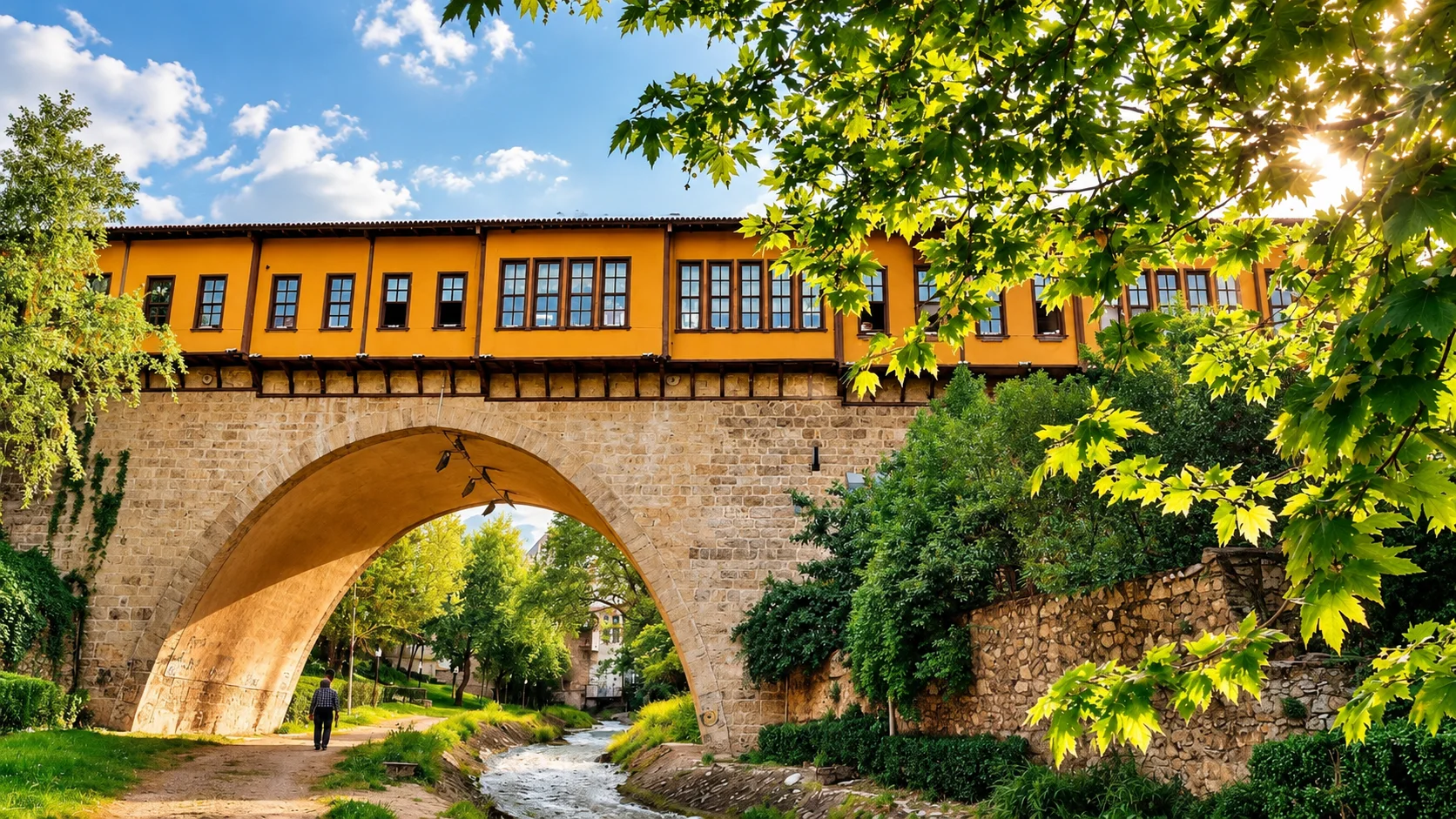
Irgandı Bridge is one of Bursa's most distinctive landmarks and one of the most historically significant medieval bridges in Turkey. Built in 1442, it crosses the Gökdere stream (also known as the Uludağ stream) on the eastern approach to the bazaar quarter. What makes it remarkable is not only its age but its form: the bridge carries a row of shops along both sides of its span, making it one of only four surviving shop-lined bridges in the world — the others being Ponte Vecchio in Florence, Rialto in Venice, and the Osma Bridge.
A critical historical correction is needed here: the bridge was not commissioned by Sultan II. Murad, as some older sources claim. It was commissioned by Hoca Muslihiddin, son of Irgandılı Ali, a prosperous silk merchant from the Irgandı family. The architect was Timurtaş, son of Abdullah. The bridge's name comes from the merchant family, not from a geographic feature. This private patronage — a wealthy merchant rather than a sultan funding a major public structure — illustrates the commercial vitality of 15th-century Bursa.
The bridge was substantially restored in the early 2000s after centuries of deterioration. Today its shops house artisan workshops: woodcarvers, miniaturists, jewellers, textile artists and calligraphers occupy the small vaulted units. It is one of the most pleasant short walks in Bursa, particularly in the morning when workshops open and the stream below glints between the arches.
Yeşil Camii and the Yeşil Complex
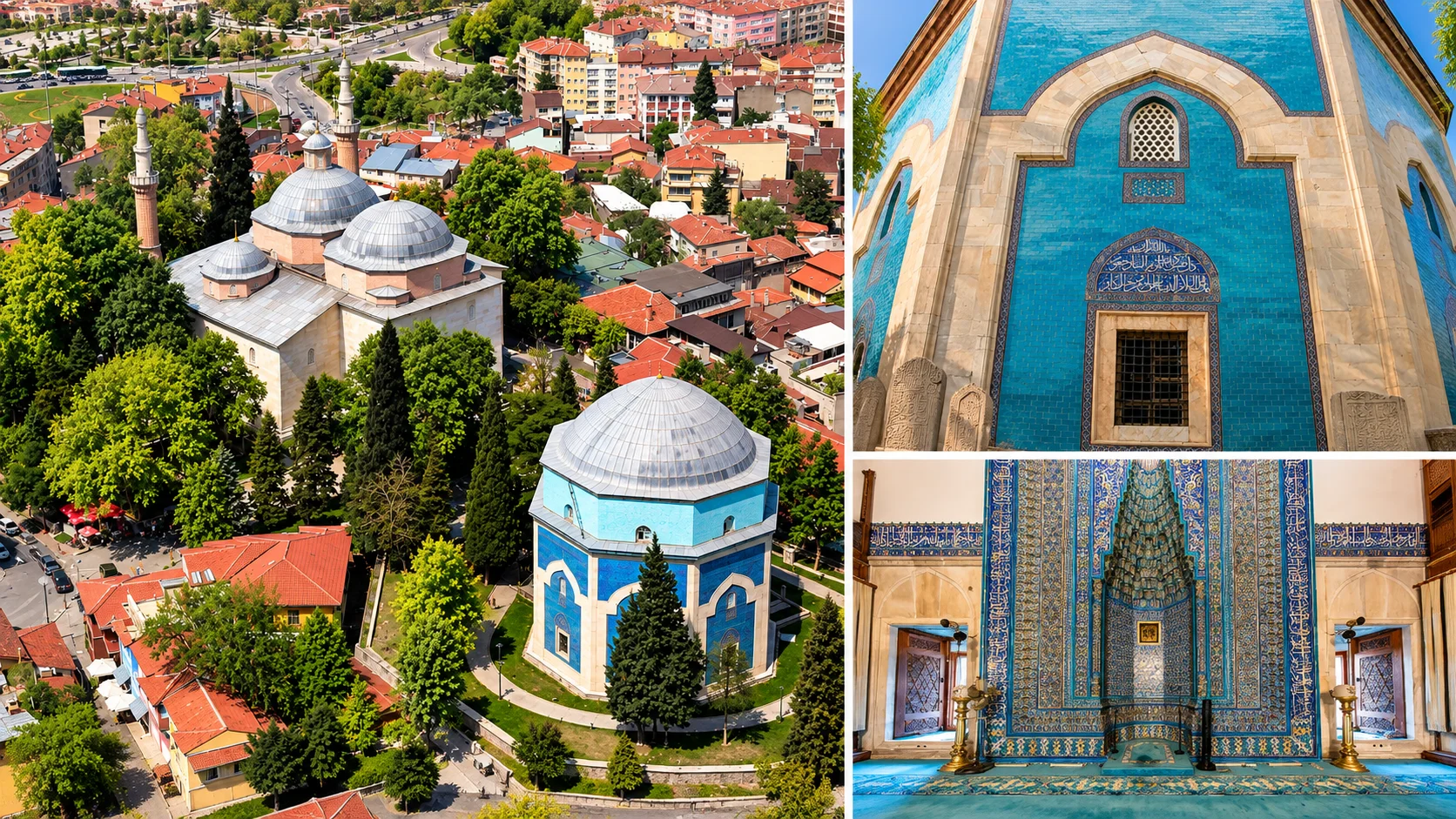
The Yeşil Külliye — comprising the Green Mosque, Green Tomb and a medrese — stands on a hillside in the Yıldırım district of Bursa, east of the main bazaar quarter. It was commissioned by Sultan Mehmed I (known as Çelebi Sultan Mehmed), the ruler who reunified the Ottoman state after the interregnum caused by Timur's invasion. The mosque was completed in 1419, with the architect Hacı İvaz Paşa overseeing construction. The name "Yeşil" (Green) refers to the extraordinary turquoise İznik tiles that cover the interior walls and the exterior of the tomb — colours that remain vivid after six centuries.
A crucial factual point: the Yeşil Türbe (Green Tomb) is the mausoleum of Sultan Mehmed I, not Yıldırım Bayezid I. This confusion appears frequently in travel writing. Yıldırım Bayezid died in Akşehir in 1403, a prisoner of Timur, and is buried in the Yıldırım Külliye complex also in Bursa. The Yeşil Türbe's octagonal form, tiled interior and royal sarcophagi are among the most beautiful examples of early Ottoman funerary architecture. The medrese (theological school) adjacent to the mosque now operates as the Türk-İslam Eserleri Müzesi (Museum of Turkish and Islamic Arts) and charges a modest admission fee.
The complex is a UNESCO World Heritage component and one of the must-visit sites in Bursa. Allow 30–45 minutes for the mosque and tomb together, and additional time for the museum. For more on Bursa's mosque architecture, see our complete guide to Bursa mosques.
Muradiye, Hüdavendigâr and Yıldırım Külliyeleri
Three further UNESCO-listed külliye complexes round out Bursa's Ottoman heritage portfolio, each representing a distinct sultan and a distinct phase of early Ottoman architecture.
Muradiye Külliyesi was built between 1424 and 1426 by Sultan II. Murad — it is a 15th-century complex, not a 14th-century one as older sources sometimes state. The complex is famed above all for its tombs: twelve royal mausoleums are grouped in the walled garden, containing the remains of princes, sultans' sons and consorts. Among the most visited is the tomb of Cem Sultan, the tragic prince who sought refuge in Europe and died in exile. Equally moving is the tomb of Sultan II. Murad himself, which features an open oculus in the roof — the sultan reportedly requested this so that rain would fall directly onto his grave, a gesture of humility unusual for an imperial burial. The complex is in the Muradiye neighbourhood, a 10-minute taxi ride west of the bazaar quarter.
Hüdavendigâr Külliyesi stands in the Çekirge district and is architecturally unique in the Ottoman world. Built c. 1365–1390 by Sultan I. Murad — whose honorific title was Hüdavendigâr, meaning "sovereign lord" — the complex's mosque and medrese occupy the same two-storey building, with the mosque on the ground floor and the medrese cells arranged on the upper floor. This combined mosque-medrese arrangement has no direct parallel in later Ottoman architecture. A frequent error in older texts is the claim that Hüdavendigâr was an epithet of Osman Gazi — this is completely wrong. It belonged to Sultan I. Murad, the third Ottoman ruler.
Yıldırım Külliyesi was built 1390–1395 by Sultan Yıldırım Bayezid I in the district that now bears his name. The complex includes a mosque, medrese and darüşşifa (hospital). Yıldırım Bayezid I is also buried here, in a mausoleum within the complex grounds. Despite his short and turbulent reign — ending in defeat and captivity after the Battle of Ankara (1402) — Yıldırım Bayezid was a significant builder, responsible also for the Ulu Camii in the city centre. All three complexes are UNESCO World Heritage components.
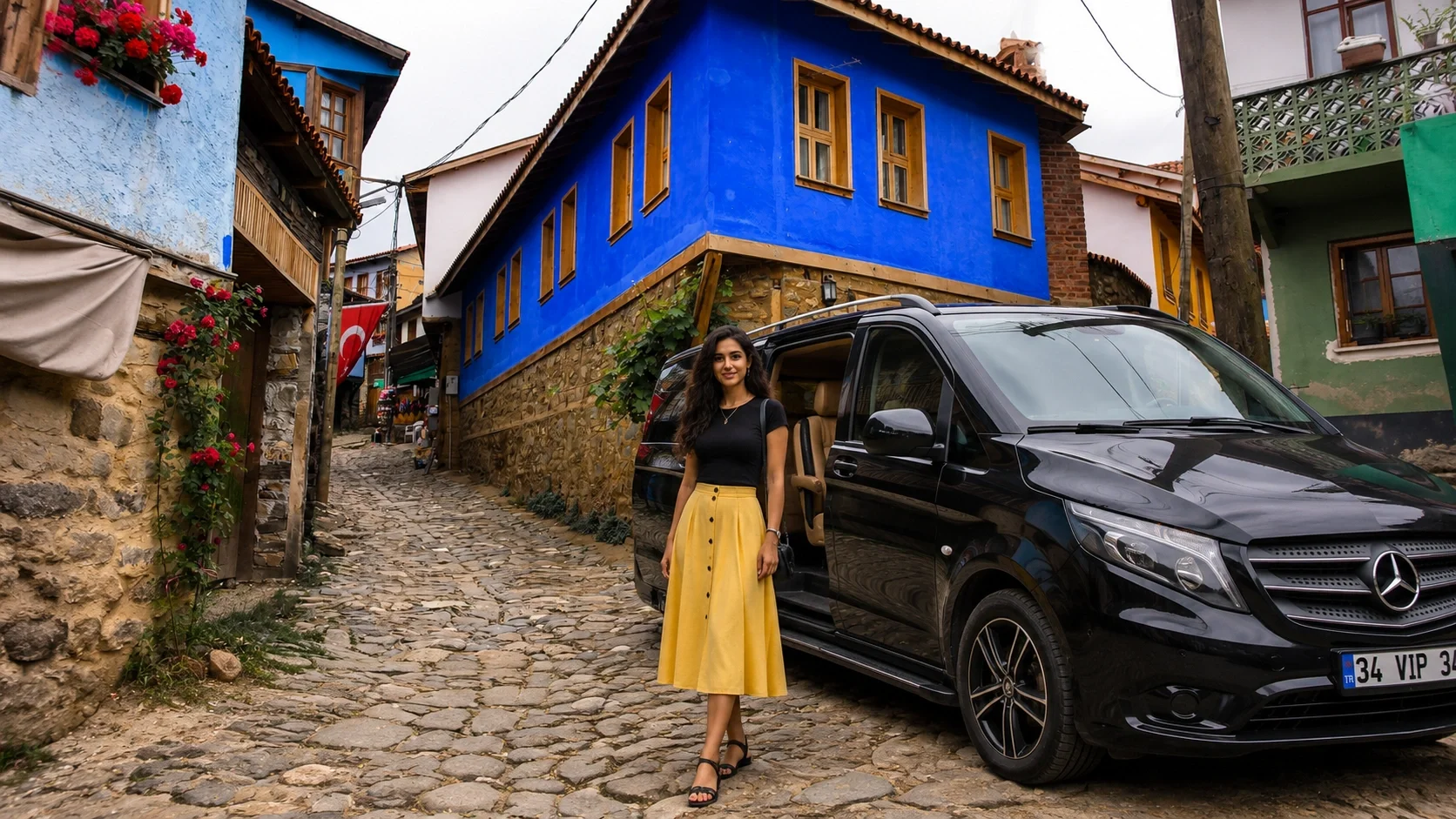
Cumalıkızık: UNESCO Ottoman Village
About 7 kilometres east of Bursa's historic centre lies Cumalıkızık, one of the oldest continuously inhabited Ottoman settlements in Turkey and a UNESCO World Heritage site since 2014. The village was founded in the early 14th century — around the same time Orhan Gazi was establishing Bursa as the Ottoman seat — and its layout, building typology and street pattern have remained largely unchanged for seven centuries. The UNESCO inscription recognises it as an exemplary survival of Ottoman rural settlement planning.
Arriving in Cumalıkızık is an immediate step back in time. The narrow cobblestone lanes, too tight for modern vehicles, are flanked by stone-and-timber houses with projecting upper storeys (cumba) in the classic Ottoman vernacular style. Many houses retain their original wooden doors, window lattices and external staircases. Approximately 270 of the original structures survive in good condition. The village has a functioning community: residents keep gardens, raise animals and run small tea houses and breakfast cafes in ground-floor rooms of historic houses.
The village has become one of Bursa's most popular day-trip destinations, particularly for weekend breakfast visits. Locals and visitors come for the village-style breakfast spreads served in the stone-courtyard cafes. The best time to visit is on a weekday morning, when the village is quieter and the light falls well on the stone facades. Getting here by public transport is possible but time-consuming; a private Bursa day tour or intercity car with driver makes the logistics much simpler. See also our dedicated Cumalıkızık village guide.
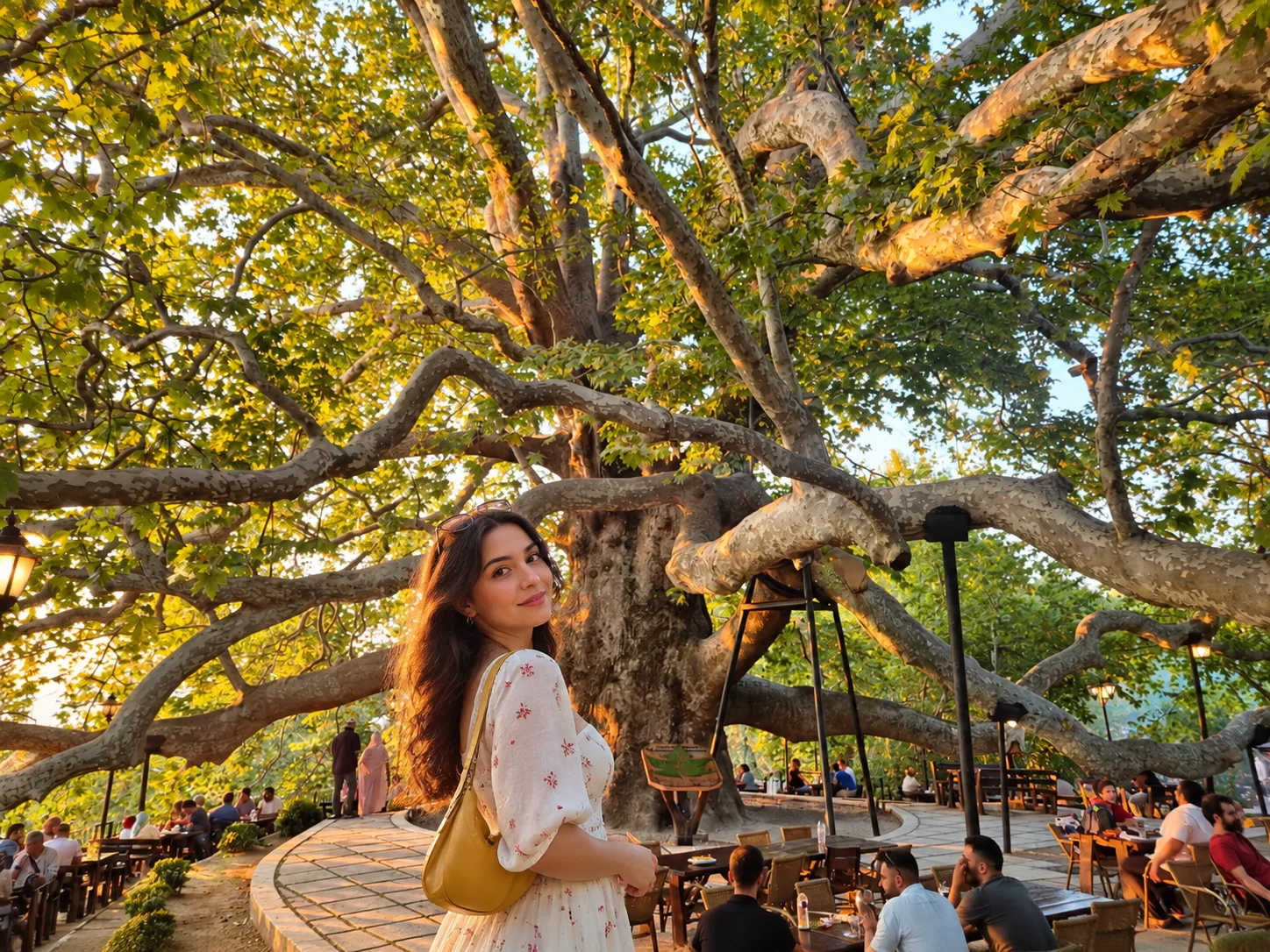
İnkaya Çınarı: A 600-Year-Old Plane Tree
On the main road leading from Bursa toward Uludağ, in the İnkaya neighbourhood of Osmangazi district, stands one of Turkey's most remarkable living monuments: the İnkaya Çınarı. This Oriental plane tree (Platanus orientalis) is approximately 600 years old, which means it was already a mature tree when the early Ottoman sultans were building their külliye complexes in Bursa below. It stands roughly 37 metres tall with a trunk circumference of around 10 metres — dimensions that make it one of the largest and oldest plane trees in Turkey.
A factual note for travellers using older sources: the tree is in Osmangazi ilçesi, not in Orhaneli district as some incorrect guidebooks state. It is a protected monumental tree under Turkish forestry law and a recognised natural heritage site. Local tradition holds that the tree dates to the early Ottoman period and was a landmark for travellers on the Bursa–Uludağ road since medieval times.
The İnkaya Çınarı is a convenient roadside stop when driving to Uludağ for skiing or trekking, or when returning from Cumalıkızık via the scenic southern route. The tree sits beside a small stream and tea garden; the scale of the trunk and canopy is genuinely extraordinary. Allow 15–20 minutes for the stop.
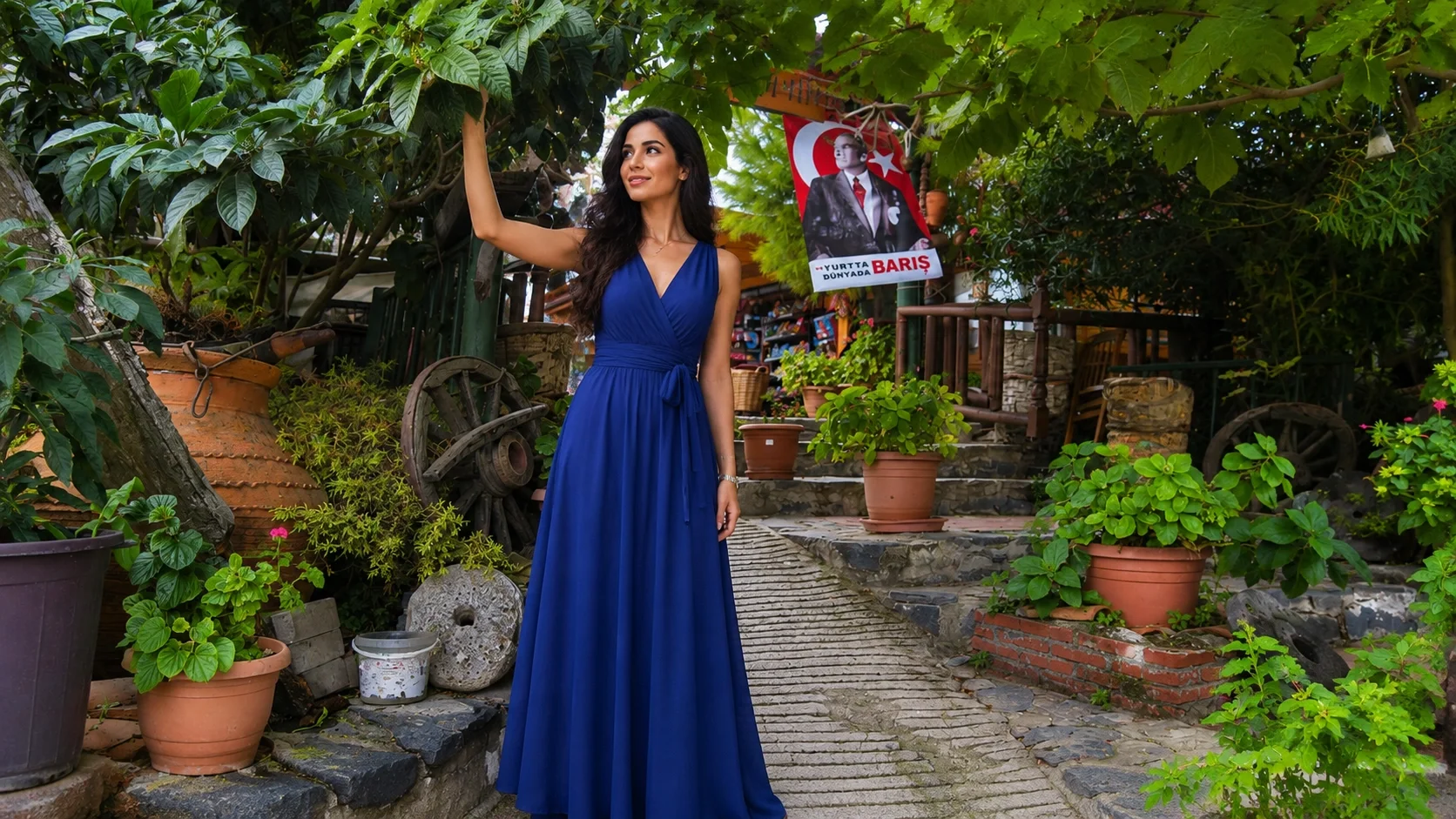
Trilye (Zeytinbağı): Byzantine-Ottoman Fishing Village
On the Marmara coast, 11 kilometres east of Mudanya, lies Trilye — now officially named Zeytinbağı (Olive Garden). This small fishing and olive-growing village was known in antiquity and Byzantine times as Trigleia, an important settlement with a Greek Orthodox Christian community that maintained seven churches and three monasteries. The physical evidence of this layered past is everywhere: Byzantine architectural fragments appear in walls and gardens; Ottoman structures were built directly over or beside earlier Christian ones.
The most striking example of this overlap is the Fatih Camii, a mosque converted from the Hagios Stephanos Church in 1560 during the reign of Kanuni Sultan Süleyman. The conversion preserved much of the original Byzantine structure, and the mosque retains Byzantine masonry, column capitals and spatial proportions that no purpose-built Ottoman mosque would have. The village also has a small Ottoman han and fountain, olive groves extending to the waterfront, and a fishing harbour where small boats still land catches in the early morning.
Trilye is best combined with a visit to Mudanya and its waterfront promenade, making a pleasant half-day coastal excursion from Bursa. The village has a handful of waterfront cafes serving grilled fish and local olive-oil dishes. Access by public transport requires a change in Mudanya; private transport makes the visit far more flexible.
Misi Köyü (Gümüştepe)
Approximately 12 kilometres from Bursa's historic centre, in the Nilüfer district, lies Misi village — also known historically as Gümüştepe (Silver Hill). This is a point worth noting, as older travel content sometimes incorrectly places Misi in Mustafakemalpaşa district; it is firmly within Nilüfer ilçesi.
Misi is a traditional stone-built village that has preserved its historic character while remaining accessible enough to visit on a half-day from Bursa. Stone houses with wooden balconies, narrow lanes and a central fountain give the village its character. Local cafes serve village breakfasts and gözleme (savoury flatbreads), and the surrounding hills offer short walking trails. The village is smaller and less tourist-heavy than Cumalıkızık, making it a good alternative for travellers seeking a quieter village experience.
One-Day Historic Bursa Itinerary
Morning (9:00–12:30): Start in Tophane — visit the Clock Tower and Osman/Orhan Gazi mausoleums (30–40 min), then walk the citadel walls for views over the city (20–30 min). Descend through the stone lanes of Hisar to the Ulu Camii (20 min visit), then move into the Hanlar Bölgesi. Explore Koza Han, Kapalı Çarşı, Orhan Gazi Camii and the nearby hans (60–75 min). Cross Irgandı Bridge to the eastern bazaar side (15 min).
Midday (12:30–14:00): Lunch in the Hanlar area or one of the restaurants near the Ulu Camii. Several traditional Bursa restaurants around the bazaar serve İskender kebap, the city's signature dish.
Afternoon (14:00–17:30): Taxi east to the Yeşil complex — Yeşil Camii, Yeşil Türbe and optionally the Türk-İslam Eserleri Müzesi (45–60 min). Optional: Emir Sultan Camii nearby. Taxi west across the city to Muradiye Külliyesi — royal tombs, II. Murad's open-roof mausoleum (30–40 min). If time allows, continue to Hüdavendigâr Külliyesi in Çekirge (15-min taxi).
The main challenge of this route is the east-west distance between the Yeşil complex and Muradiye — a taxi is needed. Walking the entire circuit is not practical without considerable fitness and time. A car with driver or a dedicated Bursa tour removes this friction entirely.
Two-Day Bursa Heritage Itinerary
Day 1 — Historic Centre: Follow the one-day itinerary above covering Tophane, Kalesi, Hanlar Bölgesi, Irgandı, Yeşil complex and Muradiye. Include Hüdavendigâr Külliyesi in Çekirge in the late afternoon.
Day 2 — Villages and Nature: Morning departure for Cumalıkızık village — arrive by 9am for the best light and quietest lanes (30–45 min from centre). Spend 1.5–2 hours exploring and having a village breakfast. Return via the Uludağ road, stopping at İnkaya Çınarı (15–20 min). Afternoon in Çekirge if not visited on Day 1, or head to the coast for Trilye and Mudanya waterfront. Option: combine Yıldırım Külliyesi with the Day 2 morning if Cumalıkızık is moved to afternoon.
Practical Visitor Information
- Dress code: Mosques require shoulders and knees covered; women must cover their hair. Scarves are usually available at mosque entrances. The bazaar and outdoor sites have no dress requirements.
- Footwear: Cobblestone streets throughout Hisar and the bazaar quarter are uneven. Comfortable walking shoes are essential; avoid heeled footwear.
- Prayer times: Mosques close briefly to non-Muslim visitors during the five daily prayers. Plan visits around prayer times or wait 15–20 minutes at the entrance.
- Entry fees: Most sites are free, including the Ulu Camii, Osman/Orhan Gazi tombs, Yeşil Camii, Yeşil Türbe, Muradiye and Hüdavendigâr. The Türk-İslam Eserleri Müzesi (Yeşil Medrese) charges a standard museum admission fee.
- Parking: Parking in the historic centre is limited and congested. Arrive by taxi or use the parking areas near the Osmangazi Museum and approach on foot.
- Public transport: Bursa's metro (BURULAŞ) connects key districts; taxis and ride-share apps cover the gaps. For Cumalıkızık, private transport is strongly recommended.
- Best time to visit: Weekday mornings avoid weekend crowds, especially in the Hanlar Bölgesi and Cumalıkızık. Spring (April–May) and autumn (September–October) offer the best weather for walking.
Getting from Istanbul to Bursa
Bursa is approximately 2–2.5 hours from Istanbul by car via the Osmangazi Bridge (the world's fourth-longest suspension bridge), which spans the Gulf of İzmit (Izmit Bay) and cuts the road journey from Istanbul significantly. The most comfortable option is a private Bursa day tour from Istanbul, which handles all transport logistics and allows flexible stops at historic sites. For those preferring to hire their own vehicle and driver, our intercity car with driver service covers the Istanbul–Bursa route.
The ferry alternative — BUDO ferries running Mudanya–Kabataş — is a scenic option that takes approximately 2 hours on the water and drops travellers in Mudanya, 30 minutes by bus or taxi from Bursa city centre. This route is popular with domestic travellers and offers sea views of the Marmara coastline. Ferry schedules vary seasonally; check BUDO's timetable before departure.
From Sabiha Gökçen Airport (SAW), Bursa is approximately 1.5–2 hours depending on bridge and highway traffic. Direct shuttle services operate from SAW to Bursa's main bus station. If arriving internationally at SAW, a private transfer to Bursa avoids the multi-connection public transport route.
Fascinating Facts About Historic Bursa
- Bursa was founded around 185 BC as Prusa ad Olympum by Bithynian King Prusias I, reportedly on the advice of the Carthaginian general Hannibal, who had sought refuge at his court.
- Orhan Gazi conquered Bursa on 6 April 1326 but never formally proclaimed it a capital; it simply functioned as the seat of the expanding Ottoman state for about four decades before the court moved to Edirne.
- Koza Han's name means "silkworm cocoon han" — it was specifically built to trade raw silk cocoons, with revenues funding Sultan Bayezid II's charitable kitchen in Istanbul.
- Irgandı Bridge was not commissioned by a sultan but by a private merchant — Hoca Muslihiddin, son of silk trader Irgandılı Ali — making it one of the rare major Ottoman public works financed by a private citizen.
- Irgandı Bridge is one of only four shop-lined bridges surviving in the world, alongside Ponte Vecchio (Florence), Rialto (Venice) and the Osma Bridge.
- The Hüdavendigâr epithet belongs to Sultan I. Murad, the third Ottoman ruler — it means "sovereign lord" — and has nothing to do with Osman Gazi, as some sources erroneously claim.
- Sultan Murad II requested that his mausoleum at Muradiye have an open oculus so rain would fall directly on his grave — an extraordinary act of humility for a medieval ruler.
- İnkaya Çınarı in Osmangazi district is approximately 600 years old, stands 37 metres tall and has a trunk circumference of roughly 10 metres — one of the largest trees in Turkey.
- The current Osman and Orhan Gazi mausoleum structures in Tophane were rebuilt by Sultan Abdülaziz in 1863 following the destruction caused by the great 1855 earthquake.
- The UNESCO inscription for Bursa, finalised in 2014, covers six külliye complexes plus Cumalıkızık village and the citadel — an unusually large multi-component heritage site.
Frequently Asked Questions — Historic Sites in Bursa
What are the most important historic sites in Bursa?
The most important historic sites in Bursa include the Ulu Camii (Grand Mosque), Koza Han, the Hanlar Bölgesi (bazaar quarter), Irgandı Bridge, the Osman and Orhan Gazi mausoleums in Tophane, Bursa Citadel (Bursa Kalesi), Yeşil Camii and Yeşil Türbe, Muradiye Külliyesi with its 12 royal tombs, Hüdavendigâr Külliyesi in Çekirge, and Cumalıkızık UNESCO village. Six Ottoman külliye complexes plus Cumalıkızık were jointly inscribed as UNESCO World Heritage in 2014.
When was Bursa the Ottoman capital?
Bursa was conquered by Orhan Gazi on 6 April 1326 and functioned as the effective seat of the Ottoman state for approximately four decades. There was no formal proclamation of "capital," but it served as the centre of the growing Ottoman state until the court shifted to Edirne (Adrianople) in the 1360s–1370s. Bursa remained the primary imperial burial ground for early sultans even after the court moved.
What is the Hanlar Bölgesi in Bursa?
The Hanlar Bölgesi (Hans District) is the Ottoman commercial quarter surrounding the Ulu Camii in central Bursa. It comprises a cluster of hans (caravanserais), mosques and bazaars established from the 14th century onward. Key structures include Koza Han, Fidan Han, Emir Han, İpek Han, Pirinç Han, Geyve Han, Orhan Gazi Camii and the Ulu Camii. The area is a UNESCO World Heritage component listed as the Orhan Gazi Külliyesi and Hanlar.
Who built Koza Han in Bursa?
Koza Han was built by Sultan Bayezid II; construction started in 1490 and it opened in 1491. The architect was Abdul Ula Bin Pulad Shah. Revenues from the han were designated to fund Bayezid II's imaret (charitable foundation) in Istanbul. The name means "silkworm cocoon han" — it was the primary marketplace for raw silk cocoon trading in Bursa for centuries.
Who commissioned Irgandı Bridge? Was it Sultan II. Murad?
No — Irgandı Bridge was not commissioned by Sultan II. Murad. It was commissioned by Hoca Muslihiddin, son of Irgandılı Ali, a prominent silk merchant. The architect was Timurtaş, son of Abdullah. Built in 1442, it crosses the Gökdere stream. The bridge is named after the Irgandı merchant family, not a sultan or a geographic feature. This is one of the most commonly repeated errors in Bursa travel writing.
Where are the Osman Gazi and Orhan Gazi tombs?
Both tombs are in the Tophane district of Bursa, in the same walled garden enclosure. Osman Gazi died near Söğüt just as Bursa fell in 1326 and was later transferred to Bursa by his son. Orhan Gazi is buried beside him. The current marble mausoleum structures were rebuilt by Sultan Abdülaziz in 1863 after the originals were destroyed in the 1855 earthquake. Entry is free. Some older sources incorrectly place Orhan Gazi's tomb in Altıparmak — this is wrong.
What does Hüdavendigâr mean and which sultan does it refer to?
Hüdavendigâr is an Ottoman-Persian honorific meaning "sovereign lord" or "lord of the world." It is the epithet of Sultan I. Murad, the third Ottoman ruler, who built the Hüdavendigâr Külliyesi in the Çekirge district of Bursa. It has nothing to do with Osman Gazi — some older texts erroneously claim Hüdavendigâr was one of Osman Gazi's names, which is completely incorrect.
Is Cumalıkızık village a UNESCO World Heritage site?
Yes. Cumalıkızık was inscribed as part of the UNESCO World Heritage property "Bursa and Cumalıkızık: the Birth of the Ottoman Empire" in 2014. The village, located approximately 7 km east of Bursa centre, is a remarkably preserved 700-year-old Ottoman rural settlement with cobblestone lanes, timber-frame houses and a continuous community history. It is one of the best-surviving examples of early Ottoman village planning in Turkey.
Where is İnkaya Çınarı and how old is it?
İnkaya Çınarı is located in the İnkaya neighbourhood of Osmangazi district, Bursa, on the road leading toward Uludağ. It is approximately 600 years old, stands about 37 metres tall and has a trunk circumference of around 10 metres. It is a protected monumental tree under Turkish law. Some older sources incorrectly place it in Orhaneli district — it is in Osmangazi ilçesi.
Can Bursa's historic sites be visited in one day?
The main historic centre — Tophane, Bursa Kalesi, Ulu Camii, Hanlar Bölgesi, Irgandı Bridge, Yeşil Camii and Muradiye — can be covered in a full day, but it requires good planning and taxi use between the eastern Yeşil complex and the western Muradiye. Cumalıkızık, İnkaya Çınarı and Trilye are best saved for a second day. A private Bursa day tour from Istanbul is the most efficient way to cover the highlights in a single long day.