
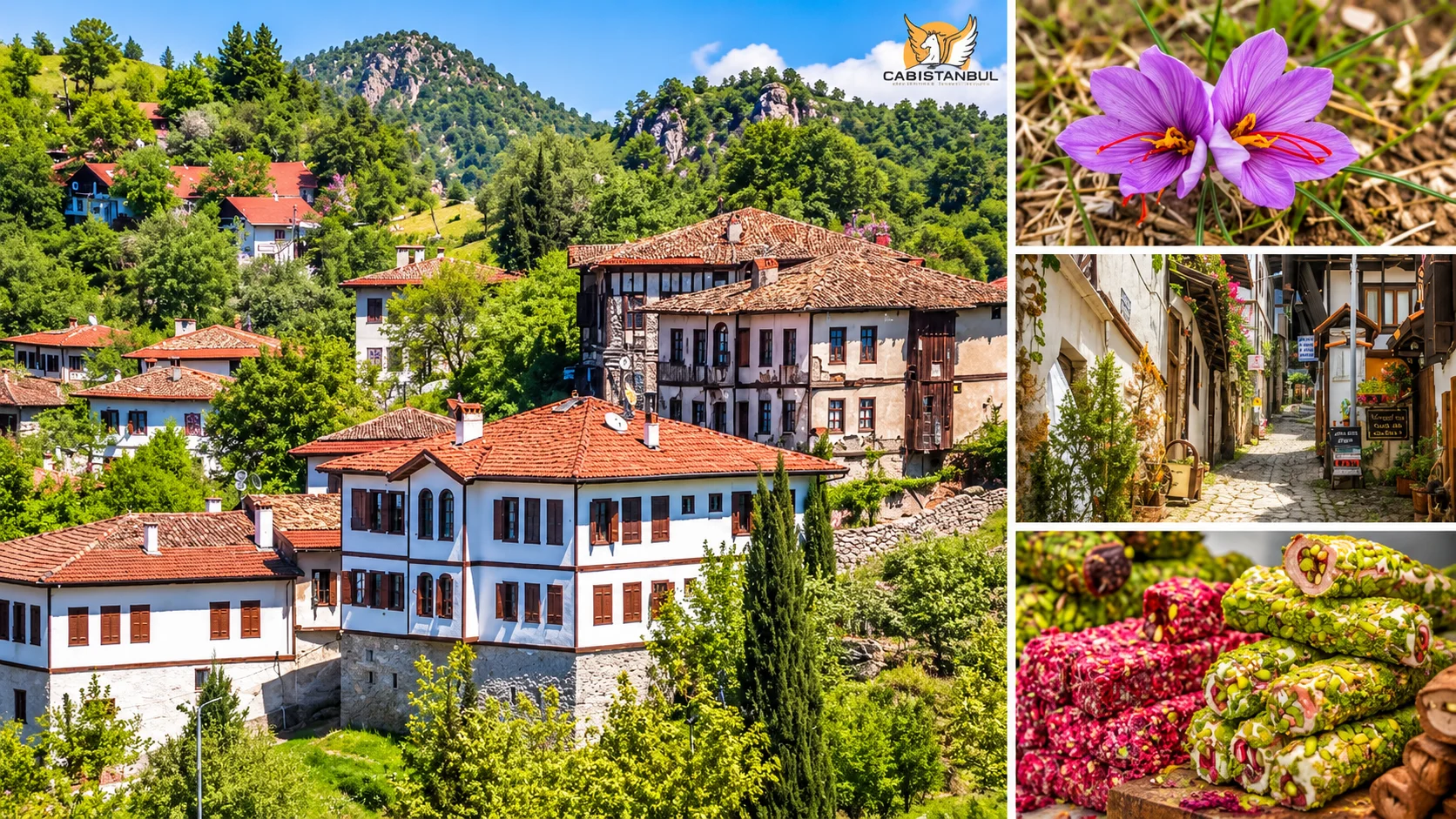
Safranbolu is one of the few places in Turkey — or anywhere in the world — where an Ottoman provincial town has survived essentially intact. Walk its cobblestone lanes and you pass under the same timber-framed window bays that shaded merchants travelling the Istanbul–Sinop caravan road three centuries ago. A UNESCO World Heritage Site since 1994, Safranbolu rewards visitors with layers of discovery: a 17th-century caravanserai still operating as a hotel, a medieval bazaar where coppersmiths and lokum-makers share the same arasta, a Roman-era aqueduct spanning a canyon, a river cave stretching six kilometres underground, and, each October, the brief golden spectacle of saffron fields in bloom.
Why Safranbolu Is a UNESCO World Heritage Site
Safranbolu was inscribed on the UNESCO World Heritage List on 17 December 1994 under criterion (iv): as an outstanding example of a traditional Ottoman trading and manufacturing town whose urban fabric — houses, hans, mosques, hamamlar and bazaars — has survived without the wholesale demolition that overtook most Anatolian towns during modernisation. The inscription covers the historic core known as the Çarşı district, a rare instance of heritage recognition at urban rather than monument scale.
What UNESCO protects here is not a single building but a street pattern, a sky-line, a social topology: the way houses were positioned so that each family kept its light and view, the way the bazaar occupied the valley floor while residential districts climbed the surrounding hillsides, and the way the caravanserai anchored commercial life at the centre. This planning intelligence, carried out across centuries without written zoning laws, is what makes Safranbolu genuinely exceptional.
A Brief History of Safranbolu
The site has been settled since antiquity — Hittite, Phrygian and later Hellenistic-Roman traces have been identified in the surrounding region, and the Roman-Byzantine road network passed through the valley. The town's medieval character was shaped during the 13th and 14th centuries as Anatolian beylik and then Ottoman authority extended northward through the Black Sea hinterland.
Safranbolu's prosperity peaked during the 17th and 18th centuries. The town stood on the overland route linking Istanbul with the Black Sea ports of Sinop and Amasra and served as a staging point for Kastamonu, one of the major administrative centres of Ottoman Anatolia. Wealthy merchants, Ottoman officials and craftsmen built the houses that survive today, financing mosques, hans and hamamlar as acts of piety and civic prestige. The town also became a centre of saffron cultivation — the source of its name — and of beeswax and copper goods traded across the empire.
Decline began in the late 19th century as steamship routes displaced overland caravan trade and the new railway bypassed the town entirely. This economic marginalisation, painful at the time, had an unintended consequence: Safranbolu's old quarter was never cleared for modern construction. The historic Çarşı district remained inhabited but unchanged, a city in amber, until heritage scholars and eventually UNESCO recognised what had been preserved.
Safranbolu Houses — Ottoman Domestic Architecture at Its Best
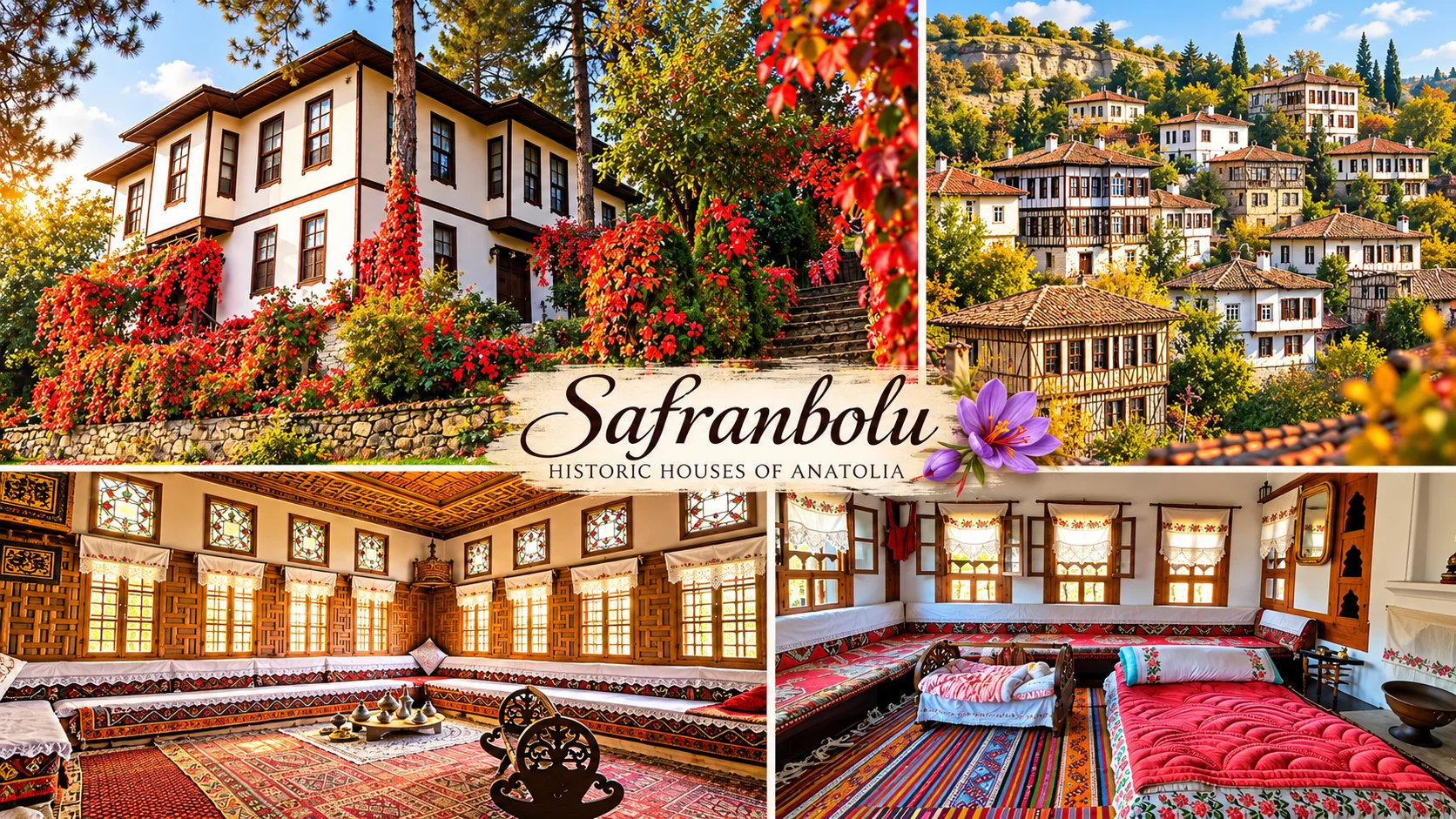
The houses of Safranbolu are defined by a distinctive combination of stone masonry at ground level and timber-framed plasterwork upper storeys, with each floor cantilevered slightly over the one below. The projecting upper bays — cumbalar — served a practical purpose: they widened living space without encroaching on the narrow street below, and angled bay windows brought light into rooms that faced each other across lanes only two or three metres wide.
A fundamental planning principle was that no house should block its neighbour's light or view. This unwritten rule produced a terraced, staggered silhouette that looks harmonious today and was socially enforceable in an Ottoman neighbourhood governed by the mahalle (communal ward) system. Each house was divided internally into haremlik (women's quarters) and selamlık (men's reception area), with service spaces — woodsheds, animal stalls — at ground level.
Interiors feature carved wooden ceilings, built-in storage niches (yüklük), and elaborate painted plasterwork in the principal reception rooms. A striking folk tradition is the pair of deer antlers fastened above many house entrances, placed to bring good fortune and ward off misfortune — a custom particular to this region of the Black Sea hinterland.
The historic core holds more than 1,000 registered traditional buildings, several hundred of which are formally protected. The single finest example open to the public is the Kaymakamlar Evi (the Governors' House), which gives an unusually complete picture of upper-class domestic life: the ceremonial reception hall, the private family rooms, the service wing, and the cool basement storage used for the long Anatolian winter.
Kaymakamlar Evi — The Most Complete House Museum
Of the several Safranbolu houses open as museums, Kaymakamlar Evi is considered the best-preserved example of the upper-storey Ottoman domestic interior. The house belonged to a series of district governors (kaymakam) and its room sequence — formal reception hall, domed hamam chamber, service rooms, private sleeping quarters — reflects the full programme of a prosperous 18th-century household. The painted wall niches, finely carved wooden ceilings and period furnishings remain in place. A visit takes around 30–45 minutes and is well worth the entrance.
Eski Çarşı — The Old Bazaar and Yemeniciler Arastası
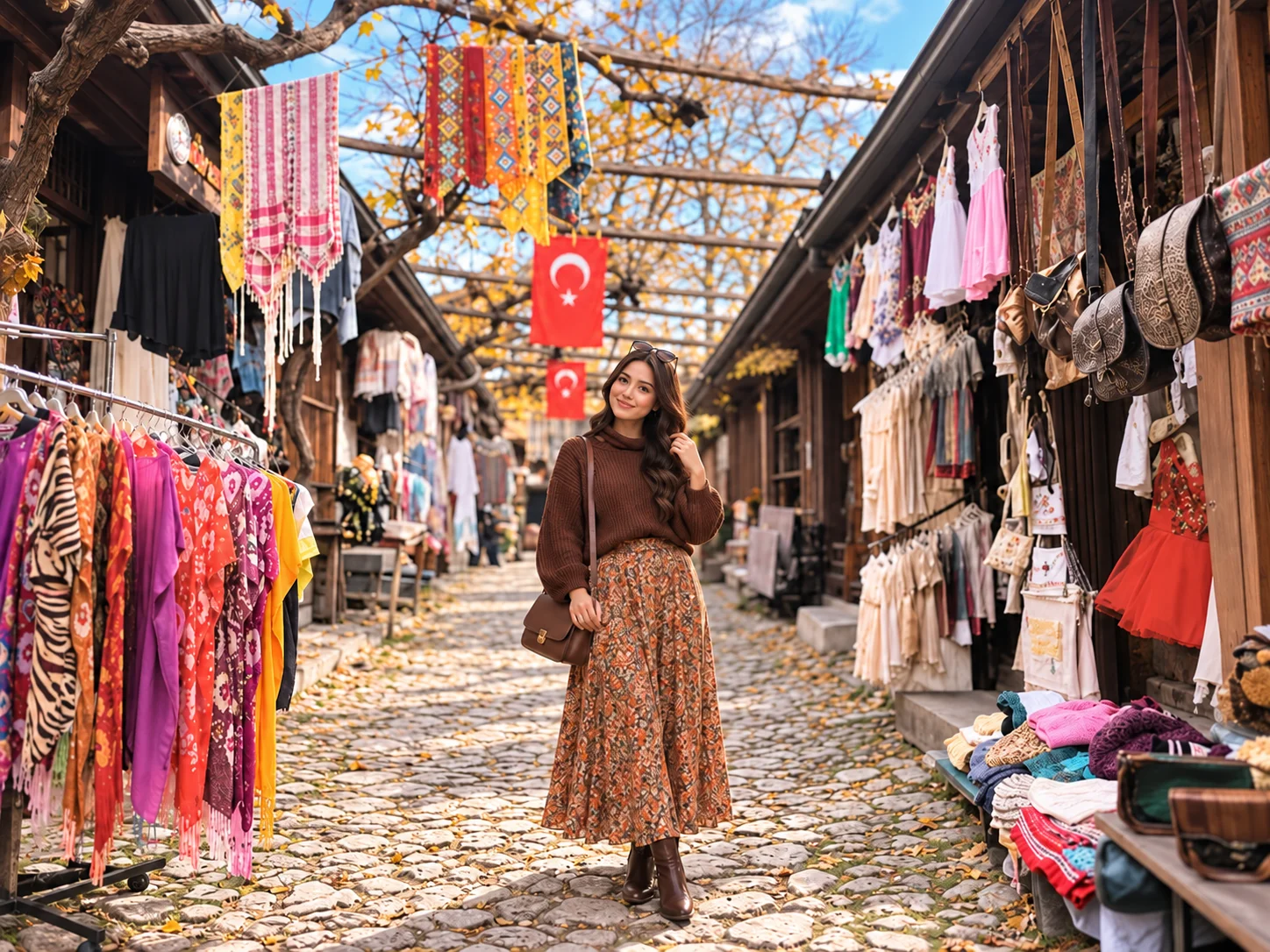
At the centre of the Çarşı district lies the Eski Çarşı, the old commercial quarter that served travelling merchants from the 17th century onwards. The defining structure is the Yemeniciler Arastası — a covered arcade of stone shops originally built for the makers of yemeni, the thin-soled leather slippers that were a staple of Ottoman footwear. The arcade is still active as a shopping street: you will find lokum workshops, copper goods, saffron-infused products, hand-painted textiles and traditional crafts alongside modern souvenir sellers.
Walking through the bazaar in the morning, before the day-trip coaches arrive, you can get a sense of the rhythm it must have had in its commercial prime: the metalwork smells, the dry goods shops, the coffee house at the corner. The physical fabric — low stone arches, worn flagstones, original wooden shopfronts — has been conserved rather than rebuilt, and it shows. This is not a reconstructed heritage experience; the buildings are genuinely old and the trades, while reduced, are genuinely practised.
Near the bazaar stands the Cinci Hamamı, one of the best-preserved Ottoman hamamlar in northern Anatolia, built alongside the Cinci Han in the 17th century.
Cinci Han — A 17th-Century Caravanserai Still in Use
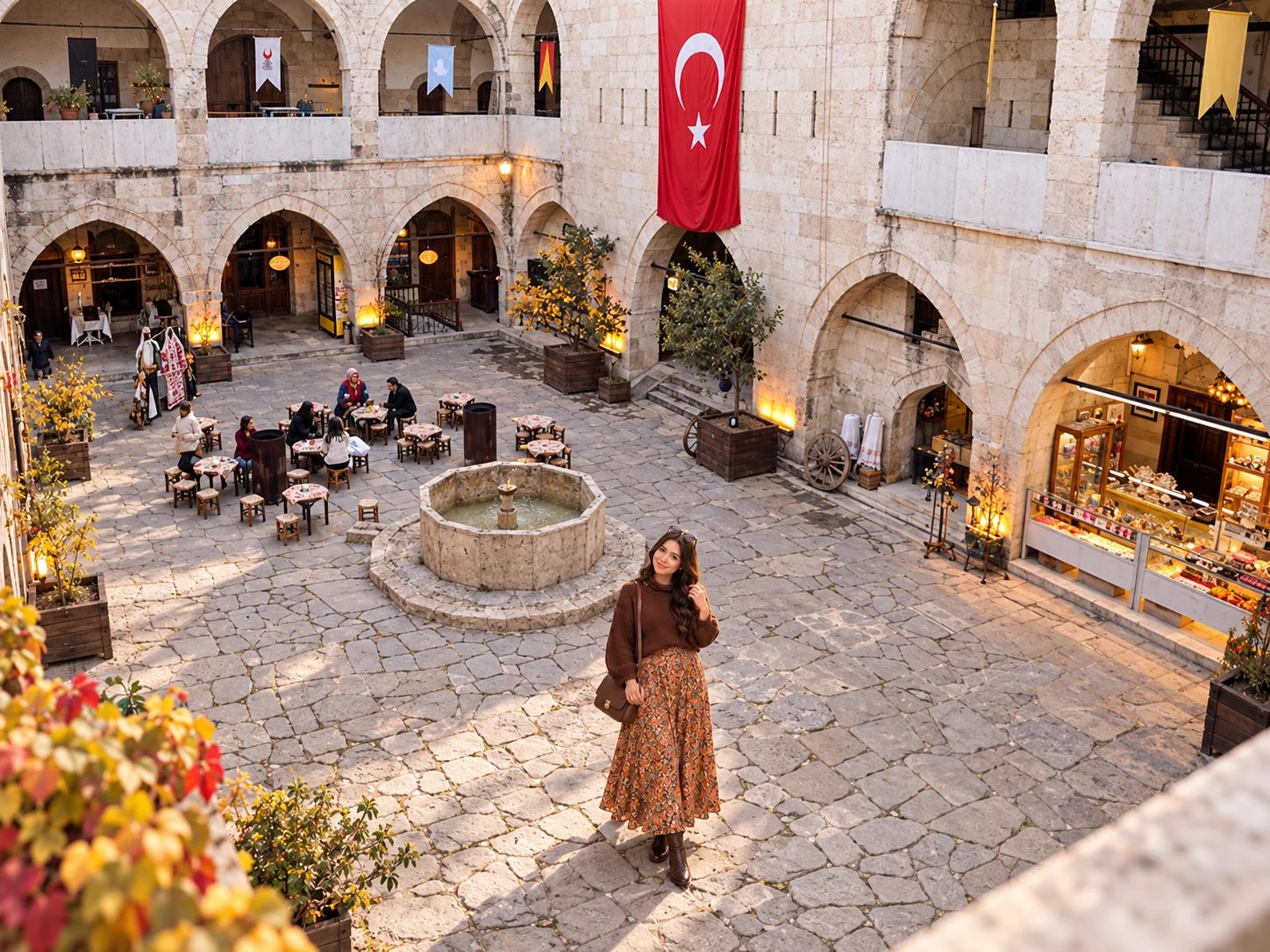
The Cinci Han was built in 1645 by Karabaşzade Hüseyin Efendi, better known as Cinci Hoca, a physician and occultist who rose to extraordinary influence at the Ottoman court of Sultan İbrahim I. Construction was supported financially by the regent Kösem Sultan, making the han one of the more unusual architectural patronages of the period — a provincial caravanserai funded by the most powerful woman in the empire.
The building is a two-storey structure arranged around a central arcaded courtyard. Ground-floor storage chambers gave way to sleeping rooms above, with a large hamam — the Cinci Hamamı — constructed alongside. The scale of the han tells you something about the ambition of Safranbolu's 17th-century commercial life: this was a serious stopping point on a serious road, not a village inn.
Today Cinci Han operates as a hotel and restaurant. You can visit the courtyard and take meals here without staying, which makes it one of the most atmospheric dining settings in northern Anatolia. The stone architecture, the open sky above the courtyard and the sense of continuity — merchants have been eating and sleeping here for nearly four centuries — are hard to beat.
İzzet Mehmet Paşa Mosque and the Clock Tower
The İzzet Mehmet Paşa Camii, built in 1796 by Safranbolulu İzzet Mehmet Paşa — who also commissioned the İncekaya Aqueduct — is the most distinguished of Safranbolu's historic mosques. The Paşa served as Grand Vizier during the reign of Selim III, and his mosque reflects that status: the carved wooden minbar (pulpit), the elegantly proportioned façade and the broad interior with its painted ceiling plasterwork are all of a quality above the local norm. The mosque is in active use; respectful dress and quiet entry during prayer times apply.
A short walk away, the Clock Tower (Saat Kulesi) stands at the edge of the historic district. Built on older foundations, it has been the visual landmark of the Çarşı for centuries. The Safranbolu Kent Tarihi Müzesi (City History Museum), housed in a restored official building near the tower, presents the town's archaeological and social history through well-captioned displays — a good first stop before exploring on foot.
Hıdırlık Tepesi — The Hill with the Full Picture
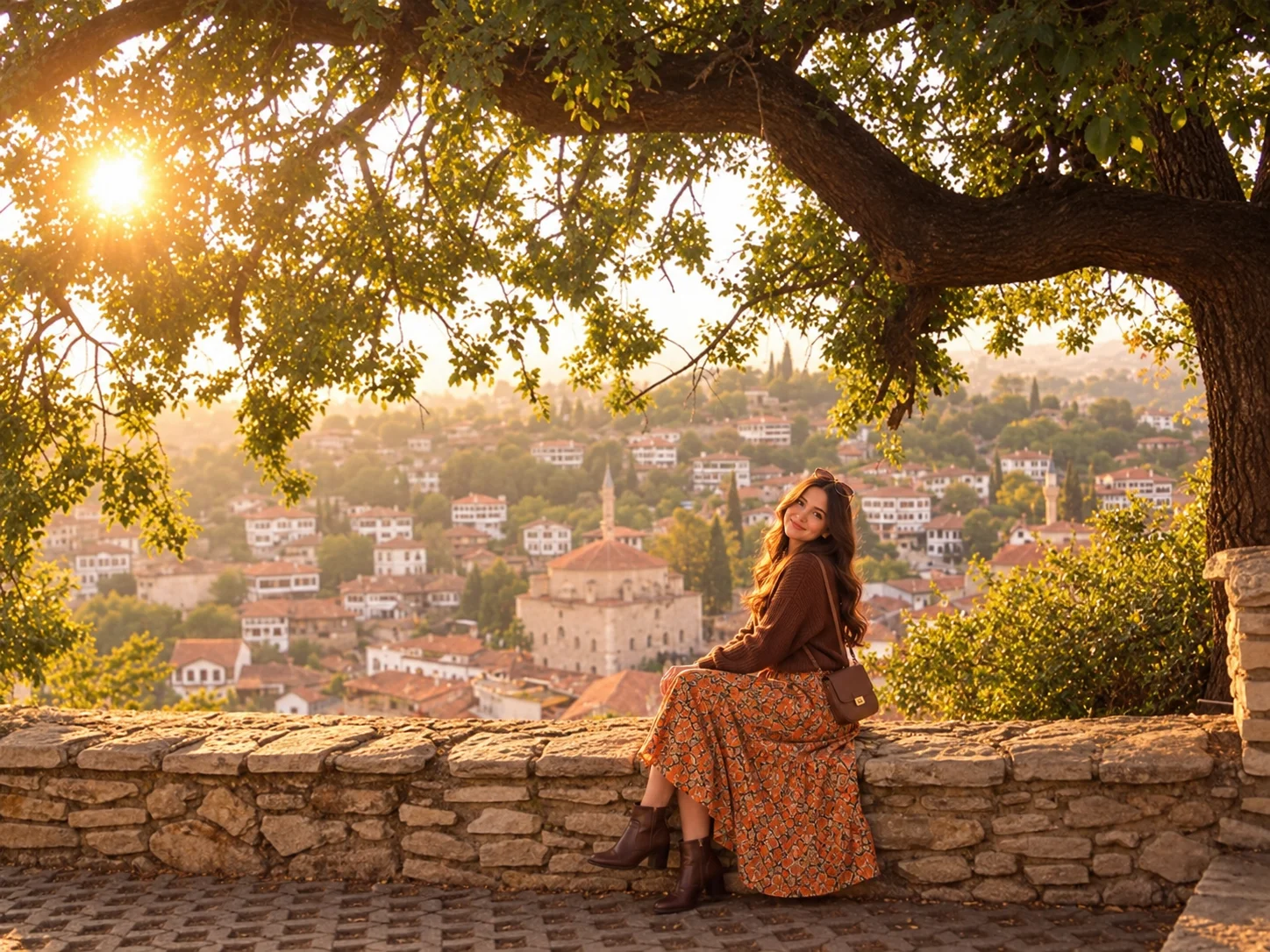
For the full picture of Safranbolu's extraordinary urban landscape, climb Hıdırlık Tepesi above the historic district. The hill is easily reached on foot from the bazaar in fifteen to twenty minutes. From the top, you look down over the bowl of the Çarşı quarter — an uninterrupted sea of grey-tiled Ottoman rooflines spreading across the valley floor and climbing the facing hillside. No modern building interrupts the silhouette. This is the view that makes Safranbolu's heritage status immediately comprehensible.
The hill also has historical significance: the area holds an old cemetery whose gravestones document Safranbolu's Ottoman-era families, and a small türbe (tomb sanctuary) adds to the sense of layered time. Late afternoon light, when the shadows lengthen across the rooftops, produces particularly dramatic photography.
İncekaya Aqueduct — Stone Engineering over a Canyon
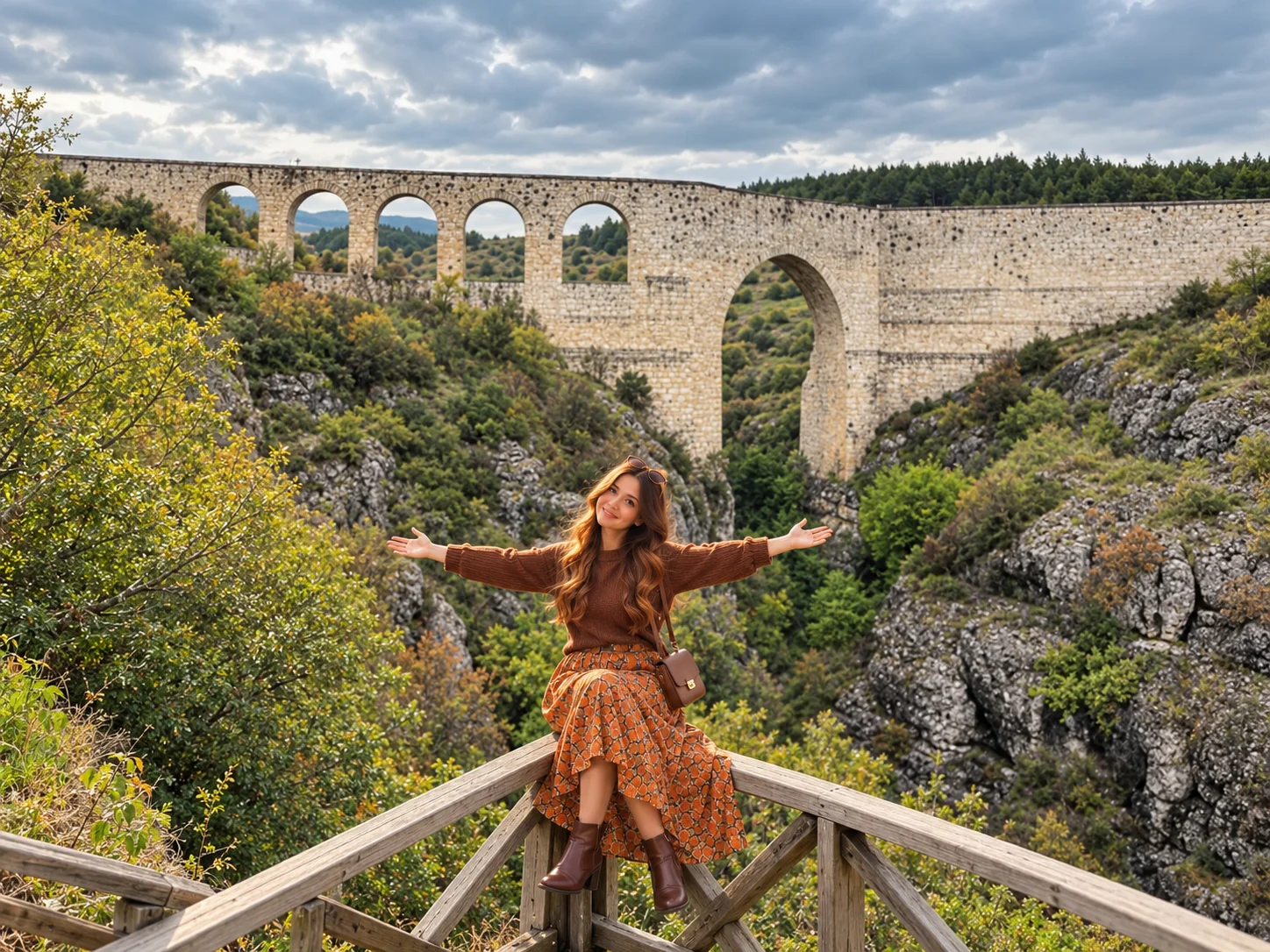
Seven kilometres from the town centre, in the Tokatlı Canyon area, stands one of Safranbolu's most imposing engineering achievements: the İncekaya Su Kemeri (İncekaya Aqueduct). Commissioned between 1794 and 1798 by Safranbolulu İzzet Mehmet Paşa, the structure carries water across the Tokatlı gorge on a single main arch supported by five subsidiary arches. It is 116 metres long, reaches a maximum height of 60 metres above the canyon floor, and is built from rubble stone bonded with Horasan mortar — a Byzantine-Ottoman technique using crushed terracotta mixed into lime for exceptional durability.
The aqueduct is impressive at a distance and equally impressive up close: you can walk along the canyon path below and read the individual stone courses. The surrounding valley of the Tokatlı stream is a nature-walk destination in its own right, with wooded slopes, a modest stream and clear air that makes it a welcome contrast to the town's busy summer season.
Tokatlı Canyon and the Crystal Glass Terrace
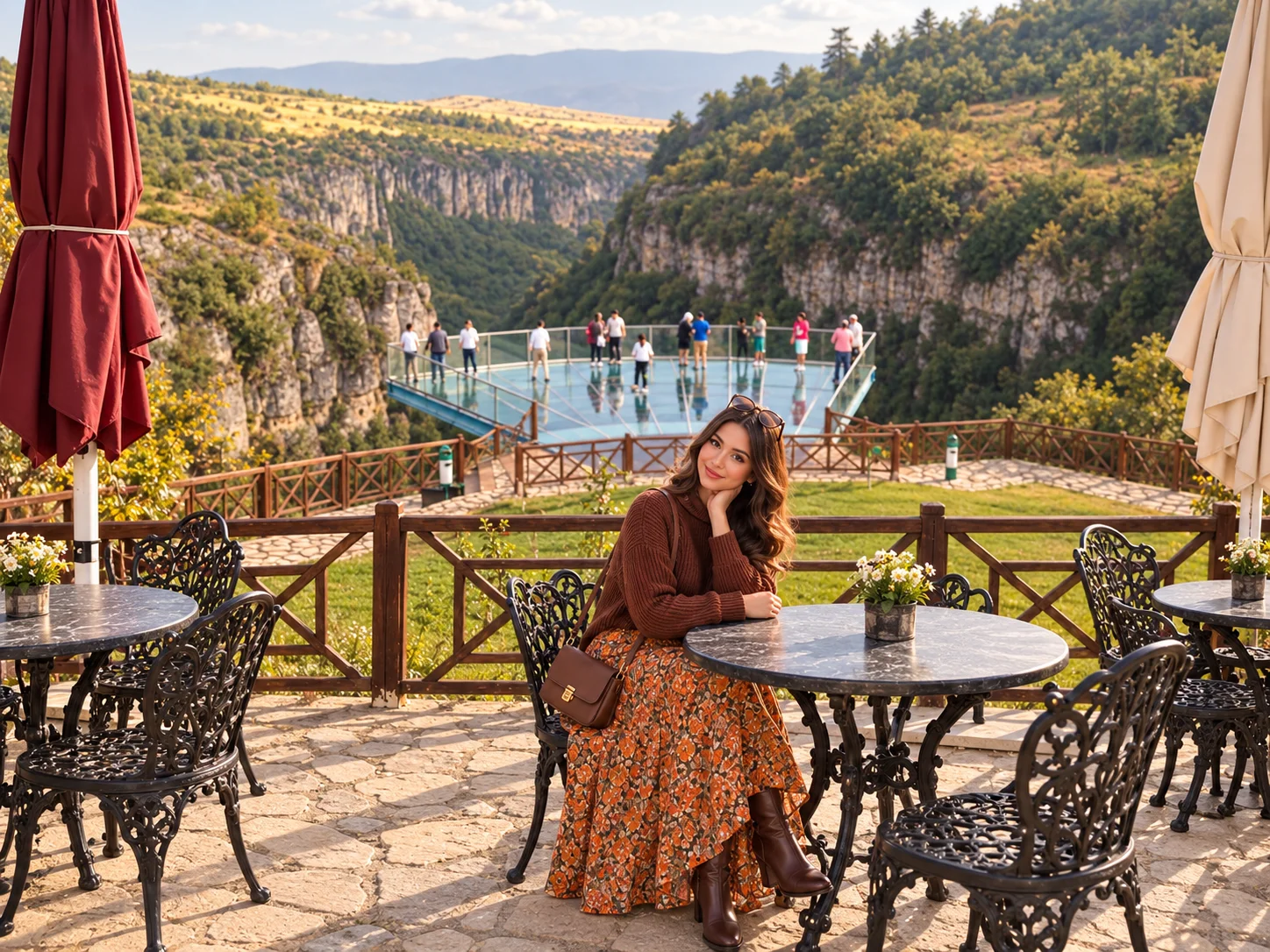
The Kristal Cam Teras (Crystal Glass Terrace) is located at the İncekaya site, immediately adjacent to the aqueduct — not in the town centre, as is sometimes mistakenly described. It sits 7–8 kilometres from Eski Çarşı and is typically reached by car. The terrace cantilevers over the Tokatlı Canyon on a glass-floored platform: you stand over open air with the canyon walls below and the İncekaya Aqueduct's stone arches in full view. The effect is genuinely impressive if you are comfortable with heights.
Visitors often combine the Glass Terrace with the İncekaya Aqueduct and a walk through the Tokatlı Canyon path in a single half-day excursion. The canyon itself offers shaded walking, a small stream and picnic areas. This combination — architectural marvel, canyon nature walk, glass-floor view — makes the İncekaya area one of the most varied half-days available from Safranbolu.
Bulak Mencilis Cave — Underground Rivers and Stalactite Galleries
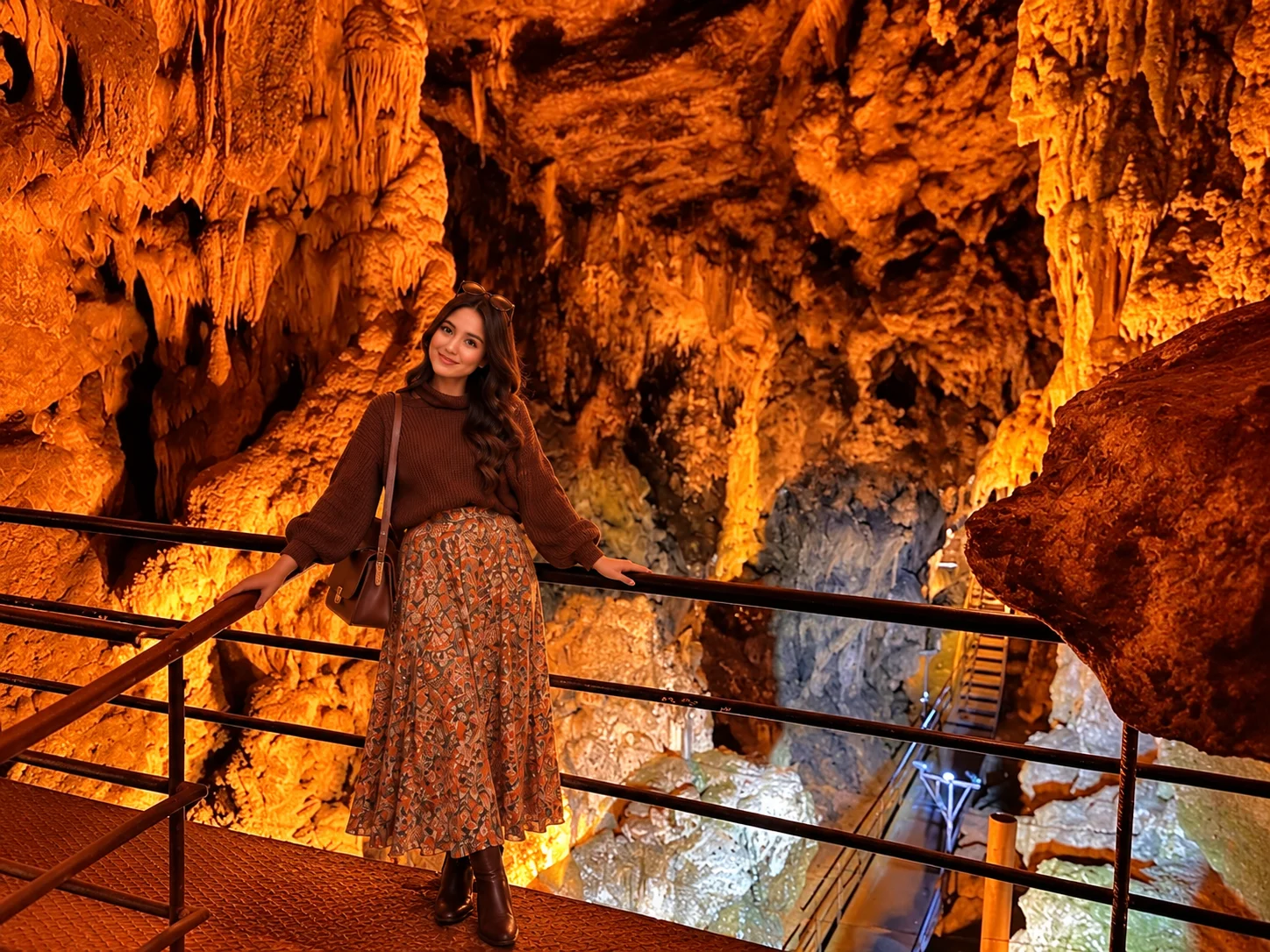
A short drive from Safranbolu, Bulak Mencilis Mağarası is one of Turkey's major river caves, with a surveyed length of around six kilometres. Of this, approximately 400 metres is illuminated and accessible to general visitors; the remainder requires technical caving equipment and experience. The accessible section was opened following installation of fixed walkways and lighting and is reached via a staircase of 157 steps descending from the entrance.
Inside, the illuminated section reveals stalactites and stalagmites of considerable variety, a series of underground pools with remarkably clear water, travertine formations and the sound of the underground river that continues beyond the visitor area. The temperature inside is stable year-round at around 12–14°C, so bring a light layer regardless of the season outside.
The cave was used by local people for centuries and is referenced in Ottoman-era records. The underground river ultimately feeds into the Araç stream. The cave is a good option for a second day if you are staying in the area, or can be combined with a morning at the historic town and an afternoon drive to İncekaya.
Yörük Village — A Living Ottoman Village
Around 10 kilometres from Safranbolu, Yörük Köyü is a small traditional village whose architectural character predates even Safranbolu's major building period. The village retains around 140 historic houses, of which the oldest are reportedly over 450 years old. Unlike Safranbolu's Çarşı houses, the Yörük village buildings are attached in rows — a different planning logic shaped by the mountain terrain and communal land-use patterns of a stock-raising village rather than a merchant town.
The most notable building is Sipahioğlu Konağı, a konak (large residential hall) of around 300 years old that opens periodically for visitors. Room interiors feature kalem işi (freehand painted decoration) on the plasterwork — a craft form distinct from the carved woodwork of Safranbolu's merchant houses. The village is quiet and unhurried; it rewards visitors who come independently rather than with day-trip groups. Yörük Köyü hosts a cultural and food festival each year, when village kitchens open and folk demonstrations are held.
Saffron Fields — Where the Town's Name Comes From
Safranbolu takes its name from safran — saffron — the spice extracted from the dried stigmas of Crocus sativus. Contrary to a commonly repeated claim, saffron is still cultivated here. Approximately 44 farming families tend saffron plots across around 104 dönüm of land, producing a small but commercially significant harvest entirely by hand — saffron cannot be mechanically harvested, as the flowers must be picked in the early morning before they open fully.
The harvest season falls in October and November, when the purple crocus flowers appear in the fields around the town. This brief window — lasting around 35–40 days — has become a significant tourism draw: an estimated 60,000 visitors come specifically for the saffron flowering each year. If your visit coincides with October, the combination of Ottoman architecture, the harvest landscape and the cool autumn air is arguably the finest time to be in Safranbolu. The fields are typically open for informal visits and photographs; local producers sell saffron at market stalls and in the Eski Çarşı throughout the year.
What to Eat in Safranbolu
The town's cuisine reflects its position as a Black Sea market town with access to forest, farmland and mountain pasture. Several dishes are strongly associated with the area:
Safranbolu Lokumu is the most recognisable product — a flavoured Turkish delight made locally and sold throughout the Eski Çarşı. The most prestigious variety uses genuine saffron for its colour and delicate flavour. Look for producers who make lokum in the shop rather than buying it pre-packed from a distributor.
Safranbolu Bükmesi is a flatbread pastry filled with minced lamb or beef, onion and greens (typically spinach or chard), folded and baked in a distinctive rolled form. It is sold warm from bakeries near the bazaar and makes an excellent lunch on the move.
Peruhi is a local dumpling: thin dough filled with spiced meat, formed into a cylindrical shape and boiled, then served with yogurt and browned butter — a distant cousin of manti, specific to this corner of the Black Sea hinterland.
Cevizli Yayım is a savoury noodle dish made with hand-rolled erişte (a wide flat noodle) and crushed walnuts — one of the oldest dishes in the local repertoire and rarely found outside the region.
Göbü is a fried dough, similar to pişi elsewhere in Turkey, eaten at breakfast or as a street snack with tea. Corn bread (mısır ekmeği) and tereyağlı uzun fasulye (long runner beans slow-cooked in butter) round out a domestic table that is simpler and more direct than Aegean Turkish food, and all the better for it.
What to Buy in Safranbolu
The Eski Çarşı is a genuine shopping destination for Turkish craft goods, not merely a souvenir market. The most worthwhile purchases are:
Saffron — Safranbolu saffron carries a regional identity and is sold at higher quality in the town than in most Turkish cities. Buy from producers who can show you the product before packaging; be aware that adulteration with turmeric or safflower is widespread in Turkish retail saffron generally. Local growers at harvest-time markets offer the most reliably authentic product.
Lokum in its full local variety — saffron-flavoured, rose, mint, walnut and plain. Handmade copperware, still produced by a small number of craftsmen in the bazaar. Traditional textiles — embroidered towels, headscarves and flat-weave runners — made using patterns associated with the Black Sea region.
Best Time to Visit Safranbolu
Spring (April–June) is vivid: the wisteria and roses cover the courtyard walls of the old quarter, temperatures are moderate, and the tourist season has not yet reached summer intensity. Good for walking, photography and relaxed bazaar time.
Autumn (October–November) is arguably the most atmospheric season. The saffron fields bloom in October; the foliage in the canyon areas turns; and the light at this latitude becomes the golden, long-shadowed quality that makes Ottoman terracotta rooftiles glow. This is also the season most likely to produce fog in the valley — which, if it lifts mid-morning, produces extraordinary views.
Winter (December–February) transforms Safranbolu into a scene of unlikely photogenic charm: snow on the timber gabled roofs, steaming lokum shops, almost no day-trip crowds. The cold is genuine (temperatures regularly fall below freezing) but the hotels in the old town are warm and the hot hamamlar operate year-round.
Summer (July–August) brings the heaviest tourist traffic. The old town is pleasant in the evenings; the cave and canyons offer relief from afternoon heat. Day trips from Ankara and Istanbul fill the Çarşı after 10 AM on weekends.
How Many Days in Safranbolu?
Day trip — from Ankara (3 hours one way) or from a Black Sea coastal base, a day trip covers the Çarşı, Eski Çarşı, Cinci Han and Kaymakamlar Evi with time for lunch. You miss the canyon and cave.
One night — the most satisfying compact option. Walk the town in the late afternoon and evening (daylight tourists have gone), sleep in the old quarter, and spend the following morning at İncekaya and Tokatlı Canyon.
Two nights / two full days — allows the full programme: old town and museums on Day 1, İncekaya and Bulak Mencilis on Day 2, with Yörük Köyü as a morning addition if you start early.
Suggested One-Day Route
Start at Hıdırlık Tepesi for the overview, then descend into the Çarşı quarter — spend the morning in the Eski Çarşı, visit Cinci Han courtyard, look into the İzzet Mehmet Paşa Camii, and lunch in the old town. Afternoon: drive to İncekaya (30 minutes) to walk the canyon path, view the aqueduct and step onto the Crystal Terrace. Return via the town centre for evening lokum.
Suggested Second Day
Morning at Bulak Mencilis Cave (allow 2 hours including travel and stairs). Return through Yörük Köyü if passing, for a 30-minute walk through the old village. Afternoon free for Kaymakamlar Evi, saffron shopping or simply sitting in the Çarşı with tea.
How to Get to Safranbolu
Safranbolu lies in Karabük province in the Black Sea hinterland of northern Turkey. The nearest city is Karabük, 8 kilometres away; the nearest major airports are Ankara Esenboğa (around 230 km) and Istanbul airports (around 400 km).
From Ankara: The most convenient option. Bus services from Ankara Şehirlerarası Otogar take approximately 3 hours (229 km). Buses run frequently throughout the day. By car from Ankara, the drive takes around 3 hours depending on traffic.
From Istanbul: Safranbolu is about 400 km from Istanbul city centre. Direct bus services from Istanbul's major bus terminals take approximately 6.5–7 hours. By car via the D-100 / TEM highway and then via Karabük, the journey takes around 5–6 hours.
By private car or chauffeur: Safranbolu's old town is best explored on foot once you arrive, but getting there and visiting the surrounding sites — İncekaya, Bulak Mencilis, Yörük Köyü — is significantly easier with your own transport. Taxis from Karabük to individual attractions are readily available.
For travellers arriving via Istanbul Airport, a comfortable option is a private intercity car with driver from Istanbul, which covers the door-to-door journey without bus terminal transfers and stops at your convenience along the route. Cab Istanbul's car with driver service can also be arranged for day use once you are based in Safranbolu or Karabük.
Nearby Places Worth Seeing
Safranbolu sits in a region rich in lesser-visited destinations. Amasra, on the Black Sea coast, is about 100 kilometres to the north: a dramatically situated Ottoman port town on two small headlands, with a Byzantine-Genoese fortress and a beach. It makes an excellent overnight addition to a Safranbolu trip if you have a second free day. Our Black Sea coastal guide covers several towns in this stretch.
Kastamonu, about 90 kilometres east, is a substantial Ottoman provincial city with its own historic bazaar, citadel and ethnographic museum — less visited than Safranbolu but similarly atmospheric. Hadrianopolis near Eskipazar (around 35 km from Safranbolu) is an active Roman-era archaeological site where excavations have uncovered mosaic floors of considerable quality; the site is open to visitors and the access road is in good condition.
Yenice Forests, about 60 km south of Safranbolu in the Küre Mountains, are among the most pristine deciduous forests in Turkey. In autumn, the beech and maple colour the hillsides gold and orange; the area is a starting point for Küre Mountains National Park trekking routes.
Frequently Asked Questions — Safranbolu
When was Safranbolu added to the UNESCO World Heritage List?
Safranbolu was inscribed on the UNESCO World Heritage List on 17 December 1994. The historic town was recognised under criterion (iv) for its outstanding example of an Ottoman trading and manufacturing town with a preserved urban fabric of houses, hans, mosques and bazaars.
Where is Safranbolu and how long does it take to get there from Istanbul?
Safranbolu is in Karabük province in northern Turkey, about 400 km from Istanbul. By bus from Istanbul's bus terminals the journey takes approximately 6.5–7 hours. By car the drive takes around 5–6 hours depending on traffic. From Ankara it is about 229 km and 3 hours by bus or car.
How many days do I need in Safranbolu?
A minimum of one full day covers the old town, Cinci Han, the bazaar and Hıdırlık Tepesi. Two days is better: the second day adds İncekaya Aqueduct, Tokatlı Canyon, the Glass Terrace and Bulak Mencilis Cave. If you add Yörük Village, a second overnight is worthwhile.
What is the Crystal Glass Terrace and where exactly is it?
The Kristal Cam Teras is a glass-floored observation platform above the Tokatlı Canyon at the İncekaya site — 7–8 km from Safranbolu town centre, immediately next to the İncekaya Aqueduct. It is not in the historic Çarşı district; you need a car or taxi to reach it.
Can I visit Bulak Mencilis Cave and what will I see?
Yes, the cave is open to visitors. The tourist-accessible section covers approximately 400 metres of a cave system totalling around 6 km. Inside you will see stalactites, stalagmites, underground pools and travertine formations, illuminated along a fixed walkway. The cave is reached via a staircase of 157 steps. Bring a light jacket — the interior temperature stays around 12–14°C year-round.
Does Safranbolu still produce saffron?
Yes. Saffron is still actively cultivated in and around Safranbolu by approximately 44 farming families. The harvest season is October–November, when the purple crocus flowers bloom for 35–40 days. The saffron harvest has become a significant visitor attraction: around 60,000 people come to see the fields in autumn. Local saffron is sold in the Eski Çarşı year-round.
What is Cinci Han and can I visit it?
Cinci Han is a 17th-century caravanserai built in 1645 by Cinci Hoca (Karabaşzade Hüseyin Efendi), with support from Kösem Sultan. It is a two-storey stone courtyard building at the centre of the Çarşı district. Today it operates as a hotel and restaurant — you can visit the courtyard freely and dine there without staying overnight.
What is the best season to visit?
October–November for saffron blooming and autumn foliage. April–June for spring flowers, wisteria-covered walls and moderate crowds. Winter for snow on the rooftiles and virtually no tourism. Summer is the busiest period and benefits from the cave and canyon for heat relief.
Where should I stay in Safranbolu?
Staying in the historic Çarşı district is strongly recommended. Several Ottoman houses have been converted into konak-hotels (mansion hotels), including Cinci Han. Prices vary, but even modest accommodation in the old quarter puts you a few steps from the bazaar and within walking distance of the main sights. Book ahead in summer and during the October saffron season.
What are the must-try local foods?
Do not leave without trying Safranbolu lokumu (saffron Turkish delight), bükmesi (meat-filled flatbread pastry) and peruhi (local dumplings with yogurt and browned butter). Cevizli yayım (walnut noodles) and göbü (fried dough) are also local classics rarely found elsewhere.
Is Safranbolu suitable for families with children?
Yes, Safranbolu works well for families. The old town is walkable and compact. The cave is a highlight for children (comfortable shoes and a light jacket required). The Glass Terrace gives an exciting experience for older children; younger children may find the steps and the glass floor challenging. The Crystal Terrace and İncekaya Aqueduct involve some walking on uneven ground.
What is Yörük Köyü and is it worth visiting?
Yörük Köyü is a traditional village about 10 km from Safranbolu with around 140 historic Ottoman houses, the oldest dating back roughly 450 years. The village has a quieter, more rural character than Safranbolu's Çarşı. The Sipahioğlu Konağı (about 300 years old) is the principal landmark. Best visited independently, on the morning of a second day, before or after Bulak Mencilis Cave.