
Sinop occupies one of the most distinctive positions in Turkey: a natural peninsula jutting into the Black Sea that creates two sheltered harbours and places the city at the country's northernmost mainland point. The walled old quarter has been continuously inhabited for over three thousand years — from Milesian Greek colonists through Pontic kings, Roman rule, Byzantine centuries and Seljuk conquest, to the modern Republic. Beyond the walls, the province offers one of the Black Sea coast's most varied landscapes: the fjord-like inlet of Hamsilos, the exposed cape at İnceburun, a rare coastal dune system at Sarıkum, forested waterfall gorges near Erfelek, and inland towns with their own castles and geological curiosities. This guide covers the province region by region.
Sinop Province at a Glance
| Region | Main Attractions | Best For |
|---|---|---|
| Sinop City Centre | Fortress, Cezaevi Museum, Diogenes Statue, Alaeddin Camii | History, ancient walls, cultural heritage |
| Hamsilos & İnceburun | Fjord-like bay, Turkey's northernmost cape and lighthouse | Dramatic coastal scenery, photography |
| Akliman & Çamurca | Sandy beaches in sheltered bays | Swimming, beach days |
| Sarıkum | Black Sea sand dunes, freshwater lagoon, nature park | Unusual landscape, birdwatching |
| Erfelek | Tatlıca Şelaleleri (waterfall gorge) | Forest walks, cascading waterfalls |
| Ayancık | Basalt rock formations, İnaltı Cave | Geological interest, caving |
| Boyabat | Boyabat Castle, Gökırmak River valley | Inland heritage, valley views |
| Gerze | Fishing harbour, Akgöl lagoon | Quiet coastal character, wetland birds |
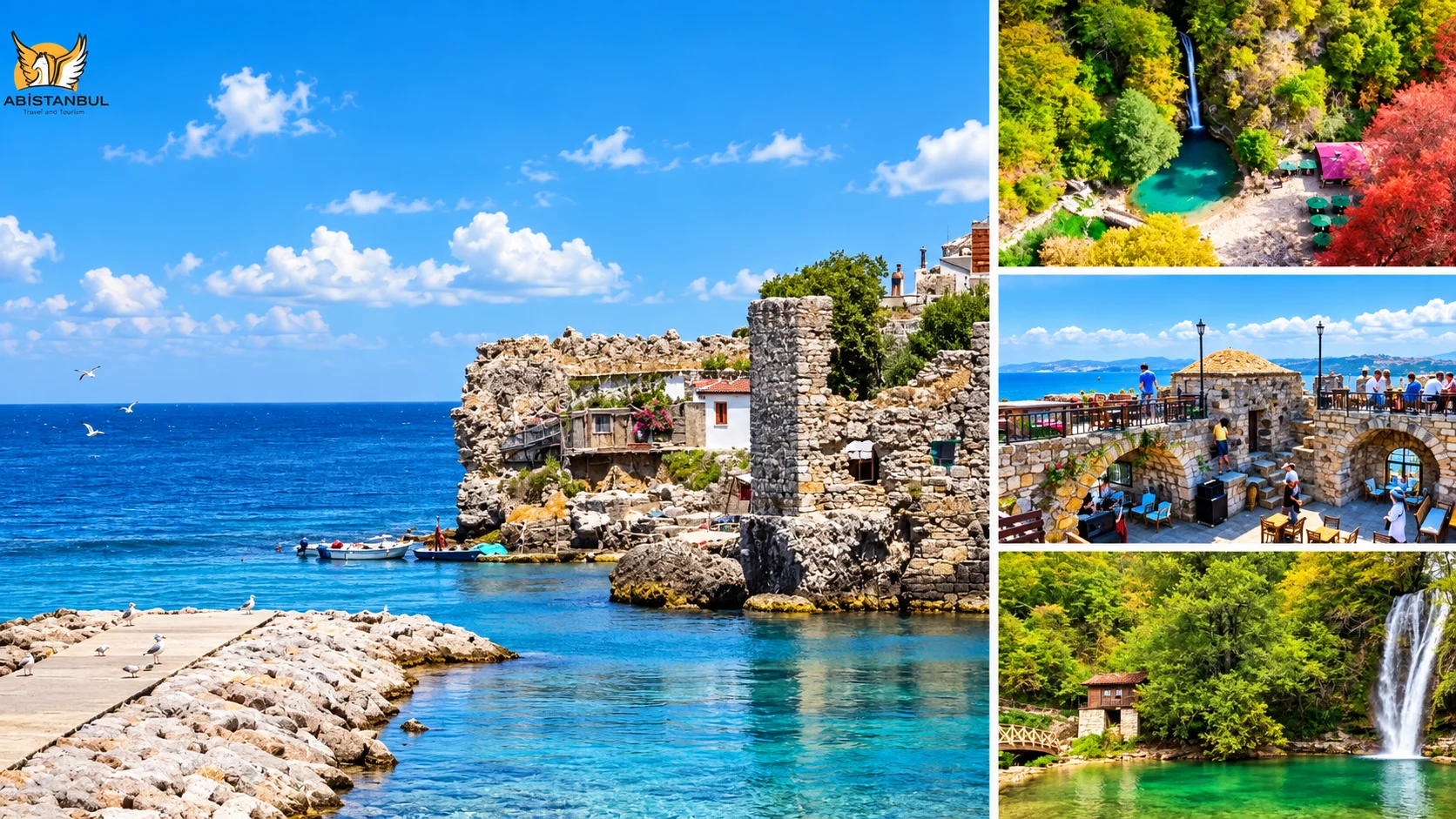
Sinop City Centre
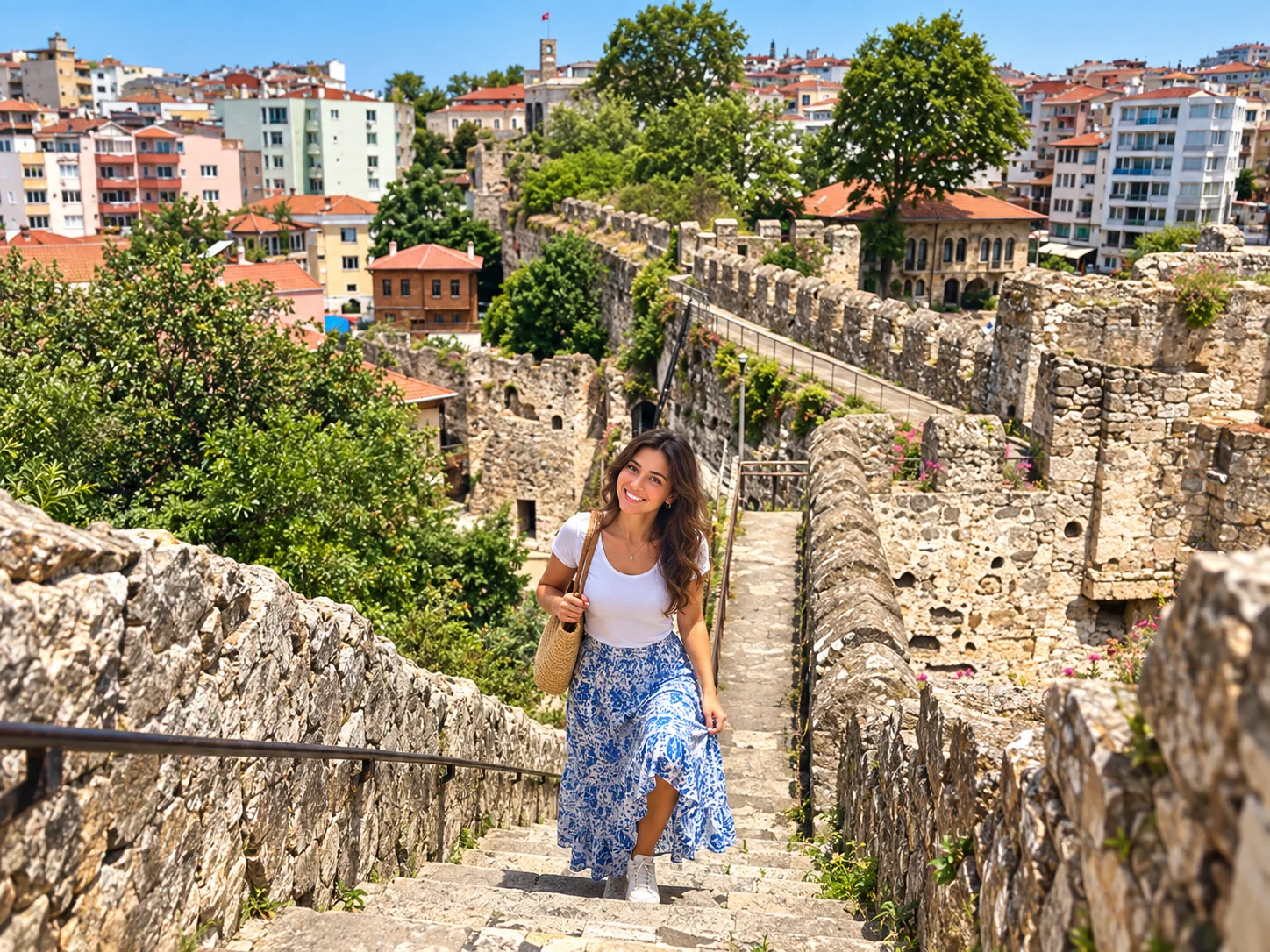
Sinop's old quarter is defined by its fortifications. The walls date to the Hellenistic period — likely the 3rd century BC under the Pontic kingdom — and were subsequently reinforced by Roman, Byzantine and Seljuk builders. The surviving circuit runs approximately 2.5 kilometres around the peninsula, with towers and gate structures still largely intact. Walking the walls or along the old town streets immediately below them gives a clear impression of the city's ancient layering, with Roman masonry embedded in later Ottoman-era repairs.
Sinop Fortress (Sinop Kalesi)
The main fortress complex incorporates the old city walls and their towers. The original Hellenistic fortification was built on a scale intended to protect the most strategically important harbour on the Black Sea's southern coast. In its time, Sinop was the principal city of the Pontic kingdom, and Mithridates VI — Rome's most tenacious opponent in Anatolia — was born here in 135 BC. The fortress walls are accessible on foot; entry to certain sections is managed through a gate off the main road. Visitors can walk significant stretches of the walls and examine the tower structures at close range.
Sinop Prison Museum (Tarihi Cezaevi)
Built within the ancient walls in 1887 on the site of an earlier Byzantine dungeon, Sinop Prison became one of the most notorious penal institutions in Turkey's history. It held political prisoners throughout the late Ottoman and early Republican periods — the poet Sabahattin Ali was imprisoned here, as were many others during the turbulent decades of the mid-twentieth century. The prison was closed in 1997 and subsequently restored and opened as a museum. The cells, punishment rooms and administrative spaces have been preserved with interpretive displays. Verify opening hours and access before visiting, as restoration work has occasionally interrupted access. (Note: 2026 hours should be checked locally on arrival.)
Diogenes Statue and the Philosopher's Birthplace
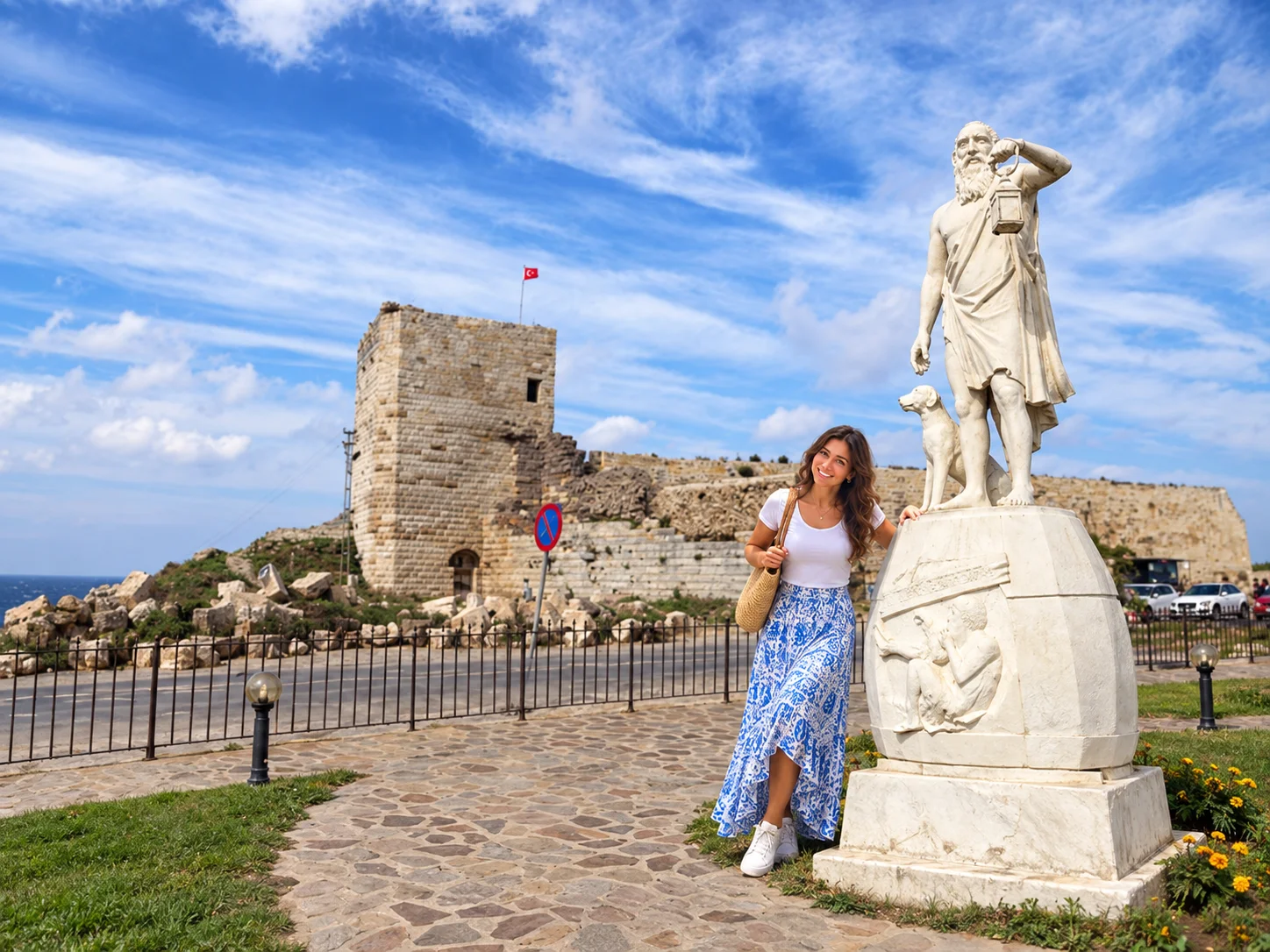
Sinop is the birthplace of Diogenes of Sinope (c. 412–323 BC), the founder of Cynic philosophy and one of antiquity's most deliberately provocative thinkers. Diogenes rejected conventional comfort and social convention; he famously slept in a large ceramic jar (pithos) and allegedly told Alexander the Great, when the conqueror offered to grant him any wish, that he would like him to move out of his sunlight. A modern bronze sculpture near the harbour commemorates his memory and is one of the city's most photographed landmarks. For visitors with an interest in classical philosophy and history, the association between the founder of Cynicism and this Black Sea city adds a layer of significance to Sinop that few small Turkish cities can match.
Alaeddin Camii (Alaeddin Mosque)
Located within the fortress area, the Alaeddin Mosque is the oldest mosque in Sinop, built in 1267 by the Seljuk sultan Alaeddin Keykubad II on the site of a Byzantine church. The original Byzantine structure's columns, capitals and architectural elements were incorporated into the mosque building, making it an unusually legible example of the architectural transitions that followed the Seljuk conquest of the Black Sea coast. The interior retains stone columns of classical origin supporting the prayer hall. Entry is respectful and appropriate dress is expected.
Hamsilos Bay, Akliman Beach and İnceburun
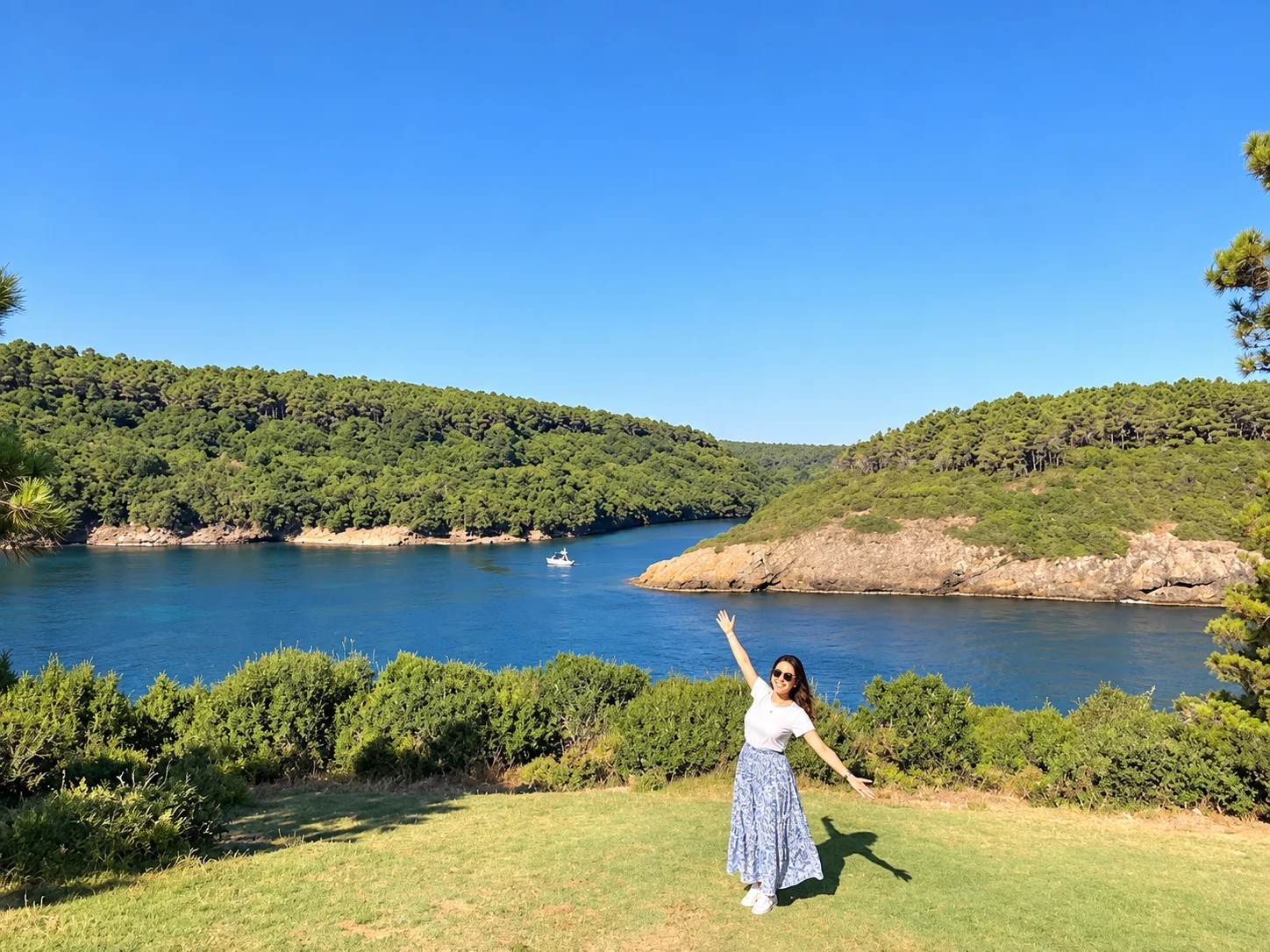
The coastal area northwest of Sinop city (approximately 15–20 km by road) encompasses three distinct features that together make for a full day of natural exploration: the deep inlet of Hamsilos Bay, the sandy beaches of Akliman and Çamurca, and the exposed headland of İnceburun at Turkey's northernmost tip.
Hamsilos Bay
Hamsilos is a long, narrow inlet cut into the forested hills northwest of Sinop, often described in Turkish tourism literature as "Türkiye'nin tek fiyordu" — Turkey's only fjord. Geologically it is a ria (a drowned river valley) rather than a glacially carved fjord, but the resemblance is striking enough that the popular name has stuck. Steep forested hillsides rise directly from the water on both sides; there is no beach at the head of the inlet, and the water is dark and cold. The visual effect — particularly in morning or evening light — is genuinely unusual for the Turkish coast. Several picnic areas and boat operators work from the shore during the warmer months; boat trips into the inlet are available in season and offer a different perspective on the landscape than the road approach. The inlet is a sheltered location popular with local visitors on weekends.
Akliman and Çamurca Beaches
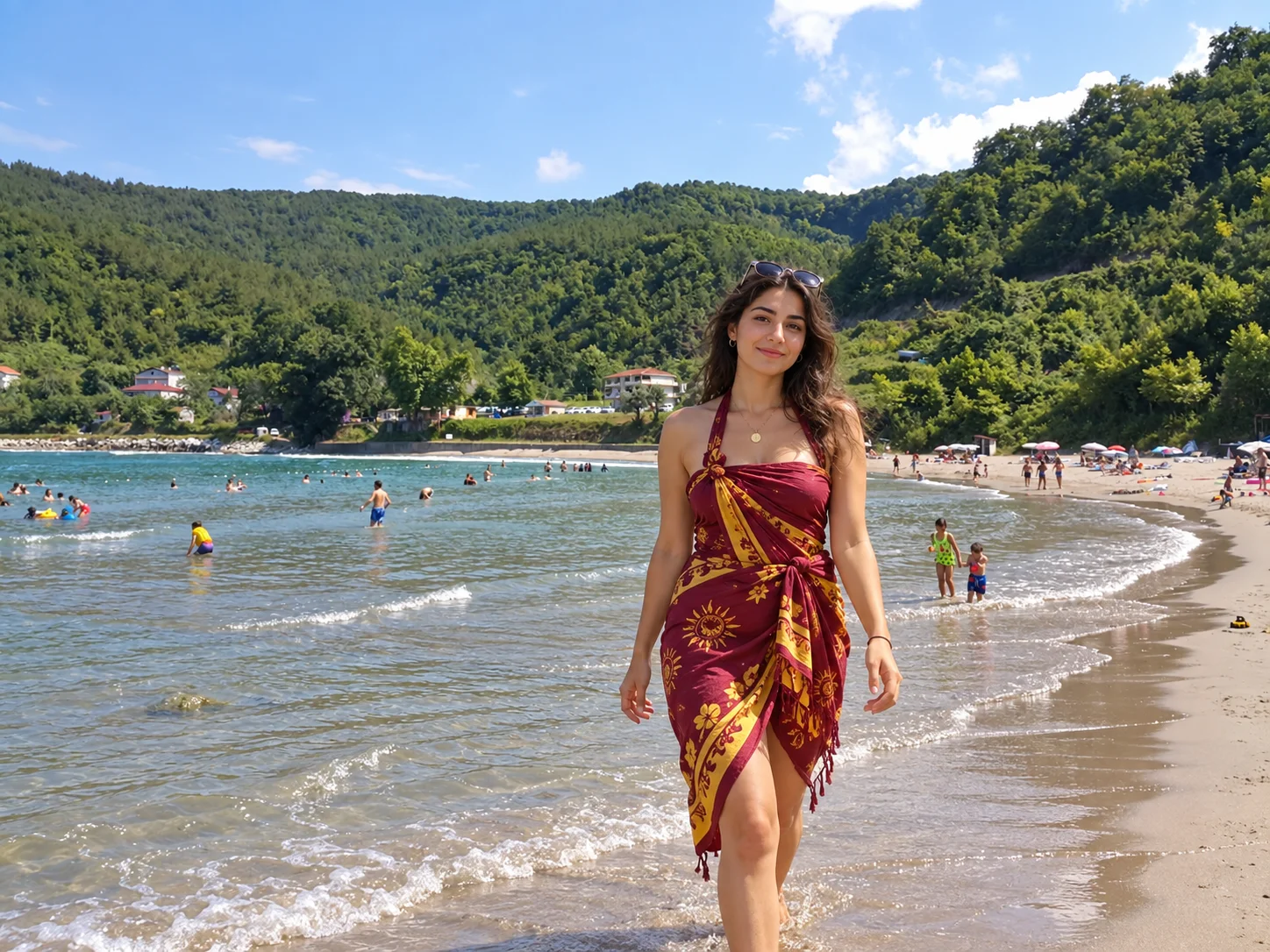
Close to Hamsilos, the bays of Akliman and Çamurca offer sandy beaches in sheltered positions. Akliman is the larger and better-known of the two, with organised beach facilities operating in summer. The water here is calmer and warmer than the exposed Black Sea coastline to the east of Sinop; the surrounding pine-forested hills make the setting distinctive. Çamurca is the smaller bay, slightly less developed, and favoured by visitors who prefer less crowded conditions. Both beaches can be combined with a trip to Hamsilos in a single day — the three locations are close enough to visit by car without needing to backtrack significantly.
İnceburun Lighthouse
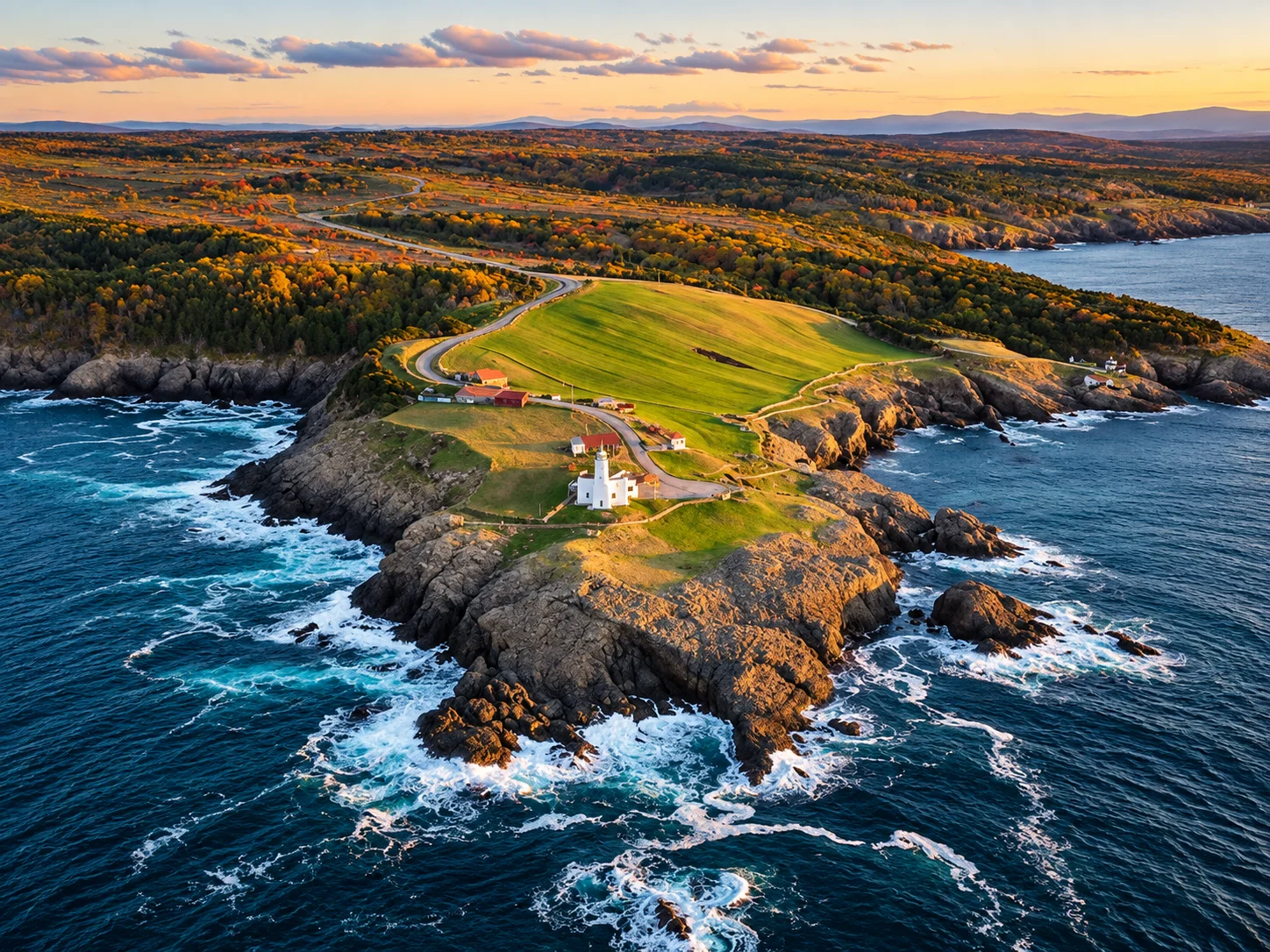
İnceburun is the northernmost cape of the Turkish mainland, at 42°06'N — the tip of Anatolia's Black Sea frontier. A functioning lighthouse stands on the exposed headland, marking the point where the sea opens out in three directions. The access road runs through pine forest before reaching the lighthouse compound. The cape is owned and maintained by the General Directorate of Coastal Safety; access to the lighthouse itself may be restricted depending on operational status, but the headland and sea views are accessible. The drive to İnceburun from Sinop city takes approximately 30–40 minutes. The experience is primarily about the geography — standing at Turkey's northernmost point with unobstructed Black Sea in front and the forested hills of Sinop province behind — rather than any built attraction.
Sarıkum Nature Park — Black Sea Dunes and Lagoon
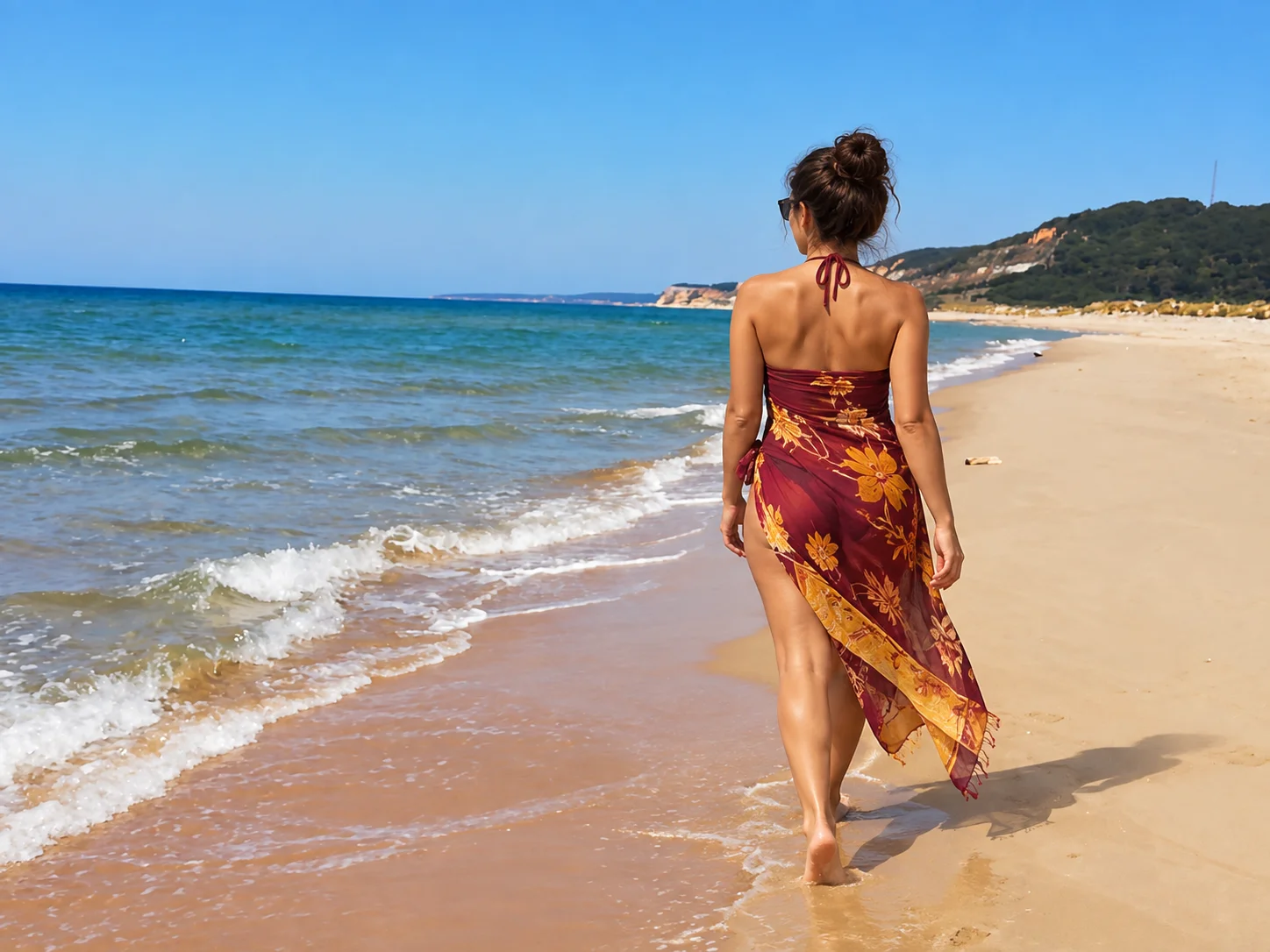
Sarıkum is one of the most geographically unusual spots on Turkey's Black Sea coast. The protected nature park (Sarıkum Tabiat Parkı) combines a freshwater lagoon, a sand dune system and a Black Sea beach in close proximity — a combination that does not exist in this form anywhere else on the Turkish coast. The dunes are modest in scale compared to desert systems, but their presence here is genuinely rare: the cold, wet Black Sea climate does not typically produce the conditions for dune formation, making Sarıkum a geological anomaly.
The lagoon behind the dune system has significant birdwatching value, particularly during spring and autumn migration. The sheltered wetland habitat attracts a range of wading birds, waterfowl and raptors, and the park is recognised for its ornithological interest. Swimming is possible from the beach side; the lagoon is a separate freshwater system not suitable for swimming. The park is approximately 20 km west of Sinop city, accessible by road.
The combination of dunes, sea, lagoon and surrounding pine-forested hillsides makes Sarıkum one of the province's most photogenic locations. Early morning, before day visitors arrive, is the best time to experience the quieter qualities of the landscape.
Erfelek — Tatlıca Şelaleleri Waterfalls
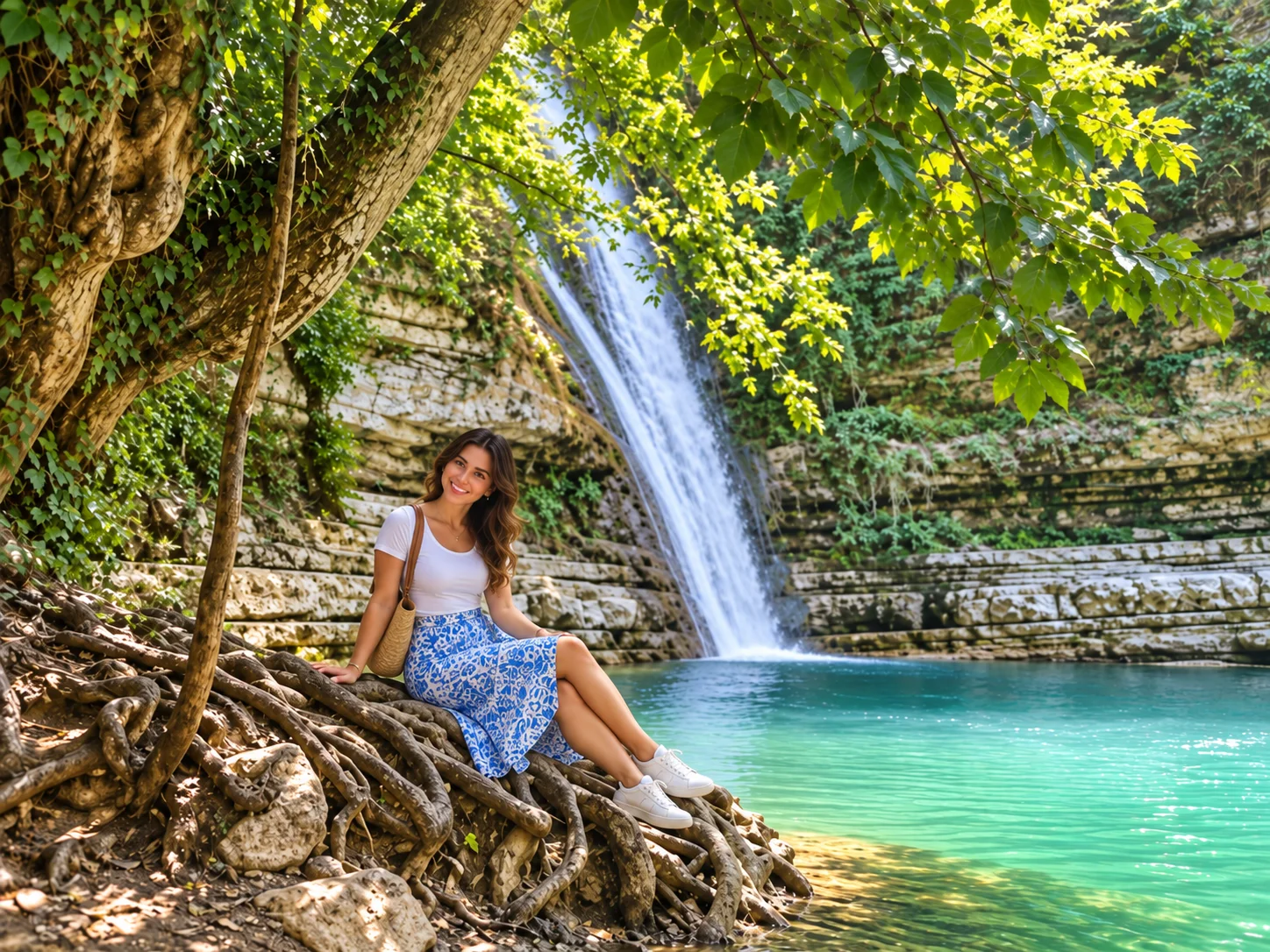
Erfelek is a district town approximately 45 km east of Sinop city, known primarily for the Tatlıca Şelaleleri — a series of cascading waterfalls in the forested gorge of the Ballıca Stream. The falls are set within a nature reserve and accessible via a footpath that follows the gorge upstream through dense forest. The trail offers multiple viewpoints of the cascades as they drop in stages through the gorge; the total walkable distance into the gorge is several kilometres with a turnaround at the upper falls.
The waterfall area is best visited in spring (April–June) when water levels are highest after snowmelt and the forest vegetation is freshest. Summer visits are also pleasant — the gorge is naturally cool and shaded even on hot days. Autumn brings colour changes to the surrounding forest. The site operates as a managed nature park with a small entrance infrastructure; verify current access conditions seasonally, as trail closures sometimes apply after heavy rain due to path erosion in the gorge.
Erfelek town itself is a quiet agricultural community known for its hazelnut production — the Black Sea coast hazelnut harvest is a significant seasonal event in this part of the province in August–September.
Ayancık — Basalt Rocks and İnaltı Cave
Ayancık is a coastal district town on the Black Sea, approximately 85 km east of Sinop city along the coastal road. Two natural features in its vicinity draw visitors with geological and speleological interests.
Bazalt Kayalıkları (Basalt Rock Natural Monument)
On the coast near Ayancık, a formation of columnar basalt constitutes a protected natural monument. Columnar basalt — formed when volcanic lava cools slowly and fractures into regular hexagonal prisms — is relatively rare on Turkey's Black Sea coast, making this formation geologically noteworthy. The rock columns rise directly from or near the shoreline, creating a distinctive visual contrast with the surrounding forested landscape. The site is accessible and visible from the coastal road; the protected designation limits what can be done around the formation, but it can be appreciated and photographed as a natural landmark.
İnaltı Mağarası (İnaltı Cave)
İnaltı Cave is a stalactite and stalagmite cave in the Sinop province with organised visitor access. The cave system contains a range of speleothem formations, including stalactites, stalagmites and flowstones developed over geological time in the local limestone bedrock. The cave is a cooler retreat in summer months. Access and opening hours should be verified before visiting, as cave attractions in this part of Turkey sometimes operate with seasonal restrictions or limited guided tour schedules.
Boyabat — Castle and the Gökırmak Valley
Boyabat is an inland district town on the Gökırmak River, approximately 80 km south of Sinop city. It is most notable for its castle — Boyabat Kalesi — which sits on a prominent rock outcrop above the river valley, and for the valley landscape that surrounds it.
Boyabat Kalesi (Boyabat Castle)
Boyabat Castle occupies a strategic position on a high rocky outcrop commanding the Gökırmak valley. The fortification dates to Byzantine times and was subsequently modified under Seljuk and Ottoman administrations. The castle walls and towers are largely intact, and the elevation provides panoramic views of the river valley, the surrounding agricultural plain and the wooded hills beyond. Boyabat was a significant settlement on the inland route between the Black Sea coast and central Anatolia throughout the medieval period, and the castle's position reflects that commercial and military importance. The town below is known for its Boyabat knives — traditional handcrafted blades with a long local craft tradition.
Gökırmak River Valley
The river valley around Boyabat is green and agricultural, with hazelnut and other tree crop plantations on the lower slopes. The valley makes a visually distinct contrast with the coastal landscapes of Sinop province — less dramatic but more inhabited, giving a picture of the region's inland agricultural economy. The road south from Sinop through Boyabat continues toward Kastamonu, making this route a natural connection between the Black Sea coast and the central Anatolian interior for those travelling by road. Kastamonu is a city with its own significant Ottoman heritage that rewards a separate visit for those travelling this corridor.
Gerze — Fishing Harbour and Akgöl
Gerze is a small fishing town on the Black Sea coast approximately 55 km southeast of Sinop city, situated at the end of a short peninsula. It is less visited than Sinop city or the western coastal areas but offers a more authentic view of Black Sea coastal life: working fishing boats in the harbour, a compact town organised around the port, and a low-key beach.
The Akgöl wetland and lagoon area near Gerze is of ornithological interest, particularly for wading birds during spring and autumn migration seasons. The combination of the lagoon, the fishing harbour and the adjacent Black Sea coast makes Gerze a quiet alternative for those who prefer to avoid the more visited stretches of the province. Gerze is best combined with Sinop city as part of a longer itinerary rather than as a standalone day trip from Istanbul.
Getting to Sinop and Getting Around
Sinop's position on Turkey's northernmost coast means that all road routes from Istanbul are long. The most direct route from Istanbul is approximately 680–720 km depending on which road you take, typically routed through Bolu and then Kastamonu or Tosya. The drive takes roughly 8–9 hours from Istanbul without stops. Given the distance, many visitors to Sinop choose to take a private intercity car with driver for the journey, which allows flexibility to stop at points of interest along the route — the Kastamonu region and the descent from the northern Anatolian plateau to the Black Sea coast are scenic in their own right.
Sinop Airport (SIC) operates scheduled domestic services with limited frequency. Check current operators and schedules before planning, as airline routes on smaller Black Sea airports change seasonally. From the airport, the city centre is approximately 3 km.
From Samsun: approximately 150 km west along the coastal D010 road. Samsun-Çarşamba Airport (SZF) is a more reliably served regional hub and can serve as an alternative flight option; Samsun itself is worth exploring — it is covered in the guide to the eastern Black Sea.
Within the province: Sinop's coastal and inland attractions are spread over significant distances, and public transport between points like Hamsilos, İnceburun, Sarıkum, Erfelek and Boyabat is limited. A hire car or car with driver is effectively necessary for anyone wanting to visit more than two or three sites in a single trip. The road between Sinop city and the İnceburun area is comfortable on sealed roads; Erfelek and Boyabat require inland driving on roads that are good but can be slower due to gradients and narrow sections.
For those arriving in Turkey via Istanbul, the Istanbul airport transfer service is the standard connection between the airport and the city before any onward journey. The Turkey travel guide has broader context on planning multi-destination itineraries within the country.
Sinop Travel FAQ
How far is Sinop from Istanbul?
Sinop is approximately 680–720 km from Istanbul by road, depending on your route. The most common approach is via Bolu, then Kastamonu or Tosya, and the drive takes roughly 8–9 hours. Sinop Airport has scheduled domestic flights, but services are limited; Samsun-Çarşamba Airport (around 150 km from Sinop) offers an alternative with more frequent connections.
Is Sinop worth visiting?
Yes — Sinop is one of the most historically layered and geographically distinctive cities on Turkey's Black Sea coast. It combines an unusually intact set of ancient fortifications with a well-preserved old town, the association with philosopher Diogenes, a notorious prison-museum, and easy access to diverse natural landscapes (a fjord-like bay, Turkey's northernmost cape, coastal dunes, forest waterfalls). It rewards visitors who travel independently rather than as a package tour, and it is noticeably less crowded than the Aegean or Mediterranean coasts.
What is the Sinop Prison Museum?
The Sinop Prison Museum (Sinop Tarihi Cezaevi Müzesi) is a former penitentiary built in 1887 within the ancient fortress walls. It held political prisoners throughout the late Ottoman and Republican periods, including notable writers and intellectuals. The prison was closed in 1997 and has been restored as a museum with preserved cells and interpretive displays. Verify current opening hours before visiting, as access arrangements have changed over time.
Is Hamsilos Bay really a fjord?
Hamsilos is widely marketed as "Turkey's only fjord," and visually the resemblance is real: a long, narrow, deep inlet with steep forested hillsides and dark, cold water. Geologically, however, it is a ria (a drowned river valley) rather than a glacially carved fjord — Turkey's climate has never produced the ice sheets that form true fjords. This distinction doesn't diminish the visual impact; the inlet is genuinely striking. Most visitors find the "fjord" description accurately captures the mood of the place, even if it is technically imprecise.
Can I visit İnceburun Lighthouse?
The İnceburun headland is accessible by road, and the experience of standing at Turkey's northernmost point is freely available. The lighthouse compound itself is operated by the General Directorate of Coastal Safety and access to the tower may be restricted depending on operational status. The headland viewpoint — with open Black Sea on three sides — is the main attraction regardless of lighthouse access.
What are the Erfelek waterfalls like?
The Tatlıca Şelaleleri near Erfelek are a series of cascading waterfalls in a forested gorge, accessible by a trail that follows the Ballıca Stream upstream. The gorge is naturally shaded and cool. The falls are at their most impressive in spring when water levels are high. The walk through the gorge is the experience — it is not a single dramatic waterfall viewpoint but a series of falls and pools distributed along the trail over several kilometres.
What is the best beach in Sinop province?
Akliman Beach near Hamsilos is the most popular swimming beach in the province, with organised facilities and sheltered water. Çamurca Bay nearby is smaller and less developed. On the city side, there are small town beaches but they are less notable. Sarıkum has a Black Sea beach adjacent to the dune and lagoon system, which is more unusual scenically but the water can be rougher. The best beach for a conventional beach day is Akliman; for landscape and uniqueness, Sarıkum is harder to match.
What is the best time to visit Sinop?
Late May to mid-September is the primary visit window for beach activities. The Black Sea coast in this region is notably cooler and wetter than the Mediterranean, and the sea temperature at Sinop rarely exceeds 22–24°C even in peak summer. Spring (April–June) is particularly good for the Erfelek waterfalls and for Sarıkum's birdlife. The town is less crowded in May–June and September than in July–August, when Turkish domestic tourism peaks.
How long do you need to visit Sinop properly?
Allow at least two full days for the city and western coast (Hamsilos, İnceburun, Akliman, Sarıkum). Add a third day for Erfelek or Boyabat. A four-day itinerary covers the province's main attractions comfortably without rushing, including time in the old town in the evening. Day trips from Samsun to Sinop are possible but leave very limited time.
Is a car necessary for visiting Sinop province?
Yes, effectively. While Sinop city itself is compact and walkable, reaching Hamsilos, İnceburun, Sarıkum (all 15–25 km from the city), Erfelek (45 km), and Boyabat (80 km) requires personal transport. Public minibuses (dolmuş) cover some routes but with limited frequency. Hiring a car locally or booking a private intercity car with driver gives you the flexibility this province requires.