
Antalya province has one of the most varied coastlines in the Mediterranean: a 600-kilometre shoreline that spans pebble city beaches, long sandy dunes, turquoise canyon coves, forested mountain bays and ancient harbour swimming spots where you step between Roman columns and the sea. In 2026, Antalya held Blue Flag status on 232 beaches — more than any other province in Turkey. This guide arranges the province's most significant beaches by region, from the city waterfront to the far eastern district of Alanya, so you can plan your time on the coast with accurate expectations about each stretch of shore.
Antalya Beach Quick Picks
| Profile | Best Choice | Key Feature |
|---|---|---|
| City beach with promenade | Konyaaltı Beach | 7 km pebble, Blue Flag, cycling path, city access |
| Sandy beach near city | Lara Beach | Fine golden sand, 15 km from airport, camping available |
| Historic old-town setting | Mermerli Beach (Kaleiçi) | Under the Roman walls, private concession, stairs access |
| Ruins + swimming | Phaselis (Kemer) | Three ancient harbours, calm central beach |
| Iconic turquoise cove | Kaputaş Beach (Kaş) | 187 steps, canyon mouth, sand-pebble, Blue Flag |
| Turkey's longest sand | Patara Beach | ~18 km uninterrupted sand, nesting protection, windy |
| Nature + turtle nesting | Çıralı Beach | 3 km, eco-village, Yanartaş nearby, night access restricted |
| Family shallow water | İncekum (Alanya) | Fine sand, genuinely shallow, Blue Flag |
| Classic resort beach | Kleopatra Beach (Alanya) | 2+ km, Blue Flag, cable car, legend-named |
| History + beach combo | Side Town Beaches | Temple of Apollo visible, both east and west shores |
Antalya City Centre Beaches — Mermerli and İnciraltı
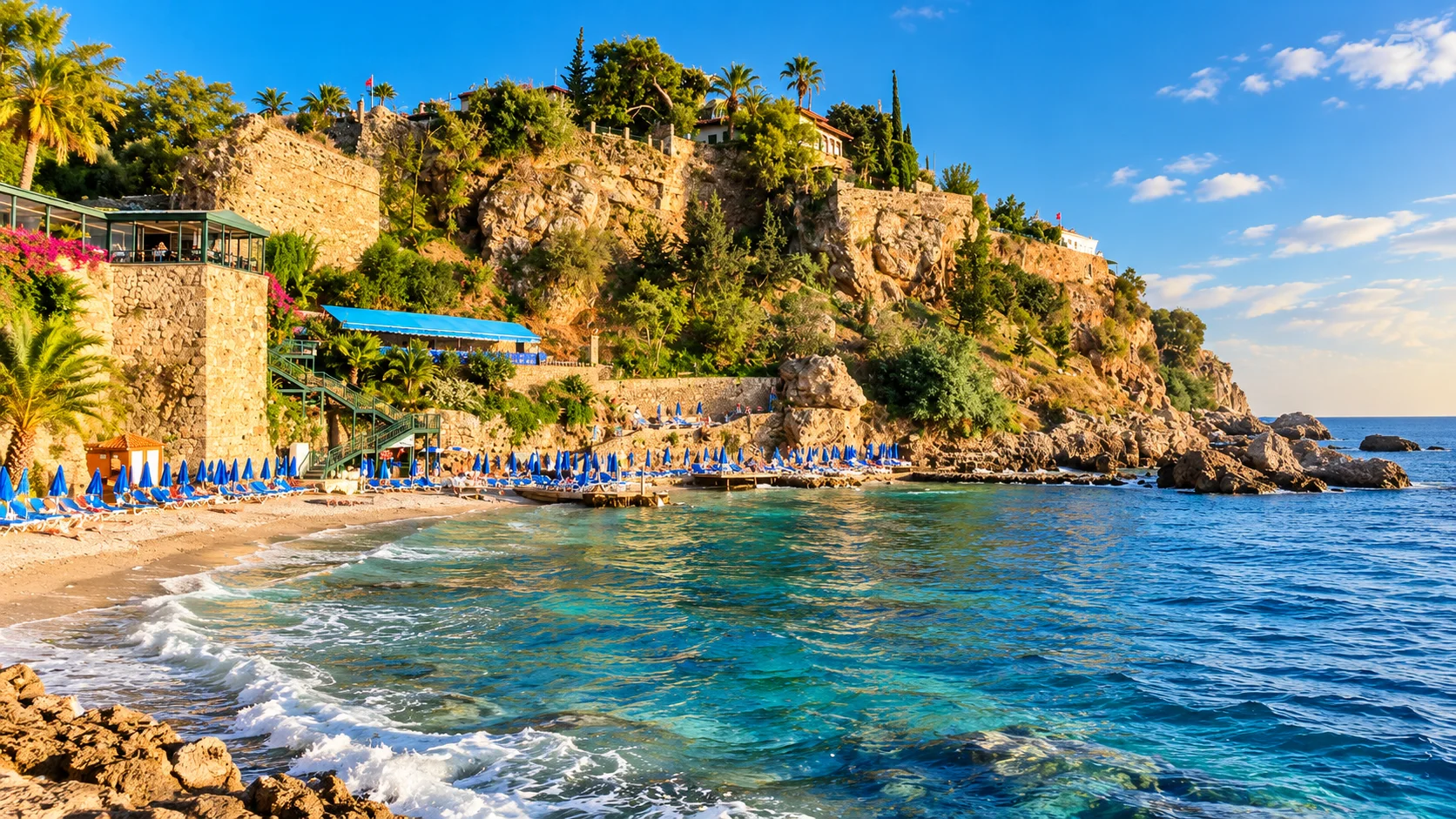
Antalya's city centre has two waterfront beaches accessible from the urban fabric itself, both located on the travertine cliff coastline south of the Roman harbour. These are compact, character-rich spots rather than large swimming beaches, and they suit guests staying in Kaleiçi or those who want a beach day without leaving the city.
Mermerli Beach is the only beach directly below Kaleiçi old town, set at the base of the ancient walls in a protected position near the Roman yacht harbour. Access is via steep stairs descending from street level. The beach is approximately 100 metres long and operated under a private concession with an entry fee (around 800 TL per person in 2026, which typically includes a sunbed — check current rates at the gate, as this figure has changed annually). The calm, sheltered water is one of the most distinctive swimming spots in the city, but the fee and limited size mean it suits visitors who want a unique setting rather than a long beach day.
İnciraltı Halk Plajı (İnciraltı Public Beach) is operated by Muratpaşa Municipality in Erdal İnönü Kent Parkı, at the foot of the travertine falezler cliffs. Its name derives from the fig trees growing on the cliff above — not from any underwater feature. Access involves either a lift installed in a cave structure or steep cliff stairs; queue times for the lift can be long in peak season. The beach has Blue Flag status and provides free public access. Paid sunbeds are available. The cliff setting and the protected natural area above make this a distinctive urban beach experience.
Konyaaltı Beach — The City's Main Shore
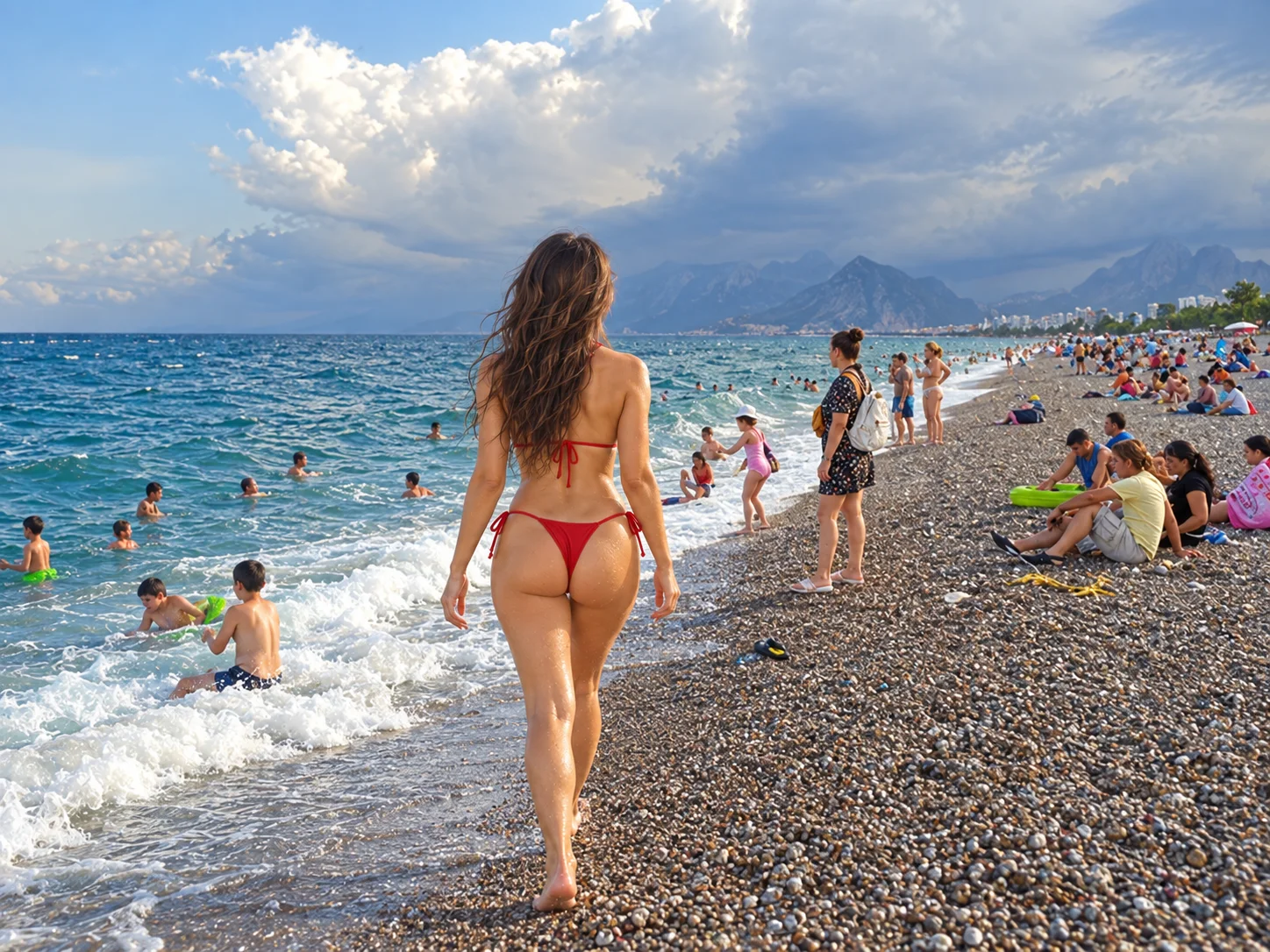
Konyaaltı Beach extends approximately 7 kilometres along the western edge of Antalya city — the longest urban beach in the province. It is a pebble beach, predominantly fine pebble rather than sand, and is one of the city's defining public spaces: free to access, Blue Flag certified in 2026, and backed by a wide promenade with cycling and walking paths running along most of its length. The Beach Park complex at the eastern end of the strip adds park facilities, cafés and recreational infrastructure.
The sea at Konyaaltı deepens quickly. Within a few metres of the shoreline, depth increases rapidly to 2–3 metres — this is not a shallow wading beach, and visitors with young non-swimmers should be aware that the sea is deeper here than it appears from the shore. The backdrop of the Taurus mountains behind the city is a distinctive feature of this beach that no other in the province replicates. Water sports operators work seasonally from the beach, and lifeguard coverage operates through the summer months.
For a broader picture of what to do in Antalya beyond the coast, the Antalya attractions guide covers the city's major sites in more detail.

Lara Beach — Golden Sand East of the City
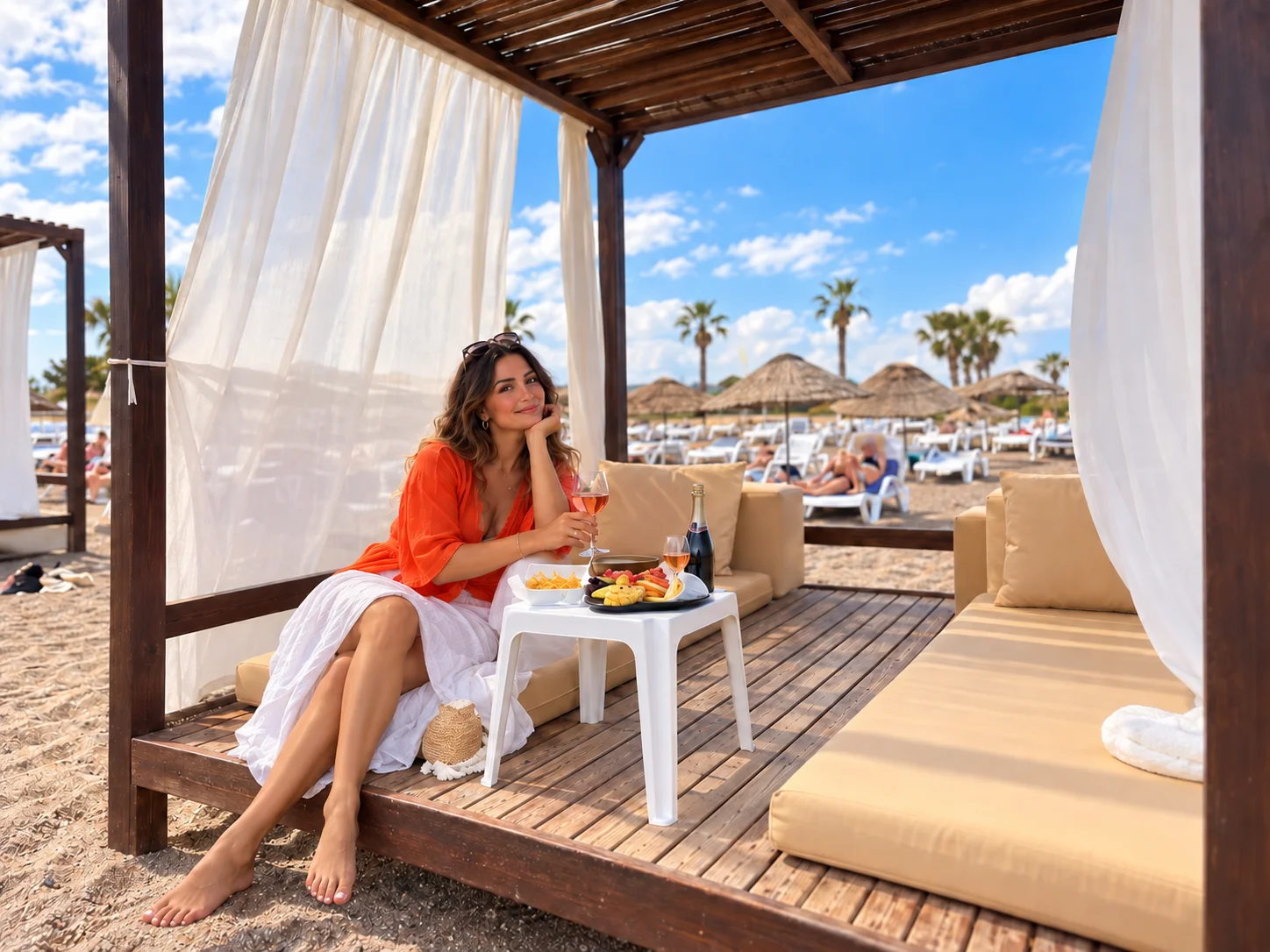
Lara Beach, approximately 15 kilometres east of the city centre, is the main sandy alternative to the pebble shore at Konyaaltı. The beach has fine golden sand — a genuine distinction in a province where many central and western beaches are pebble — and is one of Antalya's longest-established public beach areas, operated in part by Antalya Metropolitan Municipality.
The Lara Halk Plajı (public beach section) has Blue Flag certification and includes basic facilities. A camping and caravan area is maintained by the Ministry of Culture and Tourism, making it one of the few beaches in the province where a tent or campervan holiday is formally available. Beach clubs and private facilities are interspersed along the strip alongside the public sections. Note that the large resort hotels in Kundu and the broader Lara/Kundu zone have their own hotel-only frontages — these are separate from the public beach and are not accessible to non-guests.
Lara's position approximately 15 kilometres from Antalya Airport (in the opposite direction from Belek resort hotels, which are further east) makes it one of the most convenient sandy beaches for visitors who arrive by air and want beach access without a long transfer.
Kemer, Beldibi and Ayışığı — Mountain-Coast Beaches
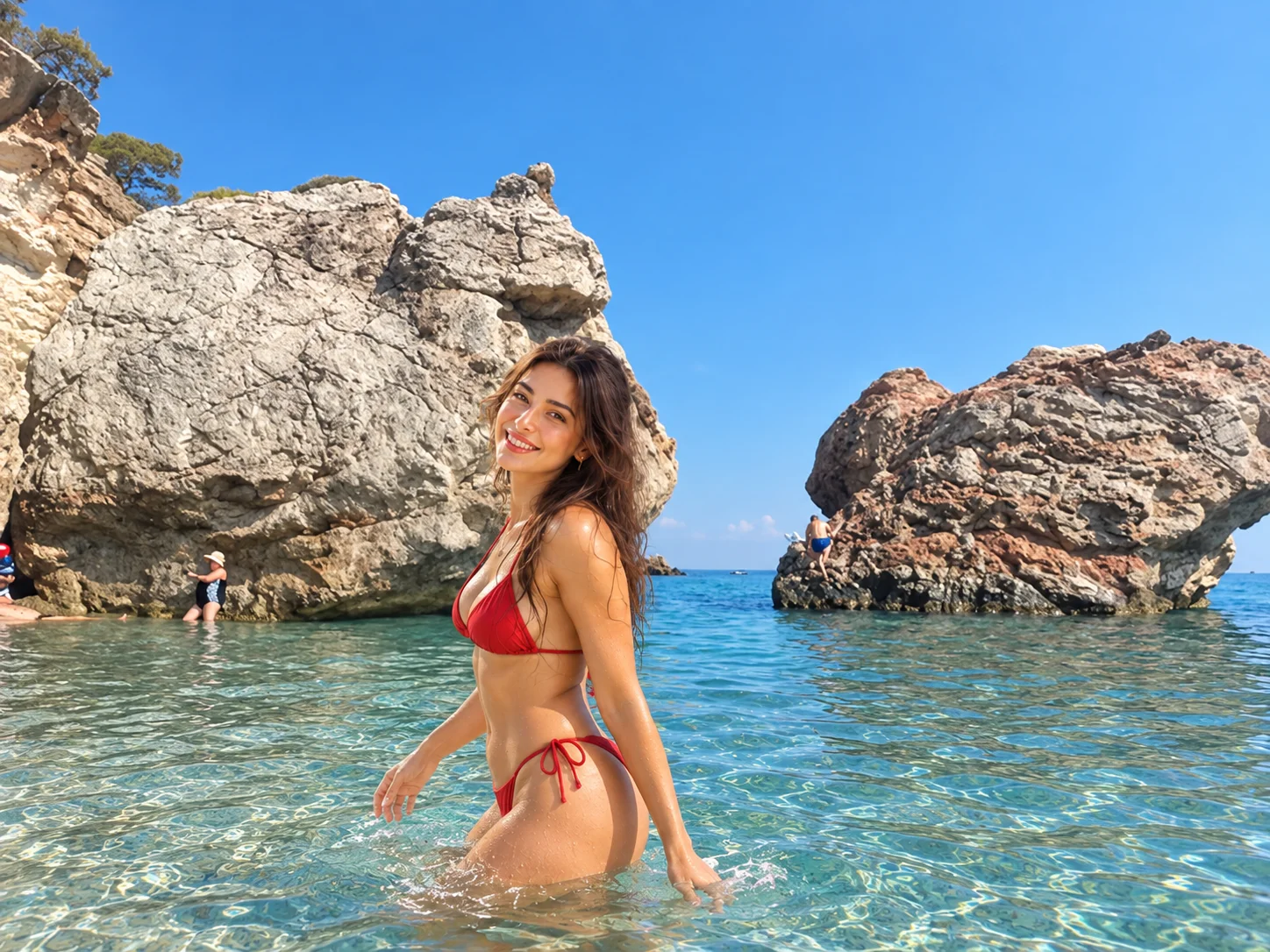
The Kemer district, 40–60 kilometres west of Antalya city, offers a fundamentally different beach character from the city and eastern resort zones. The Taurus mountains here come very close to the coast, creating a narrow strip of forested shoreline backed by dramatic mountain scenery. The beaches in this zone tend to be pebble or sand-pebble mix, sheltered by the topography, and spread across the sub-areas of Beldibi, Kemer town, Kiriş, Göynük and Tekirova.
Beldibi Halk Plajı is the northernmost public beach in the Kemer area, approximately 25 kilometres from Antalya city. It is a free, Blue Flag-certified public beach with a fine pebble and partial sand character. Water sports operators (jet ski, parasailing, boat trips) typically work here in season. Sea shoes are useful due to the mixed pebble entry.
Ayışığı (Moonlight) Beach in Kemer town is a Blue Flag public beach set within Ayışığı Park, a landscaped coastal park. Approximately 500 metres long, with a sand-pebble mix, changing facilities, lifeguard coverage and free public access. Private beach club sections operate within the park for those who want sunbed service. It is the most accessible Kemer district beach for visitors based in the town centre.
Phaselis — Ancient Harbours and Three Swimming Bays
Phaselis, the best-preserved ancient harbour city on the Antalya coast, sits within an archaeological protected zone at the southern edge of the Kemer district near Tekirova/Göynük. Unlike most ancient sites in Turkey, Phaselis has not one but three working beaches corresponding to its three ancient harbours — North, Central and South — all accessible within the site. This makes it one of the most unusual swimming destinations in the Mediterranean. For more about the ancient city itself, see our Phaselis guide.
The Central Harbour beach is the most recommended for family swimming: it is the calmest and shallowest of the three, protected by the headland. The North Harbour has more current and open water conditions. The South Harbour is deeper and best for confident swimmers. All three are open for swimming during site visiting hours (08:30–19:30 April–October; 08:30–17:30 November–March). Site entry via Müzekart is free for Turkish citizens; the foreign visitor fee in 2026 is approximately 10 Euro. No separate beach entry charge applies once inside the site.
The pine forest directly behind the beaches and the stone quays of the ancient harbour create an atmosphere found nowhere else on the Turkish coast. Picnic areas are available. The site has parking, but it fills quickly in the high season and an early arrival (before 10:00) is strongly advisable.
Çıralı and Olympos — A Shared Shore, Different Worlds
Çıralı and Olympos share the same continuous sandy shoreline — approximately 3 kilometres long, in a sheltered valley flanked by orange groves and pine forest. Walking between the two along the beach takes roughly eight minutes. Despite the shared coastline, the two settlements attract distinctly different visitor profiles and have different access systems.
Çıralı is reached from the north via a winding road through citrus orchards. The village has small-scale boutique accommodation, ecological pensions and family guesthouses — no large hotel chains. The beach is open and calm, the atmosphere unhurried, and the landscape of orange trees meeting the sea makes it one of the most photogenic natural beach settings in the province. Yanartaş (the eternal flames of Chimaera, where natural gas has burned from rock fissures since antiquity) is a 25–30 minute uphill walk from the beach — a popular evening excursion.
Olympos is accessed through a pine and laurel forest from the south. The ancient city of Olympos lines the approach path; an entrance fee applies to pass through. The beach at Olympos is continuous with Çıralı's but the surrounding atmosphere is quite different: the alternative/eco-tourism character of the accommodation (historically associated with treehouse stays), the forest approach and the ruins along the banks of the stream create a distinctly more adventurous setting. The beach itself is sand and fine pebble, calm, and protected from prevailing winds.
Both beaches are subject to caretta caretta (loggerhead sea turtle) nesting protection from May to September. Night access is restricted: at Çıralı, access is prohibited from 21:00 to 06:00 during the nesting season; at Olympos the same protective framework applies. Beach umbrella placement near marked nest zones is not permitted. These restrictions are actively enforced.
Adrasan Beach — A Protected Horseshoe Bay
Adrasan is a sheltered horseshoe bay approximately 50 kilometres south of Kemer, reached by a mountain road through the Olympos Beydağları National Park zone. The bay geometry creates naturally calm, low-wave conditions inside the bay — which distinguishes Adrasan from the more exposed beaches to the north and south. The beach is approximately 2 kilometres of fine pebble and sand, with a small fishing village at the northern end.
The calm, shallow-ish entry and easy beach character make Adrasan one of the better family swimming options in the remote southern Antalya coast. Facilities are modest compared to the city or Alanya beaches, with local restaurants and a small marina but no large organised beach infrastructure.
Suluada boat trips: Adrasan harbour is the departure point for trips to Suluada, an uninhabited island with exceptionally clear water and some of the most praised snorkelling in the province. Full-day boat trips run regularly in season. Suluada is not accessible by land and is not a beach in the conventional sense — but the excursion from Adrasan is one of the most enjoyable day trips available anywhere on the western Antalya coast.
Kaş and Kalkan — Pebble Coves, Cold Springs and Kaputaş
The Kaş district is not known for wide sandy beaches — the geology here produces dramatic pebble coves, turquoise water fed by underwater freshwater springs and some of the clearest sea in Turkey. The coves near Kaş town and the canyon-mouth beach at Kaputaş are among the most photographed beaches on the entire coast.
Büyük Çakıl Beach is approximately 1.3 kilometres from Kaş town centre — a pebble cove with restaurants, beach clubs and clear, cold water. The cold is genuine: natural freshwater springs mix with the sea, creating a distinctly cooler swimming temperature than beaches further east. The cove is popular, well-serviced and free to access.
Küçük Çakıl Beach is the town beach: within walking distance of Kaş centre, free, smaller, and with the same cold-spring water characteristic. Both Büyük and Küçük Çakıl are best visited in the morning before afternoon crowds arrive in July and August.
Akçagerme Plajı, approximately 3 kilometres from Kaş, is a municipally managed Blue Flag beach with showers, toilets and changing facilities. It is described by visitors as relatively sheltered and calm compared to the town coves, and is a less-crowded option particularly suited to families.
Kaputaş Beach — The Most Iconic Cove on the Turkish Coast
Kaputaş sits at the mouth of a narrow canyon on the Kaş–Kalkan coastal road, about 7 kilometres from Kaş. The beach is reached via 187 steps descending from the road — there is no lift, no formal car park (vehicles are left on the roadside above), and the road is narrow. None of this discourages the visitors: the combination of canyon walls, fine golden sand, and intensely turquoise water has made Kaputaş one of the most recognisable beach images in Turkey.
The beach is Blue Flag certified and free to access. The composition is sand with some pebble. The sea here is open-water exposed: currents exist, particularly lateral currents that deflect off the canyon walls, and the sea deepens quickly after wading depth. Swimming conditions are generally calmer in the early morning before the wind builds — arrival before 10:00 gives the best combination of calm water and manageable crowds. Follow lifeguard instructions regarding flag conditions; this beach is not suitable for non-swimmers or very young children without close supervision.
Kaputaş has a protected status as a sit alanı (natural site area). No permanent commercial facilities are located on the beach itself. A small café at road level is the only service point.
Patara Beach — Turkey's Longest Sandy Shore
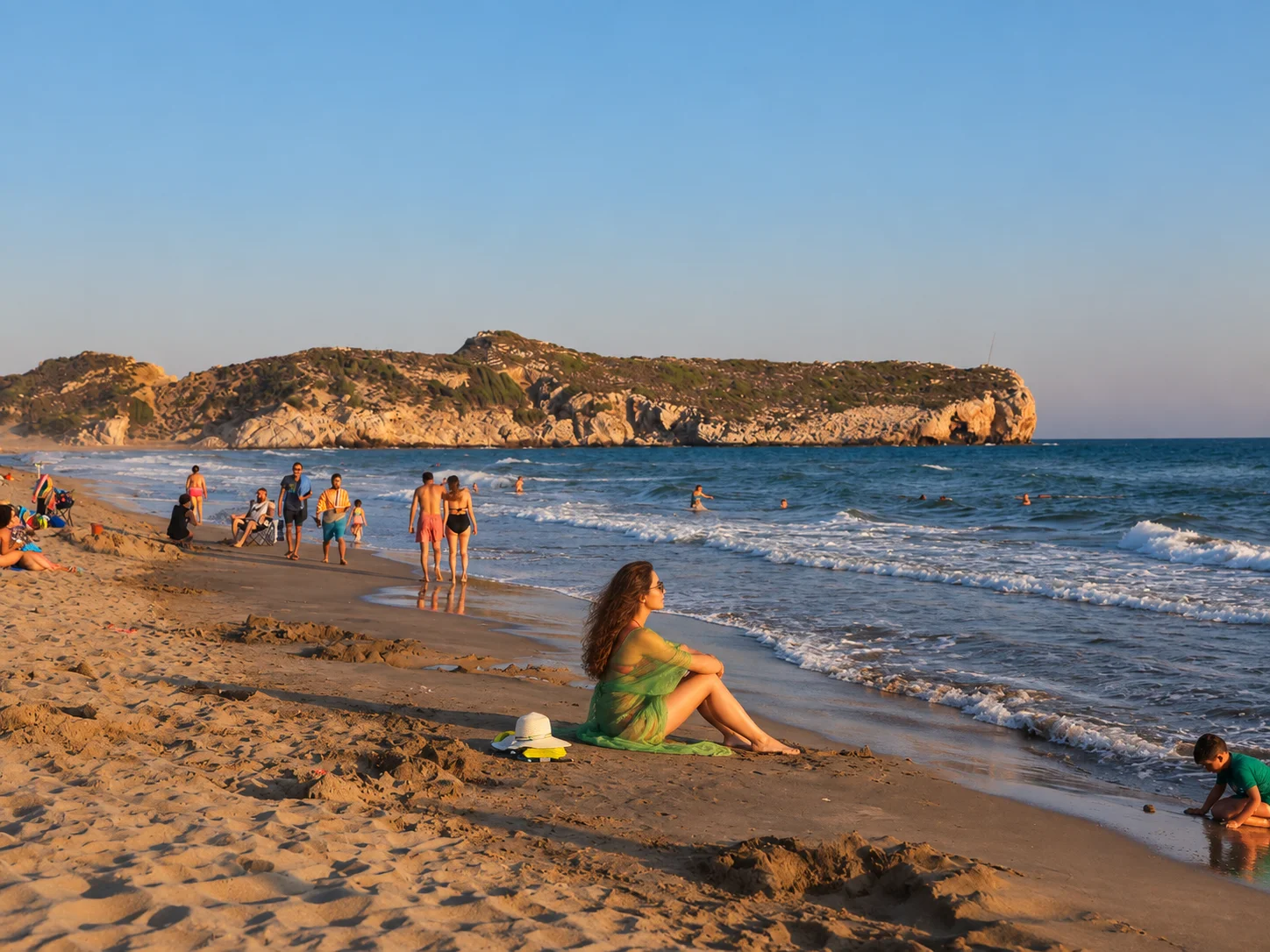
Patara Beach is approximately 18 kilometres of uninterrupted fine sand — one of Turkey's longest sandy beaches, backed by a significant dune system protected as part of the Patara Special Environmental Protection Zone. The beach is accessed through the ruins of Patara Ancient City (Özel Çevre Koruma Bölgesi), which means entry involves paying the archaeological site admission (Müzekart valid for Turkish citizens; approximately 10 Euro for foreign visitors in 2026).
Wind is a defining characteristic of Patara. The beach faces the open sea and is exposed to prevailing winds along its full length — most days in summer, particularly in the afternoon. This makes Patara a favoured windsurfing destination but a more challenging option for casual swimmers seeking calm water. The waves and choppiness that result from the wind are significant and should be factored into planning. Morning visits before 11:00 typically offer the calmest conditions.
The beach is open from 08:00 to 20:00. Night access (20:00–08:00) is strictly prohibited during May–September because Patara is one of the most important caretta caretta (loggerhead sea turtle) nesting beaches in the Mediterranean. Marked nest zones during this period require that umbrellas not be placed nearby and that human activity is minimised around nest areas. The dune system also requires staying on designated paths — off-path movement across the dunes is restricted. These are not discretionary rules but actively enforced environmental protections.
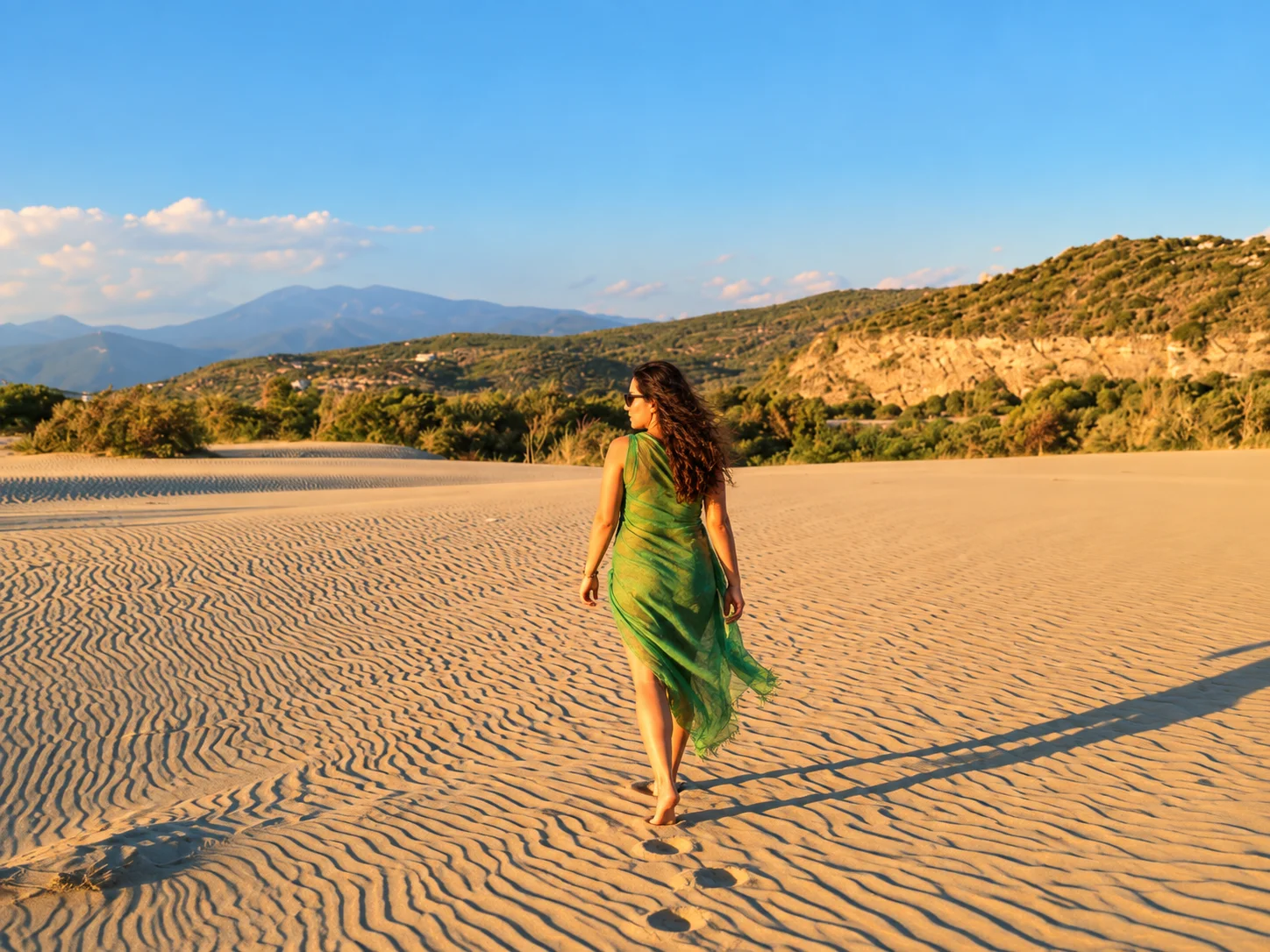
Patara is also one of Turkey's most significant ancient cities, with an acropolis, harbour, main street, parliament building and granaries. The combination of an 18-kilometre sand beach, active archaeological excavation, protected dunes and turtle nesting site makes Patara unlike any other beach destination in the country.
Demre, Finike and the Western Coast
The stretch between Kaş and Antalya city along the western coast — passing through Demre and Finike — is primarily rocky, with public beaches fewer and more spread out than in the eastern and central parts of the province. The most accessible and reliably high-quality public beach in this zone is Gökliman Plajı near Finike, approximately 2–3 kilometres from Finike town centre. The beach holds Blue Flag status and is operated by Finike Municipality, opening in the late spring for the season (08:00–19:00). The beach is pebble, approximately 500 metres long, with clear water and a municipal facility block (showers, toilets, changing cabins). It is one of the smaller but consistently rated public beaches on the western coast.
The Andriake / Çayağzı area near Demre also has a harbour beach accessible from the Myra-Andriake archaeological zone, worth considering for visitors who are combining a coast drive with the region's archaeological sites (including the Church of St Nicholas in Demre itself).
Side and Manavgat — Ancient Peninsula Beaches
Side sits on a narrow peninsula approximately 75 kilometres east of Antalya, projecting into the sea with beaches on both the eastern and western flanks. The ancient city of Side — its Temple of Apollo, Roman theatre and colonnaded streets — occupies the same peninsula as the beaches, creating a genuinely unique combination: you swim within view of ruins that date to the 7th century BC. For more on the ancient sites of the region, see our Antalya ancient cities guide.
The West Beach (Batı Plajı) of Side is slightly shallower and calmer — the public section between the hotels is suitable for families. The East Beach (Doğu Plajı / Büyük Plaj) is longer, with fine golden sand, and offers broader open beach space where the hotel frontages allow. Neither beach is a dedicated public halk plajı in the same organised sense as Lara or Konyaaltı, but both have free public access corridors between the resort-hotel frontages.
For the most family-friendly, shallow swimming in the Side zone, Kumköy / Ilıca (approximately 8 kilometres further east in the hotel strip) is specifically noted for calm, shallow, warm water — probably the shallowest beach in the entire Side/Manavgat area, and well-suited to families with very young children. The public beach section at Evrenseki, a few kilometres beyond, also holds Blue Flag status and positive visitor reviews.
Alanya — Kleopatra, Damlataş and İncekum
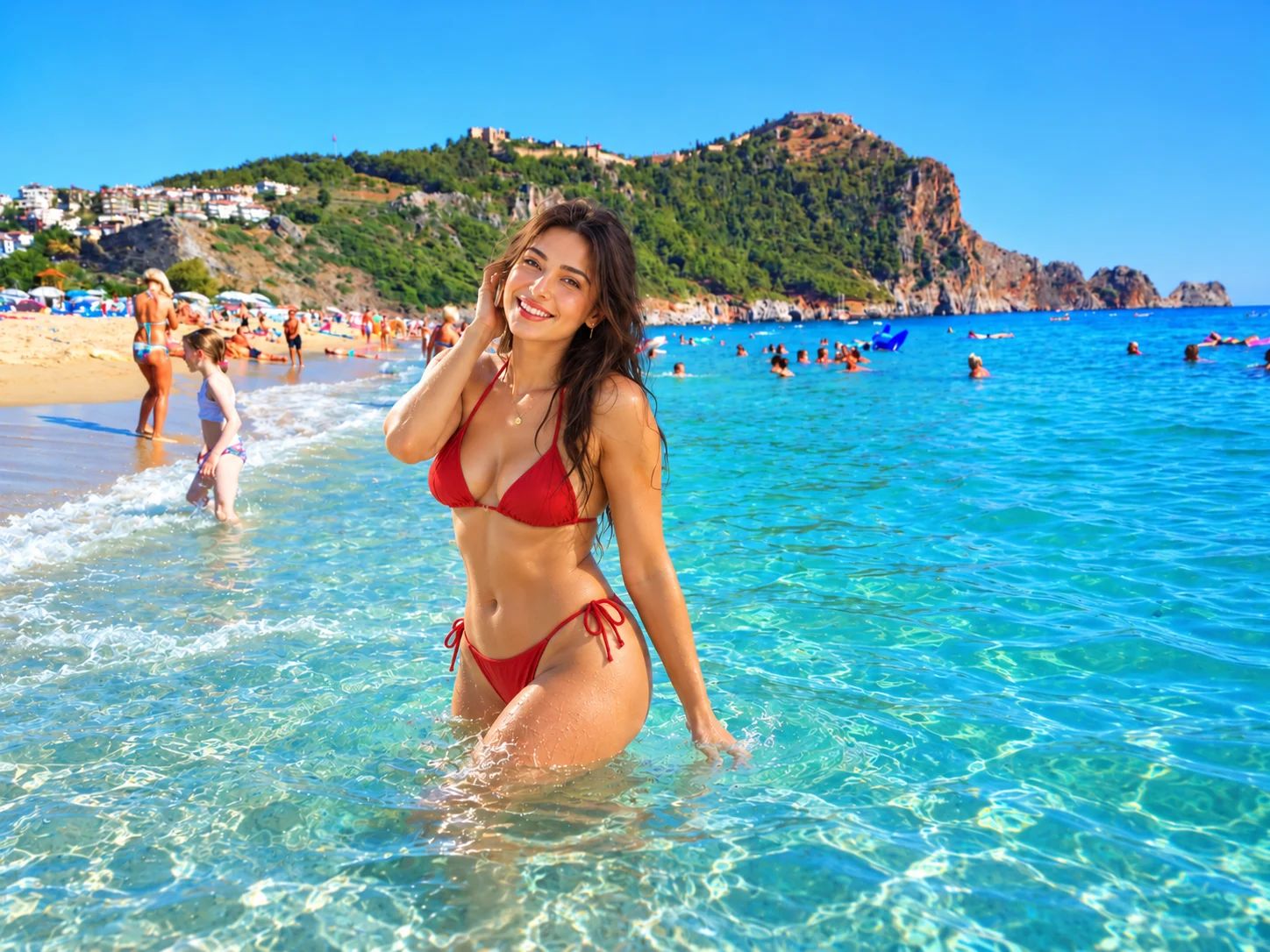
Alanya, approximately 135 kilometres east of Antalya city, is the province's largest tourist resort and has some of its most celebrated beaches. The district's beaches are predominantly sandy — unusually so compared to the western and central parts of the province.
Kleopatra Beach (Kleopatra Doğu Halk Plajı) extends over 2 kilometres along the western base of Alanya's ancient peninsula. The beach takes its name from a local tradition — recorded by Alanya Municipality itself — that holds Mark Antony had sand shipped from Egypt for Cleopatra. There is no archaeological evidence for this legend; it is a long-established regional narrative rather than historical fact. The beach's sand quality, clear water and Blue Flag certification are real, and well-documented. The Alanya cable car (teleferik) departs from the western end of the beach, providing access up to Alanya Castle — visiting the castle and beach on the same day is a natural combination.
Damlataş Beach is directly adjacent to the western end of Kleopatra Beach, in front of the famous Damlataş Cave (historically used as a therapeutic microclimate for respiratory conditions). The two beaches are effectively continuous; visitors move between them without a physical barrier.
İncekum Beach, approximately 26 kilometres west of Alanya in Avsallar Beldesi, is one of the most genuinely family-suitable beaches in the province. The beach gets its name from the exceptional fineness of its golden sand (ince = fine, kum = sand) — dry, it does not stick to feet, which visitors consistently note. The sea here is genuinely shallow for a considerable distance from the shore, making it one of the few Antalya beaches where young non-swimmers have safe wading depth. Blue Flag certified, municipal facilities, and free public access.
Sandy vs Pebble Beaches — What to Expect
Antalya province's coastline is not uniformly sandy — a common misapprehension. The broad pattern is:
Sandy beaches are concentrated in the eastern part of the province (Lara, Side/Kumköy, Alanya/Kleopatra, İncekum/Avsallar) and in the far southwest (Patara). Kaputaş has golden sand at its base, mixed with some pebble. Çıralı and Olympos are sandy and fine pebble.
Pebble beaches dominate the central and western coast: Konyaaltı (the main city beach), Gökliman (Finike), and the Kaş town coves (Büyük Çakıl, Küçük Çakıl) are predominantly pebble. The Kemer district has mixed pebble-sand beaches including Beldibi and Ayışığı. Sea shoes (water shoes) are useful at pebble beaches, particularly for entry and exit.
The distinction between sand and pebble is worth checking before you plan — a family expecting a sandcastle beach at Konyaaltı may be disappointed; a visitor who prefers not to have sand in their bag will find Konyaaltı and Kaş ideal.
Sea Turtle Nesting Beaches — Rules and Responsibilities
Several Antalya beaches are active loggerhead sea turtle (caretta caretta) nesting sites. The regulations at these beaches protect both the turtles and their nests, and are enforced during the nesting season (typically May–September):
- Night access: Patara Beach closes at 20:00; Çıralı and Olympos prohibit access from 21:00 to 06:00 during nesting season.
- Umbrellas: Must not be placed near marked nest zones. Nest locations are marked with sticks; maintain a clear distance.
- Lighting: Artificial lights near nest areas are restricted — lighting disorients hatchlings navigating to the sea.
- Noise, fires and vehicles: Prohibited on nesting beaches at night.
- Interaction with turtles: Do not approach, touch or photograph with flash any turtle or hatchling on or near the beach. This applies whether the animal is nesting or in the water.
These rules are not optional guidelines. Violations are subject to penalties under Turkish environmental law.
Beach Safety Practical Notes
Antalya's sea conditions range from the completely sheltered (Adrasan bay, Phaselis central harbour) to genuinely open-water exposed (Patara, Kaputaş). Key points for safe swimming:
- Flag warnings: Turkish beaches use the international flag system — red means no swimming, yellow means caution, green means safe. Follow lifeguard instructions even at Blue Flag beaches; conditions change with afternoon winds.
- Currents at canyon beaches: Kaputaş and other canyon-mouth beaches can develop lateral currents. If you feel a current pulling you along the shore, swim parallel to the beach (not directly to shore) to exit the current, then swim back to the beach at an angle.
- Water depth: Konyaaltı and some rocky platform beaches deepen quickly very close to the shoreline. Check conditions before letting children wade unsupervised.
- Sun and heat: July and August midday temperatures regularly exceed 38°C at Antalya beaches. The midday window (12:00–16:00) is the most intense. Sunscreen, shade and hydration are essential, not optional.
- Pebble entry: At pebble beaches like Konyaaltı, Beldibi and the Kaş coves, water shoes make entry and exit significantly more comfortable.
Best Time to Visit Antalya's Beaches
The sea is warm and swimmable from late May through October. Peak heat and crowds are July–August, when Antalya city temperatures regularly exceed 40°C and popular beaches like Kaputaş and Kleopatra attract very large numbers of visitors. For a balance of warm sea, manageable crowds and comfortable temperatures, late May to mid-June and September–October are generally the best windows. The sea in late September and early October remains warm from summer accumulation — often 26–28°C — while the beaches are significantly quieter.
Beaches like Patara and Çıralı have nesting protection restrictions in July and August (specifically night access). Winter beach visits are possible at Konyaaltı, Lara and the Alanya coast, but swimming is generally cold from December through March.
Getting Around Antalya's Beaches
Antalya's beaches are spread across more than 600 kilometres of coastline. Within the city, Konyaaltı is accessible by public transport. Lara beach is reachable by the Antalya tram and local bus connections. However, most of the beaches outside the city — Phaselis, Çıralı, Olympos, Adrasan, Patara, Kaş, Side, Alanya — require either a rental car or organised transfers.
For visitors covering the coast from Kemer to Alanya, or making single-day excursions to remote beaches such as Adrasan or Patara, a private intercity car with driver is the most flexible and comfortable option — particularly when visiting multiple beaches or archaeological sites in a single day. For transfers from Istanbul for a longer Antalya coast stay, see our Istanbul Airport transfer service.
Frequently Asked Questions — Antalya Beaches
What are the best beaches in Antalya?
Depends on what you want. For city convenience: Konyaaltı (pebble, 7 km, Blue Flag). For sandy beach near city: Lara (fine sand, 15 km from airport). For iconic scenery: Kaputaş (187 steps, turquoise, open sea). For Turkey's longest sand: Patara (~18 km, windy, nesting protection). For ruins + swimming: Phaselis (3 ancient harbours). For family shallow water: İncekum, Avsallar. For classic resort beach: Kleopatra Beach, Alanya.
Is Konyaaltı Beach sandy or pebble?
Pebble. Konyaaltı is predominantly fine pebble — it is not a sandy beach. Bring water shoes for comfortable entry and exit. It is Blue Flag certified and one of the best organised urban beaches in Turkey, but visitors expecting sand may be surprised.
Is Konyaaltı Beach shallow enough for children?
No — Konyaaltı deepens quickly. Within a few metres of the shoreline the depth increases rapidly. It is not a shallow wading beach. For genuinely shallow water suitable for young children, İncekum (Avsallar, near Alanya) or Kumköy (Side) are much better choices.
How do you get to Kaputaş Beach?
By car on the Kaş–Kalkan coastal road. There is no formal car park — vehicles are parked on the roadside above the beach. From the road, 187 steps descend to the beach. Public transport options are limited; dolmuş (shared minibus) on the Kaş–Kalkan route stops nearby but does not have a dedicated schedule. Arriving early (before 09:00) avoids the worst of the summer crowds and gives the calmest swimming conditions.
Can you swim at Phaselis without paying an entrance fee?
No. All three swimming beaches at Phaselis are within the archaeological site, which requires an entrance ticket. Müzekart covers entry for Turkish citizens. The foreign visitor fee is approximately 10 Euro (2026). No separate beach fee is charged once inside — the site entry covers everything. Opening hours are 08:30–19:30 (April–October).
What is the best time to visit Patara Beach?
Morning visits (08:00–11:00) before the wind builds. Patara is consistently windy in the afternoon — this is not an occasional condition but a standard feature. The beach closes at 20:00. Nesting season restrictions (May–September) mean no access at night. September and early October are good for warm sea, reduced wind and fewer crowds.
Are Çıralı and Olympos the same beach?
They share the same continuous shoreline but are two distinct villages accessed from different roads. Çıralı is at the northern end (family-oriented, boutique accommodation, orange groves); Olympos is at the southern end (accessed through the ancient city, more adventurous/alternative atmosphere). Walking along the beach between them takes about 8 minutes.
What are the sea turtle nesting rules at Antalya beaches?
At nesting beaches (Patara, Çıralı, Olympos): no access after 20:00 (Patara) or 21:00 (Çıralı/Olympos) during May–September. No umbrellas near marked nest zones. No fires, vehicles or loud noise at night. Do not approach, touch or use flash photography near turtles. These rules are enforced under Turkish environmental law.
Which Antalya beach is best for families with young children?
İncekum Beach (Avsallar, near Alanya) is the strongest option for young children — genuinely shallow water, fine golden sand, Blue Flag, municipal facilities. Kumköy (Side hotel zone) is also notably shallow and calm. Lara Halk Plajı has fine sand and basic facilities. Avoid beaches that deepen quickly (Konyaaltı, Kaputaş) with very young non-swimmers.
How many Blue Flag beaches does Antalya have?
232 beaches in Antalya province held Blue Flag status in 2026 — more than any other Turkish province and one of the highest concentrations of any Mediterranean destination. However, Blue Flag certification covers the beach management programme, not simply water quality; conditions and management standards must be re-certified annually.
Do I need a car to visit Antalya's beaches?
For city beaches (Konyaaltı, Lara): no, public transport works. For beaches outside the city — Phaselis, Çıralı, Olympos, Adrasan, Patara, Kaş, Side, Alanya — a car or organised transfer is effectively required. Dolmuş (shared minibus) services exist on major routes but run on variable schedules. A private car or driver gives significantly more flexibility, particularly for beaches like Adrasan and Patara that are far from town centres.
Is Kleopatra Beach's legend about Egyptian sand true?
No archaeological evidence supports it. The story — that Mark Antony had sand shipped from Egypt for Cleopatra — is a long-standing local tradition, repeated by Alanya Municipality and widely published in travel sources, but it is legend rather than documented history. The beach's sand quality and Blue Flag status are real regardless of the name.