
Antalya is one of the most cave-rich provinces in Turkey, with around 500 known caves catalogued across its territory. The Taurus Mountains that frame the region are built almost entirely from limestone — rock that dissolves slowly under the pressure of water, forming cavities over millions of years. The result is a remarkable underground landscape that runs from Paleolithic rock shelters on the coast to living stalactite galleries deep in the mountains. Whether you are visiting the Mediterranean coast or heading inland, at least one extraordinary cave is almost certainly within reach of your base.
Why Antalya Has So Many Caves
The Taurus Mountain range stretches roughly 1,000 km across southern Turkey, and much of its core is composed of dense limestone accumulated on an ancient seabed. When slightly acidic rainwater seeps into cracks in this limestone, it gradually dissolves the rock — a process known as karstification. Over hundreds of thousands to millions of years, cracks become passages, passages become chambers, and chambers become the cave systems that make Antalya so geologically extraordinary. Underground rivers, seasonal floods and shifting water tables have shaped each of these systems differently: some are dry galleries of delicate stalactites, some contain permanent underground lakes, and some carry active water even today. The Taurus also gave ancient populations shelter — several Antalya caves were inhabited continuously from the Lower Palaeolithic through to late antiquity, leaving behind one of the richest sequences of prehistoric occupation in the Mediterranean world.
Quick Overview: Which Cave Should You Visit?
| Cave | Area | Main Character | Best For |
|---|---|---|---|
| Karain | Döşemealtı | Archaeological — 500,000 years, Neandertal remains | Prehistory and archaeology enthusiasts |
| Damlataş | Alanya | Compact stalactite cave, 22°C, Turkey's first tourist cave | Alanya day visitors, easy access |
| Dim | Alanya | Stalactite gallery, 360 m route, underground lake at end | Stalactite scenery, families |
| Altınbeşik | İbradı | Turkey's largest underground lake; guided boat tour | Underground-lake experience; nature lovers |
| Kocain | Döşemealtı/Ahırtaş | One of Turkey's widest cave entrances, Roman cistern | Adventure seekers, archaeology |
| Zeytintaşı | Serik | Rare pasta stalactites, guided tours only | Unique formations, small groups |
| Beldibi | Kemer | Rock shelter with Mesolithic red-ochre rock art | Prehistoric art, Kemer visitors |
| Yalan Dünya | Gazipaşa | Living cave, 28°C, 450 m route, year-round open | Warm cave experience, eastern Antalya |
Karain Cave — 500,000 Years of Unbroken Habitation
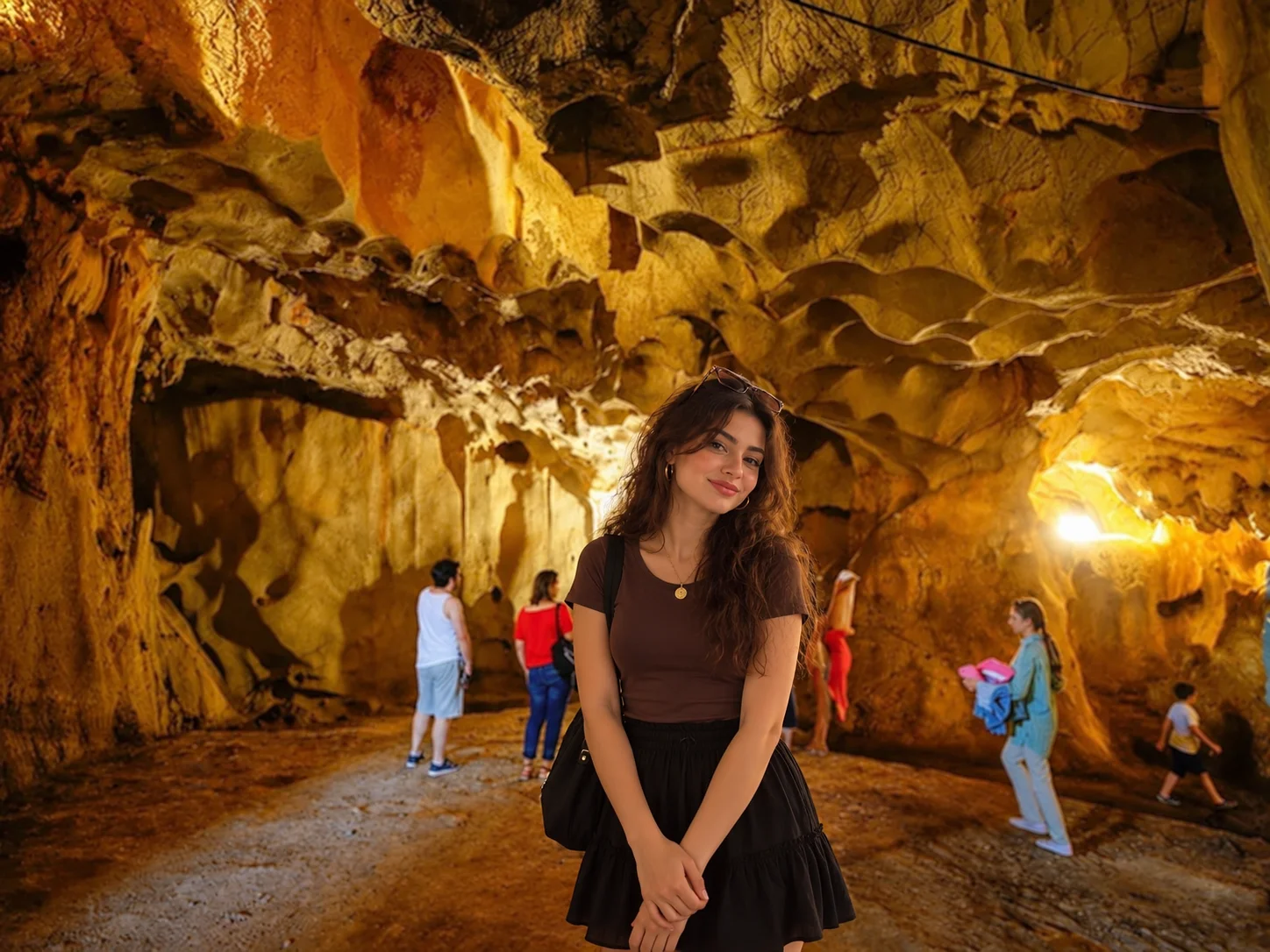
Karain Cave stands apart from every other cave in this guide because its significance is not geological but human. Located 30 km northwest of Antalya in the Döşemealtı district — specifically in Yağca Mahalle — at an elevation of 430–450 metres, the cave was first documented scientifically by Prof. Dr. Kılıç Kökten in 1946 and has been the subject of systematic excavations ever since. What those excavations revealed is extraordinary: habitation traces spanning from the Lower Palaeolithic period, roughly 500,000 years ago, all the way through to the late Roman era. More significantly, Karain is the only site in Turkey where skeletal remains of Neanderthal humans have been found — a discovery that places it among the most important prehistoric sites in the entire eastern Mediterranean.
The cave reaches its entrance through a climb of around 470 steps from the car park — a fact worth knowing before you visit with young children or anyone with mobility concerns. Once inside, the chambers open into impressive vaulted galleries. The site was designated a first-degree archaeological and natural protected area in 1997 and is on the UNESCO World Heritage Tentative List. Many of the stone tools, bones and other finds recovered from Karain are displayed at the Antalya Archaeological Museum in the city centre, which makes a natural companion visit. Allow at least two hours for Karain itself.
Damlataş Cave — Alanya's Compact Stalactite Gem
Damlataş Cave sits at the western edge of Kleopatra Beach in central Alanya, making it arguably the most conveniently located cave in Antalya province. Discovered accidentally in 1948 during quarrying operations, it has the distinction of being the first cave in Turkey officially opened to tourism. The cave is compact — around 50 metres long, with a main cylindrical chamber roughly 14 metres in diameter and 15 metres high — but every surface is densely covered with stalactites, stalagmites and flowstone formations estimated to have taken 15,000 years to develop. The temperature inside holds at a constant 22°C year-round, making it noticeably cooler than the summer heat outside and pleasantly warm on a winter visit. A guided walk through the cave takes approximately 10–15 minutes. The cave entrance is a short walk from Alanya's Red Tower and Alanya Castle, making it easy to combine with a broader Alanya morning.
Dim Cave — Alanya's Largest Stalactite Gallery
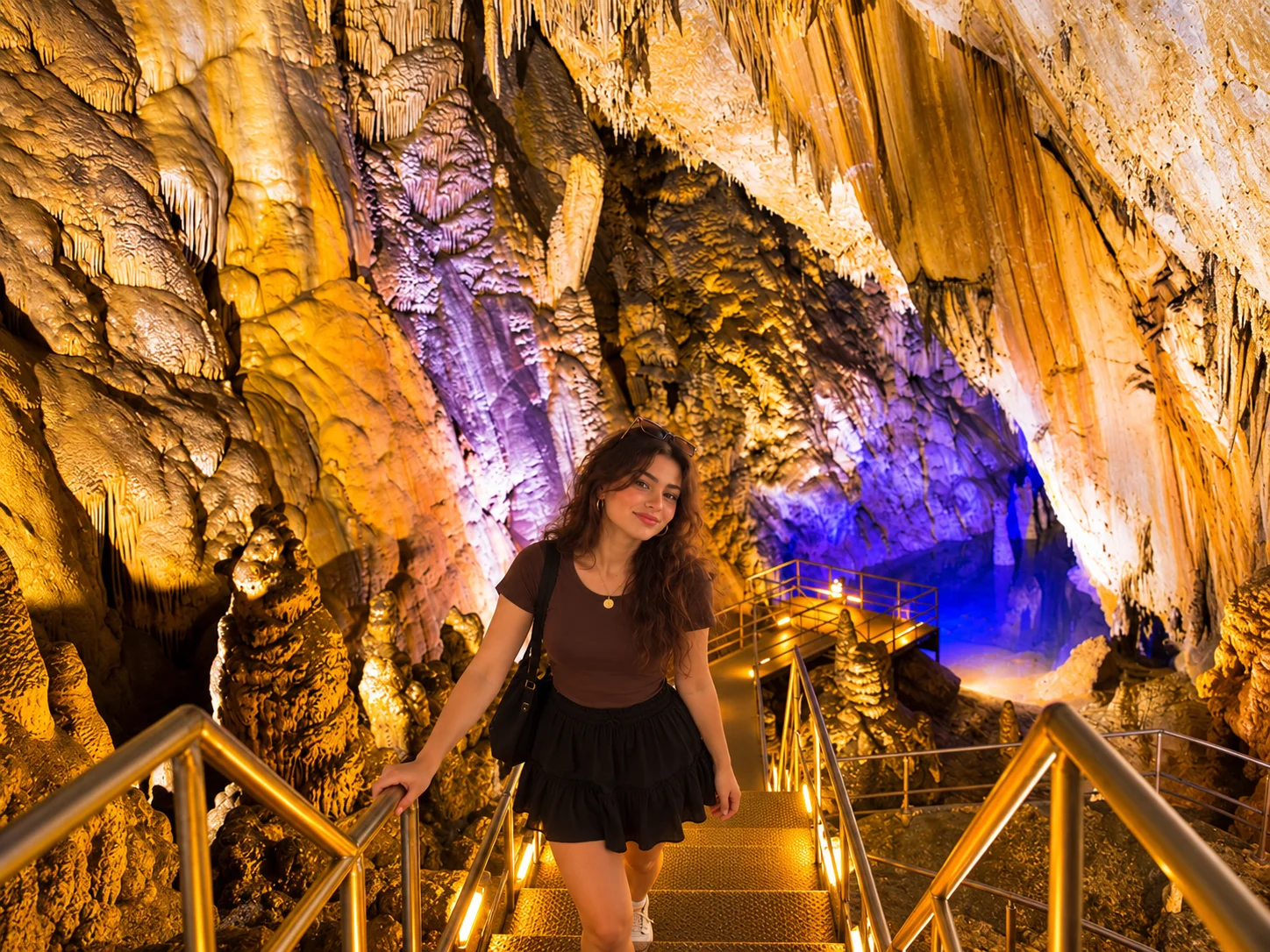
Dim Cave is the largest cave open to regular tourism in the Alanya area, located on the western slope of Cebeli Reis Mountain, approximately 11–14 km from Alanya city centre at an elevation of 232 metres. The cave has a total system length of 410 metres; the visitor route covers 360 metres and passes through four main chambers with widths and heights of 10–15 metres each. At the far end of the route, 17 metres lower than the entrance, lies a small underground lake with a surface area of around 200 square metres and a depth of 2 metres — a rewarding destination for the walk. The cave temperature stays at a steady 18°C throughout the year.
There is no cable car to Dim Cave — this is a common misconception. The cave is reached by private vehicle or taxi, with a short uphill walk of around 100–150 metres from the car park to the entrance. Non-slip footwear is strongly recommended as the stone paths inside can be slippery. The visitor route divides inside the cave, with the main left-hand path running 310 metres and a shorter 50-metre branch to the right. The cave is open every day, 09:00–19:00; current adult admission is 240 TL. After your visit, the valley below — Dim Stream (Dimçay) — is lined with wooden platforms and restaurants where locals and visitors cool off in the clear mountain water, making a combined Dim Cave and Dimçay afternoon a popular Alanya itinerary.
Altınbeşik Cave — Turkey's Largest Underground Lake
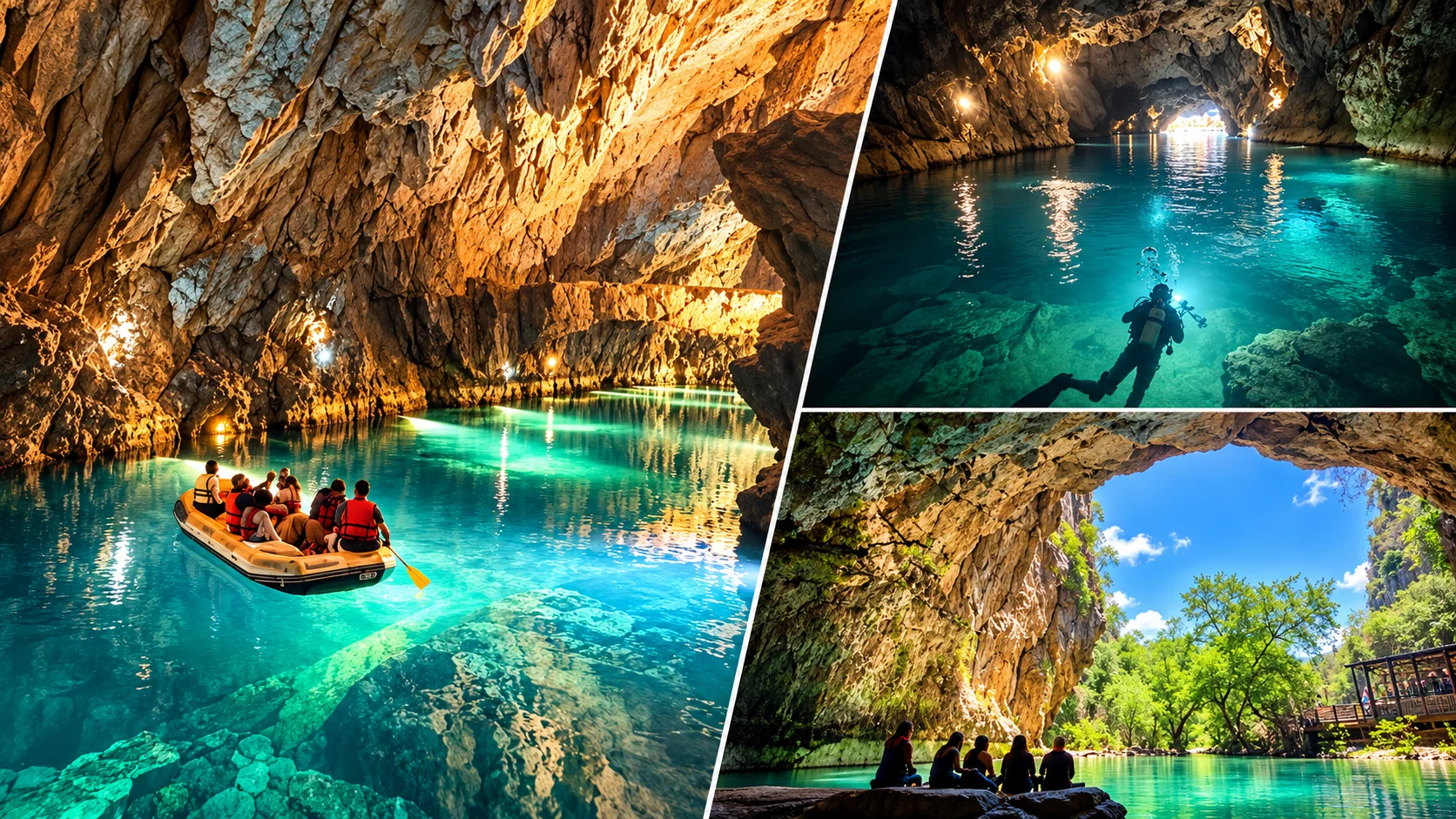
Of all the caves in Antalya, Altınbeşik is arguably the most dramatic. Located inside Altınbeşik Cave National Park near the village of Ürünlü in the İbradı district — approximately 120 km from Antalya city and 55 km from Manavgat — the cave contains Turkey's largest underground lake and Europe's third largest, with waters reaching up to 15 metres in depth and a crystalline clarity that reveals the cave floor beneath. After a renovation and safety upgrade programme, the cave reopened to visitors in May 2026.
The experience works as follows: visitors enter the cave on foot through a series of stalactite and stalagmite galleries, then board small guided boats for a tour of approximately 15 minutes across the underground lake. The guide explains the geology, the cave's hydrology and the wildlife. Boat tour tickets are sold separately from the national park vehicle entry fee: in 2026, vehicle entry is 225 TL and the boat tour is 350 TL per person. Müzekart is not accepted. Opening hours are generally 09:00–17:00, but crucially the cave is only open during summer and autumn. In winter and spring, underground water levels rise until the cave floods completely, making it inaccessible — always verify the current season before making the journey. The winding mountain road from Manavgat is part of the experience: forested gorges and the Oymapınar Dam lake make the drive memorable in itself.
What Else to See Near Altınbeşik
The İbradı–Ürünlü area offers more than the cave alone. Ormana village, a short drive away, is known for its distinctive stone-and-wood "button houses" (düğmeli evler), traditional architecture quite different from the coastal vernacular. The Eynif Plain, a high-altitude karst plateau visible from the road, is strikingly beautiful in late spring when it is covered with wildflowers. İbradı itself, a small mountain district capital, has stone houses, a calm atmosphere and local produce markets on seasonal weekends. If you are driving from the Manavgat side, the Oymapınar Dam creates a fjord-like reservoir that is genuinely scenic. Combined with Altınbeşik, a full day in this area is well worth the mountain drive.
Kocain Cave — One of Turkey's Widest Cave Entrances
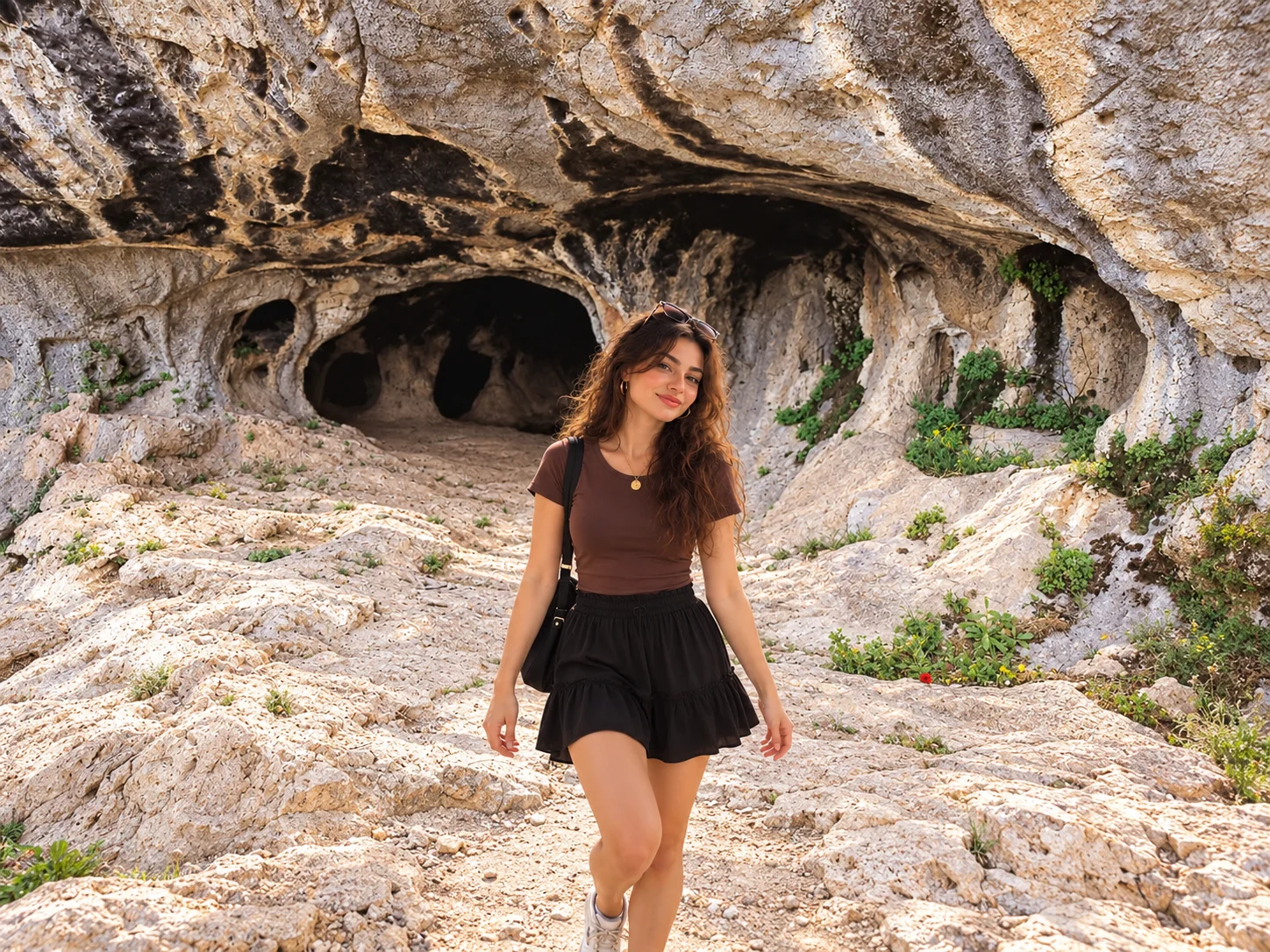
Kocain Cave is not a cave for casual tourists and that is precisely what makes it interesting. Located in Ahırtaş Mahalle within the Döşemealtı district at an elevation of 1,171 metres — roughly 45 km from Antalya city — the cave was first documented in 1919. Its total length runs to approximately 600 metres, but its most remarkable feature is the scale of its entrance chamber: the mouth is around 35 metres wide, expanding to 75 metres inside, with a vaulted ceiling reaching 60 metres in height. Walking through it feels less like entering a cave and more like entering a ruined cathedral.
What adds historical weight to the geological spectacle is evidence of long human use. Kocain was inhabited and used from prehistoric times through to the Byzantine period. Inside the main chamber stands a large Roman-era cistern, and early Christian inscriptions have been found on the walls — evidence of how this vast shelter served successive populations over millennia. Kocain is not an organised tourist cave with a managed visitor route: there is no ticket booth, no illumination, and no guardrails. A visit requires proper footwear, a torch and ideally local guidance. Do not enter unfamiliar sections without preparation. If you are comfortable with that level of independence, the cave rewards the effort with an atmosphere few organised sites can match.
Zeytintaşı Cave — Pasta Stalactites Found Almost Nowhere Else
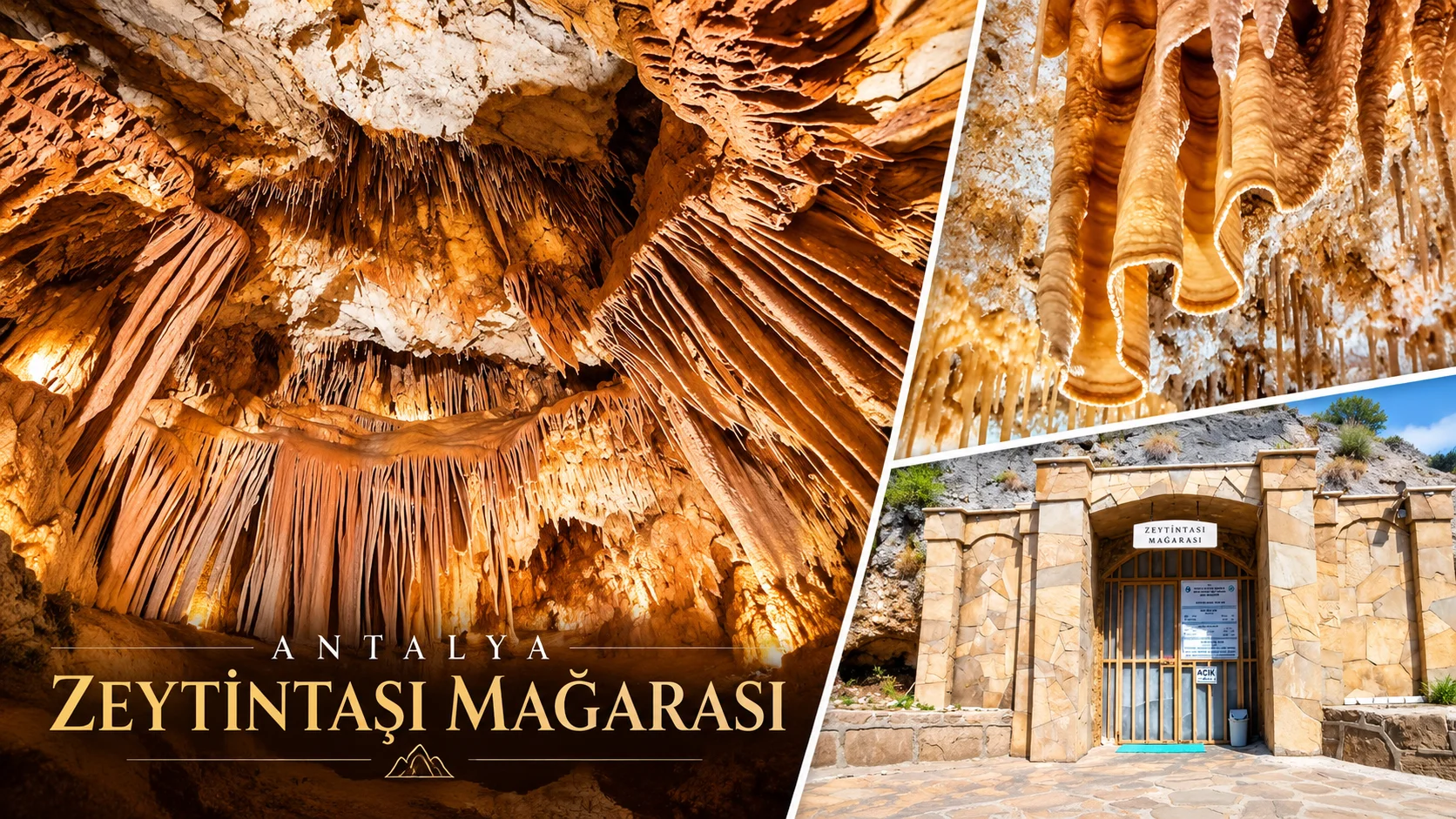
Zeytintaşı Cave, located 15 km north of Serik district — 54 km from Antalya, 10 km from Aspendos — is a cave of unusual distinction. Named after the Zeytintaşı hill on which it sits, the cave has two levels: an upper gallery of 136 metres and a lower gallery of 97 metres, with a maximum depth of 14 metres. Its formations span an estimated 8 million years of geological history. What sets Zeytintaşı apart from every other cave in Antalya — and from most caves worldwide — is its extraordinary collection of pasta-shaped stalactites (makarna sarkıtları in Turkish). These delicate, hair-thin tubular formations, just 3 cm wide and up to 70 cm long, grow horizontally or at unexpected angles in defiance of gravity and are found in only a handful of locations globally. Zeytintaşı's concentration of them is considered exceptional in the scientific literature.
The cave also contains travertine pools and small lakes set between large columns, adding visual variety to the formations. Because the formations are fragile, access is by guided tour only. The cave is closed on Mondays; current opening hours are 09:00–17:30; the 2025 entrance fee was 75 TL. Combining Zeytintaşı with a visit to the nearby ancient city of Aspendos makes a worthwhile inland half-day from Side or Antalya city.
Beldibi — A Rock Shelter, Not a Cave, With Mesolithic Rock Art
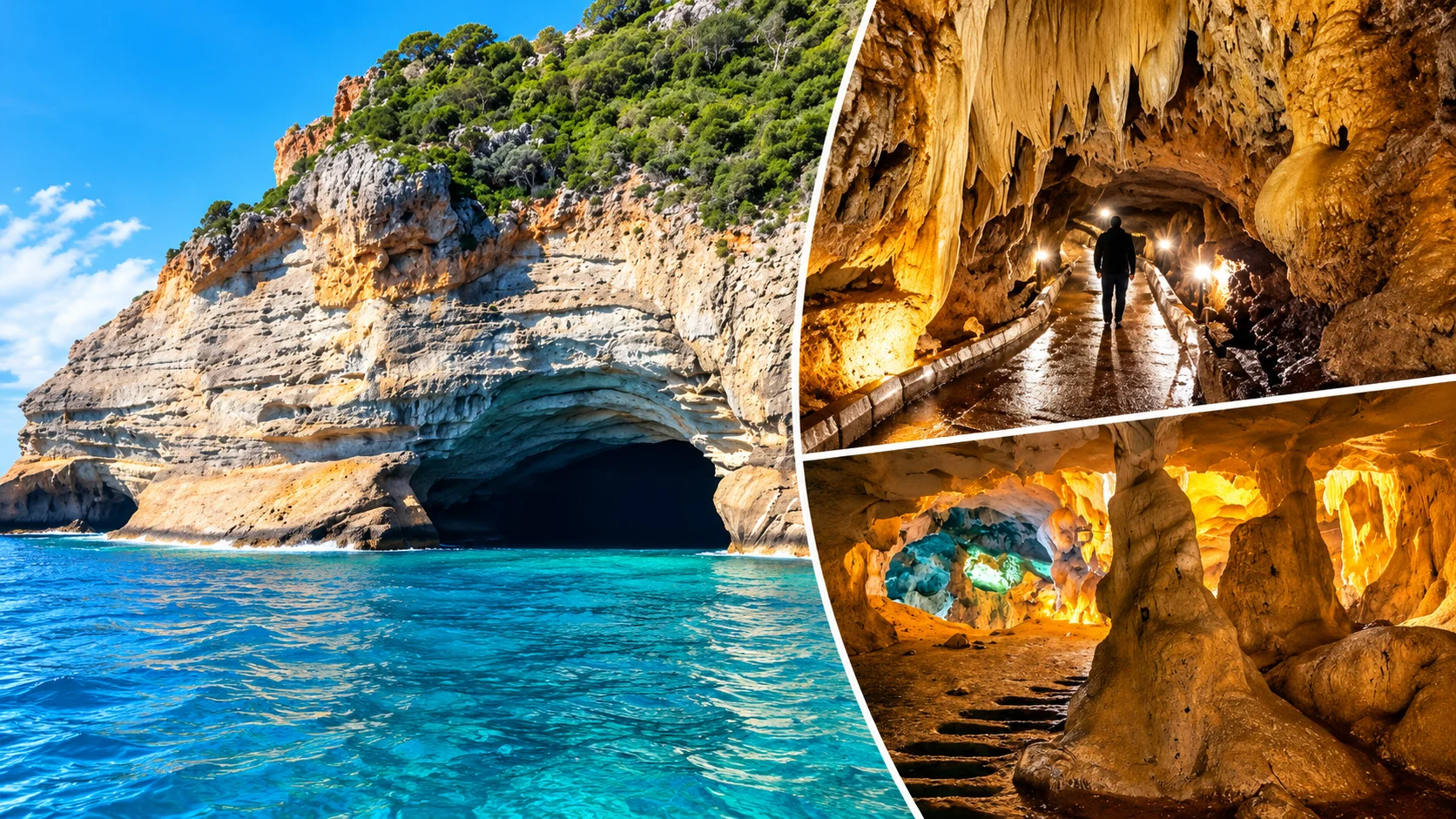
Beldibi is frequently listed alongside Antalya's caves but is more accurately described as a rock shelter — a large natural overhang rather than a closed cave system. Located in Beldibi town within the Kemer district, approximately 40 km from Antalya city along the Antalya–Kemer coastal road, it sits just 50 metres from the Mediterranean and 30 metres above sea level, sheltered behind the Çamdağ Tunnel approach. Identified in 1956 by archaeologist Enver Bostancı of Ankara University and excavated from 1959, the site revealed six distinct archaeological layers spanning the Upper Palaeolithic, Epipaleolithic and Neolithic periods. Near the shelter, schematic red-ochre paintings were found on the rock face — images of human figures, mountain goats, deer and hunting scenes, as well as an engraved running deer, all dating to the Mesolithic period and among the oldest examples of figurative art found in Anatolia. The site is currently an open protected archaeological area accessible on foot from the main road. It is not a developed tourist cave: there is no ticket, no lighting and no tour guide. The value is archaeological and atmospheric rather than visual in the way that a stalactite cave is visual.
Yalan Dünya Cave — A Warm Living Cave near Gazipaşa
Less visited than the Alanya caves but well worth the detour for travellers heading along the eastern Antalya coast, Yalan Dünya Cave is located in Beyrebucak village in the Gazipaşa district, 7 km from Gazipaşa town centre. The cave has a documented total length of 4 km, of which 450 metres are open to visitors. What makes Yalan Dünya unusual is its temperature: unlike most Antalya caves that maintain cool interiors (16–22°C), Yalan Dünya holds at 28°C year-round, with 75% humidity — warm enough that a visit feels genuinely different from the other caves in this guide. The cave is described as "living," meaning its formations are still actively growing. It is open every day throughout the year, with a 2026 entrance fee of 100 TL. Annual visitors number around 25,000 — modest by comparison with Damlataş or Dim, which means queues are rarely a problem.
Suluin Cave — Restricted Access, for Divers Only
Suluin Cave near Finike is one of Antalya's most extreme underground features: a flooded shaft with an estimated depth exceeding 80 metres, making it one of the deepest known submerged caves in Asia. The cave is not open to tourism and has not been since a fatal diving accident in 1995. Entry is prohibited without official special permits and professional cave-diving equipment. Suluin is mentioned here to give completeness to Antalya's cave landscape — but it is not a destination to visit independently. Do not attempt access without the necessary professional qualifications and authorisation.
Cave Safety and What to Wear
Managed tourist caves in Antalya — Damlataş, Dim, Altınbeşik, Zeytintaşı and Yalan Dünya — have well-maintained lit pathways and no particular equipment requirements beyond sensible footwear. A few general points apply to all cave visits:
- Footwear: Non-slip, closed-toe shoes. Cave floors are often damp and polished by millions of visitors; sandals and smooth-soled shoes cause falls.
- Clothing: Caves range from 18°C (Dim) to 28°C (Yalan Dünya). For most Antalya caves, a light extra layer is enough. Bring something for Altınbeşik and Dim especially.
- Low ceilings: Some passages in Kocain and Beldibi require ducking. Watch your head.
- Photography: Generally permitted in tourist caves; flash restrictions vary. At Karain, respect the archaeological site rules. Kocain has no formal photography policy — standard field practice applies.
- Restricted caves: Never enter unmanaged caves (Kocain, Suluin, or any cave not listed as a visitor site) without local knowledge, proper lighting and ideally an experienced guide.
- Children and elderly visitors: Damlataş (flat, short, 10 min) is easiest. Dim and Altınbeşik are manageable with good shoes. Karain (470 steps) and Kocain (rough terrain) require good fitness.
Best Time to Visit Antalya's Caves
Unlike beaches, caves in Antalya are largely season-independent — the temperature inside stays constant regardless of whether it is July or January. That said, practical considerations vary:
Summer (June–August): The high season. Damlataş and Dim can have significant queues by mid-morning; arrive early. Altınbeşik is open and running boat tours. The mountain road to Altınbeşik is at its best in summer.
Autumn (September–November): Arguably the best season. Heat is more manageable, queues are shorter, and autumn colours on the mountain roads to Altınbeşik and Kocain are exceptional. Altınbeşik is still open.
Winter (December–February): Altınbeşik closes due to flooding. Other caves remain open. Damlataş and Dim are quiet, and Karain can be visited with the site essentially to yourself.
Spring (March–May): Altınbeşik may still be flooded; check before visiting. All other caves are open. The road landscape around Altınbeşik and İbradı is spectacular in late spring.
Getting to Antalya's Caves
Antalya's caves are spread across a large province — some close to the city centre (Karain, 30 km), some in Alanya (Damlataş, Dim), and others deep in the mountains (Altınbeşik, 120 km; Kocain, 45 km at 1,171 m). Public transport connects the city to Alanya but reaching the individual cave sites from there typically requires a taxi, minibus tour, or private vehicle. For Altınbeşik especially, private transport is strongly advisable: there is no public bus service to the national park, and the mountain road requires a car. For multi-site days — for example, visiting Altınbeşik, Ormana and the Eynif Plain in one route — having your own vehicle or a private intercity car with driver gives you the flexibility that buses simply cannot. If you are flying into Antalya Airport, a direct airport transfer to your Antalya or Alanya hotel removes the need to navigate public transport on arrival. You can find further ideas for the region in our Antalya attractions guide and Antalya waterfalls guide.
Frequently Asked Questions — Antalya Caves
Which caves near Antalya are open to regular visitors?
The caves with proper visitor infrastructure in Antalya province are Karain (Döşemealtı), Damlataş and Dim (both Alanya), Altınbeşik (İbradı — seasonal), Zeytintaşı (Serik) and Yalan Dünya (Gazipaşa). Kocain and Beldibi are accessible but have no formal visitor management. Suluin is restricted to professional divers.
Where exactly is Karain Cave, and why is it important?
Karain Cave is 30 km northwest of Antalya city in Döşemealtı district (Yağca Mahalle), at 430–450 m elevation. It is the most important Palaeolithic site in Turkey: excavations have documented 500,000 years of human habitation, and it is the only site in Turkey where Neandertal skeletal remains have been found. The cave is on the UNESCO World Heritage Tentative List. Reaching the entrance requires climbing approximately 470 steps.
Is there a cable car to Dim Cave?
No. There is no cable car to Dim Cave. Access is by private car or taxi from Alanya (approximately 11–14 km), followed by a short uphill walk of 100–150 metres from the car park to the entrance. Non-slip shoes are recommended inside the cave.
Is Altınbeşik Cave open year-round?
No. Altınbeşik Cave is seasonal — it is only open in summer and autumn. In winter and spring, underground water levels rise until the cave floods entirely. Always check the current opening status before making the journey. The cave reopened after renovation in May 2026; the 2026 boat tour fee is 350 TL per person plus 225 TL per vehicle.
What is special about Zeytintaşı Cave?
Zeytintaşı Cave near Serik is famous for its pasta-shaped stalactites (makarna sarkıtları) — tubular formations just 3 cm wide and up to 70 cm long that grow horizontally against gravity. These are extremely rare globally and Zeytintaşı's concentration of them is considered scientifically exceptional. Guided tours only; closed Mondays.
Is Beldibi a cave?
Technically, Beldibi is a rock shelter, not a cave. It is a large natural overhang near Kemer (Çamdağ Tunnel area). Its importance is archaeological: Mesolithic red-ochre paintings of humans, goats, deer and hunting scenes were found here, along with six layers of Palaeolithic-to-Neolithic occupation. It is an open protected site accessible on foot, with no ticket or guided tour.
Can I visit Kocain Cave as a regular tourist?
Kocain is not an organised tourist cave — there is no ticket office, no illumination and no managed path. The cave is accessible but requires proper footwear, your own light source and ideally a guide familiar with the site. It has one of Turkey's widest cave entrances (35 m at the mouth, 75 m inside, 60 m high) and contains a Roman cistern and early Christian inscriptions. If you are comfortable with an independent visit, it is extraordinary.
What should I wear to visit an Antalya cave?
Non-slip, closed-toe shoes are essential for all cave visits. Bring a light jacket even in summer — cave temperatures range from 18°C (Dim) to 22°C (Damlataş) and 28°C (Yalan Dünya). Altınbeşik's boat tour is cool; a layer is helpful. Karain requires good walking shoes for the 470-step ascent.
Which Antalya cave is best for a family with young children?
Damlataş is the easiest family option: flat, short (10–15 min), centrally located in Alanya. Dim Cave is also family-friendly with a well-lit path, though it has stairs and a slippery floor section — ages 6 and up are typically comfortable. Altınbeşik's boat tour is popular with older children. Karain's 470-step climb and Kocain's rough terrain are less suitable for very young children.
Are there other interesting caves in Antalya I should know about?
Yalan Dünya Cave in Gazipaşa is worth mentioning: 450 m of visitor route at a warm 28°C, open year-round, 100 TL entrance fee. It is less crowded than the Alanya caves and convenient for visitors on the eastern Antalya coast. Suluin Cave near Finike is notable for its extreme depth (an estimated 80 m+ flooded shaft) but is strictly off-limits to tourists.