
Aydın province holds more ancient cities per square kilometre than almost anywhere else on earth. Aphrodisias, Priene, Miletus, Didyma, Nysa, Magnesia, Alabanda, Alinda — each is a full archaeological site in its own right, spread across a province that also runs 120 km of Aegean coastline, shelters a UNESCO national park on the Dilek Peninsula, and grows the world's most prized fig variety. This guide covers all seventeen districts of Aydın from the provincial capital outward, with practical information for single-day visits and multi-day circuits.
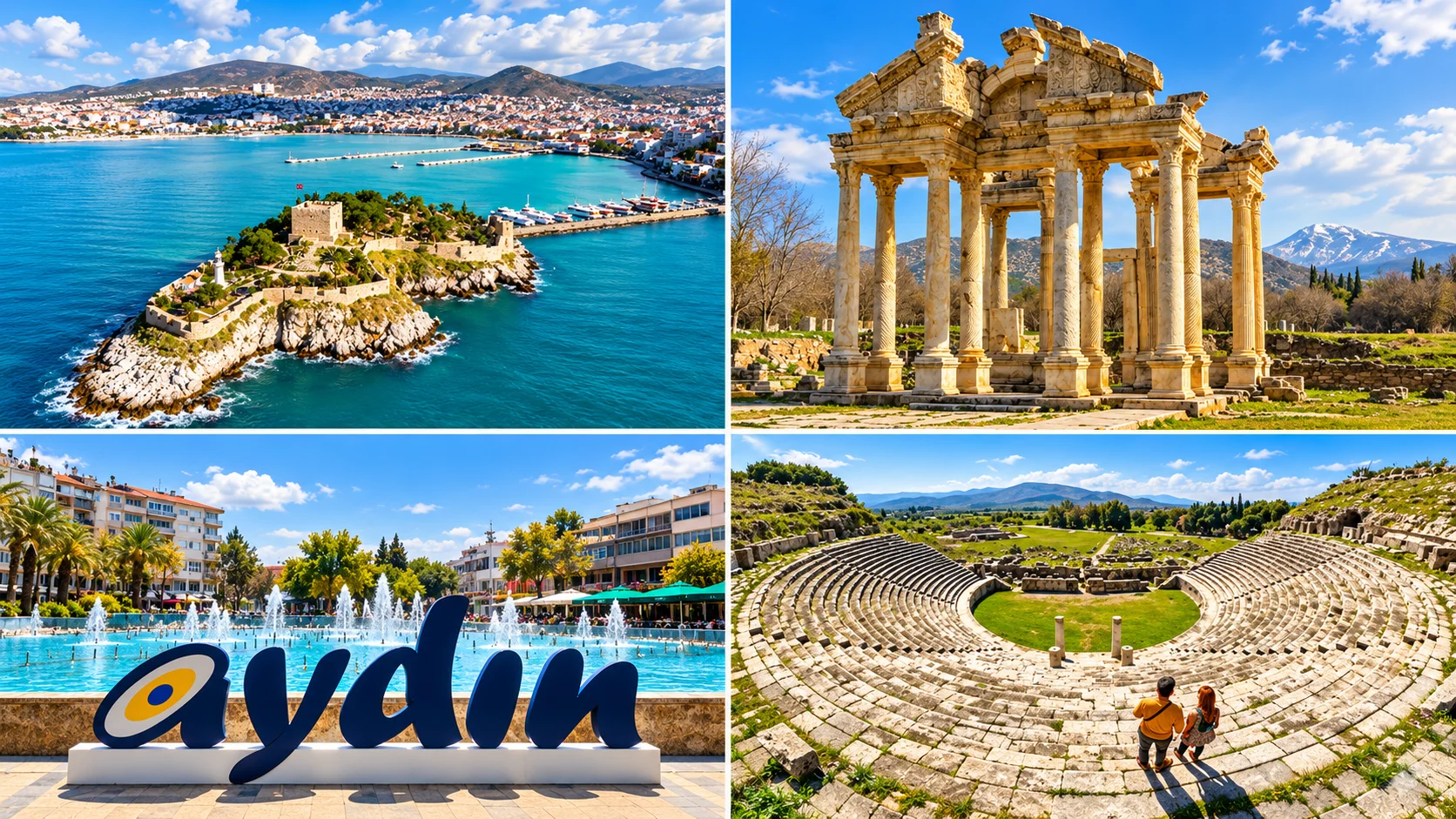
Why Aydın Is Different
Most Turkish provinces have one or two headline attractions. Aydın has an archaeology problem: too many important sites, not enough itineraries. The province was the heartland of ancient Caria and Lydia, later an intensely developed part of the Roman province of Asia. The result is a landscape in which UNESCO World Heritage ruins stand within an hour's drive of each other, separated by olive groves, fig orchards and the sedimented plain of the ancient Maeander River.
The coast adds another dimension. Kuşadası and Didim are two of the Aegean's largest resort towns, but within reach lie the wild İncirburnu headlands, the boat-access coves of Dilek Peninsula, and the old Greek village of Doğanbey where time has moved slowly. Inland, the Arapapıştı Canyon system in Bozdoğan district offers gorge trekking that few foreign visitors find.
Aydın also produces the Sarılop fig — a cultivar with EU Geographic Indication status grown almost exclusively in this province. The fig's presence shapes the countryside around Nazilli and İncirliova in late summer and touches nearly every local table through dried forms, preserves and pastries.
Quick Picks
- Best single ancient site: Aphrodisias — best-preserved sculpture school in the Roman world, inscribed on the UNESCO World Heritage List in 2017
- Best coastal town: Kuşadası — castle island, beach variety, close to Ephesus and Dilek Peninsula
- Best beach: Kadınlar Denizi (Kuşadası) for facilities; İncekum (Didim) for wild atmosphere
- Best oracle site: Didyma — the Temple of Apollo, one of the largest Greek temples ever built
- Best city-plan archaeology: Priene — Hellenistic grid urbanism on a hillside, without tour-bus crowds
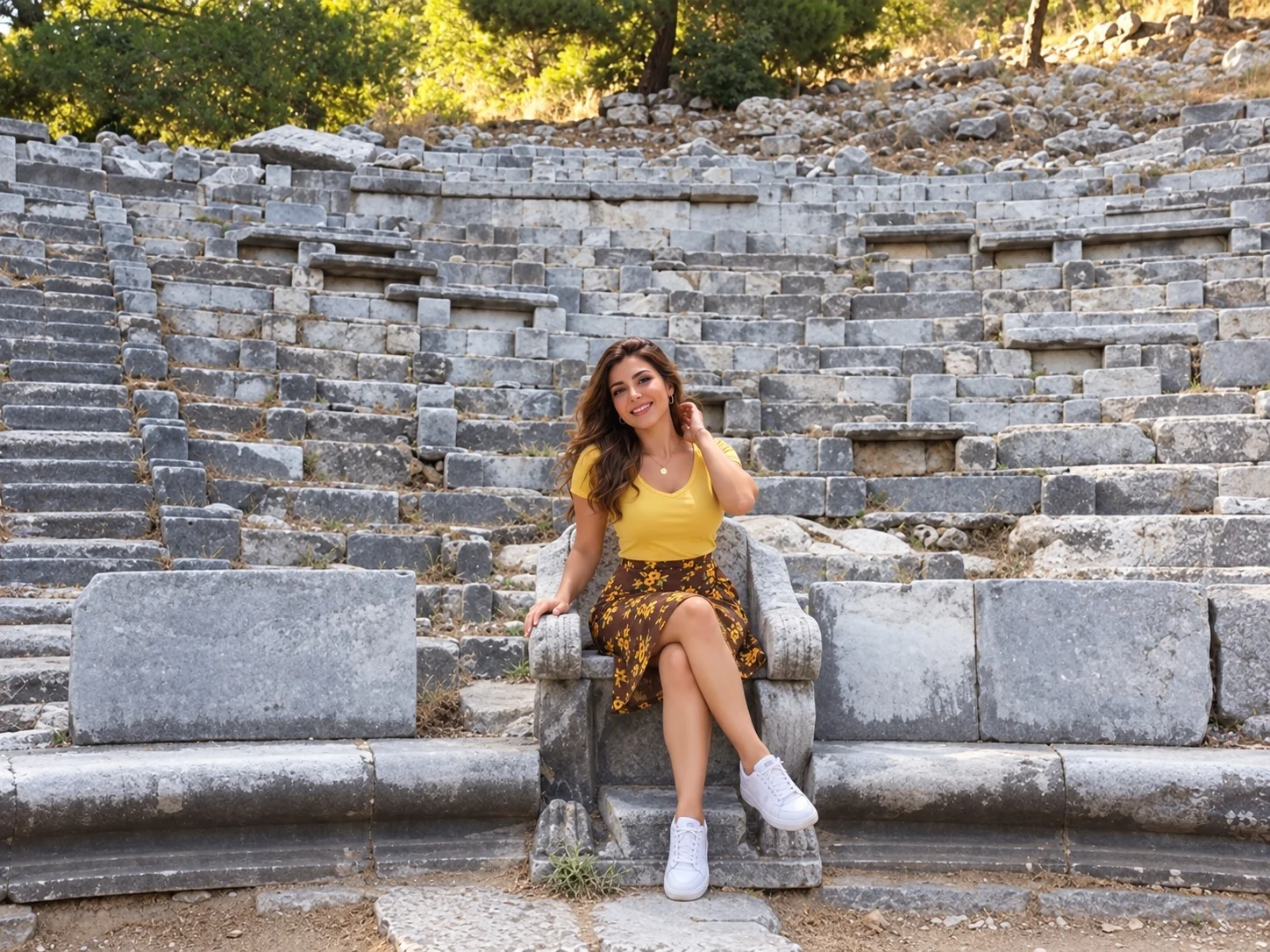
- Best theatre: Miletus — the Roman theatre is among the most intact on Turkey's Aegean coast
- Best canyon: Arapapıştı (Bozdoğan) — boat tours through a limestone gorge, minimal visitors
- Best local buy: Aydın dried figs — Sarılop variety, sun-dried, sold at markets province-wide
Aydın City Centre — Efeler District
Aydın city (officially Efeler district since 2014) is the provincial capital and its most underrated destination. Few international visitors stop here — they pass through en route to Kuşadası or Ephesus — but the city has genuine historical substance and a museum that punches well above its profile.
The city sits at the foot of the Aydın mountain range (Aydın Dağları), on the north bank of the Büyük Menderes plain. Historically it was a significant Ottoman administrative centre and a key railway junction — the İzmir–Aydın Railway, one of the first in Anatolia, opened in 1866. Aydın had its own sancak and later vilayet under Ottoman administration and served as the base of the Aegean region's resistance organisation during the early 1920s.
Tralleis Ancient City — Üç Gözler
On a plateau overlooking the city stands Tralleis (modern site name Güzelhisar), an ancient city that was an important Seleucid, Pergamene and Roman urban centre. The most visible surviving structure is the Üç Gözler ("Three Arches") — the remains of a gymnasium and bath complex from the Roman period, with three large barrel-vaulted arches still standing to near-full height. The site is freely accessible and offers wide views over the Büyük Menderes plain. Active excavations continue. Allow 1–1.5 hours for a visit including the walk to the arches.
A section of the ancient city's grid street system, cisterns and mosaic fragments have been documented. The site is managed by the Aydın Museum and admission is covered by the museum ticket system.
Aydın Archaeology Museum
The Aydın Museum houses finds from Tralleis, Nysa, Alabanda, Alinda, Magnesia and other provincial excavations. The sculpture collection is particularly strong — sarcophagi, portrait statues, architectural fragments and inscriptions from Carian and Hellenistic-Roman contexts. For visitors planning multiple site visits across the province, the museum provides essential context. Open Tuesday–Sunday; verify opening hours locally.
Historical City Centre
The Cihanoğlu Külliyesi — an 18th-century Ottoman complex including a mosque, medrese and library built by the Cihanoğlu ayan dynasty — is the most architecturally distinguished building in the city centre. The bazaar quarter around it retains fragments of late-Ottoman commercial architecture. The central market (çarşı) area near the museum is a practical stop for dried figs, olive oil and local food products.
Kuşadası
Kuşadası ("Bird Island" in Turkish) is the most-visited town in Aydın province — a well-equipped Aegean resort that also serves as the departure point for Dilek Peninsula and one of the closest towns to Ephesus ancient city (30 minutes by road). The town itself has genuine historical interest alongside its beach and restaurant infrastructure.
Güvercinada and Öküz Mehmet Paşa Han
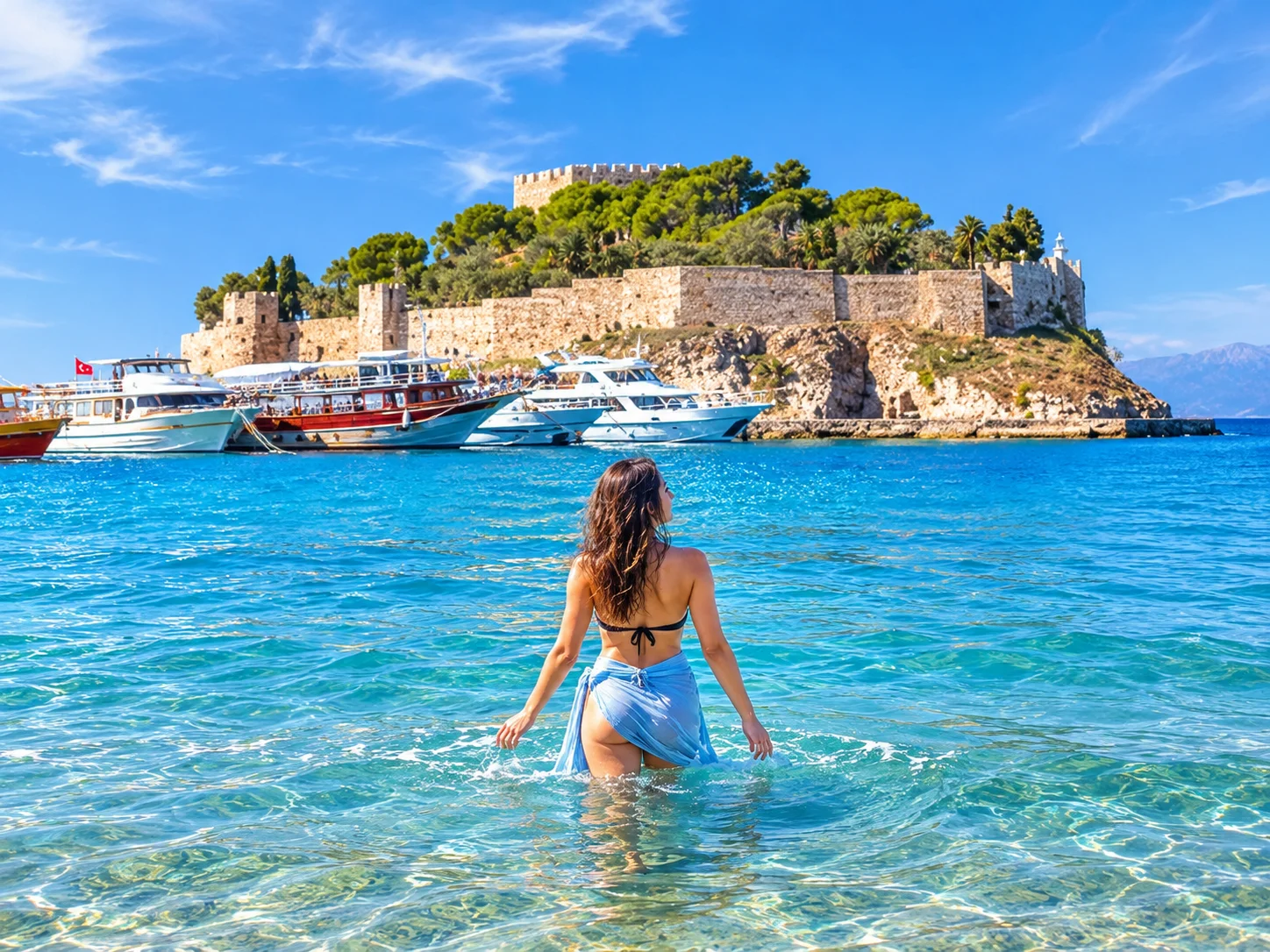
Güvercinada — the castle island that defines Kuşadası's waterfront, connected to the mainland by a stone causeway.
Güvercinada ("Pigeon Island") is a small promontory connected to the town by a stone causeway and topped by a castle with walls that were built and rebuilt across multiple periods — Byzantine, Genoese and Ottoman. The structure visible today is largely Ottoman, but with earlier masonry incorporated at multiple points. The island is open to visitors; the interior courtyard and towers can be climbed for views over the harbour. Entry fee applies.
In the town centre, the Öküz Mehmet Paşa Han (also called the Kervansaray) is a 17th-century Ottoman caravanserai that has been restored and now serves as a hotel, but retains its original courtyard and gate facade. It is worth a brief visit on foot even without staying; the stonework and scale give a strong impression of the town's historical trade significance.
Kuşadası Beaches

Kadınlar Denizi — the most central and best-equipped beach in Kuşadası, within walking distance of the town centre.
Kadınlar Denizi ("Ladies Beach") is the closest and most-serviced beach to the town centre — 2.5 km south, accessible by dolmuş or on foot along the coastal road. It has a long sandy stretch, beach clubs, restaurants and sun-lounger rental. The name dates from the Ottoman period when a segregated bathing section was designated here.
Long Beach (Uzun Yol Plajı) runs south of Kadınlar Denizi and is the longest continuous beach in the Kuşadası area — approximately 8 km, with a mix of public and resort-club sections. The southern end near Davutlar district is less crowded. Further options include Tusan Beach (north of town, rockier, fewer facilities) and the coves accessible via Dilek Peninsula road beyond the national park entrance.
Our Kuşadası travel guide covers the town in greater detail, including day trips to Ephesus and Priene.
Dilek Peninsula National Park
The Dilek-Büyük Menderes National Park (Dilek Yarımadası–Büyük Menderes Deltası Milli Parkı) protects the entire Dilek Peninsula west of Kuşadası and the delta wetlands of the Büyük Menderes to the south. The peninsula section is the visitor-facing component: a forested ridge running into the Aegean with four small coves (Içmeler, Aydınlık, Kavakburnu and Karasu) accessible by vehicle along a single road through the park.
The coves range from organised (Içmeler, near the entrance, with facilities) to nearly wild (Karasu, at the end of the road, with no services and limited vehicle access). Entry fee applies; the park is open daily, but the road to Karasu may close in high season to manage vehicle numbers. Arrive early or take the park minibuses from the entrance.
The park also hosts one of Turkey's rare populations of Anatolian leopard — though sightings are vanishingly rare — alongside wild boar, golden jackals and a rich woodland bird community. The forest cover is predominantly maquis and Turkish pine. Day hiking on the ridge trail above the coves is possible but requires navigation equipment and water; the heat is intense from June through September.
Old Doğanbey Village
Inside the national park boundary, the abandoned stone village of Doğanbey (formerly Doğu Bey, historically the Greek Marathokampos) sits on a hillside above the coastal road. The village was inhabited until the 1950s and then gradually depopulated. Many buildings survive in varying states — stone-arched houses, a church, cisterns and terraced gardens. The setting is photogenic and the atmosphere is quiet. Access is possible on foot from the park road; verify current access rules at the park entrance as restoration work has periodically restricted parts of the site.
Didim District
Didim district sits at the southern end of the Kuşadası–Didim coastal stretch. The name is used loosely to refer to both the modern resort town (originally Yenihisar, then Didim) and the ancient sanctuary site of Didyma — which are distinct places about 5 km apart. The district also contains Miletus (Milet), one of the most important ancient cities in the Greek world, located at Balat village on the former harbour plain.
Didyma — Sanctuary of Apollo
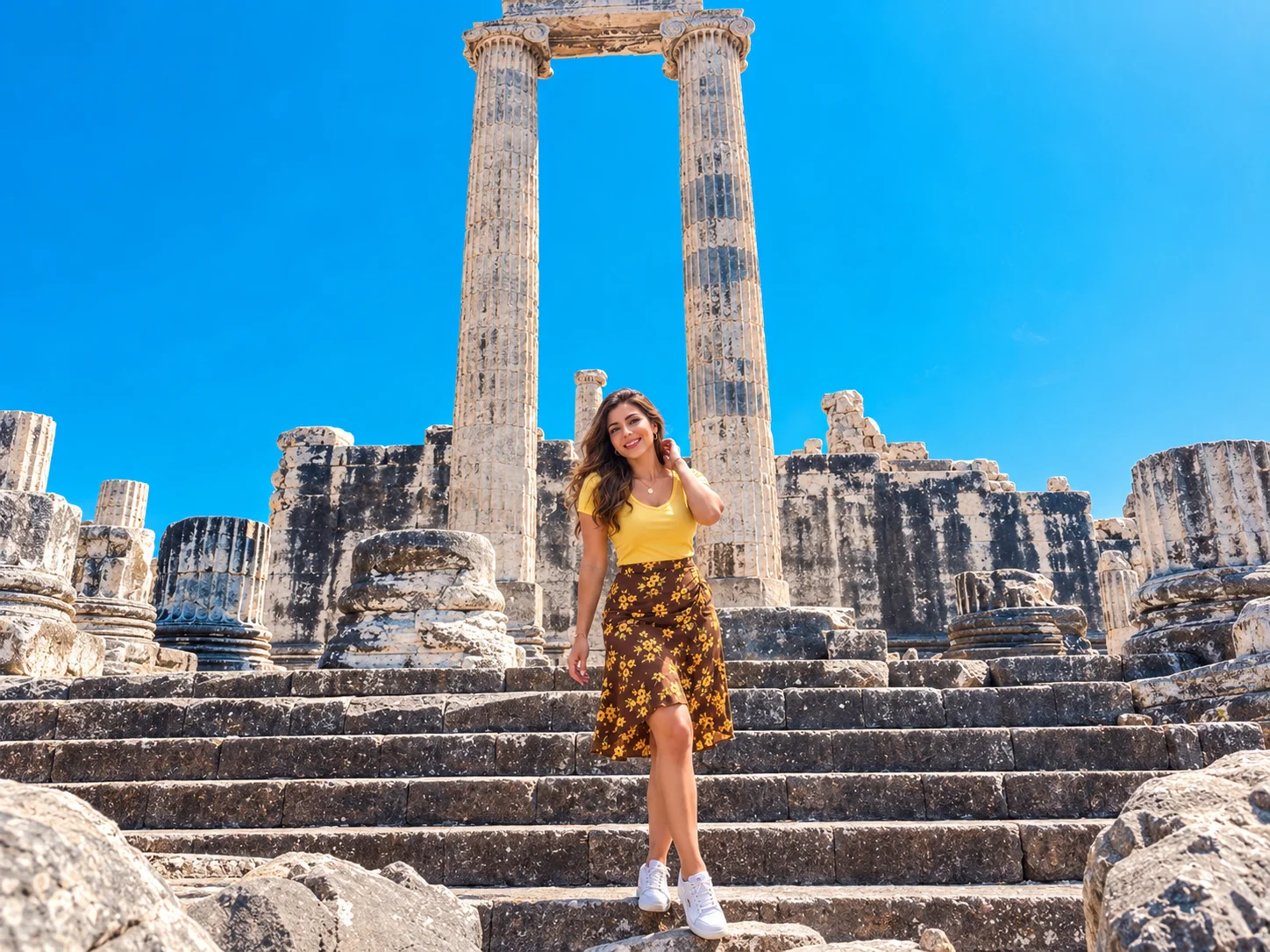
The Temple of Apollo at Didyma — one of the largest Greek temples ever constructed, with columns still standing to 20 metres.
Didyma was not an ancient city but a sanctuary — specifically the oracle sanctuary of Apollo, the most important oracle centre in Anatolia and one of the most consulted in the entire Greek world after Delphi. The sanctuary was administered by the city of Miletus, which lay 17 km to the north, connected by the Sacred Way.
The Temple of Apollo at Didyma was among the largest Greek temples ever conceived. Construction began circa 300 BC under Seleucid patronage and was never fully completed — partly explaining why so many architectural members survive: they were never installed and were left in the unfinished construction yard. The temple is dipteral (double colonnade), with columns reaching around 20 metres. The inner sanctuary included a small shrine (naïskos) within a hypaethral court, accessible only to priests and initiates. Oracle seekers submitted questions through intermediary priests; the responses, delivered in verse, were among the most politically consulted in antiquity.
The site now contains the Didim Museum on site. Entry fee applies. The Temple of Apollo Didyma guide covers the oracle tradition and architectural history in more detail.
Miletus
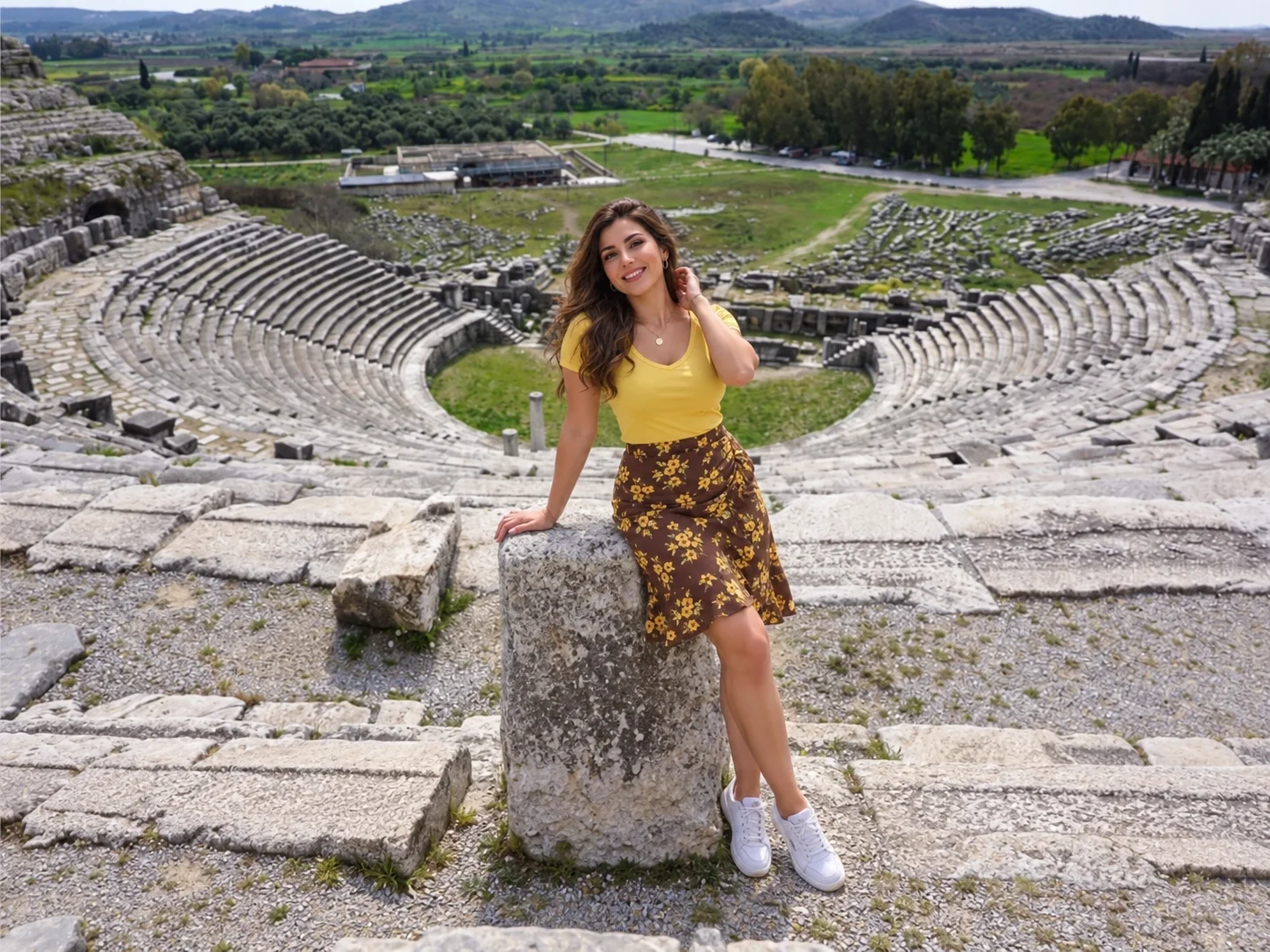
Miletus theatre — seating approximately 15,000 in its Roman phase, one of the best-preserved on the Aegean coast.
Miletus (Milet) was one of the most important cities in the ancient Greek world: an Ionian city that colonised over 80 settlements across the Black Sea and Mediterranean, the birthplace of Thales, Anaximander and Anaximenes (the first natural philosophers in the Western tradition), and later a major Roman and Byzantine city. It is located at Balat village in Didim district, approximately 20 km from Didim town.
The city was originally a harbour city — it had four harbours in antiquity — but sedimentation from the Büyük Menderes progressively silted up its inlets, stranding the city inland. The river's delta has shifted Miletus roughly 10 km from the current coastline. This process, which also affected Priene and other cities, is one of the defining geographical stories of the Aegean interior.
The most visible monument is the Roman theatre, which seated approximately 15,000 spectators and survives to considerable height. The site also contains a bouleuterion (council house), nymphaeum, Ionic Stoa, an Ottoman mosque incorporating Hellenistic-era column drums, and the foundations of multiple temples and civic buildings. The Miletus Museum on site holds important sculptural and architectural finds. Entry fee applies.
Altınkum and Akbük

Altınkum — the main resort beach of Didim district, with fine sand and a long seafront promenade.
Altınkum ("Golden Sand") is the main beach resort of Didim district — a well-developed stretch of fine sandy beach with a promenade, beach clubs, fish restaurants and a high concentration of British and Northern European summer residents. It is one of the most popular beach destinations in the Aegean for charter package tourism. The town is lively from June to September; outside those months it is very quiet.
Akbük, 10 km south of Altınkum, is a smaller and calmer alternative on a sheltered bay — more popular with sailing and anchoring yachts. It has restaurants, a few accommodation options and a quieter beach. The combination of Altınkum for beach facilities and Akbük for a quieter evening meal makes a reasonable day structure for visitors to the southern Didim area.
İncekum

İncekum — a less-developed beach south of Altınkum with fine sand backed by dunes and pine woodland.
İncekum is a beach located south of Altınkum town, known for its fine sand dunes and pine-backed setting. It has fewer facilities than Altınkum and attracts visitors looking for a more natural beach experience in the Didim area. Access is by road south from Didim town; the road passes through the Milli Pinar (National Forest) area. Note: there is also an İncekum location within Dilek Peninsula National Park near Kuşadası — these are different places.
Aydın Province on Video
Video: Overview of Aydın province's top tourist destinations.
Söke — Priene
Priene — five standing columns of the Temple of Athena Polias mark the city's highest terrace, above a fully intact Hellenistic grid plan.
Priene is one of the most intact examples of Hellenistic urban planning in existence. The city was laid out on a strict Hippodamian grid — parallel streets cutting across a hillside, with blocks of standardised dimensions and a clear separation of residential, civic and sacred zones. Unlike many ancient sites where centuries of overbuilding have obscured the original plan, Priene was not reoccupied on a large scale after the Byzantine period, leaving its grid legible in the landscape.
The site contains the Temple of Athena Polias (with five columns re-erected in the 19th century), a well-preserved bouleuterion that could seat around 640 councillors, a theatre, gymnasium, agora, and extensive residential blocks with identifiable house plans. Alexander the Great reportedly contributed to the temple's construction during his Anatolian campaign.
Priene was originally a coastal city on the Latmian Gulf. The gradual sedimentation of the Büyük Menderes Delta has pushed the current coastline roughly 20 km westward, leaving Priene stranded inland on a hillside above agricultural fields — the process that also affected Miletus and, to a lesser extent, Ephesus. The city is not "on the banks of the Maeander River"; it sits above the plain the river has created.
Access is from Söke district, approximately 15 km west of Söke town. Entry fee applies. Priene receives significantly fewer visitors than Ephesus and can often be explored in relative quiet.
Germencik — Magnesia ad Maeandrum
Magnesia ad Maeandrum (Magnesia on the Maeander) is located near Tekin village in Germencik district, close to the Büyük Menderes floodplain. It was a city of the Magnetes people, later a major Hellenistic and Roman city. The site is less excavated than nearby Priene or Miletus but contains impressive remains: the Temple of Artemis (one of the largest in Asia Minor, with a plan attributed to the architect Hermogenes), a well-documented agora, theatre and stadium.
Magnesia is relatively off the main tourist circuit, which means low crowds but also minimal visitor infrastructure. An ongoing Turkish–German excavation project has been active at the site in recent years. Entry is typically possible during excavation season; confirm current access locally in Germencik.
Sultanhisar — Nysa
Nysa ad Maeandrum is a Roman city in Sultanhisar district, notable for its unusual topography: the city was built across a ravine, with a large library, theatre, and civic buildings on the upper terraces and a covered underground channel (the gerontas stoa) cut through the rock face to span the ravine below. The theatrical geography makes Nysa distinctive even by the standards of well-preserved Roman cities.
The library — one of the best-preserved Roman library buildings in Anatolia — has been a focus of restoration work. The theatre seats several thousand and offers good views over the Büyük Menderes valley. Nysa is accessible from the D320 highway and receives relatively few visitors despite its quality. Entry fee applies when open.
Karacasu — Aphrodisias
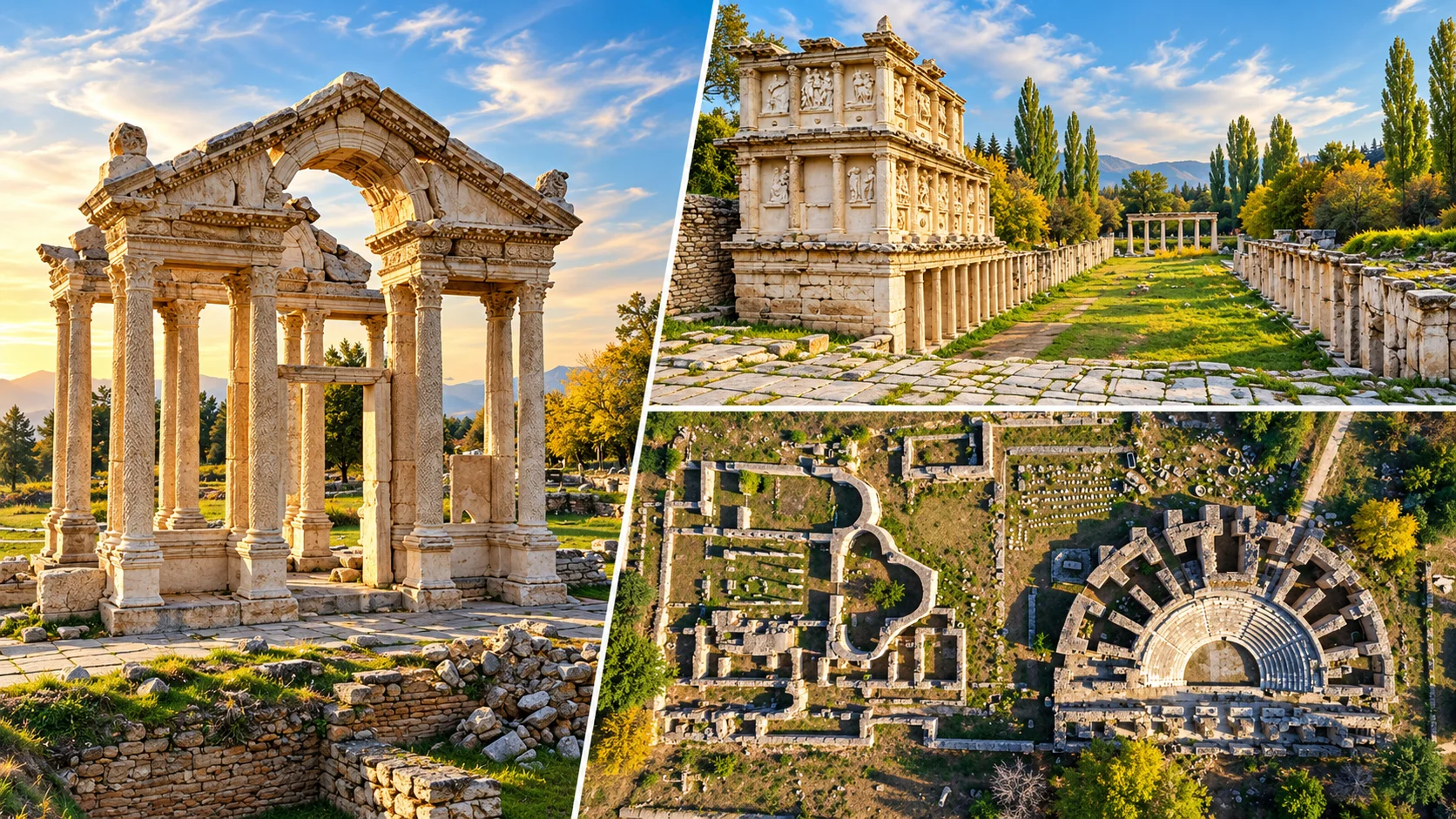
Aphrodisias is arguably the most rewarding archaeological site in Aydın province and one of the finest in Turkey. The city was dedicated to Aphrodite and became prosperous under Roman patronage — particularly from Julius Caesar onwards — because of the civic myth linking the goddess to the Julian dynasty. This patronage funded a remarkable building programme that made Aphrodisias a showcase of Roman provincial architecture.
The site is exceptional for two reasons. First, the state of preservation: the stadium at Aphrodisias, with a capacity of approximately 30,000 spectators and both ends intact, is the best-preserved ancient stadium in the world. The Tetrapylon (a monumental gateway), the Sebasteion (a temple complex honouring the Roman imperial cult with exceptionally detailed relief panels), the bouleuterion, theatre, agora and bath complexes all survive to substantial height. Second, the sculpture school: Aphrodisias developed one of the most influential sculpture workshops of the Roman Empire. Local marble quarries and a tradition of technical virtuosity produced sculptors whose work was exported across the Mediterranean. The Aphrodisias Museum on site holds hundreds of statues, reliefs and portrait busts — a collection unmatched in its concentration outside of Rome.
Aphrodisias was inscribed as a UNESCO World Heritage Site in 2017. Entry fee applies; allow at least 3–4 hours for a thorough visit. The site is in Karacasu district, approximately 100 km from both Aydın city and Denizli.
Sırtlanini Cave
Sırtlanini Mağarası is a stalactite and stalagmite cave located in Karacasu district — not in Davutlar or Didim as sometimes incorrectly stated. It is one of the less-visited natural attractions in the province. The cave has a guided-visit format; verify current opening times and access from Karacasu town. The cave can be combined with an Aphrodisias visit on a Karacasu day circuit.
Çine — Alabanda
Alabanda was an important Carian city in antiquity, now located near Araphisar village in Çine district. The site contains a theatre, temple foundation, agora and city walls in varying states of preservation. Alabanda is not on the main tourist circuit and sees few visitors. Active excavations have continued in recent years. The Çine Archaeological Museum (if open) holds some finds from the site.
Çine town itself is a functional agricultural centre known for the Çine Çayı (river) and the district's fig and olive production. The Çine Köftecisi (local köfte tradition) is worth noting for lunch stops.
Karpuzlu — Alinda
Alinda is a Carian city in the hills above Karpuzlu district, noted for its well-preserved Hellenistic market building (agora stoa), a three-storey structure with the upper floors intact — extremely rare for a market building of this period in Anatolia. The city also has a theatre and a tomb monument attributed to the Carian ruler Ada, who famously helped Alexander the Great in his siege of Halikarnassos. The hilltop location offers sweeping views over the mountain terrain of inland Aydın.
Alinda is freely accessible; the walk up to the main ruins takes about 20 minutes from the village. The site is rarely crowded and the agora stoa alone justifies the detour for anyone interested in Hellenistic architecture.
Bozdoğan — Arapapıştı Canyon
The Arapapıştı Canyon (Arapapıştı Kanyonu) is a limestone river gorge in Bozdoğan district, cut by the Çine Stream before it joins the Büyük Menderes. The canyon walls rise to 150–200 metres in places and the river below is navigable by flat-bottomed boat for a significant stretch. Boat tours run from the launch point near Ören village — typically 2–3 hours, covering the narrowest and most dramatic sections.
The canyon is one of Turkey's better day-trip secrets: geologically impressive, genuinely wild, and with minimal tourist infrastructure. Tours operate from spring through autumn; spring (April–May) offers the highest water levels and lushest vegetation on the walls. Bozdoğan is approximately 65 km southeast of Aydın city.
Nazilli
Nazilli is Aydın's second-largest city by population — a commercial and textile centre on the Büyük Menderes plain. For most travellers it functions as a transit point. The town has good transport connections (train, bus) and serves as the practical access point for Sultanhisar (Nysa) to the west and Karacasu/Aphrodisias to the south. There are no major archaeological sites within the town itself, but the Tuesday market is one of the largest produce markets in the province and worth a stop during the fig harvest season (August–September).
İncirliova and the Fig Belt
İncirliova ("Fig Plain") district west of Aydın city is at the geographical centre of the Aydın Sarılop fig cultivation zone. The name is self-explanatory. The district's villages are surrounded by fig orchards, and during harvest season (August–early September) the roads are lined with trays of drying figs. There is no major tourist site in İncirliova town itself, but the agricultural landscape during harvest has a particular character — white drying cloths, the scent of drying fruit and the roadside sale of fresh figs at prices that bear no relation to export markets.
Other Districts Worth Noting
Koçarlı: Located between Aydın and Kuşadası, primarily agricultural. Has a historic local mosque.
Köşk: Agricultural district known for tobacco and olive production. Minimal visitor infrastructure.
Buharkent: Contains Germencik thermal springs (warm-water bathing, no health claims — verify current facilities locally). A minor stop rather than a destination.
Yenipazar: Small town on the main highway east of Nazilli. Has a local bazaar but limited visitor interest.
Kuyucak: Inland mountain district with dramatic terrain, minimal tourist development.
Aydın Figs — The Sarılop Tradition
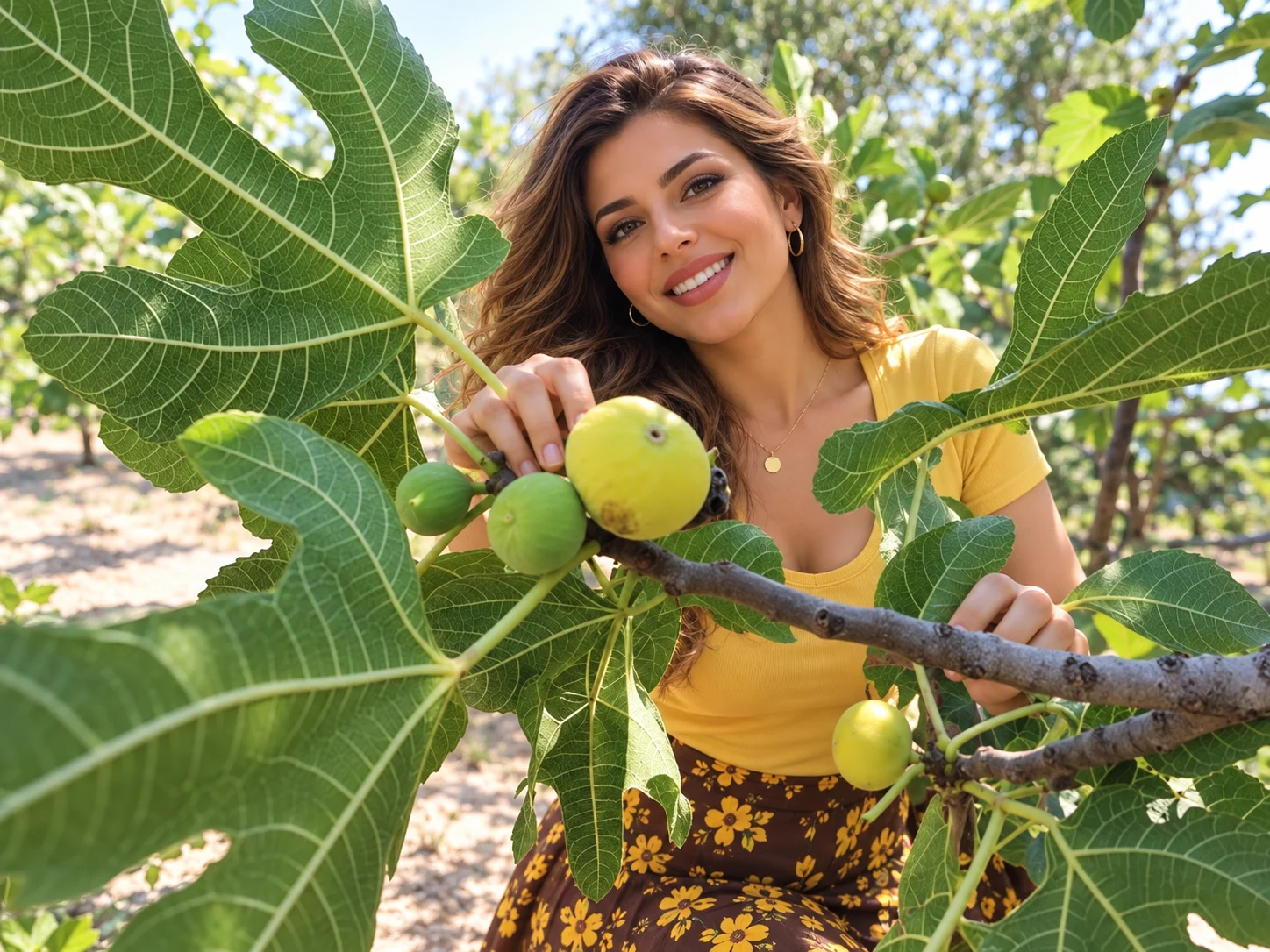
Sarılop figs drying in the Aydın sun — the province produces over 60% of Turkey's fig export volume.
The Aydın Sarılop fig is a cultivar — a specific variety of common fig (Ficus carica) — developed and refined over centuries in the Büyük Menderes valley. It is larger, paler and drier-fleshed than most other Turkish fig varieties, characteristics that make it particularly well-suited to sun-drying and long-distance export. The variety has EU Geographic Indication (GI) protection, meaning "Aydın İnciri" as a designation legally refers to figs produced in this province from this cultivar following recognised methods.
Turkey is the world's largest fig exporter, and Aydın province accounts for over 60% of national production. The harvest runs from mid-August through mid-September. During this window, fresh figs (very perishable) are available at roadside stands throughout the province at low prices. The dried form — sun-dried on natural cloth sheets spread in the orchards — is the commercial product that reaches export markets.
The fig's influence on local identity is extensive. İncirliova, Nazilli and Kuyucak are all within the main production belt. The Aydın Fig Festival (İncir Festivali) runs in Nazilli in September each year. Dried figs are sold throughout the province in paper bags of various sizes; buying directly from producers at the Tuesday Nazilli market or the İncirliova roadside stands yields the best quality at the lowest price.
Gastronomy: beyond the dried fig as a standalone product, Aydın cuisine uses figs in jam (incir reçeli), grape molasses mixed products, pastries (incir uyutması — a layered dessert), and as an accompaniment to local cheeses. The fig's interaction with olive oil and tahini is common in breakfast contexts.
Aydın Cuisine
Aydın's food culture draws on Aegean-Mediterranean tradition, with olive oil as the dominant cooking fat for vegetables and legumes, and a strong tradition of pastry from its Ottoman past.
Paşa böreği is the province's most distinctive pastry: thin yufka layers filled with meat and onion, shaped and fried in clarified butter or oil. It is found at börek shops in Aydın city and in Nazilli, particularly in the morning. Unlike the pan-baked börek common across Turkey, the paşa variant has a crispy, almost deep-fried exterior.
Çine köftesi comes from Çine district — a hand-formed köfte using lamb or mixed minced meat with specific herb proportions, grilled directly on the coal. The texture is looser than İnegöl-style köfte; the flavour is dominated by fresh herbs. Çine has restaurants specialising exclusively in this köfte, and the dish appears on menus across the province.
Keşkek is a celebratory dish of slowly cooked wheat beaten with meat — lamb or chicken — until it reaches a smooth, porridge-like consistency. It appears at weddings, religious events and some festival contexts across Aydın and the wider Aegean interior. It requires hours of cooking and is rarely found outside communal events.
Zeytinyağlılar — olive oil vegetable dishes — are central to the daily table: artichokes, broad beans, green beans, and dried legumes all cooked slowly in olive oil and served at room temperature. This cooking tradition is at its best in spring when artichokes and broad beans are in season.
Olive oil and olives: Aydın province has significant olive cultivation alongside its fig culture, concentrated in Çine, Koçarlı and Karpuzlu districts. Local olive oil — particularly early-harvest (erken hasat) extra-virgin — is available at producers' cooperatives and at the main town markets. Local table olives include cracked green (kırma) and black oil-cured varieties.
Chestnut products: Kestane (chestnut) from the Aydın mountain range appears in autumn markets — roasted, as chestnut honey (kestane balı), and in candied form (kestane şekeri). The mountains between Aydın and İzmir produce a distinctive honey from oak, pine and chestnut sources.
Beaches by Region
Kuşadası area: Kadınlar Denizi (central, best facilities), Long Beach / Uzun Yol (longest, quieter south end), Ladies Beach (same as Kadınlar Denizi), Tusan (north, rockier)
Dilek Peninsula: Içmeler (organised), Aydınlık (moderate facilities), Kavakburnu (limited), Karasu (wild, may require park transport)
Didim area: Altınkum (largest, most developed resort beach), İncekum (wild sand dunes, south of town), Akbük (calmer bay, good for boats)
Davutlar: Kavaklıburun, smaller coves between Kuşadası and Didim — less-used, rockier than the main resort beaches
Which Part of Aydın Is Right For You?
| If you want… | Go to |
|---|---|
| World-class Roman sculpture and the best stadium on earth | Karacasu — Aphrodisias (UNESCO) |
| A complete Hellenistic city plan, quiet and legible | Söke — Priene |
| Ancient philosophers and a great Roman theatre | Didim district — Miletus (Balat village) |
| An ancient oracle sanctuary at monumental scale | Didim — Didyma / Temple of Apollo |
| A busy Aegean resort near Ephesus | Kuşadası |
| Wild coves with biodiversity and forest hiking | Dilek Peninsula National Park |
| A less-developed package resort with fine sand | Altınkum, Didim |
| Canyon boat tours and zero crowds | Bozdoğan — Arapapıştı |
| Rare Hellenistic architecture and Carian history | Karpuzlu (Alinda) or Çine (Alabanda) |
| Fig harvest culture and agricultural landscape | İncirliova / Nazilli (August–September) |
| Provincial capital archaeology museum | Aydın city / Efeler |
Itinerary Options
One Day: Aphrodisias Focus
Drive or transfer to Karacasu (~100 km from Aydın city, ~160 km from İzmir airport). Spend 3–4 hours at Aphrodisias. Return via Sultanhisar for a brief stop at Nysa. Back in Aydın by early evening. Alternatively, pair Aphrodisias with a morning Aydın Museum visit in the city centre.
One Day: Didim Archaeology Circuit
Morning at Miletus (Balat village) — allow 2 hours. Midday at Didyma / Temple of Apollo — allow 1.5 hours. Afternoon at Altınkum beach or Priene (south of Söke, 20 km northwest of Miletus). Return via Söke.
Two Days: Aegean Coast + Archaeology
Day 1: Kuşadası (castle, market), Kadınlar Denizi or Dilek Peninsula coves. Optional evening at Ephesus if arriving early (Selçuk/İzmir area).
Day 2: Priene morning, Miletus midday, Didyma afternoon, Altınkum for dinner.
Three to Four Days: Full Province Circuit
Day 1: Aydın city — Tralleis, Museum, central market.
Day 2: Kuşadası circuit — Güvercinada, Dilek Peninsula, evening at Doğanbey or Kadınlar Denizi.
Day 3: Didim circuit — Miletus, Didyma, Altınkum.
Day 4: Karacasu circuit — Aphrodisias (full morning), Nysa (Sultanhisar), Arapapıştı Canyon (Bozdoğan) if time allows.
For a broader Aegean road trip connecting Aydın to Muğla, Denizli and İzmir, see our Turkey travel guide.
Best Time to Visit
Spring (April–May): Ideal for archaeology. Temperatures are 18–25°C, wildflowers cover the ancient site hillsides, and tourist volumes are low. Arapapıştı Canyon is at its best with high water. The only downside is occasional afternoon rain.
Early summer (June): Excellent for both archaeology and beach. Temperatures 25–30°C, sea temperatures rising. The busiest resort season has not yet peaked.
High summer (July–August): Coast is at maximum activity — beaches full, Kuşadası and Altınkum busy. Archaeological sites are very hot (35°C+ common); visit before 9:00 or after 17:00. The fig harvest begins in August — good timing for market visits.
Autumn (September–October): The best overall season for Aydın. Temperatures drop to 22–28°C, the sea is still warm through October, crowds thin after mid-September, and the fig and olive harvests make the agricultural landscape particularly atmospheric. October is excellent for Aphrodisias and Priene with comfortable walking temperatures and golden light.
Winter (November–March): Archaeological sites remain open but the weather is variable. Kuşadası and Didim resort towns are almost deserted. Aydın city and the inland districts function normally. Not ideal for beach tourism but perfectly viable for archaeology if temperatures are acceptable (typically 10–16°C).
Getting to Aydın
By air: İzmir Adnan Menderes Airport (ADB) is the primary gateway — 90 km from Aydın city, 45 km from Kuşadası. It handles a high volume of summer charter flights as well as year-round scheduled services. No commercial airport serves Aydın city directly.
By road from Istanbul: Approximately 650 km via the O-3/E87 motorway through Bursa and İzmir, or via Ankara and Afyonkarahisar on the inland route. Driving time is 7–9 hours depending on stops. For door-to-door flexibility with luggage and multiple destination stops, a private intercity transfer is the most practical option.
By high-speed train: The İstanbul–İzmir high-speed line via Bursa and Balıkesir serves İzmir in approximately 3.5 hours. From İzmir Basmane or Halkapınar, conventional trains continue to Aydın in about 1.5 hours. The İzmir–Aydın railway is one of the oldest lines in Anatolia and still a practical and scenic option for reaching the provincial capital.
By intercity bus: Frequent services from İzmir, Denizli and major western Turkish cities to Aydın city, Kuşadası, Didim and Nazilli.
Getting Around Aydın Province
Public transport covers the main towns but not the archaeological sites. Dolmuş minibuses connect Aydın city to Nazilli, Söke, Kuşadası and Didim at reasonable frequency. However, Priene, Miletus, Aphrodisias, Nysa, Alinda, Alabanda and the canyon — all the sites that distinguish Aydın from other provinces — are not accessible by public transport at practical schedules.
A rental car (available at İzmir airport or in Kuşadası) is the minimum for independent multi-site exploration. Driving distances are manageable: Kuşadası to Aphrodisias is about 1 hour 40 minutes; Didim to Miletus is 25 minutes; Priene to Miletus is 30 minutes.
For visitors arriving from Istanbul or travelling between multiple Aegean destinations, a private driver simplifies logistics considerably. Cab Istanbul operates intercity transfers from Istanbul to Kuşadası, Didim, Selçuk and Aphrodisias, with flexible stop options en route. This works well as a one-way transfer on a Aegean driving circuit combining Aydın, Muğla and İzmir provinces. See also the car with driver service for day-hire options within the province.