
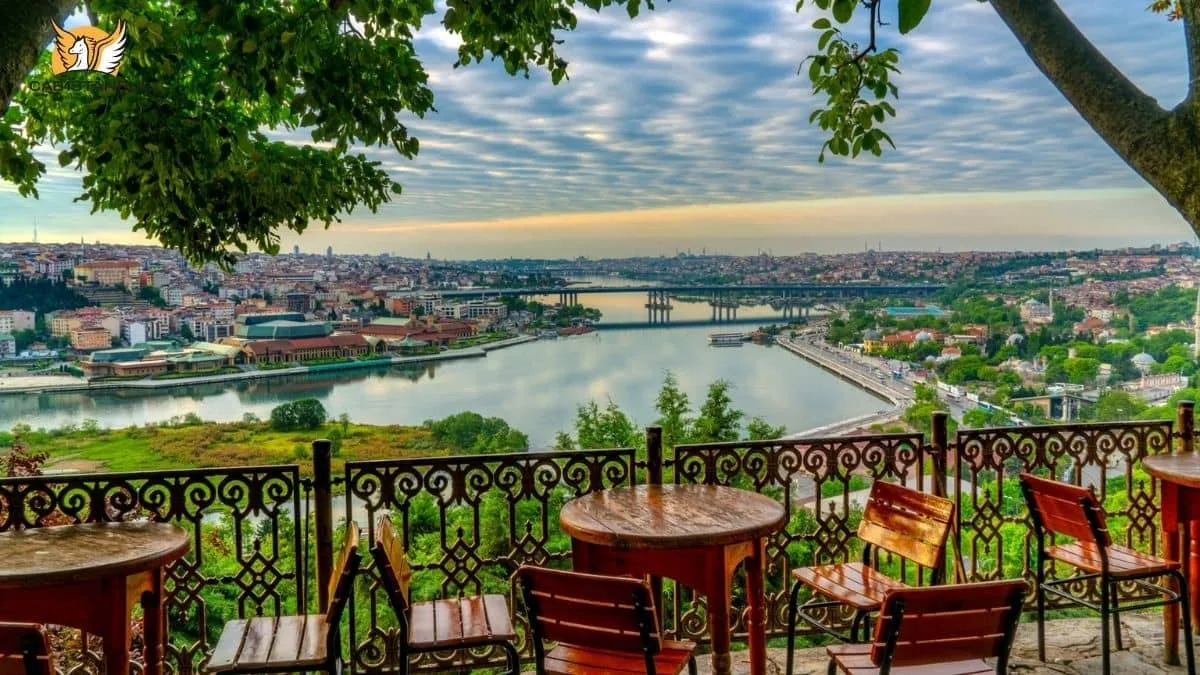
Eyüp Sultan Mosque (Eyüp Sultan Camii) sits on the Golden Horn shore in Eyüpsultan, outside the old land walls. At its heart is the shrine associated with Abu Ayyub al-Ansari (Ebû Eyyûb el-Ensârî)—a Companion of the Prophet Muhammad known in Turkish devotion as Eyüp Sultan. This guide covers history with fact vs tradition clearly marked, architecture after the Selim III rebuild, tomb etiquette, free entry, current access notes, transport, and a short nearby list. Pierre Loti Hill is uphill for a separate viewpoint guide—not duplicated here.
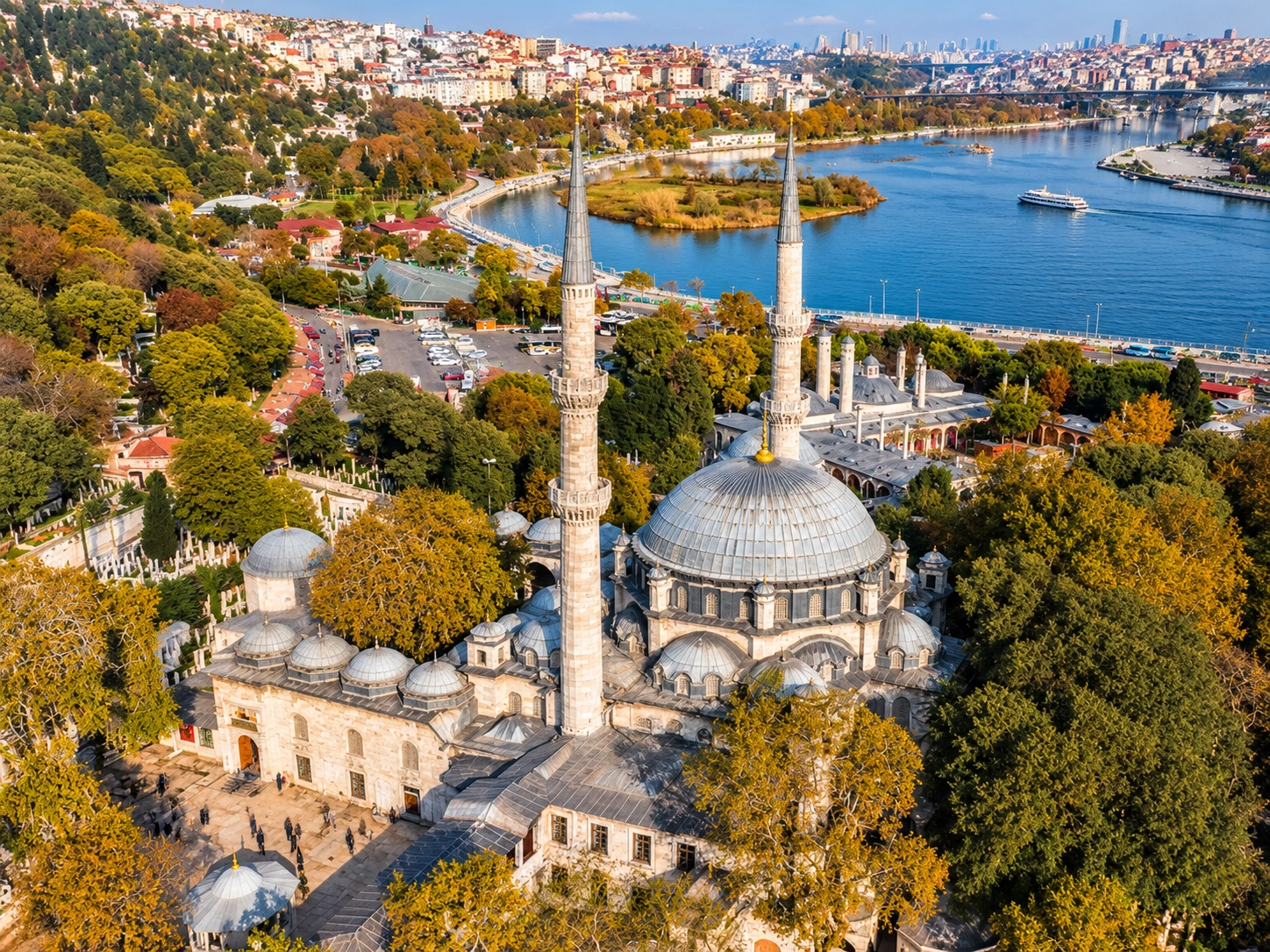
Videos are visual atmosphere only—not hours, fare, or historical authority.
Visitor information (check date: 10 Sep 2026)
| Item | Current information |
|---|---|
| Mosque entry | Free (active mosque; no ticket) |
| Tomb entry | Free |
| Tomb hours (museum inventory) | Summer 06:00–23:00 · Winter 07:00–20:00 (confirm on site; holy nights may differ) |
| Mosque access | Open for worship; plan tourist visits around prayer flow—especially Friday noon |
| Dress | Modest clothing; women cover hair in prayer hall and türbe; scarves often available |
| Non-Muslim visitors | Welcome in courtyard and visitor areas when respectful; follow staff and signs |
| Photography | Courtyard usually fine; inside the tomb follow posted rules—do not assume a blanket ban or free-for-all |
| Ramadan / Friday | Expect heavy crowds; religious use comes first |
Older pages quoting fixed tomb hours such as 09:30–16:00 are stale. Always recheck seasonal notices at the complex.
Who was Abu Ayyub al-Ansari?
Abu Ayyub Khalid ibn Zayd al-Ansari (Ebû Eyyûb Hâlid b. Zeyd el-Ensârî) was a Medinan Companion from the Ansar. After the Hijra he hosted the Prophet in Medina for about seven months—hence the Ottoman honorific Mihmandâr-ı Nebî (the Prophet’s host). He joined major early campaigns and, late in life, the Arab expedition against Constantinople. Classical sources place his death around 49 AH / 669 CE (with other years also reported), during or linked to that campaign, with burial near the city walls by his request.
In Ottoman and Turkish devotion he is often called Eyüp Sultan and poetically alemdar (standard-bearer). That title is a strong local and literary tradition; the securely documented roles are Companion, Ansar helper, and host of the Prophet. This page does not invent or reproduce unverified prophetic quotations.
Burial tradition and Ottoman rediscovery
| Period | Event | Evidence context |
|---|---|---|
| 7th century | Death near Constantinople; burial by the walls | Classical Islamic historiography (documented narrative with date variants) |
| Medieval centuries | Later visitors describe a remembered grave outside the walls | Travel accounts cited in scholarship; not continuous archaeology |
| 1453+ | Akşemseddin associated with locating the grave after the conquest | Ottoman religious-historical tradition—not a modern excavation report |
| 1458–59 | Mehmed II founds mosque–türbe complex at the site | Traditional foundation date (863 H) in Hadîkatü’l-cevâmi‘ / TDV |
| 1798–1800 | Selim III rebuilds the mosque after 1766 earthquake damage | Documented rebuild (Rûznâme); minarets largely retained |
Speak of the shrine as the place venerated as Abu Ayyub’s resting place in Islamic and Ottoman tradition—without pretending every detail is archaeologically proven.
Mosque history and the Selim III rebuild
After 1453, Mehmed II commissioned a külliye around the shrine: mosque, türbe, medrese cells, imaret (soup kitchen), and related charitable fabric. The conventional foundation year is 1458–59. The complex anchored Eyüp as an Ottoman sacred landscape of tombs, tekkes, fountains, and cemetery slopes.
The great 1766 earthquake left the first mosque beyond lasting repair. Under Sultan Selim III, work shifted from patching to full rebuild: demolition to foundations in 1798, completion in mid-1800, and ceremonial opening in October 1800. Contemporary notes credit building trustee Uzun Hüseyin Efendi. Earlier minarets were largely kept; courtyard medrese rooms and Sinan Paşa’s elevated köşk were cleared. Do not confuse this rebuild with III. Ahmed’s earlier minaret heightening (1720s) for mahya lamps.
Architecture — what you see
| Element | What visitors see | Historical context |
|---|---|---|
| Prayer hall | Central dome (~16 m) on an eight-support system; galleries; baroque-tinged capitals and minbar | Selim III rebuild; classical structure memory with late-Ottoman ornament |
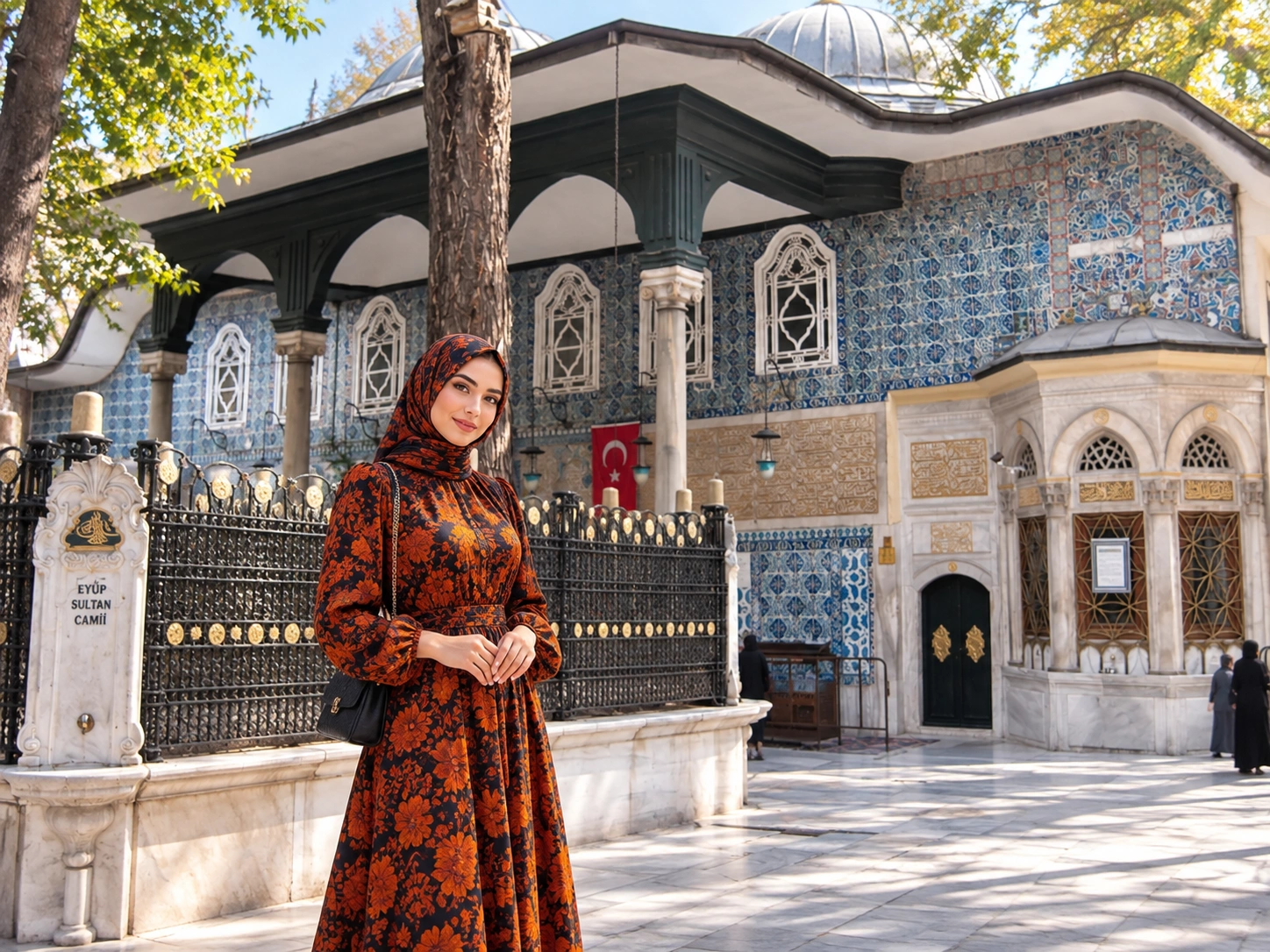
| Courtyard | Porticoes; central marble sofa with corner spouts locals call “hâcet çeşmeleri” | Sofa from rebuild era; fortune/wish beliefs = folklore, not fact |
| Türbe wall | Bronze hâcet window; tile-clad screen between court and shrine | Ahmed I window tradition; mixed-period tiles (not all “İznik”) |
| Minarets | Two slender towers defining the skyline | Largely pre-rebuild fabric, later repairs (including lightning damage 1823) |
The tomb of Abu Ayyub
The octagonal stone türbe stands beside the mosque court. After the Selim III rebuild it sits outside the inner courtyard, linked by the hâcet window wall. Inside, the sanduka is enclosed by a silver grille associated with Selim III; walls carry mixed historic tiles and calligraphy. Relics and footprint displays belong to living pilgrimage practice—treat them as devotion, not laboratory proof.
Etiquette: remove shoes where required, keep voices low, do not block people praying, and manage children gently. Avoid food, loud phones, and posing that turns the chamber into a photo set.
Ottoman sword-girding at Eyüp
From the early seventeenth century, many Ottoman accessions included the kılıç alayı (sword procession) and taklîd-i seyf (girding) at the Eyüp shrine—often with the şeyhülislam or nakîbüleşraf. Sacred swords attributed to early caliphs or Ottoman founders might be used. This was a legitimacy ritual, not a “coronation of every sultan on this spot since 1453.” Exceptions and earlier Bursa/Edirne practices exist in the scholarship.
Eyüp Sultan Cemetery
Burial near Abu Ayyub’s shrine became an Ottoman prestige and piety preference. The hazire around the mosque and the Gümüşsuyu slopes toward Pierre Loti preserve remarkable funerary calligraphy and carved headgear motifs. Verified modern and late figures commemorated in the municipal cemetery narrative include Necip Fazıl Kısakürek, Mareşal Fevzi Çakmak, and poet Ahmet Haşim. This page does not publish an unverified “celebrity burial list.”
Circumcision visits — living culture
Many Istanbul families bring boys in ceremonial sünnet clothing to Eyüp for ziyaret, photos, and prayers around the mosque and türbe. Shops in the surrounding çarşı still sell outfits and gifts. Treat this as a qualified living tradition of blessing and memory—not a medical claim, pain remedy, or guaranteed spiritual outcome.
Eyüp Sultan Çarşısı
Immediately around the complex you will find prayer beads, rugs, religious books, sweets, and sünnet accessories. That neighborhood market is the relevant shopping layer for a mosque visit—not distant malls or theme parks.
How to get there
| From | Recommended route | Practical note |
|---|---|---|
| Eminönü | T5 tram toward Alibeyköy → Eyüpsultan area stops | Clearest public rail approach |
| Sultanahmet | Reach Eminönü, then T5 | Allow transfer time |
| Karaköy / Haliç | Şehir Hatları Haliç line → Eyüpsultan pier | Scenic; check current sailings |
| Taksim | Metro/bus toward the Golden Horn + T5, or taxi | Traffic variable |
| Airports / hotels | Private transfer to Eyüp shore | Airport transfer / chauffeur |
İstanbulkart rail first boarding (Tam) is 46.20 TL from 20 July 2026 for the integrated Metro İstanbul tariff that covers T5. Ferry fares follow Şehir Hatları sea tariffs—recheck before travel. Optional TF2 cable car climbs to Pierre Loti; full TF2 detail belongs in the hill guide.
Best time and how long
| Window | Experience | Note |
|---|---|---|
| Weekday morning | Quieter courtyard and türbe queue | Best for first-time visitors |
| Between prayer peaks | Easier movement in the prayer hall | Do not interrupt worship |
| Friday midday | Congregational priority | Poor for leisurely tourism |
| Ramadan evenings | Intense spiritual atmosphere | Crowds and traffic; plan patience |
Duration: mosque + courtyard + tomb often 60–90 minutes; add bazaar and cemetery edge for about two hours; a half-day can include Zal Mahmut Paşa, Artİstanbul Feshane, and optional Pierre Loti.
Half-day Eyüp outline
- Arrive by T5 or Haliç ferry.
- Enter the courtyard; observe quietly.
- Visit the prayer hall outside peak congregational moments.
- Proceed to the türbe with proper dress and low voices.
- Walk a respectful stretch of the historic cemetery edge.
- Browse Eyüp Sultan Çarşısı if you wish.
- Optional: Zal Mahmut Paşa complex or Artİstanbul Feshane nearby.
- Optional: continue uphill to Pierre Loti Hill (separate guide).
Nearby places worth combining
| Place | Why combine | Context |
|---|---|---|
| Pierre Loti Hill | Viewpoint above the cemetery | Dedicated hill guide |
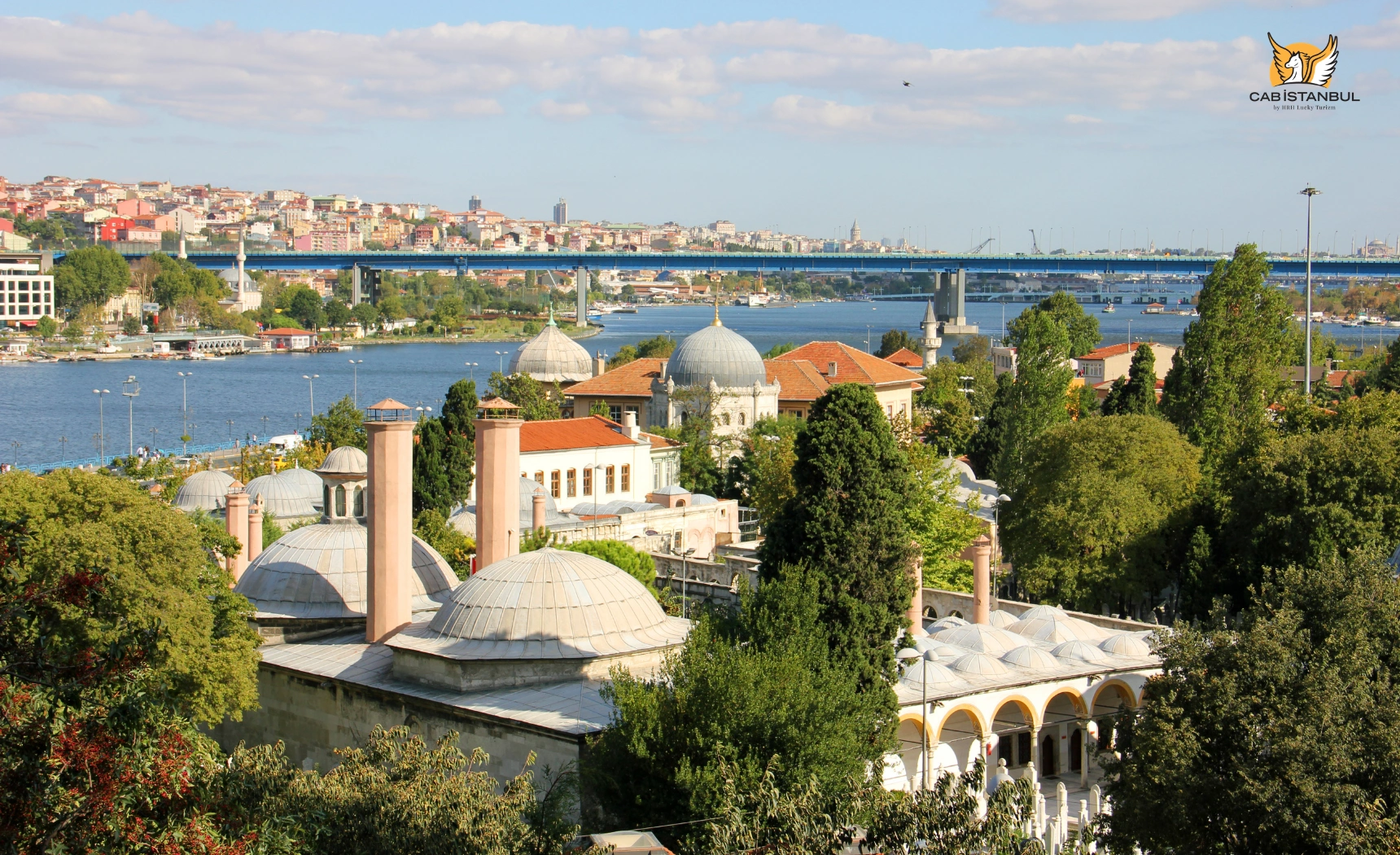
| Zal Mahmut Paşa Külliyesi | Mimar Sinan mosque–madrasas–tomb for Şah Sultan & Zal Mahmud | Short walk; quiet architecture stop |
| Artİstanbul Feshane | Former imperial fez factory; İBB culture venue on the shore | Often free entry with digital booking—verify current exhibition hours |
| Fener–Balat | Continue along the Horn | Fener & Balat guide |
FAQs
Where is Eyüp Sultan Mosque?
In Eyüpsultan on Istanbul’s European side, on the Golden Horn just outside the historic land walls.
Who is Eyüp Sultan / Abu Ayyub al-Ansari?
A Companion of the Prophet from the Ansar who hosted him in Medina. In Turkish he is called Eyüp Sultan. Ottoman poetry also styles him alemdar; the securely established roles are Companion and host.
Is Abu Ayyub buried in Istanbul?
Islamic and Ottoman tradition venerates this türbe as his resting place after death during the seventh-century Constantinople campaign. Treat the identification as sacred tradition supported by Ottoman narrative, not as a modern forensic proof.
How was the tomb identified?
Ottoman sources associate Akşemseddin with locating the grave after 1453. Present that as Ottoman tradition.
When was the mosque built and rebuilt?
Traditional foundation under Mehmed II in 1458–59. After the 1766 earthquake, Selim III rebuilt the mosque in 1798–1800; minarets largely survived from earlier fabric.
Is entry free?
Yes—mosque and tomb entry are free. Donations are voluntary, not a ticket.
What are current tomb hours?
Museum inventory lists summer 06:00–23:00 and winter 07:00–20:00. Confirm on site; prayer times and holy nights can change visitor flow.
Can non-Muslims visit?
Yes, when dressed modestly and respectful of worship. Follow staff guidance for any restricted moments.
Can I take photos in the tomb?
Follow posted signs. Courtyard photos are usually fine; interior rules can be stricter—do not rely on outdated absolute bans or assume unrestricted filming.
Which tram reaches Eyüpsultan?
T5 from the Eminönü corridor serves the Eyüpsultan waterfront; walk a short distance to the mosque.
Is Pierre Loti nearby?
Yes—immediately uphill. Use the Pierre Loti Hill guide for cable car, café, and viewpoint detail.
Why are circumcision children brought to Eyüp?
It is a living Istanbul tradition of ziyaret, prayer, and commemorative photos around the shrine—not a medical guarantee.
Getting there with a driver
For a timed pickup from IST, SAW, or a hotel to the Eyüp shore, book car with driver or hourly / daily chauffeur. Cab Istanbul provides transport only—it does not administer the mosque or türbe.