
Abant Lake is one of Turkey's most quietly rewarding nature escapes — a glacial crater lake sitting at 1,325 metres in the ancient beech forests of Bolu province, roughly 250 kilometres east of Istanbul. The lake and its surrounding Abant Gölü Tabiat Parkı (nature park) offer a flat 7-kilometre walking trail through old-growth forest, horse carriages on the shoreline path, cycling, pedal boats, seasonal wildflowers, and autumn foliage that rivals anything in the Black Sea region. The wider Bolu area adds further depth: seven interconnected glacial lakes at Yedigöller, mineral travertine terraces at Akkaya, and one of Turkey's most intact Ottoman towns at Mudurnu. This guide covers everything you need to plan a visit: current entrance fees, activities at the lake, seasonal highlights, the best nearby attractions, accommodation options, local food, and how to get there from Istanbul.
Abant Lake and the Nature Park: What to Expect
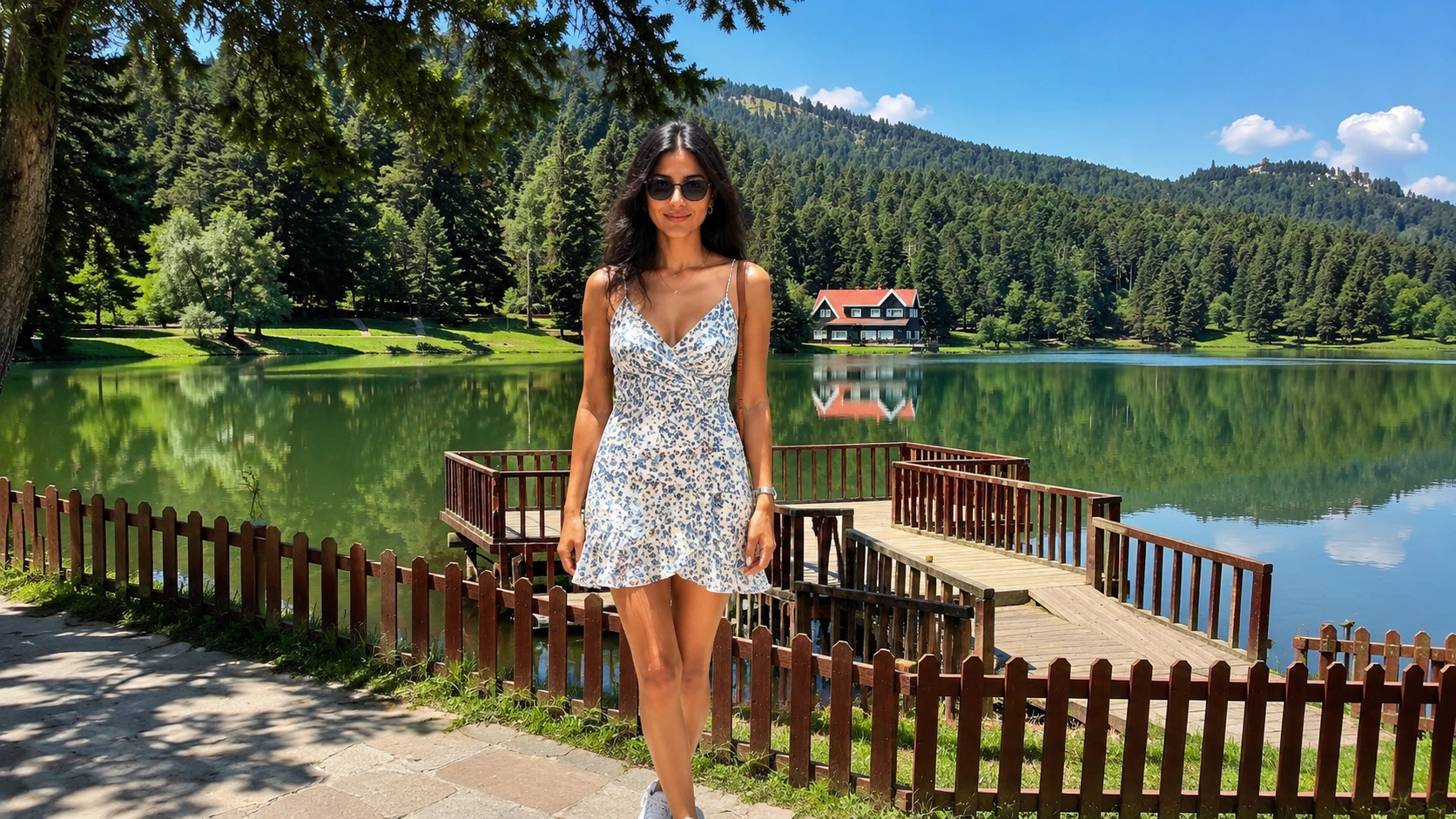
Abant Lake formed in a glacial valley between densely forested ridges and has been protected as a nature park since the 1970s. The lake surface covers roughly 1.25 square kilometres; the elevation keeps summer temperatures 8–10°C cooler than Istanbul, making it a popular hot-weather escape. The park is administered under the Ministry of Agriculture and Forestry (DKMP) and charges a standard entrance fee by vehicle or person type.
The park's centrepiece is the 7-kilometre circumferential trail around the lake — flat, well-maintained, and suitable for all ages including families with young children and visitors who do not hike regularly. The full loop takes between 90 minutes and two hours at a relaxed pace and offers views across the lake from multiple angles. The forest alongside the path transitions between beech, oak, hornbeam, and pine depending on the elevation.
At the park entrance, a small market sells regional products: Abant honey, pine honey, rose hip jam, dried tarhana, and handmade crafts. The Abant Nature Museum near the gate displays regional wildlife, flora specimens, and information about the park's ecology — worth a brief stop before heading to the lake. Lakeside restaurants and cafés are available within the park, though prices are higher than those on the approach road.
One critical rule applies to every visitor: swimming in Abant Lake is strictly prohibited. This includes wading and dipping feet. The lake is a protected ecological zone, and park rangers actively enforce the ban. Even in peak summer heat, the lake's surface is for viewing and photography only. If swimming is part of your Bolu itinerary, Akkaya Travertines (covered in the attractions section below) offer natural mineral pools specifically open for swimming.
Swimming, wading, and standing in the lake are all prohibited by park regulation — even in summer. Walking on the frozen lake surface in winter is also banned. Rangers enforce these rules. If you want to swim near Bolu, visit the Akkaya Travertines mineral pools instead.
Which Type of Visit Suits You Best
Abant Lake rewards different kinds of visitors in different ways. The table below gives a quick-match guide to help you plan the right length of stay and combination of activities for your group.
| Traveller type | Best Abant plan | Why it fits | Watch out for |
|---|---|---|---|
| Couples / romantic getaway | 1–2 nights at a lakeside boutique hotel; evening forest walk; breakfast by the lake | Quiet atmosphere, scenic surroundings, excellent bungalov options along the forest road | Weekend crowds in July–August; book accommodation well in advance for peak weekends |
| Families with children | Day trip or 1 night; 7 km lake walk or horse carriage; bicycle rental; entrance market | Flat trail suits all ages; horse carriages popular with young children; safe, enclosed park environment | No playground structures within the park; strollers work on the main path but not off-trail sections |
| Nature / wildlife photographers | 1–2 nights; arrive at dawn; visit in October–November for foliage or April–May for endemic crocus | Mirror-surface reflections in still mornings; endemic crocus blooms unique to Abant; world-class autumn colour | Mist and cloud cover can obscure views; weekend visitor density reduces quiet shooting windows |
| Day trippers from Istanbul | Early departure; 7 km lake loop; lunch at a trout restaurant; return same day | 3–3.5 hours by car each way; enough to experience the lake in a single long day | Weekend traffic on the TEM motorway extends drive time; arrive by 09:00 in summer to avoid queues |
| Hikers and walkers | 2 nights; combine Abant lake loop with Gölcük Nature Park and forest paths toward the plateaux | Varied terrain in the wider Bolu forests; Abant loop is just the start | Marked long-distance trails are limited; off-trail paths can become muddy after rain |
| Winter visitors | 1 night; snow photography at the lake; combine with Kartalkaya ski resort if skiing | Dramatic snow-covered landscape; much fewer crowds; lake surface photography in January–February | Snow chains effectively required; darkness falls by 17:00; some park services reduced in winter |
Things to Do at Abant Lake: Activities and Experiences
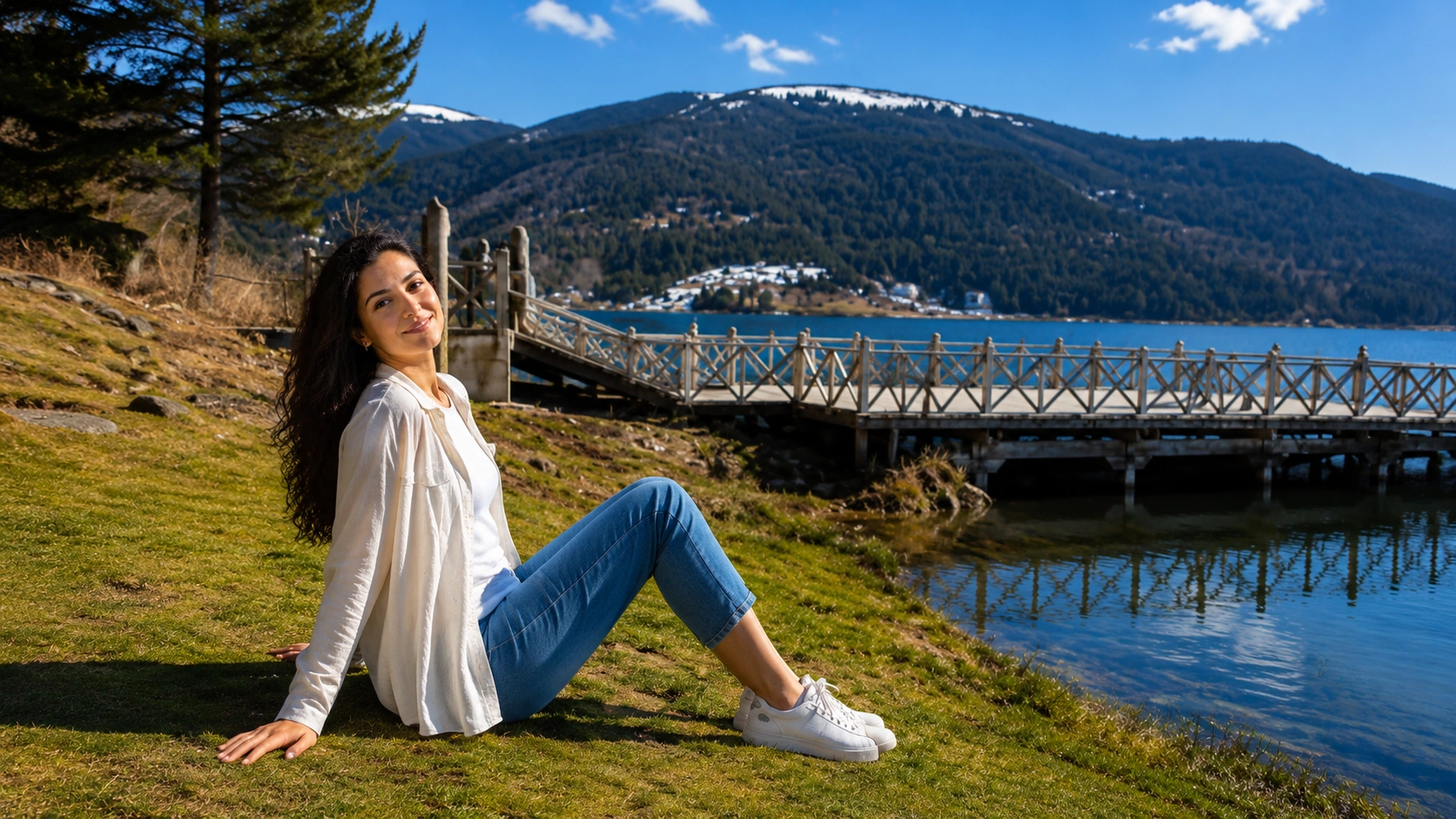
Walking the 7 km Lake Loop
The circumferential trail around Abant Lake is the park's defining experience. The path is flat, well-maintained, and largely paved or compacted gravel — accessible to families with children, casual walkers, and older visitors. The full circuit takes 90 minutes to two hours at a comfortable pace. Multiple rest points, benches, and viewpoints are positioned around the loop; the best views across the open water come from the far side of the lake, away from the main entrance area. In spring and early summer, the forest floor alongside the path shows wildflowers and ferns. In autumn, the reflected colours in the lake surface are the circuit's main attraction. Arrive early to experience the trail before it gets busy — particularly on summer weekends.
Horse Carriage (Fayton / Payton) Rides
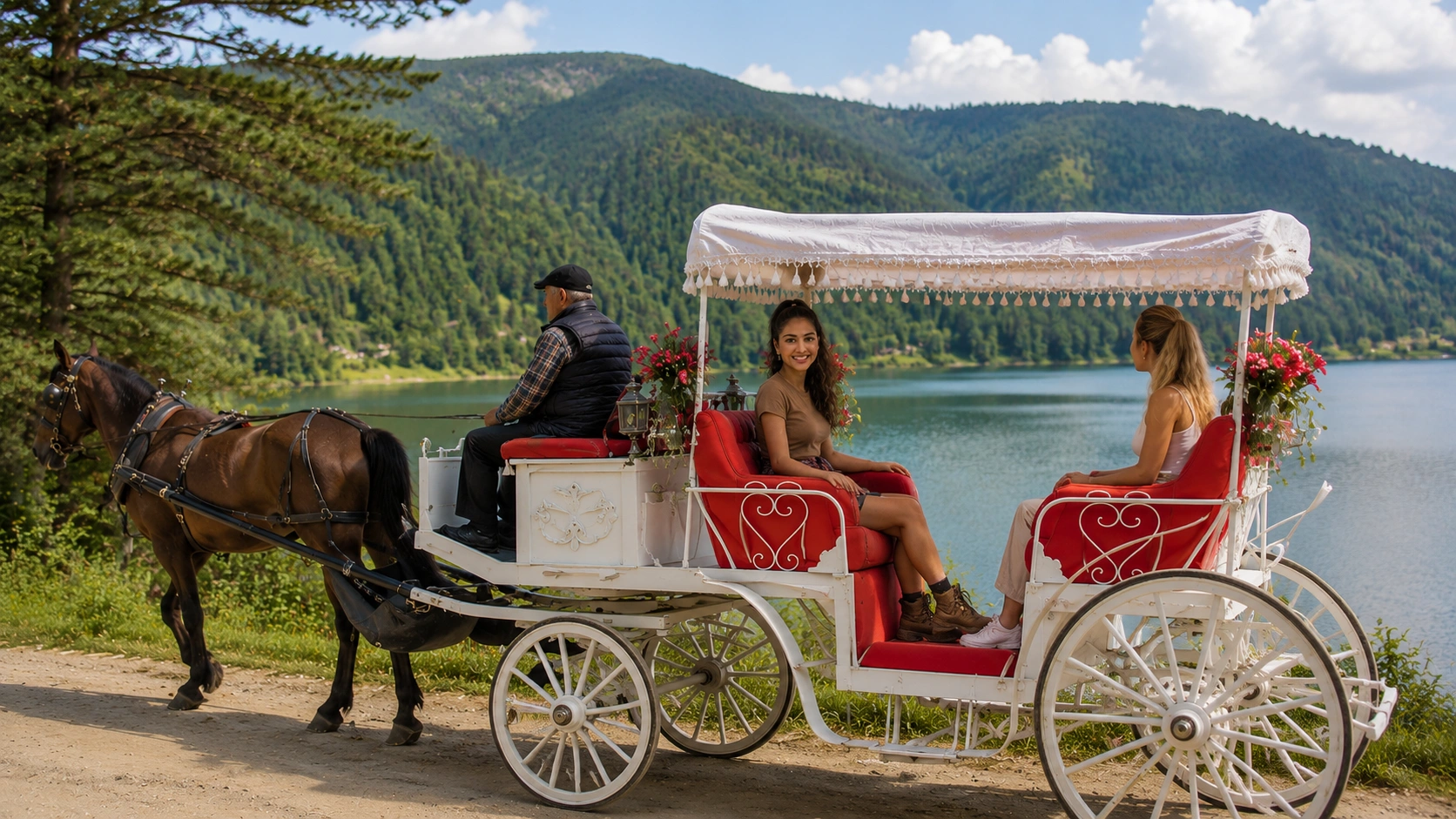
Traditional horse-drawn carriages operate circuits around the lakeside path and are a popular activity at Abant, particularly for families and visitors who prefer not to walk the full loop. The carriages follow the main lakeshore section of the trail. Approximate fare estimates from informal sources suggest around 200–300 TL per tour for a 30–40 minute circuit, but these are operator-set prices that vary by season — confirm directly at the park before committing. Visitors with concerns about animal welfare may prefer cycling or walking.
Bicycle Rental
Pedal bicycles and electric bicycles are available for hire at the park, allowing visitors to complete the lake loop at their own pace. Approximate rental rates from local travel sources suggest around 80–120 TL per hour for pedal bicycles — but these figures are estimates from informal sources and should be verified on arrival. Electric bicycles are typically priced higher. Cycling the full 7 km loop takes 25–40 minutes at a relaxed pace.
Pedal Boats and Canoes
Pedal boats and canoe rentals are available at the lake for use on the water. Approximate prices from aggregated blog sources suggest around 200–350 TL per hour — confirm on-site as these are operator-set and change seasonally. Being on the water provides a different perspective of the forest and mountain ridges surrounding the lake. Note that swimming and wading remain banned even when using a boat.
Photography at the Lake
Abant Lake is one of Turkey's most photographed natural locations — deservedly so. The lake surface acts as a mirror during still morning conditions, reflecting the surrounding ridge line and forest. Photography is best in the first two hours after sunrise before wind and visitor activity disturb the surface. The far side of the lake (opposite the entrance) offers the cleanest compositions with the water in the foreground and the forested ridge behind. In autumn, the combination of gold and orange canopy above and its reflection below creates unusually dramatic images with a standard focal length.
Abant Nature Museum
Located near the park entrance, the nature museum displays taxidermied regional wildlife, botanical specimens, geological maps, and information about the park's protected ecosystems. Entry appears to be included with the park admission fee (verify at the gate). Worth 15–30 minutes, particularly useful for visitors travelling with children.
The Entrance Market
A small artisan market operates near the park gate, selling locally produced food and crafts: Abant honey, pine honey, rose hip jam, tarhana (dried soup blend), mushrooms, and regional textiles. Prices are reasonable and the products are genuinely local. This is a good place to pick up regional food to take home.
| Activity | Best season | Time needed | Approx. cost | Notes |
|---|---|---|---|---|
| 7 km lake walk | All seasons; autumn is finest | 1.5–2 hours | Included in park entry | Flat, accessible; muddy after rain near forest sections |
| Bicycle rental | Spring–Autumn | 30–60 min (loop) | ~80–120 TL/hr (estimate) | Pedal and electric options; verify price at park |
| Horse carriage / fayton | Spring–Autumn | 30–40 min | ~200–300 TL per tour (estimate) | Operator-set price; confirm before boarding |
| Pedal boat / canoe | Spring–Autumn | 1 hour typical | ~200–350 TL/hr (estimate) | On-water activity; swimming from the boat is still banned |
| Photography | Autumn and Winter best | 2–6 hours | Park entry only | Best light: 1 hr after sunrise; far shore offers cleanest angles |
| Nature museum | Year-round | 15–30 min | Likely included in entry | Regional wildlife and ecology displays at the gate |
| Local market | Year-round | 15–20 min | Free to browse; items vary | Honey, jam, tarhana, crafts — good quality and genuinely local |
The lake surface is calmest in the first two hours after sunrise. Arrive before 09:00 in summer — especially on weekends — and you will have the trail largely to yourself before coach arrivals begin. By 11:00 on a busy Saturday in August, the main path can become crowded.
Abant Lake by Season: When to Go
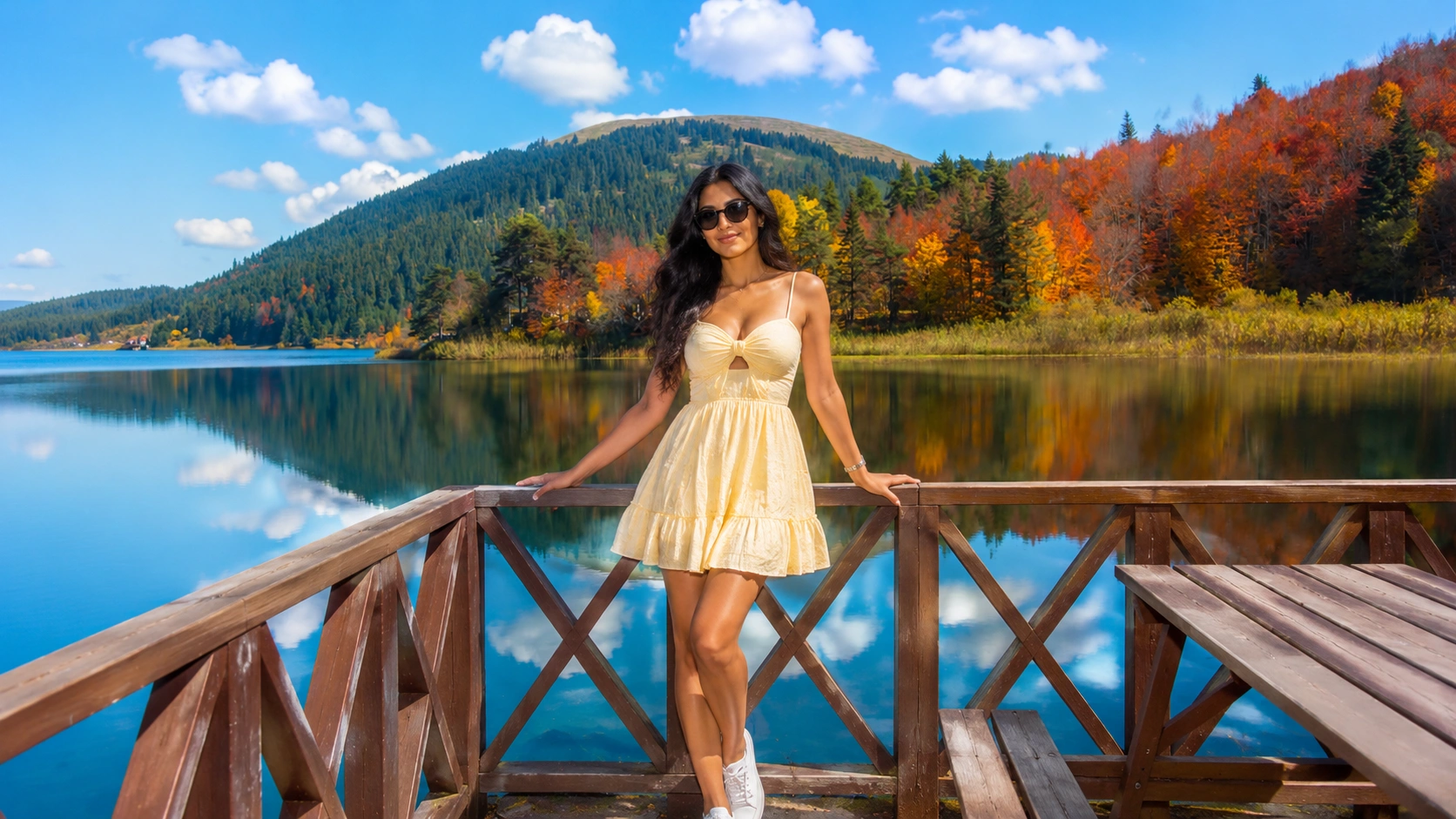
Spring (March–May): Wildflowers and the Endemic Crocus
Spring brings a particular distinction to Abant that few visitors know in advance: the Abant crocus (Crocus abantensis) is an endemic species that exists nowhere else in the world. It blooms on the hillsides around the lake between late April and early May, producing small purple flowers in swathes across the forest floor. Picking is prohibited. The trail in spring is surrounded by fresh beech foliage in the vivid green that characterises this altitude, and pink and white rhododendrons appear on the slopes above the lake. Trails can be muddy after rain, particularly off the main loop. Birdlife is active in spring and the park is noticeably quieter than in summer. This is a strong season for photography and for visitors who prefer fewer crowds.
Summer (June–August): Cool Escape from the City
At 1,325 metres, Abant stays 8–10°C cooler than Istanbul even at the height of August, which explains its popularity as a summer weekend destination. The forest is fully leafed and the lake reflects intense blue-green in clear light. Summer is the most crowded season — particularly July and August weekends, when the park fills early and parking becomes congested. Arrive before 09:00 on weekday mornings for the best experience. Despite the crowds, the park remains pleasant in the early morning and on weekday afternoons. Summer evenings near the lake are cool and comfortable, which is also when the lakeside hotels and restaurants are at their most lively.
Autumn (September–November): The Best Season Overall
Autumn is widely regarded as Abant Lake's finest season — and for good reason. The beech, oak, and hornbeam forest turns gold, amber, and deep red between October and early November, and the reflection of this canopy in the still lake surface produces the images that make Abant famous. September is still warm and largely green; October is peak colour, particularly in the second half of the month; early November is quieter still and the light is lower, which gives the foliage a richer, warmer quality. Crowds are significantly smaller than in summer, accommodation prices sometimes drop, and the forest floor acquires a thick carpet of fallen leaves. For photographers, autumn mornings at Abant — mist over the water, orange reflections, few other visitors — are one of Turkey's best nature photography experiences.
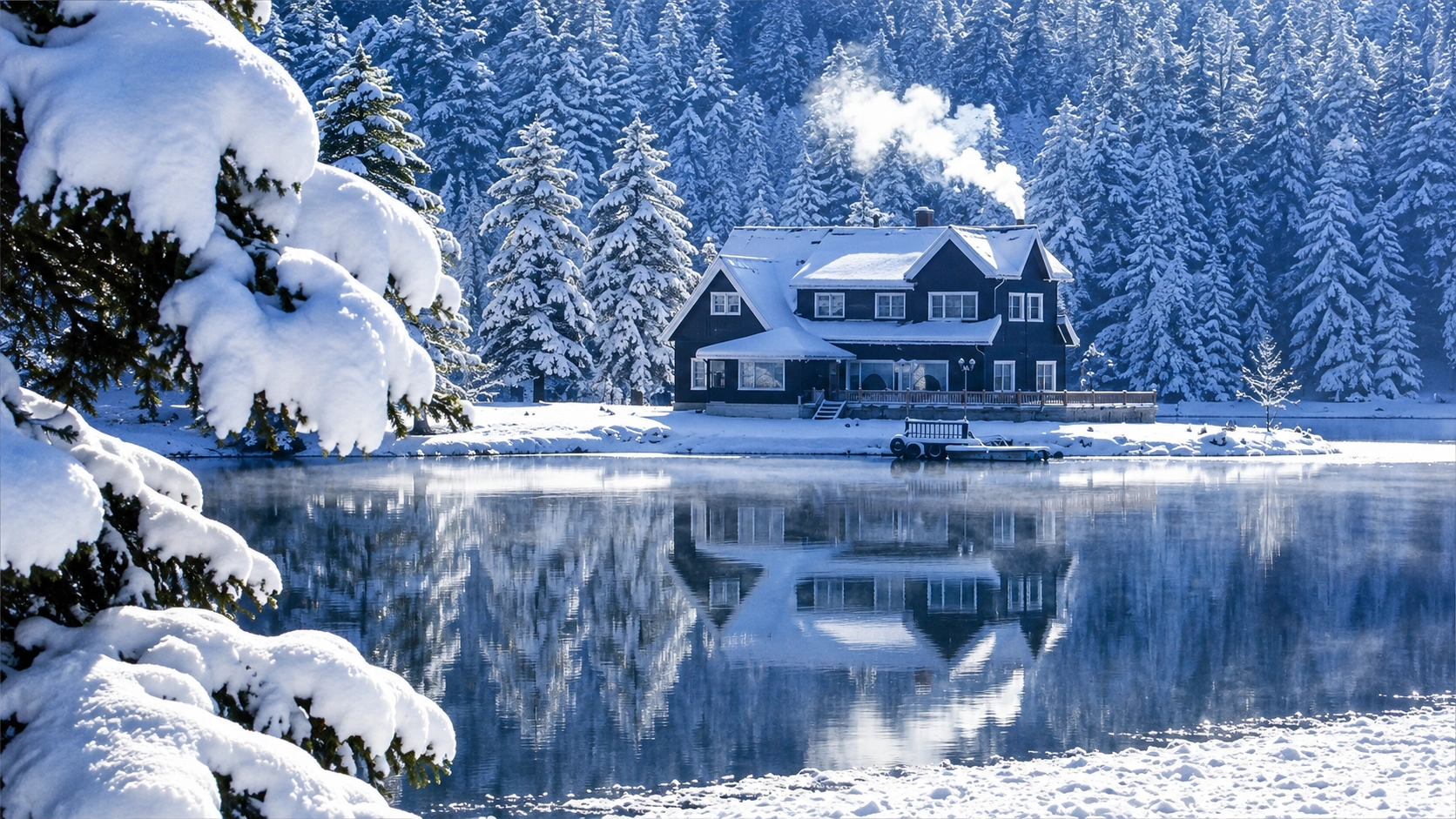
Winter (December–February): Snow, Silence, and the Ski Option
Abant in winter is a different experience — quieter, colder, and for the right visitor, uniquely rewarding. Heavy snowfall transforms the forest and lakeside path into a white landscape; the lake may partially freeze in January and February, and the snow-covered branches of the beech forest are visually dramatic. Winter visitor numbers are low, which means the park feels genuinely peaceful. The park remains open in winter, though some activity operators and smaller restaurants close seasonally.
Practical winter requirements: The 32-kilometre mountain road from Bolu to Abant is paved but winding. Snow chains are effectively mandatory for standard two-wheel-drive vehicles between November and March — conditions change quickly and the road can become icy. Four-wheel-drive vehicles manage the road more easily but still require caution. Darkness falls by 17:00 in winter, so plan your drive back to Bolu or Istanbul in daylight. Kartalkaya ski resort (40 km from Bolu) extends a winter trip with 45 km of ski piste and multiple hotels — covered in the nearby attractions section below.
Peak foliage at Abant typically runs from mid-October to early November — the exact timing varies by year and elevation. Check local Bolu social media and travel forums the week before your planned visit to gauge current conditions. The colour window is roughly three weeks and passes quickly.
See Abant Lake in Motion
The visual character of Abant Lake — the still morning reflections, the forest trails, the autumn colour and the winter snow — is easier to appreciate in video than in description. The video below shows the park across its different seasons and from multiple angles, including the lakeside trail, the forest surrounding, and the atmospheric conditions that make Abant exceptional in early mornings and at the seasonal colour peaks.
If you are deciding between a day trip and an overnight stay, the video gives a useful sense of the scale and atmosphere of the park — and why visitors who arrive at dawn tend to see a different (and better) Abant than those who arrive mid-morning.
Nearby Attractions: What to See Around Bolu and Mudurnu
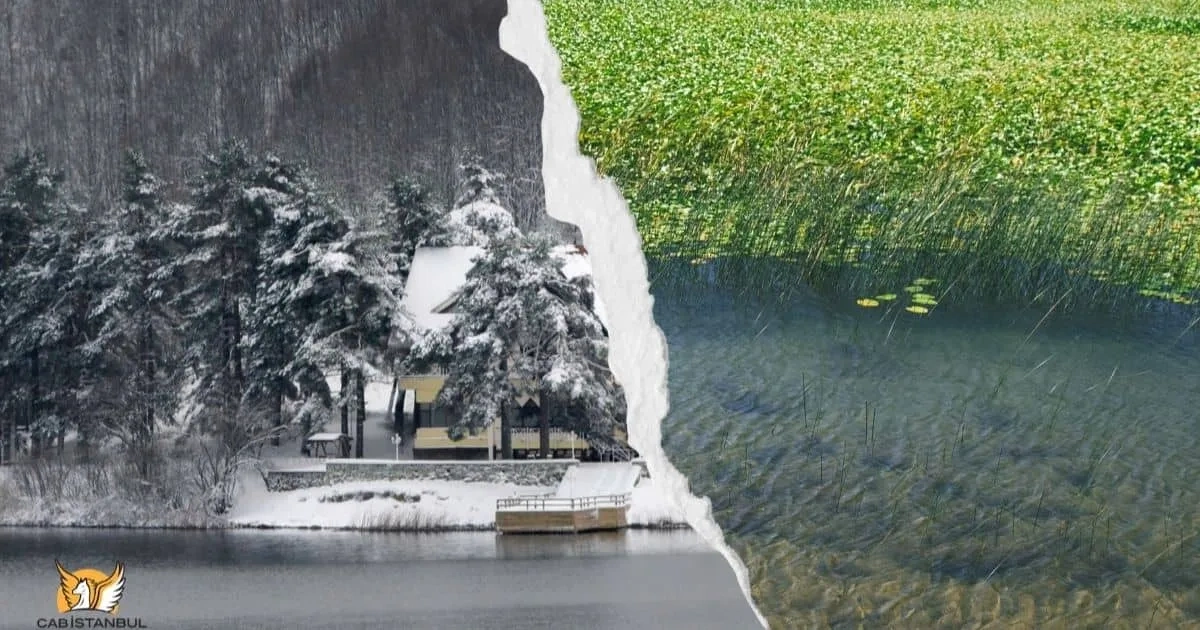
Abant Lake is the natural anchor of any Bolu visit, but the surrounding province holds enough depth to justify two or three days. The attractions below are organised by distance and type. Not all can be combined in a single day — see the itinerary section below for practical combinations.
Yedigöller Milli Parkı (Seven Lakes National Park)
Yedigöller is one of Turkey's finest national parks — seven small interconnected glacial lakes set within dense beech and oak forest at elevations between 650 and 1,100 metres. The lakes are connected by short waterfalls and wooden footbridges; the main trail system loops through all seven lakes and takes 2–4 hours depending on how many detours you take. Autumn colour at Yedigöller (October–November) is exceptional and arguably surpasses even Abant in its intensity, partly because the tree varieties are more diverse.
Important practical note: Yedigöller has no direct public transport connection. A private car (or rental car) is the only realistic way to visit. The park is roughly 70–80 kilometres from Abant Lake by road — on a different route out of Bolu, making it a separate day rather than a natural same-day combination unless you have a full day with an early start. Entry fees follow the same 2025 DKMP schedule as Abant: 60 TL per person, 180 TL per car. A dedicated guide to Yedigöller National Park covers the trail system, season timing, and practical details in full.
Akkaya Travertenleri (Akkaya Travertines)
Known informally as the "Pamukkale of Bolu," the Akkaya Travertines are a series of white calcium carbonate terraces formed by mineral spring water — located just 10 kilometres southwest of Bolu city centre on the Mudurnu road. Unlike Abant Lake, swimming is permitted here in the naturally formed mineral pools, which are refreshed monthly and divided into public and women-only sections. Facilities include changing rooms, a café, and picnic areas.
Entrance fees based on a 2024 source: approximately 80 TL per person plus 50 TL for vehicle/parking — though this may have changed and should be verified at the gate or on local tourism listings before visiting. The travertines are open year-round (winter 08:00–17:00, summer 08:00–20:00) and can easily be combined with a Mudurnu stop on the same road. Allow 1–2 hours.
Mudurnu: Intact Ottoman Town and Cittaslow
Mudurnu (50 kilometres from Bolu city centre) is one of Turkey's most rewarding small historic towns and deserves more attention than it receives. The town has 173 officially registered historical buildings — centuries-old Ottoman mansions, mosques, and bazaar streets — that give its centre the quality of an open-air museum. Mudurnu is on UNESCO's World Heritage Tentative List and has been a member of the Cittaslow (Slow City) network since 2015.
Key sights include the Yıldırım Bayezid Hamam (a 14th-century bathhouse), the wooden Clock Tower (1891, rebuilt in stone), the central covered bazaar with 600 years of ahilik (guild) tradition, and multiple restored Ottoman mansions now operating as guesthouses. Mudurnu is on the same road as Akkaya Travertines, making a natural combination: Akkaya in the morning, Mudurnu in the afternoon, returning to Bolu or Abant in the evening.
Gölcük Tabiat Parkı (Gölcük Nature Park, Bolu)
Gölcük (not to be confused with Gölcük in Kocaeli province) is a small nature park 13 kilometres south of Bolu city centre, centred on an artificial lake in a valley of pine and fir forest at 1,217 metres. The park offers a 1.3-kilometre lakeside trail, picnic areas, and an iconic state guesthouse on the shore. It is quieter and more intimate than Abant — a good option for a shorter walk or for visitors who want a nature stop near Bolu city without the drive to Abant. Entry: 60 TL per person, 180 TL per car (2025 DKMP schedule). Camping is not permitted inside the park.
Samandere Şelalesi (Samandere Waterfall), Düzce
Samandere is an officially registered Natural Monument in Düzce province, approximately 20–25 kilometres from the Bolu–Düzce corridor. The 500-metre trail follows a stream through untouched old-growth forest, passing three cascading waterfalls and the geological feature known as a "witch's cauldron" — a deep circular pool carved by waterfall erosion. Monumental ancient trees line the path. The site is accessible by car only; allow one hour for the visit. Entry fees follow the standard DKMP nature park schedule; verify the current rate at the site as this location has undergone fee changes. Not a same-day combination with Abant without very early starts and efficient planning.
Sülüklü Göl Tabiat Parkı (Sülüklü Lake), near Mudurnu
Sülüklü Lake (the name translates as "Leech Lake," though no leeches remain — they were eaten by the fish population long ago) is a striking tectonic lake formed by a 1703 landslide, surrounded by forest at around 850 metres in the Mudurnu valley. The nature park around the lake has camping facilities (tent pitches available at around 270 TL per night for up to four persons — verify current rate), a hiking trail, and exceptional spring and autumn colours. It is more remote than Abant or Gölcük and requires a deliberate detour — best suited to visitors spending two or more days in the Bolu–Mudurnu area. Person entry: approximately 45 TL; car: approximately 135 TL (verify locally).
Seben Kaya Evleri (Seben Rock Houses)
Located in Seben district, 56 kilometres from Bolu city centre, the rock houses are Byzantine-era dwellings carved into natural cliff faces during the early Christian period and used through the medieval Byzantine era. Multiple levels are connected by internal stairways; crosses and Latin inscriptions are visible on some surfaces. The site is unusual in Turkey — reminiscent of Cappadocia's cave formations but much lesser known. Some of the rock houses are now boutique overnight accommodations. The site is generally open for day visits; check locally before visiting as hours can be irregular. Allow 1–2 hours.
Kartalkaya Ski Resort (Winter Only)
Kartalkaya, on Arkut Mountain approximately 40 kilometres from Bolu city centre, is one of Turkey's major ski destinations — 45 kilometres of piste across 25 runs, served by a cable car and multiple chair and drag lifts. The resort operates from approximately mid-December through late April; it is not relevant to spring, summer, or autumn visitors. Two separate ski management systems operate adjacent areas (Dorukkaya and Kartal Hotel slopes), and their skipass systems are not interchangeable. Daily skipass prices for the 2024–2025 season ran approximately 1,750–3,000 TL per day depending on operator and day of week; verify current rates directly with the resort before the trip. For winter visitors, Kartalkaya makes an excellent extension of an Abant overnight stay.
| Attraction | Distance from Abant | Best for | Add to trip? | Key note |
|---|---|---|---|---|
| Yedigöller National Park | ~70–80 km (via Bolu) | Hikers, autumn foliage, photographers | Separate full-day trip — not same-day as Abant | No public transport; car required |
| Akkaya Travertines | ~35 km (near Bolu) | Swimming (permitted here), geology, families | Yes — half day; combine with Mudurnu | Mineral pools; gender-separated swimming areas |
| Mudurnu Old Town | ~50 km from Bolu | History, architecture, slow travel, food | Yes — half day; combine with Akkaya | UNESCO tentative list; Cittaslow member |
| Gölcük Nature Park (Bolu) | ~35 km (near Bolu) | Short nature walk, families, quiet picnic | Yes — quick 2-hour stop near Bolu | Smaller and quieter than Abant; easy add-on |
| Samandere Waterfall (Düzce) | ~40–50 km via Düzce | Nature walkers, waterfall fans | Possible if staying 2+ nights in Bolu | Natural Monument; 500m forest trail |
| Sülüklü Lake | ~50 km (near Mudurnu) | Camping, solitude, autumn colours | For 2+ day visitors with their own car | Remote; camping available on-site |
| Seben Rock Houses | ~56 km from Bolu | Byzantine history, unusual architecture | For history-minded visitors with time | Irregular hours — check in advance |
| Kartalkaya Ski Resort | ~40 km from Bolu | Winter sports, skiing, snowboarding | Winter trips only (December–April) | Two separate ski operators; passes not interchangeable |
Entrance Fees and Costs at Abant Lake
Abant Gölü Tabiat Parkı is administered by Turkey's Ministry of Agriculture and Forestry (DKMP — Doğa Koruma ve Milli Parklar) and uses the national nature park fee schedule. The figures below reflect the 2025 official DKMP tariff, which is the most reliably documented schedule available. Note that national park fees in Turkey are reviewed annually; the 2026 schedule may differ. Always verify the current rate at the gate or at the official DKMP fee page (tarimorman.gov.tr/DKMP/Menu/39/Korunan-Alanlar-Ucret-Tarifesi) before your visit.
Approximate USD values below are based on exchange rates at the time of writing (mid-2026, approximately 38 TRY per 1 USD). Turkish lira prices are the primary reference. Currency exchange rates fluctuate; treat USD figures as orientation only.
| Item | 2025 DKMP Rate (TRY) | Approx. USD | Notes |
|---|---|---|---|
| Person — standard | 60 TL | ~$1.60 | Per person on foot or by bicycle |
| Person — discounted | 30 TL | ~$0.80 | Students, certain qualifying groups — ID required |
| Bicycle entry | 60 TL | ~$1.60 | Per bicycle brought into the park |
| Motorcycle / ATV | 120 TL | ~$3.15 | Per vehicle |
| Car / van / pickup / motorhome | 180 TL | ~$4.75 | Per vehicle; per most reliable 2025 sources |
| Minibus / towed caravan | 540 TL | ~$14.20 | Per vehicle |
| Midibus | 900 TL | ~$23.70 | Per vehicle |
| Bus | 1,800 TL | ~$47.40 | Per vehicle |
| Free admission: Children 0–8, adults 65+, certified disabled persons, veterans, families of fallen soldiers (documentation required at gate) | |||
Activity Costs at Abant (Operator-Set Estimates)
The activity prices below are operator-set and are not officially published. The figures are gathered from informal travel blogs and aggregated visitor reports — treat them as a rough orientation and confirm directly at the park or with the operator before committing. Weekend prices for some activities (particularly horse carriages) may be higher than weekday rates.
| Activity | Estimated TRY | Approx. USD | Confidence |
|---|---|---|---|
| Horse carriage / fayton (lake tour, ~30–40 min) | ~200–300 TL | ~$5–8 | Low — aggregated estimate; confirm on arrival |
| Horse riding (trail, ~30 min) | ~250–400 TL | ~$7–11 | Low — confirm with operator |
| Bicycle rental (pedal, per hour) | ~80–120 TL/hr | ~$2–3/hr | Low–Medium — local blog source |
| Pedal boat / canoe (per hour) | ~200–350 TL/hr | ~$5–9/hr | Low — aggregated estimate |
| All prices above are estimates. Verify on arrival — seasonal and weekend pricing applies. | |||
Turkish national park fees are set by government decree and reviewed annually. Activity prices (horse carriages, bicycle rental, boats) are set privately by operators and can change between seasons. The 2025 DKMP schedule is the most reliably sourced reference; for the current 2026 rate, check tarimorman.gov.tr or ask at the park gate before entering.
Where to Stay Around Abant Lake
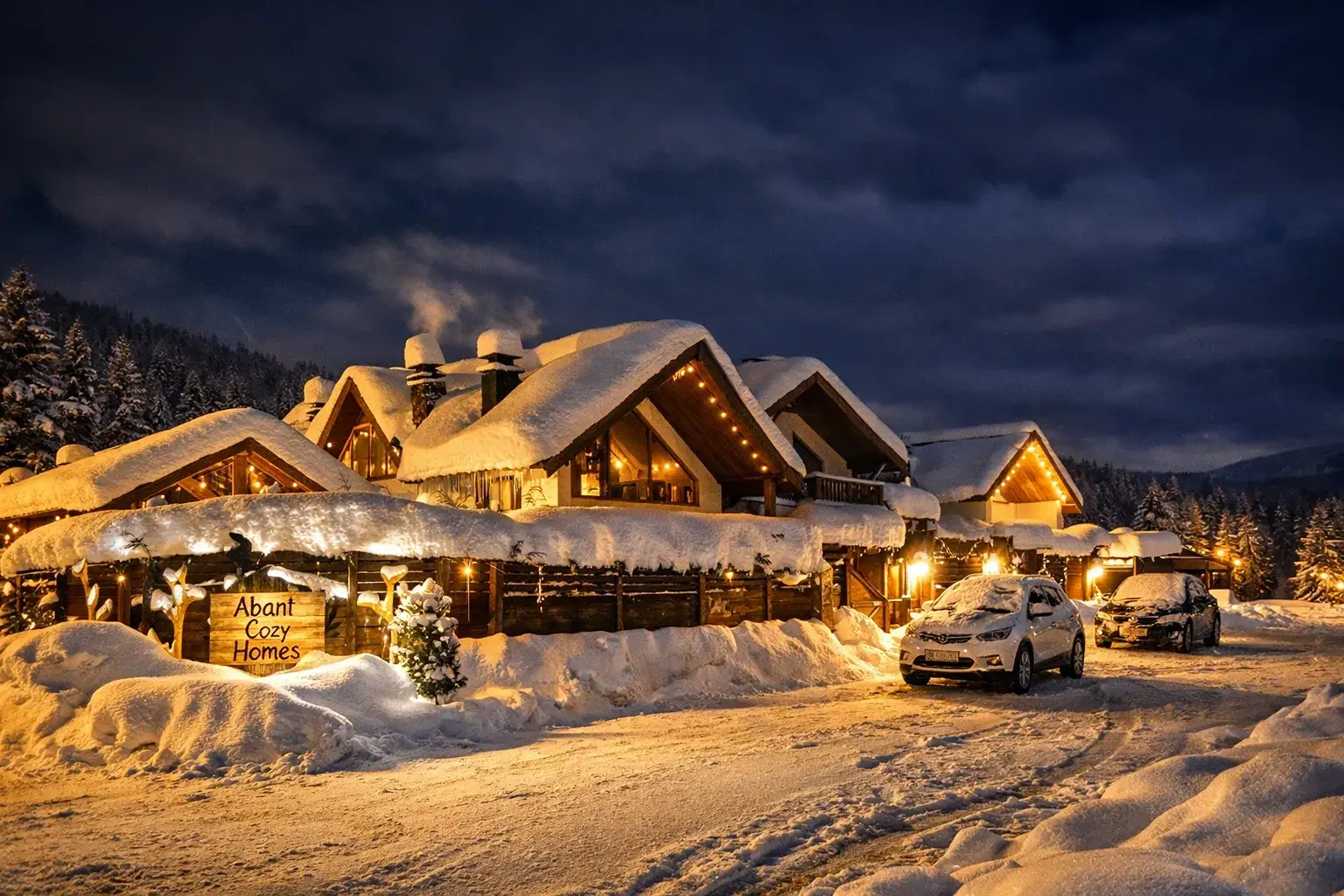
Accommodation around Abant ranges from five-star lakeside hotels to modest forest bungalows and village pensions along the 32-kilometre approach road. The choice of where to stay significantly affects your experience: lakeside hotels place you inside or adjacent to the park, while bungalows and pensions along the road are often quieter, more affordable, and set in authentic forest surroundings.
| Stay area | Best for | Typical style | Pros | Watch out for |
|---|---|---|---|---|
| Lakeside / at the park | Couples, special occasions, lake-view priority | Large 4–5-star hotels with spa, restaurant, multiple activities | Closest to the lake; activities on site; breakfast typically included; strong winter heating | Premium pricing — particularly for lake-view rooms; book months ahead for peak weekends |
| Bolu–Abant road bungalows | Couples, families, nature seekers | Wooden cabin bungalows in forest setting; typically 2–6 rooms per property | Quieter than the main park; often excellent breakfast included; lower cost than lakeside hotels | Variable quality — read recent reviews carefully; heating standard varies in winter |
| Bolu city centre | Budget travellers, business visitors, public transport users | City hotels from budget to 4-star; broader range of restaurants and services | Accessible by intercity bus; closest point for day trips to Akkaya and Gölcük; restaurant variety | Requires a 40–50 min drive to reach Abant; no immediate nature setting |
| Mudurnu area | History lovers, boutique travellers | Restored Ottoman mansion guesthouses; small boutique pensions | Historic atmosphere; combines with Mudurnu sightseeing; often good local food | 50 km from Bolu; not ideal as a base for Abant itself unless you have two days |
What to Check Before Booking
- Distance to lake: Not all hotels described as "Abant" are at the lake — some are 5–15 km away on the approach road
- Heating in winter: Standards vary significantly; ask specifically whether rooms have central heating or only standalone heaters
- Breakfast: Most Abant area properties include breakfast; for bungalows, confirm in advance whether it is Turkish village breakfast or standard continental
- Road access: In heavy winter snow, some bungalov properties require chains or 4WD to reach — ask the property directly
- Recent reviews: Property quality can shift; prioritise reviews from the past 12 months over older ratings
- Cancellation policy: Weekend rates at popular lakeside properties can be non-refundable — check the policy before booking for peak periods
Approximate price guidance based on aggregated booking platforms (mid-2025 data, subject to change): bungalov stays range from approximately 3,000–4,500 TL per night; larger lakeside hotel rooms range from approximately 4,000–14,000 TL per night depending on room type, season, and whether the room has a lake view. Budget pensions start from around 600–1,500 TL per night. Always check live booking platforms for current rates.
Food and Breakfast Around Abant and Bolu

The Bolu region has an unusually strong culinary identity for a province of its size — rooted in the town of Mengen, approximately 60 kilometres from Abant, which has been called the "Land of Chefs" (Aşçılar Diyarı) for six centuries. Mengen's chefs staffed the kitchens of the Ottoman imperial court and their culinary tradition has persisted: Mengen is home to Turkey's only dedicated Culinary Vocational School, and the region's food culture is considered among the country's most refined.
Village Breakfast (Köy Kahvaltısı)
Several small cafés and breakfast spots operate along the 32-kilometre Bolu–Abant road, serving village-style breakfast spreads: fresh bread, local butter, regional honeys (Abant honey and pine honey are regional specialities), eggs, home-made jams, tarhana, kaymak, and cheese. This type of breakfast — eaten in a forest setting with no particular urgency — is one of the most pleasant aspects of an Abant visit. Specific prices change frequently; expect current market rates for the region rather than the very low prices quoted in older sources online.
Trout (Alabalık) Restaurants
Fresh trout from the area's streams is a regional staple. Multiple alabalık lokantası (trout restaurants) line the approach road to Abant and the valley around it. Grilled or pan-fried trout served with salad, rice, and bread is the standard order — straightforward, fresh, and well-priced by Istanbul standards. Restaurants inside the park itself tend to charge more and offer less variety; the better-value options are on the approach road.
Regional Specialities to Try
- Abant balı — Abant honey, produced locally and sold at the park entrance market
- Çam balı — pine honey from the surrounding forests
- Bolu keşkeği — a slow-cooked cracked wheat and lamb stew; deeply regional
- Mengen mantısı — hand-formed Turkish dumplings with the precision the Mengen chef tradition implies
- Sucuk ekmek — grilled regional sausage in bread, sold as a snack near the lake
- Kuzugöbeği mantarı — wild morel mushrooms when in season (spring); appear in local restaurant menus as a filling or on their own
Lakeside restaurants inside the park charge more and offer less variety. A village breakfast at one of the small cafés on the Bolu–Abant road — with local honey, warm bread, and kaymak — is both better and cheaper. Plan to stop on the way in rather than relying on the park's own food options.
How to Get to Abant Lake from Istanbul
Abant Lake is approximately 250–280 kilometres from central Istanbul by road. Journey time by car under normal conditions is 3–3.5 hours. Winter conditions, Istanbul traffic, and weekend congestion on the TEM motorway can extend this to 4–4.5 hours in less favourable conditions.
By Private Car (Recommended)
The simplest and most flexible option. The route from Istanbul follows the E-80/TEM Otoyol east toward Ankara, exiting at the Abant/Bolu junction and continuing south on the D-655 highway toward Abant (approximately 32 km of mountain road from the Bolu area). Toll road charges apply on the TEM (HGS/OGS transponder or cash payment). Parking at the park has capacity, though it fills on busy summer weekends — arriving before 09:00 is advisable. The 32 km mountain road from the main highway to Abant is paved and signed but winding; drive at moderate speed, particularly in wet or icy conditions.
By Intercity Bus to Bolu + Local Transfer
Several bus companies operate frequent services from Istanbul's main bus terminal (Esenler Otogarı or Alibeyköy) to Bolu — approximately 3.5–4 hours, with fares in the 490–600+ TL range (2025–2026 approximate; check current rates on bus company websites). There is no direct bus from Istanbul to Abant Lake; all public transport options require changing at Bolu.
From Bolu: local minibuses (dolmuş) depart from İzzet Baysal Square toward Abant. Weekend departures are reported at approximately 09:00, 13:00, and 17:00 — a very limited schedule. In summer, additional departures may operate, but this should be confirmed locally before relying on it. Journey time by local minibus is approximately 45–60 minutes. The alternative from Bolu is a taxi (approximately 35 km), though current taxi fares to Abant from the city centre are not reliably published — ask your accommodation or local transport board for current estimates before travelling.
Public transport works for independent travellers who are flexible with time and happy to wait for minibus departures. For families, for visitors with fixed schedules, and for anyone wanting to combine Abant with Yedigöller, Mudurnu, or Akkaya on the same trip, a private car or private transfer is significantly more practical.
By Private Transfer or Car with Driver from Istanbul
A private car with driver is the most efficient option for families, visitors arriving at Istanbul Airport who want to head directly toward Bolu, and groups that want to combine multiple Bolu attractions in a single or two-day trip. A professional driver handles the TEM motorway traffic, the mountain road approach, and the return journey — leaving the day focused on the destination rather than logistics. For visitors combining Abant with Yedigöller, Akkaya Travertines, and Mudurnu in sequence, having a driver who knows the road layouts and can suggest timing between stops makes the combination significantly smoother.
Visitors arriving at Istanbul Airport (IST) or Sabiha Gökçen Airport (SAW) can arrange direct transfers to Abant or to a Bolu hotel, bypassing Istanbul city entirely. From IST, Abant is approximately 220–230 km. Discuss the stop-off option at Abant or Mudurnu when booking a transfer.
The 32 km mountain road from Bolu to Abant is paved but winding and can become icy between November and March. Snow chains are effectively mandatory for standard two-wheel-drive vehicles in these months. Four-wheel-drive handles the road more easily but still requires caution in active snowfall. Allow 30–45 minutes extra driving time in winter conditions and plan the return journey before 16:00 to avoid darkness.
One-Day Itinerary from Istanbul
A single day from Istanbul is enough to experience the lake properly, provided you leave early and do not try to add too many secondary stops.
- 06:00–06:30 — Depart Istanbul (TEM Otoyol east). Early departure avoids peak traffic and gets you to the lake before the main visitor wave.
- 09:30–10:00 — Arrive at Abant Lake. Purchase entry and walk directly to the trail before the lake gets busy.
- 10:00–12:00 — Complete the 7 km lake circuit on foot (or hire a bicycle). Morning light is best for photography and the lake surface is calmest.
- 12:00–13:30 — Lunch at a trout restaurant on the approach road (more value and variety than park-interior restaurants).
- 13:30–14:30 — Return to the park for a second shorter loop or payton (horse carriage) ride if desired. Browse the entrance market.
- 15:00–15:30 — Optional stop at Gölcük Nature Park (13 km from Bolu, minimal detour on the way out) for a 1.3 km lake walk — only if time allows.
- 16:00–16:30 — Begin return to Istanbul (depart by 16:30 to avoid peak evening traffic on the TEM).
- 19:30–20:30 — Arrive back in Istanbul (longer in traffic; leave earlier in summer).
Summer weekends bring significant visitor volume to Abant. Arriving at the park entrance by 09:30–10:00 means you start the lake circuit before coach groups arrive and beat the car park queues. By 11:30 on a busy August Saturday, the main path is noticeably crowded. On weekdays, this is much less of an issue.
Two-Day Weekend Itinerary: Abant, Mudurnu, and Akkaya
Two days allow a much more relaxed Abant visit combined with the Bolu area's most worthwhile secondary attractions.
Day One: Abant Lake
- Morning: Arrive at Abant early (depart Istanbul by 06:00 for a 09:30 arrival). Complete the full 7 km lake circuit on foot or by bicycle. Early morning photography if that is a priority.
- Midday: Village breakfast or lunch at a trout restaurant on the approach road.
- Afternoon: Return to the park for a horse carriage ride or second shorter circuit. Browse the entrance market; visit the nature museum. Check in to your overnight accommodation — either at the lake or on the forest road.
- Evening: Dinner at your hotel or at a lakeside restaurant. The lake at dusk on a clear evening, when the ridges are silhouetted and the water colour shifts, is one of Abant's quiet highlights.
Day Two: Akkaya Travertines and Mudurnu
- Morning: Check out of accommodation and head toward Bolu. Stop at Akkaya Travertines (10 km southwest of Bolu on the Mudurnu road) for 1–2 hours — mineral pools, travertine terraces, and (if desired) swimming in the designated mineral pools.
- Midday: Continue 50 km along the Mudurnu road to Mudurnu town for lunch at a local restaurant (the town has several options serving regional cuisine).
- Early afternoon: Walk Mudurnu's historic streets — the Ottoman mansions, covered bazaar, clock tower, and ahilik guild heritage. Allow 1.5–2 hours to explore properly.
- 15:00–15:30: Begin return to Istanbul via Bolu and the TEM Otoyol. Aim to be on the motorway by 16:00 to avoid the worst of the Sunday return traffic.
- 19:00–20:00: Arrive back in Istanbul.
Practical Tips, Warnings, and Things to Know Before You Go
The Swimming Rule
This is worth repeating. Swimming in Abant Lake is strictly prohibited — including wading, sitting in the water, and dipping feet. The lake is a protected ecological zone and rangers enforce the rule actively. Do not assume that because others appear to be bending the rule, it is acceptable — fines apply and the prohibition is genuine. The Akkaya Travertines, 10 kilometres from Bolu on the Mudurnu road, have designated mineral swimming pools if swimming is important to your trip.
Campfire and Barbecue Rules
Open fires and barbecues are regulated inside the park and the surrounding forest zones. Forest fire risk is taken seriously; forest rangers (orman muhafaza memurları) actively patrol and enforce fire bans — particularly during dry summer months. Only use officially designated barbecue areas where they exist. If you want to cook outdoors, confirm with park staff whether your intended location permits it.
Weekend and Public Holiday Crowds
Abant is a popular destination for Turkish weekend visitors from Istanbul, Ankara, and Bolu city. July–August weekends and national public holidays are the most crowded periods. The car park can fill by mid-morning on peak days; the lake trail becomes congested; and wait times for horse carriages and bicycle rentals can be long. Weekday visits between September and June offer a dramatically quieter experience. If a weekend visit is unavoidable, arrive before 09:00.
Weather and Altitude
At 1,325 metres, Abant can experience weather that is significantly different from Istanbul. Summer days are pleasantly cool but can include afternoon rain; bring a light waterproof layer regardless of the forecast. Spring and autumn temperatures can drop to 5–10°C in the morning even when Istanbul is warm. Winter temperatures regularly drop below zero; warm, windproof clothing is essential. Mist and low cloud are common over the lake in autumn mornings — this adds atmosphere but can obscure the ridge line. Check a local weather forecast for Bolu/Abant specifically rather than relying on Istanbul conditions.
What to Bring
- Comfortable walking shoes — the lake circuit is smooth but some approach paths can be muddy
- Waterproof layer or light jacket — even in summer, afternoon rain is possible at this altitude
- Sunscreen and a hat for summer months — exposed sections of the trail can be warm at midday
- Camera with a wide-angle lens for the lake reflections and a telephoto for birdlife
- Cash for the entrance gate (card payment may not always be accepted at smaller park services; verify in advance)
- Snow chains if visiting between November and March in a standard two-wheel-drive vehicle
A Note on Animal Welfare and the Payton
Horse carriages (fayton/payton) are a traditional activity at Abant and are widely used. Visitors who support animal welfare may prefer to walk or cycle the circuit instead. If you choose to take a horse carriage, the condition of the horses and their care standard can vary by operator.
Turkish national park fees are reviewed by decree each year. The 2025 DKMP rates cited in this guide are the most reliably sourced available, but the 2026 schedule may differ. Informal sources online frequently show outdated rates labelled as current. The definitive source is the official DKMP website (tarimorman.gov.tr) or the notice board at the park entrance.
Reach Abant Lake Without the Logistics
Cab Istanbul is not connected to Abant Lake Nature Park, Bolu hotels, restaurants, or activity operators. What we do offer is private vehicle transfers that make the 250 km journey between Istanbul and Abant significantly more comfortable — door-to-door from your hotel or airport, with flexibility to stop at Akkaya Travertines, Mudurnu, or Gölcük on the way. Particularly useful for families, airport arrivals combining a Bolu stop en route to the city, winter trips where road conditions require an experienced driver, and multi-stop itineraries that would be difficult to manage by public transport.
Frequently Asked Questions
Can you swim in Abant Lake?
No. Swimming, wading, and even dipping feet in the lake are strictly prohibited by park regulation. The lake is a protected ecological zone and rangers enforce the ban actively. This rule applies in all seasons. If swimming is part of your Bolu trip, visit the Akkaya Travertines (10 km from Bolu on the Mudurnu road), which has designated natural mineral pools open for swimming.
How much does it cost to enter Abant Lake Nature Park?
Based on the 2025 DKMP official schedule: 60 TL per person (standard), 30 TL for discounted groups (students, etc.), and 180 TL per car. Children 0–8, adults 65+, certified disabled visitors, and certain veterans categories enter free with documentation. Annual fee schedules are reviewed by the Ministry of Agriculture and Forestry; verify the current rate at the park gate or at tarimorman.gov.tr before visiting, as the 2026 tariff may differ.
How do you get to Abant Lake from Istanbul?
By car: approximately 250–280 km via the E-80/TEM Otoyol east, exiting toward Bolu and continuing south on the D-655 mountain road to Abant — around 3–3.5 hours in normal conditions. By public transport: intercity bus from Istanbul's main bus terminal to Bolu (3.5–4 hours, 490–600+ TL in 2025), then local minibus or taxi from Bolu to Abant (45–60 minutes). There is no direct bus from Istanbul to Abant. Minibus departures from Bolu are limited (weekend schedule: approximately 09:00, 13:00, 17:00); a taxi from Bolu covers the 35 km to Abant at local taxi rates. A private car with driver is the most flexible option for families and visitors wanting to combine multiple Bolu stops.
How long does the walk around Abant Lake take?
The circumferential trail around Abant Lake is approximately 7 kilometres, flat and well-maintained. At a comfortable leisure pace, the full circuit takes 90 minutes to two hours. The path is suitable for all ages including families with children and casual walkers.
What is the best time of year to visit Abant Lake?
Autumn (October–November) is widely regarded as Abant's finest season — the beech and oak forest turns gold and amber, reflecting in the still lake surface for some of Turkey's most dramatic nature photography. Spring (April–May) is exceptional for the endemic Abant crocus and wildflowers, with far fewer crowds than summer. Summer (June–August) is cool relative to Istanbul but busiest — arrive early on weekends. Winter offers dramatic snow scenery and near-empty trails, but requires snow chains on the mountain road and warm clothing.
Is there camping at Abant Lake?
Camping within Gölcük Nature Park is not permitted. Tent camping at Abant Lake proper is also very limited — the park's focus is day visitors and lakeside hotel guests. For proper camping in the Bolu area, Sülüklü Göl Tabiat Parkı (near Mudurnu) has a formal campsite with tent pitches (approximately 270 TL per night for up to four persons — verify current rate locally).
Can you do Abant Lake as a day trip from Istanbul?
Yes, a day trip is feasible — but only if you depart Istanbul by 06:00–06:30 to arrive at the lake by 09:30–10:00. This gives you four to five hours at the lake (enough for the 7 km circuit, lunch, and a second activity) before beginning the return drive by 15:00–16:00 to arrive back in Istanbul before peak evening traffic. A day trip works best on weekdays or in shoulder season; summer weekend traffic on the TEM and at the park itself can compress your time significantly. Many visitors prefer a single overnight stay to experience both the morning and evening atmosphere at the lake.
What other attractions are near Abant Lake?
The main nearby attractions are: Yedigöller Milli Parkı (Seven Lakes National Park) — approximately 70–80 km from Abant, best in autumn, requires a car; Akkaya Travertines — 10 km from Bolu on the Mudurnu road, mineral swimming pools, easy half-day stop; Mudurnu — historic Ottoman town 50 km from Bolu, UNESCO tentative list, intact mansions and bazaar; Gölcük Nature Park — 13 km from Bolu, smaller lake with a 1.3 km circuit; Samandere Waterfall — a Natural Monument in Düzce with a forest waterfall walk; Kartalkaya ski resort (winter only, 40 km from Bolu). A full guide to Yedigöller is available on this site.
Is there parking at Abant Lake?
Yes — the park has a car park near the entrance, included in or alongside the vehicle entry fee. On busy summer weekends (July and August particularly) the car park can fill by mid-morning. Arriving before 09:00 is advisable on weekends if you are driving. Weekday visits rarely have parking pressure.
Are there restaurants inside Abant Lake Nature Park?
Yes — lakeside cafés and restaurants operate inside the park during the main visiting season. Prices are higher than the restaurants and breakfast spots on the 32 km approach road from Bolu. For better value and more variety, consider eating at a trout restaurant (alabalık lokantası) on the approach road rather than inside the park. Outside food and drink is typically allowed into the park for picnic use, but confirm at the gate.
What is the Abant crocus?
The Abant crocus (Crocus abantensis) is an endemic species — it exists naturally only in the area around Abant Lake and is found nowhere else in the world. It blooms in late April and early May, producing small purple flowers across the forest floor around the lake. Picking the flowers is strictly prohibited. The bloom window is short (typically 2–3 weeks); check local nature photography forums and Bolu tourism sources in late April for current conditions. The endemic crocus makes a spring visit particularly worthwhile for botanists and nature photographers.
Do you need snow chains to drive to Abant in winter?
Effectively yes, for standard two-wheel-drive vehicles between November and March. The 32 km mountain road from the Bolu area to Abant is paved and generally maintained, but snowfall can make it icy and chains are considered essential safety equipment for this road in winter. Four-wheel-drive vehicles handle it more easily but still require caution in active snowfall. Check road conditions through Bolu traffic sources before setting out in winter, and plan the return journey before darkness (which falls by 17:00 in December and January).
Is Abant Lake open year-round?
The park is technically open year-round. However, some activity operators (horse carriages, bicycle rental, boat rental) are seasonal and may not operate in winter. Some smaller lakeside restaurants also close in the off-season. The road to Abant itself is not officially closed in winter, but snow conditions may require chains and can occasionally cause delays. The main hotel properties near the lake remain open in winter.
How is Abant Lake different from Yedigöller?
Both are exceptional natural parks in the Bolu region, but they offer different experiences. Abant Lake is a single large crater lake with a flat, accessible 7 km shoreline circuit — suitable for all ages and fitness levels, with horse carriages, bicycle rental, and lakeside hotels making it a more complete leisure destination. Yedigöller is seven smaller interconnected glacial lakes connected by waterfalls within a wilder, denser forest — a more active hiking experience with longer trails and no horse carriages or bicycle rental. Yedigöller is generally considered Turkey's finest destination for autumn foliage photography. The two parks are on different roads out of Bolu (approximately 70–80 km apart) and work best as separate day trips rather than a same-day combination.