
Common Scams in Istanbul: What to Watch For, and How to Stay Calm
Istanbul is a warm, welcoming city and the vast majority of visits are entirely trouble-free. Still, like every major tourist capital, a small number of well-rehearsed scams do target visitors around the busiest neighbourhoods. This 2026 guide explains the eighteen most reported tricks, where they usually happen, the warning signs, and what to do if something feels off — so you can walk Sultanahmet, Istiklal, the Grand Bazaar and Kadikoy with the same confidence a resident does.
Nothing here is meant to alarm you. Most of these scams rely on the same handful of tactics — friendly small talk, hurry, confusion at payment time — and once you recognise the pattern you become a very difficult target. Combine common travel sense with a few Istanbul-specific tips and you will spot almost every trick before it starts.
The Ten-Second Version
If you only remember a few things from this article, remember these. They neutralise the majority of tourist-targeted scams in Istanbul on their own.
- Never accept an invitation to a bar or club from a stranger you just met on the street.
- Insist the taxi meter is running from the first metre; if the driver refuses, get out and take another cab.
- Pre-book airport pickup — do not accept "taxi" offers inside the arrivals hall from unlicensed touts.
- Do not pick up dropped shoe-shine brushes; smile, walk on, do not engage.
- Change money only at licensed exchange offices ("doviz") or bank ATMs — never on the street.
- Watch your bill in restaurants and clubs before you sign or hand over a card; question anything unfamiliar.
- Keep phones and wallets in secure inside pockets on the T1 tram, at Eminonu, and inside the Grand Bazaar.
- Real police in Turkey do not need to inspect your cash. If someone in "plain clothes" asks to check your wallet, refuse and walk toward uniformed officers.
Where and When to Pay Extra Attention
Every tourist city has predictable friction points. In Istanbul, most scams cluster around the same handful of situations. Knowing them in advance turns "surprises" into "expected moments" — which is a huge part of staying safe.
Airport arrival
Fake "official taxi" touts inside IST and SAW arrivals halls, and unlicensed drivers waiting near baggage claim, are the most common first-day problem. Pre-booked pickup solves it.
Taxi rides
"Broken meter", scenic detours through Fatih and Beyoglu, and banknote switching are the classic tricks — especially at night in Taksim and around ferry piers.
Restaurants
Menus without prices, "surprise" appetisers you did not order, and inflated seafood bills near Galata Bridge and touristy fish restaurants.
Nightlife
The "let's have a drink" scam around Taksim and Istiklal side streets is the single most expensive tourist trap in Istanbul. Never follow strangers to unfamiliar bars.
Shopping
"Fake guides" steering visitors into carpet, leather and jewellery shops for commission; counterfeit perfumes and luxury goods near markets.
Public transport
Pickpocketing on the T1 tram, at Eminonu ferry terminals and inside crowded Grand Bazaar aisles. Always keep valuables in a front zipped pocket.
ATMs & cards
"Helpful stranger" at the ATM, card-reader overcharges, and street currency exchangers passing off old or fake banknotes.
Health tourism
Hair transplant and cosmetic packages sold via commission agents; unlicensed "clinics" and prices that are too low to be plausible for a real medical procedure.
Distraction on the street
Shoe-shine brush drop, "found ring" trick, and children asking for help — the goal is to occupy your hands and eyes for a few seconds while an accomplice moves.
Taxi Overcharging, Meter Tricks and Route Detours
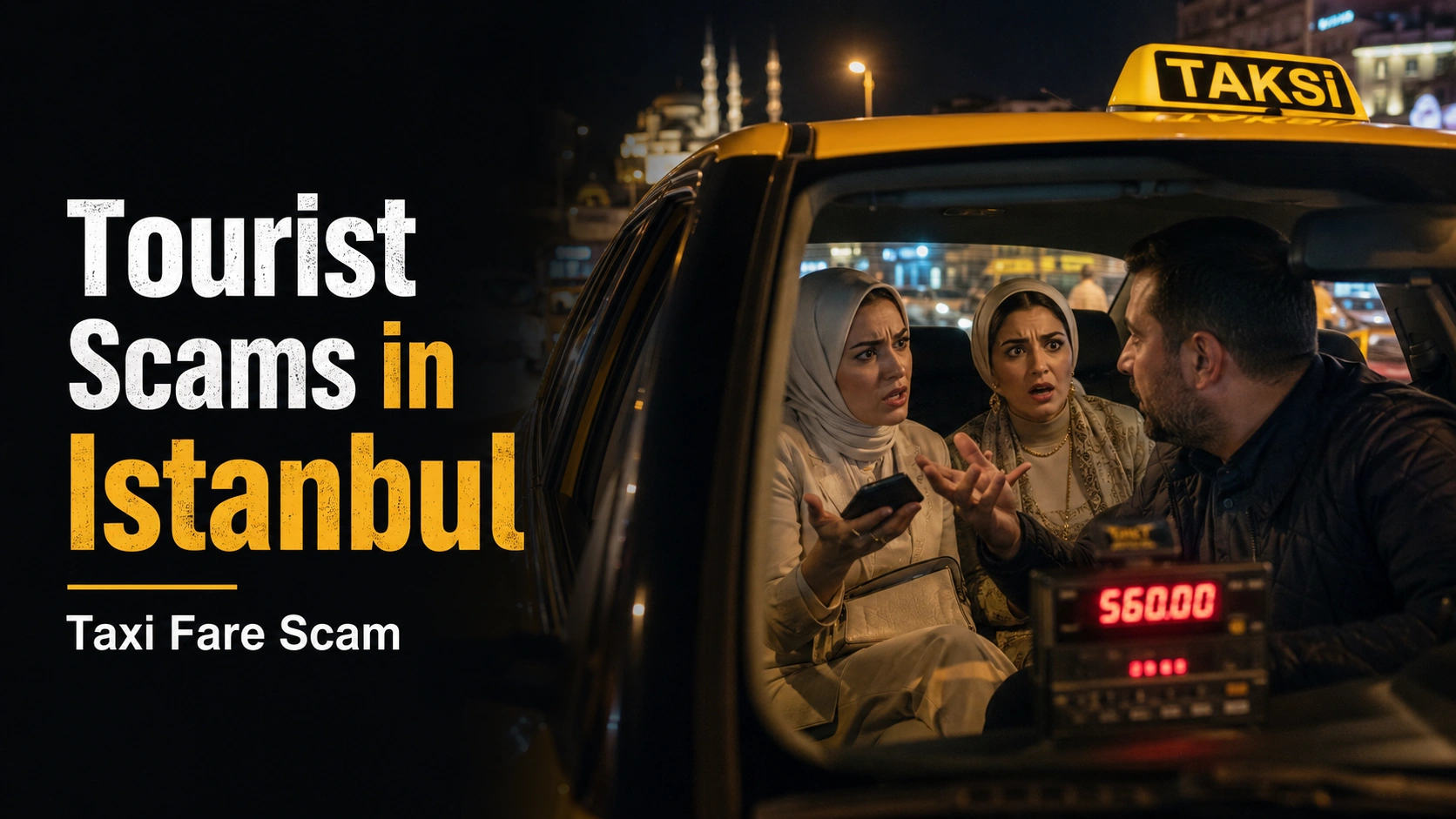
Taxi complaints are still the single most common issue tourists raise in Istanbul. The classic move is a driver saying the meter is broken and offering a "fixed price" that turns out to be three to five times the real fare. Other variants: pressing the higher night tariff during the day, taking long loops through Fatih or Beyoglu, or dropping you a block short and insisting on a rounded-up bill.
You will see this most around IST and SAW airports, Taksim Square, Sultanahmet, Eminonu, Karakoy, Galata Bridge, Kadikoy pier and the exits of major shopping malls. Ferry-pier queues are particularly hit-or-miss late at night.
Warning signs: driver refuses to start the meter, meter shows tariff "2" during daytime hours, driver claims not to know your hotel, or offers to change your banknote personally instead of using the meter total.
How to avoid it: always insist on the meter (say "taksimetre lutfen"), follow the route on Google Maps, hand over the exact banknote and say the amount out loud, and use the BiTaksi or iTaksi apps for a fare that is agreed before you get in. For airport arrival and late-night returns, a pre-booked private airport transfer removes the situation entirely.
If it happens: take a photo of the taxi plate and the driver's ID card on the dashboard, do not argue on the street, and report to the Tourist Police (Yellow Police, +90 212 527 4503) or dial 155.
Pickpockets and Distraction Teams
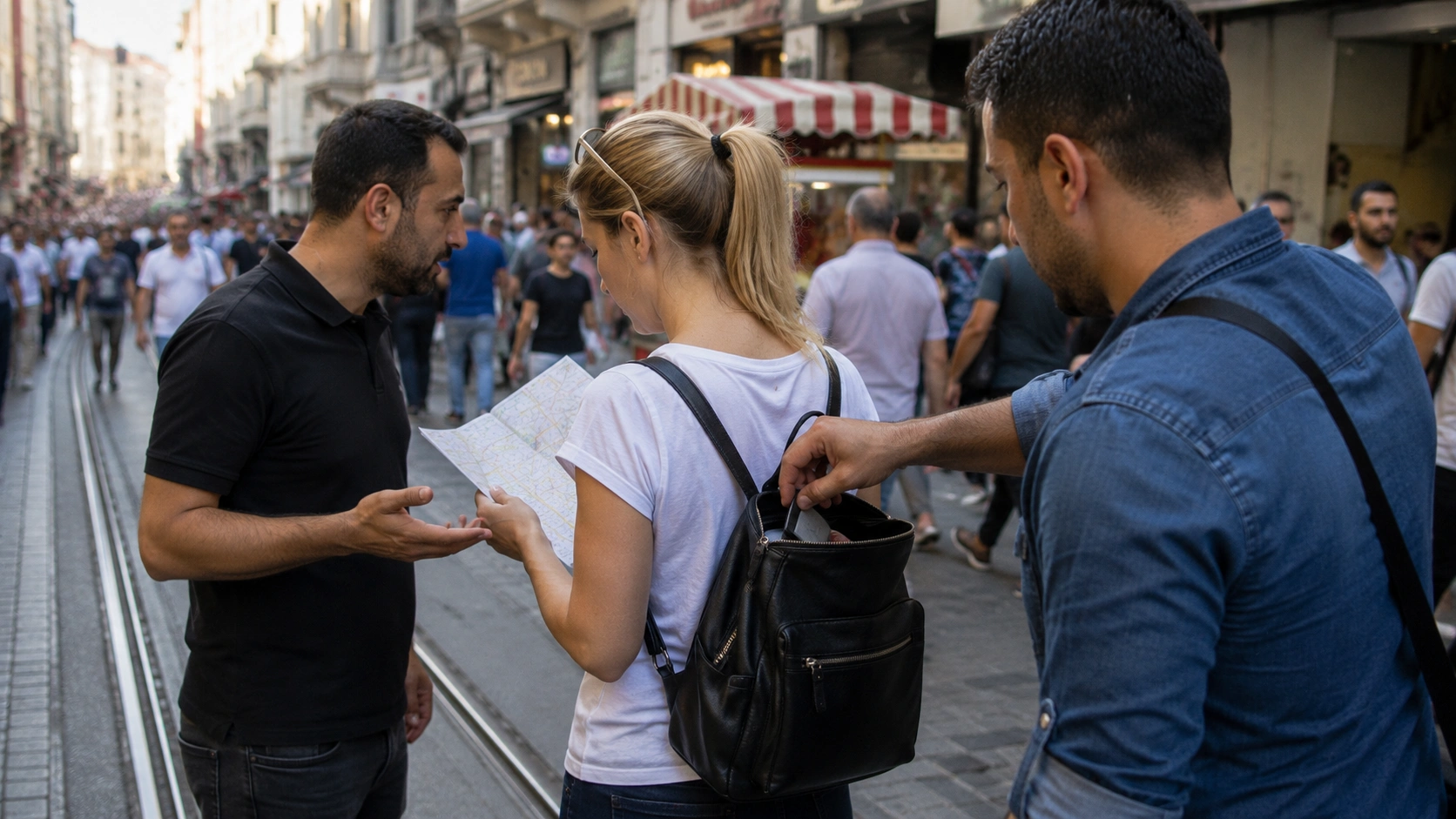
Pickpocketing in Istanbul is opportunistic rather than aggressive, but it is very organised in the busiest spots. A typical team is three or four people: one bumps or blocks you, one lifts, and one takes the item away in the opposite direction. On the T1 tram between Kabatas and Sultanahmet, several travellers have reported women pressing close during the doors-closing rush, then vanishing at the next stop with a phone or wallet.
You will notice most attempts on the T1 tram, inside the Grand Bazaar and Spice Bazaar aisles, on the Eminonu ferry piers, on Istiklal Avenue and around Taksim Square at rush hour. Sultanahmet Square during peak sightseeing hours is another hot spot.
Warning signs: unexpected bumping, someone pointing to a "stain" on your clothes, a stranger unfolding a map right against your chest, or a small child tugging at your sleeve while an adult stands nearby.
How to avoid it: phones in a front zipped pocket, wallet in an inside jacket pocket, bag closed and worn across the front in crowds. Do not put anything on the back of a chair in cafes on Istiklal. If someone bumps you, immediately check your pockets rather than the person.
If it happens: report at the nearest Tourist Police desk (there is a permanent office in Sultanahmet) for an incident report your insurance will need; block your bank card immediately by phone.
The Shoe-Shine Brush Scam
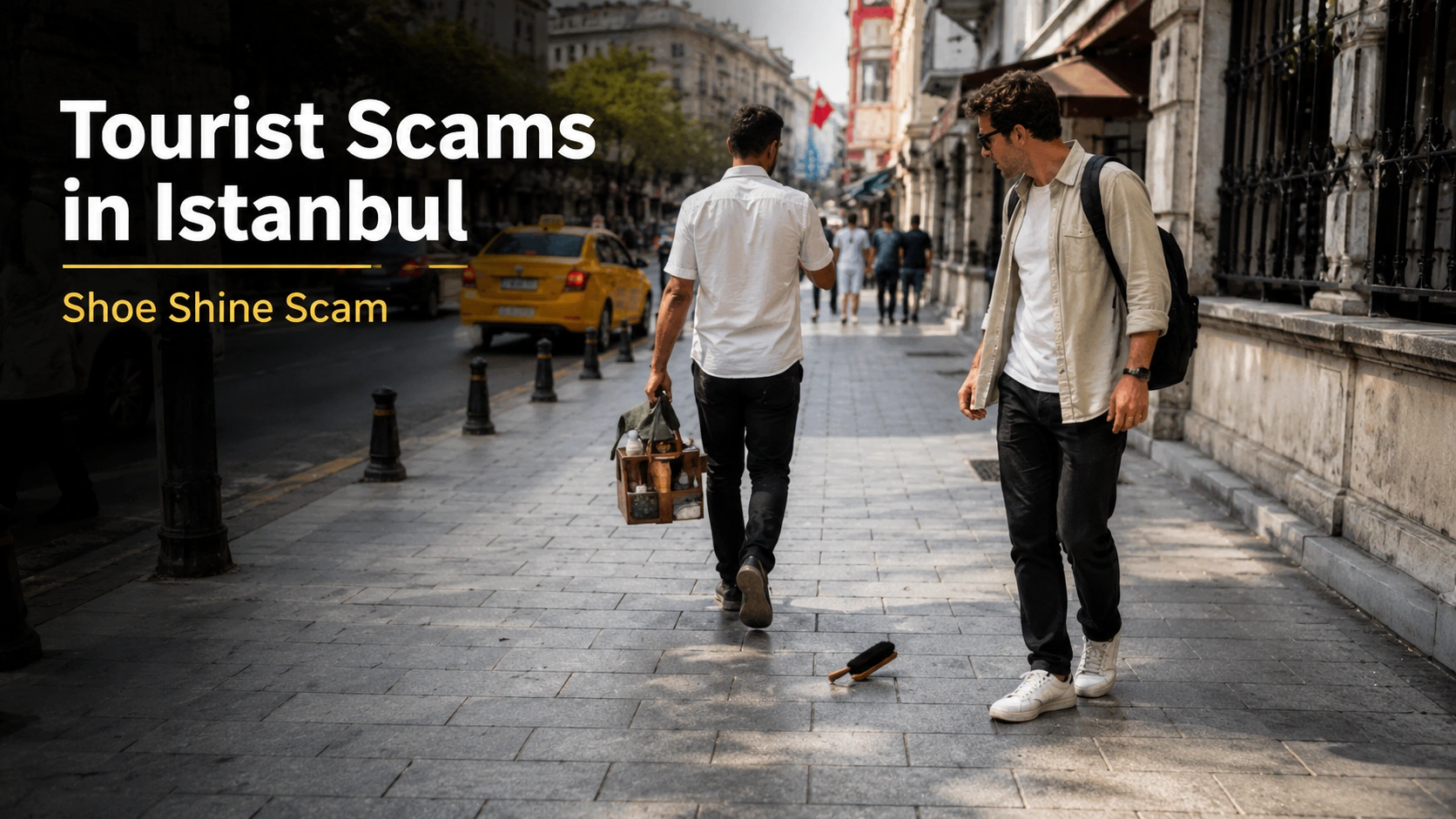
A shoe-shine man walks in front of you carrying his wooden box, and one of the brushes falls off the top. Instinctively, you pick it up and hand it back. He thanks you warmly and, as gratitude, insists on giving your shoes a quick free polish. A few minutes later he is asking for a "small tip" of 500 to 1000 lira, and can become insistent until you pay something.
This one is especially common on the streets around Sultanahmet, near Hagia Sophia and the Blue Mosque, along Divanyolu, and on Istiklal Avenue. It has been documented in Istanbul for decades and remains one of the most reliably reported tourist scams.
Warning signs: the brush "falls" almost onto your feet; the shoe-shine man is walking a little in front of you; he looks back before it falls.
How to avoid it: if you see a brush drop, do not pick it up. Smile, walk on, and if he calls out simply say "hayir, tesekkurler" (no, thank you). If a shine has already started, agree the price out loud before he finishes and hand over a small note only — 50 lira is generous for an unsolicited shine.
If it happens: do not argue physically. Pay a small round amount, walk away and continue your day. It is a nuisance, not a dangerous scam.
The Nightclub and Bar-Bill Scam
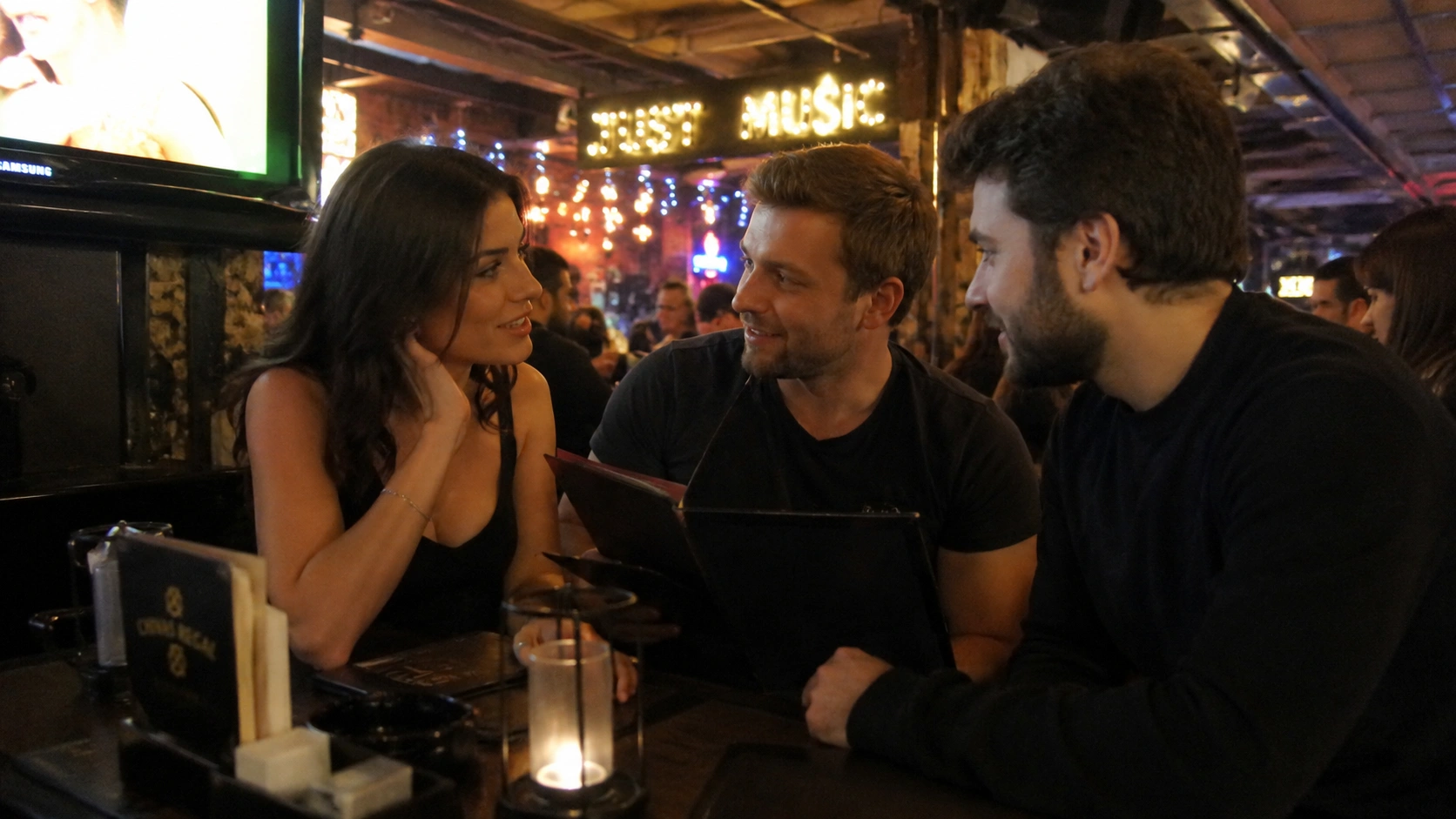
This is the single most expensive tourist trap in Istanbul and by far the most important to understand before you land. A friendly, well-dressed man — sometimes in his thirties, usually excellent English — approaches a solo male traveller near Taksim Square or on Istiklal Avenue.
After ten minutes of pleasant conversation about football, food or where you are from, he mentions a "great little bar" that tourists never find. To lower your guard, the first drink may even be at a normal place. Then he suggests a second venue in a nearby side street. Inside that second venue, women join your table, drinks are poured quickly, and after even one or two rounds a bill of several hundred to several thousand euros appears. Large men block the exit until you pay by card.
Where: side streets off Istiklal Avenue, small alleys behind Taksim Square, the streets between Beyoglu and Karakoy, and occasionally around Sultanahmet late at night.
Warning signs: a stranger insisting on choosing the venue, no visible menu with prices, women joining a table you did not invite them to, or the door being locked behind you.
How to avoid it: never follow a person you have just met to a bar. If you want a drink in Beyoglu, choose a well-reviewed venue yourself, walk in the front door from the main street, and check the menu prices before ordering.
If it happens: do not resist physically and do not sign anything without reading it. Ask calmly to call the police (155) or the Tourist Police — the request itself often ends the situation. Note that your card issuer's fraud team can dispute charges after you leave; keep the receipts.
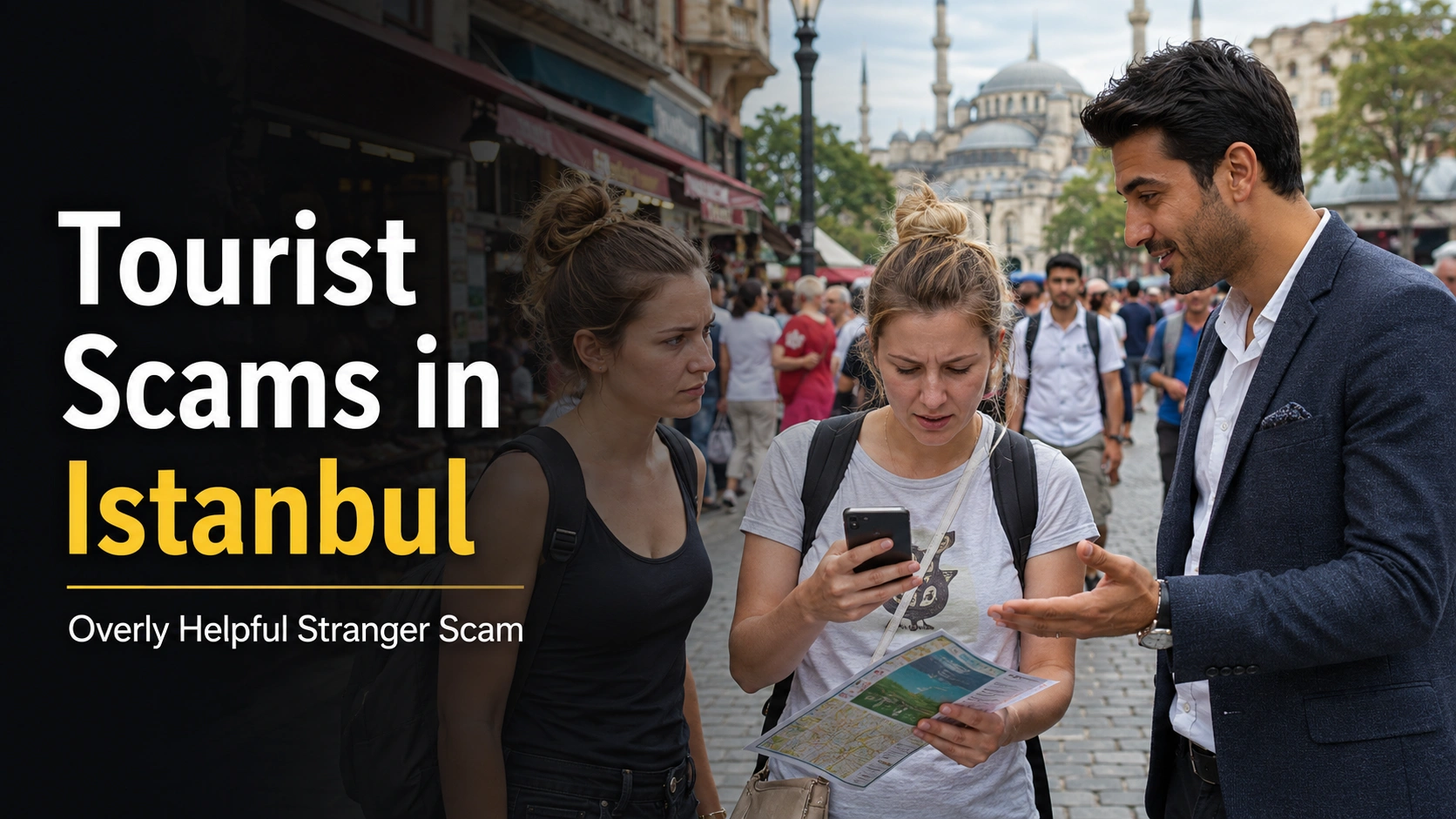
The "Handsome Boy" Friendly-Stranger Scam
A variant of the nightclub trick, this one targets solo female travellers. A polite, well-groomed local man approaches with a small compliment or a question — where you are from, whether you need a photo taken — and offers to show you a "hidden" tea house, rooftop or club. The path leads either to the same overpriced bar setup or to a shop where he earns commission on whatever you buy.
The location pattern is the same as the bar scam: Istiklal Avenue, side streets near Taksim, and occasionally around Sultanahmet tram stop.
Warning signs: conversation moves very quickly from small talk to "let me take you somewhere"; the man seems to have unusually flexible time and no visible reason to be in the area; he starts guiding you off the main street.
How to avoid it: polite refusal is enough — a firm "hayir, tesekkurler" and continuing to walk works. If you want a photo, ask a family or a fellow tourist. Stick to venues you researched in advance.
If it happens: step into a busy shop, cafe or hotel lobby and simply do not leave with the person. Ask staff to call you a taxi via app.
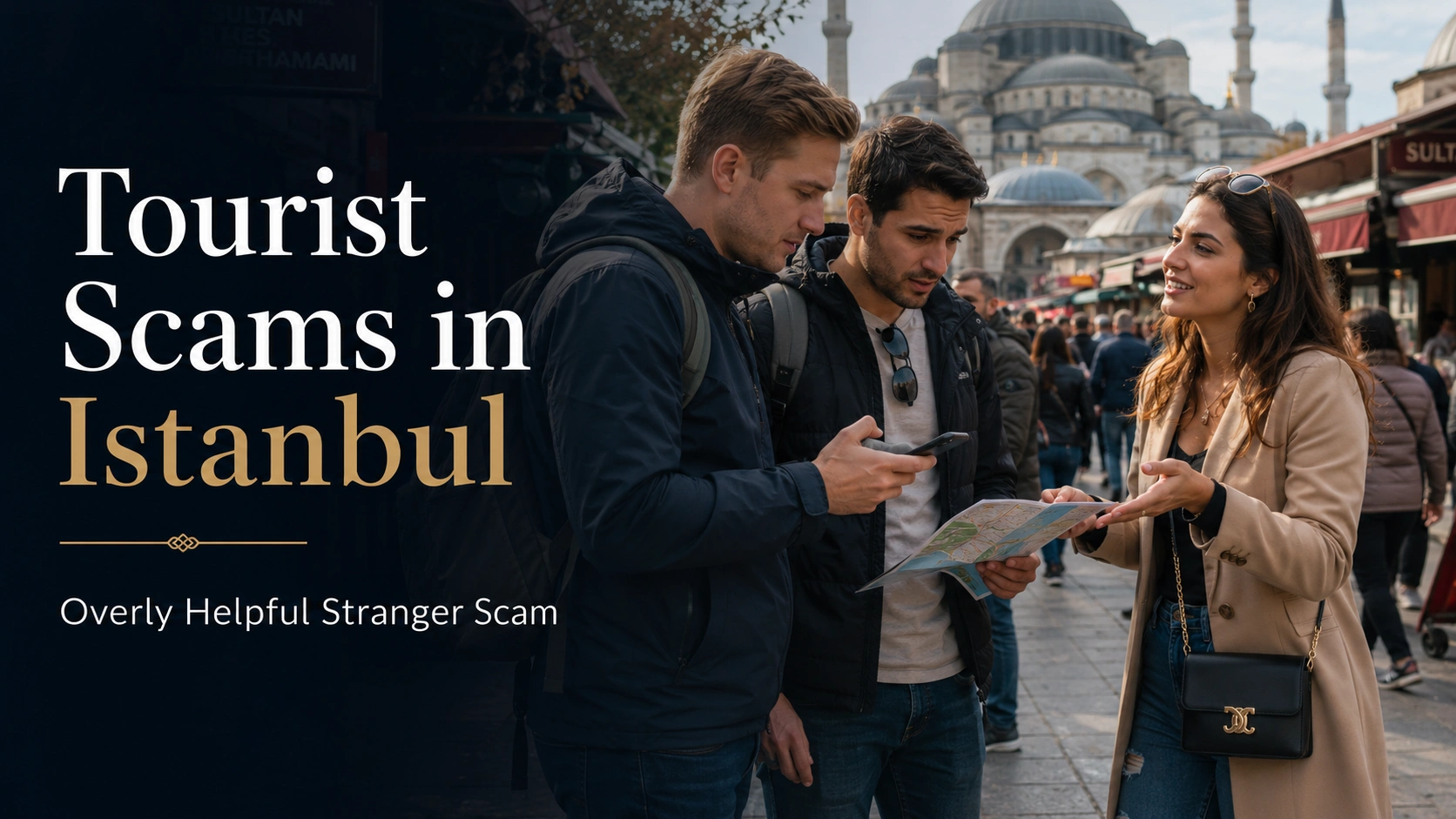
The "Beautiful Girl" Approach Scam
The mirror image, targeting solo male travellers. One or two friendly women approach in a busy nightlife area, chat for a few minutes, then suggest heading to "a nicer place with better music." That place is once again the padded-bill bar — and the women disappear before the bill arrives.
Very common in the same corridor as the bar and handsome-boy scam: Istiklal Avenue, streets around Taksim Square, and occasionally on the fringes of Sultanahmet after dark.
Warning signs: the women approach you, insist on picking the venue, and steer you off the main pedestrian street; the first drink is not enough — they want to move on quickly.
How to avoid it: apply the same rule as the bar scam — never let a stranger choose the venue. Meeting people on holiday is fine; letting them walk you through unfamiliar streets to a "hidden" bar is not.
If it happens: ask to see the printed menu before ordering. If it is not shown, leave immediately. Once the bill is presented and inflated, ask calmly to phone the police.
Inflated Restaurant Bills and "Surprise" Appetisers
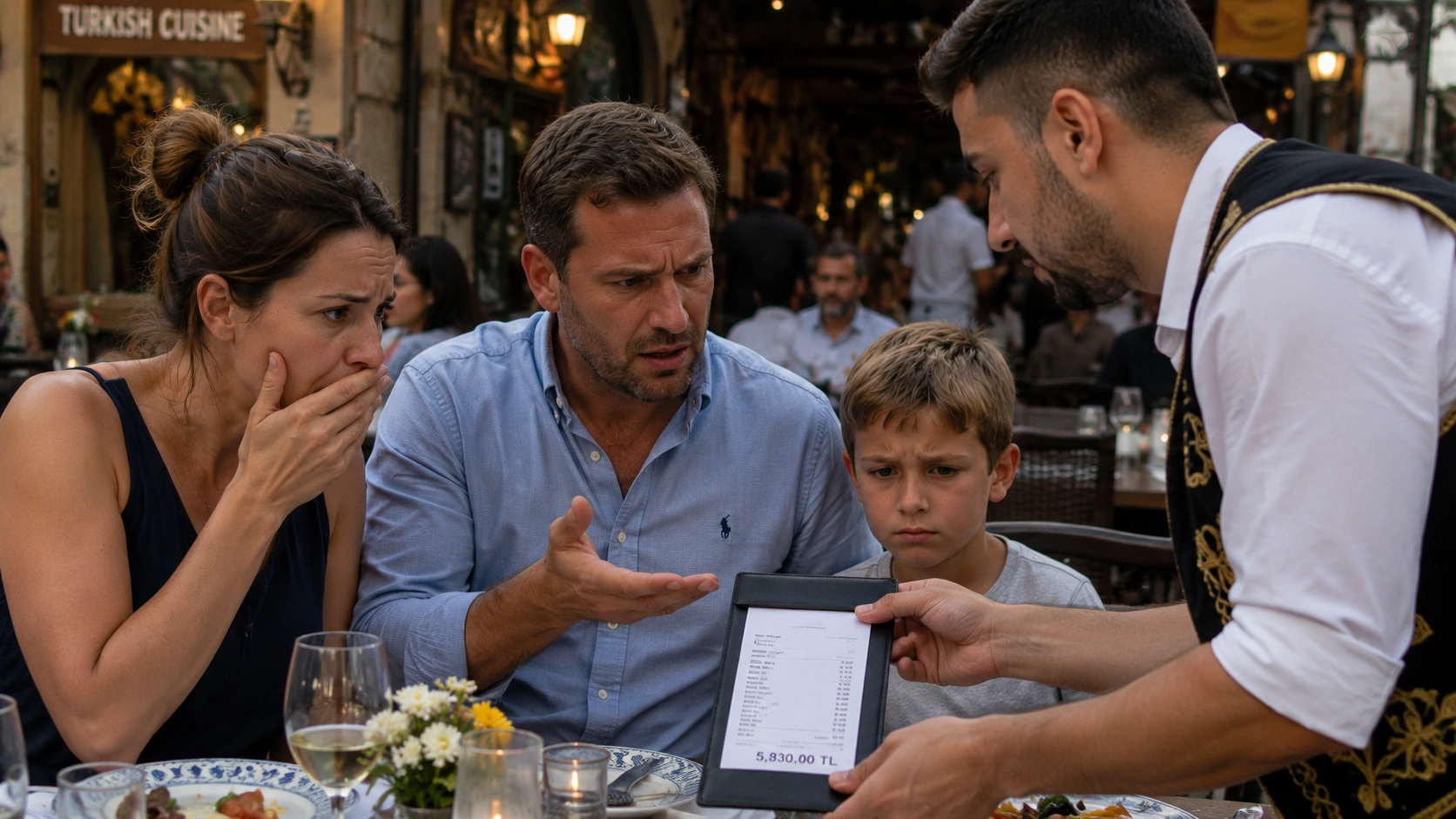
You sit down, waiters bring a warm welcome, and within a minute several small mezze plates appear — bread, olives, pickles, dips, sometimes fish. You did not order them, they seemed complimentary, and at the end of the meal they turn out to cost more than the mains. Fish and seafood restaurants around Galata Bridge and inside touristy corners of Sultanahmet are the frequent offenders.
Where: tourist strips on and under Galata Bridge, some fish restaurants around Kumkapi, restaurants without printed menus in Sultanahmet, and rooftop terraces that only quote prices verbally.
Warning signs: a menu without prices; menus in a different language than the one you speak; a waiter reciting specials without writing anything down; extras placed on the table without being asked.
How to avoid it: ask for a printed price list, confirm the price of anything unfamiliar out loud ("bu kaç lira?"), and refuse dishes you did not order — a polite "istemiyoruz, geri alabilir misiniz?" is fine. Prefer restaurants with clear online reviews and posted menus.
If it happens: ask for an itemised bill ("adisyon") before paying. If items you refused appear, ask calmly for them to be removed. If the manager refuses, pay for what you actually ordered and report to the Tourist Police.
Fake Guides and the Shopping Commission Trap
Near Hagia Sophia, the Blue Mosque and the Grand Bazaar, unofficial "guides" will offer their services for a small fee. Some are perfectly friendly and simply want the tip. Others operate on commission from carpet, leather, jewellery or ceramics shops: your tour ends inside a specific store, and pressure sales begin over tea. The "guide" then takes a percentage of whatever you buy.
Warning signs: the guide has no visible TURSAB licence card, offers a very low price, or is unusually insistent on including a shop stop in the itinerary.
How to avoid it: book licensed guides through your hotel concierge, a well-reviewed tour operator, or the official TURSAB directory. Politely refuse street offers with "hayir, tesekkurler." If you do want to shop, choose the shop yourself — not one that has been suggested by a "guide."
If it happens: you are under no obligation to buy anything, no matter how much tea has been served. A calm "I need to think about it, I will come back tomorrow" and walking out is completely acceptable.
Carpet, Leather, Jewellery and Souvenir Pressure Sales
Turkey is legitimately world-famous for its carpets, leather goods, gold and ceramics — and there are many honest merchants. The problem is a subset of high-pressure sellers who use classic techniques: multiple staff surrounding you, moving you to a back room, endless tea, "special discount for you today only," fake certificates of authenticity, and quoting prices in whichever currency benefits them most.
Where: parts of the Grand Bazaar and its outer perimeter, some shops in Sultanahmet aimed at cruise passengers, leather stores near Kapalicarsi gates, and jewellery stores off the main aisles.
Warning signs: refusal to write down a price, staff blocking the exit path, claims of "silk" or "handmade" without any provenance, credit card readers turned so you cannot see the amount typed in, or a "great deal" that requires paying now.
How to avoid it: browse in daylight, compare at least three shops before buying, always ask for the total in Turkish lira and see it typed into the card reader, and request an itemised VAT invoice ("fatura") — this also enables tax refund if you qualify.
If it happens: your card issuer will dispute obvious overcharges if you keep the receipt. For gold and antiques, the customs export rules should also be respected.
Currency Exchange, Short Change and Counterfeit Banknotes
There are three separate risks here. First, informal street exchangers on Istiklal, near the Spice Bazaar and around Taksim who offer a "great rate" and then hand over a mix of old, torn or foreign banknotes. Second, licensed exchange counters that give you the correct amount but very quickly, so a note or two is missing when you count. Third, counterfeit foreign banknotes handed back as change — the UK Foreign Office has specifically warned about counterfeit US$50 and US$100 notes circulating in Turkey.
How to avoid it: exchange money only at a licensed "doviz" office or at an ATM inside a bank branch. Compare the posted rate (buy/sell) before handing over anything. Count your notes in front of the cashier and do not leave until you have. Ask for large amounts in a mix of denominations.
If it happens: disputes at reputable "doviz" offices are usually resolved on the spot — CCTV is normally in use. Street exchangers are effectively unreachable; that is the whole point of avoiding them.
ATM "Help" and Card Skimming Awareness
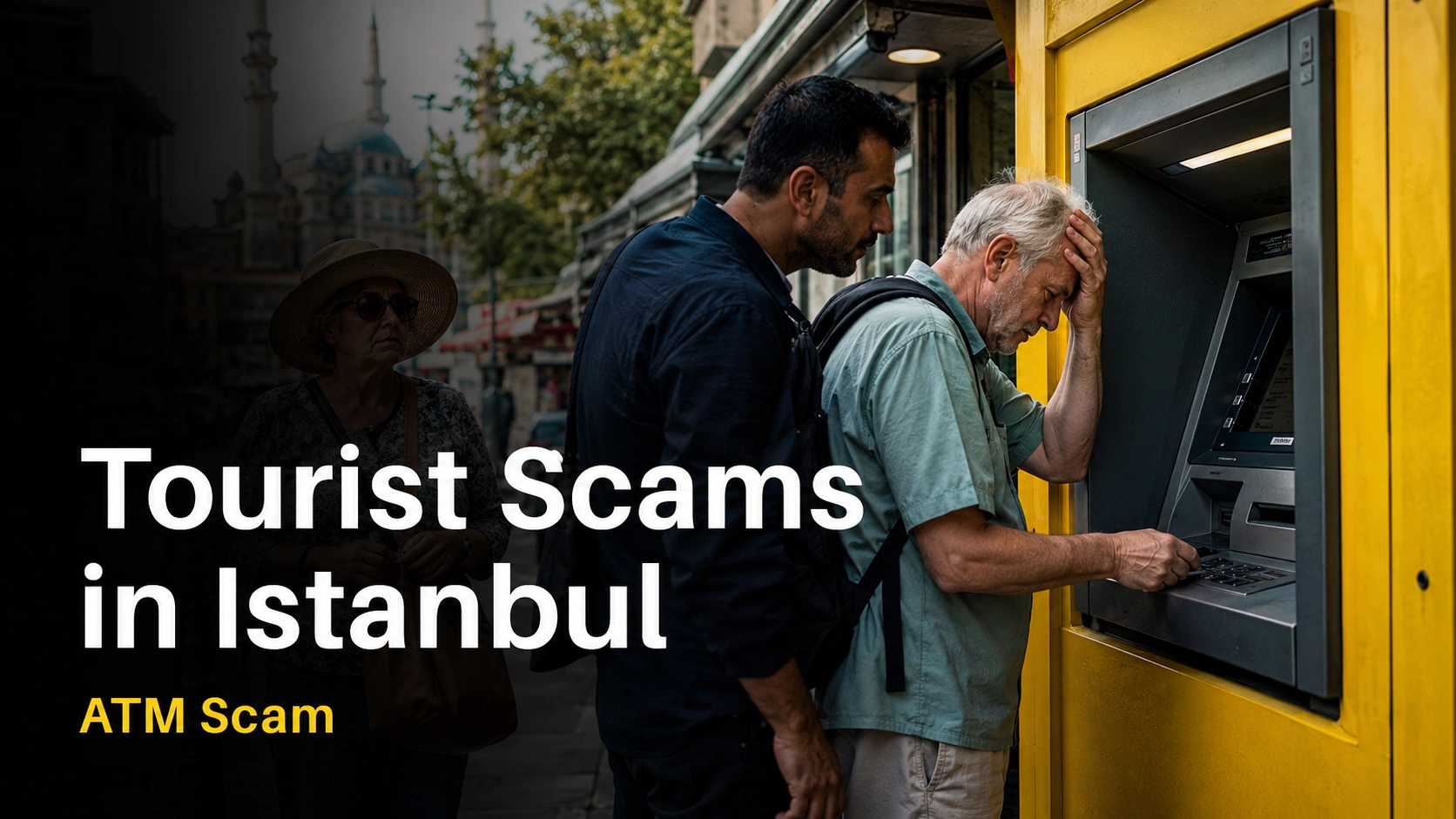
You stand at an ATM, unfamiliar interface, and a friendly stranger appears offering to "help" — sometimes claiming to work for the bank. They watch your PIN and, in one move, swap your card for a similar-looking one when you look away. By the time you notice the different card, they have already withdrawn cash elsewhere. A separate risk is card-skimming hardware physically attached to the ATM slot.
Where: ATMs in busy touristy streets — Istiklal, around Sultanahmet tram stop, near ferry piers, and outside the Grand Bazaar gates.
Warning signs: anyone standing closer than an arm's length behind you, a loose or unusual card slot fitting, a keypad that feels raised or spongy, or a pop-up overlay you have never seen before.
How to avoid it: use ATMs inside bank branches whenever possible, cover the keypad with your other hand when typing your PIN, and firmly refuse any offered help — "no, thank you, I've got it" is enough. Consider paying by card in most places and drawing cash only occasionally.
If it happens: block the card via your bank app or emergency phone number immediately, keep the ATM receipt if one is printed, and report to your bank plus (if a physical device is suspected) the Tourist Police.
Credit Card and POS Terminal Overcharges
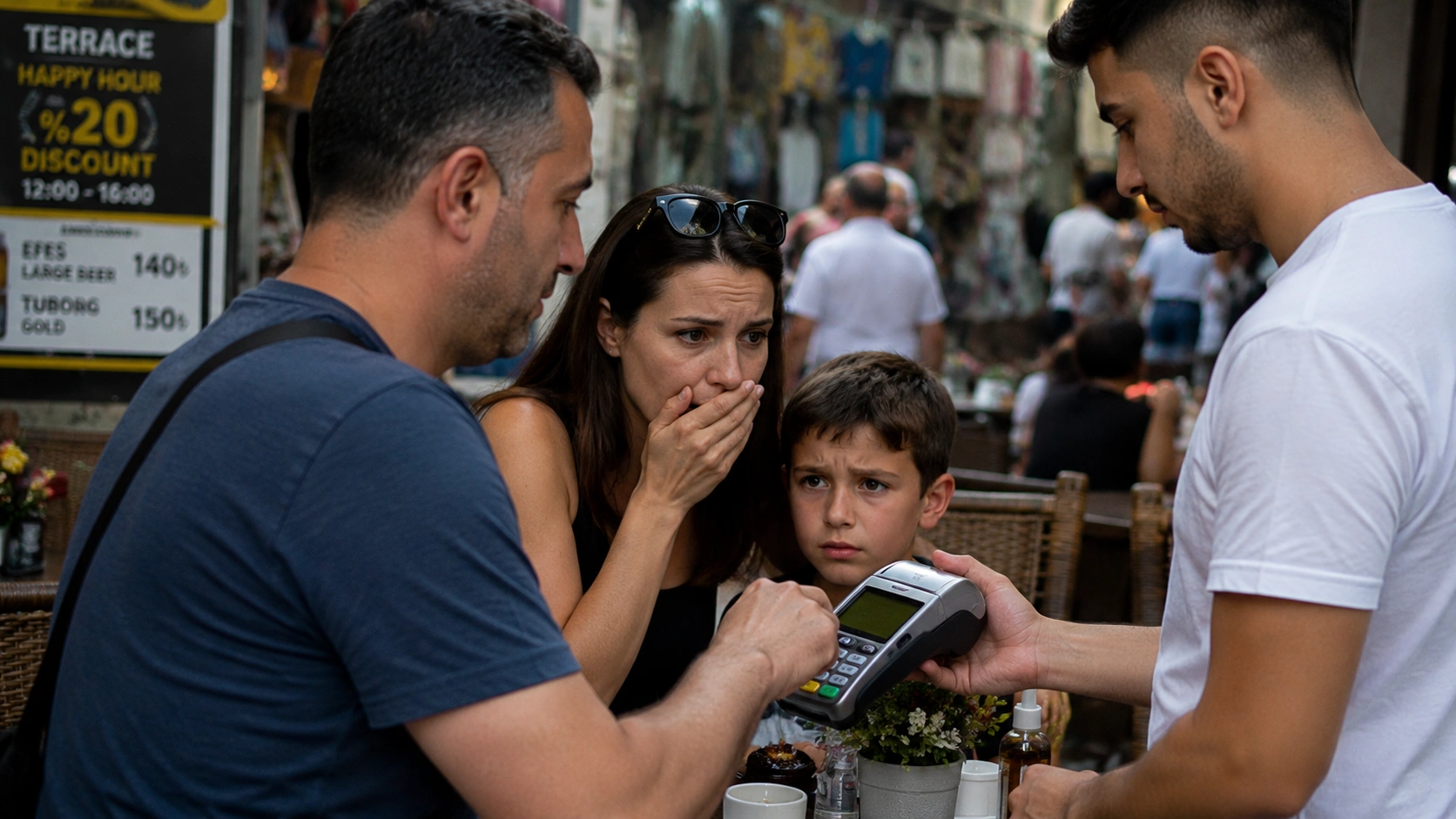
Some shops in tourist zones use a POS (card reader) trick: the total is typed with an extra digit, or the currency is switched from Turkish lira to euros without asking, or the "dynamic currency conversion" prompt is confirmed for you by the cashier at a very poor rate. Because the amount screen is angled away, you approve without noticing until you check your card statement.
Warning signs: a cashier turning the terminal away from you, offering to "help" enter the PIN, insisting on a foreign currency total, or being reluctant to give a printed receipt.
How to avoid it: always insist on paying in Turkish lira and refuse dynamic currency conversion. Read the amount on the terminal screen out loud before you tap or enter your PIN. Ask for a printed receipt ("fis" or "fatura") and keep it.
If it happens: your card provider will normally reverse an obvious overcharge if you file a dispute within a few days and provide the receipt.
Fake Police and Unofficial "ID Check" Scam
Someone in plain clothes approaches, flashes a badge quickly, and asks to see your passport and wallet "for security." In some versions they claim to be looking for counterfeit money and want to inspect your cash. The badge is fake and the intention is either to grab valuables or lift cards while looking through your wallet.
Where: around Taksim Square, on Istiklal Avenue, near Sultanahmet, and occasionally outside major mosques.
Warning signs: plain clothes, no uniformed partner, no police car nearby, focus on your cash rather than your identity, badge shown for a split second.
How to avoid it: Turkish police in tourist areas wear clear uniforms. Real officers do not inspect tourists' cash on the street. Politely refuse, keep walking, and head toward a uniformed officer or the nearest hotel lobby.
If it happens: ask to walk together to the nearest police station or Tourist Police office. A genuine officer will not object. If the person melts away, that answers the question.
Counterfeit Perfume, Bags, Gems and Luxury Goods
Fake designer bags, watches, sunglasses, perfumes and gemstones are widely offered in and around the Grand Bazaar, in some Beyazit side streets, and by mobile sellers on Istiklal. Some are honestly labelled "replica" for very small prices; others are sold as originals at "special discounts" that are still far too high for what you get.
Warning signs: luxury brand items at a fraction of retail price, no proper box or serial number, "we ship worldwide, no customs" promises, or gemstone certificates from labs no jeweller has ever heard of.
How to avoid it: assume everything sold as "designer" on the street is a replica and only buy if you are happy with a replica at replica prices. For real gold, silver or gemstones, use established jewellers on Nuruosmaniye Caddesi or reputable branded stores with printed receipts.
If it happens: customs at your home country can seize obvious counterfeits on the way home, and dispute rights for card purchases of fakes are usually strong. Keep every receipt and photo.
The "Your Hotel Is Closed" Redirection Scam
You get out of a taxi near your hotel and a man in a vest, sometimes with a fake badge, tells you the hotel is "closed for renovation," "overbooked," or "no longer taking tourists." He offers to walk you to another hotel "of the same standard, same price." That hotel pays him commission and you end up in worse rooms at a worse price.
Where: around Sultanahmet, near Sirkeci station, and on the streets between Aksaray and Beyazit.
Warning signs: a stranger insists on carrying your bag; the "attendant" has no way to prove employment; the alternative hotel is unusually enthusiastic to have you.
How to avoid it: always confirm your reservation directly with the hotel by phone or email before landing, and go straight to the reception desk yourself when you arrive. A pre-booked private airport transfer typically drops you at the actual front door — one more reason to use one on arrival day.
If it happens: ignore the "attendant" and enter the hotel to check with reception in person. If your original booking really has a problem, the reception will confirm and rebook you through your booking platform — not through a street tout.
Online Booking, Fake Travel Agencies and Tour Package Scams
Ads on social media offer "unmissable" Cappadocia balloon packages, Bosphorus dinner cruises and airport transfers at prices well below the market. Sometimes the vendor is a real, low-quality operator; sometimes it is a shell that simply disappears after your bank transfer. A second version is a legitimate-looking website that duplicates a real agency's brand.
Warning signs: only accepts bank transfer or cryptocurrency; refuses card payments; no company registration on the website; reviews are all five stars and dated in the same week; contact only via WhatsApp with no landline.
How to avoid it: book through operators that accept card payments, appear on established platforms, hold TURSAB registration for tours, and have long review histories. Confirm the company's tax number ("vergi numarasi") appears on invoices. For transfers, a fixed-price Istanbul airport transfer and car with driver from an established operator gives you a paper trail and an accountable phone number.
If it happens: card charge-back rights are much stronger than bank-transfer recovery. For tour operators, file with TURSAB and the Ministry of Tourism.
Medical Tourism, Hair Transplant and Cosmetic Surgery Red Flags
Turkey has many highly regarded, licensed medical clinics — but the medical tourism boom has also produced a grey market of unlicensed centres and marketing agencies that operate on commission. For hair transplants and cosmetic procedures, the classic warning pattern is: all-inclusive package prices dramatically below the market, first contact through a coordinator you never speak to a doctor before booking, aggressive pressure to pay a deposit immediately, and vague or missing surgeon names on the website.
Red flags: "all-inclusive" quotes that are less than a third of typical European prices, no named licensed surgeon, communication only via WhatsApp, the clinic address is not verifiable on Google Maps, the "hospital" is actually a hotel room or apartment, unrealistic guarantees ("100% density", "no scars ever"), before/after photos that look identical to competitors', and the surgeon barely appears in the operating room.
How to avoid it: verify Turkish Ministry of Health licensing, insist on a video or phone consultation with the actual named surgeon before you fly, ask for the surgeon's medical council registration number, read reviews across multiple independent platforms, and treat prices that seem impossibly low as exactly that. Package a car with driver in Istanbul for airport pickup, clinic and hotel transfers separately if your clinic's included transport is unclear.
If it happens: a full-refund dispute for medical services is difficult once treatment has started. If you are unsure at any point after arrival, do not proceed — a lost deposit is much smaller than the cost of a failed procedure.
Phone Snatching, Camera and Bag Theft on the Move
A newer problem — reported in most European capitals as well — is fast phone snatching by scooter or bicycle. You are standing on a footpath filming or scrolling, and a rider swings past and lifts the phone from your hand in one motion. Camera and shoulder-bag snatching happens the same way. In Istanbul this is still less common than in Barcelona or Paris but it does occur.
Where: parts of Istiklal Avenue, Karakoy waterfront, some sections of Kadikoy, and quiet stretches near Balat where residential streets feel safe.
Warning signs: scooters or e-bikes weaving on the footpath, someone circling you slowly; a "camera on a strap" left hanging on the outside of a bag.
How to avoid it: keep phones and cameras away from the outside edge of the pavement; do not stand at the kerb looking at a screen; carry cameras with a cross-body strap; do not leave a phone loose on a cafe table facing the street.
If it happens: block the device via Find My iPhone / Find My Device, notify your carrier to blacklist the IMEI, and file a report at the Tourist Police for insurance.
Tram, Metro, Bus, Ferry and Market Crowding
Istanbul's public transport network is genuinely excellent and safe to use in daylight. The one thing to keep an eye on is crowding. Pickpocket teams and distraction scams cluster on the T1 tram (Kabatas–Sultanahmet–Bagcilar), on the Sirkeci–Kabatas walk, at Eminonu ferry terminals during rush hour, inside the Grand Bazaar and Spice Bazaar aisles, and on Istiklal Avenue on Friday and Saturday evenings.
- Board through the middle doors of the tram to avoid the standing crush by the front and rear entries.
- Keep your Istanbulkart in a pocket, not in your hand, once you have tapped through the gates.
- Do not lean against tram doors — that is a common bump-and-lift spot.
- On ferries, avoid the pushing wave at the boarding ramp; wait ten seconds and walk on comfortably.
- Inside the Grand Bazaar, keep bags on the shop-side of your body and closed at the top.
- At night, prefer app-hailed taxis or a private transfer over walking through quiet streets in Beyoglu with visible expensive gear.
Fewer Unknowns at Arrival, at Night, and on Long Days
A pre-booked, licensed driver will not stop every possible scam in Istanbul — no service can. What it does do is remove the two moments that produce the most complaints from visitors: the airport arrival with a large tout scene, and the late-night ride home after a long day out.
Our Istanbul Airport transfer and Sabiha Gokcen airport transfer use a fixed, agreed price with no meter, no "broken meter" line, and a driver who is holding a name board when you exit customs. For city days and clinic-and-hotel schedules, our car with driver in Istanbul and general chauffeur / driver services offer the same fixed pricing across multi-stop routes.
You still make every decision — which restaurants, which shops, which sights — but the ride itself becomes one less thing to negotiate.
What to Do if You Feel Unsafe or Pressured
Trust the small internal alarm. Most people who lose money in Istanbul later say the same thing: "I felt something was off but I didn't want to be rude." Politeness is not worth an emptied wallet.
- Walk into a public place. Any hotel lobby, bank branch or well-lit large cafe will let you sit for a few minutes to reset.
- Call 155. The Turkish police emergency number works in English. For tourist-specific help, the Tourist Police desks in Sultanahmet and Taksim can advise.
- Do not sign or PIN-enter anything you have not read. If pressured at a bar or shop, insist on reading the bill first.
- Block cards before arguing. A missing card is easier to fix while it is frozen.
- Move toward uniformed officers. They are present around all major tourist zones and can defuse the situation quickly.
The 60-Second Pre-Payment Checklist
Whenever money is about to change hands — restaurant, taxi, shop, ATM, medical clinic — run through this short mental checklist first. It takes less than a minute and prevents almost every common scam.
Menu, price tag, printed quote, meter reading — get a number in writing before you commit.
Refuse dynamic currency conversion. See the lira total on the POS screen.
Question anything unfamiliar. "Free" appetisers are often not free.
Card must stay on the counter. If the reader is angled away, ask to see it.
Uniformed staff, in the shop, on their own turf — good. Random stranger, on the street, at an ATM — decline.
Printed receipt for restaurants, invoices for shops, a booking confirmation for tours. No receipt = no proof.
Istanbul Safety FAQ for 2026
Is Istanbul safe for tourists in 2026?
Yes. Istanbul remains a broadly safe city for visitors, and millions of tourists travel there every year without incident. Petty crime and tourist-targeted scams do exist — as in any large capital — and the busiest districts around Sultanahmet, Taksim, Istiklal, the Grand Bazaar and the ferry piers see the majority of them. Read the government travel advice for your country before travelling and take normal big-city precautions.
What are the most common scams in Istanbul?
Taxi overcharging, the nightclub / bar bill scam, pickpocketing on the T1 tram, the shoe-shine brush drop, inflated restaurant bills with "surprise" appetisers, and fake guide / carpet-shop commission trips are the six most reported. The bar bill scam is the most expensive when it happens; pickpocketing is the most frequent.
Are taxi scams common in Istanbul?
They are common enough to plan around, especially around IST and SAW airports, at Taksim, and near tourist piers late at night. Most Istanbul taxi drivers are honest, but the minority that target visitors are very well practised. Insisting on the meter, following the route on Google Maps and using a booking app removes almost all of the risk.
How can I avoid taxi overcharging in Istanbul?
Always insist on the meter, watch that the tariff shown is "1" during daytime and "2" only at night, follow the route on a map, hand over the exact fare and say the amount out loud. For airport arrivals, pre-book a fixed-price airport transfer — no meter, no negotiations, no surprises.
What is the shoe-shine scam in Istanbul?
A shoe-shine man drops a brush from his box just in front of you. If you pick it up, he thanks you with a "free" polish and then demands a large tip. The safe response is not to pick up dropped brushes, smile and walk on. If a shine begins, agree the small tip out loud before it is finished.
What is the nightclub scam in Istanbul?
A friendly stranger — sometimes a man, sometimes a woman — approaches near Taksim or Istiklal, chats, and invites you to a "great local bar" in a nearby side street. Once inside, extra "companions" join the table, drinks are quickly poured, and a bill of many hundreds or thousands of euros arrives, with security blocking the exit. Never accept an invitation to a bar from a stranger you met minutes ago.
How do pickpocket distraction scams work?
A small team creates a moment of contact or confusion — a bump, a spilled drink, a request for directions, a "you dropped this" tap on the shoulder — while another member lifts a wallet or phone and hands it off to a third who walks away. Front zipped pockets, cross-body closed bags and awareness during any bump are the best defences.
Are restaurants in Istanbul safe, or can tourists be overcharged?
The vast majority of Istanbul restaurants are honest and menus with clear prices are the norm. In a small subset of tourist-strip venues — often around Galata Bridge, in some parts of Sultanahmet, and in "hidden" fish restaurants without printed menus — appetisers you did not order may be added to the bill at surprising prices. Choose venues with printed menus, published prices and independent online reviews.
Should I exchange money on the street in Istanbul?
No. Use only licensed exchange offices ("doviz") or ATMs inside bank branches. Street exchangers may hand back a mix of torn, old or foreign banknotes and disappear before you have counted them. The UK Foreign Office has specifically warned about counterfeit US$50 and US$100 notes in circulation in Turkey.
Is it safe to use ATMs in Istanbul?
Generally yes, but choose ATMs inside or immediately outside a bank branch, cover the keypad with your hand while entering your PIN, and refuse offers of help from strangers. Inspect the card slot for anything loose. Consider paying by card in most places and drawing cash occasionally in modest amounts.
What should I do if a stranger offers help at an ATM?
Decline politely — "no thank you, I've got it" — and do not continue the transaction until they have moved away. If you feel unsafe, cancel the transaction, remove the card and walk into the bank branch or a busy shop next door.
Are fake guides common near tourist attractions?
They exist around Hagia Sophia, the Blue Mosque, the Grand Bazaar and Topkapi Palace. Some are simply informal; others earn commission by steering visitors into specific shops. Book licensed guides via your hotel or a reputable tour operator, and ask to see a TURSAB licence card if in doubt.
How can I avoid shopping commission traps?
Do not let a "guide" or a friendly stranger choose which shop you visit. Browse in daylight, compare at least three shops before buying carpets or leather, ask prices in Turkish lira, and see the amount typed into the card reader before you tap. A polite "I'll think about it and come back" is always an acceptable answer.
What should medical tourists watch out for?
All-inclusive prices that are dramatically below normal, first contact only via a marketing agency you never speak to a doctor before booking, aggressive pressure to pay a deposit before consultation, no named licensed surgeon on the website, and clinic addresses that turn out to be hotel rooms rather than medical facilities. Verify Turkish Ministry of Health licensing and insist on a video call with the actual surgeon.
When is a private transfer better than a taxi?
On airport arrival and late-night returns, and for multi-stop days such as clinic-and-hotel schedules for medical tourists. A pre-booked private airport transfer or car with driver uses a fixed price agreed in advance, so there is no meter argument, no "surprise" toll charges and a driver holding a name board when you exit customs.
What should I do if I feel unsafe or pressured to pay?
Trust the alarm. Move to a public place — a hotel lobby, bank or busy cafe — and take a moment. Ask calmly to call 155 (police) or head to a Tourist Police desk. Do not sign, tap or PIN-enter anything you have not clearly read. Block your card first and argue afterwards; it is easier to reactivate a frozen card than to recover lost funds.
Which parts of Istanbul are the highest risk for scams?
The busiest tourist corridors: Sultanahmet Square, Istiklal Avenue, Taksim Square, the Grand Bazaar and Spice Bazaar, Eminonu ferry piers, the T1 tram, and the immediate exits of IST and SAW airports. These are where most tourists spend most time — and, naturally, where scammers concentrate.
Do I need to speak Turkish to stay safe?
No. English is widely spoken in tourist areas, and a very small vocabulary — "hayir, tesekkurler" (no, thank you), "taksimetre lutfen" (meter please), "adisyon" (the bill) and "polis" (police) — is enough to handle every common scam scenario politely.
Is it safe for solo female travellers in Istanbul?
Many solo female travellers visit Istanbul without incident every year. Dress in whatever is comfortable while respecting mosque dress codes, avoid unlit alleys late at night, and apply the same "stranger picks the venue" rule that applies to the nightclub scam. Pre-booked transfers late at night are a small investment for a big peace-of-mind gain.
Enjoy Istanbul — With Your Eyes Open
Almost every scam described in this guide has been documented in Istanbul for years, which is exactly why they are easy to spot once you know the patterns. Millions of travellers visit the city each year and go home talking about the food, the Bosphorus and the mosques — not about being ripped off.
Keep the ten-second summary in mind, run the 60-second pre-payment checklist whenever money is about to change hands, choose your own venues in the evening, and pre-book transfers on arrival and after late nights. Then relax and let one of the world's greatest cities do what it does best.