
Istanbul is one of the world's great cities — vivid, layered and endlessly rewarding. For the vast majority of visitors, getting around by taxi is fast and uneventful. But like any major tourist destination, Istanbul has its share of opportunistic practices targeting travellers who don't know local norms. This guide covers the situations you should be aware of, the specific habits that protect you, and why many visitors choose to pre-book transport for airport arrivals and late-night travel.
One important note before we begin: most Istanbul taxi drivers are professional and honest. The patterns described here represent a minority — but they are reported regularly enough that being informed in advance makes a real difference. For a broader look at navigating Istanbul safely, see our guide to tourism fraud in Istanbul.
Route Manipulation and Address Tricks
The most consistently reported taxi complaint in Istanbul involves drivers who take unnecessarily long routes to inflate the metered fare. For visitors who don't know the city's street layout, this is difficult to detect in the moment — which is exactly why it happens. Two related variants are also worth knowing about.
Deliberate Detours and Longer Routes
Some drivers take a deliberately longer path to inflate the fare. The usual excuse — if one is offered — is heavy traffic on the normal route, road works or a vague claim of a closed street. In practice the detour may add 15–30 minutes to a journey that should take ten.
A well-documented historical example: a 2018 case involved a driver who took a tourist from Kadıköy (Asian side) to Sabiha Gökçen Airport — also on the Asian side — via the third Bosphorus bridge across to the European side and back, causing the passenger to miss their flight. The driver was subsequently prosecuted for tourist fraud. While extreme, this case illustrates the underlying pattern of route inflation that remains one of the most commonly reported taxi issues in the city.
How to protect yourself
Open Google Maps before entering the taxi and set your destination. Keep it visible on the front of your phone throughout the journey. You do not need to speak Turkish — if the route diverges noticeably from what the map shows, pointing at the screen is universally understood. Most drivers will correct course the moment they realise you are monitoring the route.
Wrong Terminal, Wrong Hotel, Wrong Airport
A subtler variant: a driver takes you to the wrong terminal, a different hotel with a similar name, or — for visitors unfamiliar with Istanbul's geography — even the wrong airport entirely. Istanbul's two main airports, IST (Istanbul Airport, European side) and SAW (Sabiha Gökçen, Asian side), are on opposite sides of the Bosphorus. A driver who "forgets" to confirm which airport you need can add 60–90 minutes and significant extra fare to your journey.
Before the car moves, confirm your destination clearly. Show it written on your phone if there is any language barrier. For airport journeys, state the airport name explicitly: İstanbul Havalimanı (IST) or Sabiha Gökçen (SAW). For hotels, show both the name and the full address, since some hotel brands appear in multiple Istanbul districts.
Meter Tricks, Money Scams and Fake Charges
Refusing the Meter, Fake Breakdowns and the Uncleared Meter
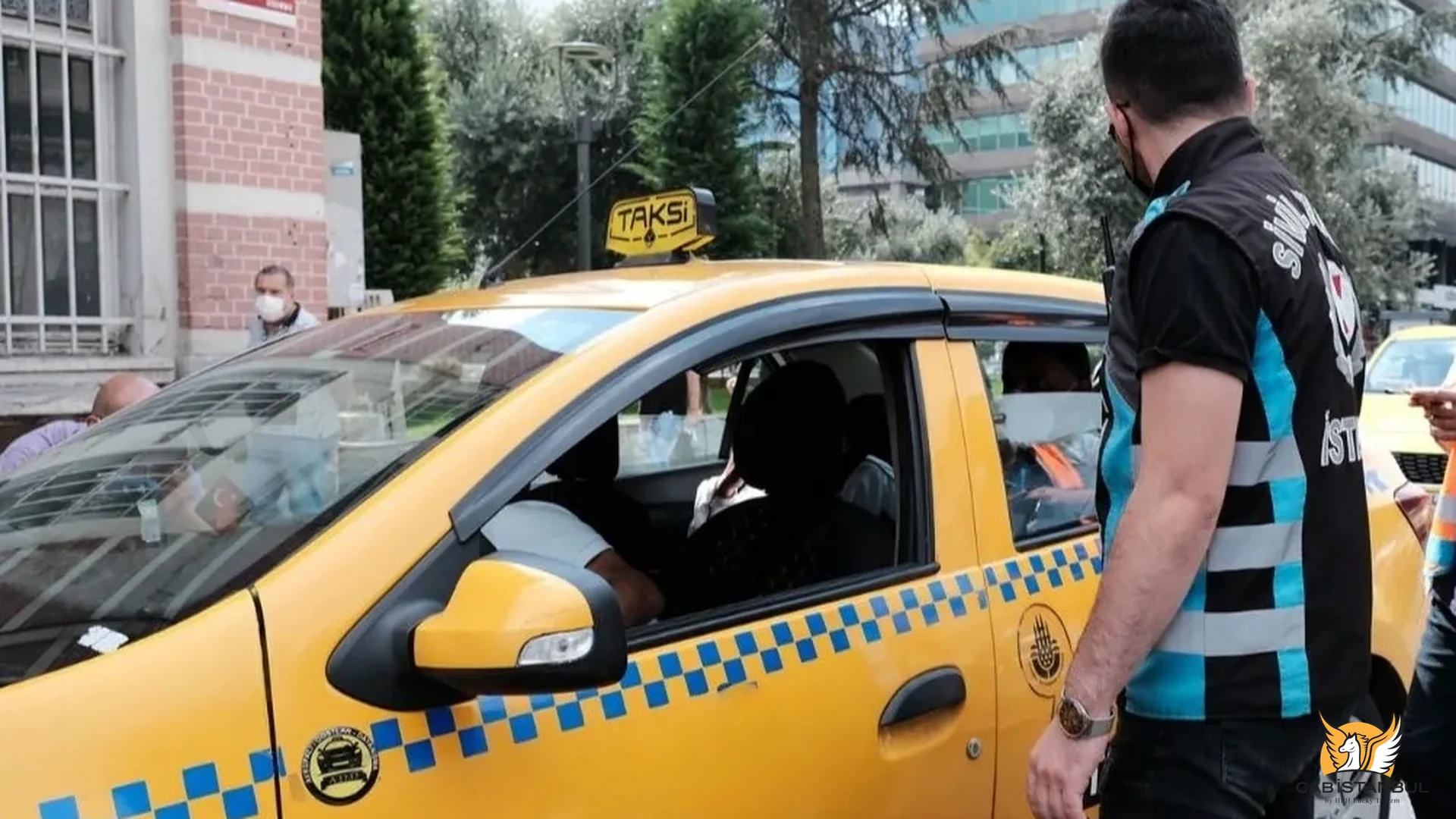
Istanbul taxis are legally required to use a taximeter. The most direct scam: a driver who quotes a fixed price before the journey instead of switching on the meter, framing it as convenient or even a saving. It is almost never a saving — the proposed flat amount nearly always exceeds what a metered fare would show for the same route.
Two related tactics. First: a driver claims mid-journey that the meter has broken and demands a cash settlement. Second: the driver does not reset the meter from the previous passenger's fare, meaning your journey starts from a higher figure than it should. The moment you get in, check that the meter display has been reset.
What to do
- As you get in, say "Sayaç lütfen" (meter, please) or point at the meter display.
- If the driver refuses to use the meter, exit the taxi. You have not departed and are not obligated to stay or pay anything.
- Verify the meter has been reset to its starting fare when the journey begins — not carried over from a previous passenger.
- If a driver claims the meter broke during the ride, suggest calmly pulling over near a police vehicle. This ends most false claims immediately.
Money Switch, Fake Banknotes and the No-Change Trick
Three payment scams appear repeatedly in visitor accounts from Istanbul:
The banknote switch: You hand over a large note. The driver briefly handles it out of sight and returns it, claiming it is counterfeit or the wrong denomination. In the process, your note may have been replaced with a smaller one. Identify your banknote clearly before handing it over, pass it directly to the driver and watch them count out the change without looking away.
No change available: The driver claims not to have change for your banknote, hoping you will let them keep the difference. Carry smaller-denomination Turkish lira notes for taxi fares rather than large bills. This removes the leverage entirely.
Foreign currency pressure: Some drivers offer to accept euros, dollars or pounds and then apply a deeply unfavourable exchange rate. Pay in Turkish lira only. If a driver insists on foreign currency, it is a clear warning sign — exit and take the next taxi.
Fake Surcharges: Luggage, Bridge, Tunnel and Nighttime Area Fees
Official Istanbul taxis operate on a daytime tariff and a higher nighttime tariff, with the meter switching automatically at the designated hours. What is not legitimate is a driver inventing additional charges at journey's end. Commonly reported invented surcharges include:
- Luggage fees — unless separately agreed before departure, luggage is covered within the standard metered fare.
- Bridge and tunnel tolls added manually — relevant tolls are incorporated into the official taxi tariff; a driver demanding them again as a separate cash surcharge is double-charging.
- Separate airport pickup fee — a fixed cash amount demanded on top of the meter reading at an airport is not part of the official tariff. The metered fare covers the journey.
- Nightlife area premium — late-night rides from Beyoğlu, Karaköy or nightclub districts are a known overcharging hotspot. The nighttime meter rate is legitimate; manually invented cash add-ons are not.
The most effective defence: look up the approximate normal metered fare for your route before you travel, and ask your hotel for a reasonable estimate. Knowing the normal range means you recognise when a demanded amount is out of line.
Unofficial Taxis, Passenger Refusals and Card Payment Tricks
Unofficial and Unlicensed Taxis
.webp)
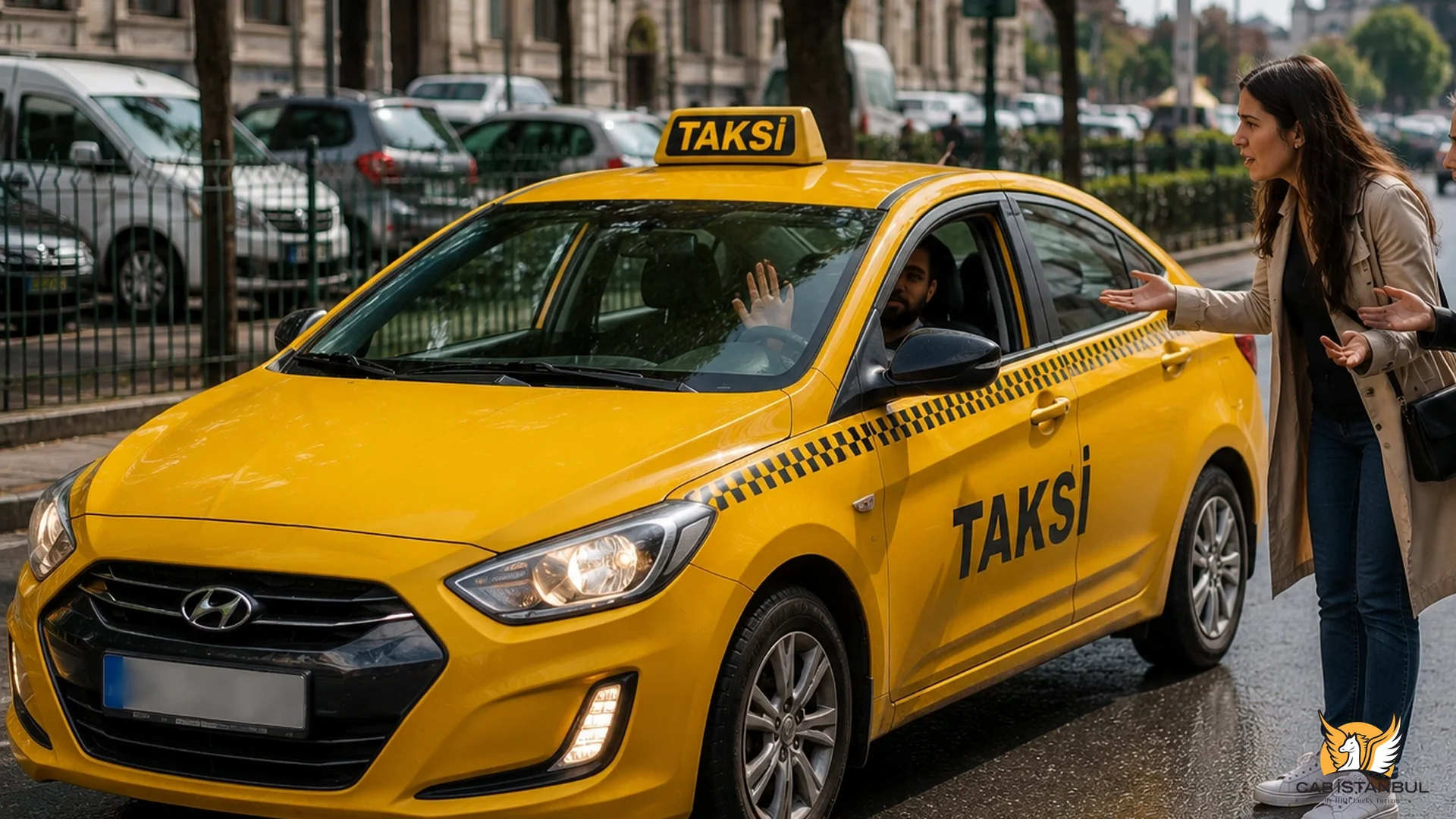
Official Istanbul taxis are yellow (standard), turquoise (accessible) or black (premium). They carry the driver's licensed photo ID inside the vehicle, display a clearly visible taximeter and carry official registration markings on doors and roof. Any vehicle that does not match this description is unofficial — and using one carries serious risks: no price transparency, no licensed accountability and no legal recourse if something goes wrong.
Unofficial taxis concentrate wherever tourists arrive in significant numbers: at Istanbul Airport (IST), Sabiha Gökçen (SAW), ferry ports, cruise terminals and busy tourist squares. The approach is typically proactive and friendly — unsolicited help with luggage, a warm conversation and an offer of a "fixed cheap price." The price is rarely cheap once the journey ends.
At both IST and SAW, licensed taxis queue at clearly marked official stands outside the arrivals hall. Use these stands only. If anyone approaches you inside the terminal building offering a taxi, transfer or private car, decline politely and walk to the official stand outside. This single habit eliminates the most common airport arrival risk. For how to navigate IST transport options safely, see our Istanbul Airport guide.
Refusing Short Trips, Passengers with Luggage and Flat-Rate Pressure
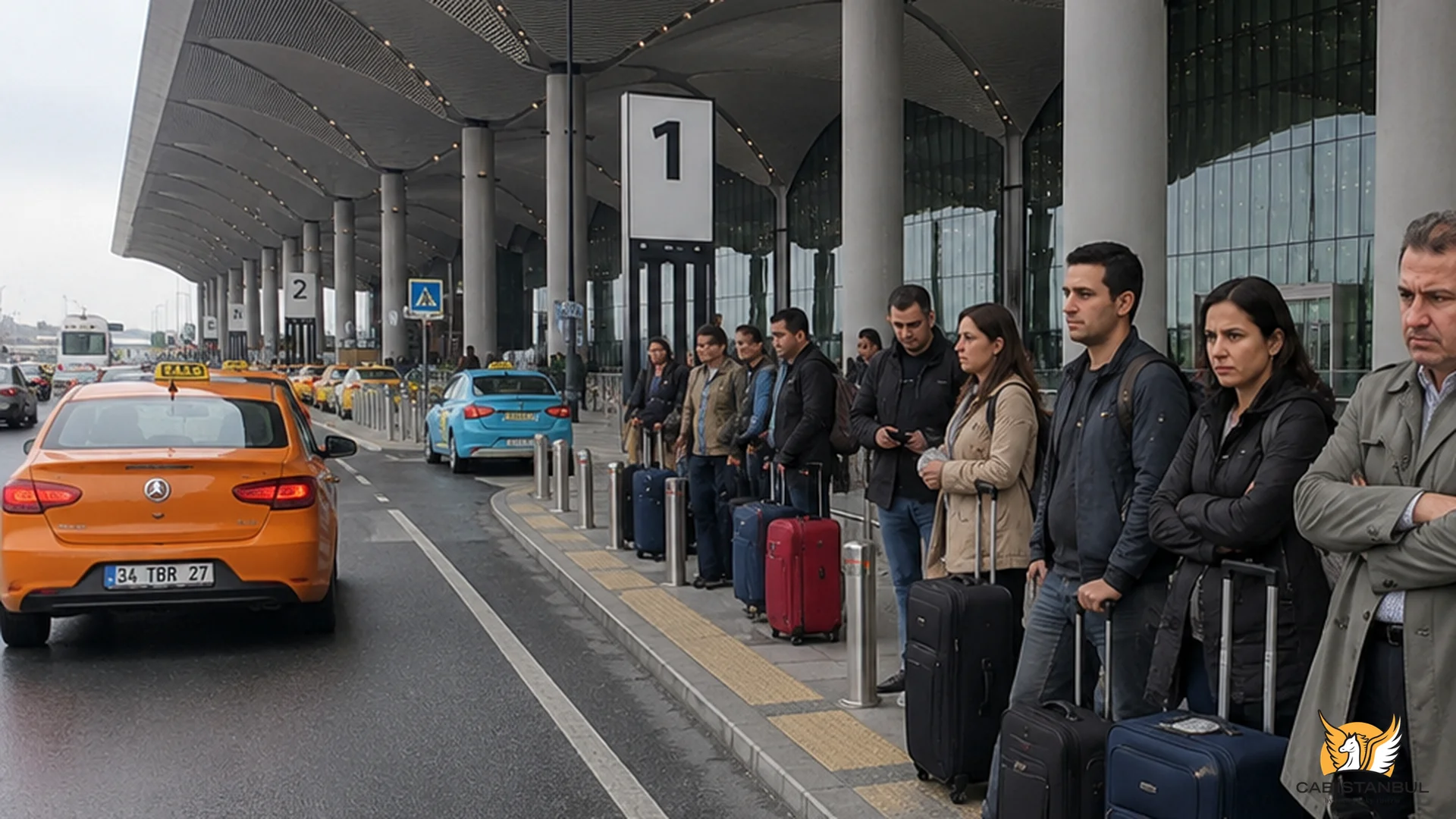
Turkish law requires licensed taxis to accept all passengers and all legal destinations, including short-distance rides. In practice, some drivers at tourist-area ranks refuse passengers they consider unprofitable: those travelling a short distance, those with large luggage, families with children, or passengers who want the meter rather than agreeing to a higher flat rate. Drivers may also claim the vehicle cannot fit your group and then offer to call a "friend" with a private car at a fixed premium.
Refusal is technically a reportable offence, though enforcement at street level is inconsistent. The practical responses: move to the next taxi in the queue; use official stands with closer supervision; or request a taxi through your hotel concierge, who can call a known reliable stand and has a relationship to follow up if there is a problem. If refused at an official stand, note the plate and report it to the stand supervisor.
A related pressure tactic: a driver who accepts the journey but then claims mid-route they will not continue without additional payment. The correct response is to note the plate number, pay the metered fare for the distance already covered and exit. Do not agree to the extra demand under pressure.
Card Terminal "Not Working" and Duplicate Charge Risk
Licensed Istanbul taxis should accept card payments. Two problems arise in practice. First: a driver who claims the terminal is not working, forcing you into a cash payment that is then easier to manipulate. Second: a driver who processes a card payment, claims it failed, asks you to try again and charges the card twice.
If a terminal is claimed to be non-functional, note the taxi registration number and the meter amount. You are entitled to pay the metered fare. Request a receipt. Check your bank statement within 24 hours of any card payment in an Istanbul taxi — if a duplicate charge appears, dispute it with your bank using the taxi registration number, approximate date, time and route as evidence.
The simplest safeguard: carry enough Turkish lira to cover a typical fare. This removes both the card terminal problem and the foreign currency manipulation risk in one step. Withdraw lira from a bank ATM rather than an airport exchange counter, which typically offers poor rates.
Airport Taxi Risks: IST and SAW
Istanbul's two international airports carry specific risks for arriving passengers, particularly those tired from long-haul flights and unfamiliar with local transport norms. Here is what to know about each.
Istanbul Airport (IST) — European Side
IST is Istanbul's primary international hub, approximately 40–50 km from the city centre. The distance means significant fares and therefore significant potential for overcharging. Licensed taxis wait at the clearly signed official stand outside the arrivals hall. Do not accept rides from anyone who approaches you inside the terminal building. Journey times to central Istanbul (Taksim, Sultanahmet) range widely depending on traffic — knowing the approximate normal fare range before you arrive removes the driver's information advantage. Our post on taxi fares from Istanbul Airport to the city provides current reference guidance. For a pre-booked private transfer from IST, the price is fixed and confirmed before you land.
Sabiha Gökçen Airport (SAW) — Asian Side
SAW serves many low-cost routes and sits on Istanbul's Asian side — 40–60 km from most European-side hotels, with a Bosphorus crossing adding to both time and fare. The same unofficial taxi risks apply as at IST, with reports of particularly active touts in the SAW arrivals area. Licensed taxis queue outside at the official stands. If your hotel is on the European side, confirm this with the driver before departure — the crossing is significant. For SAW-specific transport guidance, see our Sabiha Gökçen Airport guide. For the long journey across the city, a pre-booked SAW airport transfer locks in the price before you travel.
Tourist Area Hotspots: Where to Be Extra Alert
Certain districts of Istanbul see a higher concentration of reported incidents, driven by high tourist footfall and competition among taxis for the same passengers. Being alert in these areas means being more deliberate about how you find and board a taxi — not avoiding the areas themselves.
- Sultanahmet and the Historic Peninsula — the highest tourist density in the city. Reported patterns: flat-rate pressure, longer routes towards hotel districts, unofficial vehicles operating alongside licensed taxis.
- Taksim Square and Beyoğlu / İstiklal Caddesi — late-night overcharging hotspot. The nighttime meter rate is legitimate; invented cash add-ons at the end of the fare are not.
- Galata and Karaköy — popular waterfront area with high day-visitor and cruise passenger traffic.
- Eminönü and ferry terminals — passengers arriving from the Asian side by ferry are targeted by unofficial drivers near the terminal exits.
- Galataport (cruise terminal) — cruise passengers unfamiliar with Istanbul fares are a known target. Pre-arranged transport is strongly recommended if you are arriving by cruise ship.
- Grand Bazaar and Spice Bazaar exits — shopping tourists with bags are subject to flat-rate pressure at the taxi ranks near the bazaar exits.
- Nightlife districts after midnight — Beyoğlu, Nişantaşı, Karaköy. The metered nighttime tariff applies regardless of the hour; invented add-ons do not.
Step-by-Step Prevention: How to Use an Istanbul Taxi Safely
Most Istanbul taxi scams are preventable with a small number of consistent habits applied at the three key moments of every taxi journey. The checklist below covers each stage. For airport-specific guidance, our post on airport taxis in Istanbul covers the additional steps relevant to IST and SAW arrivals.
Before you board
- Use an official taxi stand where possible — ranks near hotels, shopping centres and airports have more supervision than street hails.
- Avoid any driver who approaches you inside a terminal, bazaar or tourist attraction rather than waiting at a stand.
- Confirm your destination before getting in. Show it written in Turkish on your phone, or state the name and address clearly.
- For airport journeys, confirm which airport: İstanbul Havalimanı (IST) or Sabiha Gökçen (SAW).
- Glance at the registration plate on the door or roof and note it. Two seconds, available if you need it later.
- Look up the approximate metered fare for your route. Ask your hotel for an estimate of what a fair fare should be.
- Have Turkish lira in smaller denominations ready for payment.
When you get in
- Check that the meter is on and has been reset before the car moves.
- If it has not been reset, say "Sayaç lütfen" (meter, please) or point at the display.
- If the driver refuses the meter or proposes a fixed price instead, exit the taxi. You have not departed and are not obligated to stay or pay.
- Open Google Maps, set your destination and keep it visible on the front of your phone so the route can be monitored throughout.
- Do not open your wallet or display its contents inside the taxi.
- Do not show or count large amounts of cash.
At journey's end
- Read the metered amount. Confirm it aloud with the driver — "Fifty lira?" — and watch the payment being processed.
- Hand your banknote over directly and openly. Keep it in view while the driver counts out change.
- If the driver claims your note is counterfeit or the wrong denomination, ask for it to be returned. Do not hand over additional money under pressure.
- Decline any demanded surcharges for luggage, bridge tolls or nighttime area fees that do not appear on the meter.
- Request a printed receipt. Licensed taxis are required to provide one.
- If you paid by card, check your bank statement within 24 hours.
What to Do If Something Goes Wrong
If you believe you have been overcharged, misled or treated unfairly by an Istanbul taxi driver, follow these steps in order:
- Stay calm. Do not argue aggressively. Your priority is to leave the situation safely. If you feel unsafe at any point, exit the vehicle first.
- Note the registration plate — on the door, roof or rear of the vehicle — along with the roof number, the driver's ID if visible, and the approximate time and location of the incident.
- Ask for a receipt. Drivers are legally required to issue one. The receipt supports any subsequent complaint and may deter the driver from pursuing the overcharge further.
- Pay the metered fare, not an inflated amount. If you are being pressured to pay more than the meter shows, pay what the meter shows, note the details and leave. Do not agree to additional demands under pressure.
- Report to your hotel first. Hotel staff are experienced in handling taxi disputes, often have established contacts at local stands, and can support you in making a formal complaint. This is typically the most effective immediate step.
- Contact authorities if needed. Call the tourist police on 153, or contact Istanbul's Public Transport Services Directorate. Provide the registration plate number, time, location and a description of the incident. Istanbul's tourism management authorities act on documented complaints.
- Dispute card fraud with your bank immediately. If a duplicate charge occurred, contact your bank with the taxi registration number, date and route as evidence. Act within 24–48 hours for the clearest dispute trail.
Filing a complaint — even where it does not result in immediate enforcement action — contributes to documented pressure on standards. Every report counts.
Istanbul Taxi vs Pre-Booked Private Transfer
For certain journeys — airport arrivals after a long flight, travel with children or large luggage, business arrivals and late-night travel — many visitors to Istanbul choose to pre-arrange transport rather than use a street taxi. The table below compares the two options on the factors that typically matter most.
| Factor | Street Taxi (metered) | Pre-Booked Private Transfer |
|---|---|---|
| Price | Metered — varies by traffic, time and driver | Fixed price confirmed before you travel — no surprises |
| Meter anxiety | Monitor meter reset, watch route on maps throughout | None — no meter used |
| Airport pickup | Queue at official stand outside arrivals hall | Named driver with board inside arrivals — no queuing |
| Flight tracking | Not available | Driver monitors your flight and waits if delayed |
| Route | Driver's choice — monitor with Google Maps | Professional driver, fixed destination, no route risk |
| Luggage and group size | Standard — possible refusal for large groups or heavy bags | Vehicle confirmed for your exact group size and luggage |
| Late-night travel | Nighttime meter rate applies; overcharging risk is higher after midnight | Same fixed price at any hour of arrival |
| Payment | Cash (Turkish lira) recommended; card theoretically possible | Payment method confirmed on booking — no cash disputes |
| Accountability | Complaint via tourist police (153) or hotel | Direct with the transfer company via booking reference |
| Best suited for | Short in-city trips by informed, experienced travellers | Airport transfers, first-time visitors, families, business, late night |
For flexible private transport that covers not just airport runs but also city tours and inter-district travel, a car with driver in Istanbul provides the same fixed-price, no-meter logic for any journey you need throughout your stay.
Frequently Asked Questions
Are taxis safe in Istanbul?
For the majority of journeys, yes. Most Istanbul taxi drivers are professional and the metered system works as intended. The patterns described in this guide represent a minority of drivers, but they are reported often enough that being aware of them matters. The most effective protection is applying a small number of consistent habits — insist on the meter, pay in Turkish lira, monitor your route on maps — regardless of which taxi you take. Short in-city trips by alert travellers carry relatively low risk.
Should I use a taxi from Istanbul Airport (IST)?
Licensed taxis are available at the official stand outside the IST arrivals hall and are a legitimate option. The risk comes from unofficial drivers who approach passengers inside the terminal building — avoid these. Use only the marked official stand outside. The journey to central Istanbul takes 45 minutes to well over an hour depending on traffic, and the fare for that distance is significant. If you want certainty over a long first journey into an unfamiliar city, a pre-booked private transfer from IST eliminates the meter and route uncertainty before you arrive.
Is it better to use the meter or agree a fixed price?
Always use the meter for in-city taxi journeys. Istanbul taxis are legally required to use the taximeter, and the metered fare is your legal protection. A driver who proposes a fixed price instead of the meter is almost always quoting an amount that exceeds what the meter would show. The only situation where a pre-agreed fixed price is appropriate is a professionally pre-booked service confirmed in writing before travel — not a negotiation with a street taxi driver at the start of a journey.
Can I pay Istanbul taxi drivers with foreign currency?
You should not. Pay in Turkish lira only. Drivers who accept foreign currency apply exchange rates that strongly favour themselves. Before your taxi journey, withdraw Turkish lira from a bank ATM — avoid currency exchange desks at airport terminals, which typically offer poor rates. Having local currency ready also removes the no-change trick as a lever against you.
What should I do if the driver refuses to use the meter?
Say "Sayaç lütfen" (meter, please) clearly. If the driver still refuses, exit the taxi — you have not departed and are not obligated to stay or pay anything. Refusal of the meter is a reportable offence. Note the registration plate, find the next taxi in the queue and, if this happened at an official stand, report it to the stand supervisor or to your hotel.
How can I avoid longer-route scams?
Open Google Maps before entering the taxi, set your destination and keep the map visible throughout the journey. Most drivers correct course the moment they realise you are monitoring the route. Look up your journey in advance so you know roughly which direction you should be travelling and approximately how long it should take. Even this basic situational awareness significantly reduces your vulnerability to route manipulation.
Is a private airport transfer worth it in Istanbul?
For many visitors, yes. The price difference between a metered taxi and a pre-booked private transfer is often modest, and in return you get a fixed fare known before you travel, a driver waiting with a name board in arrivals, flight tracking if your flight is delayed, confirmed vehicle capacity for your luggage, and no meter or route decisions to manage. This is particularly valuable for first-time visitors to Istanbul, those arriving with children or significant bags, and business travellers with onward schedules. See our Istanbul Airport transfer service for full details.
What is the safest option for a late-night arrival?
Late arrivals at IST or SAW see higher activity from unofficial taxi touts and a greater risk of nighttime overcharging from street taxis. A pre-booked private transfer sidesteps both: the driver is confirmed in advance with your name and the price does not change regardless of arrival time. For SAW late-night arrivals in particular — where public transport options are more limited than at IST — a Sabiha Gökçen airport transfer booked in advance is strongly recommended.