
Historic Peninsula · Archaeology · Museums
The Istanbul Archaeological Museums are Türkiye’s flagship archaeology complex: three museums in one hillside precinct between Topkapı Palace and Gülhane. The official English name is plural for a reason — the Classical Archaeology Museum, the Museum of the Ancient Orient and the Tiled Kiosk Museum share one ticket and one address on Osman Hamdi Bey Yokuşu.
Nearly a million artefacts — the museum’s own figure — span Mesopotamia, Anatolia, Egypt, the Levant and the classical Mediterranean. This guide covers history, must-see works, current visiting conditions and how to fold the complex into a Historic Peninsula day without treating outdated 2024 closure notes or locked euro guesses as gospel.
Origins
History of the Istanbul Archaeological Museums
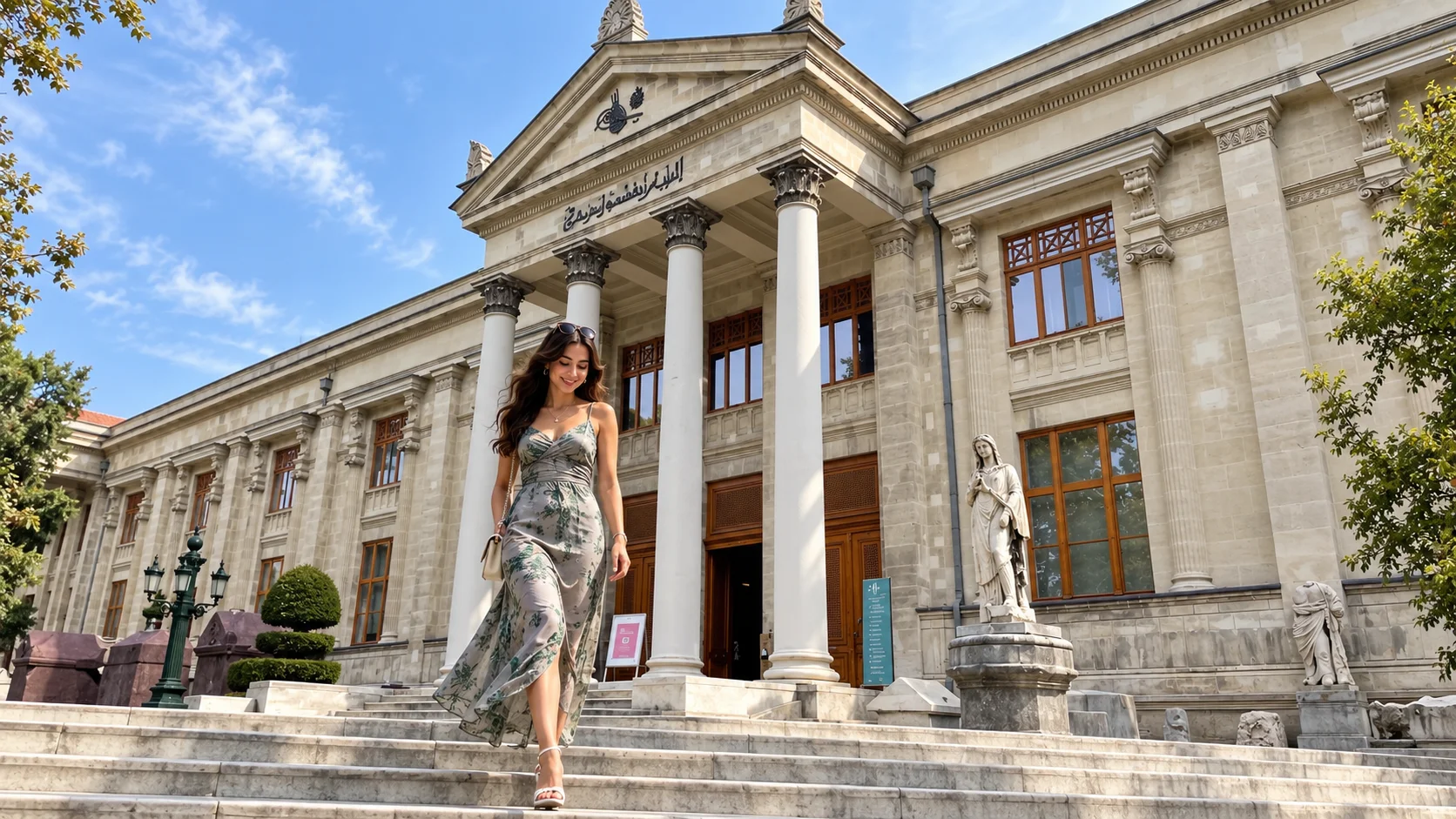
Institutional collecting in Istanbul did not begin with a single founder’s signature in 1869 under Osman Hamdi Bey. Archaeological finds had already been stored at Hagia Irene. In 1869 the collection was organised as the Müze-i Hümayun (Imperial Museum), with Education Minister Saffet Pasha’s backing and early direction by Edward Goold.
Osman Hamdi Bey became museum director in 1881. His tenure — excavations at Nemrut, Lagina and especially the Sidon royal necropolis (1887–88), the 1884 antiquities regulations and the push for a true museum building — shaped modern museology in the Ottoman Empire and later Türkiye.
Architect Alexandre Vallaury designed the main Classical building, opened on 13 June 1891 (still marked as Museum Day). Its façade echoes Sidon sarcophagi housed inside. Wings followed in the early 1900s. On its centenary in 1991, the complex received the Council of Europe Museum Prize for major display renewals.
The complex
The three museums
Archaeology Museum (Classical building)
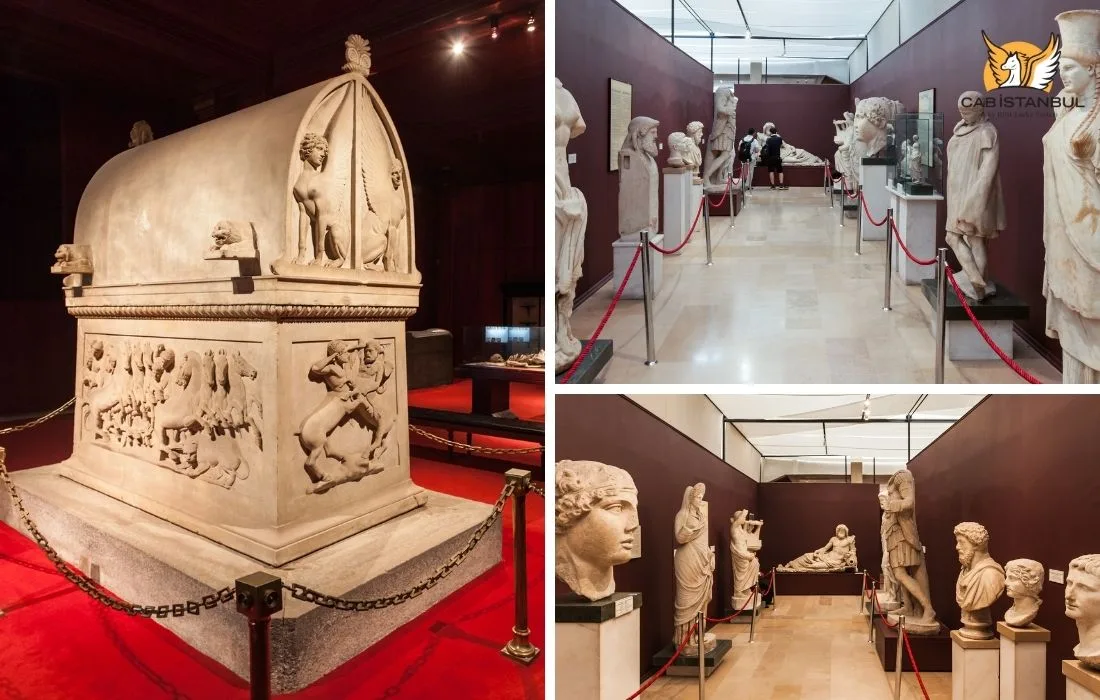
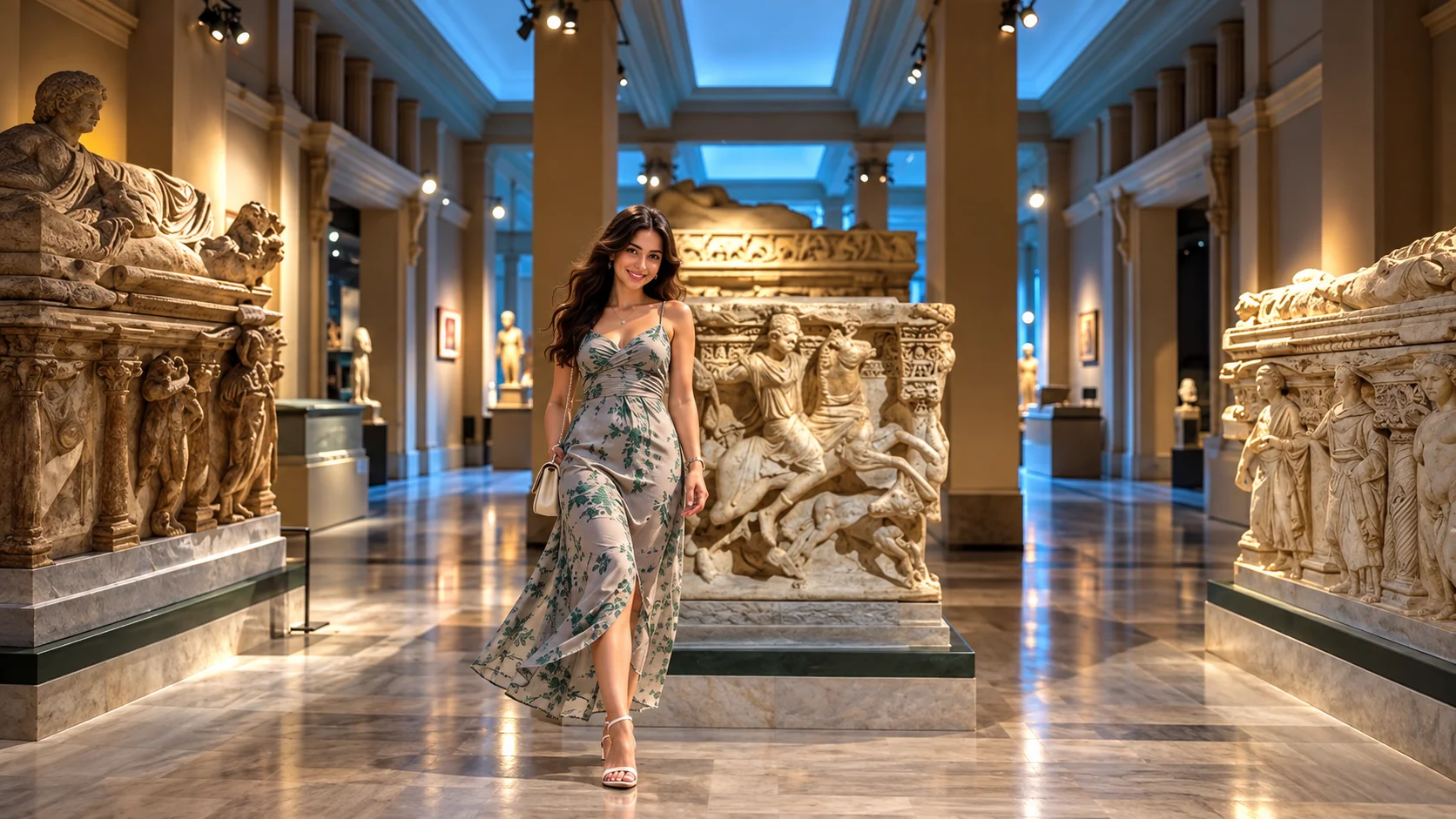
The landmark neoclassical building holds Greek, Roman and Anatolian sculpture, the Sidon sarcophagus galleries and later classical halls. This is where most visitors spend the core of their visit — and where the Alexander Sarcophagus usually anchors the route.
Museum of the Ancient Orient
Housed in the former Academy of Fine Arts building (1883, also by Vallaury), this museum concentrates Mesopotamia, Anatolia’s early states, Egypt and related Near Eastern collections — cuneiform tablets, Hittite reliefs, Babylonian glazed bricks and more.
Tiled Kiosk Museum (Çinili Köşk)
Built in 1472 under Mehmed II, the Tiled Kiosk is the oldest standing building in the complex and an early Ottoman pavilion with a strong ceramic identity. Galleries focus on Seljuk and Ottoman tiles and ceramics (İznik, Kütahya, Çanakkale and related traditions).
2026 update
What is currently open?
Do not rely on older “closed since November 2024” notes for the Ancient Orient and Tiled Kiosk. After a multi-year restoration programme, the Ministry of Culture and Tourism announced that the Museum of the Ancient Orient reopened on 6 July 2026, with reorganised Assyrian, Sumerian, Babylonian, Hittite, Egyptian and related galleries. The same project renewed the Tiled Kiosk (including conservation of tens of thousands of exterior tiles) and refreshed courtyard and slope displays.
The main Archaeology Museum had already returned to visitors after earlier phases (reopening reported in 2021). Gallery access can still shift for conservation — check muze.gov.tr or email istanbularkeoloji@ktb.gov.tr before you go.
Highlights
Must-see artifacts
- Alexander Sarcophagus (Sidon)
- Sarcophagus of the Mourning Women (Sidon)
- Sidamara Sarcophagus (Anatolian Roman)
- Babylonian glazed-brick reliefs (Ishtar Gate / Processional Way material)
- Treaty of Kadesh clay tablets (Hattusa)
- Istanbul #2461 Sumerian love song tablet
- Magnesia statue traditionally identified as Alexander
- Forum of Constantine Gorgoneion in the courtyard
- Roman and classical sculpture galleries
- Tiled Kiosk ceramic collections (when open as scheduled)
Sidon galleries
Sarcophagi halls
Osman Hamdi Bey’s Sidon campaign filled a purpose-built narrative: royal Phoenician tombs rendered in Greek marble language. Walk the sarcophagus galleries as a set — Alexander, Mourning Women, Lycian and related Sidon pieces — before dispersing into Roman and Anatolian halls.
Icon
Alexander Sarcophagus
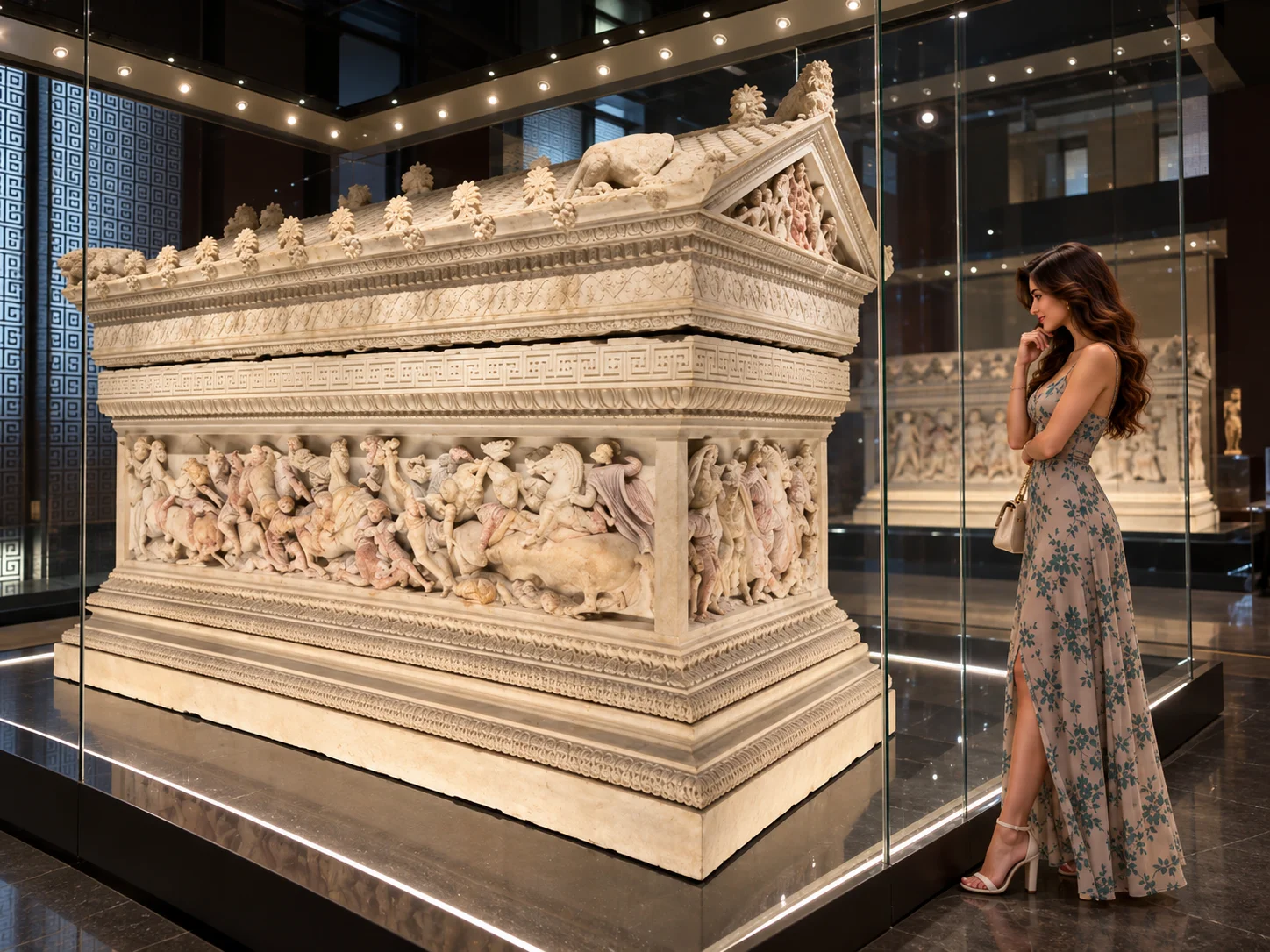
The Alexander Sarcophagus is late fourth-century BCE Pentelic marble from the royal necropolis at Sidon (today’s Lebanon), excavated in 1887–88. Battle and hunt friezes include a figure widely read as Alexander. That is why it carries his name.
It is not Alexander the Great’s coffin. Ancient sources place Alexander’s burial in Egypt. Most scholars link the Istanbul sarcophagus to Abdalonymus, the Sidonian king appointed in Alexander’s orbit; other attributions have been proposed. Treat ownership as an informed hypothesis, not a closed case.
Sidon
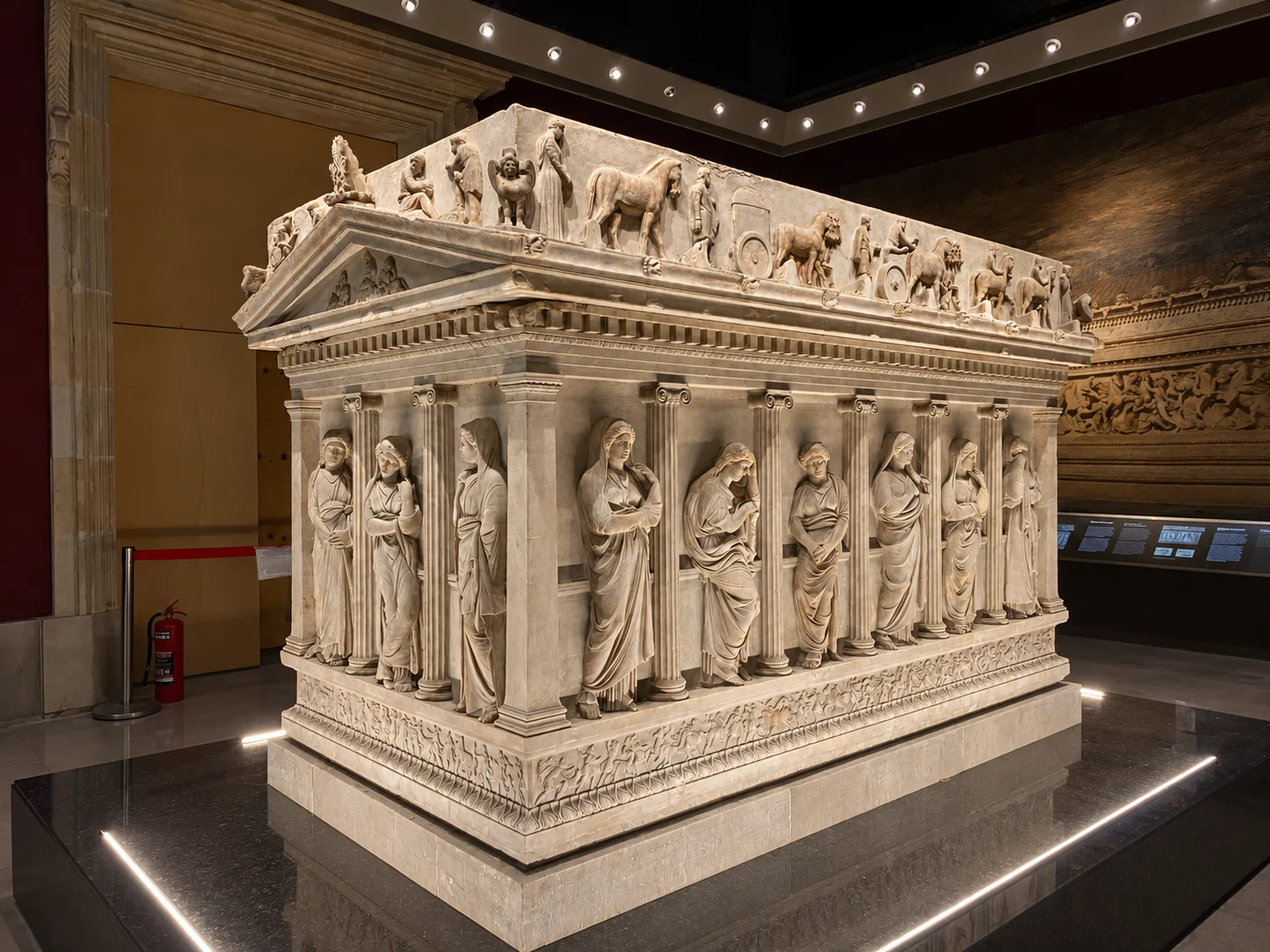
Sarcophagus of the Mourning Women
Also from Sidon’s Ayaa necropolis, this mid-fourth-century BCE sarcophagus takes the form of an Ionic temple. Eighteen mourning women and a funeral cortège give it its popular name (Ağlayan Kadınlar Lahdi / Tombeau des Pleureuses).
Tradition often assigns it to Sidonian king Straton I; the identification remains conventional rather than proven. Together with the Alexander Sarcophagus it inspired elements of Vallaury’s museum façade.
Anatolia
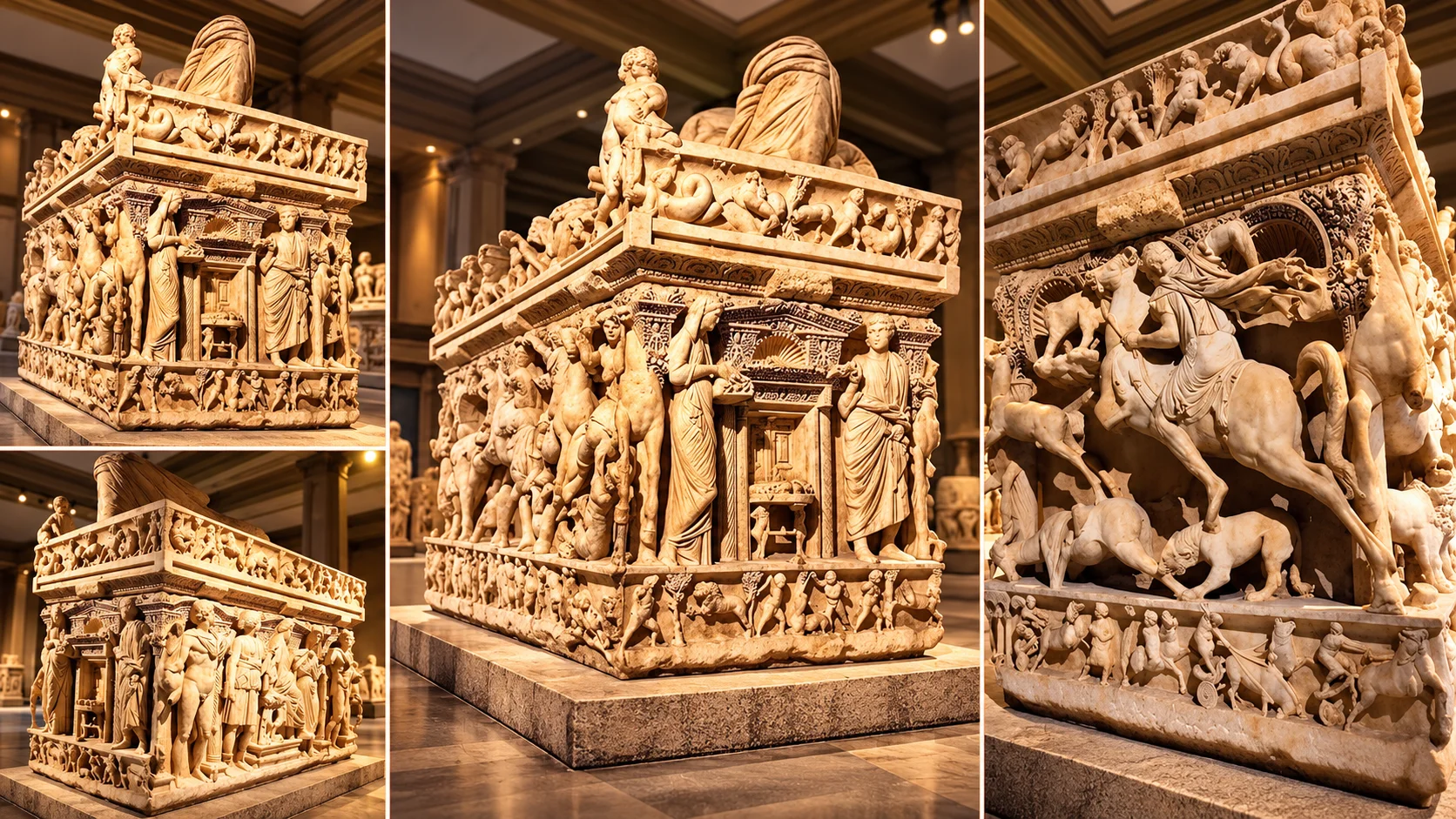
Sidamara Sarcophagus
The Sidamara Sarcophagus is a monumental Roman columnar sarcophagus, generally dated to the third century CE, from ancient Sidamara near Ambar (Karaman region). It is famous for scale — often cited among the heaviest ancient sarcophagi — and for a long conservation story that includes the return of a missing Eros head from London’s V&A.
Babylon
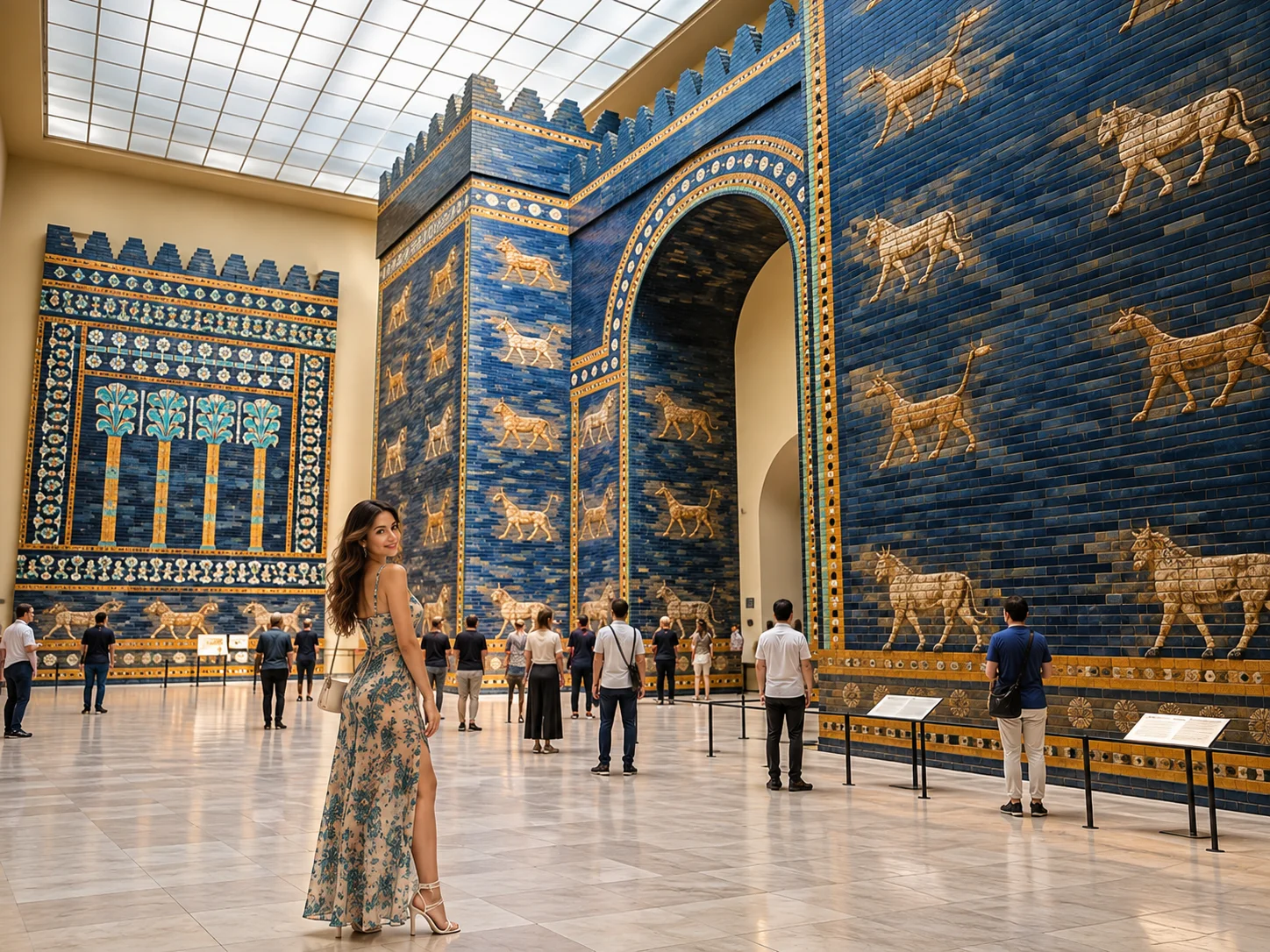
Ishtar Gate & Babylonian glazed bricks
Under Nebuchadnezzar II (sixth century BCE), Babylon’s Ishtar Gate and Processional Way used glazed bricks with lions, bulls (aurochs) and mušḫuššu “dragons.” The Istanbul museums display original glazed-brick relief panels from that programme.
They are not the full reconstructed gate. The large architectural reconstruction visitors often picture stands in Berlin’s Pergamonmuseum. Istanbul’s strength is seeing original animal reliefs up close in the Ancient Orient galleries.
Diplomacy
Treaty of Kadesh tablets
Clay tablets from the Hittite capital Hattusa (Boğazköy) preserve an Akkadian version of the Egyptian–Hittite peace agreement associated with Ramesses II and Hattusili III (thirteenth century BCE). Istanbul’s Ancient Orient Museum displays tablet material from that archive; a large replica of the treaty text is also known from the United Nations Headquarters.
Popular wording calls it “the world’s oldest peace treaty.” Safer museum language: it is one of the earliest surviving international peace treaties — and a rare case where versions from both sides survive in the broader historical record.
Literature
Sumerian love song — Istanbul #2461
Tablet Istanbul #2461 (also known as Ni 2461), excavated at Nippur, carries a Sumerian balbale often titled as a love song of Shu-Sin. Popular writing calls it the world’s oldest love poem; more precise phrasing is that it is among the earliest known written love songs, likely tied to sacred-marriage ritual language around Inanna.
Hellenistic sculpture
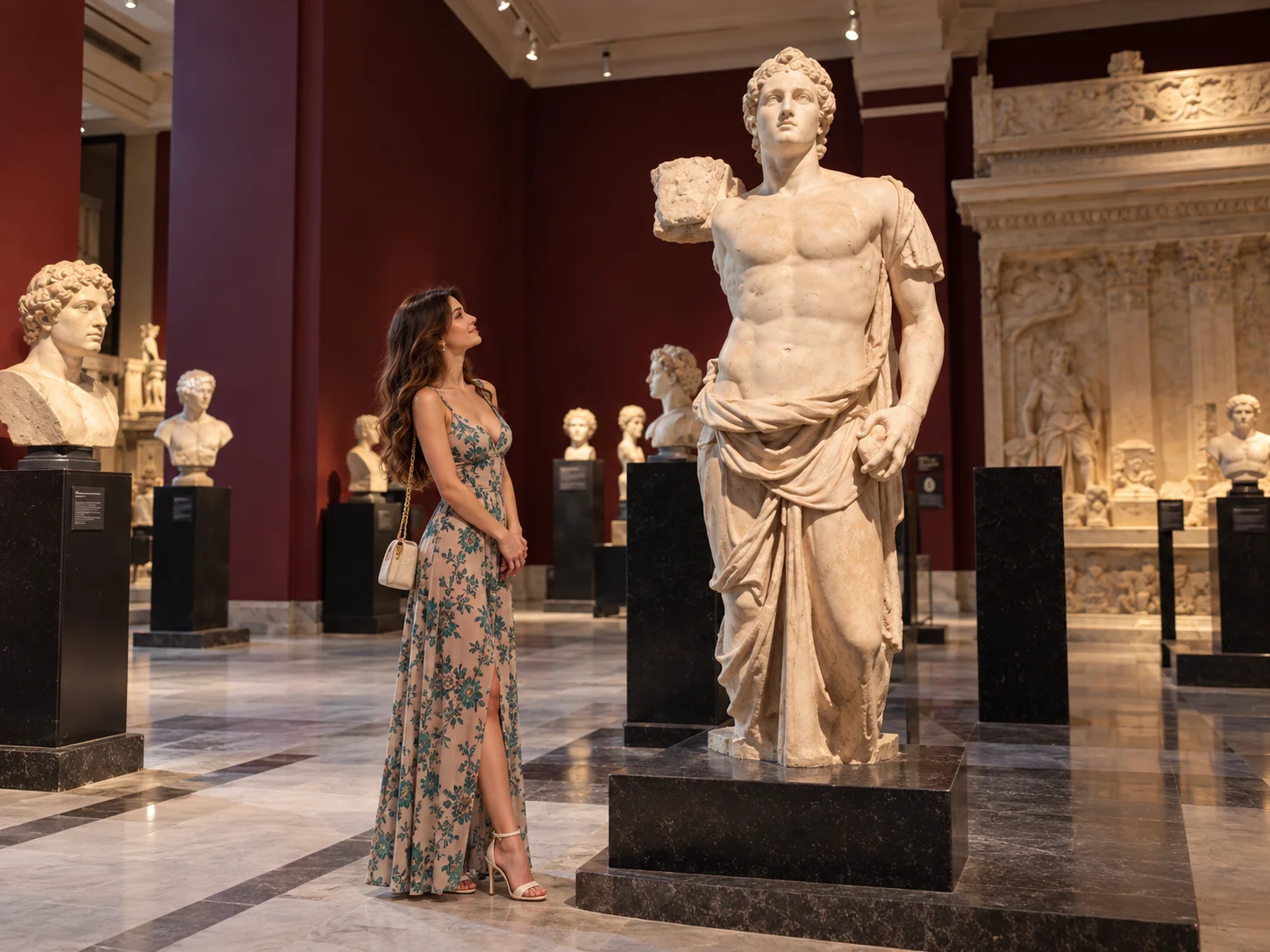
Magnesia statue of Alexander
A mid-third-century BCE marble from Magnesia ad Sipylum (Manisa), signed by Menas of Pergamon, is traditionally identified as Alexander the Great with Apollo-like attributes. Inventory references commonly cite Inv. 709. Identification rests on style and attributes — treat it as the museum’s celebrated Hellenistic Alexander statue from Magnesia, not as a portrait from Alexander’s lifetime.
Courtyard
Medusa / Gorgoneion keystone
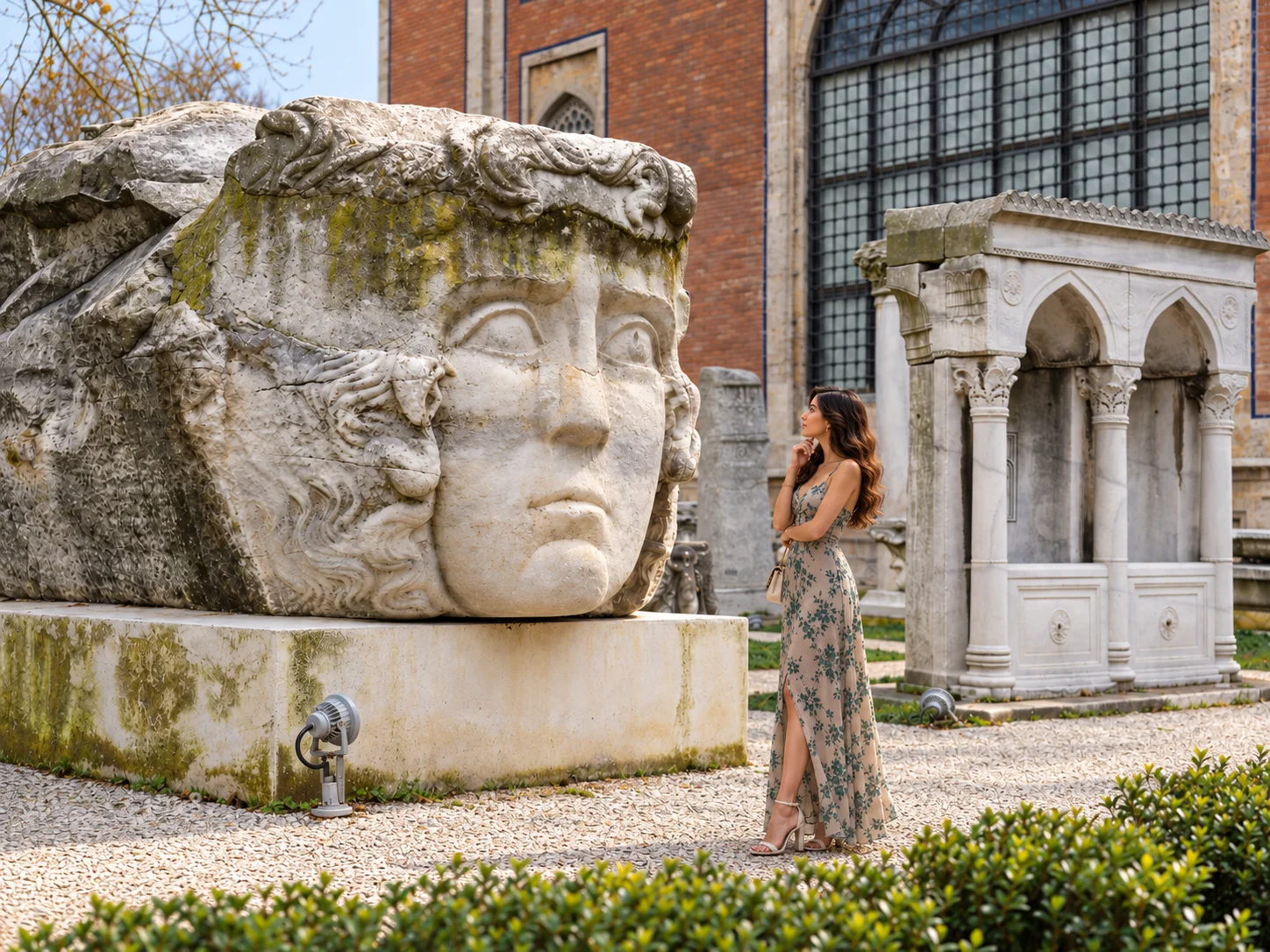
In the museum courtyard stands a colossal double-sided Gorgoneion (Medusa) carved on an arch keystone, found near the Forum of Constantine (Çemberlitaş area) and moved to the museum in the early twentieth century. It is a Constantinople-period architectural sculpture — not the upside-down Medusa column bases in the Basilica Cistern, though some scholars discuss a possible shared forum-arch context.
Classical
Roman galleries & classical sculpture
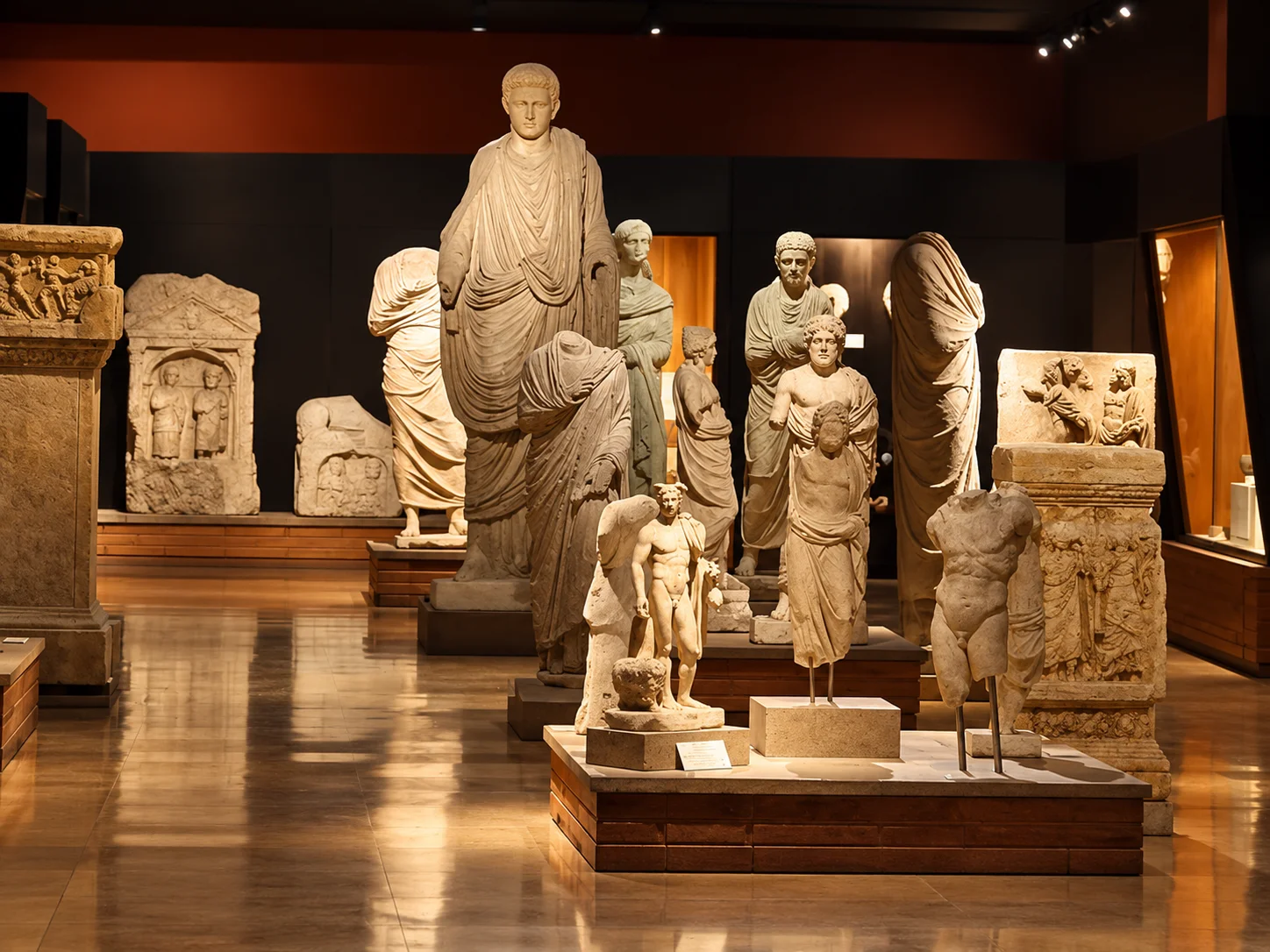
Roman halls gather imperial portraiture, mythological sculpture and finds from Anatolian Roman cities. Expect portrait busts, full statues and architectural sculpture rather than a single “must-name” label. Read gallery captions for current identifications — attributions shift as catalogues update.
Route
Suggested museum route
- Enter via the Gülhane / Osman Hamdi Bey Yokuşu approach; note outdoor sculptures on the slope and in the courtyard.
- Main Archaeology Museum — sarcophagi galleries first (Alexander, Mourning Women, related Sidon pieces).
- Sidamara and other large Roman / Anatolian sarcophagi.
- Greek and Roman sculpture halls.
- Museum of the Ancient Orient — Kadesh tablets, Babylonian bricks, Mesopotamian and Anatolian early states (if open as scheduled).
- Tiled Kiosk ceramics.
- Courtyard Gorgoneion and a short rest before Topkapı or Gülhane Park.
Timing
How long should you spend?
- Highlights only: about 60–90 minutes (Sidon sarcophagi + one Ancient Orient room).
- Standard visit: roughly 2–3 hours across Classical + Ancient Orient.
- Full complex: half a day if you add the Tiled Kiosk, courtyard and careful reading of labels.
Times are planning ranges, not rules. Archaeologists and students routinely stay longer.
Tickets
Tickets & MuseumPass
According to the current DOSİM museum fee list, foreign-visitor admission for the combined Archaeology Museum – Ancient Orient – Tiled Kiosk is €15. Turkish citizens with MüzeKart enter under MüzeKart rules. Fees change — reconfirm on the official DOSİM fee page.
MuseumPass Istanbul (official MuseumPass İstanbul E-Card) is listed at €105 for five consecutive days from first use, covering a published set of participating museums with one entry each. The Archaeological Museums are included; pass holders must enter by the daytime deadline published on the pass page (currently 18:45). The pass is not valid for night-museum slots after 19:00. Always check the live MuseumPass map — do not assume every Historic Peninsula monument shares the same ticket system.
Hours
Opening hours
The muze.gov.tr museum page lists daytime hours as 09:00–18:45 (ticket office 18:45), open every day, plus optional night museum hours 19:00–22:00 (ticket sales until 21:00).
For the 2026 tourism season, Ministry schedules extend Archaeology Museum closing times (for example to 21:00 between 1 May and 1 October 2026, with a 19:00 closing window in April). Seasonal extensions override the baseline listing — verify the date you travel.
Location
Where are the Istanbul Archaeological Museums?
Osman Hamdi Bey Yokuşu / Alemdar Caddesi, Gülhane, Fatih — on the outer flank of the Topkapı / Gülhane belt of the Historic Peninsula. The walk from Gülhane Park and the first courtyards of Topkapı is short; Hagia Sophia and the Sultanahmet core sit a few minutes farther on foot.
Transit
How to get there
- Tram T1: alight at Gülhane, then walk up Osman Hamdi Bey Yokuşu.
- Marmaray: Sirkeci is a practical rail stop for the peninsula edge; continue on foot or connect toward Gülhane.
- On foot: easy combination with Topkapı and Gülhane Park; allow extra time on cobbles and slopes.
- Taxi / private car: possible, but Historic Peninsula traffic and limited drop-off space make tram + walk often calmer for the last stretch.
Practical
Accessibility, photography & families
Accessibility: the main Archaeology Museum is the most workable building for visitors with reduced mobility; historic paths, slopes and older structures can still be uneven. Contact the museum if you need specific access details.
Photography: personal photography is generally allowed without flash; tripods and heavy video setups are typically restricted. Obey gallery signage.
Families: strong visual storytelling (sarcophagi, colourful Babylonian bricks, courtyard Medusa). Stroller comfort varies by building and paving — plan trousers for cobbles.
Nearby
What to visit nearby
- Topkapı Palace
- Gülhane Park
- Hagia Sophia
- Blue Mosque (Sultanahmet Mosque)
- Basilica Cistern
- Hagia Irene (separate ticket / access rules)
Istanbul Archaeological Museums + Topkapı Palace
They sit on the same hillside system and combine beautifully on a map. In real time, each deserves hours. If you try both in one day, start early, pick one “deep” visit and one “highlights” visit, and protect a meal break — otherwise the afternoon becomes a blur of queues and fatigue.
Before you go
What to know before you visit
- Confirm open galleries and hours on the official museum page the morning you visit.
- Wear shoes suited to cobbles and indoor marble.
- The collection is large — decide your highlight list in advance.
- MuseumPass helps multi-museum itineraries; single-ticket visitors can buy on site or via official channels.
- Night-museum hours are a separate ticket regime from daytime MuseumPass entry.
Transport
Private chauffeur for a Historic Peninsula day
Cab Istanbul is an independent transfer and chauffeur provider — not the museum’s concierge and not a hotel desk. Travellers who want a wider peninsula circuit (hotel → Gülhane museums → other stops) can book a car with driver separately. Airport arrivals are usually hotel-first; use an Istanbul Airport transfer when you need door-to-door from IST or SAW.
Keep transport secondary to the galleries — book only the legs you need.
Questions
Istanbul Archaeological Museums FAQs
What are the Istanbul Archaeological Museums?
A Ministry of Culture and Tourism complex of three museums in Gülhane: the Archaeology Museum, the Museum of the Ancient Orient and the Tiled Kiosk Museum.
How many museums are in the complex?
Three main units under one institutional umbrella and one combined ticket.
Is the Museum of the Ancient Orient open?
It reopened on 6 July 2026 after restoration. Always reconfirm gallery status on muze.gov.tr before visiting.
Is the Tiled Kiosk Museum open?
Ministry announcements describe completed Tiled Kiosk restoration and renewed ceramic displays in 2026. Verify the day you visit.
What are the most important artifacts?
Alexander Sarcophagus, Mourning Women, Sidamara, Babylonian glazed reliefs, Treaty of Kadesh tablets and the Magnesia Alexander statue are frequent highlights.
Is the Alexander Sarcophagus really Alexander the Great’s tomb?
No. It is named for Alexander depicted in the reliefs; it most likely belonged to a Sidonian royal burial, often linked to Abdalonymus.
Where was the Alexander Sarcophagus discovered?
In the royal necropolis at Sidon (Lebanon), during Osman Hamdi Bey’s 1887–88 excavations.
Can you see Ishtar Gate artifacts in Istanbul?
Yes — original glazed-brick animal reliefs. The large reconstructed gate is in Berlin.
Is the Treaty of Kadesh displayed here?
Hittite clay versions from Hattusa are shown in the Ancient Orient Museum.
How long should I spend at the museum?
Plan 2–3 hours for a solid visit; half a day for the full complex.
What are the opening hours?
Baseline listing: 09:00–18:45 daily, with seasonal extensions and optional night hours — confirm officially.
How much are tickets?
DOSİM currently lists €15 for foreign visitors to the combined complex; recheck before travel.
Is MuseumPass Istanbul valid?
Yes for daytime entry under published MuseumPass rules; not for night-museum entry after 19:00.
Are children free?
Free/discount categories change. Check the current DOSİM and muze.gov.tr ticket notes rather than older blog numbers.
Is there an audio guide?
Audio guidance is typically offered via official museum app/systems; confirm languages and fees on site.
Can I take photographs?
Personal photos are generally allowed without flash; follow room rules and avoid tripods unless permitted.
Is the museum wheelchair accessible?
Partially — the main building is the best option; contact the museum about other structures and outdoor paths.
How do I get there by tram?
Take the T1 tram to Gülhane and walk Osman Hamdi Bey Yokuşu.
Is it near Topkapı Palace?
Yes — on the same Gülhane / Topkapı hillside system.
Can I visit Topkapı and the Archaeological Museums on the same day?
Yes, but both are deep visits. Start early and decide which site gets the longer slot.
What other attractions are nearby?
Gülhane Park, Hagia Sophia, the Blue Mosque and the Basilica Cistern are the usual Historic Peninsula pairings.