
Topkapı Palace is the beating heart of Ottoman Istanbul — a 15th-century imperial residence wrapped around four courtyards, lavish pavilions, the legendary Harem and one of the world’s most important collections of sacred relics. This guide walks you through the must-see rooms, the Harem and Hagia Irene ticket logic, the best time to visit, how to get there by tram or private transfer, and how to plan a smooth Sultanahmet day around it.
Quick visitor summary
Why Topkapı Palace matters
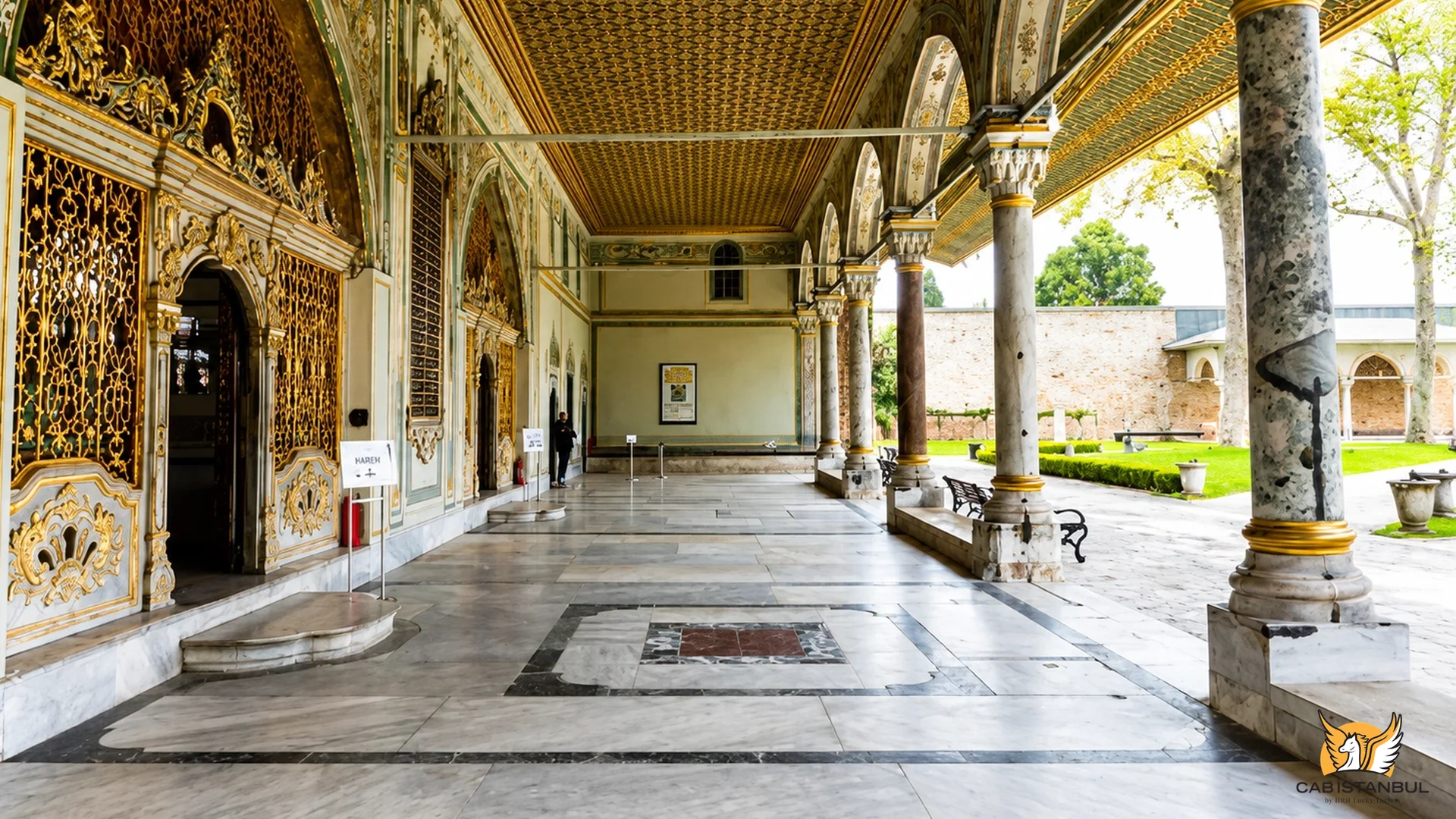
Topkapı Palace (Topkapı Sarayı) was built between 1460 and 1478 by Sultan Mehmed II, just after the Ottoman conquest of Constantinople. For nearly 400 years it was the official residence and administrative center of the Ottoman sultans, until Dolmabahçe Palace took over imperial life in the mid-19th century. After the founding of the Republic, Mustafa Kemal Atatürk turned it into a museum in 1924.
Today it is part of the Historic Areas of Istanbul, inscribed on the UNESCO World Heritage list since 1985. Walking through its four courtyards is the closest you can get to actually stepping inside the Ottoman state: the council where ministers ruled, the kitchens that fed thousands, the chambers where treasure and the sacred relics of Islam were kept, and the private world of the Harem.
What to see inside Topkapı Palace
The palace is organized around four courtyards, each more private than the last. A good strategy is to enter, head straight for the Harem or the Treasury (whichever has the shorter line) and then work outward through the rest of the rooms.
First Courtyard — the public outer garden
Once a service yard for janissaries and palace staff, the First Courtyard now contains Hagia Irene, one of the oldest Byzantine churches in the city. It is not always open as part of the ticketed circuit, so check whether it is included on the day of your visit.
Second Courtyard — administration and kitchens
This is where the palace becomes a museum. Two highlights dominate:
- Imperial Council (Divan-ı Hümayun): The chamber where the Grand Vizier and ministers ran the empire. Look up — the lattice window above the seat is where the sultan secretly listened in.
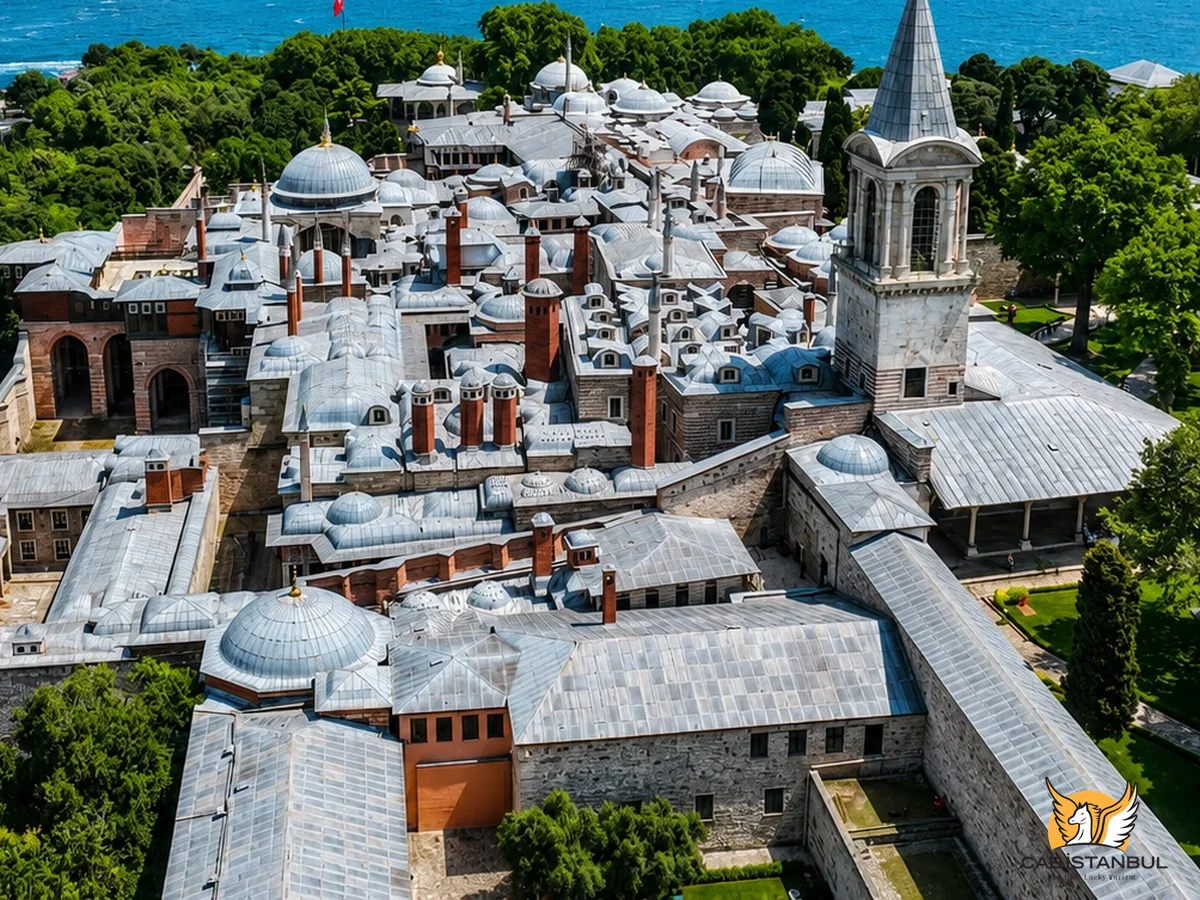
- Palace Kitchens: Ten domed chimneys mark a vast complex that once fed up to 4,000 people. Inside, you will find one of the world’s most important collections of Chinese porcelain, Ottoman silverware and glassware.
Third Courtyard — the inner palace
Pass through the Gate of Felicity and you enter the sultan’s private world. Around this courtyard you will find the Audience Chamber, the Library of Ahmed III, the Imperial Treasury with the Topkapı Dagger and Spoonmaker’s Diamond, and the Privy Chamber housing the Sacred Relics.
Fourth Courtyard — gardens and Bosphorus views
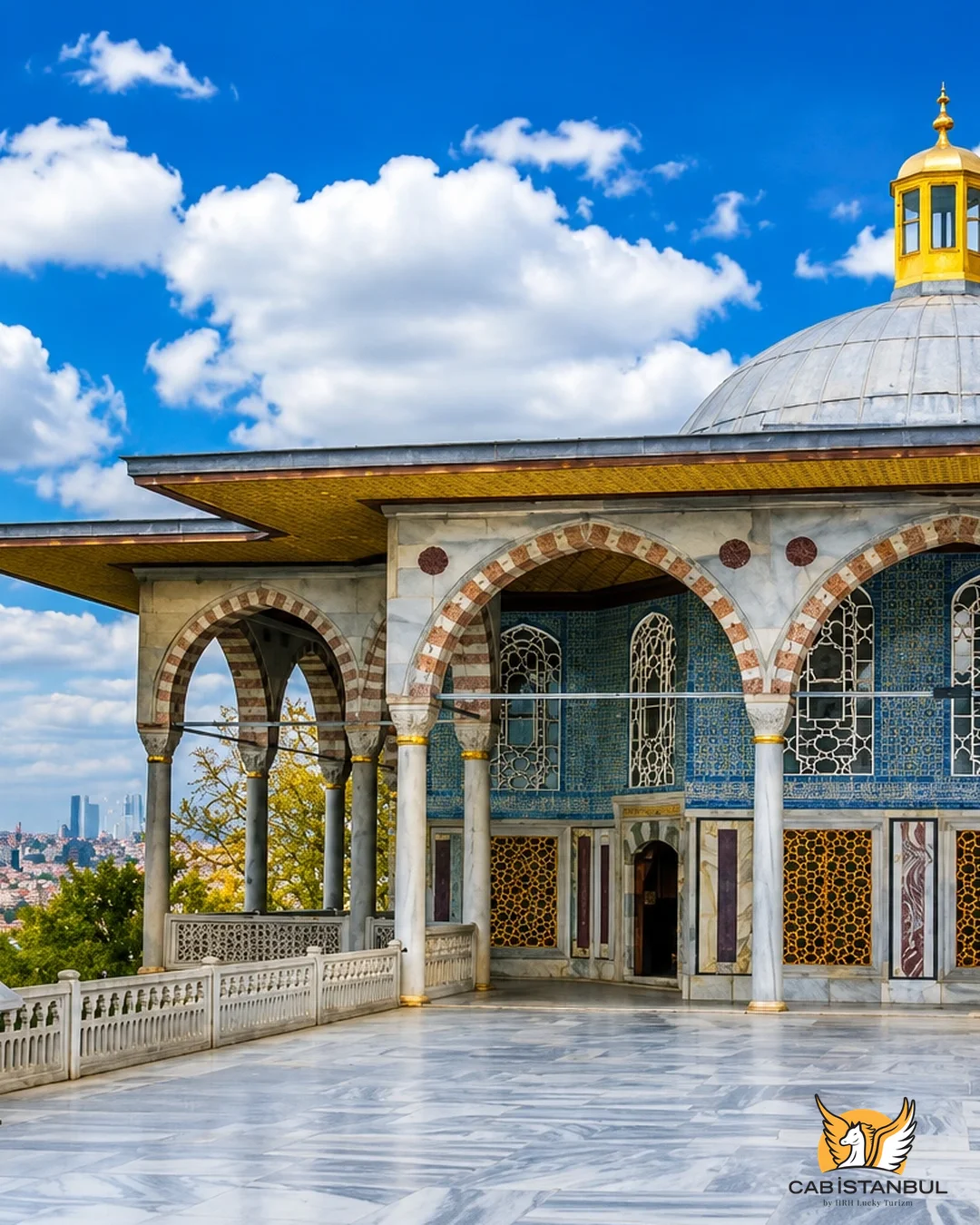
The most peaceful part of the palace, set on a high terrace looking over the Bosphorus, Golden Horn and Sea of Marmara. Don’t miss the Baghdad Pavilion and Revan Kiosk, both built to celebrate Ottoman military campaigns, and the İftariye Bower — a small gilded canopy with one of the best skyline views in Istanbul.
Topkapı Palace Harem guide
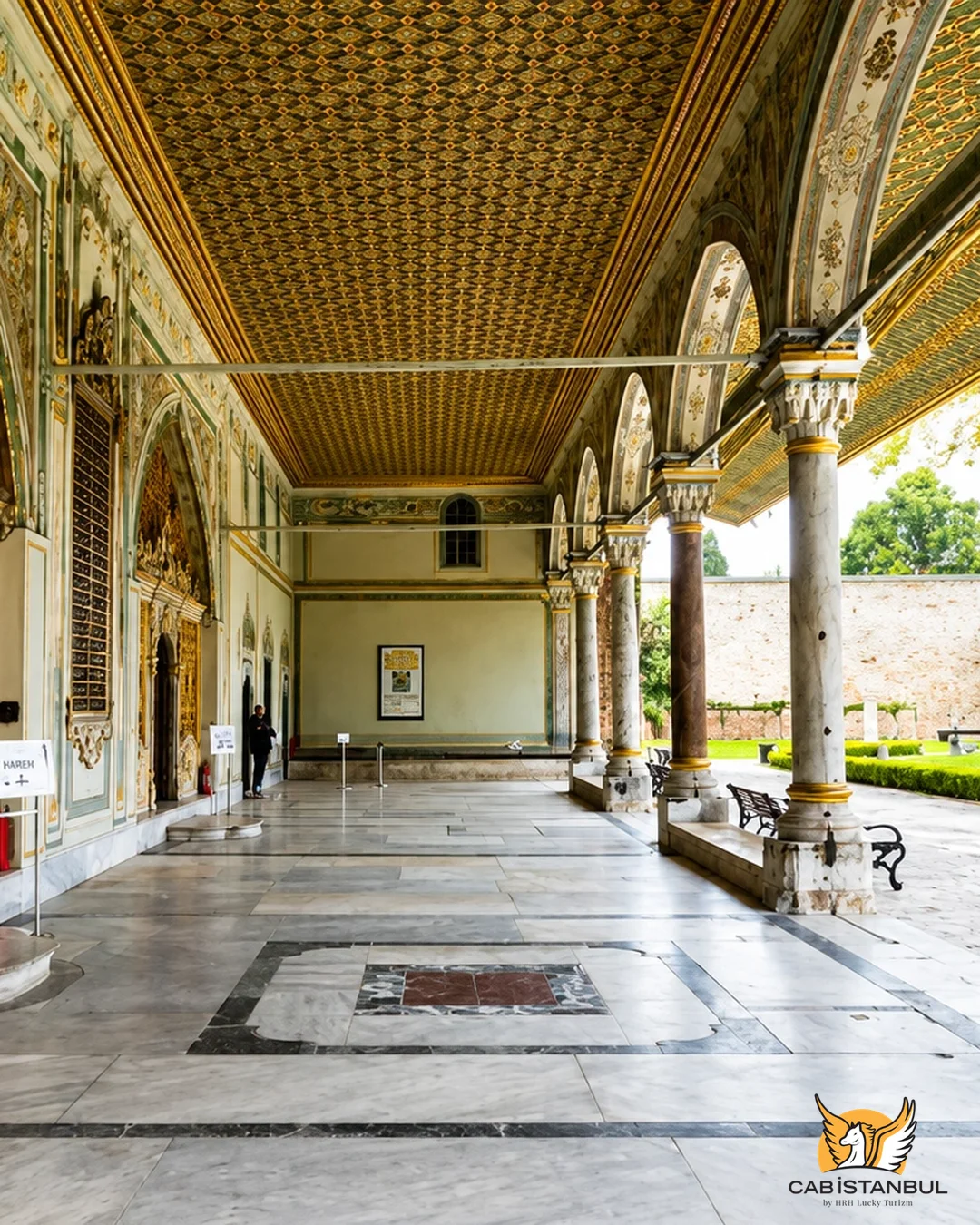
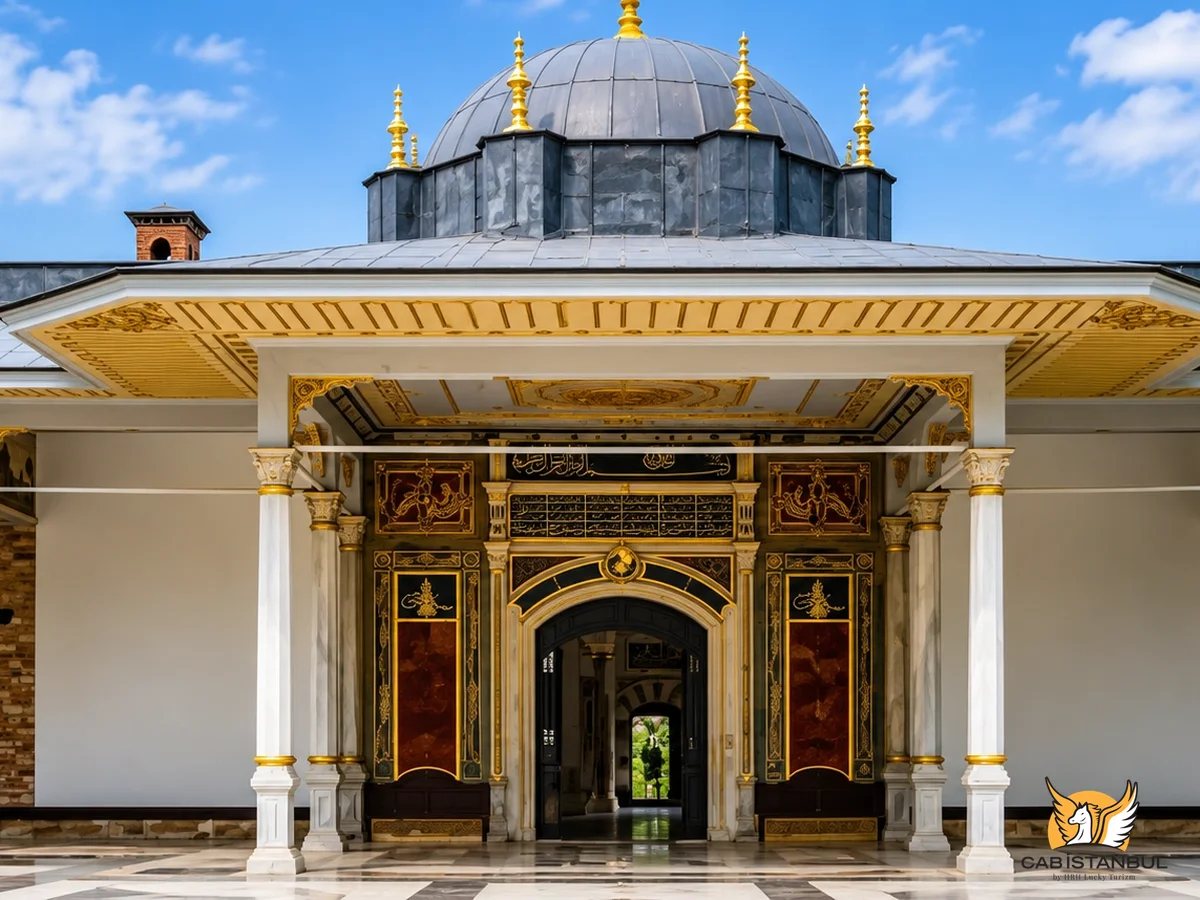
The Harem was the private home of the sultan, his mother (Valide Sultan), his wives, concubines and children. Far from being only a romantic image, it was also a political and educational institution — many sultans were raised, taught and prepared for rule here.
You will walk through more than a dozen rooms across the route, including the Courtyard of the Black Eunuchs, the Apartments of the Valide Sultan, the Imperial Hall and the Privy Chamber of Murad III, decorated with some of the finest İznik tiles ever produced.
The Harem is included in the standard combined ticket alongside Hagia Irene. Visit early — its narrow corridors get crowded fast and the visitor route can be adjusted when individual rooms are under restoration.
Sacred Relics and the Imperial Treasury
Few rooms in Istanbul carry the weight of the Chamber of the Sacred Relics in the Third Courtyard. Brought here after Sultan Selim I’s conquest of Egypt in 1517, the collection includes items revered as belonging to the Prophet Muhammad, his companions and earlier prophets. For Muslim visitors, this is a place of quiet devotion — a Qur’an reciter has traditionally read continuously here. Please keep your voice low, dress modestly and follow staff guidance on photography.
The Imperial Treasury displays the dynastic wealth of the Ottoman court: jeweled thrones, ceremonial weapons, gold reliquaries, the iconic Topkapı Dagger and the Spoonmaker’s Diamond. After a long restoration, large sections of the Treasury and the historic Privy Chamber reopened in recent years — but specific rooms can still rotate in and out of the visitor route for conservation. If there is one room you absolutely want to see, check its status before booking.
Tickets, opening hours and official rules
The current combined ticket covers the Palace, Harem and Hagia Irene as a single experience — separate Harem-only or Hagia Irene-only entries are no longer the default. Prices, language options and audio-guide details can change throughout the year.
- Closed days: Every Tuesday, plus the first day of Ramadan Bayram.
- Typical opening hours: 09:00 in the morning until the late afternoon, with a longer summer schedule and a shorter winter one. The ticket office closes earlier than the palace itself — verify the exact times for the season you are visiting.
- Last admission: The ticket office and last entry are well before the final closing time, so plan to arrive at least a few hours before closing.
- ID: A valid passport is generally required at entry for foreign visitors.
- Free entry: Children under 6 enter free; discounted entry is available for students with valid ID under the categories defined by the museum.
- Photography: Photos are usually permitted in courtyards and many display areas, but not inside certain museum halls (especially Sacred Relics). Watch for signage.
- Bags and luggage: Large suitcases are not allowed inside; pack light and only carry what you need for the visit.
How to get to Topkapı Palace
Topkapı Palace sits on Seraglio Point in Sultanahmet, the easiest tourist district to reach in Istanbul. You have several good options depending on where you are starting from.
By tram (the simple option)
Take the T1 tram line (Kabataş–Bağcılar) and step off at one of two stops:
- Gülhane — a short walk uphill through Gülhane Park brings you to the side entrance of the palace.
- Sultanahmet — slightly longer (about 8–10 minutes on foot), but you pass Hagia Sophia and the Imperial Gate along the way.
From Istanbul Airport (IST)
Istanbul Airport on the European side is roughly 45–50 km from Sultanahmet. With luggage, jet lag and unfamiliar streets, most travellers find a door-to-door private transfer the easiest option. You can pre-book an Istanbul Airport transfer with Cab Istanbul and be dropped off directly next to your Sultanahmet hotel.
From Sabiha Gökçen Airport (SAW)
Sabiha Gökçen on the Asian side is around 50 km away, with a long bridge crossing in between. Traffic can swing the journey from one hour to well over two. A pre-booked Sabiha Gökçen transfer with a driver who knows the Sultanahmet one-way streets is the calmest way to start your trip.
From Taksim, Beşiktaş or Asian-side hotels
From central Taksim or Beşiktaş you can combine the funicular and the T1 tram, but with jetlagged travellers or a family it’s often faster (and less hot in summer) to book a one-off ride with a car with driver in Istanbul. Coming from the Asian side, your driver can choose between the Bosphorus Bridge and the tunnel depending on real-time traffic.
From cruise ports (Galataport and beyond)
If you arrive at Galataport in Karaköy, Sultanahmet is just a short ride across the Galata Bridge, or about a 25–30 minute walk if you want to see the city on foot. Cruise passengers with limited shore time often combine Topkapı with Hagia Sophia and the Blue Mosque in a single half-day with a private driver.
Best itinerary around Sultanahmet
Topkapı works best when you combine it with the other big Sultanahmet landmarks. They are all within a 5–10 minute walk of each other, which is why this district is the single most efficient sightseeing zone in Istanbul.
Half-day: Topkapı Palace + Hagia Sophia
Start at Topkapı right at opening, give yourself around three hours, then walk across to Hagia Sophia for the late morning. Have lunch in a side street between Sultanahmet and Cağaloğlu.
Full day classic: Topkapı + Blue Mosque + Basilica Cistern
After Topkapı, walk down to the Blue Mosque and then the Basilica Cistern. End the afternoon with tea in a rooftop café looking back at the Hagia Sophia–Blue Mosque skyline.
Slow culture day: Topkapı + Archaeology Museums + Gülhane Park
If you love museums, pair Topkapı with the Istanbul Archaeology Museums (next door inside the complex) and a long walk through Gülhane Park. This itinerary is the calmest one in summer because Gülhane has plenty of shade.
Family-friendly version
Children enjoy the courtyards, the Palace Kitchens (huge chimneys, dazzling porcelain) and the Bosphorus terraces more than long Harem corridors. Keep visits to around 2 hours, build in a Gülhane Park break, and avoid mid-afternoon when crowds peak.
Premium private driver version
If you want to combine Topkapı with sights beyond Sultanahmet — Dolmabahçe Palace, the Spice Bazaar, a Bosphorus viewpoint or even Üsküdar on the Asian side — a private Istanbul tour with a driver lets you skip the public transport stitching and reach more in one day.
Practical visitor tips
Who should visit Topkapı Palace?
Plan a smoother Topkapı visit with Cab Istanbul

Topkapı Palace is one of those sights that rewards good planning. A relaxed arrival, an early entrance and a driver waiting outside afterwards turns it from a stressful sightseeing checkbox into a calm, premium experience.
Cab Istanbul travel can help you with:
- Istanbul Airport (IST) transfer straight to your Sultanahmet hotel.
- Sabiha Gökçen (SAW) transfer with a driver who knows the bridge and tunnel options.
- Car with driver in Istanbul for a flexible half-day or full-day in Sultanahmet.
- Chauffeur service for business travellers who want a quiet morning at the palace before meetings.
- Private Istanbul tour combining Topkapı with Hagia Sophia, the Blue Mosque and the Bosphorus.
- Limousine service for VIP travellers and special occasions.

A typical Cab Istanbul Sultanahmet day looks like this: pickup from your hotel, drop-off at the Topkapı Palace Imperial Gate, a few free hours inside, then collection at the Gülhane exit for a relaxed loop through Hagia Sophia, the Blue Mosque and the Basilica Cistern — all without worrying about parking, traffic or maps.
If your day extends to a sunset Bosphorus drive or a quick stop at the Spice Bazaar, the same driver simply continues with you. It’s the easiest way to combine the major historic sites without losing energy between them.
Topkapı Palace FAQ
Is Topkapı Palace worth visiting?
Yes. Topkapı is the single most important Ottoman site in Istanbul. It tells the story of nearly 400 years of imperial rule, houses one of the world’s most significant collections of sacred relics and offers some of the best Bosphorus views in the city.
How long do you need at Topkapı Palace?
Plan for at least 2.5 to 3 hours if you want to see the main courtyards, the Treasury, the Sacred Relics and the Bosphorus terraces. With the Harem, allow closer to 3.5–4 hours, especially during peak season.
What is the best time to visit Topkapı Palace?
Arrive at opening (around 09:00) on a Wednesday, Thursday or Friday, or come back after 14:00 when tour groups start to thin out. Avoid Tuesdays — the palace is closed.
Is the Harem included in the ticket?
Yes. The current standard combined ticket covers the Palace, Harem and Hagia Irene together. Check the official museum site before your visit, as ticket structures and pricing can change.
Is Hagia Irene included?
Hagia Irene, the Byzantine church in the First Courtyard, is included in the combined ticket. Access can be restricted occasionally for events or conservation, so confirm on the day of your visit.
Which tram stop is closest to Topkapı Palace?
The closest stop is Gülhane on the T1 tram line, with a short walk uphill through Gülhane Park. The next stop, Sultanahmet, is about 8–10 minutes on foot via Hagia Sophia.
Can I visit Topkapı Palace and Hagia Sophia in one day?
Easily. Hagia Sophia is a 3–5 minute walk from the Topkapı entrance. A classic plan is Topkapı in the morning, a relaxed lunch in Sultanahmet, then Hagia Sophia and the Basilica Cistern in the afternoon.
Is Topkapı Palace good for families?
For school-age children and teenagers, yes. The Palace Kitchens, Treasury and Fourth Courtyard tend to hold their attention. Younger toddlers may find the Harem corridors and long lines tiring — keep the visit shorter and build in a Gülhane Park break.
Are guided tours worth it?
Topkapı’s history is dense, and a knowledgeable guide brings it to life. If you prefer to go independently, the official audio guide (offered with most combined tickets via QR) is a strong substitute.
Can I bring luggage inside?
Large suitcases and oversized bags are not permitted. If you have just arrived in the city, it is far easier to drop off luggage at your hotel first — many travellers use a private transfer for this and then continue to Topkapı.
Is Topkapı Palace accessible for visitors with disabilities?
The palace has done significant work on accessibility, but it remains a historic site with cobbled paths, steps and uneven floors. Contact the museum in advance if you need specific routes or assistance, and consider a private driver for door-to-gate transport.
How do I get from Istanbul Airport (IST) to Topkapı Palace?
The simplest option is a pre-booked Istanbul Airport transfer from IST directly to your Sultanahmet hotel, about 45–50 km away. Public transport via the M11 metro and onward connections is possible but slower with luggage.
How do I get from Sabiha Gökçen Airport (SAW) to Topkapı Palace?
Sabiha Gökçen is on the Asian side, so traffic on the bridges can vary a lot. A pre-booked SAW transfer is the most predictable option, especially for early morning or late evening flights.
Can Cab Istanbul arrange private transport to Sultanahmet?
Yes. Cab Istanbul offers airport transfers, hotel pickups, full-day car with driver hire and private Istanbul tours that include Topkapı and the rest of Sultanahmet. Reach out via the contact page to plan your day.