
Istanbul · the strait · 2026
The Bosphorus is the water between Istanbul’s European and Asian shores, running from the Black Sea down to the Sea of Marmara. It is about 30 kilometres of shipping lane, not a single viewpoint and not a single cruise product. Palaces, a working mosque square, two very different fortresses, a lighthouse village and a fishing harbour sit on opposite banks, and most of them reward time on land.
Older guides fold weddings, proposals, henna shows and a fixed 19:30–midnight dinner clock into one “Bosphorus night.” Those are separate commercial boats, when they run at all. This page separates the public ferry, the short sightseeing boat, the evening cruise and the road, then walks the shores from Beşiktaş north to the Black Sea mouth. Ticket prices, phone numbers and exact opening hours are left off: they move, and a copied clock is worse than a short check on the day.
Cab Istanbul publishes a Bosphorus cruise and runs chauffeur transfers. Read that cruise page for what is included. This guide does not add belly-dance packages, wedding charters or a guaranteed table. A driver is not a shore guide.
Choose the format first
How to see the Istanbul Bosphorus
Pick the format before you pick a palace. A long public ferry and a two-hour tourist boat both use the same water and show different amounts of it. A car is better once you want to go inside a museum. Combining all three in one afternoon is how people miss the last return boat.
| Way | What you actually see | Best for | Watch-out |
|---|---|---|---|
| Long public ferry | Much of the strait, often turning at Anadolu Kavağı | One ride that explains the length | Check the day’s last return before you linger in the village |
| Short tourist boat | Bridges, palaces and Ortaköy from the water | A first look between other plans | You will not reach the Black Sea villages |
| Sunset or dinner cruise | Lights, bridges, a meal on a private boat | An evening, not a museum day | Operators differ. Do not trust a copied nightly clock |
| Shore by car | Interiors: palaces, museums, fortresses, parks | Anything with a ticket and a queue | Weekend traffic between Ortaköy and Sarıyer is slow |
The three road bridges — 15 July Martyrs, Fatih Sultan Mehmet and Yavuz Sultan Selim — are crossings, not promenades. Ferries still do the job the bridges cannot: they show both shores at once. The clip below is a general look at the water, not a timetable and not a list of which museums are open.
Atmosphere and orientation only. Confirm boats, tickets and museum days separately.
A workable first day
If you have one daylight window, stay on the European shore from Dolmabahçe through Ortaköy and stop at one interior — the palace or Rumeli Fortress, not both plus a northern village. If you have a full day and you like boats, take the long ferry toward Anadolu Kavağı and leave the palace for another morning. The Asian palace, Beylerbeyi, pairs more naturally with Üsküdar and Maiden’s Tower than with a Black Sea village on the opposite bank.
European shore · Beşiktaş to Sarıyer
Palaces, Ortaköy and the fortress
The southern European shore is the dense part: a palace museum, a mosque square, a palace that is now a hotel, then quieter waterfront neighbourhoods before the medieval walls at Rumelihisarı. Walking the promenade is pleasant. Walking it as a way to “do” every interior is not.
Dolmabahçe Palace
Dolmabahçe is the large palace museum on the Beşiktaş waterfront, built when the Ottoman court wanted a European-facing ceremonial house on the strait. Chandeliers and state rooms are the point of going inside; the waterfront façade is what you see from a boat if you do not. It usually closes one weekday. Use the palace’s own notice for that day and for which route (Selamlık or Harem) is open. The Dolmabahçe page covers the visit in more detail than this shore overview.

Ortaköy Mosque and the square
Ortaköy is a public square under the first bridge, with the baroque Ortaköy Mosque on the water and a small grid of cafes and stalls behind it. It is a working neighbourhood, not a ticketed complex. Go for the mosque’s setting and a short walk, not for a staged “night market” that older blogs still describe as if it were a separate attraction. Evenings are busier than mornings. The Ortaköy page is the closer look.
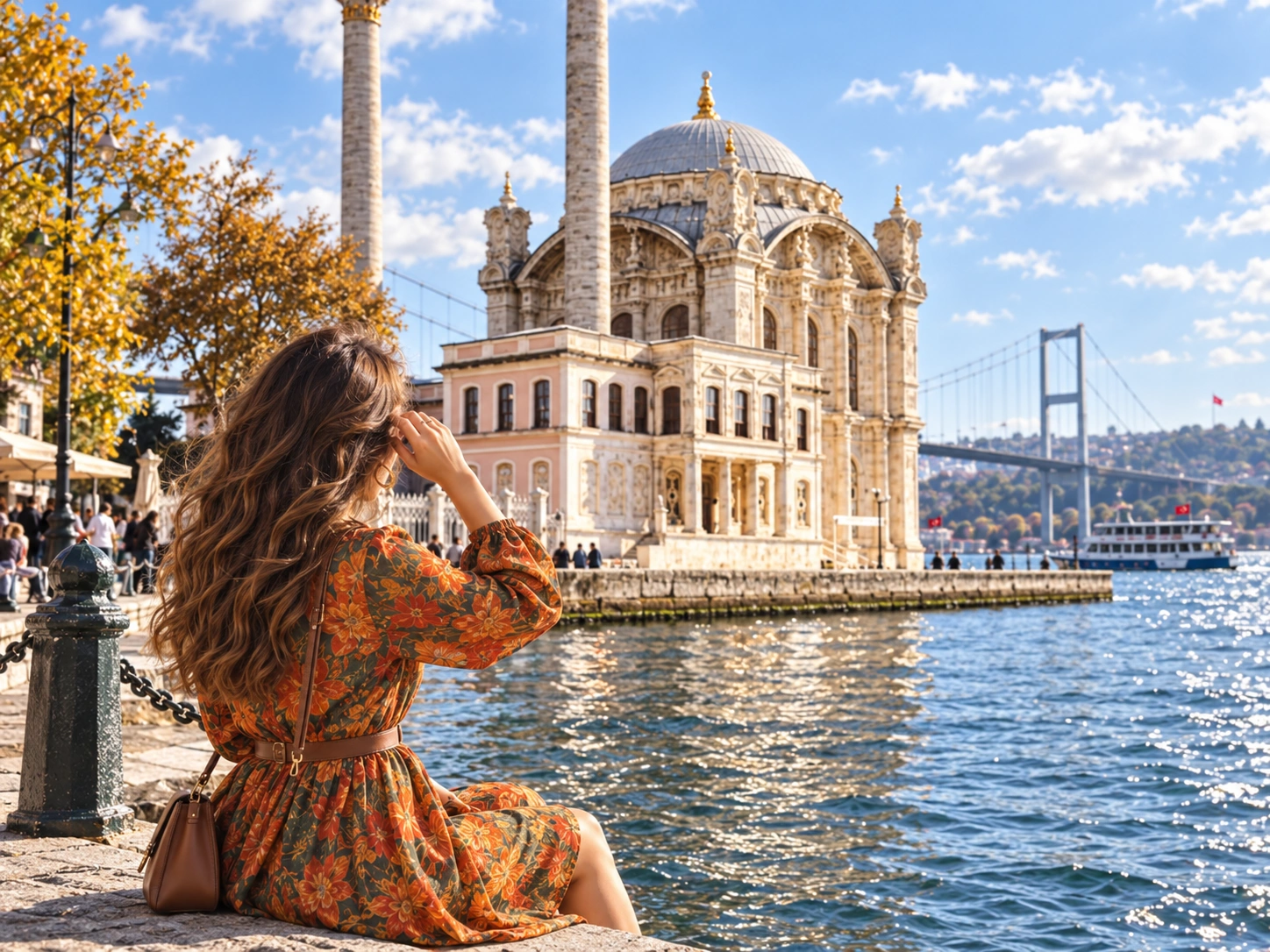
From the square you can see the strait narrow and the Asian shore come close. That view is free. It is also a poor place to start a drive north at sunset on a weekend, because the coast road stacks up. If dinner is the plan, use the restaurant guide and treat Ortaköy as one waterfront option among many, not as the only table in the city.
Square atmosphere. Not a list of which cafes are open tonight.
Çırağan Palace
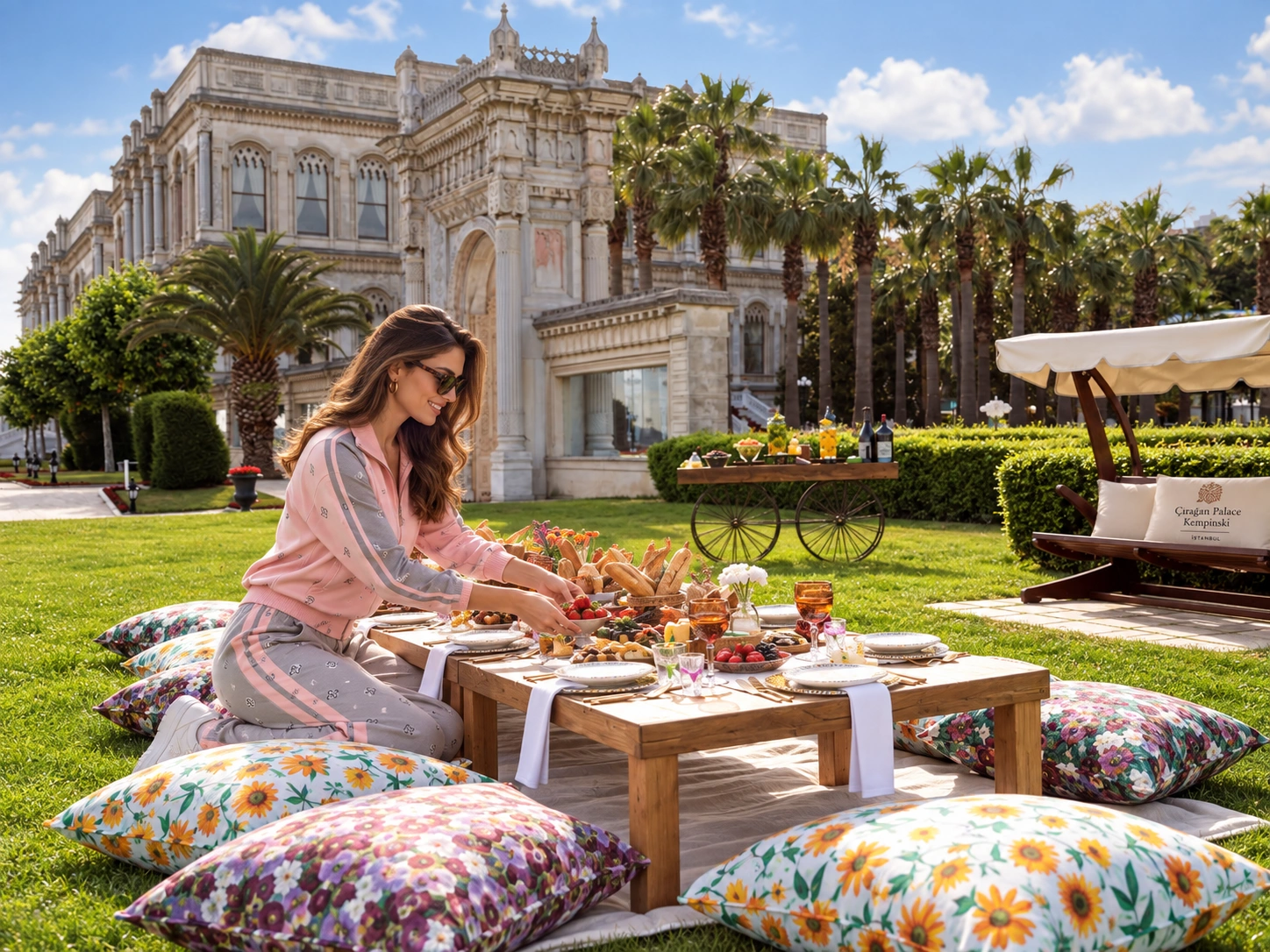
Çırağan is the long waterside palace just north of Ortaköy. It is a Kempinski hotel, not a public palace museum in the Dolmabahçe sense. Guests use the historic rooms; everyone else gets the façade from the promenade or from the boat. Do not arrive expecting a state-room ticket. The Çırağan hotel page is the right place if you are staying, not touring.
Yıldız Park
Yıldız Park climbs the hill behind Çırağan. It is a large public park with Ottoman pavilions in the trees, not a Bosphorus pier. Use it when you want shade and a break from the coast road. It does not replace Emirgan if your reason for going north is the tulip slopes or the Sabancı Museum.
Kuruçeşme and Galatasaray Island
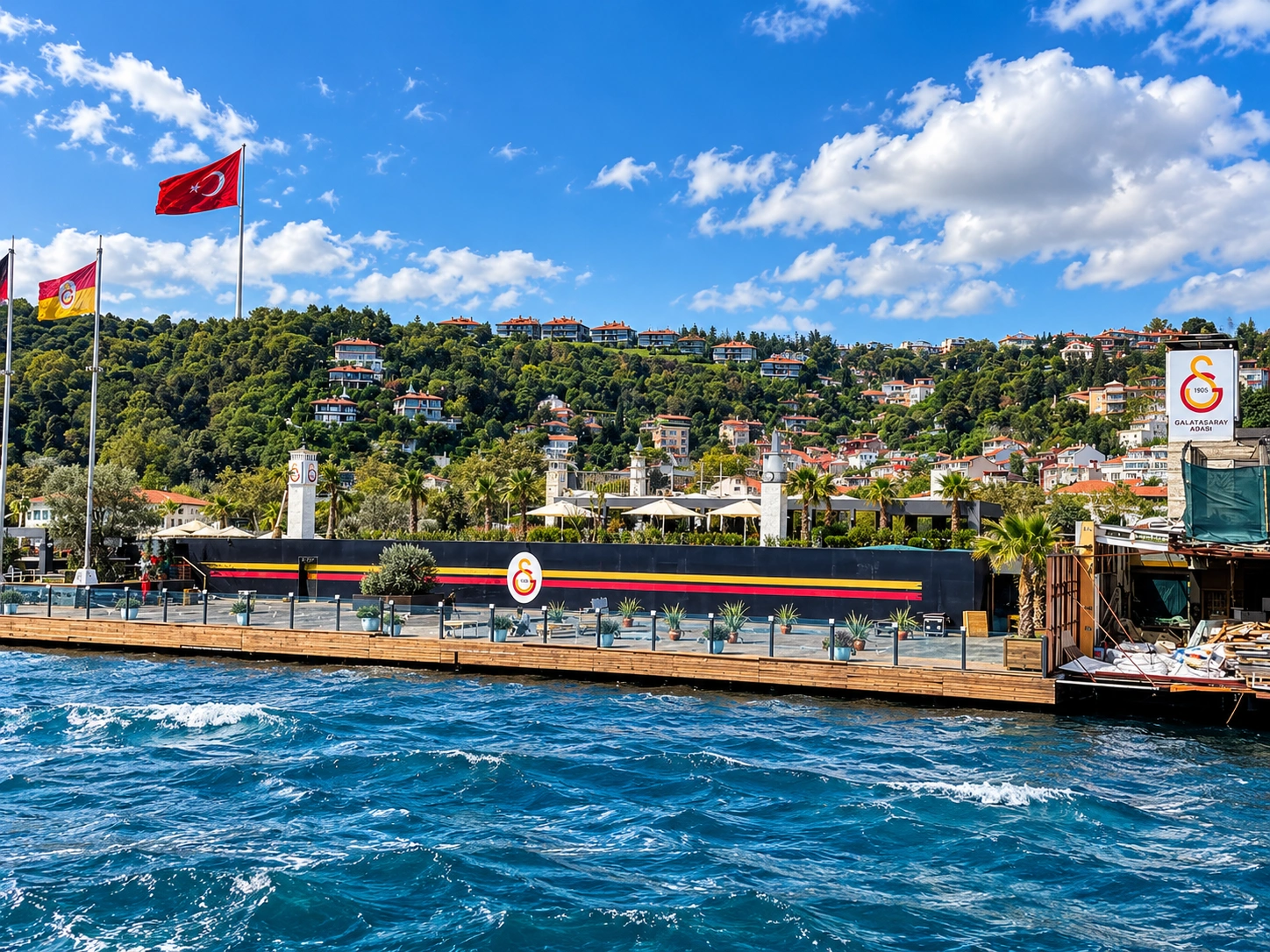
Kuruçeşme is the next shoreline: a thin park edge, piers and a row of venues between Ortaköy and Arnavutköy. It is a place, not one attraction. Offshore sits Galatasaray Island, also called Suada, tied to the Galatasaray club. It has operated as a private island with dining and a pool, and access has been restricted at times. Treat it as limited and private. Confirm whether visitors are being admitted before you build a day around it, and do not read old pool-fee posts as current prices.
Bebek
Bebek is a waterfront neighbourhood with a small bay, a promenade and cafes facing the strait. There is no single ticket. People come to sit by the water and to use it as a pause between Ortaköy and the fortress. Parking and weekend traffic are the practical limits, not an entrance gate.
Rumeli Fortress
Rumelihisarı is the large Ottoman fortress on the European shore, built in the 1450s to control the strait before the conquest of Constantinople. It is a museum: walls, towers and a view back across the water toward the Asian shore. Give it time inside rather than a drive-by between two palaces. The Rumeli Fortress page is the dedicated visit. Anadolu Hisarı, opposite, is a smaller and older castle and is not the same ticket.
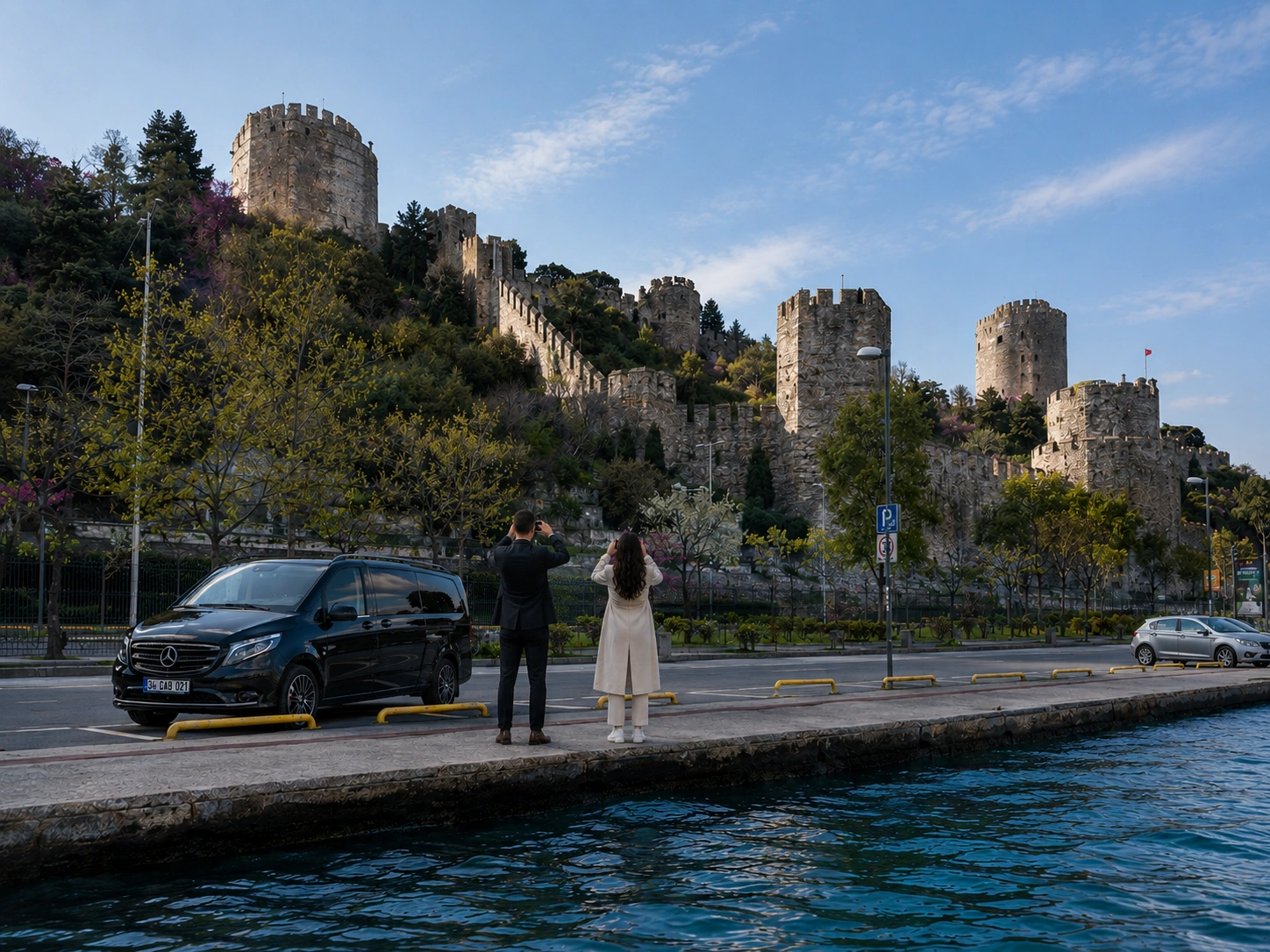
Boats pass close under the walls. That photograph is easy. The museum day is the stairs and the interior courts, and it depends on the fortress being open — check the current museum day rather than assuming every afternoon works.
Fortress setting. Not an opening-hours notice.
European shore · further north
Emirgan, the museum and the Black Sea mouth
North of the fortress the shore opens into parks and then into villages that belong to a separate day. Emirgan is still an easy add-on from Bebek. Rumeli Feneri and Garipçe are not.
Emirgan Park
Emirgan Park — often called Emirgan Grove — is a public hillside park above the strait, famous for tulips in spring and perfectly usable the rest of the year as woods, lawns and a tea garden with a partial water view. It is not a palace and it does not need a cruise. Go when you want to be outdoors without a museum queue.
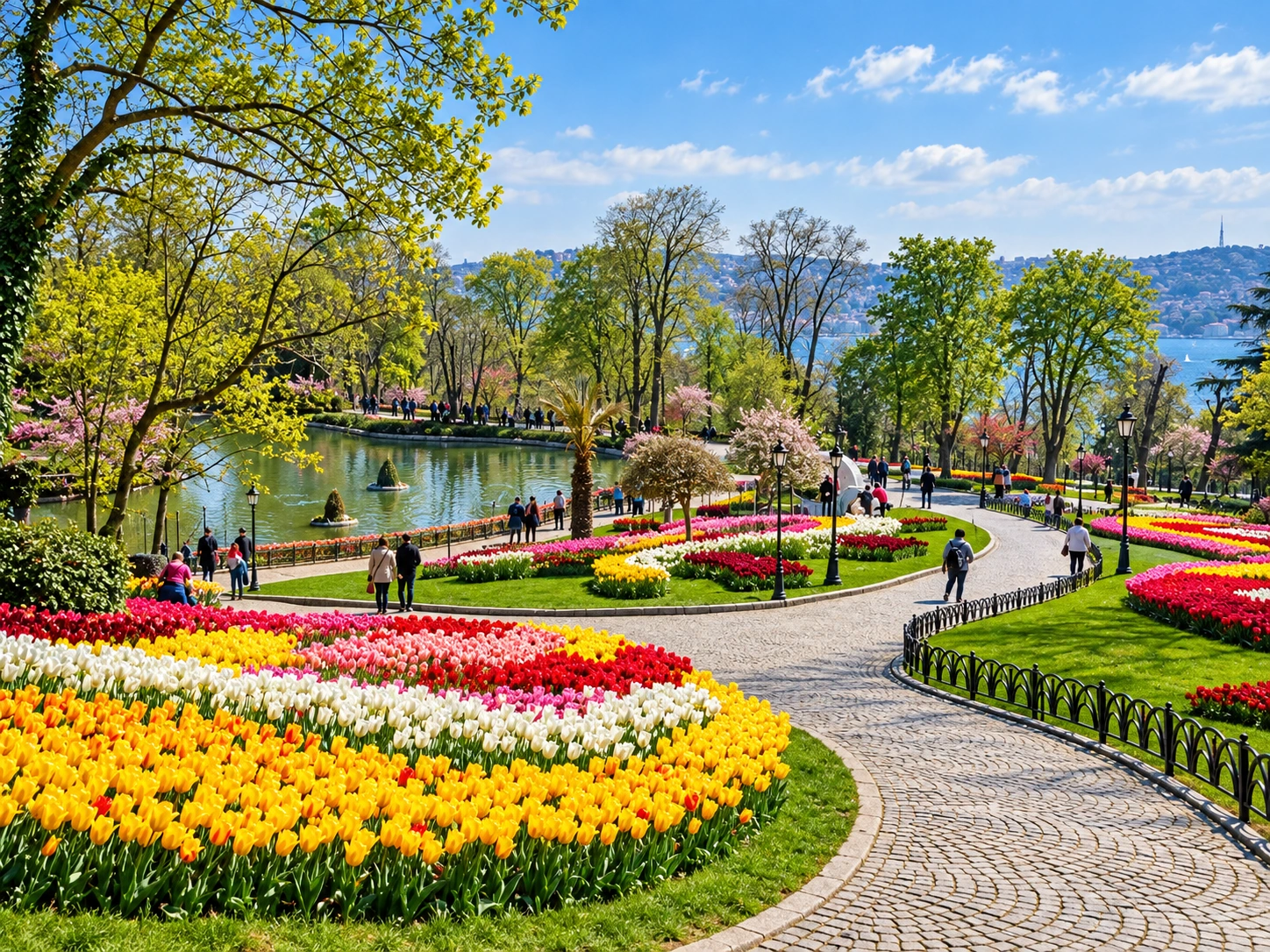
The park and the museum next door are neighbours, not one ticket. You can do the lawns without the galleries, and you should not assume a tulip weekend will feel like a quiet Tuesday.
Park atmosphere. Flower displays change with the season.
Sakıp Sabancı Museum
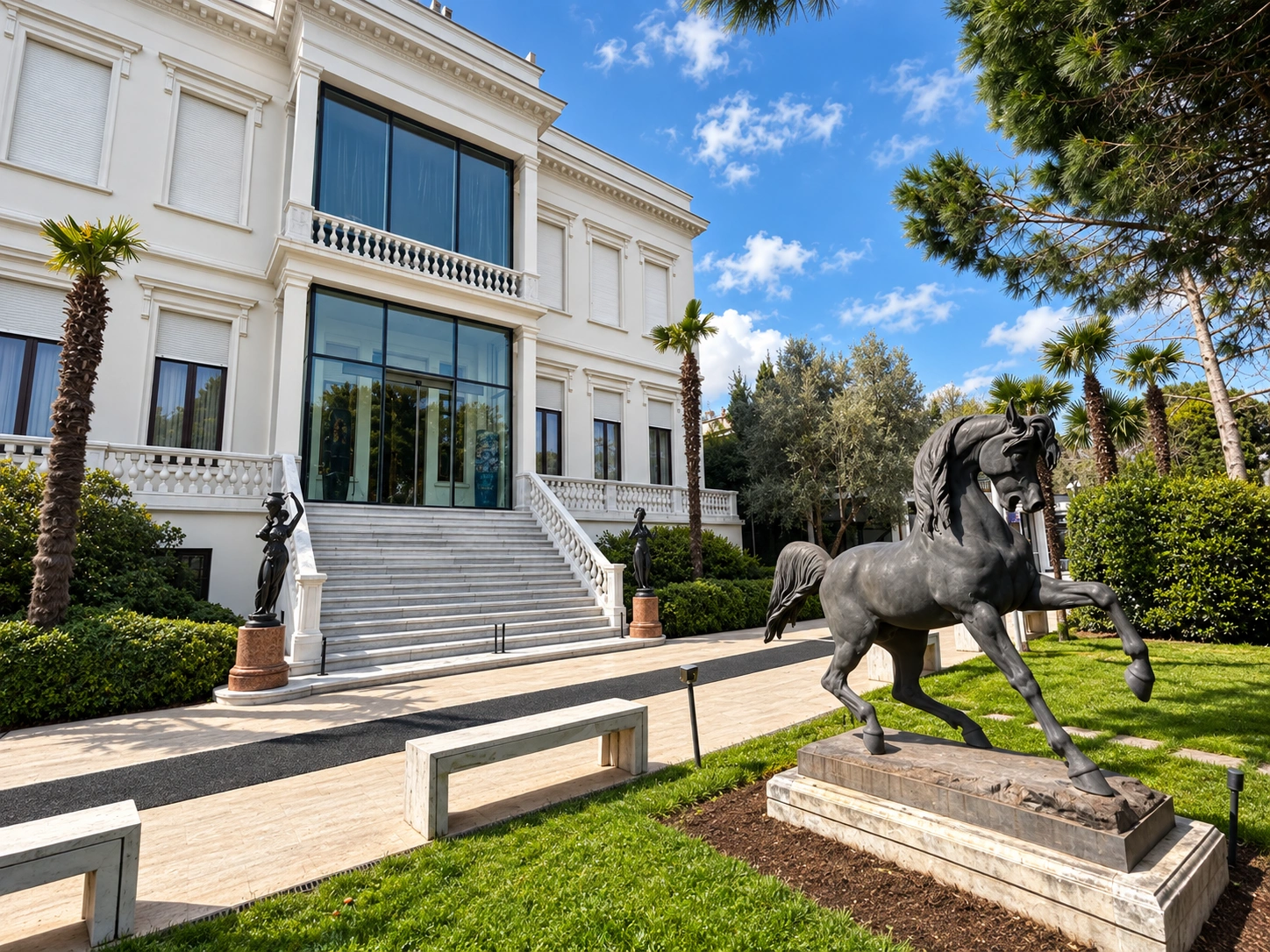
Sakıp Sabancı Museum sits in Emirgan on Sakıp Sabancı Caddesi, in a former waterfront house. The standing collection is strong on Ottoman calligraphy, with painting and temporary exhibitions alongside it. Read the current show before you go — the reason to visit often is the temporary exhibition, not a fixed “highlights in one hour” route. No phone number is repeated here.
Rumeli Feneri
Rumeli Feneri is the lighthouse village on the European side of the Black Sea mouth. The point of the trip is the end of the strait: fishing boats, a small square and the sense that the city has run out. It is a poor add-on after Dolmabahçe. The coast road is long, and the village is a pause, not a second museum.
Garipçe
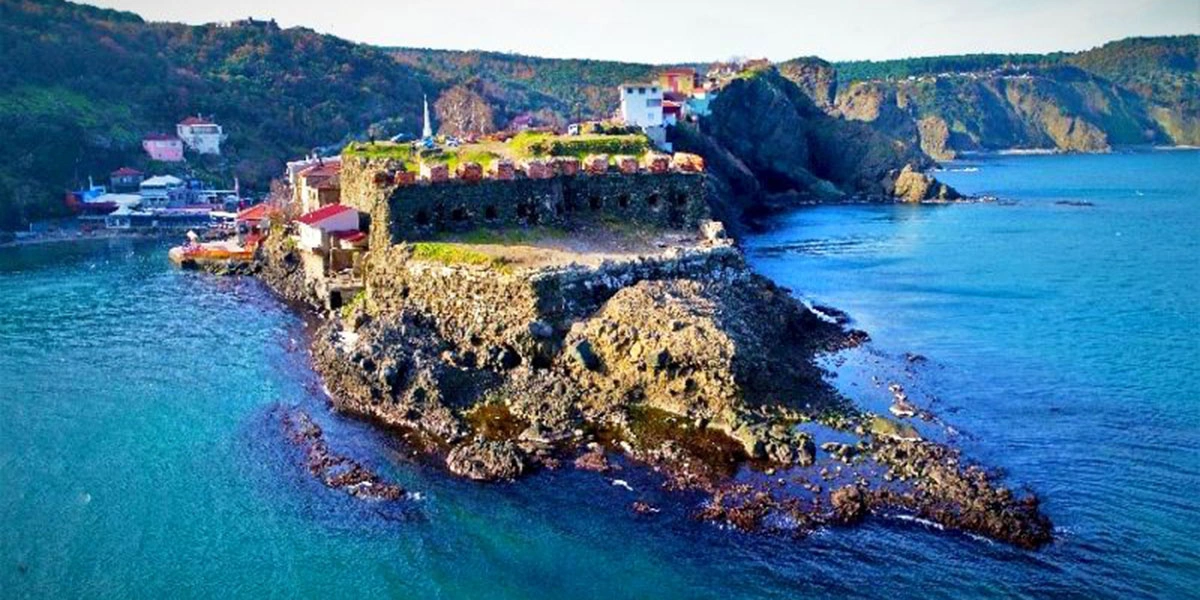
Garipçe is the next village south of that mouth, between Rumeli Feneri and Rumeli Kavağı, under the Yavuz Sultan Selim Bridge. The castle remains are ruins in and above the village, not a staffed fortress museum with a set route. Come for the northern shore and the bridge in the landscape. Do not expect Rumelihisarı’s towers, tickets or interpretation panels.
Asian shore
Üsküdar, the tower and the Asian palaces
The Asian shore is not a mirror of the European one. Üsküdar is a ferry city. Beylerbeyi is a palace museum. Further north the road runs past a military school you cannot enter, a small pavilion, and then the villages where the long ferry turns around.
Maiden’s Tower
Maiden’s Tower stands on a small island off Üsküdar and Salacak. After a long restoration it functions as a museum you reach by boat, not as a lighthouse you walk to from the pier. The legend — a princess, a snake, a prophecy — is folklore, not the visitor plan. The plan is a boat from the Salacak side and a ticket that should be confirmed on the official channel before you cross the city for it. Views take in both the historic peninsula and the strait. There is no fee printed here.
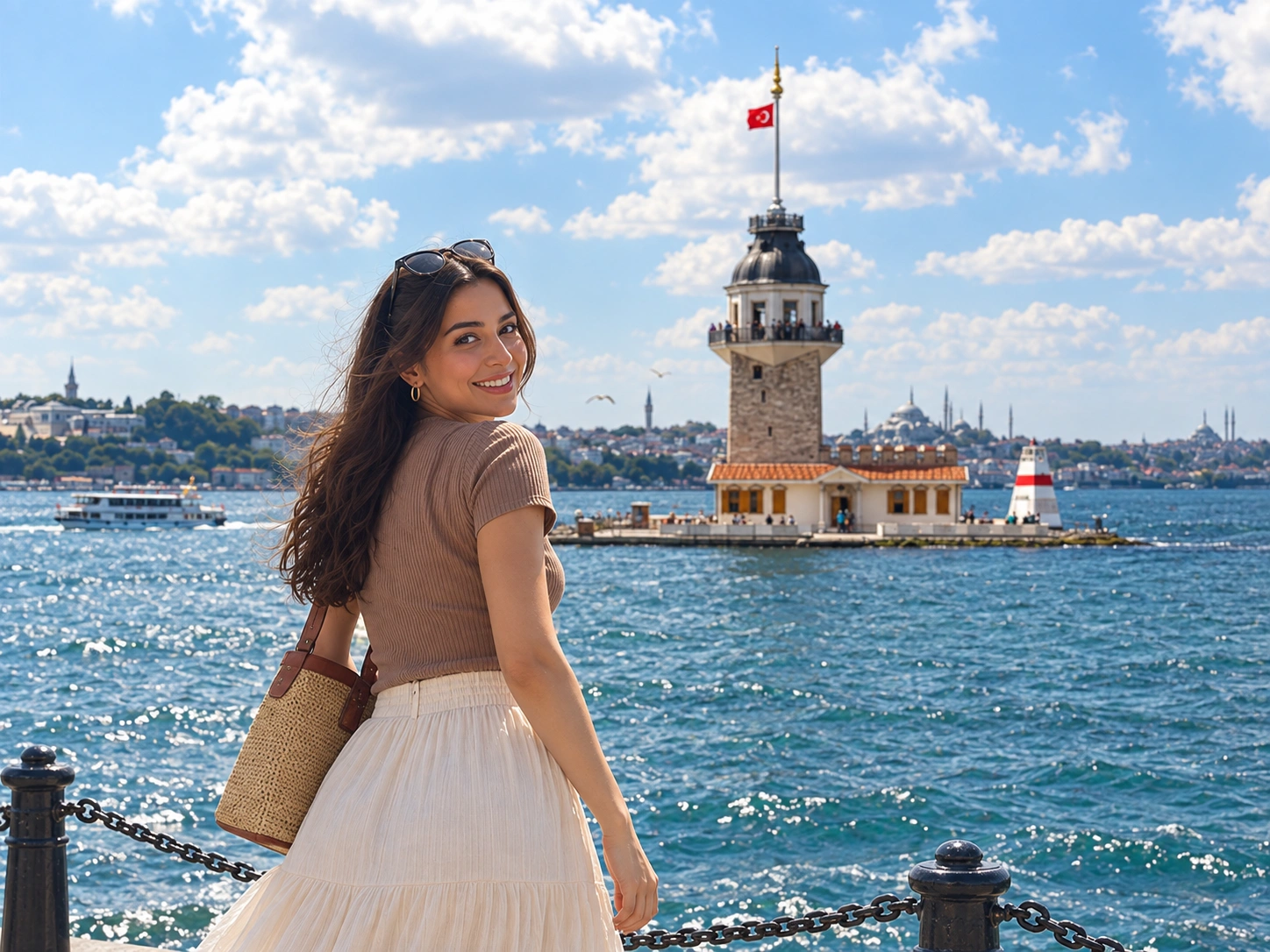
Üsküdar itself is the practical district around that crossing: mosques, the main ferry terminal and the Asian end of several commuter lines. It is a good place to start an Asian-shore morning and a bad place to “pass through” on the way to Anadolu Kavağı if you also want the tower. The two trips point in opposite directions along the same bank.
Tower and shoreline. Not a ticket or boat timetable.
Beylerbeyi Palace
Beylerbeyi is the Asian-shore palace museum, smaller and more domestic in feel than Dolmabahçe, with gardens down to the water and the first bridge nearby. It was a summer and reception house. Check the museum day the same way you would for Dolmabahçe, and do not assume the two palaces share a ticket. The Beylerbeyi page is the closer guide.
Kuleli
Kuleli Military High School is the long waterfront building you see from the boat between Çengelköy and the bridge. It is a working military school. The visit is the view from the water. There is no public interior tour.
Küçüksu Pavilion
Küçüksu is a small, ornate Ottoman shore pavilion set in a garden on the Asian side, built as a place to pause on the water rather than as a seat of government. It is a museum when it is open. Treat the day as soft and check it, especially if you are already committing the morning to Beylerbeyi — two small palace interiors plus the tower is a full Asian day without any of the northern villages.
Anadolu Fortress
Anadolu Hisarı is the older, smaller fortress on the Asian shore, begun in the late fourteenth century and later paired with Rumelihisarı to close the strait. You mostly meet it from the coast road or from the boat, tucked beside the water under the second bridge’s wider landscape. It is not a duplicate of the European museum and it should not be sold as the same kind of tower walk. Look, photograph if the viewpoint is open, and keep Rumelihisarı as the fortress you enter.
North Asian shore and the hills
Anadolu Kavağı, Yoros and the viewpoints that are not on the water
Beykoz and the coast
Beykoz is the Asian district that holds the northern shore: green slopes, old wooden houses toward the water, and a slower road than Üsküdar. Use it as the frame for Kanlıca, Küçüksu and the villages, not as a single “Beykoz coast attraction” with one gate. Trying to add the Black Sea mouth on the European side in the same hour means you will see both from a car window.
Anadolu Kavağı
Anadolu Kavağı is the fishing village where the long public Bosphorus ferry often ends. The harbour, the grill restaurants and the walk up toward the castle are the visit. Eat if you want to; the village does not require a meal to make sense. Confirm the return sailing before you climb, because the hill eats the margin you thought you had.
Yoros Castle
Yoros is the ruined castle on the hill above Anadolu Kavağı, above the point where the strait meets the Black Sea. The walk from the pier is steep. What you can enter has changed between open grounds and a more limited exterior, so do not promise yourself a full Byzantine interior or a free-entry rule copied from a blog. The view is the reason to go up. If the gate is restricted, the village and the ferry are still a complete stop.
Çamlıca
Çamlıca Hill is the high Asian viewpoint over the strait, the historic peninsula and the modern skyline. It is not a Bosphorus landing. Go when the plan is a panorama, and use the Çamlıca page rather than folding the hill into a palace morning. Sunset is the busy hour. Morning is the easier one.
A private garden, and a forest that is not the strait
The butterfly garden in Beykoz — inland around Zerzevatçı, off the water — is a private family stop, not a Bosphorus monument. It still appears on local route notes. Confirm that it is open, and ignore copied entrance fees, phone numbers and a fixed 10:00–18:00 clock. Belgrad Forest, inland in Sarıyer, is a reservoir woodland. It is a different day from the strait and does not belong on a cruise.
Evening and logistics
Night on the water, and how to move between shores
After dark the strait is a lighting plan: bridges, palace façades, the mosque at Ortaköy and the towers along both banks. A sunset or dinner cruise is a fair way to see that, if you want a meal on a boat and you accept that you will not go inside anything. It is a poor way to “see the Bosphorus” if your list is Dolmabahçe, the fortress and the tower. Those need daylight and tickets.
Private boats and yacht charters exist across many operators. The clip below is that atmosphere. It is not evidence that a particular charter is running, and it is not a Cab Istanbul product by itself.
Evening water only. Not a booking channel, a show list or a price.
What Cab Istanbul can actually do here is narrower and more useful. The cruise service is a published product — use that page, not a blog paragraph, for inclusions. Separately, a car with driver or VIP transfer is how you chain Üsküdar to Beylerbeyi, or a hotel on the water to a northern village, without depending on the coast road at dusk. Istanbul Airport and Sabiha Gökçen transfers end at the hotel; they are not shore tours. Staying on this water is its own decision — the hotel guide compares areas, and Çırağan is one address, not the default.
Which shore fits the day
| Area | Character | Best for | Skip if |
|---|---|---|---|
| Beşiktaş waterfront | Palace museum, then the square at Ortaköy | A first Bosphorus morning | You only have a late dinner slot |
| Kuruçeşme to Bebek | Promenade, piers, a private island offshore | A walk and a pause | You need a guaranteed public monument |
| Rumelihisarı and Emirgan | Fortress museum, park, art museum | A north-European half day | You are already inside Dolmabahçe the same morning |
| Üsküdar and Beylerbeyi | Ferry district, tower, Asian palace | The Asian shore without a long drive | You still need to catch a boat to the tower and have not checked it |
| Anadolu Kavağı | Fishing village and the hill to Yoros | The long ferry’s far end | You cannot confirm the return boat |
| Rumeli Feneri and Garipçe | European Black Sea mouth, ruins, third bridge | A dedicated northern day | You are trying to add it after a palace |
Spring is the comfortable season, and Emirgan’s tulips are the one dated flower event worth timing. Summer is bright and busy on the boats. Winter is the clearest way to see palace interiors without a queue, with shorter daylight for the northern villages. None of that replaces checking the museum’s closed day.
Questions
Istanbul Bosphorus FAQ
Is a Bosphorus cruise worth it?
Yes, if you want both shores in one ride. A short boat is enough for bridges and palaces from the water. The long public ferry is the one that makes the length obvious, usually by going as far as Anadolu Kavağı. A cruise does not replace Dolmabahçe, Rumeli Fortress or Maiden’s Tower — those are land tickets.
What is the difference between a short boat and the long ferry?
The short tourist boat stays in the southern and middle strait. The long public ferry spends the day on the water and often turns at Anadolu Kavağı. Check the last return before you walk up to Yoros. They are different products, not two names for the same ticket.
How do I reach Maiden’s Tower?
By boat from the Üsküdar / Salacak side. It is a museum on a small island after restoration, not a pier you can walk to. Confirm boats and tickets on the official channel the day you go. No fee is listed here.
Is Galatasaray Island open to the public?
Do not assume so. Suada, off Kuruçeşme, is a club island, not a monument. Access has been limited. Confirm before you go, and ignore old pool prices.
Is Dolmabahçe closed one day a week?
It usually closes on a weekday, and the open route can change. Use the palace’s own notice, then the Dolmabahçe page for how a visit is shaped. Do not copy a Tuesday-to-Sunday clock from an old article.
Can I visit both fortresses the same way?
No. Rumelihisarı is the European museum you go inside. Anadolu Hisarı is the smaller Asian fortress you mostly see from the road or the boat. They face each other. They are not one ticket. Start with the Rumeli Fortress page if you only have time for one interior.
Is a dinner cruise the same as the public ferry?
No. A dinner or sunset cruise is a private boat with a meal, aimed at the evening lights. The public ferry is daytime transport and sightseeing, often out to Anadolu Kavağı. Do not expect a show lineup, a 19:30 start or a midnight return just because an old guide printed one.
What does the Bosphorus look like at night?
Bridges, palace fronts and Ortaköy Mosque are lit, and the traffic on the water thins. An evening boat is a good way to see that. Palaces and the fortress are not night interiors. Ortaköy square stays public and busier after dark than at breakfast.
When is the best time to go?
Spring for mild weather and Emirgan’s tulips. Summer for long evenings and crowded boats. Winter for quieter palace rooms and short days if you still want the northern villages. Check the closed weekday whatever the season.
Should I buy tickets in advance?
For Dolmabahçe, Beylerbeyi, Rumeli Fortress, Küçüksu and Maiden’s Tower, yes when the official channel offers it — weekend queues are the problem, not a lack of things to see. Exact prices are not printed here because they change. Suada and the butterfly garden are private and should be confirmed, not pre-paid from a blog.
Can I go inside Kuleli?
No. Kuleli Military High School is seen from the boat. There is no public tour of the building.
Is Yoros Castle a staffed museum?
Treat it as ruins on the hill above Anadolu Kavağı. Access has varied between open grounds and a more limited visit. The walk is steep. If the upper area is restricted, the village and the ferry are still the point of the trip.
Is the butterfly farm on the Bosphorus?
No. It is inland in Beykoz, a private garden rather than a shore landmark. Confirm it is open. Do not use old prices, a mobile number or a fixed daily clock from a previous article.
Does Cab Istanbul sell a dinner show on the Bosphorus?
No. Cab Istanbul’s published Bosphorus cruise is the cruise page — read that for inclusions, and do not add shows, weddings or henna from this guide. Chauffeur rides, including IST and SAW airport transfers, move you between hotel, airport and shore. The driver is not a guide and does not hold your museum ticket.
European shore or Asian shore for one afternoon?
European if you want Dolmabahçe or Rumeli Fortress. Asian if you want Maiden’s Tower and Beylerbeyi. Do not try both palaces, both fortresses and a Black Sea village in one afternoon. The table higher up is the realistic split.
Can I walk across the Bosphorus bridges?
No. The three road bridges carry traffic. Ferries and the tunnel crossings are how people move between continents. The bridges are best seen from a boat or from Ortaköy square.
Where should I eat along the Bosphorus?
Ortaköy, Bebek, Arnavutköy and Anadolu Kavağı all have waterfront tables, and they suit different kinds of meal. Use the restaurant guide for how to choose, and expect the bill to be higher on the water than inland. No prices are fixed here.
How do I get from the airport to a Bosphorus hotel?
Book a transfer rather than a string of city buses with luggage. Istanbul Airport is on the European side, well north of the southern palaces. Sabiha Gökçen is on the Asian side. Neither ride is a Bosphorus tour — it ends at the hotel. If the hotel is Çırağan, read the hotel page for the property, not this shore guide.