
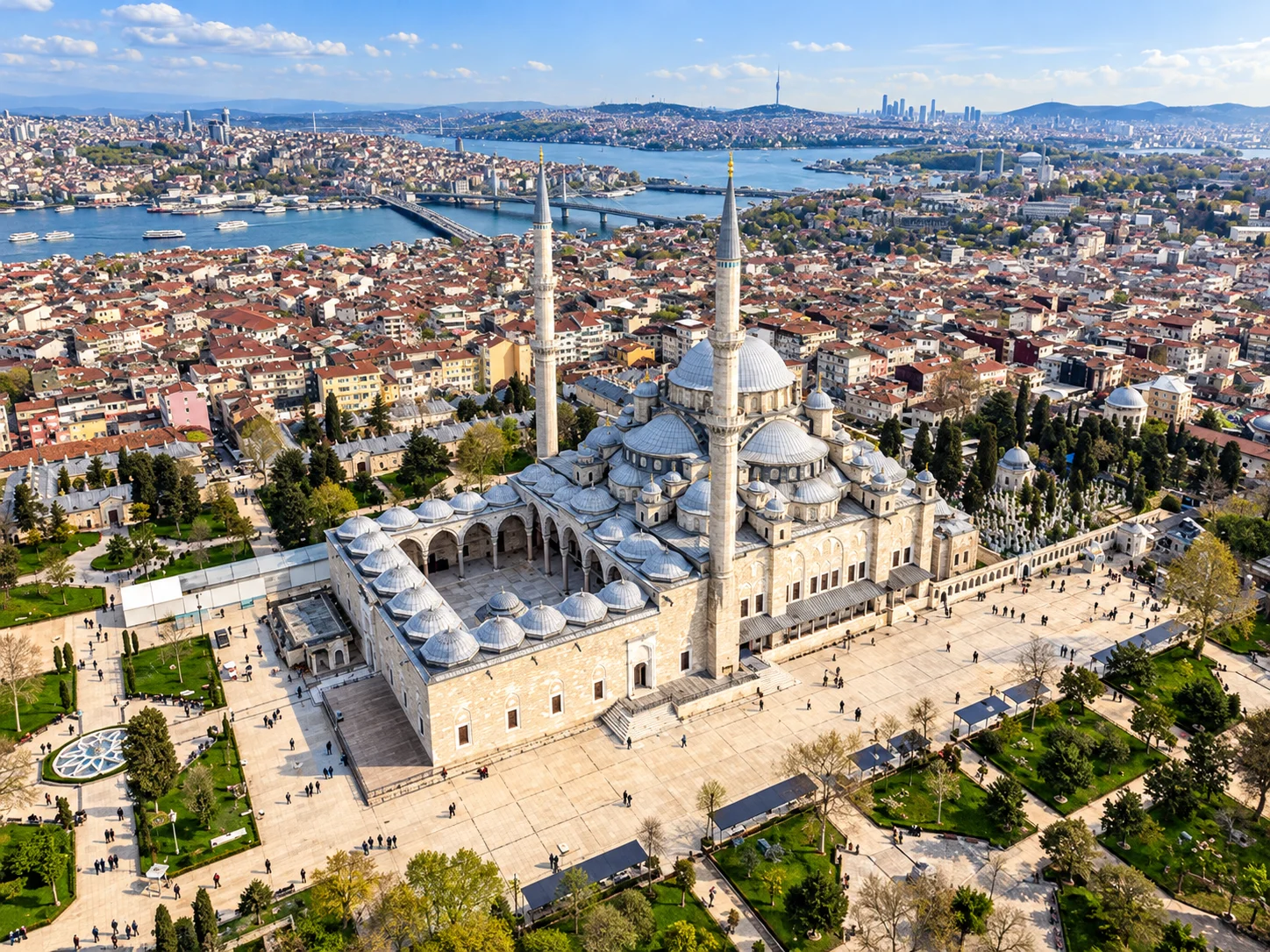
Rising from the fourth hill of Istanbul, Fatih Mosque — Fatih Camii — is far more than a place of worship. Built between 1463 and 1470 by Sultan Mehmed II to commemorate the Ottoman conquest of Constantinople, it was the first great imperial külliye in the newly renamed Ottoman capital: a self-contained city of faith, learning, and charity. Today its vast courtyard, soaring dome, and the tomb of the Conqueror draw visitors and worshippers from across the world to one of Istanbul's most authentic and historically layered neighbourhoods.
Fatih Mosque: The Conqueror's Legacy in the Heart of Istanbul
Fatih Mosque stands on the fourth hill of Istanbul's historic peninsula, in the district that bears the same name — Fatih, meaning "the Conqueror." It is an active mosque at the centre of one of Istanbul's most traditionally-rooted and historically dense neighbourhoods. After centuries of prayer, earthquake, reconstruction, and restoration, it remains one of the most significant religious monuments in Turkey and a fundamental chapter in the story of Ottoman Istanbul.
The mosque is open to all visitors outside the five daily prayer times, and there is no admission fee. Tourists are warmly welcomed; visitors are asked only to respect the sanctity of the space — dress modestly, remove shoes at the entrance, and remain quiet during prayers. The tomb of Sultan Mehmed II, directly behind the main mosque building, is accessible separately and is particularly meaningful to many visitors.
Unlike Hagia Sophia or the Blue Mosque in Sultanahmet, Fatih Mosque sits well away from the main tourist trail, inside a living neighbourhood. This gives a visit an intimate quality that the tourist-heavy mosques cannot match — you will likely be surrounded by local worshippers, children from the nearby schools, and residents going about daily life. Every Wednesday, the Çarşamba Pazarı — one of Istanbul's largest weekly markets — fills the surrounding streets with thousands of vendors and shoppers, adding a second dimension to any visit to the area.
From Byzantine Holy Apostles to Ottoman Conquest Mosque: A Six-Century History
The site occupied by Fatih Mosque has one of the most layered histories of any location in Istanbul. Before the Ottoman conquest, the fourth hill was home to the Church of the Holy Apostles — the second most important church in the Byzantine Empire, serving as the imperial mausoleum where Constantine the Great and many subsequent emperors were buried. By the time Sultan Mehmed II began construction, the Church of the Holy Apostles had already been demolished (around 1461–62); historians continue to debate the precise spatial relationship between the church and the mosque complex that succeeded it on the hilltop.
The Architecture of Fatih Mosque
The Mosque Building
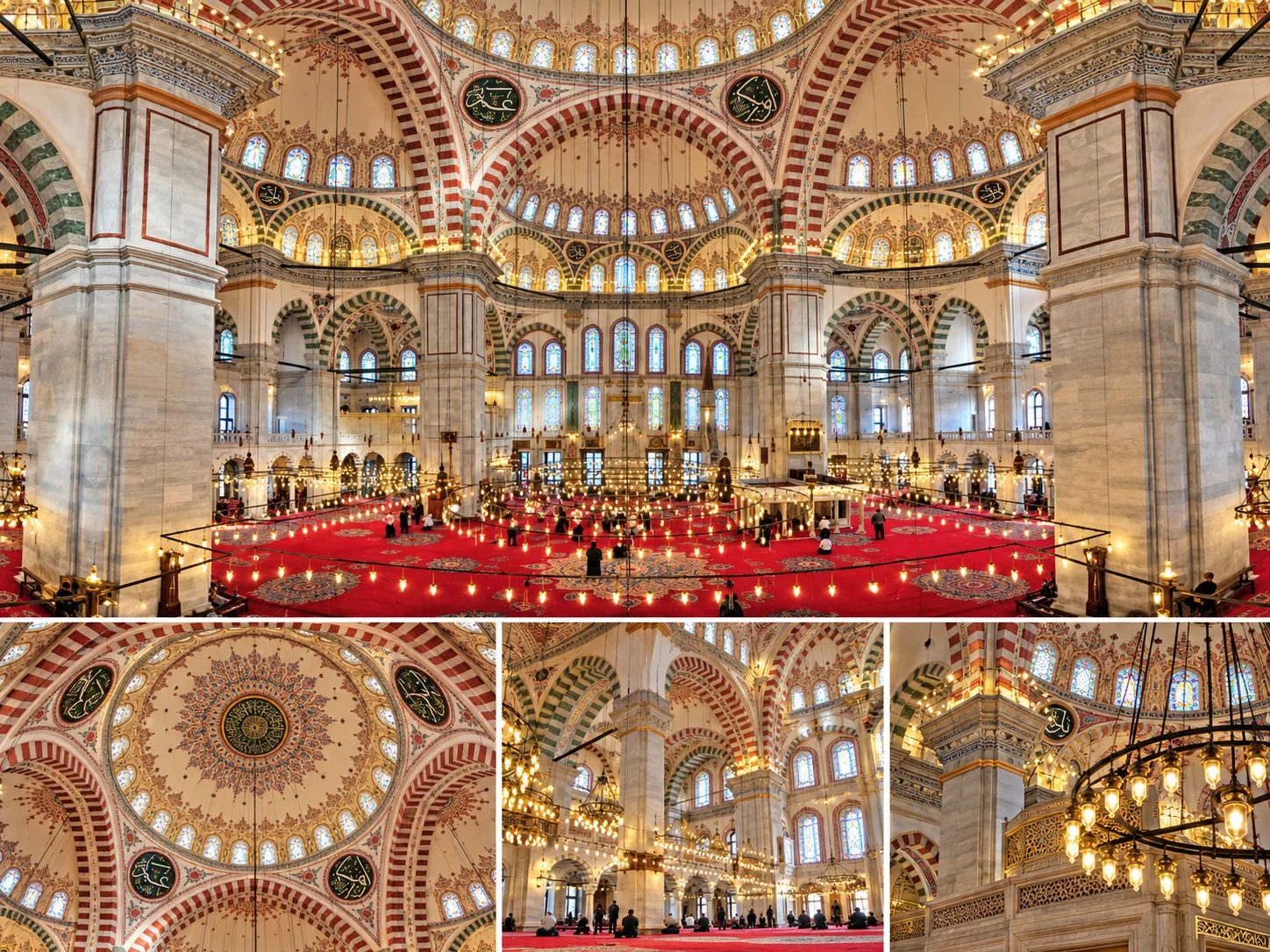
What visitors see today is essentially the late 18th-century reconstruction, not the original 15th-century mosque of Atik Sinan. The central dome is supported by two semi-domes on the east–west axis, creating a spacious, luminous prayer hall characteristic of the classical Ottoman imperial mosque type. Large windows ring the dome and line the upper walls, flooding the interior with natural light throughout the day.
Courtyard and Şadırvan
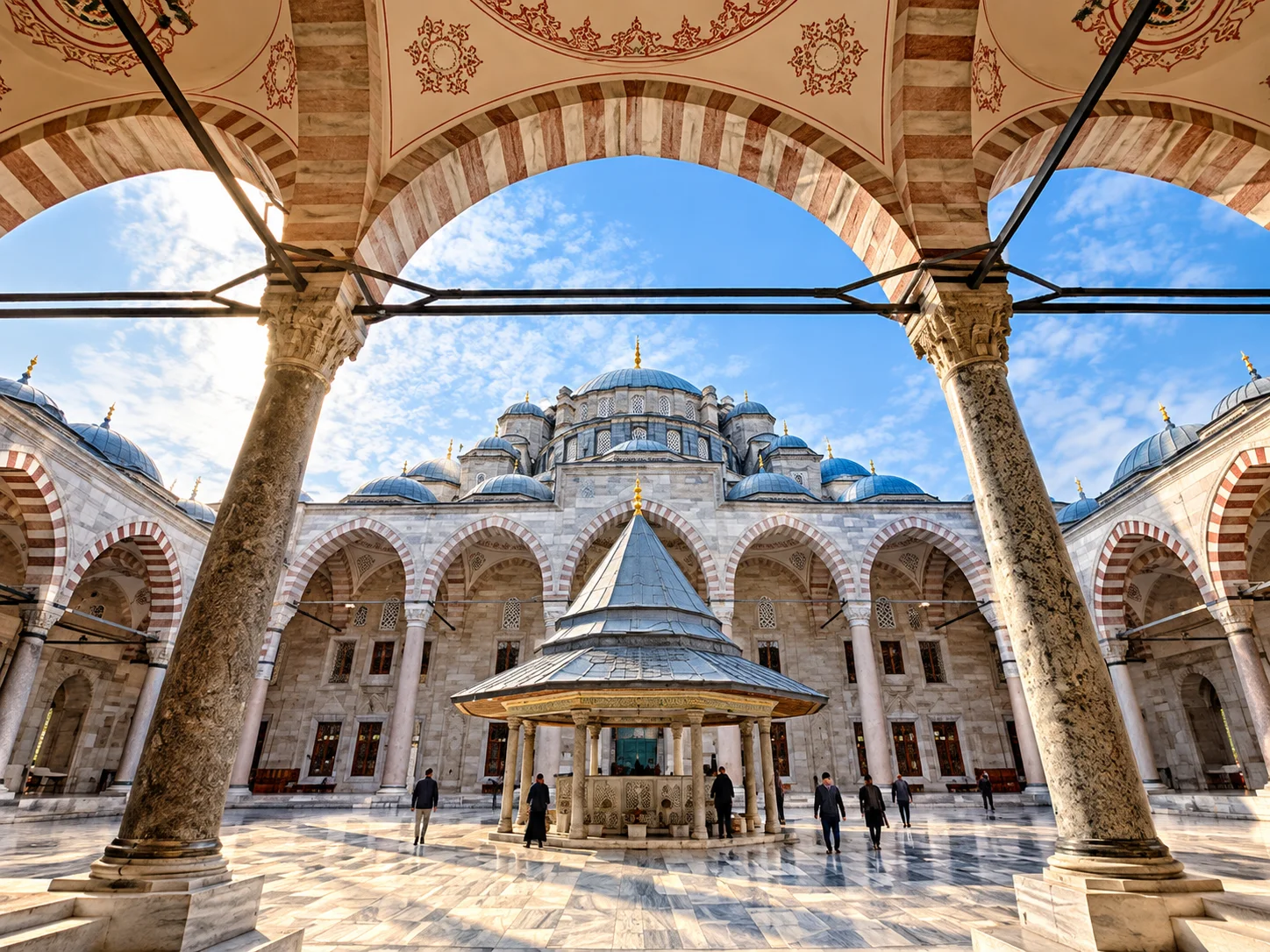
The arcaded courtyard follows the Ottoman imperial mosque tradition: a large rectangular space enclosed by colonnaded porticoes, with a decorative şadırvan (ablution fountain) at its centre. The courtyard provides a gradual transition from the urban street to the sacred interior — a spatial sequence that is one of the most characteristic features of Ottoman mosque design. On Fridays, when the congregation overflows the prayer hall, thousands of worshippers pray in the courtyard and surrounding streets.
Minarets
Two slender minarets rise from either side of the main entrance portico, giving the mosque its distinctive silhouette visible from across the Golden Horn and from many points in the historic peninsula.
Fatih Mosque Istanbul — architecture, courtyard, and atmosphere
The Interior
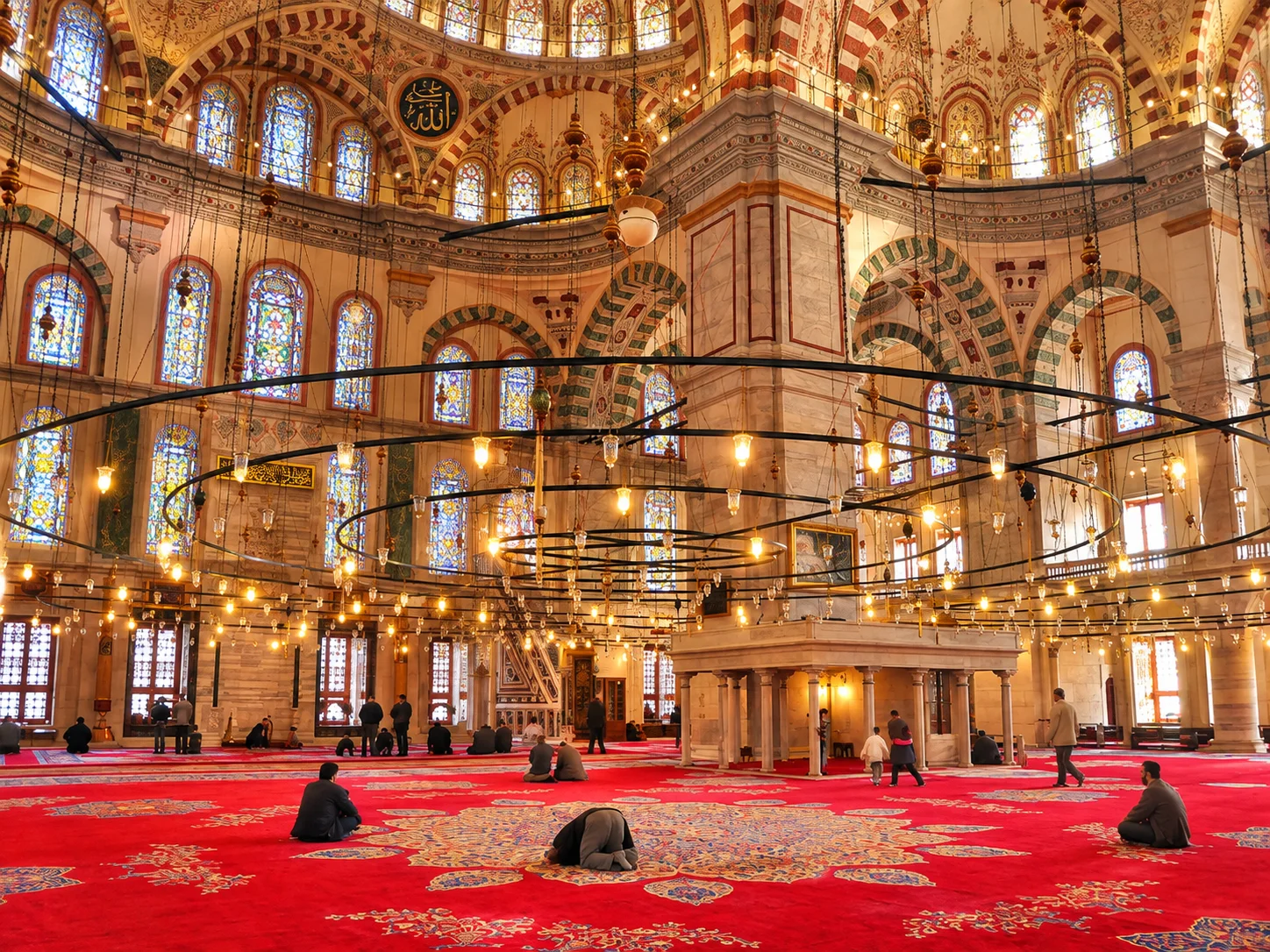
The prayer hall is impressively large — designed to serve the Friday congregation of a major capital city. The central dome, ringed by windows, floods the interior with light. The walls carry calligraphic inscriptions and the elaborately carved marble mihrab (prayer niche) and minbar (pulpit) are the focal points of the qibla wall. The carpets covering the prayer floor — a gift from the government of Azerbaijan — are among the most distinctive furnishings in any mosque in Istanbul.
The mosque is in active daily use. Visitors may enter outside prayer times, take in the architecture and atmosphere, and observe the rhythms of a living mosque community. The unhurried, respectful atmosphere inside contrasts pleasantly with the energy of the Fatih neighbourhood outside.
The Fatih Külliye: Istanbul's First Ottoman University Complex
The Fatih Külliye was among the most ambitious complexes built anywhere in the Islamic world in the 15th century. Sultan Mehmed II did not merely commission a mosque — he laid out an entire urban quarter, a self-contained community dedicated to worship, scholarship, healthcare, and charity. Understanding the külliye helps explain why Fatih Mosque occupies a unique place not only in Ottoman history but in the history of urban planning.
The Sahn-ı Seman — The Eight Courtyards
At the heart of the original külliye stood the Sahn-ı Seman — eight prestigious madrasas arranged symmetrically around the mosque, four on each side. In their day, these were the most advanced educational institutions in the Ottoman Empire, teaching Islamic jurisprudence, philosophy, medicine, mathematics, and astronomy at the highest level. The Sahn-ı Seman were the primary centres of Ottoman higher learning for an entire generation of scholars, and they defined the intellectual life of the new capital. Eight smaller preparatory schools (tetimme medreseleri) complemented the main madrasas. Several of the original külliye buildings survive in modified form and continue to serve educational and cultural functions today.
Darüşşifa — The Imperial Hospital
The darüşşifa (hospital) of the Fatih Külliye was one of the most important medical institutions in 15th-century Istanbul, providing free treatment to all patients regardless of religion or social standing. The hospital building no longer survives in its original form; the site has been redeveloped over the centuries. Its existence is nonetheless a reminder that the Ottoman külliye was conceived as a comprehensive welfare system, not merely a religious institution.
Imaret and Tabhane — Feeding and Housing the Poor
The imaret (soup kitchen) of the Fatih Külliye distributed free meals twice daily to students, scholars, the poor, and travellers — a practice embedded in the vakıf (charitable endowment) tradition that underpinned Ottoman urban life. The tabhane (guesthouse) alongside it provided lodging for visiting scholars and travellers. These institutions gave the külliye its social dimension: it was as much a welfare complex as a religious and educational one.
Library, Primary School, and Caravanserai
A library stocked with manuscripts served the scholarly community. A sıbyan mektebi (primary school) provided elementary education to neighbourhood children. A kervansaray (caravanserai) offered accommodation for merchants and long-distance travellers. Together these institutions created a complete urban ecosystem — a model for the great Ottoman külliye complexes that followed across the empire.
The Tomb of Sultan Mehmed II — Fatih Sultan Mehmed Türbesi
Behind the mosque, in a walled garden, stands the tomb of Sultan Mehmed II — the Conqueror whose name the mosque, the district, and an entire era of Ottoman history bear. The tomb is freely accessible and is one of the most spiritually charged sites in Istanbul, visited daily by those who come to pray, reflect, and pay their respects to the man who transformed Constantinople into Istanbul.
Visitors should understand what they are seeing: the current türbe (tomb building) was not built in the 15th century. It was commissioned by Sultan Abdülhamid I and completed in 1785 — more than 300 years after Mehmed II's death — because the earlier tomb was likely destroyed or severely damaged in the 1766 earthquake. The present octagonal structure, in a Baroque-influenced style, houses the elaborately draped sarcophagus of the Conqueror.
The tomb of Gülbahar Hatun — traditionally identified as the mother of Mehmed II's son and successor, Sultan Beyazıt II — stands in the same türbe garden. The hazire (open-air graveyard) surrounding the mosque also contains the graves of other notable Ottoman figures associated with the Fatih Külliye through the centuries.
Interesting Facts About Fatih Mosque
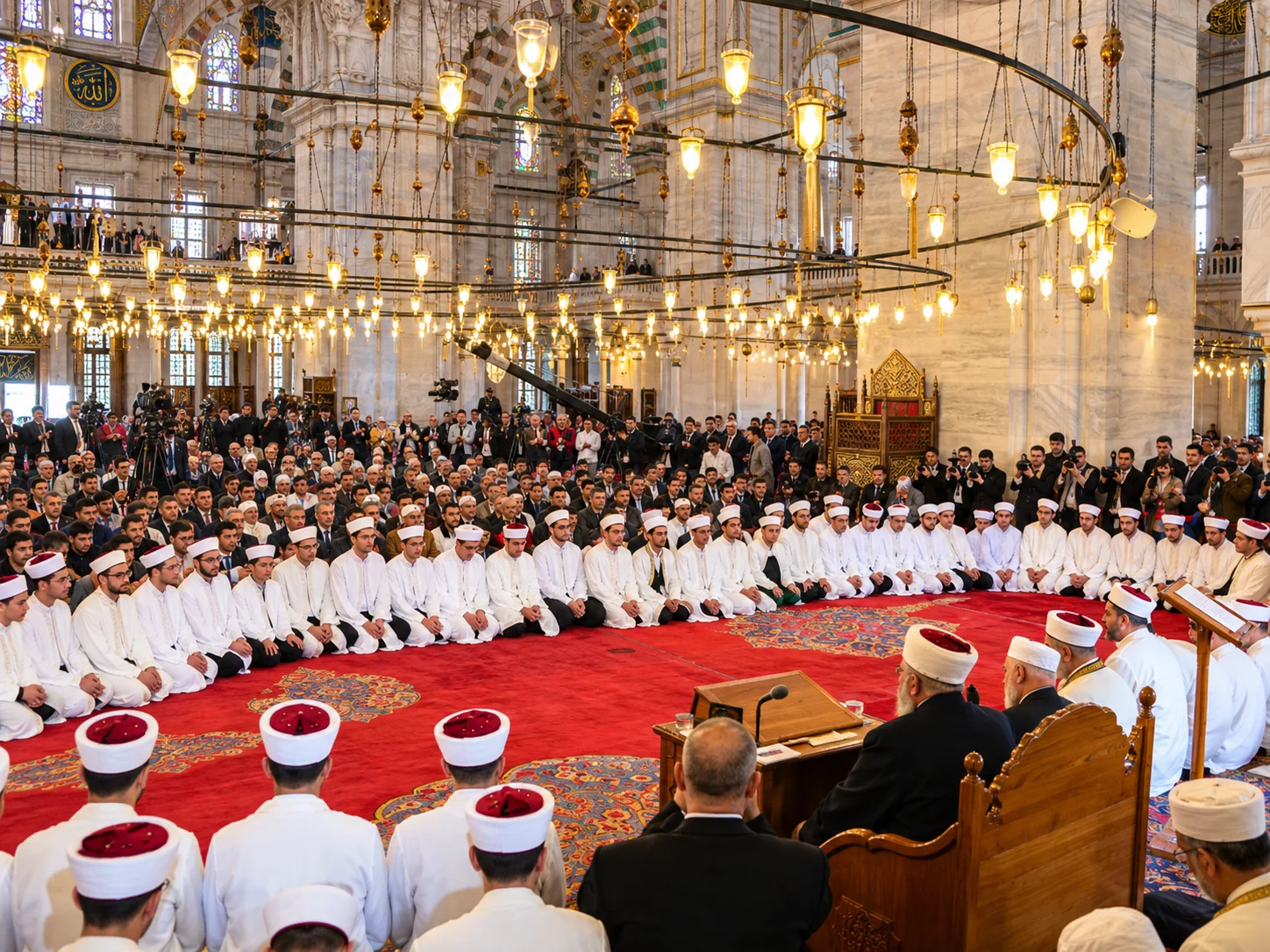
The Icazet Ceremony — A Living Madrasa Tradition
Each year Fatih Mosque hosts the icazet merasimi — the traditional Islamic certification ceremony at which students who have completed the memorisation of the Quran (hafız) or courses in Islamic sciences receive their certificate from their teacher. The ceremony directly echoes the centuries-old scholarly tradition of the Sahn-ı Seman madrasas. Attended by thousands of participants and their families, it is one of the most significant Islamic education events in Istanbul and a moving reminder that Fatih Mosque remains a centre of learning, not merely a historical monument.
The Architect Distinction That Matters
Fatih Mosque is sometimes said to have been designed by "Sinan the architect" — but this is easily misunderstood. The original mosque was designed by Atik Sinan (Sinan-ı Atik), sometimes called Sinan the Elder. He is an entirely different figure from the celebrated Mimar Sinan (Koca Sinan, c.1490–1588), who designed the Süleymaniye and Selimiye mosques and was not yet born when the original Fatih Mosque was completed in 1470. Moreover, since today's mosque is essentially the 1767–1771 reconstruction — not Atik Sinan's original — neither architect's work is what visitors see.
Not the Same Building You Think
For historically minded visitors, this is the most important fact to carry: the mosque standing today is largely the 18th-century rebuild, not the 15th-century original. The dome collapse in the 1766 earthquake was so catastrophic that a near-total reconstruction was required. Sultan Mustafa III's rebuilt mosque incorporates Baroque-influenced decorative details alongside classical Ottoman forms, giving it a subtly different character from what Mehmed II would have seen at the inauguration in 1470.
Friday at Fatih — One of Istanbul's Largest Congregations
Fatih Mosque remains one of the most important congregational mosques in Istanbul. Its Friday prayers attract worshippers from across the district and beyond. On Fridays, the courtyard and surrounding streets fill with thousands of worshippers, creating one of the most visually and spiritually striking scenes anywhere in the city. Coming just before or just after the Friday prayer — with appropriate respect — is a memorable way to experience the mosque's living role in the community.
Inside Fatih Mosque — a closer look at the prayer hall, courtyard, and the Conqueror's tomb
Visiting Fatih Mosque: Practical Information
Fatih Mosque is an active place of worship, not a museum. Visiting is free for everyone. The main practical consideration is timing your arrival outside of prayer times, particularly the Friday noon prayer. Below is everything you need to plan your visit.
Practical Details
How to Reach Fatih Mosque from Key Points in Istanbul
From Sultanahmet
Sultanahmet is the most common starting point for tourists visiting Fatih Mosque. The distance is approximately 4–5 km. Take the T1 tram from Sultanahmet to Eminönü, then a bus or taxi toward Fatih Mosque (total approximately 20–25 minutes). Alternatively, a taxi from Sultanahmet takes about 15 minutes. Walking is possible in around 45–55 minutes through the historic peninsula's backstreets.
From Taksim Square
From Taksim, take the M2 metro to Vezneciler station, then walk approximately 15–18 minutes or take a short taxi. Several bus lines from Taksim also pass through the Fatih district.
From Istanbul Airport (IST)
From Istanbul Airport, the M11 metro connects to the city network. Total journey by public transport to the Fatih area is typically 75–90 minutes, including one or two transfers. For a direct, comfortable arrival with luggage, an Istanbul Airport private transfer delivers you to any hotel in the Fatih or Sultanahmet area in approximately 45–60 minutes, with no transfers, no timetables, and no luggage hassle.
From Sabiha Gökçen Airport (SAW)
Sabiha Gökçen (SAW) is on the Asian side of Istanbul; the journey to Fatih Mosque by public transport takes approximately 90–120 minutes including the Bosphorus crossing. A Sabiha Gökçen private transfer reduces this to approximately 60–80 minutes in a comfortable private vehicle.
From Cruise Ship Terminal (Galataport)
From the Galataport cruise terminal, Fatih Mosque is approximately 6–7 km — a 20–25 minute taxi or private car ride. For cruise passengers with limited time who want to combine Fatih Mosque with other historic sites in a single day, a car with driver provides the flexibility to cover multiple destinations efficiently with a professional who knows the city.
What to See Near Fatih Mosque
The Fatih district is one of the most historically layered neighbourhoods in Istanbul. A visit to the mosque can easily be combined with several other experiences within easy walking distance or a short taxi ride.
- Çarşamba Pazarı (Wednesday Bazaar) — every Wednesday, one of Istanbul's largest and most authentic weekly markets fills the streets surrounding the mosque, selling fresh produce, textiles, household goods, and street food; an unmissable experience if your visit falls on a Wednesday
- Eyüp Sultan Mosque — approximately 2.5 km northwest along the Golden Horn; one of the holiest sites in Turkey, built over the grave of Abu Ayyub al-Ansari, Companion of the Prophet and standard-bearer at the first siege of Constantinople
- Topkapı Palace — approximately 3.5 km southeast; the imperial heart of the Ottoman Empire for 400 years, with its treasury, harem, holy relics, and spectacular Bosphorus views
- Sultanahmet (Blue Mosque) — approximately 5 km; the six-minaret mosque whose blue İznik tiles are among the most photographed surfaces in Istanbul
- Istanbul's Great Mosques — Fatih is one essential stop on Istanbul's extraordinary mosque circuit; the Süleymaniye, Beyazıt, and Şehzade mosques are all within the same historic peninsula
Is Fatih Mosque free to visit?
Yes, entry to Fatih Mosque is completely free for all visitors — there is no admission charge. Unlike some converted Ottoman monuments, Fatih Mosque is an active place of worship and has remained free to enter since its founding. Voluntary donations for mosque maintenance are welcomed but not required. The tomb of Sultan Mehmed II behind the mosque is also free to visit.
When is the best time to visit Fatih Mosque?
The best visiting times are mid-morning (around 09:30–11:30) or mid-afternoon (around 14:30–16:00) on any day except Friday noon. These windows fall between the daily prayer times when the mosque is briefly closed. On Fridays, the midday prayer (Cuma namazı) begins around 13:00 and brings the largest congregation of the week — either visit before 12:00 or plan to arrive after 13:30. Early morning visits have the advantage of a quiet, unhurried atmosphere.
Is today's Fatih Mosque the same building that Sultan Mehmed II built?
No. The mosque standing today is largely the product of a near-total reconstruction carried out between 1767 and 1771. The original 15th-century mosque of Atik Sinan suffered catastrophic damage when its dome collapsed in the earthquake of 22 May 1766 — the "Büyük Cemaat Depremi" (Great Congregation Earthquake). Sultan Mustafa III ordered the mosque to be rebuilt essentially from scratch. The reconstructed building incorporates Baroque-influenced decorative elements alongside the classical Ottoman structure, reflecting late 18th-century architectural taste. Very little of Atik Sinan's original 1463–1470 structure remains visible in the main mosque building.
Who was the architect of Fatih Mosque?
The original Fatih Mosque (1463–1470) was designed by Atik Sinan, also called Sinan-ı Atik (Sinan the Elder) or Sinan-ı Azadlı. He is entirely distinct from the celebrated Mimar Sinan (Koca Sinan, c.1490–1588), who designed the Süleymaniye and Selimiye mosques — and who was not yet born when the original mosque was completed. The rebuilt mosque (1767–1771) is associated in some sources with the architect Mehmed Tahir Ağa, though this attribution is debated.
Can I visit the tomb of Sultan Mehmed II (the Conqueror)?
Yes. The türbe (tomb) of Fatih Sultan Mehmed is located behind the mosque in a walled garden and is freely accessible at no charge. The current tomb building was completed in 1785 under Sultan Abdülhamid I — it is not the original, which was almost certainly destroyed in the 1766 earthquake. The octagonal Baroque-influenced structure houses the elaborately decorated sarcophagus of Sultan Mehmed II. The adjacent tomb of Gülbahar Hatun (traditionally identified as the mother of Mehmed's successor, Sultan Beyazıt II) is also in the same complex. Many visitors find the tomb the most moving part of the visit.
What is the dress code for visiting Fatih Mosque?
As an active mosque, Fatih requires modest dress from all visitors. Shoulders and knees must be covered — sleeveless tops, shorts, and short skirts are not appropriate. Women must cover their hair; a lightweight scarf in your bag is the most practical preparation. All visitors remove their shoes at the entrance and carry them inside in a provided plastic bag. Scarves and shoe covers are usually available near the entrance if you haven't brought your own, but bringing your own is always the safer choice.
What was the Church of the Holy Apostles and what is its connection to Fatih Mosque?
The Church of the Holy Apostles was the second most important church of the Byzantine Empire — the imperial mausoleum where Constantine the Great and many subsequent emperors were buried. It occupied the fourth hill of Constantinople, the same hill where Fatih Mosque now stands. The church was demolished around 1461–62, and the Fatih Külliye was built on or near its site between 1463 and 1470. Historians continue to debate the precise spatial relationship between the two complexes and the circumstances of the church's demolition. The connection gives the site an extraordinary historical depth: it was a sacred hilltop long before the Ottomans arrived.
What is the Çarşamba Pazarı and how does it relate to Fatih Mosque?
The Çarşamba Pazarı (Wednesday Bazaar) is one of Istanbul's largest and most atmospheric weekly markets, held every Wednesday in the streets surrounding Fatih Mosque. It sells fresh produce, meat, fish, cheeses, textiles, household goods, and street food. The market has been a fixture of this neighbourhood for centuries, continuing the tradition of the commercial district that originally served the Fatih Külliye. Combining a mosque visit with a wander through the Çarşamba market makes for one of the most authentic half-days possible in Istanbul — and the market draws almost no tourists.
How do I get to Fatih Mosque from Sultanahmet or Taksim?
From Sultanahmet: Take the T1 tram to Eminönü, then a bus toward Fatih (total 20–25 minutes), or take a taxi (approximately 15 minutes). From Taksim Square: Take the M2 metro to Vezneciler, then walk about 15 minutes or take a short taxi. By private car: Cab Istanbul's car with driver service can pick you up from any hotel and take you directly to Fatih Mosque and on to other destinations, waiting while you visit.
Is Fatih Mosque worth visiting compared to Hagia Sophia or the Blue Mosque?
Fatih Mosque offers a fundamentally different experience from the heavily touristed mosques of Sultanahmet. Because it sits in a living neighbourhood rather than a tourist precinct, a visit feels more like an encounter with a working religious community than a sightseeing exercise. The historical significance is arguably greater than either: it was the first great Ottoman imperial monument in Istanbul, built to consecrate the conquest of Constantinople. The tomb of the Conqueror, the külliye's educational heritage, and the Wednesday market nearby make it a full half-day destination for anyone seriously interested in Ottoman history and culture.
Explore Fatih Mosque and Historic Istanbul with a Private Driver
From Istanbul Airport or your hotel, Cab Istanbul's professional drivers will take you directly to Fatih Mosque, the Conqueror's Tomb, and any other destination on your itinerary — waiting while you explore, no taxis, no timetables. Discover Ottoman Istanbul at your own pace.