
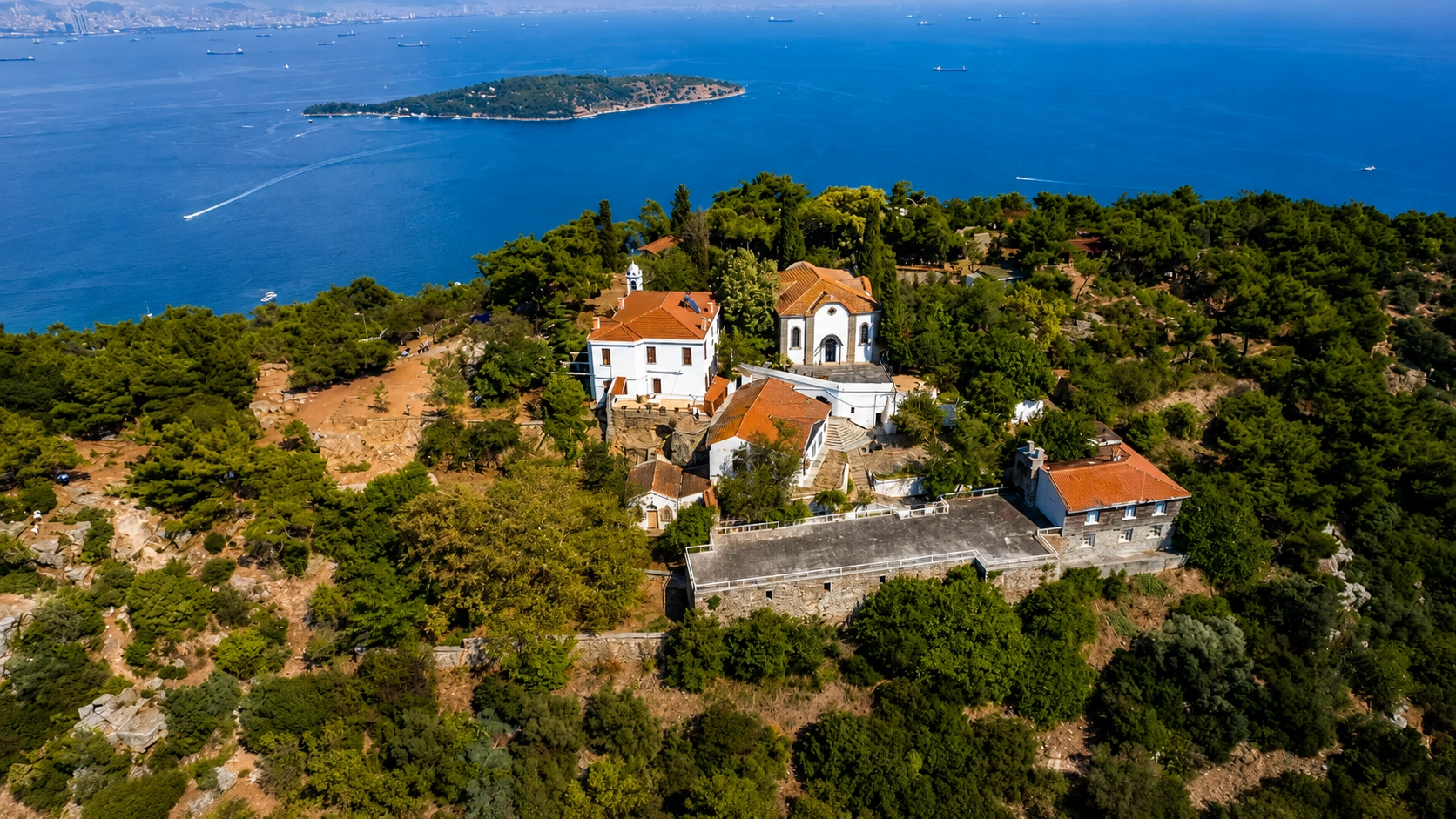
Perched at 204 metres above the Sea of Marmara on Büyükada — the largest of Istanbul's Princes' Islands — the St. George Monastery (Aya Yorgi, formally Hagios Georgios Koudonas, "of the Bells") draws pilgrims, historians and first-time island visitors in equal measure. The hilltop complex comprises a modest older chapel and a stone church opened in 1909, approached by a steep trail flanked by wish-ribbons and views that sweep across the Marmara to the Asian shore of Istanbul. Entry is free; the climb is real; the atmosphere is unlike anywhere else in the city.
St. George Monastery, Büyükada — Who Is It For?
| Visitor type | Best plan | Why it fits | Watch out for |
|---|---|---|---|
| Pilgrims and devout visitors | April 23 or September 24 feast day; take the first morning ferry from Kabataş or Bostancı | One of Turkey's most atmospheric pilgrimage sites, genuinely cross-faith and welcoming | Extreme crowds on April 23, which is also a national public holiday; island capacity fills by late morning |
| History and culture travellers | Weekday in spring or autumn; combine with the Adalar Museum and island architecture | Byzantine-era tradition, Ottoman continuity, 1905 stone church, living Patriarchate heritage | Opening hours are not published with central authority — allow flexibility if timing is critical |
| Day-trippers from Istanbul | Morning ferry, Aya Yorgi before midday, Dilburnu Nature Park in the afternoon | Full island day: monastery, nature park, seaside lunch, historic wooden mansions | Summer weekends are heavily congested; ferry queues at Kabataş can start well before departure |
| Families with children | Spring or autumn; avoid feast days; use the island electric bus for the lower approach | Combination of nature, history and sea views suits a wide range of ages | The trail to the monastery is steep and unpaved — not suitable for pushchairs or young children being carried |
| Photographers and videographers | Weekday morning before 09:00 or late afternoon in spring or autumn | Aerial Marmara panorama, icon-filled interior, wish-ribbon trail, Ottoman wooden mansions below | Discretion is essential inside the church — no flash, respect worshippers, restrict interior photography on feast days |
A Brief History of Aya Yorgi on Prinkipo
The Greek Orthodox Monastery of Hagios Georgios Koudonas — "Saint George of the Bells" — occupies the summit of Yüce Tepe, the southern and highest peak of Büyükada. The island itself takes its name from the Greek Prinkipo (meaning "first" or "prince"), a word that survives in the English collective name "Princes' Islands" and the Turkish term Adalar.
The monastery's deep origins are rooted in legend more than in surviving documentation. Tradition places the founding in 963 AD during the reign of Byzantine Emperor Nikephoros II Phokas, but no contemporary record confirms this. The monastery's distinctive epithet — Koudonas, "of the Bells" — derives from a later legend: local tradition tells of a shepherd boy in the early seventeenth century who heard bells ringing from underground on the hillside. Digging where the sound was loudest, he uncovered a buried icon of Saint George, hidden, the story holds, by Orthodox priests protecting it from the Fourth Crusade's sack of Constantinople in 1204. The icon's miraculous recovery revived the site's spiritual significance and gave it the name it still carries.
What the historical record does confirm is that by 1751, the Ecumenical Patriarchate had documented the construction of a chapel on the site. An older modest structure — known today as the eski kilise (old church) — survives alongside the main building. The stone church that forms the centrepiece of the visible complex today was built beginning in 1905 and formally opened in 1909, making most of what visitors see a building of the early twentieth century, even if the site's spiritual identity reaches back much further.
Through the Ottoman period, Büyükada had a predominantly Greek population, and the monastery served as the spiritual anchor of that community. Annual pilgrimages grew steadily, drawing worshippers from across Istanbul and, on the principal feast days, from further afield. The traditions established in those generations remain largely intact today.
Pilgrimage, Wish Rituals and Religious Etiquette at Aya Yorgi
Aya Yorgi is remarkable among religious sites in Turkey for the breadth of people it draws. Orthodox Christians, Muslims and secular visitors all participate in its traditions, giving the site a genuinely cross-faith character in practice even though it remains an active Greek Orthodox monastery in identity. An academic study published in 2020 describes it as a "shared pilgrimage-shrine" — a designation that reflects what you will observe on any busy day at the site.
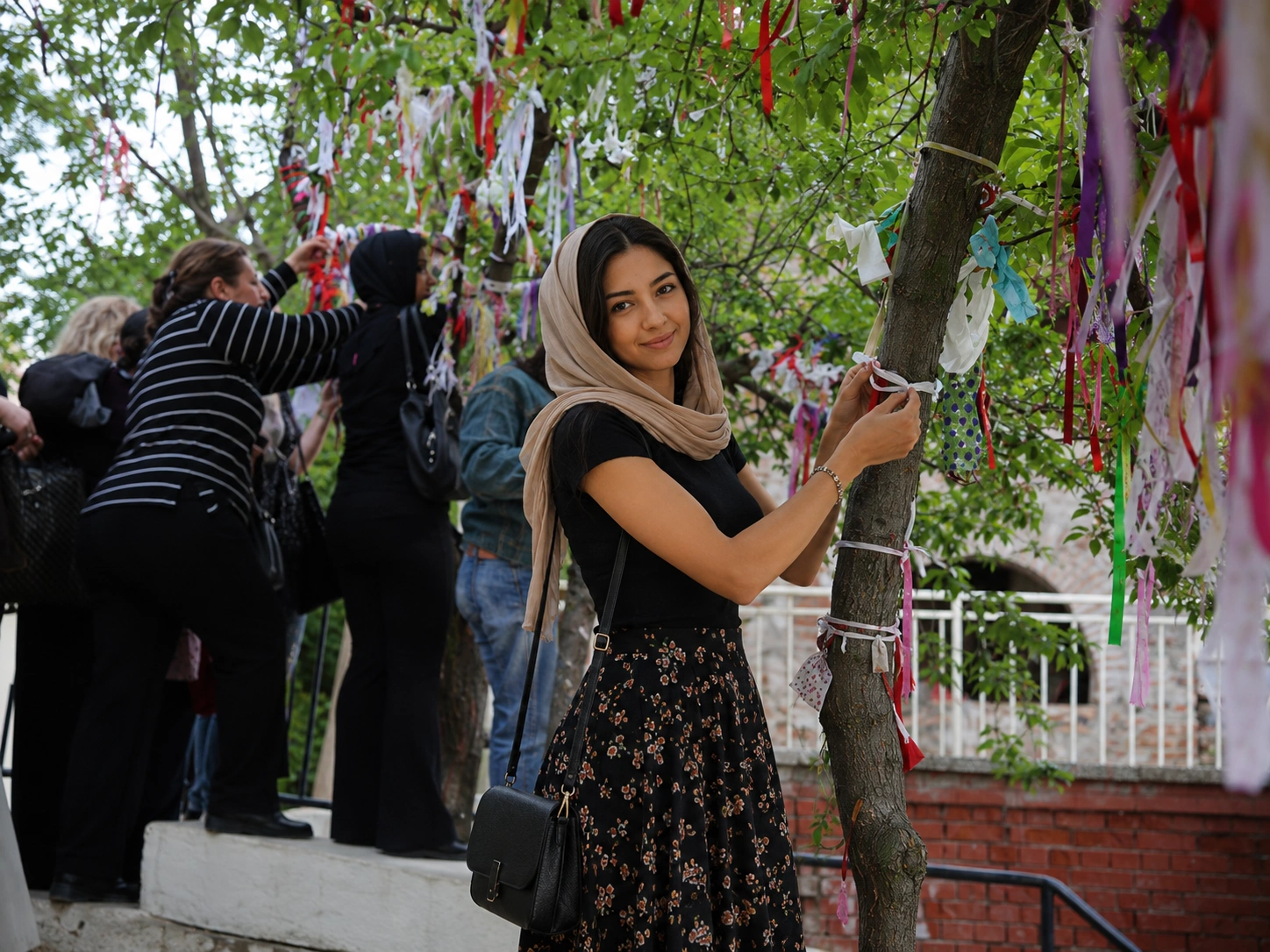
The most visible custom involves tying coloured thread or rope to the trees and bushes lining the hillside path during the ascent. Local belief associates red thread with wishes for love and relationships, and white thread with health and peace. Some pilgrims bring a spool of rope and unwind it the full length of the path to the church — a practice said locally to "open one's fate." Silence is traditionally observed during the climb; a small number of especially devoted pilgrims ascend barefoot.
Inside the church, the rituals continue: lighting candles, offering prayers before the icons of Saint George, and purchasing a small bell or key from the church as a token of one's petition. Tradition holds that if the wish comes true, the pilgrim returns the object to the monastery. These are folk customs — devotional practices that have evolved over generations — and they coexist with the monastery's formal liturgical life rather than replacing it. Visitors of any background are welcome to observe and participate respectfully.
The Climb to Yüce Tepe: Route, Time and Difficulty
From Büyükada's central square (the meydan, near the electric vehicle terminal), the trail to the monastery is approximately one kilometre of continuous uphill path, gaining roughly 150 metres in elevation. The ascent takes most visitors between 20 and 45 minutes, depending on fitness and pace. The path is unpaved in sections, steep through the middle stretch, and can be slippery in wet weather.
The climb is achievable for most reasonably fit adults. It is not suitable for visitors with significant mobility difficulties, and it is not accessible for pushchairs or wheelchairs. The path is exposed to direct sun from mid-morning, making the afternoon climb in July and August genuinely uncomfortable. An early start — before 09:30 in summer — is strongly advisable. Most visitors walk both directions, with the descent taking noticeably less time than the ascent.
The island's electric buses (IETT lines BA-1, BA-2, BA-3) serve the lower approaches and the island circuit, but they do not reach the monastery summit itself. The final trail section is walk-only, regardless of how you approach the hillside.
| Stage of the visit | Time needed | Difficulty | Practical notes |
|---|---|---|---|
| Ferry pier to island meydan | 5–10 min walk | Easy, flat | Follow the main road from the terminal inland to the central square |
| Meydan to foot of the hill | 10–15 min walk | Easy, gently uphill | Through quiet residential streets; signs to Aya Yorgi at the main junctions |
| Hill trail to the monastery | 20–45 min | Moderate to challenging — steep, unpaved | Wish-ribbon trees begin midway. Bring water. Can be slippery in wet weather. |
| Time at the monastery and viewpoint | 30–60 min | Easy (flat summit terrace) | Allow additional time on feast days. Visit both church structures, the summit viewpoint and the ayazma area. |
| Descent to the meydan | 15–30 min | Easy to moderate | Knees feel the downhill sections more than the ascent. Solid shoes essential throughout. |
| Total Aya Yorgi excursion | 1.5–2.5 hours | — | Add 30–60 min on feast days; allow additional time for travel to and from Istanbul |
What to See at the Monastery and Hilltop Viewpoint
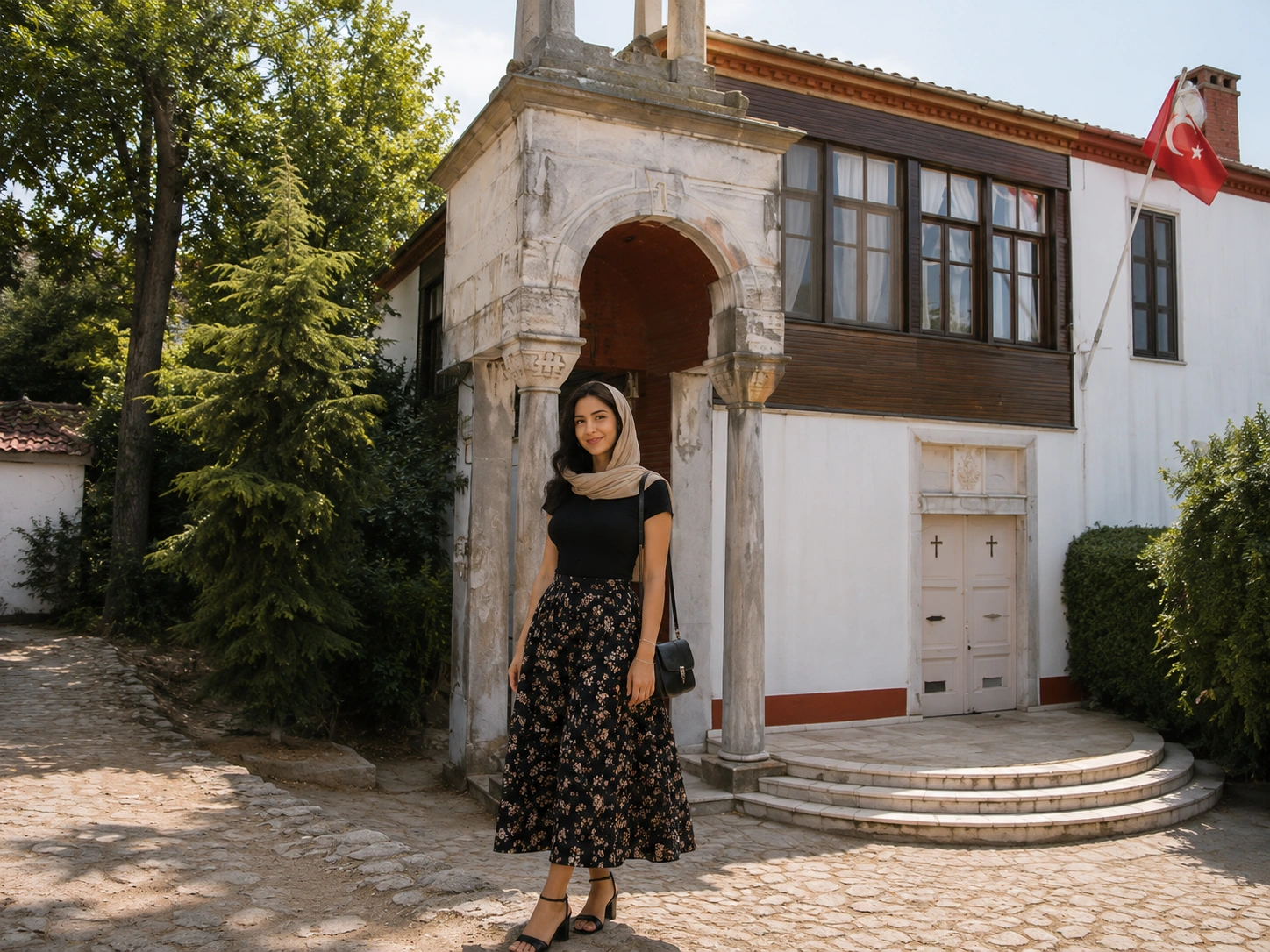
The monastery complex at Yüce Tepe includes two church buildings in close proximity. The older small chapel — known as the eski kilise (old church) — is a modest two-storey, tiled-roof structure that predates the main building. The 1905 stone church alongside it is the centrepiece of the site. Together they give the hilltop an intimate, layered character that rewards unhurried exploration.
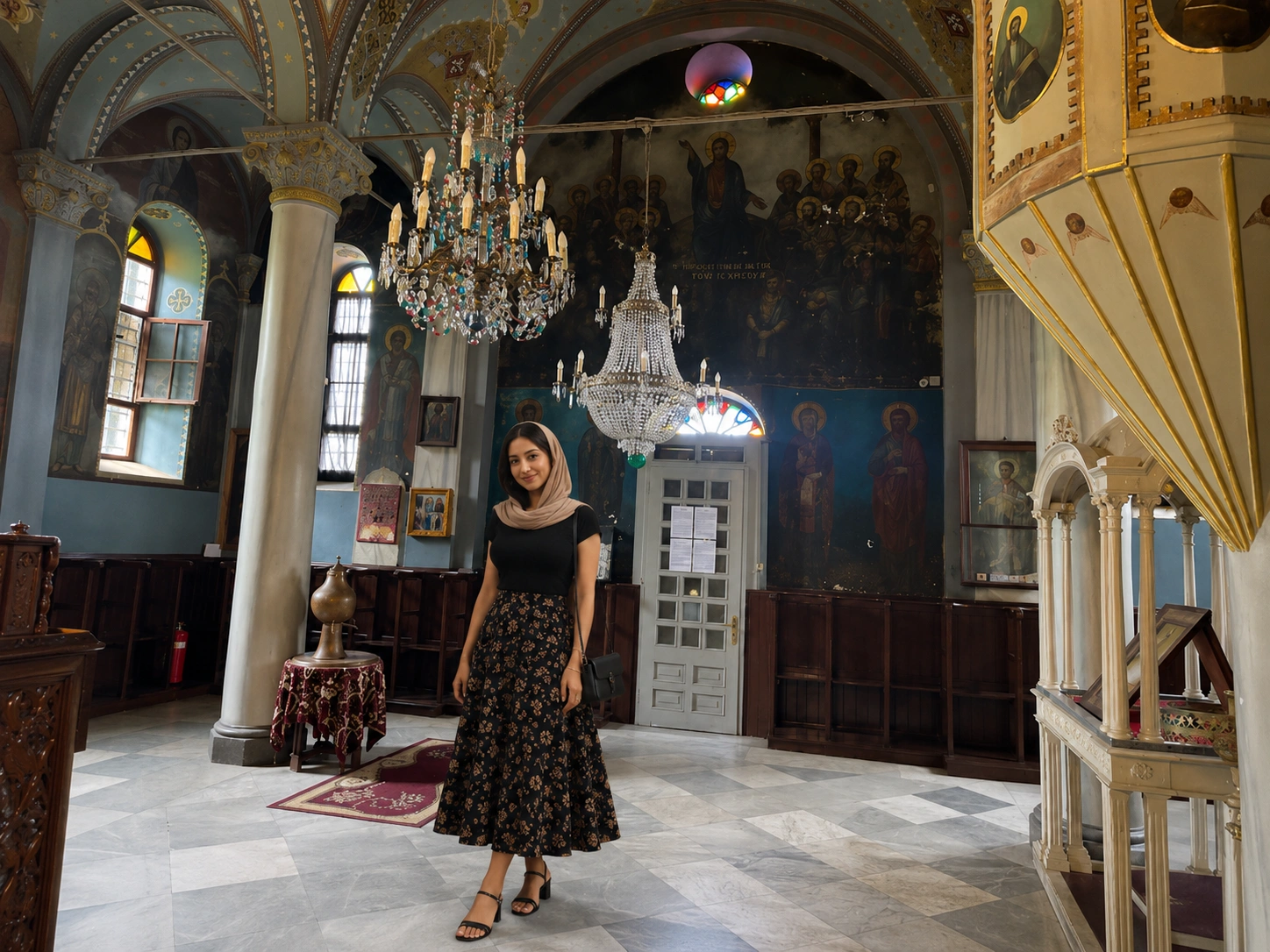
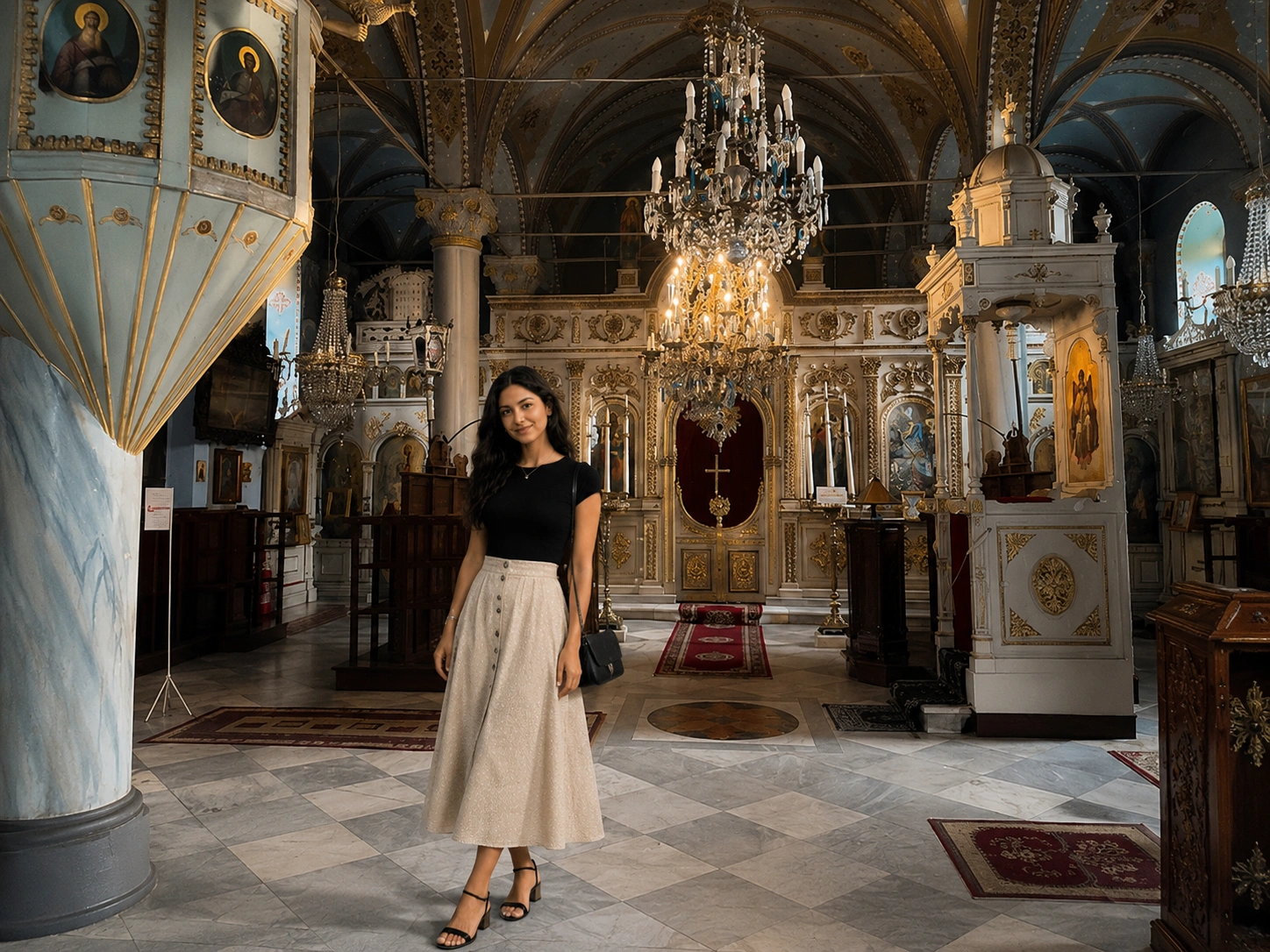
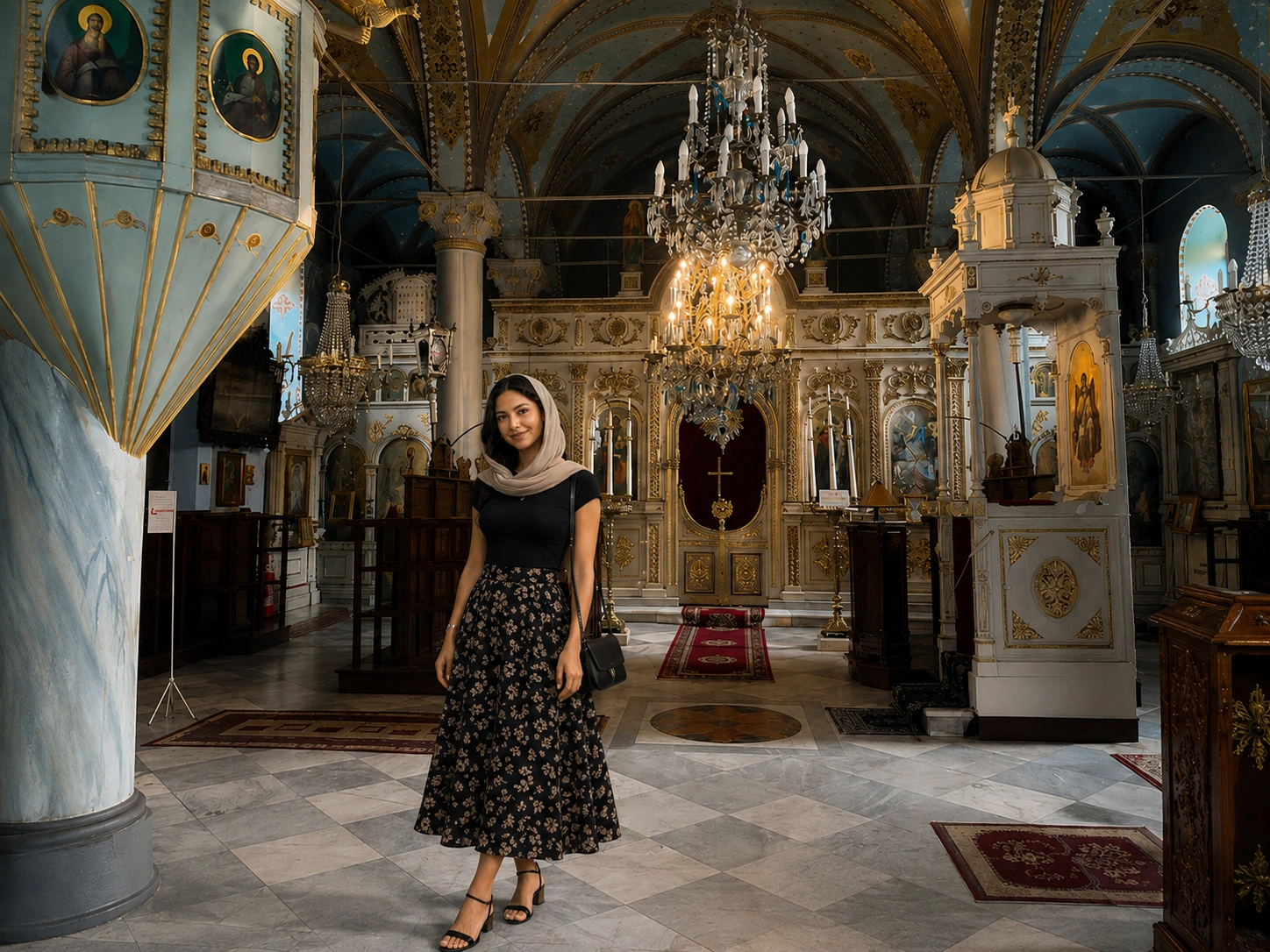
Inside the 1905 church, visitors find a traditional Orthodox interior: a carved wooden iconostasis separating the nave from the sanctuary, icon panels of Saint George in the warrior-saint tradition, candle stands and oil lamps. The atmosphere is quiet and reverent. Photography is generally tolerated outside and in the monastery grounds; inside the church, discretion is essential — no flash, no posing in front of the iconostasis or altar, and particular care when services are in progress or when pilgrims are at prayer.
Adjacent to the church buildings, the site includes an ayazma — a holy spring associated with Orthodox pilgrimage practice across Turkey and Greece. Visiting the spring and drinking from it is part of the devotional experience for many pilgrims. The spring's exact location within the complex should be confirmed on arrival, as access arrangements can vary.
The summit terrace is the monastery's other major draw. On a clear day, the panorama takes in the full chain of the Princes' Islands, the Asian shore of Istanbul and the open Marmara horizon. On the clearest mornings in winter and early spring, the Bithynian mountains of Bursa's hinterland are visible across the water. This is one of the finest viewpoints accessible from Istanbul.
Best Time to Visit: Quiet Days vs. Pilgrimage Days
The timing of a visit to Aya Yorgi shapes the experience considerably. Spring (April to early June) and autumn (September and October) offer the best overall conditions — mild temperatures, manageable visitor numbers and the island's pine hillsides at their most pleasant. Summer (July–August) brings excellent weather but significant congestion on weekends, long ferry queues at Kabataş and an uncomfortable afternoon climb in the heat. Winter is peaceful but ferry schedules reduce and some island facilities close seasonally.
The two Orthodox feast days — April 23 (Saint George's Day) and September 24 (Saint Thekla's Day) — transform Aya Yorgi into something extraordinary. Thousands of pilgrims from multiple religious backgrounds make the silent ascent together, some barefoot, in an atmosphere that is genuinely moving and difficult to replicate on an ordinary day. The practical cost is real: April 23 coincides with Turkey's national holiday, so plan on an early start — the first sailings from Kabataş or Bostancı at around 06:00–07:30 — and accept that island accommodation will be fully booked by the time you think to reserve it.
Büyükada Attractions to Combine in One Day
Büyükada rewards a full day's exploration, and Aya Yorgi works best as the centrepiece of a broader island itinerary. These are the attractions most easily combined with the monastery visit — all reachable by the island's electric bus network, bicycle or on foot.
| Attraction | Best for | Add to the same day? | Notes |
|---|---|---|---|
| Adalar Museum (Princes' Islands Museum) | Island history; context for Aya Yorgi and the Greek Orthodox community | Yes — ideal after the climb, before lunch | Located in town; check current opening days before visiting |
| Dilburnu Nature Park | Afternoon walk, sunset views, pine forest, sea swimming | Yes — excellent afternoon complement to a morning monastery visit | Free entry; open 08:30–22:30; on-site café; 20–25 min walk or electric bus from the meydan |
| Prinkipo Greek Orphanage (exterior) | Architectural scale; European heritage significance | Yes, briefly | Interior closed to visitors; a June 2026 agreement announced restoration as a luxury hotel. The exterior is visible from outside the fence and from the approaching ferry. Europe's largest wooden structure. |
| Historic wooden mansions (köşkler) | Late Ottoman island architecture, photography, sense of place | Yes — observe while walking between other sites | Admire from the street; these are private or institutionally owned buildings. Some of the finest surviving late Ottoman timber architecture in Turkey. |
| Büyükada harbour cafés and restaurants | Lunch or dinner; fish, seafood, island pastane (patisseries) | Yes — natural stop between the monastery and the afternoon circuit | Expect approximately 300–800 TRY per person for a meal with drinks (mid-2026 market estimate; no primary-source price confirmation). No sponsorship — compare menus on arrival. |
| Eskibağ Beach | Swimming; quieter than city beaches | Yes, if timing allows | Southern end of the island; accessible by bicycle or electric bus. One of the calmer sandy spots within easy reach of the centre. |
For a broader introduction to the island group — including Heybeliada, Burgazada and Kınalıada — see our Princes' Islands guide. For organised day-trip options to the islands, see our Princes' Islands tours guide.
Visitor Costs and Current Prices (Mid-2026)
Visiting Aya Yorgi itself costs nothing — entry is free and the ascent path is open. The main costs for a Büyükada day trip relate to ferry fares and island transport. USD equivalents below use an approximate rate of 37–38 TRY per USD as of mid-2026; Turkish lira exchange rates fluctuate significantly and all figures should be treated as orientation only. Always check the ferry operator's current schedule and pricing before you travel.
| Cost item | Current local price / range | Approx. USD (mid-2026) | Notes |
|---|---|---|---|
| Ferry — Kabataş to Büyükada (Şehir Hatları) | ~137 TRY one way (full fare with Istanbulkart) | ~$4 USD | Student ~69 TRY; 65+ ~96 TRY. Check sehirhatlari.istanbul for current fares. Journey time: ~1 hr 45 min, stops at 3 islands. |
| Ferry — Bostancı to Büyükada (Asian side) | Similar range; check current fare | ~$3–4 USD | Faster option — approximately 50–60 min. Better for visitors staying on the Asian side. Istanbulkart accepted. |
| St. George Monastery / Aya Yorgi Church — entry | Free | Free | Candles and devotional items (bells, keys) purchased inside are voluntary. No ticket; no mandatory donation. |
| Island electric bus (IETT — BA-1, BA-2, BA-3) | Exact 2026 fare not confirmed — verify at the stop on arrival | Under $1 USD | Istanbulkart accepted. Published launch-era prices (2020) are outdated. Check the current rate board at the terminal. |
| Bicycle rental (standard) | ~300–500 TRY/day | ~$8–14 USD/day | Multiple shops near the ferry pier. Reserve in advance in summer. E-bikes also available at higher rates. |
| Dilburnu Nature Park entry | Free | Free | Open 08:30–22:30. On-site café at market prices. |
| Refreshments near the monastery summit | Market prices — not confirmed from a primary source | — | A small café is reported near the summit. Hours and prices could not be verified before publication. Bring water regardless. |
| Harbour restaurant meal, Büyükada | ~300–800 TRY/person (market estimate) | ~$8–22 USD/person | Mid-2026 range estimate; varies by venue, season and order. No primary-source confirmation. Compare menus on arrival. |
A One-Day Büyükada Itinerary Including Aya Yorgi
This itinerary works best on a weekday in May, June, September or October — mild temperatures, manageable crowds, and the island's coastal light at its finest. In July and August, move everything 30–60 minutes earlier to avoid the midday heat on the Yüce Tepe trail.
06:30–07:30 — Take an early ferry from Kabataş (European side) or Bostancı (Asian side). Morning sailings deliver you to Büyükada before the crowds and the midday heat. The light on the Marmara at this hour is excellent for photography from the ferry deck.
08:30–09:00 — Arrive at Büyükada pier. Walk the 5–10 minutes to the meydan. If you plan to cycle the island later, collect a bicycle here from one of the rental shops near the pier.
09:00–09:30 — Begin the ascent toward Yüce Tepe. The path is signposted from behind the meydan. Take water; the wish-ribbon trees start midway up and the views open significantly as you approach the summit.
09:30–11:00 — Explore the monastery complex: the older chapel, the 1905 stone church, the ayazma, and the summit viewpoint. Take your time — this is a living religious site and rewards unhurried attention.
11:30–13:00 — Descend to the meydan and lunch at one of the harbour-side restaurants. Fresh fish is a reliable choice; old-style island patisseries are worth a stop for morning tea or a mid-morning coffee.
13:30–14:30 — Visit the Adalar Museum or walk the island's historic street grid, noting the late Ottoman wooden mansions that appear at every corner. A brief detour to the exterior of the Prinkipo Orphanage gives a sense of its extraordinary scale.
14:30–17:00 — Electric bus or bicycle to Dilburnu Nature Park for an afternoon walk, sea views and, if the day is warm, a swim at Eskibağ Beach.
17:30–19:30 — Return to the ferry pier for an evening sailing to Kabataş or Bostancı. The light across the Marmara in the late afternoon, with the Istanbul skyline to the north, is a fitting close to the day.
How to Get to Büyükada from Istanbul
The only scheduled public route to Büyükada is by ferry. No road bridge connects the Princes' Islands to the mainland, and private motorboats are not a standard tourist service.
Şehir Hatları (Istanbul City Lines) operates the principal services. From the European side, the main departure pier is Kabataş — reached via the T1 tram (Kabataş stop) or the Beyoğlu funicular. Beşiktaş is a secondary European option. From the Asian side, Bostancı is the faster choice — approximately 50–60 minutes compared to 1 hour 45 minutes from Kabataş, which stops at Kınalıada, Burgazada and Heybeliada on the way.
Istanbulkart gives the discounted public rate on all Şehir Hatları services and is the recommended payment method. A single fare from Kabataş was approximately 137 TRY (full rate, Istanbulkart, mid-2026) — check sehirhatlari.istanbul before travelling, as fares are updated periodically and the lira rate shifts. Private fast ferries (IDO / Dentur) also operate in summer from Kabataş at higher fares.
For visitors staying in Sultanahmet, Beyoğlu or near either Istanbul airport, a private transfer to the Kabataş or Bostancı pier for an early ferry simplifies a day that depends on catching a specific sailing — especially useful for families with luggage or guests who want to avoid navigating public transport in the morning rush. See our car with driver service for private pier transfers across Istanbul, or our Asian Istanbul guide for context on the Bostancı area and the Asian ferry network.
Practical Warnings Before You Go
Sunday services: Orthodox religious services take place on Sunday mornings at approximately 09:00–12:15. Tourist access to the church interior is restricted during this period. If visiting on a Sunday, arrive before 09:00 or after 12:30 — or simply sit at the summit viewpoint during the service and enter afterwards.
Opening hours — not confirmed: Published visitor hours vary significantly across sources, with figures of 08:00–16:00, 08:00–18:00 and 10:00–16:00 all reported in recent years. No single authoritative 2026 schedule was available at the time of writing. If your visit window is time-sensitive, verify locally on arrival or contact the Ecumenical Patriarchate in Istanbul.
Accessibility: The trail to Yüce Tepe is not accessible by wheelchair, mobility scooter or pushchair. The island's electric buses serve lower approaches but do not extend to the monastery summit. Anyone with significant mobility limitations should be aware that the Aya Yorgi experience requires the ability to walk a steep, unpaved kilometre uphill.
Summer heat: The trail is largely exposed. In July and August, midday temperatures on the hillside frequently exceed 35°C. Begin the ascent before 09:30 or after 17:00, carry at least one litre of water per person and use sun protection. The descent in full afternoon sun is uncomfortable and can be particularly hard on young children and older visitors.
April 23 — the crowded feast day: Saint George's Day coincides with Turkey's national public holiday. Ferries fill quickly; the island reaches saturation by late morning; the ascent trail moves slowly with thousands of pilgrims. Take the earliest possible sailing, plan to leave before the afternoon return surge, and note that island accommodation books out entirely on this date — reserve months in advance if you are planning to stay overnight.
Photography etiquette: Outside and in the grounds, photography is generally accepted. Inside the church, always be discreet — no flash, no positioning in front of the iconostasis or altar, no photography during services. On feast days when the interior is crowded with pilgrims in prayer, it is better to observe than to photograph.
The Prinkipo Orphanage: In June 2026, an agreement was signed to restore the building and convert it into a luxury hotel. As of that date, it is closed and cannot be entered. The exterior is visible from outside the fence and from the ferry approaching the island — both offer a clear sense of its extraordinary scale. Do not attempt to enter the grounds.
Istanbul Airport Transfer to Kabataş or Bostancı Ferry Pier
Arriving at Istanbul Airport (IST) for an early ferry to Büyükada? A private transfer to Kabataş removes the need to navigate two or three public transport connections in an unfamiliar city before dawn. Istanbul Airport transfer covers IST to all major ferry piers and hotels. For the Asian side and the Bostancı ferry, Sabiha Gökçen Airport transfer connects directly to the Bostancı departure point.
Car with Driver — Pier Transfers and Istanbul Day Trips
A car with driver in Istanbul can take you between your hotel and the Kabataş or Bostancı pier at a scheduled time — useful for early-morning ferry departures, families with luggage, and guests whose hotels are not on the T1 tram line. Cab Istanbul provides land-side transfers only; island ferry services are operated independently by Şehir Hatları.
Plan the Wider Istanbul Visit
For the Asian side of Istanbul — including the Bostancı ferry terminal, Kadıköy market and the Maiden Tower — see our Asian Istanbul guide. For a broader introduction to the city's waterways, piers and neighbourhoods along the strait, our Bosphorus guide covers the full picture.
Planning a Büyükada day trip from Istanbul?
Private Transfer to Kabataş or Bostancı Ferry Pier
Cab Istanbul provides private car transfers from Istanbul Airport, Sabiha Gökçen Airport and hotels across the city to Kabataş, Bostancı and other Istanbul ferry piers. We are not connected to the St. George Monastery, the Ecumenical Patriarchate, Büyükada's ferry operators or any island attraction — we make the road journey to the pier punctual, comfortable and uncomplicated.
Book a Car with Driver Istanbul Airport TransferSt. George Monastery Büyükada — Visitor FAQs
Is the St. George Monastery open to visitors every day?
In general, yes — the monastery and church are accessible to visitors during daytime hours. However, published opening times vary significantly across sources, with figures of 08:00–16:00, 08:00–18:00 and 10:00–16:00 all reported in recent years. No single confirmed 2026 schedule was available at the time of writing. Sunday mornings are additionally restricted due to Orthodox services (approximately 09:00–12:15). Verify locally if your visit depends on a specific time window; the Ecumenical Patriarchate in Istanbul can sometimes advise for specific enquiries.
Is there an entrance fee to visit Aya Yorgi Church?
No — entry to the monastery grounds and to the church is free. Inside, you may choose to light a candle or purchase a small devotional item (a bell or key associated with the wish-making tradition), both of which are entirely voluntary. There is no ticket, no timed entry system and no mandatory donation at the gate.
How difficult is the climb to the monastery?
The trail from the island's town centre to the monastery summit is approximately one kilometre of continuous uphill walking, gaining roughly 150 metres in elevation. Most reasonably fit adults complete the ascent in 20–45 minutes. The path is steep in the middle section, unpaved in parts and can be slippery when wet. It is not suitable for pushchairs, wheelchairs or those with significant mobility limitations. Bring water; the path is largely exposed to direct sun, especially above the midpoint.
What is the wish-ribbon tradition at Aya Yorgi?
The tradition involves tying coloured thread or rope to the trees and bushes lining the ascent path while walking in silence. Local belief associates red thread with wishes for love and relationships, and white thread with health and peace. Some pilgrims bring a spool of rope and unwind it the full length of the path. Inside the church, candles are lit, prayers offered, and a small bell or key may be purchased as a token of one's petition — with the intention of returning the item if the wish is fulfilled. These are folk devotional practices, not Orthodox sacraments, and they coexist with the monastery's formal religious life. Visitors of any background may observe and participate respectfully.
When are the main pilgrimage days at Aya Yorgi?
The two principal pilgrimage days are April 23 (the Orthodox feast day of Saint George) and September 24 (the feast day of Saint Thekla). Both draw thousands of visitors of diverse religious backgrounds. April 23 coincides with Turkey's National Sovereignty and Children's Day — a national public holiday — which means ferries and the island are at maximum capacity. If you plan to attend on April 23, take the earliest possible ferry from Kabataş or Bostancı, typically around 06:00–07:30.
Can non-Christians visit the monastery?
Yes. Aya Yorgi has long been a cross-faith pilgrimage site in practice, drawing Muslim visitors, secular travellers and Orthodox Christians alongside one another. The monastery is an active Greek Orthodox religious site, so respectful behaviour and appropriate dress — shoulders and knees covered — are expected from all visitors regardless of background. The wish-making traditions on the hillside path are participated in by people of many faiths and none.
What is the best time of year to visit?
Spring (April to early June) and autumn (September–October) offer the best combination of mild weather, manageable crowds and pleasant island conditions. Summer (July–August) is hot for the climb and heavily crowded on weekends. Winter is peaceful but ferry schedules reduce and some island facilities close. Weekday visits are significantly calmer than weekends in all seasons.
How do I get to Büyükada from Istanbul?
The only public route is by Şehir Hatları (Istanbul City Lines) ferry. From the European side, the main pier is Kabataş — journey time approximately 1 hour 45 minutes, stopping at three intermediate islands. From the Asian side, Bostancı is faster at approximately 50–60 minutes. Istanbulkart gives the public fare — approximately 137 TRY one way from Kabataş (mid-2026; check sehirhatlari.istanbul for current fares). Private fast ferries from IDO and Dentur also operate in summer at higher fares.
Are there cars or taxis on Büyükada?
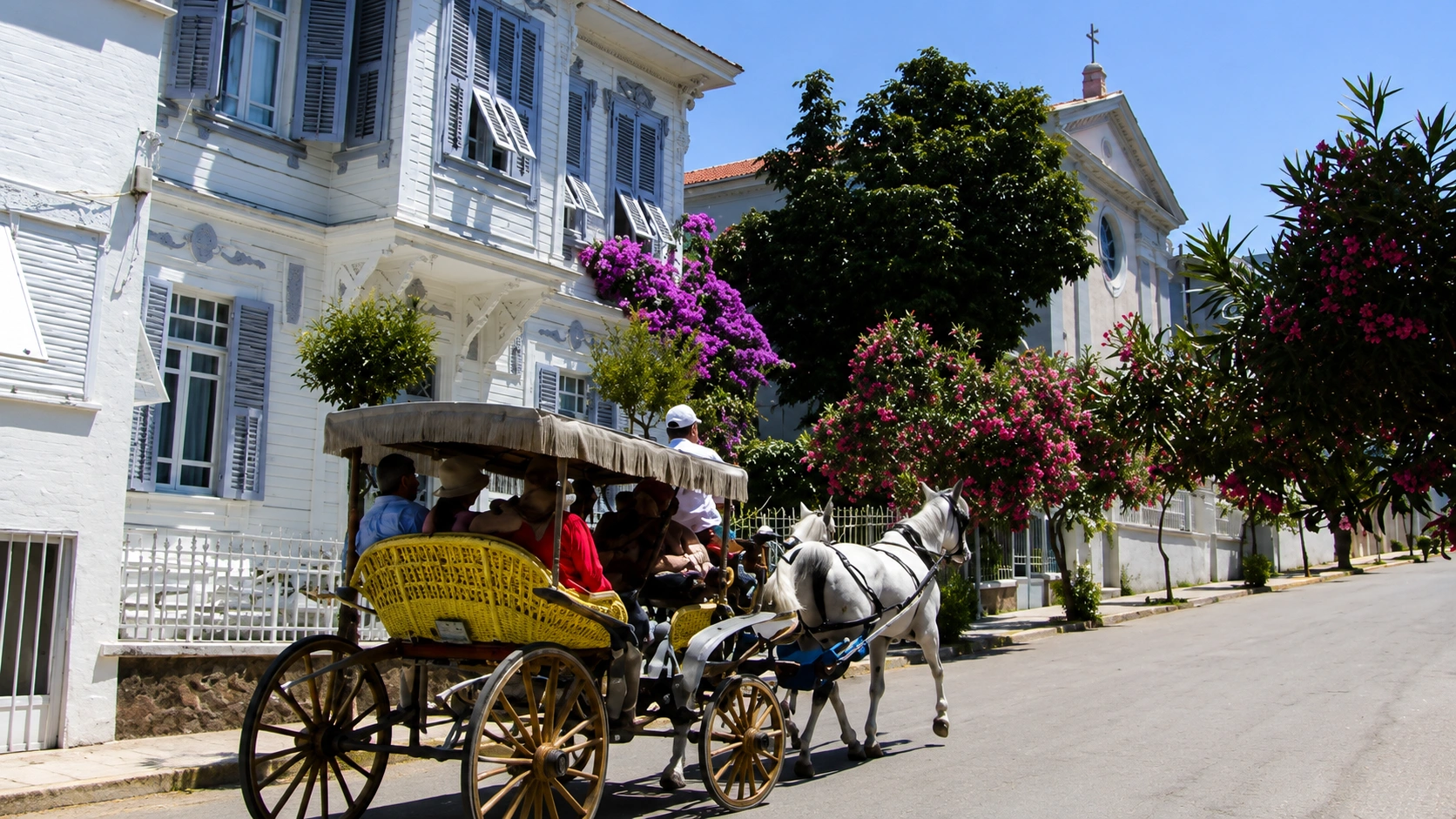
Private cars are not permitted on the island. Traditional horse-drawn faytons (carriages) were phased out and replaced from July 2020 by electric IETT buses operating three routes (BA-1, BA-2, BA-3). Walking and cycling are the primary means of independent travel. Standard bicycle rental near the ferry pier costs approximately 300–500 TRY per day (mid-2026); e-bikes are also available at higher rates. The monastery trail itself is walk-only regardless of island transport.
Is photography allowed inside the St. George Church?
Photography outside and in the monastery grounds is generally accepted. Inside the church, always be discreet — no flash, no posing in front of the iconostasis or altar, and no photography when services are in progress. On feast days when the interior is filled with pilgrims in prayer, it is better to observe than to photograph. The summit viewpoint and the wish-ribbon trail outside are freely photographable.
What is the status of the Prinkipo Greek Orphanage, and can I visit it?
The Prinkipo Greek Orphanage — the large wooden building visible from the ferry approach and from the island's northern roads — is the largest wooden structure in Europe and the world's second-largest. Built in 1898 and used as an orphanage from 1903 to 1964, it has been disused and deteriorating for decades. In June 2026, the Ecumenical Patriarchate, Bilgili Holding and a Greek investment partner signed an agreement to restore it as a luxury hotel. As of that date the building is closed and inaccessible to the public. It can be observed and photographed from outside the fence, and its full scale is best appreciated from the approaching ferry.