
Turkish television has quietly staged one of the most remarkable cultural expansions in modern broadcast history. From the living rooms of Buenos Aires to the screens of Lahore, Kuala Lumpur and Athens, the Turkish dizi has become a global obsession — not through a single breakout hit, but through wave after wave of compelling stories built on passion, family, honour and loss. This guide covers 40-plus series across every genre, with honest assessments of what makes each one worth your time — and what might give you pause.
Quick Answer: Which Turkish Series Should You Start With?
| Viewer Type | Start With | Why | Note |
|---|---|---|---|
| Romance lover | Kara Sevda (Endless Love) | International Emmy winner, powerful chemistry | Intense melodrama — pace yourself |
| History buff | Muhteşem Yüzyıl (Magnificent Century) | Ottoman palace epic, stunning production | Take historical details with care |
| Thriller fan | Ezel | 8.6 IMDb, tight plot, Count of Monte Cristo DNA | Remade in multiple countries |
| Prestige TV fan | Bir Başkadır (Ethos) | 8-episode Netflix gem, art-house quality | Slow burn, rewards patience |
| New to Turkish TV | Yargı (Verdict / Family Secrets) | Tight legal thriller, International Emmy 2023 | Available on multiple platforms globally |
| Comedy lover | Leyla ile Mecnun | Absurdist cult classic, unlike anything else in Turkish TV | Acquired taste — delightfully strange |
Why Turkish Series Conquered the World

Several factors converged to make Turkish television an unlikely export giant. Turkish series typically run 120 to 150 minutes per episode — closer to a film than a conventional TV episode — and are packed with enough plot for an entire season of American television. This creates an immersive viewing experience that encourages binge-watching long before the term was mainstream.
Production values soared in the late 2000s, with series like Muhteşem Yüzyıl bringing near-cinematic period costumes and Ottoman palace sets to primetime. Simultaneously, Turkish distributors aggressively pursued export deals across the Middle East, Eastern Europe, Latin America, and eventually South and Southeast Asia. By some estimates, Turkey became the world’s second-largest exporter of television drama after the United States — though precise figures vary depending on the methodology used.
The stories themselves tap into broadly human themes: forbidden love, family loyalty, betrayal, social injustice, and the collision between tradition and modernity. These are not uniquely Turkish anxieties. They resonate from Casablanca to Caracas, which explains why a series broadcast on a Turkish channel can generate record ratings on a Chilean channel weeks later.
Istanbul itself is a co-star in many of these productions. The Bosphorus waterfront, the historic mansions of Bebek and Arnavutköy, the cobblestone lanes of Balat, and the grandeur of Beyoglu all appear regularly as backdrops. For visitors to Istanbul, watching the series before or after a trip adds a genuine layer of cinematic recognition to real places.
The Essential Turkish Series: Overview Table
| Series | Years | Genre | IMDb | Best For | Beginner-Friendly? |
|---|---|---|---|---|---|
| Muhteşem Yüzyıl | 2011–2014 | Historical drama | 7.5 | Ottoman history fans, costume drama lovers | Yes |
| Diriliş: Ertuğrul | 2014–2019 | Historical epic | 8.1 | Epic action, pre-Ottoman world | Yes (long commitment) |
| Ezel | 2009–2011 | Crime thriller | 8.6 | Thriller fans, Monte Cristo readers | Yes |
| Aşk-ı Memnu | 2008–2010 | Classic romance | 8.1 | Timeless melodrama fans | Yes |
| Kara Sevda | 2015–2017 | Romantic drama | 8.3 | Romance lovers, Emmy winners | Yes |
| Fatmagül’ün Suçu Ne? | 2010–2012 | Social drama | 7.9 | Social justice themes, serious drama | Yes |
| Şahsiyet | 2018 | Psychological thriller | 9.1 | Prestige TV fans, crime drama lovers | Yes (12 episodes) |
| Bir Başkadır (Ethos) | 2020 | Prestige drama | 8.4 | Art-house viewers, slow-burn fans | Yes (8 episodes) |
| Kulüp (The Club) | 2021–2022 | Period drama | 8.1 | 1950s Istanbul, minority histories | Yes |
| Yargı | 2021–present | Legal thriller | 8.5 | Plot-driven fans, mystery lovers | Yes |
| Behzat Ç. | 2010–2019 | Crime / dark comedy | 9.0 | Turkish culture enthusiasts, noir fans | Best after some Turkish context |
| Leyla ile Mecnun | 2011–2013 | Absurdist comedy | 8.8 | Cult comedy lovers, surrealism fans | Acquired taste |
| Erkenci Kuş | 2018–2019 | Romantic comedy | 8.1 | Light romance, feel-good viewing | Yes |
| Sen Çal Kapımı | 2020–2021 | Romantic drama | 8.2 | Netflix romance fans | Yes |
| Masumlar Apartmanı | 2020–2021 | Psychological drama | 8.7 | Dark drama fans, character studies | Yes |
| Kızılcık Şerbeti | 2022–present | Social satire | 7.8 | Modern Turkey, lifestyle clash drama | Yes |
| Yalı Çapkını | 2022–present | Family romance | 7.5 | Wealthy Istanbul drama fans | Yes |
| Çukur (The Pit) | 2017–2021 | Crime / family epic | 8.5 | Long-form crime saga fans | Yes |
| Masum (Innocent) | 2017 | Crime drama | 8.8 | Prestige drama fans | Yes (short run) |
| İçerde (Insider) | 2016–2017 | Undercover crime | 8.3 | Action and spy drama fans | Yes |
| Binbir Gece | 2006–2009 | Romantic drama | 7.8 | Classic era Turkish fans, LATAM viewers | Yes |
| Gümüş (Noor) | 2005–2007 | Romance | 6.5 | Arab world pioneer, early Turkish export | Historical interest |
| Sıla | 2006–2008 | Drama | 7.4 | Early global Turkish drama fans | Yes |
| Yaprak Dökümü | 2006–2010 | Family saga | 8.0 | Long family drama fans | Yes |
| Kardeşlerim | 2021–present | Family drama | 8.3 | Family dynamics, emotional storytelling | Yes |
The Best Romantic Turkish Series
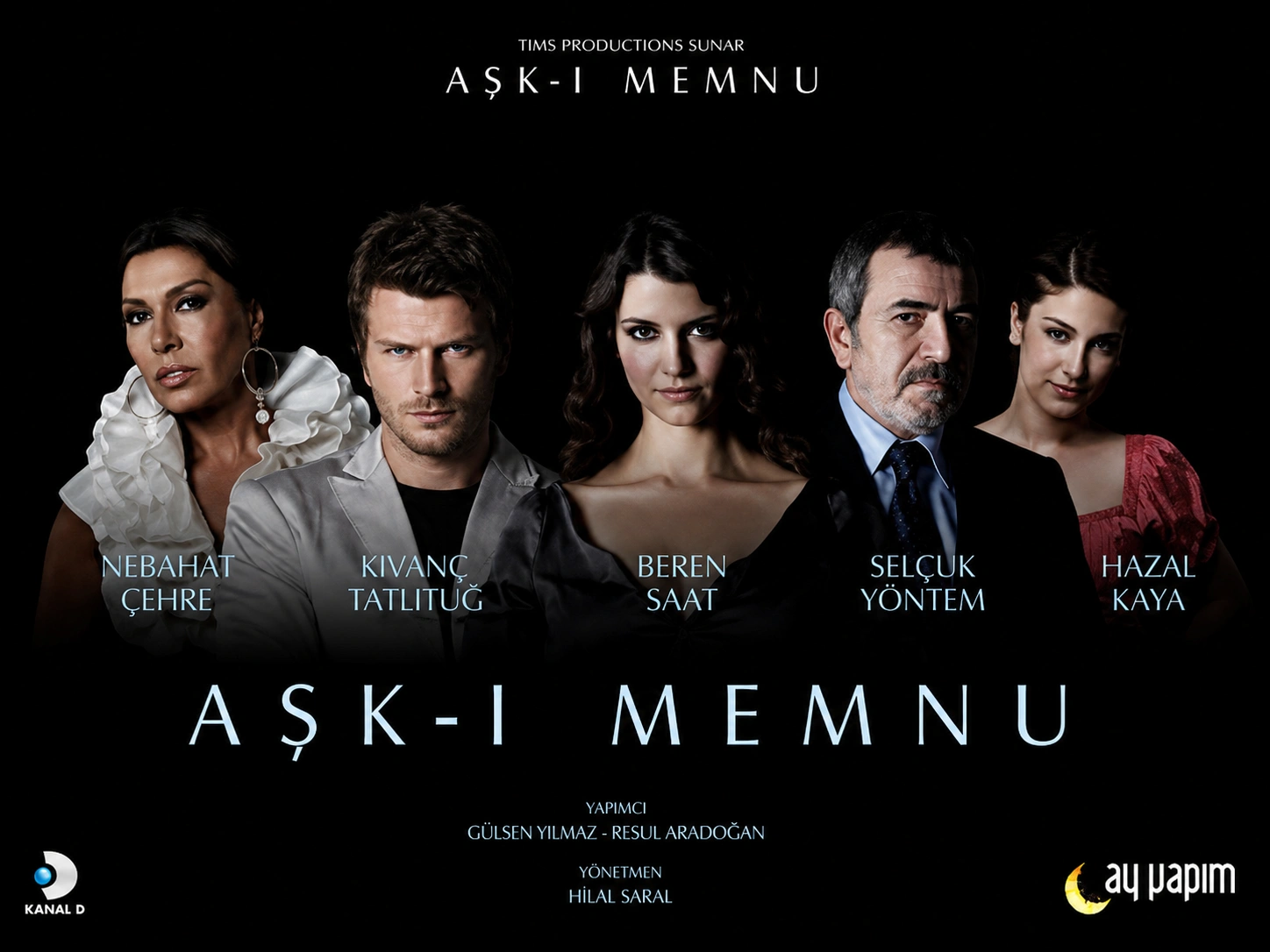
Aşk-ı Memnu / Forbidden Love (2008–2010)
Based on Halit Ziya Uşaklıgil’s 1900 novel of the same name, Aşk-ı Memnu is widely considered the defining Turkish romantic drama of its era. The story centres on a wealthy older man who brings a young wife — the beautiful Bihter — into his household, where she falls for his nephew Behlul. What follows is a slow-burning triangle of obsession, guilt and social expectation that feels as contemporary as it does classical.
The series became a phenomenon in Pakistan, where it reportedly achieved record ratings on Urdu 1, and it remains a benchmark against which later Turkish romances are measured. Beren Saat’s performance as Bihter is frequently cited as one of the finest in Turkish television history. At 79 episodes, it is a manageable entry point into the longer-form Turkish drama format, and it respects the audience’s intelligence throughout.
Kara Sevda / Endless Love (2015–2017)
Kara Sevda made history on 21 November 2017, when it won the International Emmy Award for Best Telenovela at the 45th ceremony in New York — becoming the first Turkish series ever to win the award. The 74-episode drama follows Kemal, a working-class young man, and Nihan, the woman he loves but cannot have, as their story is repeatedly derailed by family, class and circumstance.
Produced by Ay Yapım and broadcast on Star TV, the series was licensed to more than 60 countries and found particularly strong audiences in the US Hispanic market via Univision. Burak Özçivit and Neslihan Atagül lead a cast that brings credible emotional weight to what is, at heart, an intensely melodramatic story. New viewers should be prepared for the emotional intensity: Kara Sevda earns its reputation as one of the most emotionally demanding Turkish dramas available.
Erkenci Kuş / Daydreamer (2018–2019)
Can Yaman became an international star through this breezy romantic comedy, which follows Sanem, an aspiring writer who ends up working at an Istanbul advertising agency — and falling for her enigmatic, adventure-loving boss Can. The chemistry between the leads made it a global streaming-era hit, particularly in Italy and Latin America. The humour is warmer and less intense than most Turkish dramas, making it an excellent gateway series for viewers who find the melodrama of the classic era daunting.
Sen Çal Kapımı / Love Is in the Air (2020–2021)
This streaming-era romantic drama follows Eda, a landscape architecture student, and Serkan, a successful businessman who makes her an unusual offer. The writing leans into the Cinderella-meets-corporate-Istanbul premise with charm and self-awareness, and the series found an enthusiastic international audience on Netflix during pandemic-era lockdowns. It is lighter in tone than the classic Turkish drama canon, closer to a romantic comedy series than a full-scale melodrama.
The Best Historical Turkish Series
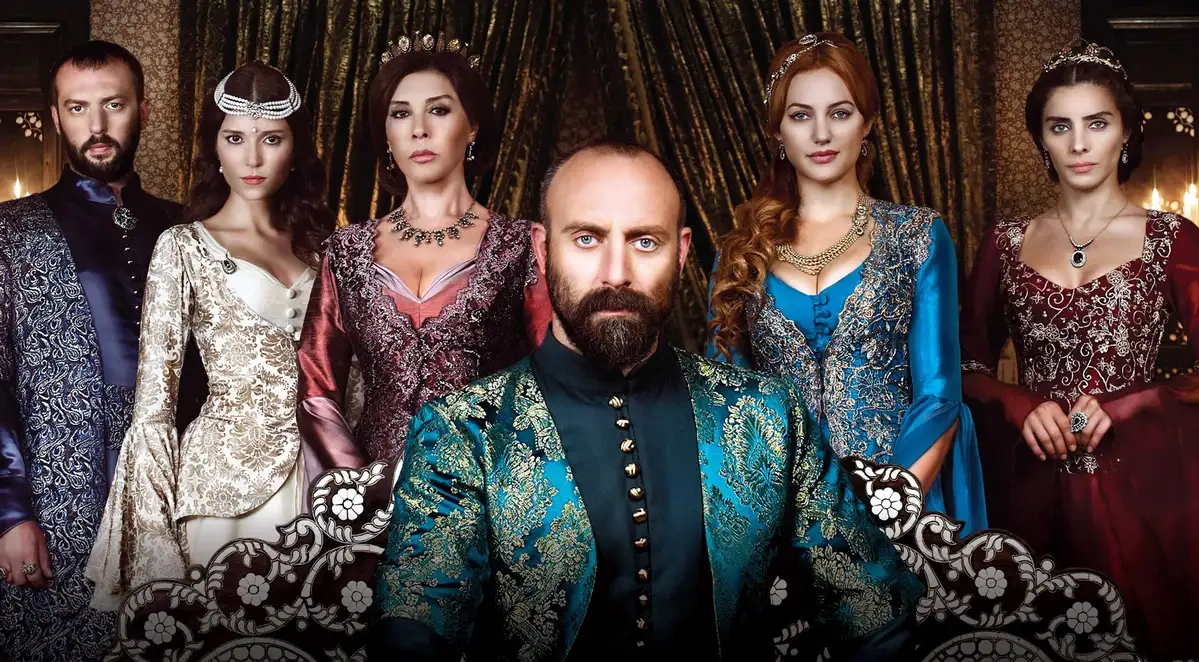
Muhteşem Yüzyıl / Magnificent Century (2011–2014)
Few Turkish series have generated as much global fascination — or as much domestic controversy — as Muhteşem Yüzyıl. Set in the court of Suleiman the Magnificent, the series traces the rise of Hürrem Sultan, a slave from the Ruthenian provinces who became the most powerful woman in the Ottoman Empire. The production values are extraordinary: costumes, sets, palace politics and harem intrigue are rendered with a sumptuousness that made the series addictive viewing across more than 50 countries, from the Balkans and the Arab world to Latin America.
The controversy at home is worth knowing. Turkey’s broadcasting watchdog RTÜK reportedly received tens of thousands of complaints, and then-Prime Minister Erdoğan publicly criticised the series for depicting Suleiman in domestic settings rather than on horseback and in battle. The show’s creators maintained they were making drama, not a documentary. Viewers should treat the historical details as inspired by real events rather than a faithful record — which is true of virtually all historical drama worldwide. For a real sense of the palace where this history unfolded, a visit to Topkapı Palace is an extraordinary complement to the series.
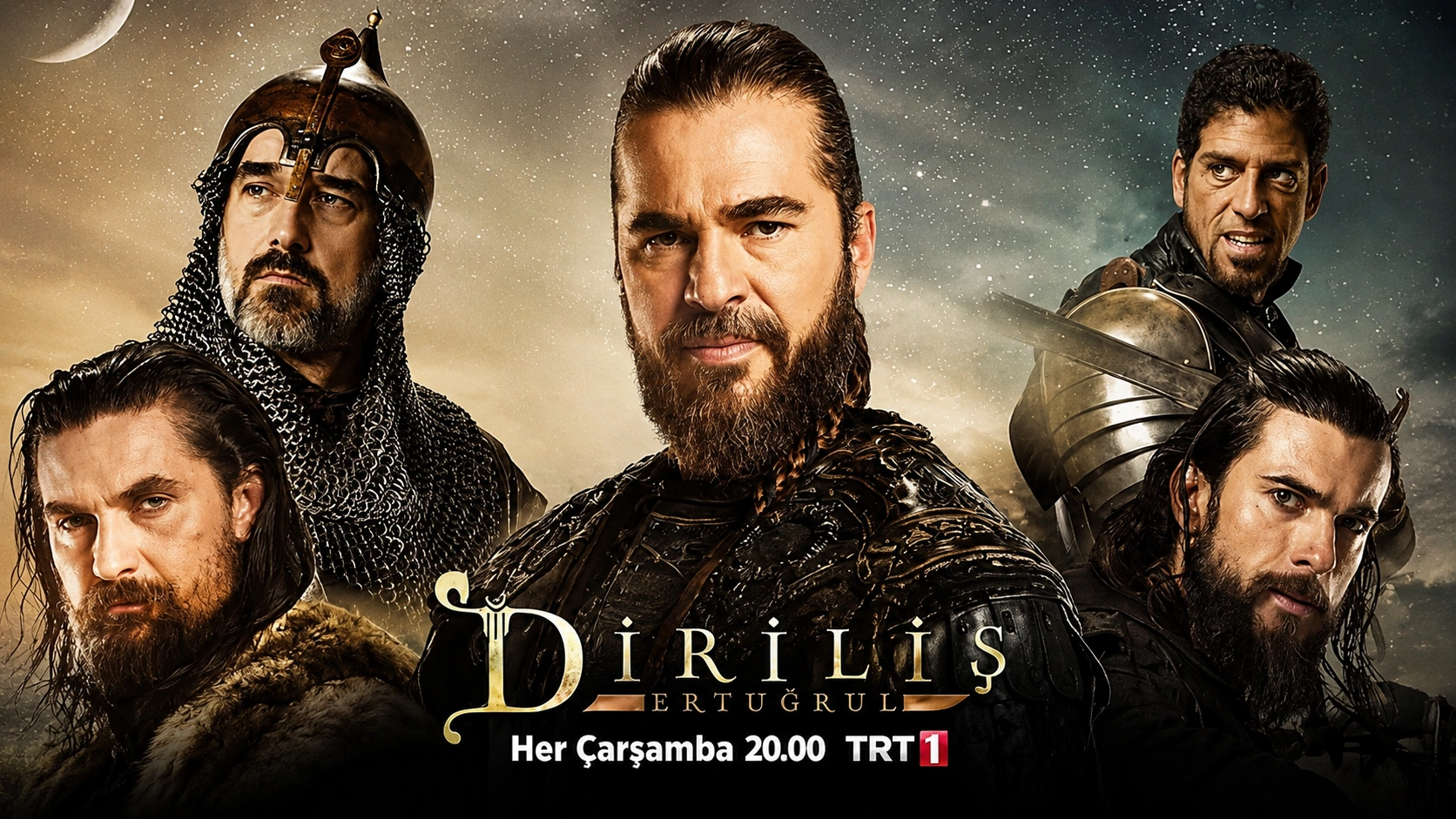
Diriliş: Ertuğrul / Resurrection: Ertugrul (2014–2019)
If Muhteşem Yüzyıl conquered the Arab world and Europe, Diriliş: Ertuğrul conquered South and Southeast Asia on a scale that surprised the global media industry. Set in 13th-century Anatolia, the series follows Ertuğrul Bey, the father of Osman I — the founder of the Ottoman Empire — as he leads his Kayi tribe through conflict, faith and sacrifice. In Pakistan, the show was broadcast on the state channel PTV, and reportedly drew over 130 million viewers during a two-week window in 2020. Turkey exported the series to 71 countries and it was translated into more than 25 languages.
The series runs to 150 episodes in its original broadcast format (later re-cut into 448 shorter episodes on some streaming platforms), which is a significant time commitment. The historical narrative takes considerable creative liberties — character interactions, dialogue and many plot events are fictional constructions built around real names. This is typical of the genre, but worth stating clearly for viewers who come seeking historical accuracy.
Also notable in the historical category: Payitaht: Abdülhamid (2017–2021) depicts the reign of Sultan Abdulhamid II and has found large audiences in the Arab world. Mehmed: Bir Cihan Fâtihi (2018) covers the conquest of Constantinople and is a high-budget single-season production.
The Best Crime and Thriller Turkish Series

Ezel (2009–2011)
Regularly cited as one of the finest Turkish series ever produced, Ezel holds an 8.6 on IMDb — among the highest ratings for any Turkish production. Loosely based on Alexandre Dumas’ The Count of Monte Cristo, the series follows Eyup, a young man betrayed by his closest friends and the woman he loves, who reinvents himself as the mysterious Ezel and returns to exact a methodical, psychologically complex revenge.
What distinguishes Ezel from standard revenge drama is its writing: the plot is layered, the twists are genuinely unpredictable, and the characters evolve in ways that resist easy moral categorisation. The series gained a devoted following across Europe and South America, and distributor Eccho Rights reportedly signed over 150 international licences for the show. It has been formally adapted in Mexico (as Yago), Russia, Armenia and Romania (as Vlad), and a Hindi remake aired on Disney+ Hotstar.
Şahsiyet / Persona (2018)
Şahsiyet is a landmark in Turkish television: on 25 November 2019, Haluk Bilginer won the International Emmy Award for Best Actor at the 47th ceremony in New York for his performance in the series — the first Turkish actor to receive the award. He plays Agah Beyoglu, a retired bureaucrat diagnosed with Alzheimer’s who uses his fading memory as moral cover to execute people he holds responsible for past wrongs. The concept is as morally disturbing as it is compulsively watchable.
At 12 episodes, Şahsiyet is genuinely compact by Turkish drama standards. The production quality is exceptional — critics compared it favourably to prestige crime drama from the UK and Scandinavia — and the IMDb rating of 9.1 reflects a broad consensus that this is among the finest things Turkish television has produced. It is an ideal starting point for viewers who want the best of Turkish crime drama without a 100-episode commitment.
Yargı / Verdict (2021–present)
Yargı won the International Emmy Award for Best Telenovela at the 51st ceremony in November 2023. Known internationally as Family Secrets, the series centres on a prosecutor and a detective who become entangled in a murder investigation with personal consequences for both. The writing is tight and procedural in the best sense — each episode advances the plot meaningfully. Produced by Ay Yapım, it has been licensed to HBO Max, Apple TV and Amazon Prime Video in various territories, though availability varies by country.
Behzat Ç. (2010–2019)
Behzat Ç. is a different kind of Turkish series: a dark, sardonic crime drama set not in Istanbul but in Ankara, centring on a homicide detective who drinks too much, follows very few rules and somehow solves every case. The tone blends genuine crime thriller plotting with a black comedy sensibility unusual in Turkish television. It developed a passionate cult following among Turkish viewers — particularly those who appreciated its cynical portrait of Turkish bureaucracy and police culture. Less well-known internationally, it rewards viewers who have already worked through the major series.
Masum / Innocent (2017)
Masum is frequently described as the Turkish drama that most closely resembles prestige cable production from the United States or United Kingdom. A single-season, tightly constructed crime drama about two families torn apart by a murder in a small Turkish town, it prioritises atmosphere, character and moral ambiguity over melodrama. The limited-series format means there is no padding and no filler. If you want to see what Turkish television can do at its most disciplined, Masum is an excellent exhibit.
Çukur / The Pit (2017–2021)
A four-season family crime epic set in a fictional Istanbul neighbourhood controlled by the Kocovalı family, Çukur operates somewhere between The Godfather and a Turkish family saga. The scale is ambitious — multiple generations, shifting alliances, neighbourhood politics — and the series was enormously popular during its run on Star TV. Its episode count (in the 130s) makes it a significant commitment, but fans of long-form crime narratives will find it rewarding.
İçerde / Insider (2016–2017)
An undercover crime thriller in which a police officer infiltrates a criminal organisation, İçerde runs for two seasons and delivers consistent tension without the meandering that afflicts longer Turkish crime productions. It is an accessible entry point for viewers who want Turkish crime drama in a shorter format.
Best Prestige and Social Dramas
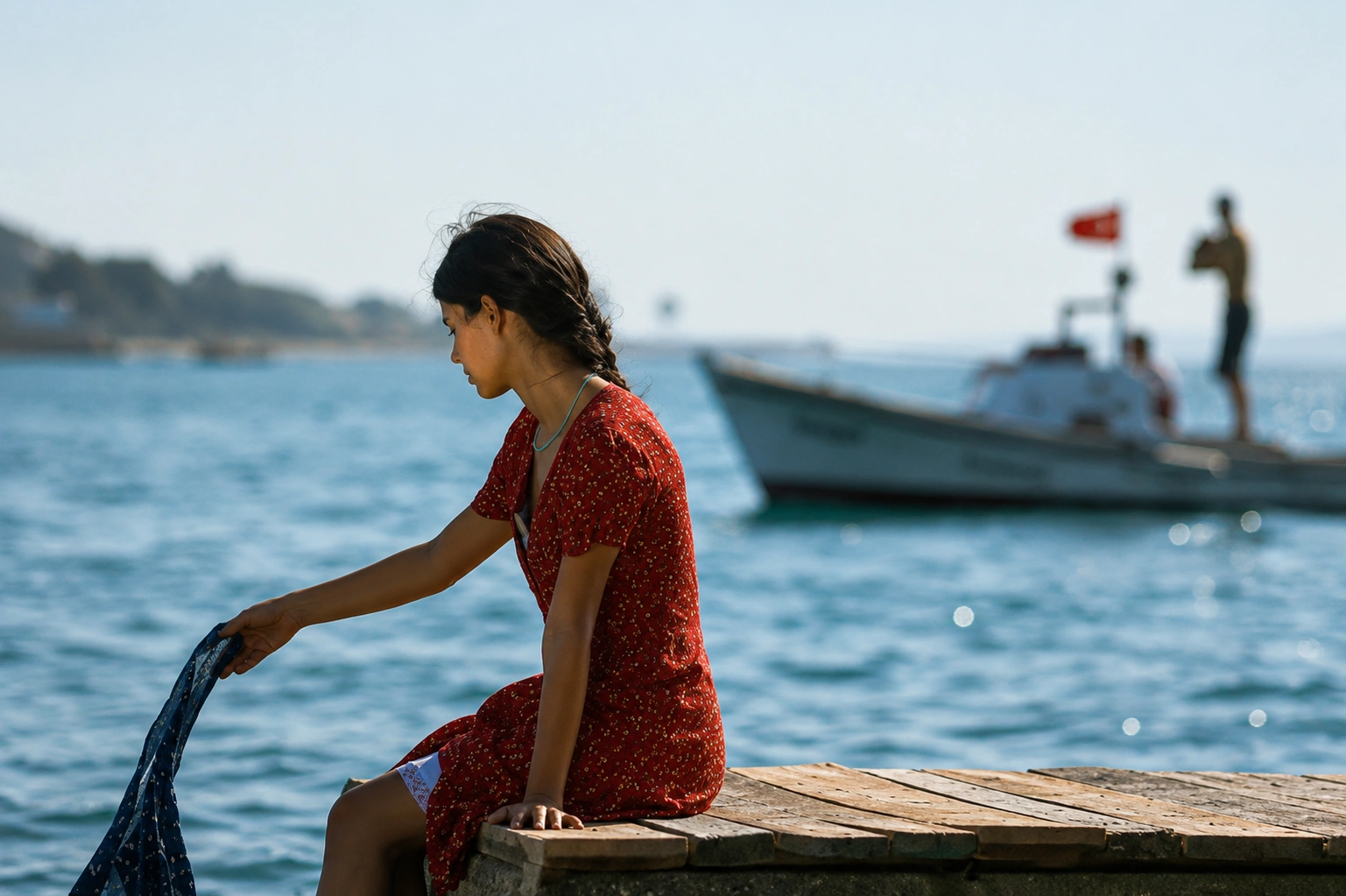
Fatmagül’ün Suçu Ne? / What Is Fatmagül’s Fault? (2010–2012)
Of all the Turkish series that have crossed cultural and linguistic frontiers, Fatmagül’ün Suçu Ne? may have had the most significant social impact. The story centres on a young woman who survives a violent assault and then fights for justice in a system — and a community — that repeatedly fails her. The drama addresses issues of gender-based violence, institutional indifference and social shame with a directness that was unusual for mainstream Turkish television at the time.
The series was reportedly watched by 12 million viewers per episode in Argentina alone, and it received the audience award for best foreign drama in France. It has been credited in some media reports with contributing to broader conversations about gender justice in Latin America, though attributing social movements to individual television programmes requires appropriate caution. What is not in doubt is the quality of Beren Saat’s central performance and the series’ courage in treating its subject without exploitation.
Bir Başkadır / Ethos (2020)
Released on Netflix on 12 November 2020, Bir Başkadır (Ethos in English) is a genuine outlier in Turkish television — an eight-episode, art-house-quality drama directed by Berkun Oya that uses the relationship between a conservative woman from the outskirts of Istanbul and her secular psychiatrist as a lens to examine the city’s profound social, religious and class divisions. There are no car chases, no palatial settings, no love triangles. Instead, there is an extraordinary ensemble cast, cinematography reminiscent of European art cinema, and a script that trusts the viewer to fill in the gaps.
The series immediately topped Netflix Turkey’s charts upon release and entered the top ten in Jordan, Morocco and Oman. International critics praised it as the most sophisticated work Netflix Turkey had produced to that point. Öykü Karayel’s performance as Meryem drew particular acclaim. At eight episodes — approximately six hours total — it is the most time-efficient entry point into serious Turkish drama available.
Kulüp / The Club (2021–2022)
Set in a glamorous Istanbul nightclub in the mid-1950s, Kulüp stands out for its willingness to engage with chapters of Turkish history that rarely receive mainstream dramatisation. The cast is primarily composed of non-Muslim minority characters — Jewish, Greek Orthodox and Armenian Istanbulites — who speak Ladino, Greek and Armenian alongside Turkish, reflecting the genuine diversity of the city before decades of emigration changed its demographic character.
The second season covers the Istanbul pogrom of September 1955 with visual clarity and historical directness that impressed members of the communities depicted. The Turkish Jewish community’s reception was reported as broadly positive, with the portrayal of Jewish rituals, the Ladino language and the Varlık Vergisi (wealth tax) singled out for accuracy. Available on Netflix. The series is set largely around Istiklal Caddesi — for visitors, a walk through Beyoglu reveals the neighbourhood that provides the show’s backdrop.
Masumlar Apartmanı / Apartment of the Innocents (2020–2021)
A psychological drama set almost entirely within a single apartment building, centring on a family defined by obsessive rituals, repression and hidden trauma. The writing is among the most ambitious in recent Turkish television, and the ensemble cast — particularly Farah Zeynep Abdullah — received wide praise. The series earned an IMDb rating of 8.7 and developed an international following through streaming platforms. It is darker in tone than most Turkish drama and more interested in psychological realism than in genre plotting.
Comedy and Cult Turkish Series
Leyla ile Mecnun (2011–2013)
There is nothing else quite like Leyla ile Mecnun in the history of Turkish television. A surrealist romantic comedy that takes its name from the classic Middle Eastern love story of Layla and Majnun, the series operates on a plane of sustained absurdism more reminiscent of early 1990s British alternative comedy than anything in the mainstream Turkish TV tradition. Running jokes build across seasons, genre conventions are cheerfully violated, and the fourth wall is treated as a suggestion rather than a rule. The series developed a devoted cult following in Turkey and has attracted international attention among fans of unconventional comedy. Some familiarity with Turkish culture enriches the jokes considerably — but it is genuinely unlike anything else on offer.
Avrupa Yakası (2004–2009)
A long-running sitcom set in Istanbul’s European side, Avrupa Yakası ran for six seasons and remains one of the most successful comedy series in Turkish broadcast history. It follows a group of neighbours and their comic misadventures, drawing on character-based humour and Istanbul social observation. It provides an interesting counterpoint to the drama-heavy image of Turkish television abroad.
Turkish Series in the Streaming Era

The arrival of Netflix in Turkey in 2016, followed by domestic platforms like BluTV, Gain and TRT’s Tabii service, transformed the economics of Turkish television production. Series no longer needed to fill 120-minute weekly broadcast slots — shorter, denser episodes became viable, and international co-production opened up new creative possibilities.
Kızılcık Şerbeti / Cranberry Sherbet (2022–present)
One of the most discussed Turkish series of the 2020s, Kızılcık Şerbeti is a social satire that uses the marriage of a young man from a conservative family to a woman from a secular, educated background as a starting point for exploring the cultural and lifestyle divisions that run through contemporary Turkish society. The tone is deliberately provocative — scenes that delight one segment of the audience will infuriate another — and the show has been as controversial at home as it has been popular. It is an ongoing series and a useful window into the conversations Turkey is currently having with itself.
Yalı Çapkını / Golden Boy (2022–present)
Set within a wealthy Istanbul family, Yalı Çapkını blends romance with family power struggles in a sumptuous Bosphorus-waterfront setting. It has been internationally licensed and represents the current commercial peak of the glossy Turkish romantic drama.
Kardeşlerim / My Brothers and Sisters (2021–present)
A family drama following four siblings navigating poverty, ambition and loyalty in Istanbul, Kardeşlerim has been one of the most consistently watched Turkish series of recent years. The emotional storytelling is direct and the IMDb rating of 8.3 reflects genuine audience affection.
Sadakatsiz / Unfaithful (2020–2022)
A Turkish adaptation of the British series Doctor Foster, Sadakatsiz follows a woman who discovers her husband’s infidelity and the consequences that ripple outward. The format translation is confident and the series found a strong streaming audience internationally.
Medcezir (2013–2015)
A Turkish adaptation of The O.C., Medcezir transplanted the California teen drama format to Istanbul with considerable domestic success. It is an interesting example of the bidirectional nature of Turkish television adaptation — borrowing as well as being borrowed from.
The Pioneers: Series That Opened the World
Gümüş / Noor (2005–2007) is widely credited as the first major international breakthrough for Turkish television, when it was broadcast across the Arab world — primarily on the Saudi-owned MBC network — and generated the kind of audience response that convinced regional broadcasters to invest in more Turkish content.
Binbir Gece / 1001 Nights (2006–2009) pioneered the Turkish drama format in Latin America. When Chilean broadcaster Mega began airing it from March 2014, it reversed the network’s declining ratings and sparked a regional appetite for Turkish content that spread from Chile to Argentina, Peru and beyond. The series was exported to over 80 countries and reportedly prompted parents in Chile to name their children after the lead characters.
Sıla (2006–2008) was sold to more than 100 countries at its peak, demonstrating that the appetite for Turkish drama extended well beyond the immediate region.
Yaprak Dökümü / Fallen Leaves (2006–2010) is a multi-generational family saga culturally significant within Turkey for its portrait of a traditional family navigating rapid modernisation — a theme that has underpinned many of the most successful Turkish exports.
Adını Feriha Koydum (2011–2012) followed a young woman from a poor family who conceals her background while studying at an elite Istanbul university, touching on class mobility themes that resonated particularly strongly in Middle Eastern and Latin American markets.
What to Watch First: Five Starter Paths by Mood
| Your Mood | Start Here | Then Watch | Then Consider |
|---|---|---|---|
| Romance | Kara Sevda | Aşk-ı Memnu | Erkenci Kuş or Sen Çal Kapımı |
| History and epic | Muhteşem Yüzyıl | Diriliş: Ertuğrul | Payitaht: Abdülhamid |
| Thriller and crime | Şahsiyet | Ezel | Yargı or Masum |
| Prestige drama | Bir Başkadır | Kulüp (The Club) | Masumlar Apartmanı |
| Comedy and cult | Leyla ile Mecnun | Behzat Ç. | Avrupa Yakası |
Where to Watch Turkish Series Legally
Netflix has invested heavily in Turkish originals and carries a catalogue of 80-plus Turkish titles, though availability differs by region. Bir Başkadır, Kulüp and Sen Çal Kapımı were Netflix originals or early acquisitions.
BluTV is Turkey’s leading subscription streaming platform, operating an international version for overseas subscribers. It carries a substantial back-catalogue including many series not available on Western platforms.
Tabii, operated by TRT (Turkish Radio and Television), is a global streaming platform designed to bring Turkish content to international audiences. It carries a large catalogue of historical epics and family-friendly series, including Diriliş: Ertuğrul.
PuhuTV offers a free, ad-supported tier alongside premium content, making it accessible for first-time viewers who want to sample Turkish drama without committing to a subscription.
Amazon Prime Video and Apple TV carry selected licensed Turkish series in some markets, including Yargı in certain regions. Availability on these platforms changes regularly.
For older series like Ezel, Aşk-ı Memnu and Muhteşem Yüzyıl, availability on mainstream platforms is inconsistent and varies greatly by country. Physical media or specialist streaming services may be the most reliable option depending on your location.
Turkish Series and Istanbul: Filming Locations Worth Visiting
Istanbul is not merely a backdrop for Turkish drama — it is frequently a character in its own right. The city’s layered geography, from the historic peninsula to the Bosphorus waterfront mansions, appears repeatedly across the major series, and for visitors who have watched the shows, recognition adds a genuine dimension to time spent exploring.
The waterfront yalılar (wooden mansions) of Bebek, Emirgan and Arnavutköy — with their extravagant timber facades overlooking the strait — appear in series including Yalı Çapkını, Aşk-ı Memnu and various others that require the signifiers of inherited Istanbul wealth. The Bosphorus itself, with its regular ferry crossings and dramatic lighting at dusk, is one of the most-filmed stretches of water in Turkish television.
Kulüp / The Club is set largely in and around Beyoglu, the district that contains İstiklal Caddesi — and the real locations used in the series, including the period shopfronts and the Galata area, are easily accessible on foot.
Muhteşem Yüzyıl, while largely shot on constructed sets, draws on the genuine history of Topkapı Palace. Visiting the actual palace after watching the series provides both a reality check on the drama’s creative interpretations and an appreciation of the genuine grandeur of Ottoman court life.
For visitors who want to experience these locations with the full context of their on-screen appearances, a private Istanbul tour guided by someone familiar with the city’s cinematic geography is the most rewarding option. Alternatively, a car with a driver in Istanbul gives you the flexibility to reach the Bosphorus waterfront mansions, Beyoglu and the historic peninsula in a single day without navigating the city’s traffic independently.
Turkish Series by Category: Quick Reference
| Category | Essential Titles | Mood | Good First Pick |
|---|---|---|---|
| Romantic drama | Kara Sevda, Aşk-ı Memnu, Binbir Gece | Passionate, emotional, bittersweet | Kara Sevda |
| Romantic comedy | Erkenci Kuş, Sen Çal Kapımı | Warm, fun, binge-friendly | Erkenci Kuş |
| Historical epic | Muhteşem Yüzyıl, Diriliş: Ertuğrul | Grand, immersive, long-form | Muhteşem Yüzyıl |
| Crime thriller | Ezel, Şahsiyet, Yargı, Masum | Tense, layered, plot-driven | Şahsiyet (shortest) |
| Social drama | Fatmagül, Bir Başkadır, Kulüp | Thoughtful, challenging, resonant | Bir Başkadır |
| Family saga | Çukur, Kardeşlerim, Yaprak Dökümü | Epic, emotionally complex | Kardeşlerim |
| Psychological prestige | Şahsiyet, Masumlar Apartmanı, Masum | Dark, atmospheric, literary | Masum |
| Comedy | Leyla ile Mecnun, Avrupa Yakası | Absurdist or sitcom, sharply observed | Leyla ile Mecnun |
| Modern streaming era | Yargı, Kızılcık Şerbeti, Yalı Çapkını | Contemporary, internationally licensed | Yargı |
Frequently Asked Questions About Turkish Series
Which Turkish series won the International Emmy Award?
Several Turkish productions have won International Emmy Awards. Kara Sevda (Endless Love) won Best Telenovela at the 45th ceremony in 2017, becoming the first Turkish series to win the award. Haluk Bilginer won Best Actor at the 47th ceremony in 2019 for his performance in Şahsiyet (Persona). Yargı (Family Secrets) won Best Telenovela at the 51st ceremony in 2023. Deha subsequently won the Telenovela award at the 53rd International Emmy Awards, continuing Turkey’s strong track record at the ceremony.
What is the highest-rated Turkish series on IMDb?
Among widely rated Turkish series, Şahsiyet (Persona) holds an exceptionally high rating of 9.1 on IMDb. Behzat Ç. (9.0), Leyla ile Mecnun (8.8), Masum (8.8) and Masumlar Apartmanı (8.7) also rank very highly. Ezel (8.6) is among the highest-rated in the crime genre specifically.
Why are Turkish series so long?
The traditional Turkish broadcast format runs to 120–150 minutes per episode, which is close to a feature film in length. Series were also historically renewed based on ratings rather than planned in advance, which meant successful shows continued as long as audiences kept watching. This can result in very long runs — sometimes 100 to 200 episodes — with pacing that critics and fans alike sometimes describe as stretched in the middle sections. The streaming era has produced shorter, denser series (Bir Başkadır has 8 episodes; Şahsiyet has 12), which offer a different experience.
Which Turkish series is best for beginners?
For first-time viewers, the best starting point depends on your taste. For romance, Kara Sevda is a proven entry point. For crime drama, Şahsiyet is short (12 episodes) and universally acclaimed. For prestige drama, Bir Başkadır is only 8 episodes and available on Netflix. For historical drama, Muhteşem Yüzyıl offers an accessible combination of spectacle and story. Match the genre to your interests rather than starting with the most famous title regardless of whether the genre appeals.
Is Diriliş: Ertuğrul historically accurate?
Diriliş: Ertuğrul is historical fiction inspired by real events and real names from 13th-century Anatolia, but it takes extensive creative liberties with dialogue, character relationships, plot events and the depiction of conflicts. Historians have noted numerous inaccuracies. This is typical of the historical drama genre worldwide — it should be enjoyed as compelling entertainment rather than as a historical documentary.
Was Muhteşem Yüzyıl really controversial in Turkey?
Yes, significantly so. Turkey’s broadcasting regulator RTÜK reportedly received tens of thousands of complaints about the series, particularly for depicting Sultan Suleiman in domestic palace settings rather than in military or governmental contexts. Then-Prime Minister Erdoğan publicly criticised the show, and several politicians called for legal restrictions on depicting historical figures in what they considered an unflattering light. The controversy did not affect the series’ international success.
Where can I watch Turkish series with English subtitles?
Netflix carries a substantial catalogue of Turkish series with English subtitles, including originals like Bir Başkadır and Kulüp. BluTV offers an international subscription with English subtitles on many titles. TRT’s Tabii platform is aimed at international audiences and carries the historical epic catalogue. Amazon Prime Video and Apple TV carry selected licensed series in some markets. Availability varies significantly by country — check your local version of each platform before subscribing.
Which Turkish series is most popular in Pakistan?
Diriliş: Ertuğrul has been by far the most popular Turkish series in Pakistan, reportedly drawing over 130 million viewers during a two-week window in 2020 after being broadcast on the state channel PTV. Pakistan reportedly accounted for 25 per cent of the series’ global YouTube audience. Aşk-ı Memnu (broadcast as Ishq-e-Memnu on Urdu 1) also achieved record ratings in Pakistan.
What Turkish series offers a shorter, more cinematic experience?
Several Turkish series offer a compact, cinematic experience. Şahsiyet (12 episodes) is the most acclaimed short-run Turkish series. Bir Başkadır / Ethos (8 episodes) is the most art-house in its approach. Masum / Innocent (around 10 episodes) is praised for its prestige production values. Kulüp / The Club (two seasons of approximately 8 episodes each) is also shorter than the typical broadcast drama.
Which Turkish series pioneered the Latin American market?
Binbir Gece / 1001 Nights is widely credited as the series that opened Latin America to Turkish drama. Chilean broadcaster Mega began airing it in March 2014, where it reversed the network’s declining ratings and became the most-watched programme that year. The strong audience response led other Latin American networks to acquire more Turkish series, and the appetite spread rapidly to Argentina, Peru, Brazil and beyond.
Is Ezel based on a book?
Yes. Ezel is loosely based on Alexandre Dumas’ 1844 novel The Count of Monte Cristo, transposed to a contemporary Turkish setting. The adaptation is credited and the Monte Cristo DNA is recognisable, but the series develops its own characters, settings and plot lines substantially beyond the source material. It has itself been adapted in multiple countries, including Mexico, Russia, Armenia, Romania and India.
What is Şahsiyet about and who won the Emmy for it?
Şahsiyet (Persona) is a 12-episode psychological crime thriller in which a retired bureaucrat recently diagnosed with Alzheimer’s disease begins executing people he believes are guilty of past crimes. Haluk Bilginer’s performance in the lead role won him the International Emmy Award for Best Actor at the 47th ceremony in November 2019 — the first Turkish actor to receive the award. The series holds an IMDb rating of 9.1.
Which Turkish series have been remade in other countries?
Several Turkish series have been formally adapted elsewhere. Ezel has been remade in Mexico (Yago), Russia, Armenia, Romania (Vlad) and India. Fatmagül’ün Suçu Ne? was adapted in Spain as Alba. Gümüş / Noor was remade in Egypt. The volume of format sales places Turkish television among the more active format exporters globally.
Can I visit Istanbul filming locations from Turkish series?
Yes — many of Istanbul’s most recognisable settings appear regularly in Turkish drama. The Bosphorus waterfront mansions in Bebek, Arnavutköy and Emirgan are genuine landmarks. The Beyoglu district, including İstiklal Caddesi and the Galata area, features prominently in Kulüp and several contemporary dramas. Topkapı Palace provides the historical backdrop for Muhteşem Yüzyıl. A private Istanbul tour or a day with a car and driver makes it easy to combine multiple filming areas in a single visit.
What is Kızılcık Şerbeti about?
Kızılcık Şerbeti (Cranberry Sherbet) is a contemporary social satire centring on the collision between a conservative religious family and a secular, educated family when their children marry. It uses domestic drama to explore deep cultural fault lines in contemporary Turkish society — religious practice versus secular lifestyle, traditional versus modern values. It has been controversial and popular in equal measure since its 2022 debut.