
Istanbul straddles East and West not only geographically but gastronomically. Its two shores have built distinct food cultures over centuries. From the smoke of a fish-sandwich boat at Eminönü to the meze-laden tables of a Nevizade meyhane, from the opulent spreads of a Van breakfast salon to the daily rotating menu of a Süleymaniye esnaf diner — Istanbul lets you taste all of Turkey without leaving the city. This guide separates Istanbul's own signature foods from the regional Turkish dishes that have made their home here, and maps both by neighbourhood.
Istanbul's Own Street Foods
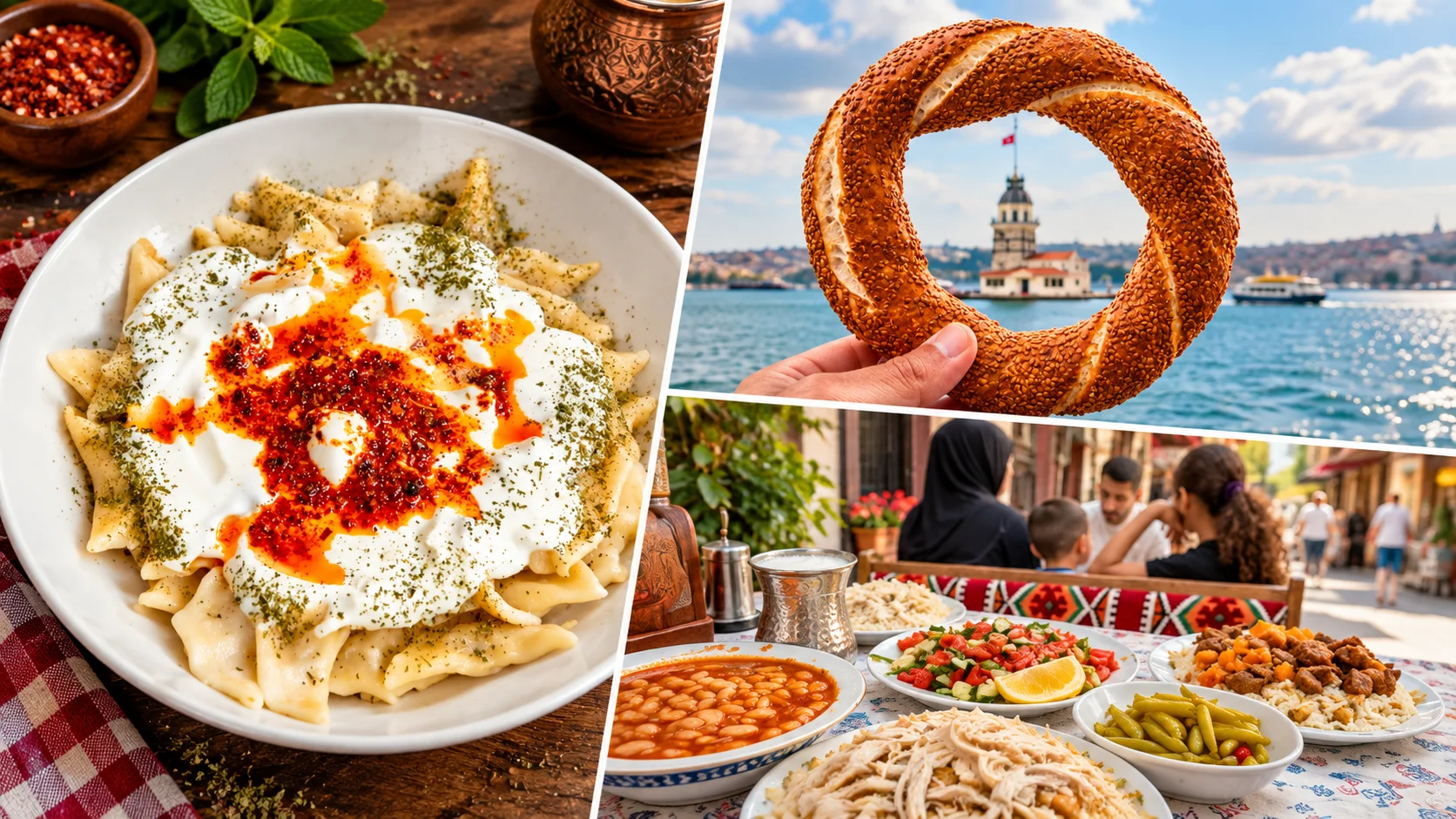
Some foods belong to Istanbul the way fog belongs to the Bosphorus. Simit — the sesame-coated ring bread — is sold from wheeled carts and head-borne trays at every corner, warm from the oven at dawn. Islak hamburger (the "wet burger") is a Taksim Square institution: a spiced meat patty in a bun steamed in tomato sauce, available at midnight or at four in the morning. Kanlıca yoğurt comes from the tiny Bosphorus village of Kanlıca on the Asian shore; its dense, clotted creaminess cannot be replicated anywhere else. Sarıyer böreği — thin, crisp, flaky pastry — is the calling card of the Sarıyer neighbourhood on the upper Bosphorus.
Boza, the lightly fermented wheat drink, is a winter ritual at Vefa Bozacısı in the Vefa neighbourhood, open since 1876. Tavuk göğsü and kazandibi are Ottoman milk puddings still served in muhallebi shops across the city; the former famously uses shredded chicken breast in a sweet, silky custard — a centuries-old Topkapi Palace recipe that still surprises first-timers. Sultanahmet köftesi, a specific style of grilled köfte patty, has been synonymous with the Sultanahmet neighbourhood for generations. Süleymaniye kuru fasulyesi — white bean stew served with rice pilaf — has been the working lunch of this district for as long as anyone can remember.
Balık Ekmek: The Fish Sandwich of Eminönü
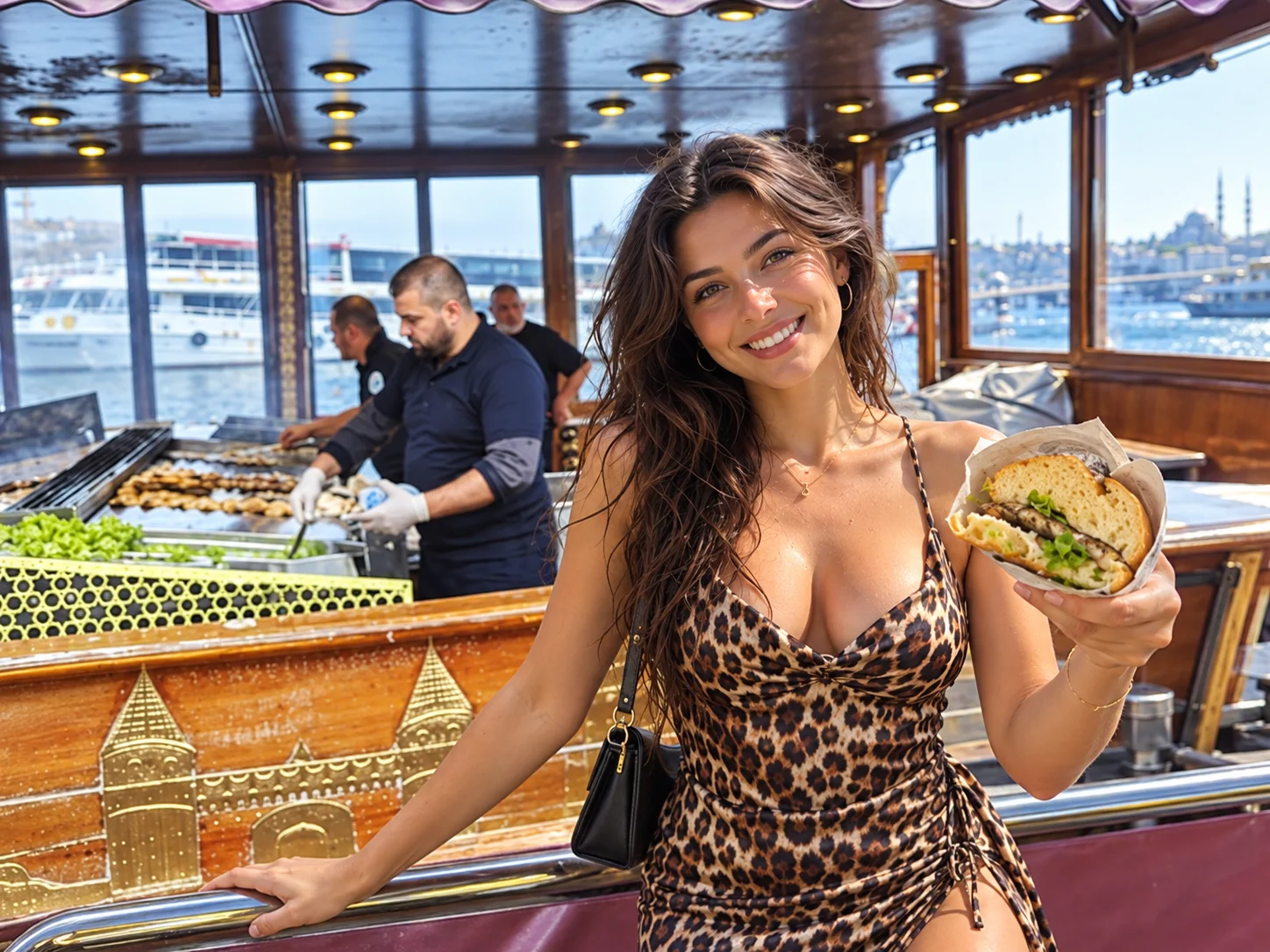
Balık ekmek is simplicity made legendary: grilled horse mackerel or bluefish, fresh parsley and onion, slid into a half-loaf of crusty bread from a rocking boat beside Galata Bridge. Licensing and hygiene regulations in recent years have reduced the number of active boats and pushed some vendors onto dry land, but the Eminönü waterfront remains the definitive address. Early weekday mornings are the least crowded window.
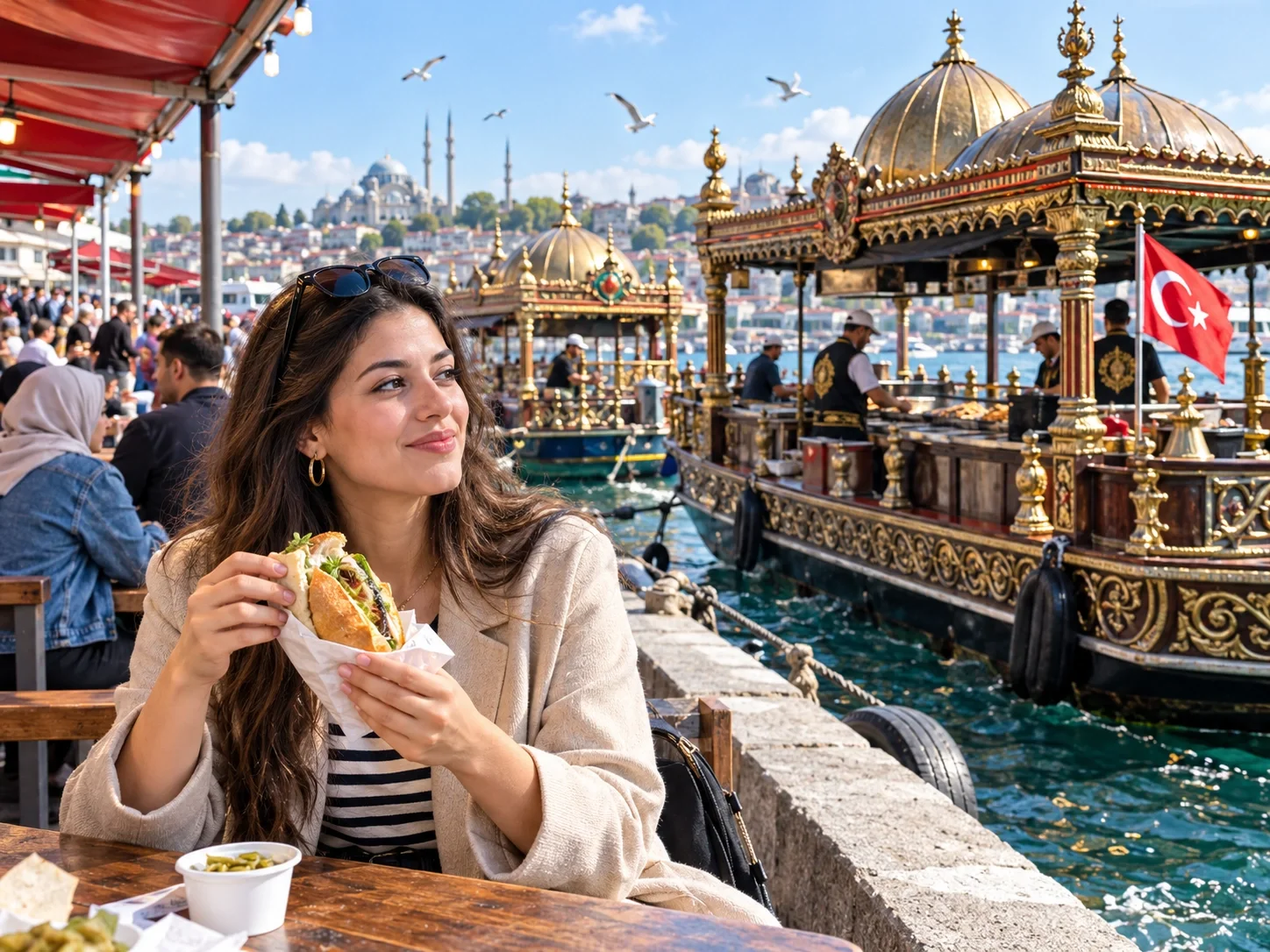
The lower-level fish restaurants under Galata Bridge offer a more sit-down alternative for dinner. An Eminönü morning naturally extends into the Egyptian Spice Bazaar and then north to the Süleymaniye bean stew lunch. For a broader overview of notable waterfront and neighbourhood restaurants, see our guide to restaurants near Galata Bridge. The nearby Karaköy district adds Güllüoğlu Karaköy baklava — a detour worth making on any food walk.
Kumpir, Midye Dolma, Kokoreç: Three Istanbul Street Classics
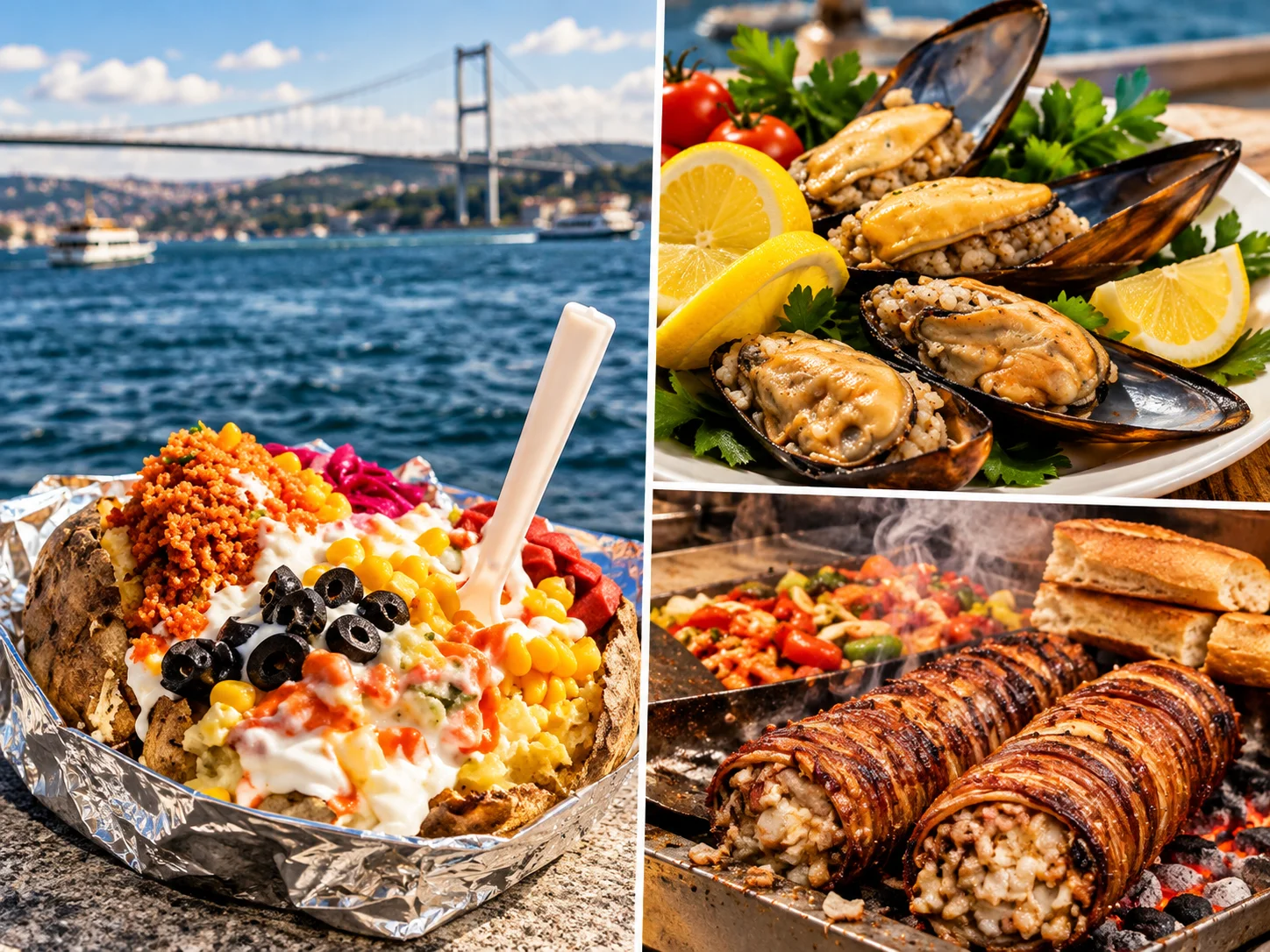
Kumpir has turned the cobbled pavement of Ortaköy into one of Istanbul's most visited eating spots. An enormous baked potato is split open, mashed with butter and kaşar cheese, then piled with toppings — pickles, sweetcorn, sausage, mushrooms — each vendor competing on its own combination. The dish exists elsewhere in the city, but eating it in Ortaköy, in sight of the Çırağan Palace and the Bosphorus, is a different experience entirely.
Midye dolma — mussels stuffed with spiced rice, squeezed with lemon — are sold from street-corner trays at all hours. Some accounts link the dish to Mardin, but its preparation style, vendor culture and seasoning belong to Istanbul's harbour-and-market tradition. Kokoreç is seasoned lamb intestine wound on a spit, grilled slowly and served in bread; it is one of Istanbul's most divisive and most beloved street foods, found at small stalls and sandwich stands throughout the city.
Istanbul's Soup Culture
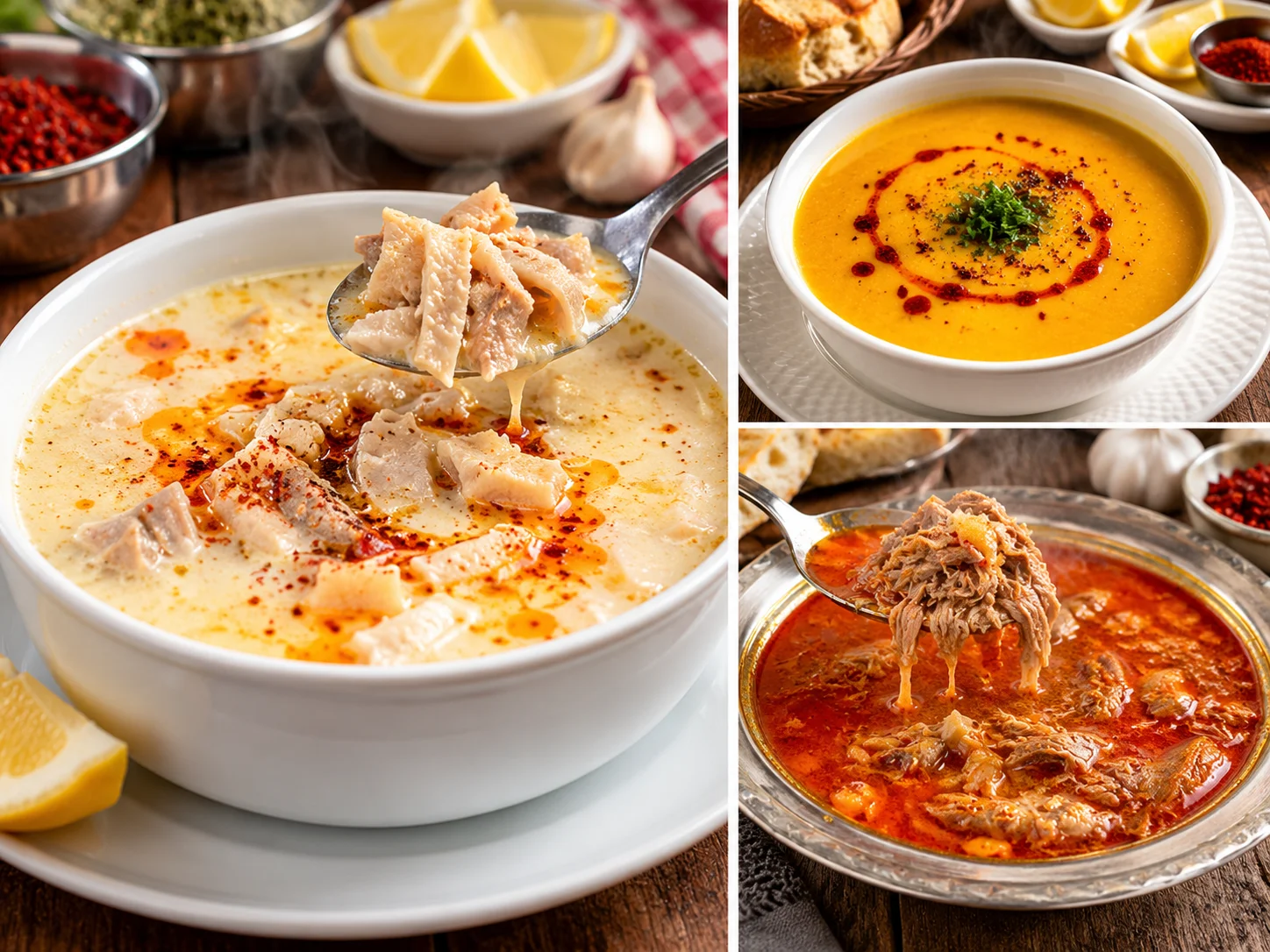
Soup in Istanbul is not just a starter — it is often the whole meal. Red lentil soup is on every lokanta menu from breakfast to close; the deep, buttery versions found in long-established restaurants near the Grand Bazaar and Eminönü have been refined over generations. İşkembe çorbası (tripe soup) occupies a specific cultural niche as the late-night and early-morning restorative; the işkembecis of Aksaray and Eminönü keep these hours faithfully.
Beyran is a powerful morning soup from Gaziantep — lamb, rice and garlicky fat in a rich broth. It is not an Istanbul dish, but it has found a home in Southeastern Turkish restaurants in Fatih and Eminönü. Ezogelin soup comes from Southeastern Anatolia; yayla çorbası (yogurt and rice) from Central Anatolia. Both appear regularly on esnaf diner menus across the city.
Kebab and Grills: Turkey Comes to Istanbul
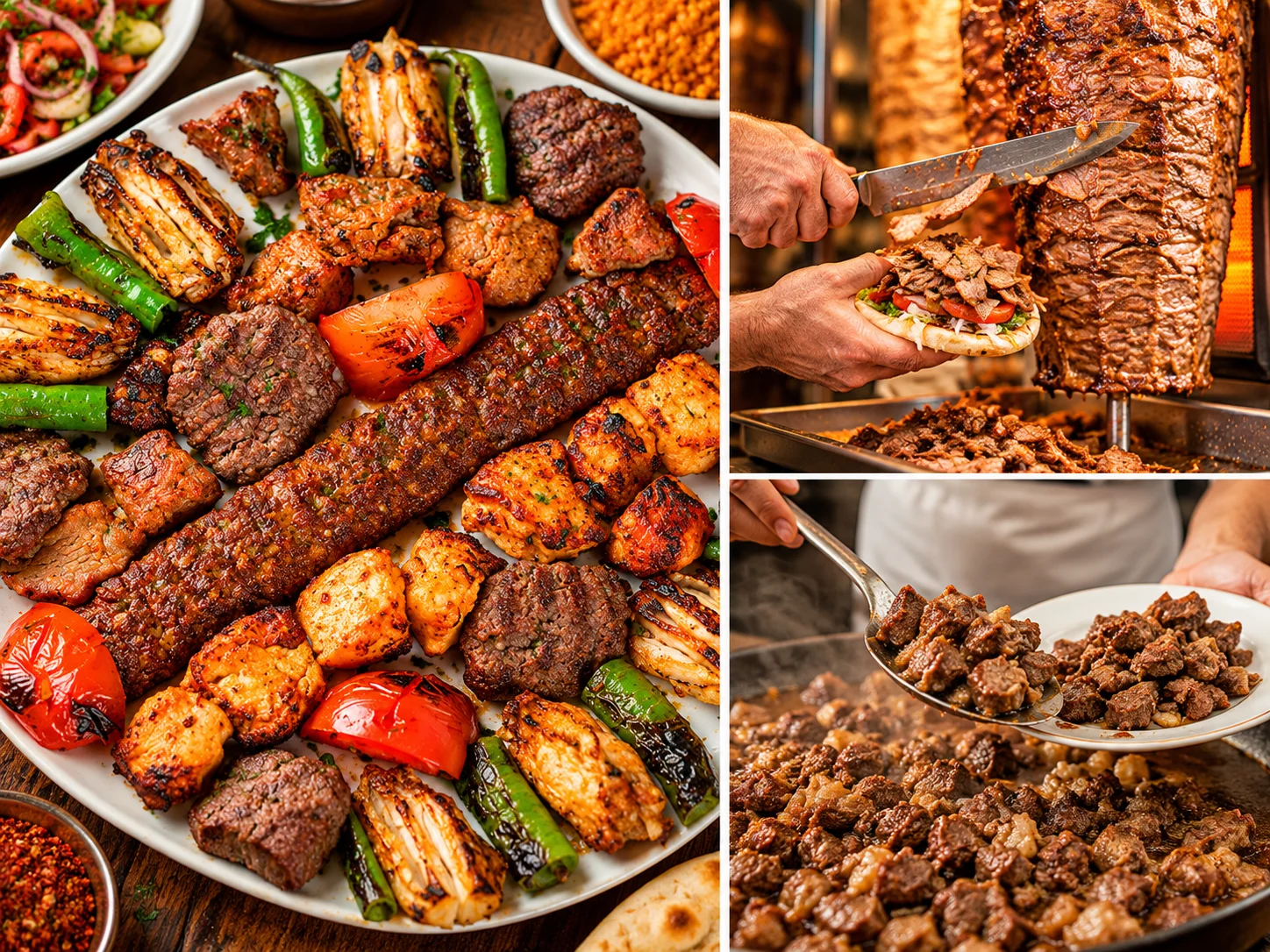
Döner kebab is the most ubiquitous grilled meat in Istanbul; at lunchtime, dürüm (wrap) or ekmek arası (bread) döner is available from büfes on practically every street. Istanbul is a city of culinary migrants, and its kebab culture reflects that: Adana kebab and Urfa kebab come from southeastern Turkey; cağ kebabı is from Erzurum; testi kebabı (clay-pot kebab) from Cappadocia. All arrived in Istanbul with their makers and stayed.
İskender kebab was created in Bursa in 1867 by İskender Efendi — döner meat laid over bread with tomato sauce and browned butter. Istanbul has its own İskender restaurants, but the dish is Bursa's; its authentic home is a short drive west. Ali Nazik kebab, the Gaziantep specialty of smoky aubergine purée with yogurt and minced lamb, is found in Southeastern Turkish restaurants across the city. Çökertme kebabı, originating in Milas in the Aegean, appears in some Aegean-focused restaurants; katmer, the layered dough pastry from Antep, is served in Gaziantep-style eateries.
From the Oven: Lahmacun, Pide, Börek
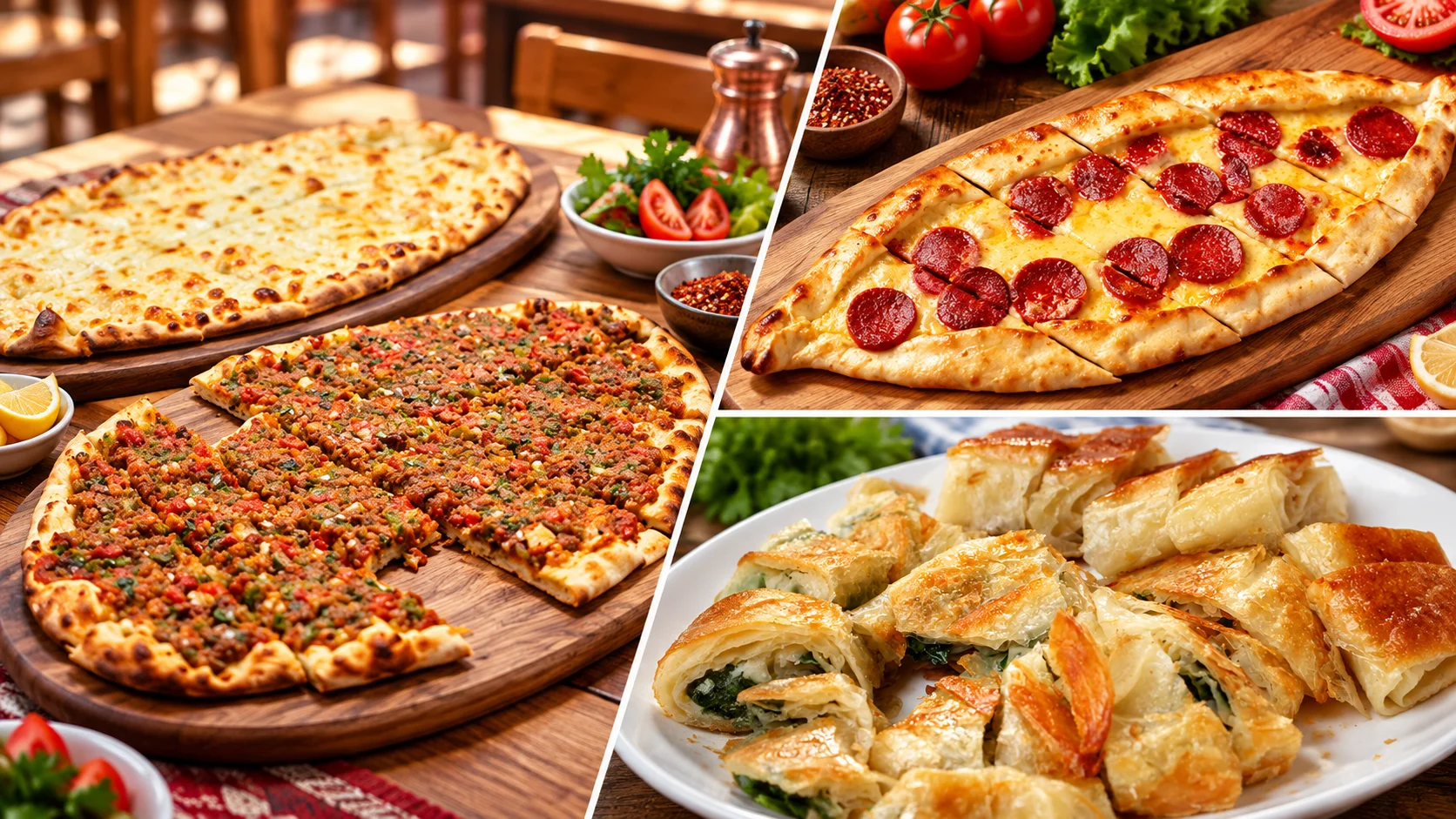
Lahmacun — minced lamb and spices spread on thin dough and baked in a wood-fired oven — is rolled with parsley, tomato and lemon and eaten as a wrap. Brought to Istanbul by cooks from southeastern Anatolia, it is now part of the city's own food identity. Many diners use lahmacun as a starter, pide as a main.
Pide variations include kıymalı (minced lamb), kuşbaşı (diced meat), peynirli (cheese) and yumurtalı (egg); Karadeniz (Black Sea) pide is a separate category found in northeastern-origin restaurants. Börek is the cornerstone of Istanbul breakfasts: su böreği (water börek), çiğ börek (fried börek) and sigara böreği (cigarette pastry) are sold in pastry shops and simit stalls throughout the city. Sarıyer böreği, with its thin, crackling layers, is so closely associated with the Sarıyer neighbourhood that it has become a destination in itself.
Van Breakfast: A Morning Ritual Imported from Eastern Anatolia
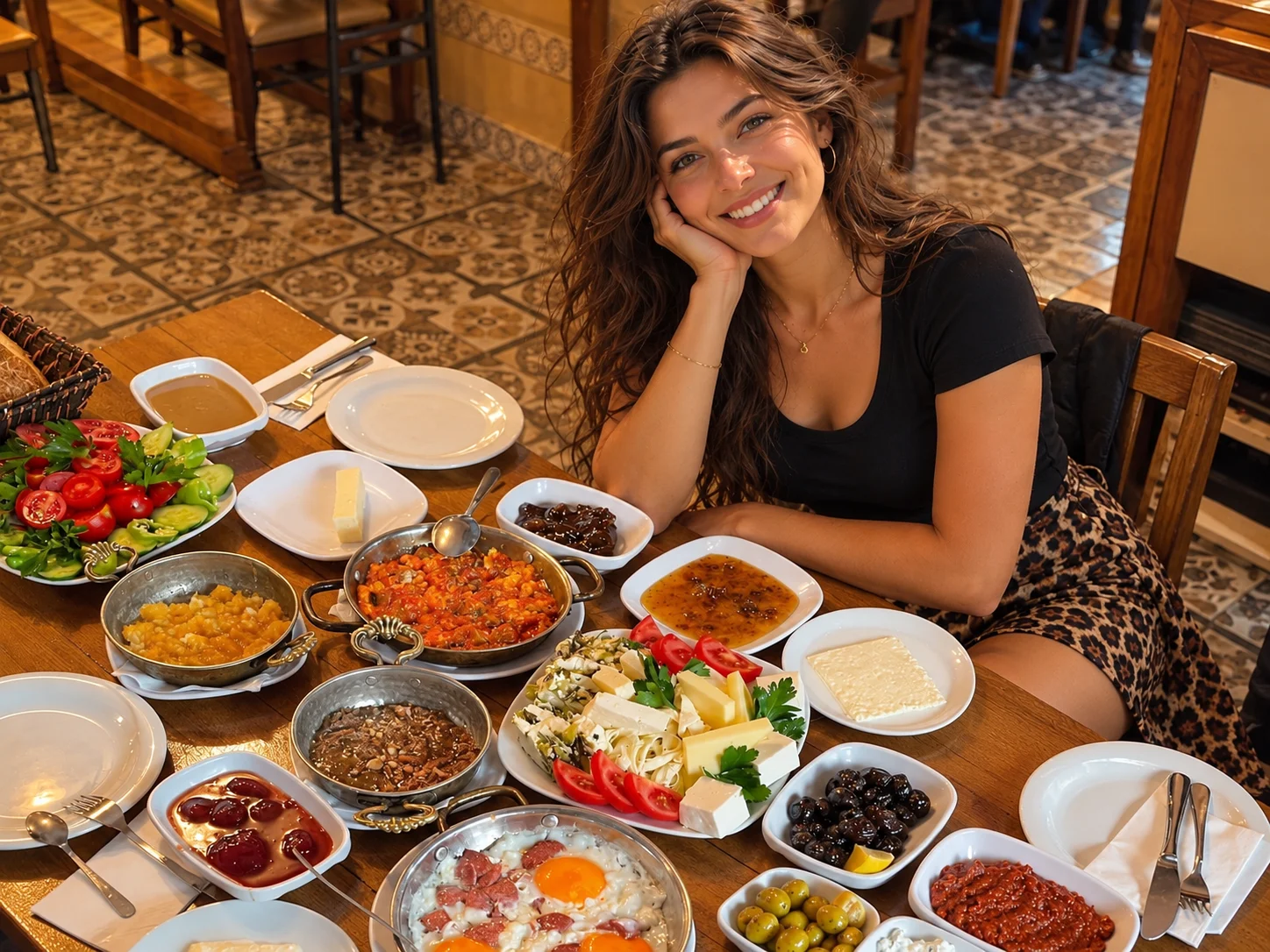
Van breakfast originates in Van province in eastern Turkey. Families who moved to Istanbul brought this tradition with them, and it has since become one of the city's most celebrated morning rituals. A full Van spread is an exercise in abundance: otlu peynir (herb-embedded cheese), kaymak (thick clotted cream), honey, sürk (aged, mould-ripened Van cheese), kavut (roasted wheat flour), mıhlamalı (cornmeal and cheese melt) and cold sucuk sausage — dozens of items, all at once, no rushing.
Van breakfast salons in Istanbul are concentrated in Beşiktaş, Beyoğlu and Şişli, typically charging per person. Sunday mornings bring long waits; a reservation is strongly advised. Budget a full two hours minimum — this is not a grab-and-go meal.
What to Drink: From Çay to Boza
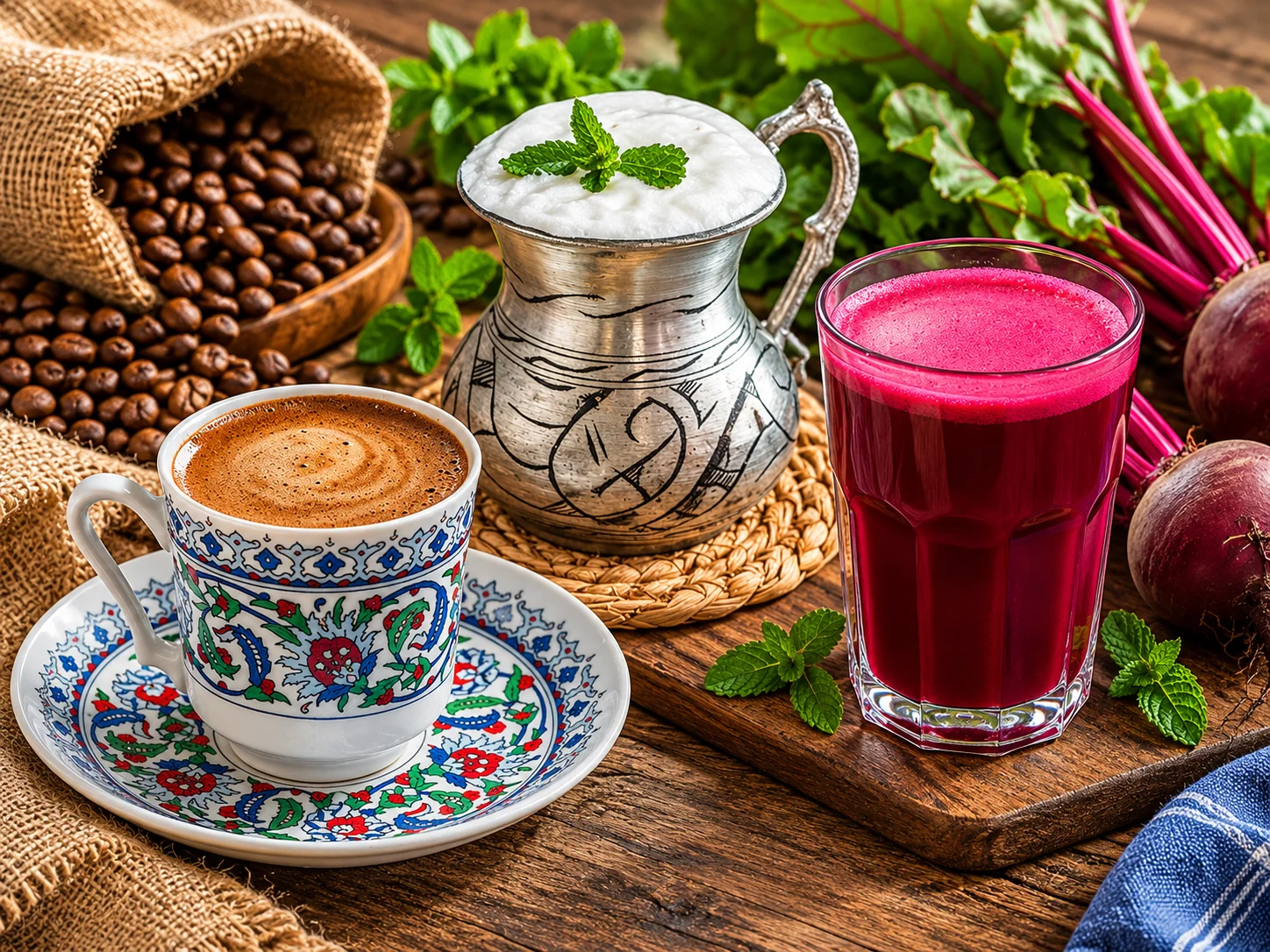
Turkish çay (tea) is not just a beverage in Istanbul — it is the medium through which business is done, friendships are sustained and mornings are managed. Served in tulip-shaped glasses, it appears unbidden on tables in fish markets, carpet shops and government offices alike. Turkish coffee is more ceremonial: brewed in a small copper cezve over sand or flame, served with the grounds still settling, sometimes read as fortune after the cup cools.
Ayran, the cold salted yogurt drink, is the natural partner of any kebab or grilled meal. Şalgam suyu — fermented turnip, carrot and red pepper brine — comes from Adana and is the traditional accompaniment to Adana kebab; it is found at Adana-style restaurants across Istanbul. Boza, the lightly fermented millet drink, is sold at Vefa Bozacısı (since 1876) through the autumn and winter. Sahlep — a hot drink made from wild orchid flour — is the cold-weather alternative, sold from street carts from November onward. Istanbul also now has a thriving third-wave specialty coffee scene, particularly in Karaköy, Cihangir, Bebek and Kadıköy.
Eating by Neighbourhood: Where to Go for What
Istanbul's food geography shifts dramatically from neighbourhood to neighbourhood. The historic peninsula preserves Ottoman working-lunch culture; Beyoğlu keeps a meyhane tradition alive after dark; the Asian side offers pazar breakfasts, yogurt pilgrimages and esnaf diners. Here is a condensed map:
Eminönü / Sirkeci
Fish sandwich boats, Hamdi Restaurant (kebab and meze with Bosphorus views), Pandeli Lokantası (inside the Spice Bazaar, booking required), historic işkembe shops. Morning: bean stew and simit; noon: fish sandwich or köfte.
Süleymaniye / Vefa
Kuru fasulye tradition (Erzincanlılar Lokantası area), Vefa Bozacısı (1876), esnaf diners. Friday lunchtimes the area is packed; weekday mornings are calmer.
Fatih / Kadınlar Pazarı
Traditional Turkish lokanta cooking, köfte shops, Southeastern Turkish restaurants serving beyran and kebab. Street vendors with sweets and spiced nuts around the market square.
Karaköy / Galata
Güllüoğlu Karaköy baklava, Karaköy Lokantası, modern bistros and seafood. The lower level of Galata Bridge has a row of fish restaurants open for dinner.
Beyoğlu / Taksim
Nevizade Sokak meyhaneler (the city's most concentrated meyhane strip), islak hamburger stands near Taksim Square, İstiklal Caddesi street food, Çiçek Pasajı traditional meze tables. Modern restaurants cluster in Cihangir and Asmalımescit.
Beşiktaş / Ortaköy
Ortaköy kumpir pavement, Van breakfast salons, fish market restaurants. Wednesday market in Beşiktaş finishes early morning; arrive before 10am for the best produce.
Bebek / Sarıyer
Sarıyer böreği shops, waterfront fish restaurants in Bebek, ferry-pier tea gardens. Further north, northern Istanbul's garden and grill culture begins to appear.
Kanlıca
One destination, one reason: Kanlıca yogurt. This small Bosphorus village on the Asian shore is where to buy it fresh from family producers. The ferry from Beşiktaş makes it an easy half-day trip.
Üsküdar / Çengelköy
Long-established köfte shops in Üsküdar, Çengelköy waterfront fish restaurants, Çengelköy cucumber salad. For a broader guide to the Asian shore, see Istanbul's Asian Side.
Kadıköy / Moda
Çiya Sofrası (regional Turkish dishes from across the country), Kadıköy market breakfast, esnaf diners, meyhane culture. Istanbul restaurant picks includes several Kadıköy and Moda addresses worth bookmarking.
Esnaf Lokantaları: Istanbul's Hidden Heritage Tables
Some of Istanbul's most authentic eating happens not in restaurants but in esnaf lokantaları — workmen's and tradespeople's diners tucked into side streets, open from early morning through the lunch rush. They work on a daily rotating menu of two or three hot dishes, a soup, a dessert. Menu boards are handwritten on a blackboard or a sheet of paper taped to the window. Prices are low; portions are substantial; the food is cooked once and served until it runs out.
These places concentrate in the historic peninsula — Süleymaniye, Aksaray, Fatih — and on the Asian side in Kadıköy's market district. Most are family-operated businesses that opened in the 1960s or 70s; some have passed to a second or third generation. Despite Istanbul's rapid urban transformation, esnaf lokantaları hold their ground in the older commercial quarters. The trick to finding them: walk a block off the main street and look for the handwritten board and the smell of simmering stew.
Meyhane and Meze: Istanbul After Dark
Istanbul evenings, at their best, are meyhane evenings. A meyhane is a traditional Turkish tavern — long tables, meze plates arriving in waves, fish for the main course, rakı throughout, and if you are lucky, a musician wandering from table to table. The densest meyhane culture in the city is on Nevizade Sokak in Beyoğlu, a short alley where restaurant after restaurant packs tables inside and out from 7pm until well after midnight. Kadıköy, Ortaköy and Beşiktaş all have their meyhane streets too.
The meze course is its own ceremony: cold starters followed by hot ones, then fish or grilled meat. A typical spread might include beyaz peynir (white cheese) with herbs, haydari (yogurt with garlic and mint), semizotu (purslane salad), enginar zeytinyağlısı (artichoke in olive oil), midye tava (pan-fried mussels), karides güveç (prawn stew) and ahtapot (octopus). The autumn and winter months bring the best fish: palamut (Atlantic bonito) and lüfer (bluefish) are the Bosphorus seasons that define the meyhane calendar. Rakı, the anise spirit that turns milky white when water is added — earning the nickname "lion's milk" — is the drink that holds the whole ritual together.
Modern Istanbul Gastronomy
Alongside its street vendors and esnaf diners, Istanbul now has a credible fine-dining and creative restaurant scene. Karaköy, Nişantaşı, Cihangir and Bebek have the highest concentration of restaurants working with modern Turkish culinary ideas. Asitane in Edirnekapı has been reconstructing Topkapi Palace recipes for decades, drawing on Ottoman archival sources. Çiya Sofrası in Kadıköy, run by chef Musa Dağdeviren, serves dishes from regions of Turkey rarely represented elsewhere — seasonal vegetables, obscure grain preparations, village lamb recipes. For a wider list of noteworthy Istanbul restaurants across price points and neighbourhoods, see our dedicated guide.
A Bosphorus-view dinner is one of Istanbul's defining luxury experiences. The shore road from Beşiktaş through Bebek to Rumeli Hisarı has a concentration of restaurants with water views open for evening service. For a Bosphorus dinner combined with a boat journey, a private car with driver makes it straightforward to combine waterfront restaurants with other parts of the city without relying on a fixed ferry schedule. The Hatay Medeniyet Restaurant is a good illustration of how Hatay cuisine — künefe, humus, oruk — has found a permanent home in Istanbul.
Istanbul Food Routes
Route 1 — Historic Peninsula Morning
Eminönü fish sandwich → Spice Bazaar spice and dried fruit tasting → Süleymaniye kuru fasulye lunch → Vefa Bozacısı boza → Yenikapı waterfront tea. Half a day; on foot throughout.
Route 2 — Karaköy to Beyoğlu Evening
Güllüoğlu Karaköy baklava → İstiklal Caddesi street snacks → Nevizade Sokak meyhane dinner → Taksim islak hamburger (late night). Optional: add Galata Bridge fish restaurants before Nevizade.
Route 3 — Asian Side Sunday Morning
Kadıköy market breakfast (cheese, olives, fruit) → Çiya Sofrası lunch → ferry to Kanlıca yogurt → Üsküdar waterfront fish dinner. A full day on the Asian shore.
Route 4 — Bosphorus Food Drive
Ortaköy kumpir → Bebek coffee → Sarıyer böreği → Kanlıca yogurt (ferry crossing) → Anadoluhisarı waterfront fish. This route connects points that are impractical on public transport; a car with driver is the natural choice.
What to Eat and Where — Quick Reference Table
| Dish | Origin | Where in Istanbul | Best Neighbourhood |
|---|---|---|---|
| Balık ekmek (fish sandwich) | Istanbul | Boat stalls, waterfront büfes | Eminönü |
| Simit (sesame ring bread) | Istanbul | Street carts, everywhere | Citywide |
| Kumpir (loaded baked potato) | Istanbul | Pavement stalls | Ortaköy |
| Midye dolma (stuffed mussels) | Istanbul street culture | Street trays | Citywide |
| Kokoreç (grilled lamb intestine) | Istanbul | Stalls and sandwich shops | Citywide |
| Islak hamburger (wet burger) | Taksim / Istanbul | Stands near the square | Taksim |
| Kanlıca yoğurt | Kanlıca, Istanbul | Village producers | Kanlıca |
| Sarıyer böreği | Sarıyer, Istanbul | Pastry shops | Sarıyer |
| Boza (fermented wheat drink) | Istanbul | Vefa Bozacısı (1876) | Vefa / Fatih |
| Tavuk göğsü / kazandibi | Ottoman / Istanbul | Muhallebi shops | Citywide |
| Sultanahmet köftesi | Istanbul tradition | Köfte restaurants | Sultanahmet |
| Süleymaniye kuru fasulye | Istanbul tradition | Esnaf lokantaları | Süleymaniye |
| İskender kebab | Bursa | İskender restaurants | Various |
| Van breakfast | Van, Eastern Turkey | Van breakfast salons | Beşiktaş, Beyoğlu |
| Beyran (Gaziantep soup) | Gaziantep | Southeastern Turkish restaurants | Fatih, Eminönü |
| Künefe | Hatay | Hatay restaurants | Citywide |
| Adana / Urfa kebab | Southeastern Turkey | Kebab restaurants | Citywide |
| Cağ kebabı | Erzurum | Black Sea / Eastern Anatolian restaurants | Selected lokanta |
| Çiya regional dishes | Turkey-wide | Çiya Sofrası | Kadıköy |
Frequently Asked Questions
What street foods are unique to Istanbul?
Balık ekmek (fish sandwich), simit, kumpir, midye dolma, kokoreç, islak hamburger, Kanlıca yogurt and Sarıyer böreği are either native to Istanbul or so deeply associated with it that they are effectively the city's own. Boza, tavuk göğsü and kazandibi complete the list of Istanbul-born foods with an unbroken lineage.
Are the fish sandwich boats at Eminönü still operating in 2026?
Yes, fish sandwich selling continues at Eminönü, though licensing and hygiene regulations have reduced the number of boats in recent years and some vendors have moved to fixed stalls on the shore. The Galata Bridge area remains the place to go. Verify the current situation on arrival; weekday mornings are least crowded.
Where can I buy Kanlıca yogurt?
Kanlıca yogurt is sold by village producers in the small Bosphorus neighbourhood of Kanlıca, on the Asian shore. The ferry from Beşiktaş stops at Kanlıca; the yogurt is available from small shops and family operations near the ferry pier. It does not travel well and is rarely found authentically outside the village.
Is İskender kebab from Istanbul?
No. İskender kebab was created in Bursa in 1867 by İskender Efendi. Istanbul has İskender restaurants, but the dish belongs to Bursa. For the authentic experience, visit Bursa directly — it is roughly 90 minutes from Istanbul by road or ferry connection.
Where can I find a Van breakfast in Istanbul?
Van breakfast salons concentrate in Beşiktaş, Beyoğlu and Şişli. Most charge per person for the full spread. Sunday mornings bring long waits; a reservation is strongly recommended. Allow at least two hours for the meal.
Is Vefa Bozacısı still open?
Yes. Vefa Bozacısı has operated continuously since 1876 in the Vefa neighbourhood of Fatih. It is open for most of the year but boza is a seasonal drink; the freshest and most authentic version is available in autumn and winter.
What is an esnaf lokantası?
An esnaf lokantası is a traditional Turkish workers' diner, typically open only for lunch, serving a short daily menu of two or three hot dishes, a soup and a simple dessert. Menu is written on a blackboard. Prices are low, portions generous, and the food is homestyle. They are concentrated in the commercial quarters of the historic peninsula and in Kadıköy's market district on the Asian side.
What is Nevizade Sokak and what is the meyhane experience like?
Nevizade Sokak is a short alley in Beyoğlu, reachable from İstiklal Caddesi, lined on both sides with meyhaneler (traditional Turkish taverns). From around 7pm until after midnight, the alley is full of diners eating meze, fish and grilled meats, drinking rakı, and sometimes listening to live music. In warmer months tables spill out onto the pavement. It is noisy, convivial and entirely unlike a formal restaurant experience.
Is midye dolma from Mardin?
The claim that stuffed mussels originate specifically from Mardin lacks solid documentation. Midye dolma — mussels filled with spiced rice, lemon-dressed — is an Istanbul street food in its preparation, vendor culture and seasoning. It draws on Istanbul's long relationship with the sea and its market culture.
Where can I find Hatay cuisine in Istanbul?
Künefe, humus, oruk and other Hatay dishes are served in Hatay-focused restaurants across Istanbul, particularly in Fatih, Beyoğlu and Kadıköy. For a landmark address, see the Hatay Medeniyet Restaurant guide.
Why is Ortaköy kumpir famous?
Kumpir is a simple dish — a baked potato with toppings — but the setting makes Ortaköy's version iconic. The cobbled alley of kumpir stalls sits between the Ortaköy Mosque and the Çırağan Palace, with the Bosphorus immediately behind. The combination of a cheap street snack and one of Istanbul's most photographed waterfront views creates something genuinely memorable.
What is the traditional breakfast culture in Istanbul?
Istanbul's weekend breakfast culture is a lengthy, sociable affair. The Van breakfast spread — dozens of cheeses, honey, kaymak, herbed cheese, cold meats — is the most extravagant version. A simpler but equally authentic Istanbul breakfast means fresh simit with white cheese and olives, çay and sometimes a fried egg or börek. Pazar (Sunday) breakfasts at Kadıköy market stalls combine fresh produce shopping with eating in place.
Where can I eat kuru fasulye in Süleymaniye?
Several long-running esnaf lokantaları around Süleymaniye maintain the kuru fasulye tradition, including the area near Erzincanlılar Lokantası. Friday lunchtimes the neighbourhood is packed; weekday mornings or early afternoons are calmer. The combination of bean stew and pilaf with a glass of şalgam is the classic order.
Is beyran a Istanbul dish?
No. Beyran is from Gaziantep — a morning soup made from lamb, rice and garlicky rendered fat. Istanbul's growing Southeastern Turkish restaurant community means beyran is now available in Fatih and Eminönü, but its home is Gaziantep, where it has been the city's breakfast soup for centuries.
What is Turkish coffee culture like in Istanbul?
Turkish coffee is inscribed on the UNESCO Intangible Cultural Heritage list. In Istanbul it is brewed in a copper cezve over a sand tray or small flame; served in a small cup with the grounds still present, accompanied by water and a piece of Turkish delight or chocolate. Traditional kahvehane (coffeehouse) culture survives in older neighbourhoods. Alongside this, Istanbul now has a strong specialty coffee scene, particularly in Karaköy, Cihangir and Kadıköy.
What can you eat at Kadıköy market?
Kadıköy's Tuesday and Friday markets sell fresh produce, cheeses, olives, seafood, spices and dried fruits. Within the market stalls you can eat midye, söğüş (cold sliced fish) and meze plates on the spot. The adjacent Çarşı (covered market) has esnaf lokantaları, köfte shops and various snack counters serving throughout the day.
How do I get around Istanbul's food neighbourhoods without getting stuck in traffic?
Ferries connect Eminönü, Karaköy, Beşiktaş, Üsküdar and Kanlıca efficiently for waterfront routes. For inland neighbourhoods and multi-stop food routes — particularly the Bosphorus food drive linking Ortaköy, Bebek, Sarıyer and Kanlıca — a private transfer or a car with driver is the most practical option. It removes parking, traffic decisions and the constraint of fixed ferry schedules.