
Cappadocia · Ürgüp · Fairy chimneys
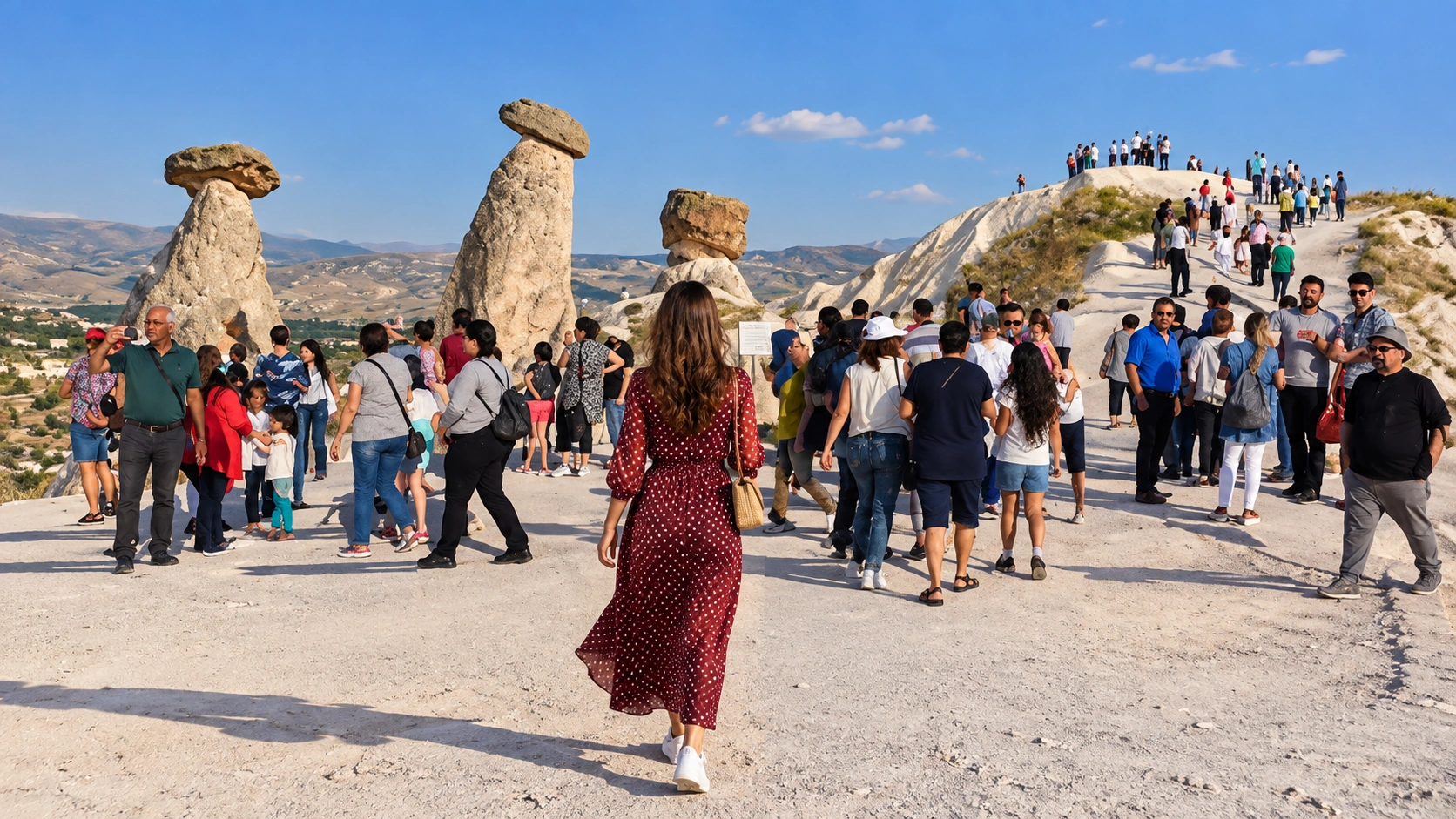
Üç Güzeller—English Three Beauties—are three capped fairy chimneys just outside Ürgüp, visible from a roadside viewpoint on the Nevşehir–Ürgüp / Ürgüp–Göreme corridor. They are a short photo stop, not a hike, and they are not the same place as Paşabağ (Monks Valley). This English 2026 guide covers geology, folklore, light for photos, and nearby day links. Cab Istanbul is intercity car with driver transport only—not tickets, balloon flights or a packaged “private Cappadocia tour.”
Viewpoint viewing is commonly free; parking fees—if charged—change and are reported inconsistently. Confirm signs on site. Do not climb the formations.
At a glance
Three Beauties snapshot
| Item | Detail | Practical Note |
|---|---|---|
| Turkish name | Üç Güzeller | Prefer over marketing “Three Graces” |
| Where | Outside Ürgüp, Nevşehir–Ürgüp road | Roadside viewpoint—not Paşabağ |
| What you see | Three capped fairy chimneys | Harder “hat” rock on softer tuff stems |
| Typical stop | 15–30 minutes | Photo + short walk to railing |
| Entry | Usually no museum ticket | Parking may be charged—confirm locally |
| Best light | Morning / late afternoon | Night lighting varies by season/ops |
Viewpoint atmosphere—trailers and shops change; geology does not.
Names
Three Beauties ≠ Greek Three Graces
Local Turkish usage is Üç Güzeller (“three beauties”). English pages sometimes say “Three Graces,” but that phrase also names the Greek Charites (Aglaia, Euphrosyne, Thalia)—a separate mythological trio. Do not treat Ürgüp’s chimneys as those goddesses in stone. Keep the Cappadocian site name tied to the landscape and local folklore.
Geology
How these fairy chimneys form
Cappadocia’s chimneys rise from soft volcanic tuff and ignimbrite deposited across the Central Anatolian volcanic province. Harder layers—often basalt, andesite or more welded rock—act as cap rock. Softer rock below erodes faster under rain, runoff, wind and freeze–thaw, leaving mushroom-like pillars. Üç Güzeller are a clear, roadside example of that differential erosion.
Broader volcanic history involves long-lived activity in the province, including major centres such as Erciyes, Hasan Dağı and complexes like Göllüdağ. Landscape evolution is often discussed on a Neogene–Quaternary timescale—commonly framed around roughly ten million years of volcanic–erosional development. Skip unverified deep-time slogans or dried-basin myths for this viewpoint unless a specific scientific citation is in hand.
Folklore
The princess–shepherd legend (not history)
A popular local legend says a fairy princess fell in love with a shepherd, had a child, and—when her father’s soldiers closed in—prayed that the family stay together. In the story, they turn into the three chimneys. Details shift by teller (who is “father,” whether a child is present, how the king reacts). Treat every version as folklore that colours the stop—not as documented history.
Light
Photography, sunrise and evening
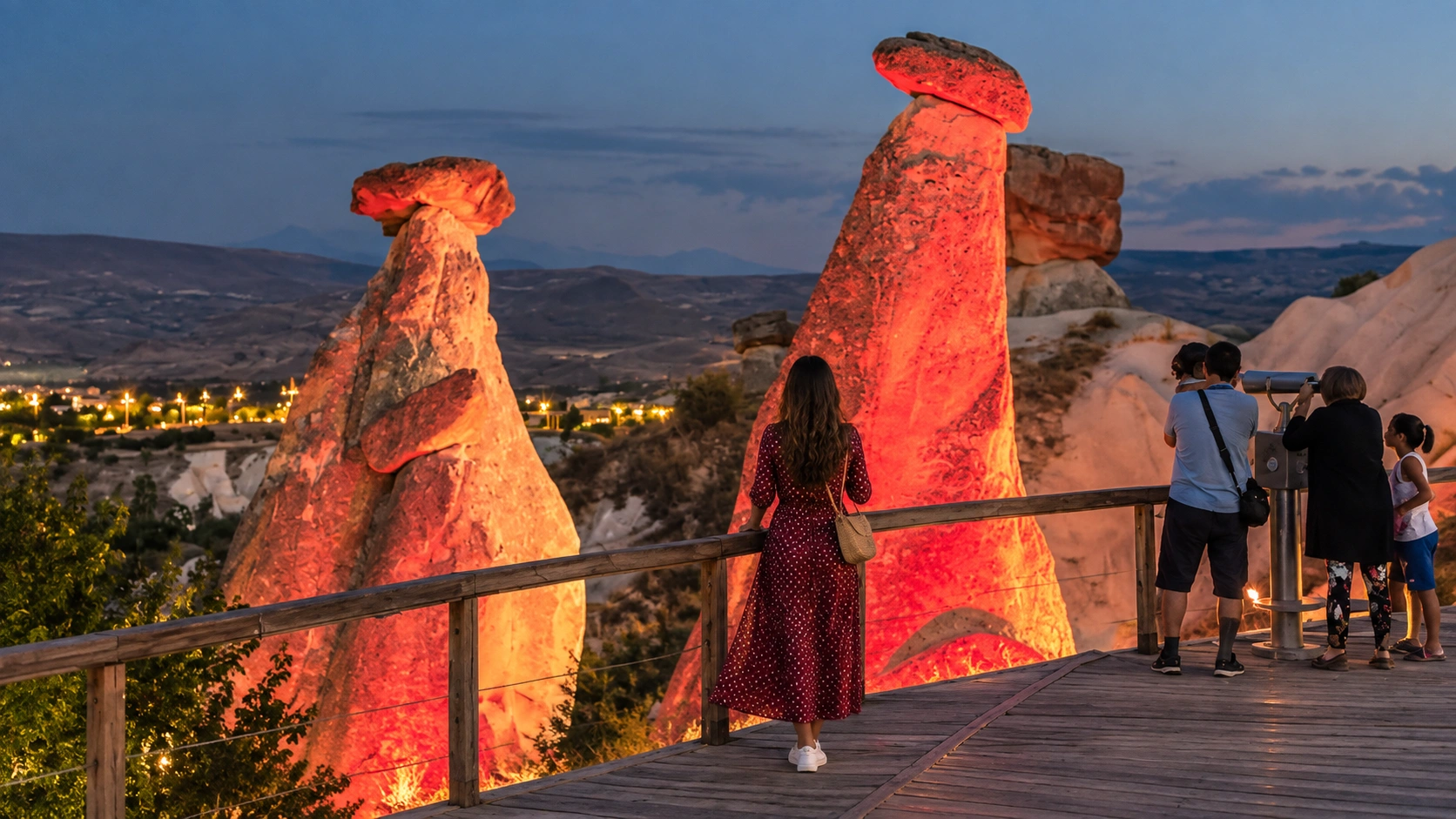
Morning light often sharpens the contrast between pale stems and dark caps; late afternoon warms the tuff. The viewpoint is exposed—bring sun protection. Some evenings the area is artificially lit for photos; lighting is operational, not a permanent “show.” Stay behind barriers; do not climb for a closer frame.
Access
Parking, shops and walking
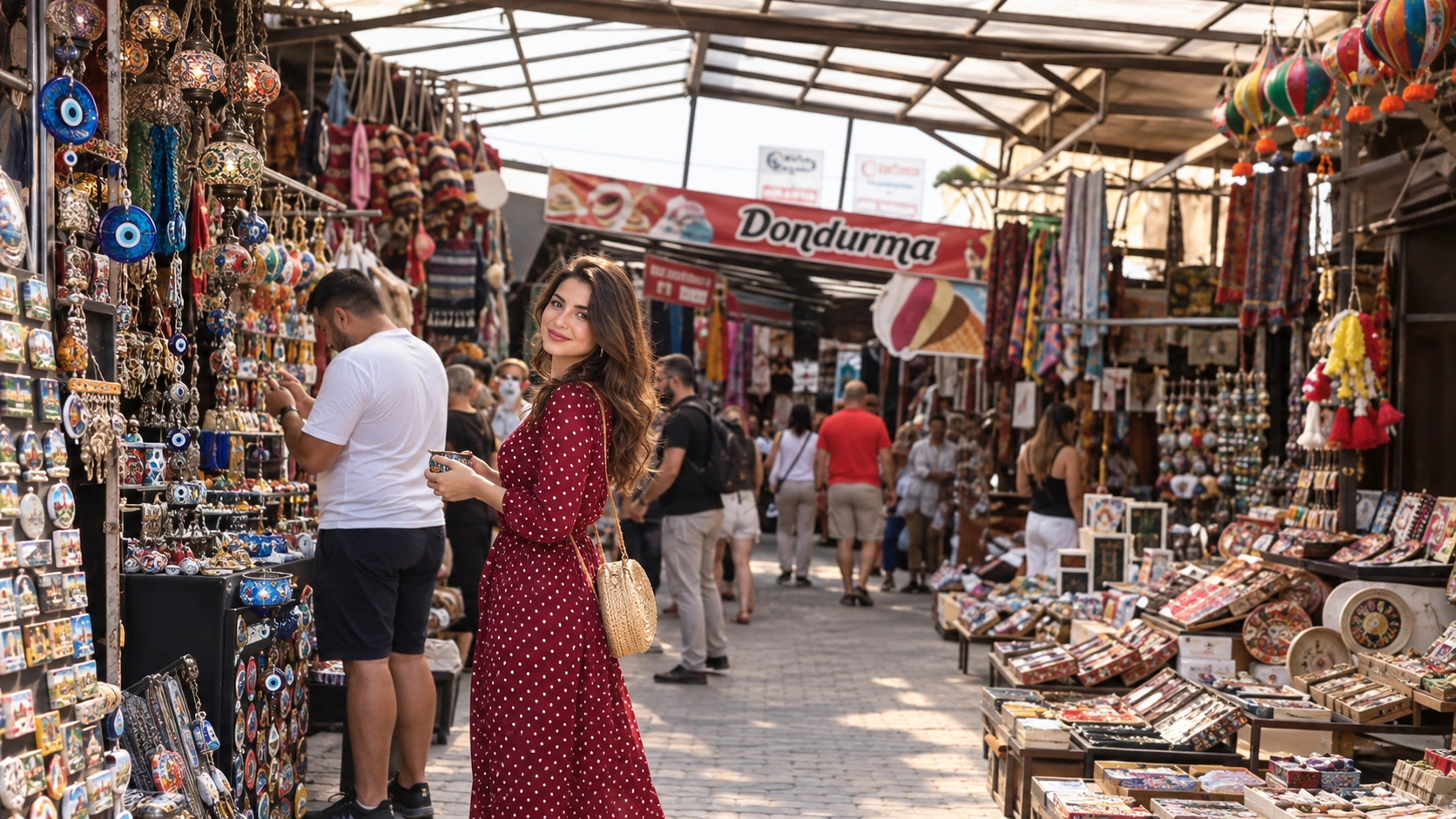
Most visitors arrive by car or day-route vehicle, park, and walk a short path (sometimes through souvenir stalls) to the wooden/railed overlook. From Ürgüp lodging you may be minutes by taxi or a longer walk depending on where you stay—treat “five minutes from the centre” as approximate, not universal.
Parking charges have been reported at very different levels in recent visitor notes and local news; we do not lock a TL figure here. Read the board, keep valuables with you, and use designated spaces.
Nearby
Build a south–central day
| Place | From Three Beauties | Best For | Suggested Time | Practical Note |
|---|---|---|---|---|
| Ürgüp town | Short drive / edge of town | Caves, wine, evening streets | Half day+ | Base for this viewpoint |
| Temenni Hill | Ürgüp centre | Town panorama | 30–60 min | Confirm current access |
| Devrent (Imagination) Valley | Short drive north | Animal-shaped rocks | 20–40 min | Viewpoint-style stop |
| Paşabağ | Different corridor (Göreme–Avanos) | Multi-headed chimneys | 20–45 min | Not the same site as Üç Güzeller |
| Zelve | Near Paşabağ loop | Rock-cut village museum | 1–2 hrs | Often paired with Paşabağ ticket logic |
| Göreme Open Air Museum | ~15–25 min drive typical | Fresco churches | 1.5–3 hrs | Separate tickets |
| Uçhisar | West toward Göreme | Castle panorama | 1–2 hrs | Pair with Pigeon Valley |
For wider planning see Cappadocia tours and valley walks such as Love Valley.
Paşabağ atmosphere—compare multi-headed chimneys after Üç Güzeller, don’t confuse the names.
Zelve’s rock settlement is another northern half-day partner—again a different ticket desk from this Ürgüp overlook.
Zelve context only—verify hours and combined Paşabağ rules on the day.
Balloons
Hot-air balloon context (no flight guarantee)
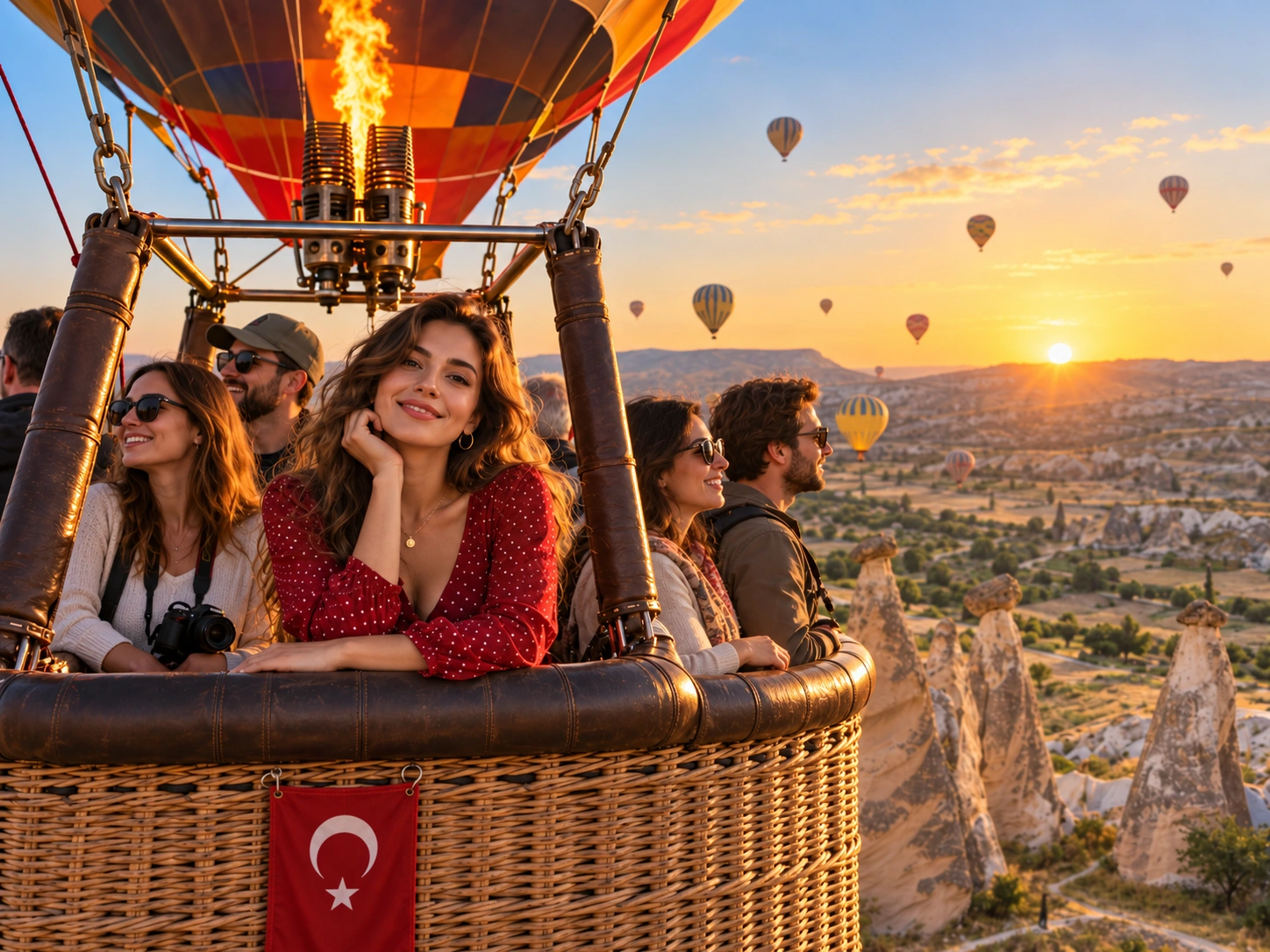
Sunrise balloons often fill the wider Ürgüp–Göreme sky. Operators choose launch and flight paths by wind—there is no guarantee a basket will pass over Üç Güzeller. Cab Istanbul does not sell balloon tickets or operate flights.
Getting there
Transport without the sales pitch
- Local: Taxi or self-drive from Ürgüp; many day routes include this as a 20-minute photo stop.
- Multi-stop days: A reserved car with driver helps with luggage—drivers are not licensed guides.
- Istanbul → Cappadocia: Long-haul via Istanbul to Cappadocia or intercity car with driver—door-to-door transport only.
FAQ
Üç Güzeller questions
What are the Three Beauties fairy chimneys?
Three capped fairy chimneys outside Ürgüp, viewed from a roadside overlook—among Cappadocia’s most photographed chimney profiles.
Why call them Three Beauties?
From Turkish Üç Güzeller. The name reflects the three standing figures and local storytelling—not a certified link to the Greek Charites.
How do I visit?
Drive or taxi to the marked viewpoint on the Ürgüp road corridor, park as signed, and walk to the railing. Allow 15–30 minutes.
Is this the same as Paşabağ?
No. Paşabağ (Monks Valley) is a different site on the Göreme–Avanos side, known for multi-headed chimneys and a ticketed archaeological area.
What is the legend?
Folklore about a princess, a shepherd and (in many tellings) their child turned to stone. Versions differ; none are historical records.
Who are the “real” Three Graces?
In Greek myth, the Charites. That tradition is separate from Ürgüp’s Üç Güzeller rock formation—do not merge them into one “true” identity.
Next step
Stop for the caps, then choose your corridor
Give Üç Güzeller a clear half-hour, then either stay with Ürgüp/Devrent or swing north to Paşabağ and Zelve—knowing they are different places. Keep Istanbul–Cappadocia logistics on Istanbul to Cappadocia or intercity car with driver—transport only.