
Cappadocia open-air museum
Zelve Open Air Museum sits on the steep northern slopes of Aktepe between Göreme and Avanos — three linked valleys packed with fairy chimneys, cave dwellings and rock-cut worship spaces. It is quieter than the famous Göreme Open Air Museum circuit, but it is still a managed archaeological site with tickets, closed chambers and uneven ground. Cab Istanbul can move you between Istanbul and Cappadocia; it does not sell museum tickets or operate the valleys.
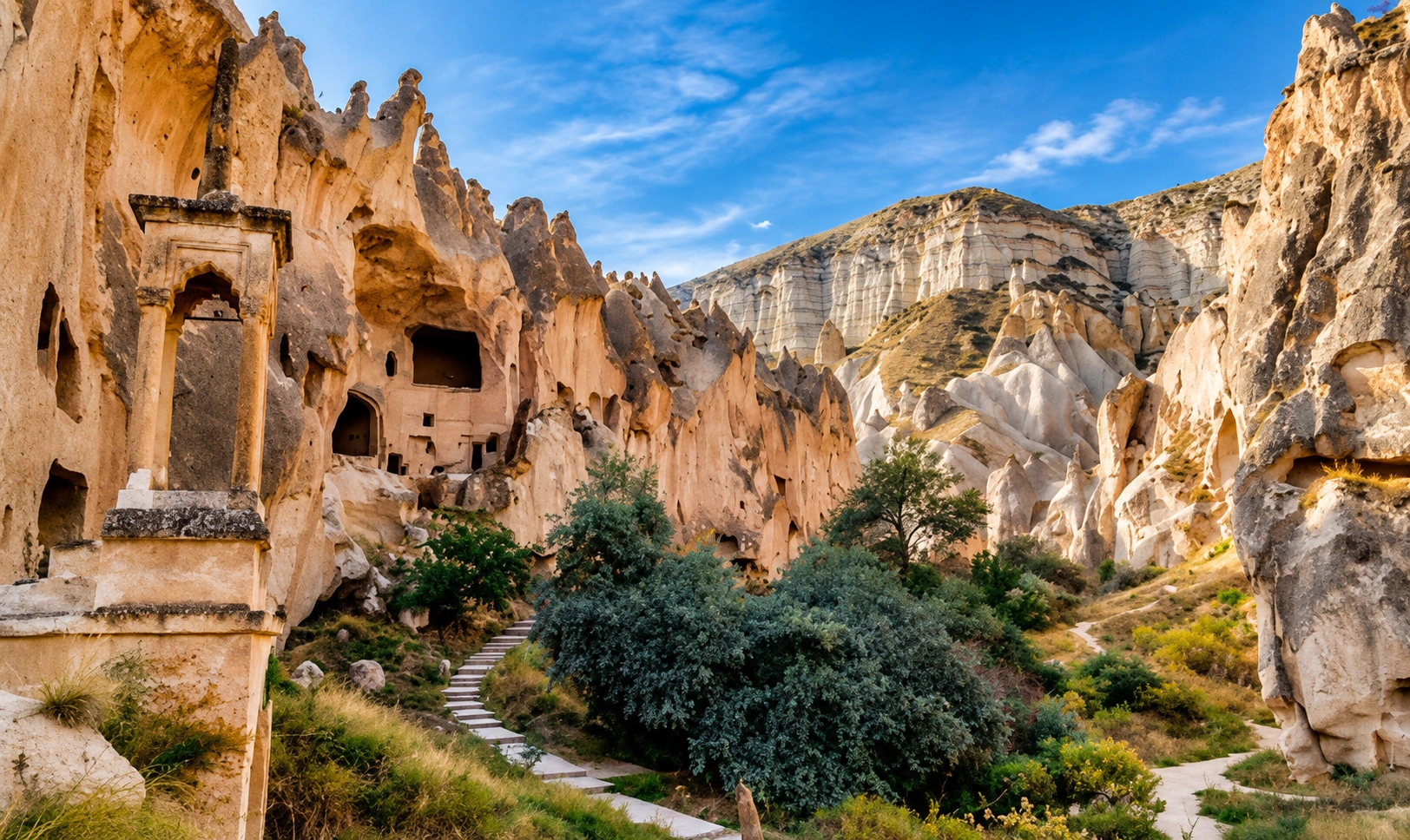
Place and landscape
Where Zelve sits in Cappadocia
Officially listed as the Zelve–Paşabağlar archaeological site, Zelve lies about five kilometres from Avanos and roughly a short drive from Göreme. Paşabağ (Monks Valley) is only about a kilometre away. The site belongs to the UNESCO ensemble Göreme National Park and the Rock Sites of Cappadocia (inscribed 1985) — Zelve is part of that landscape group, not a separately named World Heritage property.
Fairy chimneys here are hoodoos: soft volcanic tuff eroded under harder caps. Local Turkish calls them peri bacaları. At Zelve the density of pointed and multi-bodied chimneys is high, which is why the valleys feel labyrinthine rather than like a single viewpoint.
History
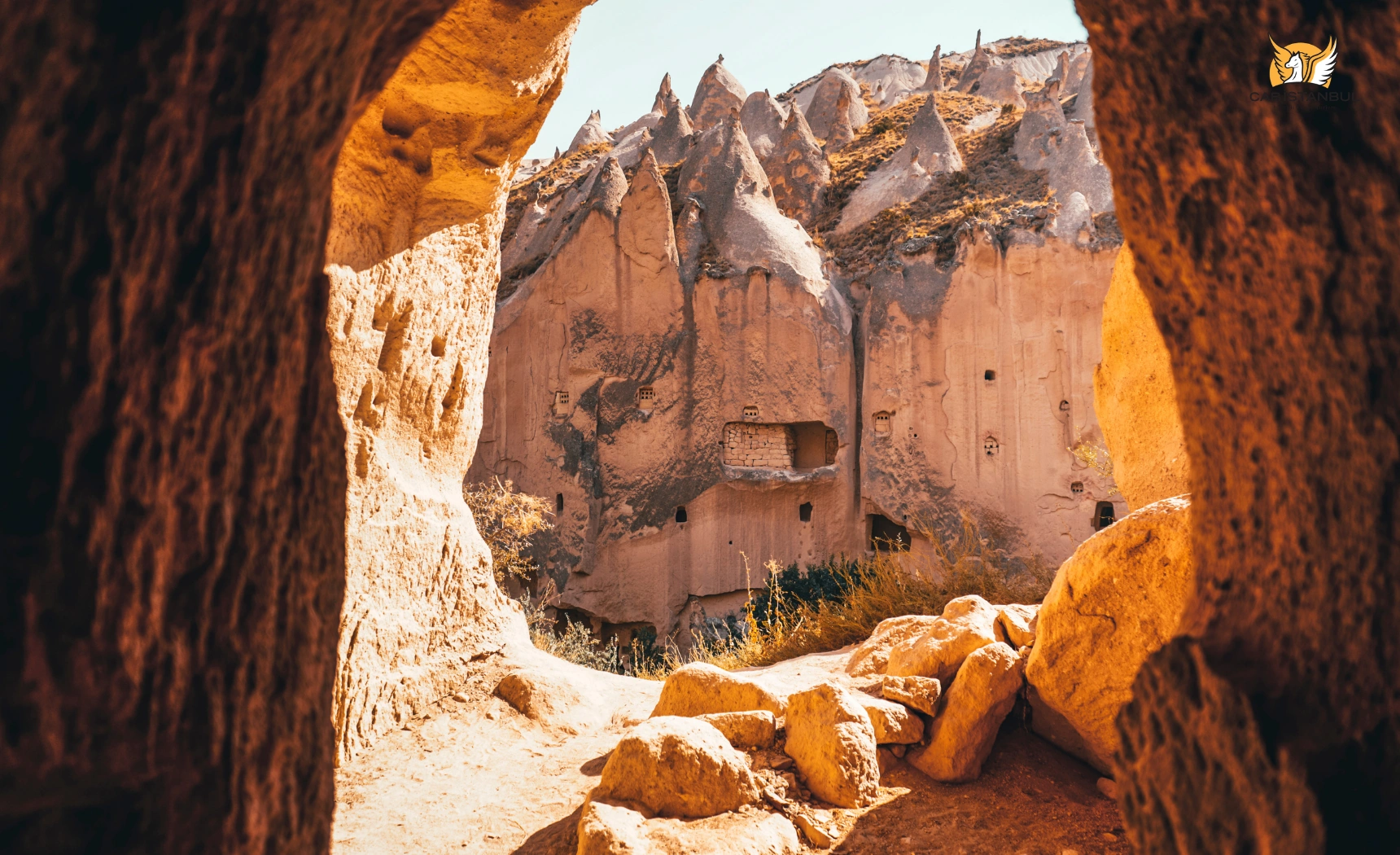
From living valley to open-air museum
Ministry texts describe Zelve as an important Christian settlement and religious centre especially between the ninth and thirteenth centuries; the first settlement date is uncertain. Rock churches, monastery spaces, houses and later a mosque show a long layered use. The valley remained inhabited into the twentieth century and was evacuated in 1952 because erosion and rockfall made continued living unsafe. After abandonment it was organised as an open-air museum visitors walk today.
Expect faded paint, collapsed facades and barriers — not a fully furnished “cave village” film set. Respect closed tunnels and signed rockfall zones; they exist for safety, not to tease Instagram.
What you will see
Three valleys, churches, mosque and mill
Official site notes place a mill (seten) and the Balıklı and Üzümlü churches in the first valley area; the Church of the Holy Cross in the second; a village square, monastery mass and mosque relationships in the third; dovecotes high on the slopes; and Direkli Church toward the exit. Visitor paths also pass kitchens, storage rooms and connecting tunnels.
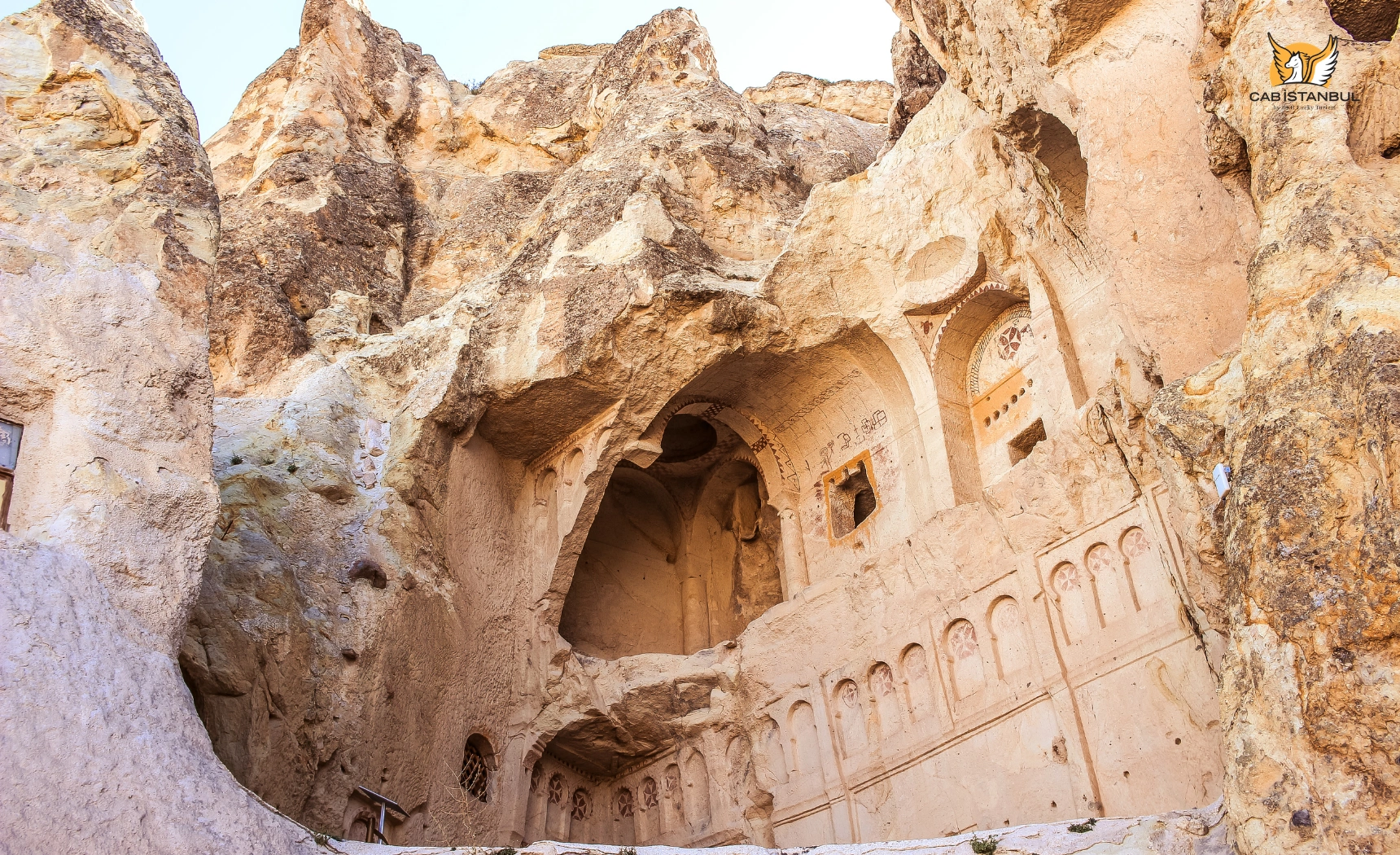
Balıklı and Üzümlü churches — currently closed
The Fish (Balıklı) and Grape (Üzümlü) churches are among Zelve’s best-known early rock churches. The national museum fee list notes that Balıklı and Üzümlü are closed. Plan for exterior context and other open paths; do not assume interior fresco access.
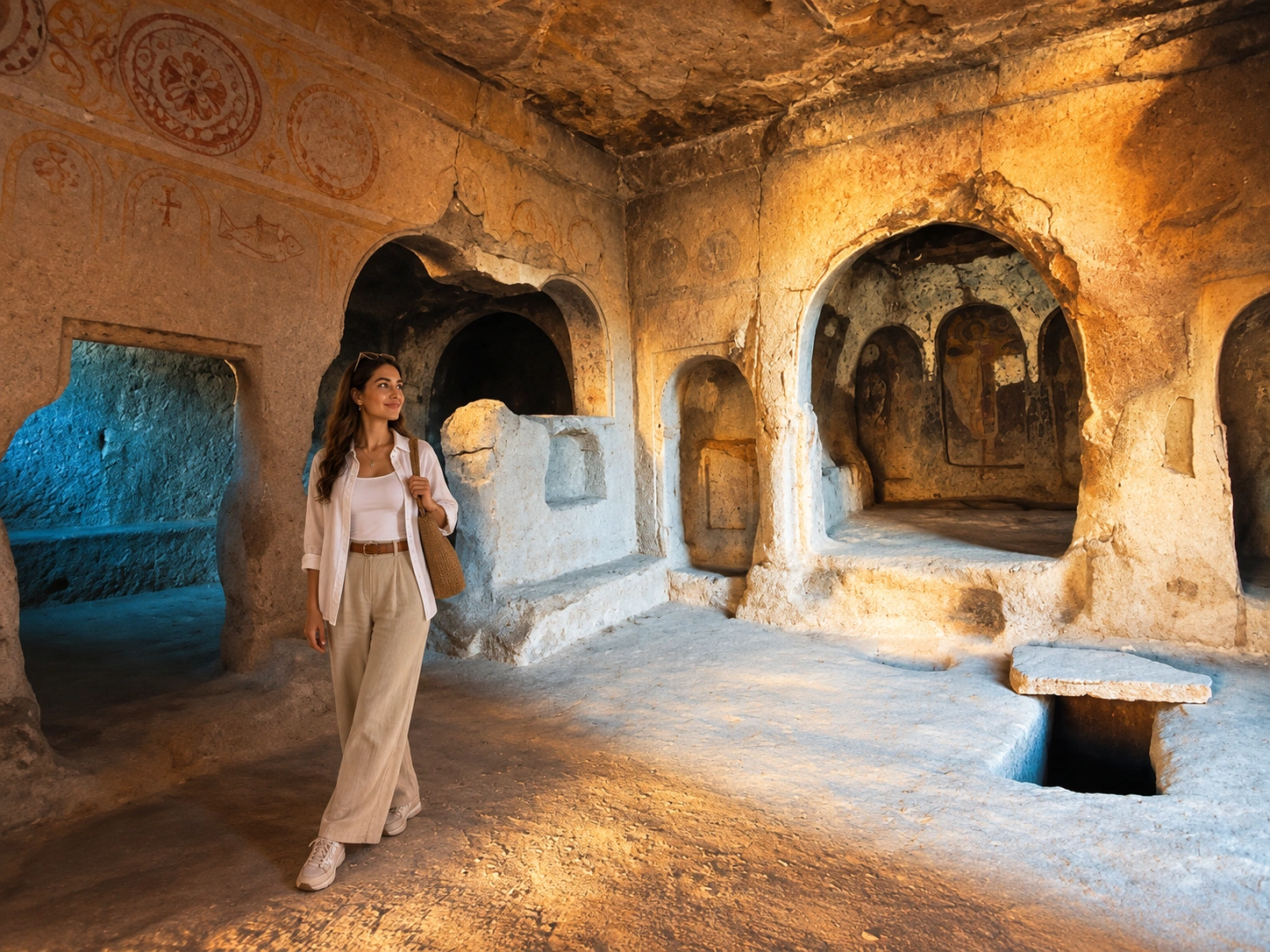
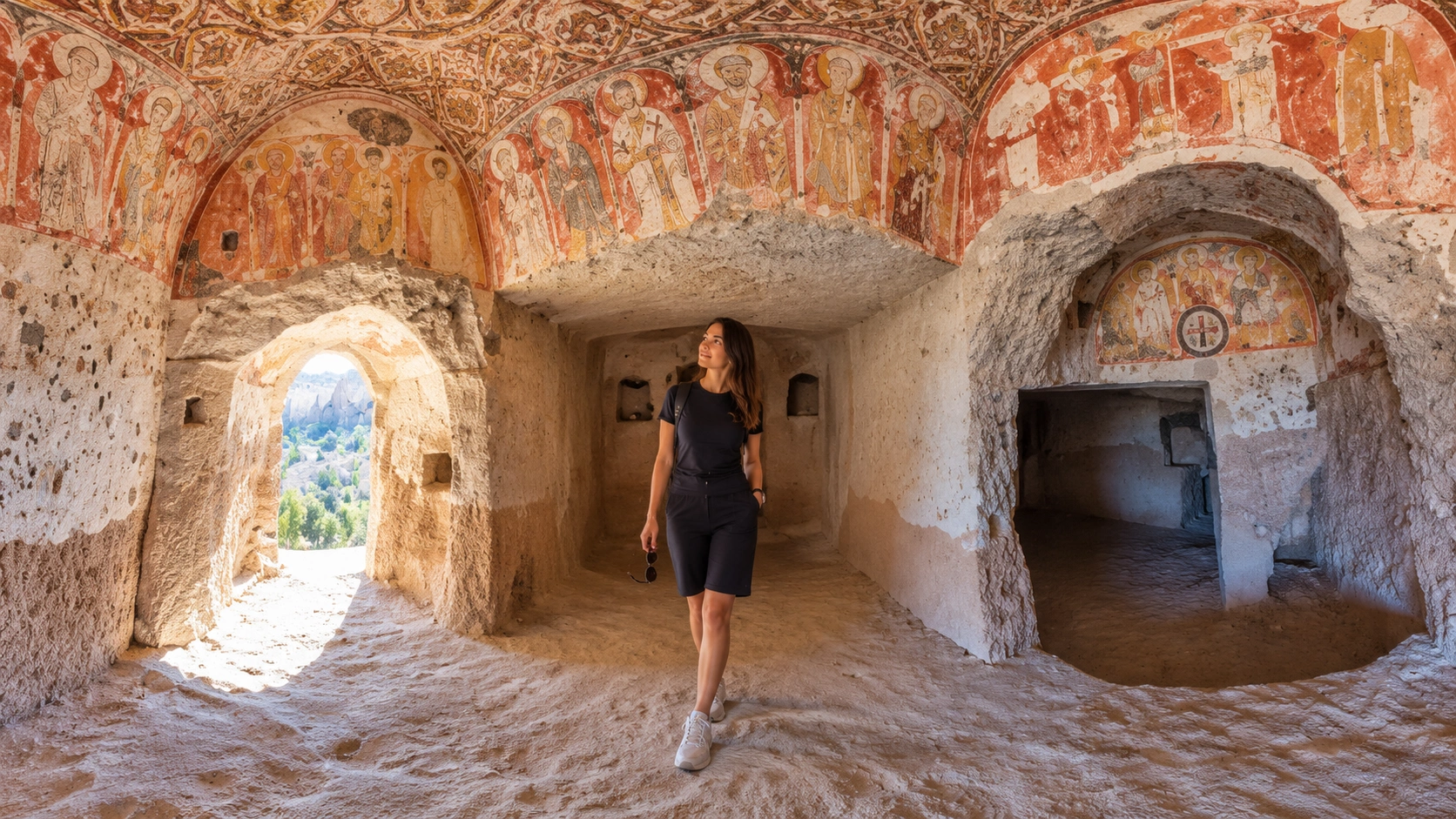
Direkli Church and other rock chambers
Direkli Church is noted near the valley exit, with columns and cross reliefs often highlighted in guides. Dim rock-cut chambers elsewhere in the complex can feel dramatic; they are not the same site as Göreme’s famous Dark Church (Karanlık Kilise).
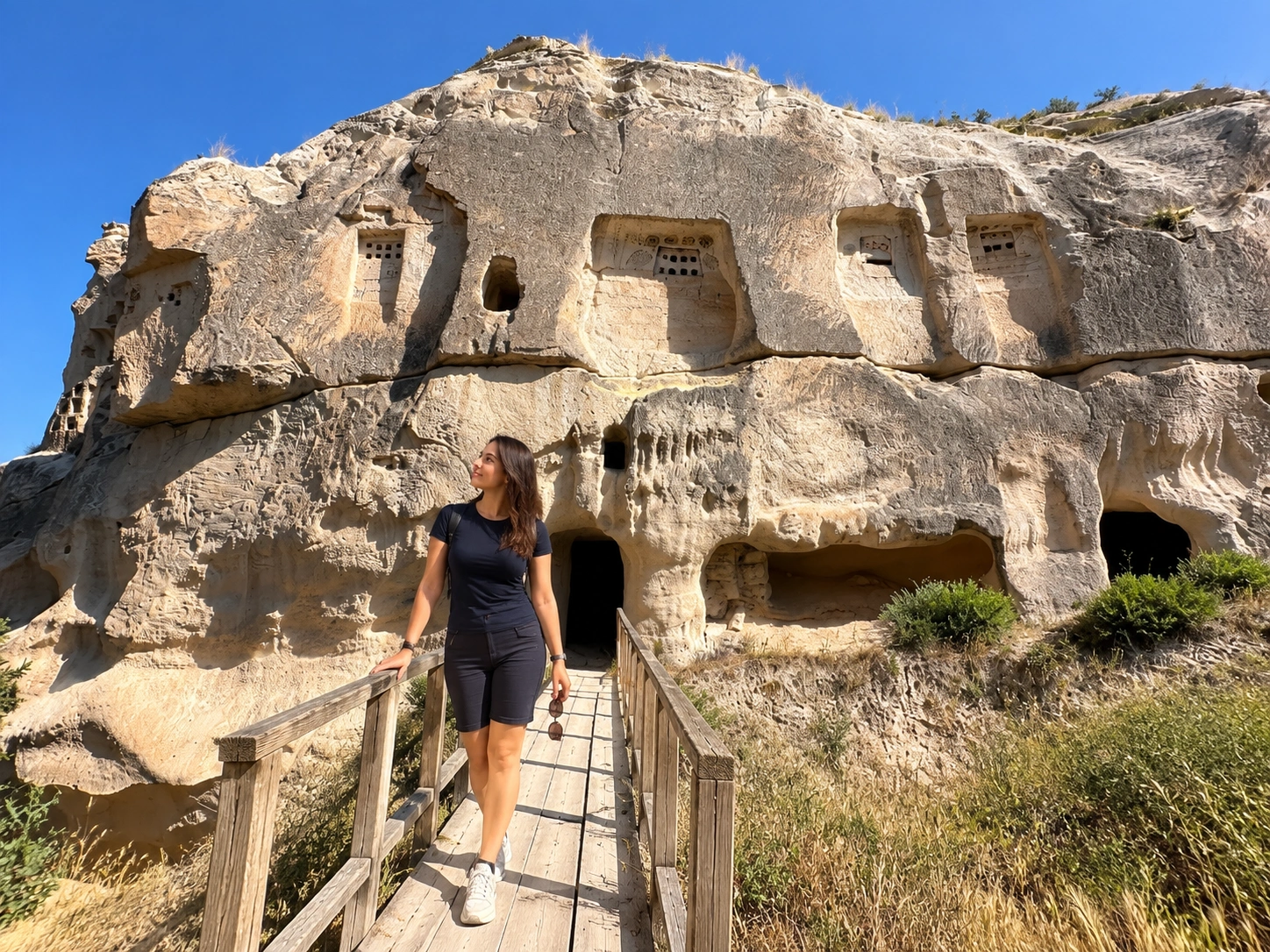
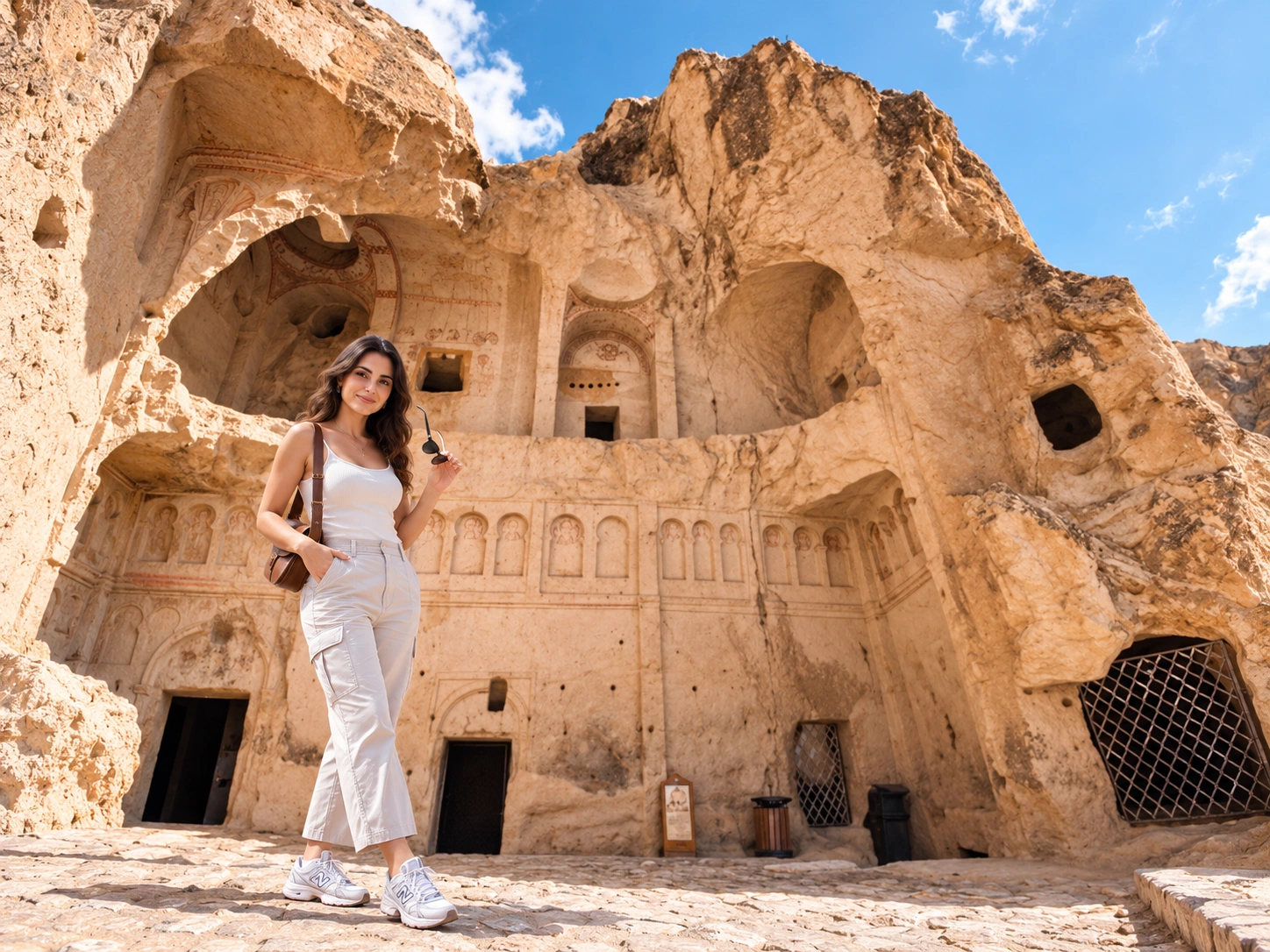
Look also for the rock-cut mosque, the mill, and high dovecote façades. Together they show daily life alongside worship — Zelve’s strength versus fresco-first sites.
Compare
Zelve vs Göreme Open Air Museum
Choose by intent, not by “best museum” slogans.
- Göreme Open Air Museum: denser famous fresco churches, heavier tour-bus traffic, separate ticket — see our Göreme Open Air Museum guide.
- Zelve: settlement scale, chimney density, mosque and mill, more hiking between valleys, quieter feel, more faded paint and more closed rooms.
Many travellers do both on different half-days. If you only have one museum slot and care most about Byzantine wall painting, Göreme usually wins. If you want to walk through a hollowed village landscape, Zelve fits better.
Same-day pairing
Zelve and Paşabağ on one ticket
The Ministry fee list prices Zelve and Paşabağlar as a combined two-site ticket. Paşabağ is known for multi-headed fairy chimneys and the St. Simeon chapel tradition described on the official Zelve–Paşabağlar page. After Zelve, it is a short hop — ideal before or after, not a substitute for each other.
Video is atmosphere only. Confirm current access rules and ticket desk times on the day.
For chimney photography beyond museum gates, see also Paşabağ chimneys, Love Valley and Üç Güzeller.
Practical
Tickets, hours, time on site and footwear
Tickets
At research time (September 2026), the national DOSİM museum fee list shows €12 for Nevşehir Zelve Örenyeri, with MüzeKart validity for eligible holders, and notes that one ticket covers both Zelve and Paşabağlar. Turkish museum prices change often. Recheck dosim.ktb.gov.tr and muze.gov.tr before you pay — do not rely on old blog TL figures.
Hours
The official muze.gov.tr page for Zelve–Paşabağlar lists the site open every day, with published opening at 08:00 and closing / ticket-desk times shown on that page (recently 20:00 / 19:15). Seasonal schedules and weather closures for rockfall risk do happen. Verify the morning you go.
How long and how hard
- Highlights loop: about 60–90 minutes
- Three valleys with photos and tunnels: about 1.5–3 hours
- Uneven loose paths, steps, low tunnels; little shade in summer
- Poor fit for wheelchairs and limited mobility — expect stairs and rubble
- Sturdy closed shoes beat sandals; carry water
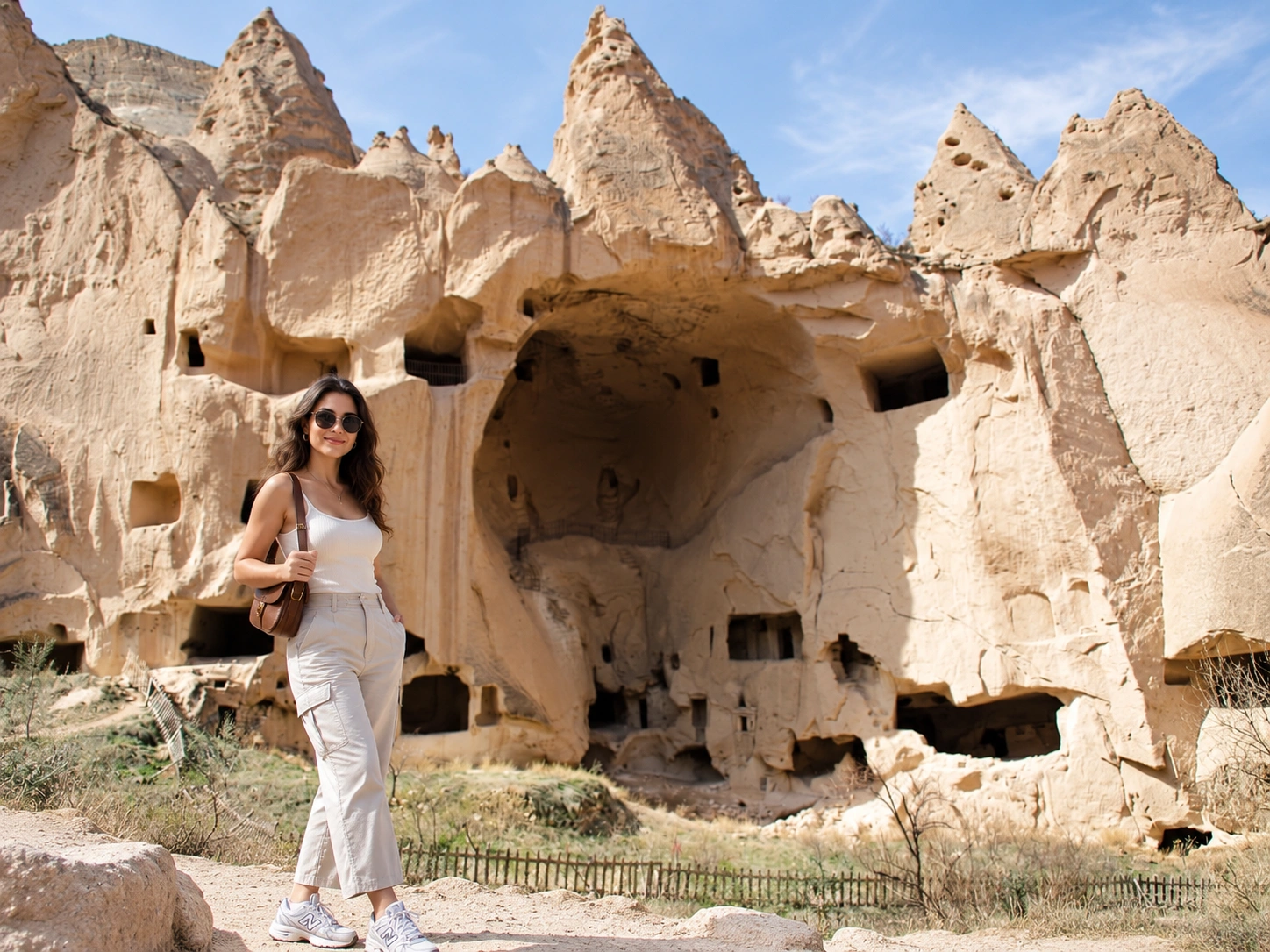
Regional travel videos are not a substitute for on-site signage or official hours.
Getting there
From Göreme, Avanos and Istanbul
Most visitors arrive by rental car, taxi or private driver from Göreme, Avanos or Ürgüp. There is no reliable full public-bus service to the ticket gate; day tours sometimes include Zelve with Paşabağ. Parking is available near the entrance — confirm fees on site.
Coming from Istanbul for a Cappadocia stay, build Zelve into a valley day after you have already landed in Nevşehir or Kayseri. Cab Istanbul’s Istanbul to Cappadocia chauffeur service covers intercity logistics; local valley hops are usually arranged in Cappadocia. For a wider day plan, see Cappadocia tours and nearby Avanos.
Match transfer timing to museum opening — not to a balloon schedule you have not booked.
FAQ
Zelve Open Air Museum — practical questions
Is Zelve a UNESCO site?
It sits inside the UNESCO-listed Göreme National Park and Rock Sites of Cappadocia ensemble. Marketing sometimes says “UNESCO museum” loosely — the inscription covers the wider rock landscape group.
Does one ticket include Paşabağ?
Yes according to the current DOSİM fee note for Zelve and Paşabağlar (“two archaeological sites on one ticket”). Recheck before purchase.
Can I enter Balıklı and Üzümlü churches?
The fee list states they are closed. Treat interior visits as unavailable unless on-site staff indicate otherwise.
How long do I need?
Plan at least 90 minutes; allow up to three hours if you walk all three valleys slowly.
Is Zelve good for children?
Older children who handle uneven paths often enjoy the caves. Toddlers, strollers and anyone unsteady on rubble will struggle. Hold hands near drop-offs.
Zelve or Göreme if I have time for only one?
Pick Göreme for fresco highlights; pick Zelve for chimney-village walking. Many people prefer doing both.