
Few monuments carry the weight of Hagia Sophia. Standing at the heart of Sultanahmet for nearly 1,500 years, it has been a Byzantine cathedral, an Ottoman imperial mosque, a secular museum and — since 2020 — an active place of Islamic worship once more. Today, foreign tourists enter through a dedicated visitor route that leads to the upper galleries: a breathtaking viewpoint above one of the world's most extraordinary interiors, giving access to the finest surviving Byzantine mosaics in existence. This guide covers everything you need for a practical, respectful and unforgettable visit.
Hagia Sophia Today: Active Mosque and UNESCO World Heritage Site
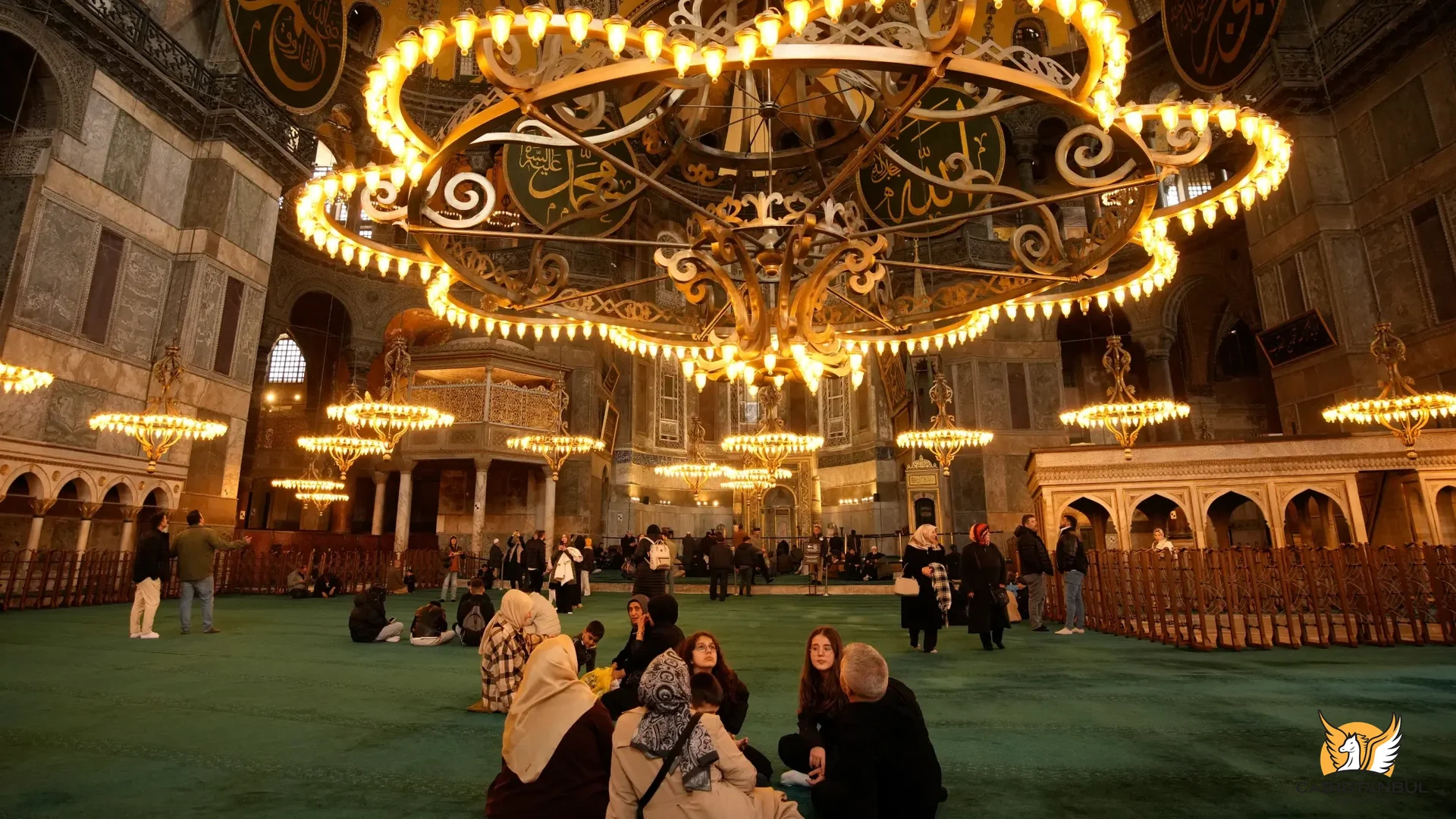
On 24 July 2020, Turkey's Council of State annulled Hagia Sophia's 1934 museum status, and the building was returned to functioning as an Islamic mosque under the management of the Directorate of Religious Affairs (Diyanet). The five daily prayers now take place on the ground floor of the main hall, which is reserved exclusively for Muslim worshippers.
Foreign tourists are still very much welcome — but the access system has fundamentally changed. Rather than walking freely across the main prayer floor as in the museum era, visitors now enter through a designated tourist entrance and follow a one-directional route up to the upper galleries. From this elevated viewpoint you look directly down into the extraordinary interior — the soaring dome, the nave, the apse — and have close access to the greatest Byzantine mosaics in existence. It is, in many ways, an even more privileged perspective on the architecture than a ground-floor visit.
As part of the Historic Areas of Istanbul, Hagia Sophia retains its status as a UNESCO World Heritage Site, recognised in 1985 alongside Topkapi Palace, the Hippodrome, the Blue Mosque and the surrounding historic quarter.
What changed, and what remains the same? The upper galleries, which were already the home of the finest Byzantine mosaics, are now the sole domain of foreign visitors. The grand dome rises 55.6 metres above the prayer floor below, and from the gallery you can appreciate its full geometry. The calligraphy medallions — the eight enormous roundels bearing the names of Allah and the Prophet Muhammad — are at eye level from the upper galleries. And the mosaics of the Deësis, Empress Zoe and Emperor Alexander are exactly as they always were: extraordinary, intimate, and genuinely moving.
Tickets, Visiting Hours and Current Access Rules
Hagia Sophia's visitor policies have evolved several times since the 2020 reconversion and may continue to change. The current situation as of 2026 is as follows — but always verify the latest details before your trip:
Entrance Fee
The entrance fee for foreign tourists is €25 per person (verified 2026). Children under 8 years of age enter free with a valid passport or identity document. The Istanbul Museum Pass is not valid at Hagia Sophia — you will need to purchase a separate ticket regardless of what other attractions it covers.
Opening Hours
Hagia Sophia is generally open to tourists from approximately 09:00 to 19:00 daily. Hours may vary slightly by season. On Fridays, the mosque closes to tourists during the weekly congregational prayer, typically from around 12:30 to 14:30. Access is also typically restricted on the morning of major Islamic holidays (Ramazan Bayramı and Kurban Bayramı). Check the prayer schedule and holiday calendar for your travel dates.
Buying Tickets
Tickets can be purchased at the tourist entrance on arrival. During peak season (particularly June through August), queues at the ticket window can reach 60–90 minutes. If advance ticket purchase through official or authorised digital channels is available at the time of your visit, use it. Avoid touts offering tickets or "queue-skipping" assistance on the street — they are not official.
The Tourist Access Route
Foreign visitors do not enter through the same gate as worshippers. The dedicated tourist entrance leads directly to the upper gallery level via ramps or stairs. The route is one-directional. The ground floor — where the main prayer hall, mihrab, minbar and carpet are — is reserved exclusively for Muslim worshippers. As a tourist, you will see the ground floor from above through the gallery balustrade, which provides a dramatic and comprehensive view of the entire interior.
1,500 Years of History: From Cathedral to Mosque
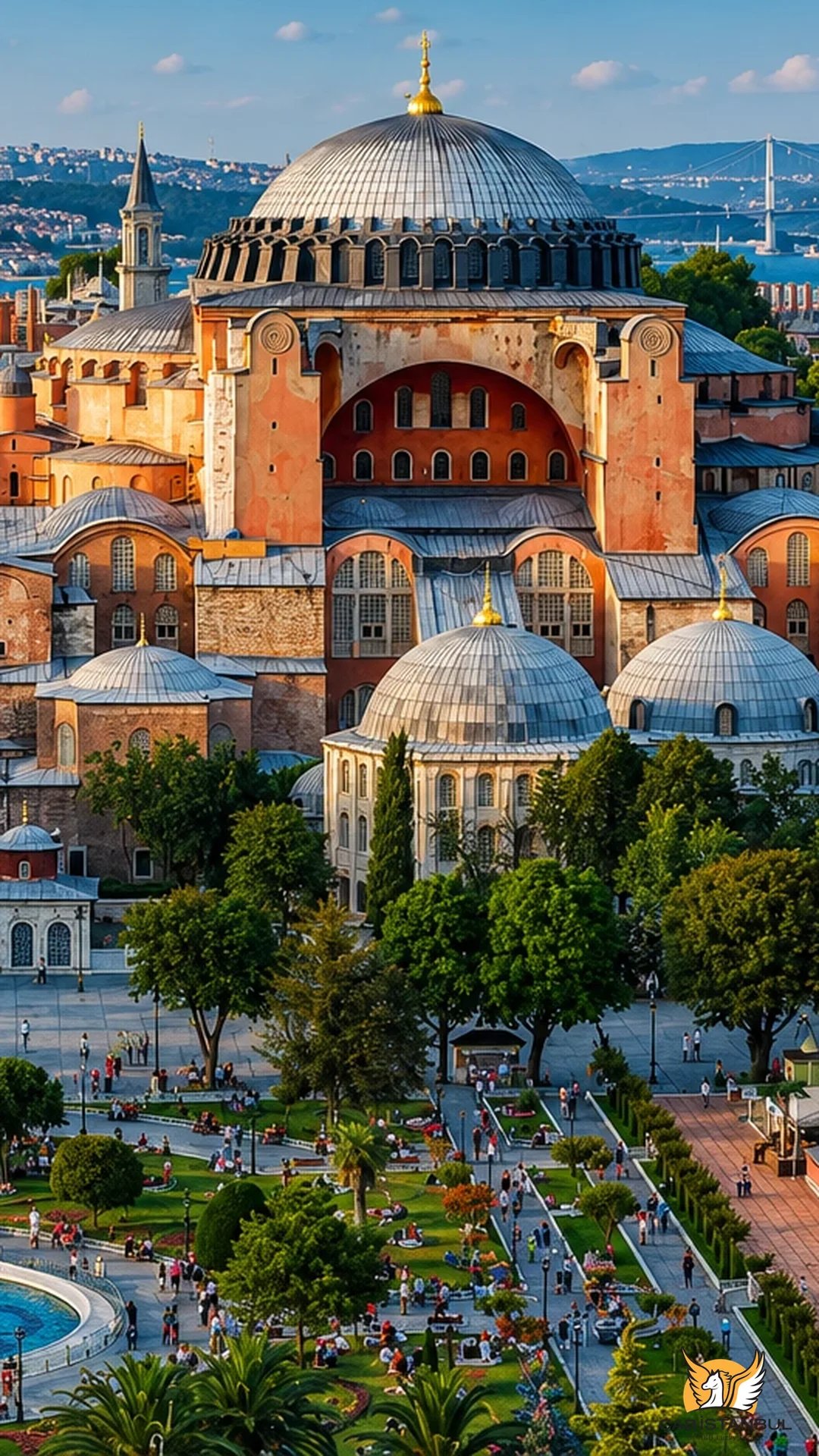
The story of Hagia Sophia begins with two fires and a revolt. The first church on this site, known as the Great Church (Megale Ecclesia), was inaugurated in 360 AD under the Emperor Constantius II and burned down in 404 during riots linked to the exile of Patriarch John Chrysostom. A second church, built by Theodosius II, opened in 415 and was itself destroyed during the Nika Revolt of January 532.
The Nika Revolt — a catastrophic urban uprising that left much of Constantinople in ruins — paradoxically gave the Emperor Justinian I the opportunity to build something the world had never seen. He commissioned his architects, Anthemius of Tralles and Isidorus of Miletus, to create a cathedral that would surpass all others in beauty and scale. Construction began on 23 February 532. The result was completed in just five years and inaugurated on 27 December 537. Justinian, entering the finished building for the first time, reportedly said: "Solomon, I have surpassed thee."
The Name and Its Meaning
The name Hagia Sophia means "Holy Wisdom" in Greek — a reference not to a saint, but to the Christian concept of Divine Wisdom (Thea Sophia). It was adopted in the 5th century, replacing the earlier "Great Church." Following the Ottoman conquest, the Turkicised form Aya Sofya became common. Today the official Turkish name is Ayasofya Camii (Hagia Sophia Mosque).
The Ottoman Transformation, 1453
When Sultan Mehmed II entered Constantinople on 29 May 1453, he rode directly to Hagia Sophia. Within days it was converted into a mosque: a mihrab and wooden minbar were installed, the Christian altar was removed, and the mosaics began to be plastered over. Four minarets were added across the following century — the first two, rougher in construction, under Mehmed himself; the elegant paired minarets on the east side under Selim II, designed by the master architect Mimar Sinan. The building served as the imperial mosque of the Ottoman capital for nearly 500 years.
Museum Period: 1934–2020
In 1934, Mustafa Kemal Atatürk converted Hagia Sophia into a secular museum as a symbol of the new Turkish Republic's modernising vision. Over the following decades, the plaster was gradually removed from many of the Byzantine mosaics, restoring them to view. In 1985, the building was inscribed as part of the Historic Areas of Istanbul UNESCO World Heritage Site. It functioned as a museum for 86 years before the 2020 reconversion.
Mosque Again: 2020 to Present
The 2020 reconversion has been one of the most discussed heritage decisions of recent decades, raising complex questions about the relationship between living religious practice and preserved cultural heritage. For visitors today, what matters practically is understanding the access system — and recognising that the upper galleries, where you will spend your visit, contain some of the most significant art and architecture in the world.
What to See in the Upper Galleries
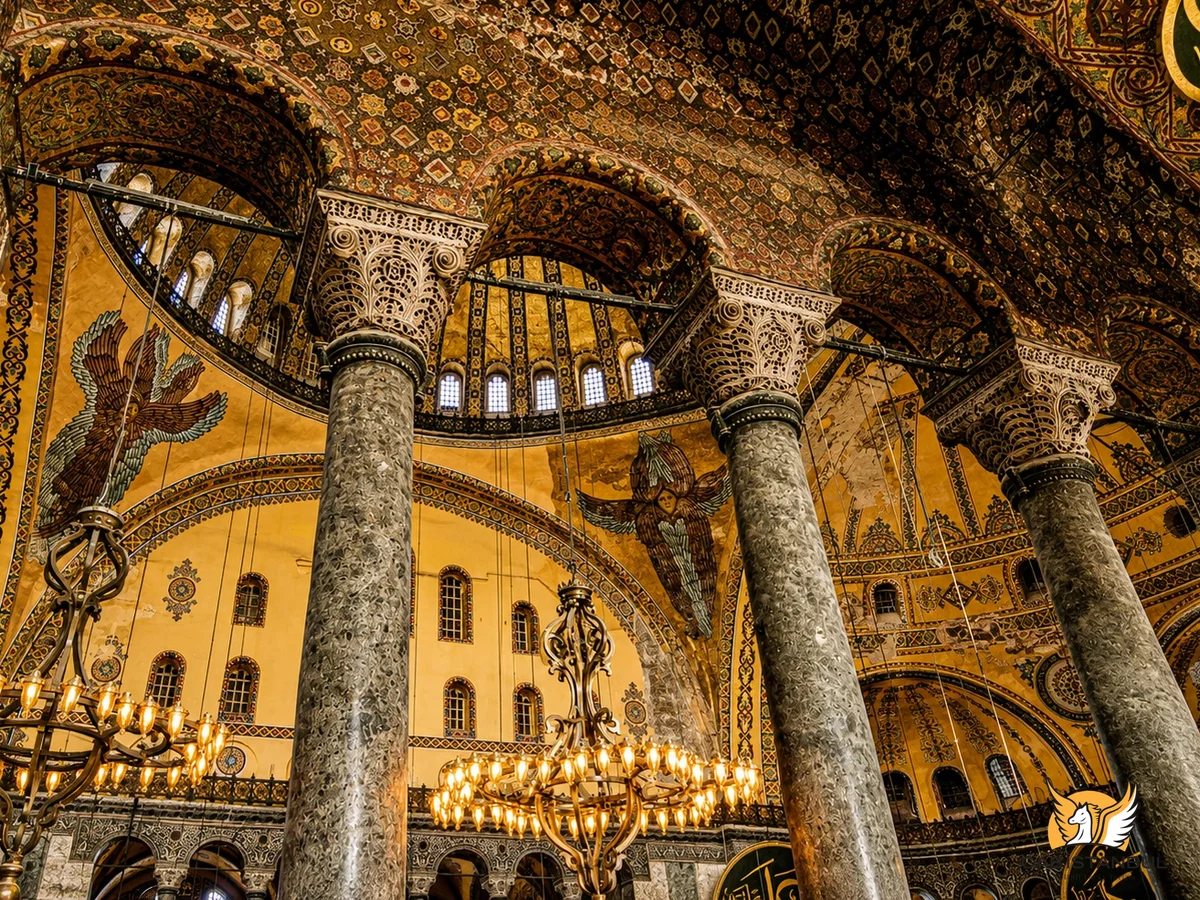
The upper galleries run along the western, northern and southern sides of the nave. They were used in Byzantine times as the gynaeceum — the area reserved for women during services — and were where the empress and court women attended ceremonies. Today they are the entire tourist domain, and they are remarkable.
Views of the Grand Dome
The dome of Hagia Sophia rises 55.6 metres above the prayer floor. Its base is ringed by forty arched windows that flood the interior with light, creating the famous Byzantine effect described by the court historian Procopius as the dome "suspended from heaven on a chain of gold." From the upper gallery, you are close enough to appreciate the dome's geometry and the windows in detail. The sheer scale of the interior — the sweep of the nave, the marble columns, the coloured stone revetment — is best understood from this elevated vantage point.
The Calligraphy Medallions
Eight enormous calligraphy roundels, each approximately 7.5 metres in diameter, are suspended around the base of the dome. They bear the names of Allah, the Prophet Muhammad, the four caliphs Abu Bakr, Umar, Uthman and Ali, and the Prophet's grandsons Hasan and Husayn. Painted by the master calligrapher Kazasker Izzet Efendi during the 19th-century restoration under Sultan Abdülmecid I, they are the largest calligraphic works in the Islamic world. From the upper gallery, several of these medallions are at eye level — a perspective visitors on the ground floor below cannot access.
Views of the Ground Floor
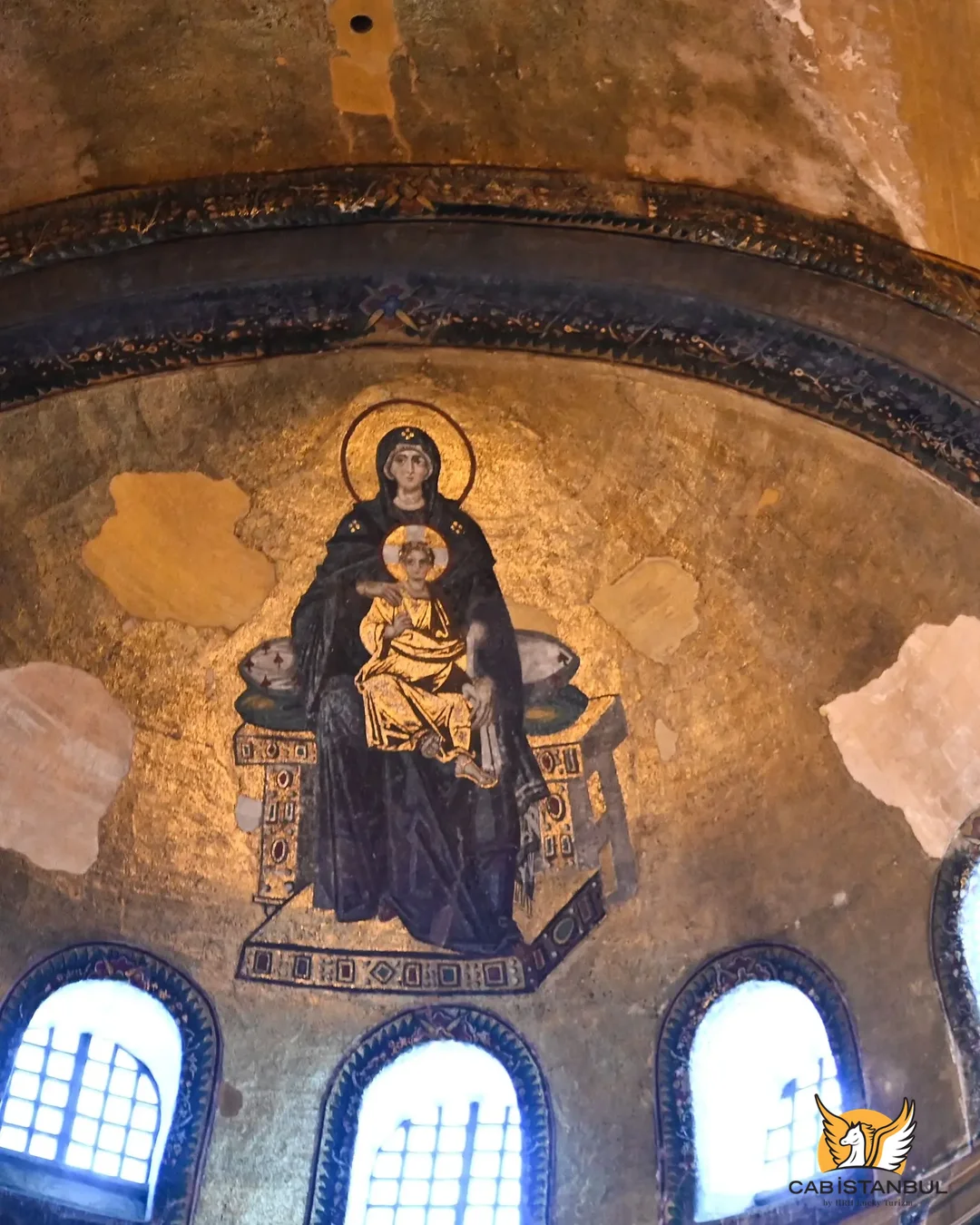
Through the gallery balustrade you can look directly down at the prayer floor below — the enormous carpet, the mihrab, the minbar and the intricate patterns of the Omphalion (the ceremonial coronation pavement). The apse at the eastern end contains the mosaic of the Virgin and Child (9th century), currently partially screened during prayer times but visible from the gallery. The Emperor's Gate, with its celebrated mosaic lunette, is visible from the western gallery end.
Architectural Detail at Close Range
The upper gallery walls preserve some of the finest examples of Byzantine stonework: marble revetment, carved column capitals, and decorative roundels in porphyry and granite. Graffiti carved by medieval visitors — including a Varangian Guard runestone inscription in the south gallery — can be seen at close range. These details reward slow exploration.
The Byzantine Mosaics: What Visitors Can See
The mosaics of Hagia Sophia are among the most important works of Byzantine art anywhere in the world. After the Ottoman conquest in 1453, most were plastered over or covered with wooden panels. During the museum period (1934–2020), they were gradually uncovered and restored. Since 2020, the upper gallery mosaics remain accessible to tourists and are the principal artistic attraction of the visitor experience.
The Deësis Mosaic (South Gallery)
The Deësis — meaning "supplication" or "entreaty" — is widely regarded as one of the greatest works of Byzantine art in existence. Dated to the 13th century, it depicts Christ enthroned, flanked by the Virgin Mary and John the Baptist, both interceding on behalf of humanity. The mosaic is in the south gallery and is the focal point of any visit to Hagia Sophia's upper level. What distinguishes it from earlier Byzantine work is its startling psychological depth — the individuality of each face, the emotional intensity of the expressions, the sophisticated use of gold and shadow. It anticipates the humanist impulse of the Italian Renaissance by nearly two centuries.
The Empress Zoe Mosaic
Also in the south gallery, the Empress Zoe Mosaic (11th century) depicts Christ enthroned between the Empress Zoe and her husband (the face and name of the emperor have been changed three times to reflect Zoe's successive marriages — a curious forensic detail visible to anyone looking closely). It is a remarkable document of Byzantine imperial politics rendered in glass and gold.
The Komnenos Mosaic
Adjacent to the Zoe mosaic is the Komnenos Mosaic (early 12th century), showing Emperor John II Komnenos and his wife Empress Eirene flanking the Virgin and Child. Eirene — a Hungarian princess — is shown with notably Slavic features, an unusual departure from the standardised imperial portrait type. Their son Alexios is depicted on the adjacent panel.
The Emperor Alexander Mosaic
In the north gallery, the Emperor Alexander Mosaic (early 10th century) is one of Hagia Sophia's rarer portrait mosaics: a frontal standing figure of the emperor, identified by inscription, wearing full imperial regalia. It was hidden beneath whitewash until the 1950s and retains a freshness unusual in works of its age.
What Remains Partially Screened
The ground-floor apse mosaic of the Virgin and Child — the largest mosaic in Hagia Sophia and one of the first to be uncovered during the museum era — is visible through the gallery windows but is currently partially screened during worship periods. The mosaic of Christ above the Emperor's Gate (narthex) is visible from the west gallery end. Access to the apse itself, and to the Emperor's Gate on the ground level, remains restricted to worshippers.
Ottoman Heritage: Minarets, Mihrab and Imperial Additions
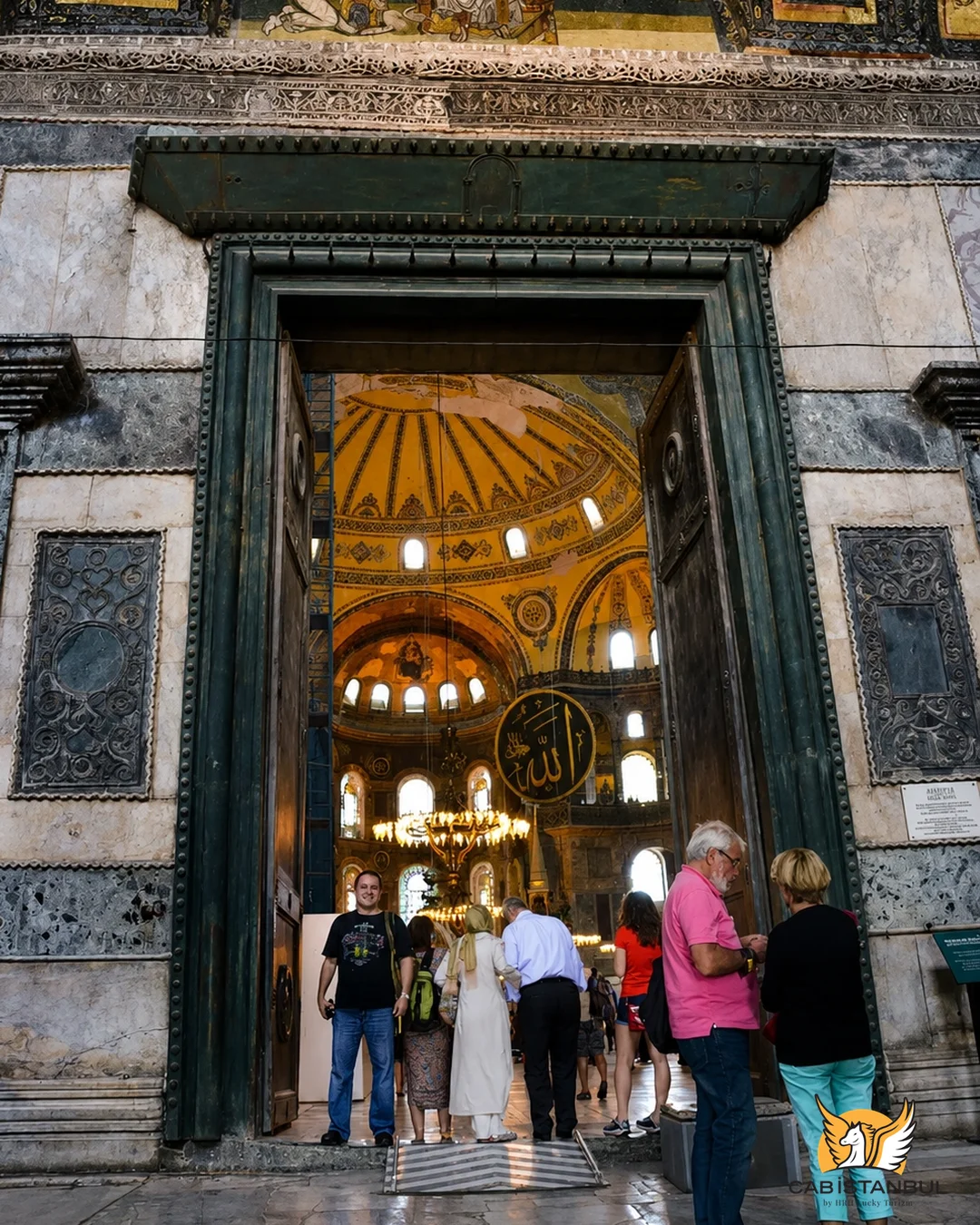
The Ottoman additions to Hagia Sophia are not afterthoughts or impositions — they represent a sustained, architecturally sophisticated engagement with the building over nearly 500 years. Understanding them is part of understanding what makes Hagia Sophia unique: no other monument in the world carries the layered histories of two great empires in quite this way.
The Minarets
The four minarets that define Hagia Sophia's silhouette were added progressively. Sultan Mehmed II added the first wooden minaret immediately after the 1453 conquest (later rebuilt in brick). Sultan Bayezid II added a second. The two elegant, slender minarets on the east side — harmoniously designed and proportioned — were built by Mimar Sinan under Sultan Selim II in the 1570s, completing the exterior profile that visitors recognise today. Sinan, the greatest architect of the Ottoman period, is also responsible for the structural reinforcements (buttresses and arched supports) that help the building withstand seismic stress.
The Mihrab and Minbar
Visible from the upper gallery, the mihrab — the niche indicating the direction of Mecca — occupies the apse at the eastern end of the building. Because Hagia Sophia is oriented roughly east-west rather than toward Mecca, the prayer congregation faces slightly off the building's central axis, giving the mosque an unusual spatial dynamic. The marble minbar (pulpit) was built in the 16th century during the reign of Sultan Murad III and is among the finest examples of Ottoman marble craftsmanship. Two enormous candelabras in the apse were brought from Hungary during the reign of Sultan Süleyman the Magnificent.
Iznik Tile Panels and Calligraphy
Flanking the mihrab are two magnificent tile panels from the 16th-century Iznik tradition: one decorated with a floral pattern from the early Ottoman period; the other depicting sacred imagery including representations of the Kaaba in Mecca and the tomb of the Prophet Muhammad. These panels are visible from the gallery above. The Ottoman calligraphy panels near the mihrab include works by prominent sultans and master calligraphers, part of the same artistic tradition as the great roundels suspended beneath the dome.
The Sultan's Lodge, Library and Fountain
The raised Sultan's Lodge (Hünkar Mahfili) — the elevated private prayer chamber reserved for the Ottoman sultan — is visible from the upper galleries. The Sultan Mahmud I Library (established 1740) occupies a chamber off the main hall. In the outer courtyard, the elegant Şadırvan (ablutions fountain), commissioned by Sultan Mahmud I in 1740–41, is a beautiful fusion of classical Turkish and Baroque architectural styles with a 16-section marble water pool beneath a gilded dome.
Dress Code and Mosque Etiquette
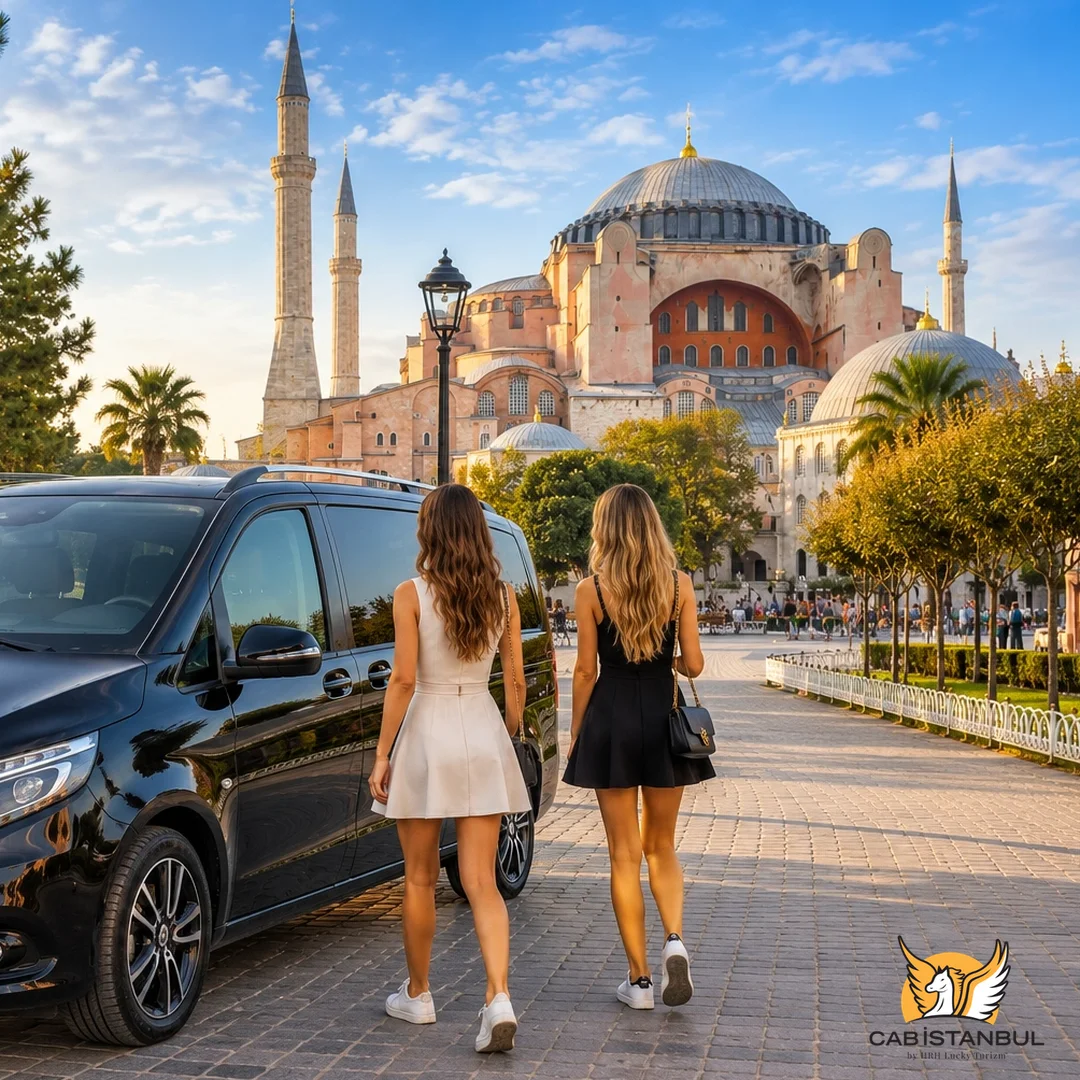
Hagia Sophia is an active mosque. The dress code is non-negotiable and is checked before entry. If you are not dressed appropriately, you will be asked to cover up before you can enter — or refused entry if you do not comply.
What All Visitors Must Wear
- Shoulders: Covered for both men and women. No sleeveless tops or tank tops.
- Knees: Covered for both men and women. No shorts or short skirts.
- Shoes: Must be removed before entering the carpeted mosque areas. Complimentary plastic bags are provided at the entrance to carry your shoes with you. Slip-on footwear makes this considerably easier.
Headscarf: Mandatory for Women
Women are required to cover their hair with a headscarf when entering Hagia Sophia. This rule is strictly and consistently enforced. Headscarves can be purchased at the entrance for approximately €1, but bringing your own is strongly recommended: during peak season the supply at the entrance can be depleted, and queues at the cover-up counter add time to an already potentially long entry process. A light scarf or pashmina carried in your bag is all you need.
Behaviour During Your Visit
- Keep your voice low — worshippers on the ground floor below can hear the gallery.
- Do not photograph people who are praying from the gallery above.
- Move at a considerate pace and do not block other visitors at popular mosaic locations.
- Follow the one-directional route indicated by the signage.
- Large backpacks, wheeled luggage, food and drinks are not permitted inside.
- Professional tripods and commercial photography equipment are not allowed.
- Guided tours are no longer permitted inside the building. An official audio guide app is available for download.
How Long to Spend and the Best Time to Visit
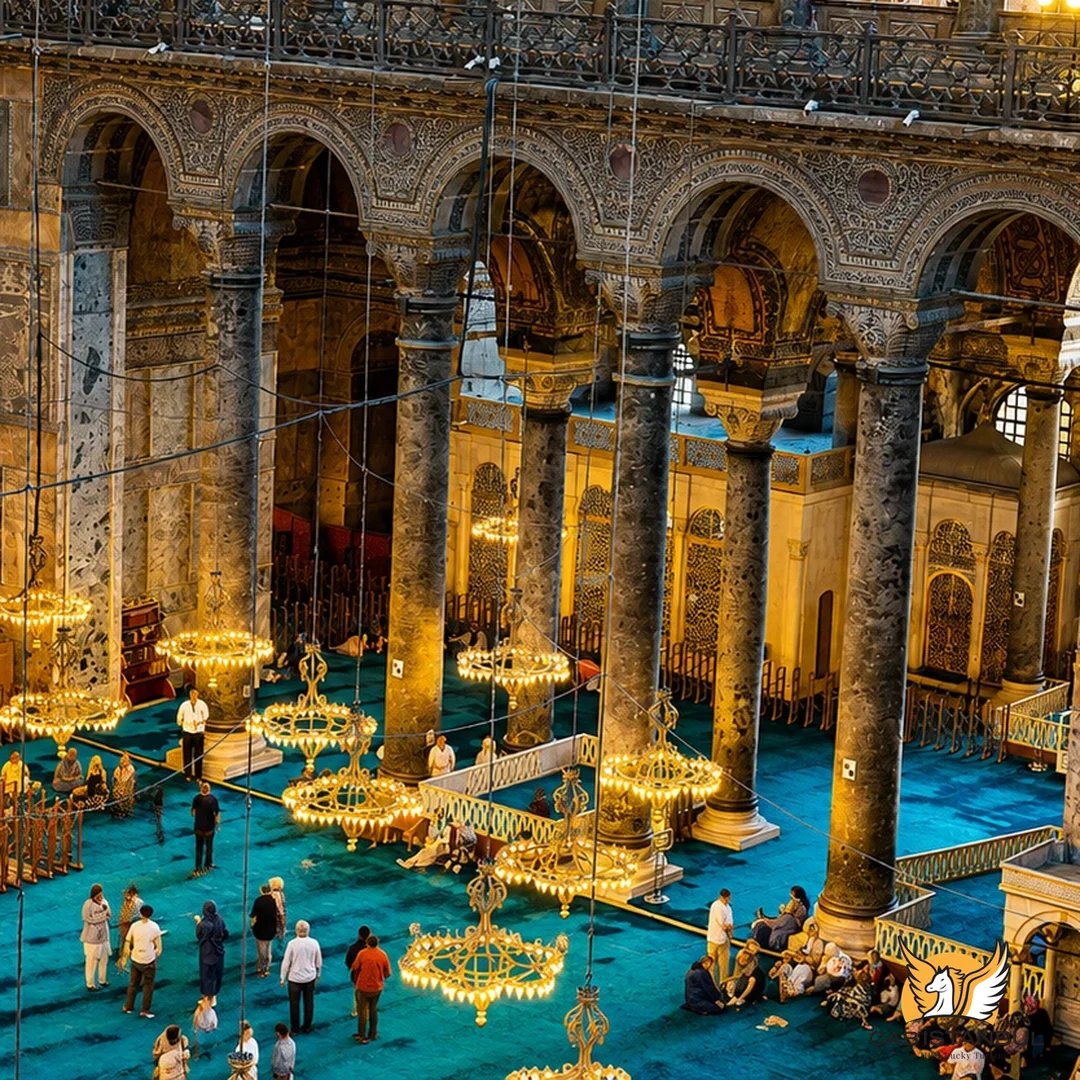
Most visitors spend between 1.5 and 2.5 hours exploring the upper galleries. Those interested in Byzantine art — particularly the mosaics — often spend longer. Architecture enthusiasts will want time to study the dome, the column capitals and the stonework at close range. Allow additional time for queuing, especially in summer, when entry queues can reach 60–90 minutes at peak times.
Best Time of Day
Arriving early — as soon as the building opens — offers the best conditions in every respect: lower crowds, shorter queues, and the morning light entering the dome from the east. The midday period is the busiest, coinciding with the largest tourist volumes and (on Fridays) the prayer closure. Late afternoon visits can also be beautiful as the western light changes the interior atmosphere, but queues tend to rebuild after the Friday prayer closure period ends.
Best Time of Year
- Spring (April–May): Comfortable temperatures, manageable visitor numbers. Generally the best season to visit Istanbul overall. Lines at Hagia Sophia are significantly shorter than in summer.
- Autumn (September–October): Similar to spring — excellent weather, lower crowds than peak summer, and beautiful light conditions in the galleries.
- Summer (June–August): The busiest period. Expect long queues and high temperatures. If you visit in summer, arrive at opening time and consider booking tickets in advance.
- Winter (November–March): The least crowded time to visit. Queues are short, the building is quieter, and the low winter sun at certain angles produces extraordinary light effects through the dome windows. Check for any seasonal hour adjustments before visiting.
Avoiding the Crowds: Practical Advice
The two most effective strategies are simple: arrive at or before opening time, and avoid Fridays if your schedule allows. If you must visit on a Friday, morning or post-prayer visits are best. During major Islamic holidays, the building may be closed to tourists on the first morning — check the Diyanet holiday calendar for your dates.
How to Get to Hagia Sophia
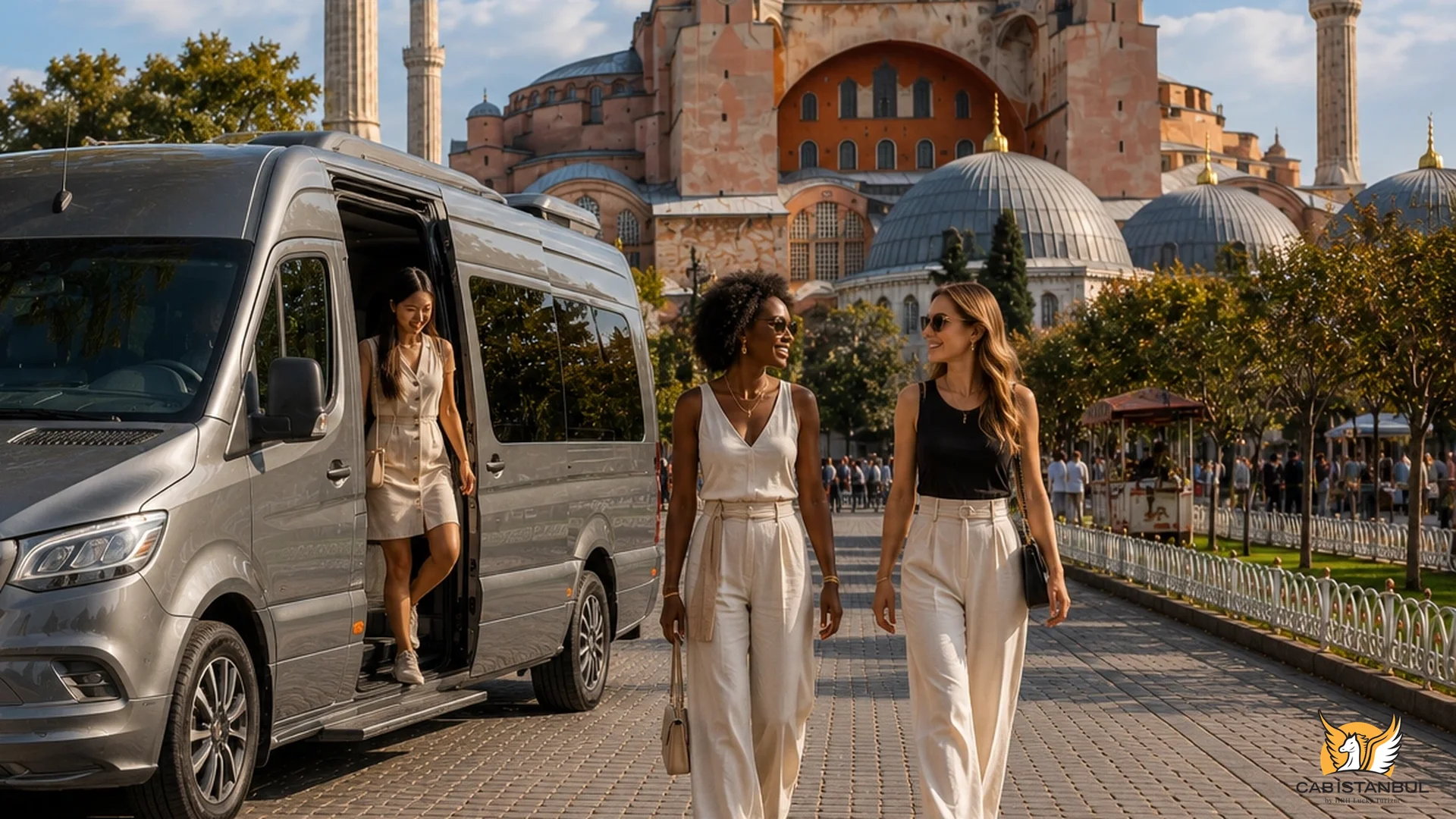
The simplest and most reliable way to reach Hagia Sophia from most parts of European Istanbul is the T1 tram line. Board at Karaköy (from Beyoğlu/Galata area), Eminönü (from the ferry terminal) or Beyazıt (near the Grand Bazaar) and ride to the Sultanahmet stop. From the tram stop, Hagia Sophia is a 4–5 minute walk across the square.
Hagia Sophia is the natural anchor of any Sultanahmet walking tour:
· Blue Mosque (Sultan Ahmed Camii): 2–3 minutes across the square
· Basilica Cistern: 3–4 minutes on foot
· Topkapi Palace: 5–7 minutes via Soğukçeşme Street
· Grand Bazaar: 15–20 minutes walking through Divan Yolu
By public transport, take the M11 metro from the airport toward the city, then transfer to connecting metro or tram lines toward Sultanahmet. The full journey typically takes 60–90 minutes. For a more comfortable arrival — particularly if you have luggage — a private Istanbul Airport transfer takes you directly to your Sultanahmet hotel in approximately 45–75 minutes, depending on traffic. Cab Istanbul offers fixed-price, meet-and-greet airport transfers with no hidden costs.
SAW is on Istanbul's Asian side, making it further from Sultanahmet. Public transport (airport bus + metro/tram) takes approximately 90–120 minutes. A private Sabiha Gökçen airport transfer takes around 60–90 minutes depending on Bosphorus bridge traffic, and is the most practical option if you arrive with luggage and want to go directly to your hotel.
Take the F1 funicular from Taksim down to Kabataş, then the T1 tram to Sultanahmet — 20–30 minutes total. Alternatively, a taxi or car with driver takes 15–20 minutes and drops you directly at the site.
The Galataport cruise terminal is approximately 4–5 kilometres from Hagia Sophia. A taxi or private car takes 15–20 minutes, making it easily achievable on a shore day. Cruise passengers wishing to see Hagia Sophia, the Blue Mosque and the Basilica Cistern in one day should consider a private Istanbul tour with a waiting driver to maximise limited time ashore.
The Best Sultanahmet Itinerary
Hagia Sophia is the centrepiece of one of the world's great historic walking neighbourhoods. Every significant attraction below is within walking distance. Here are four ways to plan your time.
| Plan | Time | What to Include |
|---|---|---|
| Half-Day Classic | 3–4 hours | Hagia Sophia → Blue Mosque → Basilica Cistern |
| Full Day | 7–8 hours | Hagia Sophia → Topkapi Palace → Blue Mosque → Basilica Cistern → Grand Bazaar |
| Family Visit | Half-day, slow pace | Hagia Sophia → Sultanahmet Square → Basilica Cistern (children enjoy it) → Lunch near the square |
| Premium Private | Full day, any pace | Private driver collects from hotel → Hagia Sophia → Topkapi Palace → Blue Mosque → Basilica Cistern → Dinner in Galata or Beyoğlu |
For the premium private option, Cab Istanbul's private Istanbul tour service provides a fully chauffeur-driven day with a professional driver who waits at each stop. You set the pace, skip queuing for taxis between sites, and can adapt the day as you go. It is the most practical way to cover Sultanahmet thoroughly, particularly if time is limited or you are travelling with family or a group.
Practical Tips for Your Visit
- Check prayer times for your specific date: Prayer times shift daily with the season. The Turkish Diyanet website (diyanet.gov.tr) publishes Istanbul prayer times. On a non-Friday, tourists are generally not affected by the daily prayers as they access the upper gallery via a separate route, but always check the current policy before you visit.
- Use official ticket channels only: Buy tickets from the official booth at the visitor entrance or through verified advance booking platforms. Avoid anyone on the street offering to help you skip the queue or buy tickets on your behalf.
- Bring your own headscarf: Women should carry a headscarf in their bag. The entrance counter sells them for approximately €1, but supply runs low during peak times and queues can form.
- Wear slip-on shoes: Shoes are removed at the entrance and carried in a provided plastic bag. Shoes with laces or buckles take longer — wear easily removable footwear.
- Arrive in the first hour of opening: This is the single most effective way to reduce queue time, especially between June and August.
- Leave large bags at your hotel: Oversized backpacks and wheeled luggage are not permitted inside. If you are arriving from the airport, check in first.
- Buy Topkapi tickets in advance: If you are combining Hagia Sophia with Topkapi Palace the same day, buy Topkapi tickets online before you go — queues there can also be very long.
- Check restoration status: The ongoing restoration (since December 2025) may affect views of certain exterior and interior elements. Confirm the current state of access before travel.
- Private transfer from the airport: If you are arriving at Istanbul Airport and heading directly to Sultanahmet, a private airport transfer drops you at your hotel door without luggage changes, metro transfers or navigation — ideal if you want to visit Hagia Sophia on your first day.
Who Should Visit Hagia Sophia?
The honest answer is: almost everyone visiting Istanbul. But different visitors get different things from it: