
İznik · Nicaea · history & travel · 2026
Nicaea — today’s İznik on the shore of Lake İznik in Bursa Province — is one of the densest history-and-travel days you can take from Istanbul. In 325 the First Council of Nicaea shaped Christian doctrine; in 787 a second council met here over icons; Ottoman tiles, city walls and an active Hagia Sophia mosque still structure the town. On 28 November 2025, Pope Leo XIV joined Ecumenical Patriarch Bartholomew I for an ecumenical prayer near the Saint Neophytos excavations — a past visit, not a future itinerary.
This page is a full İznik guide, not a council-only pamphlet: Christian memory, both councils, the creed distinction, papal anniversary day, Hagia Sophia, walls and gates, theatre, museum, Green Mosque, tiles, lake and underwater basilica, Keramet, Sansarak, short side stops, Istanbul transport and practical tips. Hours and prices stay soft. Cab Istanbul moves you; the driver is not a licensed historical guide.
Cab Istanbul provides chauffeur rides and airport transfers only — including Istanbul Airport (IST), Sabiha Gökçen (SAW), car with driver, VIP transfer and Bursa tour / transfer. Tickets, museum entries and guided interpretation are not Cab products.
At a glance
İznik (Nicaea) — what to see in one map
Use the table as a practical visitor map: identifiable stops, not a locked “must-do nine.” Pair Christian-history hours with Ottoman fabric and lake time so the day does not collapse into one ruin.
| Stop | Why it matters | Practical note |
|---|---|---|
| First Council memory (325) | Core Christian doctrinal reference; town identity as Nicaea | Venue uncertain — do not treat Ayasofya as the 325 hall |
| St Neophytos / lakeside excavations | 2014 submerged basilica zone; 2025 papal prayer setting nearby | Shore / visitor context; not a casual swim-through museum |
| Hagia Sophia of İznik | Strong link to Second Council 787; Byzantine–Ottoman fabric | Active mosque since 2011 — dress and prayer etiquette |
| City walls & gates | Roman–Byzantine circuit; İstanbul, Lefke, Yenişehir, Göl gates | Walls and gates — not a single “castle from 258 BC” |
| İznik Museum (Nilüfer Hatun İmareti) | Tiles, theatre finds, layered local collections | Imaret 1388; museum from 1960 — check current hours |
| Yeşil Cami (Green Mosque) | Early Ottoman mosque; tiled minaret landmark | Active mosque — quiet visit between prayer times |
| Tile workshops / town craft | Ottoman court ceramic tradition still visible in shops | Buy what you like; skip quartz-percentage myths |
| Lake İznik shore | Ancient Ascania setting; promenade and basilica viewpoint | Recreation soft — no locked size or fish marketing |
| Keramet thermal / Sansarak canyon | Optional nature add-ons near the İznik–Orhangazi corridor | Bathing recreation only; canyon = soft difficulty, daylight |
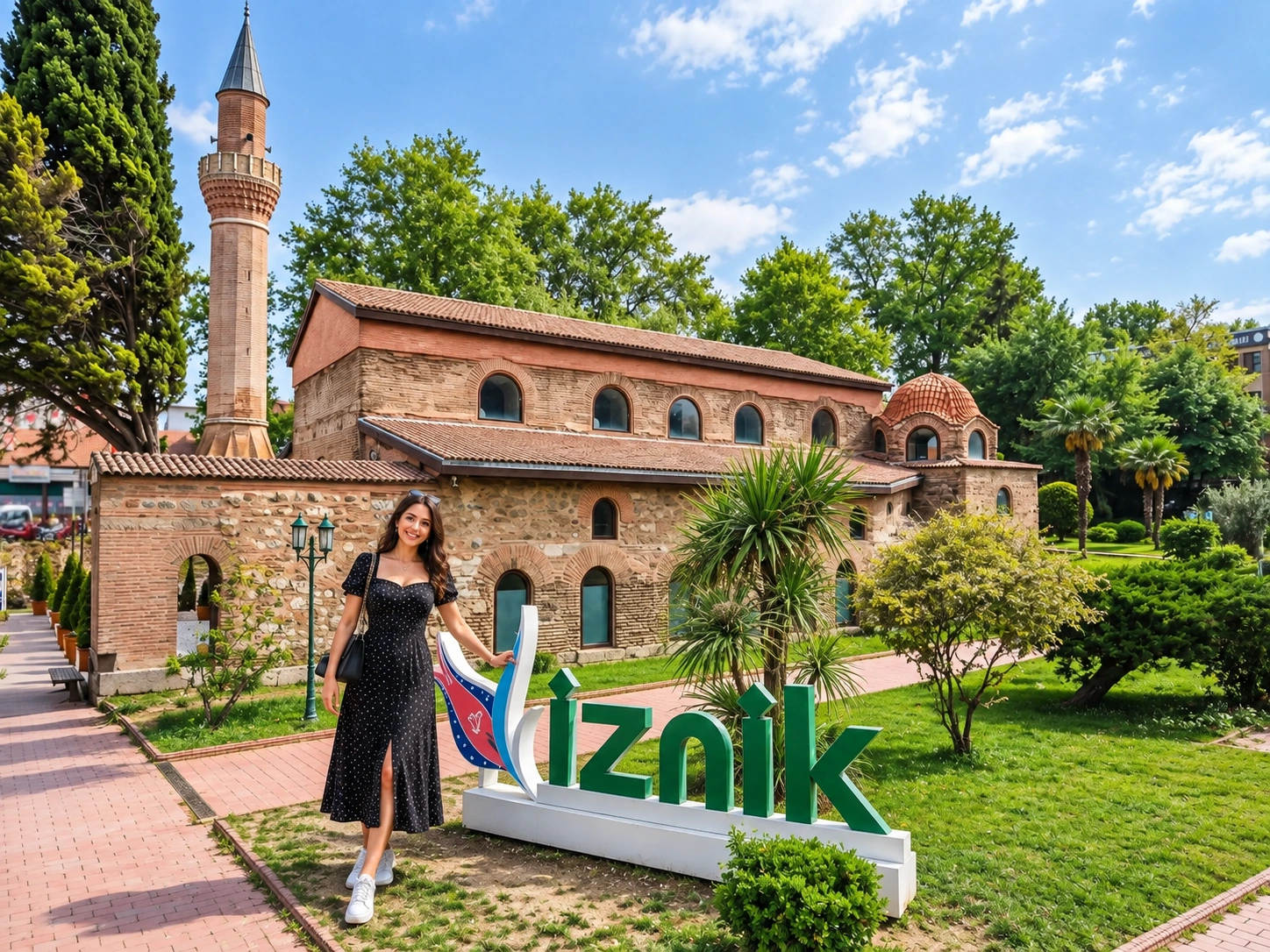
If you already know Istanbul’s peninsula highlights from a guide such as Istanbul attraction places, treat İznik as a different rhythm — slower streets, lake light and council history rather than another Hagia Sophia of Constantinople.
Compare before you go
Council memory, Ottoman fabric or lake day — what fits
Most travellers compress İznik into one long day from Istanbul. Choose a primary thread so you do not rush every gate and every workshop.
| Focus | Core stops | Effort | Best for |
|---|---|---|---|
| Christian / council day | Council story, creed notes, St Neophytos shore context, Hagia Sophia (787 link), brief museum | Moderate walking; soft site access | Pilgrimage, church history, 1700th-anniversary interest |
| Ottoman & tiles | Yeşil Cami, museum tile rooms, workshops, walls circuit | Easy town walking | Craft, photography, early Ottoman architecture |
| Lake & nature add-on | Shore promenade, basilica viewpoint, optional Keramet or Sansarak | Variable — canyon needs footwear and daylight | Travellers pairing Bursa lake landscapes with history |
| Combined day trip | Ayasofya + one gate walk + museum or Yeşil Cami + lake edge | Full day from Istanbul (~1.5–2.5 h road each way, traffic soft) | First visit with a chauffeur window |
Nearby Bursa nature pages such as Uluabat Lake / Gölyazı and Bursa waterfalls are separate corridors — useful for a multi-day Bursa plan, not automatic same-afternoon add-ons to İznik.
Christian importance
Why Nicaea still matters to churches worldwide
For Christians, Nicaea is not a niche archaeological footnote. The First Council of 325 is one of the earliest and most widely remembered gatherings of bishops under imperial invitation, aimed at unity of faith after the legalisation of Christianity in the Roman Empire. The word homoousios — the Son “of one substance” with the Father — entered the church’s doctrinal vocabulary here. Later councils, liturgies and catechisms still orbit that settlement, even when the exact 325 wording is not what congregations recite today.
A second ecumenical council in 787 returned to Nicaea over the theology of icons, which is why the town carries a double Christian memory: creed and image. Visiting İznik is therefore both travel and remembrance — lakeside Ottoman streets folded around places that still structure Sunday language for Catholics, Orthodox and many Protestants.
Context video only — not a substitute for primary sources or a site ticket.
325 · First Council
First Council of Nicaea — cautious facts
Emperor Constantine I convened the council in Nicaea, traditionally in mid-to-late 325. The central contested issue was Arianism — associated with Arius of Alexandria — versus affirmation of the Son’s full divinity. Later tradition often speaks of “about 300 bishops,” sometimes 318; safer language is hundreds of bishops, traditionally about 300. Exact roll-calls are not treated here as locked minutes.
Constantine convened the gathering and opened and attended sessions. He was not yet baptized. Soft framing is better than a slogan: imperial presence shaped logistics and the aim of unity; do not cast him as a theological chair who “presided” the creed debates in a modern sense.
Outcomes included a creed affirming the Son as homoousios with the Father, condemnation of Arius’s formulations, disciplinary canons on clergy conduct and related norms, and discussion of Easter dating — without a final universal calendar that settled every church forever. Stories such as Paphnutius and clerical celibacy belong to later tradition; attribute them, do not assert them as proven council minutes. Jurisdictional notes about major sees should stay soft rather than sloganised.
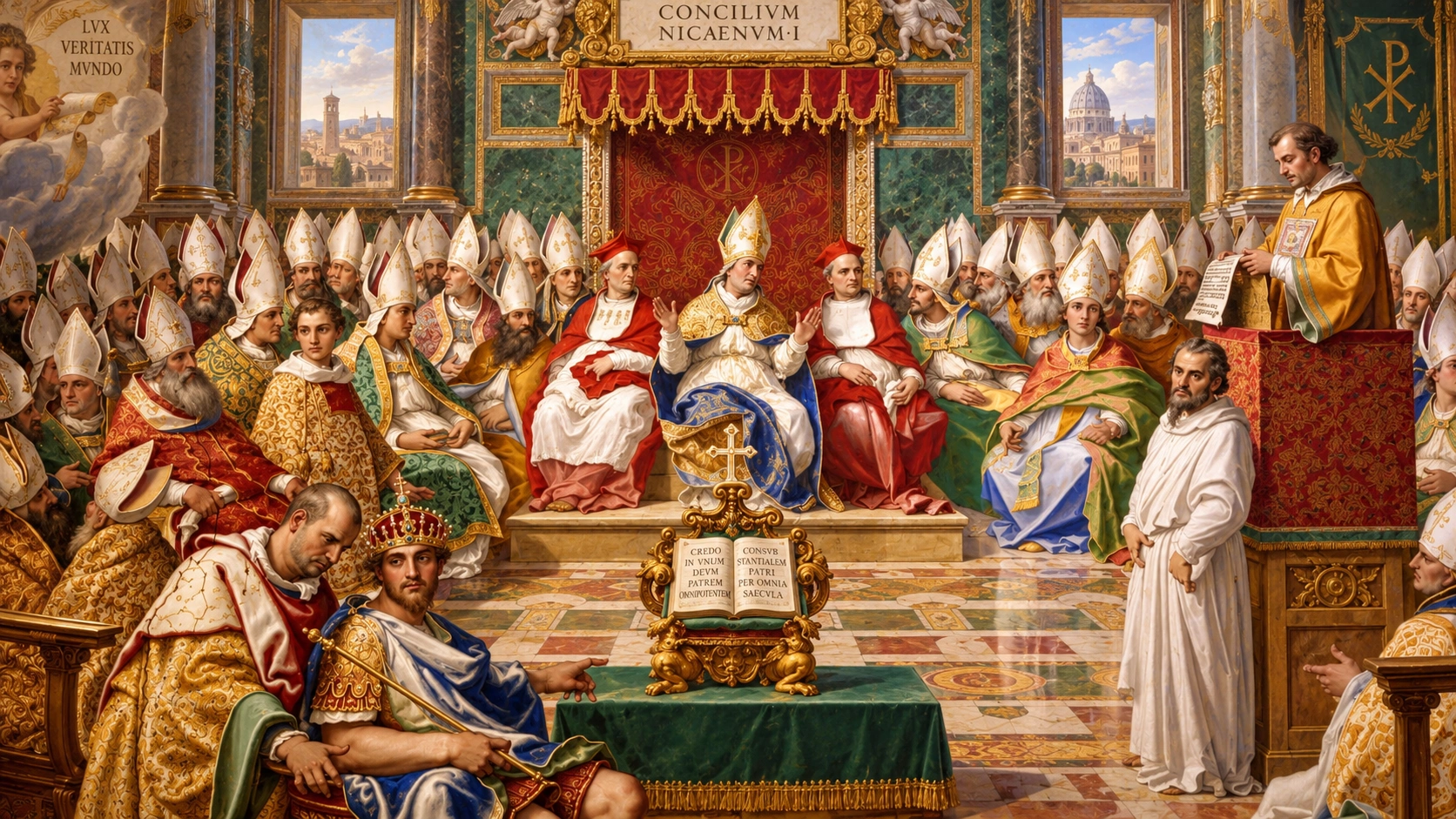
Where did bishops meet? Eusebius describes sessions in a “house of prayer,” later in a hall of Constantine’s palace. The palace location is unknown. Do not state that İznik’s Hagia Sophia was the 325 venue — that building is later, and its secure council association is with 787. Some archaeologists have proposed the submerged lakeside basilica (Saint Neophytos associations; noticed around 2014) as a possible early venue; treat that as proposed and contested, not proven.
Creed · 325 vs 381
Nicene Creed — what 325 said, what liturgy usually means
Two layers are easy to confuse. The 325 Nicene Creed is the creed of the First Council, including anathemas against Arian formulations. The 381 Council of Constantinople expanded and affirmed a related form commonly called the Niceno-Constantinopolitan Creed. When most churches today say “the Nicene Creed” in liturgy, they usually mean that later, widely used form — not a word-for-word reprint of 325 alone.
Never claim the modern liturgical creed is identical to the 325 text. For travellers who followed the 1700th-anniversary observances: Vatican reporting on the 2025 İznik ecumenical service notes that the Niceno-Constantinopolitan Creed was recited — consistent with living liturgical practice rather than a museum reenactment of 325 wording alone.
Educational overview of creed history — keep 325 and 381 distinct when you read or recite.
2025 · past tense
Pope Leo XIV in İznik — 28 November 2025
Pope Leo XIV’s first international Apostolic Journey, to Türkiye and Lebanon, ran from 27 November to 2 December 2025. The İznik visit was Friday 28 November 2025 — day two of the journey, not “27 November in İznik.” The journey began on 27 November (Ankara context in official coverage); old copy that says the Pope “will visit İznik on 27 November” is wrong on both tense and date.
That Friday, the papal party travelled by helicopter from Istanbul to İznik. Around mid-afternoon an ecumenical prayer was held near the archaeological excavations of the ancient Basilica of Saint Neophytos. Ecumenical Patriarch Bartholomew I welcomed the Pope; other church leaders were present; the creed was recited; the party returned to Istanbul the same afternoon. Write and remember this in the past tense. No invented “Council Memorial Route soon to be recognised,” and no planned itinerary language as if the visit were still ahead.
The prayer setting was the excavation / lakeside basilica context — not a claim that Hagia Sophia of İznik was “the council hall” for 325. Visitors today can approach the shore area with the same caution this guide uses for underwater archaeology: viewpoint and visitor-centre framing, not a swimming museum by default.
787 · Second Council
Second Council of Nicaea — icons and Hagia Sophia
The Second Council of Nicaea (787) is counted as the seventh ecumenical council. It addressed iconoclasm in the context of Constantine VI and Irene. Unlike 325, this council has a strong traditional association with the Hagia Sophia of Nicaea (İznik Ayasofya). Keep the two councils in separate mental folders: creed settlement in 325; icon theology in 787.
For a walking day, that distinction matters. You can stand in today’s Ayasofya mosque and honestly remember 787 without inventing a 325 session in the same nave. The building’s later Byzantine fabric and Ottoman mosque life are part of the same layered story.
Ayasofya · active mosque
Hagia Sophia of İznik — not Istanbul’s, not a museum
İznik’s Hagia Sophia is a Byzantine basilica with a long afterlife: rebuilt after the 1065 earthquake (floor raising is often described in visitor literature — treat precise centimetres softly), converted to a mosque after Orhan’s conquest in 1331 (Orhan Camii), used as a museum from 1935 to 2011, and an active mosque again from November 2011. Partial worship and visitable heritage fabric coexist; dress and prayer etiquette apply. Hours are soft; no ticket price is locked on this page.
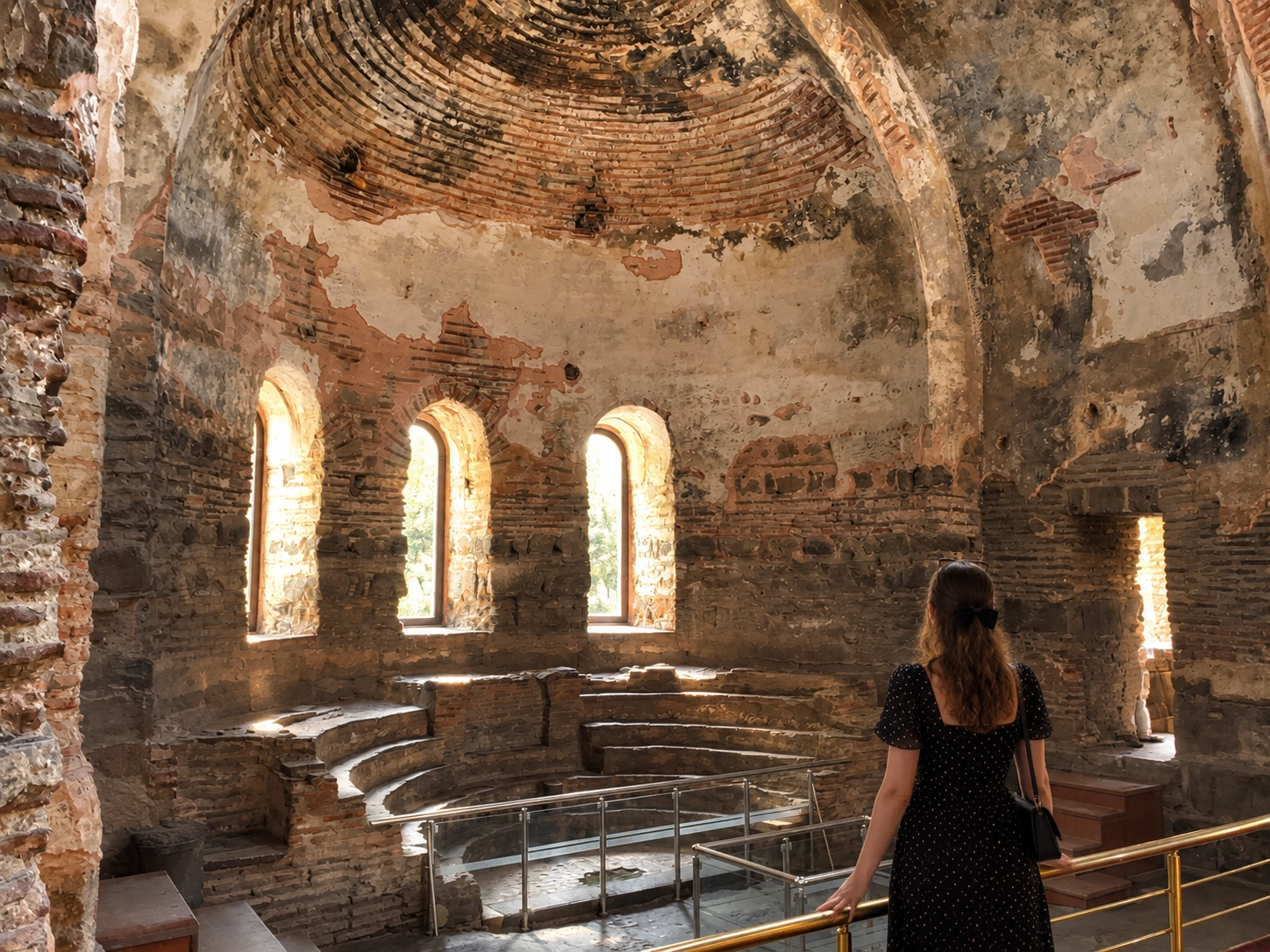
Popular chronologies sometimes push Roman gymnasium undercroft stories or exact fourth-century groundbreaking years onto this building. Prefer layered wording: late antique and Byzantine phases exist in scholarship and tourism talk; do not invent a 325 groundbreaking plaque. Sinan-period modifications are often claimed for the minaret or Turkish-period changes — “commonly attributed” is safer than a locked workshop stamp.
Visit atmosphere. Confirm prayer times and entry practice on the day — this is a living mosque.
Fortifications
City walls and gates — not a Hellenistic “castle”
Prefer city walls and gates to a single “castle from 258 BC.” The circuit shows Roman and Byzantine rebuilding layers. Major gates are usually named İstanbul Gate (north), Lefke Gate (east), Yenişehir Gate (south) and Göl / Lake Gate (west). Soft tower and secondary-entrance counts; do not lock “twelve side doors” without a source you can check on site.
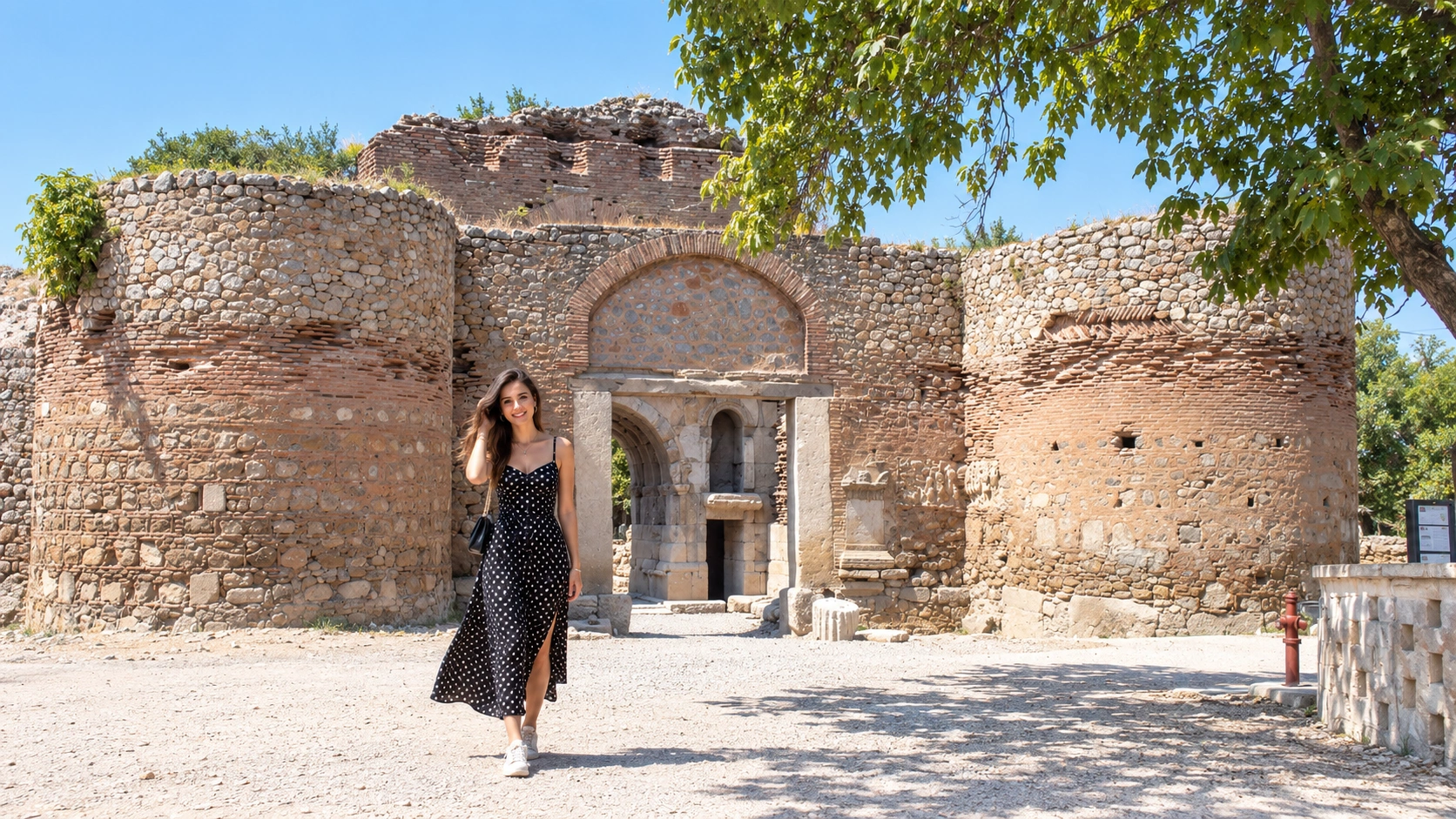
The İstanbul Gate is often described as a Roman monumental arch later integrated into a Byzantine gate, with a first-century AD core commonly cited. It is not a fourth-century BC monument. Walking the exterior walls and entering through one or two gates is usually enough for a first visit; photograph light is kinder in morning or late afternoon.
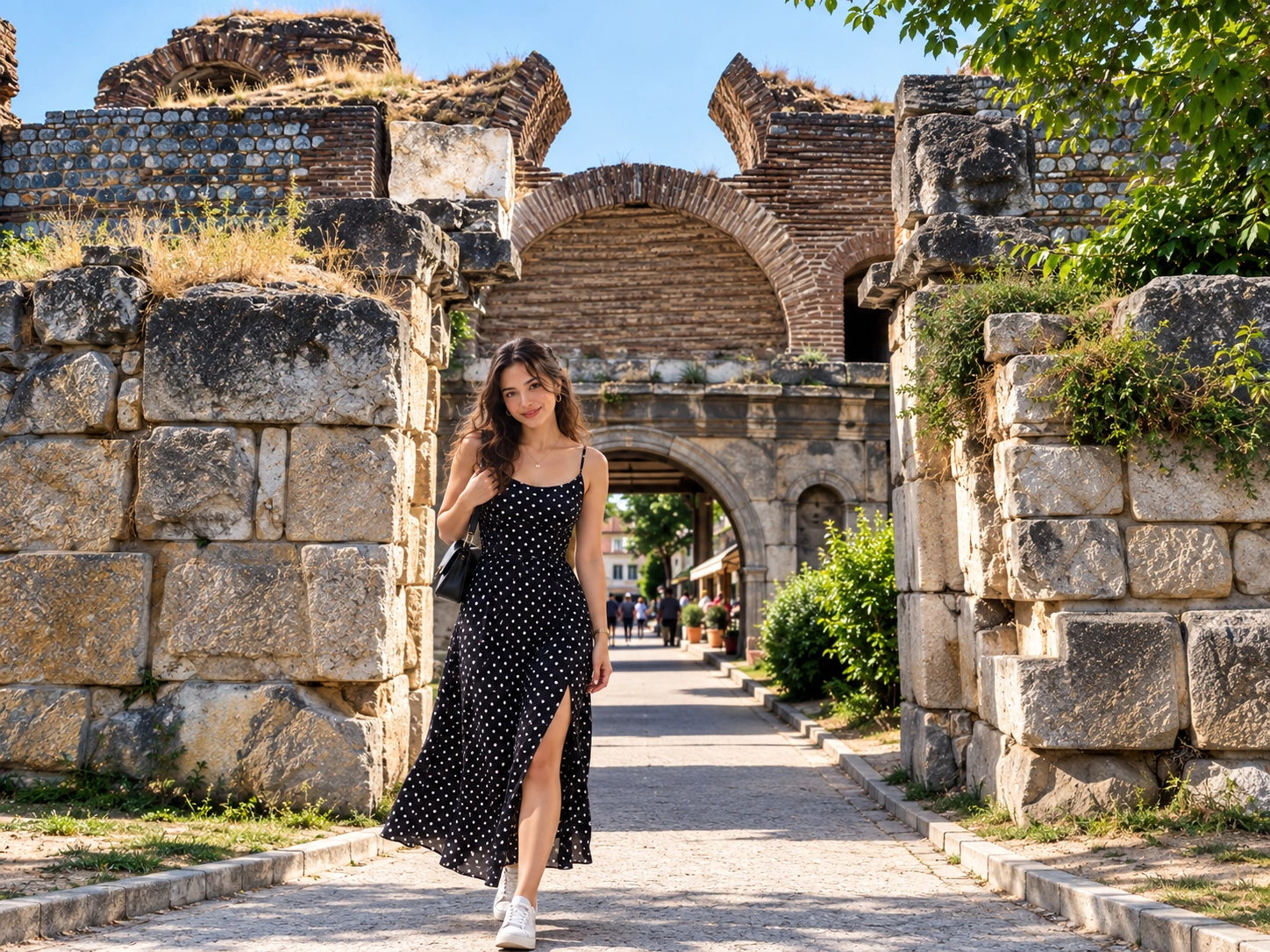
Between gates, keep reading the town: tile ateliers, tea gardens and lake glimpses sit inside the same circuit. The walls are a frame, not the whole day.
Roman theatre
Roman theatre near the walls and lake
Southwest of the centre, near walls and lake, stand the remains of a Roman theatre with a Trajanic-era construction context often linked to Pliny–Trajan correspondence. The vaulted substructure is frequently noted as unusual in Asia Minor. Excavation and restoration continue; visitor access can be limited or fenced — soft wording only. Treat it as a short archaeological stop if open, not as a guaranteed seating climb.
Museum
İznik Museum — Nilüfer Hatun İmareti
Prefer the names İznik Museum and Nilüfer Hatun İmareti (Türk-İslam Eserleri Müzesi). The building was erected in 1388 as an imaret (public kitchen / charitable complex) for Nilüfer Hatun, mother of Murad I, under Murad I — not a “hotel in 1388.” After restoration it has functioned as a museum from 1960. Collections run from prehistoric through Ottoman material, with tiles, theatre finds and garden sculpture among the draws.
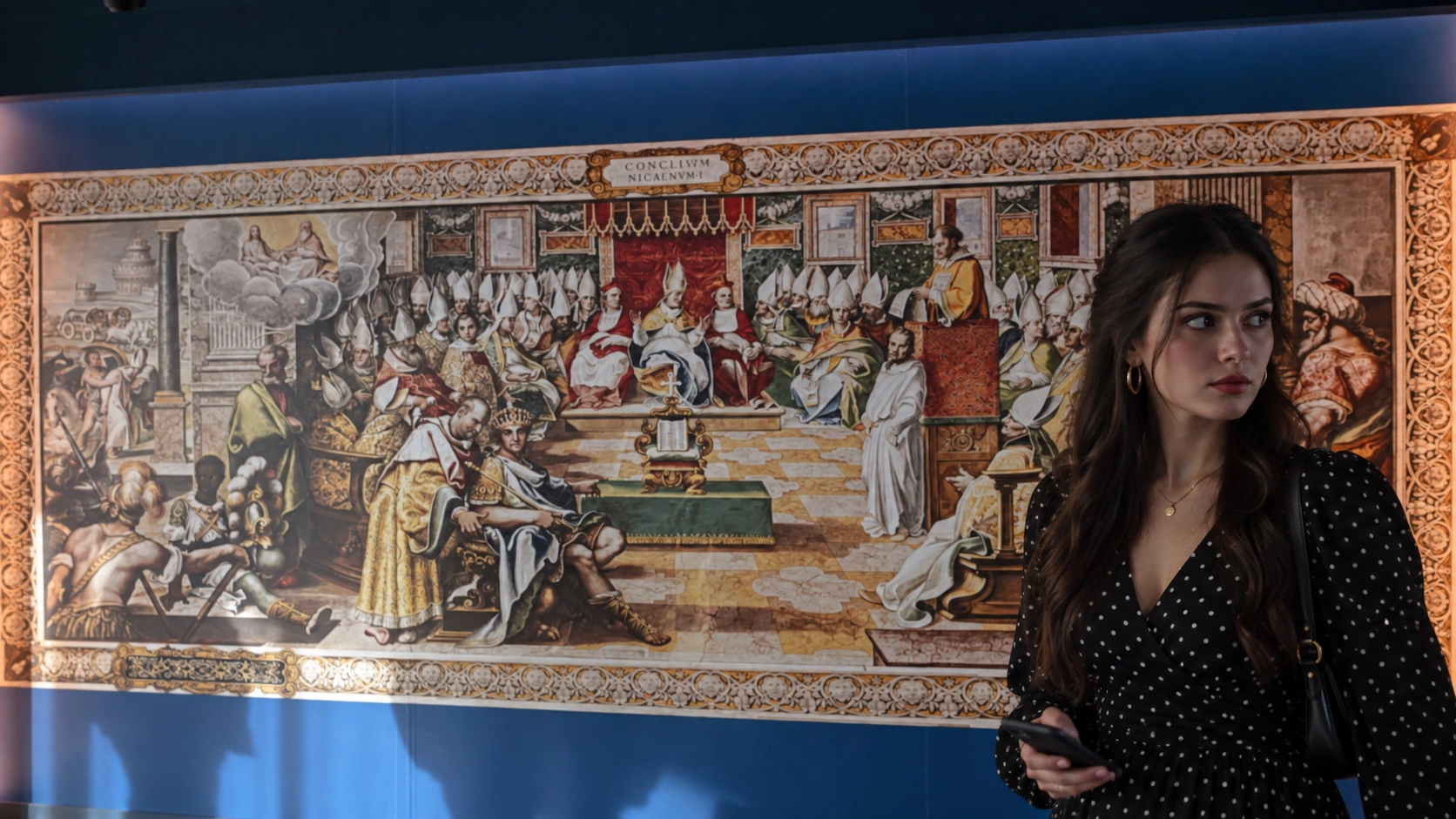
Hours are soft. Official museum listings exist; as typical guidance, check current hours and expect Monday closures on many Turkish museum calendars. No ticket price is printed here.
Early Ottoman
Yeşil Cami — Green Mosque of İznik
Yeşil Cami is an early Ottoman mosque begun under Çandarlı Halil Hayreddin Paşa in 1378–79 and completed around 1391–92 under Ali Paşa. The architect named in the inscription is Hacı bin Musa. The tiled minaret is the postcard detail; the building remains an active mosque. Visit between prayer times, dress respectfully, and leave prices and “secret tile formulas” out of the souvenir script.
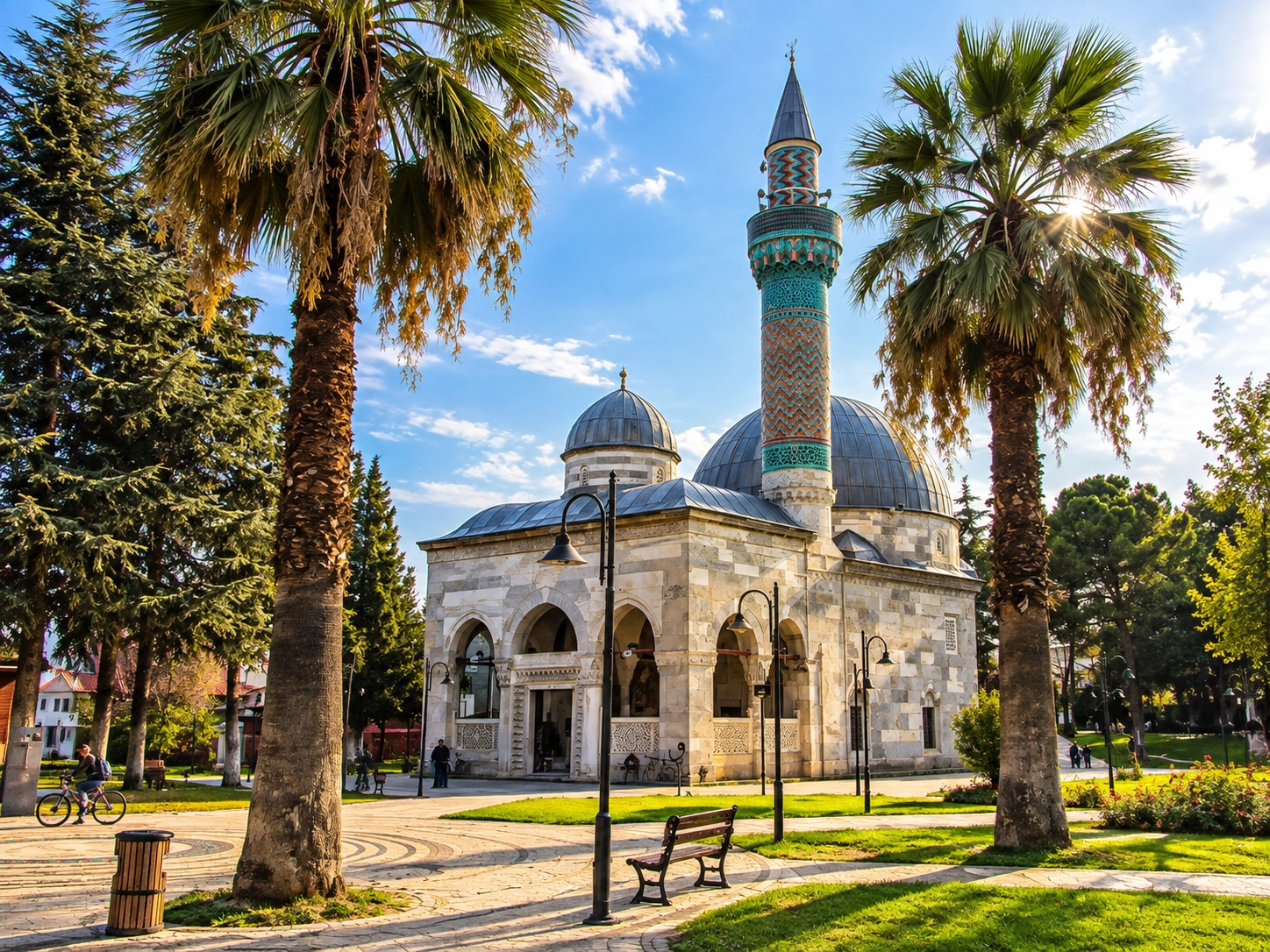
From Yeşil Cami, a short walk usually reconnects you with tile shops and the wall circuit. Keep the mosque as architecture and worship space first; photography second.
Craft
İznik tiles — court ceramic craft without myths
İznik tiles and vessels mark a peak of Ottoman court ceramics roughly in the fifteenth to seventeenth centuries: quartz-fritware bodies, cobalt blue, turquoise, green and the famous bole red, with floral and saz leaf motifs. Contemporary workshops continue the craft, and institutions such as the İznik Foundation appear in local craft narratives — mention roles softly if you visit a specific atelier.
Drop unverified marketing: exact “70–80% quartz,” locked kiln temperatures as tourist fact, claims that “tiles breathe,” or that opaque glaze “reduces eye strain,” and gemstone-colour mythology sold as chemistry. Buy what you like for design and quality of painting; leave laboratory percentages to ceramists.
Workshop atmosphere only — not a price list or a materials certificate.
Lake · archaeology
Lake İznik and the underwater basilica
Lake İznik — ancient Ascania — is a large Marmara-region lake. Soft size, rank and elevation figures; do not lock square kilometres or “fifth largest” slogans without checking current official stats. Recreation is soft: shoreline walks, cafés and viewpoint stops rather than a fish-species marketing tour.
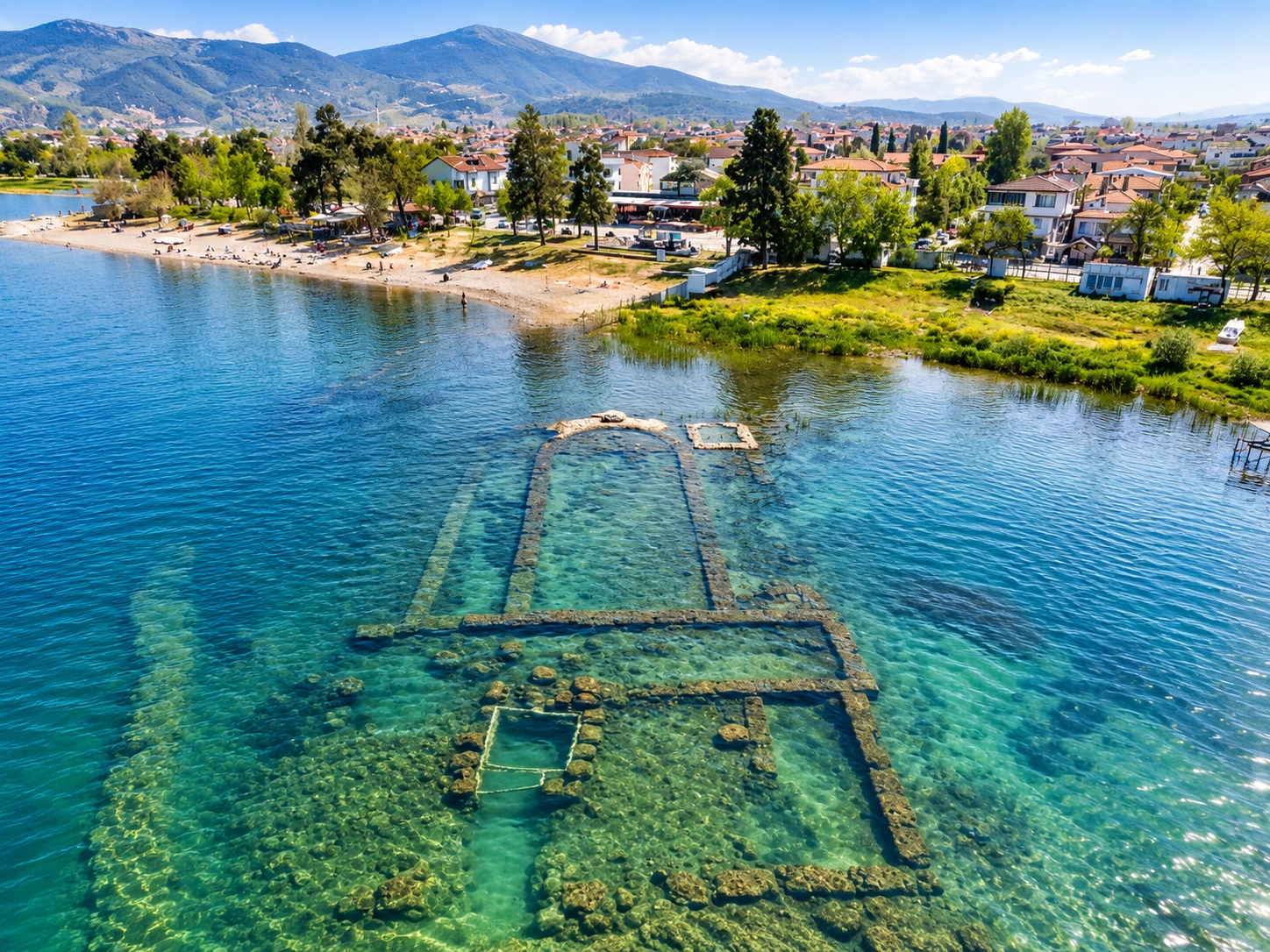
Around 2014, a late antique basilica was spotted in shallow water near the shore, with Saint Neophytos associations in scholarship and media. Accessibility for visitors is typically shore viewing and visitor-centre context — not a default swim-through exhibit. Soft language for any underwater-museum project. The 2025 papal prayer was held near these excavations, which is why the lakeside zone now carries both archaeological and recent ecumenical memory.
Thermal stop
Keramet thermal springs
Keramet, on the Orhangazi / İznik corridor, is a thermal bathing recreation stop. Enjoy warm water if the facilities suit your day. This page makes no medical healing claims — no cure lists, no therapy promises. Access and season are soft; confirm opening practice locally.
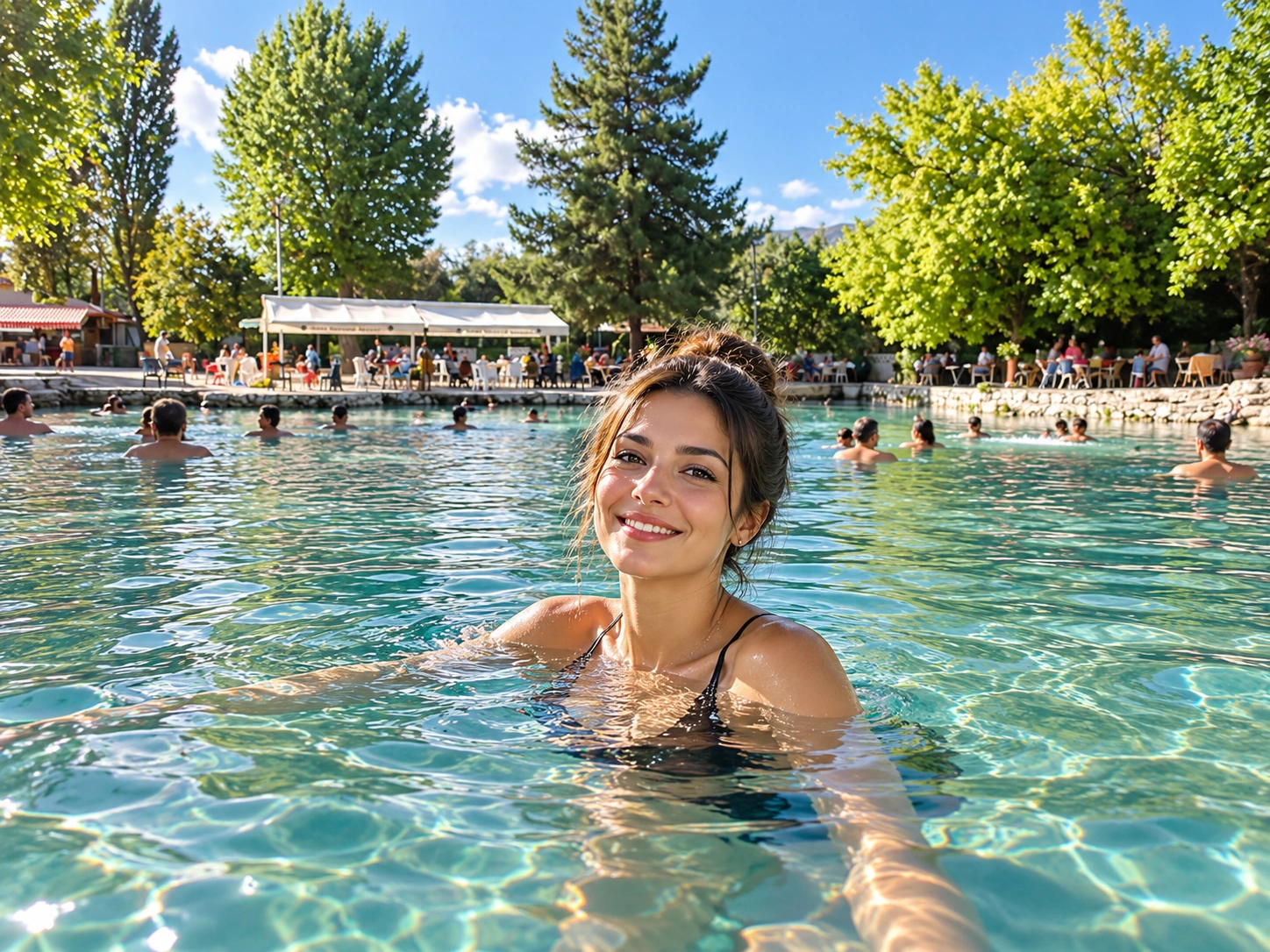
If your chauffeur day is already full with Ayasofya, walls and the museum, Keramet is an optional add-on, not a checklist item.
Nature walk
Sansarak Canyon
Sansarak Canyon is a nature and hiking area near İznik with a village context. Difficulty is soft: wear proper footwear, watch wet rock, and plan for daylight. Do not call it one of Turkey’s most challenging trails. Pair it with İznik only when you have spare hours and energy — it is not a ten-minute photo stop after the mosque.
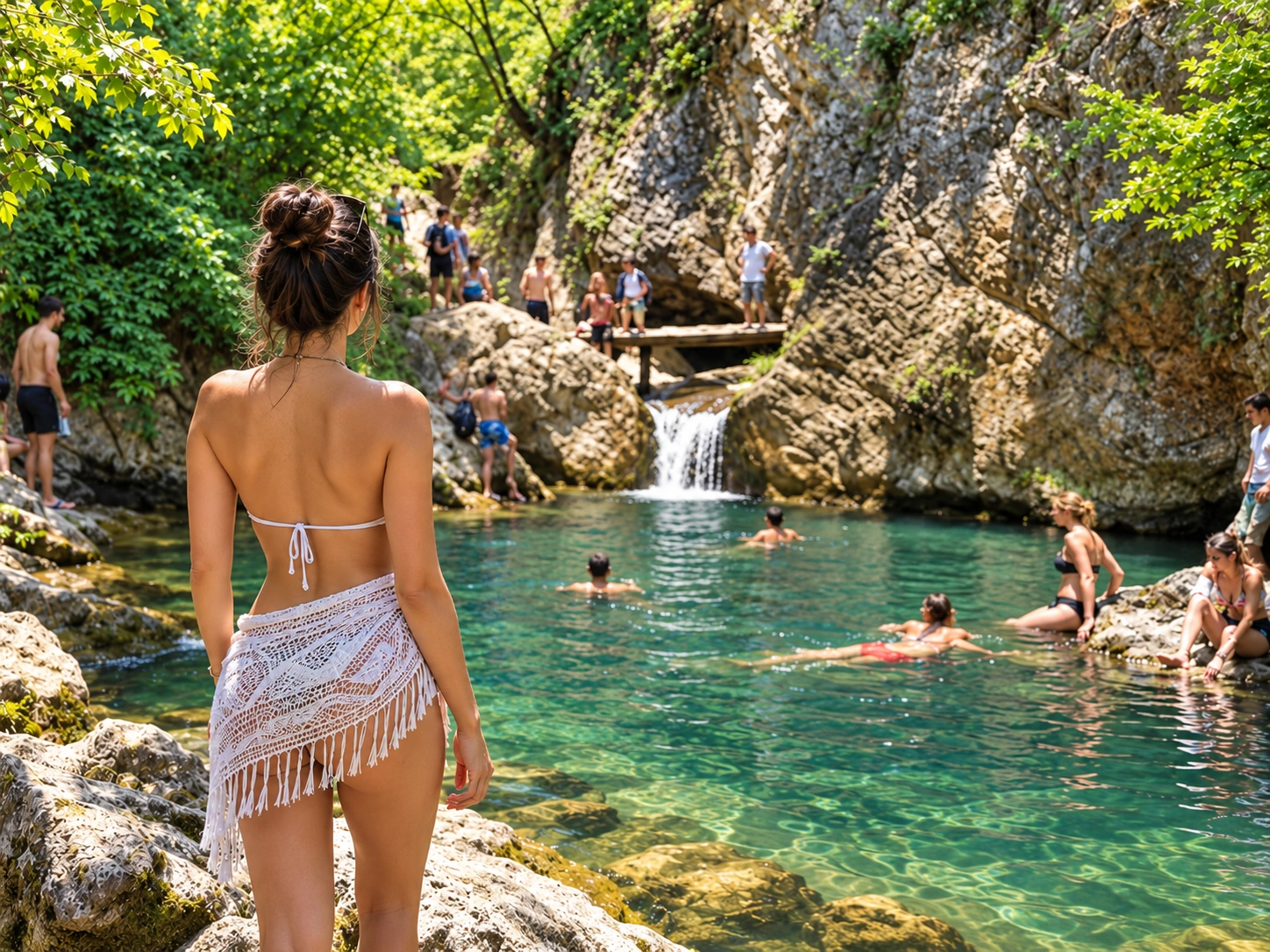
Carry water, respect local land use, and leave canyon bravado for other blogs.
Short list
Other places — brief and distinct
If time remains, a few more names appear on local maps without needing a second full article.
| Place | Why glance |
|---|---|
| Süleyman Pasha Madrasa | Early Ottoman educational fabric in the historic core |
| Eşrefzade Mosque | Another Ottoman prayer stop for architecture walkers |
| Abdulvahap Hill viewpoint | Soft panoramic look over town and lake when access and light allow |
| Tile workshops | Live craft beside museum cases — buy for design, not quartz myths |
| Lakeside promenade | Simple shore walk after heavy history hours |
Getting there
Istanbul to İznik — road, bus and chauffeur
The usual road runs via Yalova and Orhangazi. Driving time is often about 1.5–2.5 hours each way depending on traffic and start point — soft guidance only. Public buses exist; many visitors prefer a private transfer or chauffeured car for a same-day return.
Cab Istanbul can provide the geography: car with driver, VIP transfer, Bursa tour / transfer, plus IST and SAW airport transfers if your day begins or ends at a terminal. The driver is not a licensed historical guide and does not sell museum tickets or package a “council tour” as a Cab product.
For multi-day Bursa planning, keep İznik distinct from Uluabat wetland stops and waterfall days — link those landscapes only when the calendar allows, via pages such as Uluabat Lake and Bursa waterfalls, or a broader Istanbul attractions base before you leave the city.
Practical
Tips for a calm Nicaea day
Start with one primary thread — council memory, Ottoman fabric or lake — then add one or two secondary stops. Wear modest clothing for mosque interiors; shoes off where required. Confirm museum and mosque practice the morning you go. Carry water for wall walks; lake wind can be cooler than the town centre.
Do not expect a labelled “325 council chamber.” Read plaques critically; keep 325 venue uncertainty and the 787 Ayasofya association clear. For the lakeside basilica, prefer shore viewing over improvised swimming. Leave medical claims at Keramet and “hardest trail” slogans at Sansarak behind.
Book the transfer window honestly: Istanbul traffic plus a full İznik loop is a long day. Cab Istanbul moves you between hotel, airports and İznik; interpretation stays with your own reading, a licensed guide you hire separately, or on-site staff.
Questions
Nicaea (İznik) FAQ
Where is Nicaea / İznik?
Nicaea is the ancient name of İznik, a lakeside town in Bursa Province, Türkiye — typically reached from Istanbul via the Yalova–Orhangazi road corridor in roughly 1.5–2.5 hours depending on traffic.
What was the First Council of Nicaea?
A council of bishops convened by Emperor Constantine I in Nicaea in 325, chiefly to settle the Arian controversy and affirm the Son’s full divinity, producing a creed with the term homoousios and related canons.
How many bishops attended in 325?
Later tradition often says about 300 (sometimes 318). Safer wording is hundreds of bishops, traditionally about 300 — not a locked modern attendance sheet.
Did Constantine preside over the theology?
He convened and opened the council and attended; he was not yet baptized. Prefer “imperial presence shaped logistics and unity aims” over claiming he chaired the theological debates.
Was Hagia Sophia of İznik the 325 meeting place?
No — do not claim that. Eusebius points to a house of prayer and a palace hall; the palace site is unknown. Hagia Sophia’s secure council association is with 787. Underwater basilica proposals remain contested.
What is the difference between the 325 and 381 creeds?
325 produced the original Nicene Creed with anti-Arian anathemas. 381’s Niceno-Constantinopolitan form is what most churches mean by “the Nicene Creed” in liturgy today. They are not word-for-word identical.
Which creed was recited at the 2025 İznik prayer?
Vatican reporting on the service indicates the Niceno-Constantinopolitan Creed — the living liturgical form — not a claim that only the 325 text was used.
When did Pope Leo XIV visit İznik?
On Friday 28 November 2025, during his Apostolic Journey of 27 November–2 December 2025. The journey began on 27 November; İznik was day two. Past tense only — not a future “will visit on 27 Nov in İznik.”
What happened during the 2025 papal visit?
Helicopter travel from Istanbul, an ecumenical prayer near the Saint Neophytos excavations with Ecumenical Patriarch Bartholomew I and other church leaders, creed recital, and return to Istanbul the same afternoon.
What was the Second Council of Nicaea?
The 787 council — seventh ecumenical — addressed iconoclasm under the Constantine VI / Irene context. It is traditionally associated with Hagia Sophia of Nicaea, separate from the 325 council.
Is Hagia Sophia İznik a museum?
No. It had a museum phase from 1935 to 2011; since November 2011 it has been an active mosque again, with visitable heritage fabric and prayer etiquette.
What is İznik Museum?
İznik Museum occupies the Nilüfer Hatun İmareti, built in 1388 as an imaret (not a hotel). It has operated as a museum since 1960 after restoration. Check current hours; Monday closures are common on Turkish museum calendars.
Is there a castle from 258 BC?
Prefer city walls and gates with Roman–Byzantine layers. Do not market a single “castle from 258 BC.” İstanbul Gate is not a 4th-century BC monument.
Who built Yeşil Cami?
Begun under Çandarlı Halil Hayreddin Paşa (1378–79), completed around 1391–92 under Ali Paşa; architect Hacı bin Musa per the inscription. Active mosque with a famous tiled minaret.
What should I know about İznik tiles?
They are celebrated Ottoman court ceramics (roughly 15th–17th c.) with distinctive colours and floral motifs. Skip unverified quartz percentages, “breathing tile” and eye-strain myths; buy for craft quality.
Can I visit the underwater basilica?
Expect shore viewing and visitor-centre context. It is not framed here as a casual swim-through museum. Underwater-museum project language stays soft.
Does Keramet heal medical conditions?
This page makes no medical claims. Keramet is thermal bathing recreation only.
Is Sansarak one of Turkey’s hardest trails?
No. Treat difficulty as soft: good footwear, wet rock awareness and daylight planning — not a national “most challenging” ranking.
How do I get from Istanbul to İznik?
By road via Yalova/Orhangazi (often ~1.5–2.5 h), public bus, or private chauffeur. See car with driver, Bursa tour, VIP transfer, and airport transfers for IST and SAW.
Does Cab Istanbul provide a historical guide in İznik?
No. Cab Istanbul is transfer and chauffeur service only. The driver is not a licensed historical guide and does not sell tickets or packaged council tours.