
Bilecik Province · Marmara hinterland · Early Ottoman memory landscape
Sogut is a small district town in Bilecik Province associated with the early Ottoman frontier in later chronicles, public memory and annual remembrance ceremonies. Visitors come primarily for the Ertugrul Gazi Tomb, the free Sogut Ertugrul Gazi Museum, the late Ottoman Hamidiye Mosque, and the atmosphere of a place long described as one of the cradle landscapes of the Ottoman story. This native English guide for 2026 keeps the wording careful: Osman I is the founder of the Ottoman dynasty, not Ertugrul; Sogut is better understood as an early frontier center in Ottoman tradition, not a permanent imperial capital; and claims about Kayi origins or Khwarezm migration should be presented as later tradition, not documentary certainty.
Cab Istanbul offers intercity car with driver service only. It does not sell Sogut museum tickets, local guiding, or airport-transfer packages branded specifically for Sogut.
At a glance
Popular places around Sogut
Sogut is best approached as a compact heritage town with one major tomb complex, one small official museum, several Hamidian-era monuments, and a few regional add-ons. Keep Bilecik city-center sites and distant nature parks clearly separate from what is actually in town.
| Place | Area | Best For | Practical Note |
|---|---|---|---|
| Ertugrul Gazi Tomb | Turkmenbasi area, Sogut | Core visit, ceremonial guards, symbolic early Ottoman memory | Free entry; hourly guard ceremony; separate history from later legend |
| Sogut Ertugrul Gazi Museum | Town center | Ethnography, local history, context before or after the tomb | Free; closed Mondays; not the same building as Hamidiye School |
| Hamidiye Mosque | Town center | Late Ottoman architecture and civic memory | Built 1903-1905 in the Abdülhamid II era; active mosque etiquette applies |
| Hamidiye Idadisi area | Near the mosque complex | Townscape context for late Ottoman education history | Do not confuse it with the museum |
| Sogut town center | Central district streets | Short heritage walk, local tea stops, ceremony-day atmosphere | Best paired with the tomb and museum, not as a standalone long stay |
| Dursun Fakih Tomb | Regional Bilecik-Sogut heritage circuit | For visitors building a broader early Ottoman memory route | Check exact road logistics separately |
| Sheikh Edebali Tomb | Bilecik city center | Companion stop for Ottoman foundation memory | Not in Sogut itself; combine only if you have a car |
| Harmankaya Canyon Nature Park | Regional day trip | Nature outing after heritage visits | A nature park since 2012, not a national park, and not walkable from Sogut center |
| Uluabat Lake | Wider Marmara route | Optional scenic stop on a longer regional journey | Separate destination; see Uluabat Lake guide |
Orientation video
First look at Sogut's ceremonial heritage
Videos are visual orientation only. Use the official hours, closure days and historical notes in this guide rather than assuming everything shown on screen reflects documented medieval reality.
History without shortcuts
How to describe Sogut accurately in early Ottoman history
Sogut occupies an important place in Ottoman historical tradition, but careful wording matters. The town is commonly associated with Ertugrul Gazi and the frontier milieu from which the Ottoman dynasty emerged. That does not make Sogut the fixed imperial capital of a later empire stretching across three continents, and it does not make Ertugrul the founder of that empire.
- Osman I is the founder of the Ottoman dynasty and state tradition.
- Ertugrul appears in later Ottoman chronicle tradition as the father of Osman and an earlier frontier leader.
- Kayi tribal identity belongs to an important dynastic tradition, but should be presented as later narrative memory rather than uncontested contemporary proof.
- Khwarezm migration stories and figures such as Suleyman Shah belong to tradition and folklore layers, not hard documentary certainty.
- Sogut is best described as an early Ottoman frontier center or cradle landscape in later memory, rather than as a long-term imperial capital.
For visitors, this nuance improves the experience rather than weakening it. Sogut is compelling precisely because it shows how dynastic memory, ceremony, architecture and modern commemoration interact in a small Anatolian town where the Ottoman foundation story is still publicly staged and remembered.
Main site
Ertugrul Gazi Tomb — what you see and why it matters
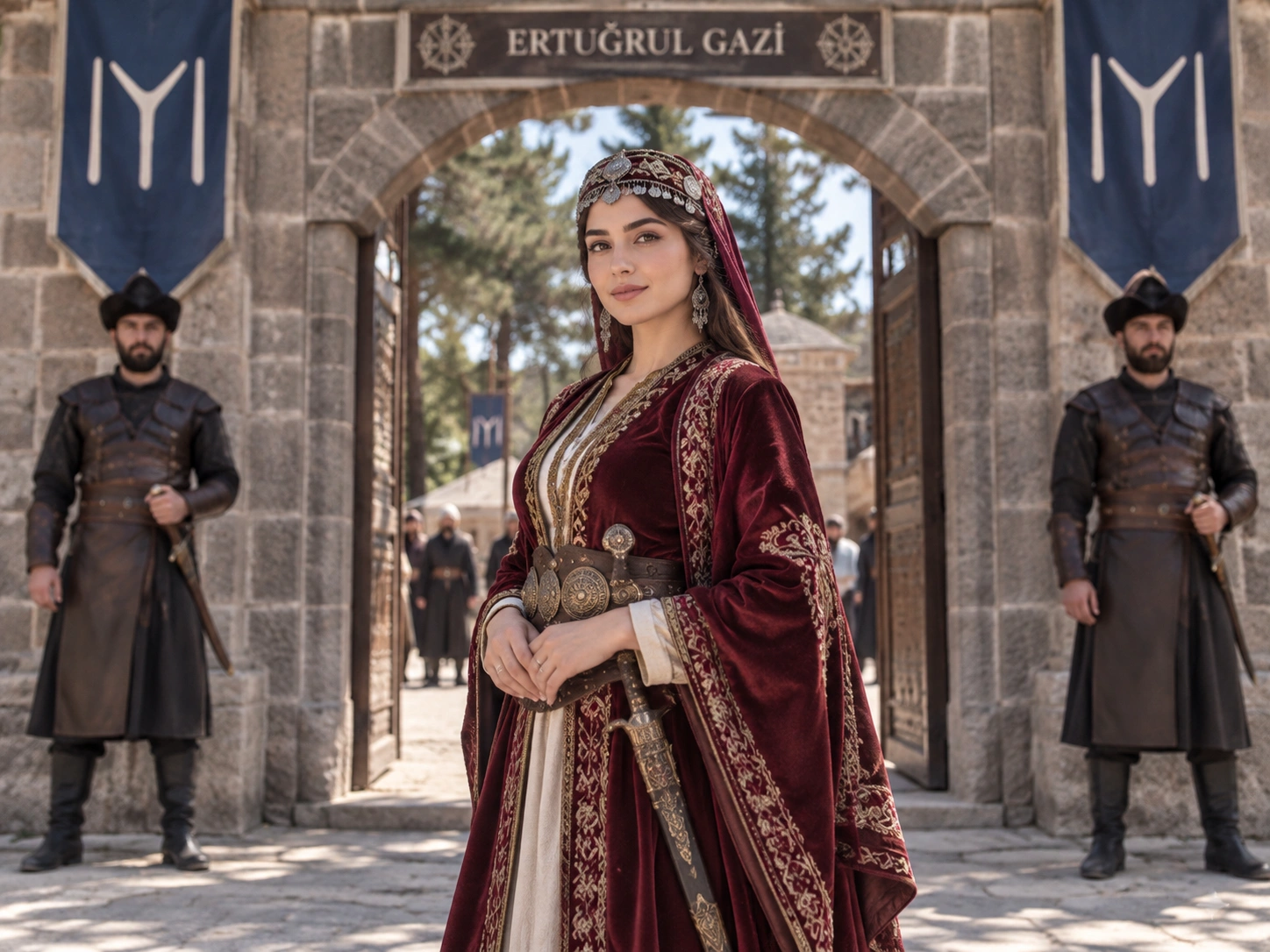
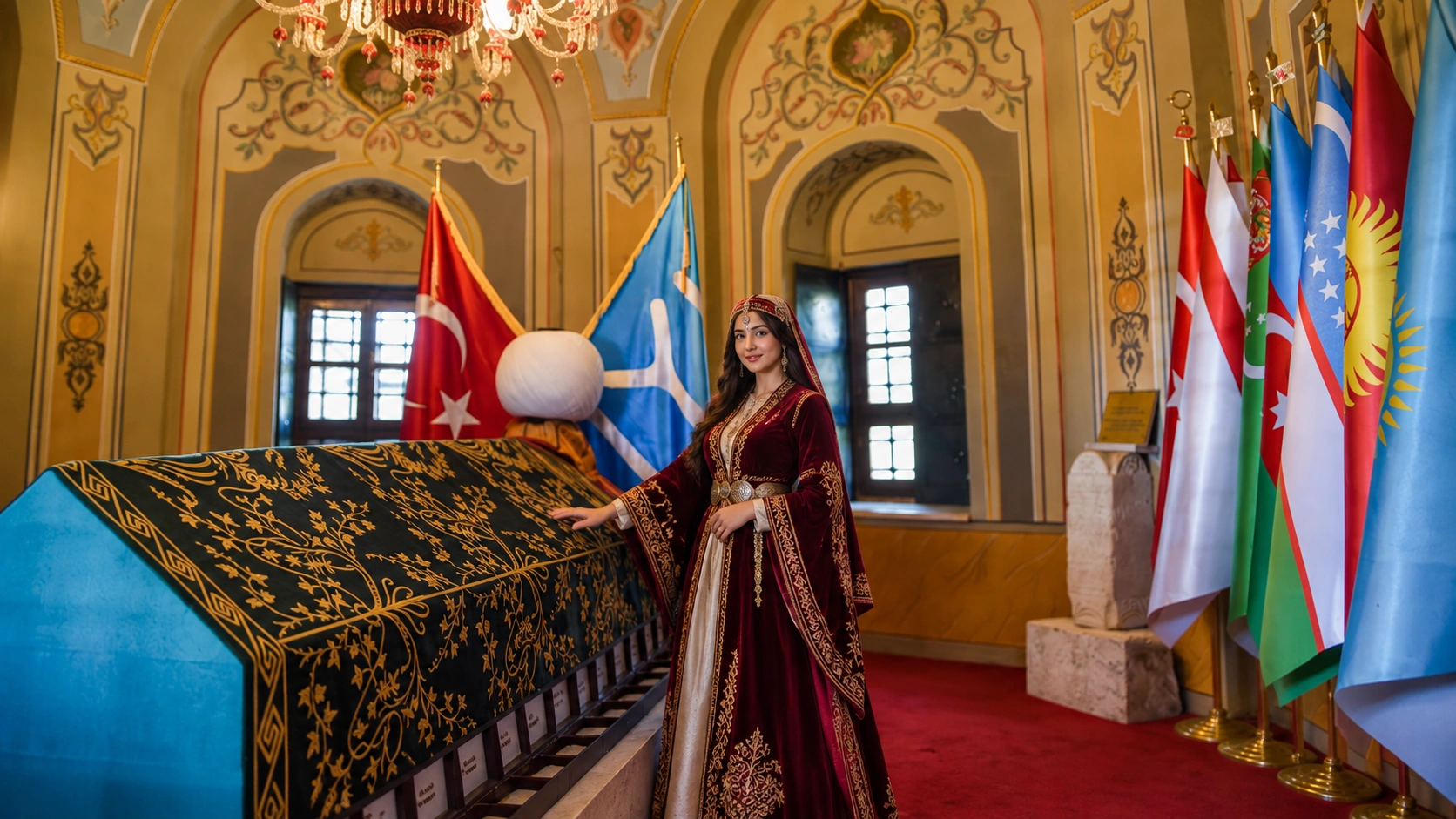
The Ertugrul Gazi Tomb is Sogut's central visitor site and the place most travellers come to see. The complex is part shrine, part memorial space and part modern ceremonial stage, with associated graves and symbolic remembrance linked to the early Ottoman frontier story. Some sources connect an earlier tomb structure to the era of Celebi Mehmed, while later restorations and repairs are associated with 1737 and the reigns of later Ottoman sultans. Works often attributed loosely to Abdülhamid II should be handled carefully: the documented late Ottoman intervention phase tied to the site includes activity around 1905, not an invented 1886-1887 rebuilding claim.
What makes the tomb memorable for visitors today is not just the grave chamber but the whole ritualized setting: approach gates, the disciplined ceremonial guards, and the way official remembrance culture frames Ertugrul as an ancestral figure in Ottoman memory. The guards are a modern ceremonial tradition, not living proof that you are watching a preserved 13th-century military practice unchanged through time.
Visitor information 2026
Tomb hours, museum closure days and practical details
The most useful verified visitor facts in Sogut are simple and worth checking before you set off. The tomb and museum are both free, but they follow different schedules.
| Practical Detail | Current Information |
|---|---|
| Ertugrul Gazi Tomb admission | Free |
| Ertugrul Gazi Tomb summer hours | 08:00-21:00 |
| Ertugrul Gazi Tomb winter hours | 09:00-18:00 |
| Guard ceremony | Hourly, on the hour |
| Sogut Ertugrul Gazi Museum admission | Free |
| Museum hours | 08:30-17:30 with the last practical arrival best kept earlier in the day |
| Museum closed day | Monday |
| Museum building context | Memis Aga bandage house / early 1900s civic building, later adapted as museum |
| Hamidiye Mosque date | 1903-1905, Abdülhamid II era |
| Recommended visit length | 2-4 hours for town core; longer if you add Bilecik or a nature side trip |
Opening hours and closure days can still change for maintenance, public holidays or official ceremonies, so reconfirm locally if your timing is tight.
Museum stop
Sogut Ertugrul Gazi Museum — small but useful for context
The Sogut Ertugrul Gazi Museum is the town's best place for historical grounding before the more symbolic experience of the tomb complex. The collection is modest and local in scale, but that is part of its value: it helps visitors read Sogut as a lived Anatolian district with ethnographic and civic history, not only as a stage set for Ottoman memory. The museum traces local life, domestic culture and regional identity through displays that are easier to absorb than a long abstract lecture on frontier politics.
Two practical points matter. First, the museum is closed on Mondays, which is the most common visitor mistake in planning. Second, it is not the Hamidiye School or a repurposed copy of the mosque complex. Keep the museum, mosque and school references separate when building your route through town.
Late Ottoman layer
Hamidiye Mosque and the Hamidian civic landscape
Hamidiye Mosque represents a later layer of Sogut's story: not the frontier age of Ertugrul, but the imperial memory work of the late Ottoman period under Sultan Abdülhamid II. The mosque is dated to 1903-1905 and is one of the clearest verified monuments in town for travellers who want architecture rather than legend. Its presence shows how Sogut's symbolic place in Ottoman origins was still being materially reinforced centuries after Osman I.
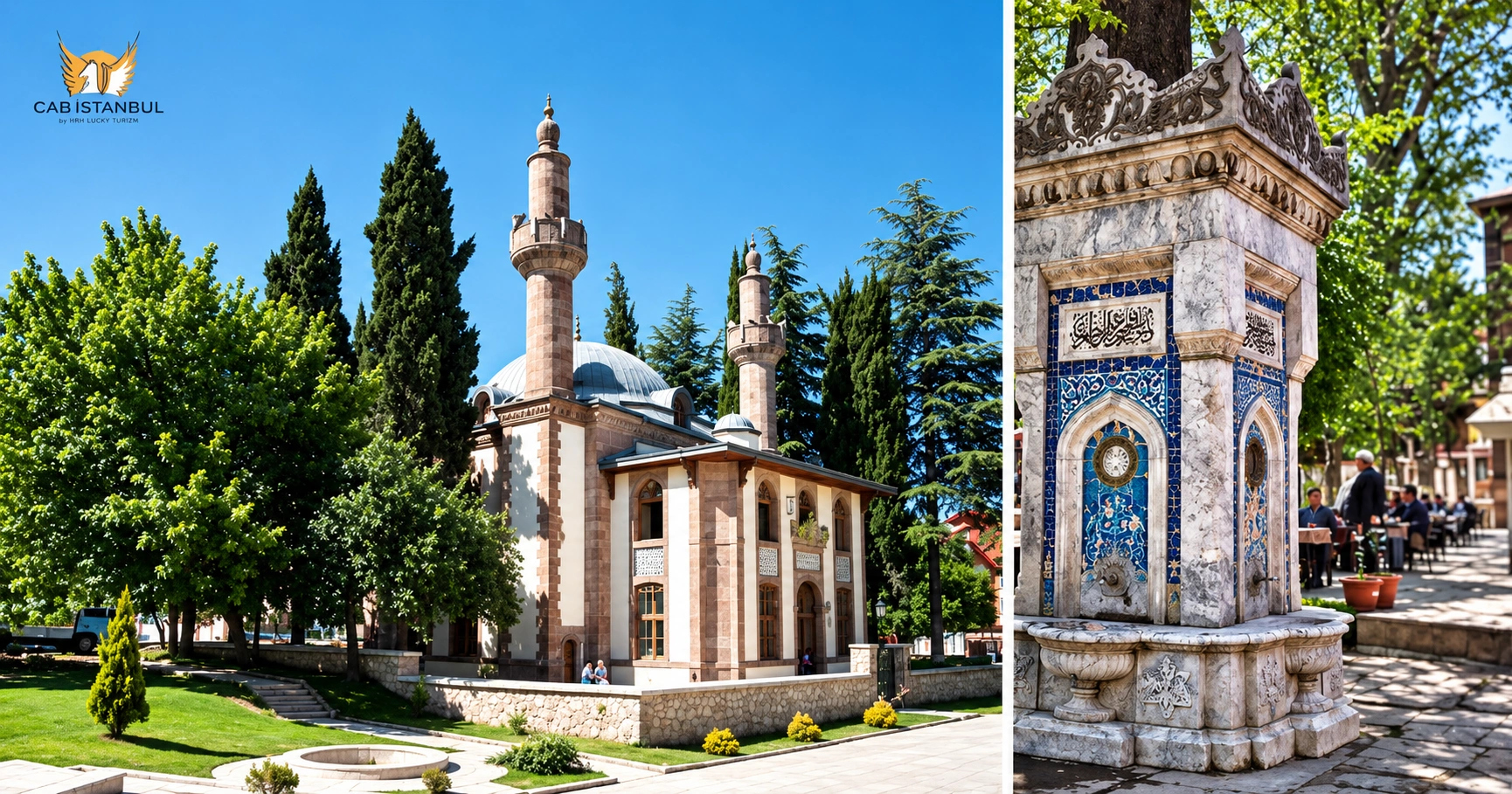
The mosque sits within a broader Hamidian-era civic environment that also included the Hamidiye Idadisi and related public structures. This is useful for visitors because it broadens Sogut beyond one tomb visit: the town is also a case study in how the late empire curated and monumentalized its own foundation memory.
Ceremony and memory
Guards, remembrance culture and what is actually modern
Many visitors are drawn to the ceremonial guards at the tomb. They create one of the most distinctive visual experiences in Sogut and help explain why the town feels more performative and commemorative than many ordinary district centers. The key point is that this is a modern ceremonial presentation of heritage. It should not be confused with direct, unchanged military continuity from the 13th century.
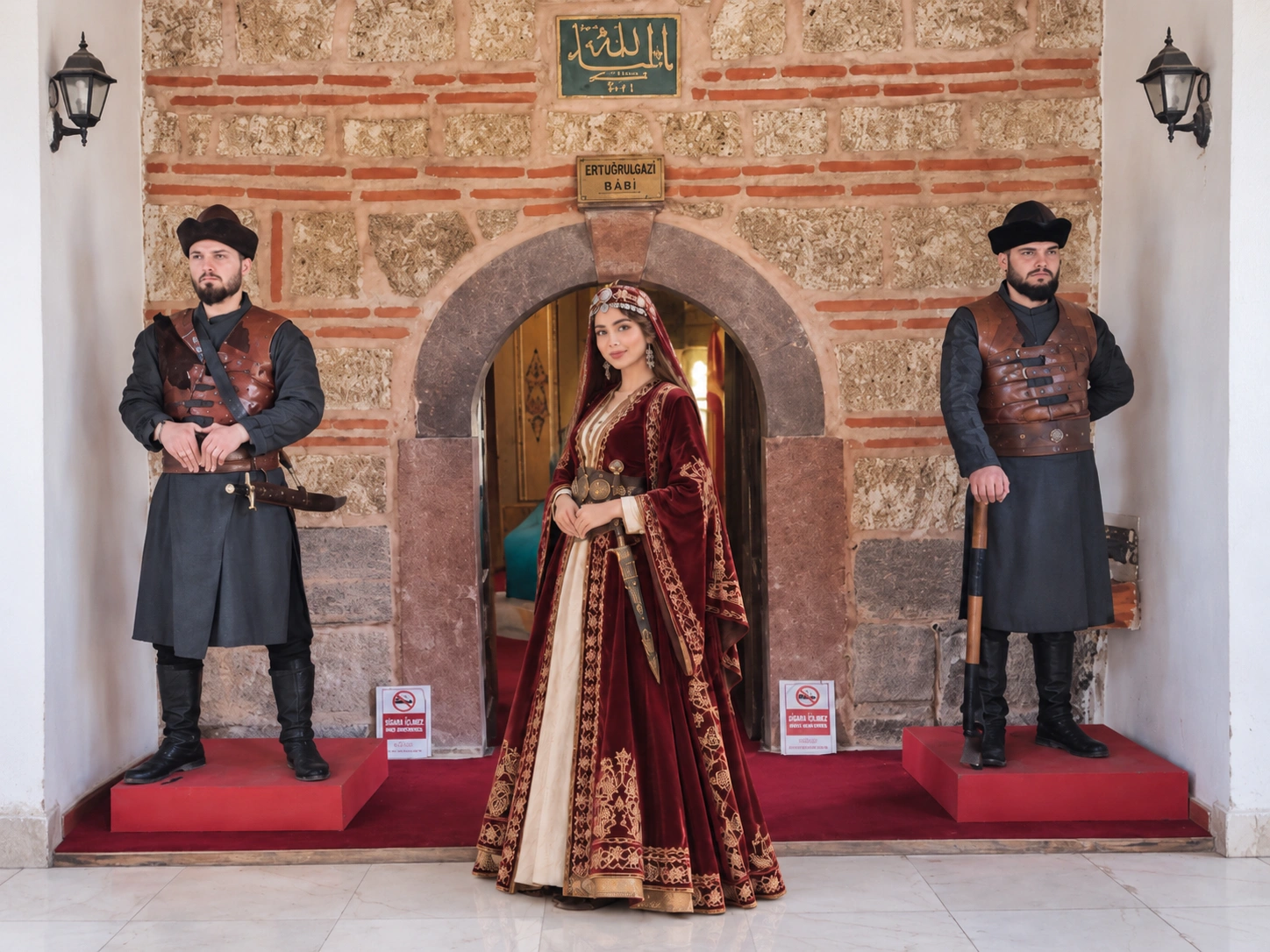
Seen in that light, the ceremony becomes more interesting, not less. It tells you how the Turkish Republic, local institutions and public visitors continue to interpret and perform the Ottoman foundation story in the present.
Television vs history
Dirilis: Ertugrul and the difference between drama and evidence
Dirilis: Ertugrul introduced Sogut and Ertugrul to a much wider international audience, but television drama and historical method should be kept separate. The series draws on popular Ottoman foundation themes, tribal imagery, warfare, court intrigue and strong heroic arcs. That makes it culturally influential and useful as a reference point for why some visitors arrive with highly specific expectations.
Historically, however, the documented 13th-century record is much thinner than a multi-season television narrative. The show's costumes, speeches, battle structures and personality arcs are products of drama, not direct primary-source reconstruction. Visitors will enjoy Sogut more if they treat the series as a modern cultural interpretation inspired by the Ottoman origin story, while using the town itself for a more careful encounter with how that story has been remembered and monumentalized.
Beyond the center
Harmankaya Canyon Nature Park as a regional add-on
If you want nature after heritage, the most relevant nearby add-on is Harmankaya Canyon Nature Park. The name matters: it is a nature park (Tabiat Parki) designated in 2012, not a national park. That may sound minor, but it changes expectations about scale, facilities and branding.
It works best as a regional day trip for travellers already moving by car through the wider Bilecik area. Do not present it as something you casually stroll to from Sogut center, and avoid over-claiming activities unless they are confirmed locally on the day. The appeal is landscape, canyon scenery and fresh air, not a heavily serviced resort-style park experience.
Getting there
Transport to Sogut in 2026
Sogut is a road destination in practical travel terms. Most visitors arrive by private car, intercity driver, or a bus chain through Bilecik or Bozuyuk followed by a local connection. It works best as a heritage stop on a broader Marmara-Anatolia route rather than a fly-in, fly-out town.
| Route | Practical Options | Important Note |
|---|---|---|
| Istanbul → Sogut | Private car, intercity chauffeur, or bus route via Bilecik/Bozuyuk plus local transfer | Usually a long day trip or better as an overnight regional route |
| Bilecik → Sogut | Short road transfer by car, taxi or local transport where available | The most practical pairing if you are also visiting Sheikh Edebali Tomb |
| Bursa → Sogut | Road journey through the inland Marmara corridor | Works well when combined with a broader Bursa-Bilecik history route |
| Intercity chauffeur | Cab Istanbul intercity car with driver | Transport only; not a guide service and not a Sogut airport-transfer package |
| Public transport | Bus chain to the wider Bilecik area, then local onward connection | Timetables can be sparse, so same-day flexibility matters |
Time planning
Suggested itineraries for a Sogut visit
| Plan | Time Range | What Fits | Watch-outs |
|---|---|---|---|
| Quick stop | 1.5-2 hours | Tomb complex, guard ceremony, short town-center look | Easy to miss the museum if you arrive on Monday or late in the day |
| Half day | 3-4 hours | Tomb, museum, Hamidiye Mosque and relaxed tea break in town | Best basic heritage plan for most visitors |
| One full day | Full daylight block | Sogut core plus a Bilecik-side heritage extension | Use a car to avoid losing time on connections |
| Heritage + nature day | Full day+ | Sogut in the morning and Harmankaya Canyon Nature Park later | Nature park is regional, not an in-town attraction |
| Istanbul route stop | Long day or overnight | Sogut as part of a longer inland Marmara history road trip | Too long for a rushed same-day plan if you also add many other sites |
Sogut works best when you treat it as a focused heritage stop rather than trying to fill an entire weekend only inside the town. The strongest plan is usually one careful half day, or a full day if you combine it with Bilecik-area history.
Optional chronology
A short timeline for visitors
| Period | What to Keep in Mind |
|---|---|
| 13th century tradition | Ertugrul and frontier settlement narratives belong mainly to later Ottoman historical memory |
| Osman I era | Osman I is the founder of the dynasty; Sogut enters the story as an early center in later tradition |
| 15th century onward | Dynastic remembrance and tomb associations become more firmly monumentalized |
| 18th century | Restoration activity is linked to later Ottoman maintenance of the tomb complex |
| 1903-1905 | Hamidiye Mosque and related Hamidian civic works reinforce Sogut's symbolic place in imperial memory |
| Modern Republic era | Public ceremonies, guards and annual commemorations shape how visitors experience Sogut today |
FAQ
Sogut frequently asked questions
What is Sogut most famous for?
Sogut is best known for the Ertugrul Gazi Tomb and its place in Ottoman foundation memory. Visitors also come for the free museum, Hamidiye Mosque and the ceremonial guards.
Is Sogut the capital of the Ottoman Empire?
No. It is better described as an early frontier center in Ottoman tradition, not the long-term imperial capital of the later empire.
Who founded the Ottoman state, Ertugrul or Osman I?
Osman I is the founder of the Ottoman dynasty and state tradition. Ertugrul is remembered in later tradition as his father and an earlier frontier figure.
Are Kayi tribe and Khwarezm migration stories fully documented facts?
They are important parts of Ottoman dynastic tradition, but they should be presented carefully as later narrative memory, not as uncontested contemporary documentary proof.
What are the opening hours of the Ertugrul Gazi Tomb?
The verified schedule is 08:00-21:00 in summer and 09:00-18:00 in winter. Entry is free.
Is the Ertugrul Gazi Tomb free to enter?
Yes. The tomb complex is free according to the current official visitor information.
When does the guard ceremony take place?
The ceremonial guard presentation takes place hourly, on the hour. Arrive a little early if you want a good viewing position.
Are the guards an original 13th-century tradition?
No. They are a modern ceremonial heritage presentation, not direct proof of an unchanged 13th-century military ritual.
What are the hours of the Sogut Ertugrul Gazi Museum?
The museum is open 08:30-17:30 and is closed on Monday. Admission is free.
Is the museum open on Monday?
No. The museum is closed on Monday, which is the main planning detail visitors should remember.
What is inside the Sogut Ertugrul Gazi Museum?
It is a small local-history and ethnography museum that helps place Sogut in regional context rather than presenting only tomb symbolism.
When was Hamidiye Mosque built?
Hamidiye Mosque dates to 1903-1905 in the reign of Abdülhamid II. That date is the verified one to use.
Is Hamidiye Mosque part of the early Ottoman period?
No. It belongs to the late Ottoman Hamidian era, showing how the empire later monumentalized places connected with its own foundation story.
Can Sogut be visited as a day trip from Istanbul?
Yes, but it is a long road day. Many travellers will enjoy it more as part of a wider Bilecik or inland Marmara route rather than a rushed out-and-back trip.
Does Cab Istanbul provide Sogut airport transfers?
Cab Istanbul offers intercity chauffeur service. It should not be described as a dedicated airport-transfer package specifically for Sogut.
Is Dirilis: Ertugrul historically exact?
No. It is a television drama inspired by Ottoman foundation themes. It is culturally influential, but it should be separated from strict historical evidence.
Is Harmankaya a national park?
No. It is Harmankaya Canyon Nature Park, designated in 2012. Calling it a national park would be inaccurate.
Can I walk to Harmankaya Canyon from Sogut center?
No. It is a regional day-trip stop that requires road planning, not a town-center attraction you simply reach on foot.
Should I also visit Bilecik when I go to Sogut?
If you have a car and a full day, yes. Bilecik city sites such as Sheikh Edebali Tomb make a natural companion to Sogut's heritage story.
Plan the route
How to experience Sogut well
Sogut is most rewarding when approached with historical precision and modest expectations about scale. Come for the Ertugrul Gazi Tomb, the hourly guard ceremony, the free museum, and the late Ottoman layer represented by Hamidiye Mosque. Keep the language accurate: Osman I founded the dynasty, Ertugrul belongs to later foundation memory, Kayi and Khwarezm themes are traditional rather than documentary certainties, and Harmankaya is a separate nature park day trip, not an in-town national park. If you are shaping a longer inland Marmara route, pair Sogut with Uluabat Lake on a different leg, and use intercity car with driver service only as transport rather than as a substitute for local historical interpretation.